


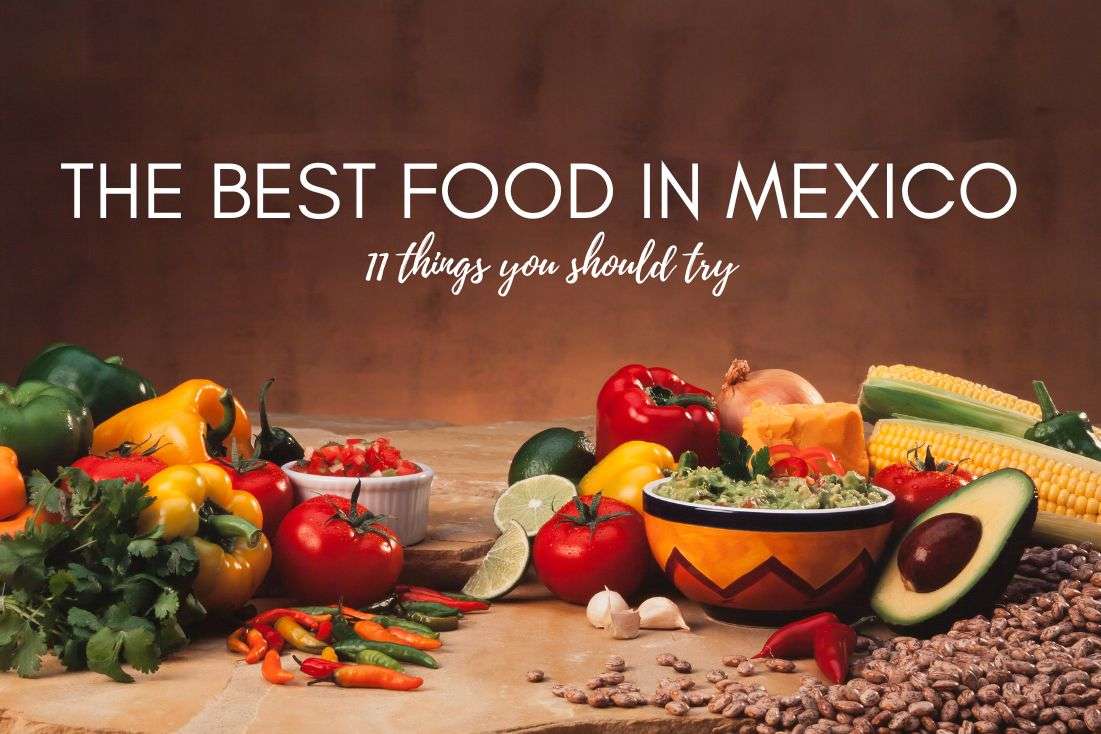


Mexico food was one of the things I was most excited about before my trip, and somehow it still exceeded expectations. I went for the tacos and quickly discovered there was a lot more going on. If you only try five things, make them tacos, churros, elote, cochinita pibil, and pozole.
While traveling through places like the Riviera Maya, Yucatán, and Mexico City, I ate everything from street food and local specialties. One thing became obvious very quickly: there isn't just one Mexican cuisine. The food changes from region to region, and that's part of what makes eating your way around the country so much fun.
In this guide, I'll cover the most famous food in Mexico, the dishes I think are worth trying, the drinks you'll see everywhere, and a few things I personally wouldn't rush back for.

What Food Is Mexico Known For? Mexico is known for a variety of colorful dishes; each region has its own recipes and meals, so you’ll NEVER get bored! If you're visiting Mexico for the first time, these are the foods you'll see most often:
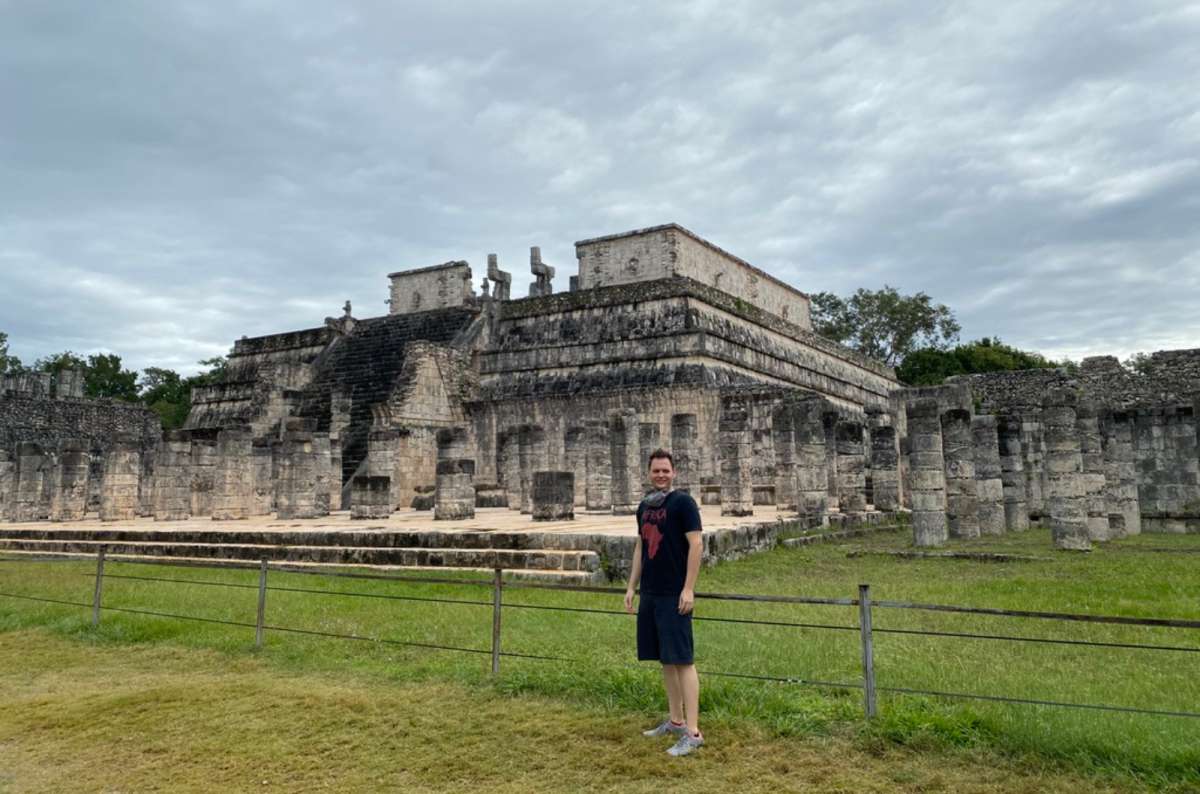
Below are the foods I personally tried during my travels in Mexico and whether I'd recommend them.
You might also be interested in reading:
Traditional Mexican food starts with corn. You can find tortillas everywhere, and many of Mexico's most famous dishes have roots that go back to the Aztec and Maya civilizations. While tacos are probably the most famous food in Mexico, they're only a very small part of the story. The food from Mexico changes a lot depending on where you are, with every region putting its own spin on ingredients, flavors, and recipes, which is why eating your way across the country is so much fun!

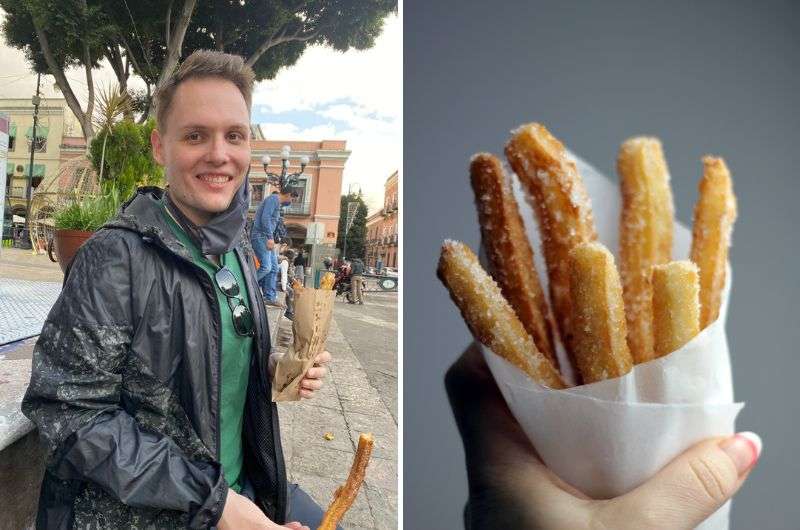
So simple and so good!
Churros are definitely the most delicious food in Mexico (sharing the first place with tapas). It’s a piece of fried sweet dough, often coated with cinnamon sugar. It’s usually long and thin, but it can also have the shape of a circle. I got them plenty of times at various street food stalls all over Mexico. I prefer churros heavily dipped in the sweet, chocolate-based sauce that usually comes with them.
And I will say it again: it’s the best food in Mexico. I guarantee that by the time you’re done with one, you’ll already be buying another.
The funny thing is that when I saw pictures of churros on the internet, I was kinda skeptical. I was like: “Come on, there is all the great food in Mexico and people eat THIS?” But the second I had the first bite, I knew I could eat a whole wagon of churros and still want more.
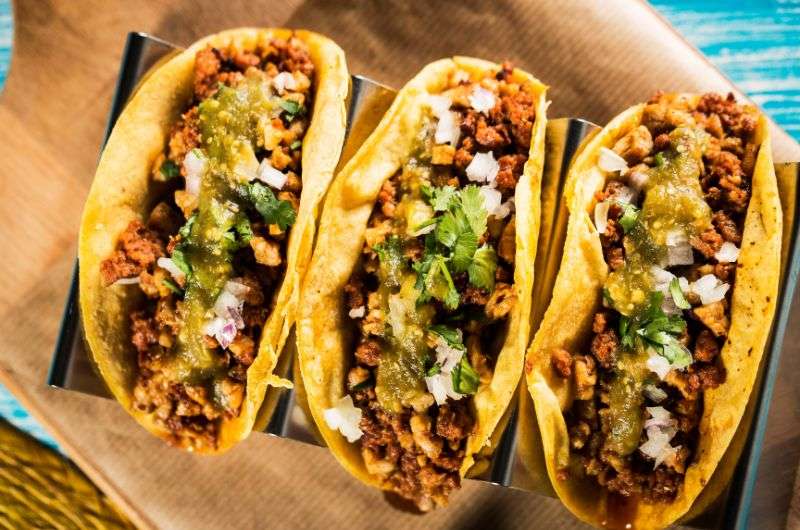
Who doesn't know Mexican tacos?
You can’t visit Mexico without grabbing a bite of tacos. It’s the best thing since sliced bread (and since churros).
A taco is a tortilla with a filling. (Remember when I was saying tortilla is everywhere in Mexico? Yep. This is the case.) Like churros, it’s one of the most common Mexican street foods. I quickly learned that you can’t just buy them anywhere, though. Keep an eye on the food stall and its surroundings. You can be pretty darn certain that the quality is good if there are lots of locals eating at a place.
They can put pretty much anything in tacos, but most commonly, the filling consists of carne de rez (a beefsteak). I usually preferred mine with plenty of everything: onion, guacamole, salsa verde, meat, beans, or cheese. It’s super cheap and worth the money tenfold.
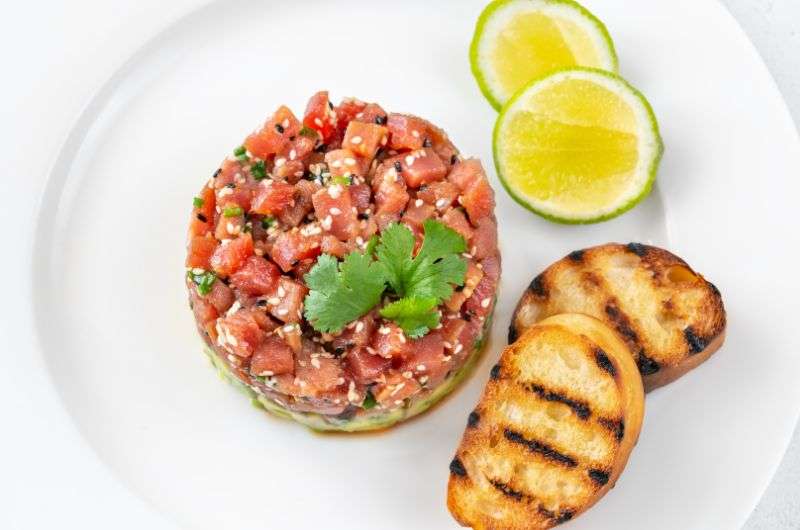
Love meat? Then Mexico is where you want to be. All meat in Mexico is divine, especially Mexican steaks. The most popular kinds of meat in Mexico are chicken, pork, beef, and seafood. You can eat them with one of the traditional Mexican side dishes: guacamole, salsa verde, or pico de gallo.
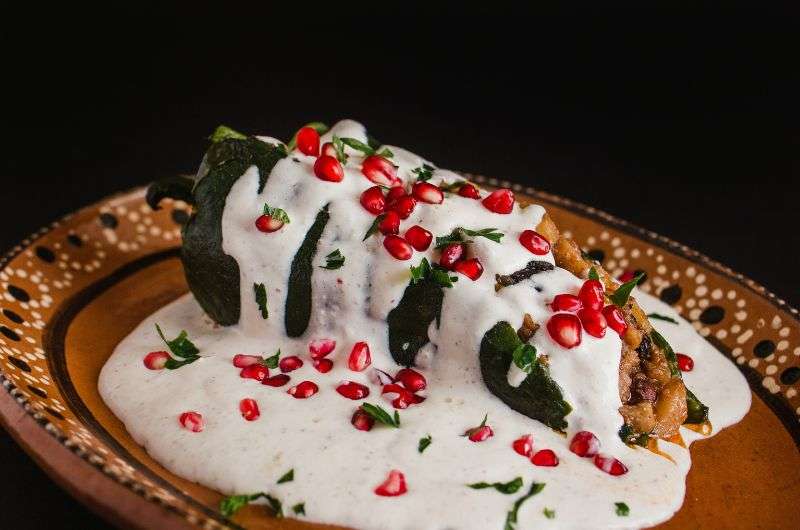
Chiles en nogada
Chiles en nogada are peppers stuffed with meat and served with pomegranate seeds and walnut-based cream sauce. They are typical for the Puebla region where they are prepared mostly in August and September, as these months are the pomegranate season. But you will probably find them in menus even in other parts of the year.
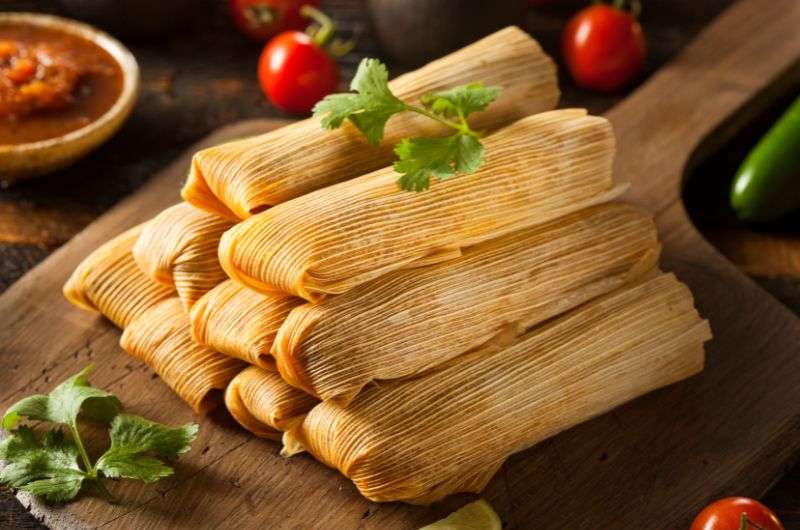
Tamales
What are tamales? In Mexico, tamales are pieces of corn-based dough wrapped and cooked in banana leaves or corn husks. They are filled with meat, cheese, and vegetables. Tamales have a long history and pre-Hispanic roots. They were eaten by civilizations such as the Aztecs and the Maya and were often used as portable food for travel, hunting, and military campaigns.
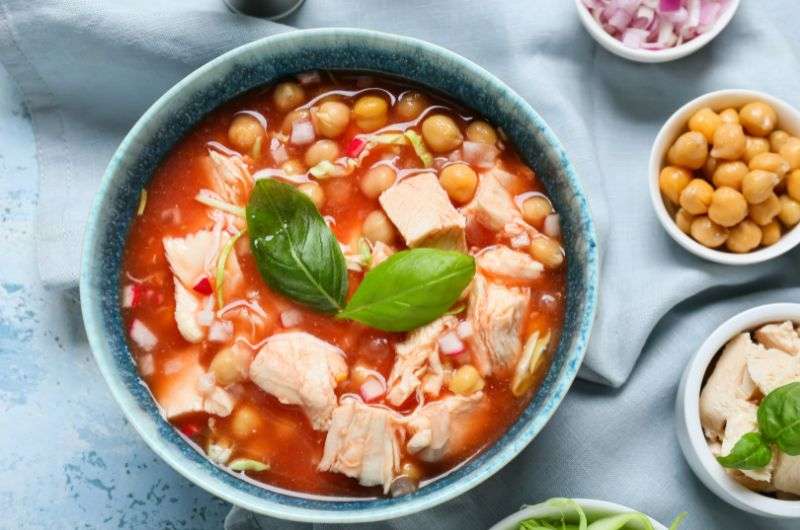
Pozole soup
Have you ever heard of Pozole? Mexico is proud of it, and quite rightfully... it’s some of the best food in Mexico I tried. It’s a traditional Mexican soup. The base is always a broth from hominy (hominy is Mexican food made of dried corn), then some meat is added in. It’s typically served on New Year’s Eve and it’s so good it’s hard to resist drinking it right away and burning your mouth, which is exactly what I did.
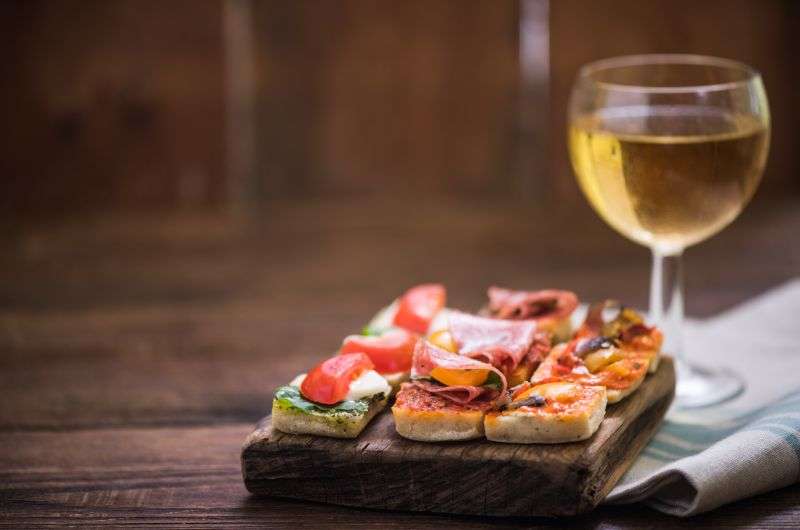
Bon appetit and cheers!
Tapas are little snacks—small plates or canapés—typical for Mexican cuisine. They can include olives, cheese, ham, sausage… whatever you want to add. When you’re having tapas, a glass of wine is a must!
Tapas don’t win any points for complexity and you don’t need to visit a top-end restaurant to try them, but they are definitely diverse and original. Any place you go, they will be different. I even tried a tapa with corn tortillas, cheese, bean paste, and ants! Now I’m an experienced traveler and ants are far from the worst thing I've eaten, so I went with the flow. If you’re curious about how they tasted, imagine a very seasoned steak.
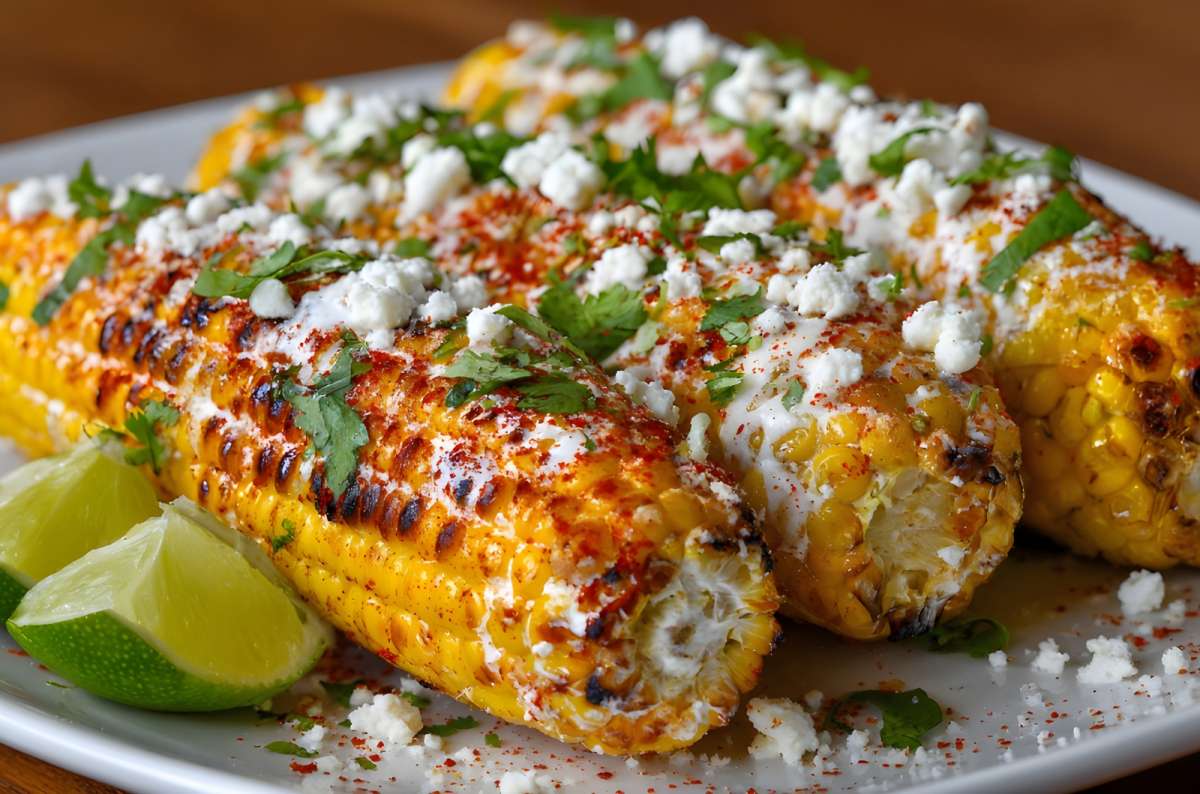
Elote is one of the most popular street foods in Mexico and a perfect example of how important corn is in Mexican cuisine. It's basically grilled corn on the cob covered in mayonnaise, cheese, lime juice, chili powder, and whatever else the vendor feels like adding.
I know that combination sounds slightly unhinged at first, but somehow it worked for me. The sweet corn, salty cheese, tangy lime, and spicy chili all come together to create one of the most addictive snacks I tried in Mexico.
Good to know: Elote is sold everywhere (street carts, markets), and it's one of the easiest Mexican foods to try if you're feeling adventurous but not too adventurous... it is messy to eat though, just FYI. Make sure you grab a few napkins. It happened to me more than once that I was standing in the street with corn and mayonnaise all over my face.
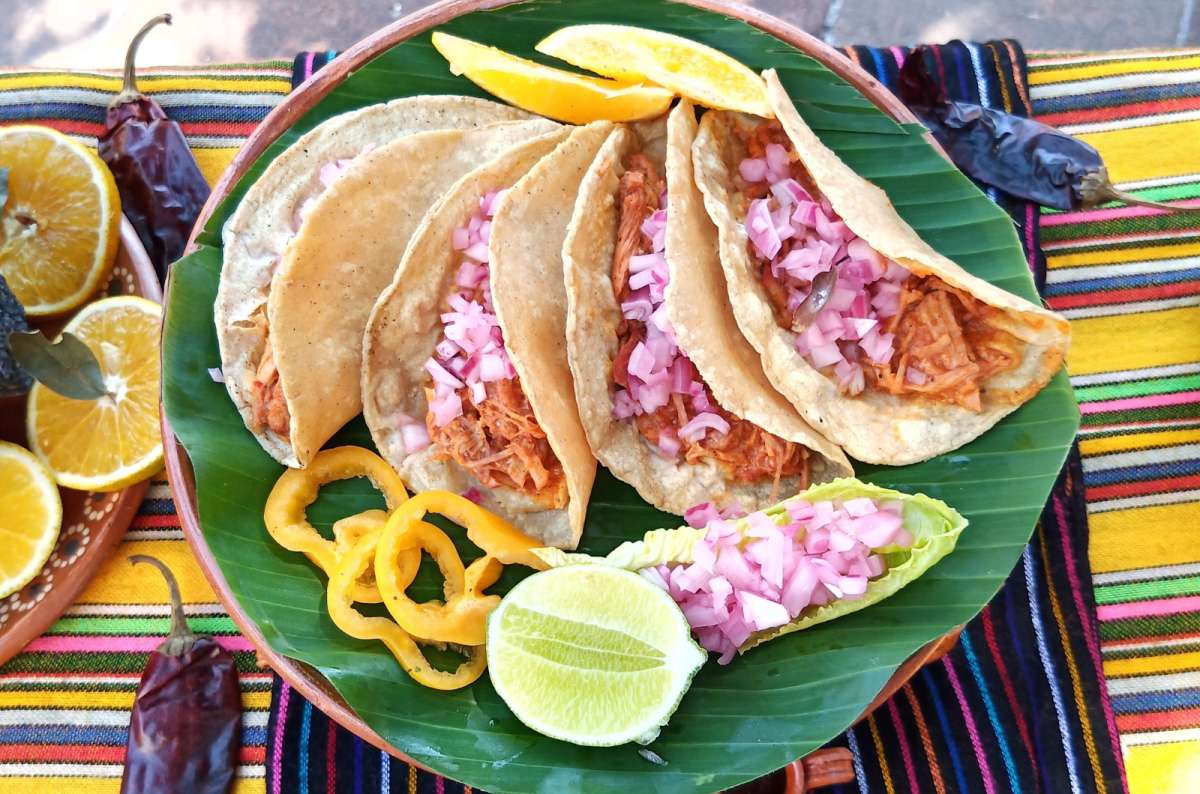
If you're visiting Yucatán, there's a very good chance you'll end up eating cochinita pibil whether you planned to or not. It's one of the most famous regional foods in Mexico, and after trying it, I completely understood why.
The dish is made from pork that's marinated in citrus juice and wrapped in banana leaves and cooked slowly until it basically falls apart if you look at it too aggressively. The result is juicy and flavorful, and I couldn’t stop eating it. I tried it, thinking it would be just another pork dish. Five minutes later, I was seriously considering whether it would be socially acceptable to order a second plate immediately... in the end I did, and I didn’t regret it at all. Delicioius!
This is one of those foods that feels tied to a place. If tacos represent Mexico as a whole, cochinita pibil represents Yucatán.
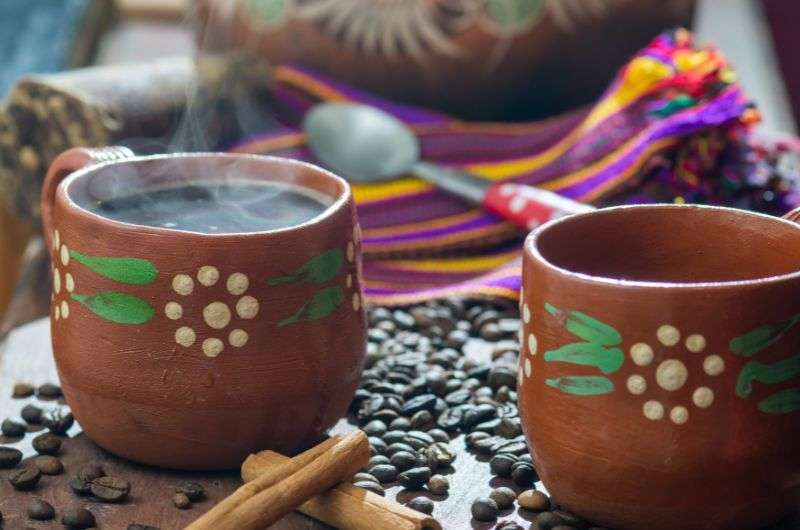
It’s traditionally served in beautiful clay cups
Love traditions, interesting flavors, and ornaments? Olla is the right thing for you to drink in Mexico. It’s a traditional coffee prepared with cinnamon and piloncillo (unrefined cane sugar). In some parts of Mexico, people also add spices such as star anise, cloves, or citrus peel.
Coffee olla reminded me of glühwein, drank at Christmas markets in Europe.
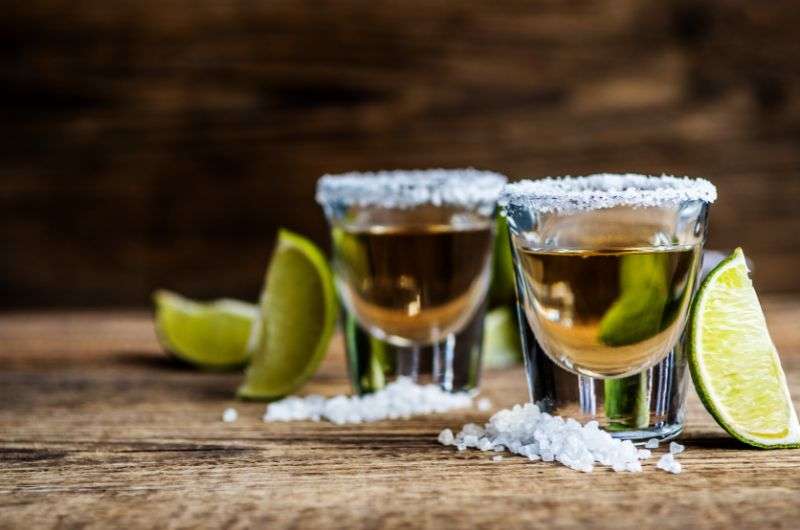
Arriba, abajo, al centro y para el dentro—this is the Latino saying before drinking tequila. It means "Up, down, to the centre and inside"
Tequila and mezcal are both Mexican agave spirits, but they aren’t interchangeable names for the same drink. Tequila is made from blue agave and can legally be produced only in designated parts of Mexico, mainly in Jalisco and selected municipalities in four other states. Mezcal can be made from several types of agave and usually has a smokier flavor.
I tried both in Mexico. Tequila is the one you’ll recognize immediately, but mezcal was the more interesting tasting experience for me.
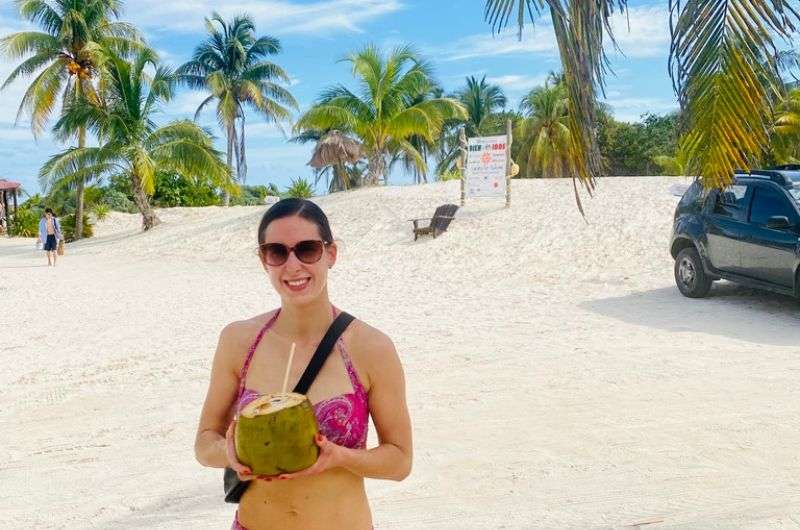
Karin getting her fresh coconut water
Spice up your trip on a beach by buying a fresh coconut. Locals will cut it in half and put a straw in. It’s both a good drink and a good experience.
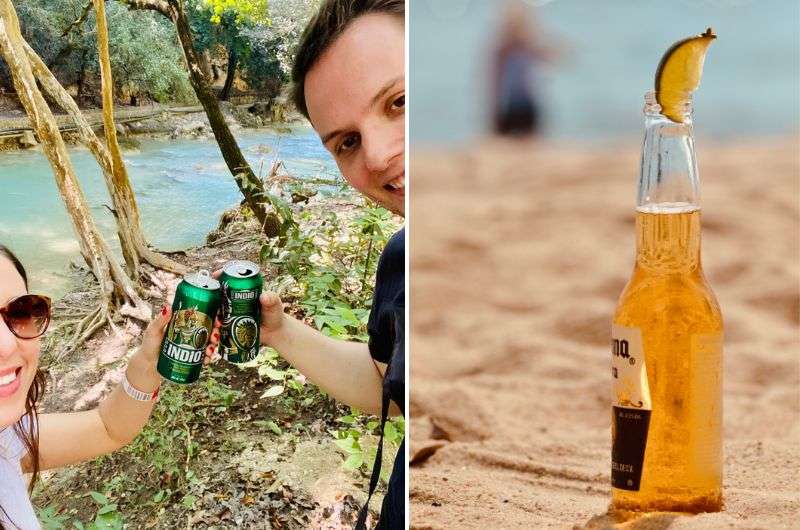
We liked the Mexican beer!
We come from Czechia, the country with the highest beer consumption per capita in the world. That means we are used to drinking beer and have high demands when it comes to quality. Mexican beer met them. I would even say it’s comparable to popular European lagers such as Heineken, Peroni, or Carlsberg.
I especially enjoyed these three beer brands:
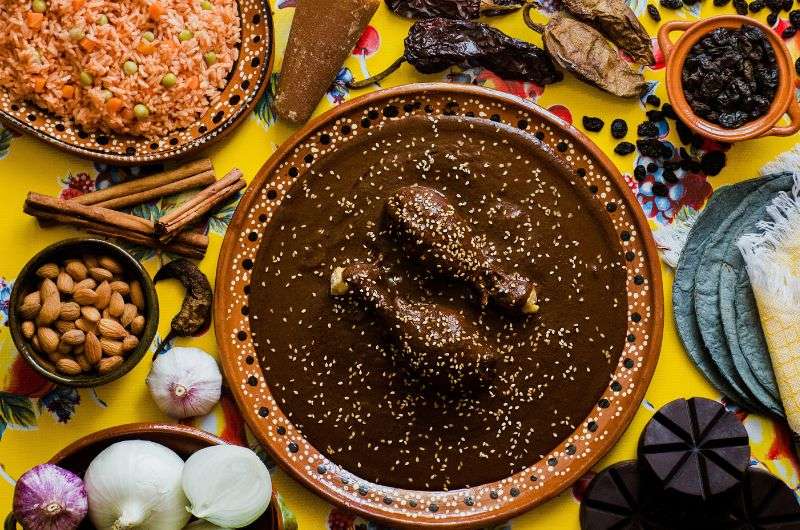
Chocolate and chicken. Yes, you are reading well.
Mole is a traditional Mexican sauce, often made with a complex mix of ingredients including chilies, spices, nuts, seeds, and sometimes chocolate. It is commonly served with chicken and rice. And it’s also a big mistake. I tried it and instantly regretted it. If I said mole isn’t tasty, it would be a gross understatement. It’s disgusting.
But however inedible mole seemed to me, the Mexicans are proud of it and it’s considered one of the best foods in Mexico—and also one of the most difficult to cook. Want to try? Let your inner genius chef come forth and get ready for 7 hours of cooking. Yep, I’m not exaggerating. 7 hours is what it takes to prepare mole.
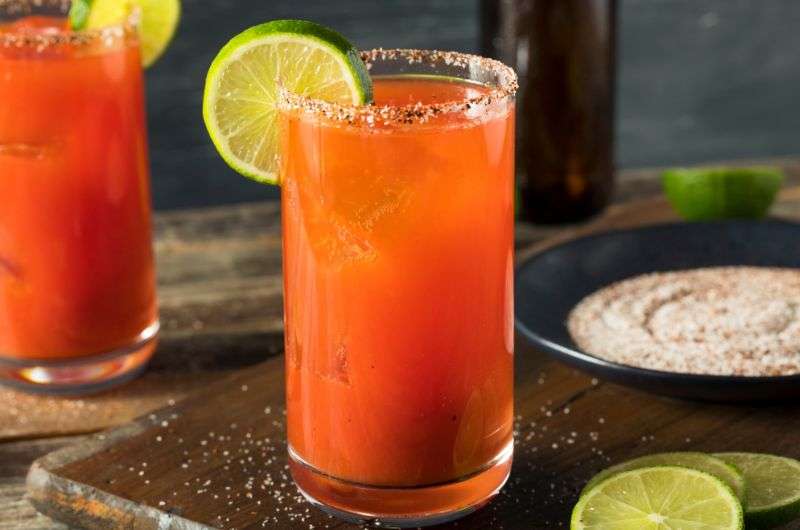
Michelada isn't my drink
Michelada is a popular beer cocktail in Mexico made of a very weird combination: beer, lime juice, chili pepper, and hot sauces. There are also variations with Red bull and tequila.
My opinion on Michelada? I’ll describe it in a single word: UNDRINKABLE. But to my great surprise, Karin took pleasure in drinking it. So don’t condemn it completely and maybe give it a try. You will either love it or hate it. Nothing in between.

The words “vomiting” and “Mexican water” have the same meaning. Tap water in Mexico is full of bacteria causing intestinal problems, especially E. coli. It pains me to admit, but I know exactly what I’m talking about.
I imagined a nice romantic evening with my wife in Mexico: dinner, sunset view, a glass of wine. But trust me: puking up and being green as grass is the killer of romance. I vomited all around myself, which didn’t bring joy to my wife—and neither did it bring joy to the flight attendant, as we were on a plane.
So, once again: Don’t drink tap water in Mexico. You can thank me for saving your bacon later.
One thing that surprised me about Mexican food is how much it changes from region to region. Before my trip, I assumed the most popular food in Mexico would be the same more or less, everywhere. I was very wrong.
Most people think of tacos when they hear famous food in Mexico, and fair enough—they're everywhere. But once you start traveling around the country, you quickly discover local specialties that you won't find everywhere else. And that’s part of the fun… one meal turns into another, and before you know it, you're planning your next stop based on what you want to eat.
Other regional dishes you may encounter include:
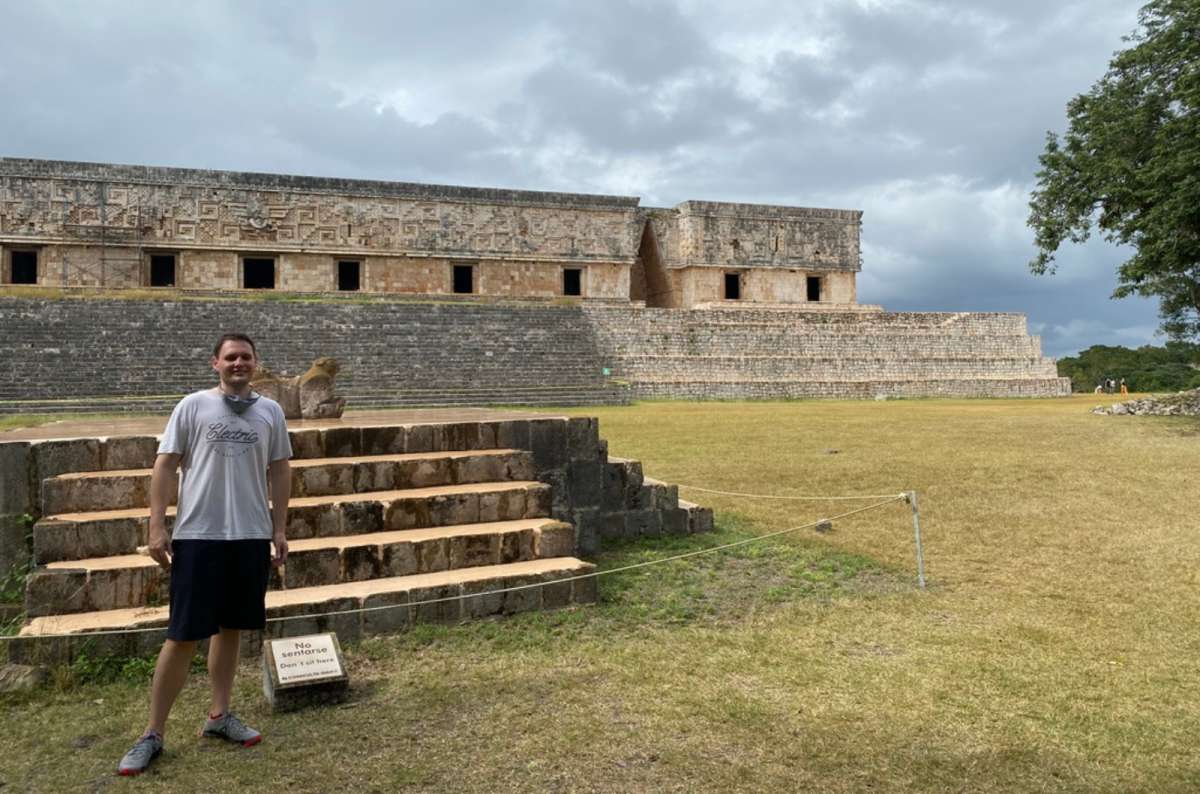
One thing I quickly noticed in Yucatán is that the food feels very different from what most people imagine when they think of Mexican cuisine. The region has strong Mayan roots and lots of citrus flavors.
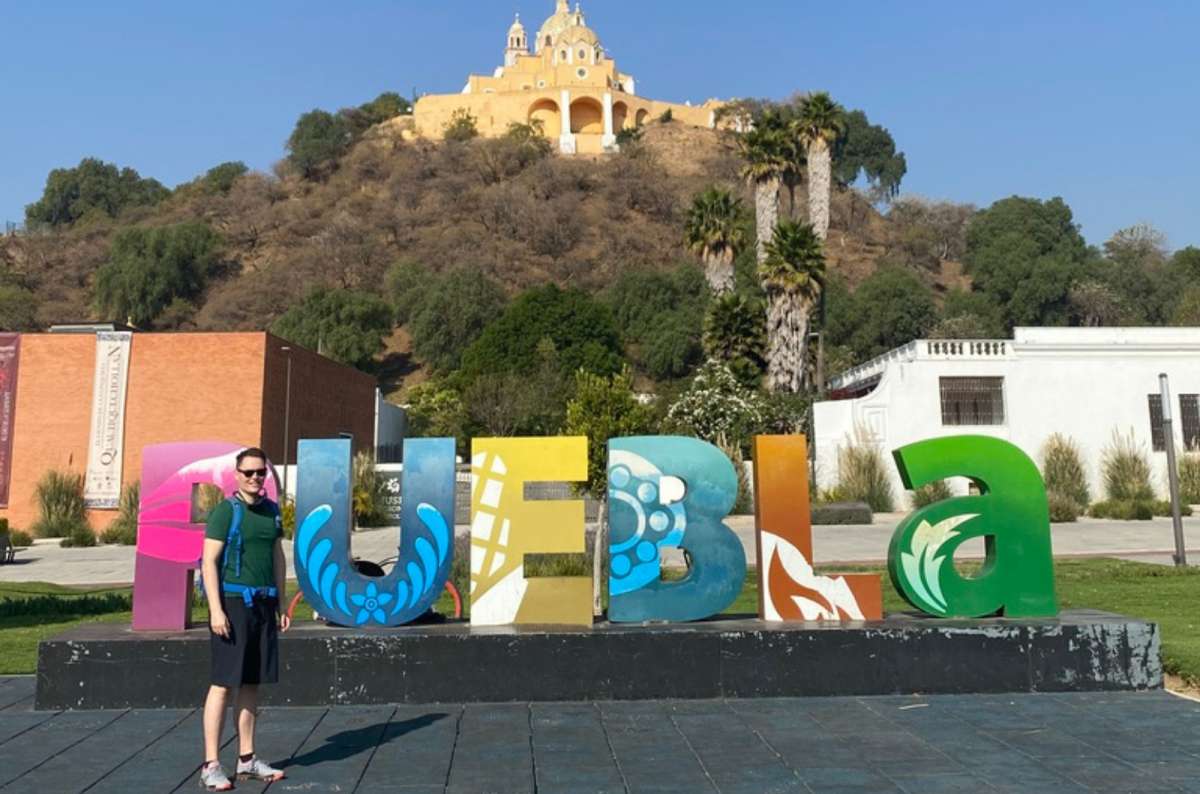
Some of Mexico's most famous dishes come from here, so there's a good chance you've already heard of Puebla's food without realizing it.
Seafood is obviously a much bigger deal here, and you’ll find menus with fish, shrimp, octopus. Dishes are lighter here than the heavy meals found inland.
If Mexico had a food capital, central Mexico would probably win. This is where street food is everywhere, tacos are a way of life, and corn-based dishes show up at almost every meal.
One thing I loved about central Mexico was how easy it was to eat well. Half the time I'd just follow the crowd, join the line, point at whatever looked good, and hope for the best. It worked.

Before visiting, I thought Mexican food was mostly tacos, burritos, and whatever my local Mexican restaurant happened to serve. I was very wrong. The best part of eating in Mexico is discovering local specialties, trying food you’ve never heard of, and realizing that every region has something different to offer. My advice? Try the local dishes, eat where the locals eat, and don’t be afraid to order something new.
If you’re planning your trip, check out my Mexico itinerary to see where to go and what to experience along the way.
This post contains affiliate links. If you make a booking through one of my links, I may earn a small commission—at no additional cost to you. Thank you for your support!
Mexico food and drinks: My 13 Favorite Things I Tried in Mexico
What is traditional Mexico food?
The best food in Mexico (and drinks too)
1. Churros (the best food in Mexico)
2. Tacos (also the best food in Mexico)
8. Elote (the best street food in Mexico)


Hi, I’m Jan. I travel fast and intensely, whether I’m exploring the buzz of Tokyo in 3 days or road-tripping through mountains and beaches on a 3-week Thailand adventure. And no matter where I am, you’ll always find me in a comfortable hotel at night and eating the best food.
If that sounds like your kind of journey, hop on board, and let’s explore the world together!
I started this blog after realizing how tough it can be to find reliable, authentic travel info. You wouldn’t believe how many “travel bloggers” never even visit the places they write about! On Next Level of Travel, you can count on my full honesty and insights drawn from my firsthand experiences.
Here’s the deal: not every destination is all superlatives and unicorns. I’ll let you know if a tourist attraction isn’t worth your time, like skipping overrated stops in my 2-week Spain itinerary. And when I find something truly special—like the perfect mix of culture and nature in Cape Town—you can trust that it’s worth adding to your itinerary.

Comments | Thoughts? Give us a shout!