


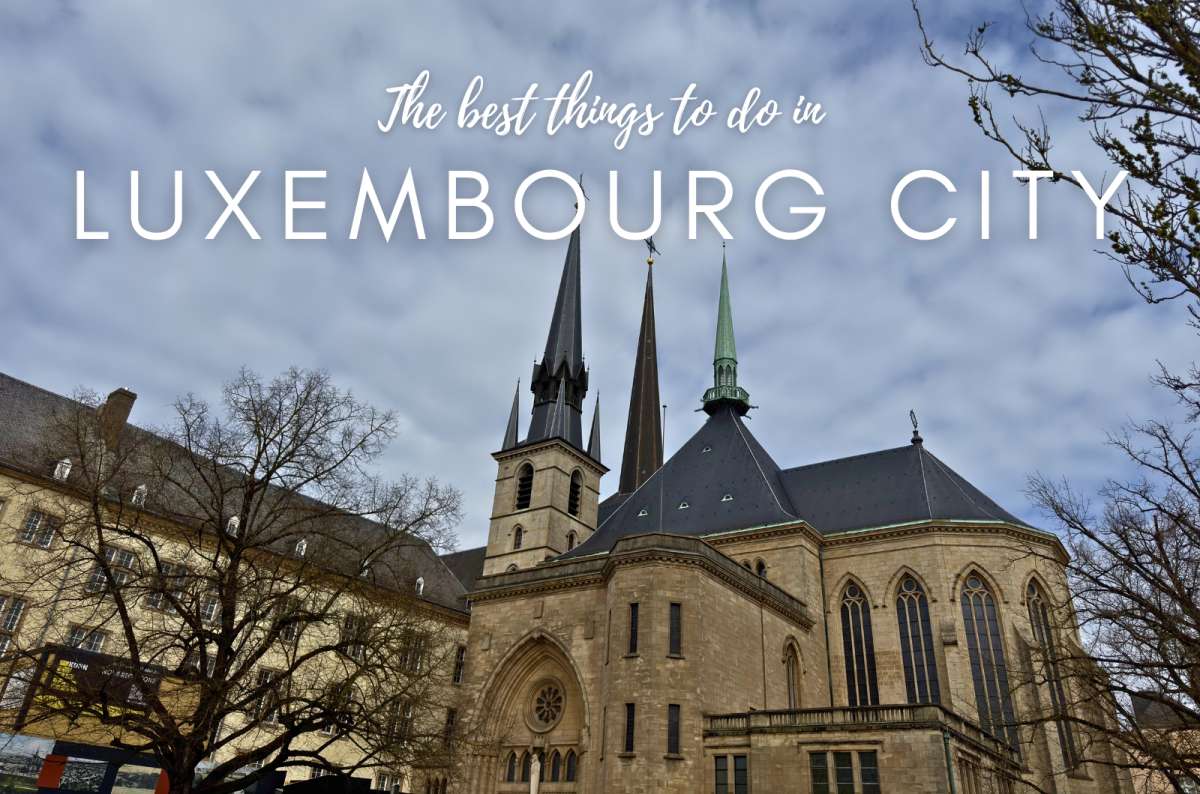


At a glance: the best things to do in Luxembourg City ranked
Quick verdict: what should you prioritize?
1. Walk the Chemin de la Corniche
3. Follow the Alzette valley and lower city walks
4. Visit the Luxembourg City History Museum
5. Visit Dräi Eechelen Museum and Fort Thüngen
6. Ride the Pfaffenthal Panoramic Elevator
11. See Mudam and the Philharmonie exterior
12. Add the National Museum of Archaeology, History, and Art
13. Walk through Place Guillaume II and Place d’Armes
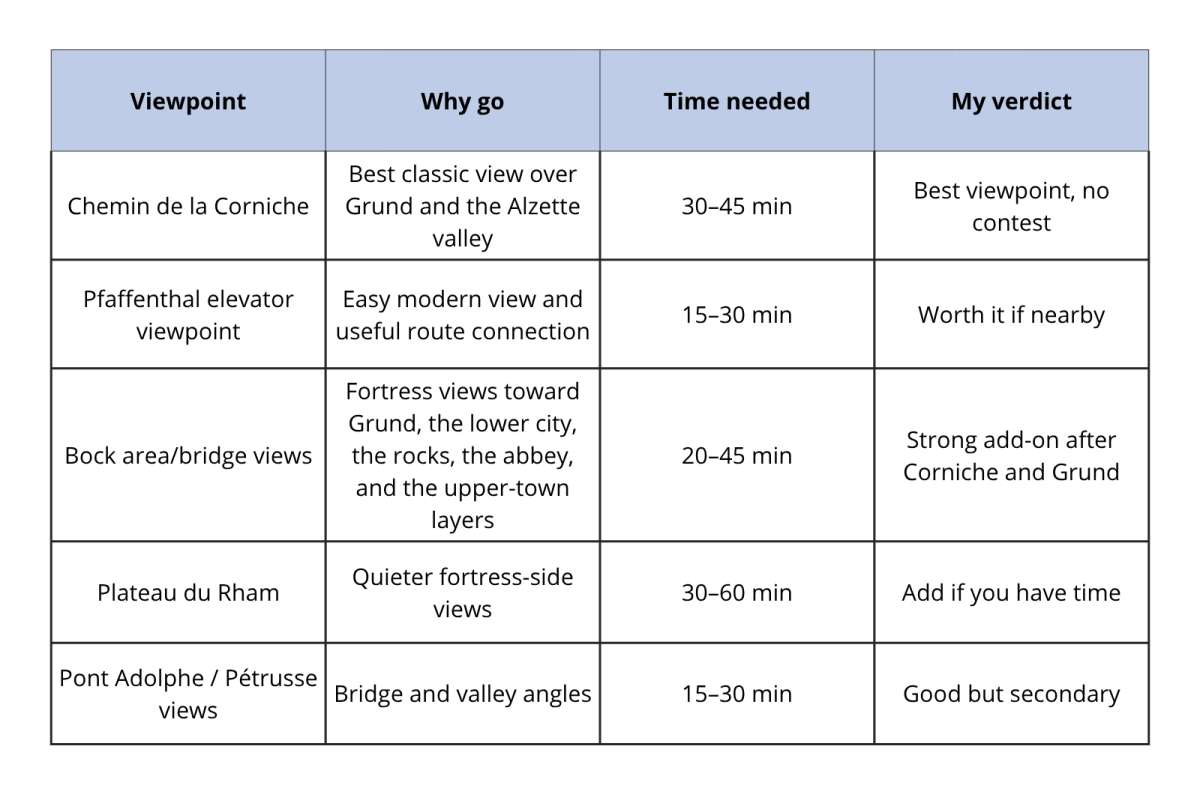
Best viewpoints in Luxembourg City
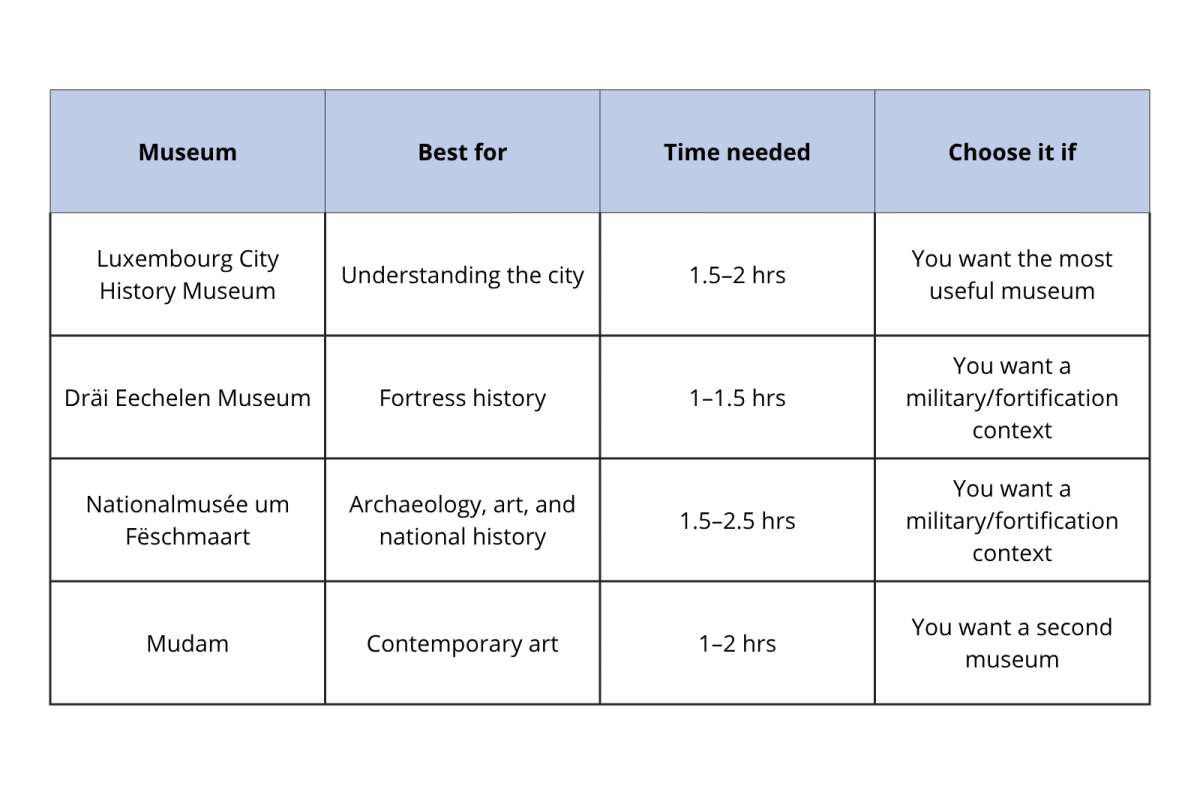
Best museums in Luxembourg City
How much time do you need in Luxembourg City?
Best one-day Luxembourg City itinerary
What to skip in Luxembourg City if you’re rushed
How to combine Luxembourg City attractions efficiently
Where to stay in Luxembourg City
Practical tips for visiting Luxembourg City
Luxembourg City is worth visiting, but not because it has an endless list of blockbuster attractions waiting to change your life. That’s not really its thing.
The best things to do in Luxembourg City are more connected than that: viewpoints, valleys, bridges, fortifications, steep streets, and a few museums that actually help the whole place make sense.
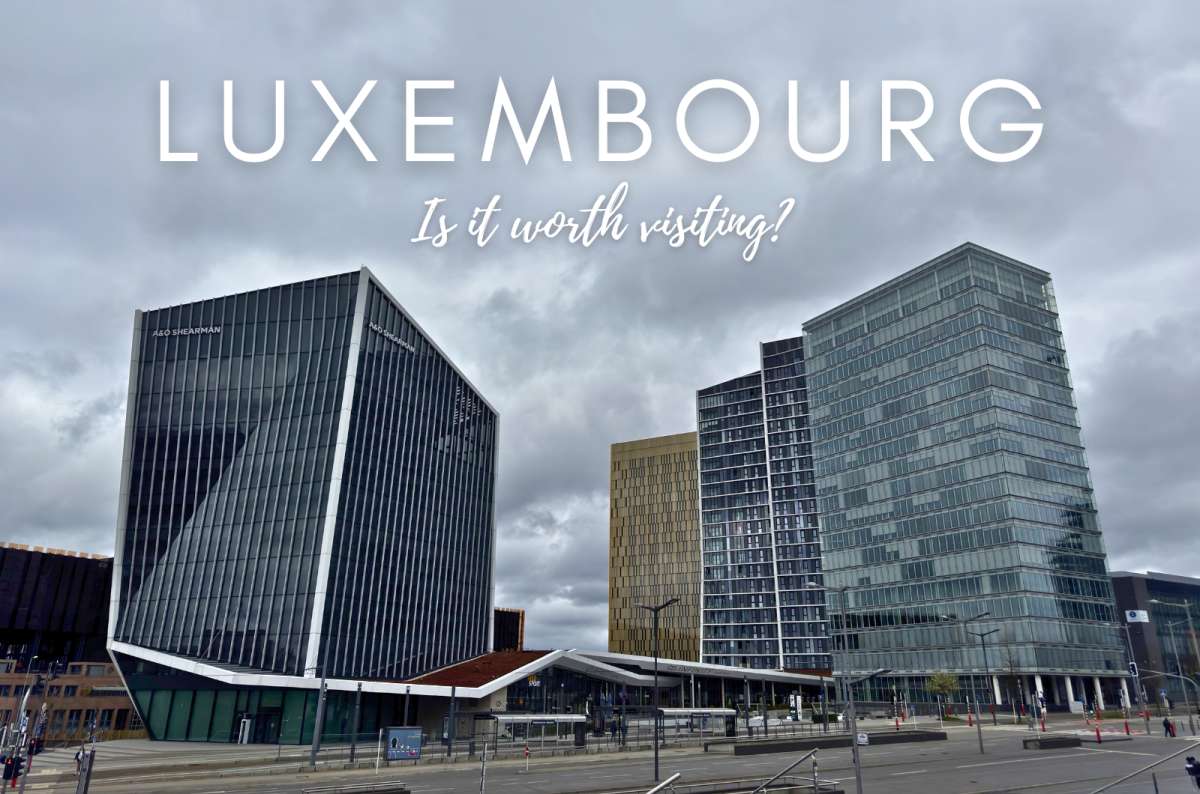
When I first arrived, I honestly expected something older, cuter, and maybe a bit more “storybook Europe.” Instead, parts of Luxembourg City felt surprisingly modern and administrative. Lots of glass, offices, suits, and EU energy. Not bad, just not the crooked medieval fantasy some people seem desperate to sell you.
But then I walked the Corniche, dropped down into Grund, followed the Alzette valley, and suddenly the city clicked. Luxembourg City gets much better when you stop attraction-hopping and start following the scenery.
This article ranks the top Luxembourg City attractions by actual payoff for a first-time visitor, especially if you only have one day or a short weekend.
For broader planning logistics, use my Luxembourg City travel guide after you’ve decided which stops actually deserve your time. Read more from my Luxembourg travel blog.
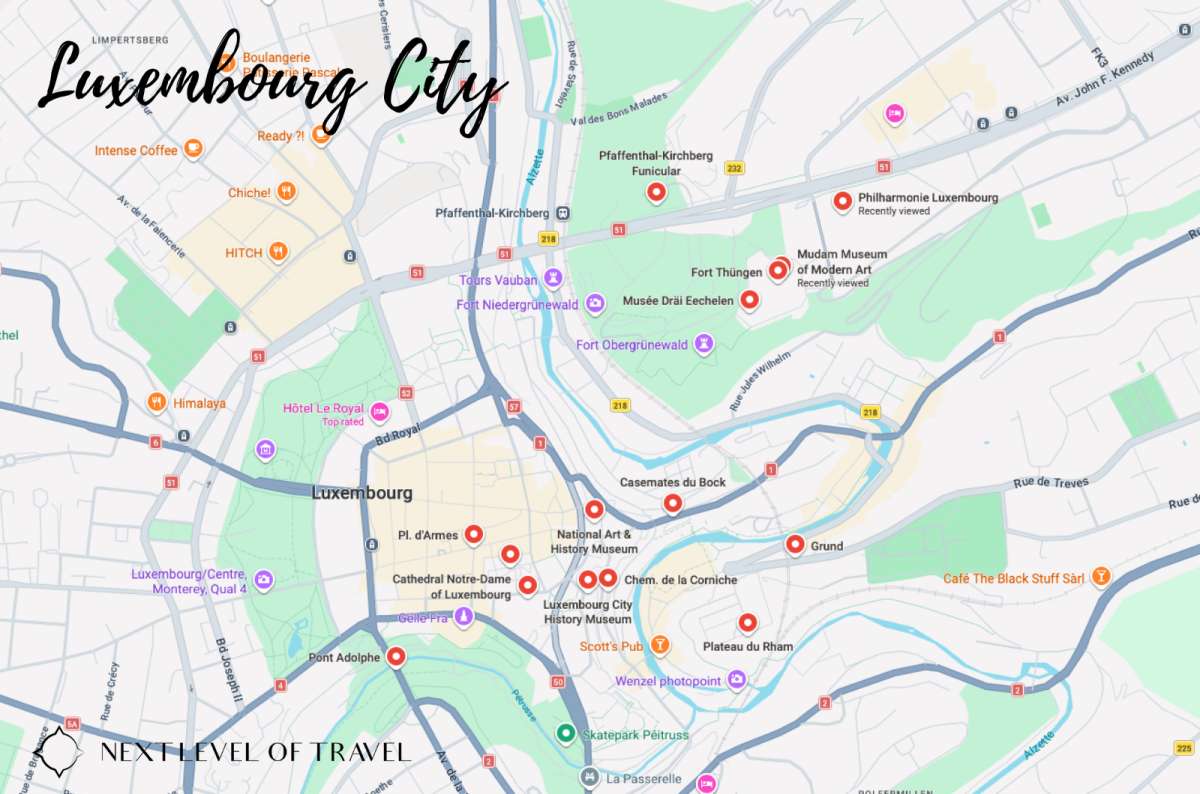
May this map of Luxembourg City be your guiding light
I ranked these based on how useful, scenic, and memorable they are for a first-time visit—not how famous they are. Fame is nice. It also lies.
Top hotel tip: Stay in the upper town or near the train station if you want easy walking access to the main sights. I’d prioritize location over “cute boutique charm” here because Luxembourg City’s hills are very real.
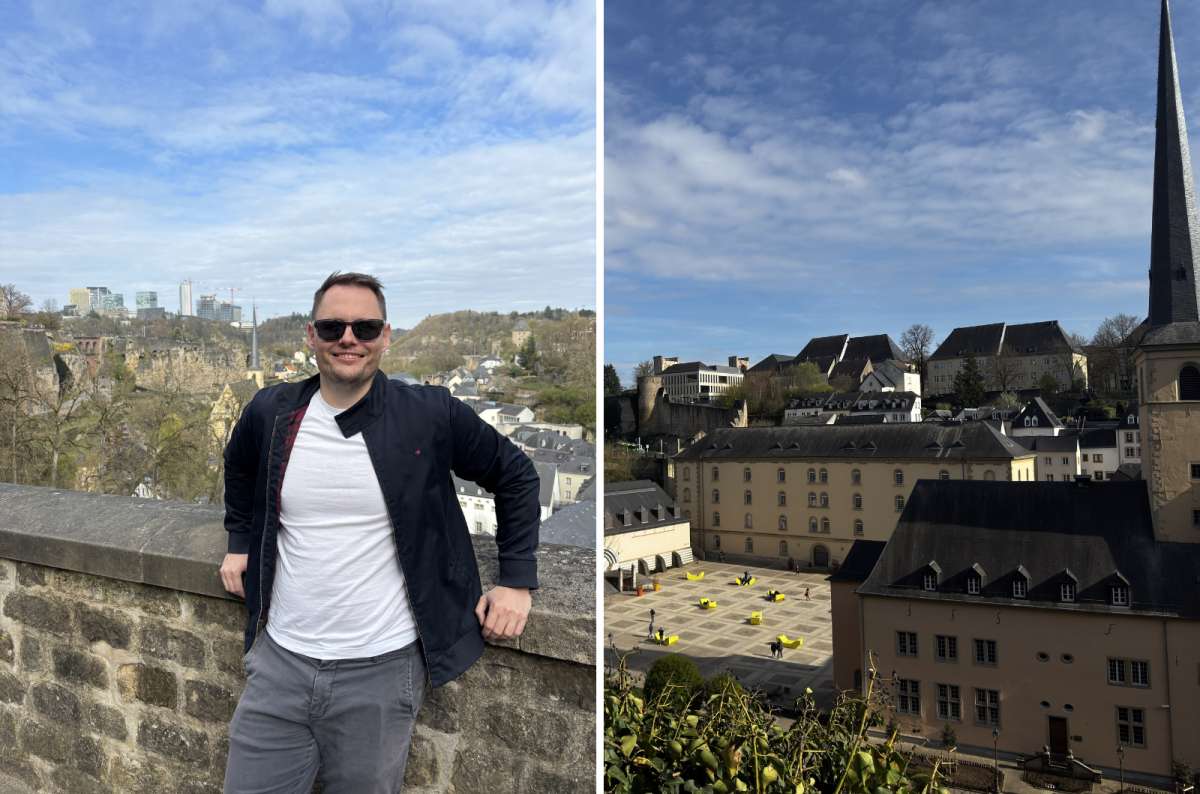
If you don’t stop by the Corniche and Neumünster Abbey in Grund, you haven’t visited Luxembourg
Prioritize the Corniche, Grund, the Alzette valley walk, and the Luxembourg City History Museum.
Add Dräi Eechelen, Pfaffenthal elevator, Pont Adolphe, and Notre Dame Cathedral if time allows.
Skip extra squares, too many museums, Mudam interior unless you love contemporary art, and the Casemates if you’re only going because every other list tells you to.
Luxembourg’s old quarters and fortifications are UNESCO-listed, and that explains the city better than any generic “pretty capital” description ever could. It’s not just an old town. It’s an old fortress city sliced by valleys.
Pro tip: If you already know that you want to include day trips in your visit, consider a rental car.
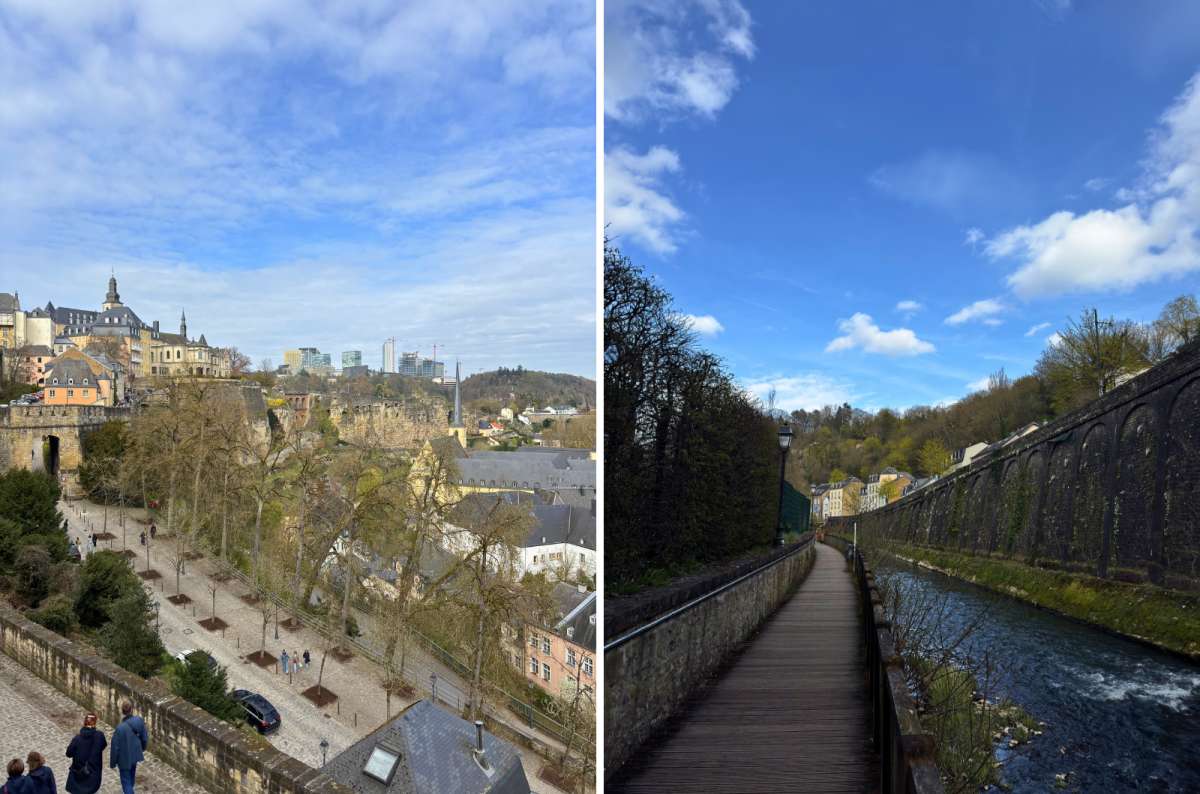
Even just taking a walk down Chemin de la Corniche, you get the perfect lay of the ground
Start here. This is the best thing to do in Luxembourg City.
The Corniche is the moment Luxembourg City stops feeling like a polished administrative capital and starts making visual sense. You’re walking along old ramparts above the Alzette valley, looking down at Grund, the abbey buildings, church towers, stone walls, bridges, and the lower city tucked into the valley.
It’s often called “the most beautiful balcony in Europe,” which sounds like the kind of tourism phrase I usually want to throw into the nearest river. But here, annoyingly, it works.
When I was there, this was the first place where I thought, “Ok, now I get why people like Luxembourg City.” Not because of one monument, but because of the layers: upper town above you, lower town below you, fortifications everywhere, and the Alzette doing all the scenic heavy lifting.
You don’t need a complicated plan here. Just walk slowly, stop often, and look down into Grund. The best views are not one single photo spot. The whole path works as a moving viewpoint.
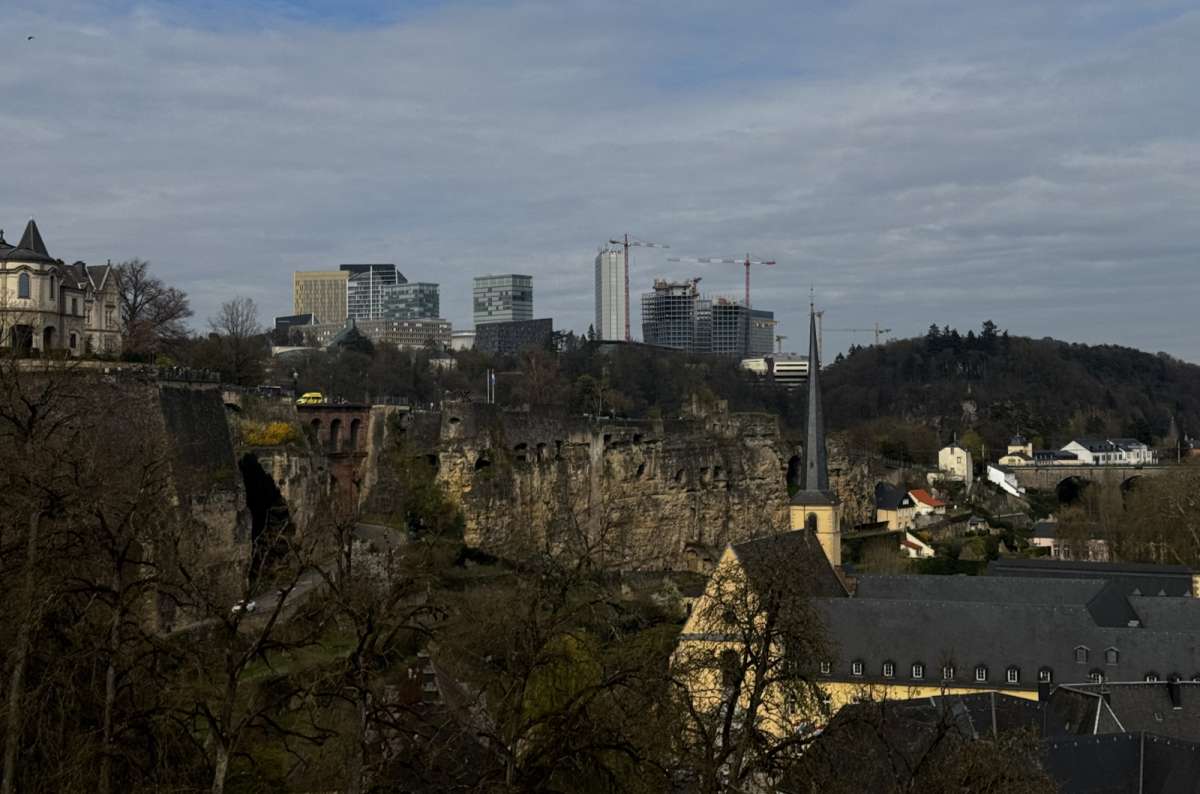
Luxembourg is one of the cities that blends the medieval and the modern somewhat well (the power of storytelling)
I’d do this before anything else because it gives you the mental map for the city. After the Corniche, Grund makes more sense. The Casemates make more sense. The valley walks make more sense. Even the slightly stiff upper town makes more sense.
Pro tip: If you’re not sure about finding your way around the city, you can book a guided tour online.
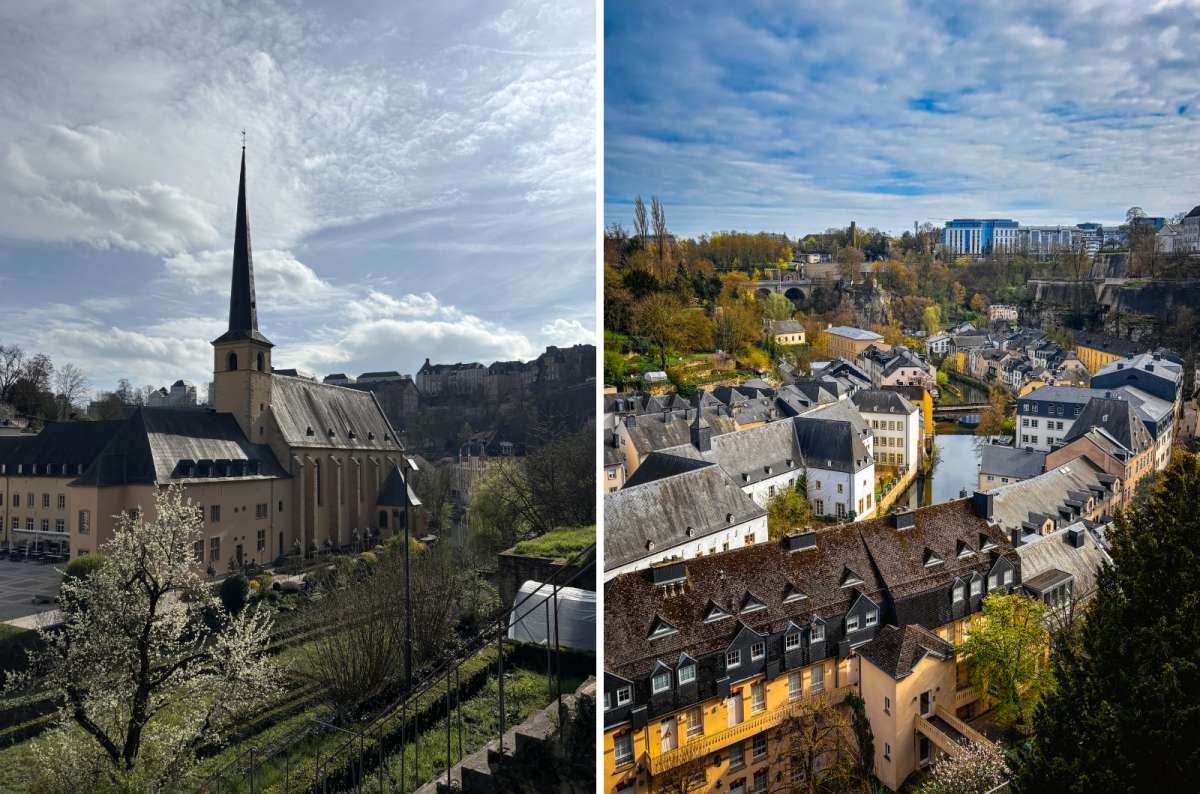
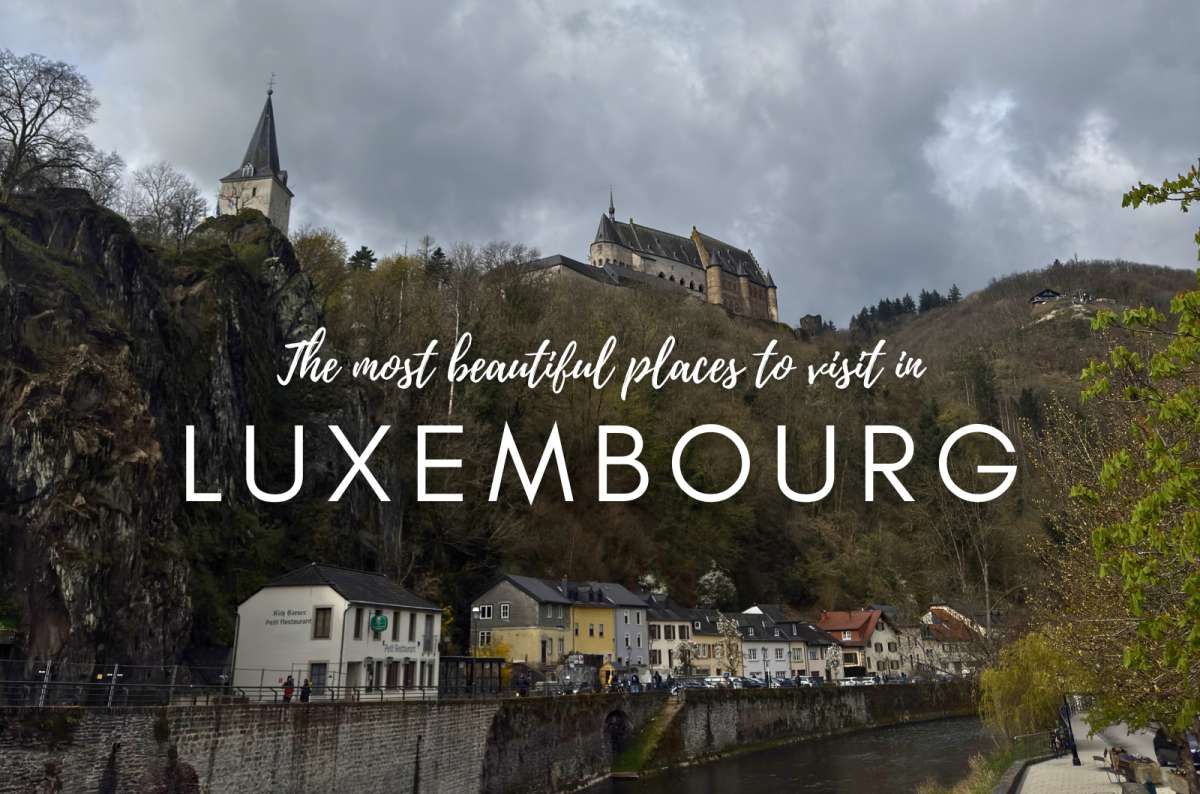
Grund is the fairytale part of the city you see on every single postcard or Instagram post
Grund is the best scenic area in Luxembourg City.
It sits below the old town along the Alzette River, and this is where Luxembourg City feels less like a capital and more like a place built in vertical slices.
From above, Grund looks almost too neat: stone houses, river bends, church spires, bridges, and old walls. From below, it feels calmer and more lived-in. I liked it much more than the main squares in the upper town, which are pleasant but not exactly life-altering unless you have a very emotional relationship with paving stones.
The trick is not to treat Grund as a single stop. Treat it as part of the walk. Go down from the Corniche or Bock area, wander along the river, look back up at the cliffs and walls, and then climb or lift yourself back up, depending on how heroic your legs feel.
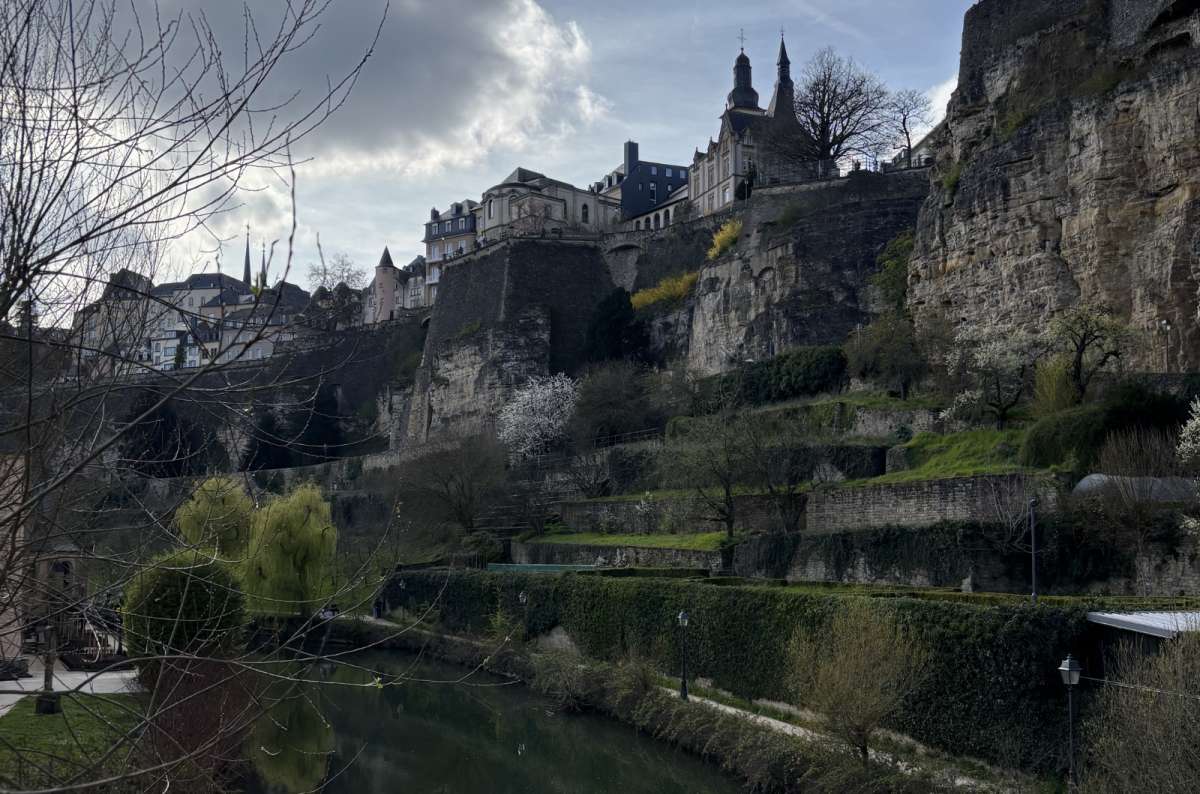
Grund brings a really good sense of atmosphere to the city, but at some point, you’re going to have to find your way up again
Grund is good for wandering, but not the useless kind of wandering where travel writers say “get lost” because they ran out of actual advice. Follow the Alzette, look for views back toward the upper town, and use it as the scenic connection between the Corniche, Neumünster Abbey area, and the lower valley paths.
When I visited, this was the area that made the city feel most different from other European capitals. Not bigger. Not more dramatic than Prague or Edinburgh. Just uniquely layered and compact in a way that rewards walking.
See my guide to the best viewpoints in Luxembourg City if views are your main reason for coming.
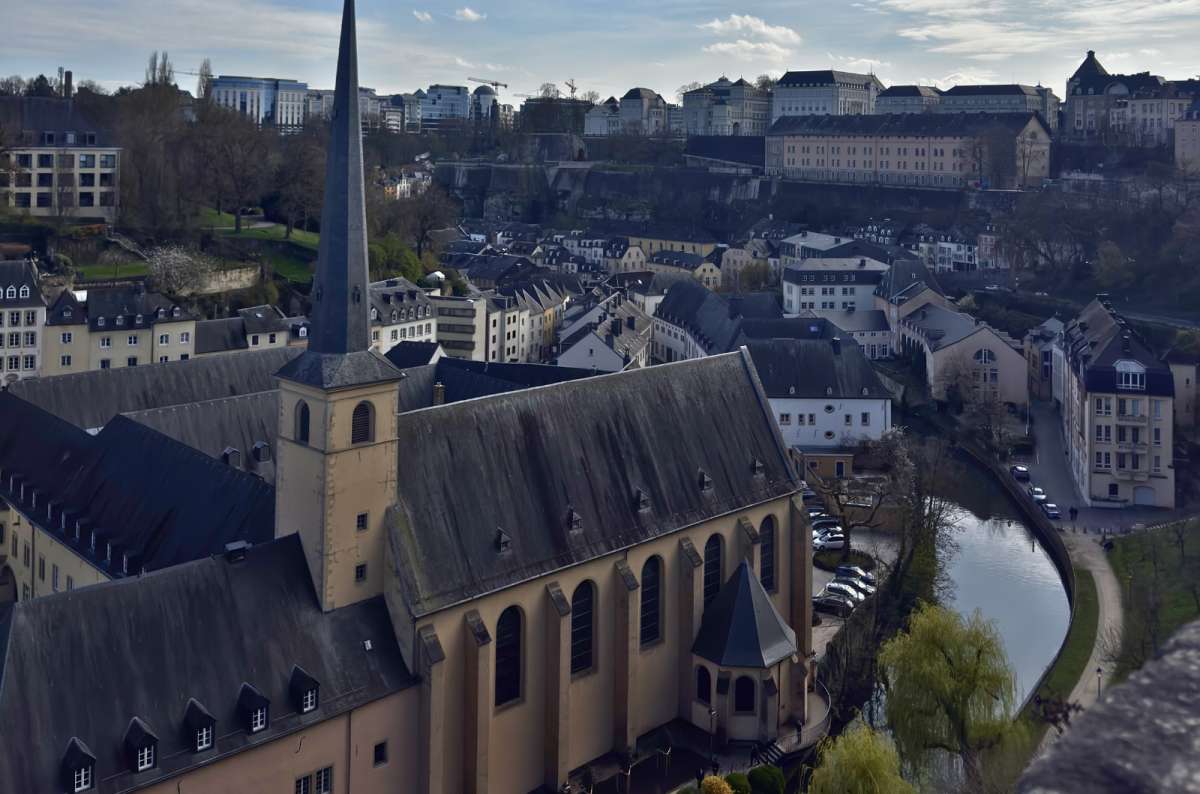
Honestly, following the Alzette River might be enough for a solid Luxembourg itinerary
This is the scenic backbone of Luxembourg City.
The Alzette valley is not one attraction, and that is exactly why it matters. It ties the best parts of Luxembourg City together: Grund, the Corniche views, the lower city paths, the fortress walls, the bridges, and the sudden “wait, this city is actually really cool” moments.
If you only bounce from landmark to landmark, Luxembourg City can feel a bit underwhelming. If you follow the valley, it becomes a proper walking city.
I found the lower walks more rewarding than several of the named attractions because they show you how the city actually works. Upper town, lower town, cliff, wall, river, bridge, repeat. That’s Luxembourg City in one sentence. Not a poetic sentence, but a useful one.
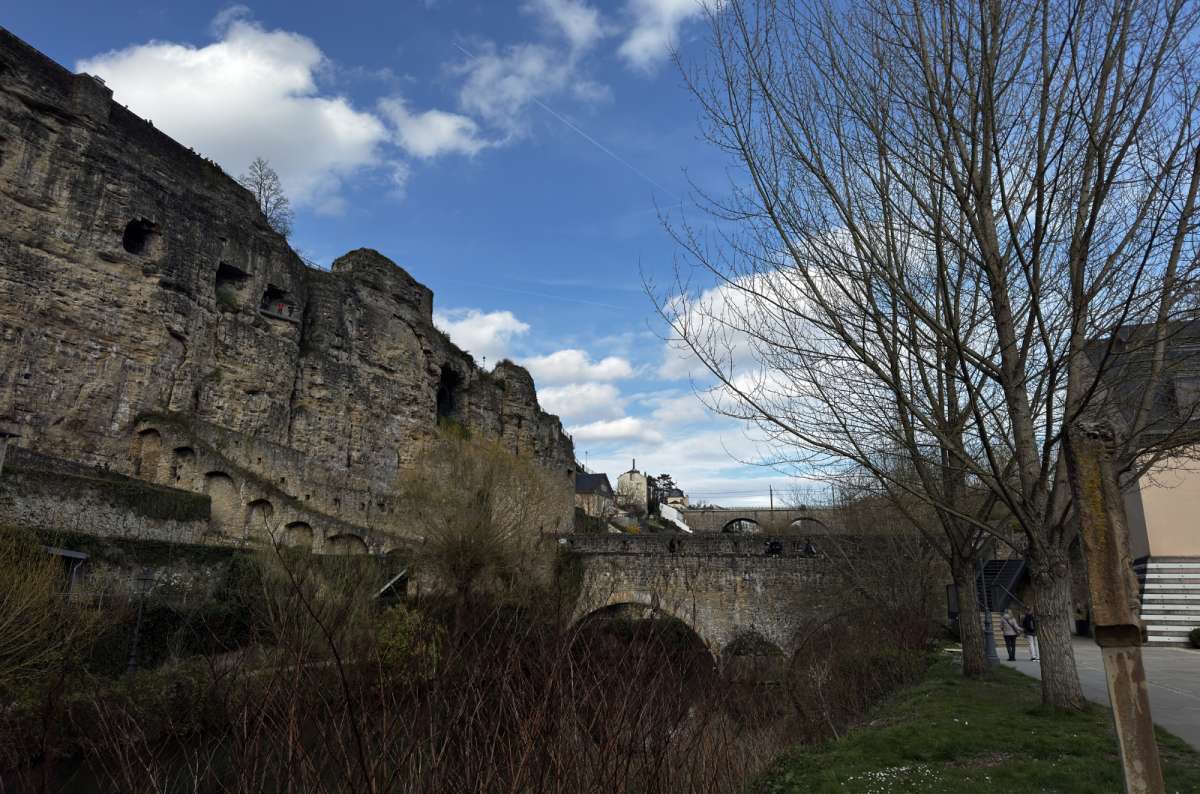
This is the view of the Bock area, the tiny holes in the mountain give you an awesome view of the Neumünster Abbey
A simple route that works well:
This gives you the best ratio of scenery to effort. You’ll still climb because Luxembourg City is not flat, no matter how cute and compact it looks on a map, but the payoff is strong.
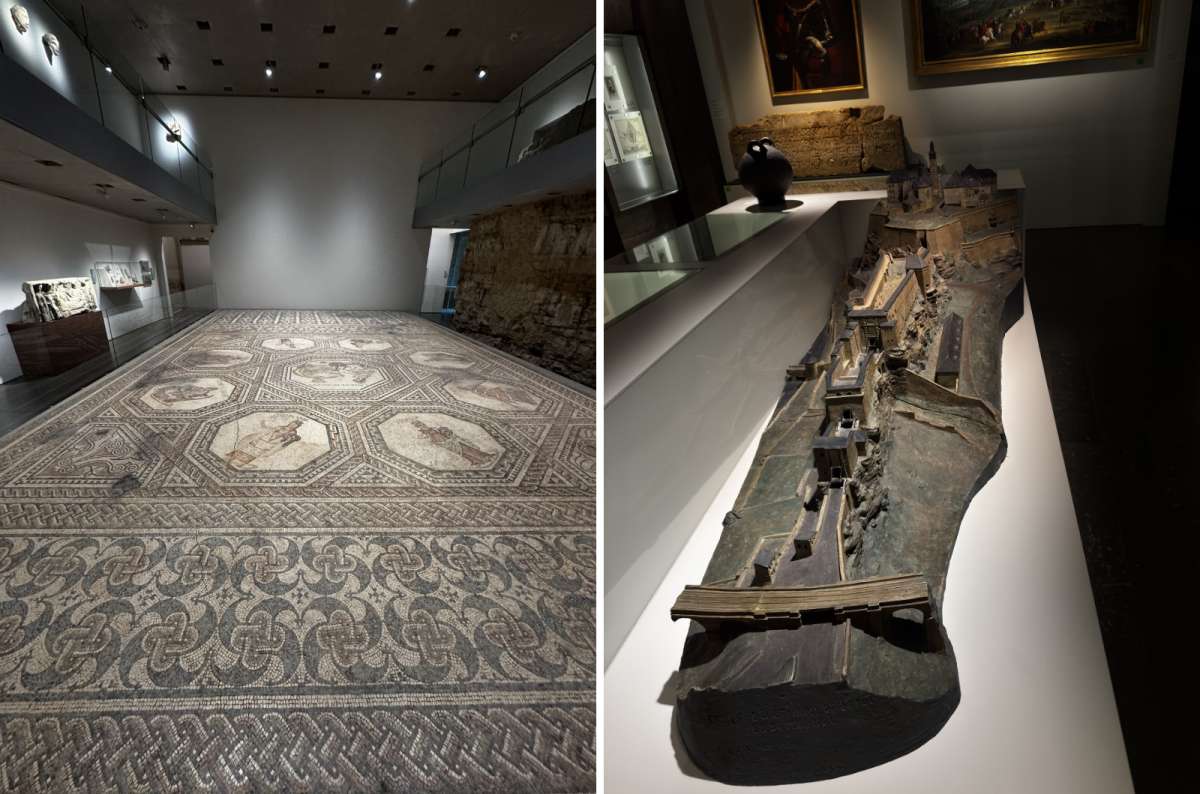
Informative, cool, well-commented, awesome @ Luxembourg City History Museum
This is the best-paid attraction in Luxembourg City.
If you only pay for one museum in Luxembourg City, I’d choose the Luxembourg City History Museum. Not because it sounds thrilling. It doesn’t. “City history museum” usually gives off the same energy as a municipal brochure.
But this one is genuinely useful because Luxembourg City needs context. Without it, you see walls, valleys, bridges, old buildings, and administrative modernity. With a bit of background, the place starts to make more sense.
The museum’s permanent exhibition, “The Luxembourg Story,” covers the city from the medieval town and fortress period through independence, industrial development, occupation, European institutions, and the modern financial center.
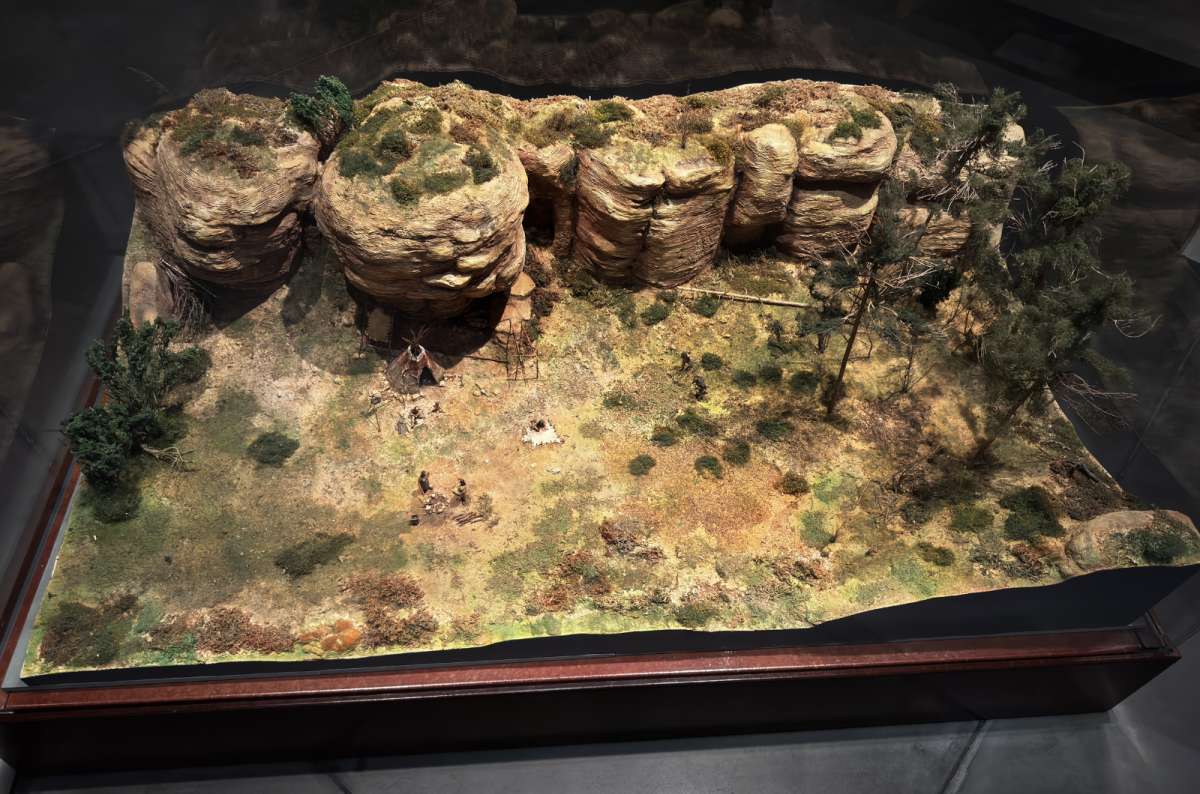
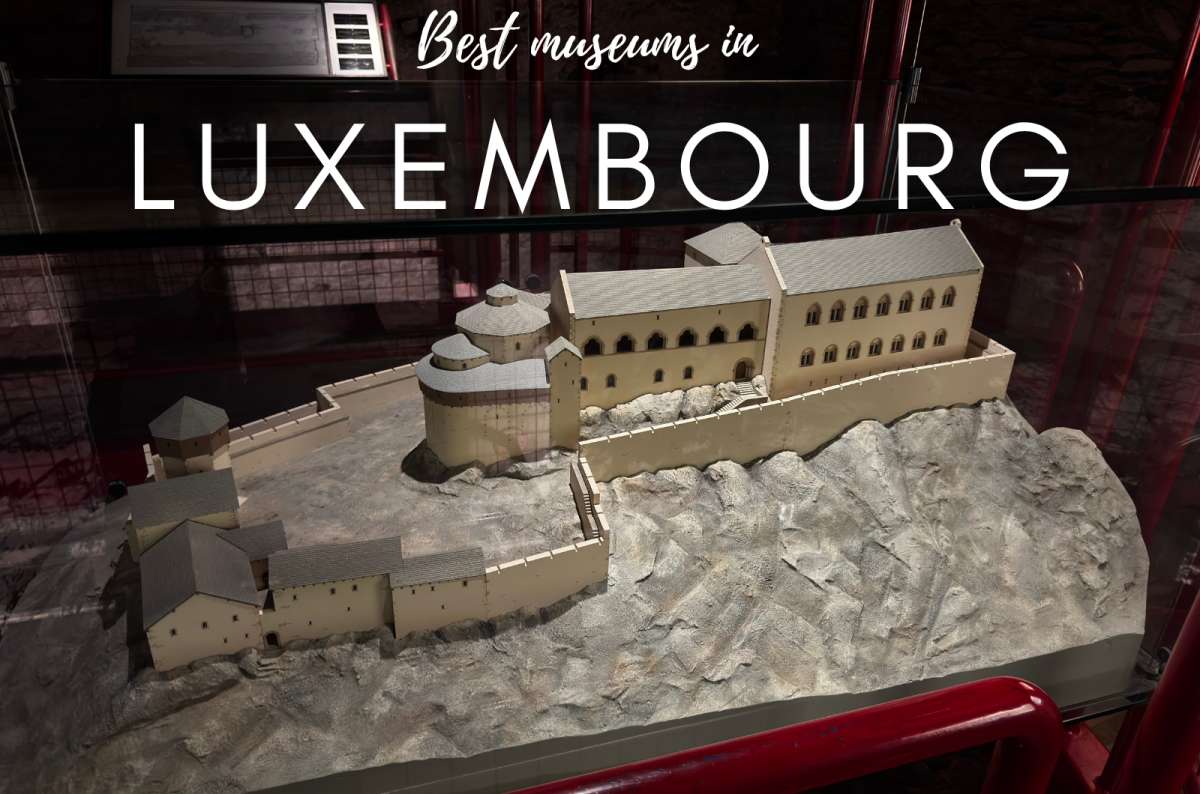
The detail on the historic models is super-well executed @ Luxembourg City History Museum
That’s exactly what a first-time visitor needs: city models, clear interpretation, infographics, and the kind of ordinary-life / city-development context that explains why Luxembourg looks so vertical, fortified, and strangely modern. Not endless paintings. Not 400 rooms of “here is another old chair.” Context.
I’d come here after you’ve already walked the Corniche and Grund. That way, the museum explains what you’ve just seen instead of dumping history into your brain before you have a visual frame for it.
The museum is also central, so it fits easily into a walking day. It doesn’t require a huge detour, which matters because the best Luxembourg City itinerary is about route flow, not collecting attraction badges.
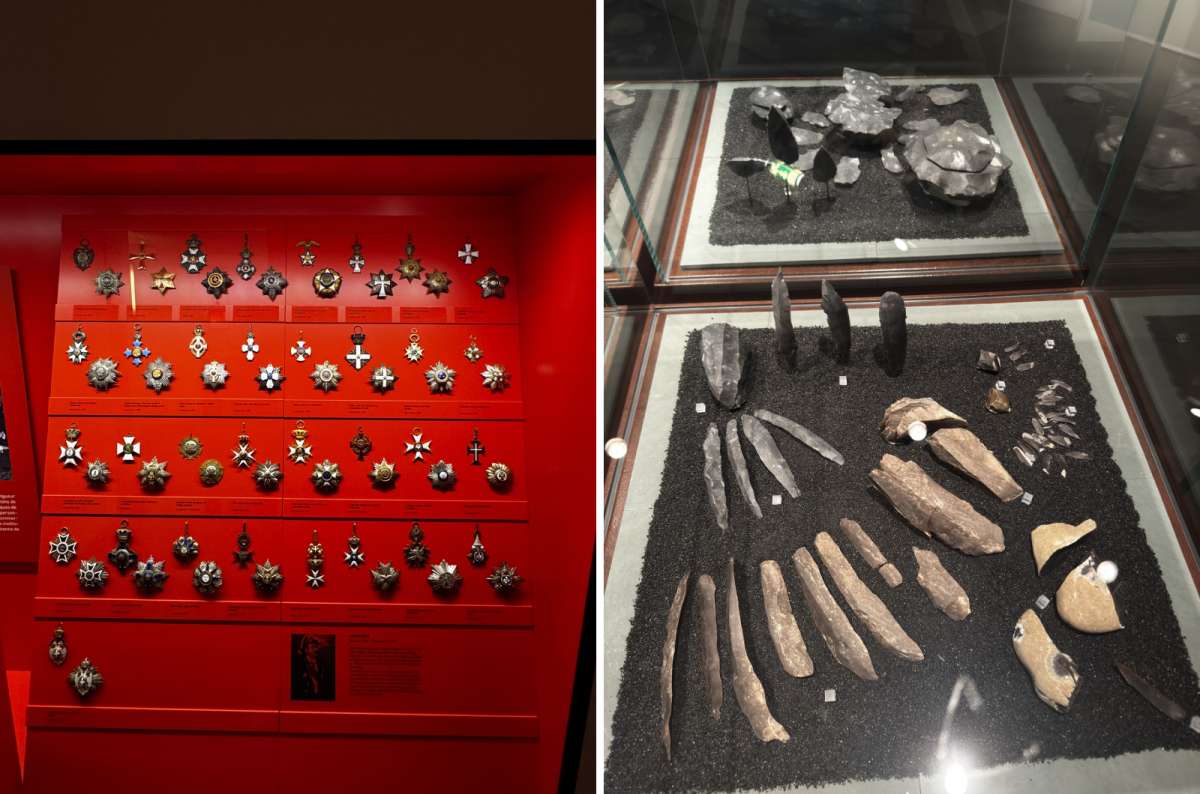
The collection at Luxembourg City History Museum is fun, informative, and most of all, relevant
Read my guide to the best museums in Luxembourg City if you’re deciding between this, Dräi Eechelen, Mudam, and the National Museum.
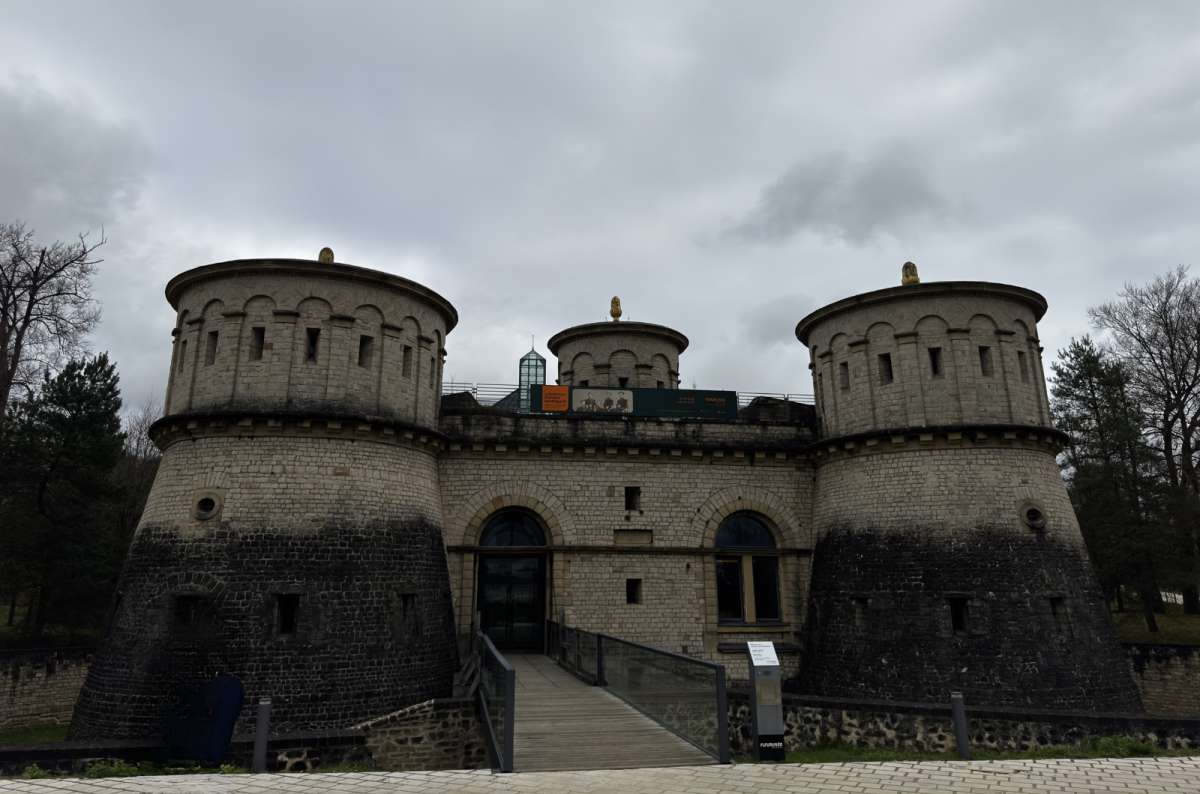
Dräi Eechelen is living history; some even call it one of the best fortresses in Europe
Dräi Eechelen is the best fortress-history stop in Luxembourg City.
It’s the museum I’d choose if you want the fortress story, but don’t want your entire day swallowed by tunnels. It sits in Fort Thüngen on the Kirchberg side, near Mudam and the Philharmonie, so the setting already does half the work.
This area is useful because it shows a different side of the city: less old-town postcard, more fortress remains next to modern cultural architecture. That contrast is very Luxembourg. Historic defensive works, then suddenly modern museum architecture and EU district energy. Subtle? No. Interesting? Yes.
Come here for context, not blockbuster drama. This is not the sort of place where you walk in and immediately text everyone, “Cancel dinner, I have seen the meaning of life.” It’s quieter than that.
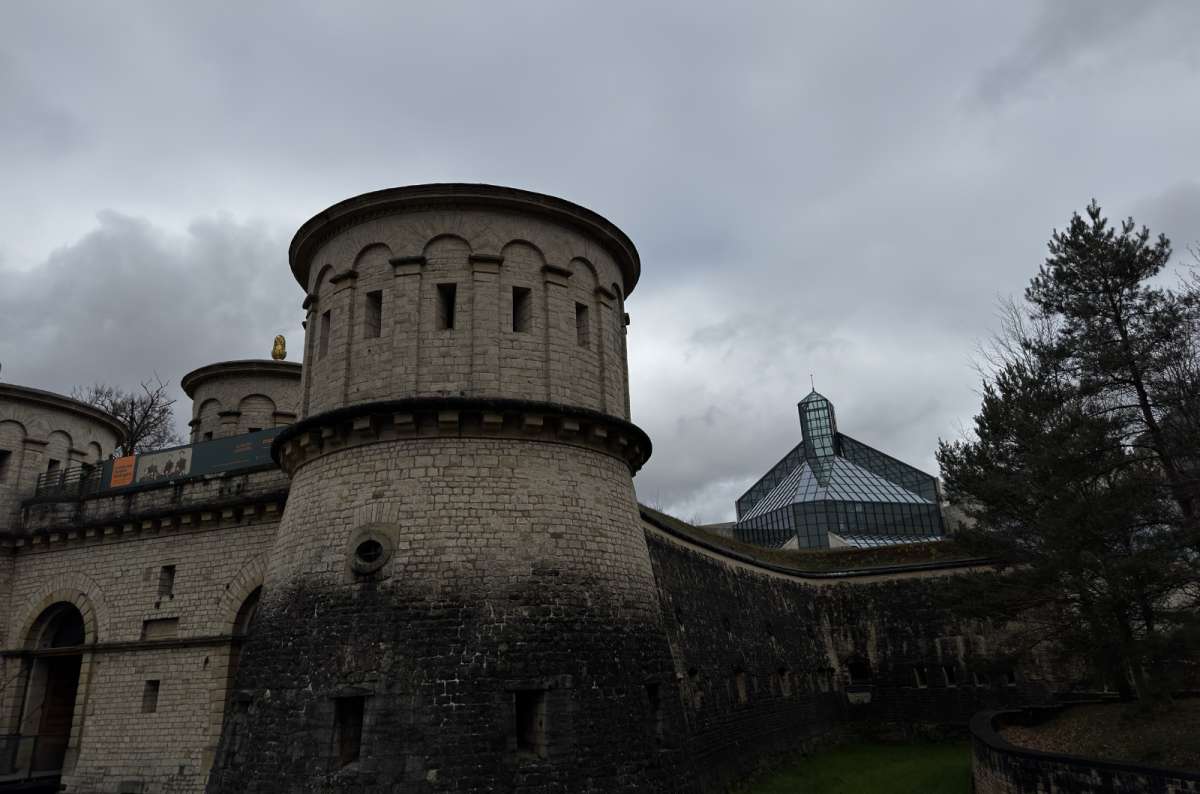
If the dose of history feels too intense, you can check out the Mudam museum right behind the Dräi Eechelen
But paired with Fort Thüngen outside, it adds a lot. You get the architecture, the defensive setting, and a better explanation of Luxembourg as a fortified city rather than just a scenic capital with nice walls lying around. You can also purchase a guided tour online if you want to have even more context.
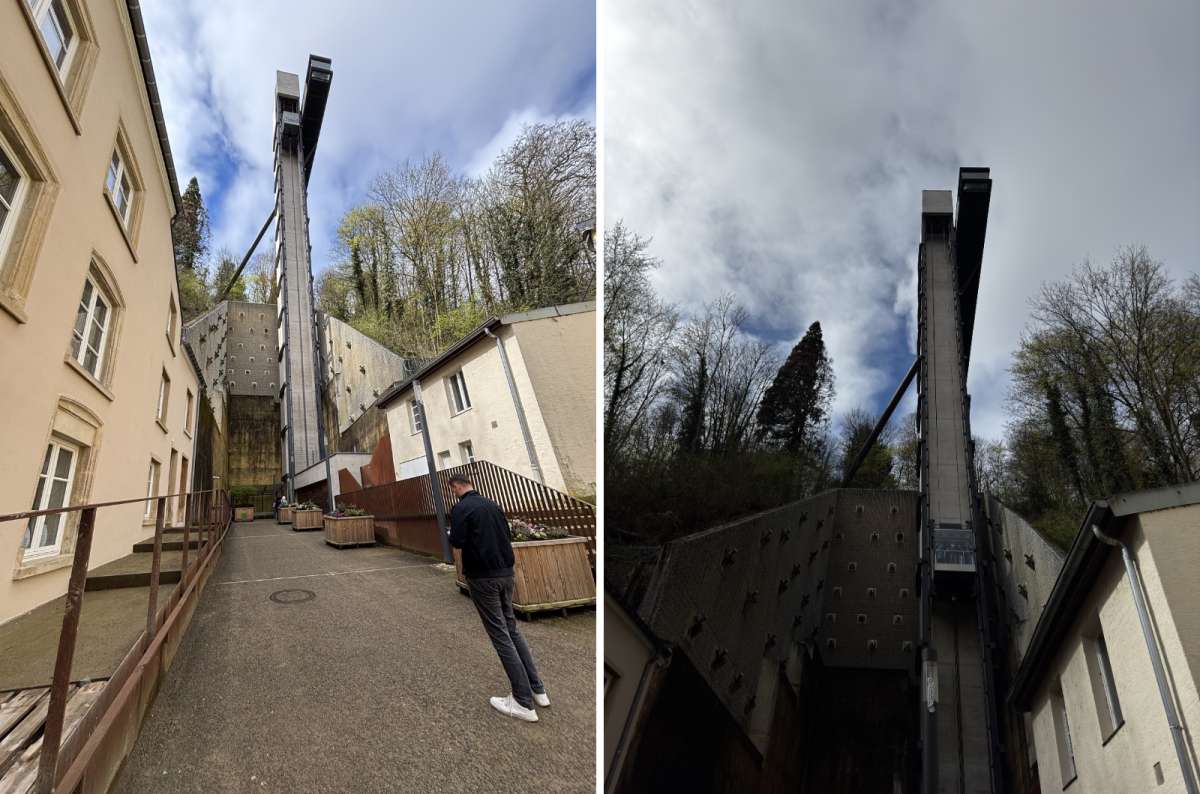
From down here in the Pfaffenthal valley, the elevator looks like something the city forgot to explain
Very useful, very scenic, still fundamentally an elevator.
The Pfaffenthal elevator connects the upper town with the Pfaffenthal area below, and it gives you a big glassy view while doing it. I like it. I also refuse to pretend an elevator is a spiritual experience.
Still, in Luxembourg City, vertical transport matters. The city is built in levels, and this lift helps you move between them without turning every route into a thigh workout. It’s also free, which makes it one of the easiest “yes, why not” stops in the city.
Don’t come here just to check off “famous Luxembourg elevator.” Use it as a route tool.
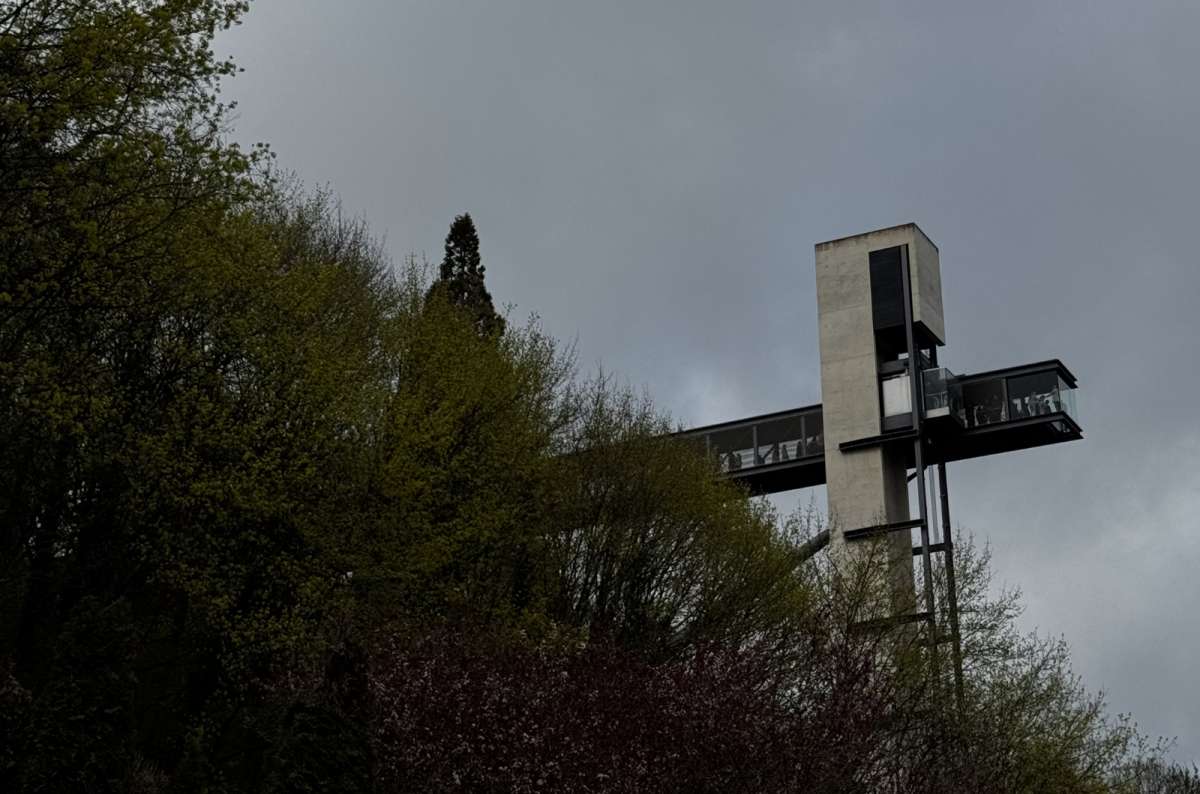
The design is very deliberately "we are not trying to blend in" @ Pfaffenthal
A good flow is:
This is where Luxembourg’s free public transport also helps. Buses, trams, second-class trains, and the funicular are free across Luxembourg City and the whole country.
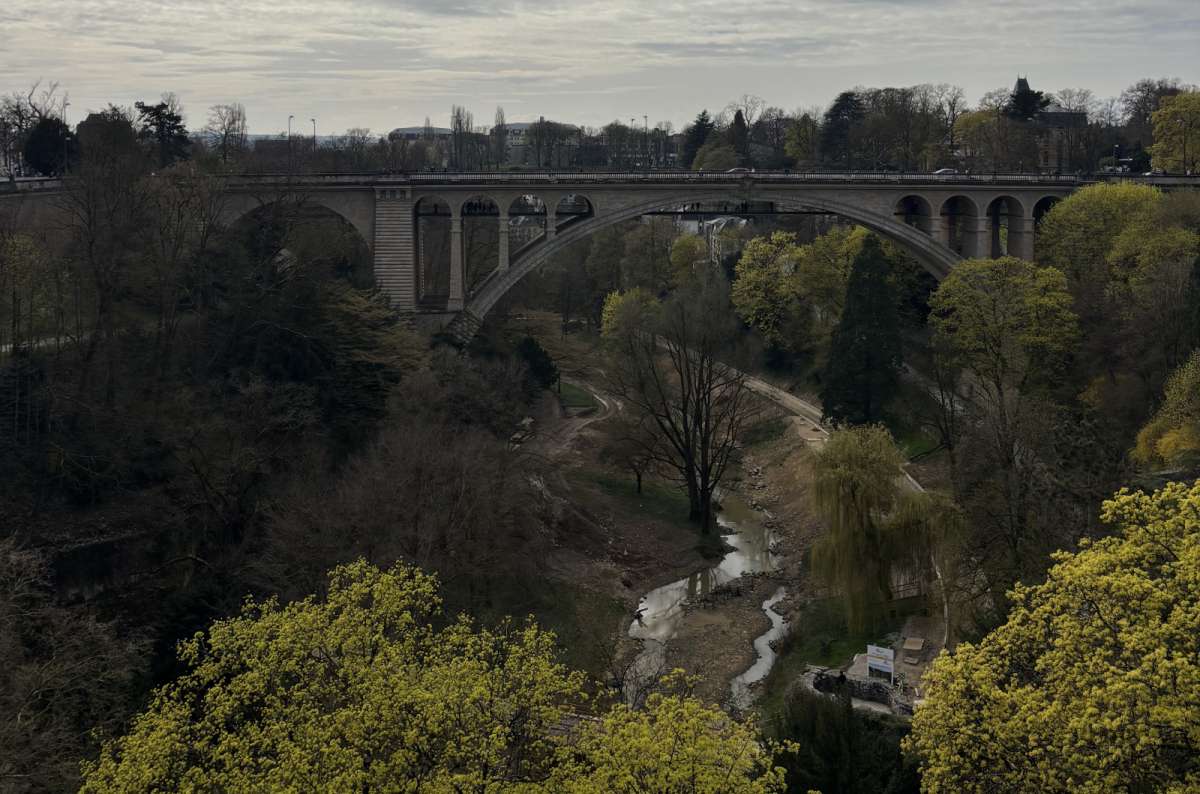
The Adolphe Bridge connects the upper city to the train station district, and most people drive over it without realizing what they're crossing
Pont Adolphe is worth seeing for the bridge views, not as a standalone life event.
It’s one of the city’s most recognizable bridges, and it gives you good views over the Pétrusse valley. The bridge itself is elegant, but the real reason to include it is that it helps you understand yet another piece of Luxembourg City’s obsession with crossing valleys.
I wouldn’t go dramatically out of my way for Pont Adolphe if you only have a few hours. But if you’re already moving between the train station area, upper town, or Pétrusse valley, it’s an easy add-on.
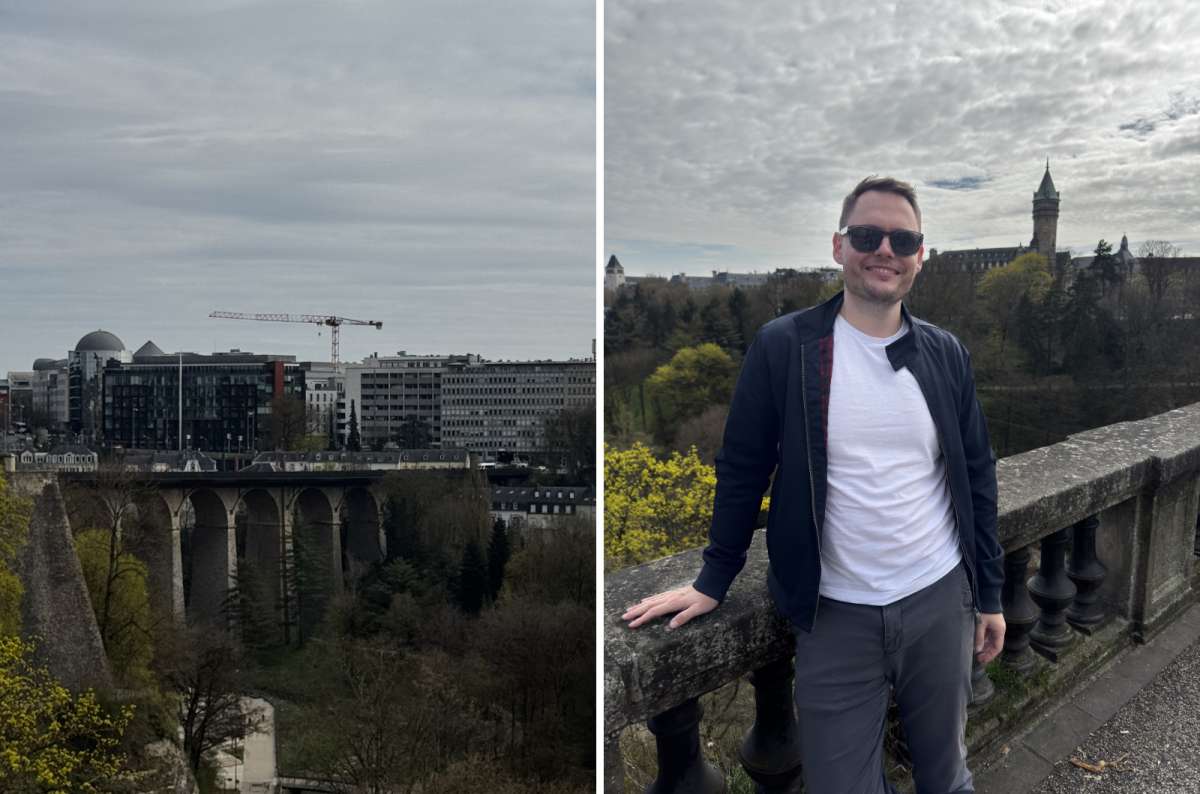
The Adolphe Bridge gives you an awesome view of the entire city
This is the kind of stop that works best without fanfare. Walk there, look over the side, appreciate the scale, take the photo, and continue with your life.
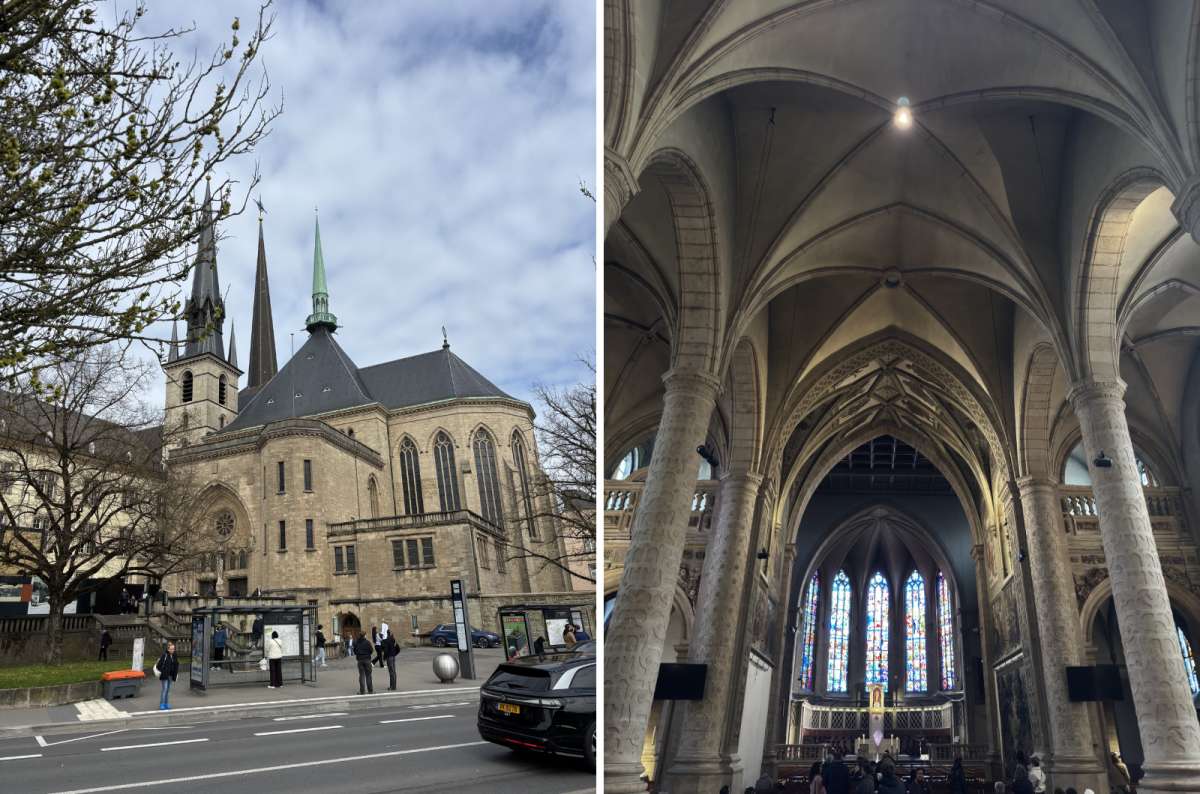
The exterior gives you the twin dark spires, the interior gives you the Gothic vaulting, and the stained glass @ Notre Dame Cathedral
Notre Dame Cathedral is a short, central stop. Good if you’re nearby, not a reason to cross the city.
The outside is fine. The interior is better. I’m not going to insult both of us by pretending this is one of Europe’s greatest cathedral experiences.
But it’s still worth a short visit if your route passes nearby. The interior gives you a quiet break from walking, and the location makes it very low-effort. Sometimes that’s enough.
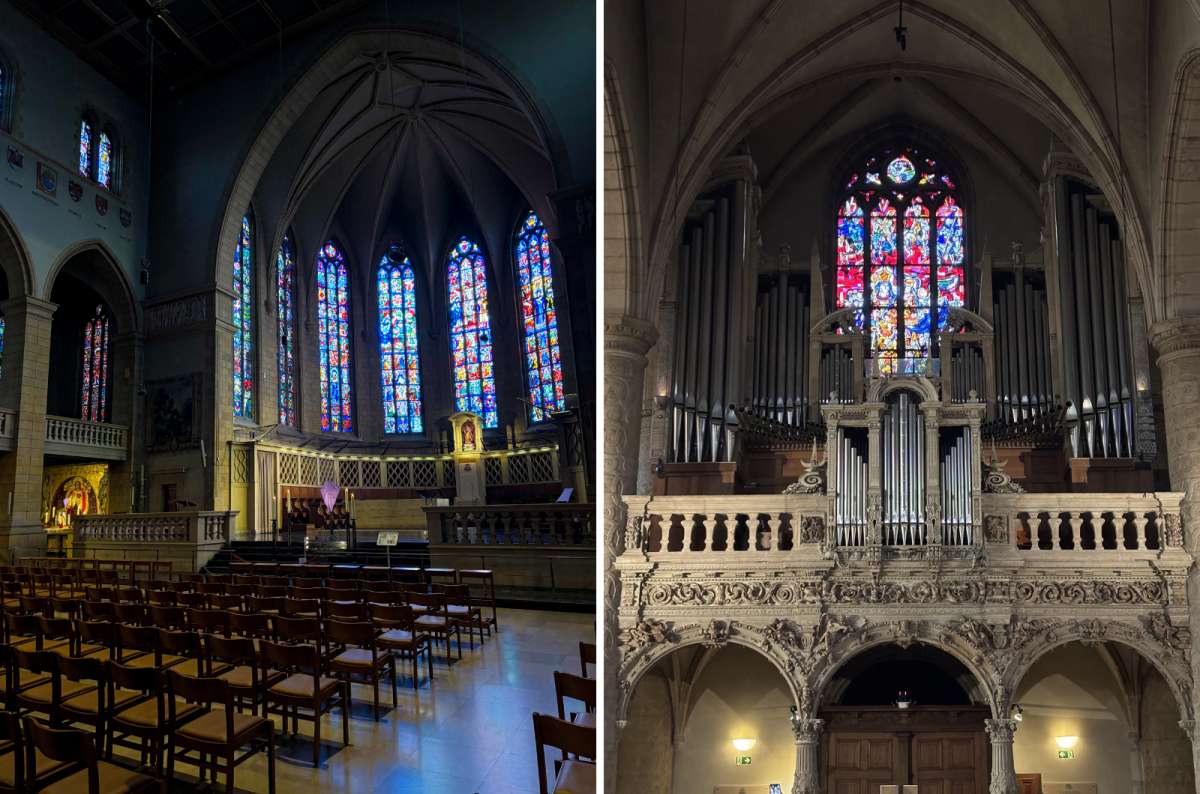
The stained glass runs the full length of the choir and is so deserves a good look @ Notre Dame Cathedral
Do not build your Luxembourg City day around the cathedral. Add it while moving between the upper town, the Corniche, and the main squares.
This is one of those stops that works best when you don’t over-expect. Walk in, look around, take 15–20 minutes, move on.
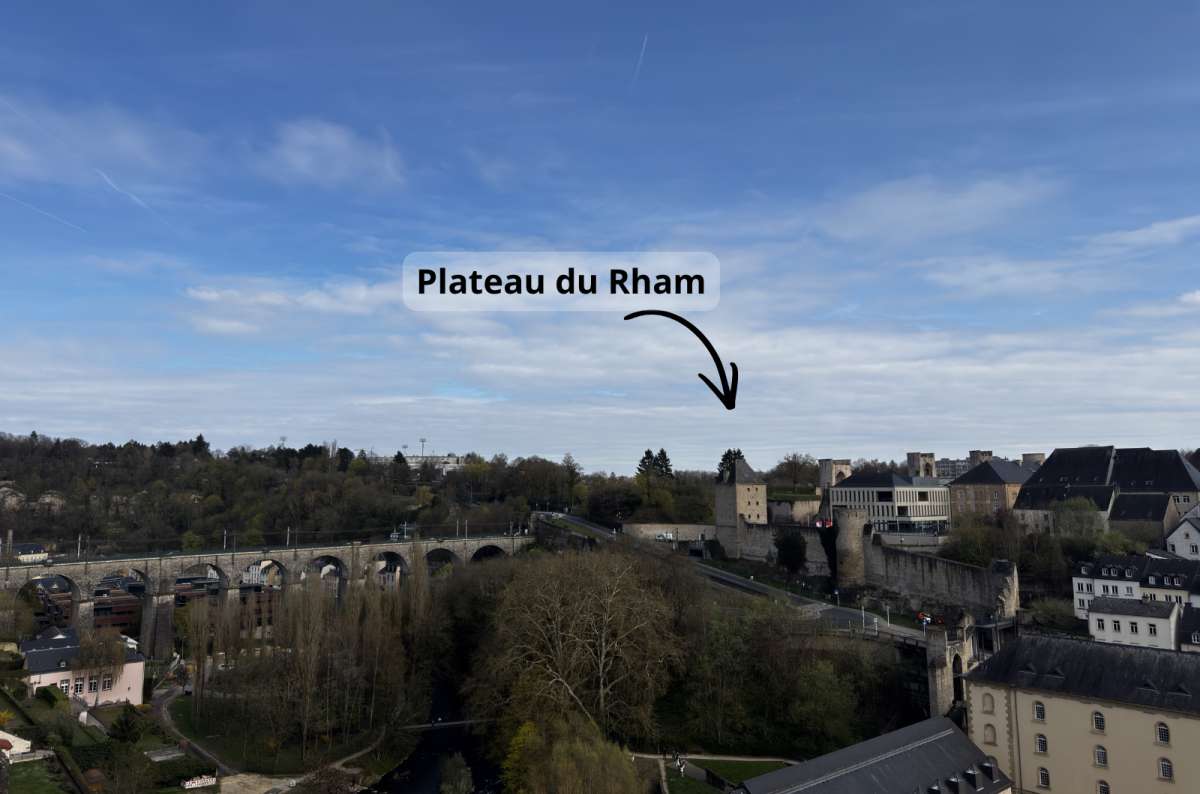
The Rham plateau sits across the valley from the Bock, connected by a bridge most people don't bother crossing
Plateau du Rham is good for quieter fortress views, but not essential on a short visit.
It gives you more of the fortress-side Luxembourg City experience. It’s not the first place I’d send someone with only a few hours, but if you have time after Grund and the Corniche, it adds another layer.
I liked this kind of stop more once I understood the city’s structure. Early in the day, it might feel like “more walls, more views, more old stones.” After the Corniche, Grund, and the lower valley walks, it fits better.
That’s why order matters in Luxembourg City. Some places are not weak; they just make more sense after the main scenic framework is already in your head.
Give it 30–60 minutes if you’re already in the area. Skip it without guilt if you’re rushing.
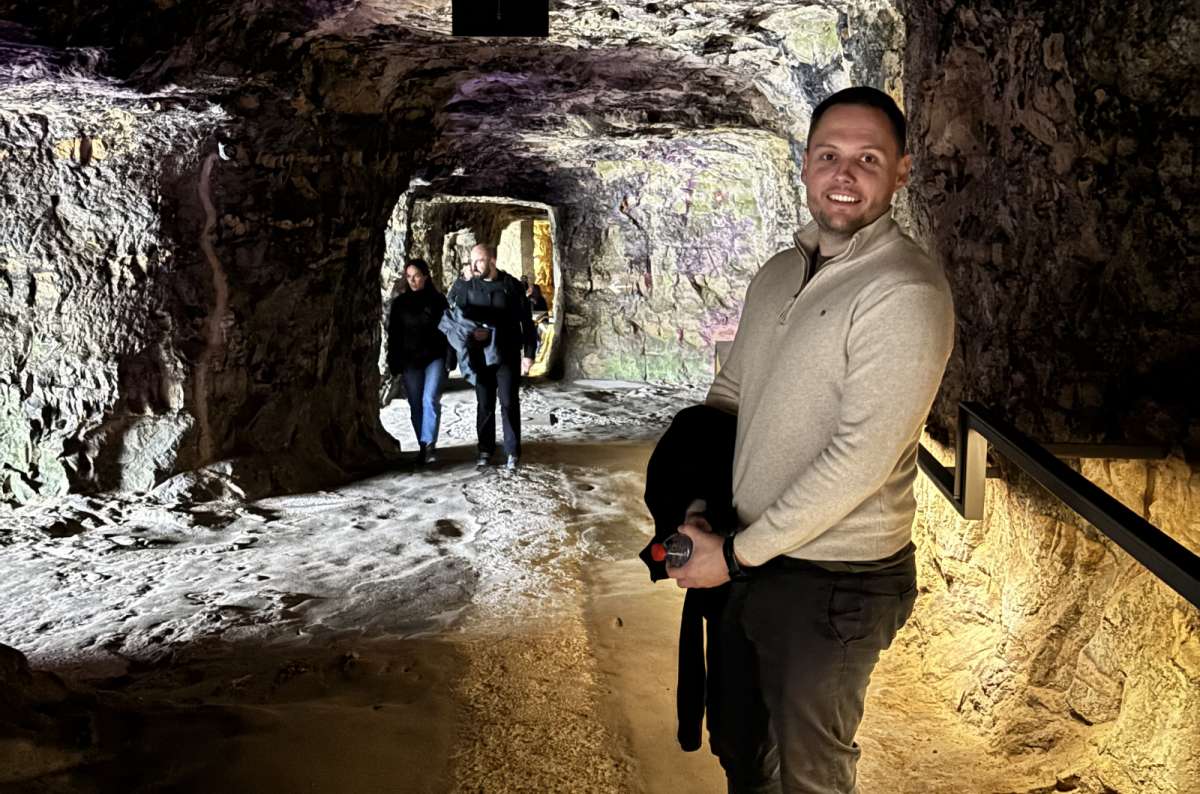
23 kilometres of tunnels carved into the sandstone rock, not too bad @ Bock Casemates
The Bock Casemates are famous, historically important, and not mandatory.
Yes, they matter. These underground galleries are part of the city’s fortress history, and this is probably the most famous Luxembourg City attraction.
But are they the best thing to do in Luxembourg City? For me, no.
This is where I disagree with the generic attraction-list internet machine. The Casemates are worth visiting if you specifically like fortifications, tunnels, military history, or famous UNESCO-type sights. But if you have one day and you’re choosing between the Casemates and the Corniche + Grund + City History Museum combo, I’d take the latter.
The views and walks gave me more. The museum gave me a better context. The Casemates are interesting, but they are not the key to enjoying the city.
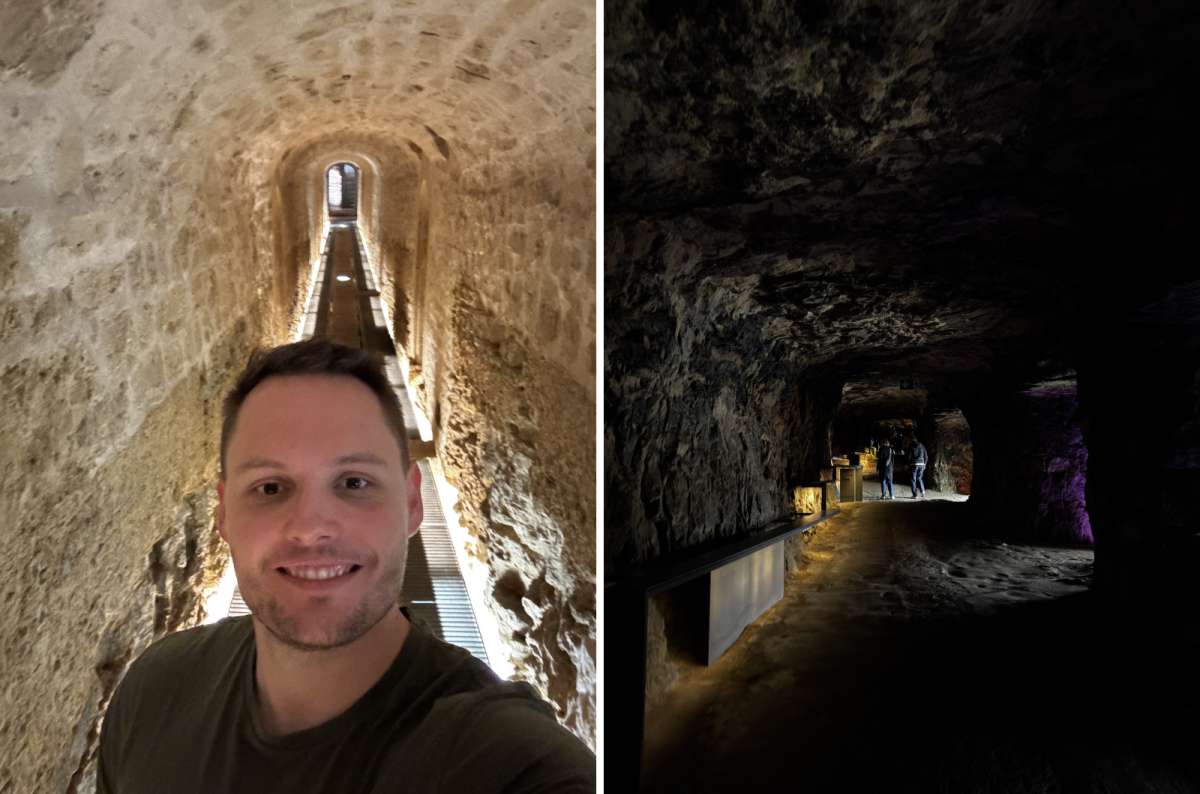
Two ways to experience the Casemates: narrow and overly bright, or wide and in complete darkness
Expect underground passages, stone corridors, openings with views, military history, and some good moments where you understand how defensive this city once was.
Do not expect an enormous underground adventure that makes every other Luxembourg stop irrelevant. In practice, this is a short, cold, mostly stone-corridor visit with limited exhibits and some views you may already have seen from better free angles. Book ahead if you’re going, and don’t wait in a long queue just to prove you saw the famous thing.
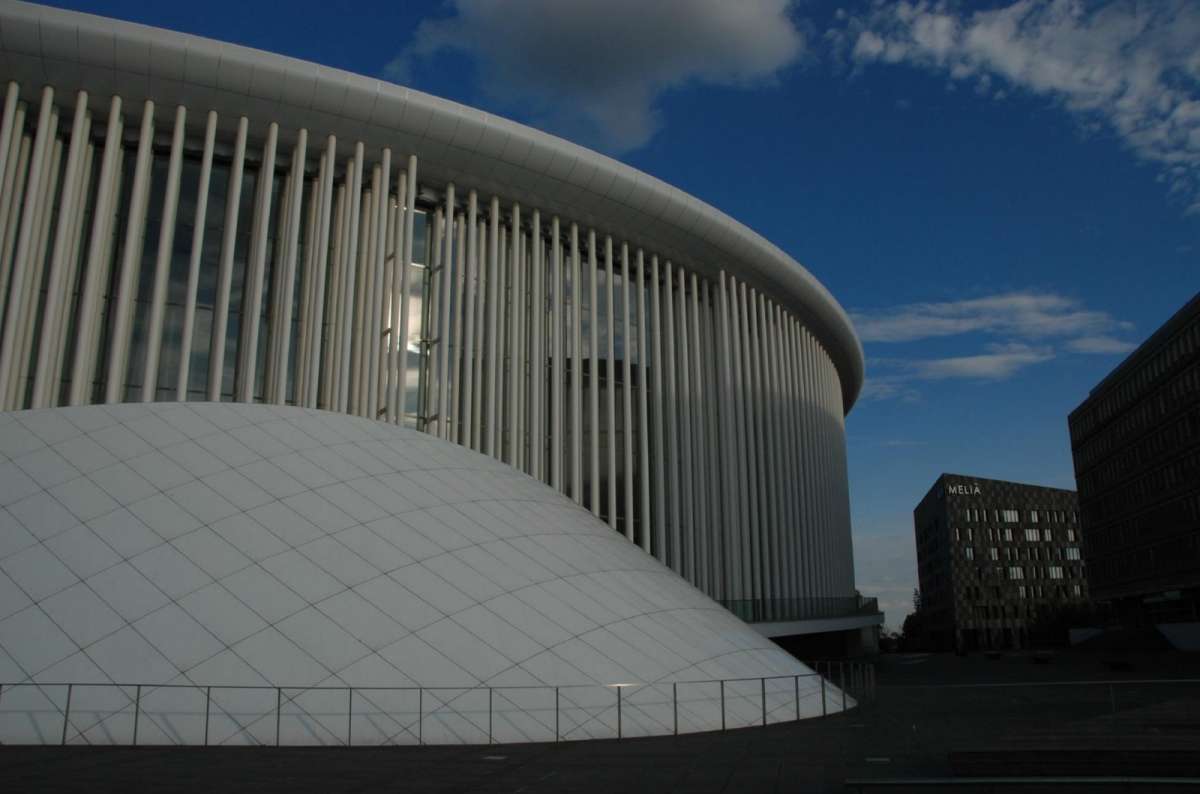
The Philharmonie sits in the Kirchberg quarter, looking like it arrived from another decade and decided to stay permanently
Mudam and the Philharmonie are worth adding if you’re already in Kirchberg.
They sit near Dräi Eechelen, and together they show the modern cultural side of Luxembourg City. This is not the old-town fantasy version of the city. It’s cleaner, more architectural, more European-institution adjacent.
I wouldn’t cross the city only to stare at the outside of Mudam and the Philharmonie, but if you’re visiting Dräi Eechelen anyway, add them. The combination works: old fort, modern museum, concert hall, big open space, very Luxembourg in its own slightly corporate-cultural way.
Should you go inside Mudam? Only if you like contemporary art. I would not force it into a short Luxembourg City itinerary just because it is a major museum.
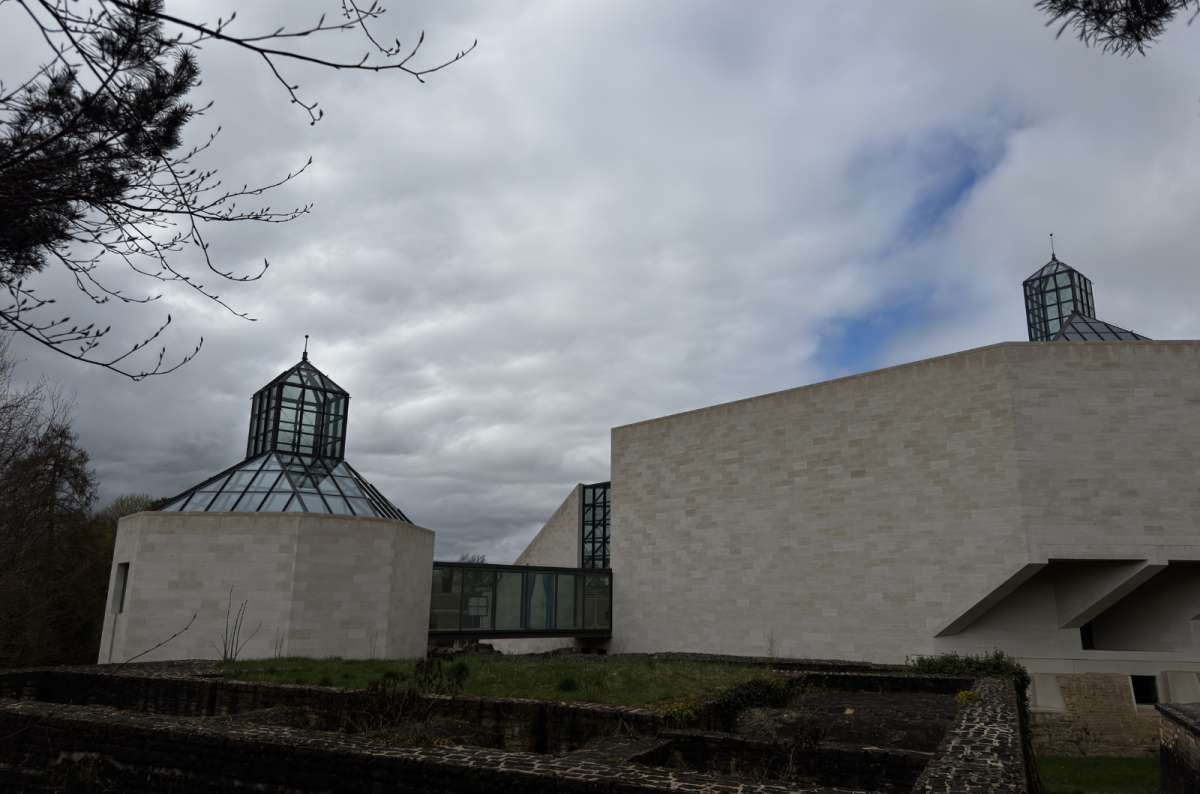
The exterior of Mudam is probably more consistently impressive than whatever's inside, but that's a feature, not a complaint
The exterior and setting are enough for many visitors. That may sound harsh, but it’s useful. Not every museum needs to become your afternoon.
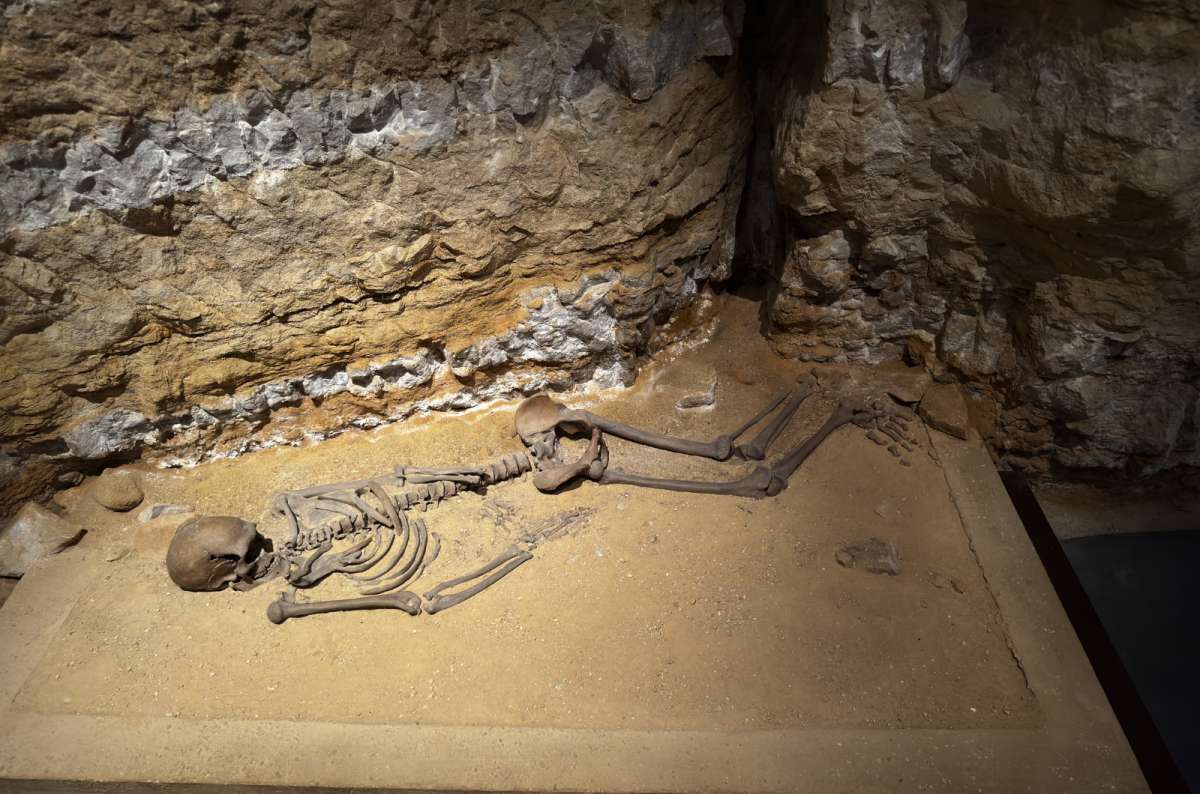
Me, because I couldn’t help myself and visited yet another museum @ National Museum of Archaeology, History and Art
The National Museum of Archaeology, History, and Art—Nationalmusée um Fëschmaart—is a serious museum with archaeology, history, and art collections. It’s worth considering if you have two days in Luxembourg City or if you’re a museum person who wants more depth.
But for a first-time short visit, I’d choose the Luxembourg City History Museum first. It is more directly useful for understanding the city you’re walking through.
This is not me saying the National Museum is bad. It’s me saying that not every capital city museum has to be completed like homework. Travel is not a compliance exercise.
Choose it if you want archaeology, art, and broader Luxembourg history. Skip it if you’re already doing the City History Museum and Dräi Eechelen, unless museums are your main hobby and your feet are made of steel.
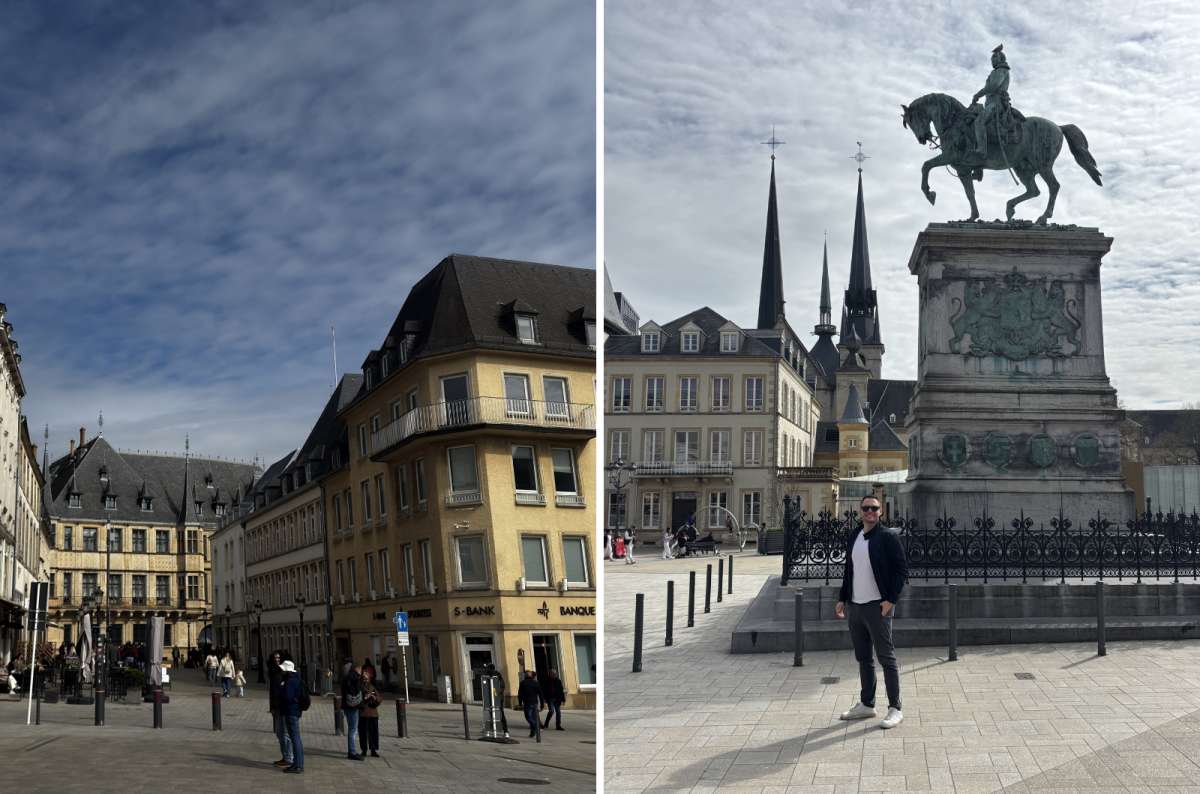
It looks exactly like a European capital square is supposed to look, and everyone ends up here eventually @ Place Guillaume II
Nice enough, but don’t anchor your itinerary here.
Place Guillaume II and Place d’Armes are the kind of central squares every European city has, and Luxembourg City is no exception. They’re useful orientation points, good for passing through, and pleasant if you need a break.
But they are not why you came.
I’d include them naturally while walking between Notre Dame Cathedral, the City History Museum, the Grand Ducal Palace area, and the Corniche. They work as connective tissue, not main attractions.
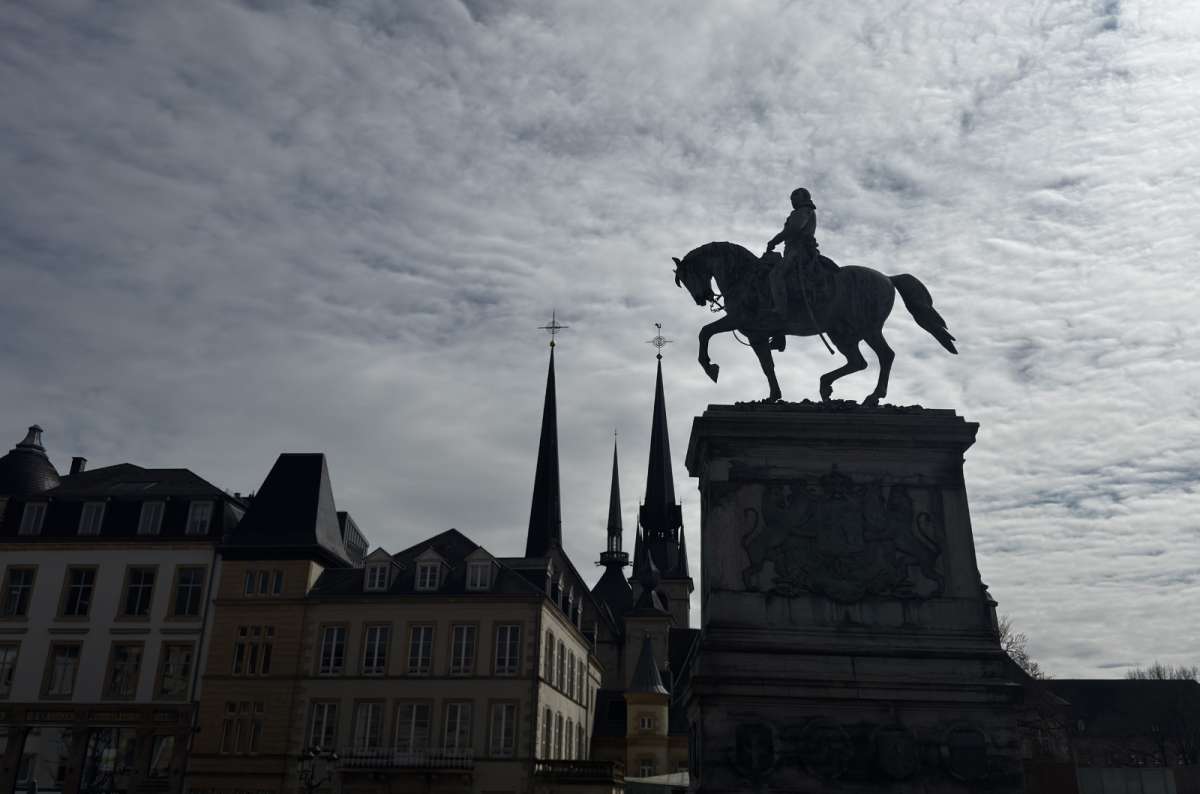
Same statue, different light, not much else going on at the Place Guillaume II
This is also where Luxembourg City can feel more administrative and polished than old-world dramatic. That’s not a flaw, exactly. It’s just why I’d rather send you to the valley than tell you to spend an hour admiring café terraces as you’ve never seen a square before.
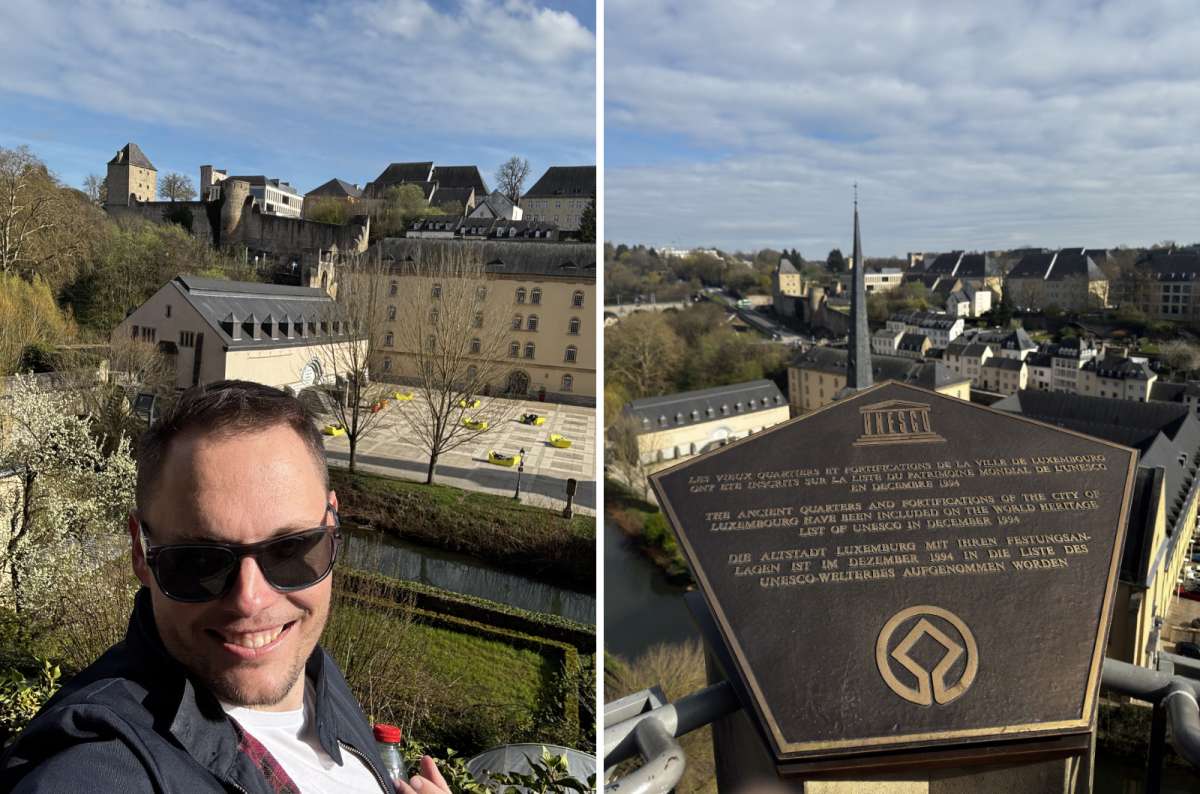
The plaque is right there in case you need official confirmation that yes, this is worth walking up the hill for @ Corniche
If you care about views, don’t overcomplicate this.
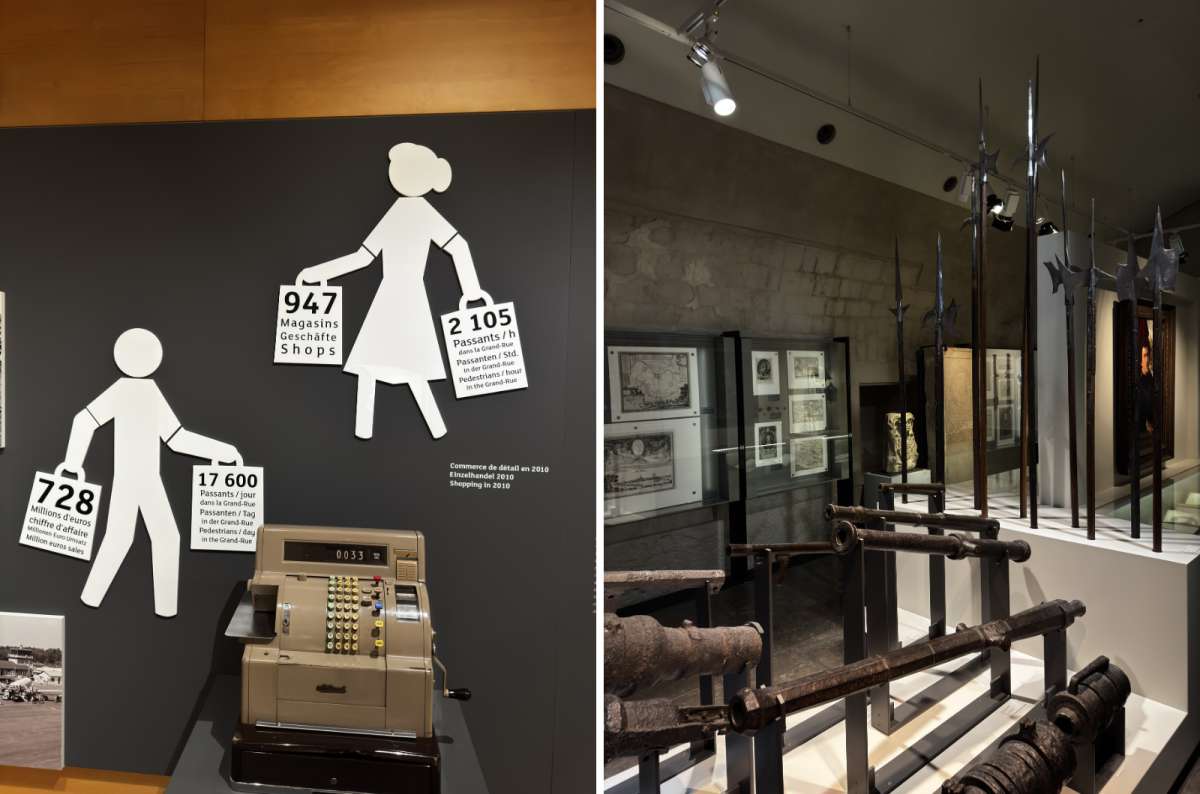
The History Museum covers everything from medieval halberds to 2010 shopping statistics
If you only want one museum, pick the City History Museum. If you want two, add Dräi Eechelen.
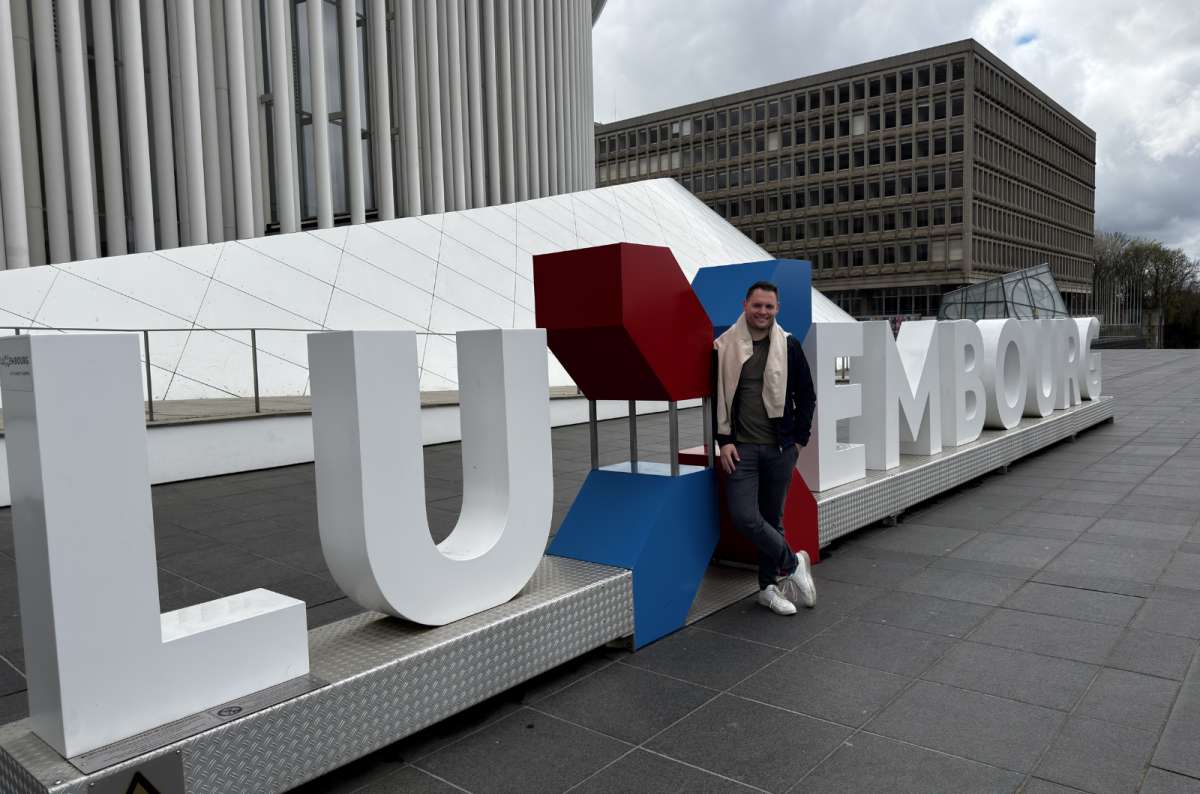
Every city has one of these now, but what kind of travel blogger would I be if I skipped the photo
One day is enough for the highlights of Luxembourg City if you focus on the Corniche, Grund, Alzette valley walks, one museum, and a few central sights.
Two days is better if you want to add Dräi Eechelen, Kirchberg, the Casemates, and a second museum without turning your visit into a forced march.
I wouldn’t spend three full days only in Luxembourg City unless you’re using it as a base for day trips. The city is compact. That is part of the appeal.
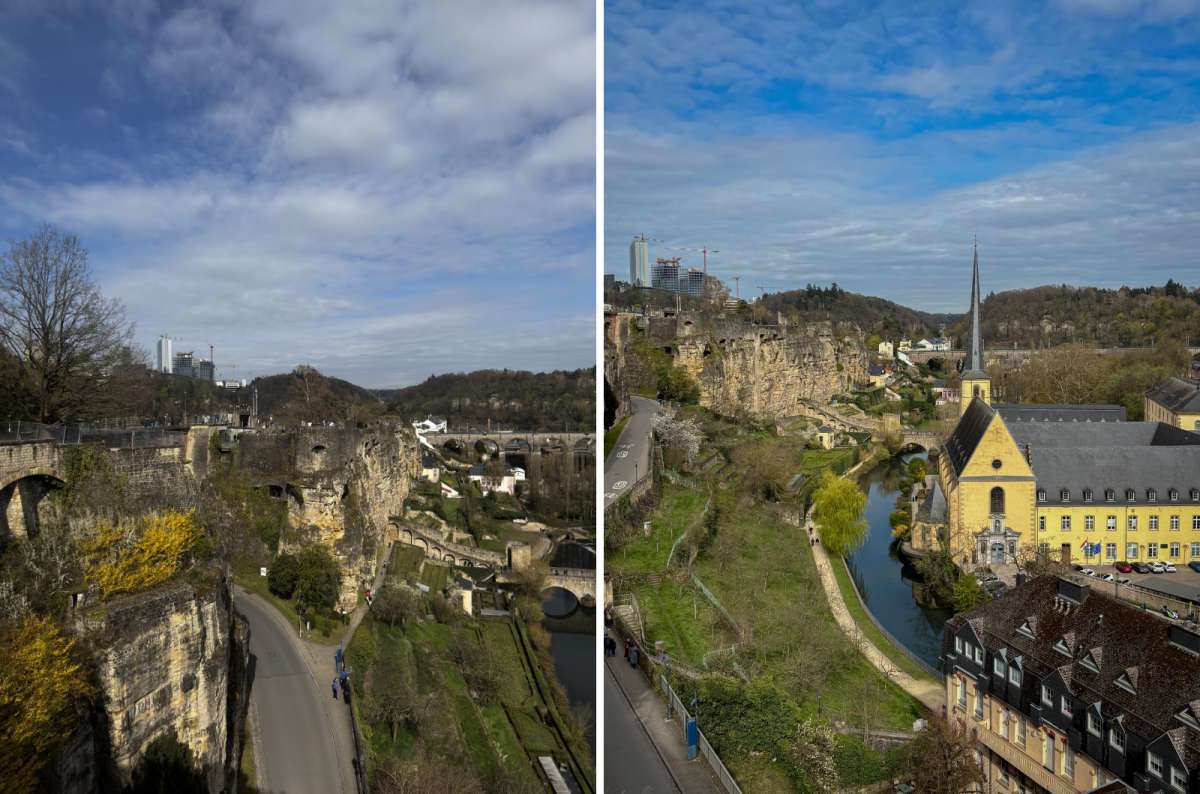
The valley looks completely different depending on which direction you face. But taking a look is the start
This is how I’d structure one day in Luxembourg City if I wanted maximum payoff and minimum pointless zigzagging.
1. Chemin de la Corniche
Start with the best view. It gives you the city’s layout immediately.
2. Bock area and optional Casemates
Add the Casemates only if you’re genuinely interested. Otherwise, enjoy the views and keep moving.
3. Walk down into Grund
Don’t rush this. The descent is part of the experience.
4. Grund and Alzette valley walk
Walk along the river, look back up at the walls, and enjoy the city at its best.
5. Lunch/coffee break in the lower or upper town
I’d keep this flexible. Don’t plan your whole day around a restaurant unless you enjoy disappointment with a reservation system.
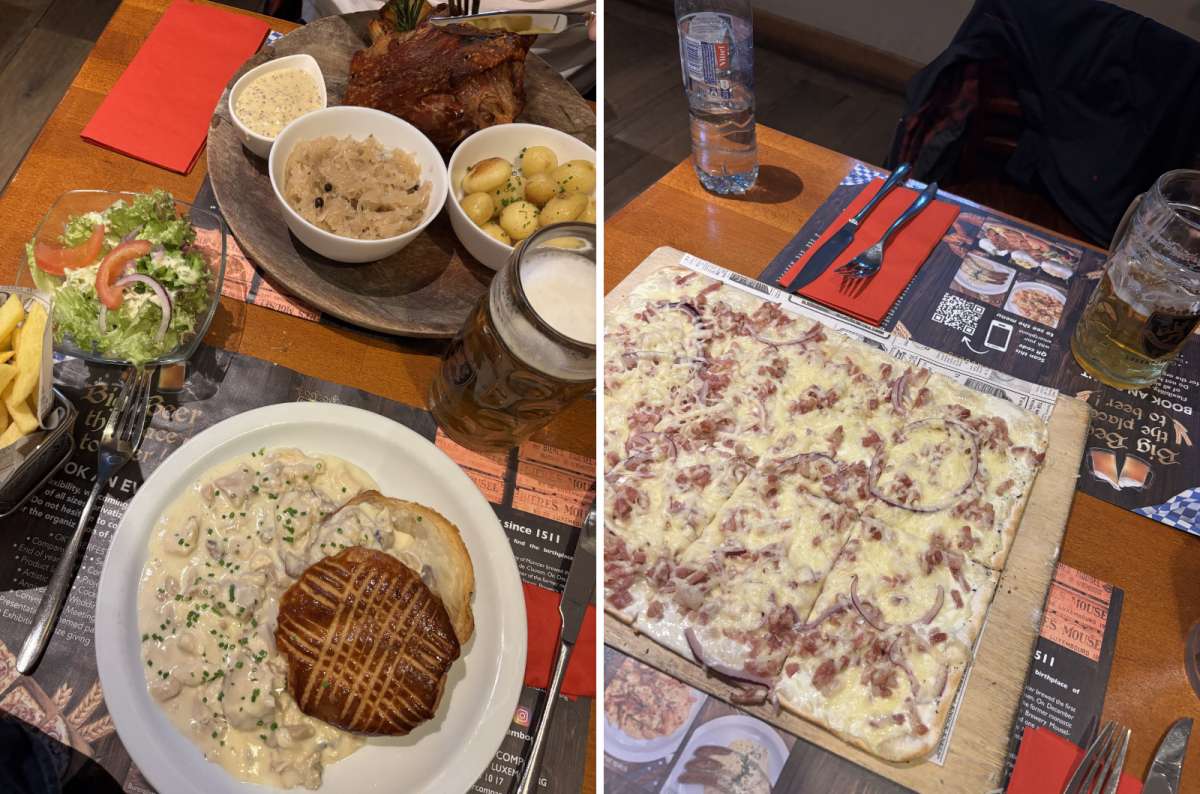
Luxembourg food sits at the crossroads of German, French, and Belgian cooking, so you might end up either really happy or really sick
6. Luxembourg City History Museum
The best paid stop and the most useful museum for a first visit.
7. Notre Dame Cathedral
Short central stop if you’re nearby.
8. Place Guillaume II and Place d’Armes
Walk through them, don’t worship them.
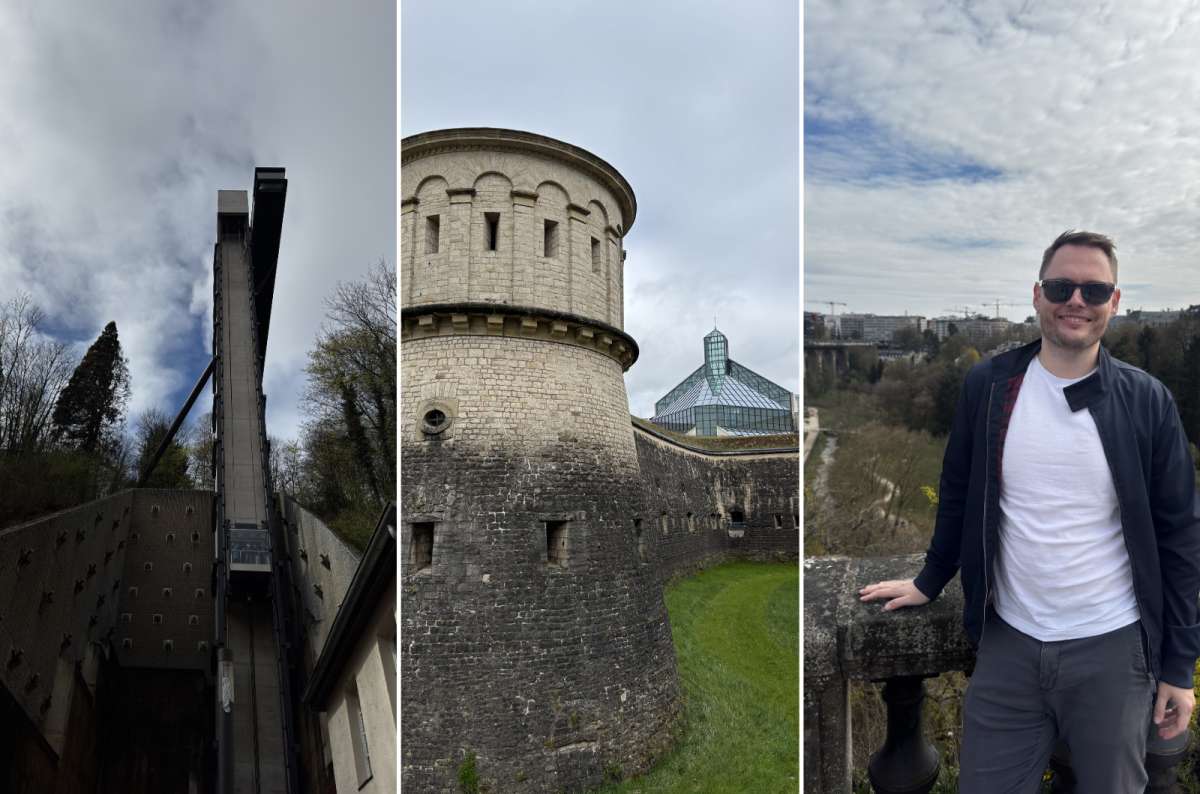
Either one of the add-ons works fine; they’re just not interesting enough to be the main character
Choose one:
See my full one-day in Luxembourg City itinerary if you want the exact route without doing the mental puzzle yourself.
Skip the extra squares. Walk through Place Guillaume II and Place d’Armes if they’re on your way, but don’t plan your day around them.
Skip the Casemates if there’s a long queue or you don’t care about underground fortifications. They are famous, not automatically essential.
Skip too many museums. Choose one good museum instead of turning the day into a cultural endurance test.
Skip Mudam's interior unless you like contemporary art. The exterior and Kirchberg setting are enough for many visitors.
Skip any route that ignores the valley. That’s the real mistake. Luxembourg City without Corniche, Grund, and the Alzette walk is much weaker.
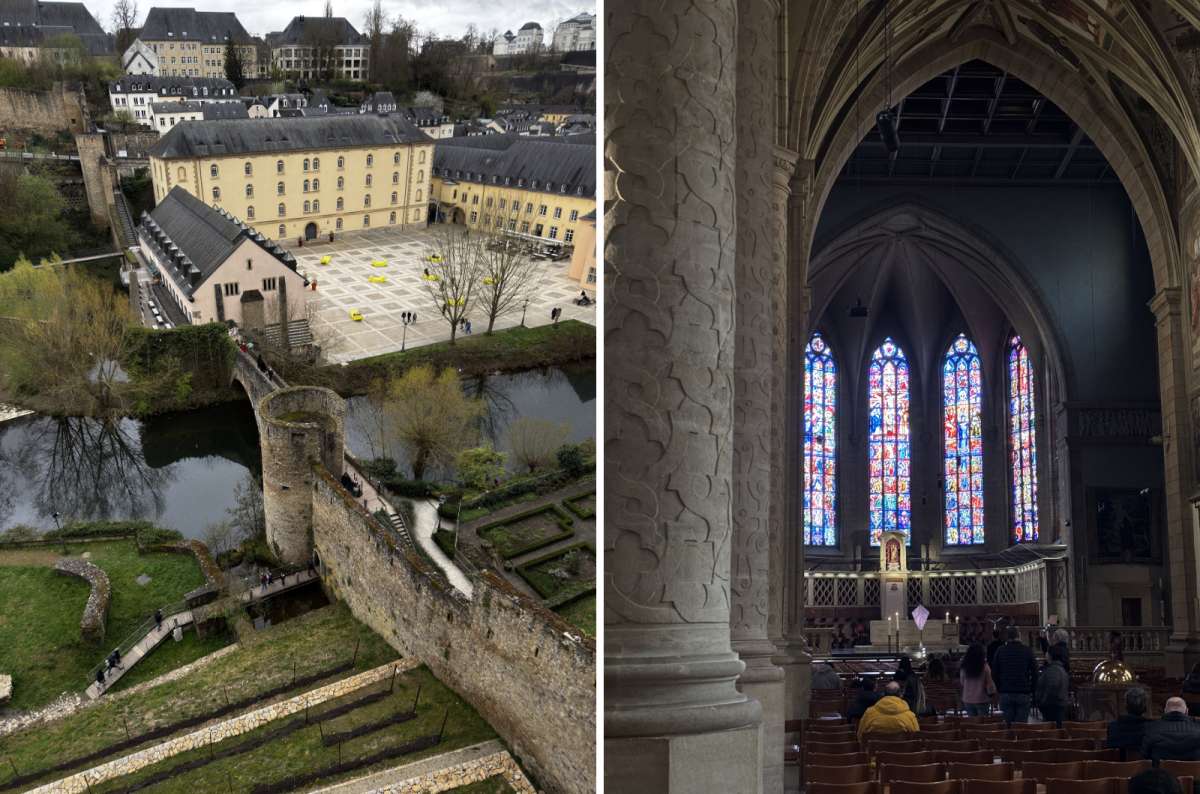
No, I will not shut up about Corniche being your best bet. The Cathedral is also a really nice way to spice up the gray of Luxembourg
The best route logic is simple:
Don’t bounce randomly between the old town, Kirchberg, Pfaffenthal, and the train station area just because all the names appeared on a list. Luxembourg City is compact, but the elevation changes make bad routing more annoying than it looks on Google Maps.
Free public transport helps, especially for moving between neighborhoods, but the best experience is still mostly on foot. Public transport in Luxembourg is free for trams, buses, second-class trains, and the funicular, with first-class trains and cross-border transport as exceptions.
Pro tip: Consider renting a car if you plan to use Luxembourg City as a base for longer day trips.
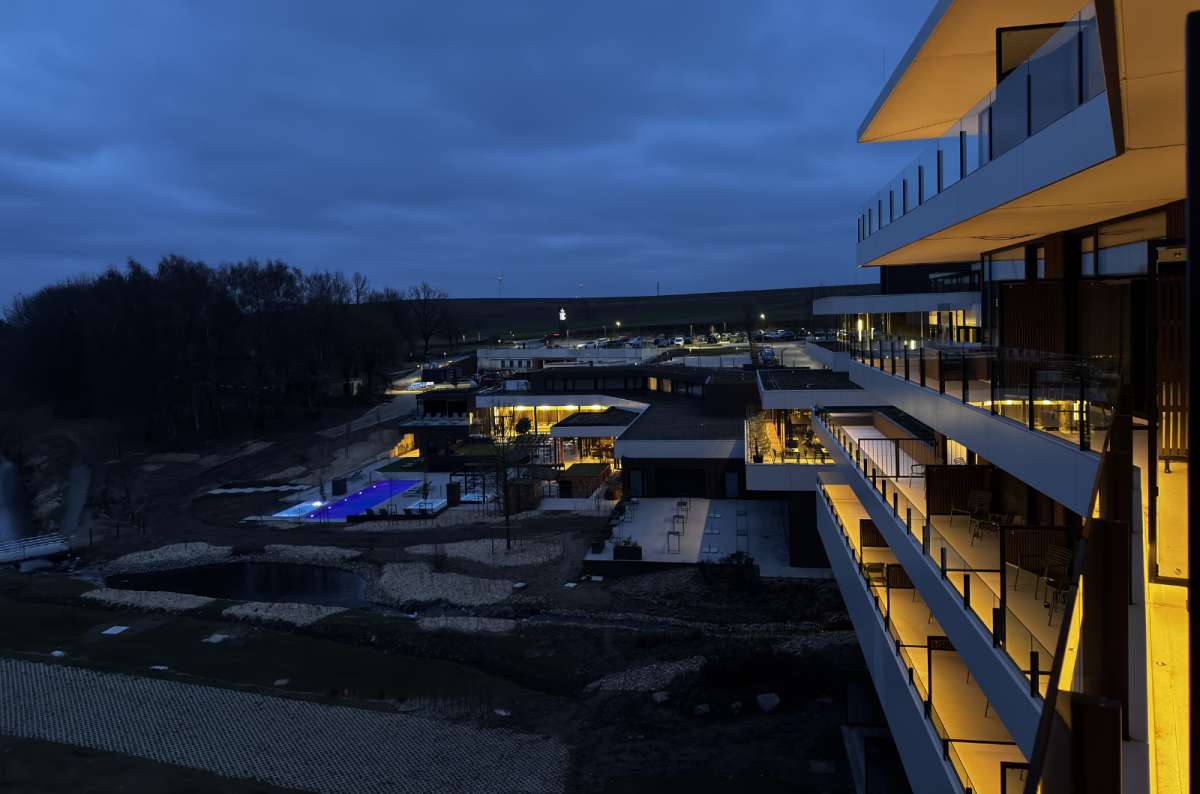
Anatura will be my Luxembourg go-to forever
Stay somewhere central enough that you can walk to the main route without beginning every morning with a transport puzzle.
For most first-time visitors, I’d choose either the upper town for convenience or the train station area if you want easier arrivals and departures. The train station area is not as scenic, but it can be practical. Don’t underestimate practicality in a city where the best bits involve climbing between levels.
Pro tip: I stayed at Anatura, and it provided the perfect mix of modernity and nature.
Staying overnight also helps if you want Luxembourg City at its least day-tripper-heavy. The city can feel crowded during the day, but it tends to work better when you have quieter morning or evening hours to yourself.
Read my guide on where to stay in Luxembourg City before booking.
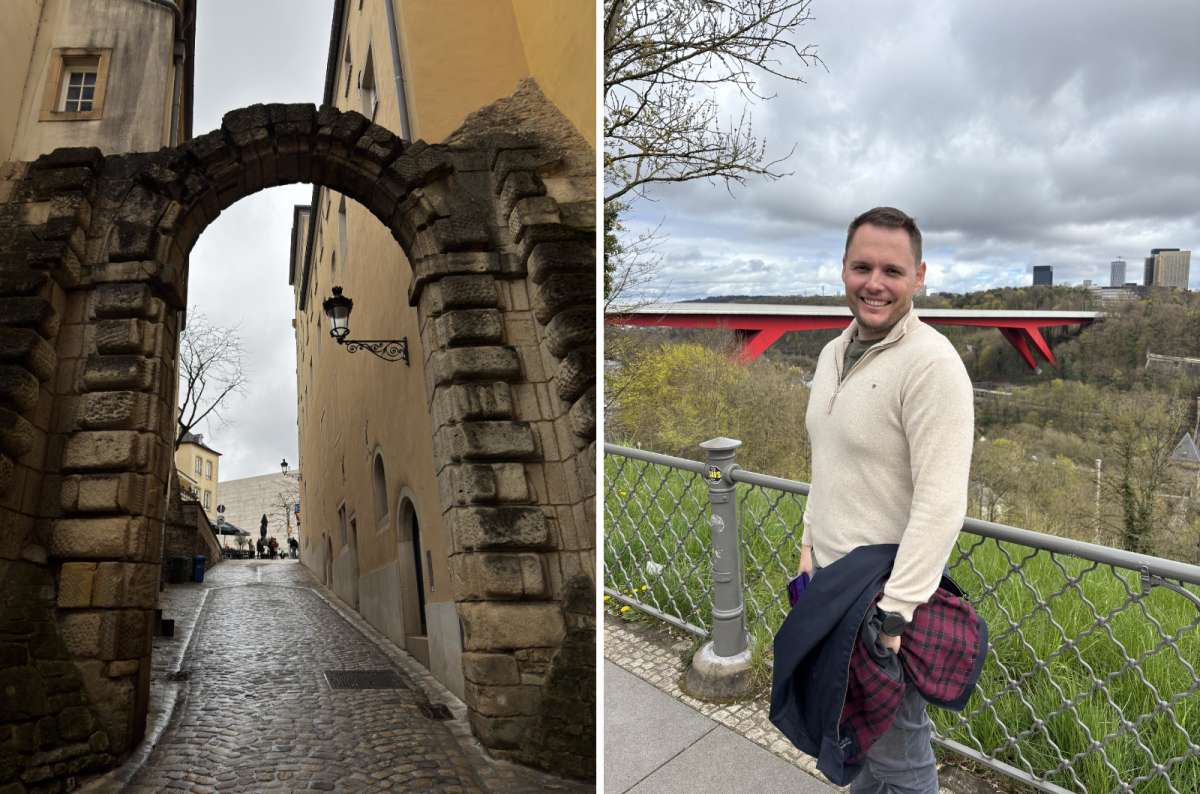
The elevation of Luxembourg City will make you regret wearing the shoes that look the best on Instagram
Luxembourg City looks compact on a map, then laughs at you with elevation changes. The distances are manageable. The levels are the issue.
The city’s best experiences are outside: Corniche, Grund, the valley, bridges, and fortifications. Museums should support that, not replace it.
This is not a pilgrimage. Take the elevator. Save your knees for something more meaningful, like judging overrated attractions.
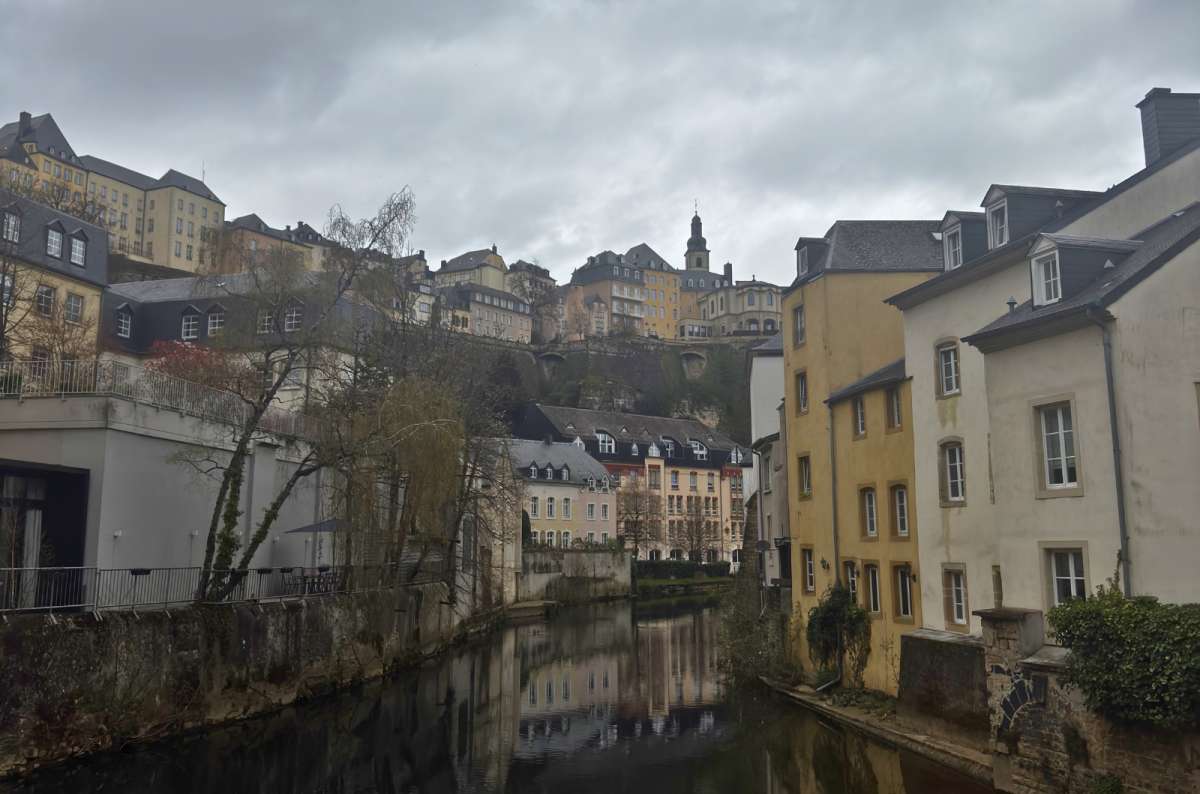
Imagine having to get over this elevation without using an elevator
If you begin with the central squares, Luxembourg City may feel a little too polished and administrative. Start with the Corniche and the valley instead. It makes a much better first impression.
The best thing to do in Luxembourg City is to walk the Chemin de la Corniche and continue down into Grund and the Alzette valley. That route gives you the strongest views, the best sense of the city’s layered geography, and the most payoff for a short visit.
Yes, Luxembourg City is worth visiting, especially for one day or a short weekend. It is not packed with endless major attractions, but its valley views, fortifications, lower city walks, and compact layout make it much more interesting than it first appears.

The Bock Casemates are worth visiting if you like tunnels, military history, and fortress architecture. But they are not mandatory for every visitor, and I would not rank them above the Corniche, Grund, Alzette valley walks, or the City History Museum.
You need one day to see the best highlights of Luxembourg City and two days if you want to add museums, Kirchberg, Dräi Eechelen, and the Casemates at a comfortable pace.
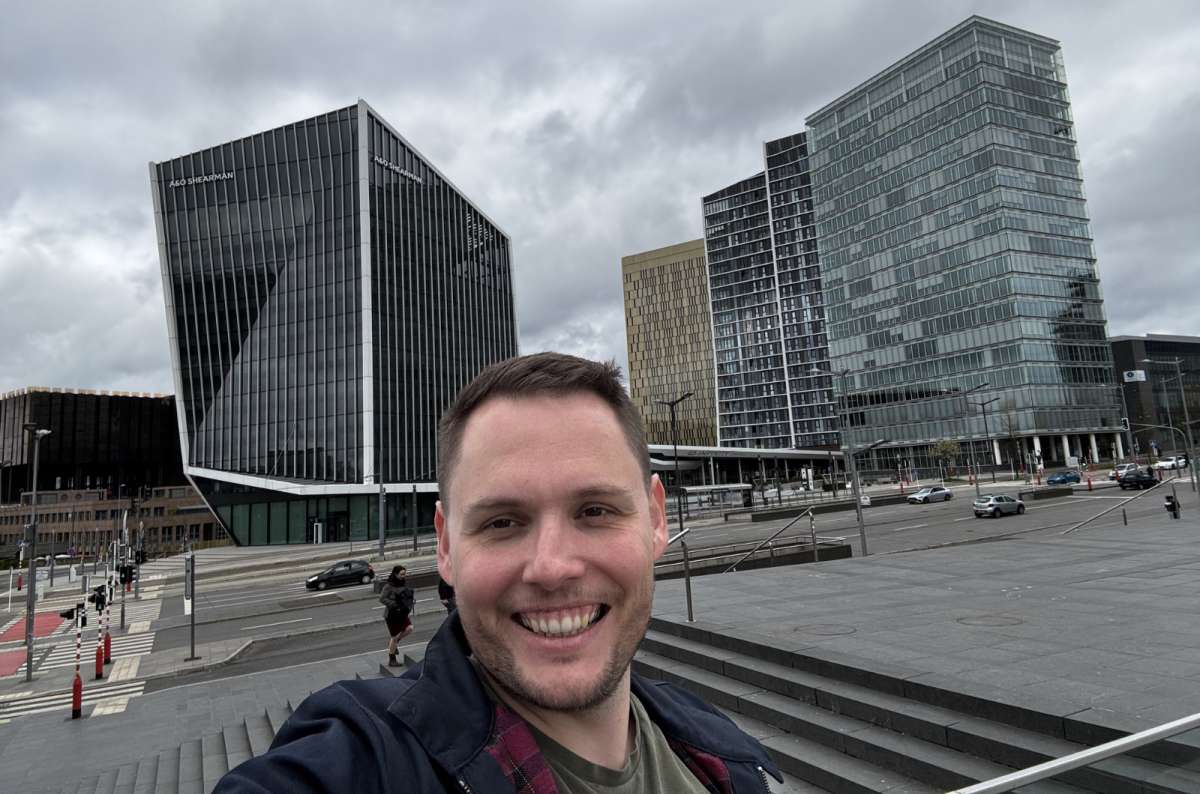
The Kirchberg part of the city is cool, but nothing worth extending your stay over
Skip extra squares, too many museums, Mudam interior unless you like contemporary art, and the Casemates if you’re only going because they’re famous. Luxembourg City is better when you follow the scenery instead of collecting attractions.
Yes, Luxembourg City is walkable, but it is not flat. The city is built across upper and lower levels, so expect hills, stairs, bridges, and elevators. The walking is exactly what makes the city interesting, but wear decent shoes.
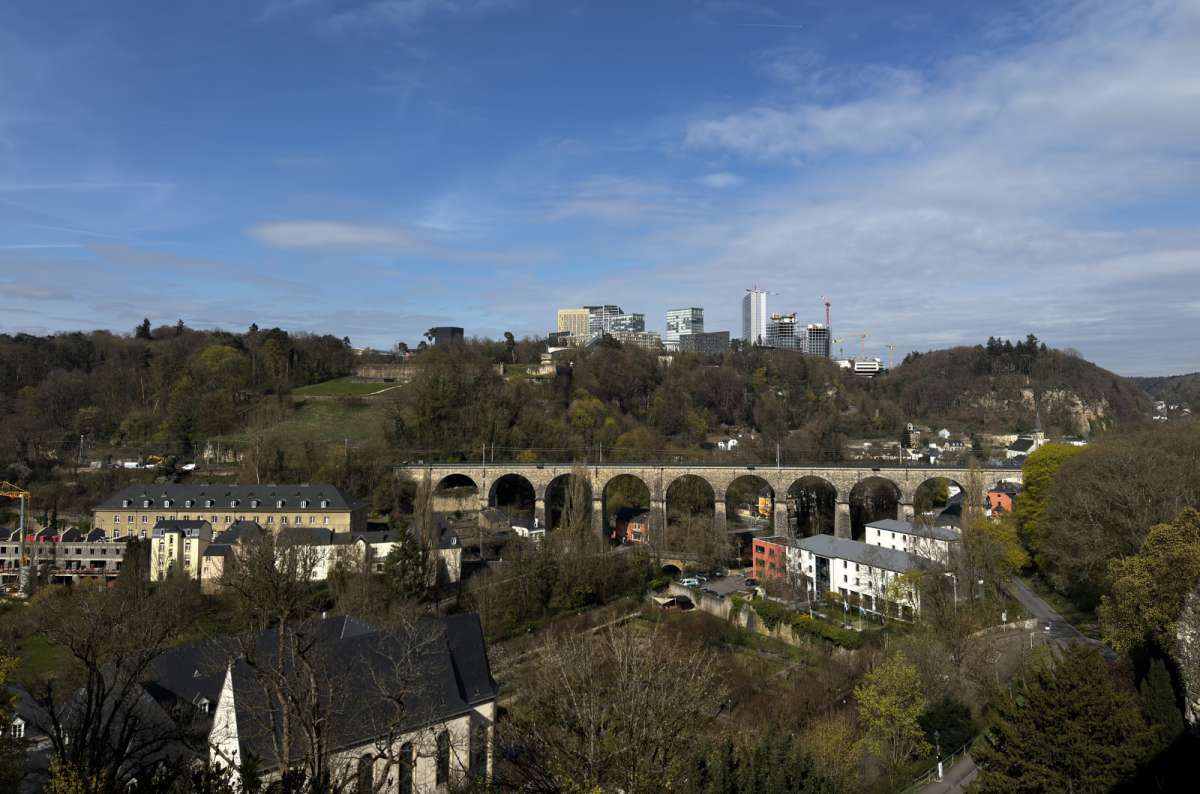
Medieval viaduct in front, the EU quarter skyline behind, that’s Luxembourg for ya
Luxembourg City gets better when you stop treating it like a list of attractions and start treating it like a layered walking route.
Start with the Corniche. Go down into Grund. Follow the Alzette valley. Add the Luxembourg City History Museum for context. Then decide whether you care enough about fortress history to visit Dräi Eechelen or the Bock Casemates.
That is the smart version of Luxembourg City.
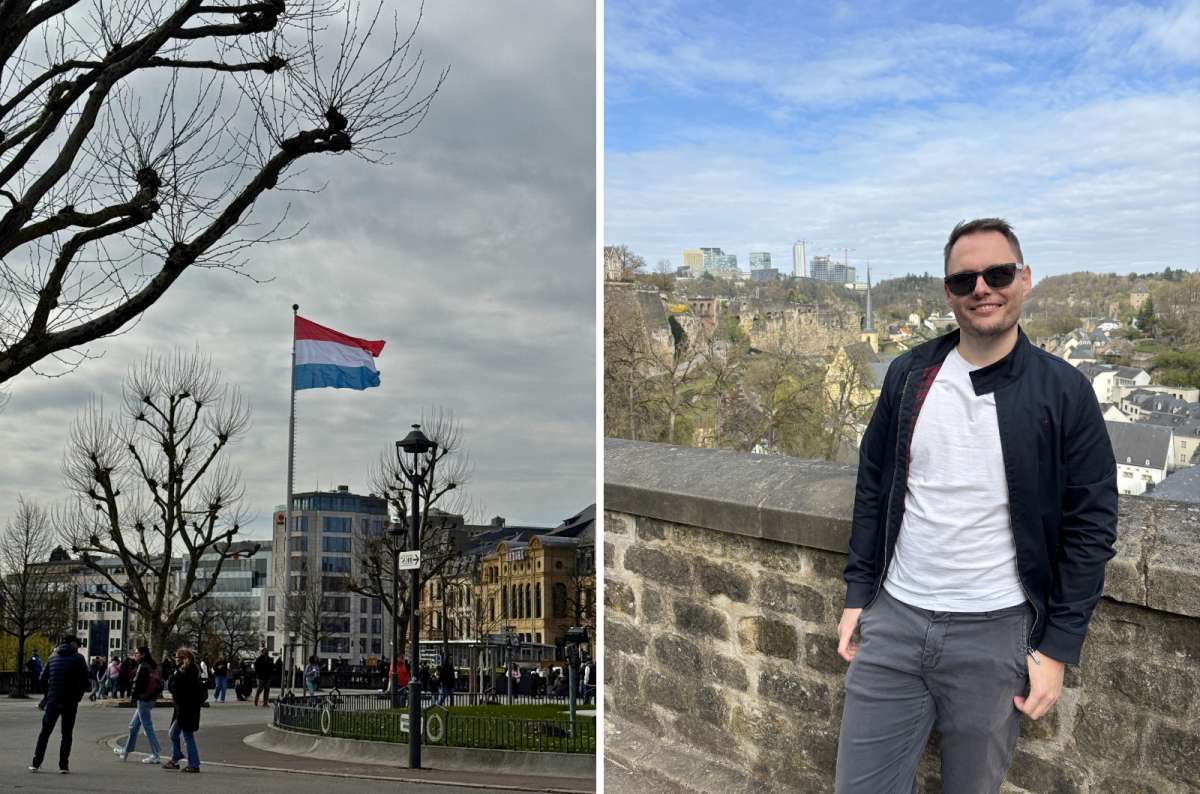
Luxembourg can make for an amazing vacation if you know which stops to skip; thankfully, you have me to tell you that
The wrong version is trying to see every square, every museum, every famous tunnel, and every “top attraction” because the internet told you they all matter equally. They don’t.
For me, the city’s real payoff was not one monument. It was the way the upper town, lower town, valley, bridges, and fortifications fit together. Follow that, and Luxembourg City becomes much more impressive than it looks at first glance.
For more planning, read my guide to the best things to do in Luxembourg and my full Luxembourg Travel Guide.
This post contains affiliate links. If you make a booking through one of my links, I may earn a small commission—at no additional cost to you. Thank you for your support!
At a glance: the best things to do in Luxembourg City ranked
Quick verdict: what should you prioritize?
1. Walk the Chemin de la Corniche
3. Follow the Alzette valley and lower city walks
4. Visit the Luxembourg City History Museum
5. Visit Dräi Eechelen Museum and Fort Thüngen
6. Ride the Pfaffenthal Panoramic Elevator
11. See Mudam and the Philharmonie exterior
12. Add the National Museum of Archaeology, History, and Art
13. Walk through Place Guillaume II and Place d’Armes
Best viewpoints in Luxembourg City
Best museums in Luxembourg City
How much time do you need in Luxembourg City?
Best one-day Luxembourg City itinerary
What to skip in Luxembourg City if you’re rushed
How to combine Luxembourg City attractions efficiently
Where to stay in Luxembourg City
Practical tips for visiting Luxembourg City


Hi, I’m Jan. I travel fast and intensely, whether I’m exploring the buzz of Tokyo in 3 days or road-tripping through mountains and beaches on a 3-week Thailand adventure. And no matter where I am, you’ll always find me in a comfortable hotel at night and eating the best food.
If that sounds like your kind of journey, hop on board, and let’s explore the world together!
I started this blog after realizing how tough it can be to find reliable, authentic travel info. You wouldn’t believe how many “travel bloggers” never even visit the places they write about! On Next Level of Travel, you can count on my full honesty and insights drawn from my firsthand experiences.
Here’s the deal: not every destination is all superlatives and unicorns. I’ll let you know if a tourist attraction isn’t worth your time, like skipping overrated stops in my 2-week Spain itinerary. And when I find something truly special—like the perfect mix of culture and nature in Cape Town—you can trust that it’s worth adding to your itinerary.

Comments | Thoughts? Give us a shout!