


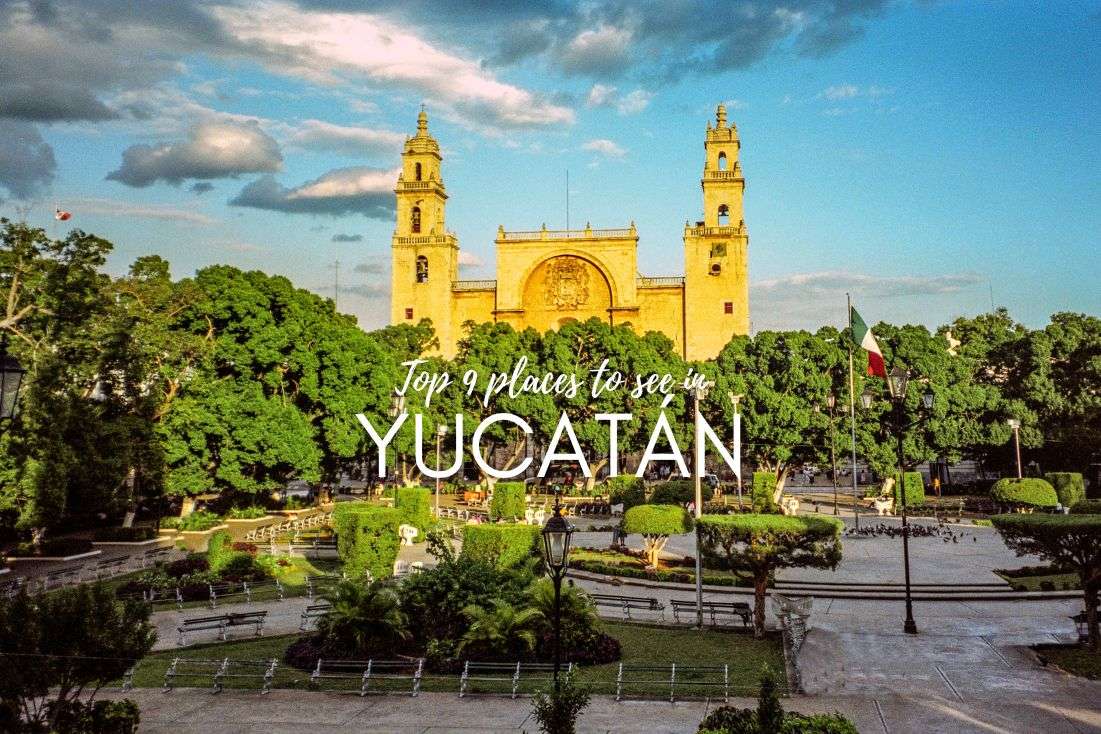


At a glance: Top Things to Do in the Yucatan Peninsula
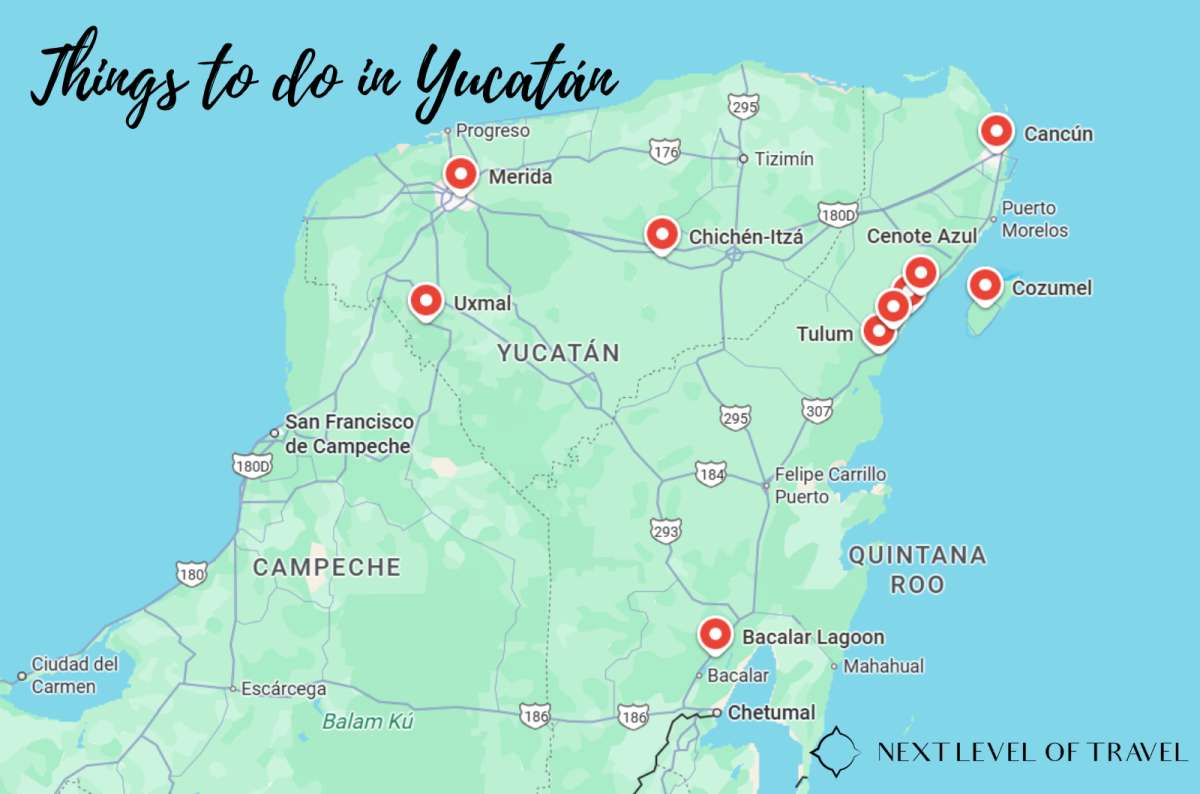
1. Explore Chichen Itza, the famous Mayan ruins
2. Wander through the clifftop ruins of Tulumon the Riviera Maya
3. Swim in surreal cenotes of Yucatan
4. Experience the colonial charm of Mérida
5. Discover the hidden magic of Uxmal ancient ruins
6. Kayak, swim, or take a guided tour of Bacalar Lagoon
7. Use Cancun as a launch pad (or beaches, if that’s your thing)
8. Swim with sea turtles and whale sharks
9. Take a day trip to Cozumel Island
What is Yucatan best known for?
What are the magical towns in Yucatan?
There are plenty of great things to do in the Yucatan Peninsula in Mexico, whether you’re into ancient Mayan ruins, swimming in cenotes, or spotting wildlife like sea turtles and whale sharks.
I found that the region has just the right mix of history, natural beauty, activities, and food, with the best time to visit Yucatan generally being from November to March when the weather is pleasant—and yes, it’s worth it even if you’re not a beach person (I’m not either).
I decided to visit Yucatan with a rental car, covering everything from big-name sites like Chichen Itza and Tulum to lesser-known spots that don’t always make it into the typical Yucatan travel guide.
This isn’t a list of everything you can do in Yucatan, it’s my honest take on what was really worth my time. Here’s what I think are the best places to visit in Yucatan—some obvious, some unexpected.
Read more from my Mexico travel blog.
100 %. I’m not super easy to please because I have high expectations, but my Yucatan trip just worked. I saw a lot in a short time—ruins, cenotes, colonial towns—and still had good food and comfortable places to stay (like the magical Casa Lecanda Boutique Hotel in Merida). There are plenty of fun activities too, so adventure enthusiasts won’t be bored. I like to keep my days pretty packed with diverse experiences, so I’d tell you if I thought Yucatan was too mellow.
It’s easy to get around with a rental car, and even though some spots are crowded with tourists beyond my comfort threshold, it’s not hard to find quieter places if you plan ahead (and get an early start in the morning). I’m not into beaches or party towns, and I still really liked it.

Here’s a quick look at the best things to do in Yucatan—all based on my personal experience. Some are popular tourist destinations, some are underrated stops, but all are worth your time.
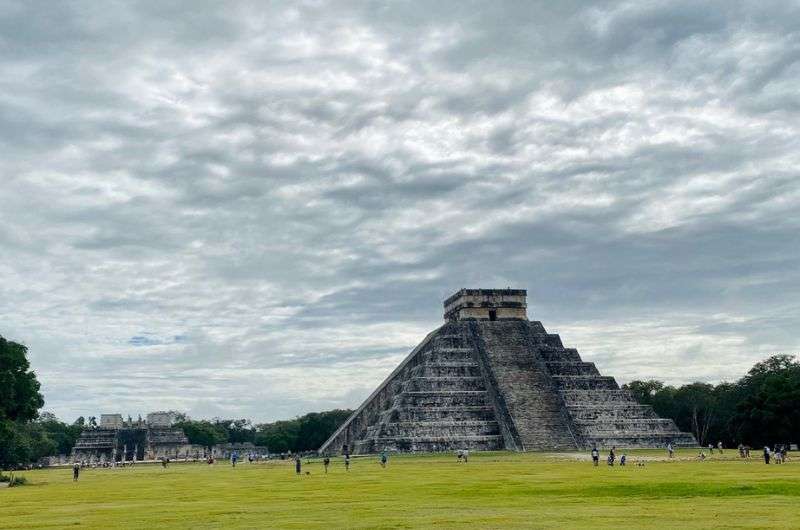
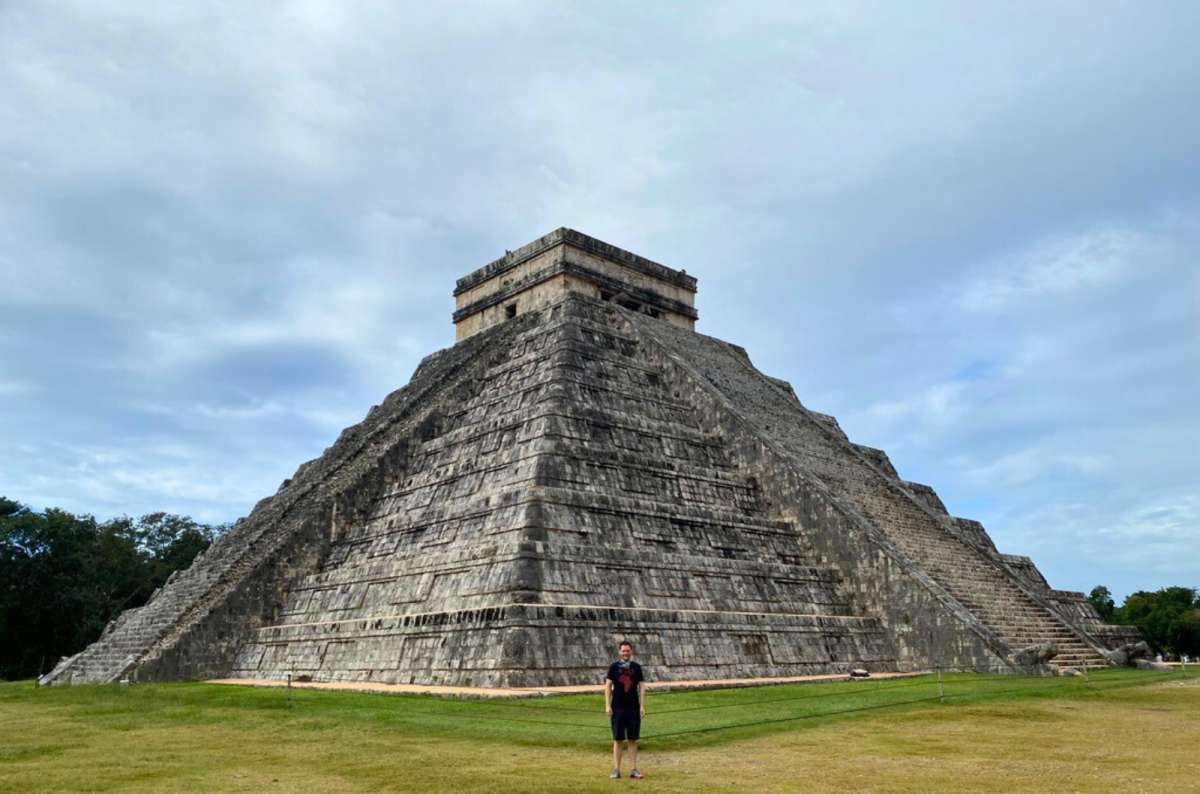
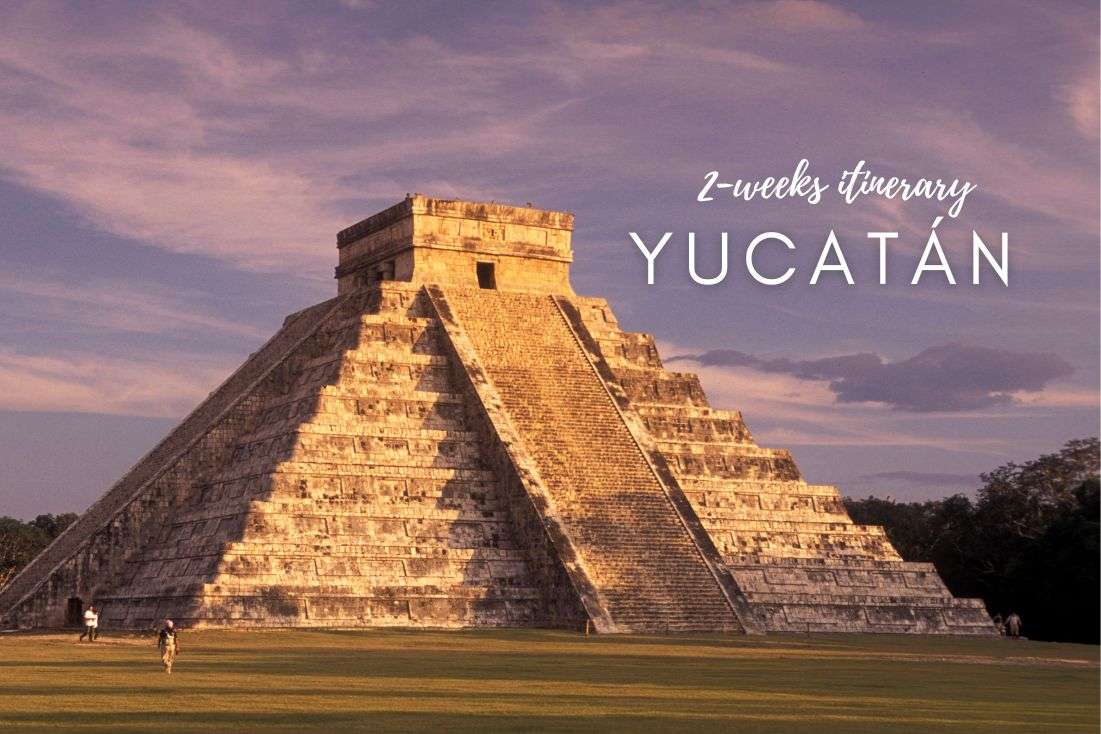
The Temple of Kukulkán (note the feathered serpent on the staircase)
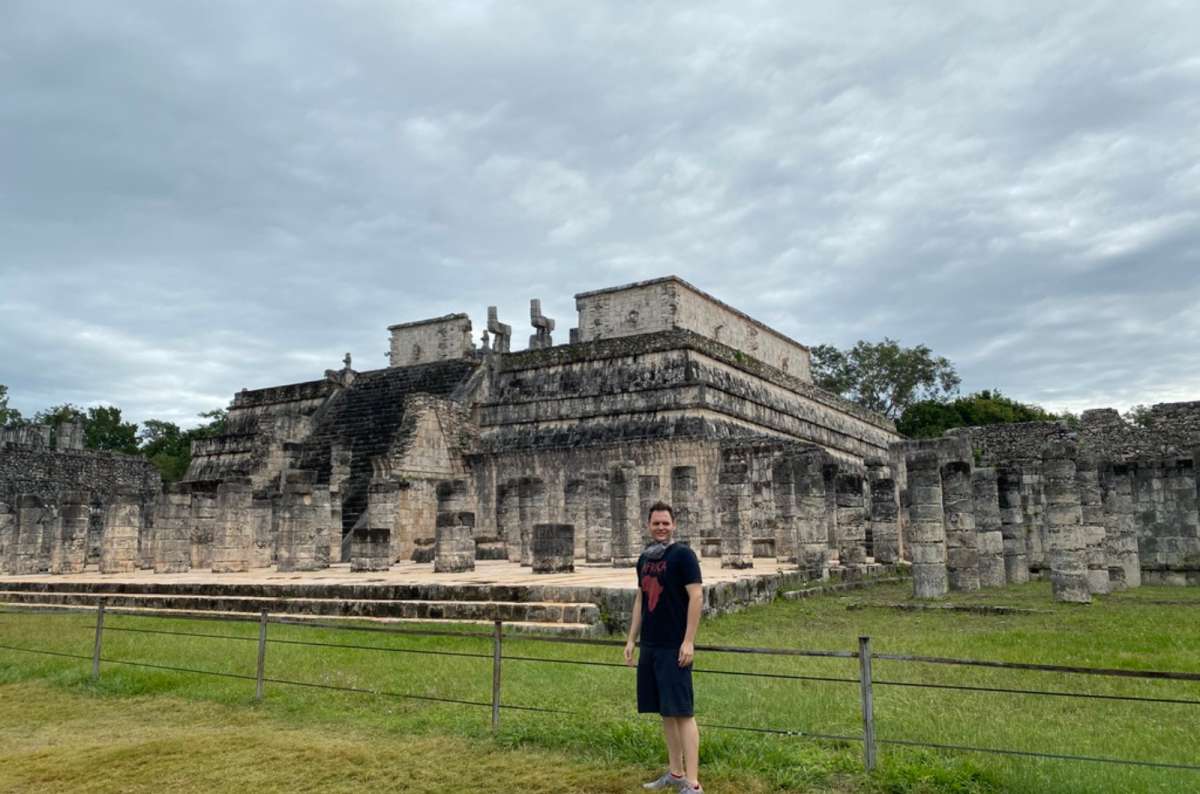
No list of what to do in Yucatan would be complete without the mighty Chichen Itza, the most popular Mayan ruin in the region. I’ll be honest—when I first pulled up to Chichen Itza (a UNESCO World Heritage Site), I was bracing myself for a circus. And yes, it’s packed. But that doesn’t take away from how mind-blowing the place really is.
Modern architects and builders are no match for the Maya culture. The Maya nailed it. They built the ancient city of Chichén Itzá, which belongs to the list of 7 New World Wonders thanks to its monumental pyramids, temples, and sculptures.
I was especially impressed by the most famous structure, theTemple of Kukulkán (El Castillo). To establish authority, the Mayan ruler used to pretend that Kukulkán, the god in the shape of a feathered serpent, was winding down the stairs of the temple.
The Mayan folk were scared out of their wits, and the ruler had all the respect he wanted. But in reality, it was just advanced architectural skills and astronomy knowledge that enabled the incredible game of lights, creating the illusion of a slithering snake.
Another highlight of Chichen Itza is the Great Ball Court, the largest and most impressive in Mesoamerica, where ancient Maya games were played.
Yes! If you indulge in solitude, visiting Chichén Itzá is not for you. The ruins welcome a hell of a lot of tourists; 2.6 million every year. I probably elbowed at least 20 of them to get a decent photo.Chichen ItzaStill, I wouldn’t miss it, and visiting Chichen Itza is undisputably one of the top things to do in the Yucatan Peninsula.
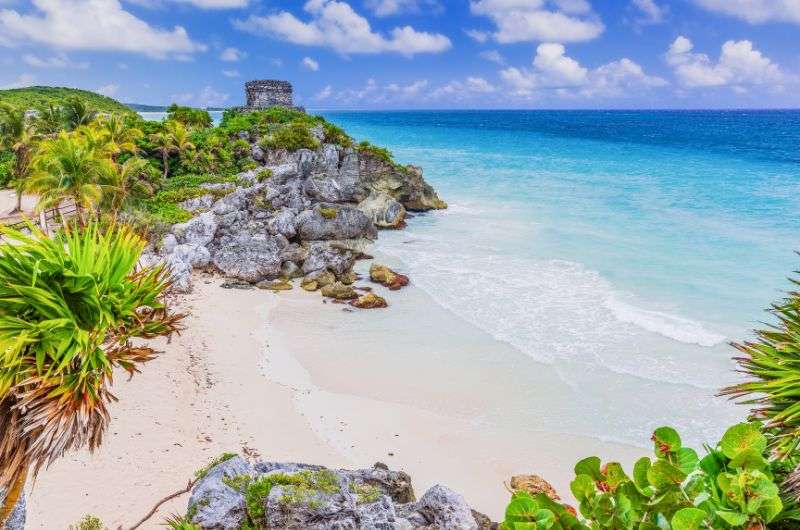
Tulum on the Yucatán Peninsula
Tulum is not only one of the top Mayan cities in Mexico; as a highlight of Mexico's Riviera Maya, it’s number one on my list. It’s one of the most iconic places to visit in the Yucatan Peninsula, thanks to the combo of ruins and beaches. I will say that the hippie culture made me roll my eyes plenty of times. If I never see another dream catcher, it’ll be too soon.
If you stay away from the barefoot crowd and boho shops, you’ll be much happier. Instead, focus on the history, gorgeous beaches, and the number of unique things to do around Tulum.
Tulum is now a beach town, but used to be a walled city and the main port of the region, as well as an important trading center. That’s why it was never short on cash, and why it was full of ostentatious buildings.
The list of things to do in Yucatán can’t go without swimming in the turquoise waters of the Caribbean Sea. Tulum's beaches lie under the cliffs and walls of the city, sunny and sandy, calling you like sirens. I promise, you won't resist the call. And you won’t have to; the beaches are accessible to tourists, and swimming is allowed.
Tip: Insidious little raccoon-like animals (coatis) live in the area. Don’t feed them, they bite.
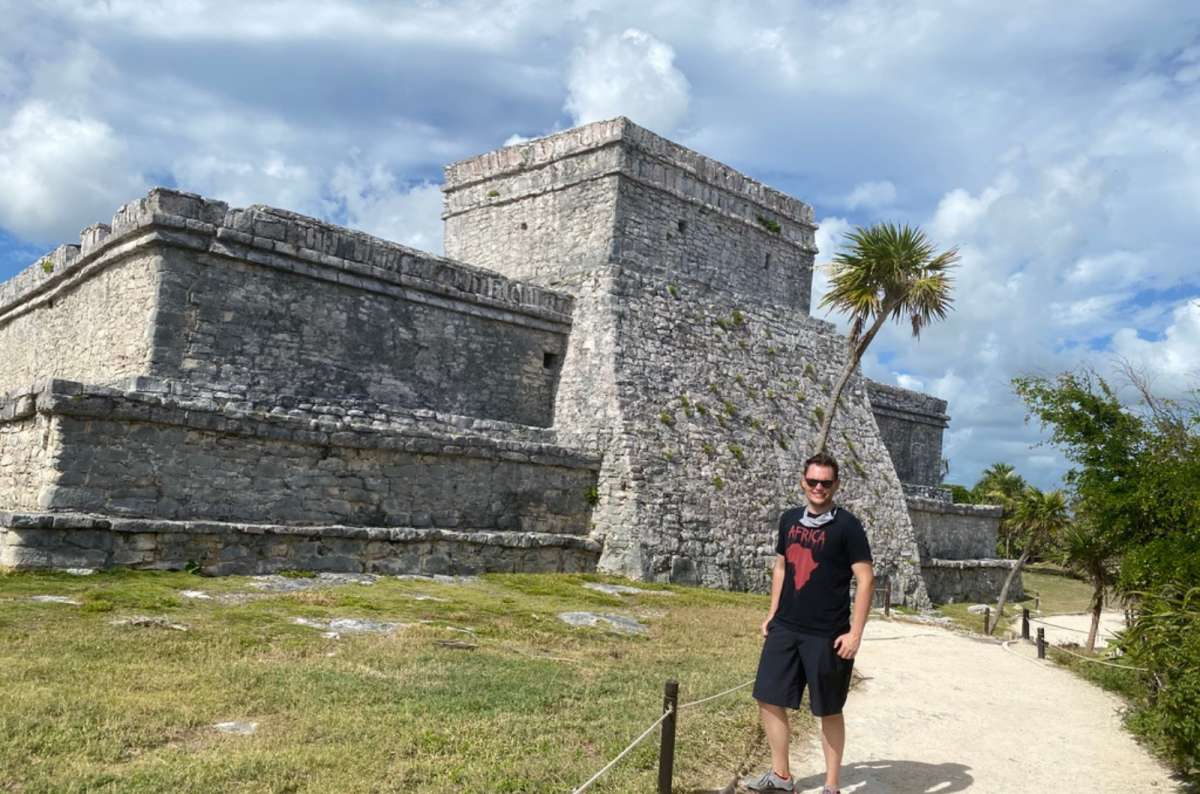
Tulum isn’t the biggest or the oldest Mayan city, but the location is unbeatable. I wandered through temples but kept getting distracted by the beaches just below.
The main structure is El Castillo, a small pyramid-like temple right on the cliff’s edge—it was likely a lighthouse or navigation aid for Mayan traders arriving by canoe. There's also the Temple of the Frescoes, with remnants of wall paintings inside, and other smaller temples and platforms scattered around the site. It’s all easily walkable.
The entrance ticket itself is surprisingly cheap, just 80 pesos (4 US dollars). The opening hours of the attraction are 8 am – 5 pm, and I recommend arriving as early as possible to avoid the crowds.
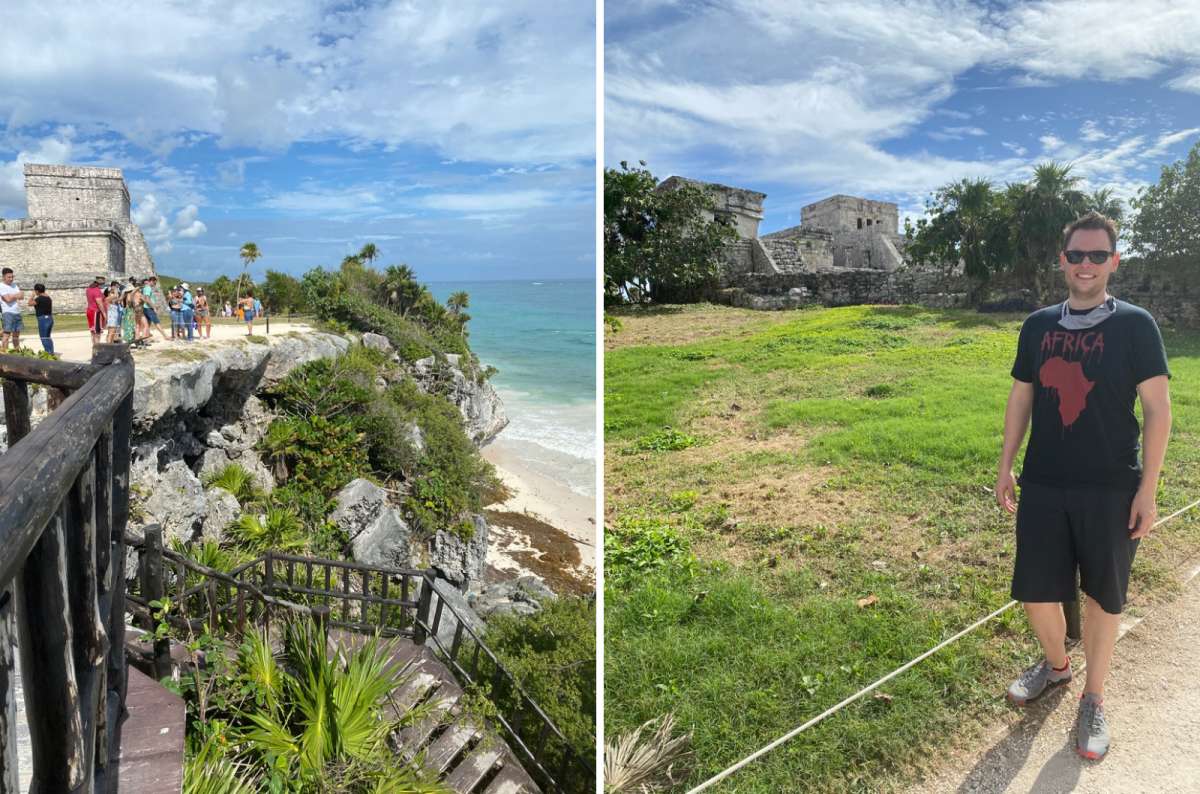
Prices in town are absurd. If you’re eating in Tulum’s restaurants or sleeping in a hotel in Tulum, prepare to pay a pretty penny. I say it’s better to sleep in Cancún or any nearby town, just not in Tulum.
Hotel tip: Hotel Bardo (adults only)
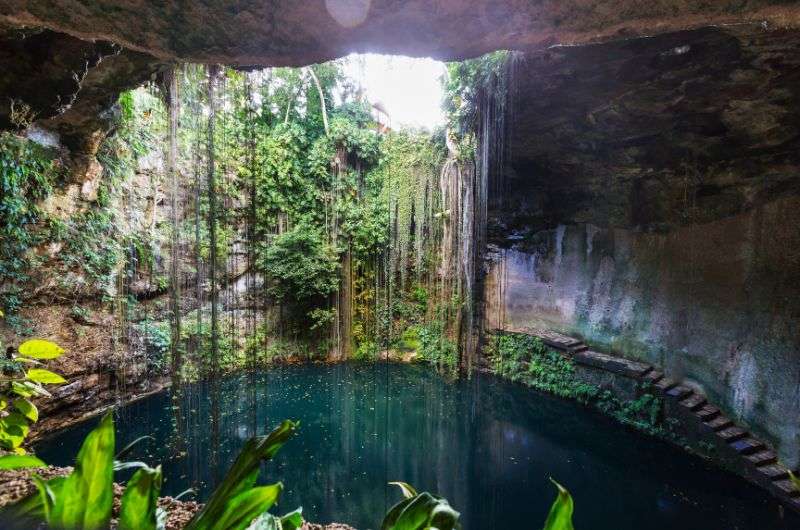
One of the cenotes in Yucatán
I didn’t know what to expect the first time I climbed down into a cenote. I thought, maybe a fancy pond? Maybe a muddy cave with frogs? But no, it’s really a kind of magical, underground oasis. Swimming in cenotes is easily one of the most unique things to do in the Yucatan Peninsula. And no, it’s not just Gran Cenote (the most popular one).
Cenotes are a unique natural phenomenon typical of Yucatán. They are sinkholes filled with water, and if you wonder what to do in Yucatán and you’ve ever fancied swimming in a cave, you can’t skip them.
The water is clear and warm, and swimming is safe (in designated locations, obviously). The only thing that might distress you is the depth of the water—often more than 60 meters (200 feet). The feeling that you’re in a cave and a deep mass of water lies under you is not for everyone. But otherwise, it’s just perfect. And much warmer than I expected.
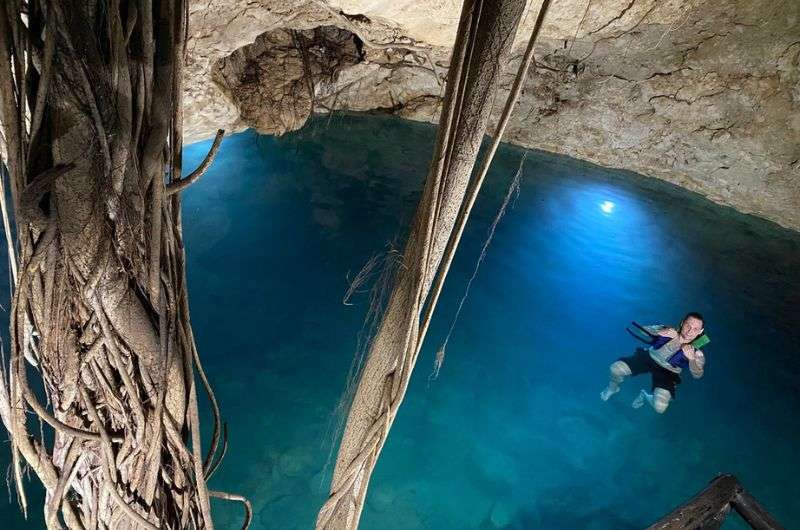
You can take a swim in Cenotes in Yucatán ,and it's amazing!
There are a couple of great cenotes in Reserva Estatal Geohidrológica Anillo de Cenotes near Mérida; that’s where I took these photos.
Then there is Cenote Dos Ojos, near Tulum. It’s an interconnected system of caves with two entrances: one nicknamed the Bat Cave (self-explanatory), and the other the Barbie Line. The Barbie one, by the way, features a decapitated Barbie doll being devoured by a plastic crocodile.
I snorkeled the entire second “eye,” and it was like swimming through a submerged cathedral. Bring your own gear if you can.
My favorite, though, was Cenote Choj-Há. It’s underground, dimly lit, and way less crowded than the popular spots. The silence down there is unreal. Getting in isn’t exactly graceful (the rocks are sharp and unforgiving), but it’s worth every toe-stab.
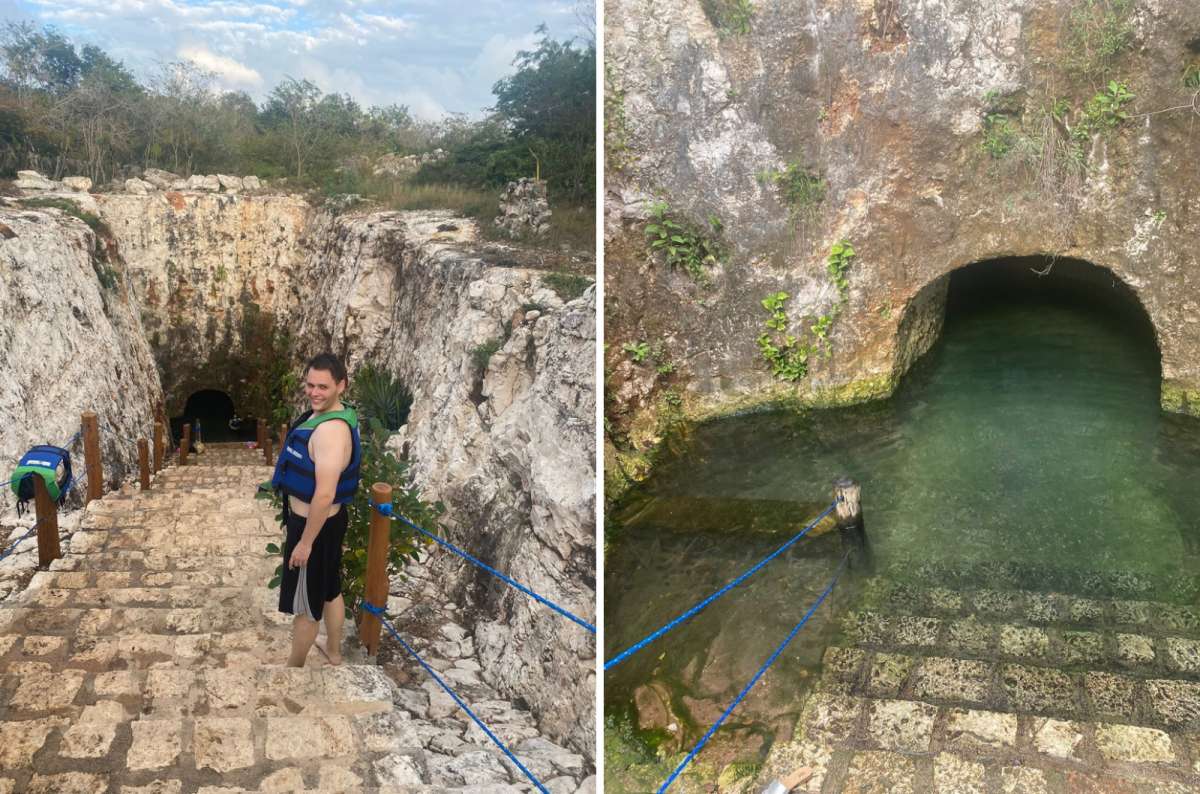
But there are many more in Yucatan—With over 6,000 cenotes in the region, this is hands down one of the most unique things to do in the Yucatan Peninsula. Gran Cenote, near Tulum, is one of the most popular and easily accessible cenotes, known for its natural beauty, excellent snorkeling and scuba diving opportunities, and reasonable entrance fee.
Pro tip: You can also combine swimming and walking by taking a hike called La Ruta de los Cenotes.
Some cenotes allow you to rappel or zipline your way into them. See where in my article:
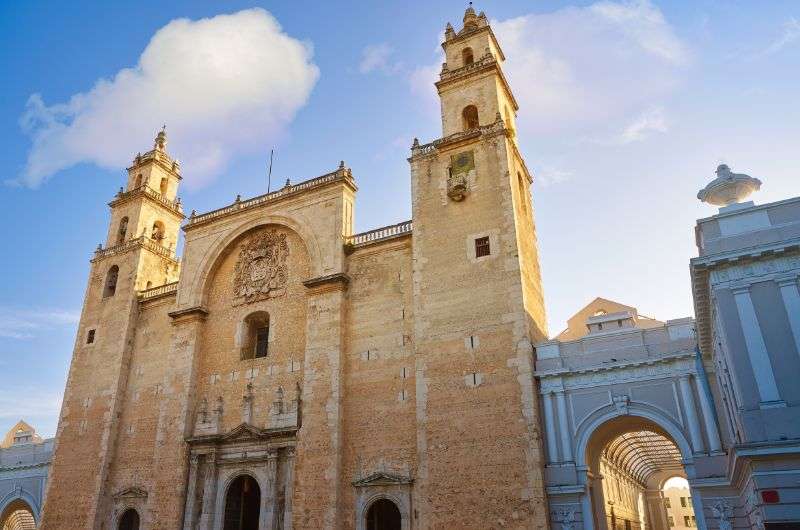
The city of Mérida
Yucatan's tourist attractions aren't just ruins and holes in the ground.
I took a day off from the pre-Columbian cities and natural wonders, and roamed among cultural gems instead, which was a great change of scenery. Méria is the capital of Yucatan, being home to nearly 900,000 inhabitants. It's squares, cathedrals, museums, and strolls along colorful houses featuring stunning colonial architecture make for a perfect day trip.
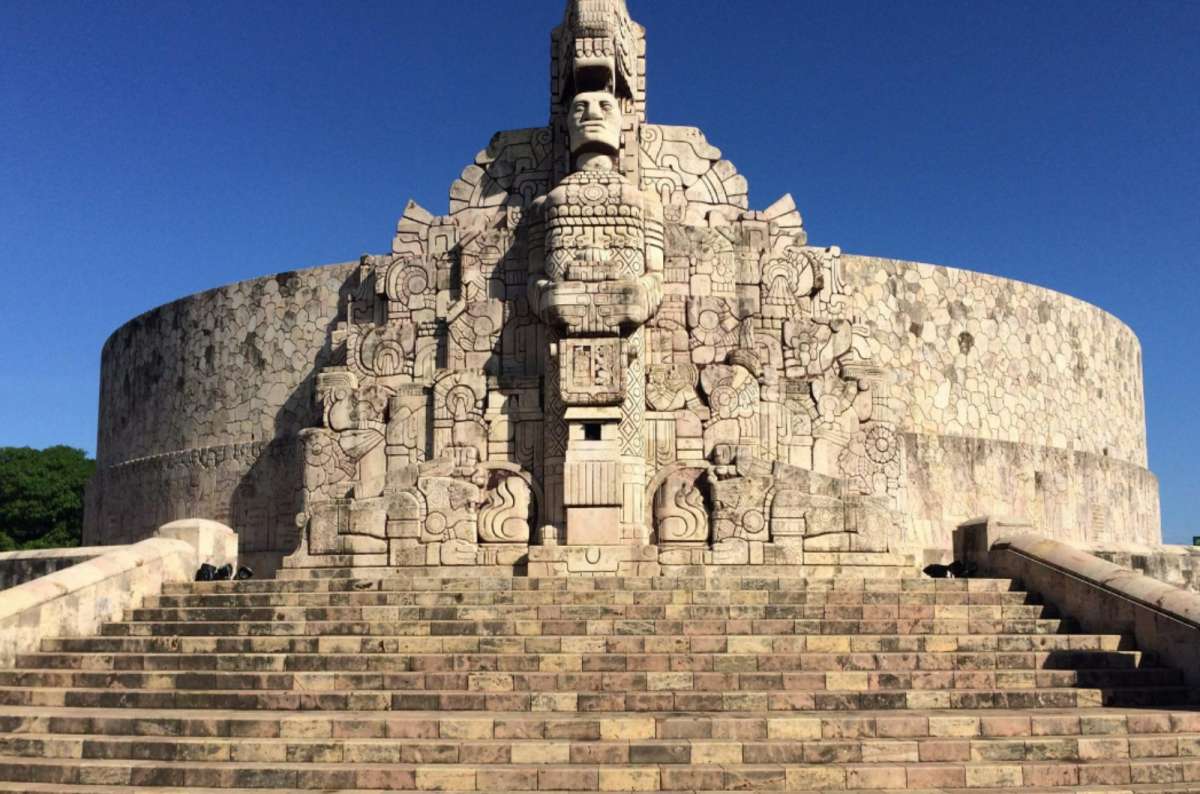
A reminder that Yucatan has cities too, with pretty landmarks like Monumento a la Patria
If you're anything like me and you need coffee at all times of the day—you'll fall in love with the cozy cafés in Mérida.
I spent lots of time in the heart of the city, Plaza Grande. It's a square lined with many spectacular buildings, such as The Cathedral of Mérida, the City Hall, or the Government Palace of the State of Yucatan. If you happen to be into people-watching, this is where it’s at.
Fun history fact: Mérida was built right on top of the ancient Maya city of T’ho—literally. The Spanish used the Maya stones to build their cathedrals and mansions, including the massive Cathedral of Mérida, which is actually the oldest in mainland Americas. Take note when you’re looking at it during your visit.
Santa Lucia Parque, on the other hand, is a piece of lush vegetation in the middle of the city, filled with lovely restaurants. I managed to catch live music over drinks there in the evening.
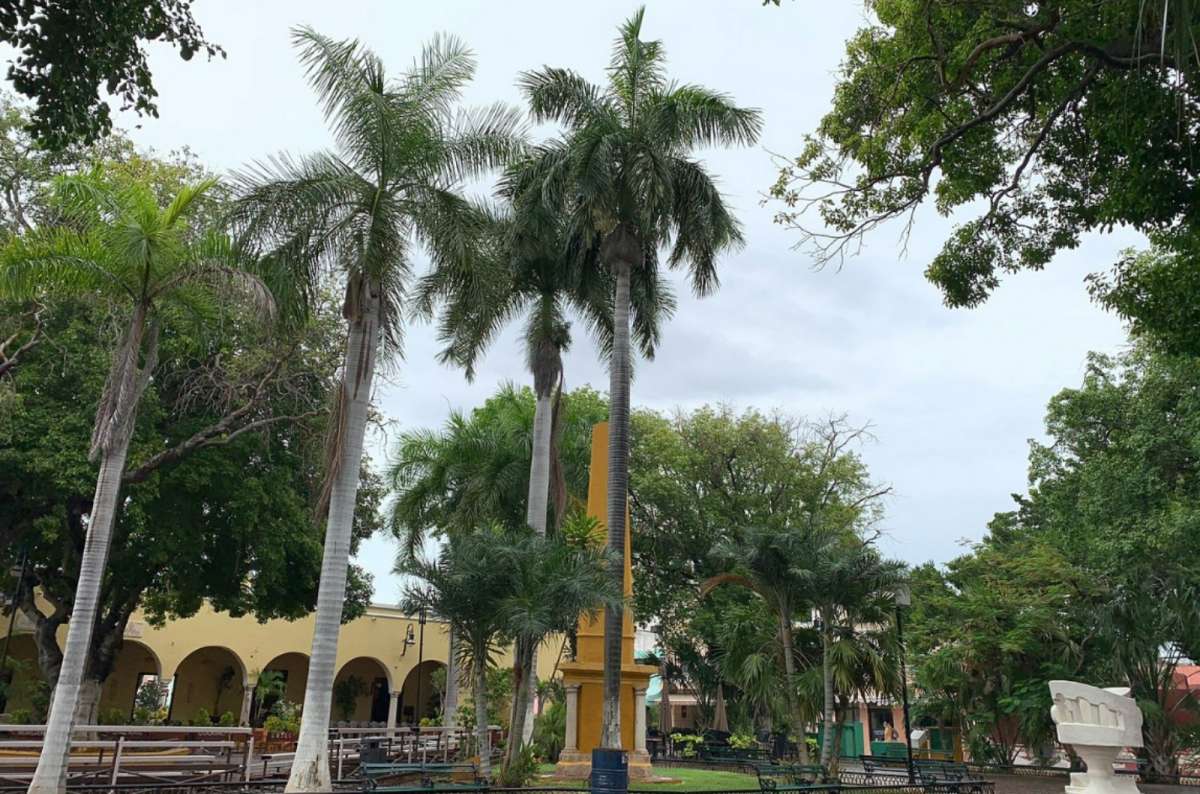
I'm not a huge market fan, but exploring local food markets is one of the most underrated things to do in Mexico's Yucatan Peninsula—especially if you're obsessed with tacos and tropical fruit like I am. Mercado Lucas de Galvéz is the renowned market held in the center of Mérida, offering everything from food to handcrafted items, clothes, and many other things you haven't even thought you could need.
Hotel tip: Casa Lecanda Boutique Hotel
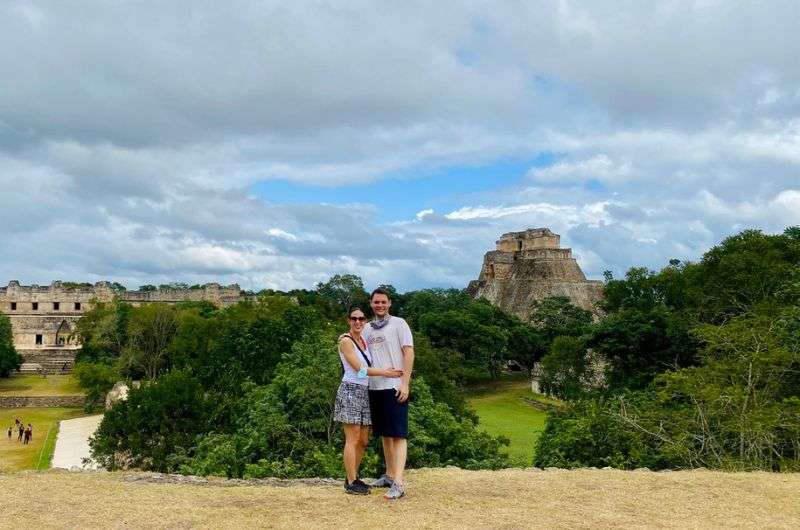
Exploring Uxmal, one of the Mayan cities in the Yucatan Peninsula
If you're looking for places to visit in Yucatan without huge crowds, Uxmal should be at the top of your list. There are many amazing Mayan cities in Mexico, but Uxmal is one of a kind. And not only because Star Wars was shot there! What stuck out to me was the layout, the detail, and the weird quiet.
Uxmal was built in the 9th century in the Puuc architecture style, characterized by smooth, curved walls, limestone constructions, and decorative stonework.
I wandered through the massive plazas, climbed what I could, and spent way too long staring at carved snakes and masks, trying to make sense of it all. Easily one of my favorite spots on this list of what to do in Yucatan.
The Pyramid of the Magician is the one you’ll see in every photo. According to legend, it was built overnight by a dwarf with magical powers, which makes about as much sense as anything else here. You can’t climb it anymore, but standing at the base is enough—it’s tall, steep, and oddly shaped, like someone built it slightly wrong on purpose.
One thing I found interesting is that Uxmal didn’t have a cenote nearby (a critical water source for most towns in the Yucatan). Instead, the Maya dug chultuns—underground cisterns—to collect rainwater. Clever, until a drought hit.
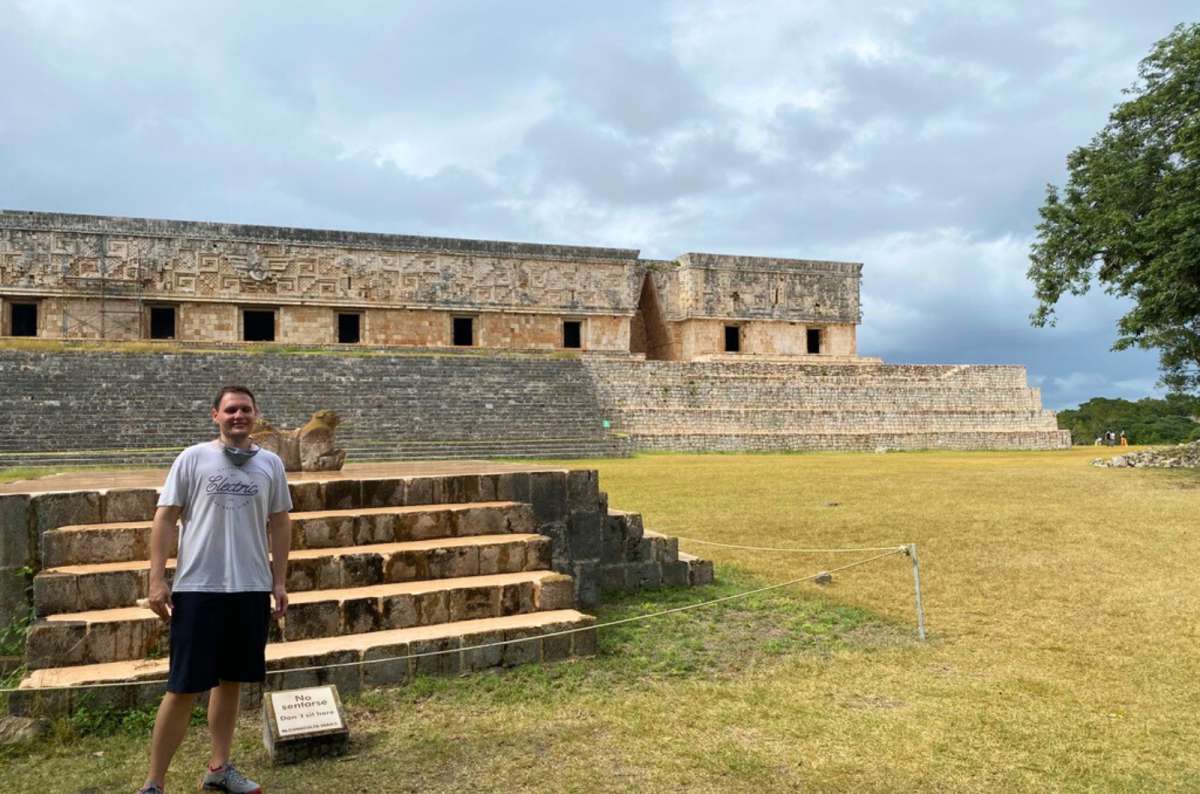
The site is about 80 km south of Mérida, surrounded by jungle and not much else. I spent around two hours there, and if you're into ruins (or stubborn like me), it’s worth following the Puuc Route while you’re at it.
It’s the route that connects five ancient sites:
They are close to each other (about 20 minutes’ drive), and it would be a pity not to visit them all once you’re in one of them.
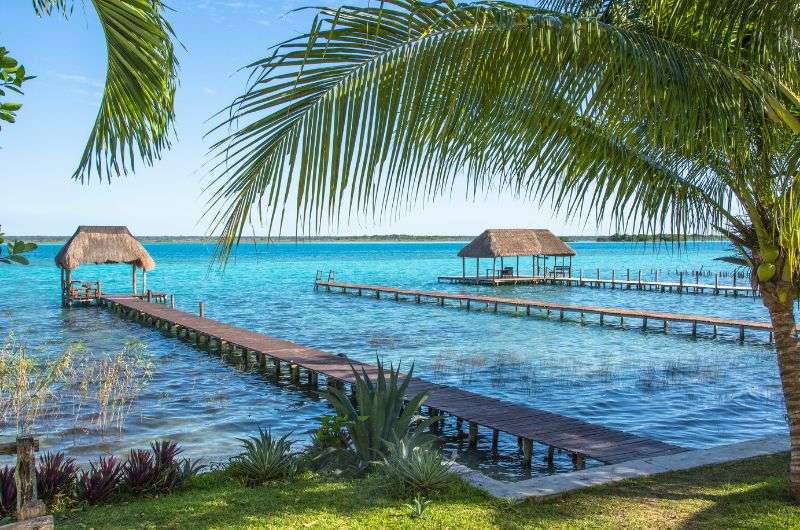
The Bacalar Lagoon
Bacalar is quickly becoming one of the top things to do in the Yucatan Peninsula for eco-travelers and photographers for its sheer beauty. The water shifts through more shades of blue than I knew existed—hence the nickname, “the lake of seven colors.”
It has even been named one of Mexico’s Pueblos Mágicos (Magical Towns, same as, for example, San Cristóbal), so go soon before the hippies turn it into Tulum 2.0.
Bacalar Lagoon is massive: a 42-kilometer (26 miles) long lake in the state of Quintana Roo. The town of Bacalar sits at the southern tip of the lake. It’s small—only around 11,000 people—but they’re ready for tourist with more boutique hotels and cafes than you’d expect. Though to be honest, one day is enough for me, there’s only so much blue lake one can admire at a time.
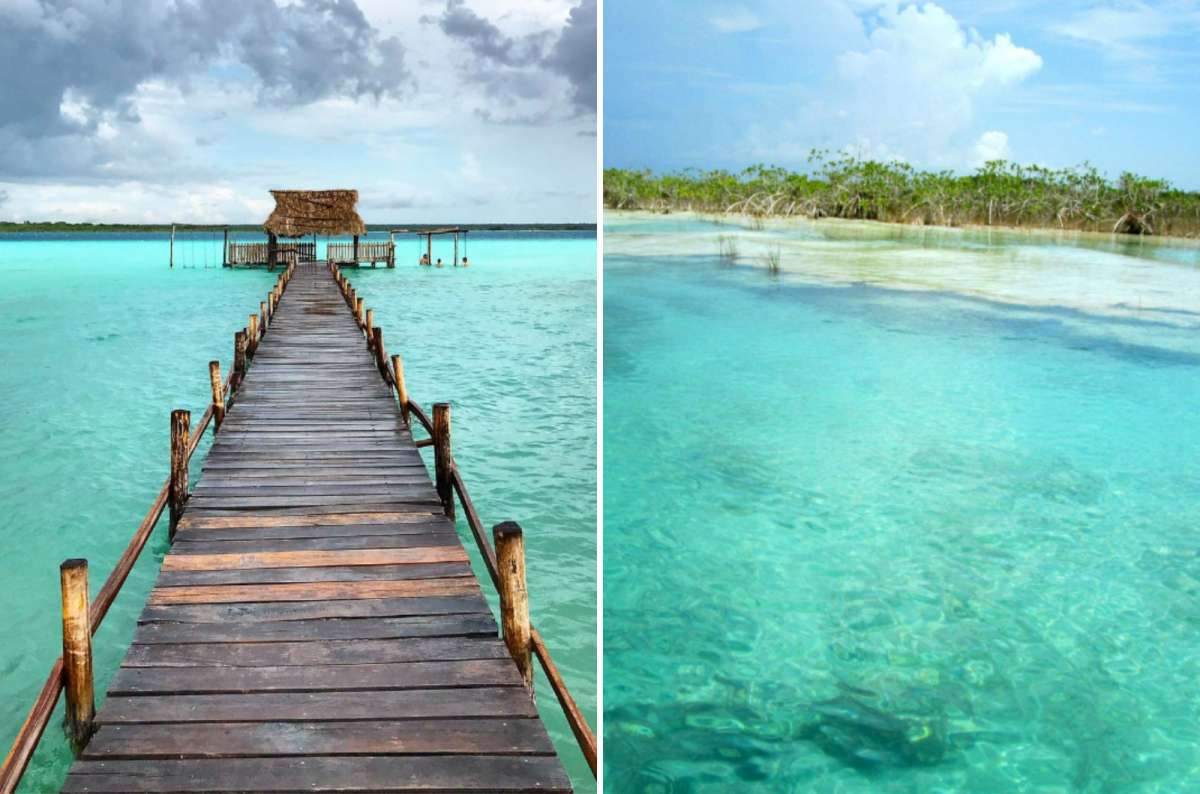
As for what to actually do here: I rented a kayak, swam a bit, took a walk, and joined a guided boat tour to see more of the lagoon (worth it, especially near Channel of the Pirates).
There's also Cenote Azul nearby—a deep, dark swimming hole right next to the road that looks like someone dropped a bottomless pit next to paradise.
Cancún, the perfect entry point to the Yucatán Peninsula
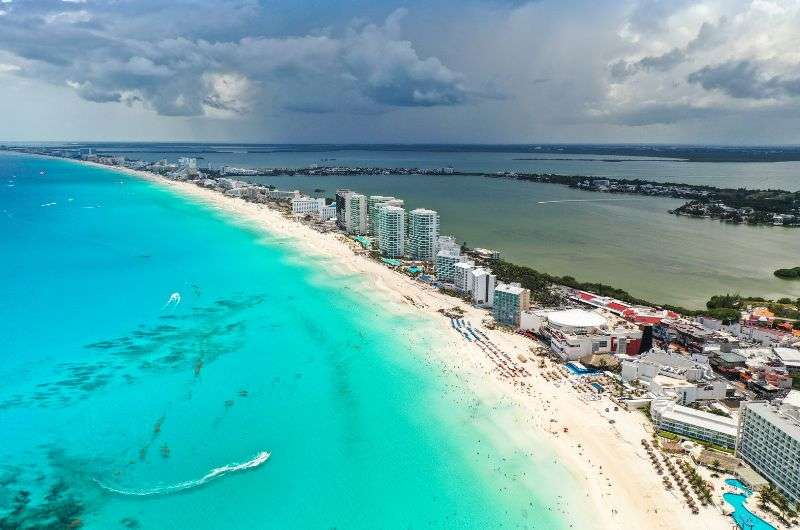
I’ll be honest—Cancún isn’t really my scene. I don’t care much for beaches or beach bars, and I always think the all-inclusive resort vibes kill the city’s actual vibes. But as a starting point for a trip around the Yucatan, it’s hard to beat.
It’s very touristy, but Cancun still deserves its place on any list of things to do in the Yucatan Peninsula—especially if you're flying in hungry and exhausted. The airport’s big and well-connected, and almost everyone comes in through it. The city has every amenity you could possibly need.
It's also the departure point for tours like whale shark swimming (see next item on the list), so even if you don’t stick around, it’s a handy launchpad for adventures.
If you do like white sand beaches, you’ll have no shortage of them. Downtown Playa del Carmen is easily accessible. But expect lots of people, noise, and big egos. The Caribbean Sea is crystal clear, great for swimming and participating in the countless available water activities.
If you need to stay in Cancun but desperately want to get away, just a short drive away is Puerto Morelos, a charming fishing village.
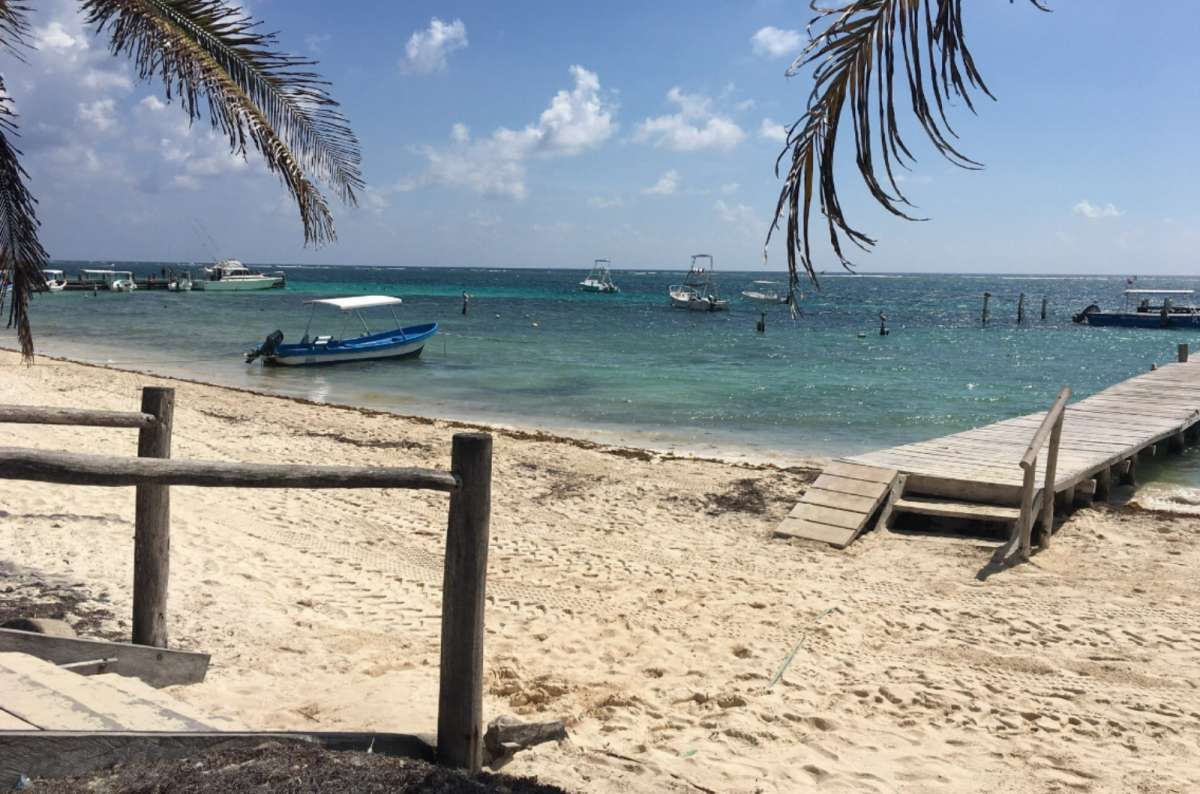
There are also numerous great restaurants to satisfy your insatiable appetite for good food, shopping centers to lighten your wallet, and handicraft markets to make you oooh and aaah.
The Hotel Zone is a long strip of sand lined with massive resorts, beach clubs, and restaurants that mostly serve variations of the same three things.
Downtown Cancún (El Centro) is where people live, and where you’ll find better tacos, cheaper food, and markets that don’t sell souvenir tequila.
Hotel tip: Fiesta Americana Condesa Cancun
The layout’s simple enough—20 minutes by car from the airport to the Hotel Zone, even less to downtown. It’s also a great base for day trips or your first stop before heading deeper into the peninsula:
Cancún does the job at the start or end of a trip. If you need a place to land, stock up, and move on, Cancún is almost inevitable.
This was so much fun!
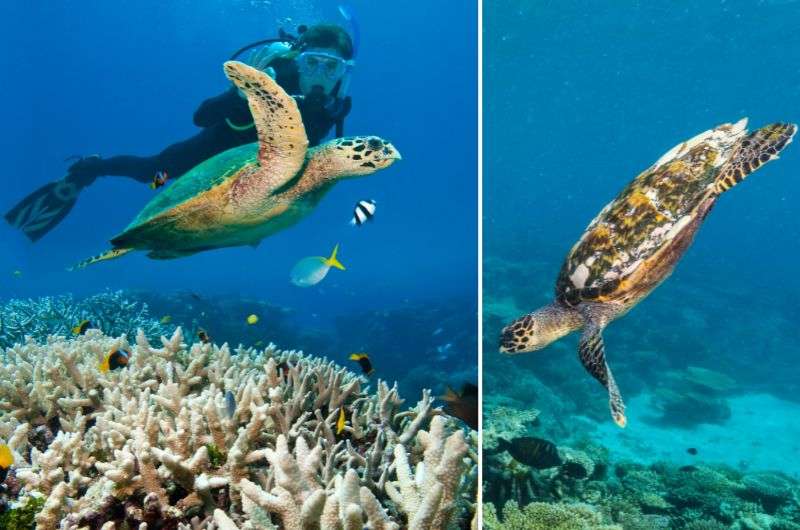
Can’t take the crowds of people anymore? Exchange them for animals! At Akumal Beach, you can snorkel with green sea turtles, and in Cancun, you can dive off the coast with whale sharks. that are used to people and will let you come close to them. These are some of the most unforgettable wildlife experiences in Yucatán.
The bay is protected by a reef, so even beginners can float around comfortably without getting tossed around by waves. We parked right in front of Akumal Dive Shop, grabbed snorkel gear, and were in the water five minutes later.
The turtles were everywhere—not bothered by us at all. I could hear them munching seagrass underwater. Pro tip: get there early. By late morning, it turns into a turtle-themed traffic jam.
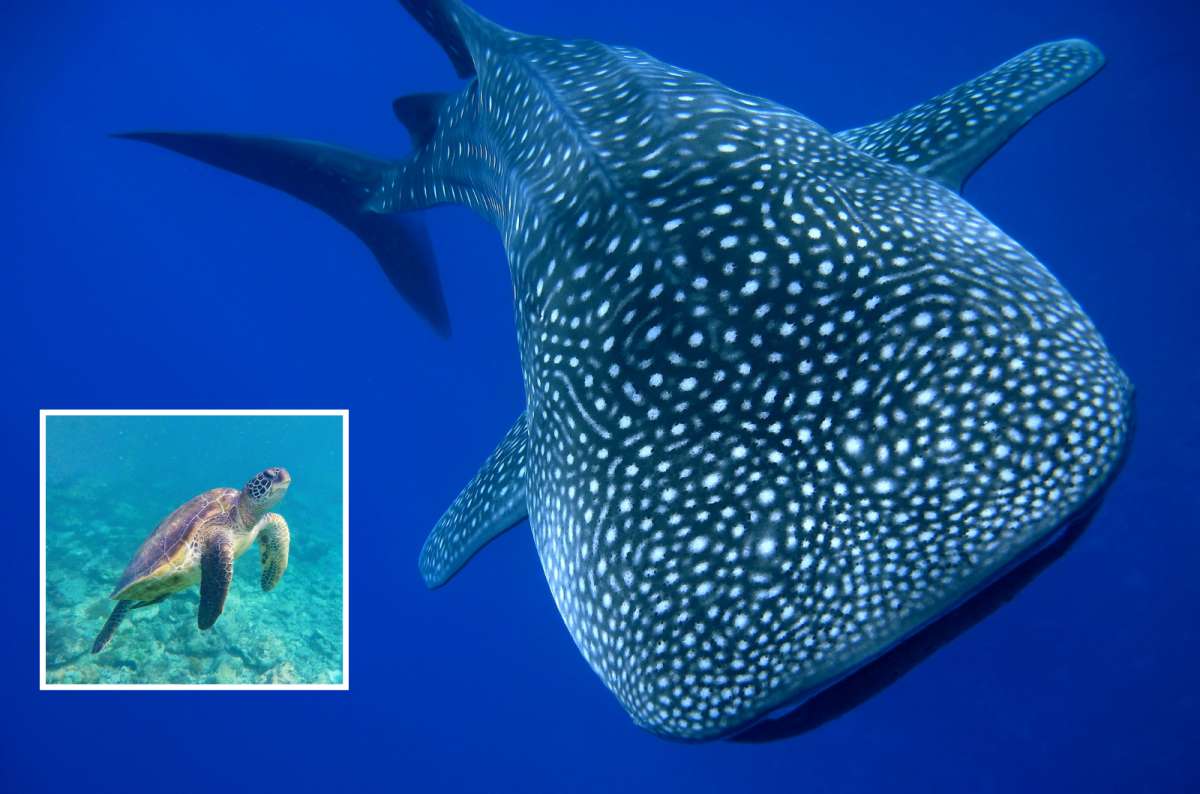
If you’re up for more adrenaline, there’s whale shark season (June to September). We joined a Cancún whale shark tour, got picked up before sunrise, and by mid-morning, we were swimming next to creatures the size of buses.
I was nervous at first—whale sharks are huge—but the moment you’re in the water with them, the fear turns into awe. I was paralyzed by the size of it, and maybe even more by how small I suddenly felt. There were also dolphins, manta rays, and more sea turtles that we saw in the water and from the boat.
It’s not cheap, and it’s a very early wake-up call, but it’s hands-down one of the best things to do in the Yucatan Peninsula.
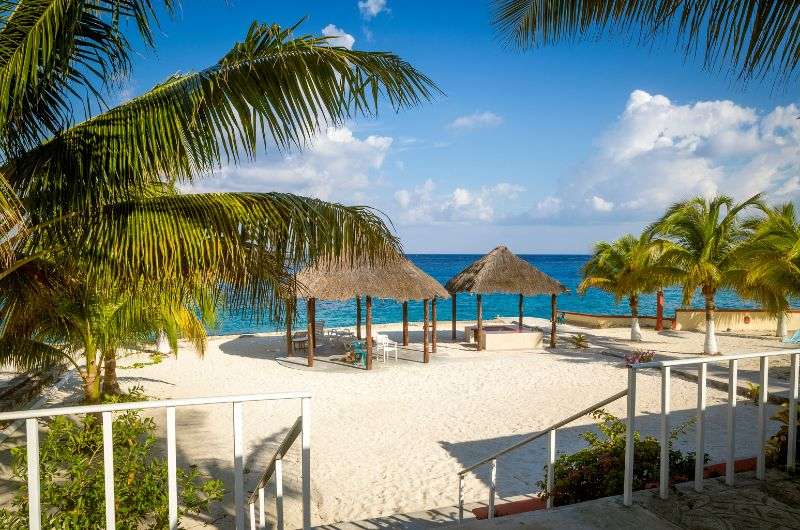
Welcome to paradise!
Stunning. Heart-poundingly beautiful. There aren’t enough words I can use to describe Cozumel Island in Mexico. If you're still looking for what to do in the Yucatan Peninsula, Cozumel is seriously paradise, perfected.
Even though its main characteristics are without a doubt the white, beautiful beaches, chilling out in the luxurious resorts isn’t the only activity you will be over the moon with on Cozumel.
Cozumel is easy to reach—just a short ferry ride from Palva del Carmen—but somehow it feels like a different world. I describe the activities in more detail in my article about the best adventure activities near Tulum.
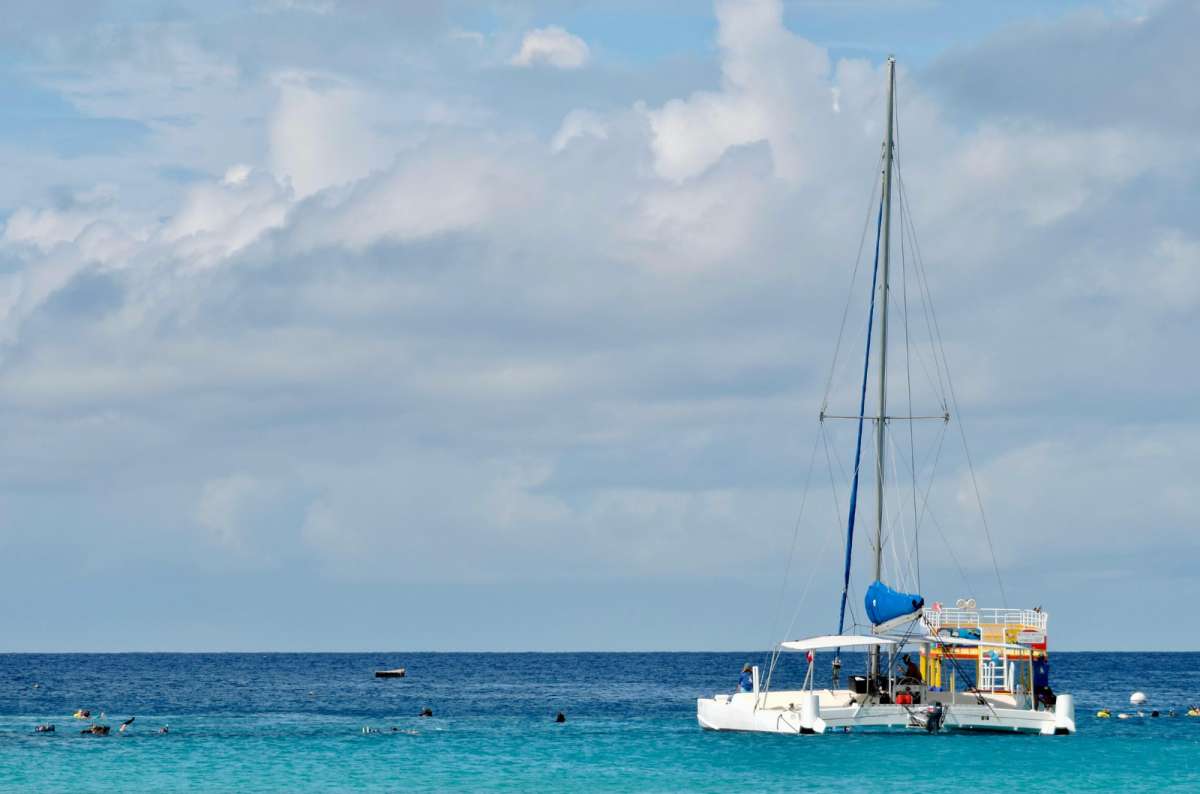
We took a catamaran tour to El Cielo, a shallow patch of blue filled with starfish, stingrays, and, once we arrived, humans awkwardly snorkeling. I prefer a small catamaran, ideally private, but there are also larger boats that come out here. Just know that that can turn into a party boat tour.
For those not allergic to horses (i.e., not me), another possible thing to do on Cozumel is horseback riding through what’s called the Cozumel Ghost Town—a former settlement. It’s not abandoned, just quiet.
After the ride, you get a tequila tasting. A quick dive into how it’s made, several sips, and a chance to buy a bottle. One warning: at every stop, someone will try to sell you something.
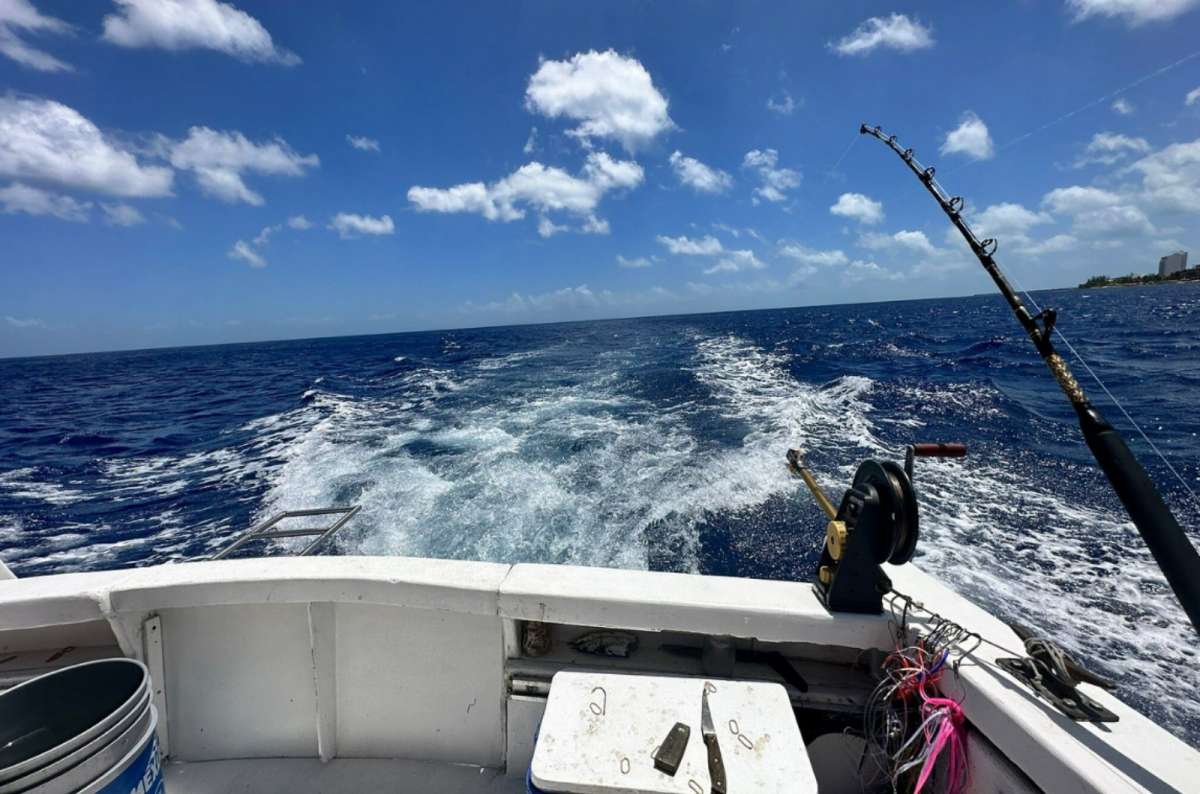
I’m not a fishing person, but somehow I ended up reeling in a monster barracuda within the first hour. The crew on our boat was a blast—cracking jokes, cutting fruit, and making ceviche from our catch right on the boat. Cold beers, guac, fish stories. It was honestly one of the better days I’ve had on water.
Nature lovers will appreciate Punta Sur Ecological Park, home to many species (crocodiles, birds, and more) and exotic flowers, and guarded by a lighthouse. The admission is 400 pesos (20 US dollars).
You can also go underwater (without getting wet) on a submarine tour with Atlantis, or snorkel above actual growing pearls at a local pearl farm. Strange but cool—and definitely one of the more unique things to do in the Yucatan.
The Yucatan Peninsula is bordered by the Gulf of Mexico, Belize, Guatemal,a and the Mexican state of Tabasco. The best way to get to Yucatan is by plane. (Trust me, you don’t want to spend 20 hours in a car just to drive there from Mexico City.)
When flying to Yucatan, you have two options: Cancún and Mérida. Both international airports are at your service.
Renting a car is the best way to explore all the places to visit in the Yucatan Peninsula at your own pace. Driving in Mexico is easy, though toll roads are safest (but pricey), and whatever you do, watch out for topes—Mexico’s infamous surprise speed bumps. Also: always carry cash for gas and parking.
The Yucatan is best known for Mayan ruins (like Chichen Itza and Uxmal), cenotes (natural swimming holes), and beautiful beaches along the Caribbean coast. It’s also renowned for its unique regional food, colonial cities like Mérida, and biodiversity—from turtles to whale sharks.
Yucatan is considered one of the safest regions in Mexico. That’s largely due to strict law enforcement, strong local governance, and a culture of low tolerance for organized crime. Cartel-related violence is rare here compared to other states.
In the Yucatan state itself, Izamal and Valladolid are both designated Pueblos Mágicos (Magical Towns)—small, culturally rich towns recognized for their heritage and charm. Bacalar, in neighboring Quintana Roo, is also on the list and worth a visit.
Yucatan cuisine is distinct from the rest of Mexico, with strong Mayan influences and ingredients you won’t see anywhere else. You’ll can try cochinita pibil, a slow-roasted pork dish marinated in achiote and citrus, and sopa de lima, a tangy lime-based soup with shredded chicken. Local favorites like papadzules (egg-stuffed tortillas in pumpkin seed sauce), salbutes, and panuchos (both are fried tortillas with different toppings) are cheap, filling, and full of flavor. The best places to try them are local markets in Mérida, Valladolid, or even roadside spots in smaller towns—just follow the smell.
This post contains affiliate links. If you make a booking through one of my links, I may earn a small commission—at no additional cost to you. Thank you for your support!
At a glance: Top Things to Do in the Yucatan Peninsula
1. Explore Chichen Itza, the famous Mayan ruins
2. Wander through the clifftop ruins of Tulumon the Riviera Maya
3. Swim in surreal cenotes of Yucatan
4. Experience the colonial charm of Mérida
5. Discover the hidden magic of Uxmal ancient ruins
6. Kayak, swim, or take a guided tour of Bacalar Lagoon
7. Use Cancun as a launch pad (or beaches, if that’s your thing)
8. Swim with sea turtles and whale sharks
9. Take a day trip to Cozumel Island
What is Yucatan best known for?
What are the magical towns in Yucatan?


Hi, I’m Jan. I travel fast and intensely, whether I’m exploring the buzz of Tokyo in 3 days or road-tripping through mountains and beaches on a 3-week Thailand adventure. And no matter where I am, you’ll always find me in a comfortable hotel at night and eating the best food.
If that sounds like your kind of journey, hop on board, and let’s explore the world together!
I started this blog after realizing how tough it can be to find reliable, authentic travel info. You wouldn’t believe how many “travel bloggers” never even visit the places they write about! On Next Level of Travel, you can count on my full honesty and insights drawn from my firsthand experiences.
Here’s the deal: not every destination is all superlatives and unicorns. I’ll let you know if a tourist attraction isn’t worth your time, like skipping overrated stops in my 2-week Spain itinerary. And when I find something truly special—like the perfect mix of culture and nature in Cape Town—you can trust that it’s worth adding to your itinerary.

Comments | Thoughts? Give us a shout!