Gorilla Trekking Rwanda: Is It Really Worth $1,500?

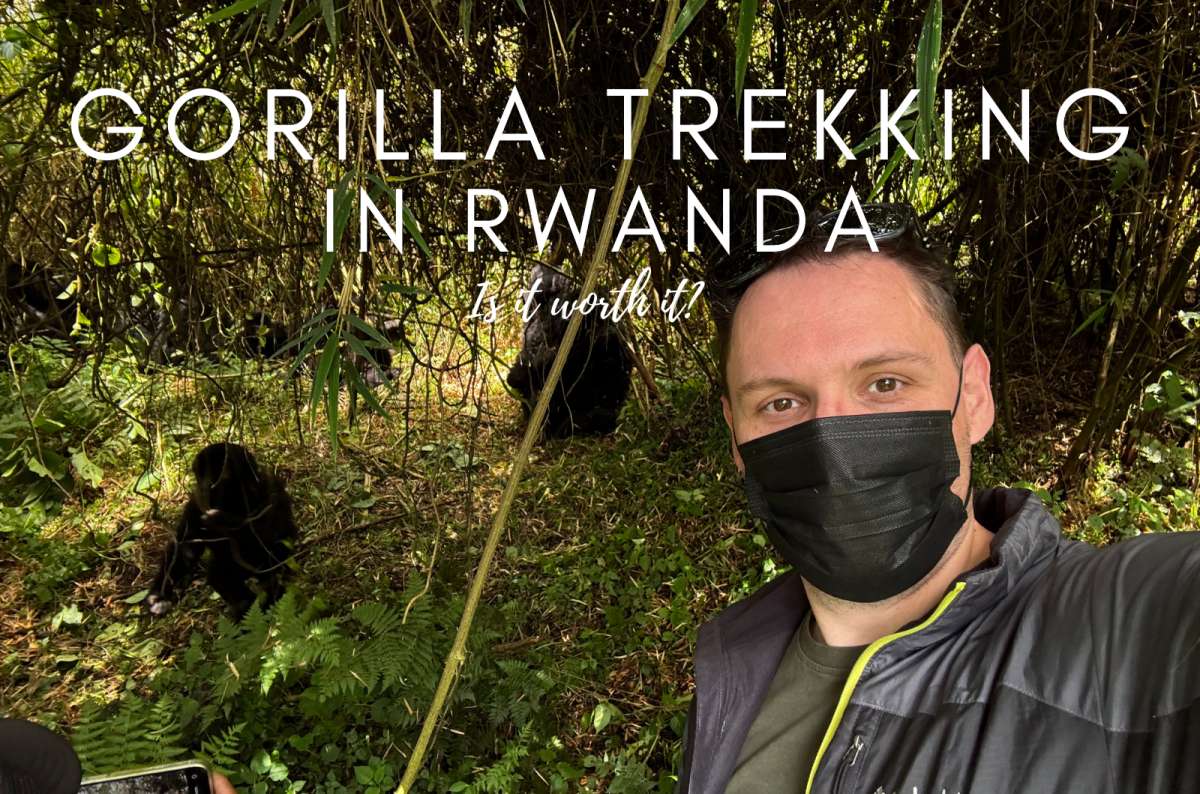


Gorilla Trekking in Volcanoes National Park: My Experience
Arrival at Volcanoes National Park Headquarters
Why Gorilla Trekking in Rwanda Is So Expensive
What the $1,500 Gorilla Permit Actually Covers
Rwanda vs. Uganda: Is the Price Difference Justified?
Is Gorilla Trekking in Rwanda Overpriced?
Gorilla trekking in Rwanda is often described as a once-in-a-lifetime experience. It’s also one of the most expensive wildlife activities you can do in Africa.
So let’s answer the obvious question right away.
Is gorilla trekking in Rwanda worth $1,500?
Yes—but only if you know exactly what you’re paying for.
I hesitated for a long time before booking it. Paying that much money for exactly one hour with mountain gorillas inside Volcanoes National Park (part of Virunga Volcanic Range) doesn’t sound reasonable at first. Especially if you’ve done safaris elsewhere in Africa, where the same budget can buy days in a national park, not a single, highly controlled encounter.
I did gorilla trekking in Rwanda anyway. This article is based on that experience—not on expectations, not on brochures, and not on what tour operators like to promise.
The other places in the world where you can visit mountain gorillas in nature are either Uganda or DR Congo.
Why Mountain Gorilla Trekking in Rwanda Raises So Many Questions
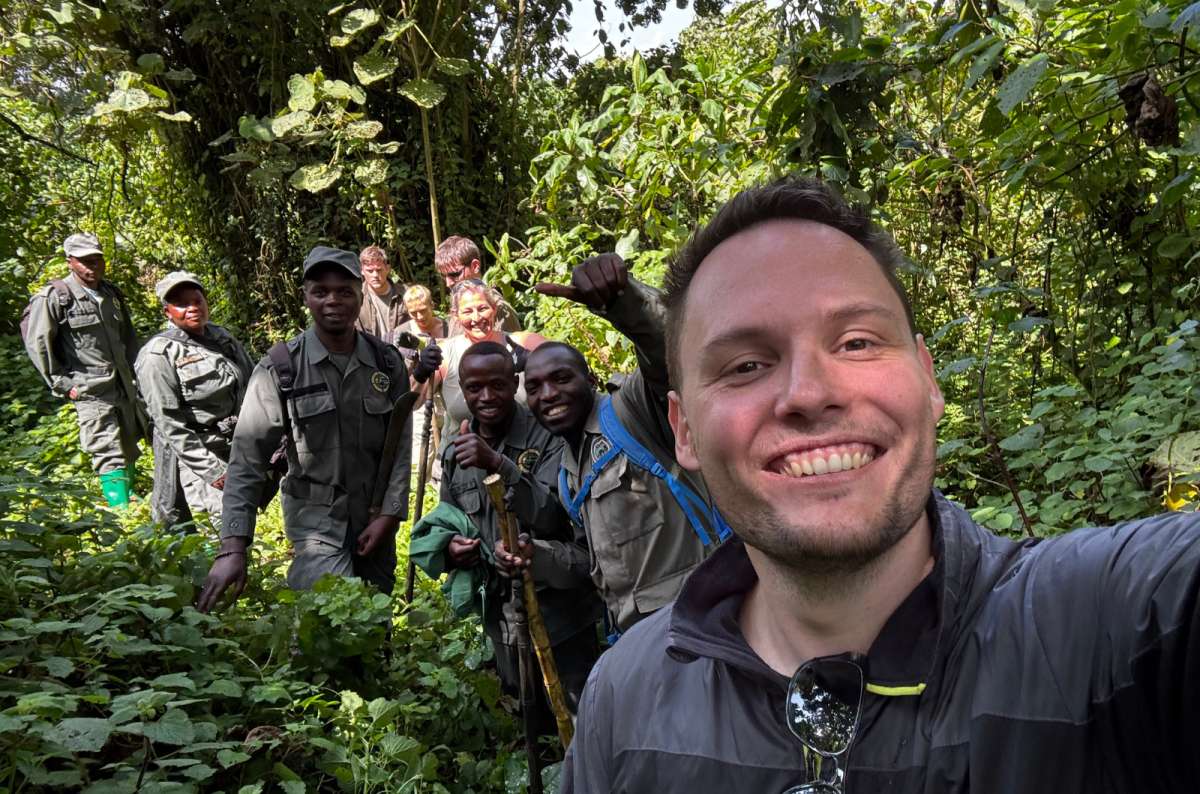
I had a fun time with the rangers
Rwanda positions itself as the premium option for gorilla trekking. Volcanoes National Park (Parc National des Volcans) is extremely well organized. Gorilla tracking is strictly regulated, gorilla families are fully habituated, and park rangers know where each group is located every single day.
At the same time:
- You spend one hour with the gorillas
- The rules are strict
- The price is significantly higher than in Uganda or the Democratic Republic of Congo
That combination alone is enough to split opinions. Some people call it life-changing. Others call it overpriced.
Before going to Volcanoes National Park, I understood both sides. After doing it, I had a much clearer opinion.
Those were the same questions I had before visiting Volcanoes National Park myself.
Sometimes, all you need to do is take the first step... I've filtered out the best hotels in Rwanda for you
Save it for yourself to come back to later, or share with your friends on social media!
Find more travel content, photos, and fun on:


What This Article Is—and What It’s Not
This is not an inspirational piece about magnificent creatures in an equatorial African rainforest. And it’s not a step-by-step booking guide either.
This is a personal review of gorilla trekking in Rwanda, focused on value, expectations, and reality.
You’ll find:
- what the experience actually felt like
- what surprised me—including things I didn’t like
- and who I think gorilla trekking makes sense for
You won’t find:
- generic “life-changing” language
- emotional storytelling for the sake of it
- or an attempt to convince everyone they should do this
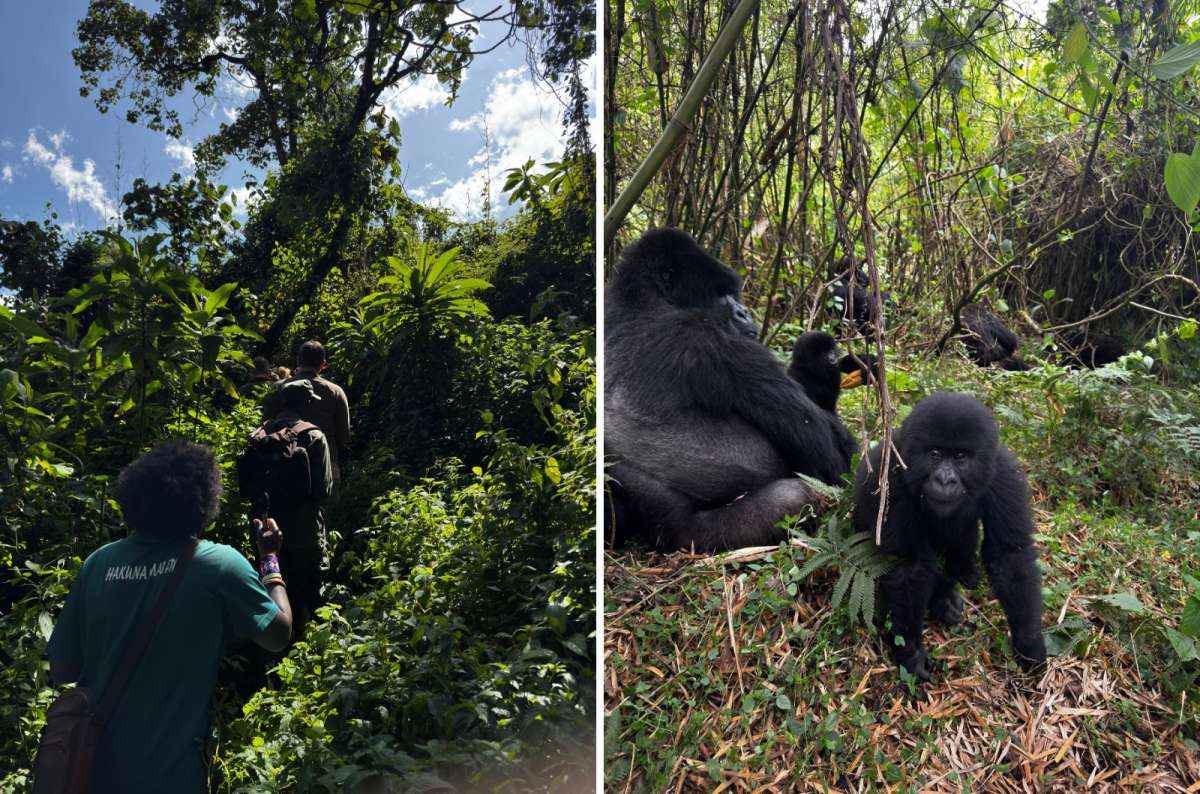
This article focuses on value and my personal experience with gorilla trekking in Rwanda
My Mindset Before Visiting Volcanoes National Park
Before going to Volcanoes National Park, I had one very simple question in mind:
Is one hour with mountain gorillas really worth $1,500?
Everything in this article builds from that.
Gorilla Trekking in Volcanoes National Park: My Experience
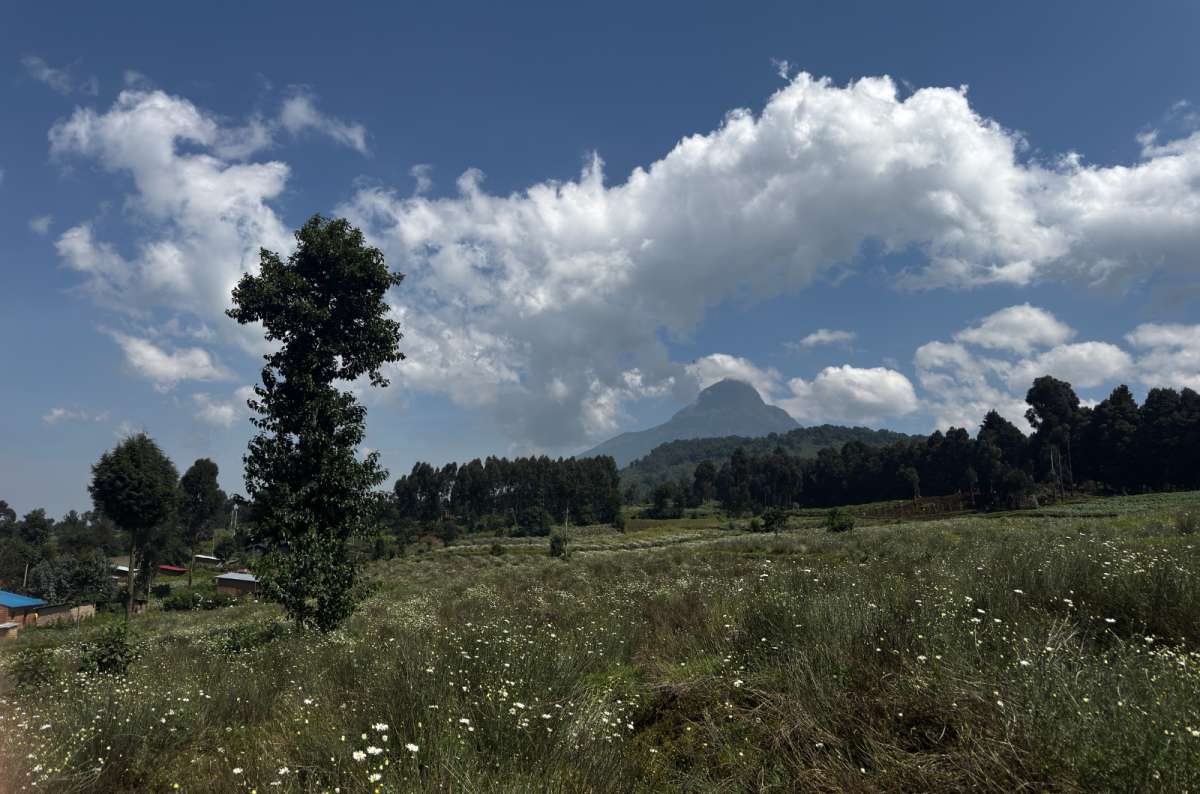
The scenery during the drive to the park was a really nice surprise
Getting to Volcanoes National Park already changes how you see Rwanda. The drive is slow, but surprisingly scenic.
You don’t really realize how mountainous the country is until you’re deep into this area. It feels less like a quick excursion and more like a transition into a completely different landscape.
That’s also why staying close to the Volcanoes National Park headquarters matters.
Mornings start early, you need breakfast, registration happens at a fixed time, and you don’t want to add a 30-minute drive from Musanze to an already long day. I stayed near the park at Kinigi Cottage, and I wouldn’t do it any other way.
Arrival at Volcanoes National Park Headquarters (7:00 AM)
Arrival at the park headquarters is at 7:00 am. The place is busy from the start. Tourists, guides, drivers, and park rangers all gather at the same time.
Registration is straightforward. Passports are checked, and if you’re self-driving, you also need to register your vehicle and driver details–you don't need to fill in any forms. Just tell them you are self-driving.
Top Tip: remember to rent a full SUV like a Toyota Land Cruiser, not the RAV4 bullshit. The roads are extremely rough in the park. You will be happy about this advice.
After that, there’s a short waiting period. Coffee and water are provided.
Despite the number of visitors, the process is efficient and well-organized. It’s clear that gorilla trekking in Rwanda follows a very structured system.
Gorilla Permit Reality: Booking vs. What I Saw
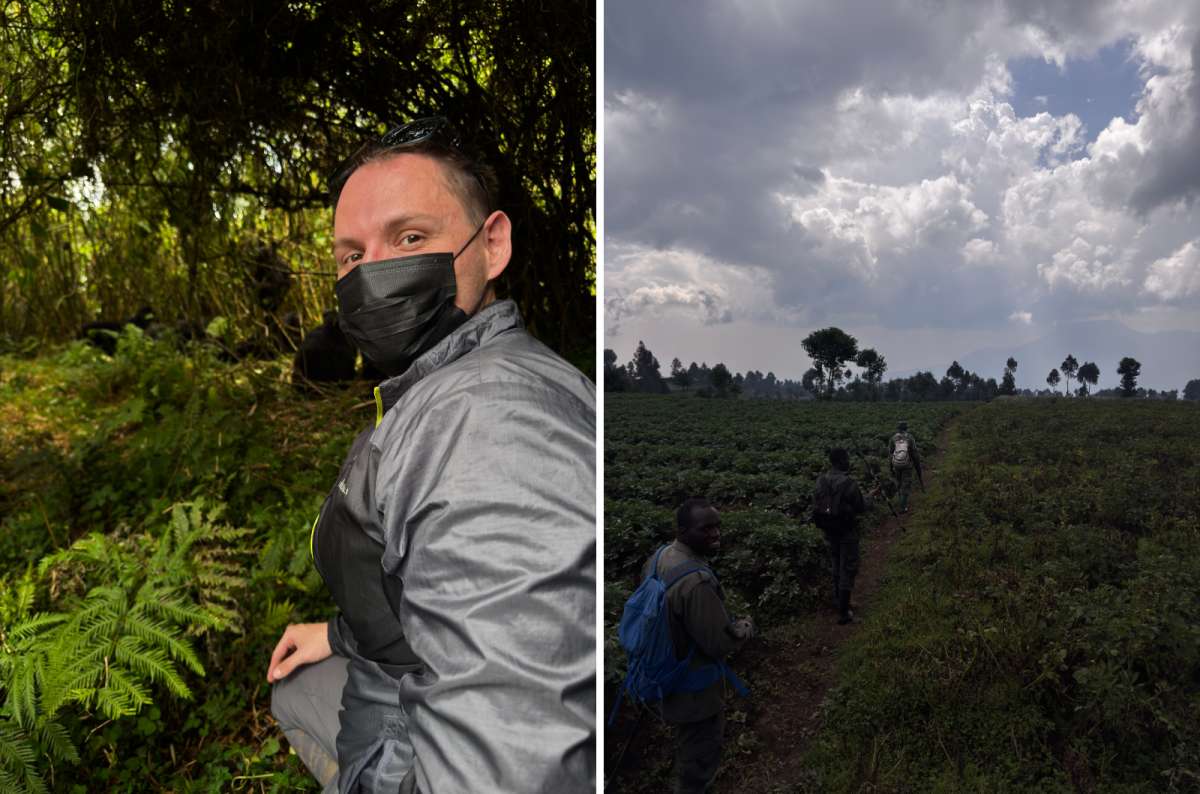
Choose the easy trek—once you’re in the forest, it’s incredibly dense with zero views
You’ll often hear that a gorilla permit must be booked many months in advance. I booked mine around three months ahead.
On the day itself, I met several people who had purchased their gorilla permit just one or two days before the trek. On the day of my trek there were still 41 permits.
That doesn’t mean availability is guaranteed, but it does suggest that the system is more flexible than it’s often described.
Buying the permit
The only place which is official park that is not under the management of African Safari Company is at the Rwanda Development Board, with a direct link here.
Everything else is via more or less reputable tour operators.
Anyway, as foreign residents, you are going to be paying 1500 USD. In contrast, the price vary if you are Rwandan or East African.
Difficulty of the trek
They will ask you about the difficulty level you wish to go trekking at the reception when they check the permit. Difficulty varies a lot–it goes anywhere from 1,5 hour of hiking the lush slope of a bamboo forest to even 5 hours of hiking.
Choose the easy one. Trust me on that. There is no heroism in choosing the difficult. You will go through a very thick jungle, and there are almost no views, so what is the point in exerting yourself going up?
Top Tip: Don't be afraid. You will manage the hike; it is ready for all fitness levels.
The difficult option is extremely difficult and a long walk through thick bamboo slopes that can even last 8 hours. I had "medium" difficulty, and it was hard as the altitude kicks in quickly.
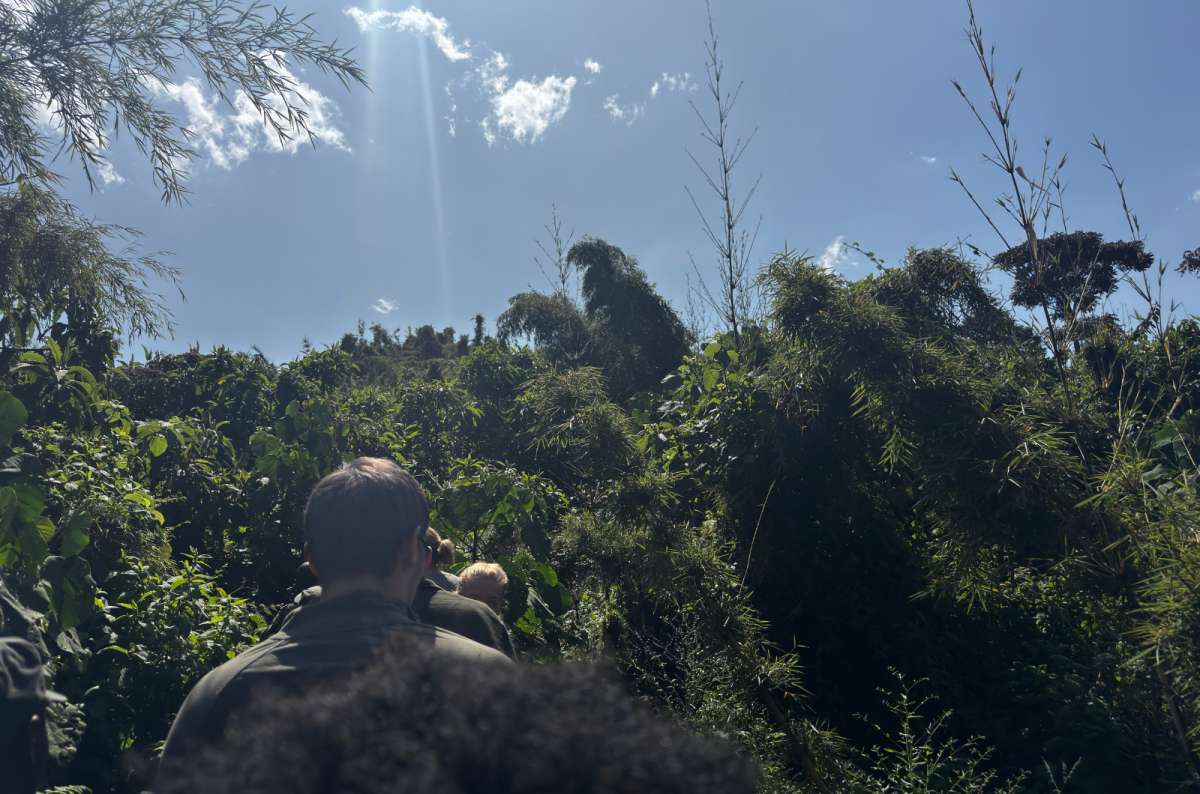
I was not joking about the steep climb up
Briefing and First Impressions of the Park
The briefing is short and practical. You’re assigned to a gorilla group, reminded of the rules, and that’s it.
Volcanoes National Park immediately feels raw. Dense forest, insects everywhere, uneven terrain. I stood on an insect route without realizing it and got bitten repeatedly. Not dangerous, but uncomfortable. This is a real natural habitat, not a curated safari environment.
The Trek: Karisimbi Area
I was assigned a medium-length trek in the Karisimbi area. Getting there took around two hours of self-driving, much of it off-road.
The hike itself wasn’t technically difficult, but conditions changed. We started at roughly 2,600 meters, and because the gorilla group moved, the route changed as well.
We had to move for about 10 minutes by car and start hiking again. We effectively did two hikes instead of one. That’s normal when tracking gorillas.
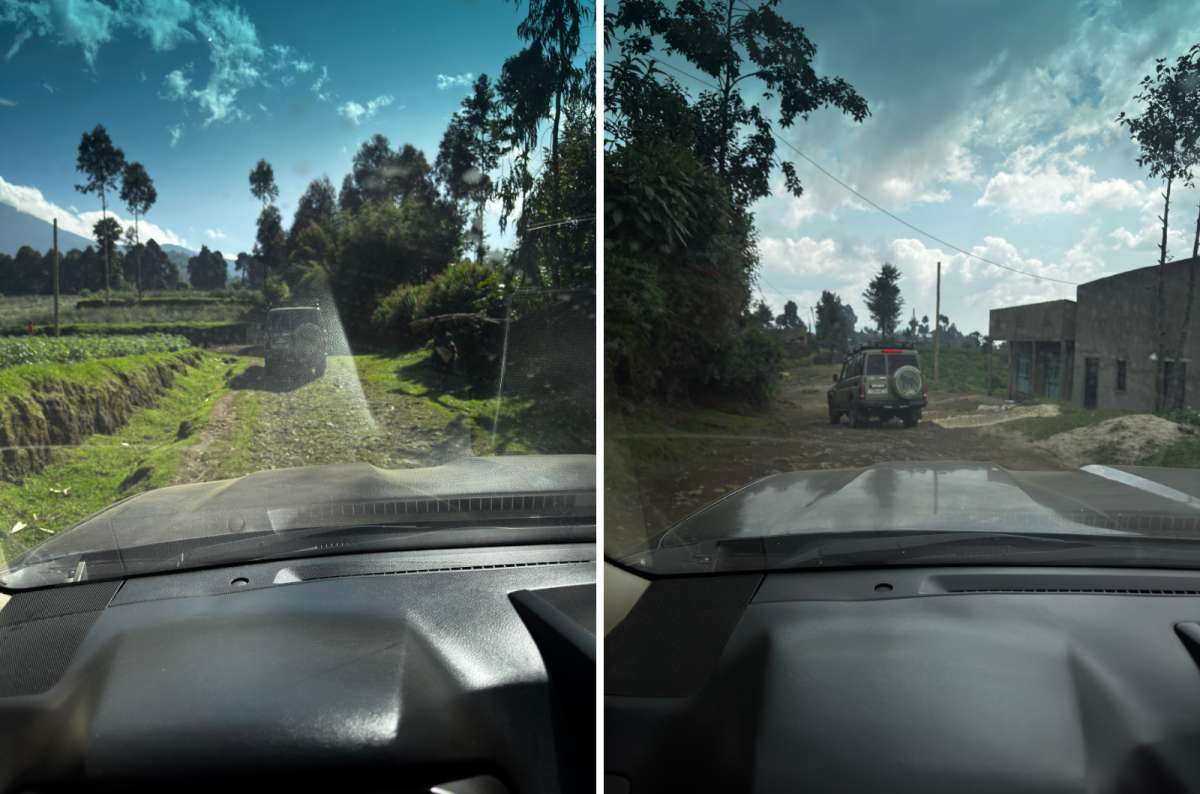
At least our feet got to enjoy some rest, thanks to the gorilla group moving and us hopping back into the car to find them
We saw golden monkeys multiple times along the way, which reinforced the sense that this is an active, living national park rather than a single-purpose tourist site.
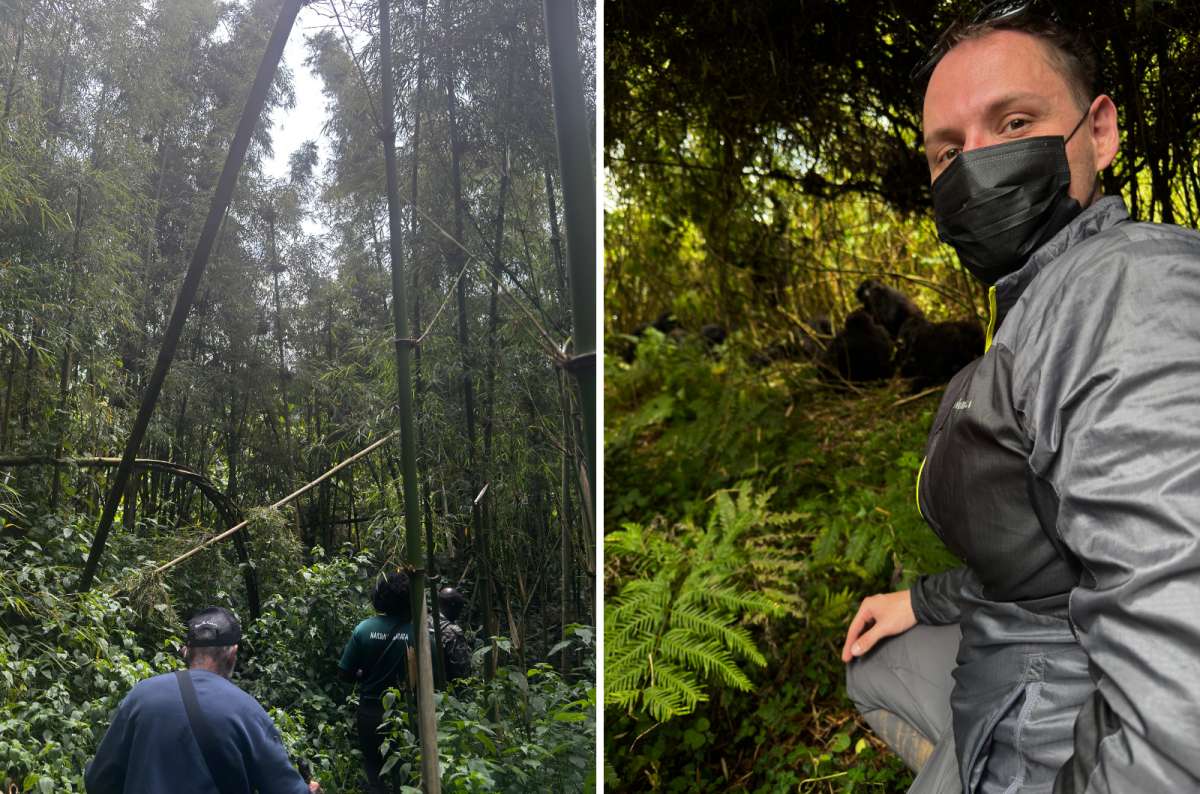
You will walk through a thick bamboo forest with a lot of stinging nettles.
Story time: I read everywhere, beware the nettles. I was like, ”What's the problem with nettles? They look European.”Then I touched one by accident and felt pain till the other day evening. Not intense pain, but more like a bee sting all the time. So yes, it is very different. Leave your ego in your room and bring gloves.
Porters
Just before you start the hike, there will be porters from local communities ready to take your backpack.
Don't be heroic–I know you want one. I'm pretty sure you will need one in thick bamboo forest slopes.
They are there not only to help you carry backpacks but mainly to clear your route in the forest and help you in difficult situations.
You will be so happy you took one. During my Bisoke Hike, almost no one took a porter, so the guide did the clever thing and said: “Let's take some spare porters”. By the end of the hike, they were all taken.
The Gorilla Group: Igisha Family
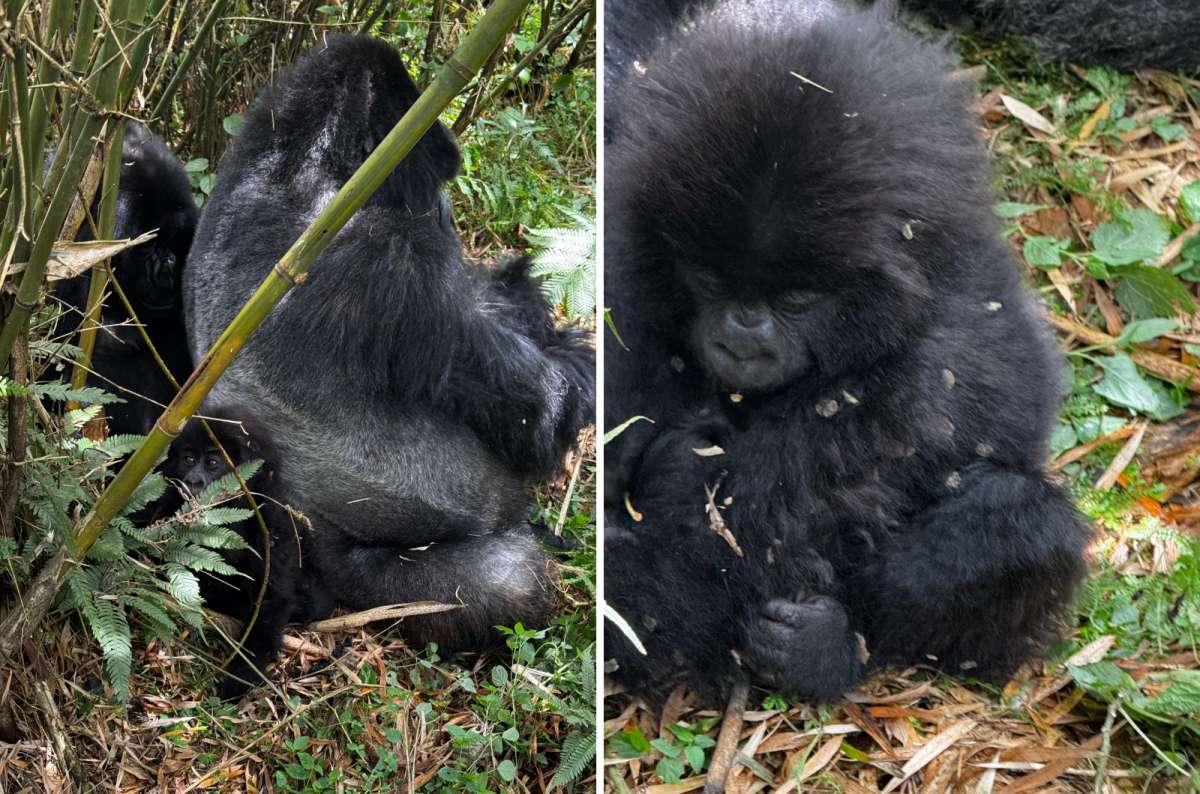
The biggest and smallest members of the Igisha family
We visited the Igisha gorilla family. The group included two gorilla silverbacks, several females, and babies. Silverbacks felt more like these two dudes drinking beer all day with a beer belly, or gentle creatures, as the more esoteric readers would call them.
Anyway, almost any group you are going to see will have at least one silverback and females in it.
When we arrived, they were resting. We were close—at times around two to three meters away. At times, the little ones who have been fighting all the time were just charging us, beating their chest. They were small, sure, like a big dog. Would you like, let's say, a Rottweiler, to charge you? I think not.
Top Tip: Masks are mandatory throughout the encounter. It’s mildly uncomfortable but clearly necessary to protect endangered mountain gorillas.
The younger gorillas were active and constantly interacting. The silverbacks barely noticed us. It felt observational, not staged.
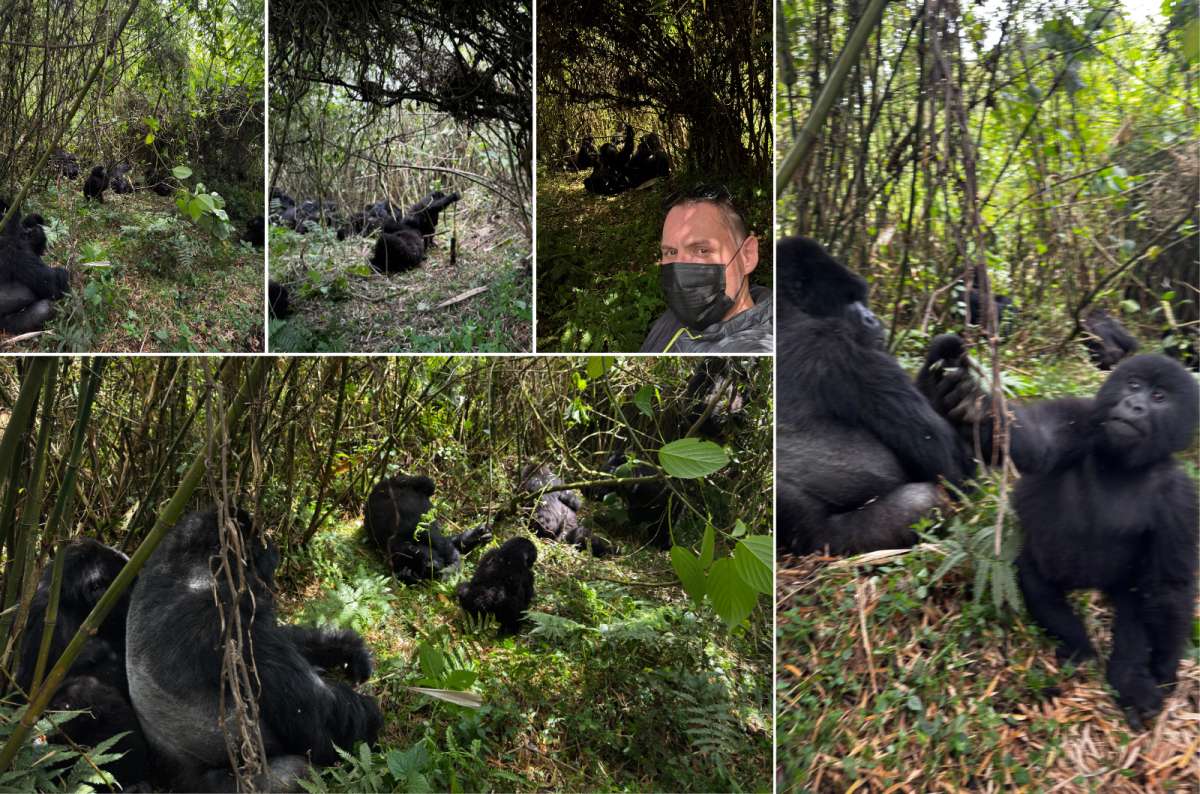
A small snippet from my hour-long encounter with the gorillas
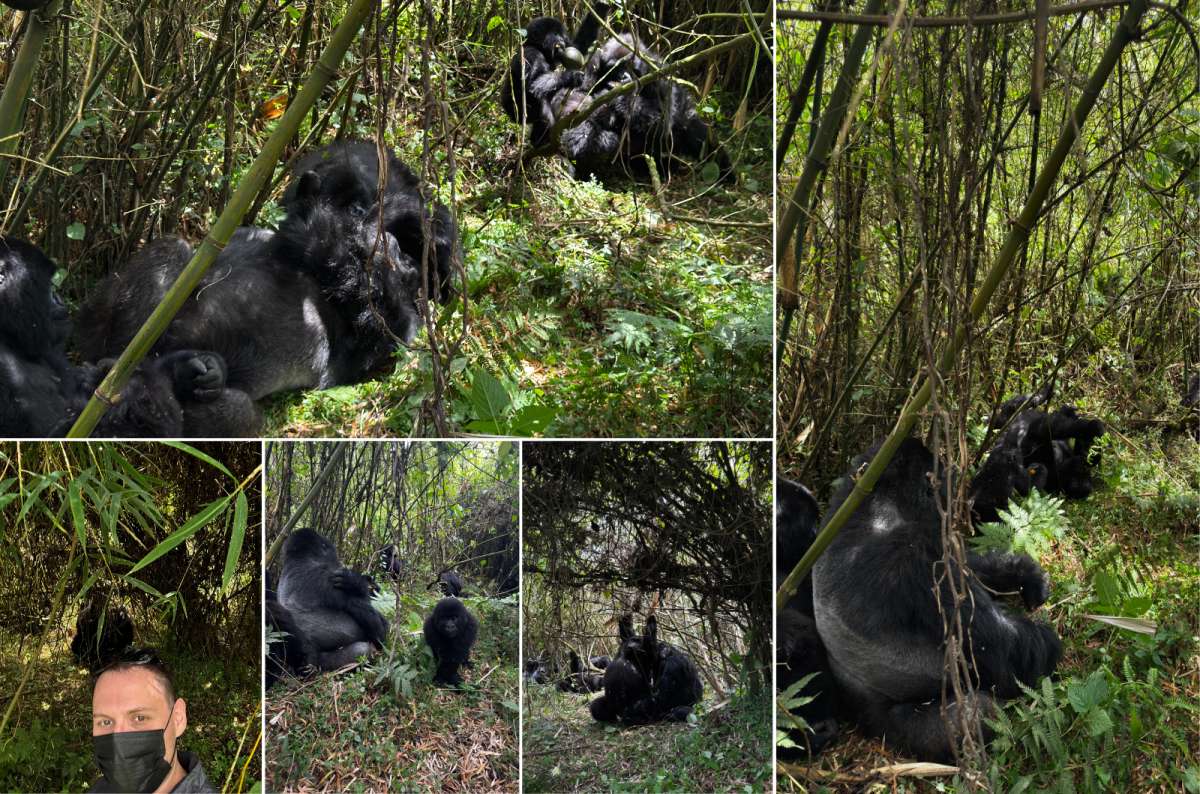
And some more photos of gorillas
Time with the gorillas is strictly limited to one hour.
To be completely honest, after about 45 minutes, it started to be a bit boring, so I was happy to get back. Hey, I am a simple man of simple taste.
It's nice to see them, especially the babies, but I didn't have an epiphany, and it didn't change my “evil entrepreneur” mindset.
Other interesting animals you will likely see are buffalo and golden monkeys, and very unlikely that you will see forest elephants.
Rules, Behavior, and Control
Rules are enforced throughout. Masks stay on. Distance is monitored. You’re instructed how to behave if a gorilla approaches.
One detail that stuck with me: growling is normal gorilla behavior. Coughing is not. It sounds minor until you’re standing a few meters away from a mountain gorilla and suddenly very aware of your own body.
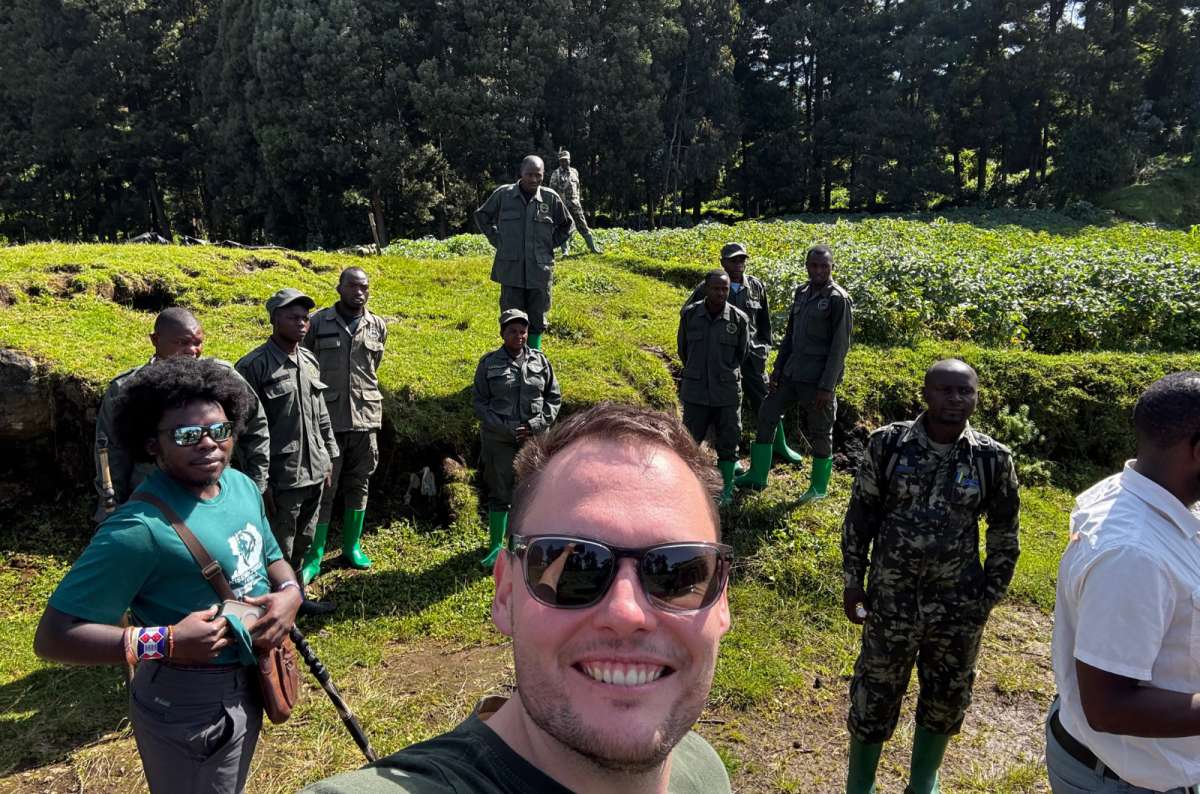
Thanks to these guys, you will stay safe during your entire gorilla trekking experience in Rwanda
Tipping and End of the Trek
At the end of the trek, tipping is expected. Guides, armed guards, and especially porters rely on it. Porters, in particular, don’t get to participate in gorilla trekking often, and tourism directly affects their income.
To give you an example of tipping, I tipped:
- each trekker – 5000 Rwf (3,5 USD)
- porter – 15000 Rwf (10 USD)
- gunner – 5000 Rwf
- guide – 10000 Rwf
In total, I tipped everyone 40.000 Rwf, so like 25 USD. Don't be cheap. They spend something like 6 hours with you, making “your dream” come true and giving you a 99% chance of meeting the gorillas.
After the hike, if you’re self-driving, you’re free to leave and continue on your own.
By the time everything ended, I was physically tired and mentally drained. The hike, altitude, and intensity add up.
I also felt something very clear: the one-hour limit made sense. I didn’t feel rushed, and I didn’t feel shortchanged.
Why Gorilla Trekking in Rwanda Is So Expensive
The pricing makes sense, and the value is there, all things considered
The price of a gorilla permit in Rwanda is $1,500 per person. That’s the number everyone focuses on, and for a good reason. Gorilla trekking in Rwanda is one of the most expensive wildlife experiences in Africa.
The permit gives you access to Volcanoes National Park, a fully regulated national park where gorilla tracking happens daily.
It includes park entry, park rangers, expert trackers, armed guards, and strict group control. Each gorilla family is visited by small groups only, and time with the gorillas is limited to one hour.
From a logistical standpoint, this is not mass tourism. The system is intentionally restrictive.
What the $1,500 Gorilla Permit Actually Covers
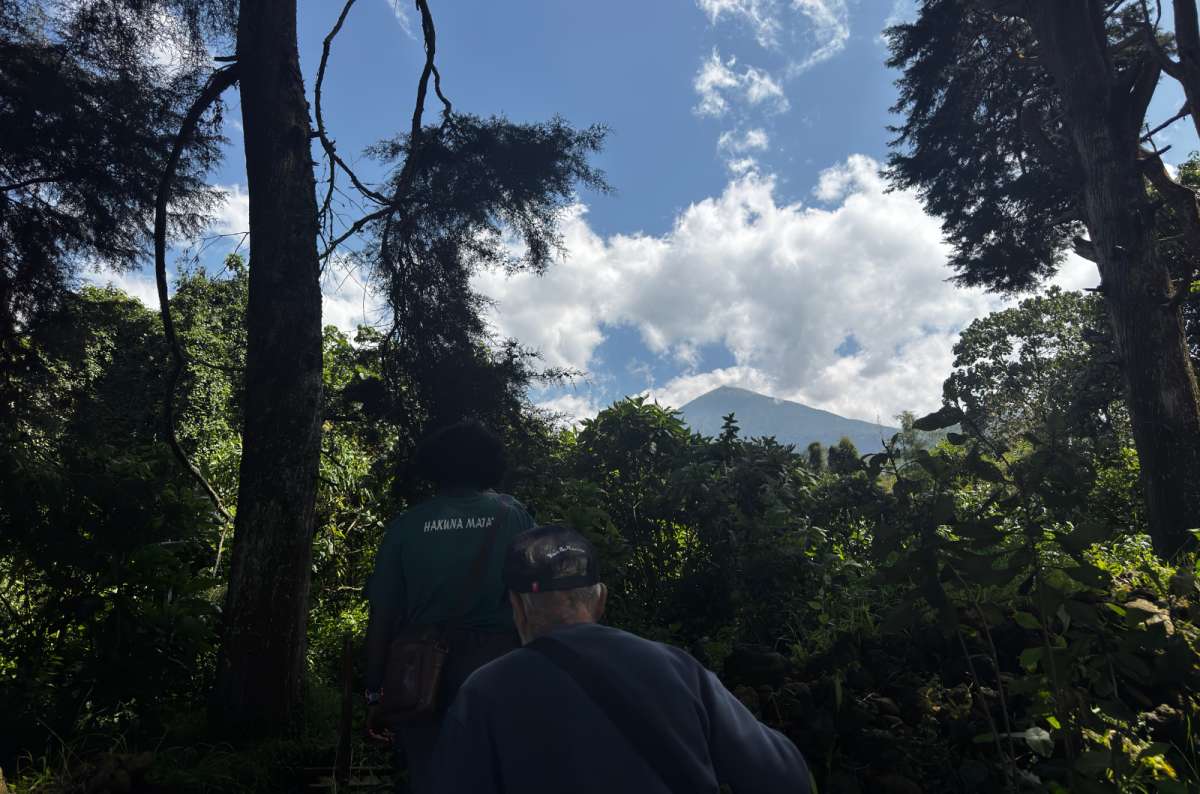
You get to enjoy being guided by local experts and avoid big crowds
The gorilla permit is not just a ticket to see gorillas.
You’re paying for:
- Daily gorilla tracking by expert trackers before tourists even arrive
- park rangers and armed guards assigned to each group
- strict limits on visitor numbers per gorilla family
- conservation infrastructure inside Volcanoes National Park
A significant portion of the permit fee goes toward gorilla conservation, park management, and support for local communities. Rwanda positions gorilla trekking as a conservation-first activity, not a volume-based attraction.
That doesn’t automatically make it a good value—but it does explain the price structure.
Gorilla Conservation vs. Tourism Reality
Mountain gorillas are an endangered species. Rwanda’s model is built around protecting a very small population living in their natural habitat, not around maximizing tourist numbers.
Compared to other safari experiences, this feels different. You’re not driving through a park hoping to spot animals. You’re entering a tightly controlled environment where the animals’ daily lives dictate the experience.
This is one of the main reasons gorilla trekking in Rwanda costs more than similar treks in Uganda or the Democratic Republic of Congo. Fewer visitors, higher control, higher cost per person.
Rwanda vs. Uganda: Is the Price Difference Justified?
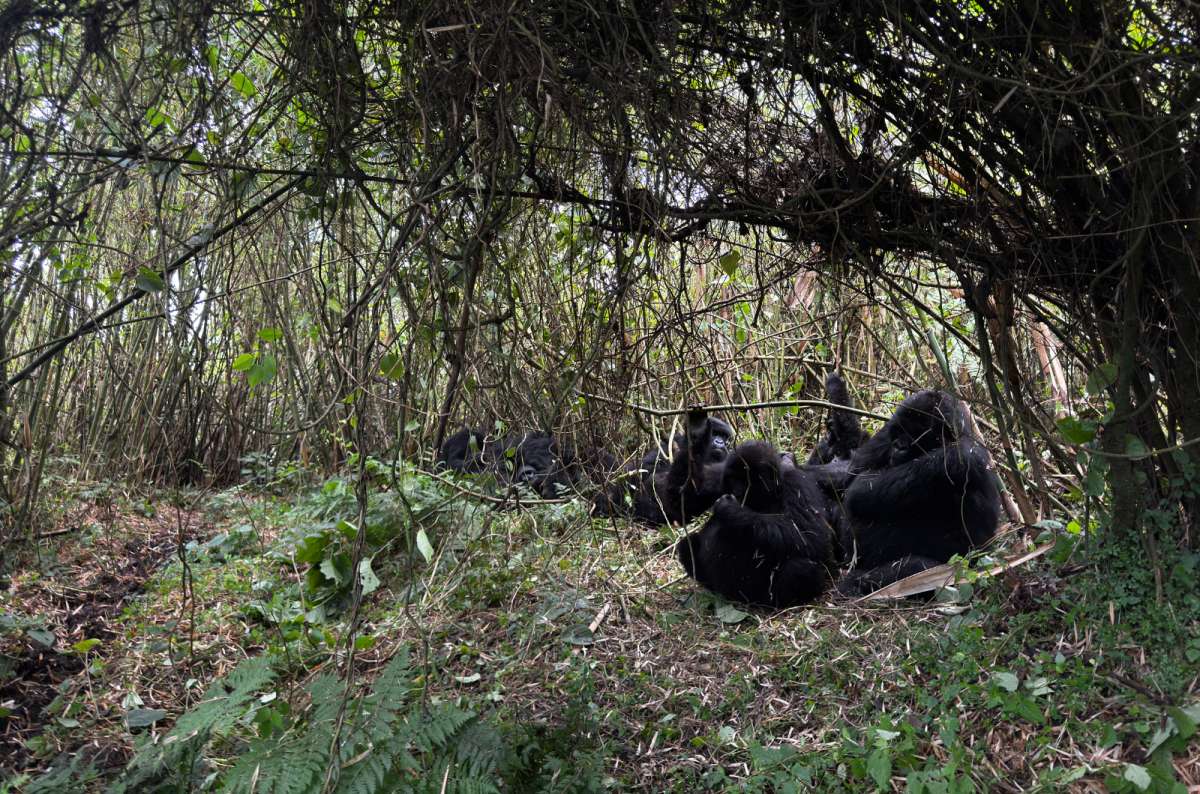
The moment you see the gorilla group for the first time, you forget about the price
Uganda offers gorilla trekking at a lower price, most notably in Bwindi Impenetrable National Park. That comparison comes up constantly, and it’s valid.
Rwanda charges more for:
- easier access from Kigali
- a more streamlined, time-efficient experience
- stricter organization and logistics
- virtually 99% chance of meeting the gorilla family
Uganda is cheaper, but often involves longer travel times, rougher logistics, and less predictability. Whether that trade-off is worth it depends on what you value more: cost or efficiency.
For me, Rwanda’s pricing made sense because I didn't want to visit 2 countries at once and wanted a guaranteed experience, not some what-if scenario.
Is Gorilla Trekking in Rwanda Overpriced?
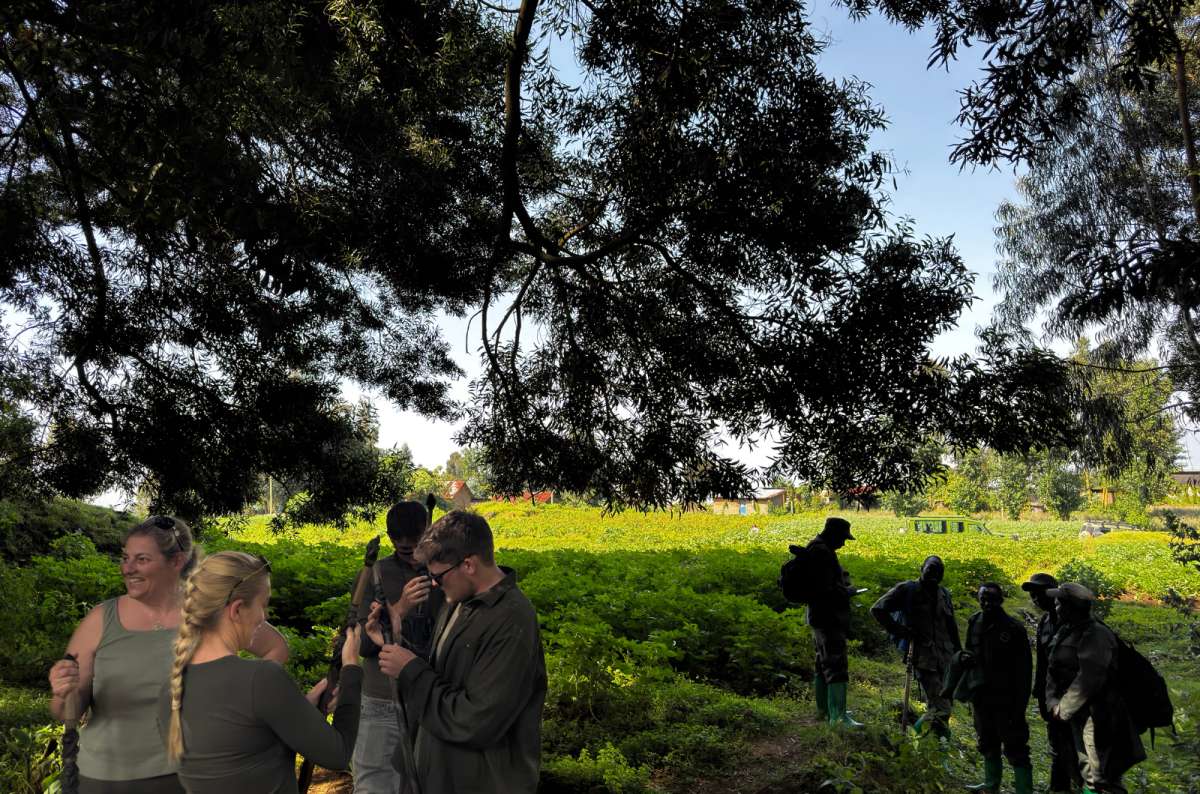
You have to keep in mind that you are not paying for just seeing the animals; there's a lot more that goes into it
This depends entirely on expectations.
If you compare gorilla trekking to a classic safari—multiple days, open movement, and frequent wildlife encounters—then yes, it will feel expensive. You’re paying a premium for access to a very specific encounter, not for volume or duration.
If you see it as a controlled conservation experience with a guaranteed encounter with mountain gorillas, the price becomes easier to justify.
For me, it was priced just okay. If I consider the amount of work put into it, and considering any of my companies would do it, sure–like 5000 USD experience. So I found it even cheaper.
Would I Pay for It Again?
Yes—but only under the same conditions.
I would pay for gorilla trekking in Rwanda again if:
- Time was limited
- I wanted a highly organized experience
- And I was clear about what I was getting: one hour, strict rules, no flexibility
I wouldn’t recommend it blindly to everyone. And I wouldn’t frame it as universally “worth it.” But within the right expectations, the price made sense.
Is Gorilla Trekking in Rwanda Worth the Money?
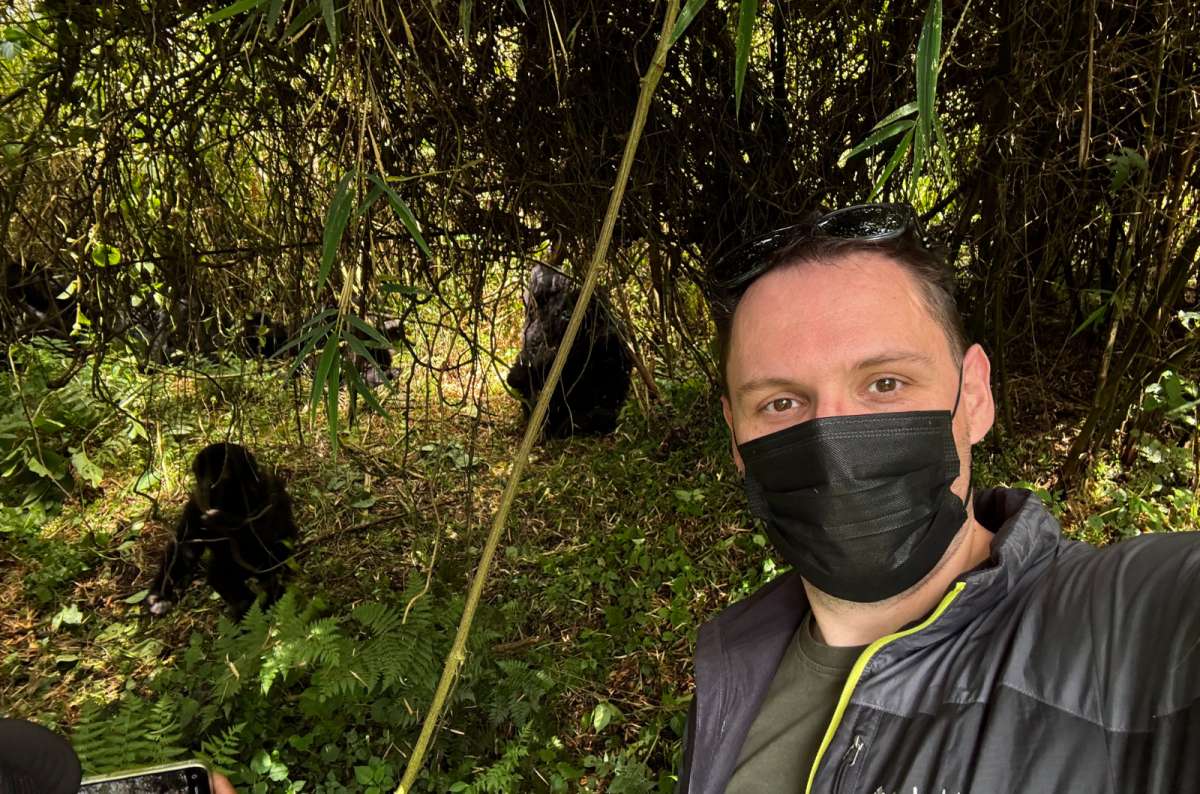
It’s a rare sensation to get this close to gorillas in the wild
Yes—but only if your expectations are aligned with what the experience actually is.
For me, gorilla trekking in Rwanda was worth the money because it delivered exactly what it promised: a guaranteed, controlled, one-hour encounter with mountain gorillas in Volcanoes National Park. No guessing, no driving around hoping to see something, no filler.
You show up, you hike, you see the gorillas.
What made it feel worth it:
- the proximity to the gorillas—often just a few meters
- the fact that the encounter felt real, not staged
- the intensity of the hour, which didn’t feel rushed or superficial
What could easily make it not worth it:
- expecting more than one hour
- expecting flexibility or freedom during the trek
- comparing it directly to a multi-day safari experience
This is not a valuable experience in the classic sense. You’re not paying for time or variety. You’re paying for access.
I didn’t walk away thinking it was cheap. I walked away thinking the experience was complete. And that’s why, for me, it justified the price.
Practical Things to Know Before Gorilla Trekking in Rwanda
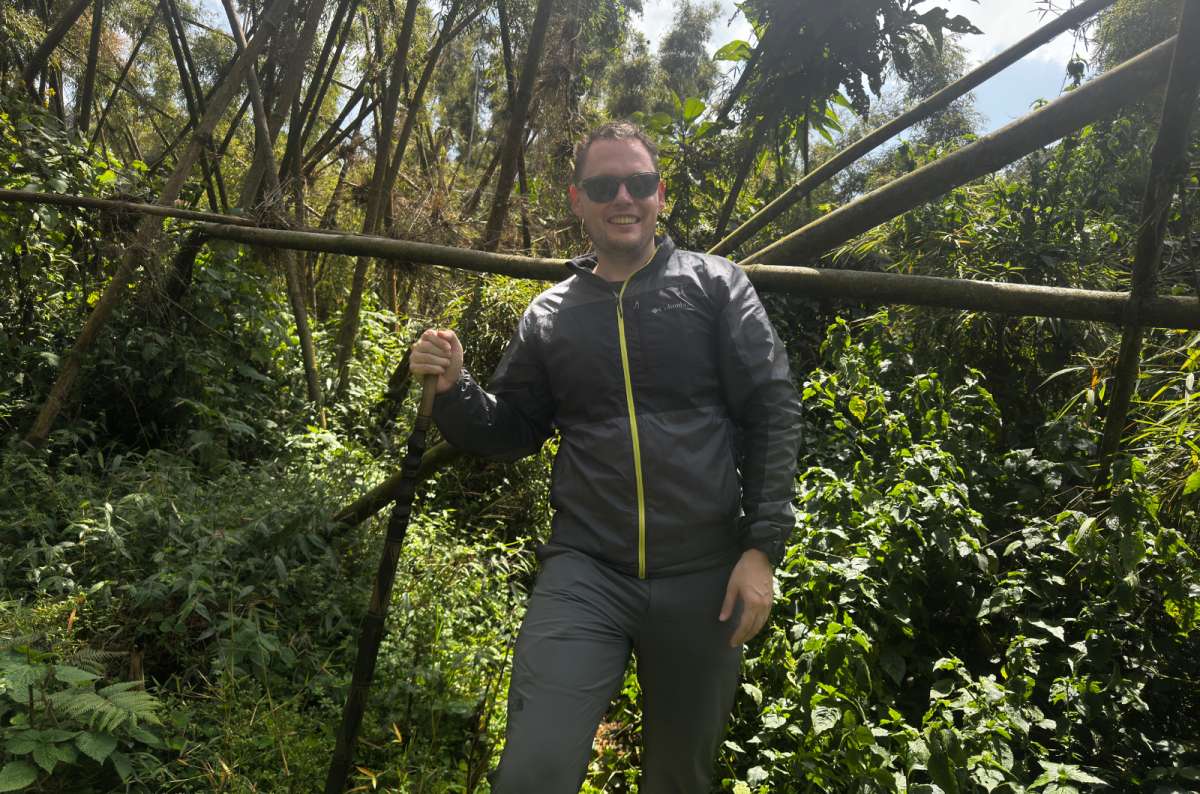
Long sleeves and pants are a must on the hike
This section exists to cover reality, not to sell the experience. If you’ve read this far, you already know whether gorilla trekking in Rwanda makes sense for you.
How Hard Is Gorilla Trekking in Rwanda?
Difficulty depends on where the gorilla family is on that day. In my case, the trek was not technically difficult, but it was physically tiring due to the altitude and terrain.
We started at around 2,600 meters, walked roughly 3 kilometers uphill in dense forest, and ended up hiking twice because the gorilla group moved. You don’t need special skills, but you should be comfortable walking uphill on uneven ground.
Fitness matters more than strength.
Is Gorilla Trekking Ethical?
Based on what I saw, gorilla trekking in Rwanda is heavily controlled and conservation-focused.
Groups are small, time with the gorillas is limited to one hour, masks are mandatory, and rules are enforced by park rangers throughout the encounter. The experience is built around minimizing impact on endangered mountain gorillas, not maximizing tourist satisfaction.
It doesn’t feel exploitative. It does feel regulated.
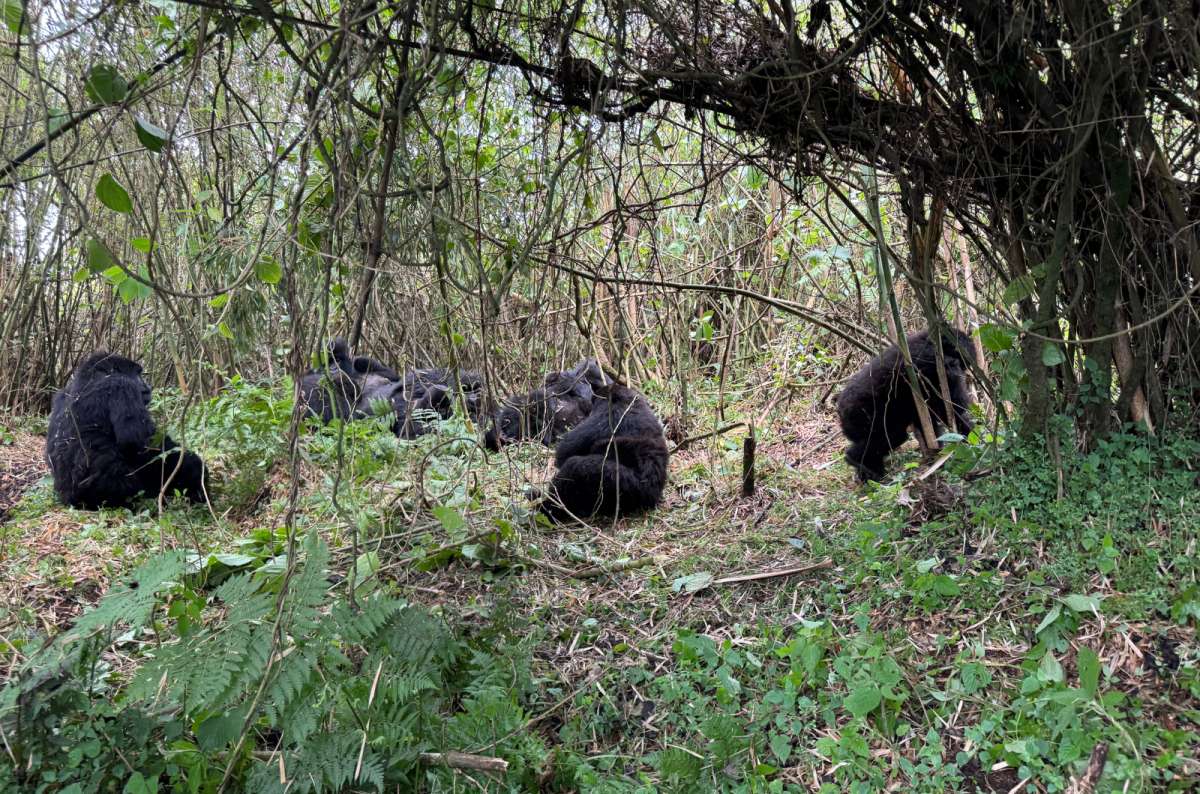
These guys seem to be chill with the visitors
Age Limits and Rules
The minimum age for gorilla trekking in Rwanda is 15 years. Rules are strict and non-negotiable.
Masks must be worn at all times near the gorillas. Distance is monitored. If you feel sick, you’re expected to declare it. These rules are taken seriously, and you should expect them to be enforced without exception.
Before the pandemic of 2020, gorillas were dying of mysterious human-borne diseases. Once masks were obligatory, they stopped dying, so they continued this practice.
What to Wear and Bring
This doesn’t need to be overcomplicated. What mattered for me:
- hiking boots with a good grip (there is likely to be mud everywhere)
- long pants and long sleeves (insects and vegetation)
- rain protection
- gloves for grabbing vegetation on steep sections
- Take a porter, 100%
You don’t need special equipment beyond that.
Sometimes, all you need to do is take the first step... I've filtered out the best hotels in Rwanda for you
Save it for yourself to come back to later, or share with your friends on social media!
Find more travel content, photos, and fun on:
This post contains affiliate links. If you make a booking through one of my links, I may earn a small commission—at no additional cost to you. Thank you for your support!
Gorilla Trekking in Volcanoes National Park: My Experience
Arrival at Volcanoes National Park Headquarters
Why Gorilla Trekking in Rwanda Is So Expensive
What the $1,500 Gorilla Permit Actually Covers
Rwanda vs. Uganda: Is the Price Difference Justified?
Is Gorilla Trekking in Rwanda Overpriced?


Comments | Thoughts? Give us a shout!