


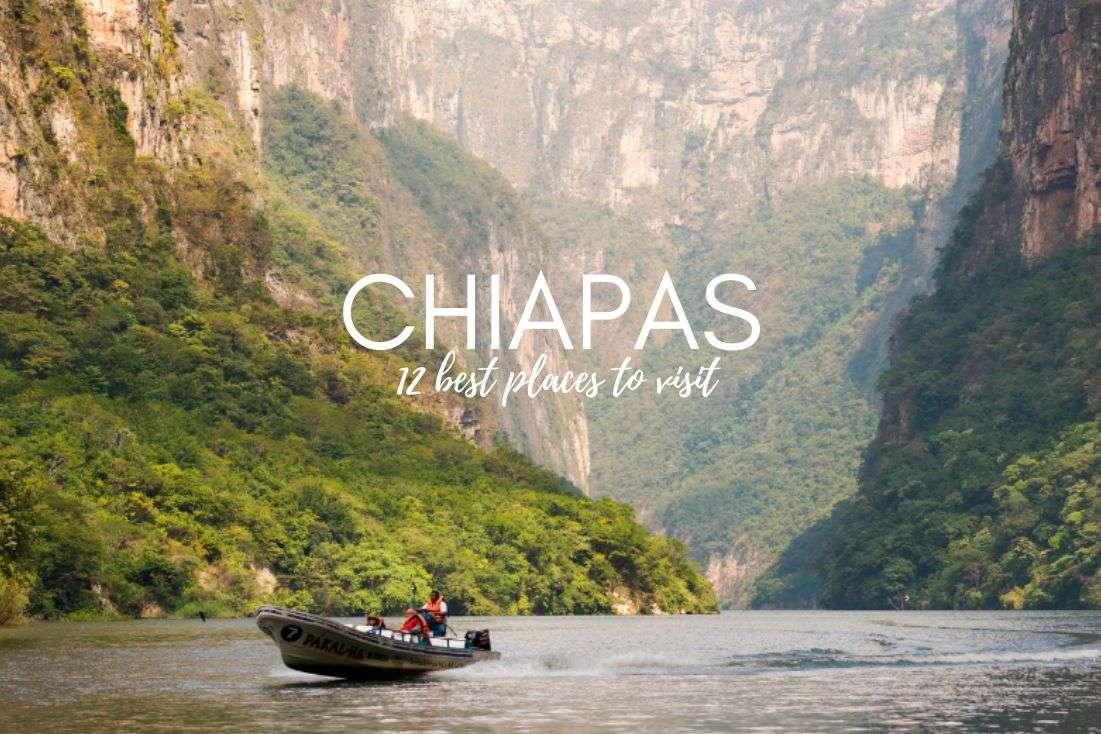


What is Chiapas best known for?
At a glance: 12 best things to do in Chiapas (my ranking)
You might also be interested in reading:
1. Take a boat trip in Sumidero Canyon
2. Explore Mayan history at the Palenque ruins
3. Swim beneath the cascades of Agua Azul
4. Wander the vibrant streets of San Cristóbal de las Casas and beyond
5. Reach Yaxchilán by boat and explore jungle ruins
6. Hike to the towering waterfalls of El Chiflón
7. Paddle across the lakes of Lagunas de Montebelloin
8. See the murals at Bonampak ruins
9. Descend into the canyon at El Aguacero
10. Explore the caves and rock arches at El Arcotete
11. Explore colonial Comitán and its lively plazas on a walking tour
12. Discover Sumidero viewpoints and museums in Tuxtla Gutiérrez
How to visit Chiapas: planning your trip and itinerary options
6-day Chiapas road trip itinerary
3-day Chiapas itinerary with shorter drives
Chiapas is one of the most diverse states in Mexico, and one of the least predictable. You can take a boat through Sumidero Canyon, explore jungle-covered Mayan ruins in Palenque, swim beneath turquoise waterfalls like Agua Azul, and wander the highland streets of San Cristóbal de las Casas—all within the same trip.
My guide covers the best things to do in Chiapas, ranked by impact and travel value based on my own trips. At the end, you’ll find a practical Chiapas itinerary to help you plan your route without wasting time on unrealistic driving days.
Read more from my Mexico travel blog.
Compared to other countries in Central America, Chiapas offers dramatic landscapes without the same level of tourism infrastructure. Chiapas preserves some of the most atmospheric remnants of the ancient Mayan civilisation (like Palenque). Besides that, it’s known for bright turquoise waterfalls like Agua Azul, and the towering cliffs of Sumidero Canyon—my personal favorite nature attraction in Chiapas.
It’s also known for indigenous cummunities, highland towns like San Cristóbal de las Casas, and dense jungle landscapes near the Guatemala border. Compared to other Mexican states, Chiapas feels wilder and less commercial and can make for the best trip to this beautiful country.
Pro tip: Keep in mind that the rainy season (roughly May to October) can affect road conditions and water levels at waterfalls.
Planning a bigger Mexico trip? See my full guide to the best places to visit in Mexico.
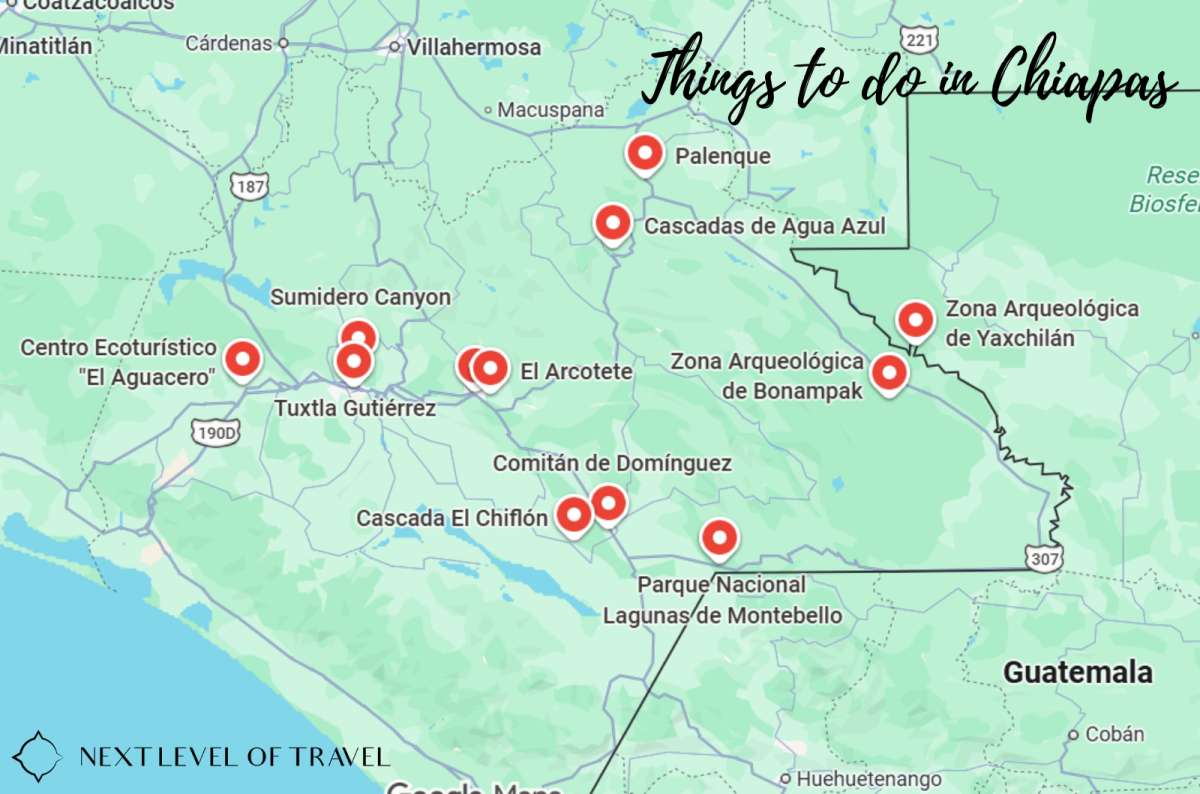
Here’s a quick overview of the best things to do in Chiapas, so you can see at a glance what fits your trip and what doesn’t. Tip: This trip works best if you have your own car (I use DiscoverCars for rentals around the world).
This is where I stayed during my trip to Chiapas and can recommend these specific hotels based on positive experiences:

Here are the details and my experience at the top things to do in Chiapas:
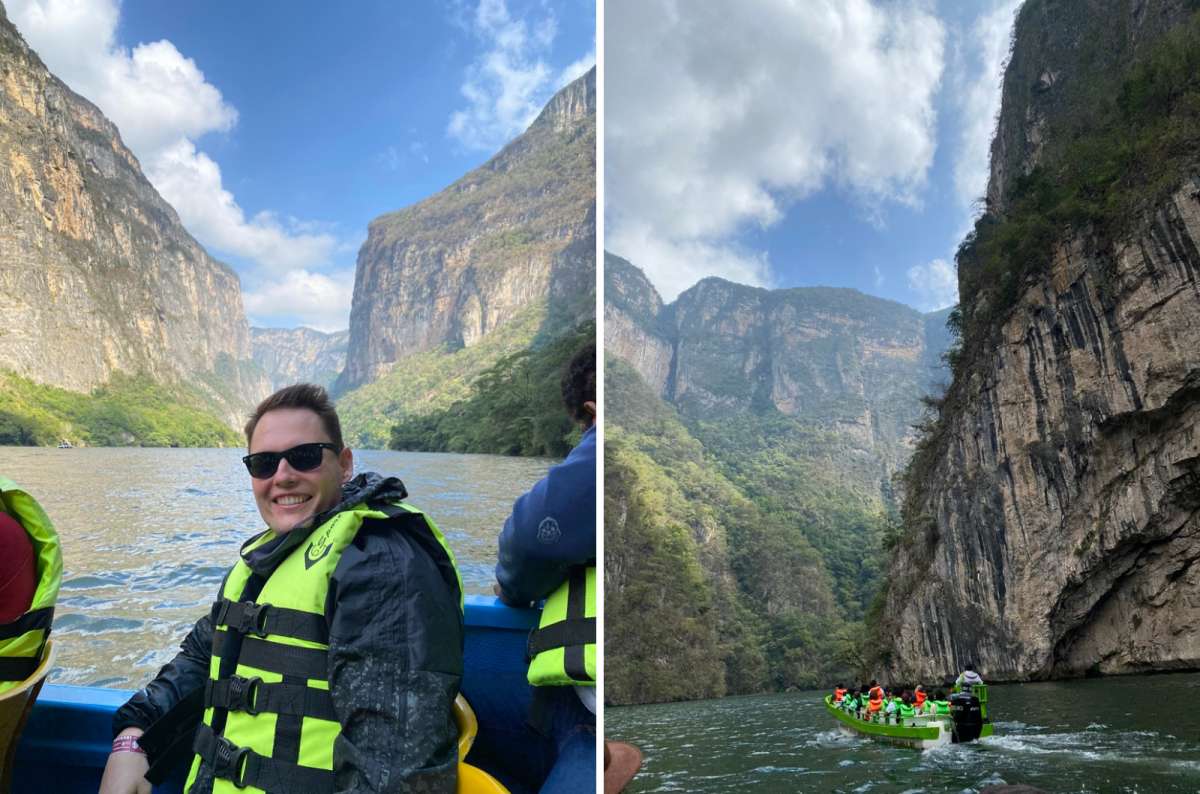
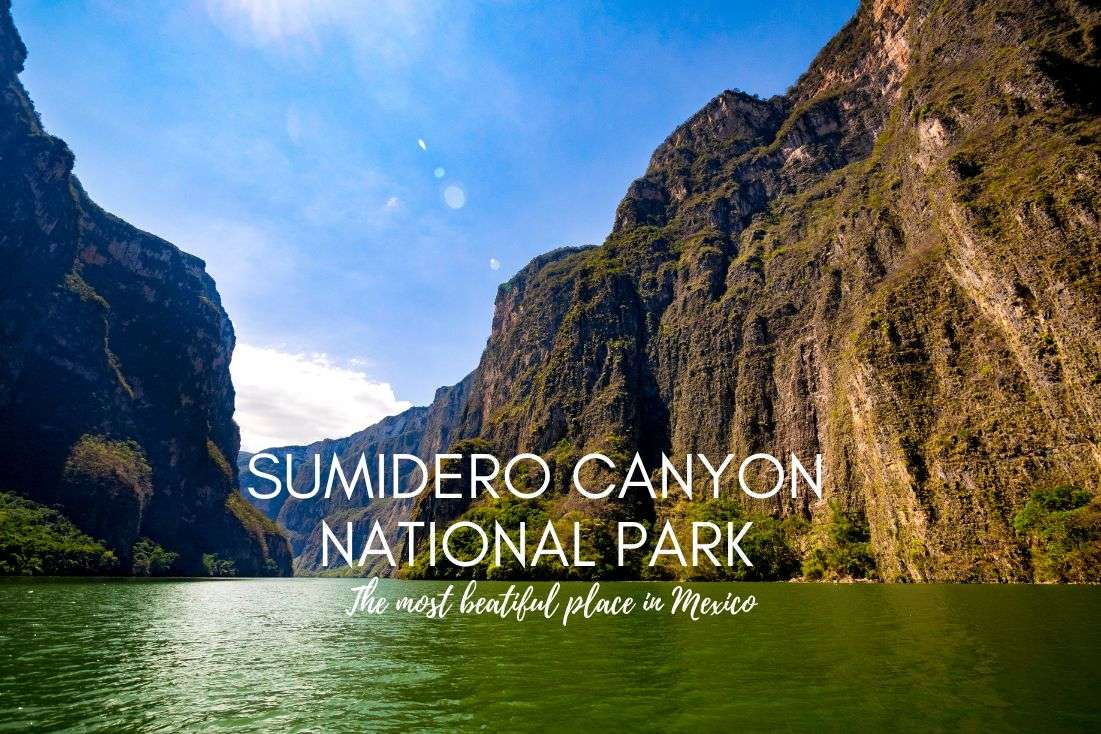
Sumidero Canyon is one of the most popular things to do in Chiapas.
This national park, best accessible from Chiapa de Corzo nearby Tuxtla Gutiérrez, features the Grijalva River cutting between cliffs that rise nearly 1,000 m (3,280 feet) high. By far the best way to experience it is on a Sumidero Canyon boat tour departing from Chiapa de Corzo.
The boats embark from Chiapa de Corzo, and will take you all the way through the canyon to the Chicoasén dam and back. Break out from the rut and experience the indescribable. Occasional crocodiles and monkeys will spice up your trip.
If there’s only one thing you do when you visit Chiapas, this is it.
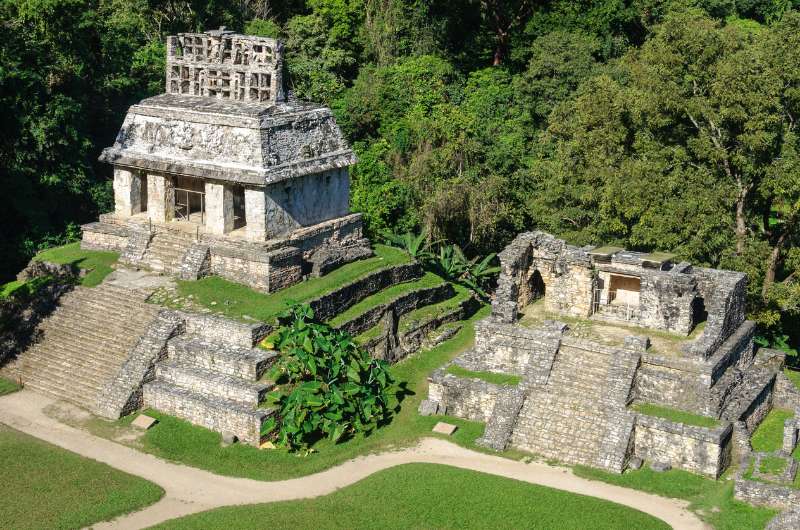
Ancient ruins in Palenque—one of the most interesting things to do in Chiapas
Located in the middle of the jungle, the Palenque ruins are undoubtedly a hidden treasure among the best Mayan cities in Mexico. It was one of the highlights of my best trip to Chiapas.
The site sits in dense jungle near the town of Palenque, and you feel that immediately with the humidity, birds, and howler monkeys somewhere in the trees. It’s truly atmospheric before you even get to the ruins.
A UNESCO World Heritage site today, a rich city back in the day. Palenque was inhabited between the 3rd and 8th centuries, when it prospered as a trade center and agricultural site. In the 8th century, it was abandoned and left at the mercy of the jungle. Most of the great city remains unseen till today—it’s supposed that only 10% of the ruins are discovered.
Inside the archaeological site, don’t rush. Spend time at the Temple of the Inscriptions (home to Pakal’s tomb), explore the Palace complex and its tower, and walk through the Temple of the Cross group.
I liked that the layout is compact and shaded, which makes it far more manageable than some larger Mayan sites in Mexico.
If you’re choosing just one set of ruins in Chiapas, Palenque ruins should be the ones to prioritize.
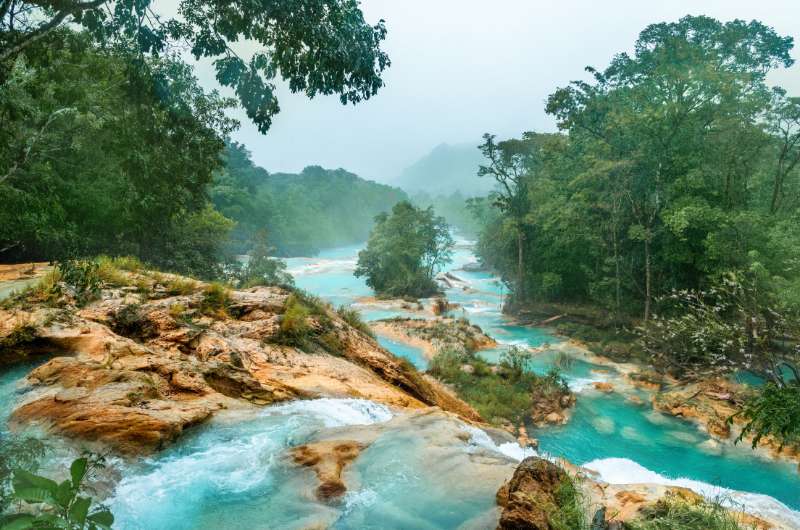
Magical Agua Azul Waterfalls
Agua Azul is one of the most photographed waterfalls in Mexico and one of the absolutely spectacular things to do in Chiapas. If Chichén Itzá is the New Wonder of the World, then Cascadas de Agua Azul should be the Water Wonder of Mexico!
The river flows over a series of limestone terraces, creating bright turquoise pools during the dry season. You can walk along the cascades, cross small bridges, and swim in designated areas. It’s all incredibly picturesque, too.
The name of the cascades literally means Blue Water. The bright colors, banana trees and palms all around, and small islands in the middle of the river make the place look like paradise.
The path along the cascades is lined with shops, selling souvenirs as well as Mexican food and beverages.
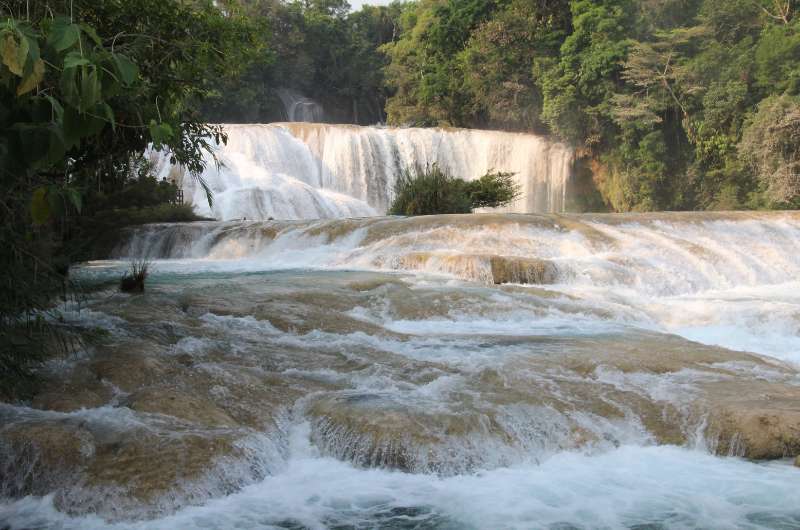
Agua Azul loses its bright color in the rainy season
Agua Azul Waterfalls lie in a land far, far away. First, they really are like from a fairy tale. Second, they’re 160 kilometers (99.4 miles) from San Cristóbal, and 214 kilometers (133 miles) from Tuxtla Gutiérrez, or a 3.5–4.5-hour drive, so it works best as part of a longer road trip through Chiapas..
Travel tip: You can swim in some of the pools below waterfalls. However, always read the signs with instructions! Invisible underwater currents are a serious threat. Don’t swim where you it’s not allowed. Read more about useful Mexico travel tips.
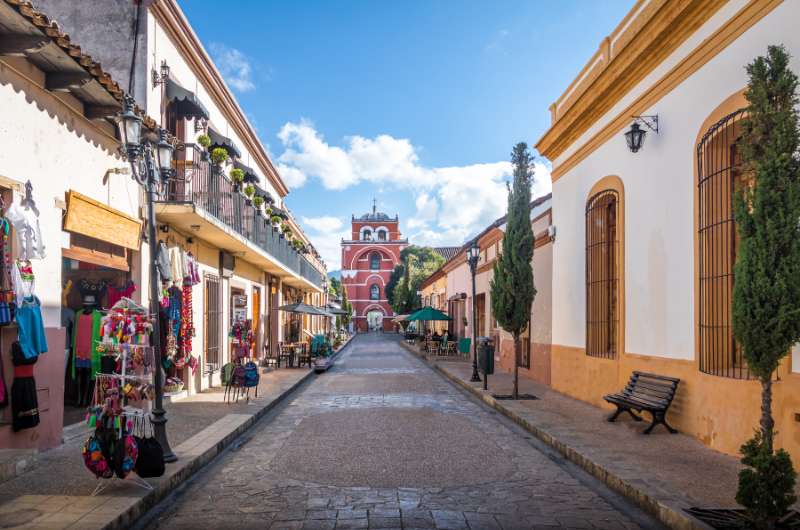
Walking through the pretty streets in San Cristóbal
San Cristóbal de las Casas is the cultural hub of Chiapas and the easiest place to base yourself to see the top things to do in Chiapas Mexico. You can spend your time walking the cobblestone streets, hanging out in cafés, browsing handicraft or food markets if that’s your thing, and watching daily life in the Mexican highlands.
I’m not a huge fan of doing nothing, so my tip is to not wander aimlessly. I visited Templo Santo Domingo—the most photogenic church in town—and walked across Plaza de la Paz, the main square in front of the cathedral. From there, I went toward Templo de San Juan, a lesser-known church that gives you a glimpse into local religious life beyond the tourist center.
I made time to see the Museo del Ámbar (insects trapped in amber, very Jurassic Park), and the yellow Cathedral of San Cristobal on the main plaza. If you want greenery, head to Orquídeas Moxviquil botanical garden for orchids and native Chiapas plants.
And if you want someone to hold your hand and show you some local delicacies, I know of this short guided tour that is very well reviewed and promises rich history, culture, and flavors, all in a packed 2.5 hours!
That said, San Cristobal isn’t a city in Chiapas that’s packed with major landmarks. It’s about atmosphere. Stay 1–2 nights, enjoy the cooler mountain climate, then use it as a base for day trips to Sumidero Canyon or El Arcotete. For El Chiflón and Montebello, consider staying in Comitán instead.
San Cristóbal also works as a base for visiting nearby indigenous villages such as San Juan Chamula and Zinacantán, where Tzotzil Maya traditions and religious practices remain central to daily life.
San Cristobal de las Casas is one of the most famous cities in Mexico, being on the list of the Magical Towns. For me personally, San Cristobal is pleasant—I wouldn’t expect it to carry your entire Chiapas itinerary.
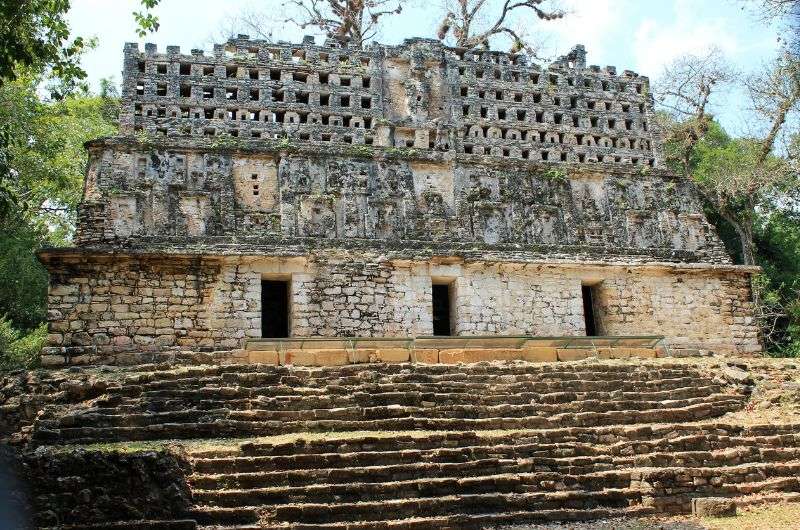
Ruins in Yaxchilán
The archeological site of Yaxchilán is not the easiest place to reach… and that’s exactly why it’s such a special place to include when you explore Chiapas. These remote Mayan ruins sit on a curve of the Usumacinta River, surrounded on three sides by Guatemala and dense rainforest. You don’t drive here. You arrive by boat.
Is it worth the effort? If you like remote places and don’t mind extra logistics that add to the adventure, absolutely. If you prefer easy access and short drives, this one may feel like too much.
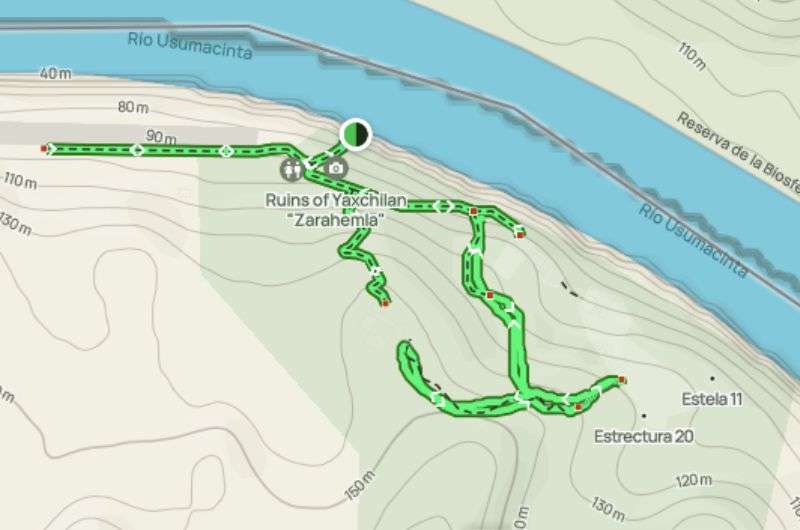
Check the Yaxchilán route on alltrails!
The history of Yaxchilán started in the 4th century, and continued with a rather long series of wars, as local cities were fighting for power. Yaxchilán used to be the dominant center of the region, and was rivals with both Palenque and Bonampak. Thanks to its position on the curve of the river, the city was naturally protected from enemies.
Today, the site contains numerous ruins of temples, palaces, and terraces, and is best known for its sculpture structures. Yaxchilán is strewn with carved lintels, altars, and bas-relief carvings which all narrate the story of the city.
The trip to Yaxchilán is a slightly difficult one, as the ruins are surrounded only by rainforest and no roads, meaning you have to get there on a boat. The easiest option is a local guide or tour from Palenque.
If you want to try to DIY, you need to drive to Frontera Corozal and pay 30 pesos (1.5 USD) for the entrance to the town.
Boats set off from Frontera Corozal and will take you to Yaxchilán in about 40 minutes, where they will wait two hours for you to get you back again.
The price is around 1,300 MXD (75 USD) per boat—the more people go, the less you pay per person. When you get to Yaxchilán, you will pay additional 90 MXD (5 USD) for the entrance to the ruins.
Note that the accommodation options in Frontera Corozal are quite modest. Hotel Nueva Alianza is by far the best option.
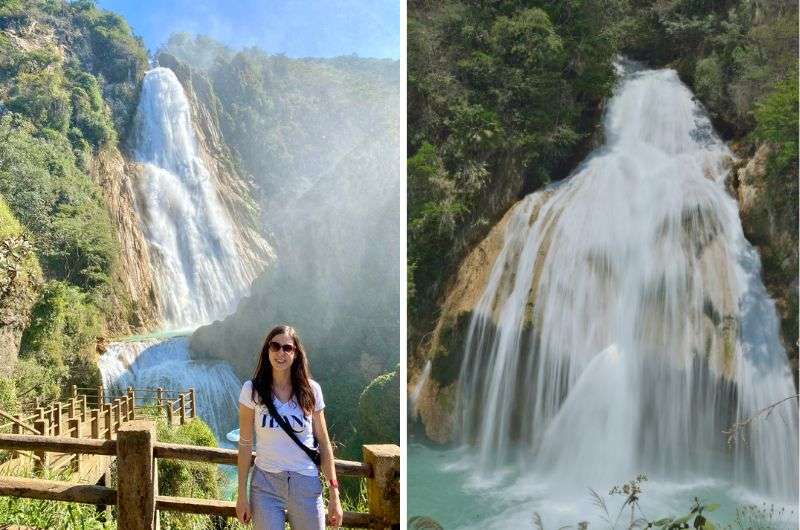
Me and El Chiflón Waterfall, checking off one of the famous places to include when you explore Chiapas
El Chiflón is one of the most impressive waterfall hikes in Chiapas. Located near Tzimol (about 2.5 hours from San Cristobal de las Casas), it’s not just one waterfall but a series of cascades along a bright turquoise river.
A path winds along the riverbank and gradually shows you the cascades, each better than the previous one. First comes Cascada El Suspiro, then Cascada Ala de Ángel, and finally the main event: Cascada Velo de Novia (Bridal Veil Falls). At 80 meters (260 feet) tall, it crashes down with serious force, spraying mist across the viewing platforms. You feel it before you even see it. You can test your limits and climb up to see the waterfall even from above.
The paths run along both sides of the river (and there’s no bridge connecting them), so choose your side at the entrance. Both offer different angles and viewpoints. If you want more adrenaline, there are zip-lines crossing above the cascades.
This is one of the easier trails I ranked on my the 10 best hikes in Mexico list.
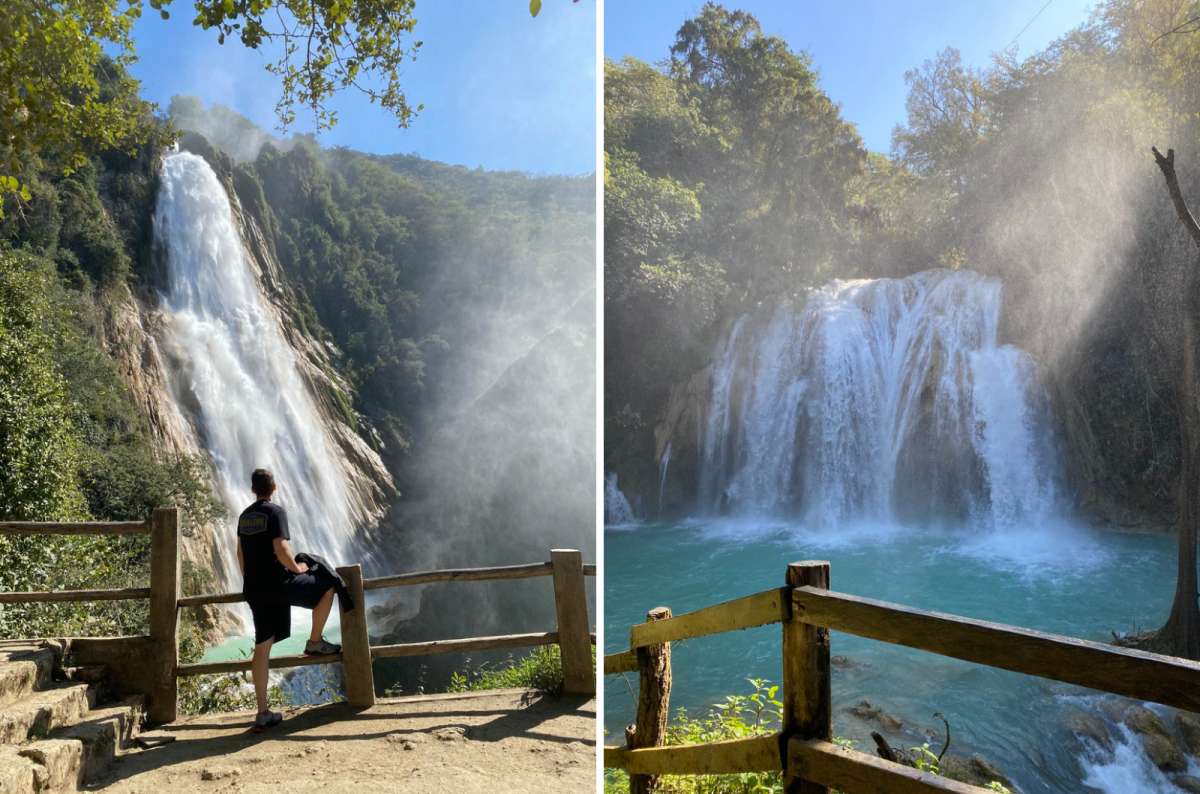
Pro tip: No window of time is too big for Chiflón waterfalls. Reserve at least five hours to visit both banks of the river and see the waterfalls from both sides, and maybe even try zip-lining above the river!
In my opinion, El Chiflón is more rewarding day trip than many of the smaller waterfalls in Mexico because it builds up gradually and ends with real impact.
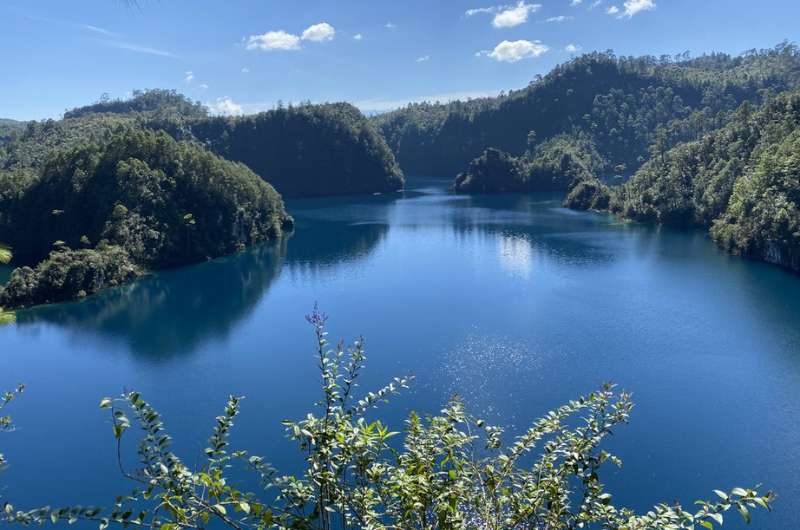
Lagunas de Montebello, Chiapas
Lagunas de Montebello is a national park with a system of crystal-clear lakes connected through underground rivers. It offers truly enchanting views: limestone rocks, special red moss, and underwater caves which can be seen clearly thanks to the purity of the water.
The landscape here feels different from the jungle-heavy parts of Chiapas—more open, more pine forest, more altitude.
But what would a Chiapas activity be without adventure? The best way to experience Montebello is to get on the water. You can rent a wooden raft (balsa) or a kayak and paddle across the clear lakes, where limestone formations and underwater caves are sometimes visible beneath the surface.
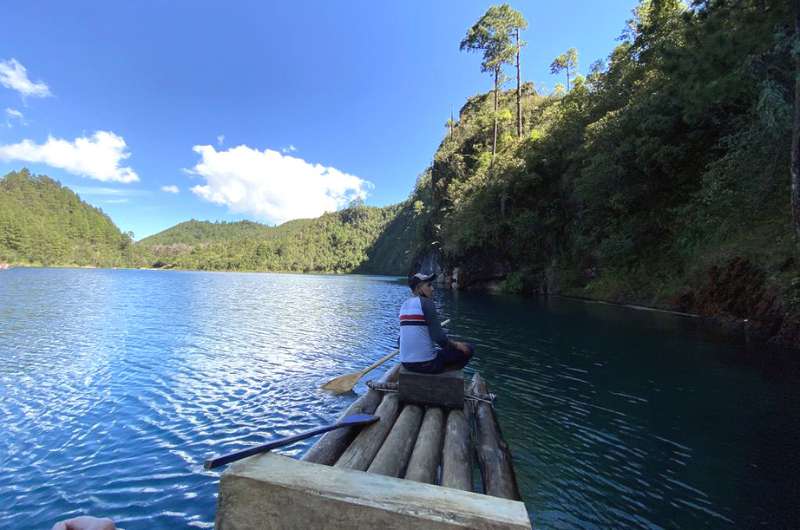
Paddling a raft in Chiapas was incredibly fun!
You can also hike between viewpoints or drive from lake to lake, but without a guide, signage can be very confusing.I suggest taking one of the guides that wait around the entrances. Just make sure they speak English you can understand. The rainforest is safe and the locals are friendly.
Pro tip: Lakes don’t go without mosquitoes. Bring mosquito repellent if you don’t want to be eaten alive. And take cash—there are multiple entry points and local fees
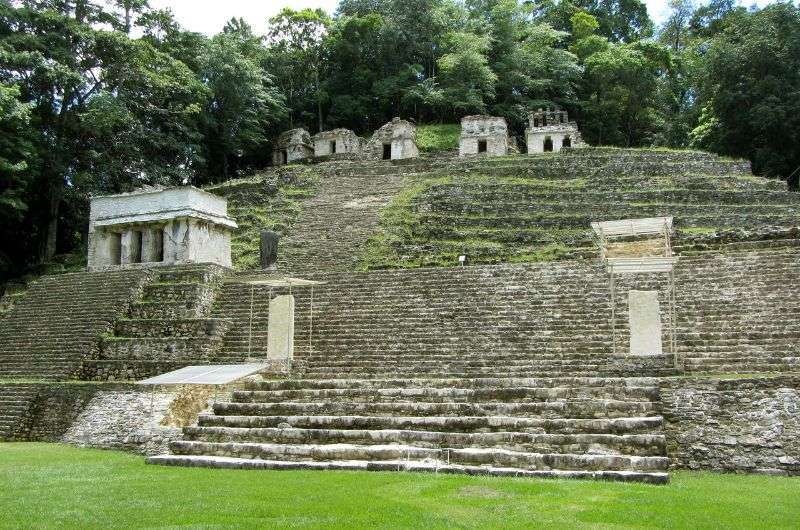
Ancient ruins in Bonampak
Located deep in the Lacandon jungle near the Guatemala border, the ruins here are best known for the Bonampak murals, which dramatically changed how historians understood Maya civilization.
Originally, historians thought the Maya was a peaceful culture. It was the murals in Bonampak that showed them they were wrong. The pictures clearly depict war and human sacrifice. Read more about Aztec culture in the 12 facts about Mexico article.
Inside the Temple of the Murals, vivid wall paintings depict warfare, rituals, musicians, and human sacrifice.
The archaeological site of Bonampak is compact and easy to explore in 1–2 hours. Compared to Palenque or Yaxchilán, it feels smaller and less overwhelming, but the jungle setting still gives it atmosphere.
Is Bonampak worth the extra effort? If you’re already heading to Yaxchilán, then yes, the two pair well. If you’re short on time, Palenque delivers more impact overall.

Murals in Bonampak
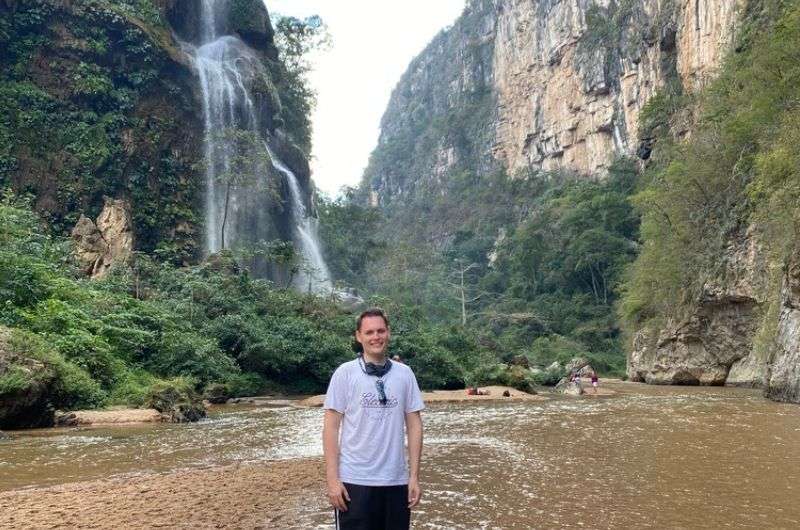
Me and El Aguacero Waterfall
A hiking trail + bathing in the river + wild waterfall = the perfect thing to do in Chiapas! Located about an hour and a half drive from Tuxtla Gutiérrez, Cañón Río La Venta hides the El Aguacero waterfall, one of Chiapas’ lesser-known waterfalls—and far less crowded than Agua Azul
You’ll have to drive on a poor, bumpy road, and then climb a steep slope in the jungle to get into the canyon. But it’s worth it a hundred times.
The trip starts when you park at the tourist center under the hill. You can grab a bite of Mexican food to gain some strength before the climb, or buy a souvenir. Which I highly recommend, by the way, as the staff is truly friendly, and you’ll help them by buying something.
On to the hike. I won’t lie, I counted, and it’s at least a bazillion stairs. You feel it in your knees halfway down.
The trail drops steeply through jungle until the canyon suddenly opens up. At the bottom, a wide river flows between tall rock walls, and at the far end, El Aguacero waterfall crashes into the basin. The water is cool and refreshing, and the whole place feels wilder and less managed than the more famous waterfalls in Chiapas.
Practical tips: Wear proper shoes, because the stairs can be slippery, especially after rain. Bring water (there’s little shade on the climb back up), and allow at least 2–3 hours total. The return hike is the real workout, so pace yourself on the way down.
If you don’t mind earning your views, El Aguacero is one of the more rewarding hidden waterfalls in Chiapas.
Travel advice: Not sure you can handle the climb? Open Google Street View and look at the stairs. It sounds ridiculous, but it gives you a very honest preview.
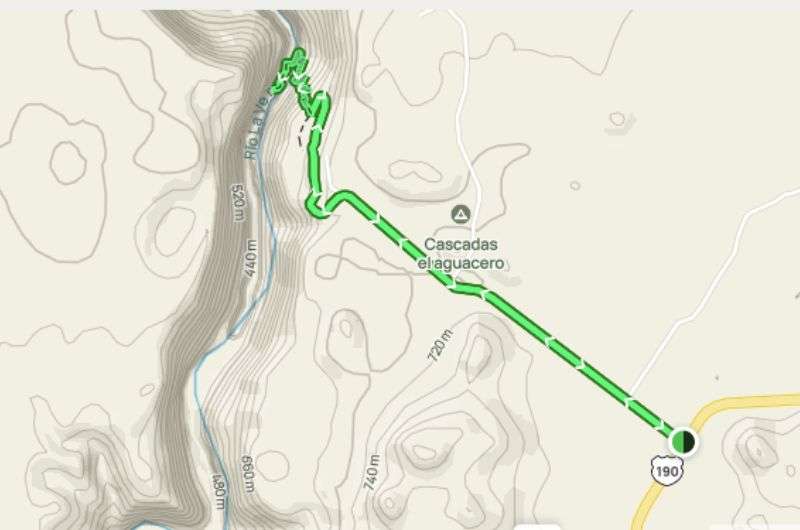
This is how you get to El Aguacero, Chiapas. You can find the trail on Alltrails.com
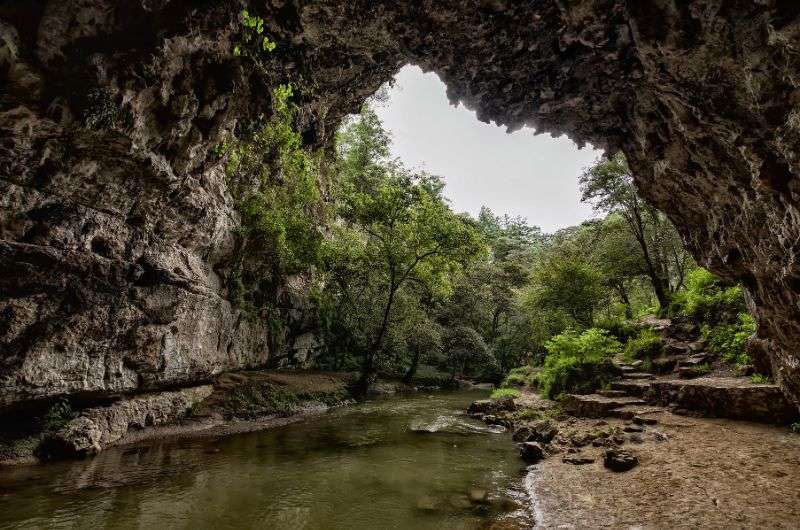
View from a cave in El Arcotete
If you’re staying in San Cristobal de las Casas, El Arcotete is an easy half-day escape just 20 minutes outside town. It’s a limestone cave system and small ecotourism park set in a forested canyon — far quieter than the city.
It’s easy to observe rocks from the ground, but will you dare to climb them? The main attraction here is the large natural stone arch (the “arcotete”) carved by a river, along with about 40 climbing routes of various lengths and difficulties, and even zip-lines if you want something more active.
If you prefer to stay on the ground, you can choose from other activities El Arcotete has to offer: picnicking, horse riding, cave exploring… An irresistible half-day trip, isn’t it?
Practical tip: Wear proper shoes. The paths can be muddy, and inside the caves it’s dark and damp. Plan 1–2 hours unless you’re climbing, in which case you’ll probably stay much longer. There’s a small restaurant and snack bar on site, but don’t expect fine dining.
El Arcotete isn’t a headline attraction in Chiapas, but as a quick nature break near San Cristóbal, it works well.

The Comitán Church
Comitán, the fourth largest city in Chiapas, is the place to stay if you want to explore the attractions near the border with Guatemala. Like Tuxtla, the city is interesting especially thanks to the tourist sites nearby nearby that serve as the best day trips.
Comitán isn’t a must-see destination in Chiapas, but it’s a pleasant colonial town and a practical base for exploring El Chiflón and Lagunas de Montebello. If you stay overnight, here’s what to see:
You don’t need more than half a day to see Comitán itself, it feels like a proper small town and won’t keep you interested for long. Most travelers use it as a comfortable stop between waterfall and lake excursions.
Also, good news! You won’t stay hungry in Comitán, as it’s full of nice restaurants serving the best food. Ivisited Ta Bonitio, and was very happy with the meal and service.
Pro tip: If you’re less inclined to DIY your way through the city, this Comitan tour promises the perfect combination of natural wonders and cultural exploration. Check it out if that sounds interesting to you.
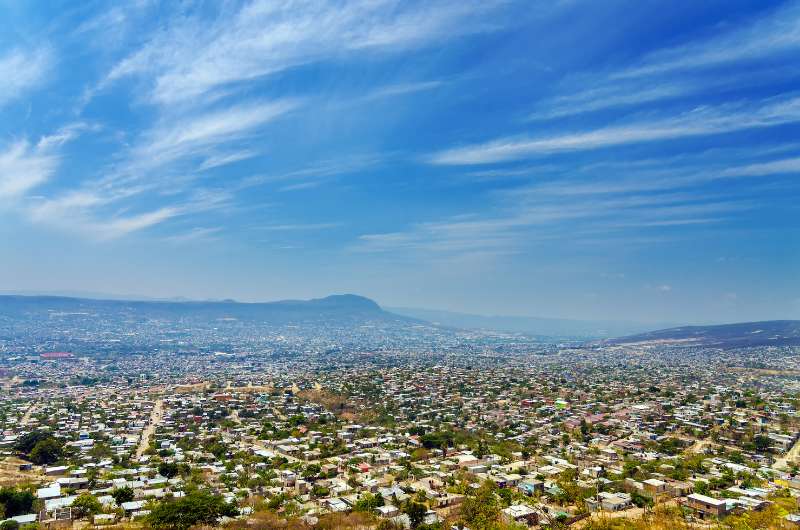
A view of Tuxtla Gutiérrez city
Comitán isn’t the reason you travel to Chiapas, but it’s an entry and exit point for many travelers. The historic center is compact and easy to explore on foot, with arcaded streets and a relaxed pace that feels noticeably calmer than San Cristobal. So there’s that. But don’t plan multiple days there.
A two-day stay in Tuxtla is a perfect mix of museums
and city vibes, combined with the nature nearby. It’s not packed with major landmarks, but it does have a bit more substance than it first appears, so no need to be sad if you’re flights strand you there for half a day longer than you need.
What I did was drive up to scenic viewpoints overlooking Sumidero Canyon from above (Miradores del Cañón del Sumidero). The views are dramatic and completely different from the boat perspective.
Tuxtla is also the best place to use as a base for Aguacero Waterfalls. Those two are no-brainer attractions in Chiapas that I’d highly recommend visiting.
Then, you can clear your head and rest a bit in Tuxtla’s museums, such as the Museum of Coffee, the Museum of Marimba, or Faustino Miranda Botanical Garden.
Here’s what you could realistically add if you find yourself with too much time on your hands in Tuxtla:
Tuxtla Gutiérrez is a good place for your vacation especially thanks to its location, and the international airport 30 minutes by car from the city center.
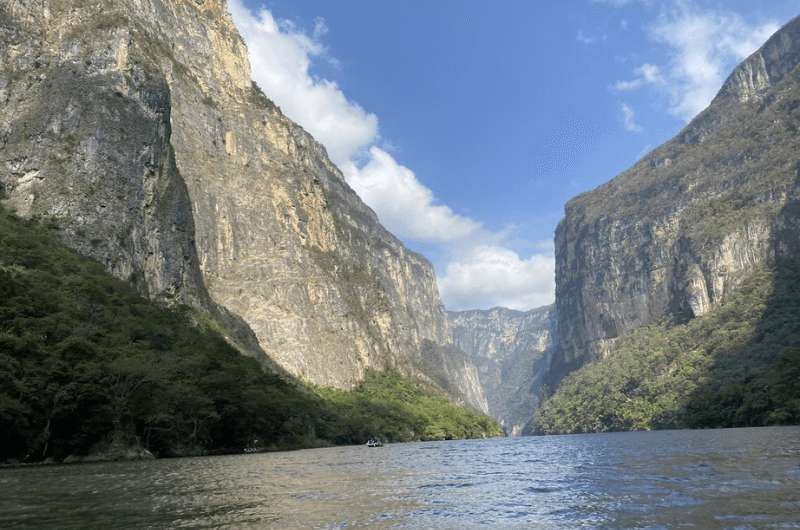
Sumidero Canyon, Chiapas
Do you want to see all the places in Chiapas I mentioned in my list? For your own sake, I hope you have a ton of time. This is a sample Chiapas itinerary for your trip to Mexico (you’ll find a shorter version below).
Some travel advisories currently discourage non-essential travel near the Guatemala border and along stretches of Highway 199 between San Cristobal and Palenque because of security issues. If your itinerary includes those areas, double-check the latest conditions and don’t rely on outdated information.
Day 1: Tuxtla Gutiérrez + El Aguacero
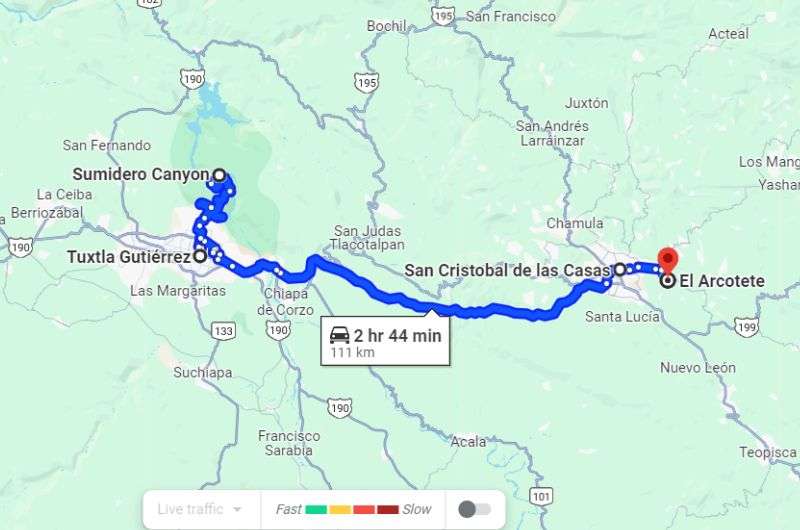
Map of the route of Chiapas itinerary day 1 here!
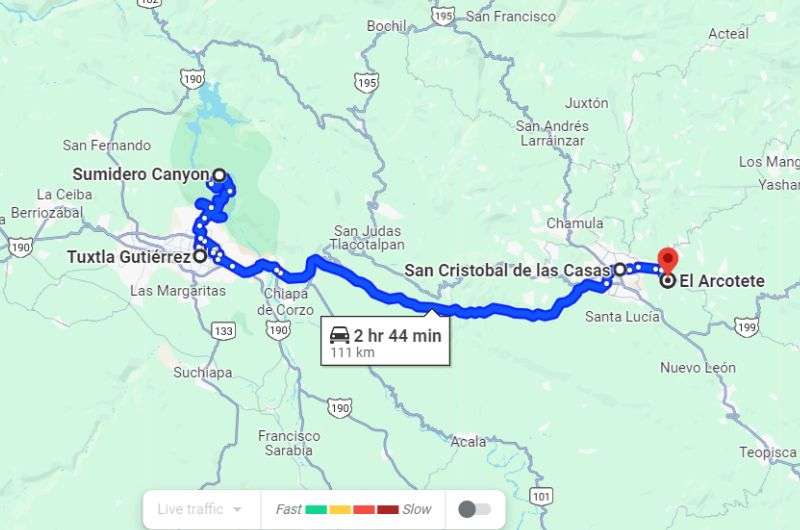
Map of the route of Chiapas itinerary day 2 here!
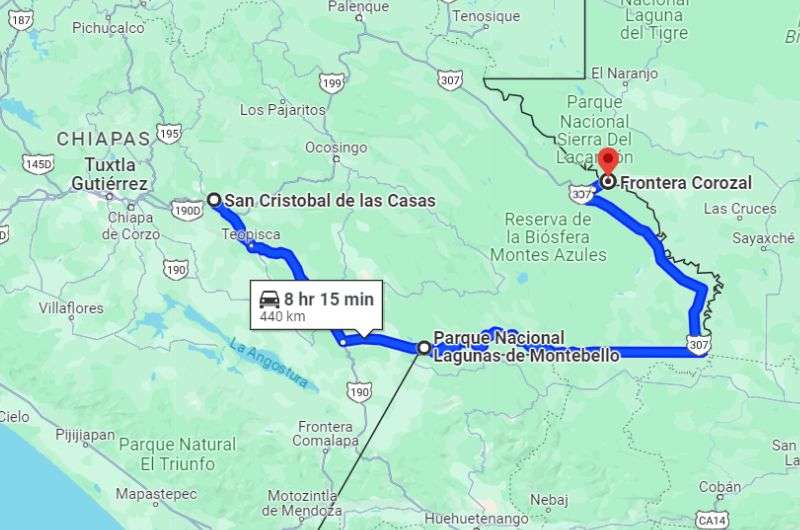
Map of the route of Chiapas itinerary day 3 here!
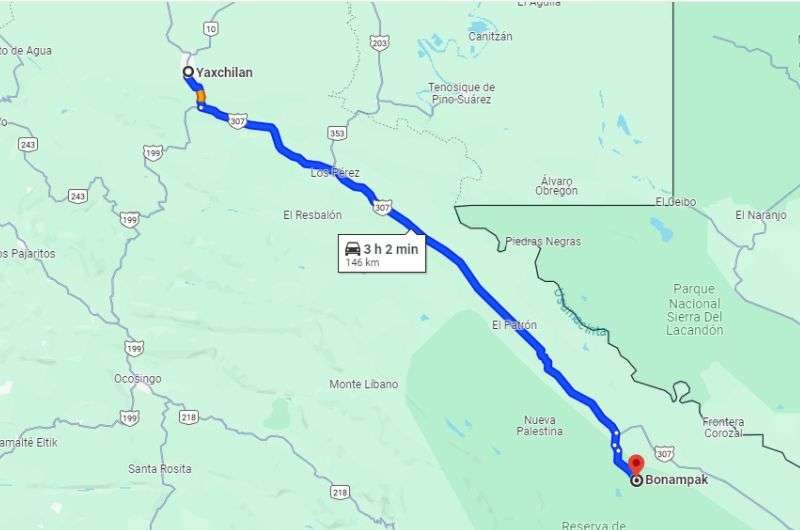
Map of the route of Chiapas itinerary day 4 here!
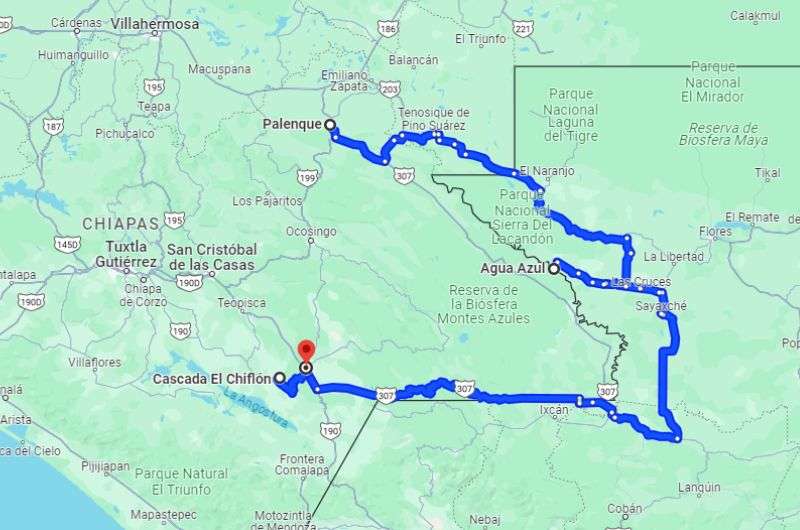
Map of the route of Chiapas itinerary day 5 here!
Maybe you’ve noticed that the drives sometimes take 5+ hours. And maybe you don’t like that. If you prefer something more compact, this version keeps driving times mostly between 1–2.5 hours. :
Yes, Chiapas is worth visiting if you’re interested in Mayan ruins, waterfalls, and dramatic landscapes. It offers Palenque, Sumidero Canyon, and Agua Azul, plus colorful highland towns like San Cristobal de las Casas. It’s less developed than Yucatán, but that means fewer crowds and a more raw, adventurous experience.
You need at least 4–5 days in Chiapas to see the main highlights like Palenque, Agua Azul, and Sumidero Canyon. For a fuller experience that includes Yaxchilán or Bonampak, plan 6–7 days due to long driving distances between destinations.
The most beautiful towns in Chiapas are San Cristobal de las Casas, Comitán, and Chiapa de Corzo. San Cristobal is known for its colorful streets and cafés, Comitán for its relaxed atmosphere, and Chiapa de Corzo for its riverside charm and access to Sumidero Canyon.
This post contains affiliate links. If you make a booking through one of my links, I may earn a small commission—at no additional cost to you. Thank you for your support!
What is Chiapas best known for?
At a glance: 12 best things to do in Chiapas (my ranking)
You might also be interested in reading:
1. Take a boat trip in Sumidero Canyon
2. Explore Mayan history at the Palenque ruins
3. Swim beneath the cascades of Agua Azul
4. Wander the vibrant streets of San Cristóbal de las Casas and beyond
5. Reach Yaxchilán by boat and explore jungle ruins
6. Hike to the towering waterfalls of El Chiflón
7. Paddle across the lakes of Lagunas de Montebelloin
8. See the murals at Bonampak ruins
9. Descend into the canyon at El Aguacero
10. Explore the caves and rock arches at El Arcotete
11. Explore colonial Comitán and its lively plazas on a walking tour
12. Discover Sumidero viewpoints and museums in Tuxtla Gutiérrez
How to visit Chiapas: planning your trip and itinerary options
6-day Chiapas road trip itinerary
3-day Chiapas itinerary with shorter drives


Hi, I’m Jan. I travel fast and intensely, whether I’m exploring the buzz of Tokyo in 3 days or road-tripping through mountains and beaches on a 3-week Thailand adventure. And no matter where I am, you’ll always find me in a comfortable hotel at night and eating the best food.
If that sounds like your kind of journey, hop on board, and let’s explore the world together!
I started this blog after realizing how tough it can be to find reliable, authentic travel info. You wouldn’t believe how many “travel bloggers” never even visit the places they write about! On Next Level of Travel, you can count on my full honesty and insights drawn from my firsthand experiences.
Here’s the deal: not every destination is all superlatives and unicorns. I’ll let you know if a tourist attraction isn’t worth your time, like skipping overrated stops in my 2-week Spain itinerary. And when I find something truly special—like the perfect mix of culture and nature in Cape Town—you can trust that it’s worth adding to your itinerary.


Comments | Thoughts? Give us a shout!