My Top 21 Things to Do in Gdansk and Gdynia | 2 days in Gdansk Itinerary and Map

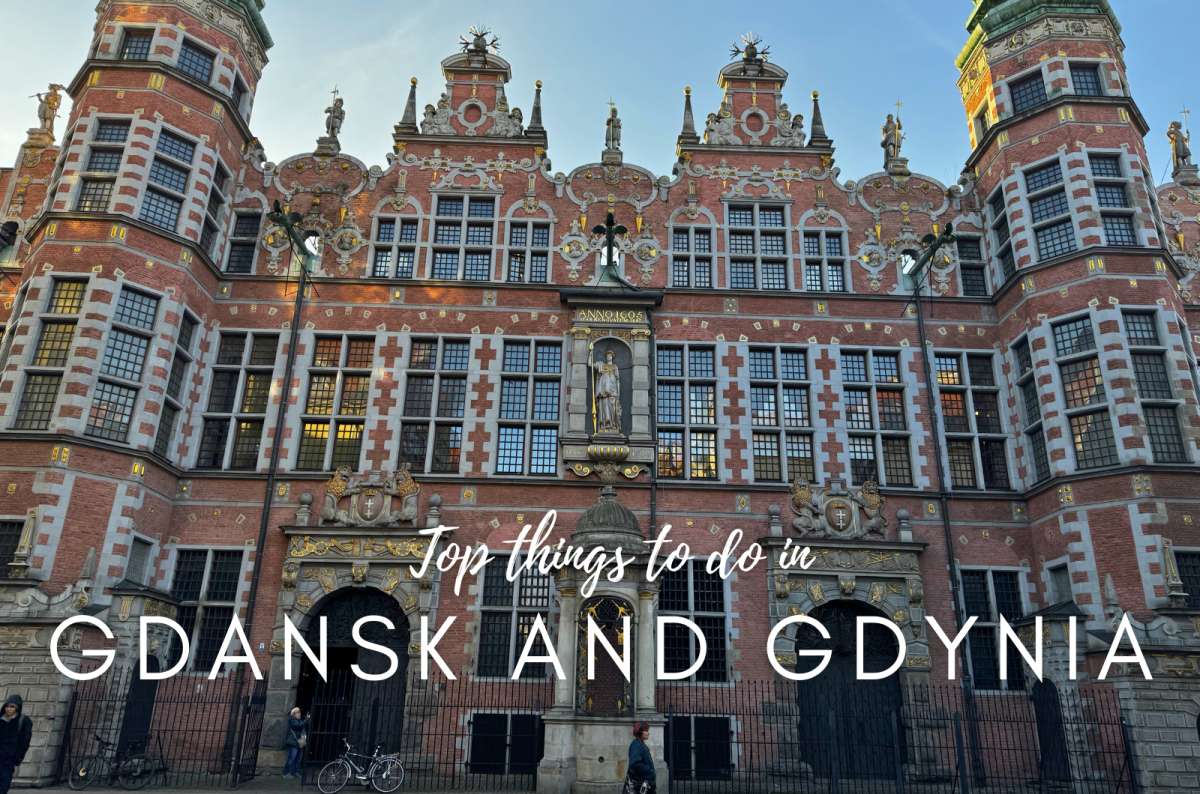


What are Gdansk and Gdynia like?
At a glance: The best things to do in Gdansk, ranked based on my own experience
How much time do you need to see Gdynia and Gdansk, Poland?
Where to stay in Gdansk, Poland?
Your ultimate weekend itinerary for 2 days in Gdansk
2. Gdansk city center and the canals
5. The AmberSky Ferris Wheel (Gdansk)
6. The Main Town Hall Tower (Gdansk)
7. Dlugi Targ and Neptune’s Fountain (Gdansk)
8. St. Bridget's Church's amber altar (Gdansk)
9. The Museum of Emigration (Gdynia)
10. The Bridge of Love (Gdynia)
11. The Solidarity Center (Gdansk)
12. Pomeranian Quay’s famous ships (Gdynia)
15. The Museum of World War II (Gdansk)
16. Gdansk Crane (Stary Żuraw)
17. The Green Gate and the Golden Gate (Gdansk)
18. The Museum of Naval Forces (Gdynia)
20. The Oliwa Cathedral (Sopot)
21. The Maritime Museum (Gdansk)
Bonus: Take in the views at Gora Gradowa
Where to next? Day trips from Gdansk
Final thoughts: Are Gdynia and Gdansk, Poland, worth visiting?
It would be a shame to explore Gdansk without seeing Gdynia and vice versa. These two coastal Polish cities go hand-in-hand since it's only a 30-minute drive from one to the other, and a really short train ride of 15 minutes if you want to take public transport. There’s really no reason not to see both.
A lot of travelers shoot only for major cities like Gdansk without taking smaller ones like Gdynia into account. This is a mistake: while Gdansk is rich in history, Gdynia has a breezy naval vibe. Together, they'll give you the full Baltic Sea coast picture during your trip to Poland.
Here’s the ultimate travel resource for exploring the best things to do in Gdansk, the exact itinerary for 2 days that I followed, and my top recommendations for what’s best not just within both cities but between them overall.
You can't miss Gdansk Old Town and its historic buildings, Gdansk Town Hall for amazing views, the Christmas market if you go in winter, and of course, amber shopping. If you're lucky, you might even stumble upon some for free.
Everywhere you go, you'll be met with stunning architecture and both historic and modern buildings. It's truly a treat to explore Gdansk and Gdynia.
Read more from my Poland travel blog.
What are Gdansk and Gdynia like?
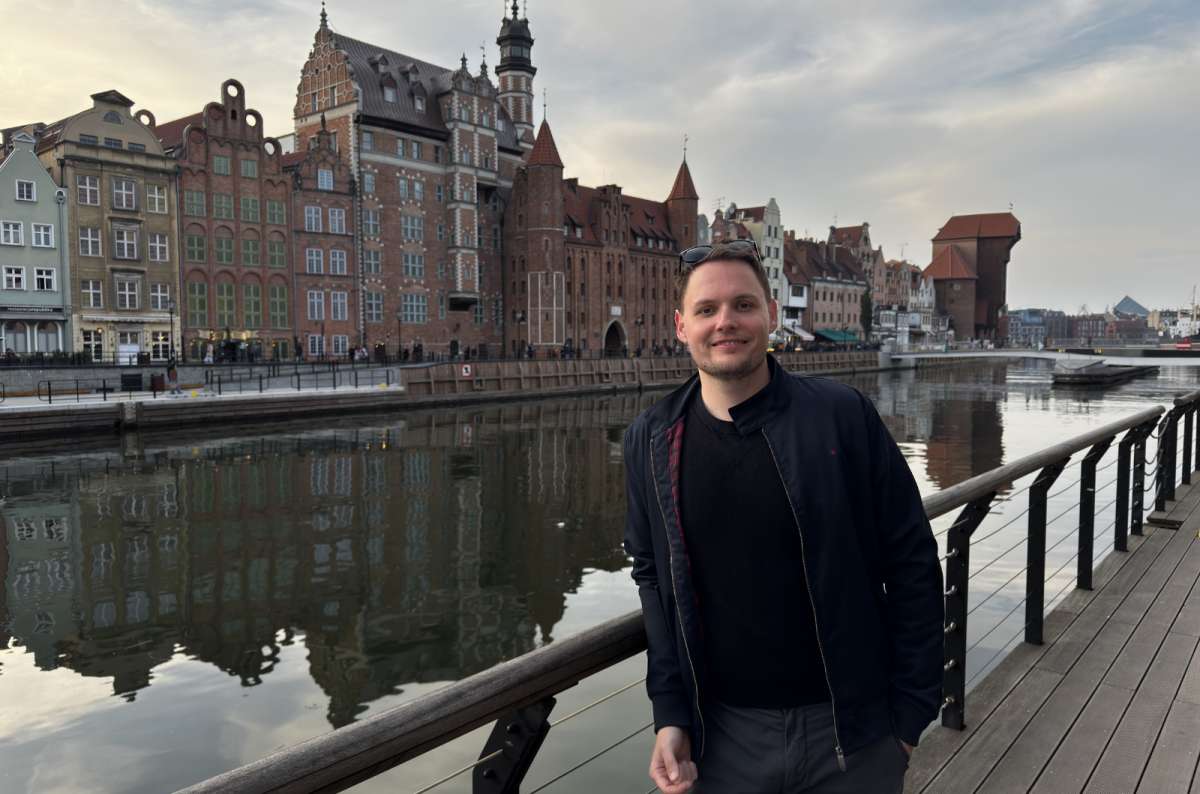
Strolling along the Motława River in Gdansk Old Town
Gdansk and Gdynia are two of my favorite Polish destinations without a doubt. Because they’re by the Baltic Sea, they’re an excellent seaside destination for me as a landlocked Czech. I’ll take any city beach I can get to, and these ones are pretty damn good—easily among the best things to do in Gdansk and Gdynia.
Granted, Poland is still not Spain or Croatia, so don’t expect crisp blue water and beach volleyball courts when you spend your 2 days in Gdansk. But it’s good when I’m craving a taste of that salty seaside air and a stroll along sandy beaches.
And rejoice, history buffs: you’re in for a treat. This is where the very first bullets were fired that kicked off the Second World War. The rich history here really immersed me in a different time, especially when I visited Gdansk Old Town. Certainly one of the best things to do in Gdansk.
Yeah, that’s kind of a contrast to the beachy vibe. But it goes to show you how much Gdansk and Gdynia have to offer. Fun times plus somber history equals one hell of a getaway.
Oh, and amber. Tons and tons of amber. This is the amber capital of the world, in fact, so get your wallets ready.
Sometimes, all you need to do is take the first step... I've filtered out the best hotels in Krakow for you
Save it for yourself to come back to later, or share with your friends on social media!
I've already planned your ititnerary for the trip, complete with my travel tips.
Find more travel content, photos, and fun on:


At a glance: The best things to do in Gdansk, ranked based on my own experience
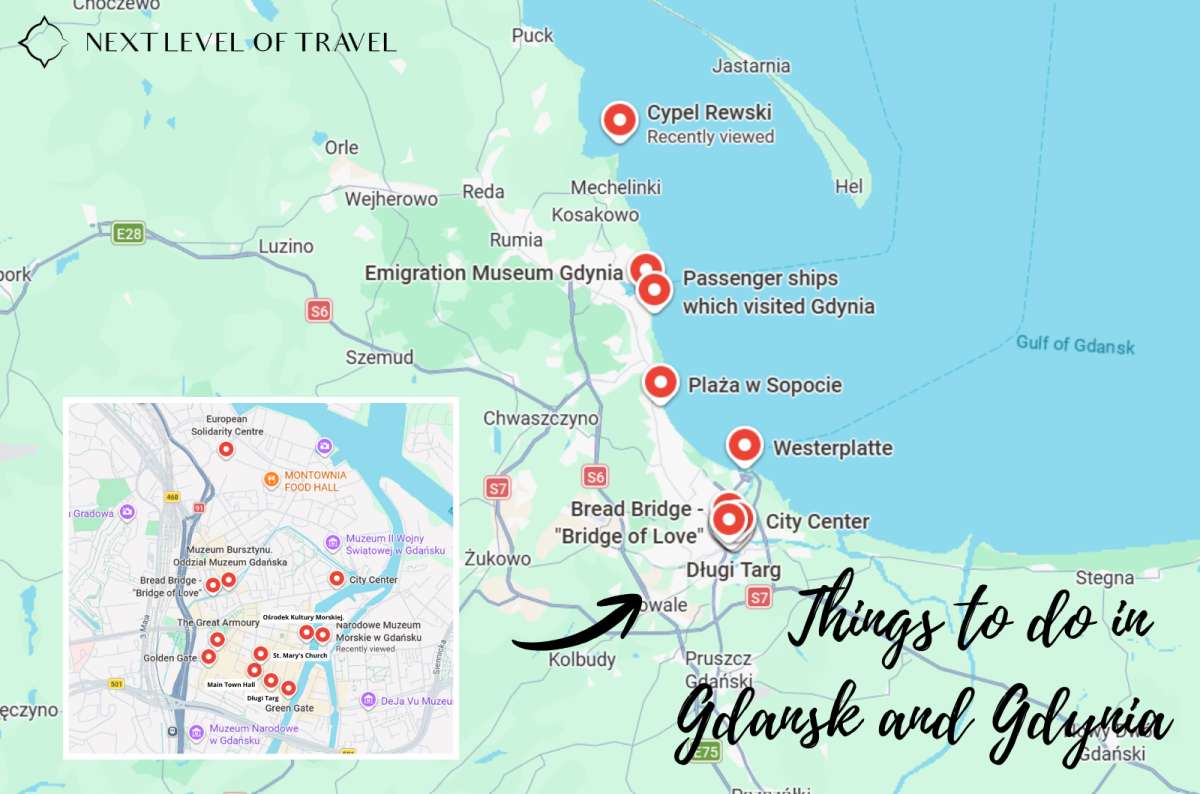
Overview map of the best things to do in Gdansk and Gdynia
I’ve combined the best things to do in Gdansk and Gdynia into this comprehensive list. The lower it’s ranked, the more skippable it is.
- Amber Museum (Gdansk): Home to some of the oldest amber artifacts you’ll ever see.
- City center and canals (Gdansk): Take out your camera and take in the views of Gdansk’s restored architecture.
- St. Mary's Church (Gdansk): Visiting Central Europe means exploring giant churches. This is a particularly immense one.
- The Great Armoury (Gdansk): A contemporary art exhibit. Don’t expect to find weapons here.
- AmberSky Wheel (Gdansk): A 15-minute Ferris wheel ride with surprisingly great views over Old Town and the Motława River.
- Town Hall (Gdansk): The best place for panoramic views of Gdansk Old Town.
- Dlugi Targ (Gdansk): The heart of the city's historic center, which you can easily explore on foot.
- Basilica of St. Bridget (Gdansk): A striking red-brick Gothic church best known for its impressive amber altar.
- Museum of Emigration (Gdynia): Trace Poland’s migrants through time on their journey to Ellis Island.
- Bridge of Love (Gdynia): A bridge with stunning views and many, many locks.
- Solidarity Center (Gdansk): A museum dedicated to the Solidarity movement, which is integral to Gdansk's communist history.
- Ships and Nabrzezie Pomorskie (Gdynia): Tour the insides of some of Poland's most imposing and historic ships.
- Beach and Wharf (Sopot): A chill area to stroll around if you're looking to add some leisure to your itinerary.
- Cypel Rewski (Gdynia): A unique, sandy peninsula popular among both tourists and locals looking to walk along the sea.
- Museum of the Second World War (Gdansk): One of the best and most comprehensive WWII museums in Europe, with huge immersive exhibits and powerful personal stories.
- Stary Żuraw (Gdansk): The city’s famous medieval port crane and one of Gdansk’s most recognizable waterfront landmarks.
- Green Gate and Golden Gate (Gdansk): Hallmarks of Gdansk Old Town with historical significance for Polish monarchs. Key parts of Old Town's royal route.
- Museum of Naval Forces (Gdynia): One of Gdynia's main attractions, but I’ve listed it near the bottom because it’s kind of meh and skippable.
- Westerplatte (Gdansk): This is where it all started: the site of the Second World War’s first-ever battle.
- Oliwa Cathedral (Gdansk): A peaceful cathedral famous for its massive organ.
- Maritime Museum across the Motława River—skippable (Gdansk): If you're interested in the Polish navy, a stop here is worthwhile. Otherwise, not the best thing to do in Gdansk.
Day trip options:
- Hel Peninsula: Sandy beaches and little towns on a narrow Baltic peninsula.
- Toruń: Beautiful medieval Old Town and birthplace of Copernicus.
- Malbork Castle: The largest brick castle in the world.
How much time do you need to see Gdynia and Gdansk, Poland?
I would say that Gdansk and Gdynia, separately, are each like their own day trip. Together, they make for a nice weekend trip. You can pick and choose whatever is most interesting to you. And no matter where you go, you'll be on the Baltic Sea coast.
Visiting Gdansk will expose you to more history and beautiful architecture, whereas Gdynia is strongly connected to the Polish navy and maritime trade.
A heads up, though: Gdynia is not nearly as pretty as Gdansk, so save your picture-taking for the Gdansk portion of your trip.
I’ll show you the best things to do in Gdansk and Gdynia, starting with Gdansk and ending with Gdynia. I did the planning first so you don’t have to: just follow my easy guide step-by-step, and enjoy a stress-free 2 days in Gdansk during your trip to Poland!

Where to stay in Gdansk, Poland?
I stayed at the Hilton Gdansk and have no complaints. It’s reasonably located in the city center and about a 25-minute drive from the Gdansk airport, which makes it convenient to take a day trip to Gdynia. There's a pool and sauna, and the rooms are sizable. The breakfast was good but a bit smaller for Hilton standards.
The rooms were nice and clean, if maybe a bit outdated. But that just fit in with the city’s whole historical vibe. The price was good for an original Hilton rather than some other spinoff brand.
Your ultimate weekend itinerary for 2 days in Gdansk
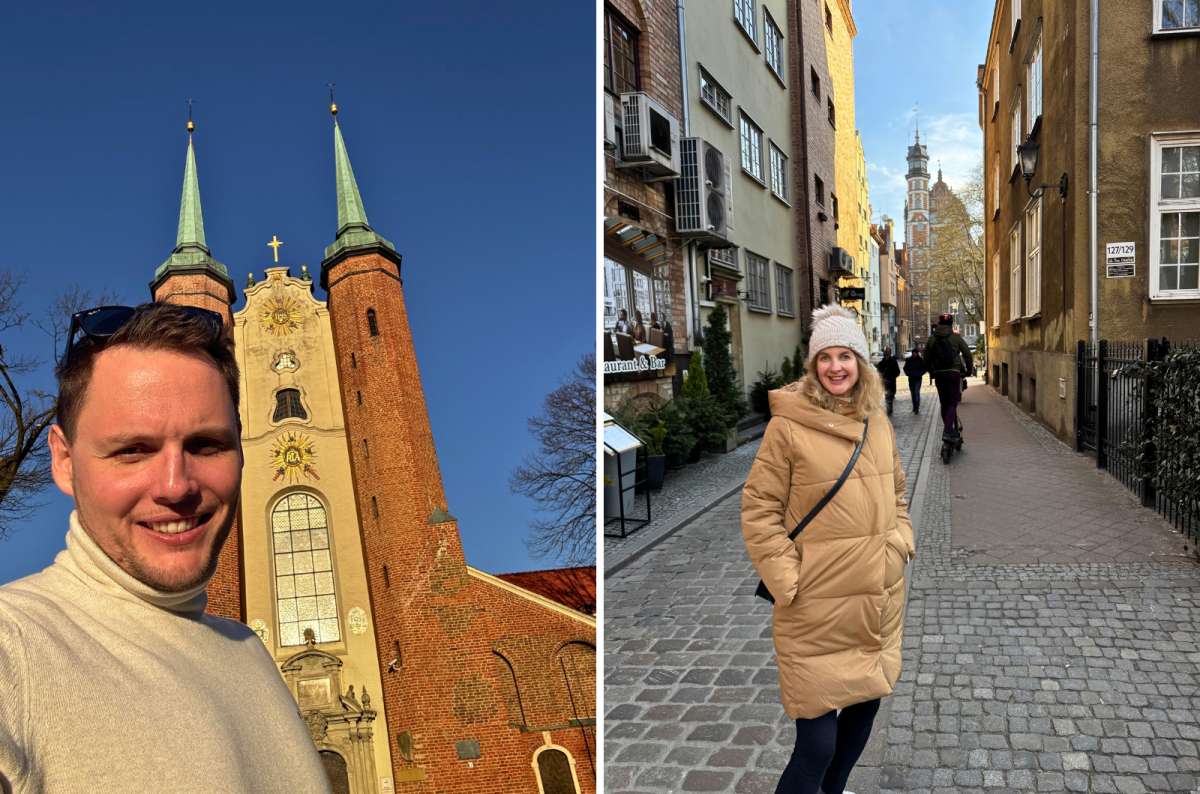
Exploring the streets of Gdansk Old Town on a perfect 2-day Gdansk itinerary
Gdansk, Poland, is an interesting city. 90% of it was destroyed in World War II, so it’s basically completely new, but it feels quite old. Its vibe is similar to Hamburg or Amsterdam, but with more cobbled streets.
If you’re looking for amber, Gdansk is the city to buy it. Lots of shops sell amber jewelry. There's also no shortage of restaurants to choose from.
You can comfortably see Gdansk on day 1 of your itinerary, and then move on to Gdynia the next day.
Tip: Stay in the city center. Everything is really close by, and traffic is heavy here compared to other cities. If you rent a car as I do, make sure to get a hotel with parking.
Day 1 of 2 days in Gdansk itinerary: See the best of Gdansk
Here’s my complete day in Gdansk, with the amount of time to spend per location.
Stop 1: Gora Gradowa (10 minutes)
Stop 2: Museum of World War II (2 hours)
Stop 3: Maritime Museum (1 hour)
Stop 4: Stagwie Mleczne (5 minutes)
Stop 5: Green Gate (10 minutes)
Stop 6: Dlugi Targ (30 minutes)
Stop 7: Mariacka Street (15 minutes)
Stop 8: Main Town Hall Tower (1 hour)
Stop 9: Golden Gate (10 minutes)
Stop 10: Great Armoury (30 minutes)
Stop 11: St. Mary’s Church (15 minutes)
Stop 12: Westerplatte (1 hour)
Stop 13: Bridge of Love (10 minutes)
Stop 14: Amber Museum (90 minutes)
Stop 15: European Solidarity Centre (90 minutes–2 hours, optional)
Hotel recommendation: Hilton Gdansk
Day 2 of 2 days in Gdansk itinerary: Hop over to Gdynia and Sopot
Day 2 of your Gdansk itinerary will be spent just 30 minutes away in Gdynia.
The easiest way to get around the city is to start from north to south. That’s what I did, and it made my organization a heck of a lot easier. Even easier if you rent a car, as I did. I love the independence it gave me to see everything exactly at my own pace.
You’ll also head to Sopot, which is smack-dab in between Gdynia and Gdansk, Poland, and is known for being a popular spa town. Together, the three of them form Poland’s ‘Tricity,’ or so it’s nicknamed. The trifecta of the Baltic coast.
Sopot is really small, so it isn’t truly like hitting three cities in just two days. It’s more like Gdynia + Sopot = one city.
If you choose not to rent a car, it's easy to take public transport from one place to another. Sopot is so small that the bus station back to Gdynia is a 10-minute walk from the city center. See, easy peasy.
Here’s a step-by-step guide to a fun day in Gdynia, including how much time to spend in each place.
Stop 1: Cypel Rewski (30 minutes)
Stop 2: Museum of Emigration (90 minutes–2 hours)
Stop 3: Pomeranian Quay (2–3 hours)
Stop 4: Nautilus Batiskaf (5–15 minutes)
Stop 5: Museum of Naval Forces (30–40 minutes)
Stop 6: Sopot Wharf (1 hour)
Stop 7: Oliwa Cathedral (15 minutes)
Hotel recommendation (if you happen to want to stay in Gdynia): My Story Gdynia Hotel
Here are all the best things to do in Gdansk and Gdynia in detail, with my nifty notes from when I visited:
1. Go amber shopping at the Amber Museum (Gdansk)
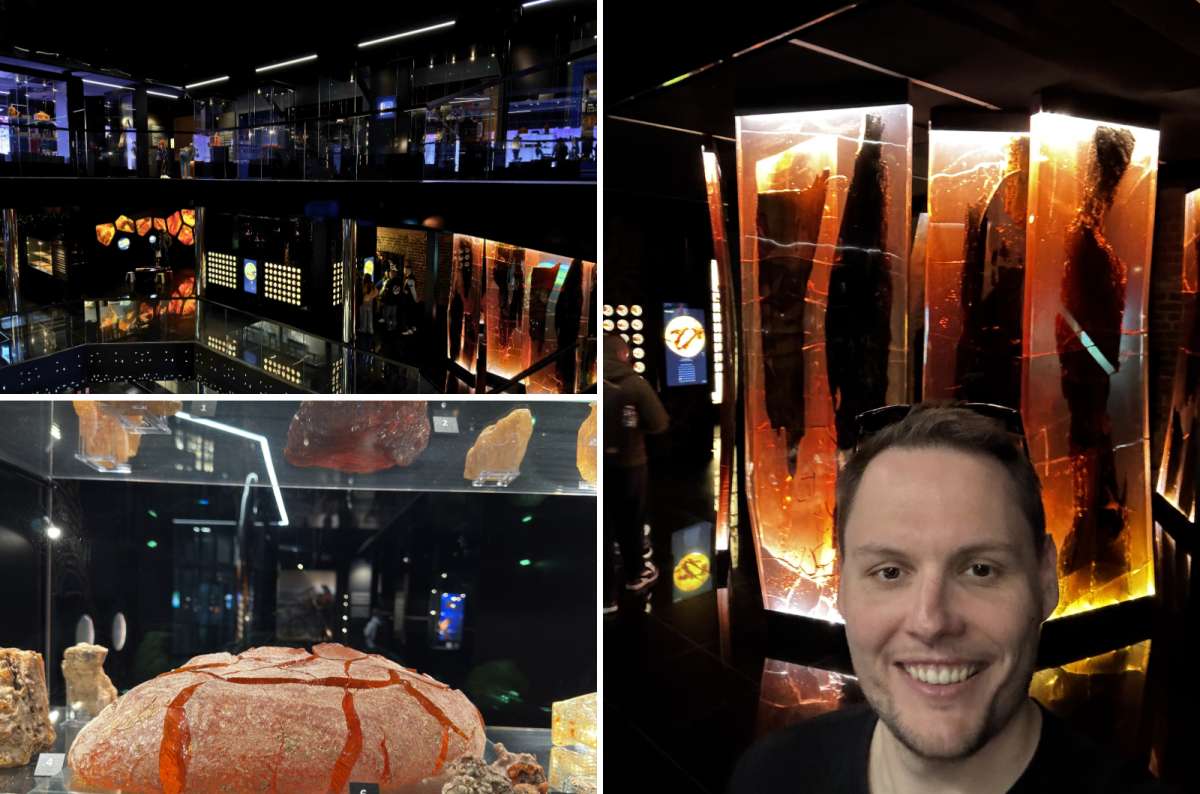
Gdansk = amber overload
Visitor information:
- Opening hours: Tuesday–Sunday 10:00 am–6:00 pm (closed on Mondays)
- Price: 30 zł regular ticket
Heads up, it’s a little bit tricky to locate the entrance to the Amber Museum. You’ll find it across the street from St. Bridget's Church.
Amber is highly connected to Gdansk, Northern Poland, and Poland as a whole. Gdansk itself is known for being the world capital of amber, so visiting Gdansk means checking out incredible amber creations.
Malbork Castle has an impressive display as well, but I'd still recommend visiting this museum even if you've already seen it.
This is a mid-size museum, and I spent about an hour here. You can buy tickets online for 37zl (USD 10), so it’s on the more expensive side. But right from the get-go, it feels luxurious.
Everything’s in English, and you’ll find lots of amber-themed fun facts and interesting exhibitions to discover. You’ll mainly find insects and small creatures from Baltic amber that are around 40 to 50 million years old.
There are even a couple of extremely rare cases of larger animals, like spiders, caught in amber. One piece contains a 40 million-year-old lizard.

40–50 million years old!
The coolest part was probably the full-size electric amber guitar, made 100% out of Baltic amber. I guarantee you won't find something like that anywhere else.
If you go on a summer holiday here, you might even find your very own amber on the beach. Turns out beachcombing for some is a common activity in this region. How cool is that? Such a unique way to enjoy Gdansk.
This was one of the last museums I saw in Gdansk, and by now I was utterly pooped. But I was still really glad I went. It was the best museum I saw this trip, and a true treasure trove of amber.
Just look at Malbork Castle’s collection as an example. This is the kind of thing you have in store. But again, don't go in expecting the largest castle standards. It's not the biggest museum ever.
2. Wander through Gdansk city center and see the canals
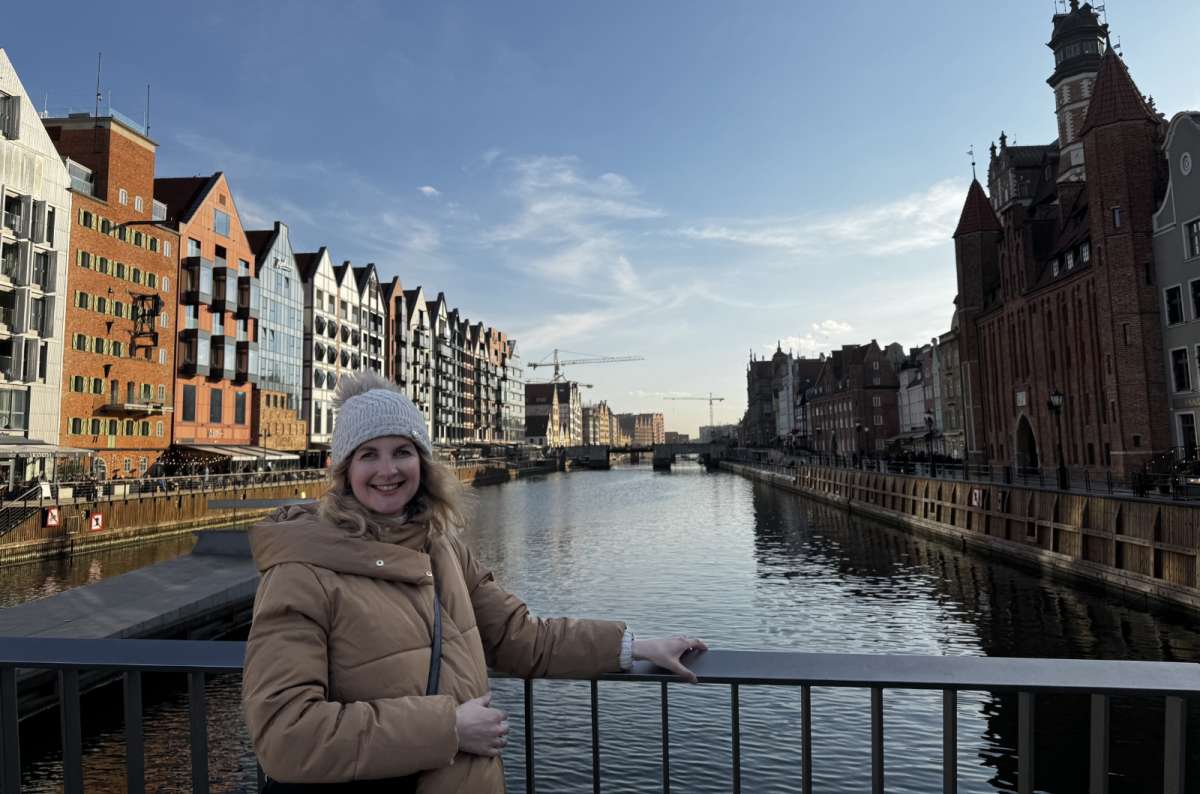
Exploring beyond Długa Street in Gdansk
Sometimes people wander just around Dluga Street, but then they'd be missing the gems the city's side streets have to offer. There are more things to do in Gdansk Old Town, specifically the park tower around the Basilica of St. Bridget, which is unmissable thanks to its late Gothic architecture and tall red-brick walls.
Start at the center with the statue of King Jan Sobieski III, you know, the famous guy from the siege of Vienna. From there, you’ll find nice views toward the Court of St. George’s Brotherhood, another classic Old Town example of Gothic red brick, and the Highland Gate (thankfully, this one isn’t named after a color).
Then you can continue through Dariusz Kobzdej Square along the wall to Jacek Tower. This whole walk will take you up to 10 minutes, maybe a little longer if you stop for lots of photos. And you will. There are lots of colorful buildings to admire.
Don’t skip Mariacka Street
Mariacka Street is hands down one of the most beautiful streets in Gdansk, Poland. It perfectly captures the city's unique blend of its historic vibe and modernist architecture.
I'd recommend just strolling down, absorbing the views, and snapping a bunch of photos. Don't rush it here. Mariacka Street is well-known for its aesthetics, so you might be competing with some other tourists for views.
Snap a photo at Stagwie Mleczne
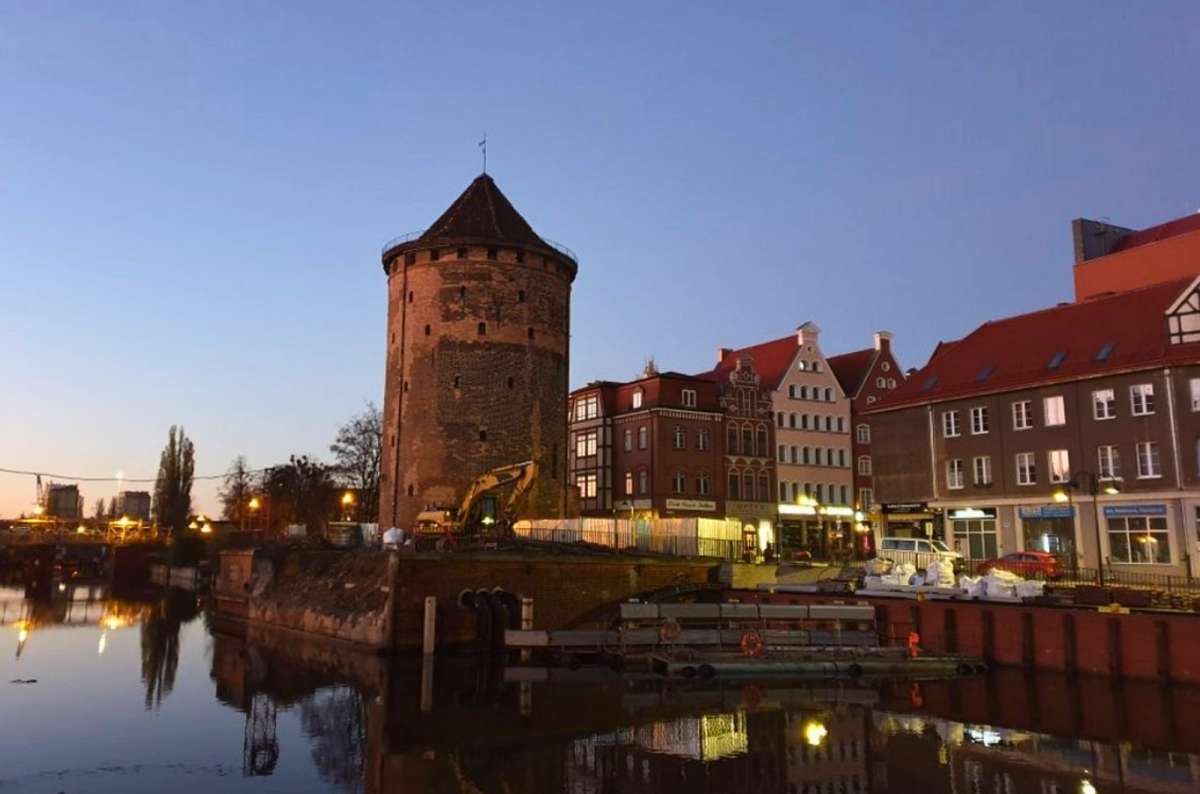
One of the most unusual landmarks in Gdansk, Stagwie Mleczne
Originally built in the 16th century, this is among the quirkiest structures you’ll find in the city. It was used for storing and transporting milk. You don’t see something like that every day.
It’s worth it to pause here for 10 to 15 minutes. And it’s right next to the river, so you’ll get lovely views in the background.
3. Visit St. Mary’s Church (Gdansk)
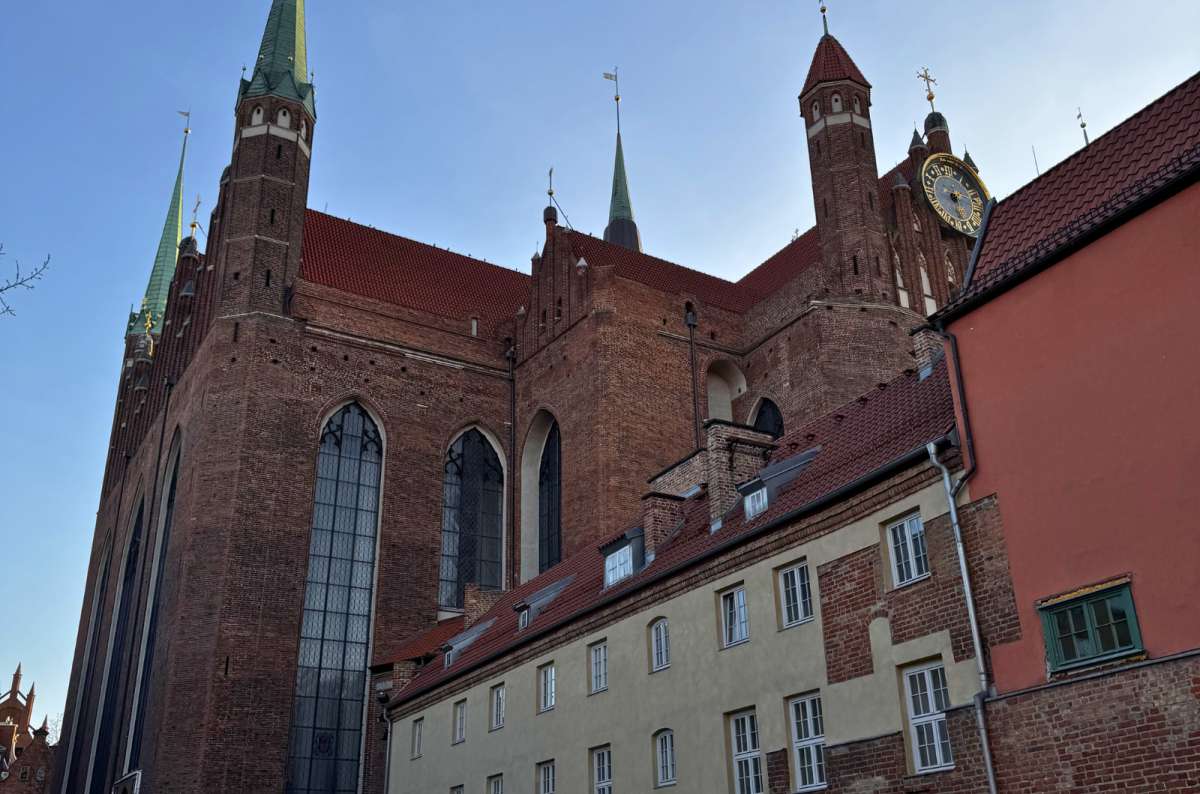
St. Mary’s Church
Visitor information:
- Opening hours: Monday–Saturday 8:30 am–5:30 pm, Sunday 11:00 am–5:30 pm
- Price: Free entry to the church
Like I've said before, Poland is #1 when it comes to giant churches. Gdansk’s St. Mary’s Church is a prime example. It’s one of the largest brick churches in the world and took over 120 years to finish. Imagine starting something you’ll never live to see completed.
It’s so brutally big inside, I was kind of disappointed by how poorly it was decorated. But I guess it’s hard to make every inch of a place this large look good. But the organs were really cool, like something out of a bizarre gothic horror movie.
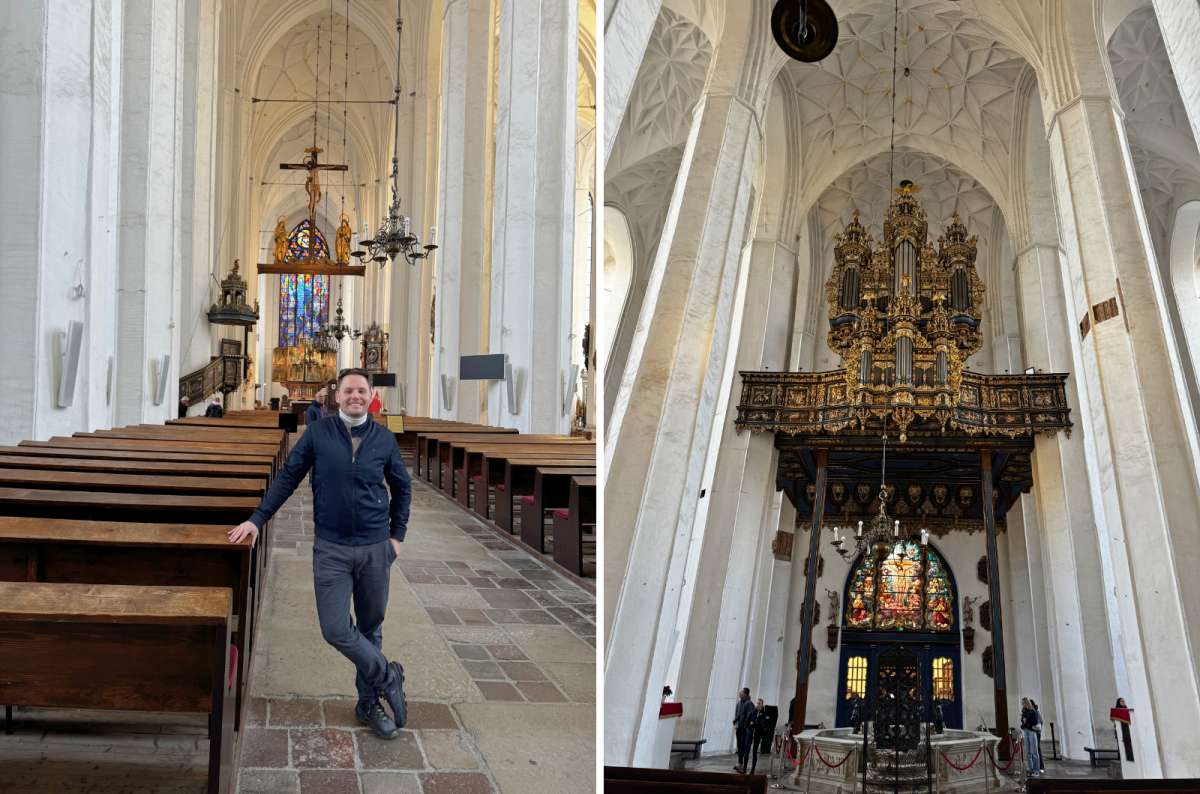
One of the largest brick churches in the world
Entry is free, and like other churches, set aside a maximum of 15 minutes.
You’ll only visit two churches on this trip (unusual for a Poland itinerary), and they’re both absolutely worth it when it comes to things to do in Gdansk.
4. Look at art in the Great Armoury (Gdansk)
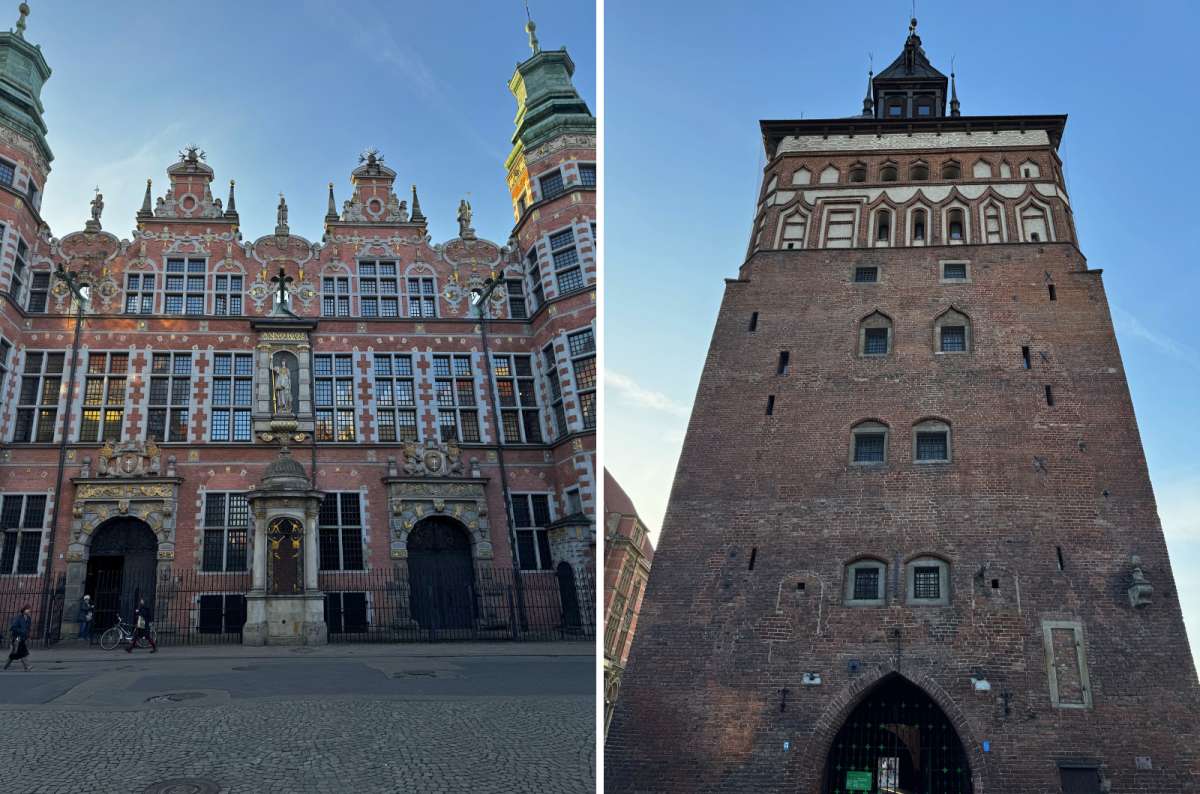
The Great Armoury and the Prison Tower
Another place I liked (and was surprised by) in Gdansk is the Great Armoury, which...is a contemporary art gallery. Who would have guessed from the name? I had no idea that it’s part of the city’s Academy of Fine Arts, right in the heart of Old Town.
I felt cheated for about 2 minutes—I was hoping to see armor and weapons. Still, I like contemporary art, so I bit my tongue and went in. Expect to spend 20 minutes max.
This isn't critical if you're not into art. There are plenty of other things to do in Gdansk to fill your time instead.
5. Ride the AmberSky Ferris Wheel (Gdansk)
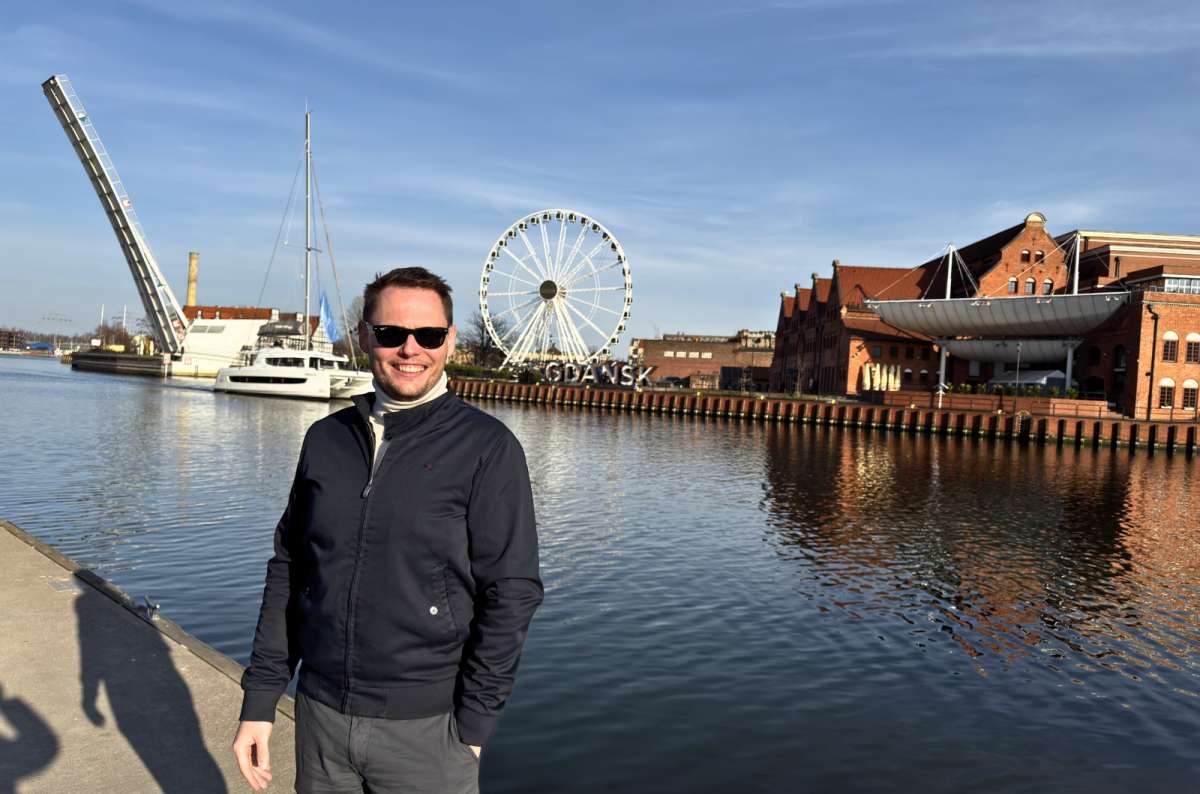
Riding the Ferris wheel is one of the best things to do in Gdansk
I strongly suggest riding the AmberSky Ferris Wheel by the river—the views from it were much more impressive than I expected. A ticket costs 39 zl and the ride lasts about 15 minutes—exactly three full, very slow revolutions.
Getting in is a bit awkward because of the low door, so watch your head. It felt like an overpriced ski lift with a smaller cabin.
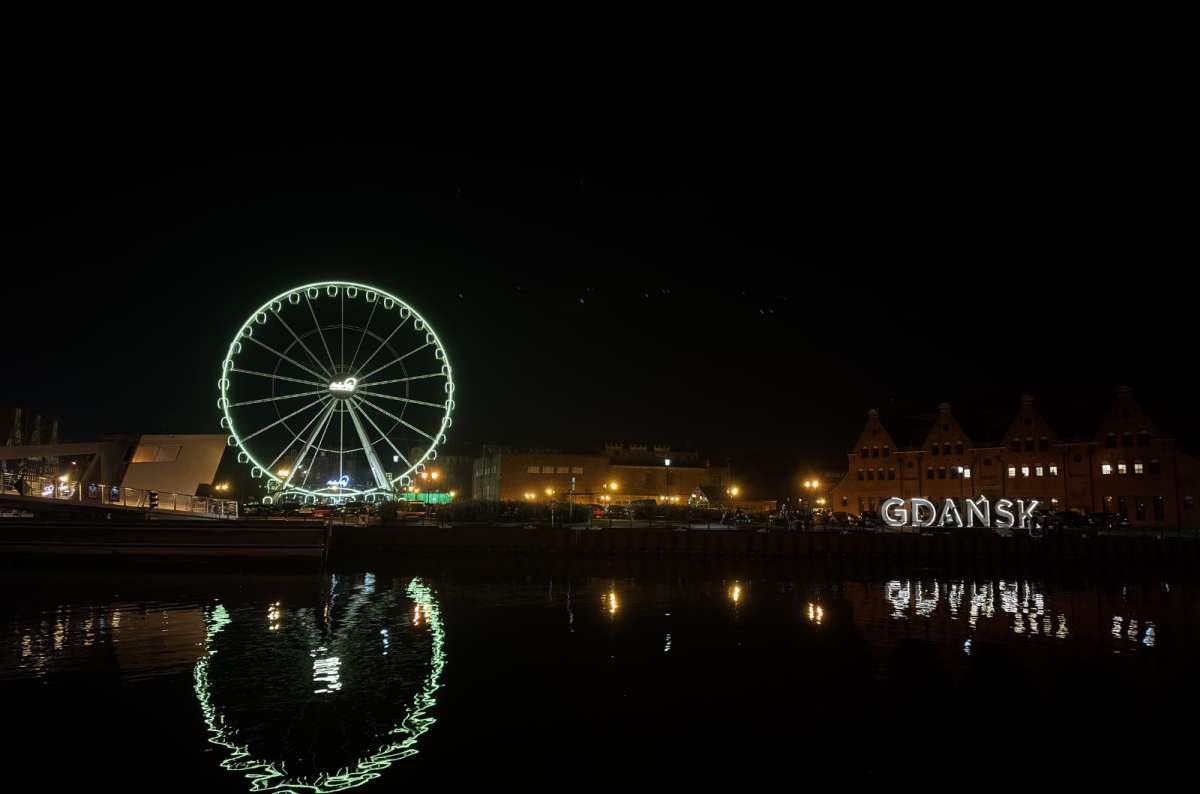
Gdansk after dark—glowing waterfront, quiet reflections on the Motława River, and the AmberSky Ferris wheel lighting up the Baltic night
From the top, you get a fantastic panorama of central Gdansk, including St. Bridget’s Church and even the WWII Museum in the distance. Honestly, the views were much better than I expected and some of the best city views I’ve seen in all of Poland (not that Poland is especially known for city views, but you know what I mean)!
From above, Gdansk almost feels like Amsterdam with all the canals and colorful buildings. Seeing it from this angle really made me appreciate how beautifully the city was reconstructed after WWII.
And I also noticed another thing from up top—St. Mary’s Church is absolutely massive.
6. Climb up the Main Town Hall Tower (Gdansk)
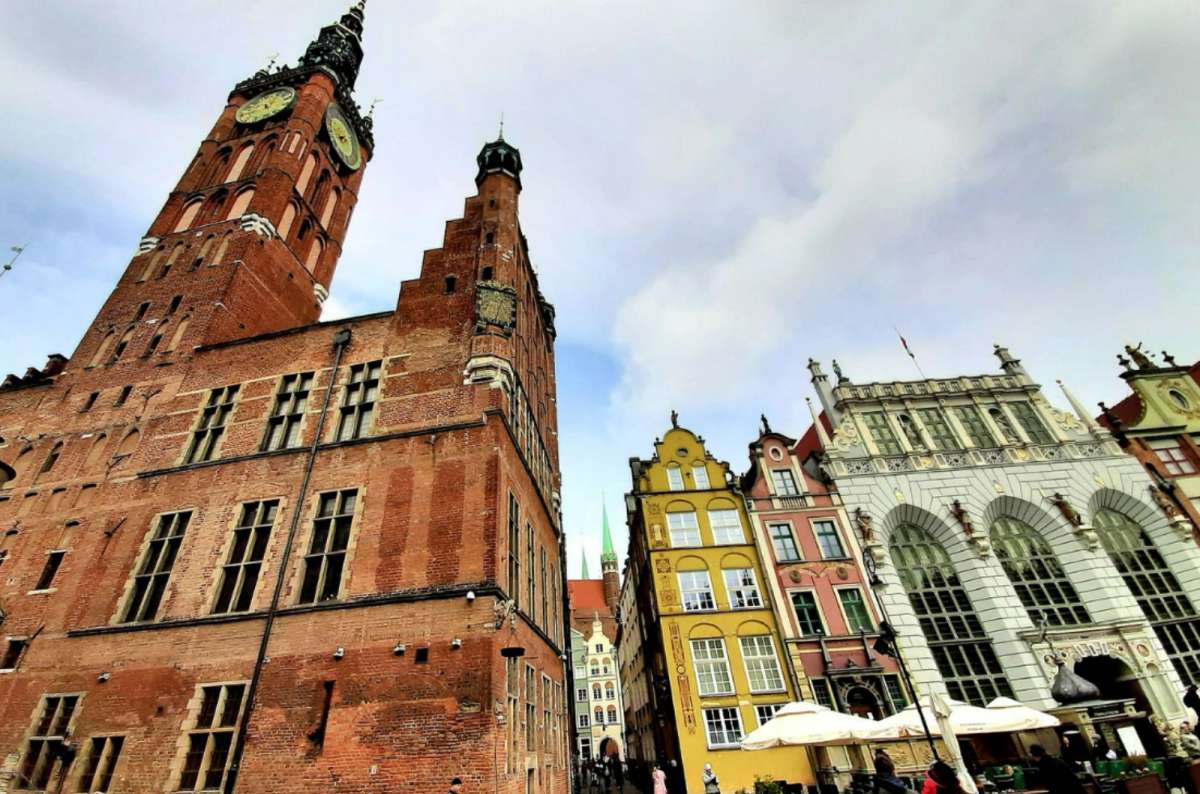
The Main Town Hall
Visitor information:
- Opening hours: Tuesday–Sunday 10:00 am–4:00 pm (extended hours in summer; closed on Mondays)
- Price: Around 25 zł regular ticket
It’s easy to spot the main Town Hall on the city square since it’s one of the prettiest buildings on Dluga Street and maybe in all of Old Town. There’s a little museum inside, but what’s better is to check out the stunning interior. I felt like royalty gazing up at those painted ceilings, particularly in the Red Room. What more can you expect from a main Town Hall?
If you have enough energy, it’s also worth it to climb up the main Town Hall tower for the best panoramic views of Gdansk Old Town. You'll get a 360-view from the spacious observation deck.
To be honest, I was feeling kind of lazy, so I skipped this. But I kind of regret it. In retrospect, I realized it would be hard to get views that rival those from here.
7. Head through to Dlugi Targ and Neptune’s Fountain (Gdansk)
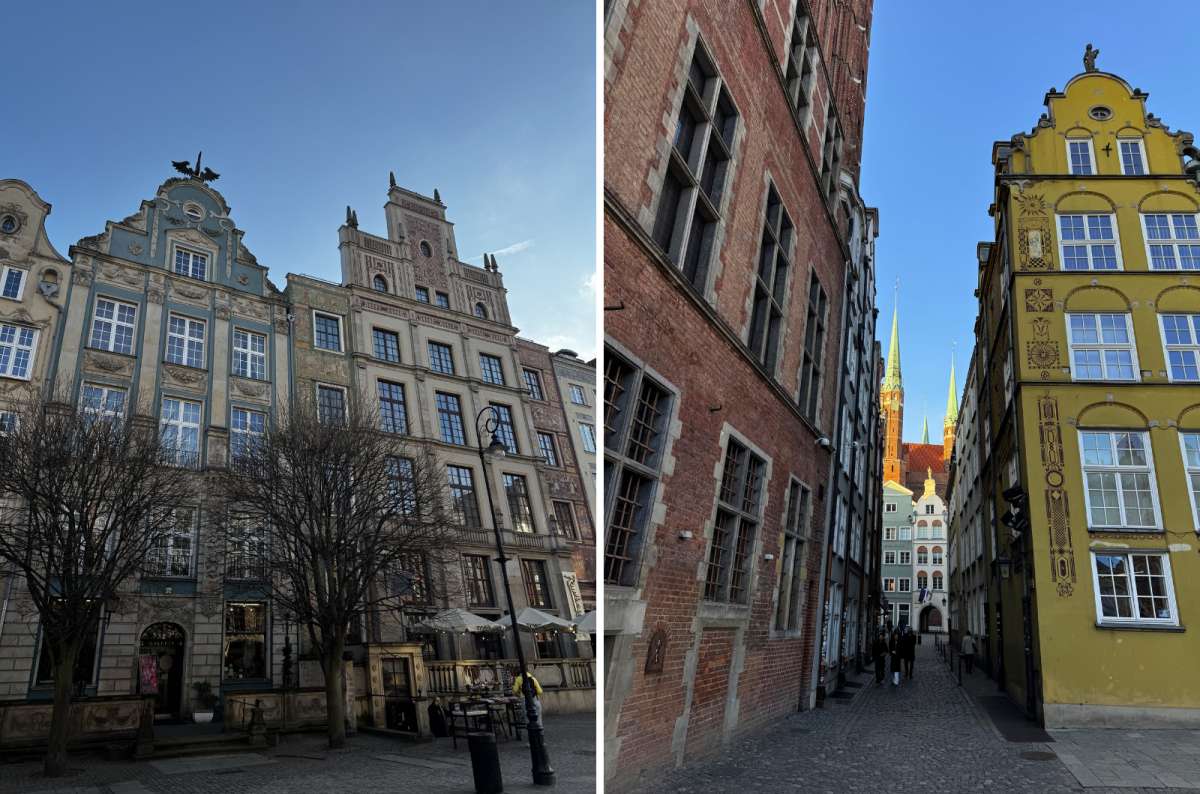
Wandering through Długi Targ
Dlugi Targ (Long Market Square) is the heart of Gdansk’s historic Old Town area, and walking around it is one of the best things to do in Gdansk.
Here you can take pictures of the famous Neptune’s Fountain and Artus Court, which, for some reason, has the same name as the Artus Court in Torun.
Neptune's Fountain is quite large and unmissable. It features the Roman god wielding his trident against unsuspecting passersby. Kind of epic if you ask me.
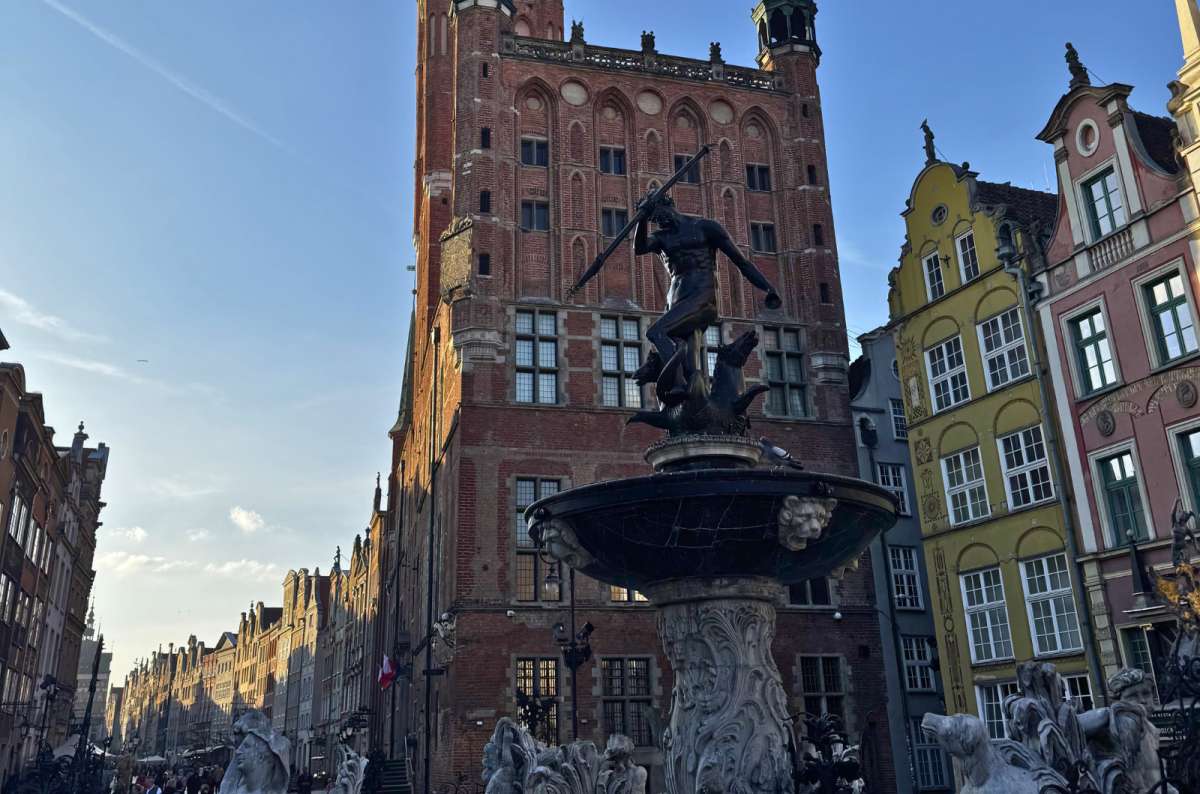
Neptune’s Fountain
The buildings here are crooked as well, which helps give Old Town its historical vibe. Together with Neptune's Fountain, it's a great combination.
Gdansk is also known for its street art, but you'll have to travel a little bit outside the city center to see it. That's not really my thing and, in my opinion, not one of the most crucial things to do in Gdansk, so I decided to skip it.
8. Admire St. Bridget's Church's amber altar (Gdansk)
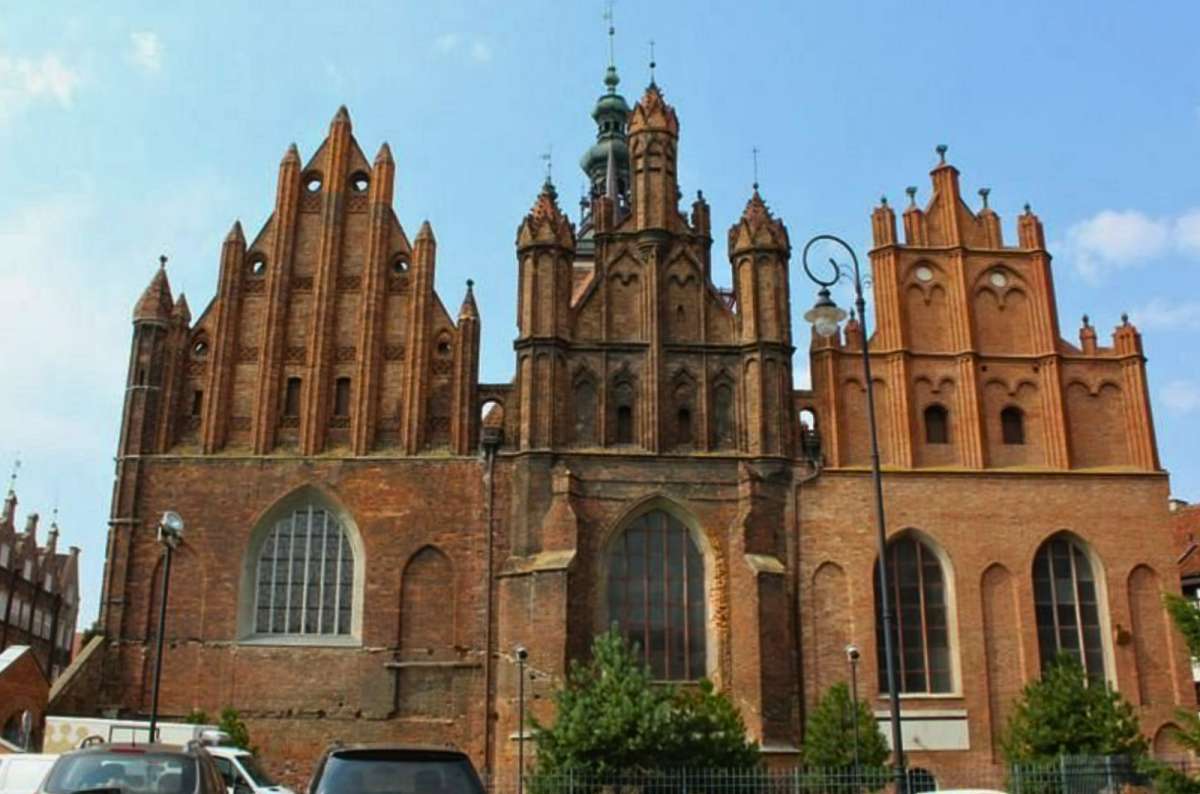
A quieter corner of Gdańsk with a golden surprise inside
I'm listing this as an optional thing to do in Gdansk because tickets cost 12zl (USD 3) altogether, which is kind of a lot for this kind of thing. They have to be bought on-site.
You can also climb the tower if you’re into high-up city views, but the basilica itself is one of the most expensive entries among all the Polish churches I’ve seen so far. Just because of that, I don’t think it’s worth entering. There are plenty of cheaper basilicas and more iconic landmarks to choose from.
However, if the amber museum didn't scratch your itch, stopping here is worth it just for the amber altar. Which is quite an impressive sight.
It’s better to just walk around. I love this area of Gdansk—it's just as livable as in the center, but there are many fewer people here. Win-win in my book.
9. Travel through time at the Museum of Emigration (Gdynia)
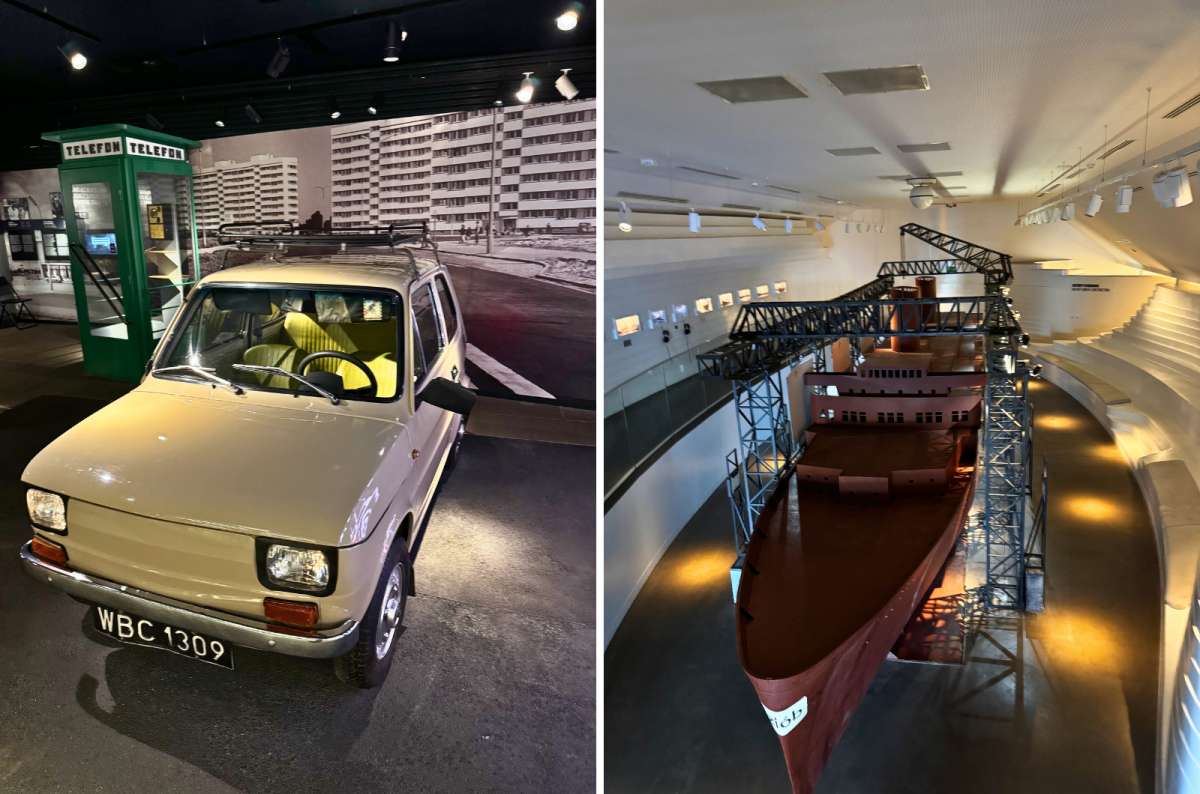
From packed suitcases to ocean crossings
Visitor information:
- Opening hours: Closed on Mondays, Tuesday 12:00 pm–8:00 pm, all other days 10:00 am–6:00 pm
- Price: 28zl, free on Wednesdays
I wasn’t really expecting to find this type of museum in Poland, even though it makes sense. Lots of famous Poles emigrated throughout history—Frederic Chopin, Maria Sklodowska (also known as Marie Curie), Adam Mickiewicz...the list goes on. Still, I was looking forward to seeing it after having spent a full day at the Ellis Island Museum in the USA.
I happened to get there on Wednesday, when the museum was free. But if you get there on a different day, it costs 28zl (USD 8). You can buy tickets online or on-site. Parking in front is always free, though, which is nice.
No need to worry about language barriers here—everything is in English and feels very cutting-edge with lots of multimedia exhibits. The museum is curated in a logical, easy-to-understand timeline fashion, which I really appreciated.
The narrative centers on how and why Poland has seen significant emigration throughout history, particularly in the 19th and 20th centuries.
It starts with how Poles prepared for emigration, what the process was like, and their final destinations. So you’re seeing how their journey unfolded step-by-step.
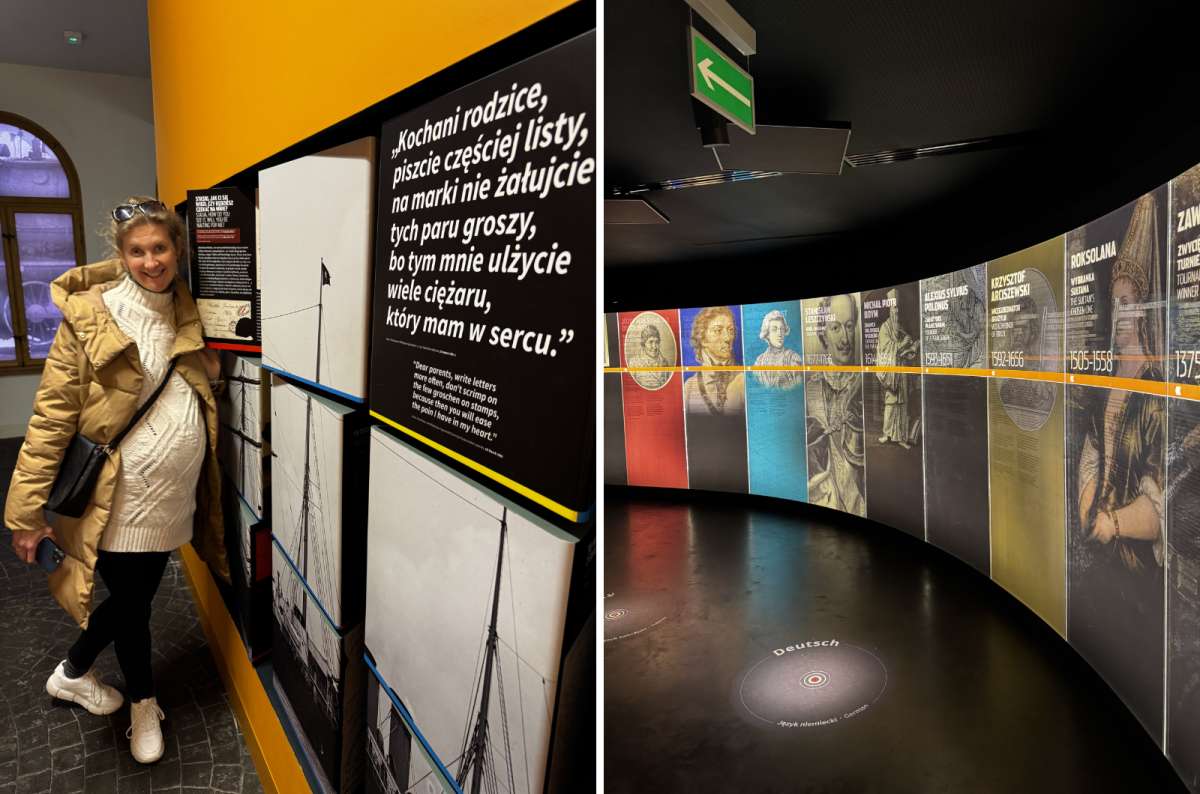
Letters home, famous names, and the emotional side of leaving everything behind
The info comes mainly in the form of fun facts, which I found quite satisfying. There’s also an audio guide, which was the best, followed in second place by their YouTube-style video tour.
Even better was that the information was presented through letters and eyewitness accounts. My favorite style of storytelling.
You’ll also find a huge model of the Stefan Batory ship inside, the world’s largest model of a passenger ship. I loved the story of it and how it gives you a sense of exactly what it would have felt like for migrants to Ellis Island.
It’s quite a large museum, so consider setting aside 90 minutes to 2 hours.
10. Watch passing boat tours from the Bridge of Love (Gdynia)
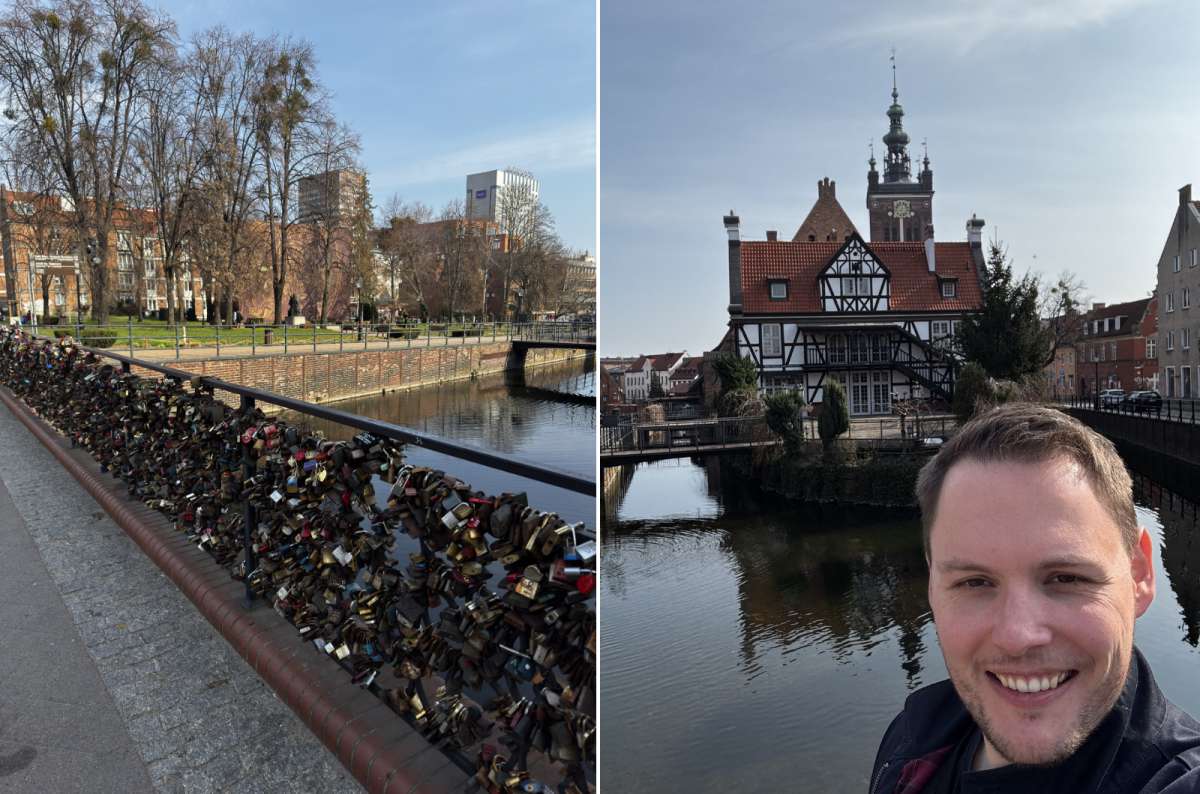
So many love locks, you can barely see the railing
I’ve seen a lot of these types of bridges in different cities over the course of my travels. But Gdansk’s, also known as the “Bread Bridge,” had an absolutely insane number of locks. I mean, insane. Like, you could hardly see the bridge itself. I guess everyone here is happily coupled up.
It’s worth it not just for the locks, but for the views of the architecture around you, with the beautiful waterfront complementing it. The "Bread Bridge" is sweet indeed.
11. Be grateful for capitalism at the Solidarity Center (Gdansk)
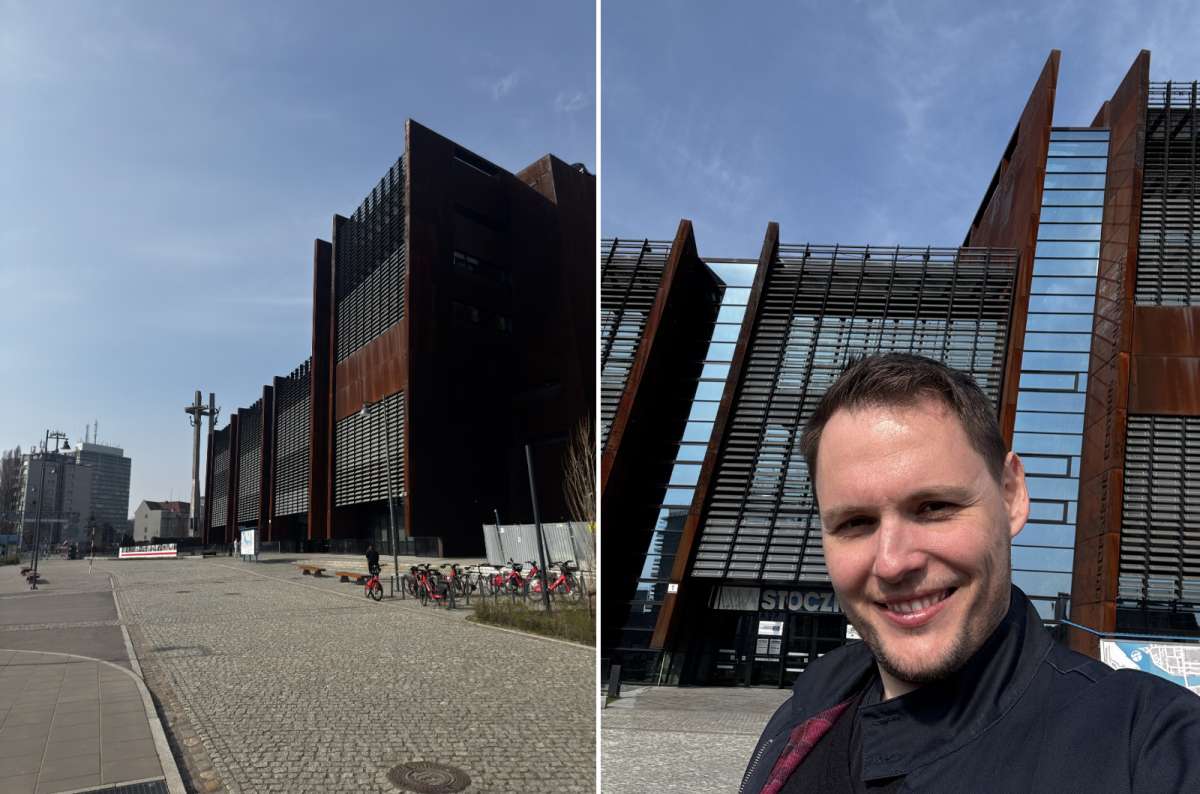
The European Solidarity Center
Visitor information:
- Opening hours: Daily 10:00 am–6:00 pm
- Price: Around 35 zł regular ticket; free entry to the permanent exhibition on selected days (check current schedule)
It’s a pleasant stroll along the water through a really nice neighborhood if you’re walking to the Solidarity Center. I’d save this for the end of the day if you do decide to go because it usually closes its doors the latest.
Tickets cost 35zl (USD 9) and can be bought online. Like many museums in Poland, the hero is the audio guide. You can choose the normal 2.5-hour version or the abridged 1.5-hour one. Either is fine. The info you get is so comprehensive that I didn’t feel the need to read any of the signs.
The Solidarity movement began in Gdansk, Poland, and challenged communist rule through peaceful resistance. It was one of the most important civil resistance movements of the 20th century. This museum tells that story.
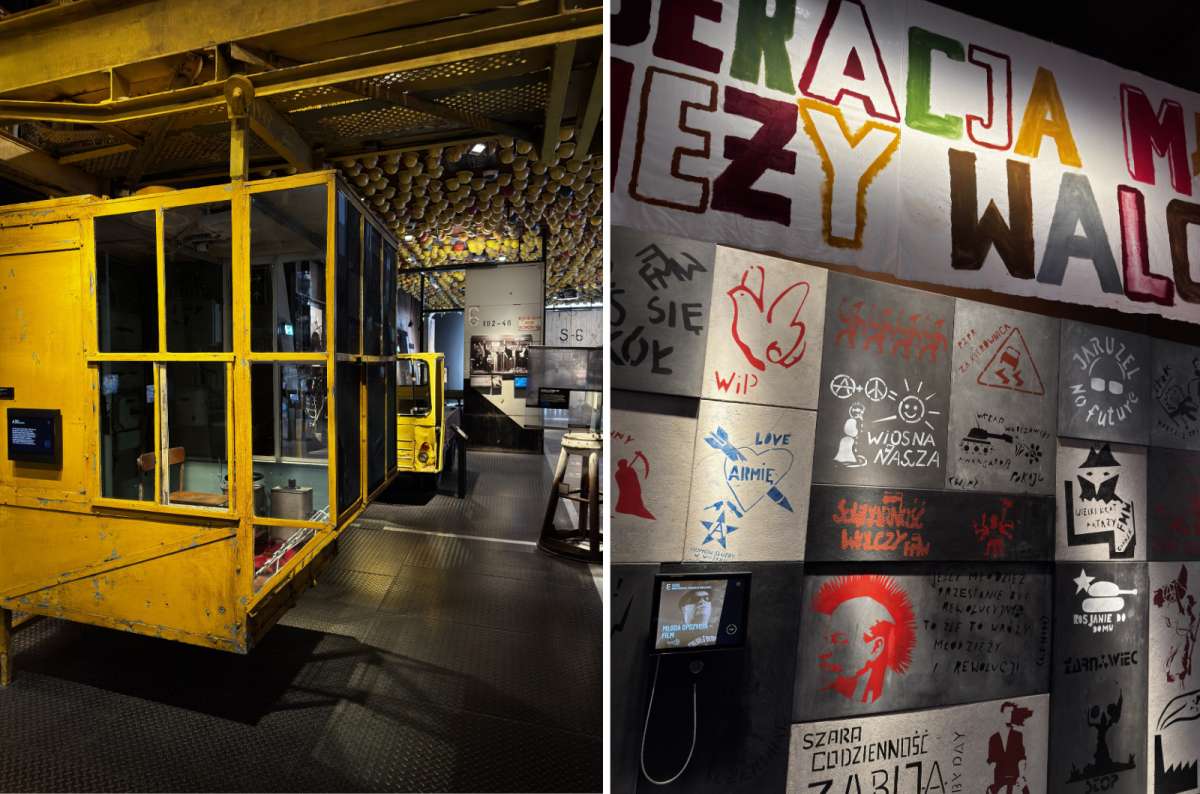
Not your typical museum setup
It basically starts with the story of the Gdansk Shipyard, the birthplace of the Solidarity movement, including the pivotal 1980 strike involving about 17,000 workers.
You’ll see roughly what our grandparents’ living standards were like. To put it lightly, they were not very good. Communism is just so stupid economically. But the worst part is, our grandparents remember it as “the good times” because of their youth.
To be blunt, I was very disappointed by this museum. The organization is poor, and it’s really only going to be a decent experience if you’re Polish.
This is also far from my favorite period of history, so that may have colored my opinion. Still, don’t go in with high expectations. That was my mistake.
Enough of my complaining. Anyway, if you do add it to your day, set aside at least 90 to 120 minutes.

A closer look at the events that shaped modern Poland
12. Tour Pomeranian Quay’s famous ships (Gdynia)
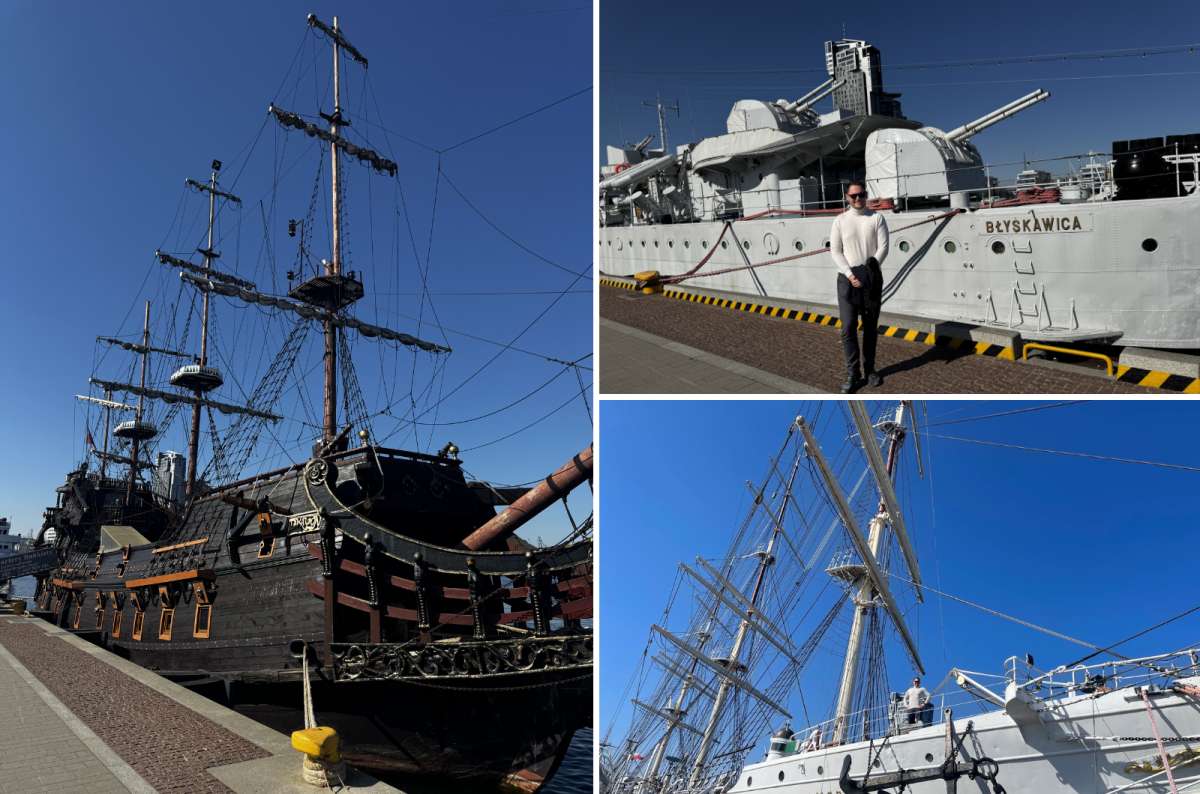
Battleship on one side, tall ship on the other
Visitor information:
- Opening hours: Varies by ship and season, typically 10:00 am–5:00 pm (longer hours in summer, shorter in winter)
- Price: Around 30–40 zł per ship (combination tickets may be available)
Pomeranian Quay is home to Gdynia’s largest exhibition of historical vessels. It’s a famous port that’s right off Kosciuszko Square, AKA the main square of the city, where the tourist area is.
You can spend about 2-3 hours here if you’re particularly into ships. Keep in mind that parking is paid.
The wharf is especially nice, and even the small children I saw here seemed really excited to see the ships and leisurely stroll around.
Błyskawica
This ship is famous for having served in the Polish Navy during World War II, and for being the only Polish ship to receive Poland’s highest military order for gallantry. So it’s a pretty badass vessel.
Hours change based on the season from April 1 to October 31, and it’s completely closed from November 1 to March 31. I was a couple of days too early to see it. That was a bummer.
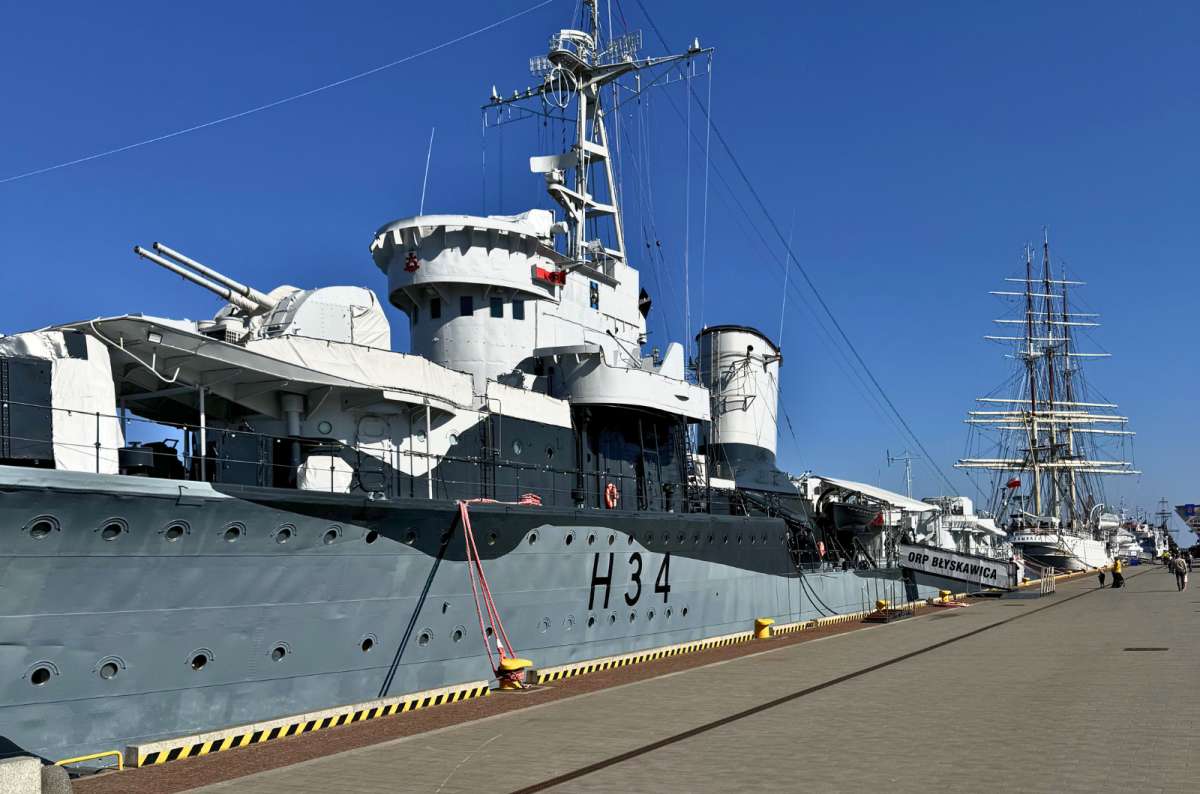
Two icons of Polish maritime history, side by side
Dar Pomorza
You have to buy the tickets directly on the ship, which was unexpected. Don’t waste time looking for the ticket stand anywhere in the port. Just go right to the ship. Entry is 28zl (USD 8).
This is an early 20th-century ship that served in the Polish Merchant Navy. It somehow reminded me of the Royal Yacht Britannica in Edinburgh because of its sheer size.
It’s a little pricey for what you get compared to other museums in Poland, but it was interesting to see the inside. You’ll learn how Polish sailors lived and see preserved artifacts from the history of the ship.
A lot of the information was only in Polish, and there was no audio guide to make up for it. Plus, the best part of it is the view of the outside, so there’s really no reason to enter unless you really love ships.
13. Chillax at the Sopot Wharf
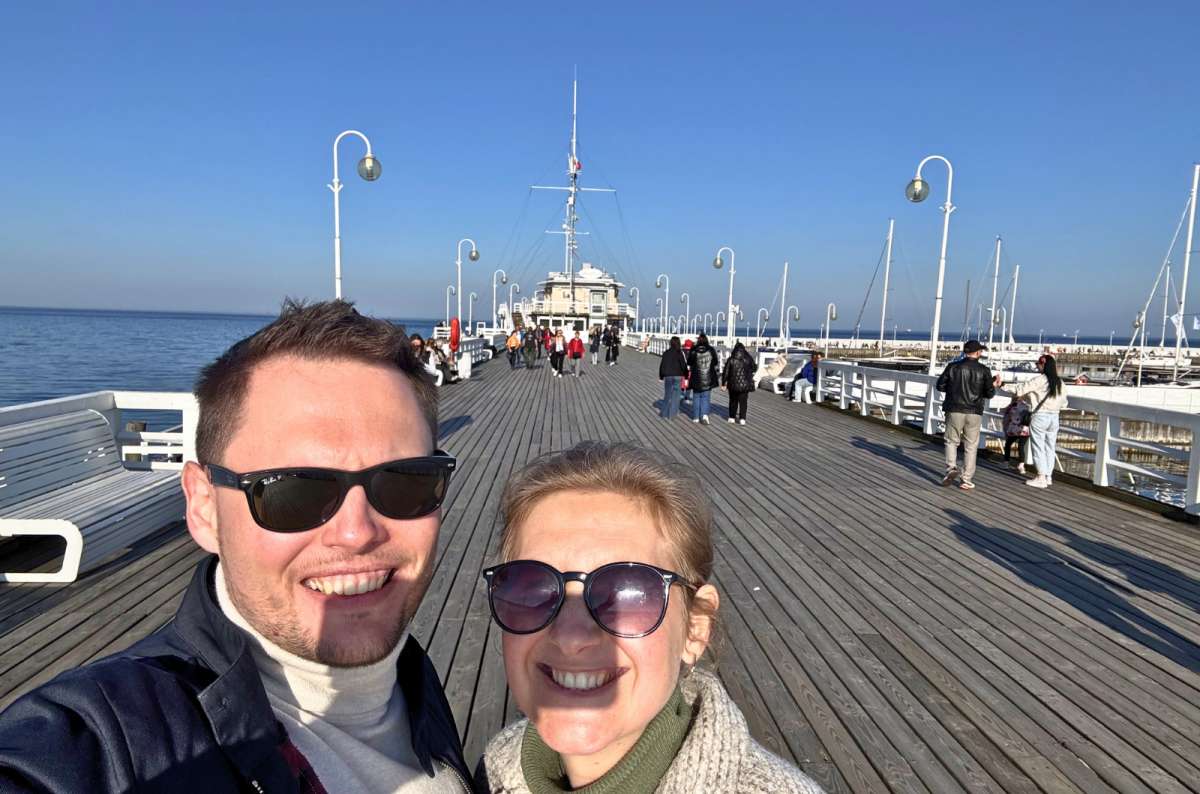
Welcome to Poland’s Baltic beach resort, Sopot
I spent about an hour at Sopot wharf soaking up the relaxing vibes. Thanks to the Grand Hotel nearby, the whole city has a nice spa feel and will put you in that ‘zen’ mindset.
The one downside was the crowds. Even during the off-season on a Friday afternoon, it was absolutely packed. This included the beaches around me. I guess that’s what happens on the first sunny day of the year—people can’t wait to get out on the water.
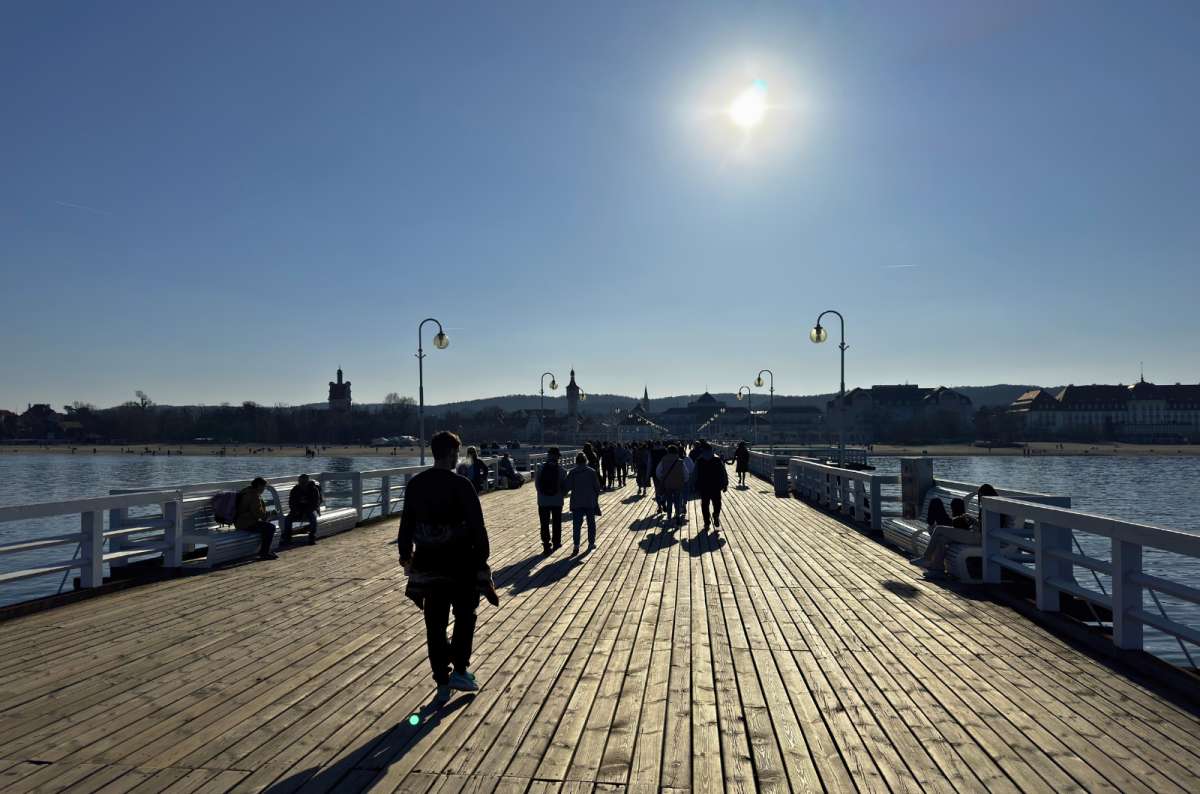
Crossing into Sopot, Poland—straight onto Europe’s longest wooden pier
It's just a quick, 15-minute drive over to Sopot from Gdynia. It's not even really a day trip; they're so close to each other.
You’ll find a bit more of a relaxed vibe on this side of the city.
If you have time, you can also stop at Oliwa Park, which is between Sopot and Gdansk. I figured this wouldn't be the best activity for late March, but I'd add Oliwa Park to the itinerary if you go in the summer. There are lots of nice greenery and walking paths to explore.
14. Stroll through the sand at Cypel Rewski
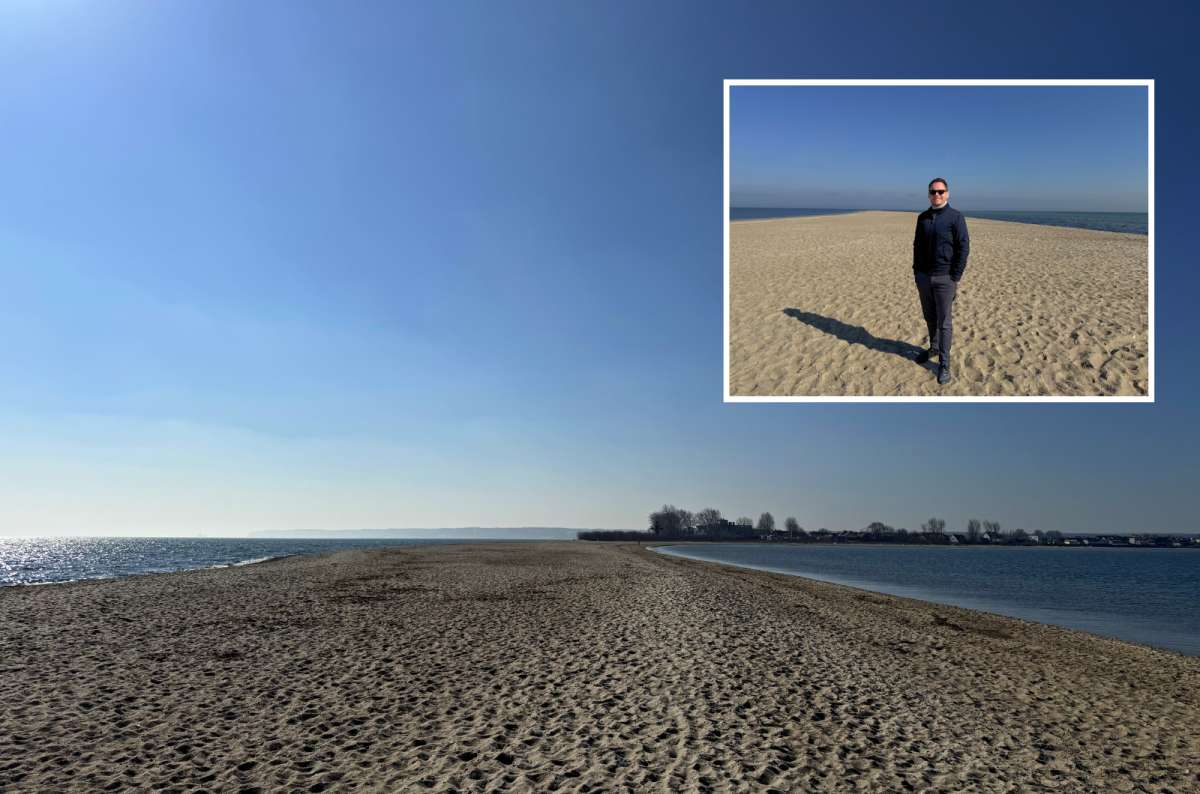
A narrow strip of sand disappearing into the Baltic
Walking along this popular peninsula put me in a beachy mood for the rest of the trip. You’ll get lovely views of sand going deep into the Baltic Sea and a breezy wind to help you soak in the atmosphere without sweating your skin off.
It's about a 45-minute drive from Gdansk.
There are lots of nice restaurants with outdoor seating, and if you head here in the summer, you’ll find cute little ice cream stands along the way.
You know that romantic cliche, “I like long walks on the beach”? This is a good place for that in colder weather, where it feels more like a chill romantic stroll than a sunny day.
It gets even colder and windier just a few meters off the coast. I felt like I was going to freeze to death, and it was late March. So bring a jacket even if you’re planning a trip in the spring.
This is a classic Baltic coast city, so prepare to fight for parking spots. As always, the best strategy is to get here early—first-come, first-served. That’s another reason why I recommend this as the starting point on your itinerary today.
The walk goes surprisingly deep into the sea. The whole thing to end, and back took about 30 minutes. Expect lots of sand and shrubbery as you go.
Plus, because I was there in the spring, I even got to see some swans bobbing along the coastline.
15. Brush up on your knowledge at the Museum of World War II (Gdansk)
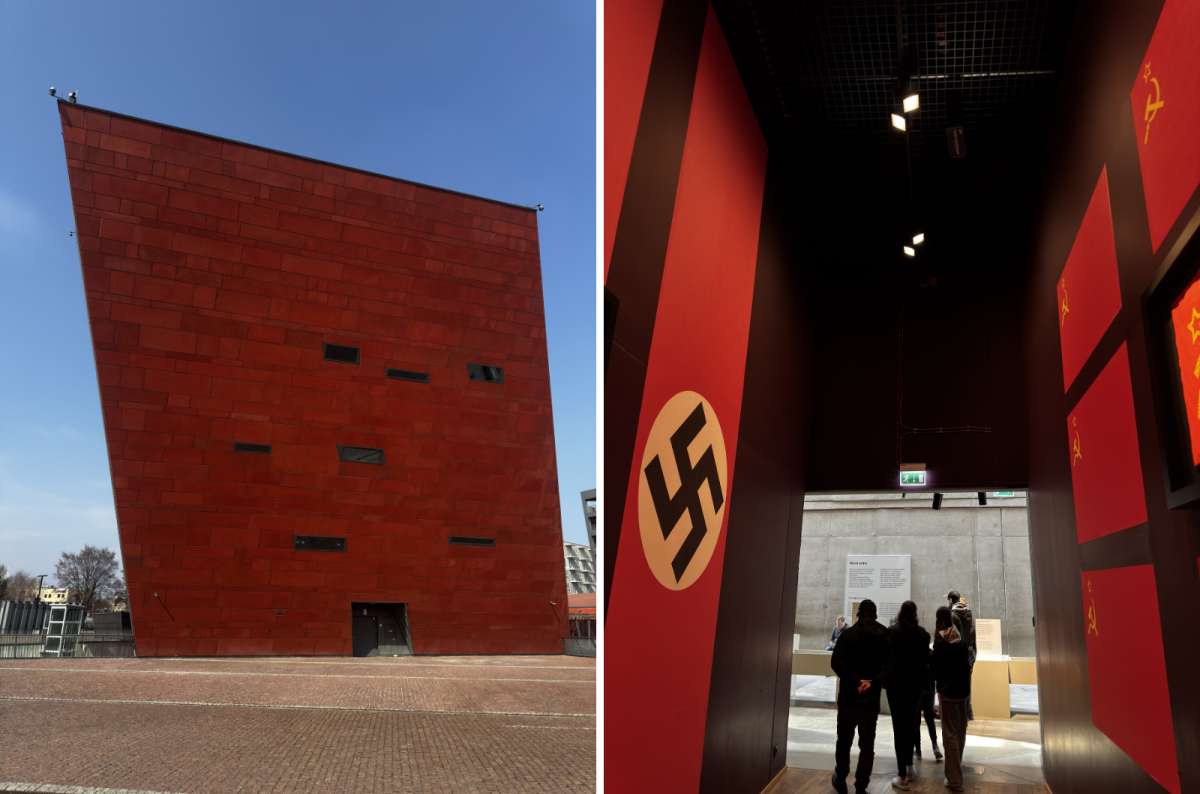
A museum you feel before you even step inside
Visitor information:
- Opening hours: Closed on Mondays; Tuesday 10:00 am–4:00 pm; Wednesday–Sunday 10:00 am–6:00 pm (extended to 8:00 pm in July–August)
- Price: 29 zł regular ticket; free entry on Tuesdays
Right off the bat, this museum is interesting because it’s underground. You buy tickets on the -3 floor. Such an interesting concept.
Entry costs 29zl (USD 8) and can be bought online. Again, be ready to armor up with every Polish museum’s superman: the audio guide. But this one comes with a steeper price tag of 12zl (USD 3). Yikes. Still, it’s better to take one. You could also opt for a guided tour, but honestly isn't the price tag high enough?
Prepare to read lots of texts taking you from the beginning of Second World War history to the very end. If you’re a history newbie, the whole place might take you north of 2 hours. Otherwise, you’ll get through it more quickly since you’ll probably already know most of the fun facts. I consider myself knowledgeable and I even spent 2 hours here.
You definitely will not have heard the personal stories, though. Those are worth taking the time to read. It will really give you a different perspective on what it felt like to live during that time in the city's history. And more war facts never hurt.
What to expect at the Museum of World War II
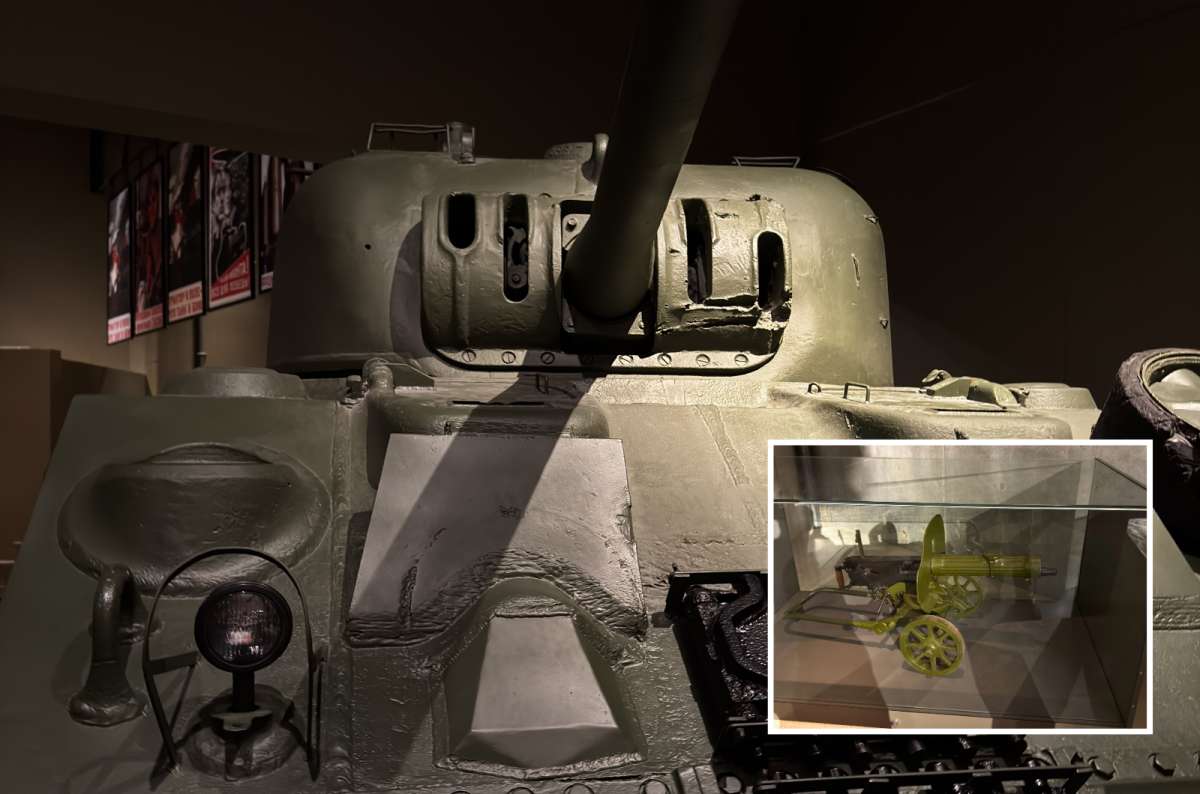
One of the most comprehensive museums in Gdansk
This is a busy museum and was outright crowded when I visited, so keep that in mind when planning your day. It's also one of the most time-consuming things to do in Gdansk.
The layout was architecturally similar to Yad Vashem in Israel, which was kind of a strange coincidence.
The exhibits were impressively made, with mock-ups of whole city streets and recreations of urban scenes. I also really liked the organization. It was neatly divided into topics like motivation, occupation, starvation, etc., and ended with the Nuremberg Trials.
Surprisingly, there were also exhibits dedicated to the suffering of German and Japanese civilians during Allied air bombing. It’s always interesting to consider the ‘enemy’ perspective. And it also gives you insight into their motivation and what fueled further aggression.
The museum also has items on display that were damaged in the Hiroshima atomic bombing. I didn’t even see that when I went to Japan.
In short, this was one of the best museums I’ve ever been to. Hands down. Don’t miss this one.
Tip: Even though it’s underground, the museum has free wifi.
16. Check out the famous Gdansk Crane (Stary Żuraw)
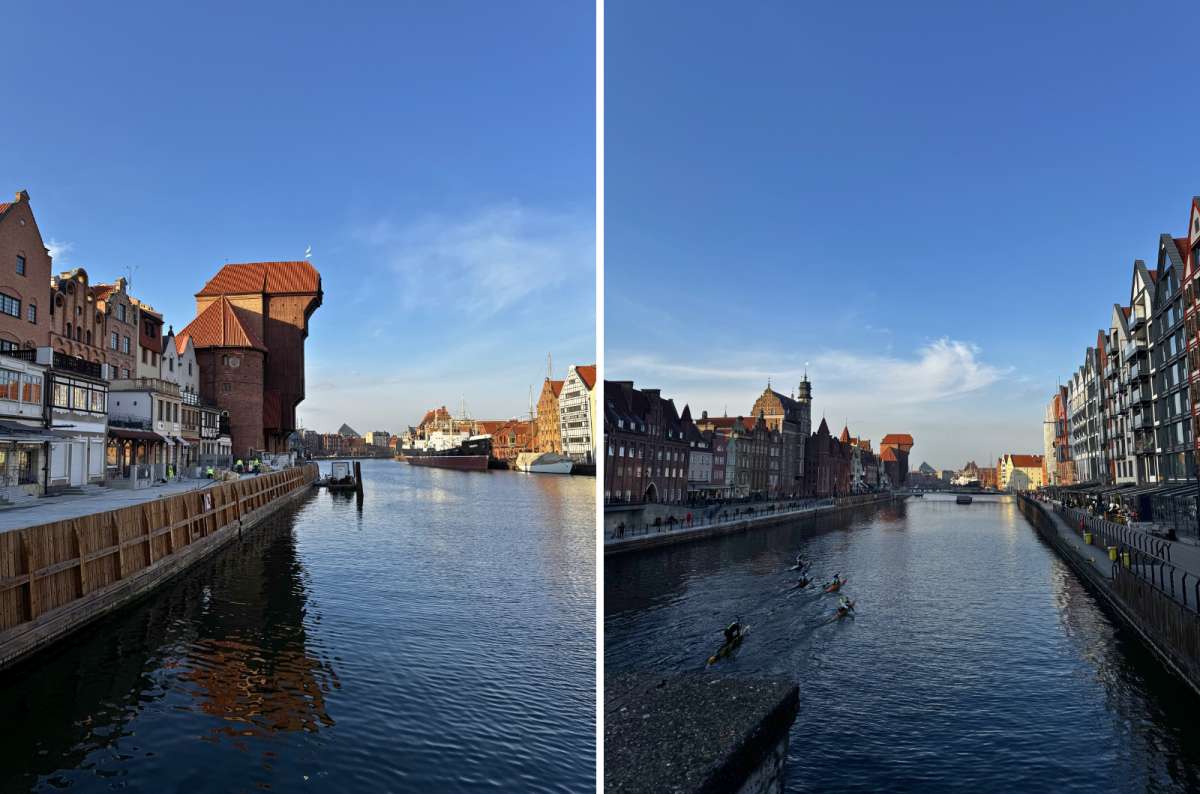
The iconic Gdansk Crane on the Motława River
If there’s one building along the Motława River that instantly screams historic port city, it’s the Gdansk Crane (Żuraw). It’s a massive wooden lifting machine from the 15th century and was used to load cargo onto ships and raise masts in the port.
Two large brick towers hold the giant wooden crane in the middle, which honestly looks very cool and every historic tech boy and girl will be happy they get to witness it. When I first saw it, I had to stop for a minute because it’s much bigger than it looks in photos.
Fun fact: It was powered by humans walking inside huge hamster-wheel treadmills.
Today, it’s one of the most recognizable landmarks in Gdansk Old Town and part of the National Maritime Museum. I’d recommend stopping here for a few minutes while walking along the river.
17. Walk along the royal route via the Green Gate and the Golden Gate (Gdansk)
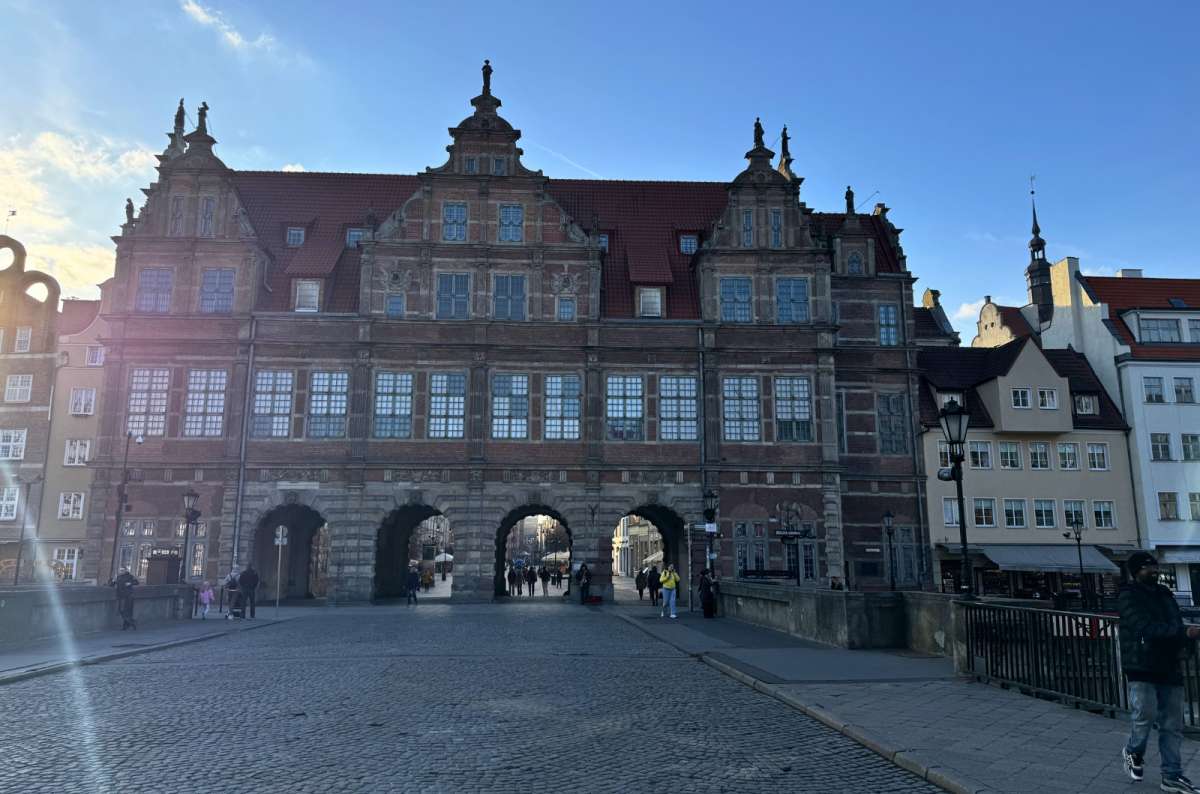
Alt Green Gate (Zielona Brama) in Gdansk, Poland, with a historic brick facade and arched passageways, photo by Next Level of Travel
Caption: One of Gdansk’s grand entrances, the Green Gate
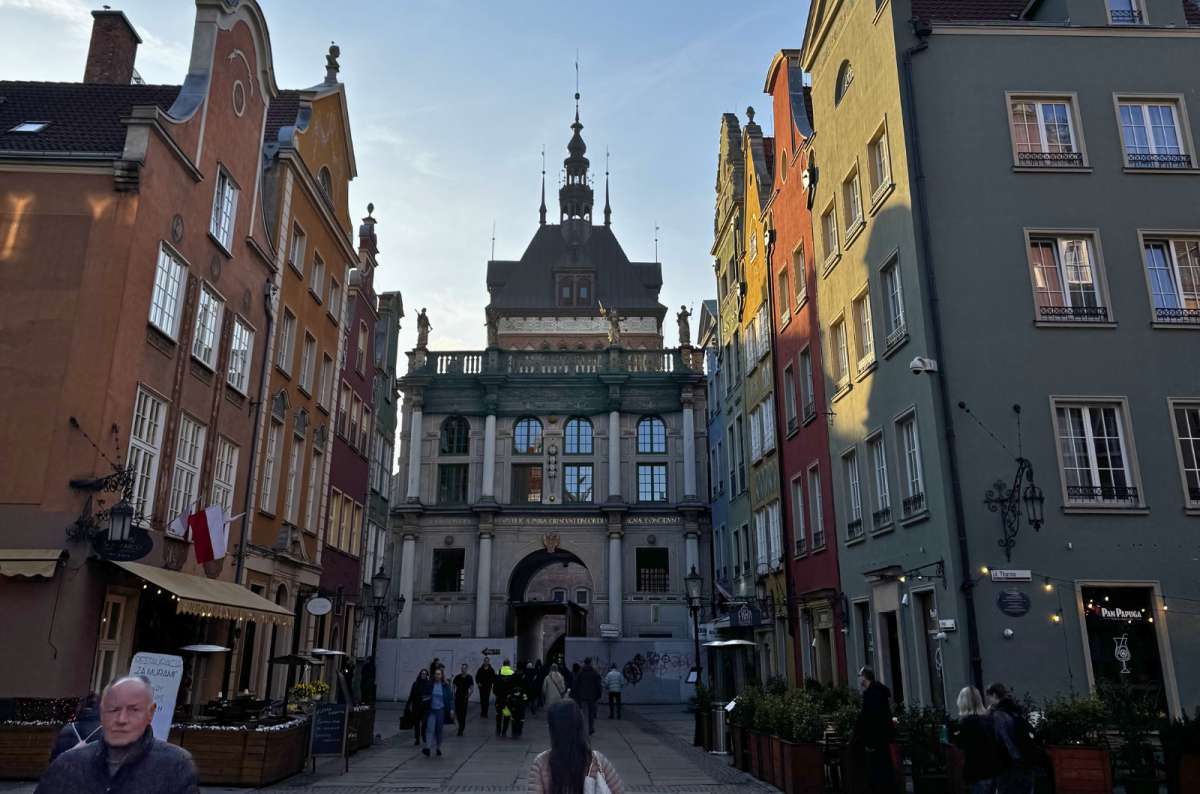
The Golden Gate on the Royal Route in Gdansk
When you're walking through the city's historical center, pay attention. That way, you can enjoy the architecture of the modern Hanseatic buildings as you go.
If you enter from the canals (over Green Bridge), you’ll first see the Green Gate—but don’t look for the color. This gate does not live up to its namesake. It’s actually red, brown, and gray. It’s so royal-looking you can’t miss it.
It was originally built in 1568 and was thought of as the formal residence of Polish monarchs when they visited the city. One of two gate-themed historic sites you'll see today.
Then, walk Dluga Street until its end, where you’ll find the Golden Gate. It’s hard to miss. Just look for a bright white gate that looks straight out of Renaissance times. Yes, white. The gate is not golden. C’mon, Gdansk, what’s wrong with you? Are you colorblind?
Old Town? More like a mislabeled town. Psh.
Fun fact: Gdansk's annual Christmas market is located in this area.
18. Armor up at the Museum of Naval Forces (Gdynia)
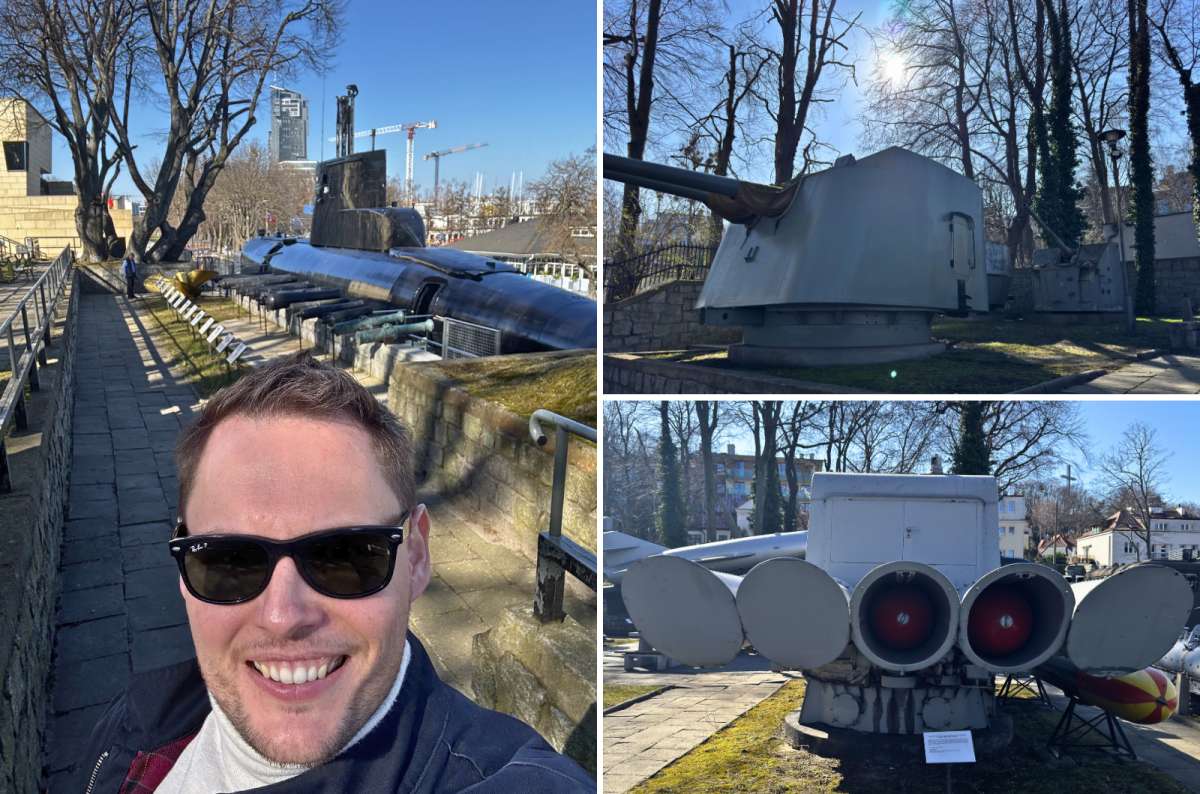
Submarines, cannons, and Cold War hardware in the Gdynia Museum of Naval Forces
Visitor information:
- Opening hours: Tuesday–Sunday 10:00–17:00 (closed on Mondays)
- Price: 30 zł regular ticket
And the sea theme continues. First thing you’ll see is the ORP Sokół, a huge submarine right outside the museum. Sensing a pattern yet? I told you Gdynia is the naval city of Poland!
Tickets are normally 30z (USD 8), plus a little extra if you want to add the submarine. They can only be bought on-site. But again, I happened to be there on apparently the city’s one free day. Good for me.
The museum was pretty good, but honestly, I was expecting a little bit more. Maybe I’m spoiled after visiting aircraft carriers in the USA.
One of the highlights is the weapons on display. There’s a variety of anti-aircraft cannons and ammo, missiles, and even mines. You’ll also find, you guessed it, models of Polish navy ships.
It was a bit smaller than I expected, so even girls can suffer through the visit—it only took around 30-40 minutes. My girlfriend tagged along with me, and she was just fine. (Or at least she pretended to be.)
There’s no audio guide, though, and the outside exhibition is all in Polish, so you’ll have a better time indoors. Still, a lot of the multimedia parts of the exhibitions inside were also only in Polish, so get your translation app at the ready.
19. Become a history buff at Westerplatte (Gdansk)
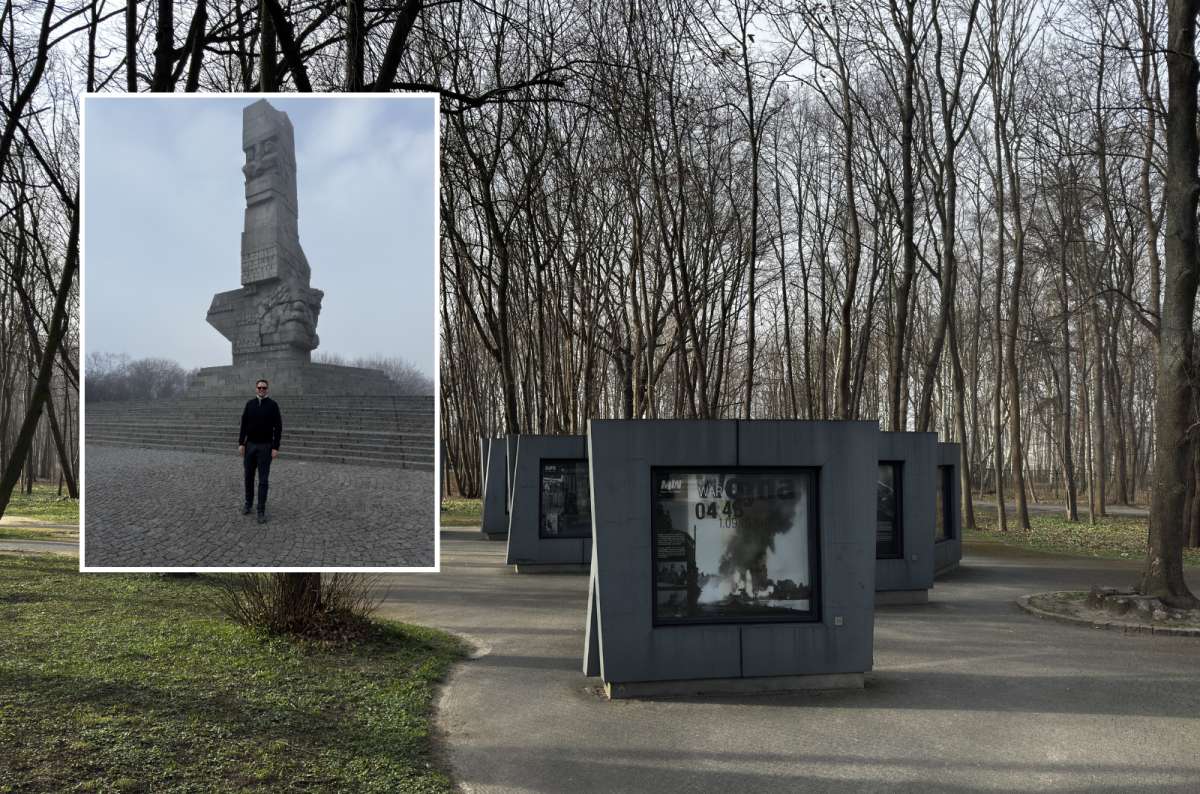
Where World War II began
Westerplatte’s historical background makes it an absolute must-see on your Gdansk itinerary: the Second World War began here on September 1st, 1939.
You’d never guess by looking at it that it saw the first battle in history’s most brutal war. It’s just a nice wall by the beach, a peninsula with bunkers that feels like a relaxing walk in the park.
But the info tablets, military cemetery, and tall, imposing monument will remind you that this place saw some serious bloodshed less than a century ago. Surprisingly, I learned that the Polish defense was relatively successful against the overwhelming German force.
The monument is about an 800m walk from the parking lot. While you’re there, check out the Westerplatte beach, which I found quite nice.
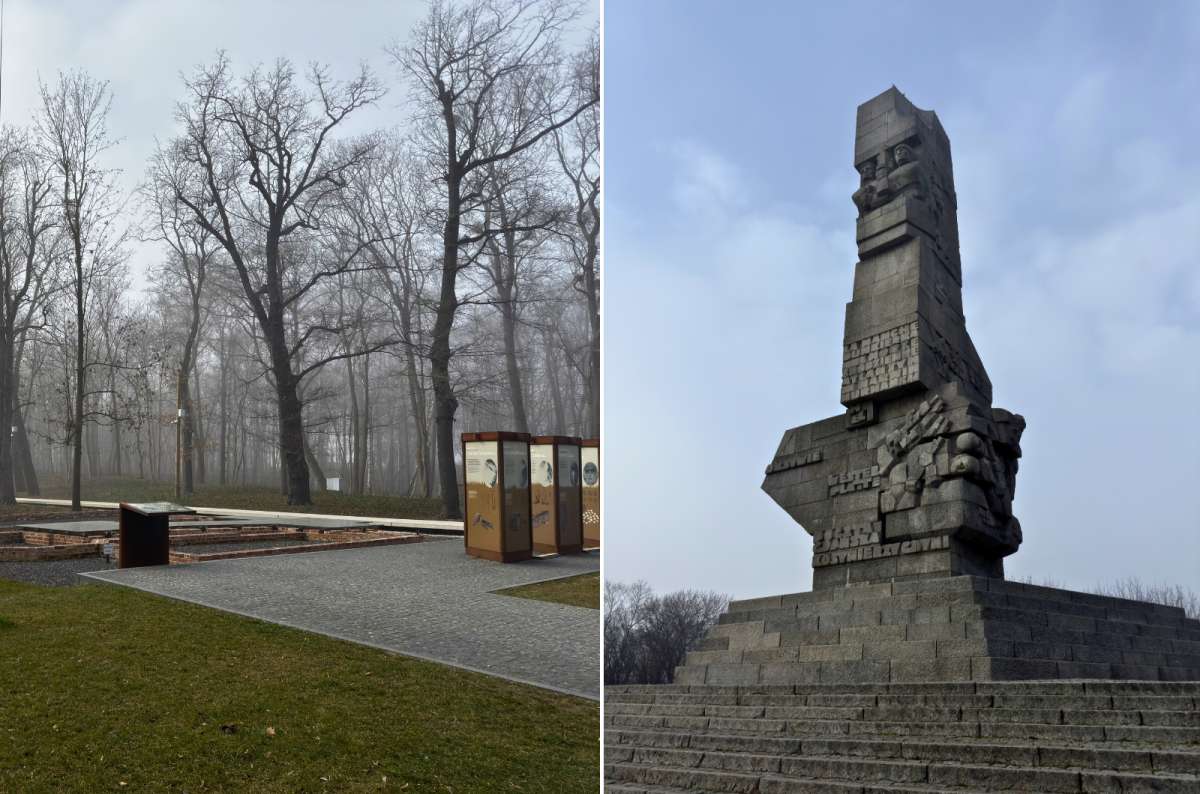
Westerplatte feels calm and almost park-like at first glance
20. Avoid the mass at the Oliwa Cathedral (Sopot)
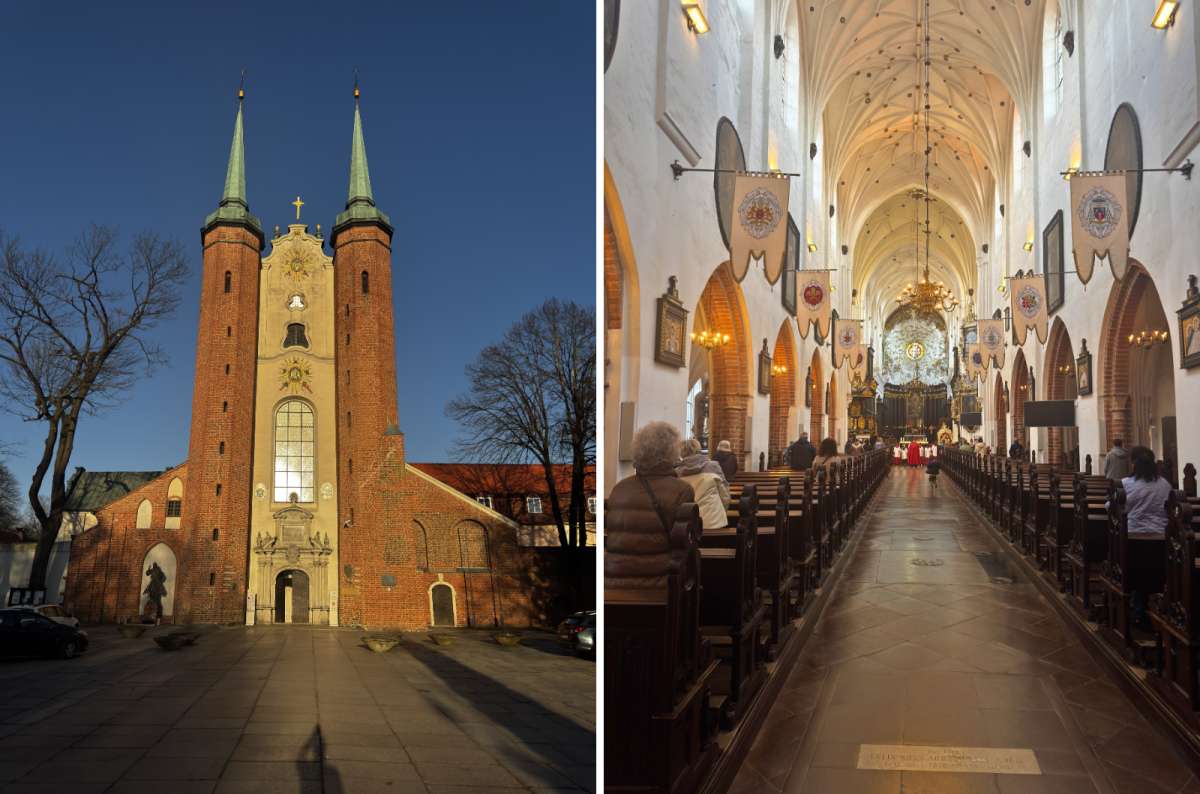
Oliwa Cathedral is brick Gothic on the outside, baroque drama on the inside
Visitor information:
- Opening hours: Monday–Saturday 8:30 am–5:00 pm, Sunday 2:00 pm–5:00 pm
- Price: Free entry
If there’s anything I’ve learned about Poland, they’re unmatched when it comes to giant churches and cathedrals. Oliwa Cathedral is, in one word, immense. There’s so much religious imagery inside that it kind of resembles heaven. Still, like most cathedrals, you won’t spend that much time here—maybe 10, 15 minutes tops.
In my case, it was closer to 5 since I ended up getting there just as the mass started. Come on, Poland. Can’t a guy visit a cathedral in peace?
To be fair, I should know better by now. Masses start almost always at the same time, and priests tend to be punctual. I never think about checking ahead of time. Oh well. Better luck next trip.
21. Cross the Motława River at the Maritime Museum (Gdansk)
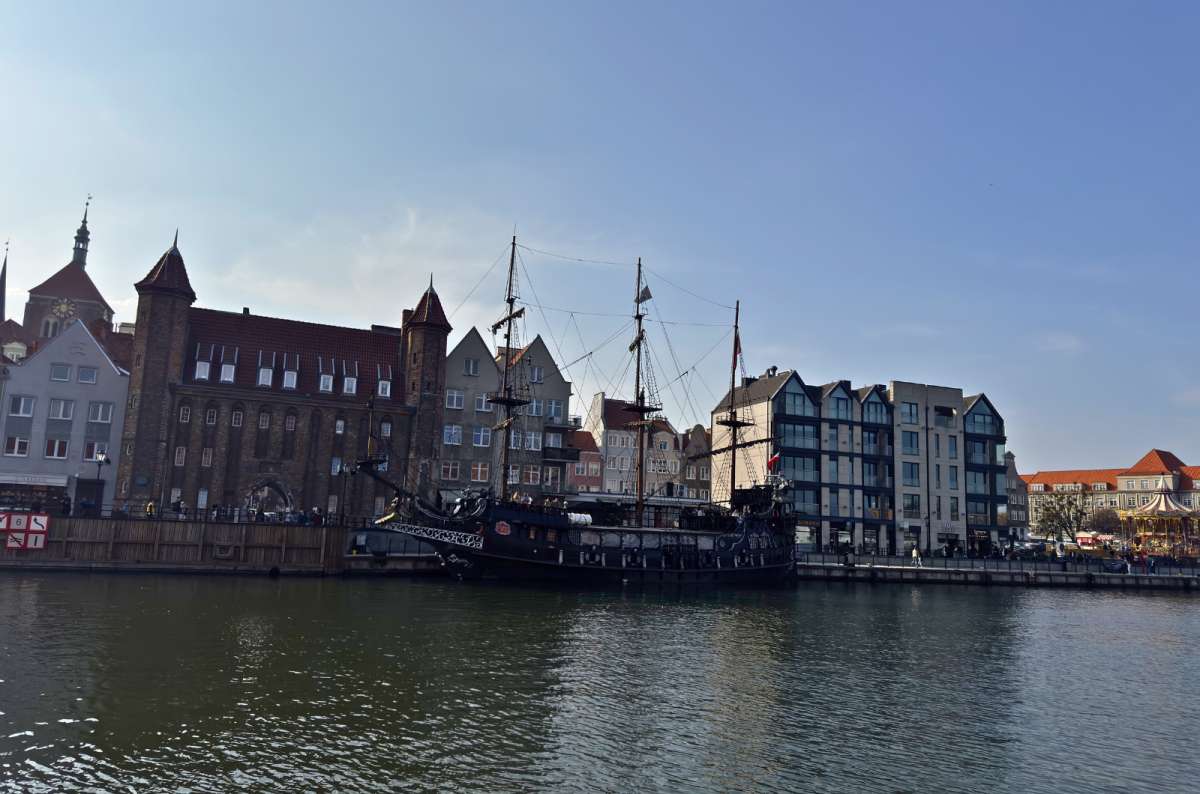
Naval history on the Motława River in Gdansk
Visitor information:
- Opening hours: Tuesday–Sunday 10:00 am–5:00 pm (closed on Mondays; extended hours in summer)
- Price: 23 zł regular ticket; 39 zł combined ticket including access to SS Sołdek; tickets must be purchased at the ticket office (not online)
The weird thing about the Maritime Museum is that it’s split in half. The main, older exhibits are on one side of the Motława River, and the newer stuff is on the other side. As if people can levitate.
There used to be a ferry that took visitors back and forth. Now there’s a bridge, which I honestly found easier. No need to wait for a boat trip with its departures and arrivals.
You can pay for just the museum for 23zl (USD 6.50) or buy a combined ticket for 39zl (USD 11), which gives you access to Soldek, a large steam-powered ship parked right outside the museum. I didn’t find it all that interesting, so I opted for the regular ticket. You have to buy these at the ticket office, not online.
The museum is mostly about the Polish navy, which makes sense. Compared to, say, the International Maritime Museum in Hamburg, it was a little bit lackluster.
You’ll find lots of guns and ship models here. However, most of the info was in Polish, and the exhibits didn’t have much multimedia. Only the Maritime Gallery has an audio guide, which was a letdown after my experiences with those so far in Poland.
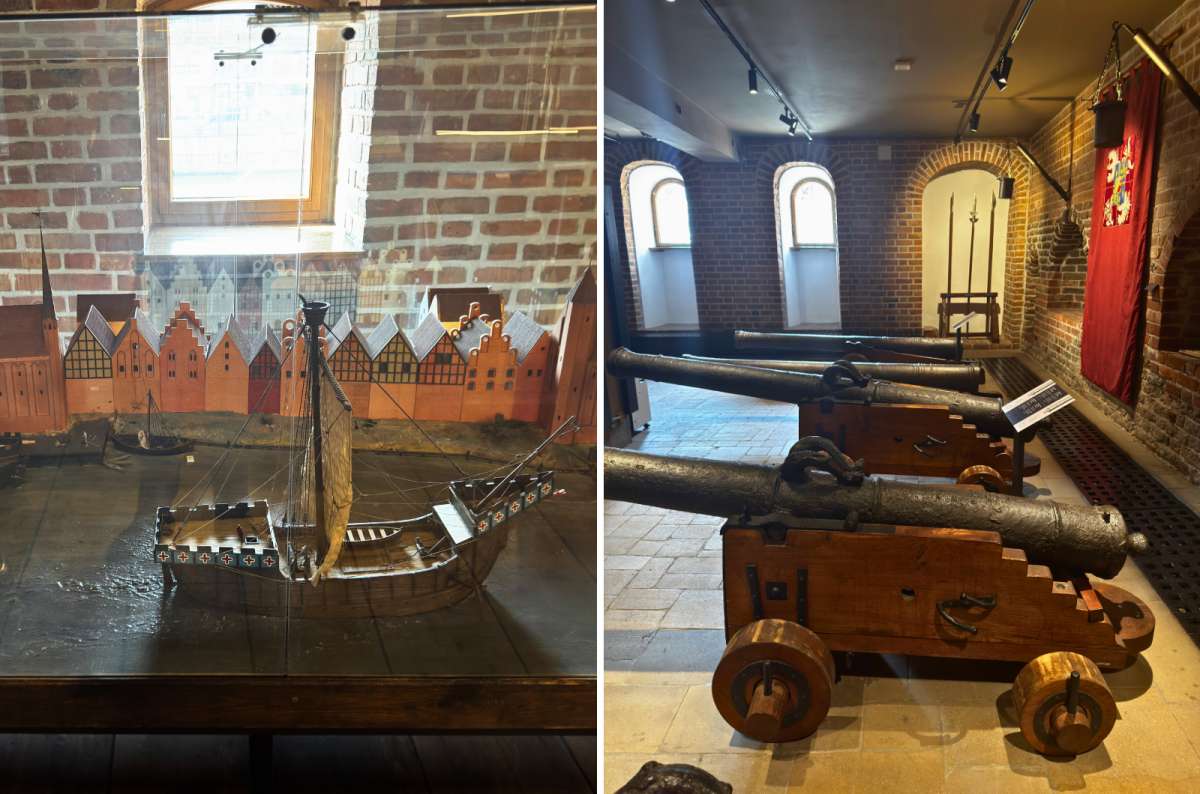
Some of my snapshots from inside the National Maritime Museum
For some reason, someone thought it would be a great idea to include an art gallery in the museum. It wasn’t. I’m here for the ships. As it turned out, there were more art-themed things to do in Gdansk than I expected. But as I said, I much prefer the naval stuff.
This museum was a bit of a letdown for me. It wasn’t that well-curated, and there's no cohesive narrative. It’s really such a shame—there's so much unused potential here. The models are fantastic, and it’s obvious that so many hours of work were put into them. All that just to be let down by curating?
I spent about one hour here—less time than I expected.
Bonus: Take in the views at Gora Gradowa
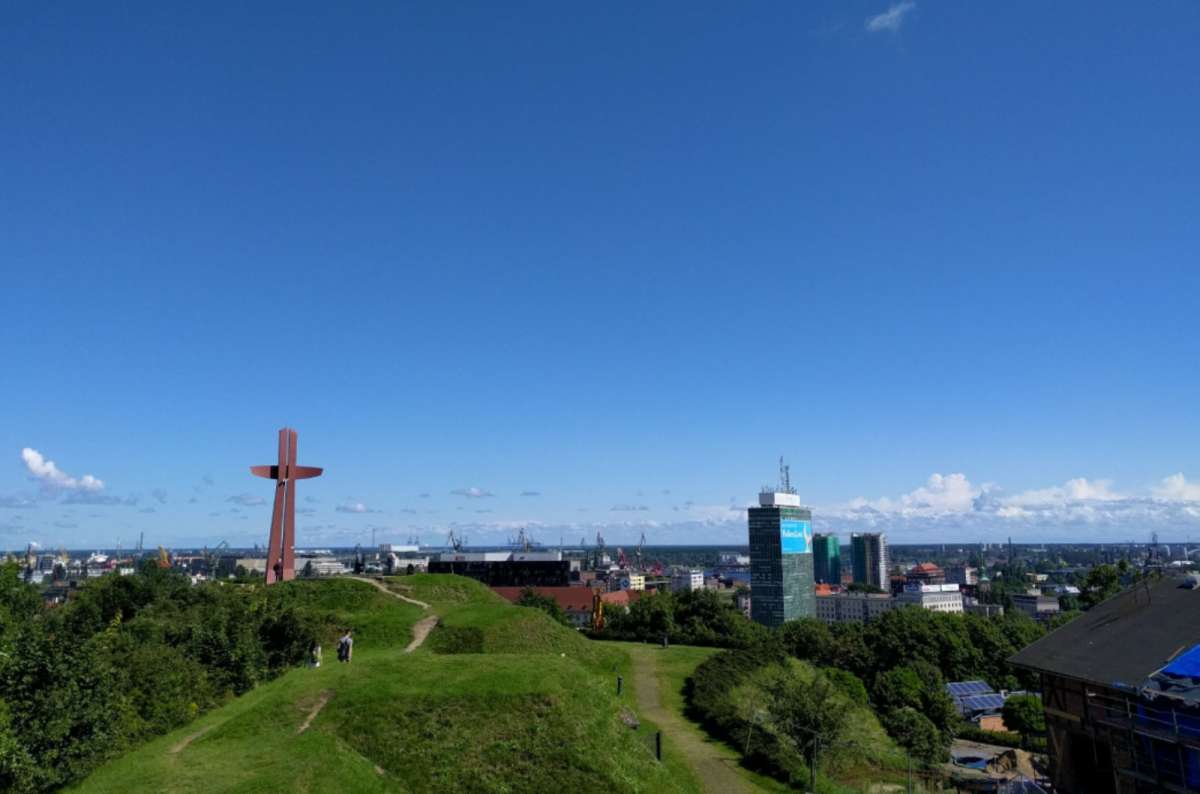
Where to begin your Gdánsk trip? Góra Gradowa is the answer
I suggest starting your Gdansk itinerary in the same place as I did: at Gora Gradowa, a scenic spot where there used to be a 19th-century fort. There's now a tall and, dare I say, iconic millennium cross that deserves a spot in your camera roll.
This spot is high up enough to give you a pretty view of Gdansk, Poland. Never hurts to start out with a photo op. Plus, it’s quite central.
Where to next? Day trips from Gdansk
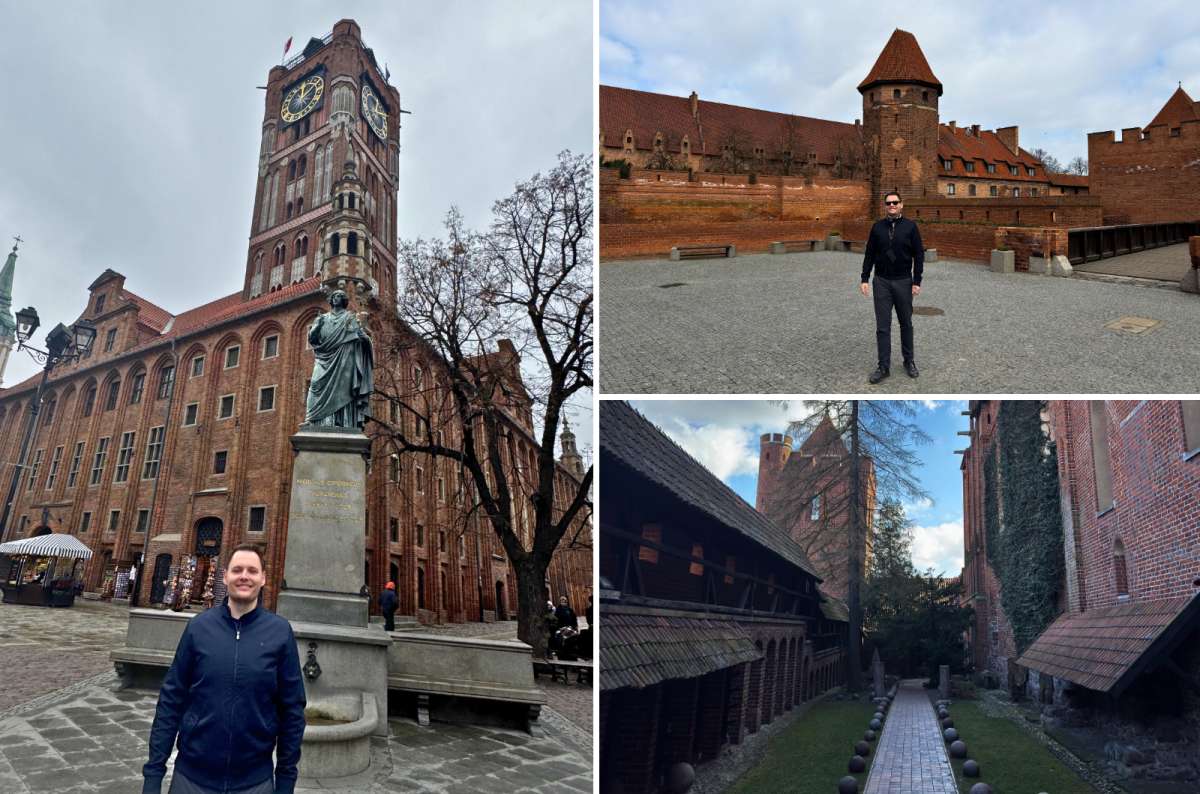
Malbork Castle and Torun make great day trips from Gdansk!
Day trip to Malbork Castle (60 km / 37 miles):
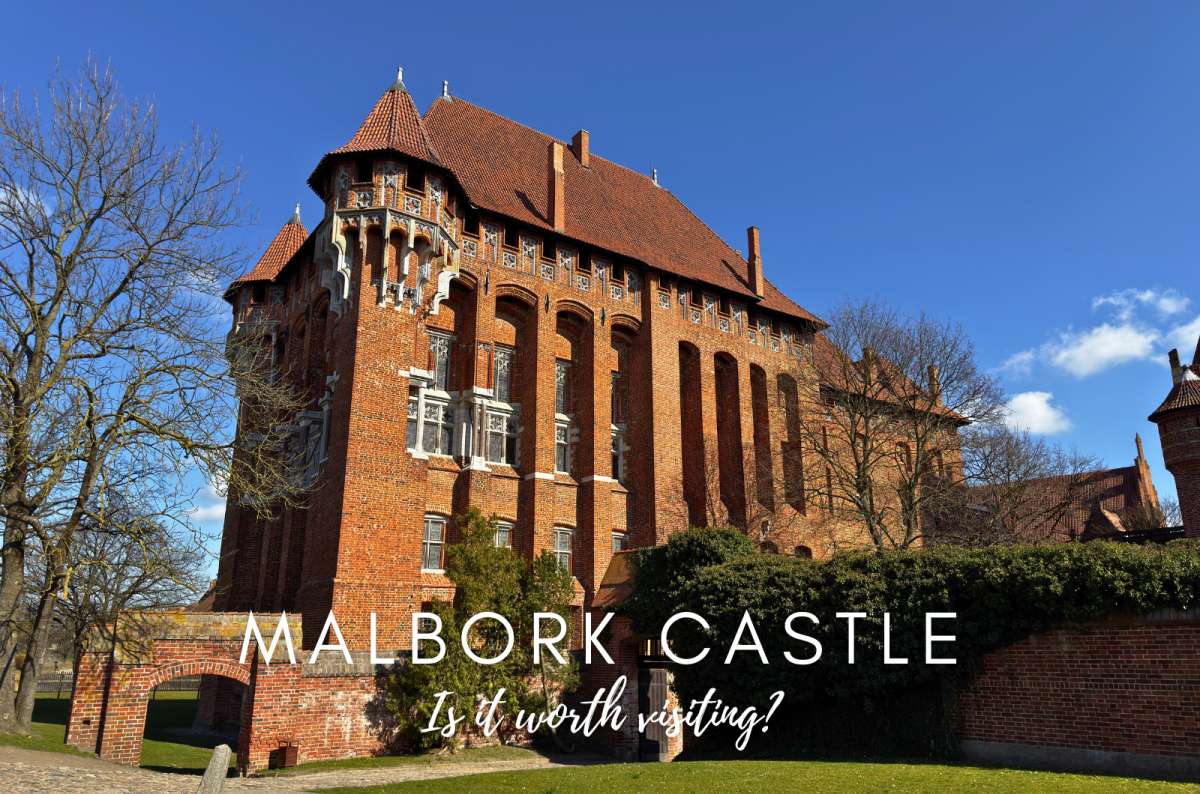
Malbork Castle is the largest brick castle in the world and one of the most impressive historical sites in Poland. If you like castles even a little bit, this place will blow your mind just like it did mine—see my full Malbork Castle guide for everything you need to know.
Day trip to Hel Peninsula (95 km / 59 miles):
If you want a break from city sightseeing and really lean into the northern beach vibes, head to the Hel Peninsula for sandy beaches, seaside towns, and fresh (windy!) Baltic air. It’s a long, narrow strip of land that feels surprisingly remote compared to busy Gdansk.
Day trip to Torun (170 km / 106 miles):
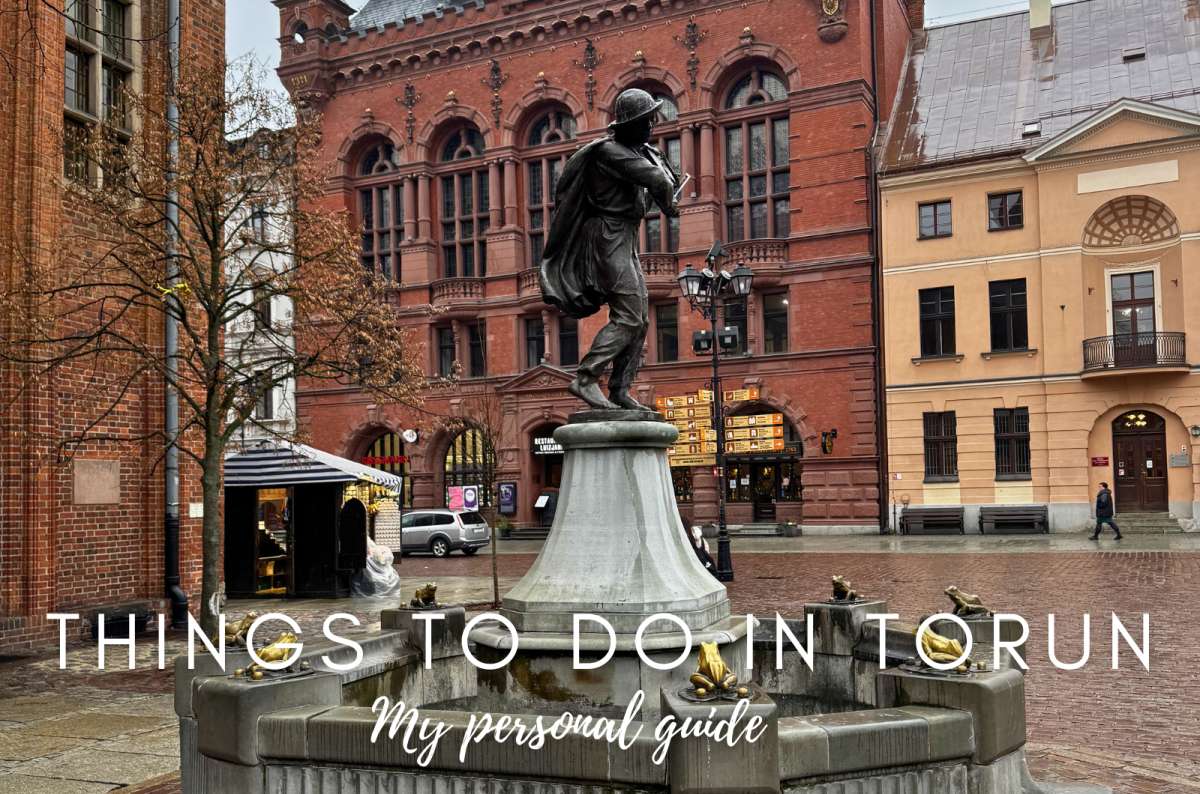
Toruń is one of Poland’s most beautiful medieval cities and the birthplace of Nicolaus Copernicus. It’s famous for its preserved Old Town and traditional gingerbread—read my full Torun guide for the details.
Final thoughts: Are Gdynia and Gdansk, Poland, worth visiting?
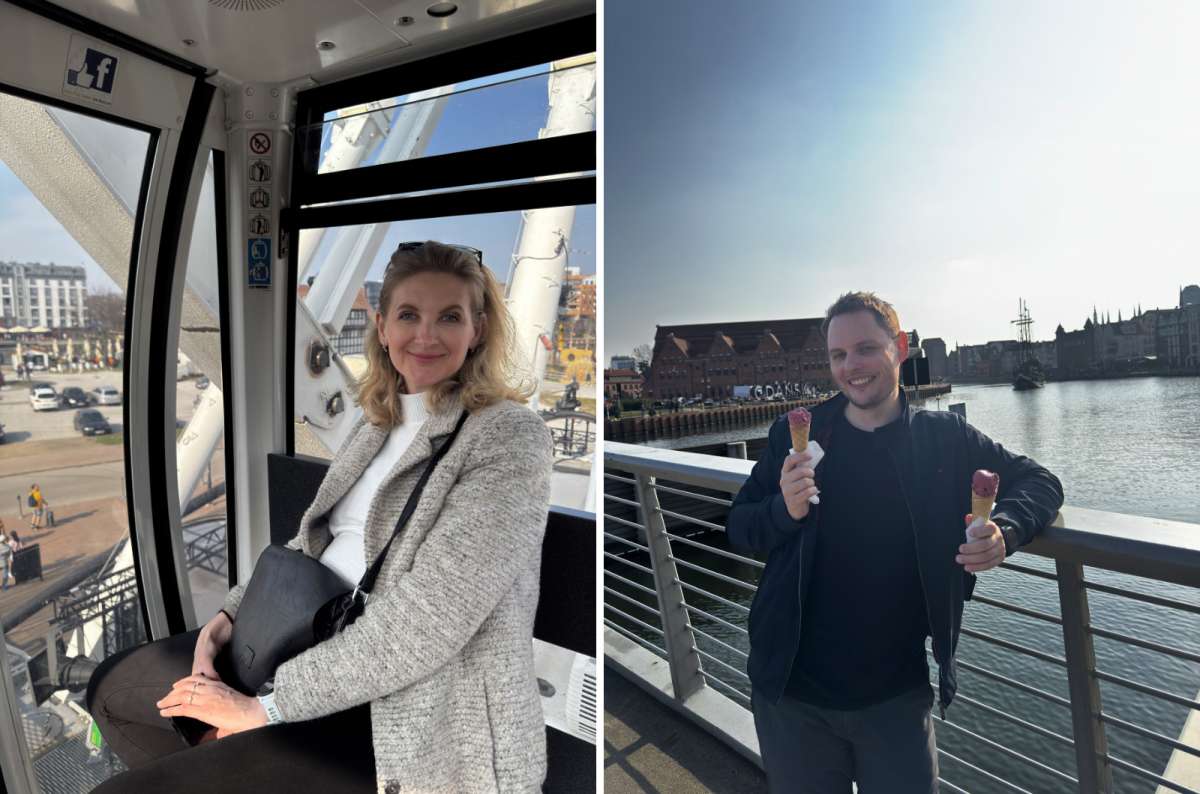
Gdansk and the Tricity blend powerful history with relaxed Baltic vibes—easy to explore, rich in stories, and absolutely worth the trip
Visiting Gdansk and being exposed to all the communist history and depressing museums will make you grateful you live in a free country, no matter your socioeconomic status. So it’s a good place to visit if you want some perspective on how good you have it.
Jokes aside, these are honestly wonderful places, especially for someone who's a buff on the Second World War. There are so many things to do in Gdansk, especially in the Gdansk Old Town, if you want to learn about history.
And when you walk around, you'll get to see all the details of the modernist architecture around you. These truly are beautiful cities.
If you have extra time, you can also explore the nearby towns for an interesting day trip. It seems that no matter where I've been so far in this country, I've always stumbled upon amazing places. And Polish people tend to be welcoming towards travelers. So you really can't go wrong.
So in short, it's hard not to enjoy Gdansk. And yes, it's definitely worth a visit. There are more things to do in Gdansk than it may seem at first glance, and everything is accessible by public transport.
I regret the time of year I went through. Summer is the best time to enjoy those sandy beaches, and in the winter you'll get the Christmas markets. And Gdansk's is among Central Europe's highest rated. But I'm sure I'll come back someday.
Sometimes, all you need to do is take the first step... I've filtered out the best hotels in Krakow for you
Save it for yourself to come back to later, or share with your friends on social media!
I've already planned your ititnerary for the trip, complete with my travel tips.
Find more travel content, photos, and fun on:
This post contains affiliate links. If you make a booking through one of my links, I may earn a small commission—at no additional cost to you. Thank you for your support!
What are Gdansk and Gdynia like?
At a glance: The best things to do in Gdansk, ranked based on my own experience
How much time do you need to see Gdynia and Gdansk, Poland?
Where to stay in Gdansk, Poland?
Your ultimate weekend itinerary for 2 days in Gdansk
2. Gdansk city center and the canals
5. The AmberSky Ferris Wheel (Gdansk)
6. The Main Town Hall Tower (Gdansk)
7. Dlugi Targ and Neptune’s Fountain (Gdansk)
8. St. Bridget's Church's amber altar (Gdansk)
9. The Museum of Emigration (Gdynia)
10. The Bridge of Love (Gdynia)
11. The Solidarity Center (Gdansk)
12. Pomeranian Quay’s famous ships (Gdynia)
15. The Museum of World War II (Gdansk)
16. Gdansk Crane (Stary Żuraw)
17. The Green Gate and the Golden Gate (Gdansk)
18. The Museum of Naval Forces (Gdynia)
20. The Oliwa Cathedral (Sopot)
21. The Maritime Museum (Gdansk)
Bonus: Take in the views at Gora Gradowa
Where to next? Day trips from Gdansk
Final thoughts: Are Gdynia and Gdansk, Poland, worth visiting?




Comments | Thoughts? Give us a shout!