


How much time do you need in Padua?
The best things to do in Padua: ultimate 1-day itinerary
Planning the best things to do in Padua
How do you get from Padua to Venice Marco Polo Airport?
1. Scrovegni Chapel (a UNESCO World Heritage Site)
2. MUSME—the Museum of the History of Medicine
6. Giardini dell'Arena and the Arena Romana
10. Botanical Garden (another UNESCO World Heritage Site)
Padua (or Padova) is a city not far from Venice in Northern Italy. And with Venice getting all the flocks of international tourists, anyone would wonder, “Is Padua worth visiting at all?” Yes, it totally is—even if just for a one-day trip—and I’m going to prove it to you with my ranking of top things to do in Padua and a Padua 1-day itinerary.
I went to explore Padua in November 2024 with my girlfriend, and previously, in 2020. In total, I’ve spent about a week in Padua, and now I’ve ranked the places I saw according to my own judgement and will tell you how to spend the best day in Padua.
In total, I’ve spent about a week in Padua; I’ve seen everything worth seeing, and now, I’ve ranked it all according to my own judgement and will tell you how to spend the best day in Padua.
In this article, you’ll find my top 15 Padua attractions, a map with a walking tour route, the perfect one-day itinerary, and my planning tips. You’re welcome!
Pro tip: Visit Padua (and Italy in general) in spring or fall. Tourist attractions will be quieter, and the weather is still pleasant enough.
Read more from my Italy travel blog.
Padua is famous for its historic university (one of the oldest in the world), Giotto’s frescoes in the Scrovegni Chapel, and the Basilica of St. Anthony, a major pilgrimage site. It also boasts Prato della Valle, one of Europe’s largest squares.

Padua by night: is it a medieval mystery, a secret vampire gathering, or just a building showing off?
Check out all organized tours.
But first, just to give you an overall impression, Padua is a charming and quintessentially European city that’s compact enough that the main things to see in Padova are all within walking distance. It’s nothing too dramatic or showy; just a solid, good-looking place with plenty of history (my favorite) tucked into its streets. There’s a good chance that you’ll like it more than Venice...!

Padua travel mystery: same weather, same location... yet one of us is bundled up like we're in the Arctic, and the other is casually posing like it's spring @ Basilica of Saint Anthony
You can see the best things to do in Padua in one day, but two days would let you explore at a relaxed pace. With one day, prioritize the Scrovegni Chapel, Basilica of St. Anthony, and Museum of the History of Medicine, with Prato della Valle as a walking stop. With two days, add Palazzo Bo, the Botanical Garden, and more of the smaller museums.

No big deal, just another casual stroll through history in Padua
You might also be interested in: Top 11 Things to Do in Modena
Here’s what I think is the best itinerary for one day in Padua, Italy:
If you only have one day in Padua, follow this walking route, starting with the Scrovegni Chapel time slot you’ve booked. It’s a full sightseeing day, not a promise that you can tour every interior. The short visits below are my suggested allowances; add walking time, lunch, and the chapel’s arrival formalities.
For the shortest version of this Padua one-day itinerary, keep the chapel, central squares, Basilica of Saint Anthony, Prato della Valle, and MUSME if it is open. The full route below gives you optional stops, not twelve compulsory tickets.
Stop 1: Scrovegni Chapel (about 15 minutes inside, plus the preparation period and early arrival)
Stop 2: Eremitani Museum (45–60 minutes; shorten or skip if you want more time elsewhere)
Stop 3: Palazzo Zuckermann (30 minutes; optional, closed on ordinary Mondays)
Stop 4: Palazzo Bo (pass by; an interior tour needs its own reserved time slot)
Stop 5: Palazzo della Ragione and the market squares (20–30 minutes for the hall, more for browsing; the hall closes on ordinary Mondays)
Stop 6: Piazza dei Signori (a quick look en route)
Stop 7: Padua Cathedral (about 20–30 minutes, if open for sightseeing)
Stop 8: Prato della Valle (a stroll en route)
Stop 9: Abbazia di Santa Giustina (about 30 minutes, outside its midday closure)
Stop 10: Basilica of Saint Anthony (45–60 minutes)
Stop 11: Museum of Geography (45–60 minutes, only if its limited opening times fit your day)
Stop 12: MUSME—the Museum of the History of Medicine (at least one hour; last admission is at 6 pm)
Make the route fit your day: On Tuesday or Sunday, reserve an afternoon window for the Geography Museum, then reach MUSME before its 6 pm last admission. On other days, leave Geography out unless you have an appointment. On an ordinary Monday, Zuckermann, the Palazzo della Ragione hall, MUSME, and the Botanical Garden are closed; keep the chapel and Eremitani, the squares, and the churches instead. For a less rushed day, cut Zuckermann or a second museum rather than the chapel or basilica.

Map showing stops on your Padua itinerary
The walking route links the chapel and Eremitani area in the north with the central squares, then Prato della Valle and the basilica, before returning toward the science museums. The numbered route is geographic; the ranking below is my order of preference.
Further reading: 10 things to know before you visit Italy
Padua is certainly walkable, especially if you don’t leave the historic center.
When driving outside the city center, I recommend using the EasyPark app for parking. Leave the car outside the restricted-traffic zone (ZTL) and explore the center on foot; paying for parking does not give you permission to drive into the ZTL.
Italians are surprisingly polite drivers these days. It must be a generational thing...
Check restaurant opening times before you settle on somewhere for dinner; many places open around 7 pm. For lunch, the market area around Palazzo della Ragione is a more useful starting point than assuming you’ll have to live off supermarket snacks.
If you do eat in a restaurant, look for the coperto (“cover charge”—essentially a cost for the table) on the menu. Don’t assume refusing bread removes it.
Never order a cappuccino with a meal. They’re strictly for mornings—that’s the Italian way, no arguments!
Eat spaghetti/tagliatelle/any other long pasta with a fork only. On an Italian table, the spoon is for soup.
Tipping isn’t technically obligatory, but it’s a thing. Don’t be cheap.
If you only have one day in Padua, try to stay until the evening. It’s a gorgeous place at sunset and when it’s lit up.
Finally, my hotel recommendation is Hilton Garden Inn Padova City Center. Amazing location right in the middle of the Old Town, comfy beds in relatively spacious rooms, and lots of good breakfast options. No notes!
For travel medical insurance, see SafetyWing’s Nomad Insurance Essential and check the policy terms.
For more Italy travel inspiration, see my articles on things to do in Parma and things to do in Bologna.

When in Padua, do as the locals do: admire the fresh produce and pretend you know what ‘cime di rapa’ is. More about delicious Italian food

Final approach to Venice Marco Polo Airport, surrounded by the stunning lagoon

The 1300s frescoes in Scrovegni Chapel serve drama, symbolism, and a warning about bad life choices
Is the Scrovegni Chapel (also known as the Arena Chapel or Cappella degli Scrovegni) worth seeing? Absolutely, even if it does require some forward planning. Book a timed ticket at cappelladegliscrovegni.it; the visit inside the chapel lasts about 15 minutes, not 30. Official chapel tickets and visit information
This entire UNESCO-listed chapel is a masterpiece by Giotto, the guy who single-handedly changed the course of Western painting. His frescoes tell an epic, full-wall visual story, packed with drama, emotion, and some risqué details for its time.
The way virtues and vices are depicted is completely next-level, almost sci-fi-like. I thought the portrayal of the Last Judgment was particularly brutal; borderline terrifying for the 1300s. Every color has symbolic meaning, and the storytelling is so ahead of its time, it’s mind-blowing even today.
Practical information: Before you step inside the chapel, you spend time in a climate-controlled preparation area to help protect the frescoes. Humidity and pollution are their worst enemies. Follow the early-arrival instructions on your ticket; the 15-minute visit is not the total time you need to allow.

Welcome to MUSME
We spent over an hour at MUSME, an interactive museum about Padua’s medical history that’s fun for both kids and adults. The ticket grants access to three floors: the first covers the history of medicine, while the others focus on anatomy, physiology, and pathology.
What exactly should you expect from this place? Here’s a quick rundown...

The Geography Museum, where you learn that geographers do a lot more than just point at maps
This was such an amazing gem that we found completely by accident. And we were even luckier, given that it’s only open on two afternoons a week!
The museum is another affiliation with the university. I found the English information and audio guide packed with fun explanations of what geographers actually do (yeah, me neither). Buy tickets through the Museum of Geography’s official website. Museum of Geography visitor information
Inside, it’s divided into three sections. These are on measurement (the science behind maps and geography), exploration (what geographers are discovering today), and philosophy (the deeper impact of geography on our world). I was glad the philosophy bit came last, as my brain definitely needed to warm up for it.
The museum connects maps and exploration with bigger questions about climate and our impact on the world. Its motto is “Explore, measure, and tell the world,” and I’m obliging: I got my money’s worth of education here, and I can’t recommend it to you enough.
 Check out the hotels I loved in Padua.

Eremitani Museum
This is a solid archeology museum that kicks off with pre-Roman and Roman history, then unexpectedly veers into ancient Egypt and Mesopotamia. Plan for about an hour here, though you could spend longer if you read Italian; only about a third of the exhibit descriptions are in English. Oh, those charmingly inconsistent Italians...
Pro tip: The layout of this place can be a bit confusing, so make sure to pick up a map at the entrance.
The courtyard is scattered with medieval and Roman columns, setting the stage for what’s inside. One quirky touch for me was the placement of modern sculptures among ancient artifacts, making for a fun little Easter egg hunt! And one of the museum’s more unusual surprises is its impressive collection of tapestries—something you don’t often see in this country.
There's also a section dedicated to Padua’s history. Upstairs, we found a vast collection of medieval paintings—including a Crucifix from the nearby Cappella degli Scrovegni. If you're deep into Italian galleries, you might just skim this part, but for first-timers, it’s worth a proper look.

Prato della Valle, Italy’s second-largest square
Fun fact: Prato della Valle is one of Europe’s largest squares. I imagine it’s for this reason alone that it’s considered one of the best things to see in Padua. Yes, it’s impressive in size (90,000 m² [nearly 1 million ft²]), and it tries to make out that it’s an oval, but at the end of the day, it’s still just a city square.
There are 78 statues around its two rings, but in my opinion, the highlight of the place is the Abbazia di Santa Giustina on one corner (which is actually worth a look—I’ll come back to this). Otherwise, the Prato della Valle is a pleasant spot to stroll, sit, and soak in the atmosphere, but yeah, don’t expect anything mind-blowing.

Prato della Valle

Giardini dell'Arena
Tip: Ideally, stick the Cappella degli Scrovegni before or after these spots on your Padua itinerary—the chapel is located inside the gardens.
Stop the presses: at some point, I—yes, I felt I needed a break from the museums. And Giardini dell’Arena felt like the perfect place to go about it. These peaceful, luscious gardens are dotted with statues and shady trees. And overall, it’s a more inviting place to wind down than Prato della Valle.
Within the gardens, we came across the Arena Romana, the remains of a once-massive Roman amphitheater. Today, it’s more of a scenic ruin than a Colosseum-level spectacle, but it was still my favorite part of this gorgeous green space. I guess I can never resist history for too long...
Fun fact: The amphitheater’s stones were repurposed over centuries, including for local buildings. The Italians may be inconsistent, but at least they know how to reuse and recycle!
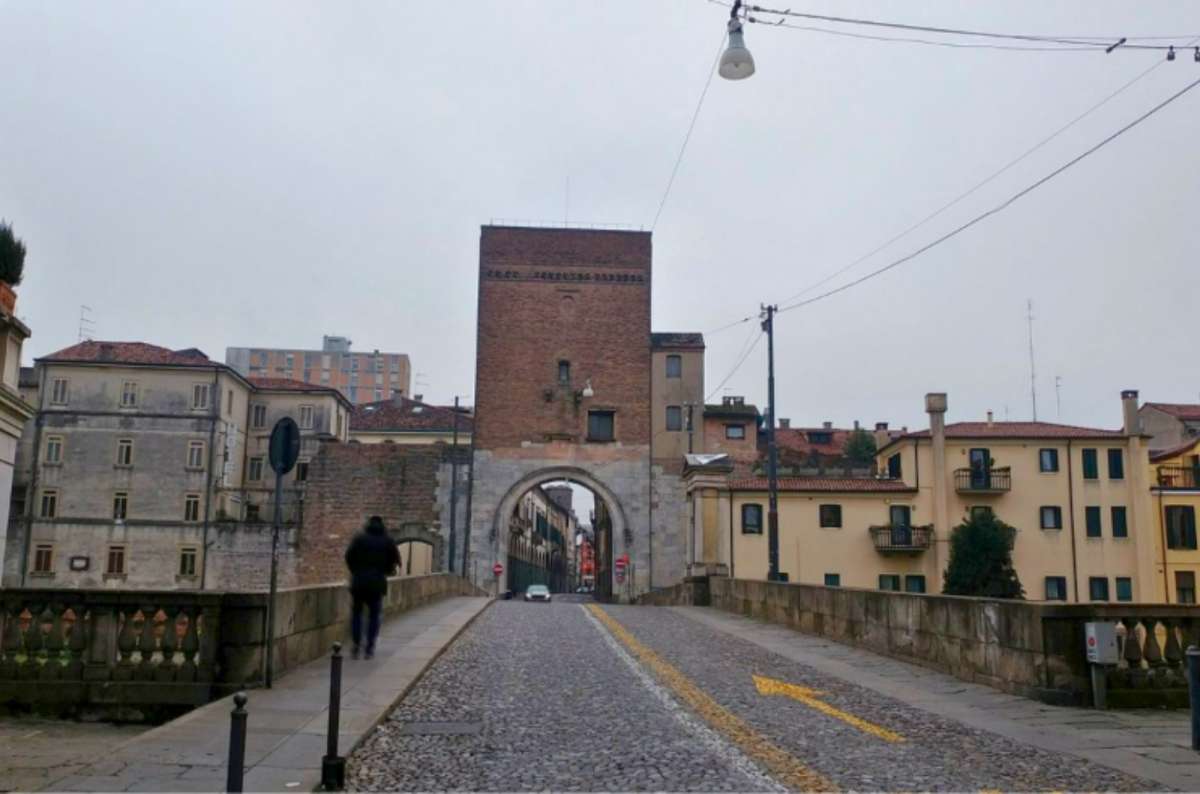
Ponte Molino, a historic bridge near the remains of Padua’s medieval city walls
The Ponte Molino may not be the flashiest bridge in Italy, but it’s one of Padua’s surviving Roman bridges, beside the medieval Porta Molino gateway. The name comes from the water mills that once operated here. Those Romans and their bright ideas, am I right?
The bridge is still in use today and marks one of the historic entrances to the Old Town, so expect some dynamic Italian traffic to be crossing it. It’s survived floods, wars, and centuries of wear, proving again that Roman engineering was built to last—unlike most modern roads!

Abbazia di Santa Giustina: A massive abbey with heavy-duty doors
Now, I said I’d come back to the massive head-turner on the corner of Prato della Valle, and here we are. The huge Abbazia Di Santa Giustina (“Abbey of Santa Giustina”) has a surprisingly modern vibe thanks to its contemporary statues on the facade and sleek bronze doors. They’ve got to be some of the heaviest doors in creation...
Practical information: The midday closure matters if you’re following my Padua itinerary. Apparently, divine inspiration takes a siesta. Entry to the basilica is free; time your visit around worship.
Inside, you’ll find impressive organs, stunning sculptures, and a deep connection to relics—most notably, the remains of St. Luke (not St. Lucas). You can also take a guided tour of the monastery, led by volunteer guides. It’s grand, it’s historic—if only Baroque hadn’t happened!

Basilica of Saint Anthony: Where grand architecture meets a surprising touch of Islamic influence
We gave ourselves nearly one hour to take in the grand Basilica of Saint Anthony, hands down the most monumental in Padua. The architecture shows a strong Islamic influence, adding an unexpected twist to the usual Italian church aesthetic.
Inside, the tomb of St. Anthony is incredibly ornate and has a dramatic, almost villain-lair level of luxury. My initial impression was that it looks like somewhere you’d battle the final boss in a video game.
The sacristy is stunning, and the ceiling is a starry masterpiece. But the chapel of relics is where things get wild. St. Anthony’s 800-year-old tongue is preserved here, which is both impressive and—let’s be honest—pretty unsettling. I mean, why hasn’t it decomposed?!
In total, the relic collection includes 24 items, including a couple of parts of his body. Yum.

The Basilica of Saint Anthony is definitely one of the more memorable church visits.
Tip: If you haven’t been put off by this point and are up for more than just the main basilica, there are additional chapels and sculptures surrounding it. The Oratory of Saint Giorgio has some particularly stunning frescoes, but requires a separate ticket. Check the current price and opening times before adding it to your day.

Padua’s Botanical Garden is a nice place to chill out
This isn’t just any garden—it’s the world’s oldest university botanical garden still in its original location, founded in 1545 to study medicinal plants! Now it blends historic charm with modern biodiversity, and it seems to have everything—from tropical greenhouses to a centuries-old arboretum.
It’s another refreshing break from the intense information overload you get from the rest of the things to do in Padua, perfect for strolling and pretending you’re a Renaissance-era botanist.
Fun fact: The garden is home to the Goethe Palm, a fan palm planted in 1585(!!!) that inspired the poet Goethe’s theories on plant evolution.

Palazzo Zuckermann
If you love archeology, shiny things, and unexpectedly fascinating coin collections, the Palazzo Zuckermann is well worth your time. Plus point: Entry is included with the Cappella degli Scrovegni- Eremitani Museum combo ticket.
It’s not a huge museum, so you only need to allow about 30 minutes for it. The first two floors showcase excavated artifacts, including beautiful ancient jewelry—because even centuries ago, people knew the power of good accessories (or so said my girlfriend). But the real surprise to me was the third-floor coin collection. Seeing how money evolved over the centuries is oddly satisfying!

Palazzo della Ragione is a medieval market hall turned fresco-covered masterpiece
Along with the Cappella degli Scrovegni and frescoes in the Basilica of Saint Anthony, Palazzo della Ragione is part of Padua’s UNESCO-listed fresco sites. These painted interiors are among the most distinctive things to see in Padua.
Inside is one of Europe’s largest medieval market halls, with a ship-like wooden ceiling and walls covered in those incredible frescoes. The market still operates downstairs, which I felt brought some much-needed life to a space so vast.
I’ll be honest—I’m glad I saw this place, but we didn’t stick around for long because there was a Yoko Ono exhibition on, which is not my kind of thing. Life’s too short to waste time gawping at some avant-garde trash. That was a temporary exhibition during my visit, not what you should expect to find there now.

Padua Cathedral is massive, easy to spot from the main square, and—pro tip—great for wide-angle photos. Up close, though, it’s a historic cathedral (which isn’t as exciting as a Gothic or Romanesque masterpiece, let’s be real). But what it lacks in over-the-top decoration, it makes up for in sheer size and presence.
This isn’t just a historical relic—it’s still an active place of worship, adding to its authentic atmosphere. If you visit during a service, expect to see locals gathering for mass rather than just tourists snapping photos. It’s the everydayness that makes it feel more alive than museum-like.
Fun fact: The cathedral was designed by Michelangelo... or at least, that was the plan. Let’s just say they didn’t exactly follow his blueprints.
One detail when choosing what to see in Padua: the cathedral’s free entry does not cover the frescoed Baptistery. That is a separate ticketed visit, so allow extra time if you want to add it to the route. Baptistery visitor information

Palazzo Bo
Fun facts: The University of Padua, established in 1222, is the second-oldest university in Italy. Palazzo Bo has been the seat of the university since 1493. Around 100 years later, it became the location of the world’s first permanent anatomical theater—Galileo’s old stomping ground. You can see the historic rooms on a booked tour.
There’s something truly amazing about seeing what university education was like all those years ago, and especially so when there’s some weird anatomy stuff involved. On the same trip to Italy, we actually saw another anatomical theater in Bologna and ended up awesomely creeped out. Read more in my Bologna guide.
Practical information: Book through the university’s official Palazzo Bo visitor pages. Choose the right route, day, and language; don’t rely on a same-day place being available. If you want to go inside rather than just pass by on my walking route, build the rest of the day around your tour slot. Official Palazzo Bo tours


Finally, this is one of Padua’s main squares, historically a center of political power and now mostly a place to grab an espresso. Its highlight for me was probably the clock tower, an impressive piece of Renaissance engineering—except it’s missing one zodiac sign (poor Libra).
Piazza dei Signori is lively, especially in the evening, but visually? Meh; it’s not the most jaw-dropping spot in town. Compared to Prato della Valle, it feels small, and it’s not Venice, that’s for sure. It’s worth a glance on your way between A and B, but despite its fame, don’t expect to be blown away by this square.
Pro tip: Exploring more of Italy? The things to do in San Gimignano, things to do in Siena in one day, don't miss the top things to do in San Marino, and what to do in Parma are all excellent additions to a longer Italy itinerary.
Yes. The best things to do in Padua, for me, are the chapel and science museums. Famous squares and palaces don’t all deserve the same amount of time. Choose a few interiors, keep the walking route flexible, and stay into the evening if you can.
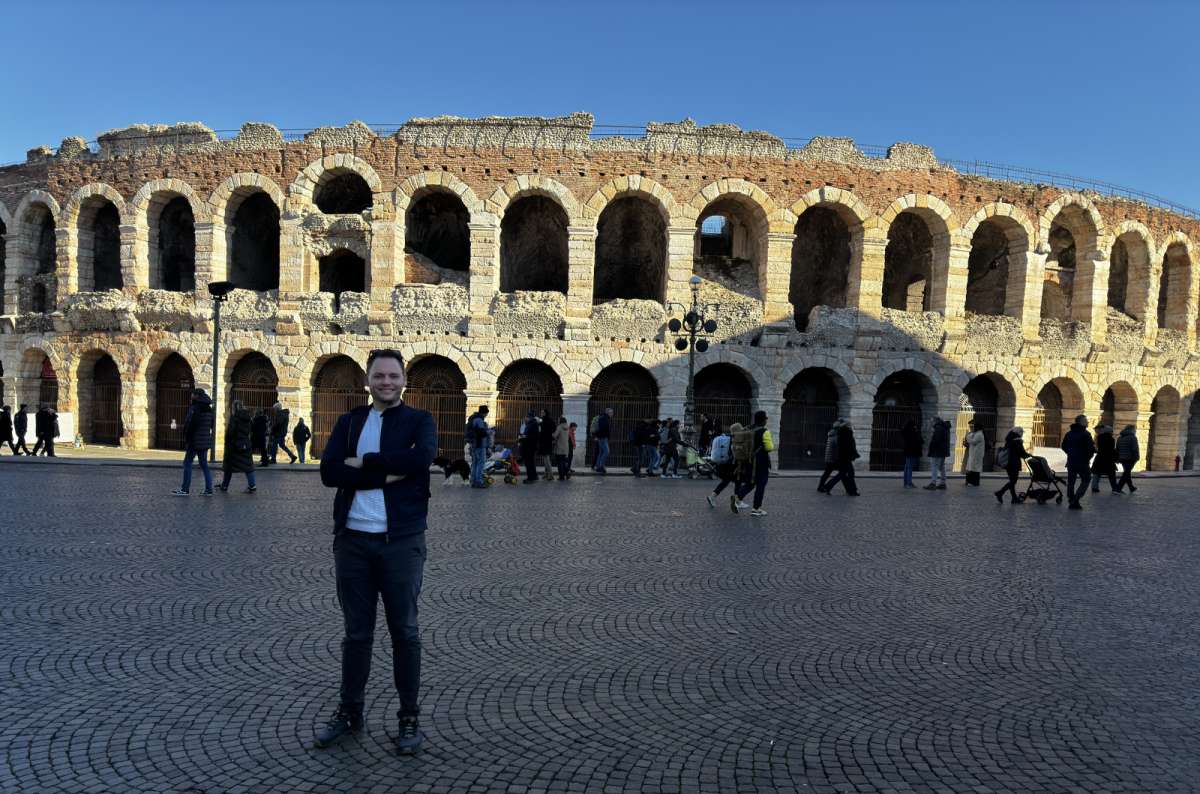
Padua makes the perfect base for exploring northern Italy, with Verona just an easy day trip away.
So go ahead and book your Scrovegni Chapel tickets (the earlier the better), relax with an aperitivo in Piazza dei Signori, and let yourself get lost in Padua’s charm.
This post contains affiliate links. I earn a small commission if you make bookings through my links, at no additional cost to you. Thank you for your support!
How much time do you need in Padua?
The best things to do in Padua: ultimate 1-day itinerary
Planning the best things to do in Padua
How do you get from Padua to Venice Marco Polo Airport?
1. Scrovegni Chapel (a UNESCO World Heritage Site)
2. MUSME—the Museum of the History of Medicine
6. Giardini dell'Arena and the Arena Romana
10. Botanical Garden (another UNESCO World Heritage Site)


Hi, I’m Jan. I travel fast and intensely, whether I’m exploring the buzz of Tokyo in 3 days or road-tripping through mountains and beaches on a 3-week Thailand adventure. And no matter where I am, you’ll always find me in a comfortable hotel at night and eating the best food.
If that sounds like your kind of journey, hop on board, and let’s explore the world together!
I started this blog after realizing how tough it can be to find reliable, authentic travel info. You wouldn’t believe how many “travel bloggers” never even visit the places they write about! On Next Level of Travel, you can count on my full honesty and insights drawn from my firsthand experiences.
Here’s the deal: not every destination is all superlatives and unicorns. I’ll let you know if a tourist attraction isn’t worth your time, like skipping overrated stops in my 2-week Spain itinerary. And when I find something truly special—like the perfect mix of culture and nature in Cape Town—you can trust that it’s worth adding to your itinerary.


Comments | Thoughts? Give us a shout!