


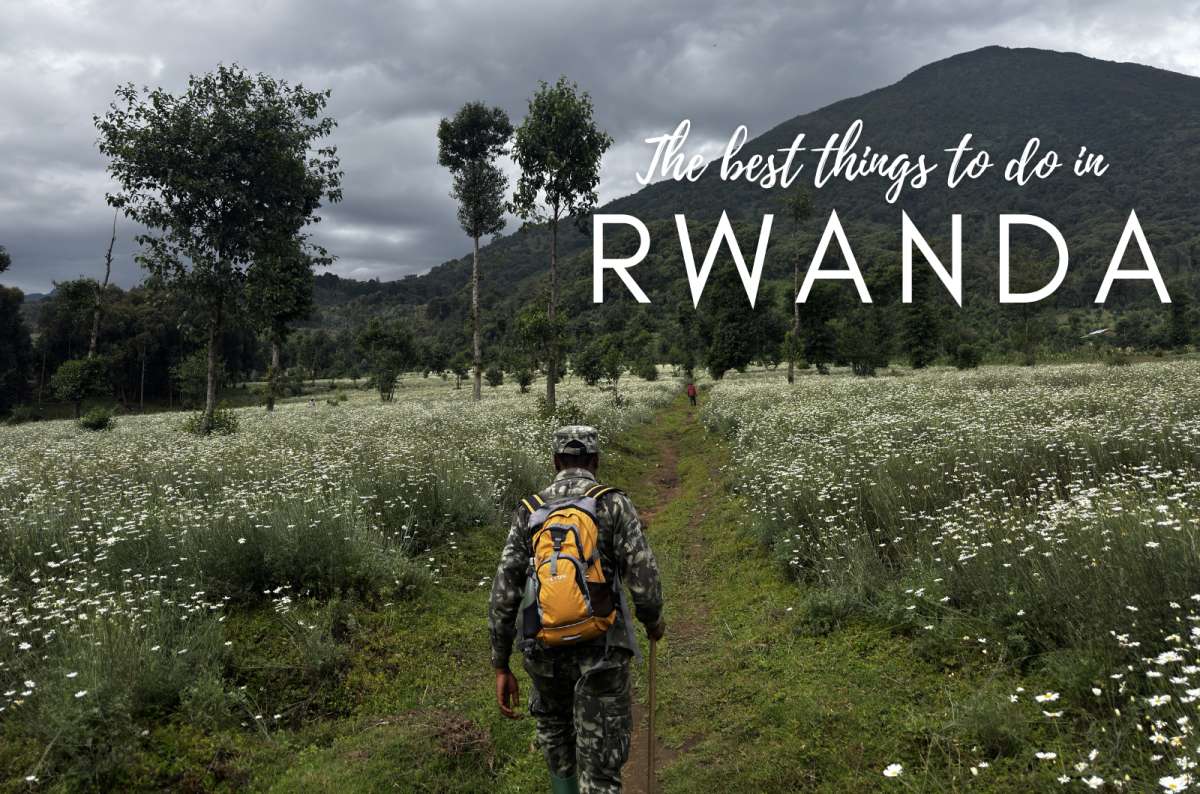


At a glance: the best things to do in Rwanda
1. Go gorilla trekking in Volcanoes National Park
2. Spend at least 2 days in Akagera National Park
4. Visit Kigali Genocide Memorial
5. Go chimpanzee trekking in Nyungwe National Park
6. Walk the canopy bridge and hike in Nyungwe
8. Track golden monkeys in Volcanoes National Park
9. Visit Nyamata Genocide Memorial
10. See the King’s Palace Museum in Nyanza
11. Spend one day in Kigali, but don’t overdo it
Practical tips for visiting Rwanda
Rwanda is one of the easiest and most rewarding countries in Africa to travel through, and this list is based on my 14-day trip across the country.
I went mainly for the gorillas. I left recommending Rwanda to almost everyone as a first-time Africa destination.
Not because it is perfect. It isn’t. But because it has lush green mountains, good roads, polite drivers, working infrastructure, dramatic national parks, and enough emotional weight to make you shut up and think for once.
Very few countries changed my perspective on so many things at once: poverty, forgiveness, genocide, nation-building, tourism, money, and what it looks like when a country is very consciously trying to rebuild itself.
This guide will help you decide what to prioritize, what to skip, how long to stay, and how to avoid planning Rwanda like it is just “gorillas plus one Kigali museum.” That would be a crime. A minor one, but still.
Read more in my Rwanda travel blog.
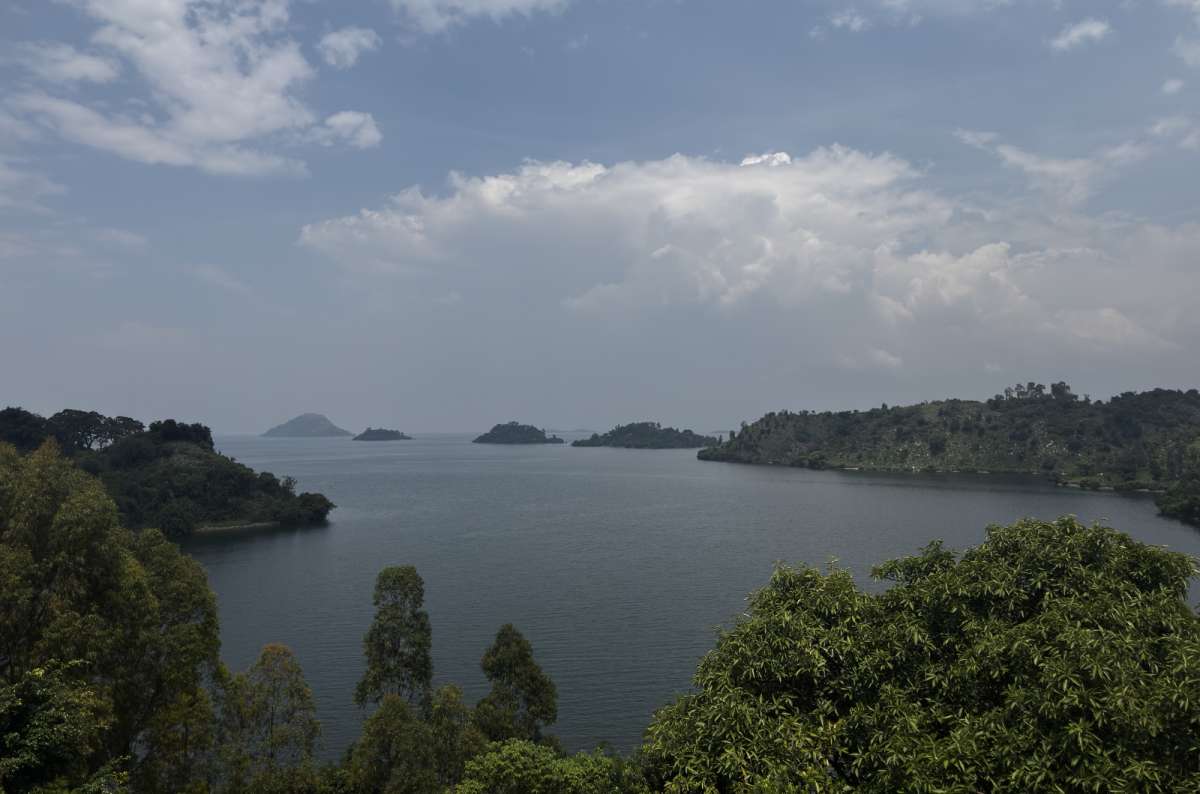
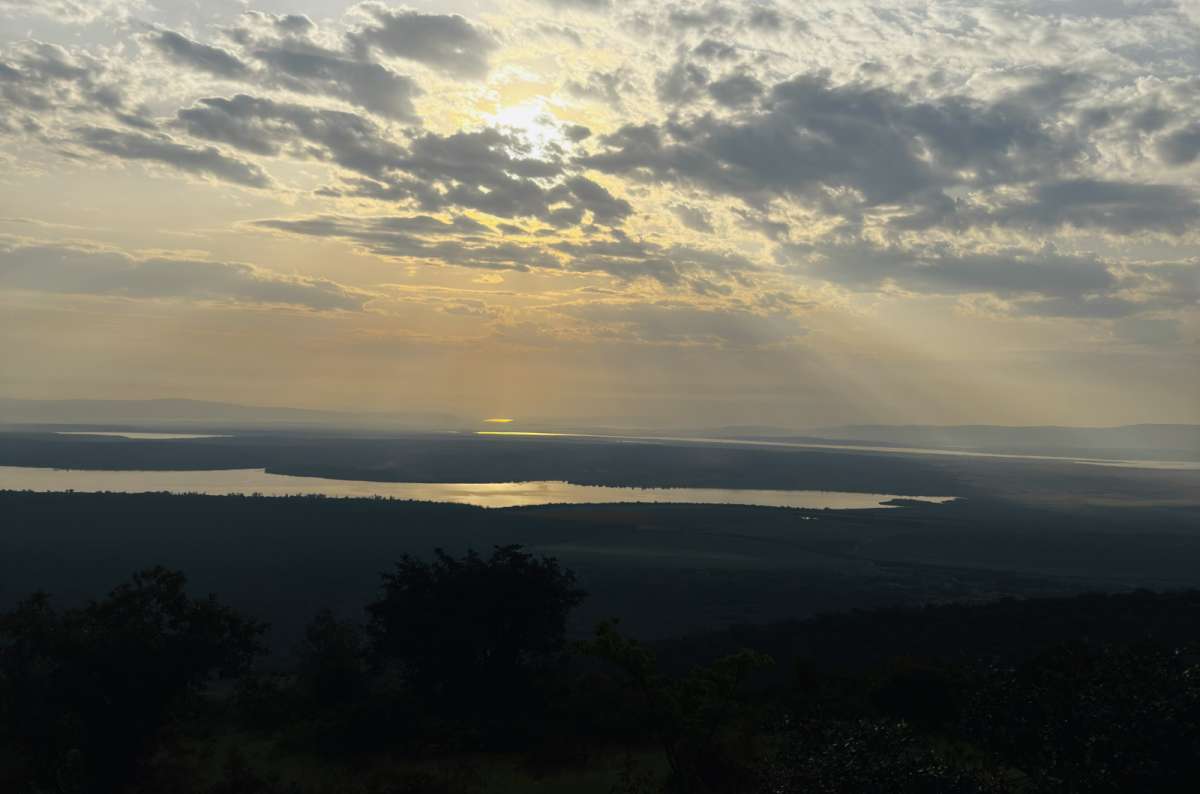
Yes, Rwanda is absolutely worth visiting, especially if it is your first trip to Africa and you want wildlife, mountains, lakes, culture, and a country that mostly works.
That last part matters. Rwanda has rules, clean roads, speed cameras everywhere, polite drivers, and security checks in places where I didn’t expect security checks. Sometimes it feels efficient. Sometimes it feels tedious. Often it is both.
Because of the altitude, Rwanda usually feels pleasant, around 20–25°C outside the rainy season. It does not have that “I am melting into the pavement” heat that some African countries use as a personality trait.
I loved the landscapes most: hills, tea plantations, rice fields, forests, lakes, volcanoes, and villages everywhere. Rwanda is ridiculously green, but not in one boring shade. It is green in about 700 different ways.
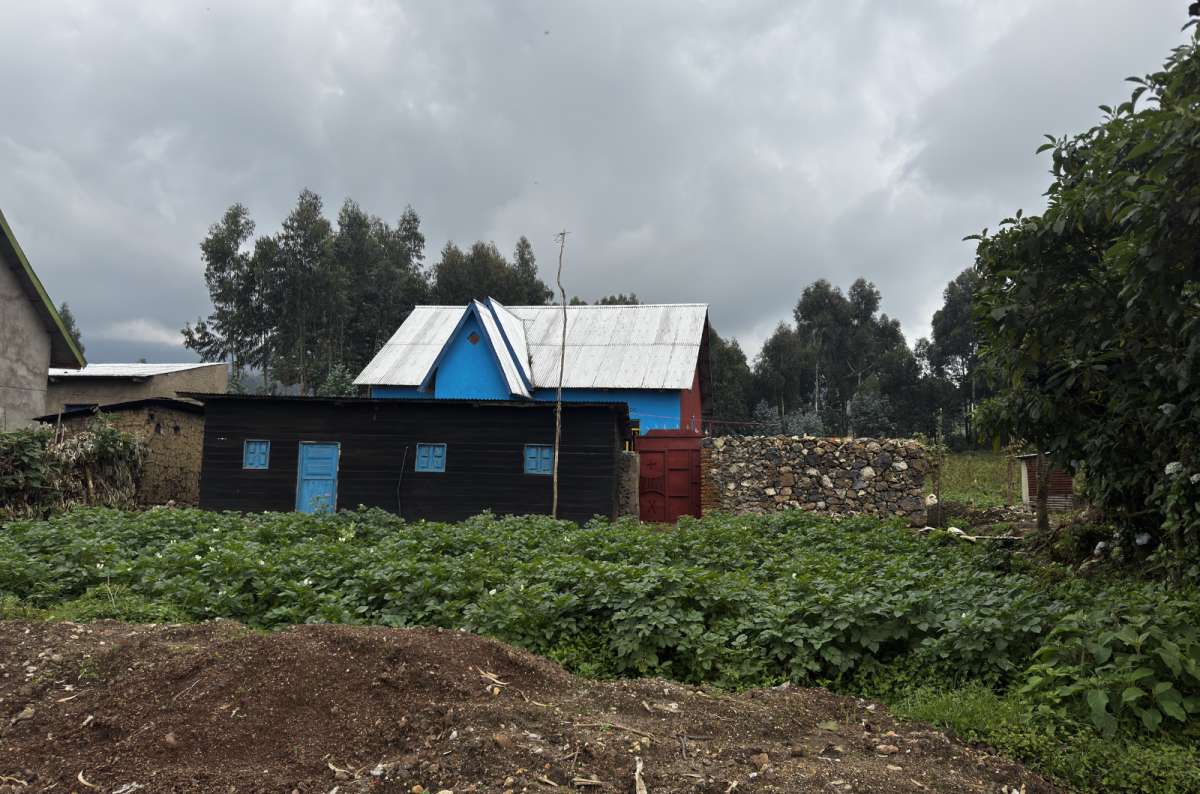
It also feels very much like the Africa you see on TV in some places: people carrying things on their heads, children everywhere, bicycles loaded with impossible cargo, and life happening outside all the time. But then you also have smooth roads, organized parks, mobile payments, clean cities, and a state that clearly likes rules very much.
Since my visit, I recommend Rwanda to almost everyone as a first-time Africa destination. It is not cheap, especially with gorilla permits, but it is accessible, manageable, and surprisingly varied.
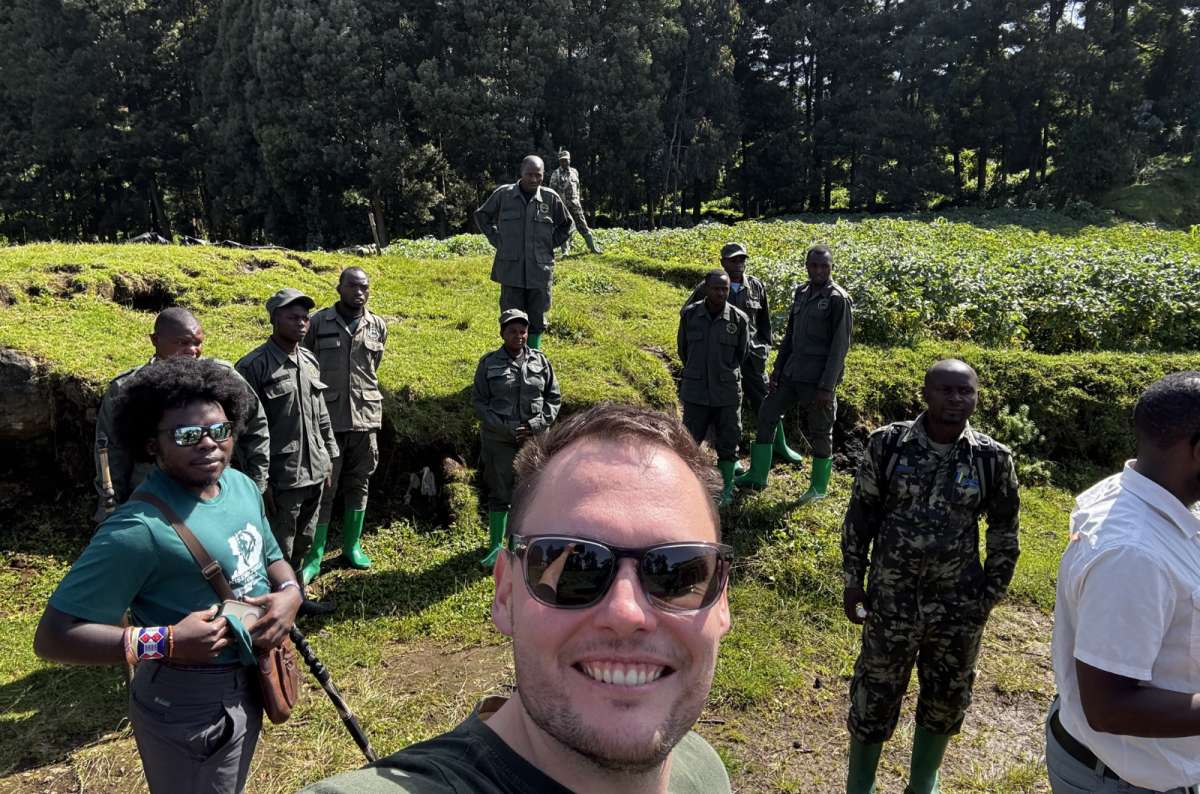
Gorilla trekking is the main reason many people visit Rwanda, and I get it. The permit is expensive enough to make you question every financial decision that led to this moment, but the experience is still worth it.
You start early at the park headquarters near Kinigi: registration, passport checks, group allocation, coffee, briefing, and then the drive to your trailhead. If you are self-driving, you also need to register your driver details. Be on time. This is not a “show up whenever” activity.
I did a medium-length trek to the Igisha group, which had silverbacks, mothers, and babies. The drive to the trailhead took about 2 hours and was properly off-road. This is not the moment to arrive in a tiny rental car and hope optimism counts as 4WD.
The hike itself was not technically hard for us. We walked about 2 km, but the forest is thick, muddy, and annoying in that specific jungle way where every plant seems personally invested in touching you. We also saw golden monkeys on the way, almost casually.
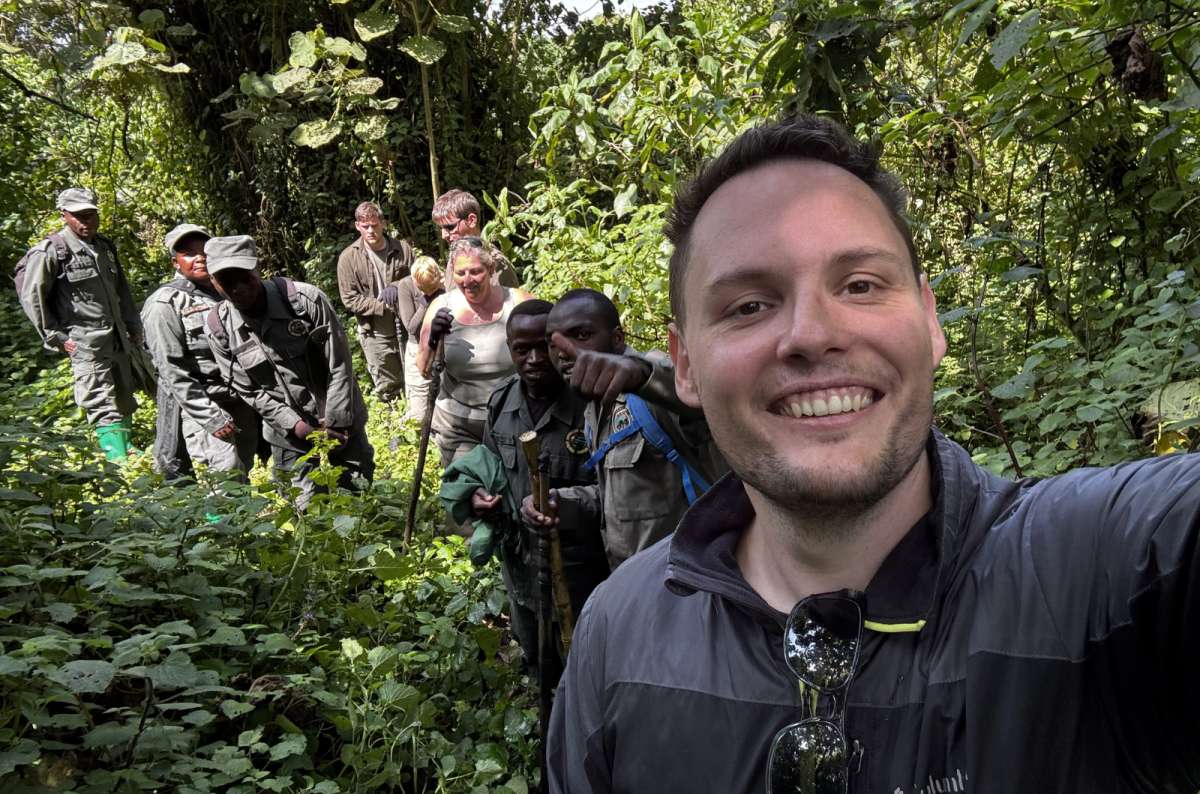
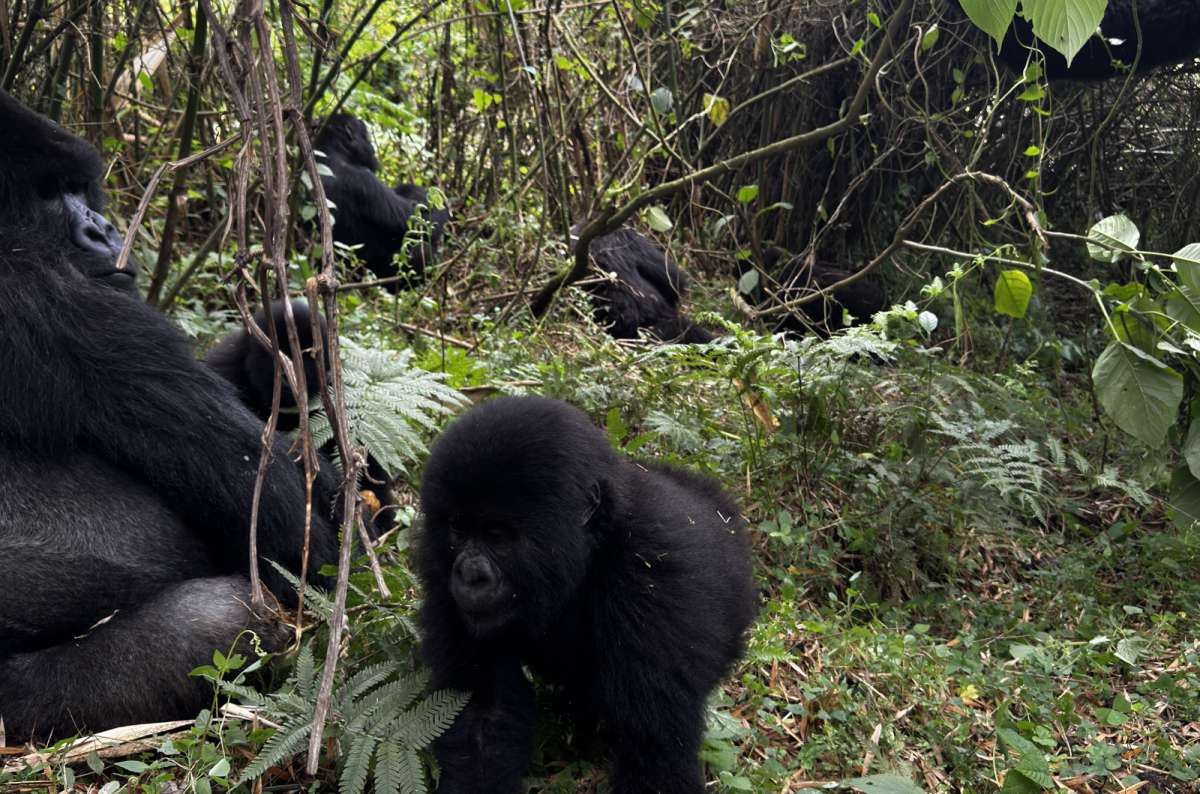
Then we reached the gorillas.
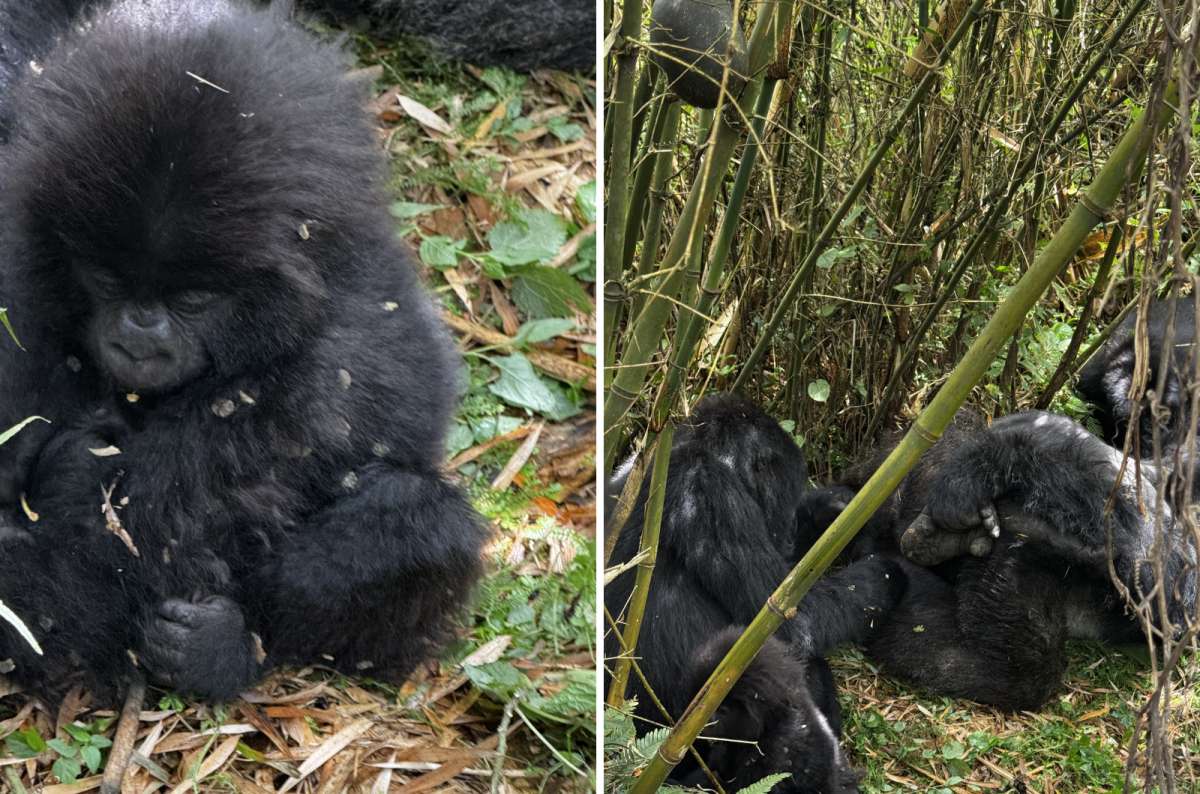
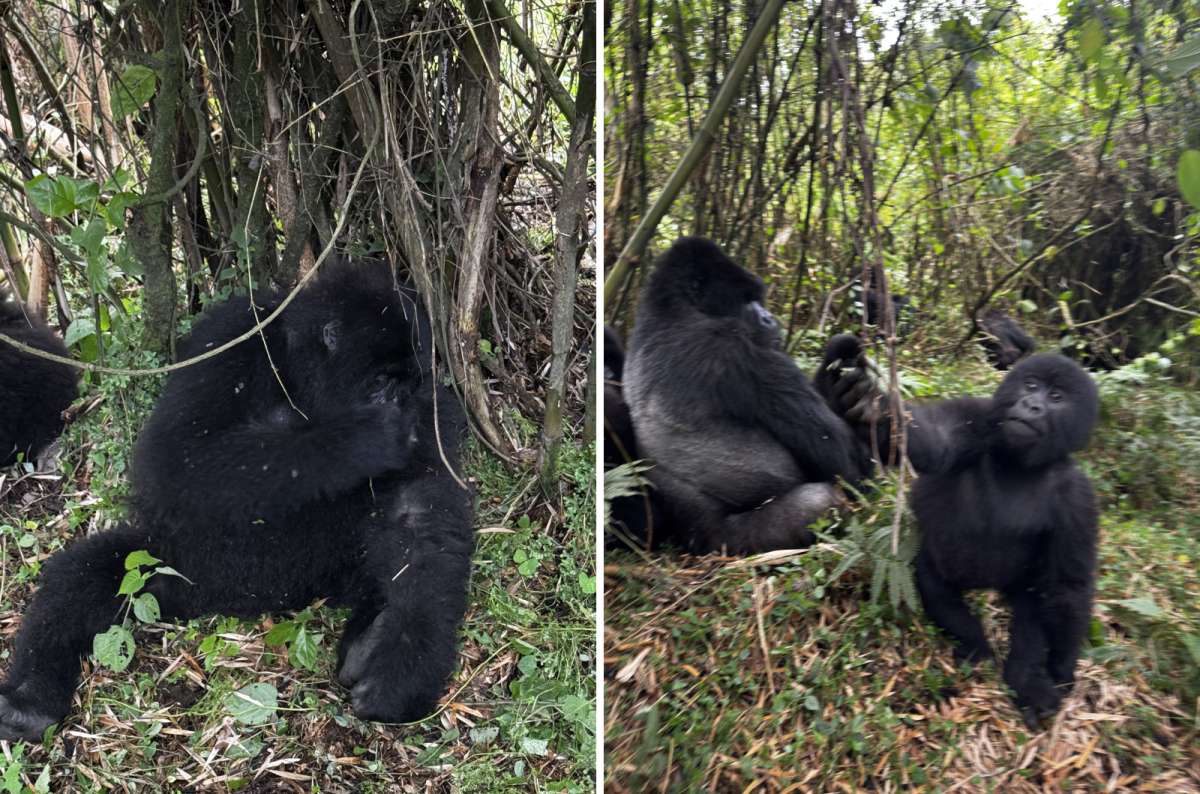
We spent exactly one hour with them, and yes, one hour is enough. My heart was pounding the entire time. We were sometimes only 2–3 m away. The small ones were teasing each other, the adults were napping, and everyone had to wear masks to protect the gorillas from disease.
Fun fact: gorillas eat more than 30 kg of vegetation per day. Watching them eat, sit, and nap makes them weirdly relatable. Expensive, hairy, vegetarian relatives.
Time needed: Half day
Worth paying for? Yes, painfully yes
Best for: Once-in-a-lifetime wildlife experiences
Skip if short on time? No
My tip: Take a porter. Tip the guides, porters, and trackers. These people do real work, and tourism money matters here.

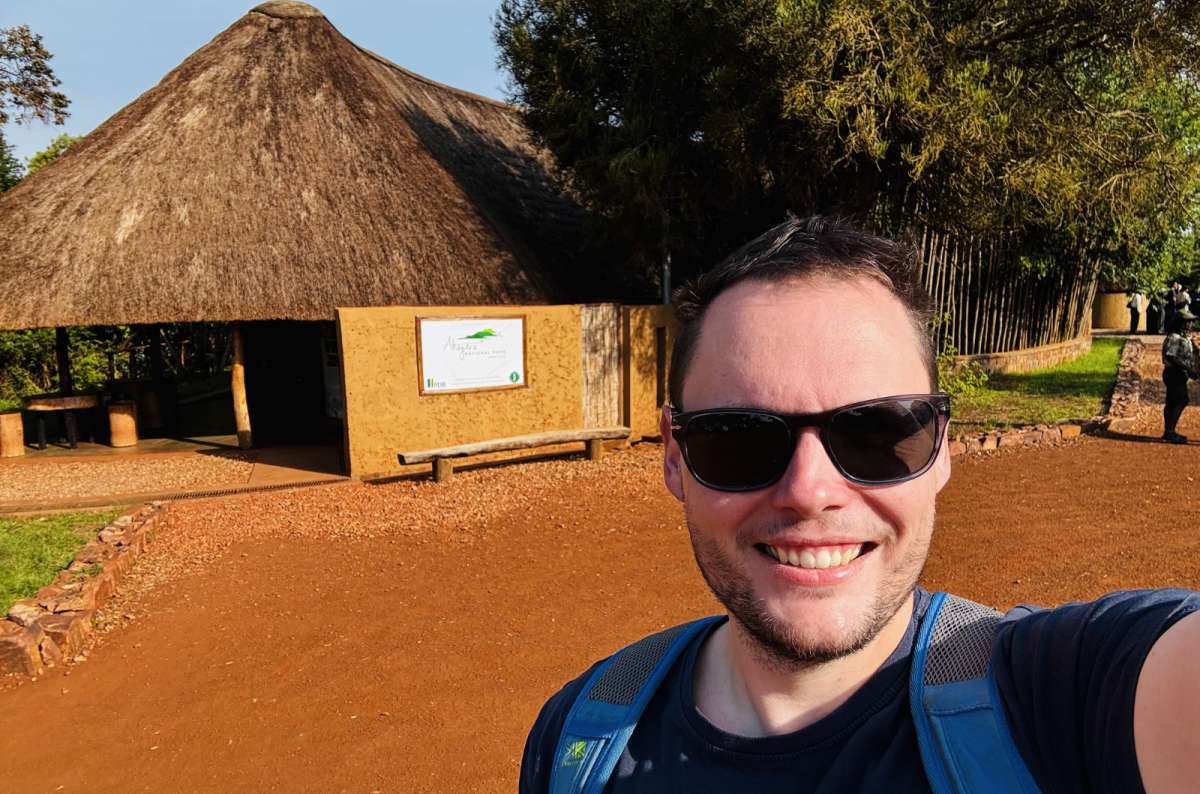
Akagera was better than I expected.
It is Rwanda’s only savanna national park, and it is much more scenic than the lazy “day trip from Kigali” guides make it sound. I spent 3 days there and still felt the park had enough to keep me busy.
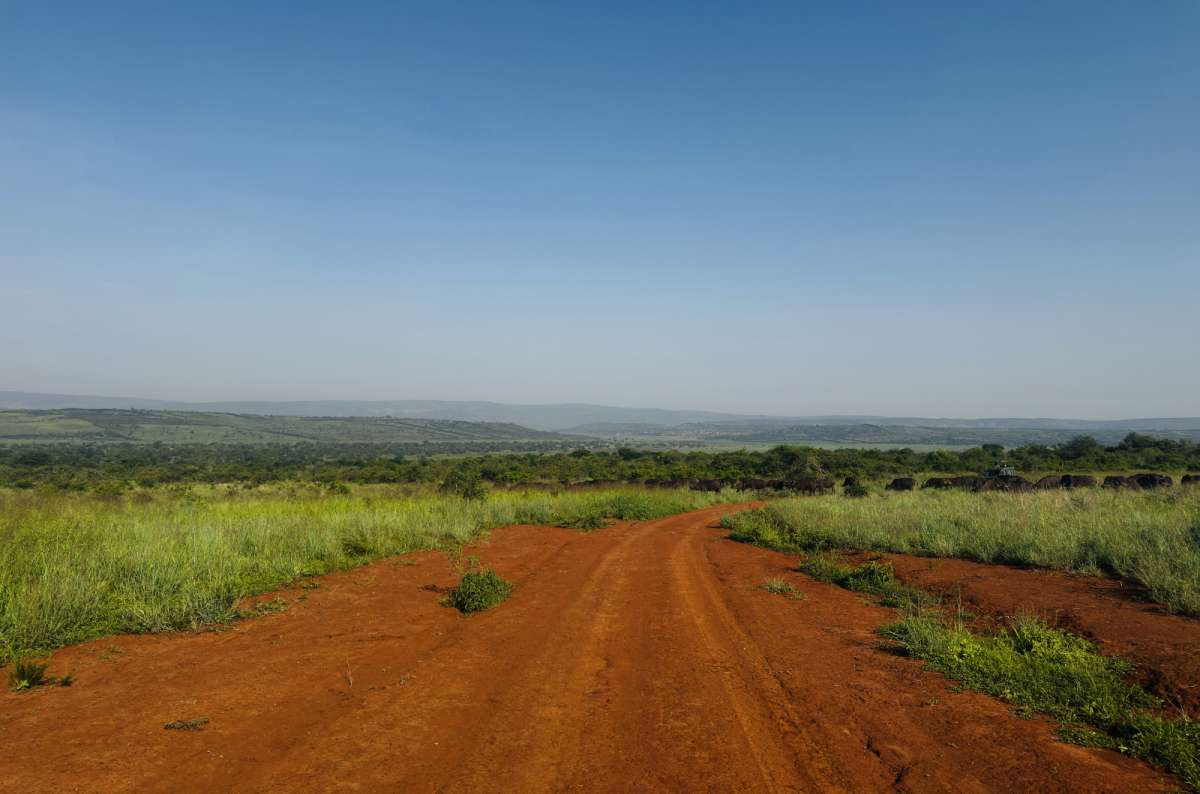
Akagera has lakes, wetlands, hills, forest, grassland, and views across to Tanzania. It is one of the more dramatic safari landscapes I have seen because you often look down over water, palms, and open plains. Compared with drier safari parks, Akagera is green even in the dry season. My inner animal-checklist idiot was very happy.
Do not treat Akagera as a quick day trip unless you truly have no choice. The park is long, around 80 km from south to north, and the maximum speed is low. You will drive a lot. That is safari. Your spine must accept the terms and conditions.
Take a guide even if you have your own car. Mine cost USD 40 for a full day, and it was easily worth it. Guides spot animals better, communicate sightings, and save you from proudly staring at bushes.
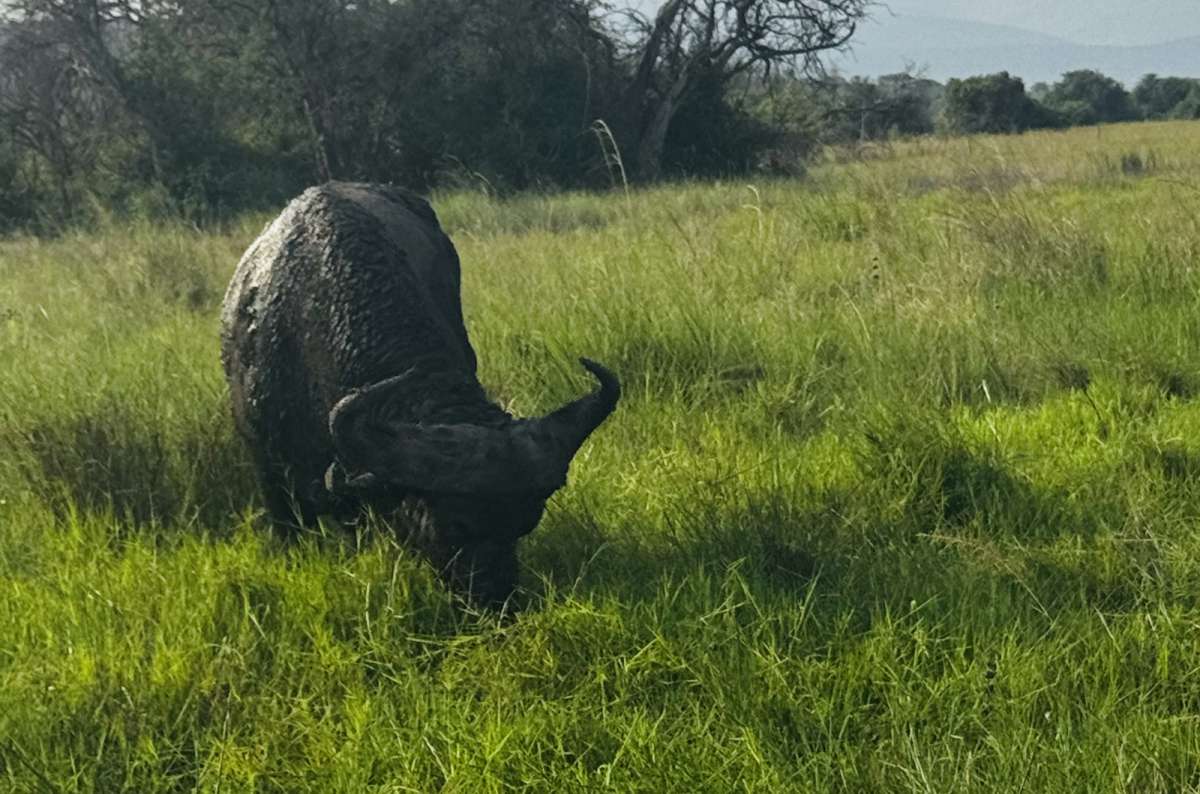
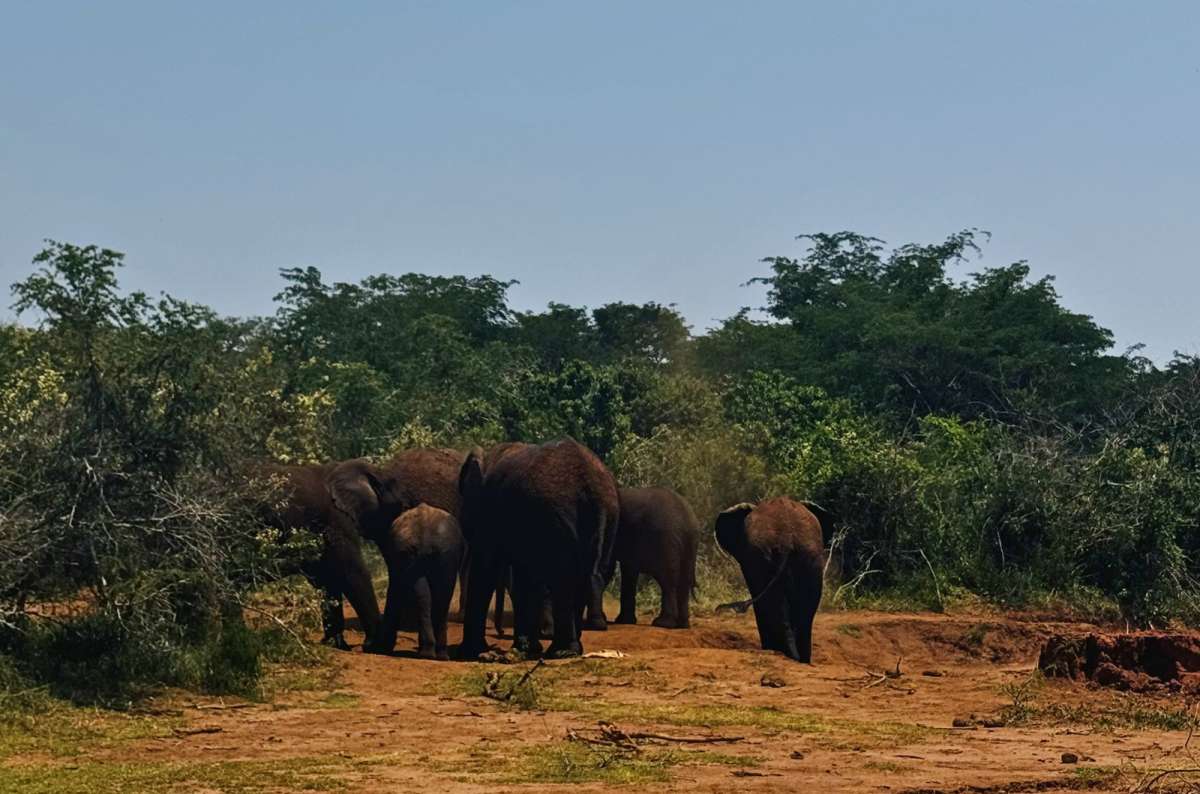
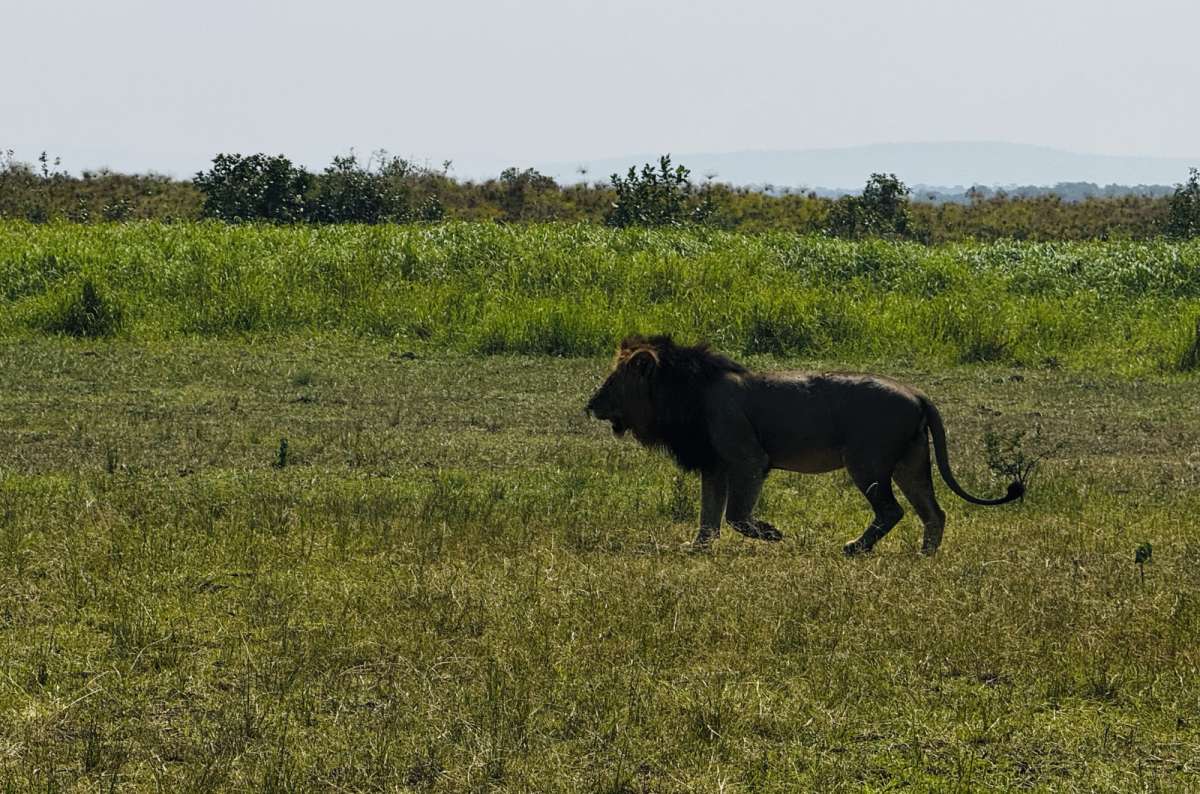
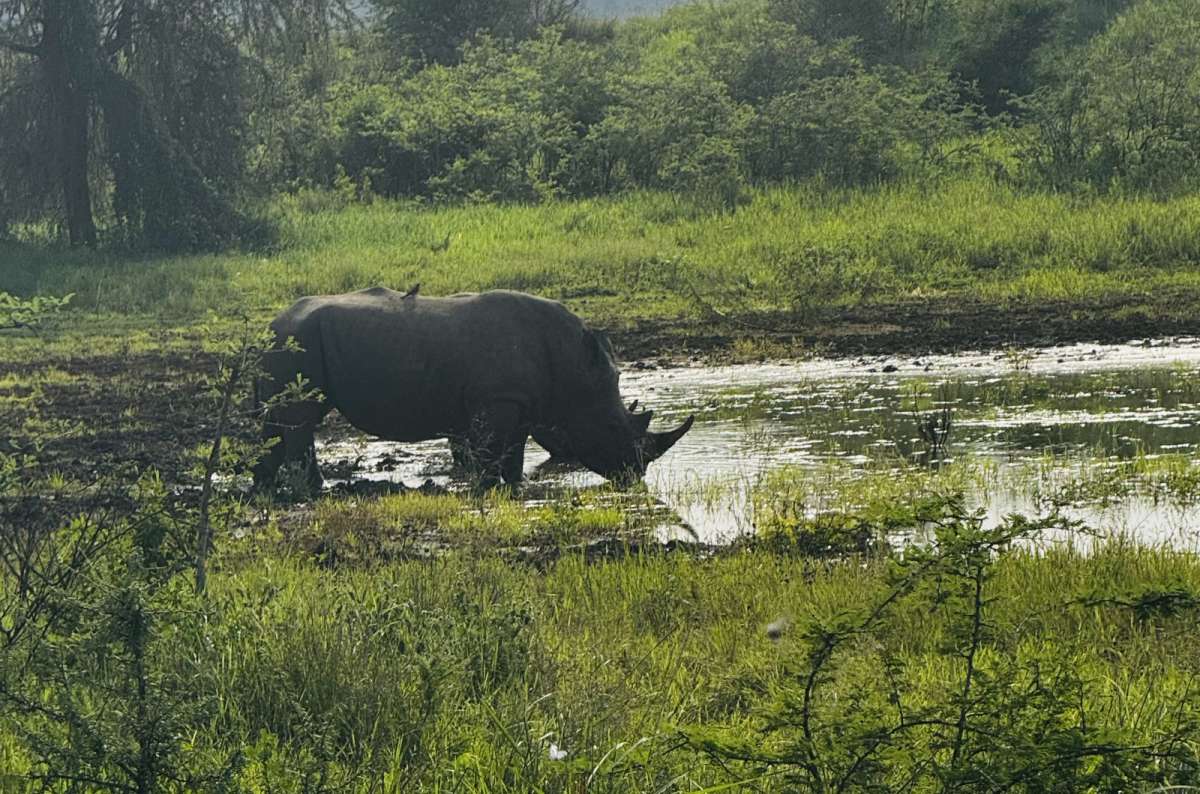
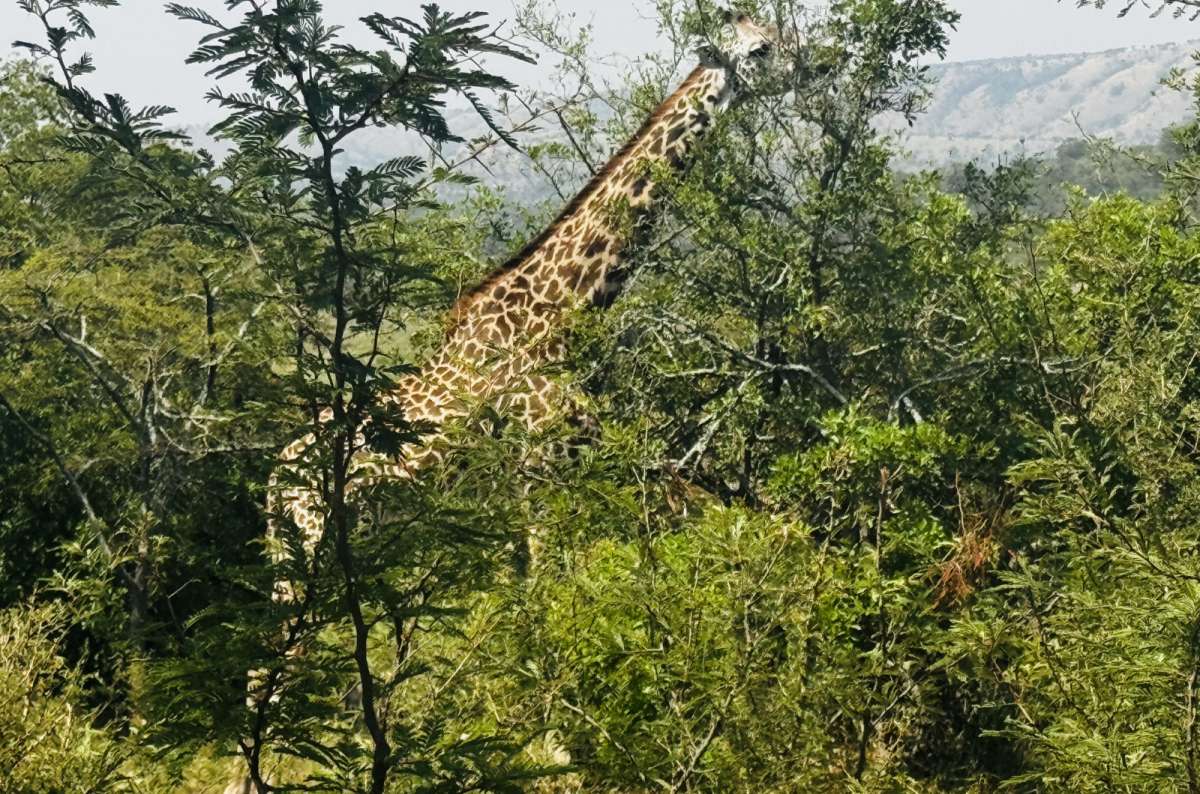
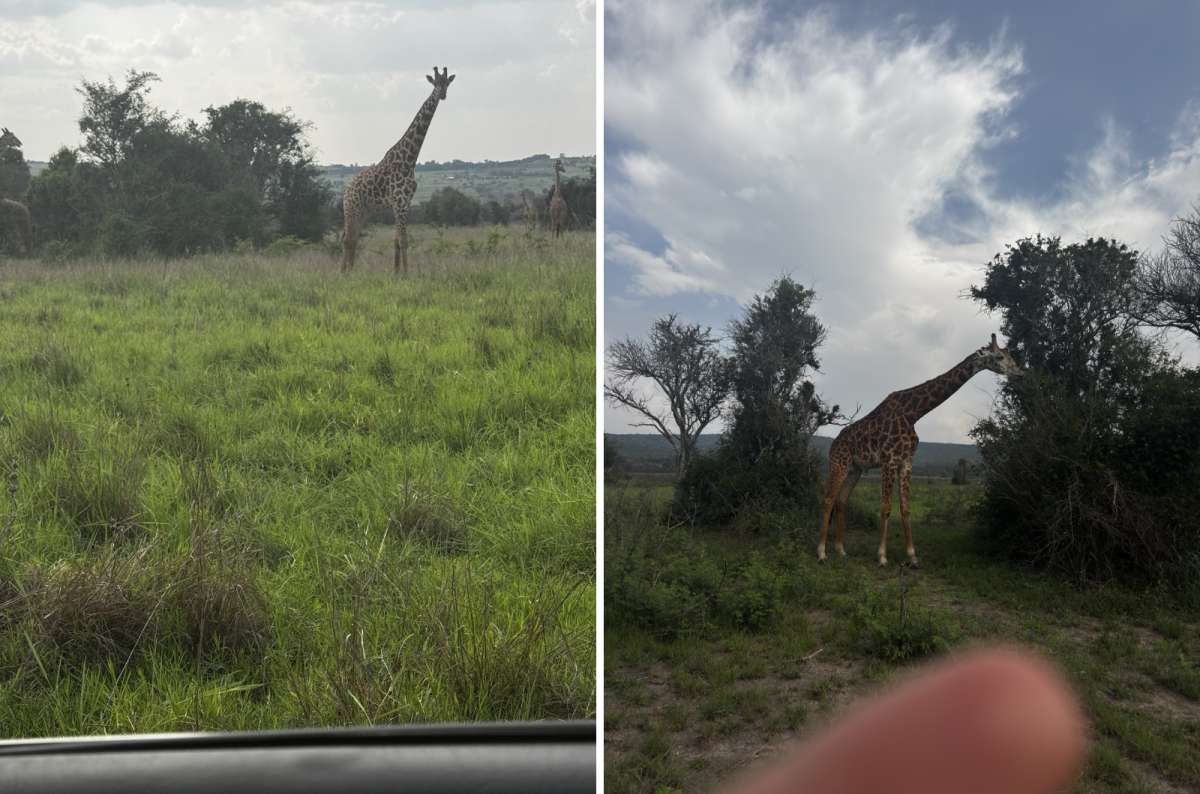
We saw lions, rhinos, elephants, giraffes, buffalo, hippos, crocodiles, baboons, antelopes, a puff adder, and a fish eagle with a fish. No ostriches or wildebeest, which my internal checklist is still processing.
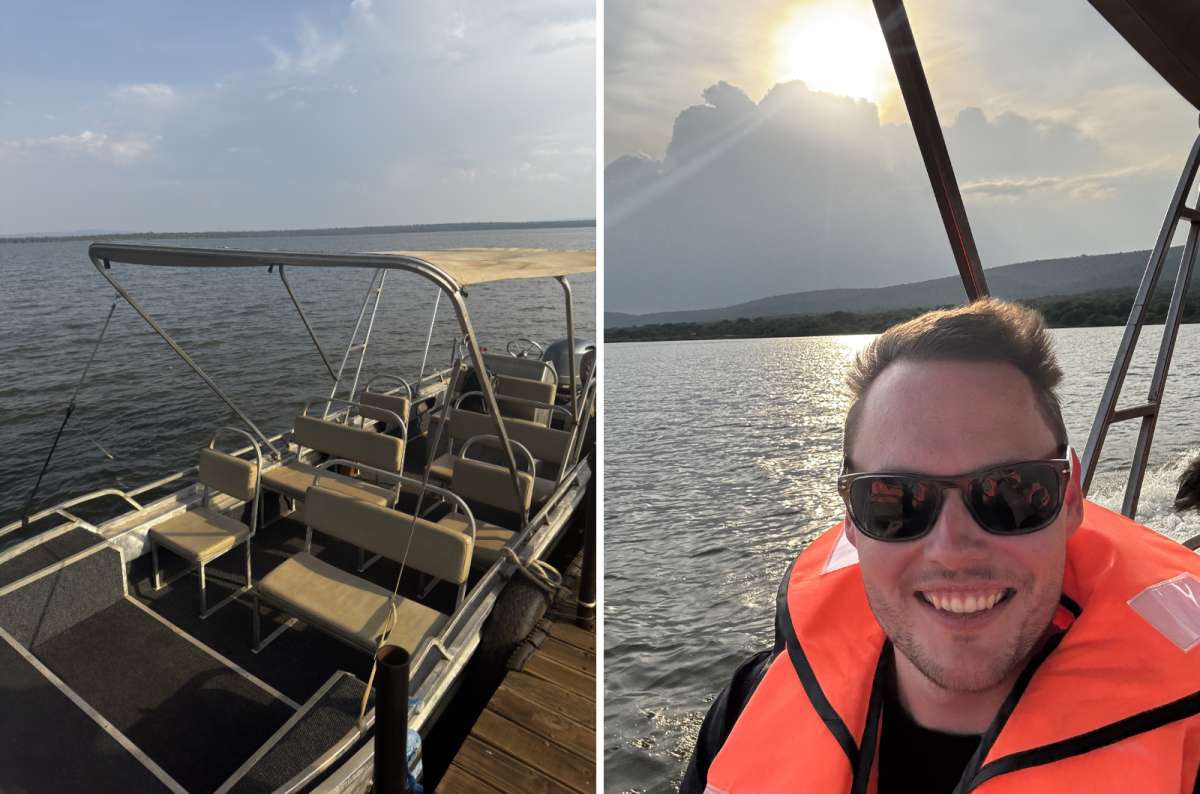
The Lake Ihema boat tour was one of my favorite activities in Akagera. The boat is fast, breezy, and a glorious break from sitting in a hot car pretending you are not slowly becoming beef jerky. We saw hippos, crocodiles, kingfishers, herons, ibis, egrets, and African fish eagles.
Time needed: 2–3 days
Worth paying for? Yes
Best for: Safari, landscapes, birds, hippos, rhinos
Skip if short on time? Skip the rushed version, not the park
My tip: Fuel up before entering. You can easily drive over 200 km inside the park at slow speed. Also, don’t wear black. Tsetse flies like dark colors. Of course, I wore a black T-shirt, because intelligence is theoretical.
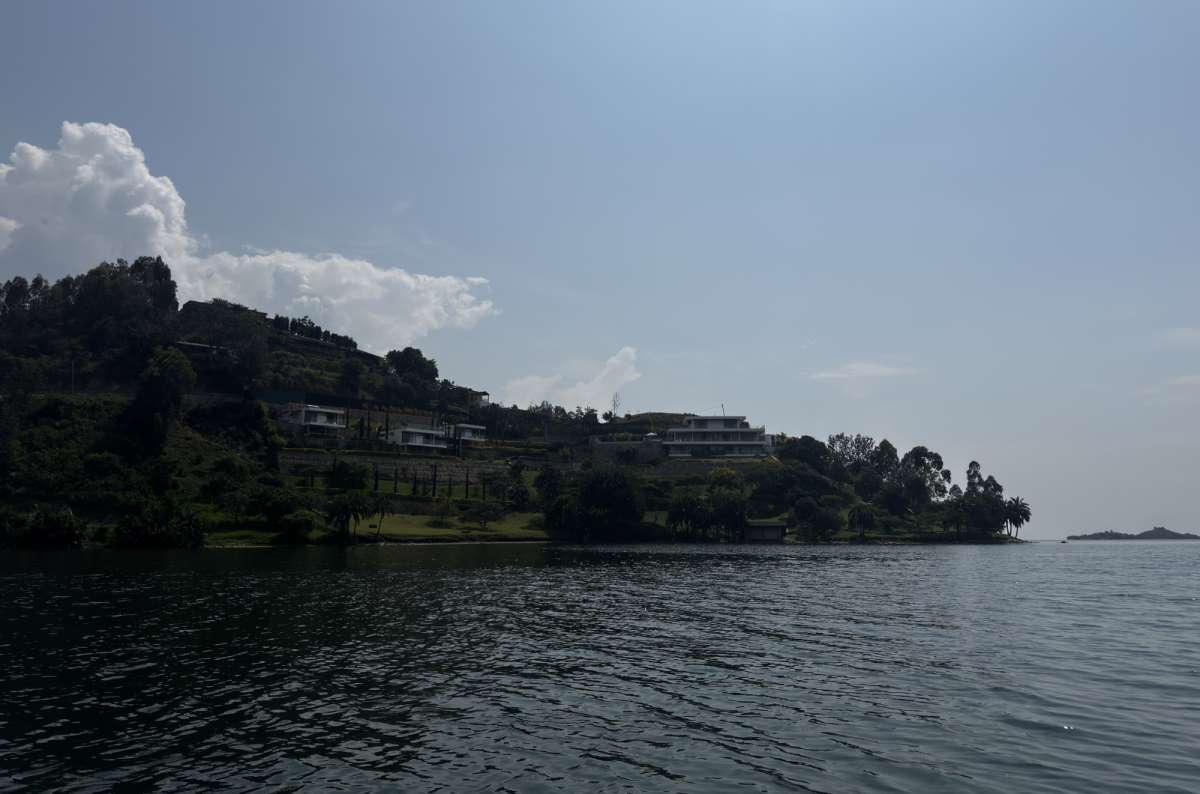
Lake Kivu was my biggest Rwanda surprise.
I wasn’t expecting much from it. I wasn’t even sure I wanted to go. Then I got there and thought: ah, so this is where Rwanda hides the good sunsets.
It felt a bit like the Caribbean, except freshwater, mountainous, and much less smug. The lake is huge, full of islands, and in many places you cannot even see the Democratic Republic of Congo on the other side.
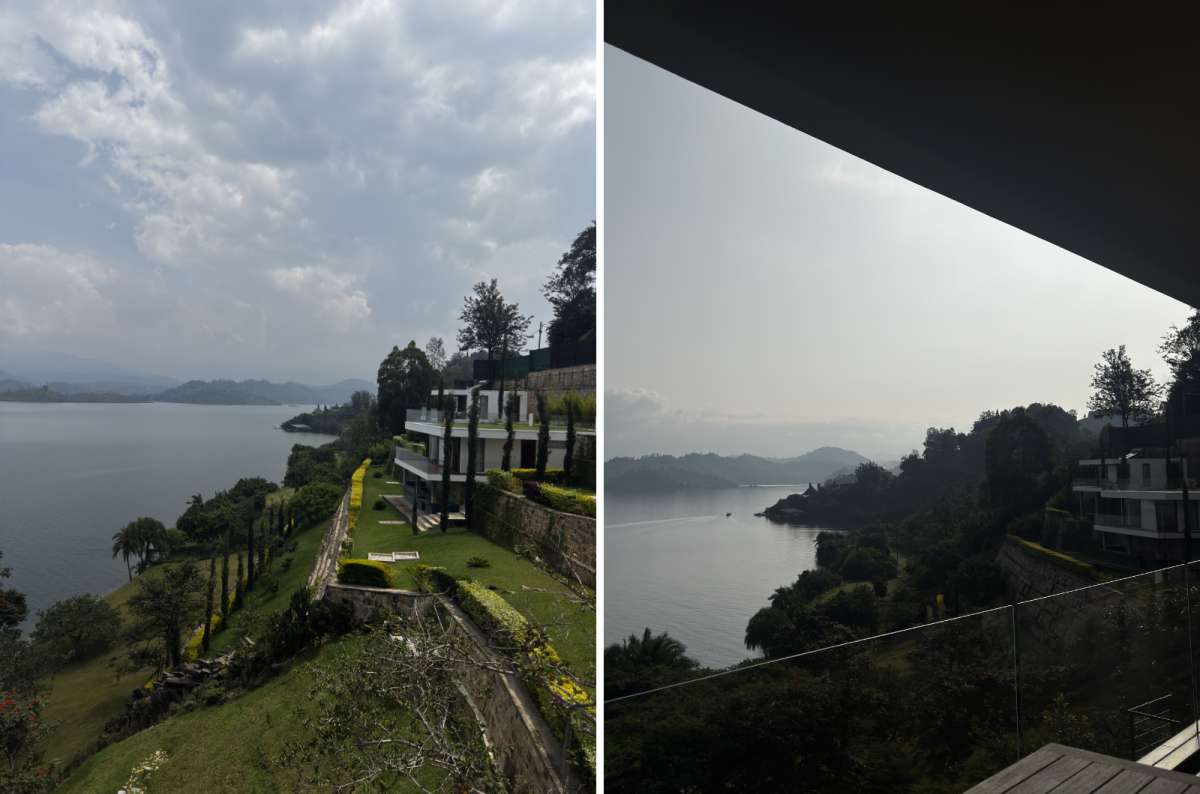
I traveled along Kivu from south to north, and the tar road was good the whole way. Very curvy and slow, yes, but good. In Rwanda, distance on the map means almost nothing. The speed limits, mountains, curves, and villages decide your real travel time.
I would divide Lake Kivu into three useful sections. The south is more rural and raw. The middle around Kibuye/Karongi is the most picturesque, with islands, mountains, quiet resorts, and very little nightlife. Perfect. The north around Gisenyi has more hotels, more nightlife, the border with DR Congo, and easy access to Volcanoes National Park.
Pro tip: Book a boat cruise online to really make the most of the trip.
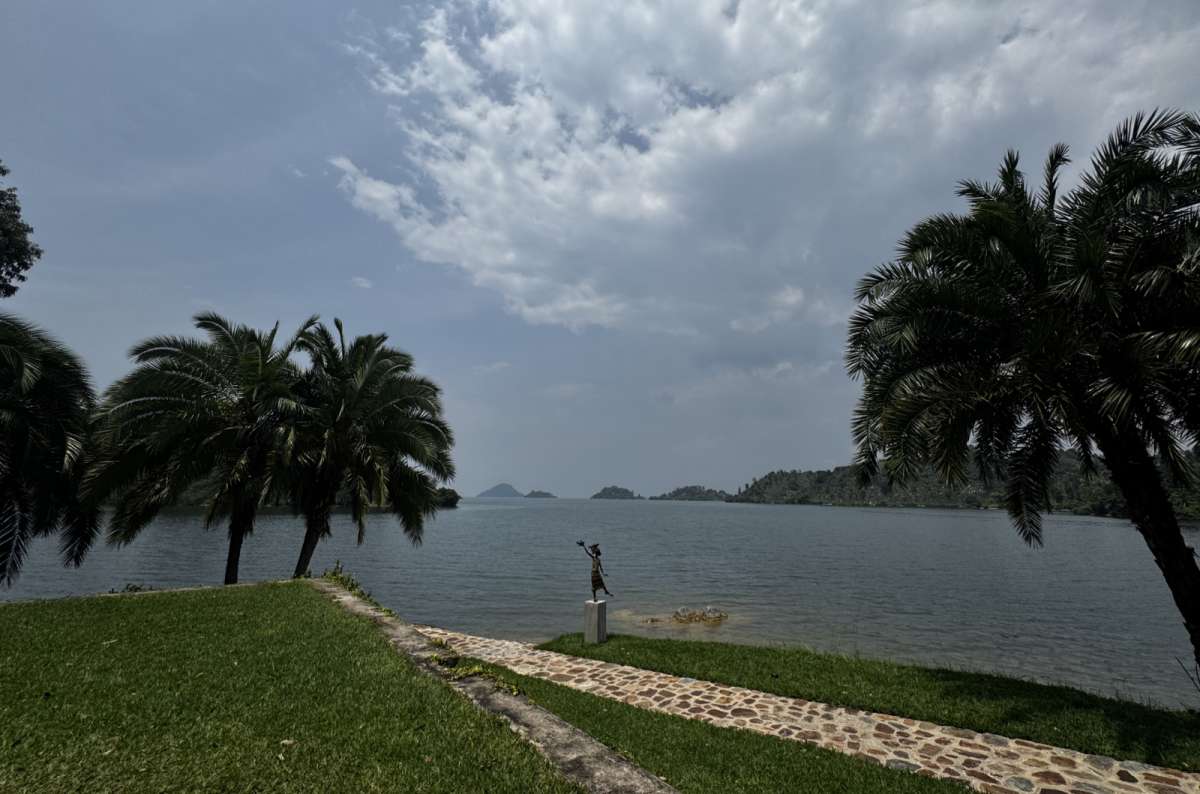
I stayed near Karongi at the end of my 14-day trip for 3 days doing almost nothing, which after gorillas, chimps, safaris, mud, and early starts felt like a medical requirement.
The sunsets were absurd. The islands, the fishing boats, the warm air, the calm water—it was one of those places where I had planned to “recover” and then accidentally loved it.
Important: people say Lake Kivu is bilharzia-free. I would not treat that as a personal challenge. The risk is lower than in some other African lakes, but not zero. Be sensible, and consider post-trip testing for schistosomiasis if you swam.
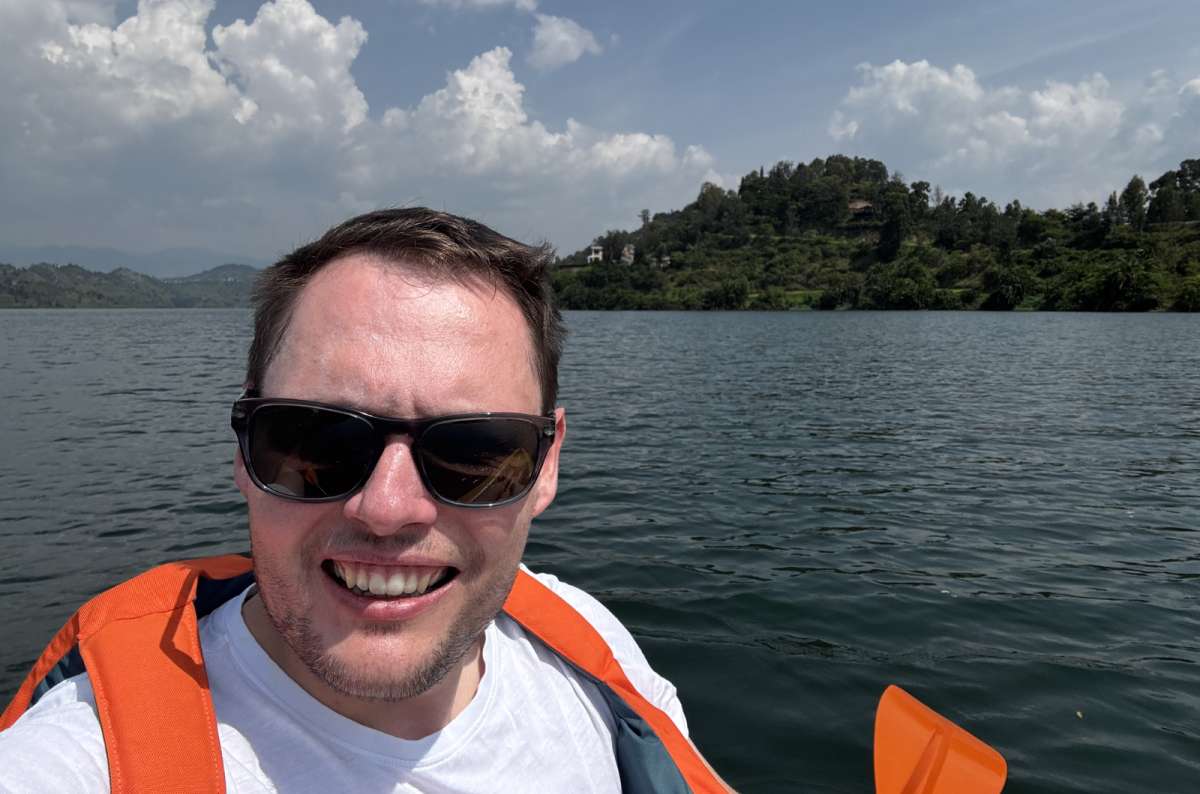
Time needed: 2–3 days
Worth paying for? Yes, especially for a good lakeside hotel
Best for: Rest, sunsets, kayaking, islands, scenery
Skip if short on time? Only if you are doing a very short gorilla-only trip
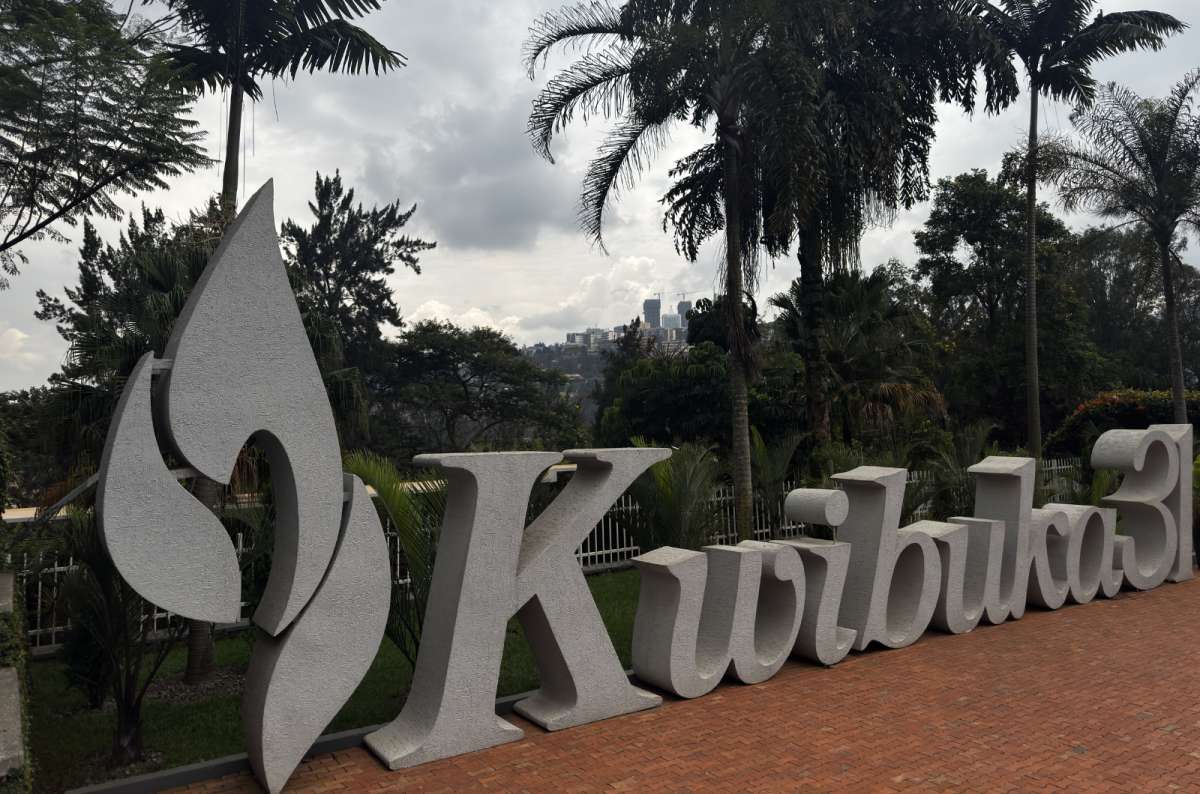
Kigali Genocide Memorial is the most important place to visit in Kigali. It is also one of the hardest.
The memorial includes a museum and mass graves where more than 250,000 victims are buried. This is not a place to rush, pose, or “tick off.” It is where Rwanda’s recent history becomes very real and very uncomfortable.
I paid for the audio guide, and I think it is the best way to visit. The museum explains what preceded the genocide, what happened, and what came after. It also covers genocide more broadly, which gives the visit more context than just a Rwanda history lesson.
Pro tip: If you book your tickets online, the audio guide is included. It is also included in a lot of the city tours.
The children’s room is the worst part. I don’t mean badly done. I mean emotionally brutal. Don’t bring small children here, and don’t come if you are not ready to absorb something heavy.
The visit reminded me of places like Majdanek in the sense that your brain keeps looking for logic and finds none. What stayed with me most in Rwanda was not only the horror of the genocide, but what came after: the emphasis on unity, accountability, and building something bigger than revenge.
Time needed: 1–1.5 hours
Worth visiting? Yes
Best for: Understanding modern Rwanda
Skip if short on time? No, unless you truly cannot handle it emotionally
Chimpanzee trekking in Nyungwe was one of the best-value wildlife experiences I had in Rwanda.
Compared with gorillas, it is cheaper, more active, and honestly more chaotic in a good way.
The trek starts ridiculously early. You need to be at the meeting point around 5:30 am, still half-asleep and questioning every decision that brought you there. After briefing, porter selection, and a short drive to the trailhead, you start hiking in near darkness. Bring a headlamp if you struggle in low light.
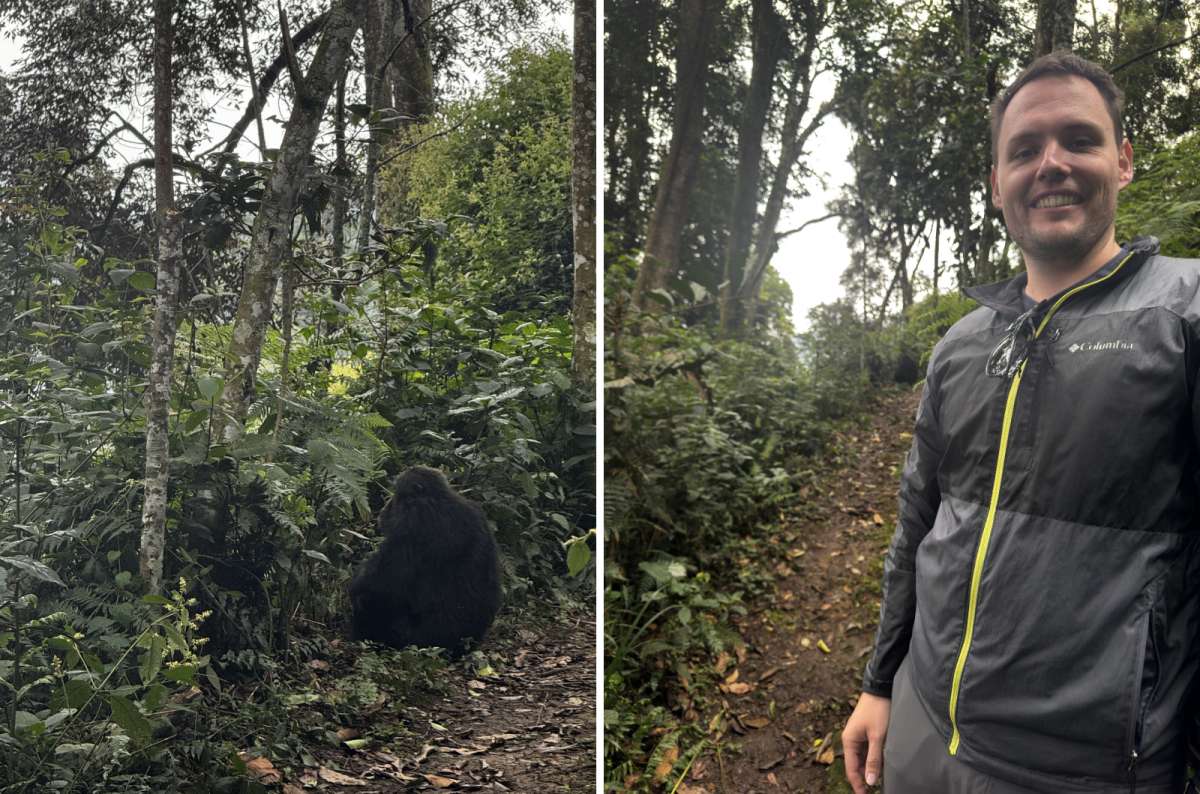
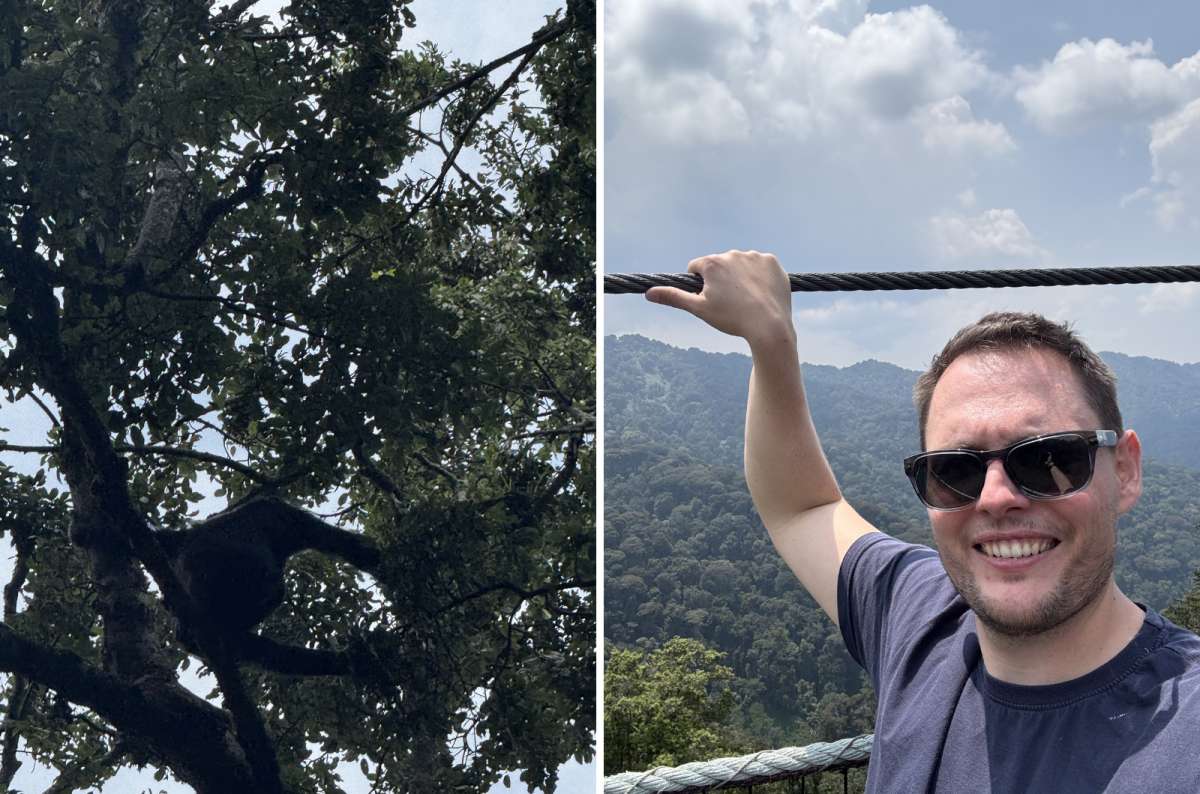
We visited the biggest chimpanzee group in Nyungwe, around 60 individuals, though they split during the day. I had not realized how much chimpanzees stay in trees. They sleep there, make nests there, scream there, and generally make the forest feel alive.
We found them after about 45 minutes, which was lucky. The day before, another group apparently spent 7 hours searching. Wildlife does not care about your itinerary. Rude, but fair.
We saw around 8 chimps, including babies, and spent 1 hour 45 minutes around them. The hike was steep and slippery, about 2.5 km through jungle with roughly 250 m elevation gain for us.
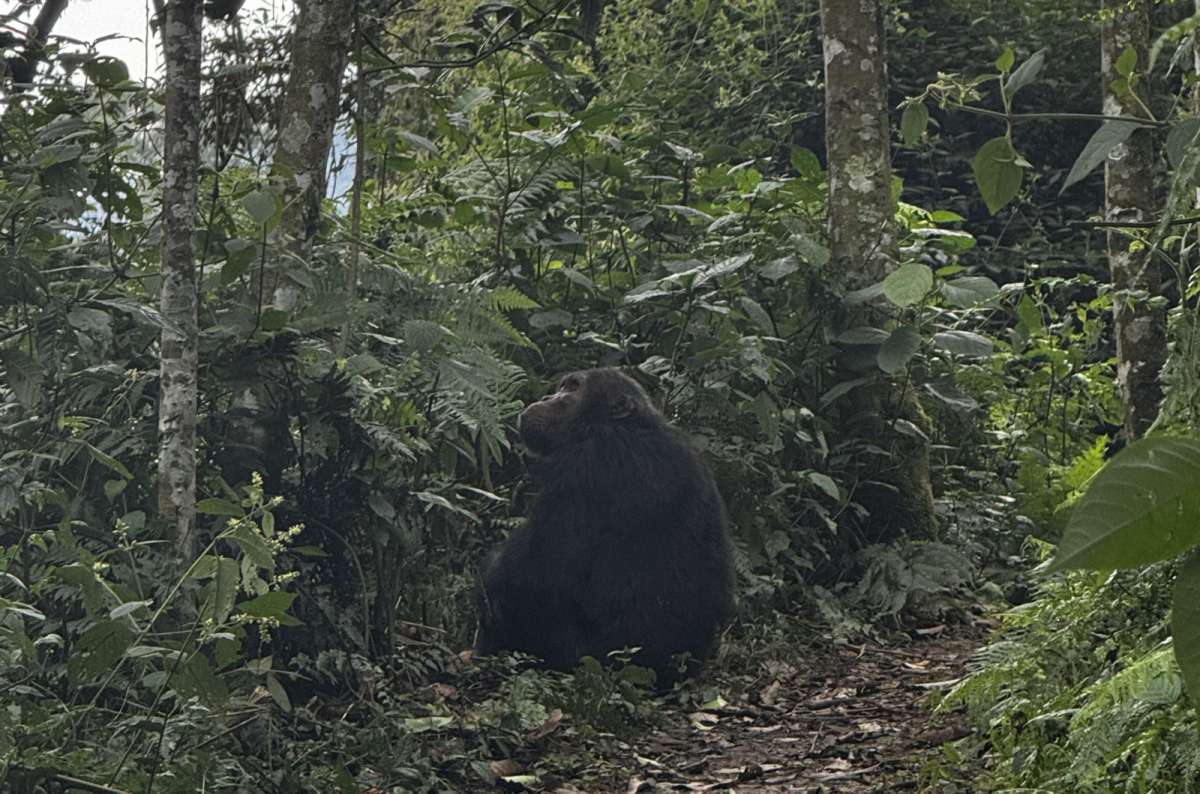
It felt comparable to gorilla trekking in difficulty, minus the stinging nettles, plus more action. The chimps are louder, faster, more restless, and much less interested in giving you a calm spiritual moment.
My tip: Take a porter. They carry your bag, help on slippery slopes, and the money supports local communities.
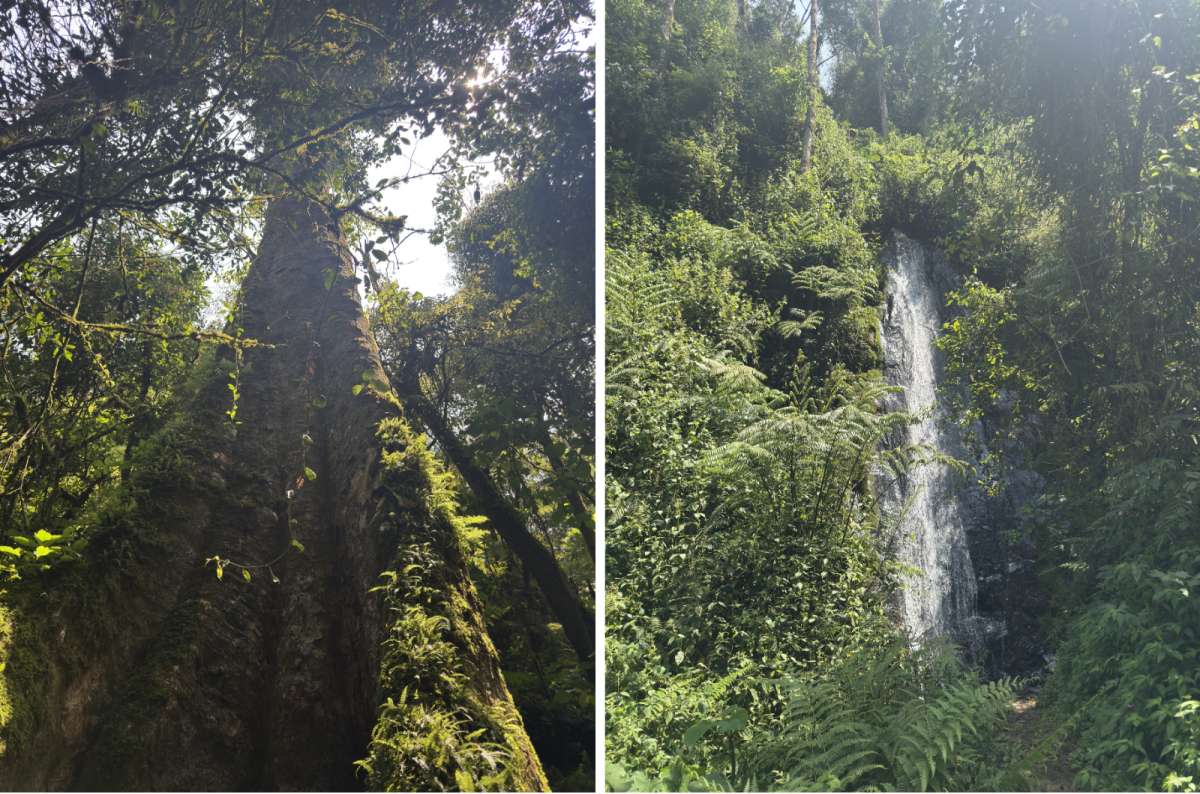
Nyungwe is one of Rwanda’s most beautiful landscapes.
The drive through hills, tea plantations, mist, clouds, and forest was magical. A lot of the road sits around 2,500 m, so bring a jacket. When it rains, it can feel close to 10°C, which is not the Africa weather your naive brain packed for.
Most major hikes start from Uwinka Visitor Center, deep in the park. Stay inside or near the park if you can, because driving 30–60 minutes before an early activity gets old fast.
The canopy walk is the famous one. It costs real money for a short activity, and you spend maybe 10 minutes on the actual bridge. Is that ridiculous? Yes. Is it still worth doing? Also yes.
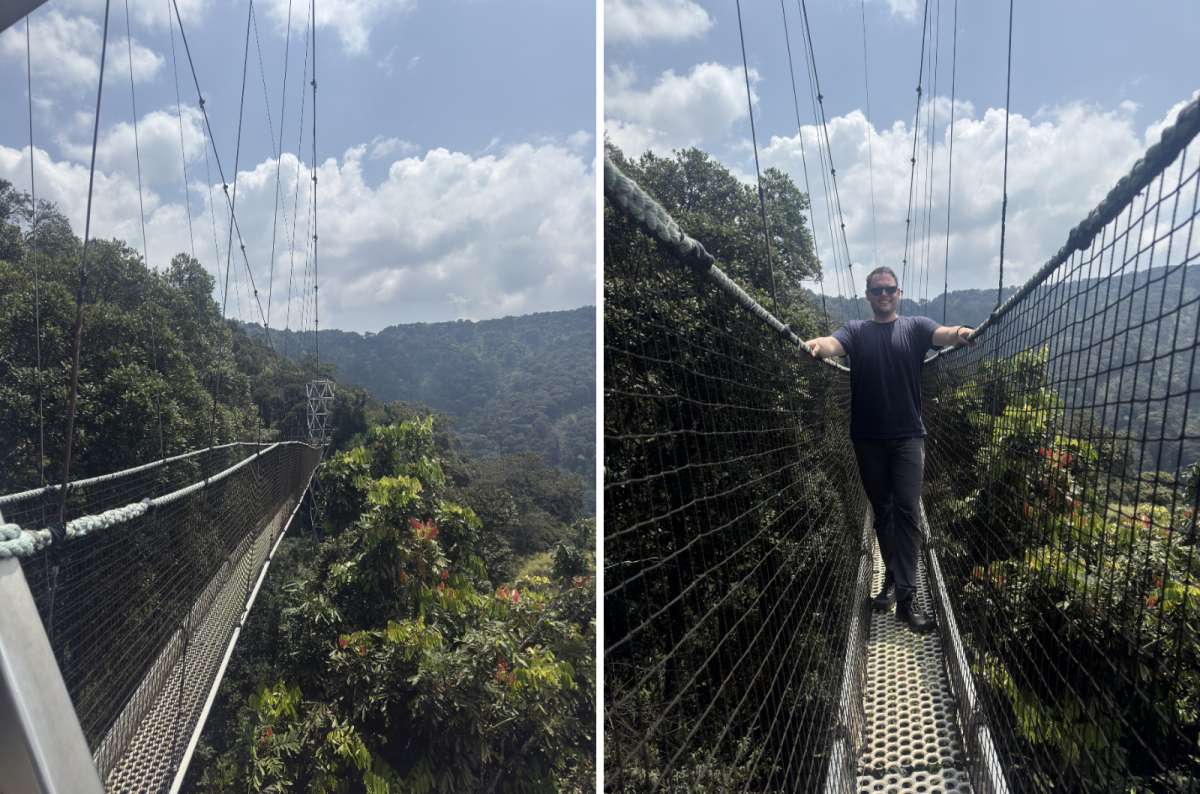
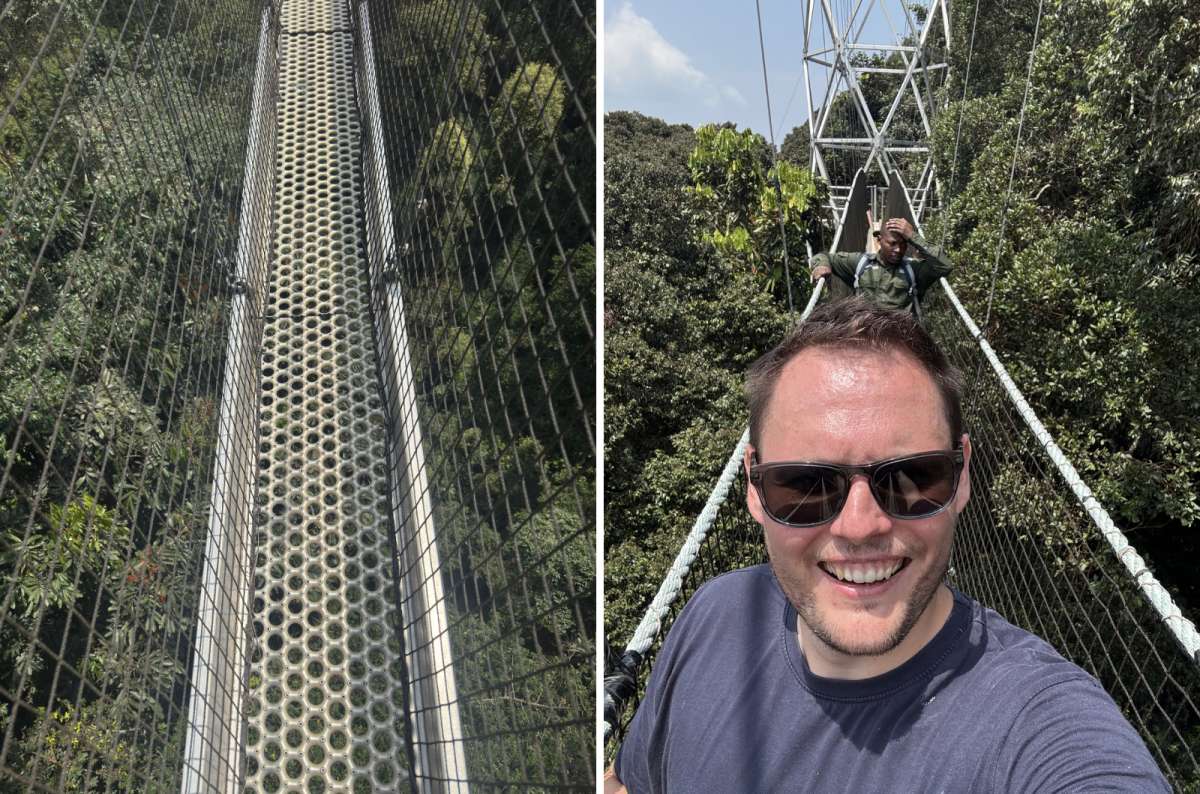
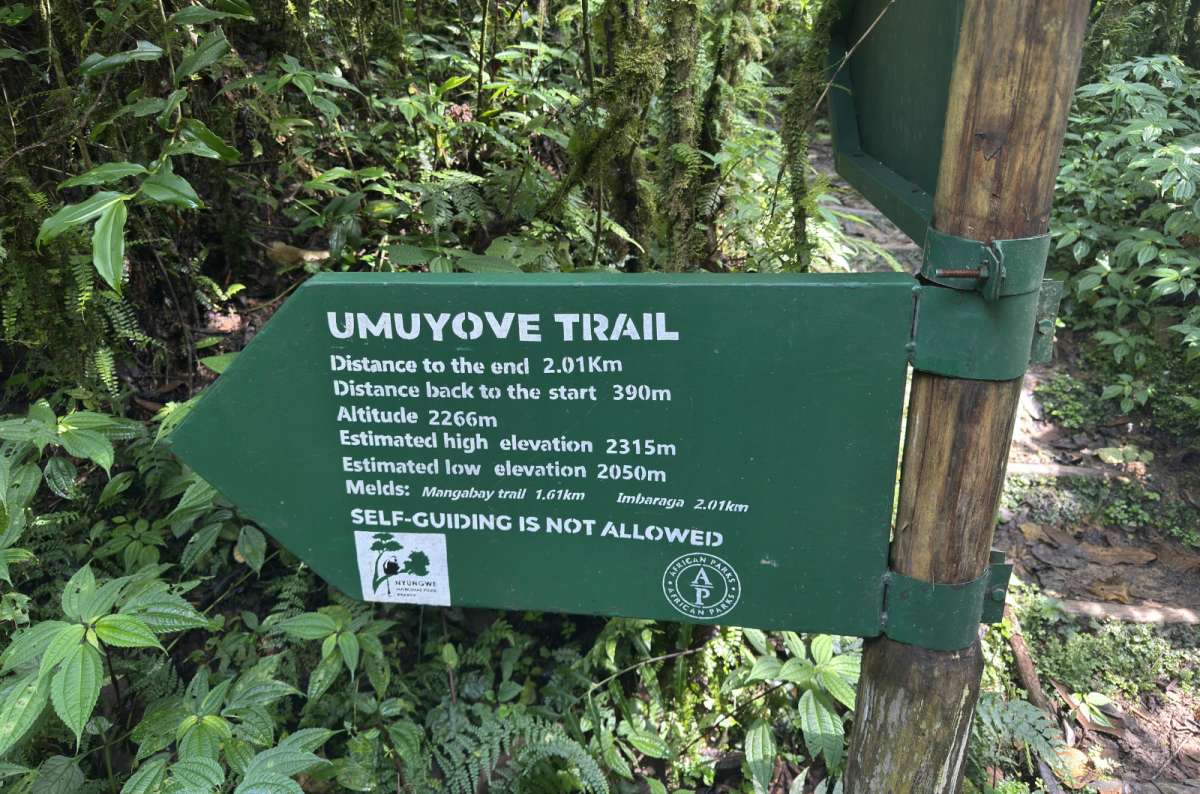
The bridge is around 70 m above the forest floor and feels less stable than it looks. I joined it with the Umuyove Trail, making the whole outing about 7–8 km with roughly 300 m elevation gain. At 2,500 m altitude, that feels harder than the numbers suggest.
We saw monkeys, a blue turaco, and learned a lot about trees and forest species. Nyungwe is not just “chimpanzee forest.” It is a proper rainforest, and it deserves at least one hike beyond the primate trek.
The only thing about Nyungwe is that everyone has time for everything. The food can be good, but when a club sandwich takes almost an hour, you begin to wonder if someone is growing the lettuce from seed.
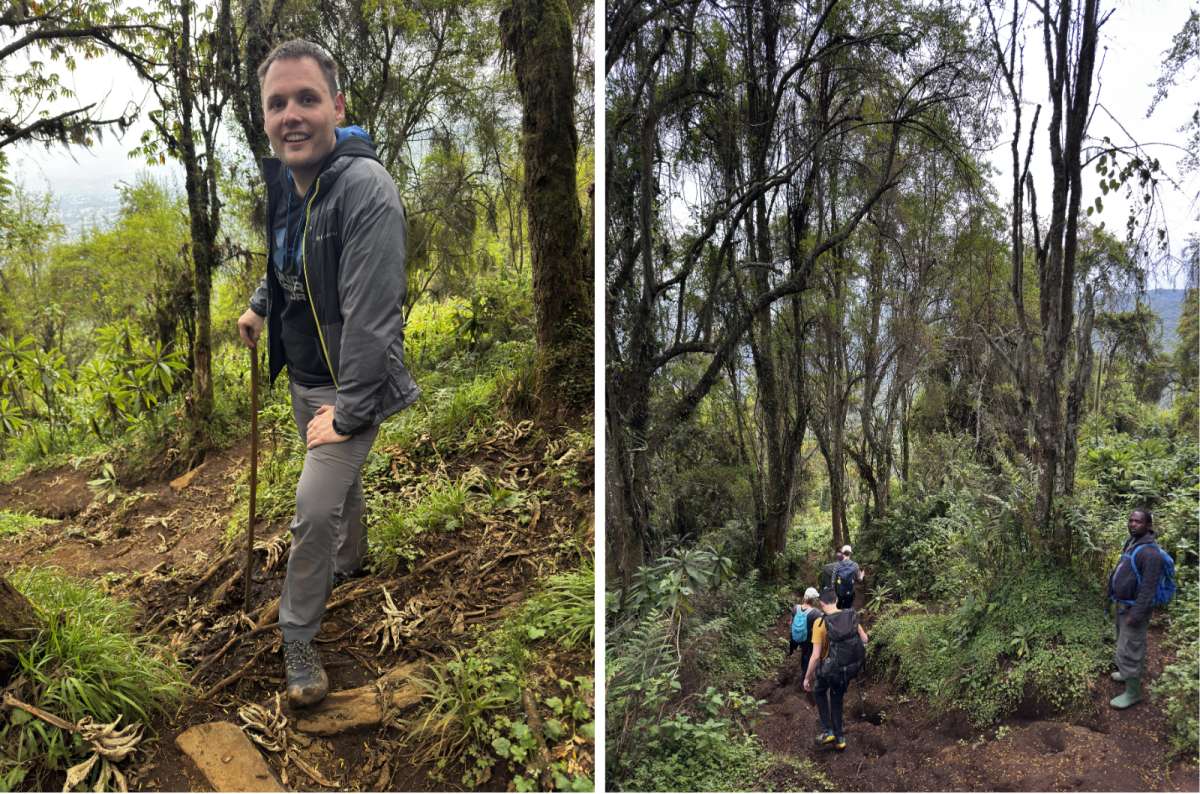
Bisoke is not a casual volcano stroll.
It is steep, muddy, wet, and high enough that the altitude starts bullying you early. The process starts at the same park headquarters as gorilla trekking, but the hike is much less busy.
You begin through fields, then climb into thicker forest, gaining around 1,000–1,100 m to the summit. For us, the full hike was 10.8 km and took about 5.5 hours.
It took us 3 hours to reach the top, and I felt my head and stomach almost the whole way. We were moving at a decent pace, but altitude has a way of making you feel like a heroic old potato.
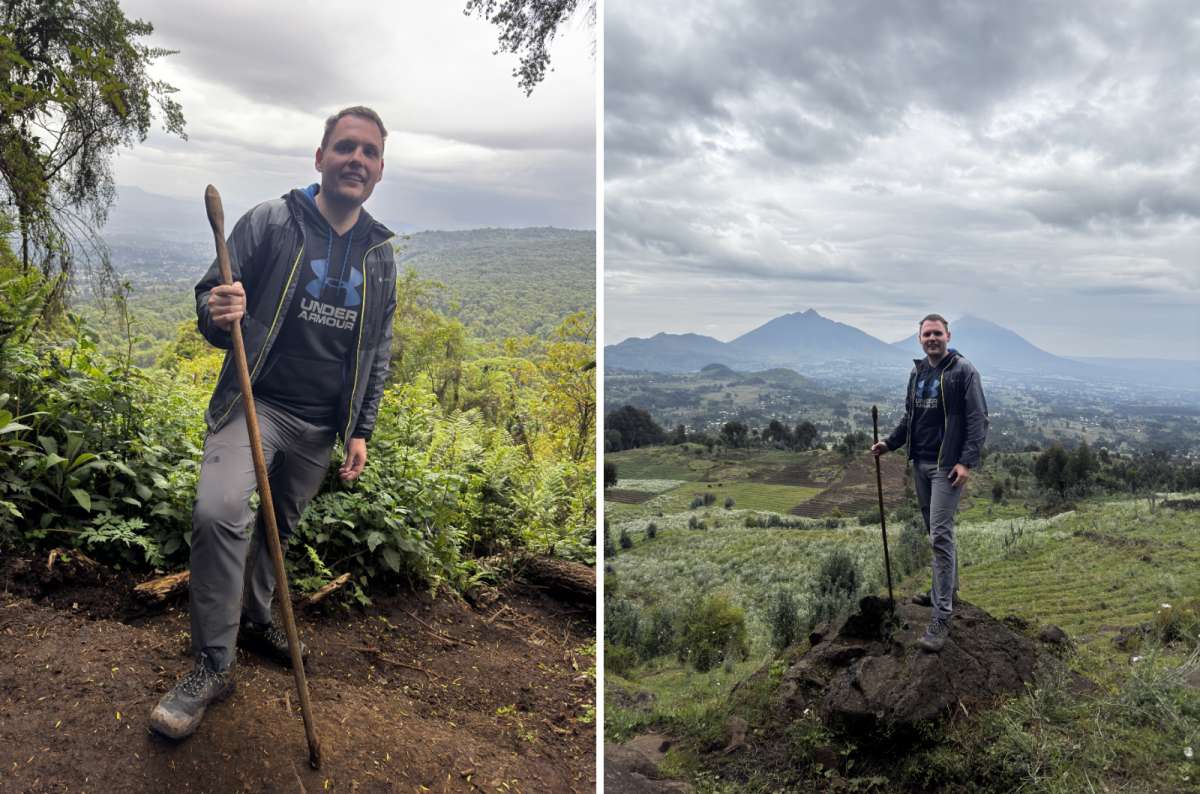
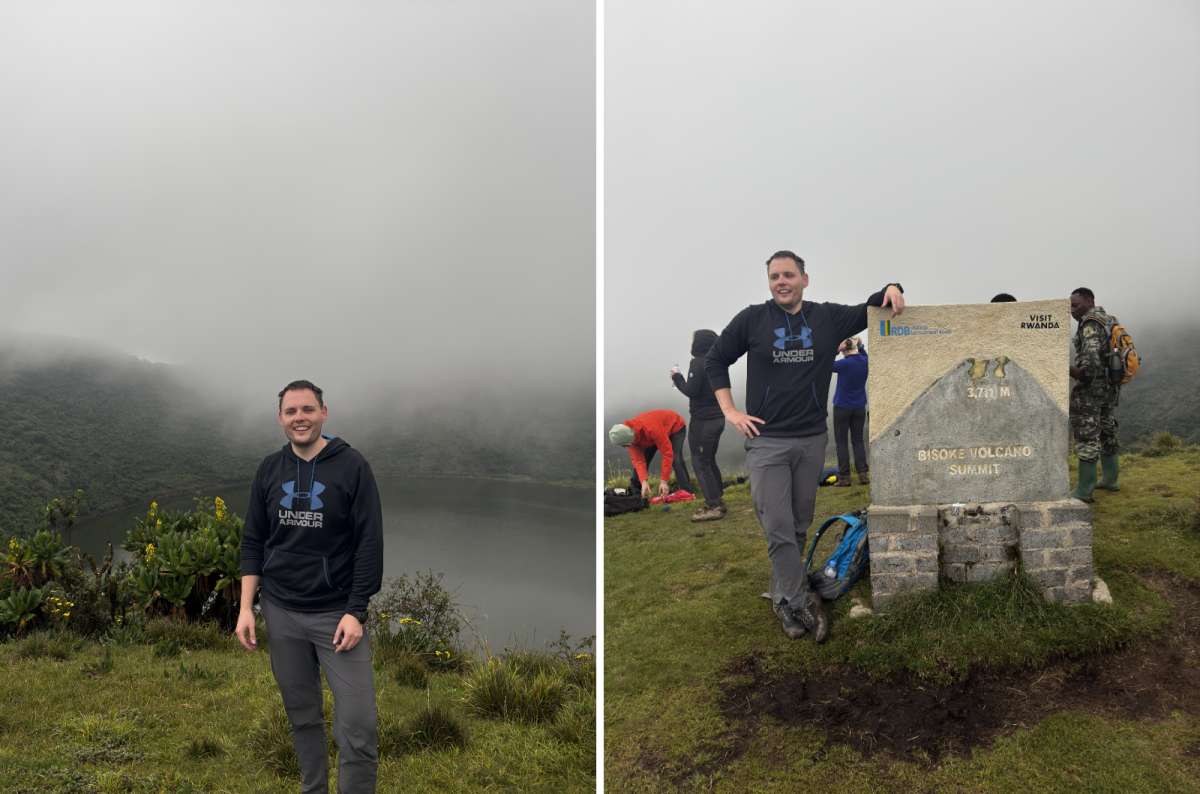
The summit has a crater lake, and on a clear day you get views of the Virunga volcanoes. The hike itself is often wet because of clouds, and the mud is serious. Bring good shoes. Some people went in sneakers. Some people also make bad decisions.
On the way down, remember this stupid but useful rule: red mud is your enemy, black mud is your friend. Black mud grabs your foot. Red mud sends you into slapstick comedy.
We also saw gorillas about 20 m away during the hike. Can that happen? Yes. Should you rely on it? Absolutely not. If you want gorillas, pay for gorilla trekking.
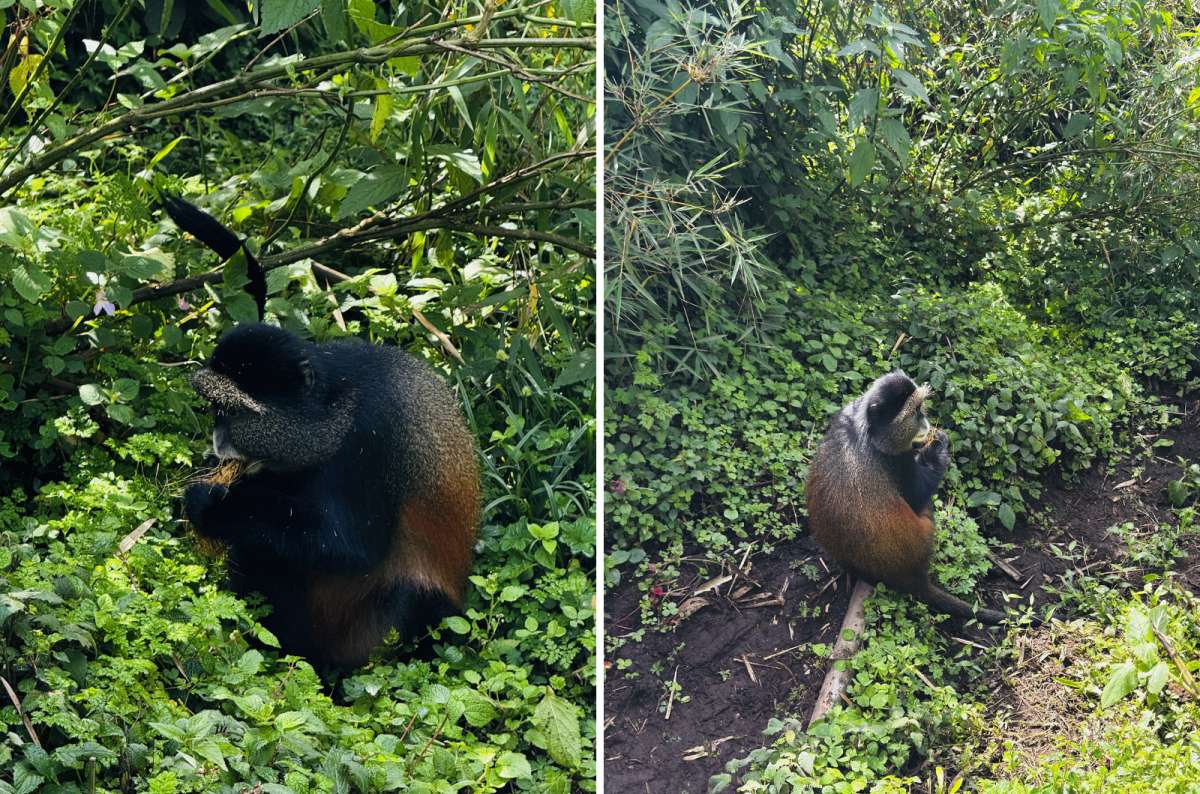
Golden monkey trekking is the easy, fun sibling of gorilla trekking.
It starts from the same headquarters, with the same general registration process, then a short hike through fields to the edge of the forest. The monkeys are usually in roughly the same area, and the hiking is not difficult.
You spend about one hour with the troop, often around 100 monkeys. They are colorful, fast, funny, and much less emotionally dramatic than gorillas.
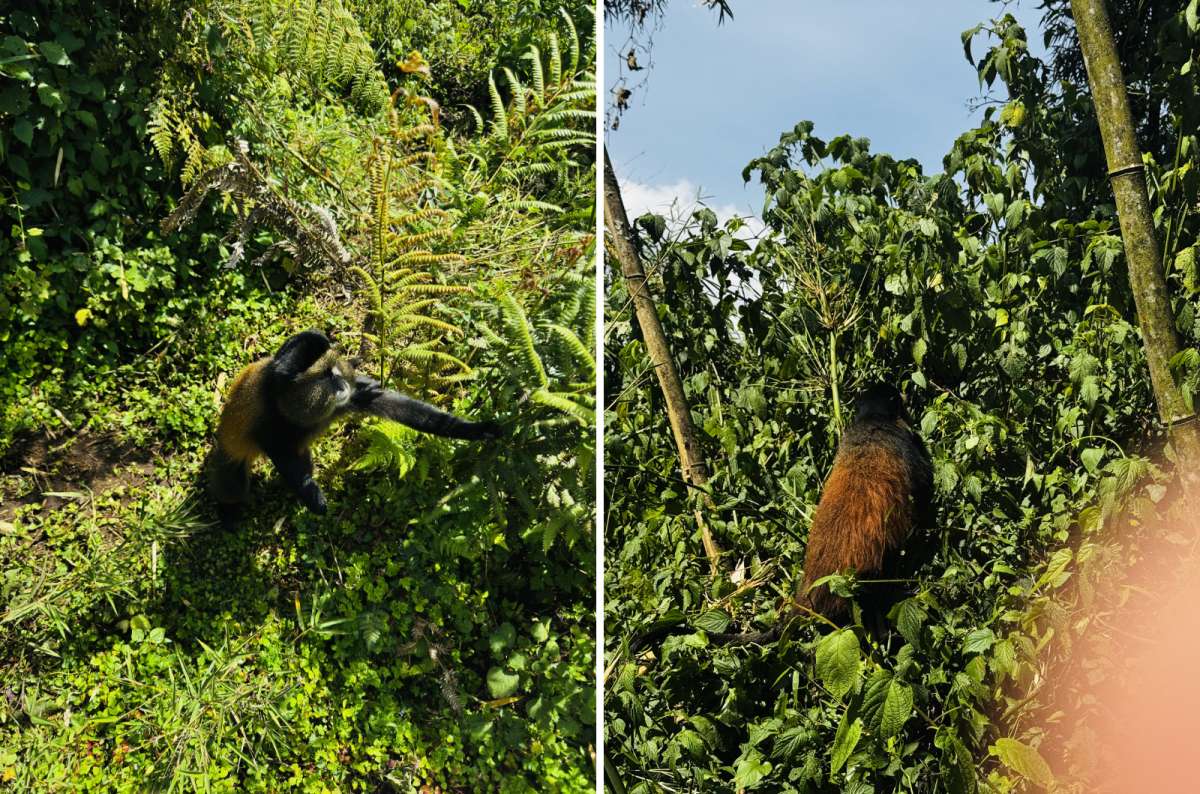
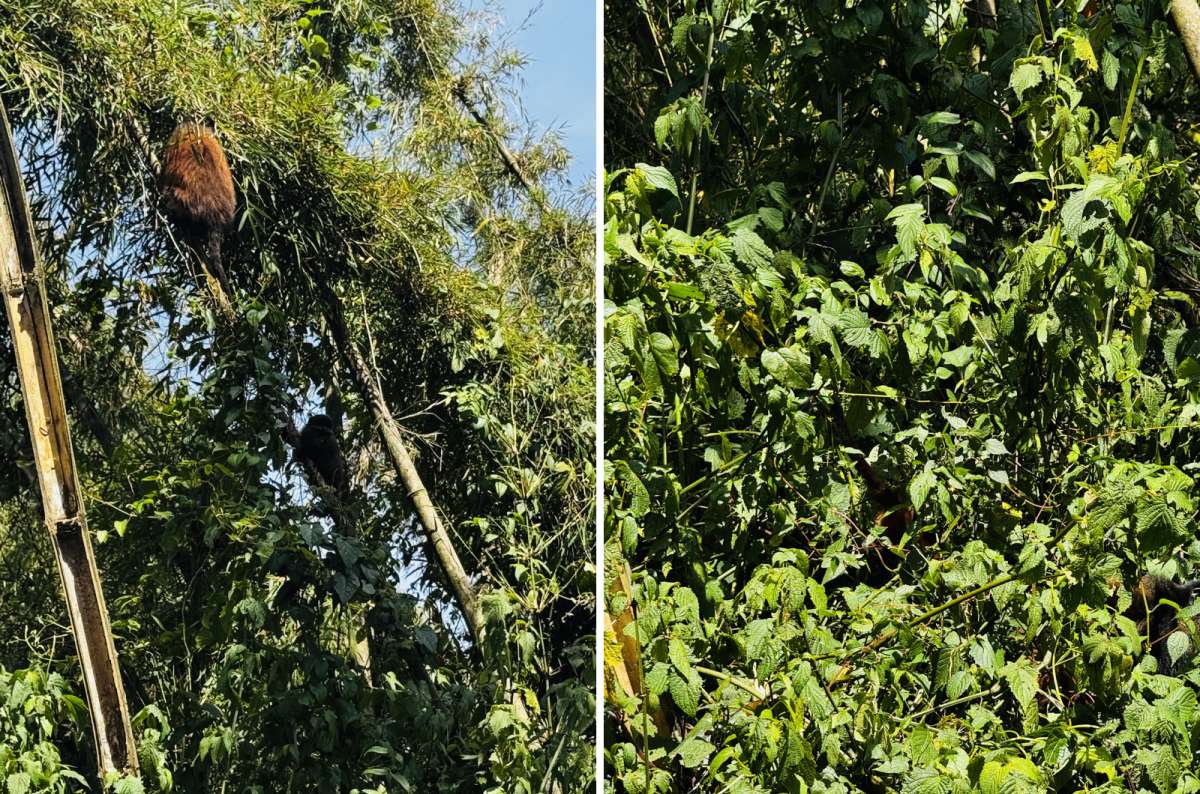
You still wear a mask, and you still have armed guards because elephants and buffalo exist and apparently also have opinions.
This is a good add-on if you have an extra morning in Volcanoes National Park. I wouldn’t build a whole Rwanda trip around golden monkeys, but I’d happily include them.
We were back at the car around 11 am. After some of Rwanda’s other early-start suffering, that felt almost luxurious.
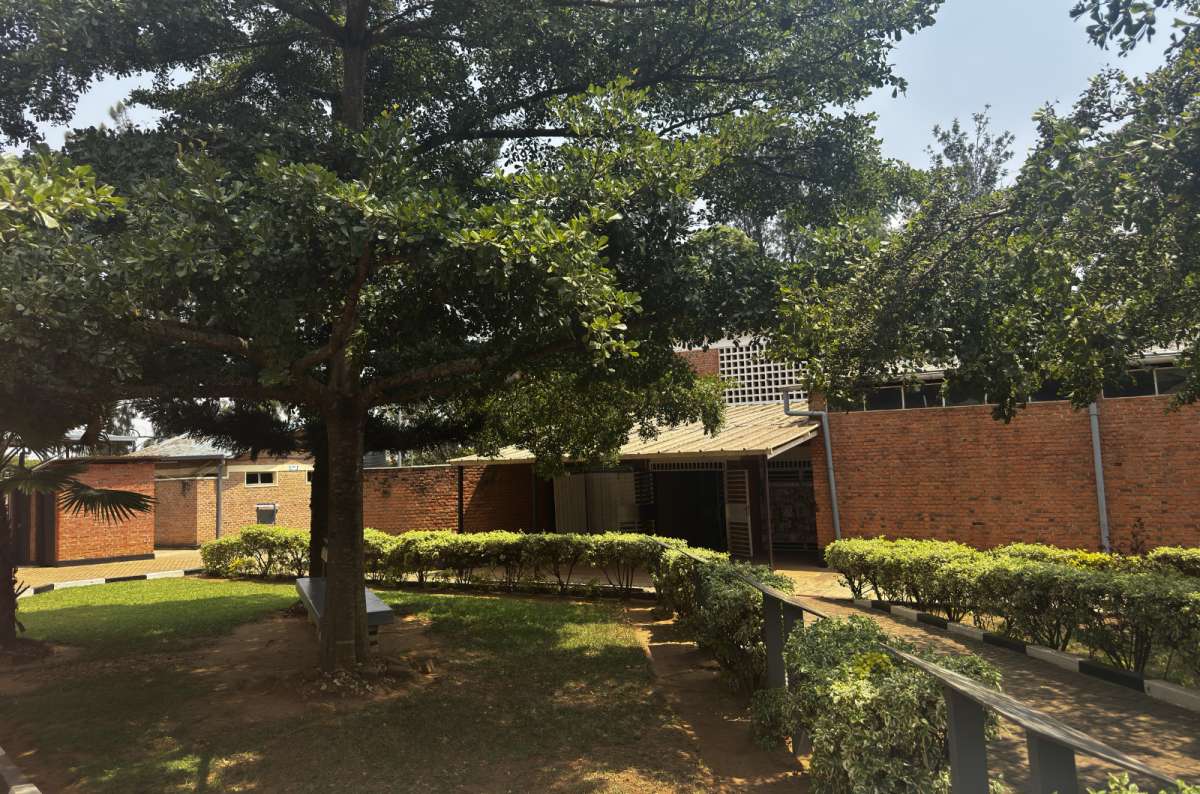
Nyamata is not an easy visit.
It is a former church where thousands of people were killed during the genocide, and many remains and bloodied clothes are still there.
The visit is guided and free, though donations are appropriate. I recommend visiting if you can handle it, but I would not bring children here. It is too brutal, too direct, and too human.
Kigali Genocide Memorial explains the national story better. Nyamata shows you what that story looked like inside one building. That is a different kind of impact.
There is no way to make this section light. Nor should there be.
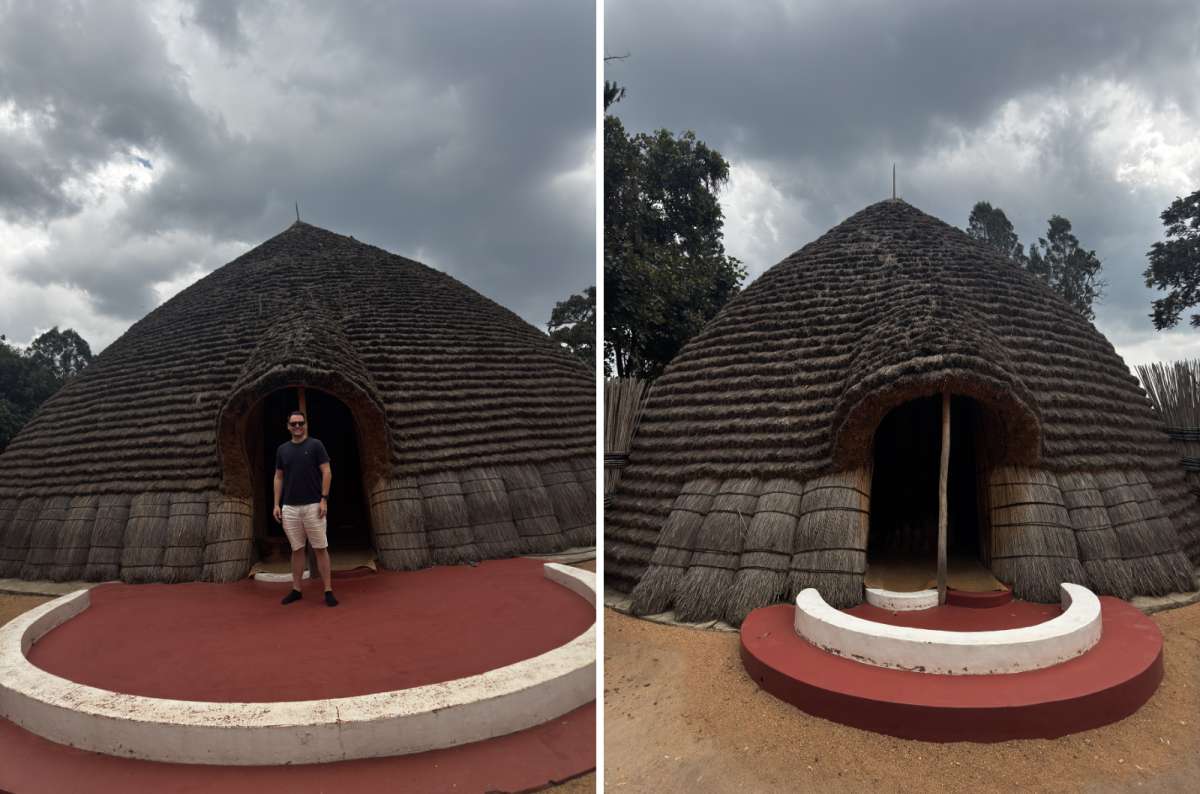
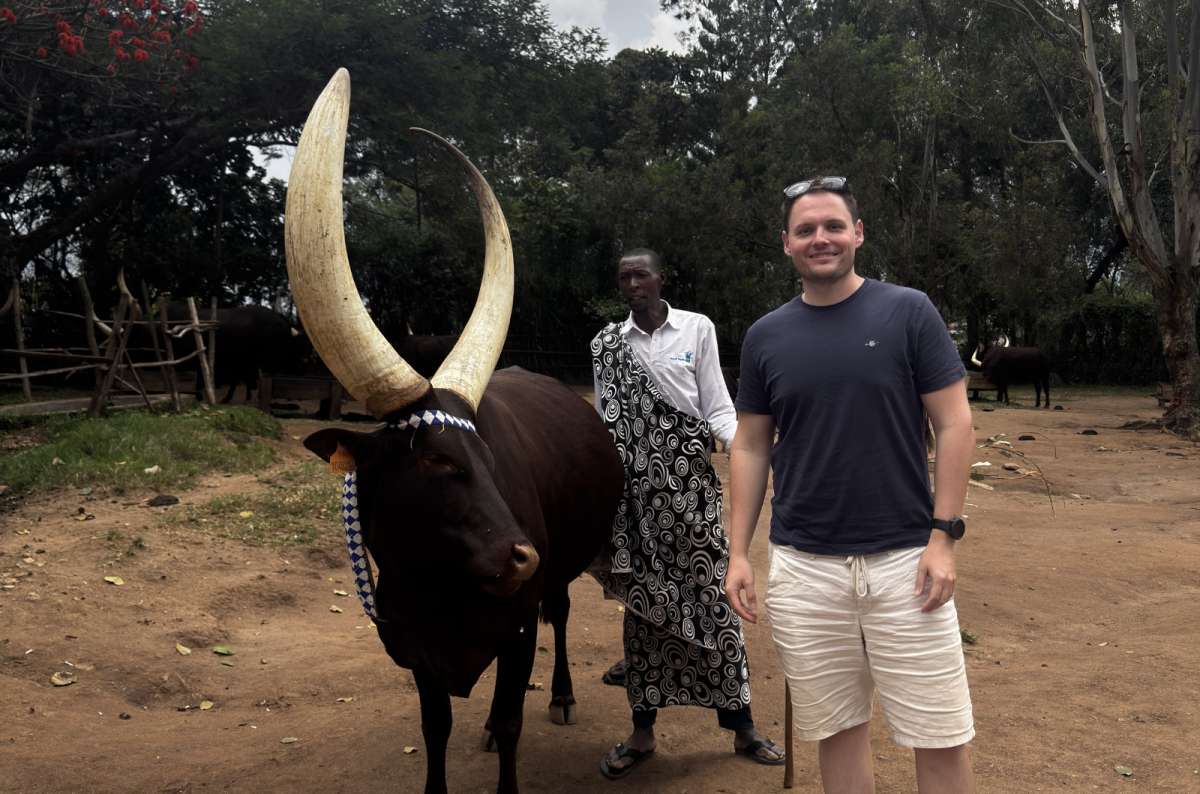
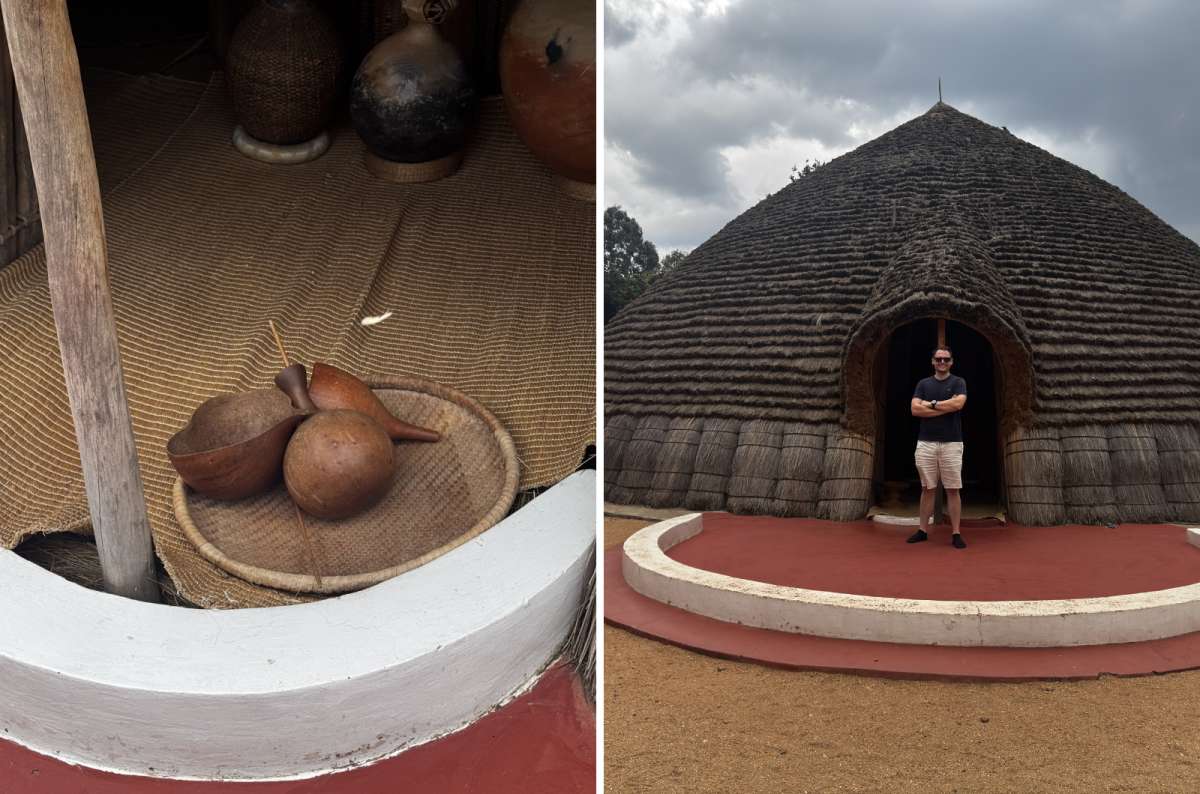
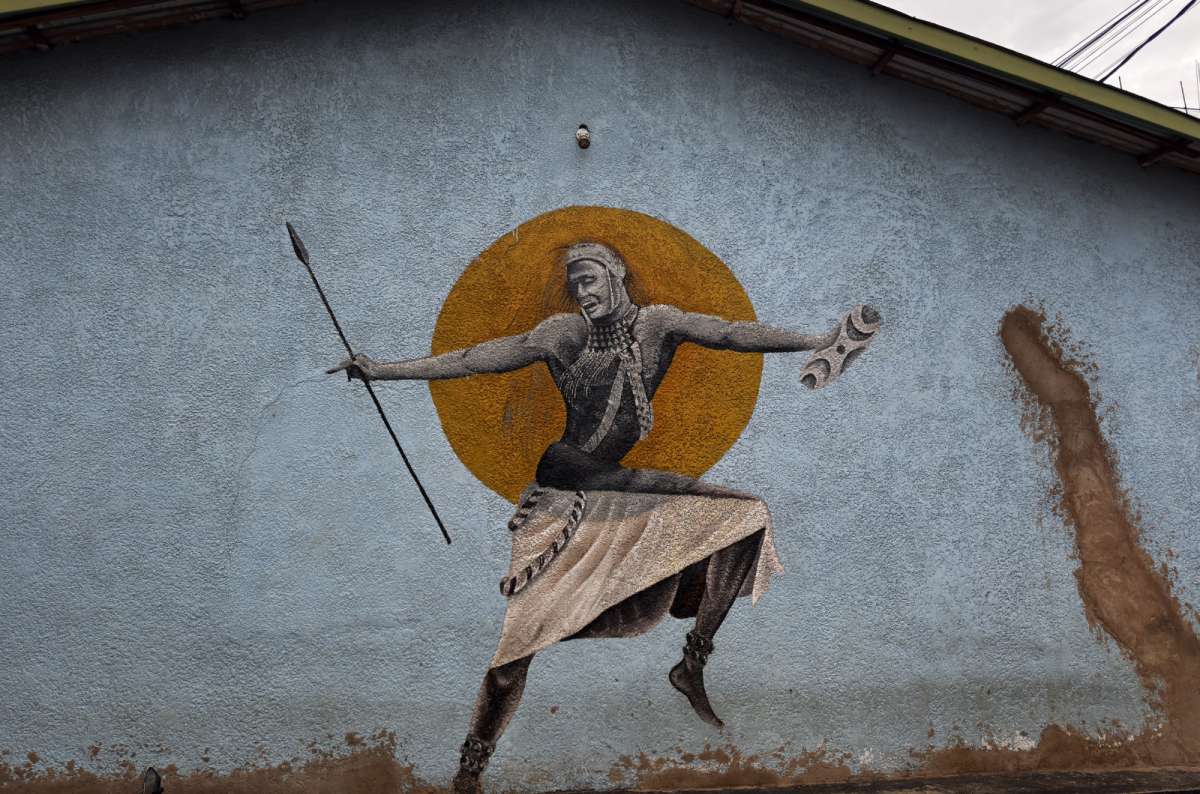
Nyanza King’s Palace Museum is probably the most interesting historical site in Rwanda, even though it is simple and short.
The guided visit takes around 40 minutes. You see the traditional royal palace, learn how it functioned, and visit the more modern palace given to the king by the Belgians.
For me, the best part was the royal cows and the songs for the cows. I did not expect singing cows to be the highlight, but travel is educational.
Pro tip: Book your tickets online to save some time.
It is not a huge attraction, but it is worth adding if you are driving between Kigali, Huye, Nyungwe, or Lake Kivu. It also gives Rwanda a bit more historical depth beyond the genocide and wildlife, which most itineraries badly need.
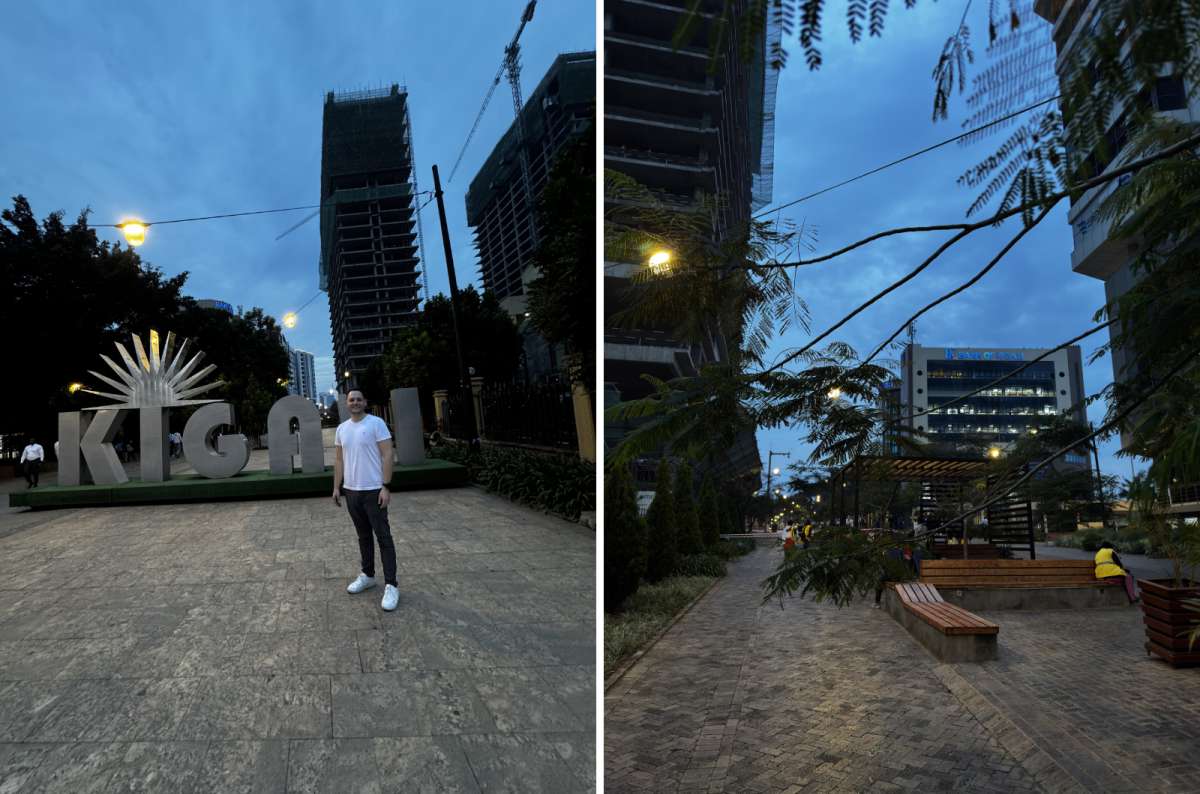
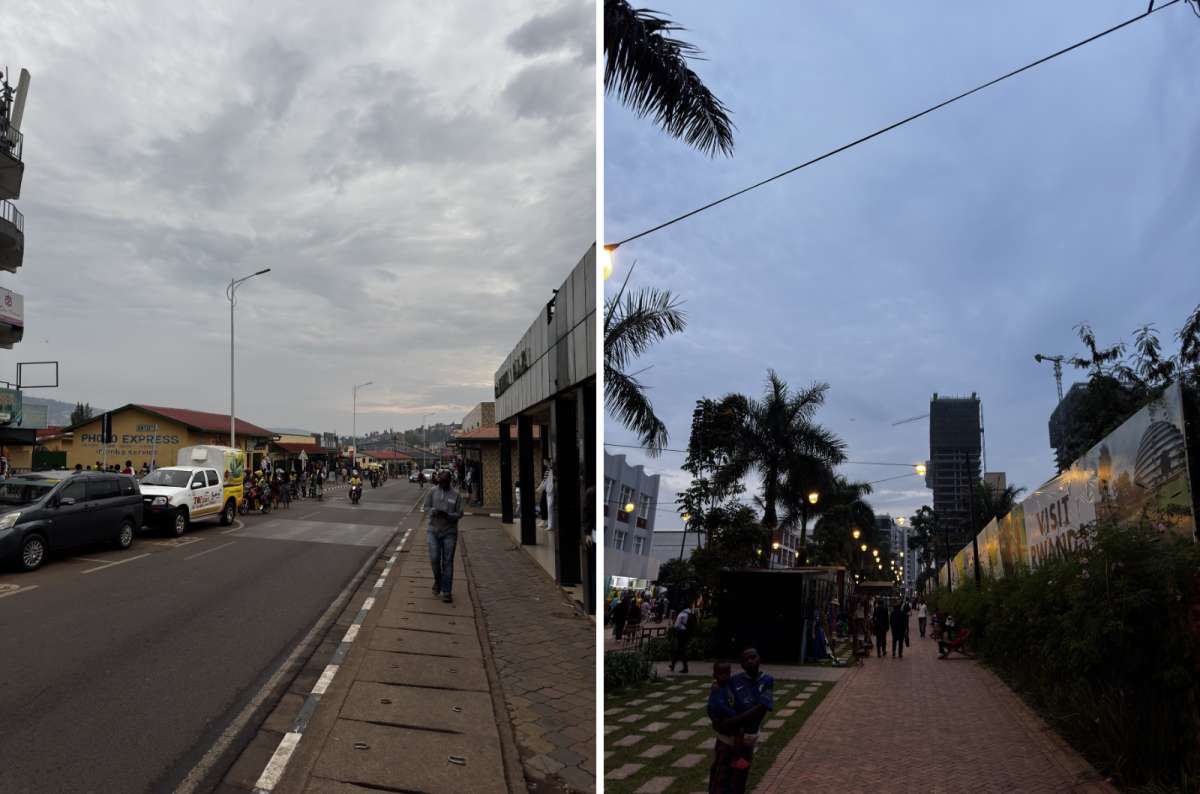
Kigali is clean, organized, and pleasant, but it is not packed with classic tourist attractions.
Most of what matters here is connected to genocide history, modern Rwanda, or smaller museums. I would spend 1–2 days in Kigali. One day is enough for most people if you plan it well.
The Campaign Against Genocide Museum was one of the best visits I had in the city. It explains the military and political campaign that ended the genocide, and our guide’s personal story made the visit hit much harder. His whole family was killed. Imagine hearing that from the person explaining the museum to you.
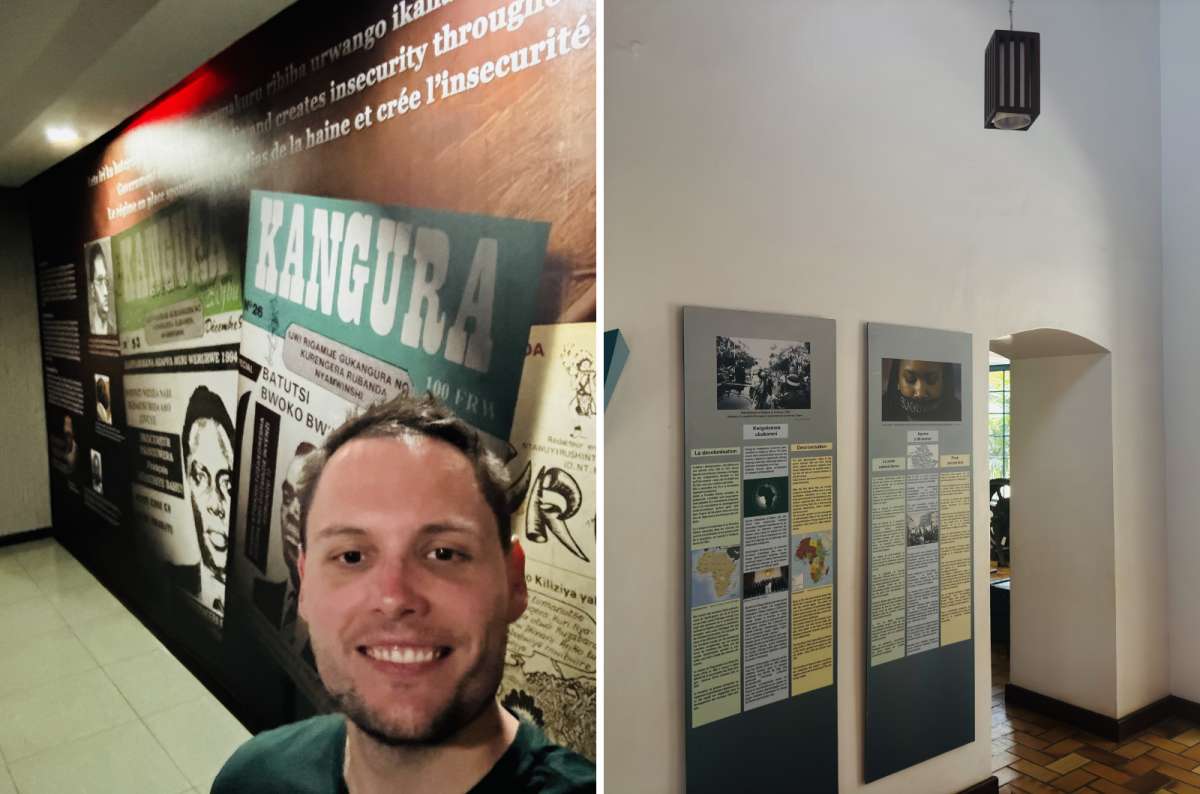
Kandt House is also worth visiting if you like colonial history and reptiles. The museum itself is basic, but the building is historically important, and the reptile section had the biggest Gaboon viper I had ever seen. Not exactly a standard city museum bonus feature, but I approved.
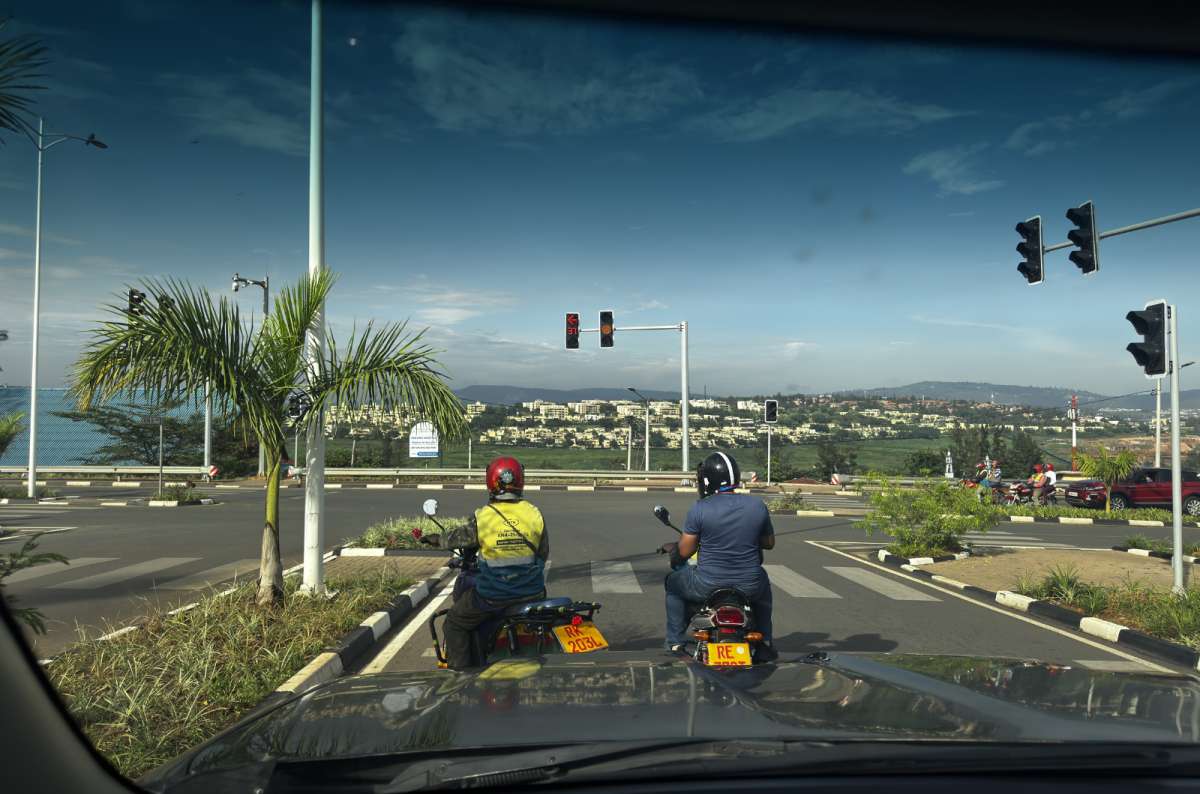
Use taxis in Kigali. You do not need a car in the city. Parking is annoying, security checks are everywhere, and taxis are cheap. Also, reconsider bike taxis. I saw enough accidents in 3 days to decide my knees deserved a future.
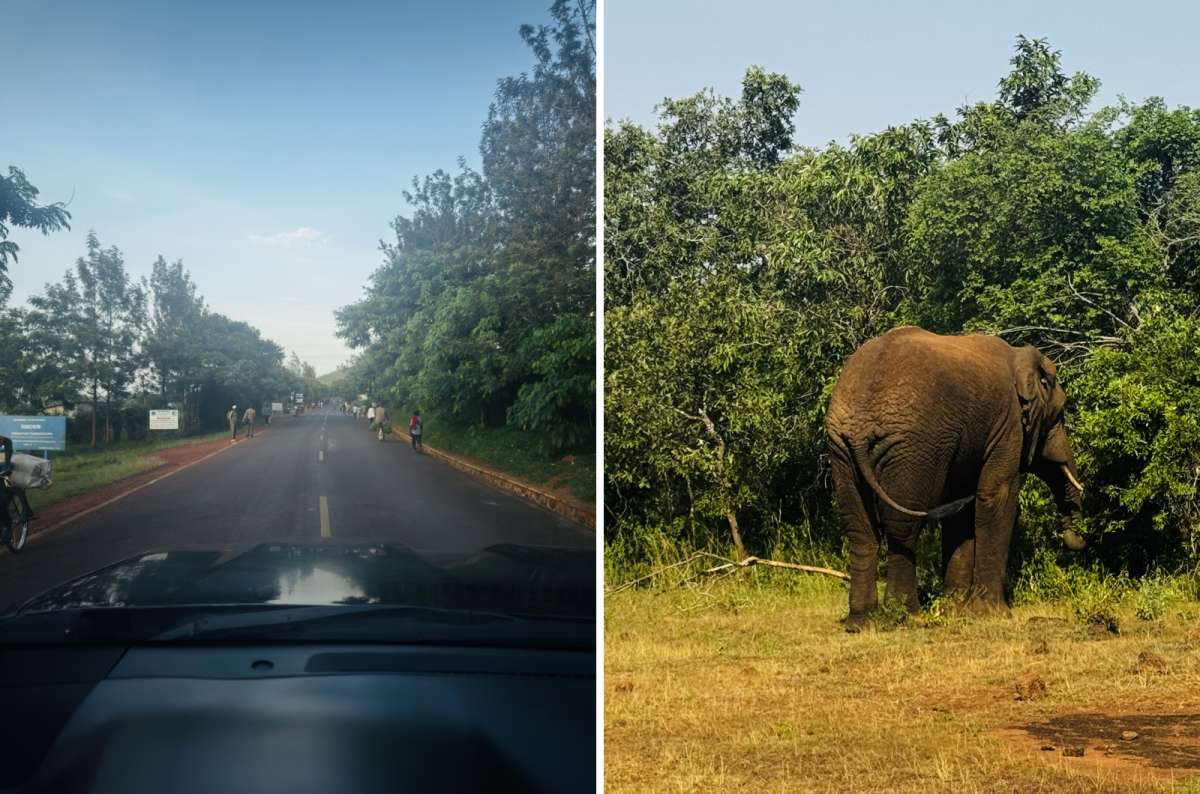
Rent the right car. For national parks, you need a proper SUV like a Toyota Fortuner. A RAV4 may not be accepted in some park situations, and smaller cars make zero sense for Akagera or gorilla trailheads.
Driving is slow. Speed limits are often 60 km/h, cameras are everywhere, and Rwanda is mountainous. Distances look short. They are lying.
Follow tar roads, not GPS stupidity. Google Maps may send you onto undriveable dirt shortcuts. The tar roads usually get you where you need to go.
Airport car return can take ages. Security routines are lengthy, so leave extra time.
Fuel is easy to find, but fill up before entering parks.
Do not wear black in Akagera. Tsetse flies like dark colors. I learned this in the most predictable way possible: by wearing black.
Take malaria seriously, especially in lower and warmer areas like Akagera. Bring proper repellent and talk to a travel doctor before your trip.
Use taxis in Kigali. Parking is a hassle, security checks are constant, and taxis are cheap enough that driving yourself around the city feels unnecessary.
Bring cash. Cards work in many places, but not everywhere, and payment systems can be oddly slow or awkward.
I would skip a rushed Akagera day trip from Kigali unless it is your only option. You spend too much time driving and too little time enjoying the park.
I would skip the Nyungwe zipline if your time or budget is limited. The setting is beautiful, but I found the canopy walk and hikes more worthwhile.
I would skip bike taxis in Kigali. Maybe I am boring. Maybe I like having intact elbows.
I would skip trying to see too many safari parks in one holiday if you are combining Rwanda with Uganda or Kenya. One or two safari parks per trip is usually enough before everything becomes “another antelope, another road, another dust cloud.”
I would also skip renting the cheapest car and pretending it will be fine. Rwanda is organized, but the national parks and mountain roads still require common sense. Annoying, I know.
Use this as a soft landing. Stay somewhere comfortable, get cash, organize your SIM card, and do not immediately drive across the country like an overexcited spreadsheet.
Visit Kigali Genocide Memorial first. Add the Campaign Against Genocide Museum if you have the emotional bandwidth. Kandt House is optional but interesting.
Drive to Akagera and spend at least 2 days on safari. Take a guide, do the Lake Ihema boat tour, and consider a night drive if available.
Base yourself near Kinigi. Do gorilla trekking, then add golden monkeys or Bisoke depending on your fitness and budget.
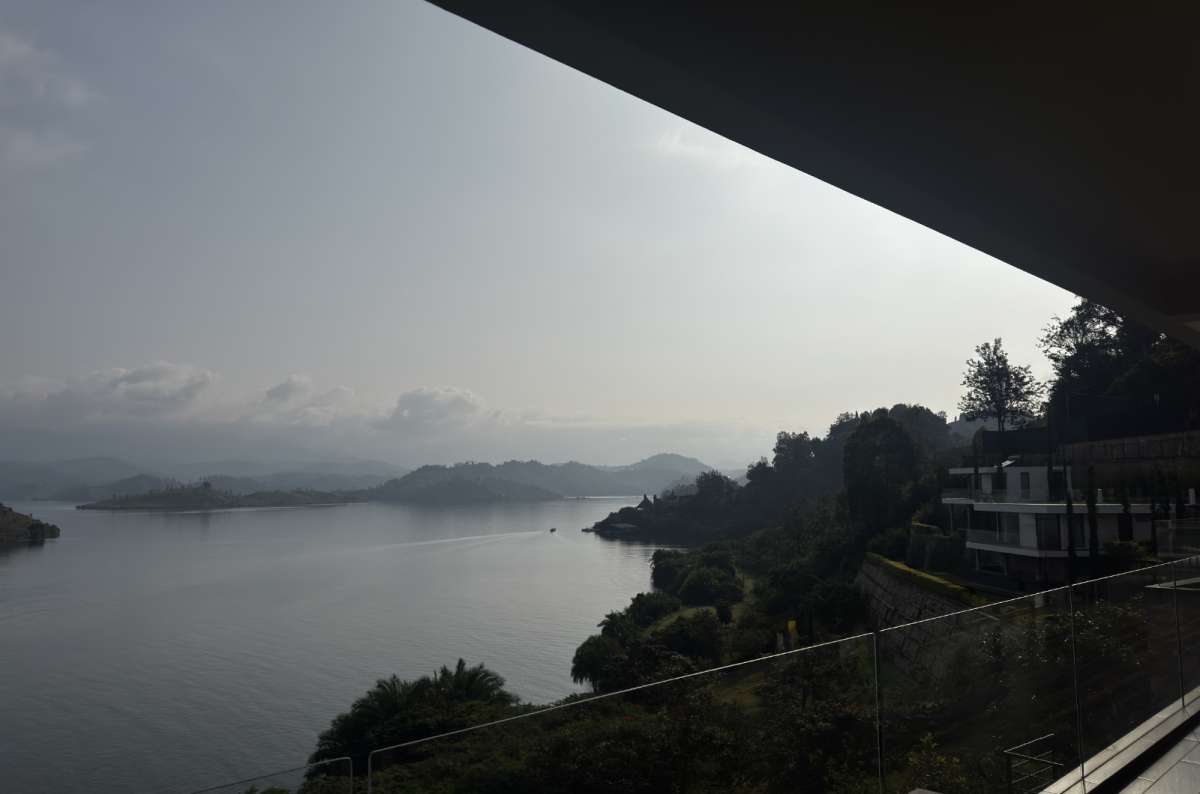
Recover at Lake Kivu. I’d choose the middle section around Karongi/Kibuye for views and quiet, or Gisenyi if you want more hotels and nightlife.
Drive south toward Nyungwe. Do chimpanzee trekking, the canopy walk, and one forest hike. Stop at Nyanza King’s Palace on the way back toward Kigali if your route allows.
If you only have 7 days, choose Kigali, Volcanoes, Lake Kivu, and either Akagera or Nyungwe. Do not try to cram everything in. Rwanda is small on the map but slow on the road.
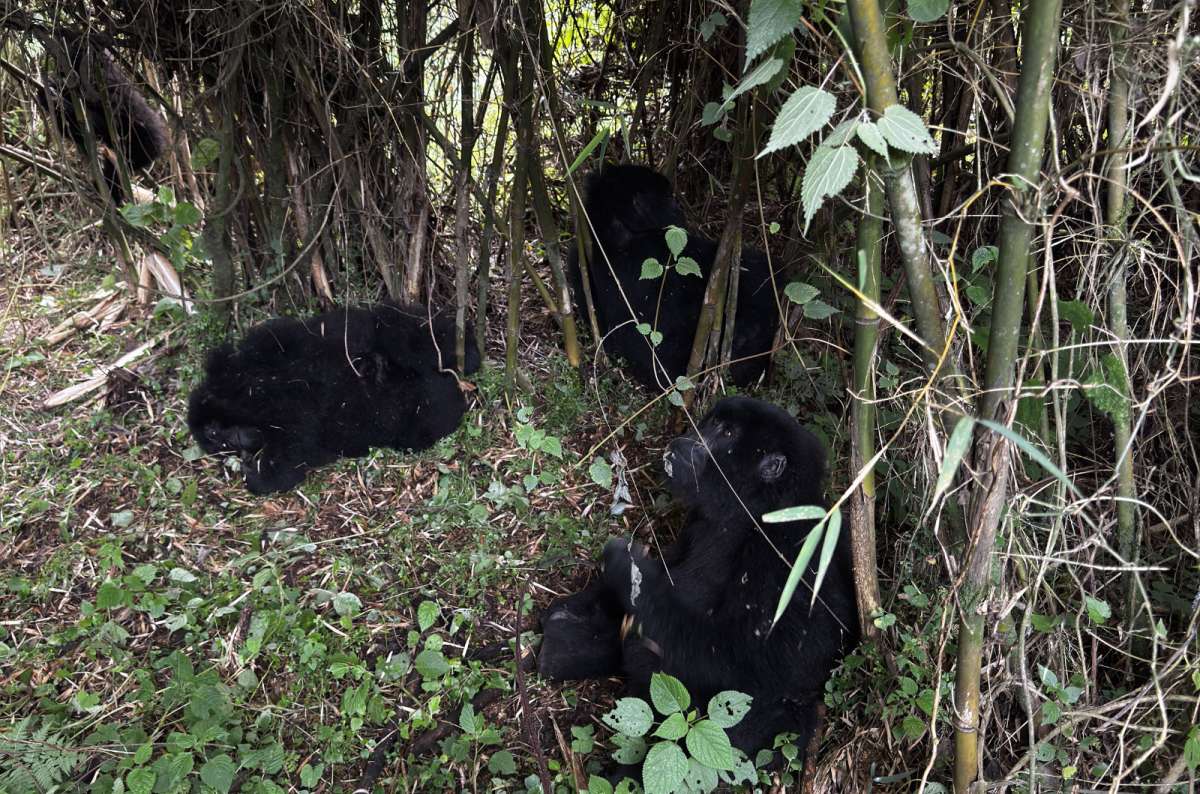
The best things to do in Rwanda are gorilla trekking in Volcanoes National Park, safari in Akagera, chimpanzee trekking and hiking in Nyungwe, relaxing on Lake Kivu, and visiting Kigali Genocide Memorial.
But Rwanda is not just a wildlife checklist. The country hits harder than that.
You come for gorillas and landscapes, then end up thinking about genocide, poverty, forgiveness, politics, infrastructure, young people, and what it means to build a country after catastrophe.
I expected Rwanda to be interesting. I did not expect it to stay in my head this much.
This post contains affiliate links. If you make a booking through one of my links, I may earn a small commission—at no additional cost to you. Thank you for your support!
At a glance: the best things to do in Rwanda
1. Go gorilla trekking in Volcanoes National Park
2. Spend at least 2 days in Akagera National Park
4. Visit Kigali Genocide Memorial
5. Go chimpanzee trekking in Nyungwe National Park
6. Walk the canopy bridge and hike in Nyungwe
8. Track golden monkeys in Volcanoes National Park
9. Visit Nyamata Genocide Memorial
10. See the King’s Palace Museum in Nyanza
11. Spend one day in Kigali, but don’t overdo it
Practical tips for visiting Rwanda


Hi, I’m Jan. I travel fast and intensely, whether I’m exploring the buzz of Tokyo in 3 days or road-tripping through mountains and beaches on a 3-week Thailand adventure. And no matter where I am, you’ll always find me in a comfortable hotel at night and eating the best food.
If that sounds like your kind of journey, hop on board, and let’s explore the world together!
I started this blog after realizing how tough it can be to find reliable, authentic travel info. You wouldn’t believe how many “travel bloggers” never even visit the places they write about! On Next Level of Travel, you can count on my full honesty and insights drawn from my firsthand experiences.
Here’s the deal: not every destination is all superlatives and unicorns. I’ll let you know if a tourist attraction isn’t worth your time, like skipping overrated stops in my 2-week Spain itinerary. And when I find something truly special—like the perfect mix of culture and nature in Cape Town—you can trust that it’s worth adding to your itinerary.

Comments | Thoughts? Give us a shout!