


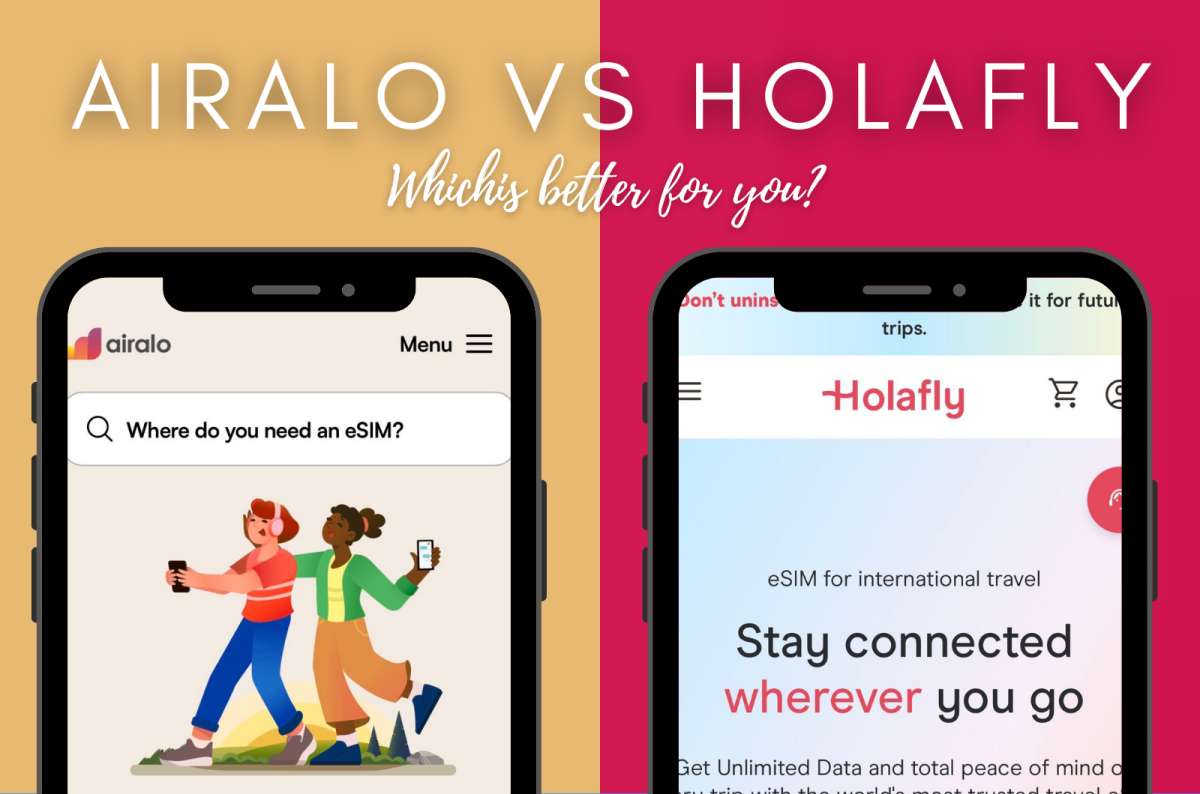


Airalo vs Holafly: Quick Verdict
The Main Difference Between Airalo and Holafly
Installation and Setup: Holafly Wins
Coverage and Real-World Connectivity
Always On: A Small Feature That Actually Matters
Customer Support and Refunds: Holafly Wins
Pricing: Airalo Can Be Cheaper, Holafly Can Be Smarter
Unlimited Data: Holafly’s Biggest Advantage
I have used Airalo for years. It was the first eSIM provider I properly discovered back in 2022 before a trip to Israel, and since then I have used it in Switzerland, Wales, Rwanda, Argentina, South Africa, and several other trips. For a long time, Airalo was simply my default travel eSIM app.
Holafly came later for me, but after testing it properly, I understand why it has become such a popular alternative. It is not trying to be the cheapest fixed-data eSIM marketplace. Holafly is trying to make travel connectivity feel simple, customizable, and almost premium.
So this is not a clean “Airalo is better” or “Holafly is better” comparison. They solve the same problem in different ways.
Airalo is better if you want cheaper fixed-data plans, broad destination coverage, and a travel eSIM app that has improved massively over the years.
Holafly is better if you want unlimited data, exact trip-length customization, a very polished purchase flow, and fewer decisions about how many GB you need.
If I had to choose one overall, I would give Holafly the edge for most travelers who care more about convenience, unlimited data, and a smoother experience than squeezing the lowest possible price.
>> This article may contain affiliate links. You can use my Holafly discount code NXTLEVEL when booking through this link: https://hfly.co/rmiv6 <<
Choose Holafly if:
Choose Airalo if:
My personal verdict: Holafly is the better modern travel eSIM experience. Airalo is still a very solid practical option, especially if you know exactly how much data you need and want to control the price.
The biggest difference is simple.
Airalo is mostly about buying a specific amount of data for a specific country or region.
You choose the destination, pick a data package, choose the length, install the eSIM, and use it. Some Airalo destinations now offer unlimited plans too, but the classic Airalo experience is still fixed-data travel eSIMs.
Holafly is mostly about unlimited data for the number of days you actually travel.
That difference matters.
With Airalo, you are thinking: “Will I need 5 GB, 10 GB, or 20 GB?”
With Holafly, you are thinking: “How many days am I traveling?”
I prefer the Holafly logic. If I travel for 16 days, I do not want to buy a 30-day plan just because the provider cannot customize properly. I want 16 days. Holafly shines here more than any eSIM provider I have tested.
That is also why Holafly feels more like a travel product than just a mobile-data marketplace. It fits how people actually travel: choose destination, choose number of days, install, and stop thinking about mobile data.
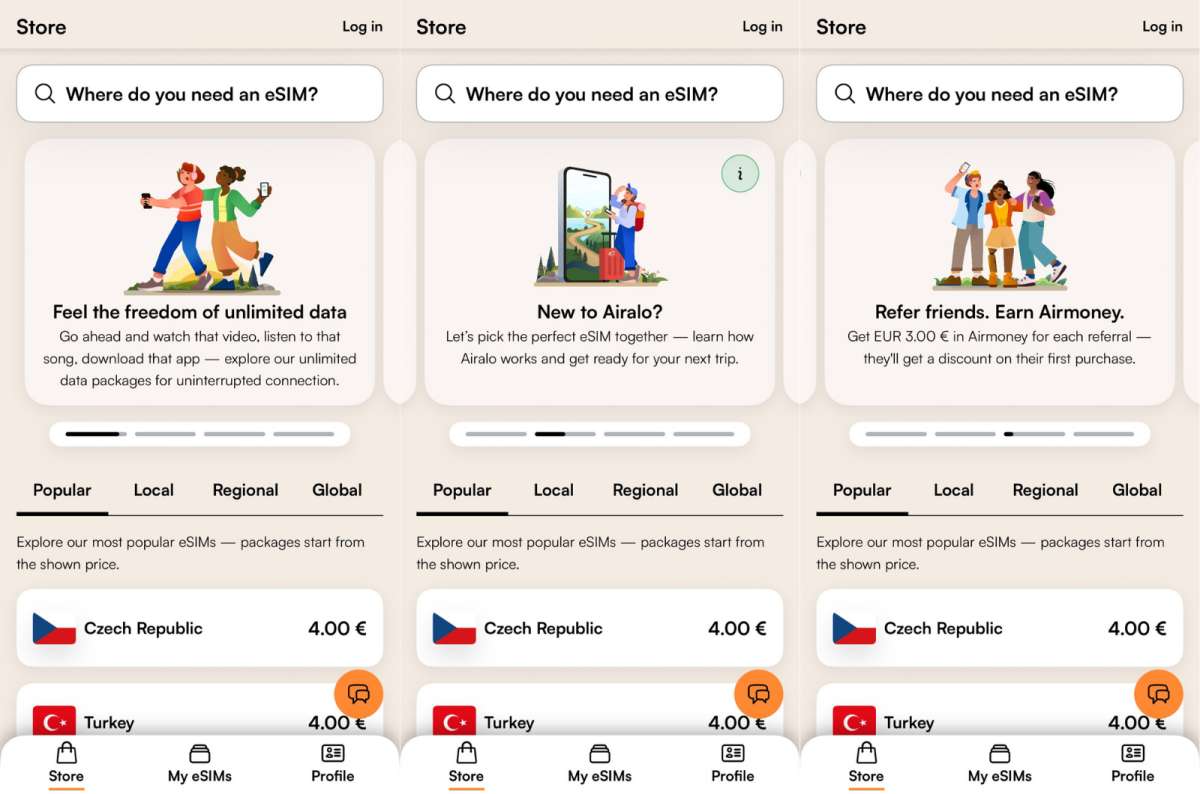
Airalo was my first proper eSIM provider. I started using it in 2022 before visiting Israel, and back then the process felt more complicated. Not impossible, but definitely more technical than what we have today.
That has changed a lot.
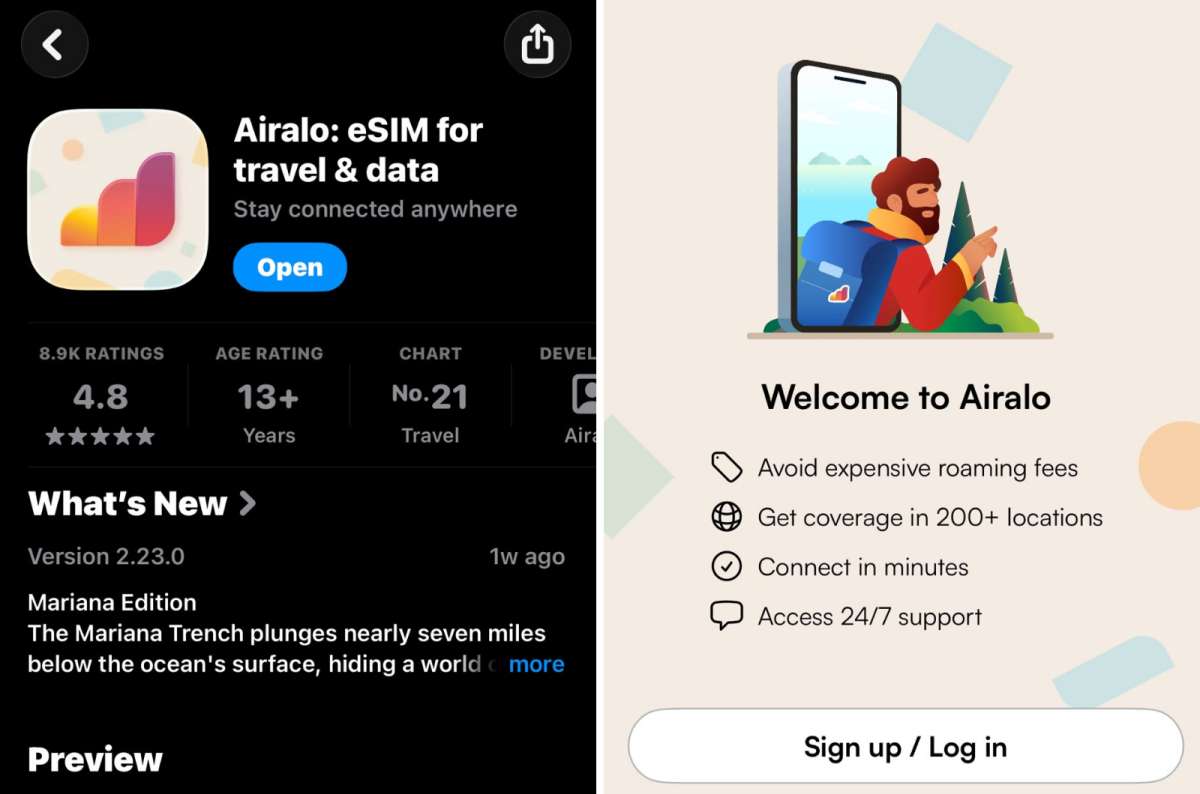
The Airalo app is now far easier to use. You choose a country or region, pick a plan, pay, and the app guides you through the installation. It has gone from something that felt slightly nerdy to something that most travelers should be able to use without stress.
I have used Airalo in:

Most of the time, it worked exactly as expected. When I had weak or no signal, it usually seemed to be a general connectivity problem rather than an Airalo-specific issue. For example, in remote areas around Fitz Roy in Argentina or in the middle of nowhere in South Africa, I would not blame any eSIM provider too quickly.
The app also does several things well. It automatically adjusts the language, but you can also manually change the language. That matters more than people think. I speak English fluently, but when I am dealing with technical mobile-data settings, I still prefer Czech when available. Airalo supports a lot of major languages, which makes the setup less stressful.
Airalo also lets you change currency, see your bought eSIMs, check how much data you used, and top up previously bought eSIMs. I usually prefer buying more data and a longer validity upfront, because top-ups can end up more expensive overall. I almost always use more data than I expect, usually because I forget to connect to hotel Wi-Fi before watching YouTube or uploading photos.
So yes, I still like Airalo. It is familiar, reliable, and much better than it used to be.
But Holafly feels like the more interesting product today.

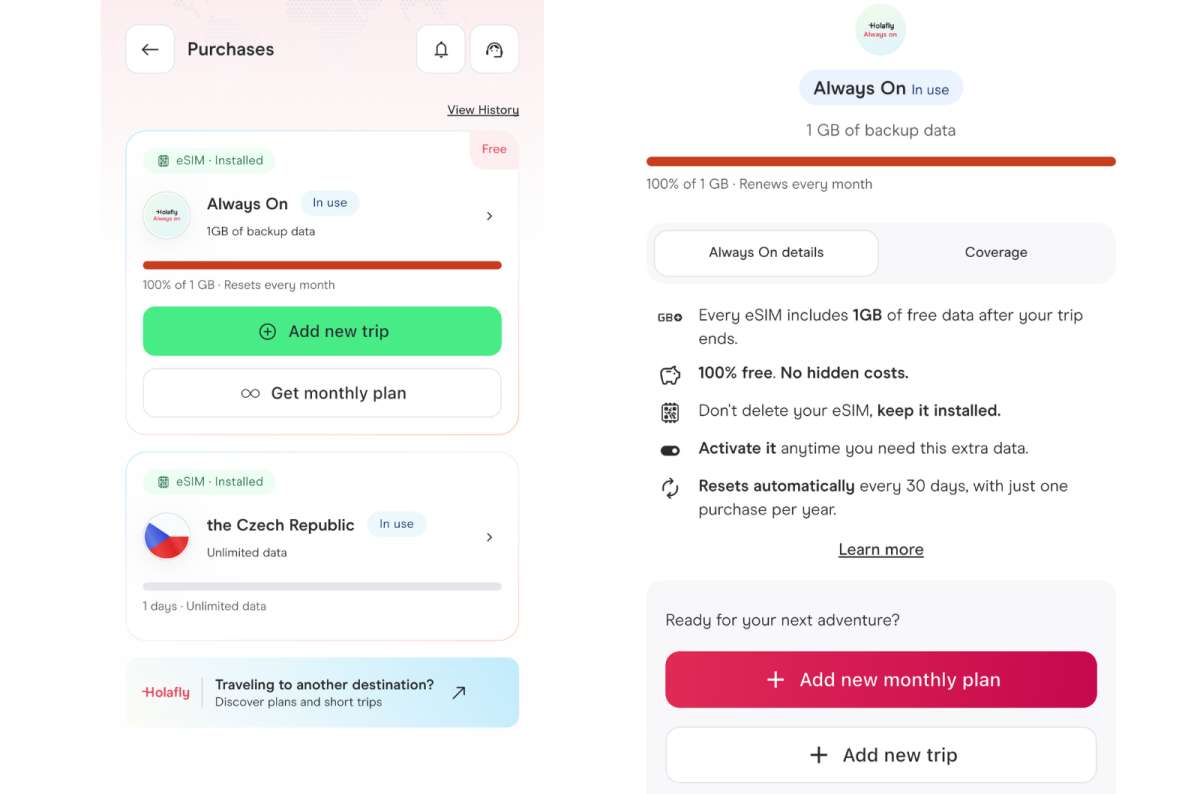
Holafly feels more modern and more customizable.
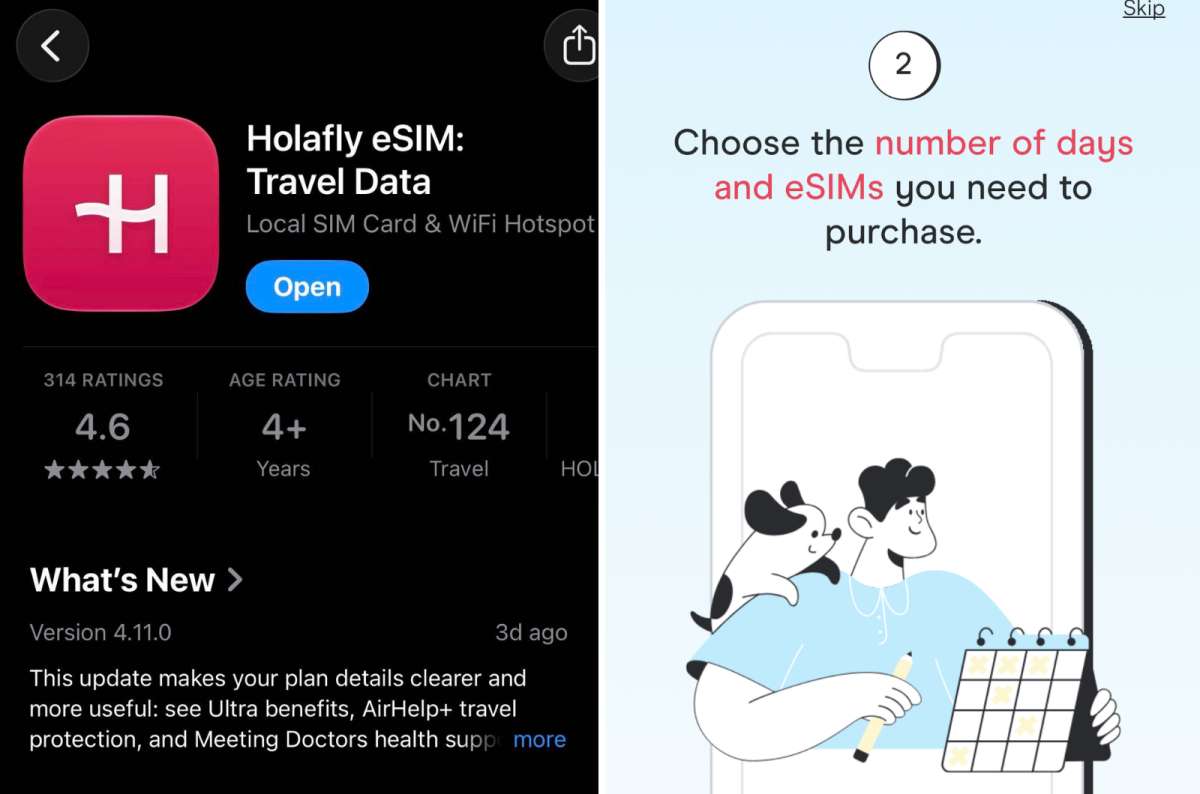
The installation is very simple. Download the app, choose your destination or region, select the number of days, pay, and follow the guide. There are installation tips throughout the process, and that matters because installing an eSIM can still be annoying if the instructions are bad.
With Holafly, the installation felt almost foolproof.
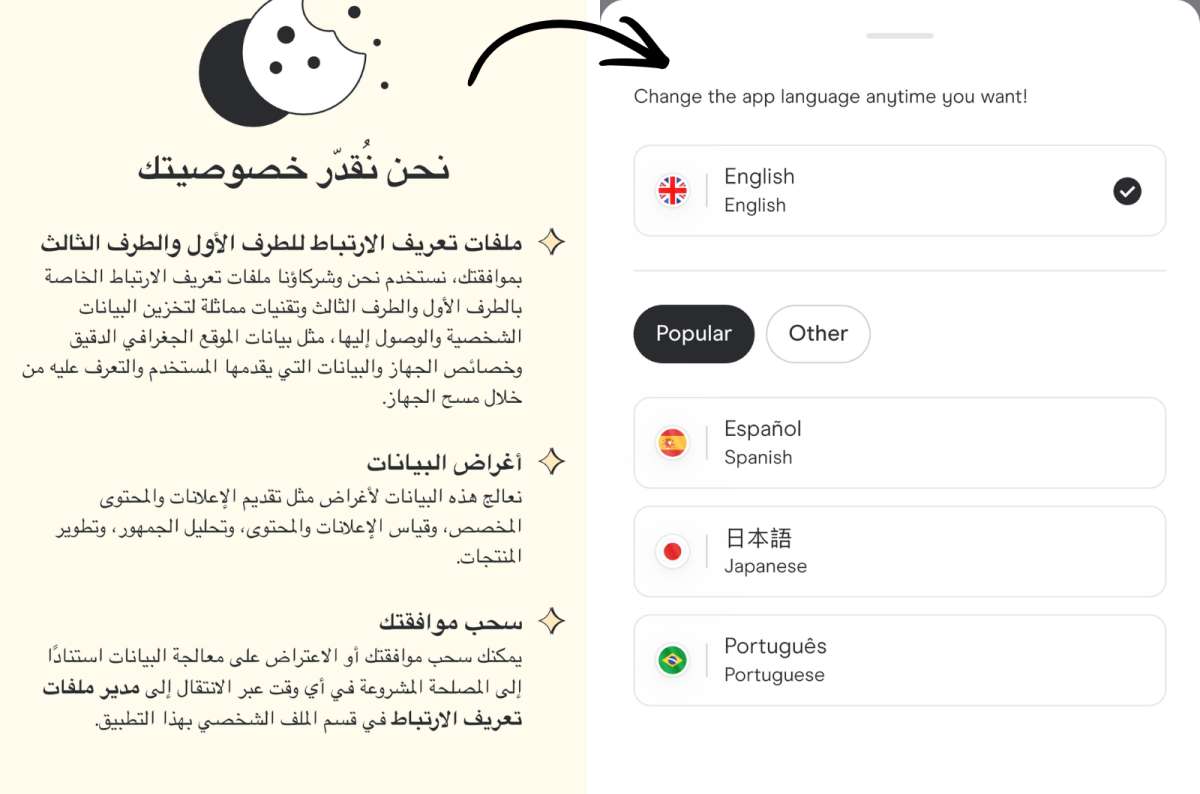
One funny thing happened after installation: the app was set to Arabic. Not ideal. But it was very easy to find the globe icon and switch the language to English. Holafly has many major languages, although not as many smaller-language options as some other providers. Honestly, this is not a major issue, because most users can manage in English or use automatic translation if needed.
You can buy a Holafly eSIM without registration, which is a neat UX trick. But I would still recommend signing up. You get more options, better account management, and an easier way to manage your purchase later.
Holafly also has a very wide country list. I noticed even obscure destinations with very low international tourist volumes, including places like Afghanistan or Iraq. That is genuinely impressive.
You can buy:
I especially like regional plans. If you are traveling through Europe, South America, or another multi-country region, one regional eSIM is much easier than buying separate plans country by country.
But Holafly’s best feature is customization. You can choose the number of days very precisely. That is where Holafly wins.
>> You can use my Holafly discount code NXTLEVEL when booking through this link: https://hfly.co/rmiv6 <<
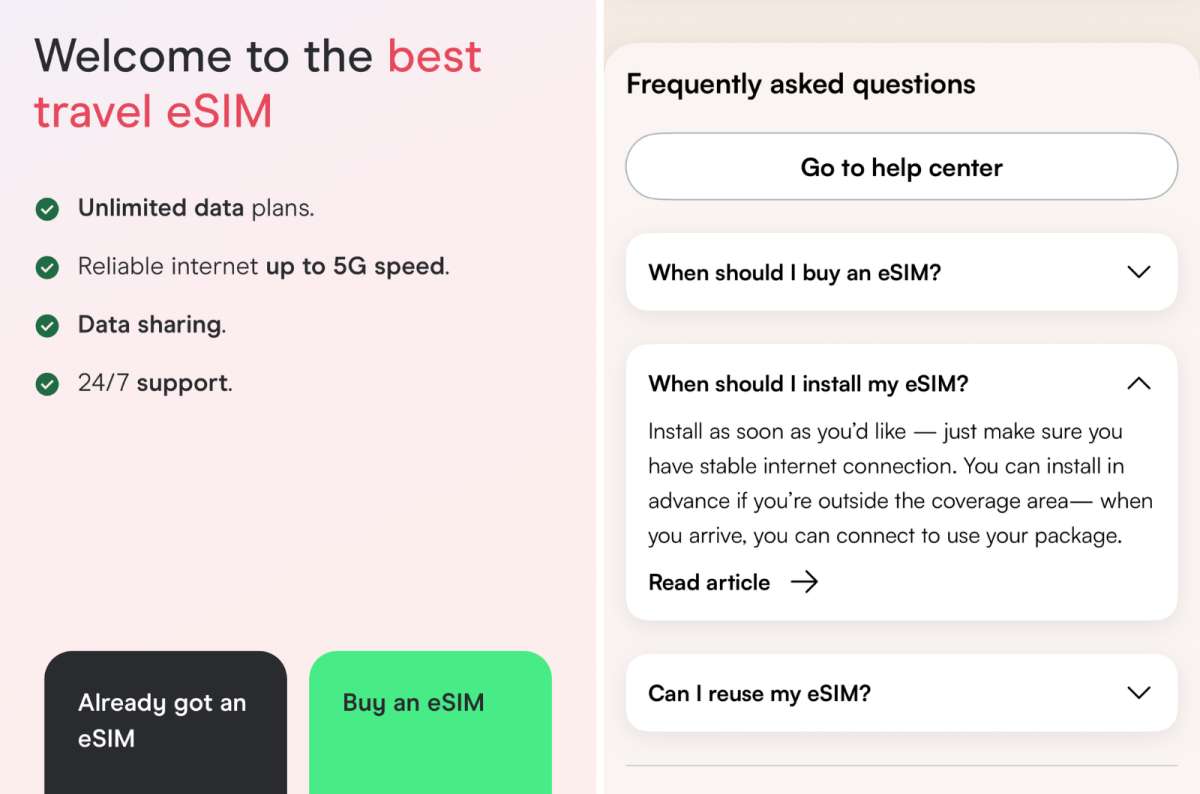
Both apps are now easy to use.
Airalo used to be more complicated, but the current version is much better. The installation is guided, the FAQs are clear, and the app feels mature. It is no longer a tool only for tech-comfortable travelers.
Holafly, however, feels more polished. The installation flow has constant guidance, the manual tips are clear, and the app does a good job of reducing anxiety around eSIM setup.
My top tip for both providers: install your eSIM before you travel, not after landing.
You usually need an internet connection to install and activate parts of the setup. Do not wait until you are tired at the airport, standing in a foreign country with no mobile data, trying to connect to unstable airport Wi-Fi.
Install the eSIM before departure, then switch to it when you arrive.
Also remember:
I once made the expensive mistake of accidentally consuming domestic roaming data in Switzerland. I did not enjoy that bill.
Holafly wins this section because the app feels more guided, more beginner-friendly, and more confident as a product.
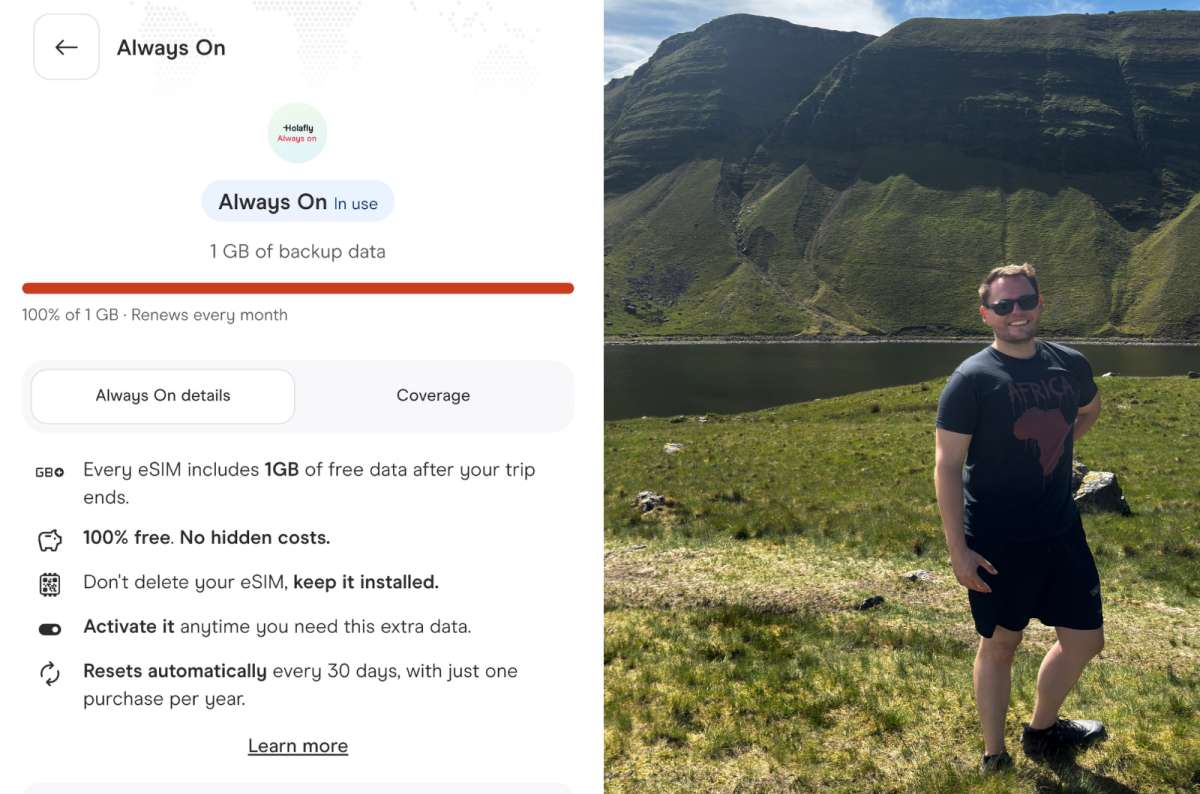
Both Airalo and Holafly are only as good as the underlying local network. Neither company owns mobile towers in every country. They provide eSIM access through partner networks.
That means coverage depends on:
With Airalo, I have had very few serious problems over the years. In remote places, bad signal usually seemed normal for the destination.
With Holafly, I tested it in Czechia because I live there and can compare it directly with my normal mobile provider. The data coverage worked exactly like my usual connectivity provider, which is a very good sign.
However, I also had trouble connecting in the morning on my first day in San Francisco while using Holafly. It was annoying enough that I bought another eSIM as a backup. But the backup did not work perfectly either in that moment, so I would call that round basically a tie. Sometimes the issue is not the brand but the operator, the location, or the local network situation.
And this is where Holafly’s Always On feature makes sense as a travel safety net. After your trip ends, Always On gives you 1 GB/month of free backup data for 12 months. I like this idea a lot. It means Holafly is not only trying to sell you one trip eSIM. It is trying to become your usual backup connectivity provider.
That is smart. And honestly, useful.
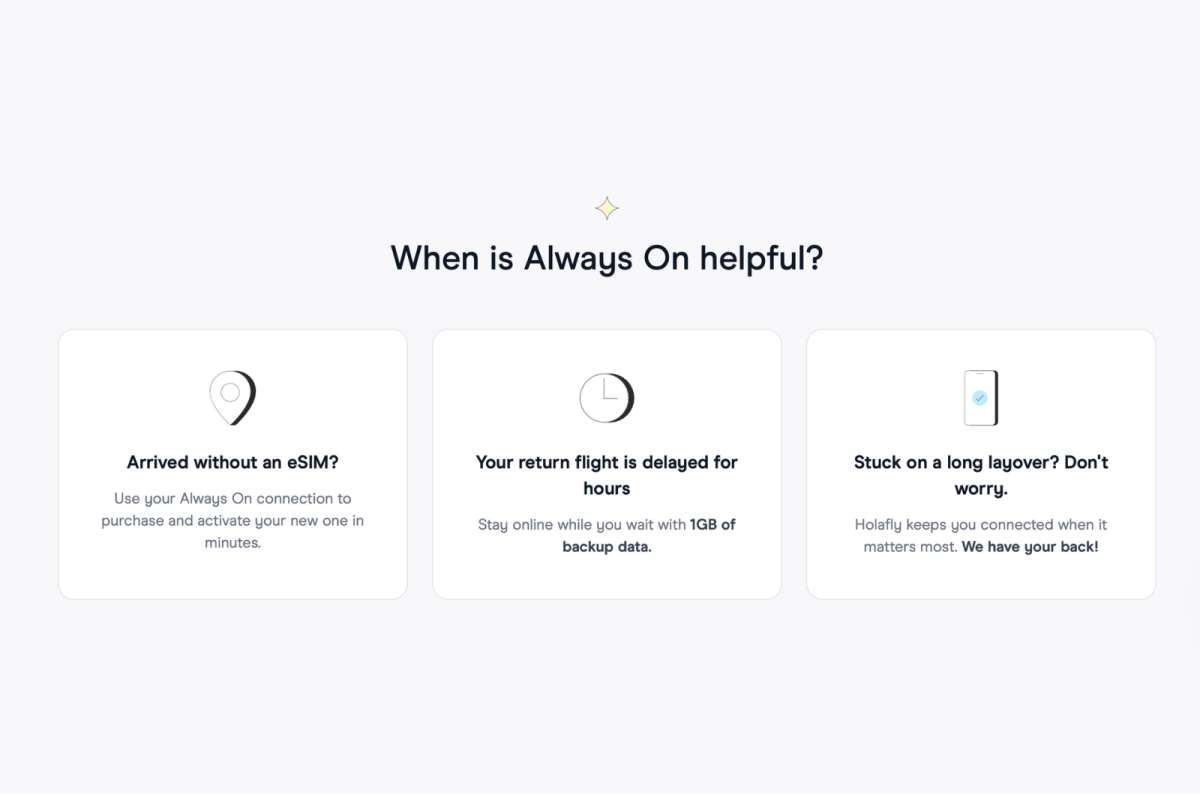
One of the most underrated Holafly benefits is Always On.
After your trip ends, Holafly gives you 1 GB/month of free backup data for 12 months. It resets every 30 days, and it works as a safety net when you need emergency connectivity.
I really like this feature.
It is not the main reason to buy Holafly, but it is exactly the type of small product detail that makes the service feel more complete. Travel data is not just about your planned trip. Sometimes you land somewhere, your domestic roaming does not behave, airport Wi-Fi is terrible, or you need just enough data to order a ride, open maps, or contact someone.
Always On solves that kind of problem.
It is also a smart retention feature. Holafly is clearly trying to become the app you keep on your phone permanently, not just something you download once and forget. I like brands that are a little salesy when the product benefit is actually useful.
This is one area where Holafly surprised me positively.
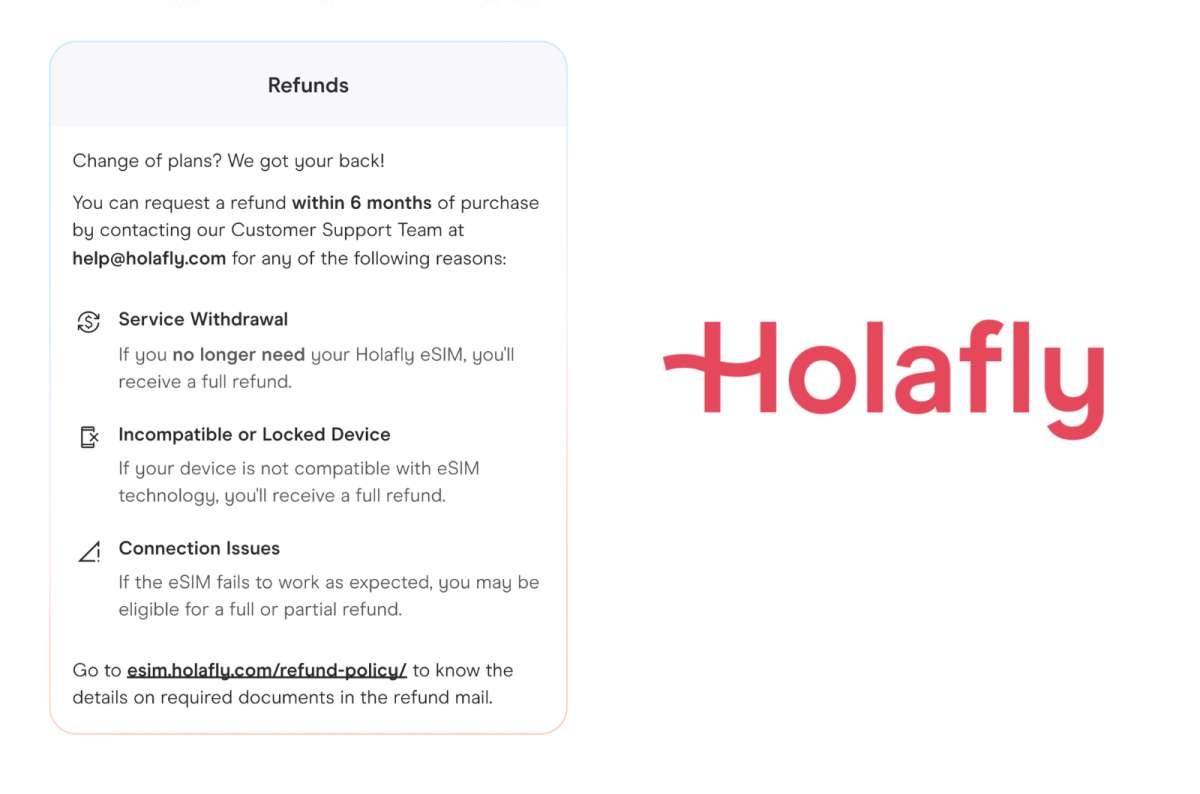
I accidentally triggered a refund situation because the AI agent misunderstood the issue and thought Holafly was not working. The refund was processed immediately. The AI agent was not perfectly refined, but it was fast, and the problem was solved quickly.
I like companies that can actually serve customers.
Holafly also makes the refund policy clear and easy to find. This matters a lot. I hate services that play hide-and-seek with customer care, invoices, or refunds.
Holafly also sends useful automatic emails. The information is easy to find, and if something goes wrong, it is clear how to contact customer care. The receipt is also easy to get, which sounds obvious but is not always standard in this industry. If you buy eSIMs for a company, that receipt flow matters.
Airalo has solid support resources and useful FAQs, but Holafly feels stronger in customer-care clarity.
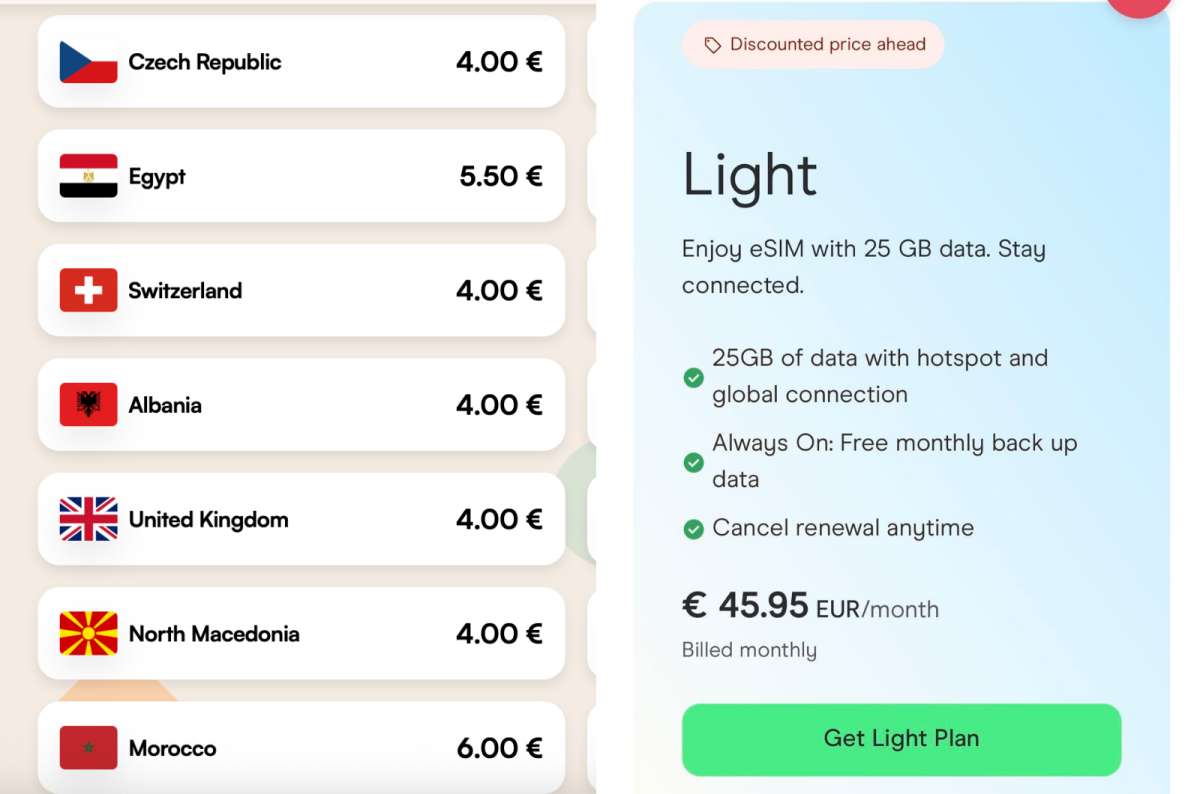
Airalo is usually easier to compare on price because you are buying a fixed amount of data.
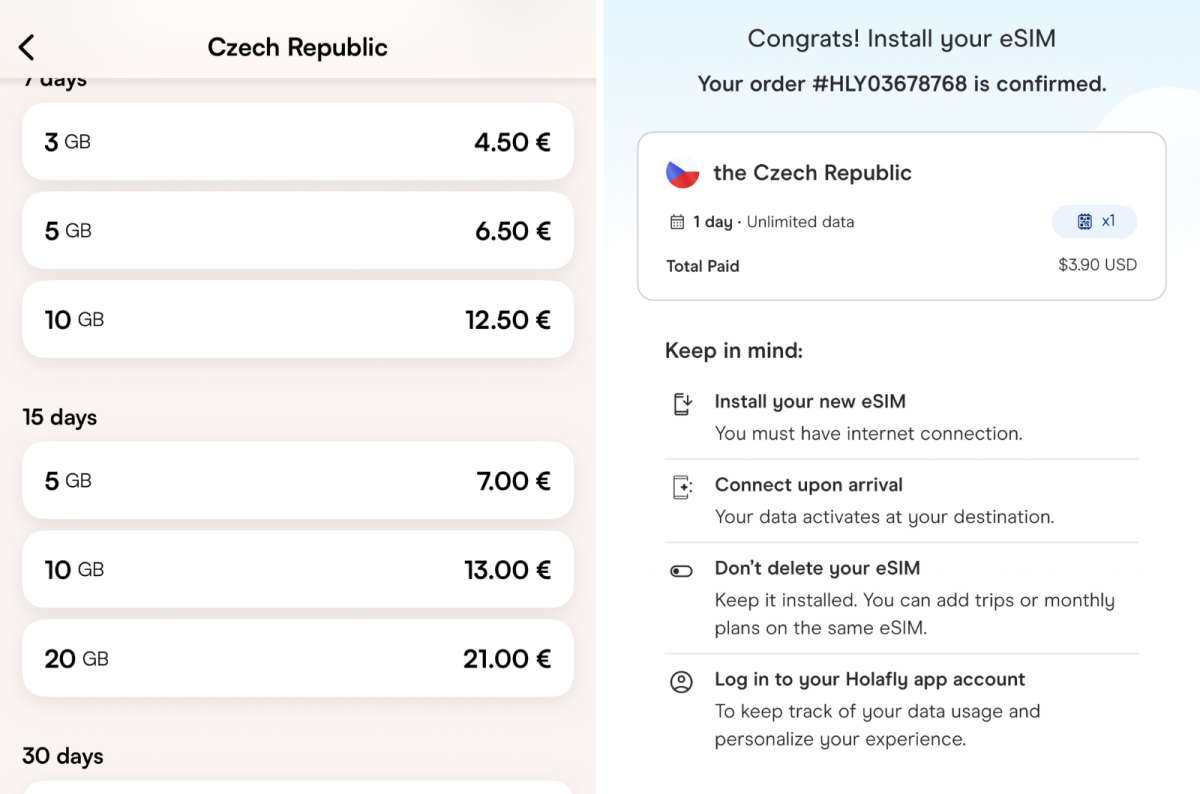
For example, if you need only 3 GB, 5 GB, or 10 GB, Airalo can be very cost-efficient. It often feels close to local mobile pricing, especially when checking country-level plans.
Holafly is harder to compare directly because it is positioned differently. You are not just buying GB. You are buying unlimited data and exact trip-length customization.
That means Holafly can be:
For example, if you are traveling for 16 days, Holafly lets you buy 16 days. That is a big deal. I do not want to buy a 30-day plan for a 16-day trip unless I have to.
So the pricing verdict is:
Airalo can win for light and moderate data users. Holafly wins for heavy users, convenience-focused travelers, and people who value customization.
>> If you want to try Holafly, you can use discount code NXTLEVEL through this link: https://hfly.co/rmiv6 <<
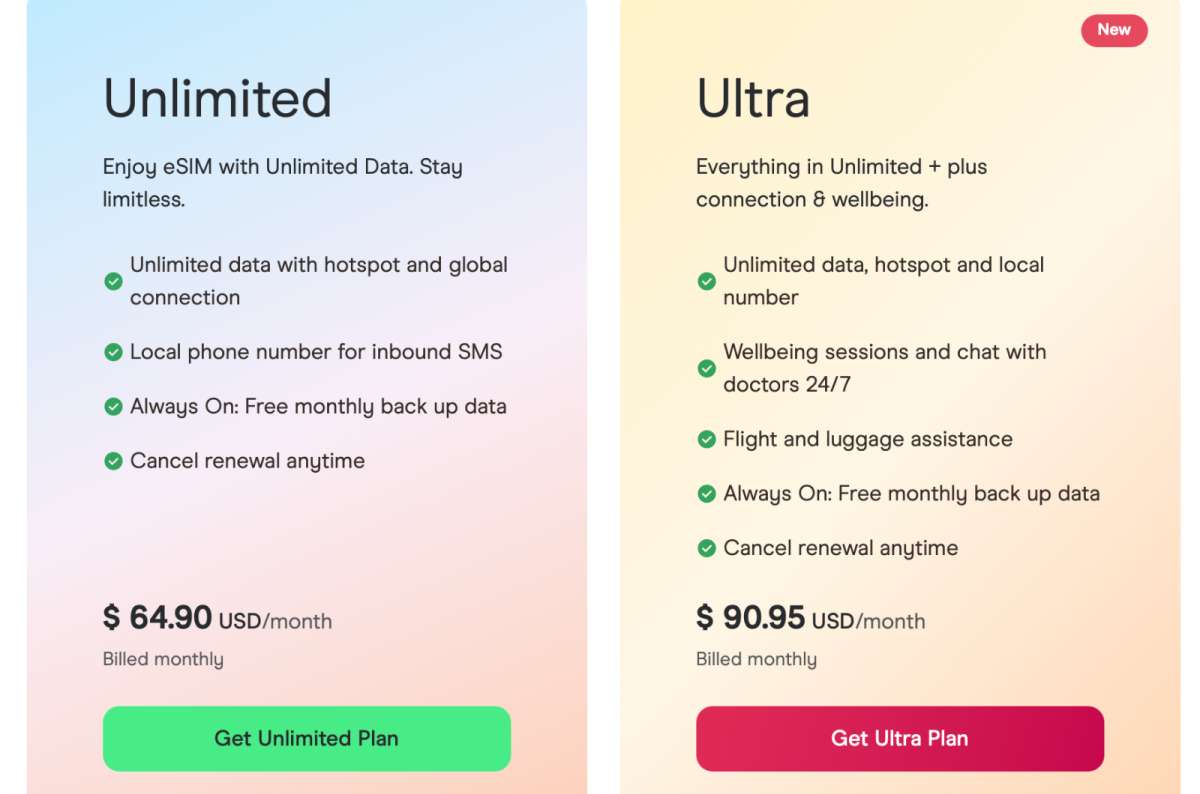
Holafly’s strongest selling point is unlimited data.
This is especially useful when traveling because your data consumption can be unpredictable. You may use Google Maps all day, upload photos, call Ubers, check restaurant reviews, stream videos, answer emails, or use WhatsApp calls.
When I travel, I do not want to think about every gigabyte.
That is why I think Holafly is pushing the industry in the right direction. The most logical trend is not “choose between 1 GB, 3 GB, 5 GB, or 10 GB.” The logical trend is: choose your destination, choose your travel dates, and get connected.
That is exactly where Holafly feels like a pioneer.
The only caveat: unlimited data does not always mean unlimited high-speed data in every possible situation. There can be fair-use policies or local operator limits. But for most normal travelers, Holafly’s unlimited model is still easier to understand than calculating a fixed-data package.

This is where you should be careful.
If you need mobile data mainly on your phone, Holafly is excellent.
If you need to use a hotspot for your laptop, tablet, or another traveler, check the specific plan details before buying. Hotspot rules can vary by provider, destination, and plan type.
Airalo is often better for people who want predictable fixed-data use, including tethering, because you know how many GB you bought and can manage usage accordingly.
Holafly is better if your main use is phone-first travel: maps, messaging, browsing, bookings, social media, and general connectivity.
If you are a digital nomad planning Zoom calls and laptop hotspot all day, I would compare the specific plans very carefully before buying any travel eSIM.
For most travelers, though, Holafly’s unlimited phone data is exactly what they need.
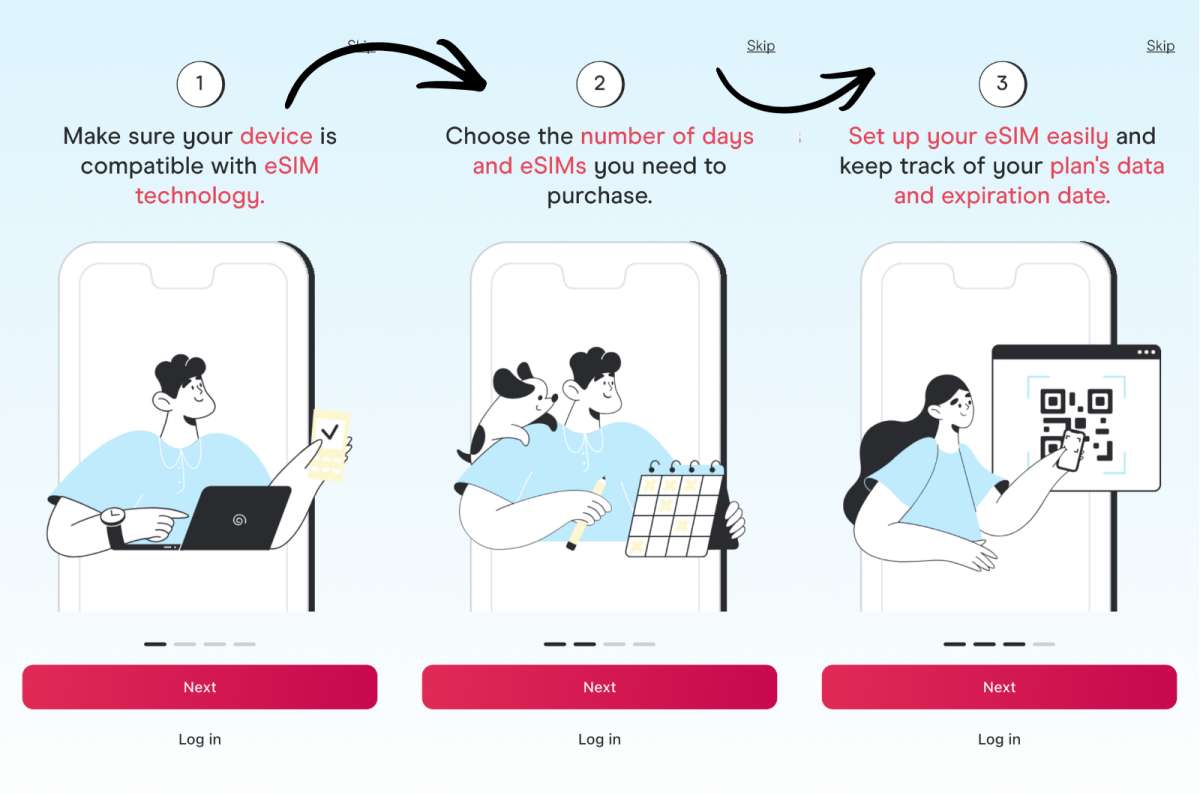
Both apps are good. Holafly feels more premium.
Airalo has improved massively since 2022. It now has strong language options, currency options, clear FAQs, and a straightforward flow. The app also lets you see previous SIMs, usage, purchase dates, and top-up options.
Holafly has a cleaner purchase experience. I liked the number-of-days customization, the broad payment options, and the overall app guidance.
One bug I noticed: when choosing payment currency, the euro price after conversion was higher than the USD price, so I paid in USD. Always check the final currency conversion before paying.
Both providers support standard payment methods such as credit cards and Apple Pay. I also like when eSIM providers support PayPal. PayPal is often annoying when you need to withdraw money, so I like having opportunities to spend PayPal balance directly.
Holafly also does a good job with emails after purchase. The instructions, receipt, and support options are easy to find. That sounds basic, but in travel tech, basic things are often where companies fail.

For Europe, both Airalo and Holafly make sense.
Airalo is great if you want a regional Europe plan and know roughly how much data you need. If you are doing a road trip across multiple European countries, you can often buy one Europe tariff and use it across the region, including the UK, depending on the plan.
Holafly is better if you want unlimited data and a plan that matches your exact number of travel days.
One important note: if you are an EU resident, you may already have EU roaming included with your domestic plan. In that case, you may not need either provider for ordinary EU travel. But for visitors from the US, Canada, Australia, the UK, or other non-EU markets, a Europe eSIM can be very useful.
For Europe, I would personally lean toward Holafly if you want a stress-free experience and do not want to track data usage. The exact-day customization is especially useful for European itineraries, where trips often last 8, 11, 16, or 19 days rather than a clean 7 or 30 days.

I like Airalo a lot. It was my first eSIM provider, and maybe I am biased because of that. It has worked for me across multiple continents; the app has improved dramatically, and the pricing is usually strong for fixed-data plans.
But if I compare the two as products today, Holafly comes out ahead.
Not because it is always cheaper. It is not.
Holafly wins because it better matches how I want travel connectivity to work: choose the destination, choose the exact number of travel days, get unlimited data, install easily, and do not think about it again.
The Always On benefit also makes Holafly more attractive as a long-term travel connectivity app. Getting 1 GB/month of free backup data for 12 months after your trip is a genuinely useful safety net, especially if you travel often.
Airalo is the better practical choice if you want price control, fixed data, and a provider with a long track record. Holafly is the better premium choice if you want simplicity, customization, unlimited data, and backup connectivity after the trip.
My recommendation:
For most travelers who value convenience over the absolute lowest price, I would start with Holafly.
>> You can use discount code NXTLEVEL when booking through this link: https://hfly.co/rmiv6 <<

Holafly is better for unlimited data, exact trip-length customization, and a smoother overall experience. Airalo is better for cheaper fixed-data plans and users who know exactly how much data they need.
Holafly is positioned around unlimited data plans, but like most mobile products, speeds and usage can still depend on fair-use policies and local network conditions.
Often yes, especially for light and moderate data users. Airalo fixed-data plans can be very cost-efficient. Holafly is usually stronger for heavy data users or travelers who prefer unlimited data and convenience.
Airalo is better if you want a fixed-data Europe plan at a lower price. Holafly is better if you want unlimited data for the exact number of travel days.
Holafly Always On gives you 1 GB/month of free backup data for 12 months after your trip. It works as a safety net if you need emergency connectivity after your main travel plan ends.
Holafly. If you use a lot of maps, social media, uploads, browsing, and messaging, unlimited data is easier than monitoring GB usage.
Yes. Install it before departure while you still have stable internet. Then activate or switch to it when you arrive. This avoids airport Wi-Fi stress after landing.
This post contains affiliate links. If you make a booking through one of my links, I may earn a small commission—at no additional cost to you. Thank you for your support!
Airalo vs Holafly: Quick Verdict
The Main Difference Between Airalo and Holafly
Installation and Setup: Holafly Wins
Coverage and Real-World Connectivity
Always On: A Small Feature That Actually Matters
Customer Support and Refunds: Holafly Wins
Pricing: Airalo Can Be Cheaper, Holafly Can Be Smarter
Unlimited Data: Holafly’s Biggest Advantage


Hi, I’m Jan. I travel fast and intensely, whether I’m exploring the buzz of Tokyo in 3 days or road-tripping through mountains and beaches on a 3-week Thailand adventure. And no matter where I am, you’ll always find me in a comfortable hotel at night and eating the best food.
If that sounds like your kind of journey, hop on board, and let’s explore the world together!
I started this blog after realizing how tough it can be to find reliable, authentic travel info. You wouldn’t believe how many “travel bloggers” never even visit the places they write about! On Next Level of Travel, you can count on my full honesty and insights drawn from my firsthand experiences.
Here’s the deal: not every destination is all superlatives and unicorns. I’ll let you know if a tourist attraction isn’t worth your time, like skipping overrated stops in my 2-week Spain itinerary. And when I find something truly special—like the perfect mix of culture and nature in Cape Town—you can trust that it’s worth adding to your itinerary.




Comments | Thoughts? Give us a shout!