




If you traveled internationally before eSIMs became normal, you probably remember the alternatives: overpriced airport SIM cards, trying to communicate with a local mobile operator, or using roaming and discovering later how generous your phone company was with your money. I’ve done enough of that to know I don’t want to go back.
eSIMs removed most of this nonsense. You buy the plan, install it, land, switch it on, and have data. After trying several eSIM providers, I’ve learned that the differences between them are no longer really about whether eSIM technology works—it does.
The differences are price, installation, UX, and how much freedom you get when choosing the plan. And that last point is exactly where Holafly becomes interesting.

Every eSIM app claims to be the best one, this is where I find out if Holafly actually is
Yes—especially if you want unlimited data and don’t want your trip forced into somebody else’s 7-, 15-, or 30-day package. That’s probably the clearest way I can describe Holafly.
Most eSIM providers sell you predefined packages. Holafly lets you adjust much more: destination, region, number of days, and even the number of eSIMs you need.
I honestly think Holafly is the winner in customization, and this matters more to me than I expected. If my trip lasts 16 days, I don’t particularly want to buy 30 days simply because someone decided that was a convenient package size—I want 16 days.
Holafly gets that. I tested Holafly in the Czech Republic, deliberately, because I live there and could compare the eSIM directly with my normal mobile provider.
That gives me a much better reference point than trying it once in a country where I have no idea what normal mobile coverage is supposed to look like. The data worked essentially the same as my normal connection, which is about the best result an eSIM can produce.
My main verdict is simple: Holafly isn’t really the provider I’d choose to save the last USD 5. I’d choose it because unlimited data and precise trip-length customization are more useful to me than counting gigabytes.
Check current Holafly plans and prices.
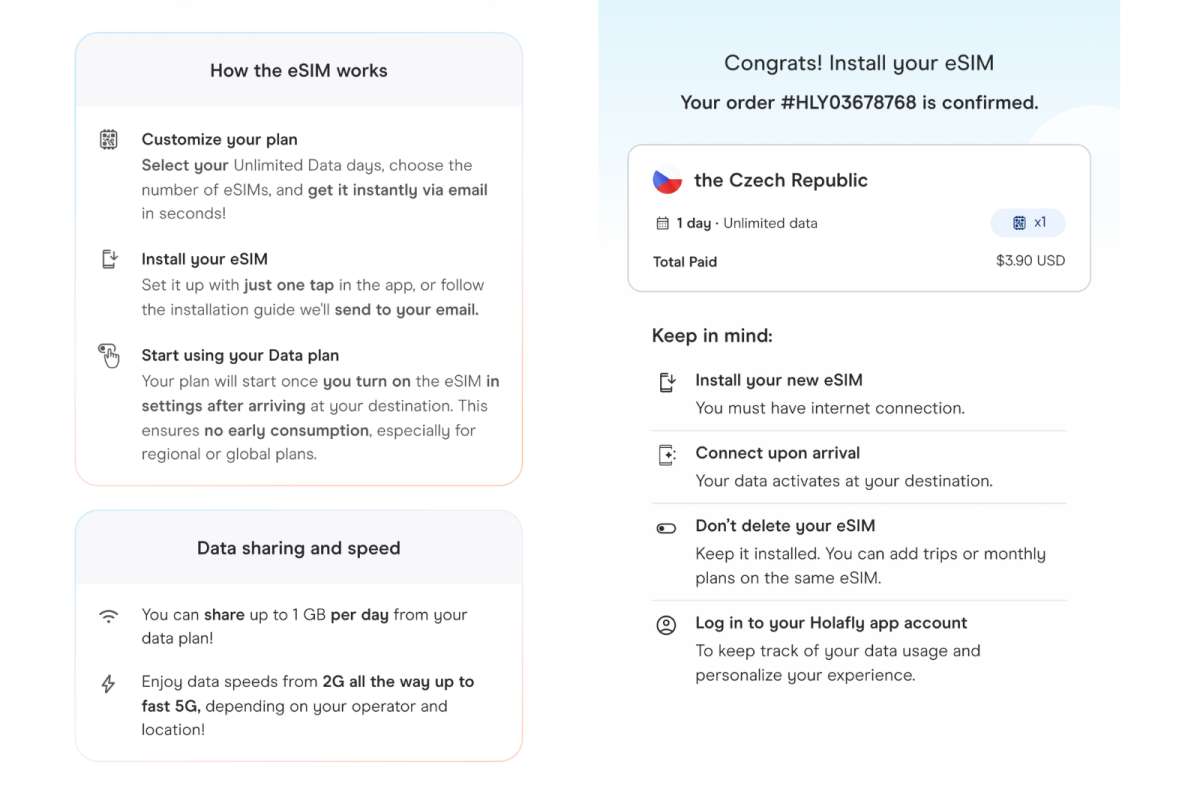
This is what buying exactly what you need actually looks like
This is easily the feature that impressed me most. You can choose a country eSIM, regional eSIM, or global eSIM, which is useful depending on how you travel.
A regional package makes obvious sense if you’re traveling through South America and combining Chile with Argentina, or driving through several countries in Europe. Nothing revolutionary there—other providers do regional plans too.
The big difference is how much you can customize the actual purchase. Holafly gives you a wide range of options for the number of days and number of eSIMs, and I haven’t found another provider that makes this quite as flexible and straightforward.
This is where it starts feeling less like buying a standardized telecom product and more like ordering exactly what you need. And yes, I like that.
I’m very much the person who appreciates custom luxury products, so apparently I also want my mobile data tailored to my vacation. For me, this is Holafly’s strongest reason to exist.
Holafly is not really trying to compete with Saily, Airalo, or Ubigi purely on price per gigabyte. Its positioning is mainly unlimited data plus customizable duration, which makes direct comparisons slightly artificial.
If you use very little mobile data, Holafly can easily be more expensive than buying 3 GB or 5 GB from another provider. If you use huge amounts of data, the opposite can happen.
And if you travel for a weird amount of time—say 16 days instead of 15 or 30—the ability to pay specifically for those 16 days changes the calculation again. So whether Holafly is expensive depends enormously on how much data you consume and how long you travel.
For somebody who checks email, uses Maps, and barely touches Instagram, I probably wouldn’t choose unlimited data. For somebody who uses their phone constantly, uploads photos and videos, watches YouTube, works remotely, or just does not want to think about data consumption at all, Holafly becomes considerably more attractive.
That’s why I wouldn’t describe Holafly as cheap or expensive. It’s custom.
And I honestly think other eSIM providers will increasingly move in this direction. It makes much more sense than forcing every traveler into the same handful of package sizes.
The buying process is mostly very smooth. You can actually buy without registering, which I like as a UX decision.
Any app that lets me give it money without first asking me to create another password gets initial sympathy from me. But I personally would still create an account.
Buying without registration is neat, but you get more functionality after signing up, so I don’t think avoiding the account is worth it if you expect to use Holafly properly or more than once. The destination selection is also surprisingly broad.
You have all the obvious tourist countries, but I noticed places with very low international tourism volumes too, including Afghanistan and Iraq. I’m not currently planning my Afghanistan vacation, but credit where it’s due.
Holafly clearly didn’t build the destination list around only the 20 places people post on Instagram. That’s genuinely useful if you travel somewhere less obvious.
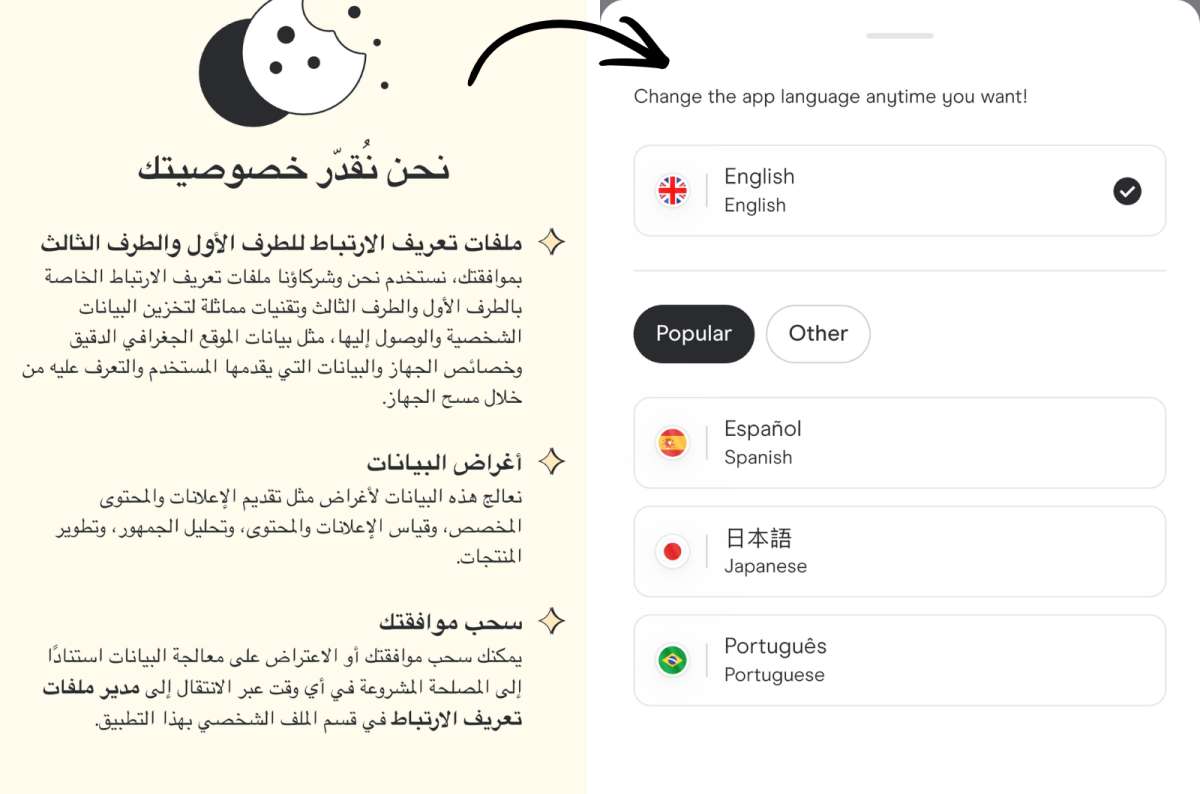
Wtf, Arabic. Then one tap and I wasn't
Installing the Holafly app from the App Store was about as difficult as you’d expect. It wasn’t.
The entertaining part came afterward, because for some reason, the app opened in Arabic. Wtf.
Luckily, there was an obvious globe icon, so switching the language to English took almost no effort. Holafly supports the major international languages, although not as many smaller languages as some competitors.
Personally, I don’t think this is a major weakness because automatic translation exists and the app itself is simple enough. Still, compared with some other eSIM providers that offer Czech and other smaller languages directly, Holafly could do more here.
The actual language switch itself was excellent, though. If your app is going to randomly welcome me in Arabic, at least make escaping from Arabic easy.
They did, so the problem was more funny than serious. I was confused for about 10 seconds and then moved on.
Overall, I really like the Holafly app. The entire purchase flow feels simple and deliberately guided.
You are rarely left wondering what happens next, which matters with eSIMs because the average user does not want to understand the technical details of mobile network configuration. There are installation guides throughout the process, and I think that’s exactly right.
Installing an eSIM can sometimes be a pain, but with Holafly it really wasn’t. The app keeps explaining what you need to do, and there is also a foolproof manual inside the installation tips.
I’d rather have instructions that are slightly too obvious than discover midway through the process that I should apparently understand what an SM-DP+ address is. Holafly gets the balance right.
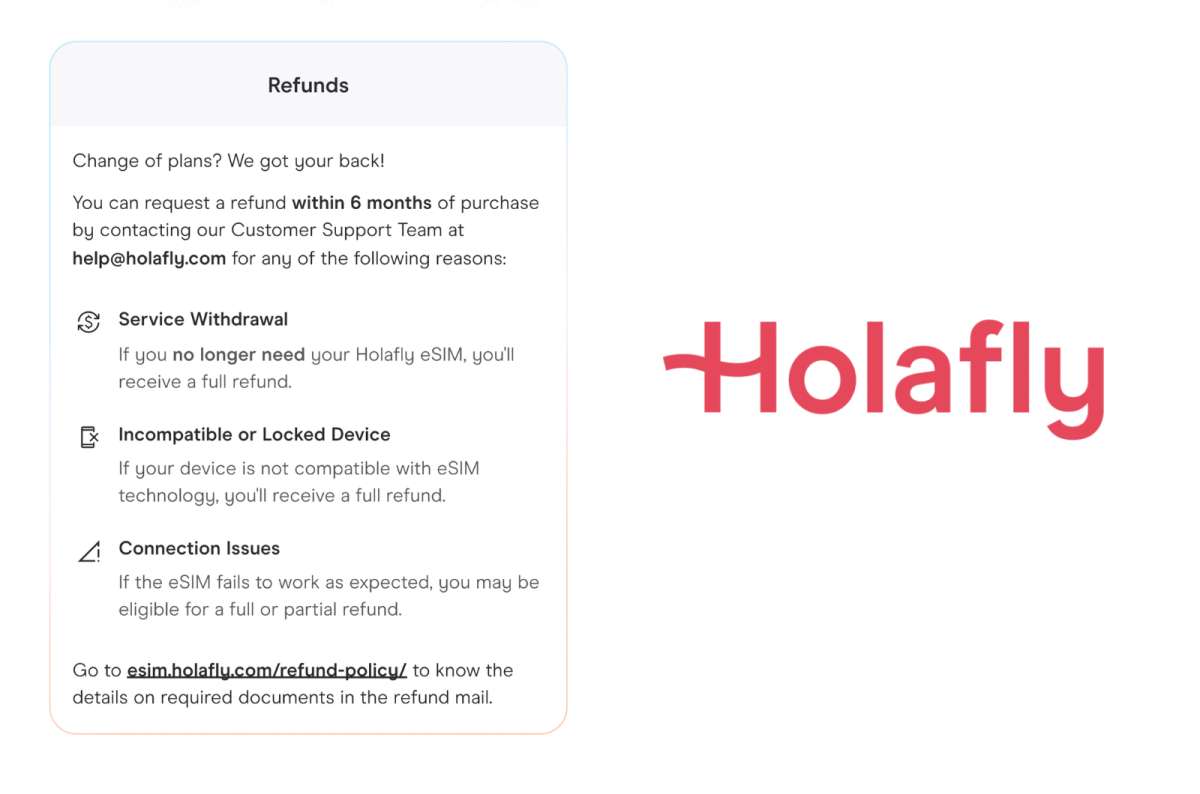
Nothing to decode here, just three reasons and an email address
Another thing I liked is that the refund policy is easy to find and clearly explained. This should be normal, but it isn’t.
I hate companies that play hide and seek with customer service, cancellation policies, or refunds. Somehow the “BUY NOW” button is always 40 pixels high and neon green while the refund information lives behind six menus in 8-point gray text.
Holafly doesn’t do that. If refunds matter to you, you can find the information without performing digital archaeology.
That immediately gives me more confidence in the company. Transparency around refunds is one of those things you only really appreciate when you need it.
After choosing the eSIM, you go through the usual checkout process with your details and billing address. If you have a discount code, adding it is straightforward (you can use mine: NXTLEVEL).
I also liked the variety of payment methods. Apple Pay and credit cards are basically industry standard now, but Holafly also supports PayPal, which I always appreciate.
Getting money out of PayPal can be more annoying than spending it, so I’m very happy whenever a company gives me another way to empty the account. It’s a small thing, but I genuinely notice it.
I did spot one weird pricing issue during checkout. The EUR price came out higher after conversion than the USD price, so logically I paid in dollars.
Not exactly a catastrophic problem, but I’d definitely check both currencies before paying if the app gives you the choice. Saving money by changing one dropdown is about the amount of financial optimization I’m willing to do on vacation.
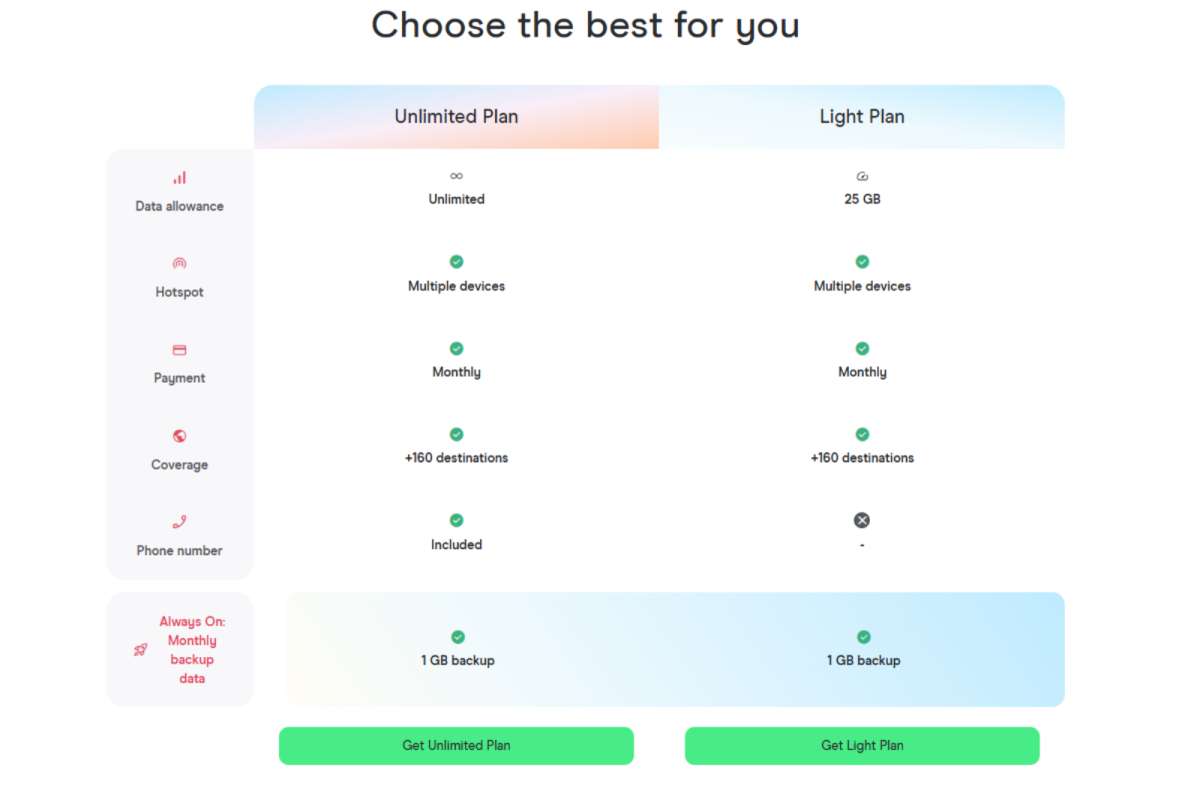
25GB versus infinity, pick your poison
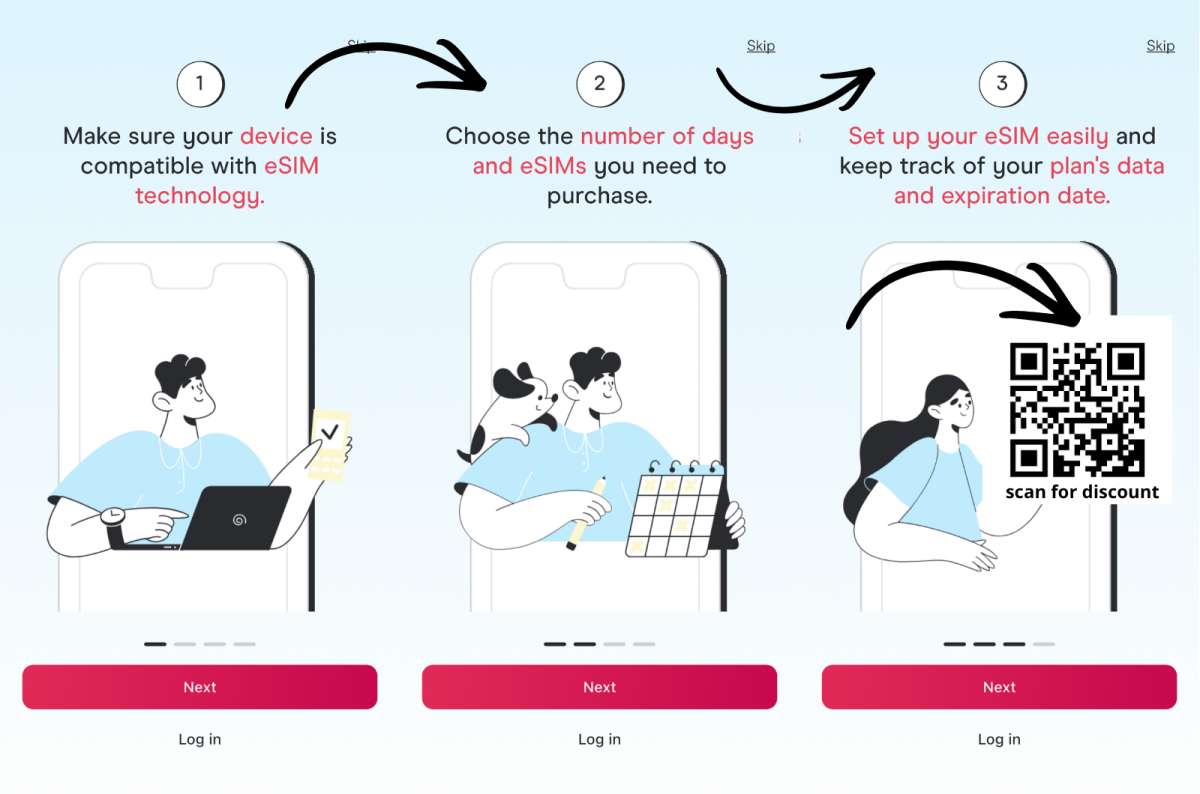
Check compatibility, pick your days, scan a QR code, done
Installation itself was excellent. Most of it happened automatically, with the app guiding me through the steps.
This is exactly where an eSIM provider either earns my trust or irritates me. Holafly earned it.
The instructions are extremely clear, and there’s a dedicated installation tips section if anything feels uncertain. Overall, I’d describe the Holafly installation as stupid-proof.
You don’t need to understand what the phone is doing behind the scenes. You mainly need to follow what the app tells you, which is exactly how it should work.
As with every eSIM, I recommend installing it just before traveling while you still have reliable internet. You need an internet connection for the installation, and trying to sort this out after landing using questionable airport Wi-Fi is completely avoidable.
I’ve made that mistake before, so there’s no need to repeat it. Install everything at home, check that the eSIM appears correctly, and then activate or switch to it according to the plan instructions.
There’s also one particularly important phone setting to check. Turn off your domestic mobile data and select the Holafly eSIM for data.
I also recommend disabling automatic cellular data switching between SIMs. I failed to do this properly once in Switzerland and managed to use expensive domestic roaming without realizing it.
That mistake was educational, but it was also expensive. I don’t recommend the learning experience.
One UX point did annoy me slightly after installation. It wasn’t immediately obvious where my active eSIM was inside the app.
I would expect the current plan to be one of the most obvious things on the homepage. Instead, I had to look for it a little.
This isn’t a major problem, and once you know where it is, it’s fine. But considering how good Holafly is at guiding you through the purchase and installation, I think the active plan deserves much more prominent placement afterward.
Basically: great onboarding, slightly less obvious dashboard logic. Not a dealbreaker, but definitely something I’d improve.
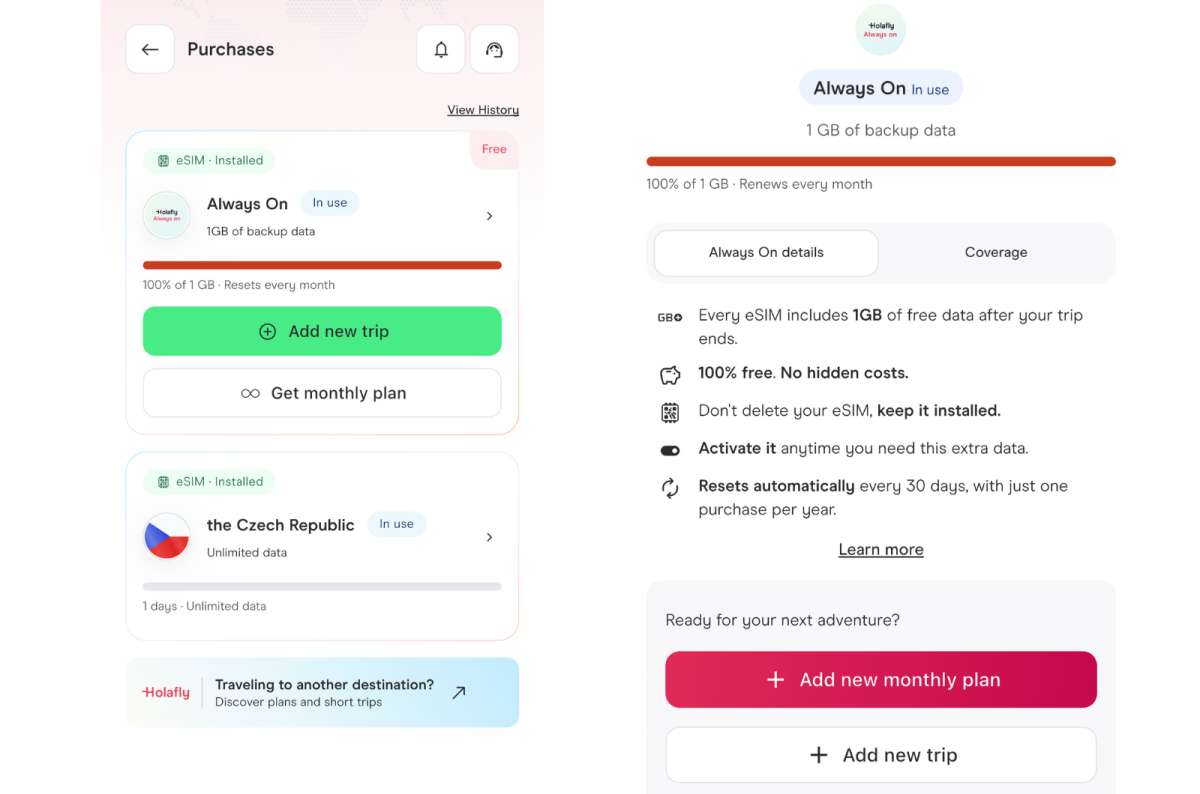
This is Holafly making sure I don't forget about it
One feature I genuinely liked is Always On. After your trip ends, Holafly gives you 1 GB of free data, and the allowance resets every 30 days.
That is a genuinely nice perk, but it’s also obviously a very smart customer-retention tool. You finish your trip, but Holafly remains useful.
Then next time you travel, which provider are you already thinking about? Exactly.
I like brands that are salesy when they do it intelligently. This is intelligent.
The 1 GB isn’t enough for a full trip for most people, but it’s enough to keep some basic connectivity available and keep Holafly in your mind between purchases. Very clever.

Thick medieval stone walls in Wales, and I still had full data in my pocket
I tested Holafly in the Czech Republic because I wanted a meaningful comparison with my regular mobile provider. The result was very simple: the connection worked essentially the same as my normal mobile data.
That’s a major positive because I didn’t want to see whether the Holafly logo looked nice while loading Maps. I wanted to know whether I’d notice a meaningful downgrade compared with what I use every day.
I didn’t. Browsing, normal apps, maps, and everyday data use behaved exactly as I would expect.
Obviously, as with every travel eSIM, actual performance still depends on the local network Holafly is using. But based on my test, I had no complaint.
And with unlimited data, there’s another psychological benefit: you stop thinking about data entirely. No checking whether you have 1.2 GB left, no deciding whether a video is worth downloading, and no hotel-Wi-Fi negotiations.
That freedom is probably Holafly’s second-biggest selling point after customization. Once you stop monitoring consumption, the phone just goes back to being a phone.
Holafly also does a good job with communication after the purchase. You receive the usual automatic emails confirming the plan and giving you the information you need.
I actually liked these because everything is explained clearly. If something goes wrong, contacting customer support is easy.
Again, this sounds obvious until you use a company where finding an actual support channel feels like trying to locate an employee inside an abandoned airport terminal. Holafly doesn’t hide it.
I also liked how easy it was to get the receipt. This is particularly useful when buying an eSIM for business travel and expensing it through a company.
It should obviously be standard, but somehow it still isn’t always standard. So Holafly gets credit for doing the boring administrative stuff properly too.
None of these would stop me from using Holafly again. The main question is simply whether you actually need the type of product Holafly sells.
I’d recommend Holafly most strongly to heavy data users and people who hate monitoring their consumption. It also makes a lot of sense for trips with unusual lengths.
If I’m traveling for 16 days, I like being able to buy 16 days. I don’t want to buy 30 because somebody’s spreadsheet says that’s a standard package.
Regional travelers are another obvious fit. If you’re driving through Europe or combining countries such as Chile and Argentina in South America, buying one regional unlimited plan is wonderfully simple.
And if you work from your phone, upload lots of photos and video, or simply refuse to spend your vacation thinking about gigabytes, Holafly becomes even more appealing. That is where the unlimited-data positioning really makes sense.
I’d probably choose another provider if I knew I used very little data. If 3 GB will comfortably cover your trip, buying unlimited data may simply be unnecessary.
Saily, Airalo, Ubigi, or another provider can easily be cheaper for a small fixed-data package. Holafly is also less interesting if your only goal is finding the absolute lowest price.
That’s not really what the company is selling. You’re paying for unlimited consumption, flexibility, and precise customization.
If you value those, great. If not, there are cheaper ways to get WhatsApp and Maps abroad.

Even with a view in Norway like this, I still wanted Maps working in case I got lost
So, is Holafly worth it? Yes—and I think it’s probably the most interesting eSIM provider right now if customization matters to you.
The installation was very easy, the UX is generally excellent, the connection during my Czech test performed like my normal mobile data, and I particularly liked how transparent Holafly is about refunds, support, payment, and receipts.
But the real reason I’d choose it is much simpler: I can buy exactly the trip I’m actually taking. If I’m traveling for 16 days, I want 16 days.
If I’m going through several countries, I want one regional eSIM. And if I want unlimited data, I don’t want to spend the trip calculating whether watching a video just cost me 8% of my remaining package.
That flexibility is much more interesting to me than shaving the last few dollars from the price. Holafly isn’t necessarily cheap, but it isn’t necessarily expensive either.
It depends massively on how much data you use and how long you travel. But for heavy data users, unusual trip lengths, and anyone who values customization, Holafly is probably the strongest eSIM product I’ve tested so far.
I honestly think Holafly is ahead of the market here. I wouldn’t be surprised if the other providers gradually start copying the model, because selling travelers exactly the number of days they need seems considerably more logical than asking everyone to fit their vacation into a telecom company’s calendar.
Check current Holafly plans and prices. Use my discount code: NXTLEVEL

This post contains affiliate links. If you make a booking through one of my links, I may earn a small commission—at no additional cost to you. Thank you for your support!


Hi, I’m Jan. I travel fast and intensely, whether I’m exploring the buzz of Tokyo in 3 days or road-tripping through mountains and beaches on a 3-week Thailand adventure. And no matter where I am, you’ll always find me in a comfortable hotel at night and eating the best food.
If that sounds like your kind of journey, hop on board, and let’s explore the world together!
I started this blog after realizing how tough it can be to find reliable, authentic travel info. You wouldn’t believe how many “travel bloggers” never even visit the places they write about! On Next Level of Travel, you can count on my full honesty and insights drawn from my firsthand experiences.
Here’s the deal: not every destination is all superlatives and unicorns. I’ll let you know if a tourist attraction isn’t worth your time, like skipping overrated stops in my 2-week Spain itinerary. And when I find something truly special—like the perfect mix of culture and nature in Cape Town—you can trust that it’s worth adding to your itinerary.



Comments | Thoughts? Give us a shout!