




If you traveled internationally before eSIMs became normal, you probably remember the options: buy an overpriced airport SIM, fight with a local mobile operator, or use roaming and discover the financial consequences later. I’ve done enough of all three to know I don’t want to go back.
Then eSIMs entered the game, and I still consider them one of the biggest improvements to modern travel. You land, switch on the eSIM, and have data. No physical SIM, no phone shop, no unnecessary drama.
Yes. Completely.
Maps, hotel reservations, WhatsApp, translation, Uber, and generally being able to solve problems immediately after landing are basic travel infrastructure now. After using eSIMs on dozens of trips, I wouldn’t voluntarily return to physical tourist SIMs.
My standards are unnecessarily high for someone reviewing mobile data, so I’ll concentrate on what actually matters: price, app design, installation, security, connectivity, and whether Ubigi deserves your money.
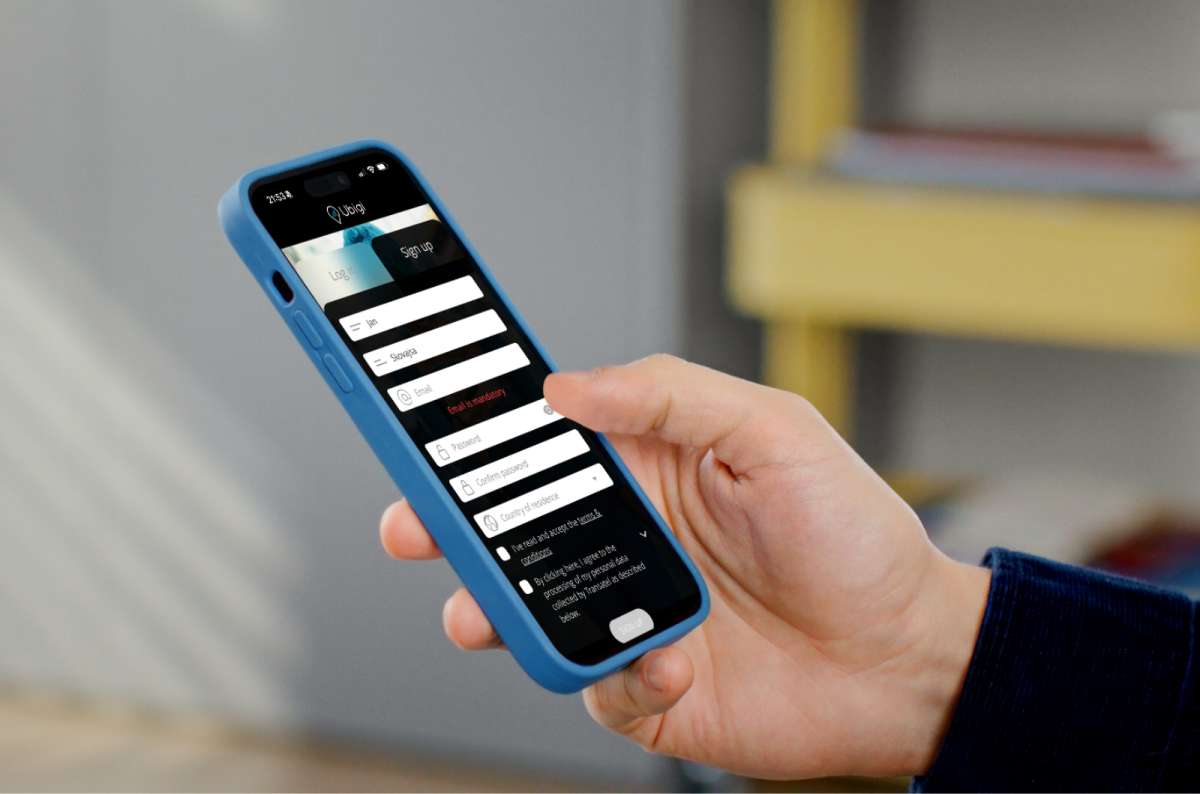
This screen is the one hiccup, registration took longer than the actual install
Yes. And where Ubigi really shines is pricing—particularly its full Europe plans.
I tested Ubigi while traveling in Slovenia, but I deliberately bought a full Europe plan. That meant I could keep using it after returning home and compare the connection directly against my normal mobile data, which was much more useful than testing it for a few hours abroad and declaring victory because Google Maps loaded.
The whole product left me with a slightly unusual impression. Registration was more annoying than I expected, installation was probably the easiest and fastest of all the eSIM providers I’ve tried, and once everything was running, the app itself was extremely simple.
And if you’re specifically searching for the best eSIM for Europe, Ubigi would absolutely be on my shortlist. Its combination of competitive Europe pricing, one eSIM you can reuse, and very easy installation makes much more sense to me than saving a tiny amount on a less convenient setup.
So Ubigi starts slightly awkwardly and then becomes very good very quickly. My overall verdict is simple: if pricing matters, especially for a European trip, Ubigi deserves serious consideration.
For a multi-country European trip, I’d rate it as one of the strongest eSIM options I’ve tested so far.

Code NEXTLEVEL gives 10% off your first purchase
This is probably the most interesting part of Ubigi. Ubigi’s pricing is one of its strongest arguments, especially for larger data packages and full-Europe plans.
With some eSIM providers, the app is fantastic, but you eventually realize you’re paying considerably more for the privilege of admiring the interface. Ubigi feels more price-focused.
For my trip, I chose the full Europe tariff instead of a Slovenia-only plan because I wanted to test it across countries and then compare it with my normal connection back home. I’d do the same again for a European road trip.
If you know you’re crossing several borders, buying one regional package makes much more sense than repeatedly thinking about which country you’re in and whether your current plan covers it. The convenience is obvious, but with Ubigi, the pricing can actually make the regional option attractive too.
That is important because some competitors become surprisingly expensive once you move from a single-country package to Europe-wide coverage.
This is one of the main reasons I think Ubigi has a genuine claim to being one of the best eSIMs for Europe. It isn’t simply good because the app works—the Europe pricing itself is one of the reasons I’d choose it.
As with every eSIM provider, I’d still recommend buying a sensible amount of data instead of constantly topping up tiny packages. Ubigi makes topping up extremely easy from inside the app, but that doesn’t mean I want to spend my vacation thinking about it.
I generally use more data than I expect anyway. Hotel Wi-Fi exists, obviously. Remembering to connect to it before watching YouTube is apparently another matter.
So I’d rather have enough data from the beginning and forget about it.
There is one useful exception here: Ubigi’s Smart Top-Up means you can buy more data even after your current package is exhausted, without first hunting down Wi-Fi. I’d still buy enough from the beginning, but this is exactly the kind of feature I want when I miscalculate.
This is where I’d seriously consider Ubigi over some of the better-known competitors.
I used the full Europe plan, even though Slovenia was the main destination I was testing it in. That gave me two advantages: I didn’t have to care about borders, and I could continue using the same eSIM when I got home and compare it directly with my normal phone connection.
For a European road trip, that is exactly the type of package I prefer. One plan, multiple countries, no border-related mobile-data administration.
[INTERNAL LINK: best countries/places to visit in Europe]
If you’re visiting only one country, I’d still compare the single-country price against the regional package. But if you’re actually moving around Europe, Ubigi’s regional pricing is one of the main reasons I’d shortlist it.
So, is Ubigi the best eSIM for Europe? I wouldn’t claim one provider is automatically best for every traveler, but for the way I travel—road trips, multiple countries, plenty of data, and minimal technical nonsense—Ubigi is easily one of my strongest choices.
Code NEXTLEVEL gives 10% off your first purchase
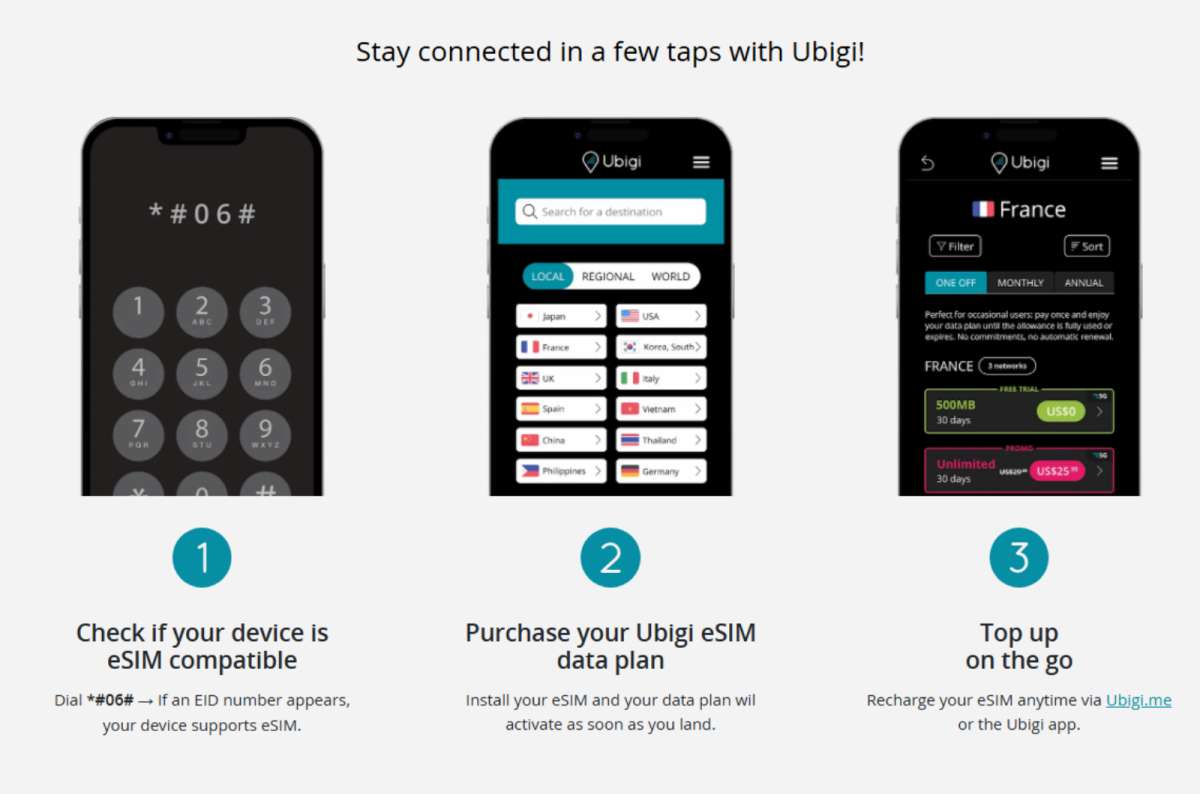
Buy on the website, top up in the app, the whole relationship in three screens
One thing my original test underplayed is that you don’t actually have to start with the app. For a first-time customer, buying directly through the Ubigi website is arguably the more logical route—especially since that’s where you’ll land from the link in this article.
You choose your destination and plan on the website, complete the purchase, and receive an installation QR code by email. You can then scan it and install the eSIM in a few minutes without making the app the center of the whole process.
After that, the app becomes much more useful: you can monitor consumption, top up your data, see past orders, and buy plans for future trips. I actually think this is a better way to explain Ubigi than treating it purely as an app-first product.
And if you’re buying for the first time, use discount code NEXTLEVEL for 10% off.
I liked the Ubigi app almost immediately. It is simple, clean, and very easy to understand, and I also like the black design, which makes it look slightly different from the usual white-and-pastel travel apps.
Yes, that is an incredibly important technical criterion. But if I have to look at an app, I’d prefer it not to annoy me visually.
More importantly, there isn’t much unnecessary clutter. The dashboard gives you what you actually need: your current plan and your total data consumption without making you dig through menus.
Your previous purchases are stored under Orders, so it is easy to see what you bought before. If you need more data, topping up is straightforward from the menu.
That is basically how I want an eSIM app to work. Show me the plan, show me how much data is left, let me buy more, then leave me alone.
I initially described the app as almost too minimal, but that undersells it a bit. Ubigi hides several genuinely useful features behind the clean interface rather than throwing everything onto the dashboard.
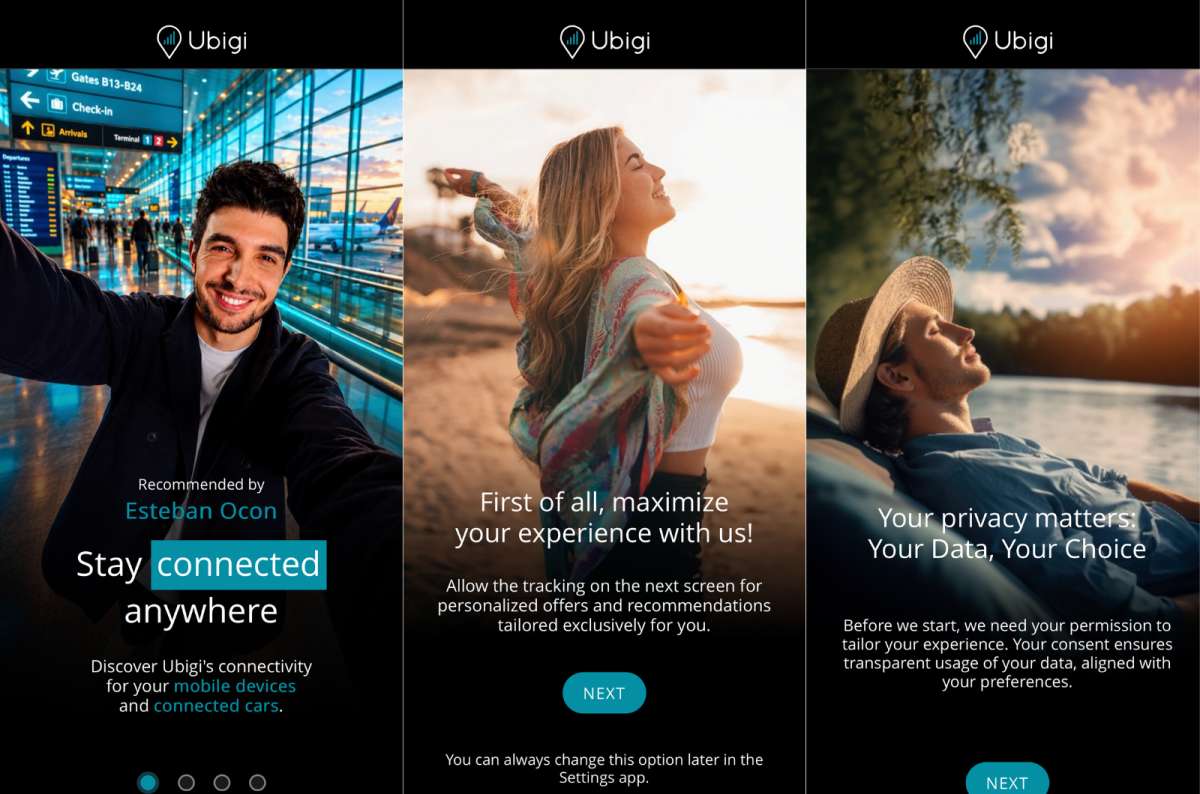
Before you even get to register, the app already asks twice for your permission, which explains some of that two-minute delay
This was probably my least favorite part of Ubigi. The registration itself isn’t difficult; it is just more manual than I prefer.
I’m used to apps letting me continue through Google, Apple, or some other quick login option. It has honestly been a while since I had to properly register for something from scratch, so Ubigi made me feel strangely old-fashioned for about two minutes.
That’s basically the extent of my complaint, though. It is a couple of minutes of mild annoyance, not some major usability disaster.
On the other hand, I liked the security around registration. Ubigi confirms your email, which means somebody can’t simply register using your address without you knowing.
So the same step that annoyed me also made me trust the product slightly more. Very inconvenient of them.
Security is actually one area where Ubigi left a stronger impression than most eSIM apps I’ve tested. You can use Face ID or biometric authentication, and I received email warnings and confirmations around the account.
There is also the usual flow of informational emails after the purchase and installation. They basically confirm that everything is active and ready.
Normally, I dislike companies emailing me every time I breathe near their product. Here, it makes sense.
With something connected to your mobile data and payment information, I’d rather receive one confirmation too many than discover later that something happened without me noticing. You can also manage stored payment cards inside the app, which is not exciting but is sensible.
The first is Smart eSIM. You install the Ubigi eSIM once and can then reuse it for future trips by simply buying another compatible plan. I much prefer this to accumulating a graveyard of old travel eSIMs in my phone settings.
Then there is Smart Start. Your package validity starts when the eSIM connects to a supported network at the destination, rather than simply because you prepared it at home. This removes one of the annoying questions with travel eSIMs: “Am I wasting validity days by installing this before I leave?”
Finally, Smart Top-Up lets you purchase more data even if you have already used up your package and no longer have a normal data connection. This is the one that sounds boring until you actually run out of data somewhere without Wi-Fi—then suddenly it becomes a very good feature.
These three features are why I’d no longer describe the Ubigi app as having only basic functionality. The design is basic—in a good way—but the product itself is not.
Ubigi supports the usual modern payment methods. You can pay without turning the checkout into a major event, and you can manage your cards afterward from the app.
That’s what I expect at this point. I don’t need a revolutionary payment experience. I need to select a plan, pay for it, and continue planning my trip.
Another feature I liked is the option to scan a Ubigi QR code when you have a special promotion. That is a small detail, but it makes promotional offers much easier to redeem than typing some ridiculous 16-character code while wondering whether that character is an O or a zero.
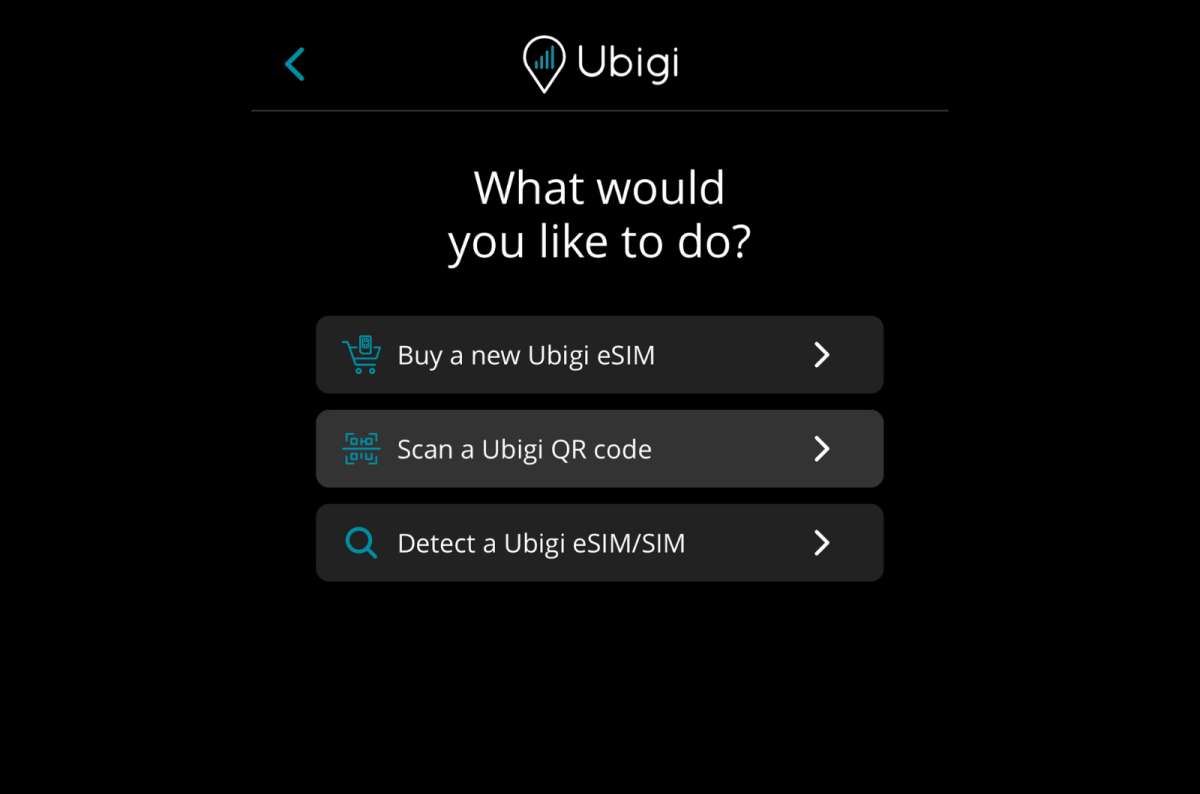
Buy, scan, or detect, pick one and you're done in under two minutes
This was easily the best surprise.
The installation is stupid-proof. Actually, I’d go further: Ubigi was probably the simplest and fastest eSIM installation of all the providers I’ve tried.
There wasn’t much to understand. The app tells you what to do, your phone handles most of it, and the process is over before you have enough time to start doubting yourself.
That is exactly how eSIM installation should work. The technology itself is supposed to remove friction from travel.
If I need a 12-step guide and emotional support to install the thing, somebody has missed the point. Ubigi absolutely did not have that problem.
If you buy through the website, the QR-code route makes this equally straightforward: buy the plan, receive the code by email, scan it, and follow the phone instructions. For a first-time Ubigi customer, I’d probably start this way.
There is one very obvious step that is still worth mentioning: make sure you actually select the Ubigi eSIM for mobile data.
Installation does not magically mean your phone will always use the connection you expect. After installing it, check your cellular settings and make sure Ubigi is selected as the primary data SIM when you want to use it.
This sounds painfully obvious. So are most mistakes people make with phone settings.
This is not a Ubigi weakness—it applies to eSIMs generally. I’d just rather mention it here than have somebody install everything correctly and then wonder why their phone is still eating expensive home-network data.
As always, I’d install the eSIM before traveling. Ubigi’s installation is extremely simple, but I still see no reason to do it at an airport.
I’ve installed eSIMs on crappy airport Wi-Fi before. It works. It is also completely unnecessary stress.
Do it at home on stable Wi-Fi, check that the eSIM appears correctly in your phone settings, and then switch to it when appropriate. Especially with Ubigi, there really isn’t much work involved.
Smart Start makes this advice even easier to follow because you can prepare the eSIM before departure without unnecessarily burning through your plan’s validity before reaching the supported destination network.
Ubigi has a Need assistance section that is refreshingly straightforward. You’re redirected to a page with FAQs covering the questions users actually have.
They look simple. That’s the point.
Installation, activation, connectivity, account issues—the boring questions people ask when they are sitting somewhere abroad wondering why their phone isn’t doing what they expected.
I much prefer this to support pages filled with corporate answers that somehow explain everything except the thing you clicked on. The Ubigi help flow is almost idiot-proof: you have a problem, click assistance, find the obvious question, try the obvious solution.
Exactly as it should be.
The dashboard is one of the app’s better features. You can see your total consumption directly, so there is no need to guess how much of your package remains.
I use this more than I expected. It also helps when deciding what package to buy next time.
Maybe I thought 5 GB was enough. Maybe I discovered that it absolutely wasn’t. Reality is useful like that.
If you need more data, topping up is very easy from the app. Your previous purchases are also stored under Orders, which gives you a simple history of what you bought.
And because the same Smart eSIM can be reused for future trips, this makes the app much more useful after trip one. You’re not managing a disposable one-trip product—you can simply come back, buy another plan, and use the same installed eSIM again.
Settings are equally simple. To be honest, you’ll probably barely use them, which is exactly how settings should work in an app like this.
There is also a structural difference between Ubigi and many travel eSIM brands that I think is worth knowing. Ubigi operates through Transatel, a telecom operator, rather than functioning purely as another travel eSIM reseller sitting on top of somebody else’s product.
As a traveler, I don’t particularly care about corporate telecommunications architecture for its own sake. But I do care when it helps explain why a provider can be aggressive on pricing and offer things like reusable eSIMs, Smart Start, and connectivity management that feel more integrated than a simple one-off data resale.
It doesn’t magically guarantee better signal—the local network still matters—but it does make Ubigi a little more interesting than another nice-looking eSIM storefront.
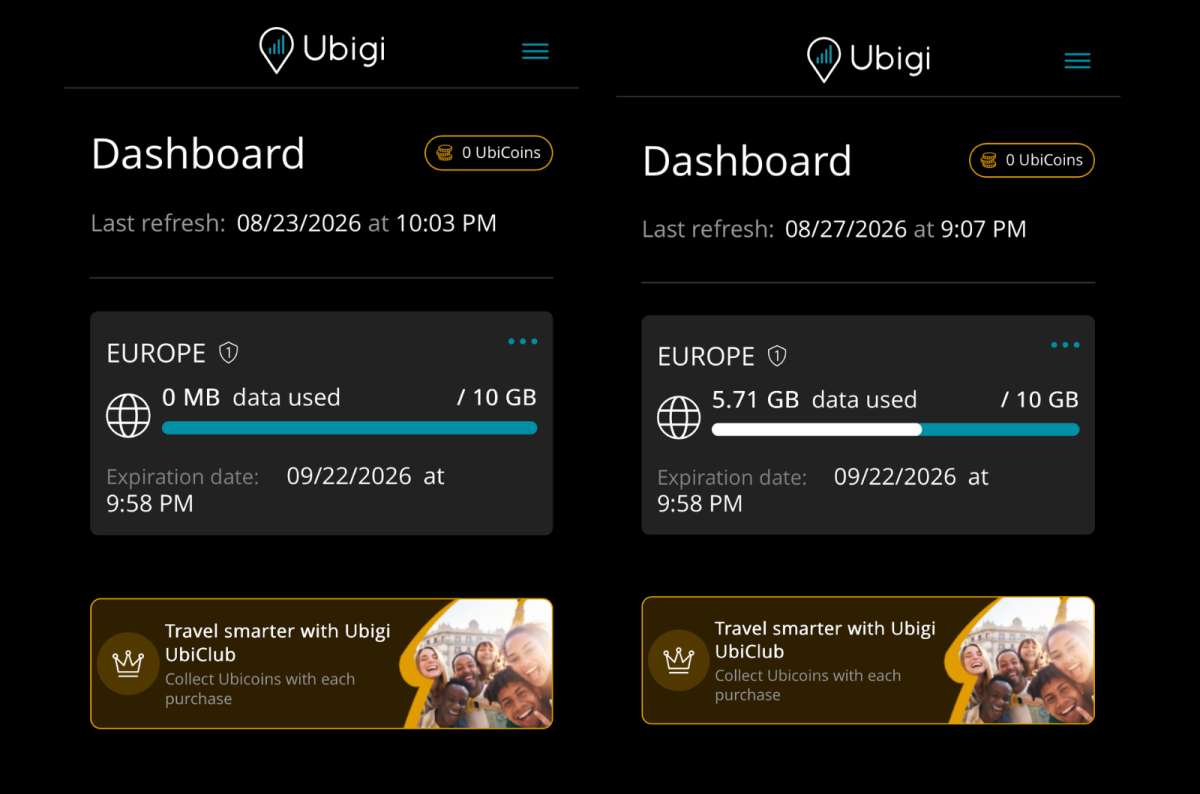
Same Europe plan, same 10 GB, two very different amounts of self-control
I tested Ubigi while traveling in Slovenia and then continued testing the same Europe package back home. That gave me a much better comparison than using it somewhere once and deciding it “felt fast.”
During normal use, I had no reason to think about the eSIM at all. Maps worked, browsing worked, normal phone data use worked.
And because I could compare it with my regular connection at home, I had a decent reference point rather than relying entirely on a foreign mobile network I didn’t know.
As with every eSIM, network quality still depends on the local network. Ubigi cannot create signal where the underlying operator doesn’t have any.
But in normal conditions, I had no meaningful complaints. After the exceptionally easy installation, the whole thing basically disappeared into the background.
Perfect.
That’s honestly about it. I’ve removed “switching Ubigi to primary data” from this list because that is simply part of using an eSIM, not something Ubigi itself needs to fix.
Registration is still the one thing that annoyed me, but we’re talking about a couple of minutes at the beginning. After that, the experience improves dramatically.
I’d strongly consider Ubigi if price matters, and you’re traveling around Europe. The full-Europe packages are probably the most convincing reason to choose it over some competitors.
If somebody asked me specifically for one of the best eSIM options for a European road trip, Ubigi would now be one of the first providers I’d tell them to compare. The Europe pricing is strong, Smart Start makes pre-trip installation painless, and you don’t need to reinstall a new eSIM every time you travel.
I’d also recommend it to anyone nervous about installing an eSIM. Of all the providers I’ve tested, Ubigi’s installation may genuinely have been the simplest.
It also makes sense for travelers who like very clean apps. There isn’t much going on visually, and I mean that positively.
If all you want is to buy data, see your usage, top it up, and check previous orders, Ubigi gives you exactly that.
Code NEXTLEVEL gives 10% off your first purchase
I’d only really look elsewhere if instant Google/Apple signup is unusually important to you, or another provider is substantially cheaper for your exact destination and data needs.
There are competitors with more visually feature-heavy apps, but I no longer think “minimal” is a meaningful reason to skip Ubigi—the useful functionality is there; it just isn’t screaming at you from every screen.
Personally, I don’t mind. Once an eSIM is installed, I want to interact with the app as little as possible anyway.

Wales doesn't care about your data plan, but I was glad mine still worked here
So, is Ubigi worth it? Yes—particularly if you’re looking for competitive pricing and a strong Europe plan.
And is Ubigi one of the best eSIMs for Europe? Based on my Slovenia test and then using the same Europe package back home, I think it absolutely belongs in that conversation.
My first impression wasn’t perfect because registration felt more manual than I’m used to. But that was a minor inconvenience rather than a defining problem, and the email verification actually made the account feel more secure.
After that, Ubigi got almost everything right. The installation was probably the fastest and simplest of any eSIM provider I’ve tested, the app is clean, the dashboard is useful, top-ups are easy, and the security is reassuring without becoming irritating.
The Smart eSIM, Smart Start, and Smart Top-Up features also make much more sense once you think beyond one purchase. You can install once, prepare before departure, reuse the eSIM on future trips, and even buy more data after running out without first begging a café for Wi-Fi.
The Europe plan also allowed me to use the same eSIM while traveling in Slovenia and then keep testing it back home, which gave me a much better real-world comparison.
Most importantly, Ubigi seems to understand that price matters.
Some eSIM companies are excellent at UX and then charge enough that I start wondering how much that pretty button is costing me. Ubigi feels much more competitive here.
The fact that Ubigi operates through telecom operator Transatel rather than functioning purely as a travel eSIM reseller also helps explain why the product feels more integrated than I initially gave it credit for.
I’d particularly shortlist it for European road trips, larger data needs, and anyone who wants the simplest possible installation. For Europe specifically, I’d put it among the strongest eSIM options I’ve tested.
Everything after registration is difficult to complain about.
Code NEXTLEVEL gives 10% off your first purchase
This post contains affiliate links. If you make a booking through one of my links, I may earn a small commission—at no additional cost to you. Thank you for your support!


Hi, I’m Jan. I travel fast and intensely, whether I’m exploring the buzz of Tokyo in 3 days or road-tripping through mountains and beaches on a 3-week Thailand adventure. And no matter where I am, you’ll always find me in a comfortable hotel at night and eating the best food.
If that sounds like your kind of journey, hop on board, and let’s explore the world together!
I started this blog after realizing how tough it can be to find reliable, authentic travel info. You wouldn’t believe how many “travel bloggers” never even visit the places they write about! On Next Level of Travel, you can count on my full honesty and insights drawn from my firsthand experiences.
Here’s the deal: not every destination is all superlatives and unicorns. I’ll let you know if a tourist attraction isn’t worth your time, like skipping overrated stops in my 2-week Spain itinerary. And when I find something truly special—like the perfect mix of culture and nature in Cape Town—you can trust that it’s worth adding to your itinerary.



Comments | Thoughts? Give us a shout!