




I visited Joshua Tree National Park in 2014, 2018, and 2026, and I loved it all three times. The granite boulders are absolutely amazing, and we were lucky enough to see coyotes within our first few minutes in the park.
My favorite things to do in Joshua Tree National Park are mostly short walks and stops. Hidden Valley is the hike I'd repeat, Keys View is worth the drive through the Joshua tree forest, and Cholla Cactus Garden made me very happy. Cacti are among my favorite plants.
The desert landscapes are just fantastic. It looks like another planet or primordial Earth—at least how I imagine it—with colors going from pink to brown. For some reason, it reminds me of South Africa.
My overall rating: 10/10. Yes, I tend to like national parks. But Joshua Tree is among my favorite parks in California, especially for wildlife sightings. Would I go again? I did three times—that answers it.
These six places are in my order of preference. The driving order comes afterward, because following my ranking on the road would involve unnecessary backtracking.
Read more from my California travel blog.
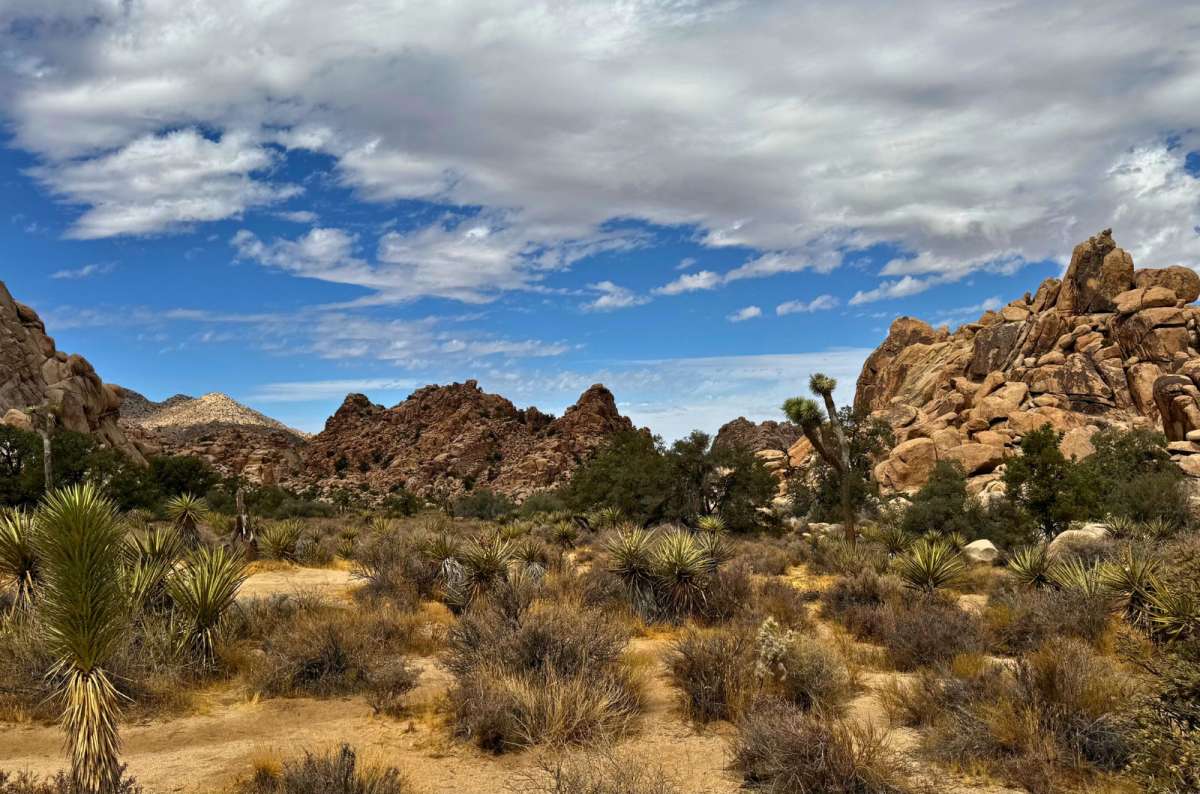
Hidden Valley in Joshua Tree, boxed in by granite on every side, which is exactly the point
Hidden Valley is so nice that I did it twice, and I usually don't repeat hikes unless they are special. I first walked it in October and most recently in September. It is my first choice if you're deciding what to do in Joshua Tree National Park with time for only one proper walk.
The main attraction is the big granite formations, which are just surreal. The trail takes you into a valley surrounded by them, so you get much more than a look at one named rock beside the road. Hidden Valley is really pretty.
There are information boards about the plants along the trail, and we actually learned something. That is another reason to leave yourself the full hour instead of treating the loop as a timed exercise. The landscape is worth looking at, and the signs help explain what is growing between all those rocks.
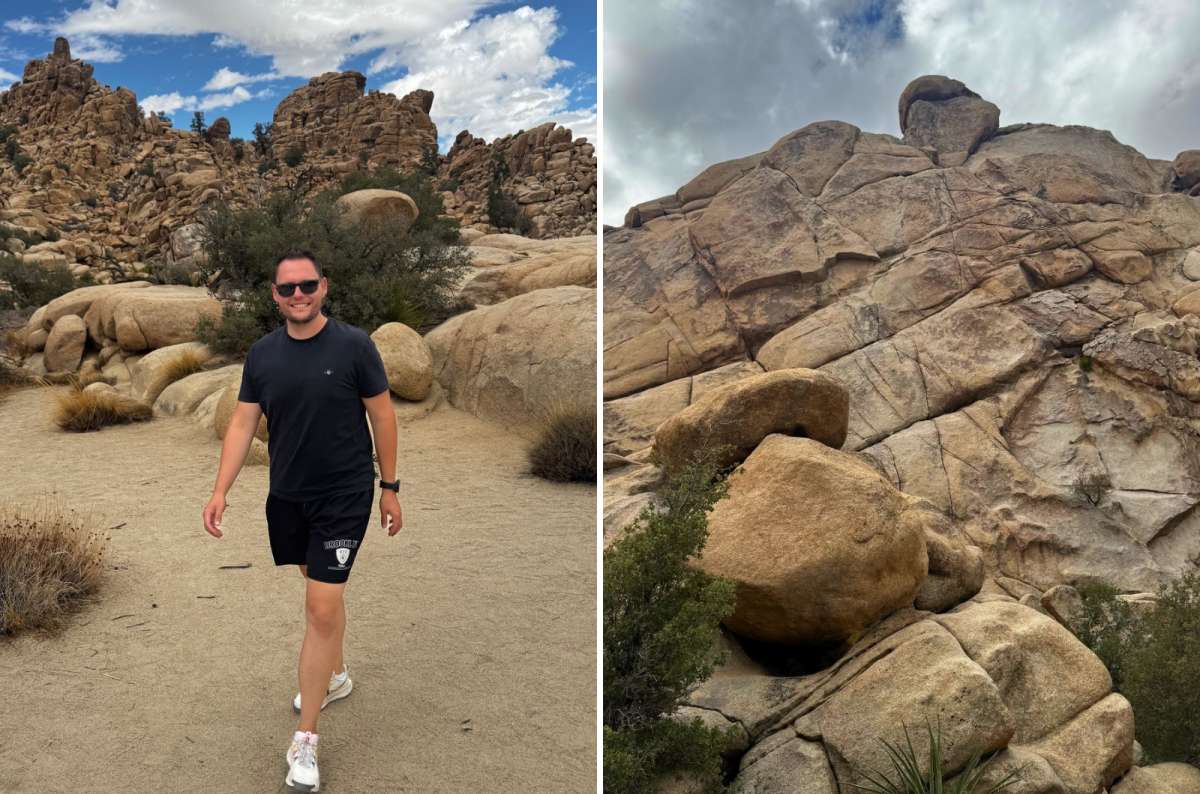
Hidden Valley in Joshua Tree, a valley full of rocks with no single rock in charge
I was also lucky enough to see a snake here, which I believed was a striped racer, or California whipsnake. An unexpected animal sighting on a short walk is exactly the sort of thing I like about this park. Give snakes space and watch where you put your hands and feet around the rocks.
I'd put Hidden Valley early in the day, both for the temperature and the parking. Check the NPS trailhead information for the location and facilities; don't confuse the day-use parking with the campground across the road.
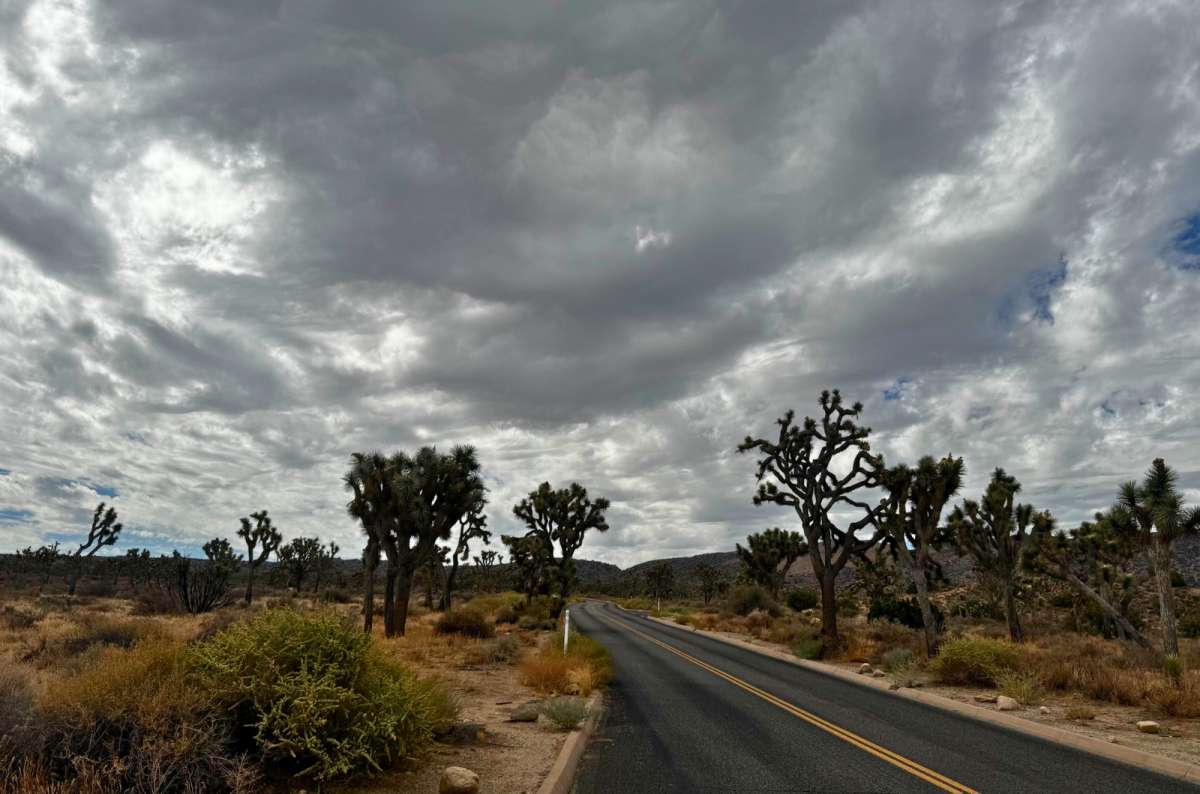
Keys View Road, where the Joshua trees line up on both sides like they know they're the main act
The drive to Keys View is very well worth it because it goes through the most amazing Joshua Tree forest. The viewpoint itself is a short stop, but the road is a substantial part of why this ranks second for me.
At the end, you get a pretty view toward the Coachella Valley, Palm Springs, and the San Jacinto Mountains. You can see the Salton Sea if visibility cooperates. The San Andreas Fault also runs through the valley below. Haze can limit how much of the distant landscape you can make out.
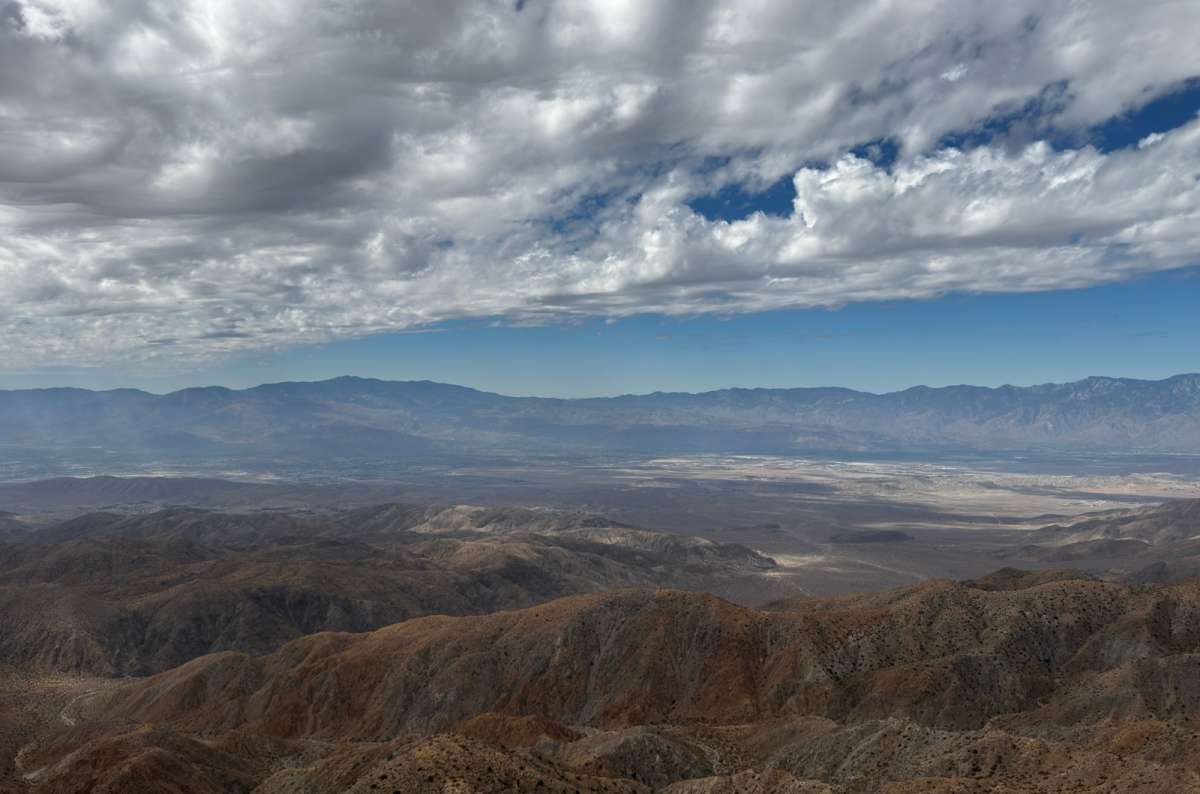
Keys View in Joshua Tree, where the San Andreas Fault runs through the valley below and looks completely innocent
Allow roughly an hour, including the return drive and my 15-minute viewpoint stop.
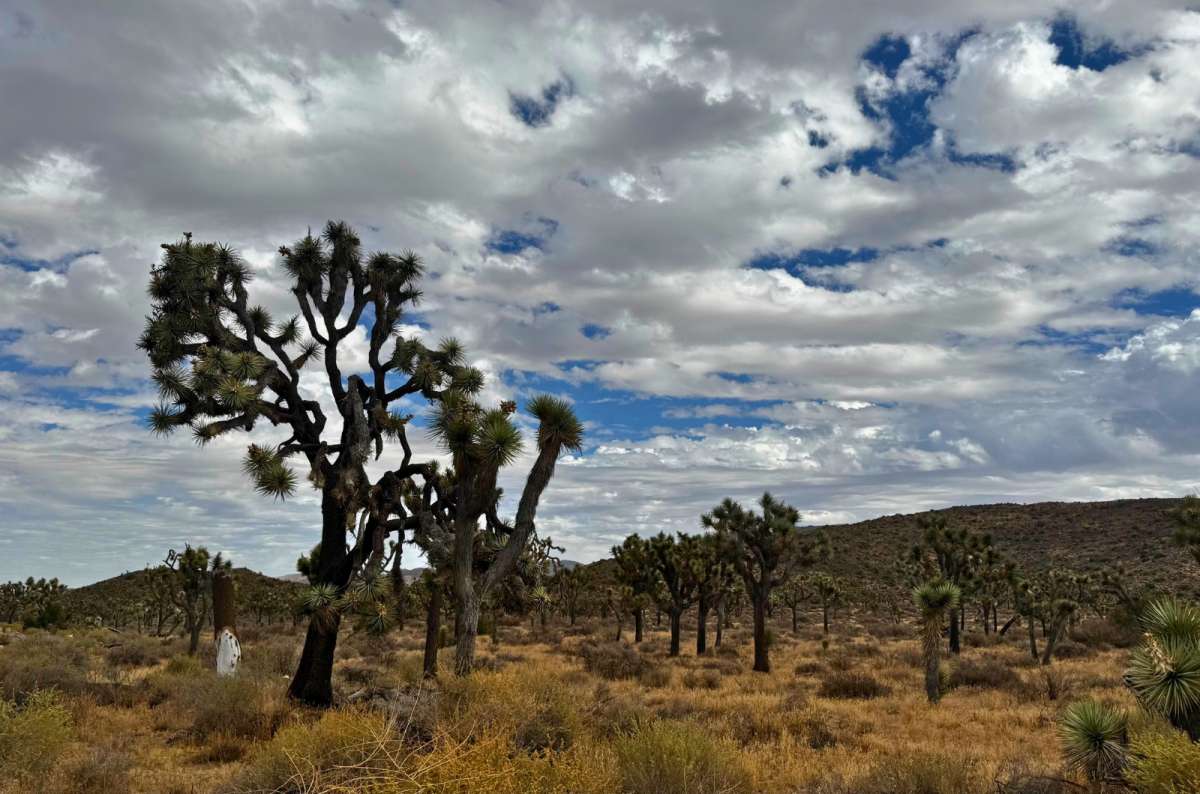
Joshua trees on the way to Keys View, botanically yuccas, emotionally trees
Joshua trees are yuccas. That doesn't mean they cannot also be called trees: “tree” describes a growth form, rather than a botanical family. In the park, they grow mainly in the higher Mojave Desert landscape, at elevations of roughly 2,800–5,800 feet (850–1,770 m).
The familiar naming story connects Mormon settlers with the biblical Joshua, whose outstretched arms the branches supposedly resembled. The NPS botanical guide points out that historical evidence for the story is thin.
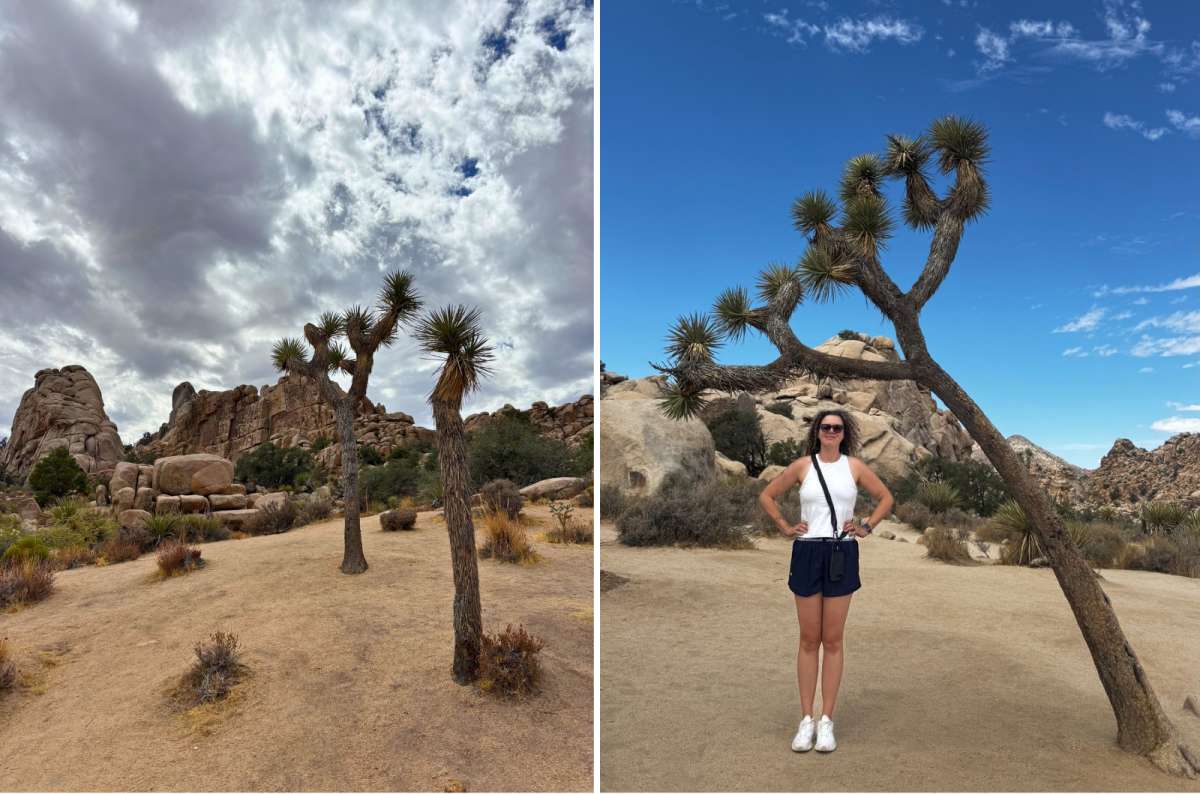
Hidden Valley Joshua trees: the naming story is shaky, and so are some of the trunks
They grow slowly, generally around half an inch to 3 inches a year after their early growth spurt. Large specimens can be hundreds of years old. Please stay on established trails when you stop to look at them; this landscape is fragile.
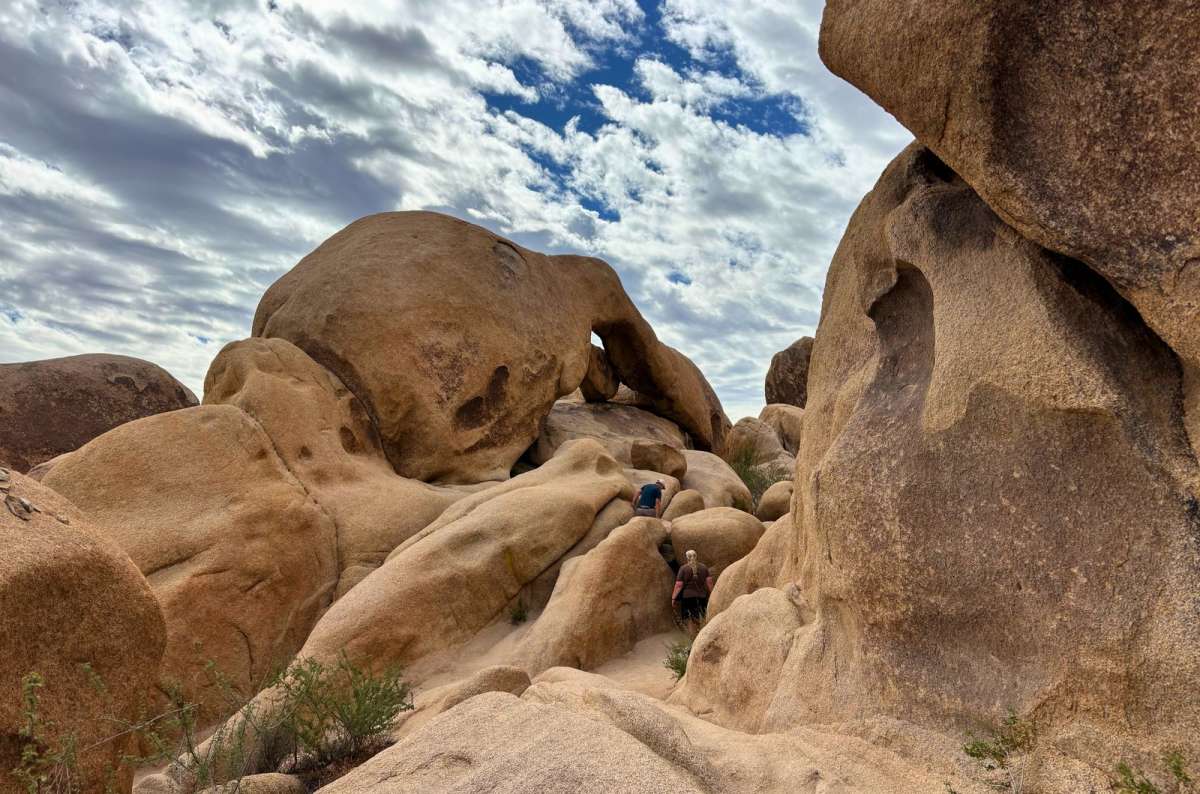
The arch on the Arch Rock Nature Trail, upstaged by its own neighborhood
The granite boulders always look absolutely surreal—you gotta love it. This trail is among the best places to see them. Arch Rock and Heart Rock themselves are not that interesting, but the hike and boulders are.
I would absolutely go for the surrounding landscape. The natural bridge is one feature along the walk, and I wouldn't rush past everything else just to reach it.
I liked the grip of the granite underfoot, though sand on rock can still be slippery. You don't need to climb every boulder to enjoy this area. Keep track of the marked trail instead of wandering farther between the rocks than you intended.
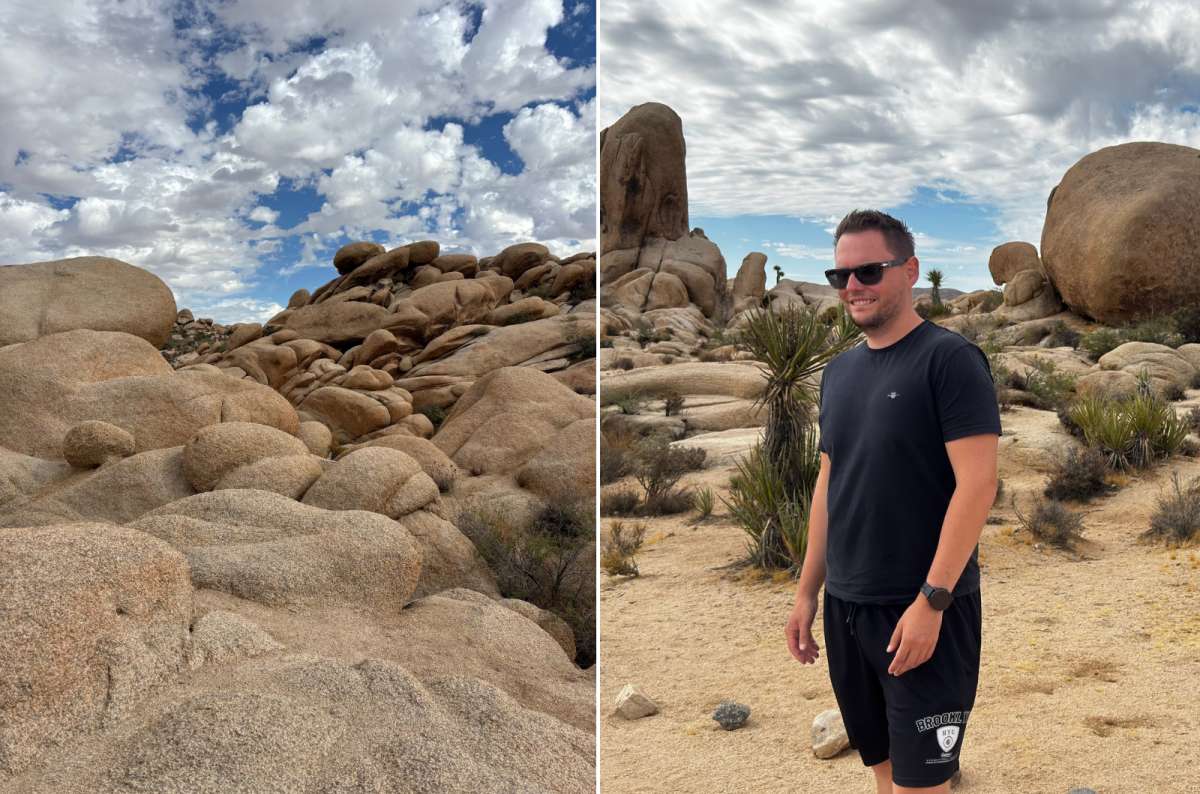
The Arch Rock Nature Trail, where the granite has grip, and the sand on top of it has other plans
When you pay attention, there are burrows all around. Sheltering underground is one way animals cope with the desert conditions, and noticing those small details made the landscape more interesting to me. Don't put your hands into holes or disturb them to find out what lives inside.
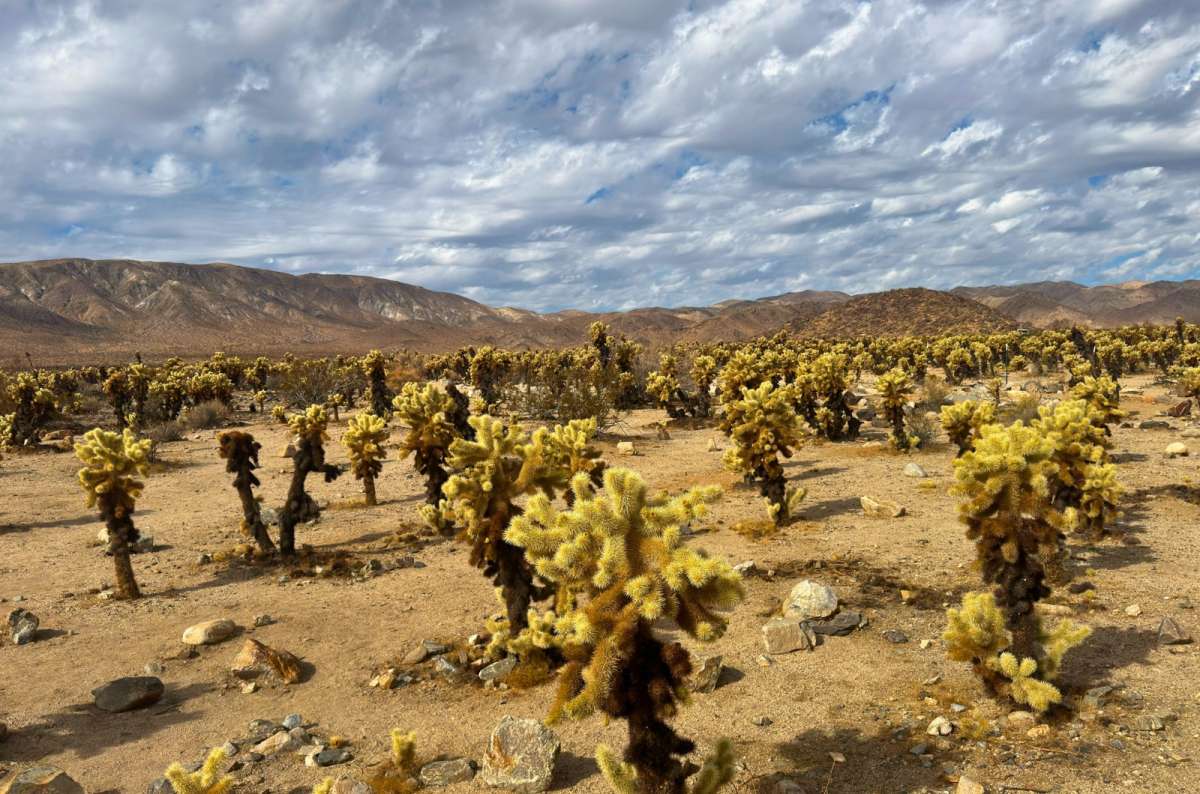
Cholla Cactus Garden in Joshua Tree, the fluffiest place I've ever been told not to touch anything
Cholla Cactus Garden is absolutely amazing. It's like a forest of fluffy cacti. Cacti are among my favorite plants, so I was very happy here.
The park sits where the Mojave and Colorado Deserts meet. As you descend toward the Pinto Basin, the scenery changes, and this lower area can be considerably hotter than the Joshua tree country. We visited at 9:30 a.m., and it was already ultra-hot. I'd go early in the morning.
The fluffy appearance is misleading. These are teddy bear cholla, also commonly called jumping cholla. They don't actually jump, but loose segments can attach to you if you brush against them. Wear closed-toe shoes and stay on the designated path.
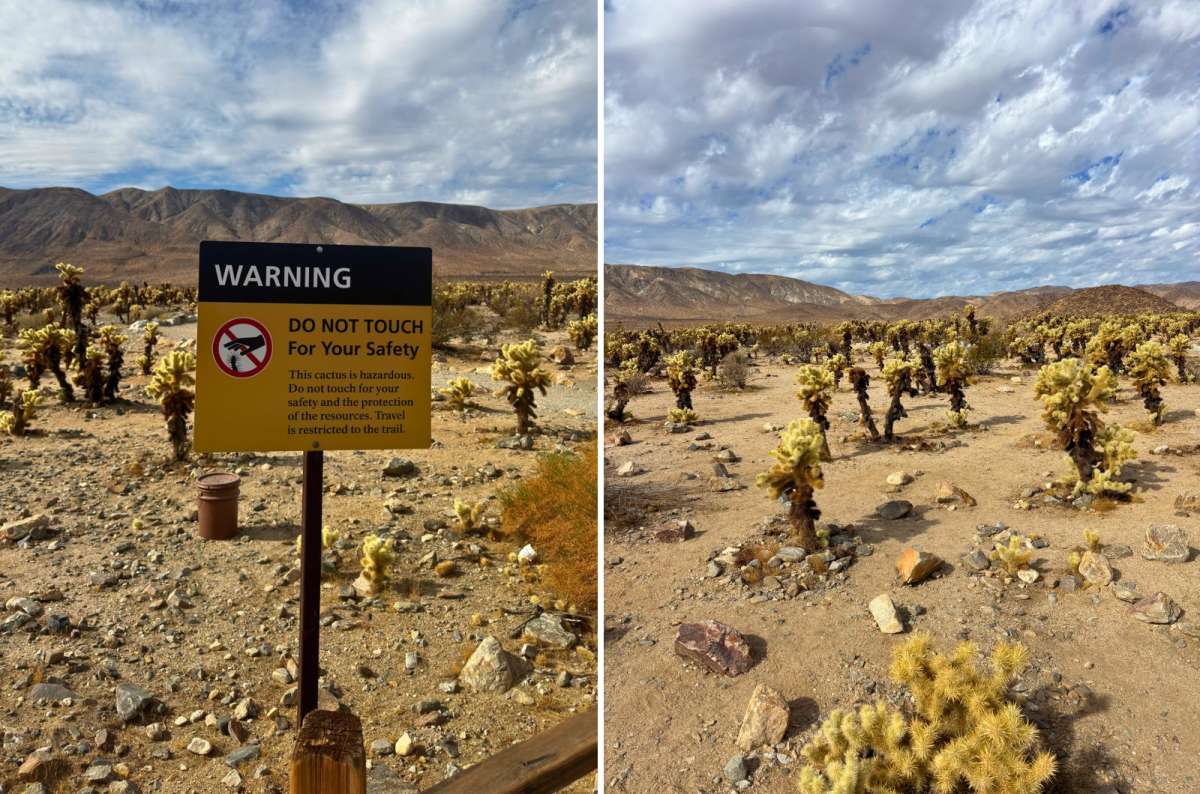
The sign at Cholla Cactus Garden says do not touch; the cacti say it even louder
The NPS garden description explains why so many grow together: detached segments can take root and create new plants. The concentration of cacti, with the mountains behind them, is what makes this little walk so good.
Turkey Flats is a nice roadside stop on Pinto Basin Road. I thought of it as where sand dunes meet the desert. More precisely, the NPS describes Turkey Flats as a panoramic viewpoint across the lower desert, with Pinto Mountain visible from the small parking area.
Allow 5–10 minutes for the view and interpretive sign. There is no established, maintained trail here, so treat it as a scenery stop, not a marked dune hike. It fits naturally into the drive along Pinto Basin Road without becoming another major activity.
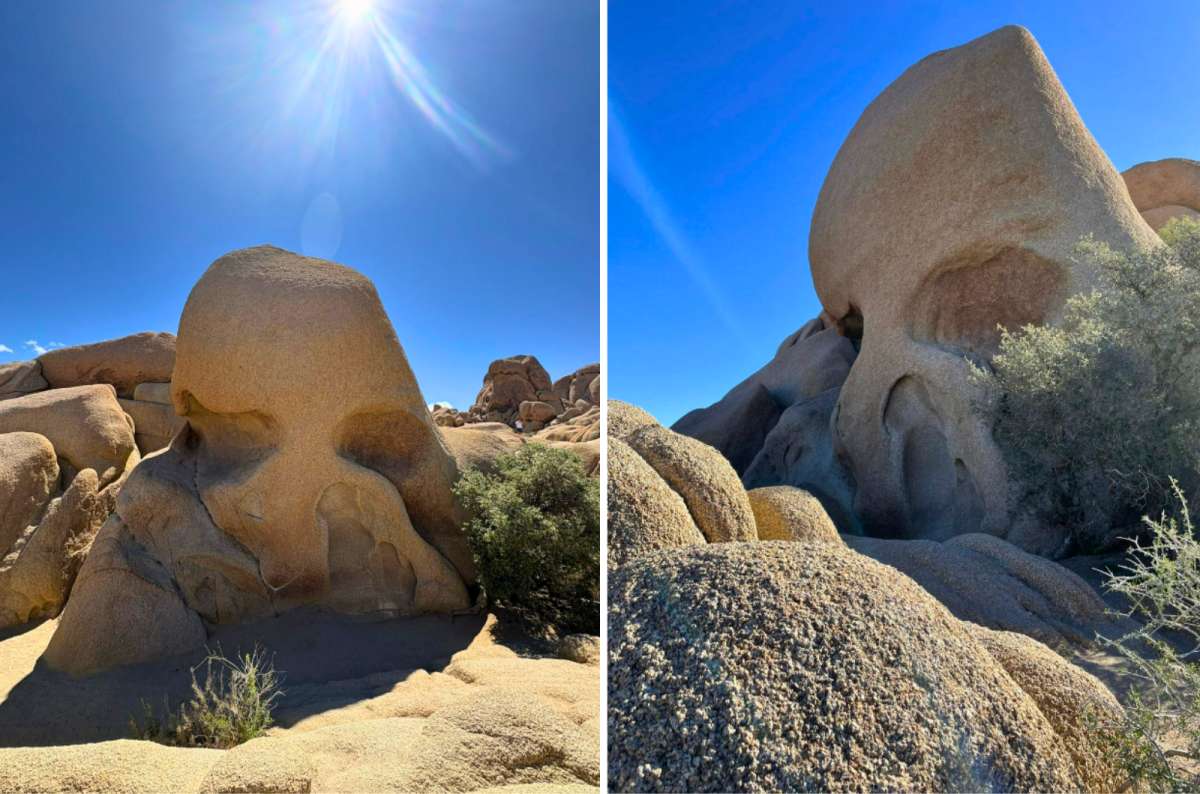
Skull Rock in Joshua Tree, no imagination required and no hike either
Skull Rock is a nice little stop that is cleverly named and looks like its namesake. You can see why it got the name without needing much imagination.
There is also a longer Skull Rock trail, but that isn't the visit I'm recommending here. I'd keep this as a quick stop between the longer walks. Hidden Valley and Arch Rock deserve more of your time.
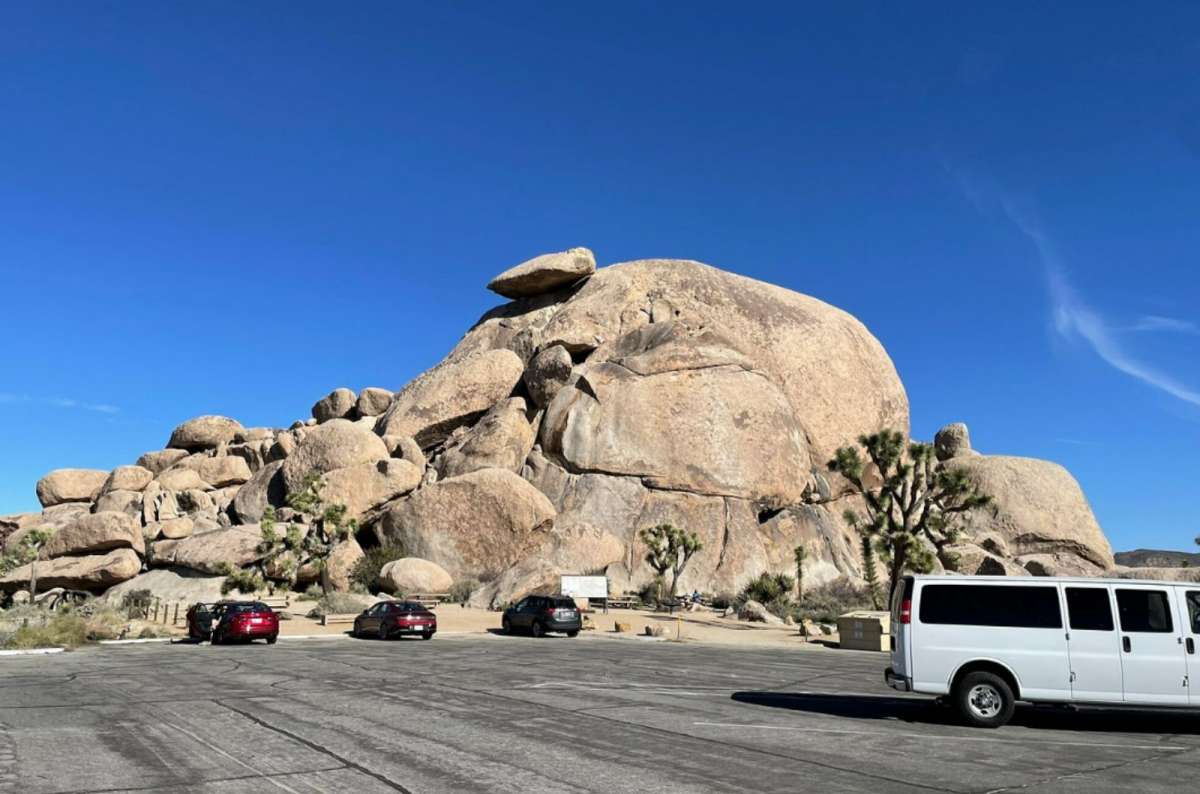
Cap Rock in Joshua Tree, so close to the road that skipping it takes more effort than stopping
Cap Rock rounds out my list. The NPS Cap Rock loop winds through Joshua Tree woodland and granite formations, so it makes an easy addition near the turnoff for Keys View.
With limited time, I'd protect Hidden Valley and the Keys View drive before adding this loop. Its convenient location makes it easy to decide on the day whether you have time and energy left.
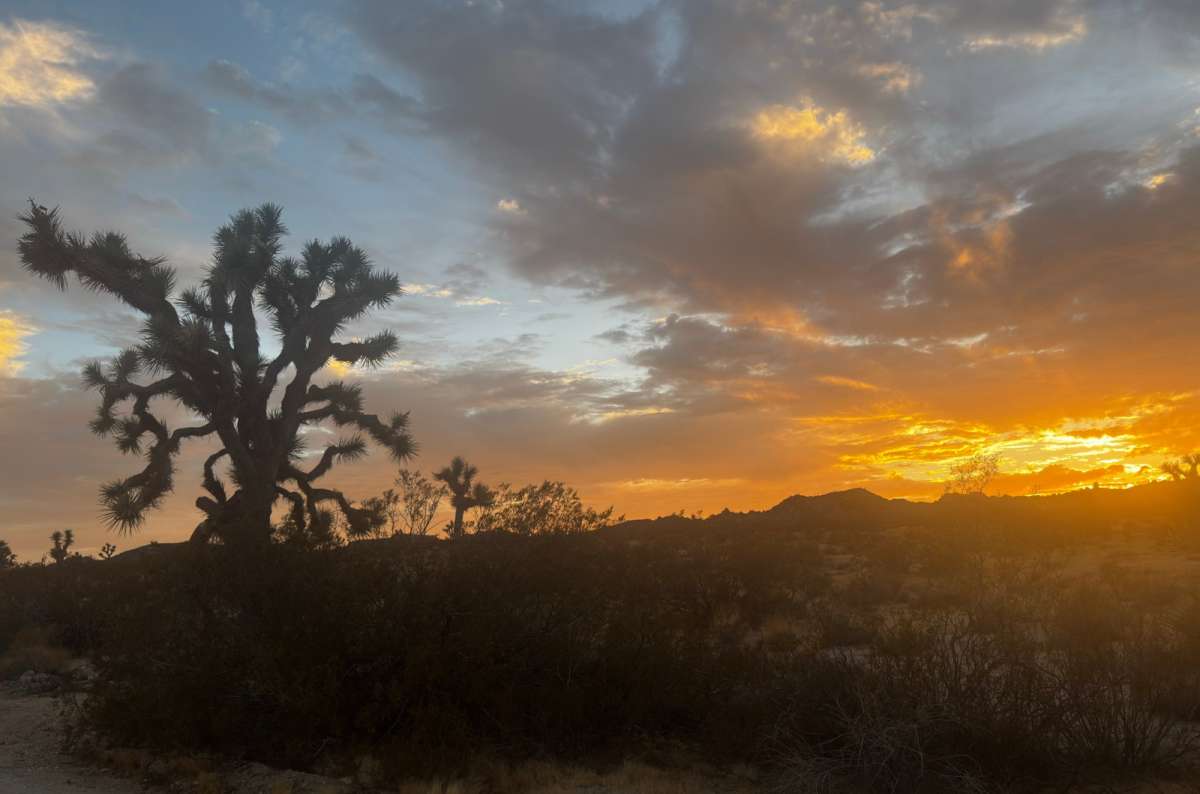
The end of a full day in Joshua Tree, and the one-stop, no-itinerary schedule
For Joshua Tree in one day, I would allow a full day inside the park, plus the journey from your accommodation. The individual walks are short, but driving between these Joshua Tree attractions, parking, meals, and photo stops all take time.
This is a suggested driving order for a cool-weather day, entering from Joshua Tree town at the West Entrance and leaving through the South Entrance. It is not a record of one of my exact days. The transfer times below are approximate planning allowances, not guaranteed driving times.
If you want commentary on the drive, this self-guided audio tour of Joshua Tree starts playing at the West Entrance and works without signal.
Budget roughly 6–8 hours before a substantial lunch break, entrance delays, or extra photo stops. Start early and bring lunch. If parking or temperatures slow you down, shorten the plan instead of trying to recover time by rushing the walks.
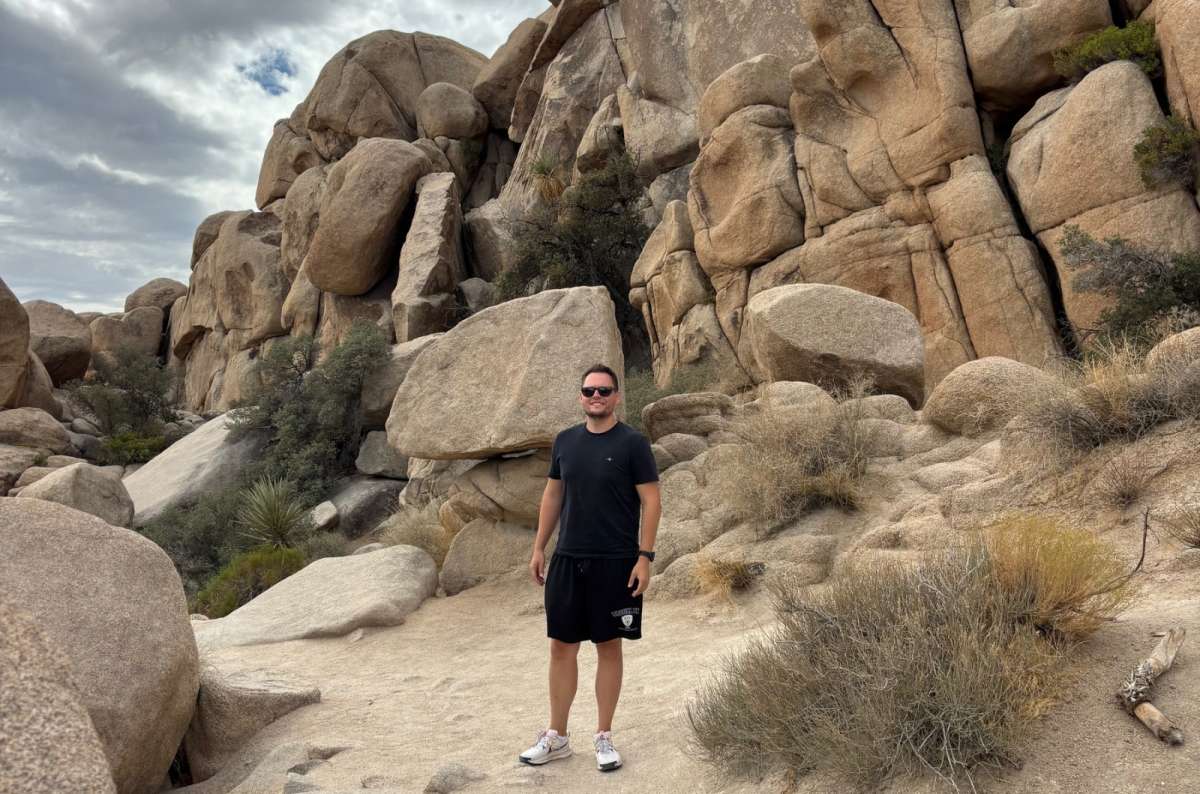
Hidden Valley, the stop I'd keep even on the shortest version of the day
The route above puts Cholla later in the day. In warm weather, that is a reason to change it. If your starting point makes it practical, enter from the south, stop at Turkey Flats and Cholla early, and work north toward Arch Rock, Skull Rock, and the higher western area.
For a shorter visit, I'd focus on Hidden Valley, the Keys View drive, and Arch Rock. That preserves my top three things to do in Joshua Tree National Park. Cholla is worth the extra drive when you can reach it at a sensible temperature; don't treat a 15-minute walk as automatically comfortable at midday.
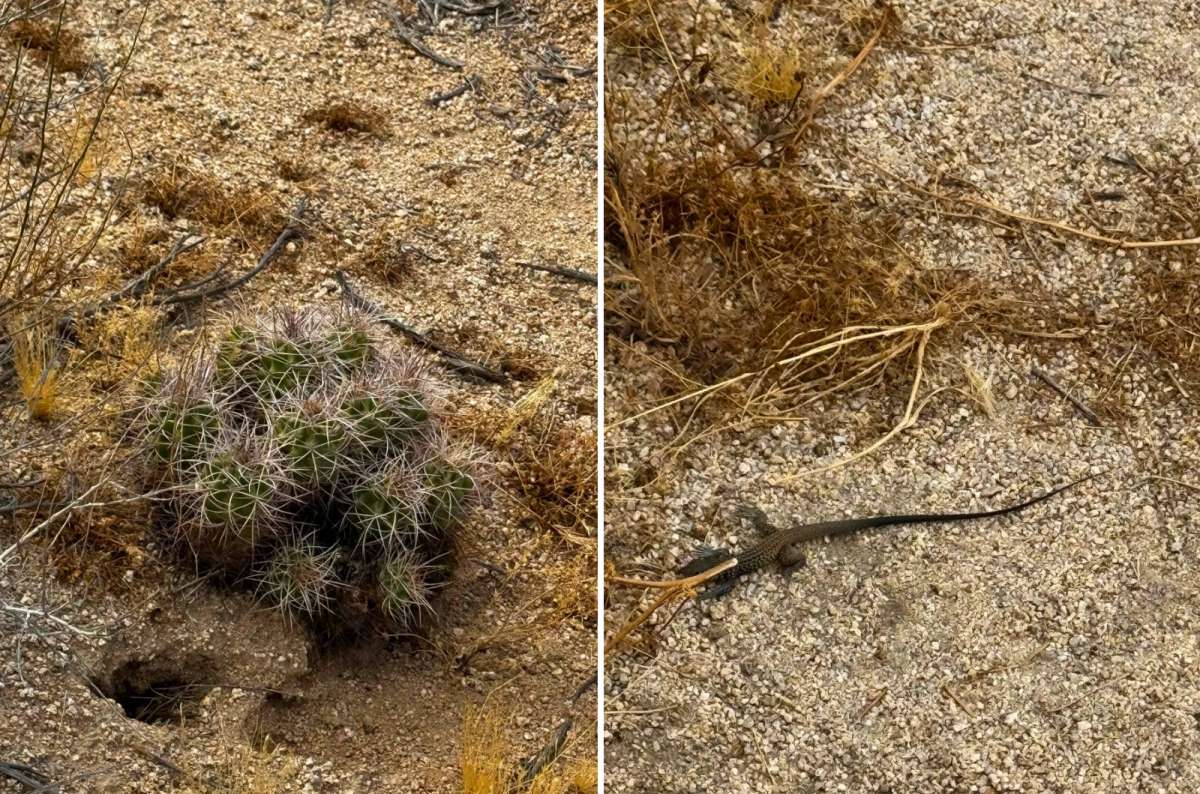
Joshua Tree wildlife is mostly found by looking down: one burrow and one lizard on the Hidden Valley Trail
We were very lucky and saw coyotes within our first few minutes in the park. I consider Joshua Tree among the best parks for wildlife sightings based on my own visits, and the snake at Hidden Valley was another highlight.
Other residents include rattlesnakes, tarantulas, and scorpions. Wildlife sightings aren't guaranteed. Pay attention to the ground and the spaces around the vegetation, as well as the big scenery.
Watch from a distance, never feed wildlife, and leave burrows and hiding places alone. I'd rather spend a little longer looking around a trail than add another stop just to make the day fuller.
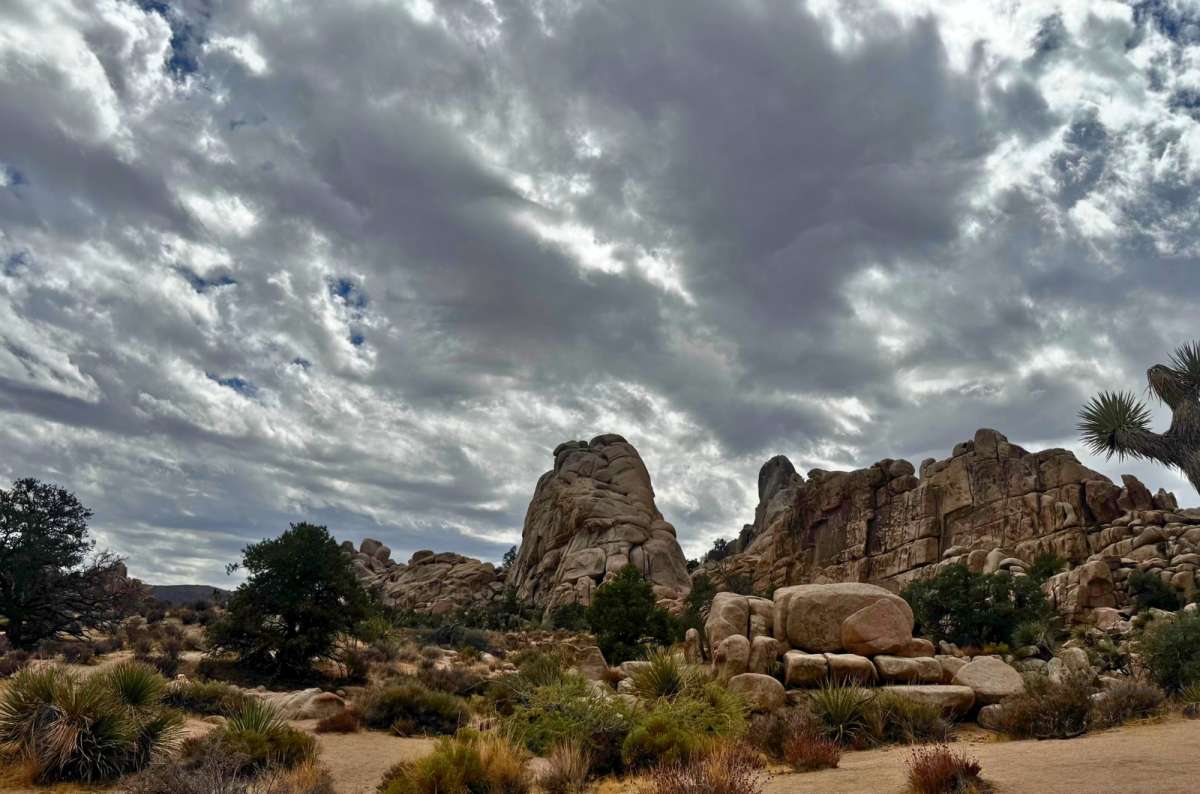
September in Joshua Tree, a month that doesn't come with a guaranteed temperature
Spring and fall generally offer more comfortable conditions than summer. Winter can be good for walking, but nights are cold, and higher areas can occasionally get snow. The high desert and lower Pinto Basin can feel quite different on the same day.
My September and October visits to Hidden Valley don't mean either month is automatically cool. That 9:30 a.m. experience at Cholla is why I would check the forecast for the actual areas I planned to visit.
One full day is enough for these six stops in suitable conditions. Give it more time if you are especially interested in the desert, want to linger with a camera, or prefer spreading the walks across cooler mornings. Joshua Tree is also a major bouldering destination, but climbing would need its own time and preparation.
If you'd rather climb the boulders than look at them, a guided rock climbing trip in Joshua Tree is the safer way to start.
The park has often felt spacious to me. Popular trailhead parking is another matter: Hidden Valley can fill, and busy periods bring queues. Arriving early helps, but doesn't turn it into an empty park.
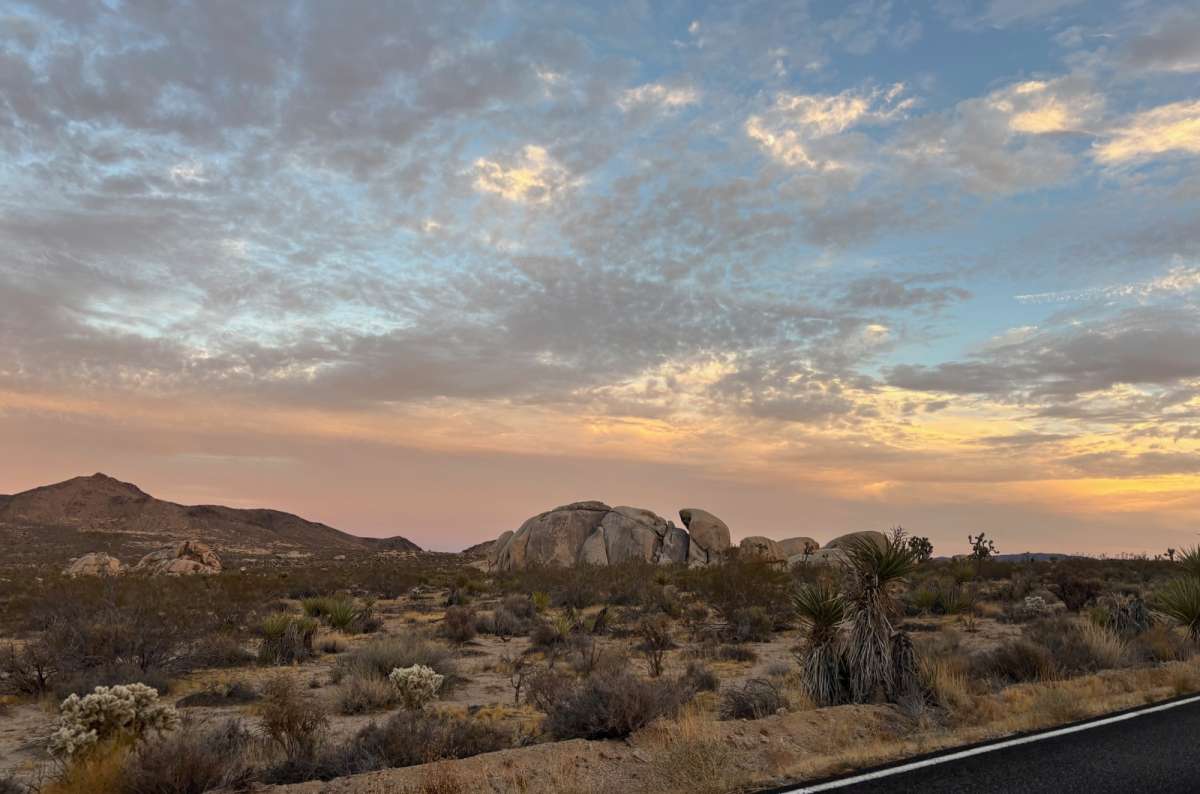
Joshua Tree's main roads at dusk, smooth, quiet and nowhere near a backcountry track
The standard Joshua Tree National Park entrance fee is $30 per private vehicle for seven days, covering its passengers. The park-specific annual pass is $55, and valid America the Beautiful passes are accepted. Check the official fees page before buying a pass. For a full day of this scenery, I consider the entrance fee good value.
The West Entrance serves Joshua Tree town, the North Entrance serves Twentynine Palms, and the South Entrance connects with Interstate 10 near Cottonwood. Choose your entrance around your first stop and accommodation.
For summer visits, the NPS hiking guidance advises avoiding hikes between 10 a.m. and 5 p.m. Cut or reschedule walks when the heat makes the plan unsuitable, even if they look short on paper.
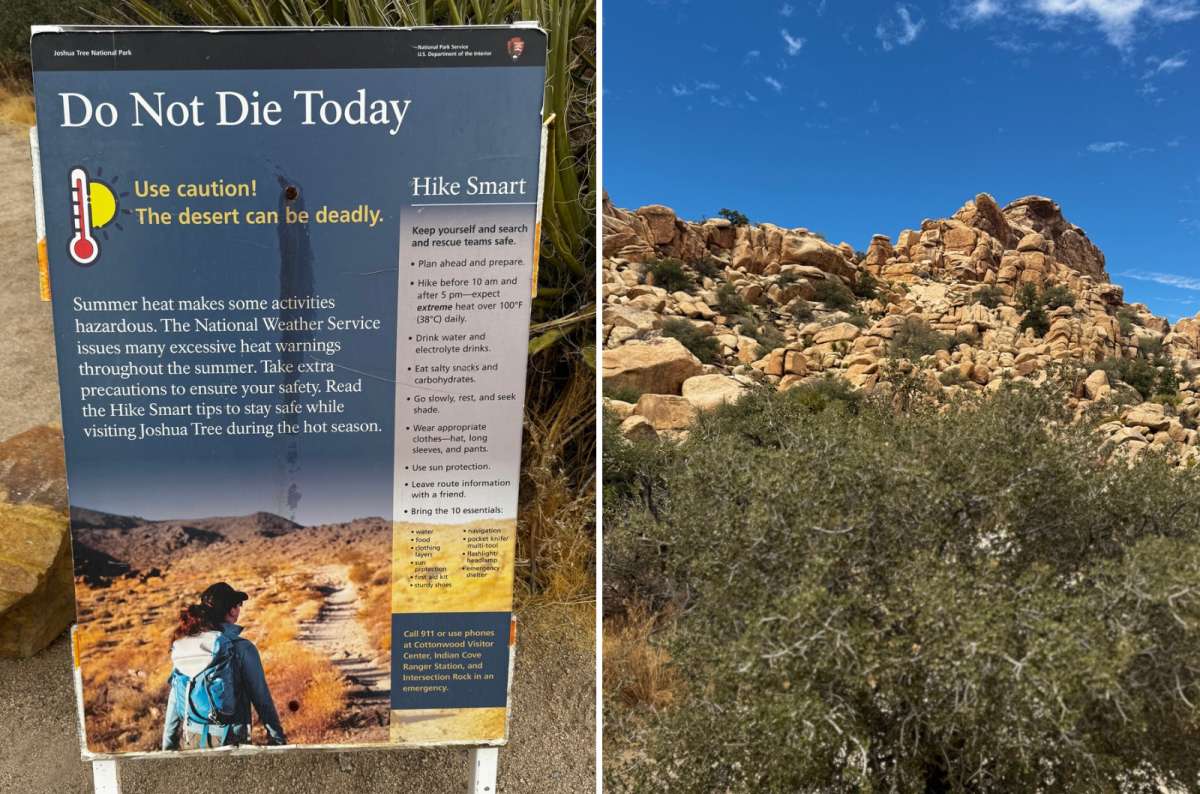
The NPS heat sign in Joshua Tree skips the small talk, and so should your summer hiking plans
I stayed at Ingleside Estate in Palm Springs and liked it very much. The casitas were nice and felt very private. If you want a Palm Springs stay alongside the national park, it is a hotel I'd recommend checking out.
It is an adults-only property near downtown Palm Springs. The aerial tramway is a separate drive, and so is Joshua Tree National Park; this isn't accommodation at the park entrance.
If your priority is an early start on the western trails, look in Joshua Tree town. Twentynine Palms is useful for the North Entrance. Palm Springs makes more sense when the hotel and time in town are part of the trip, rather than minimizing every morning's drive.
This post contains affiliate links. If you make a booking through one of my links, I may earn a small commission—at no additional cost to you. Thank you for your support!


Hi, I’m Jan. I travel fast and intensely, whether I’m exploring the buzz of Tokyo in 3 days or road-tripping through mountains and beaches on a 3-week Thailand adventure. And no matter where I am, you’ll always find me in a comfortable hotel at night and eating the best food.
If that sounds like your kind of journey, hop on board, and let’s explore the world together!
I started this blog after realizing how tough it can be to find reliable, authentic travel info. You wouldn’t believe how many “travel bloggers” never even visit the places they write about! On Next Level of Travel, you can count on my full honesty and insights drawn from my firsthand experiences.
Here’s the deal: not every destination is all superlatives and unicorns. I’ll let you know if a tourist attraction isn’t worth your time, like skipping overrated stops in my 2-week Spain itinerary. And when I find something truly special—like the perfect mix of culture and nature in Cape Town—you can trust that it’s worth adding to your itinerary.

Comments | Thoughts? Give us a shout!