


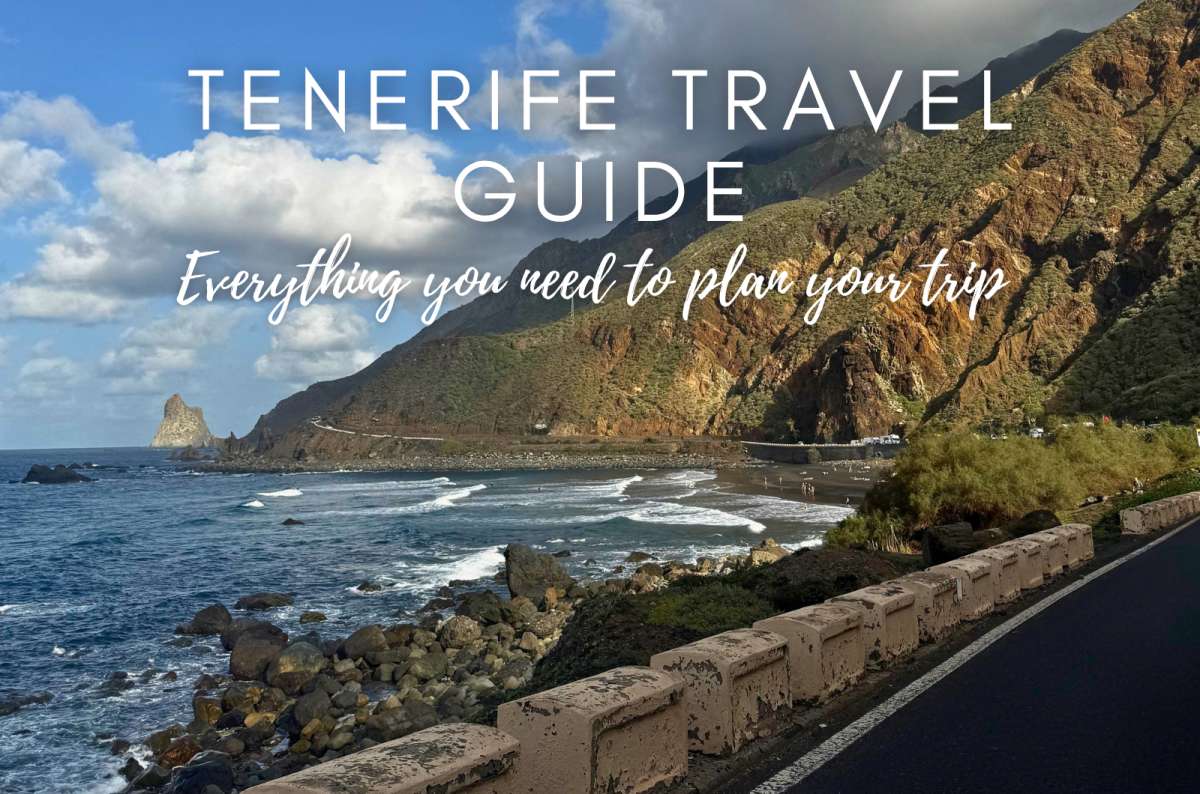


I’ve been to Tenerife a few times, including in 2020 and 2025, and driven and hiked through a large part of the island. I expected good weather, natural beauty, volcanic scenery, plenty of beach holiday resorts, and charming towns. What I didn’t expect was how Tenerife offers such extreme variety in its dramatic landscapes.
Teide dominates Tenerife, both visually and geographically, but Anaga was probably my biggest surprise. I originally planned one day there and ended up spending three. That tells you more about how much I liked it than any adjective I could add here.
Have a look at my other Canary Island travel guides.
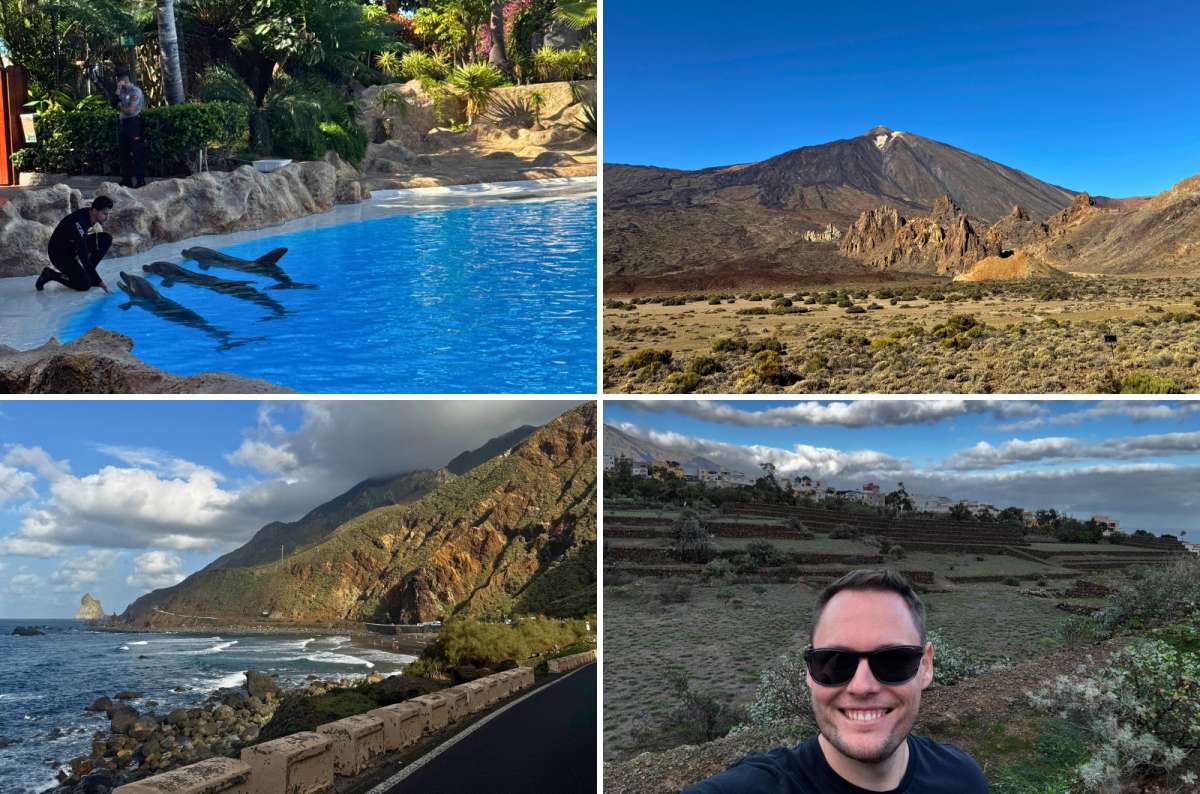
This is what Tenerife actually looks like, not just a beach chair
Before getting into the details, here’s the quick version of my Tenerife travel guide for the decisions that matter most when planning your trip:
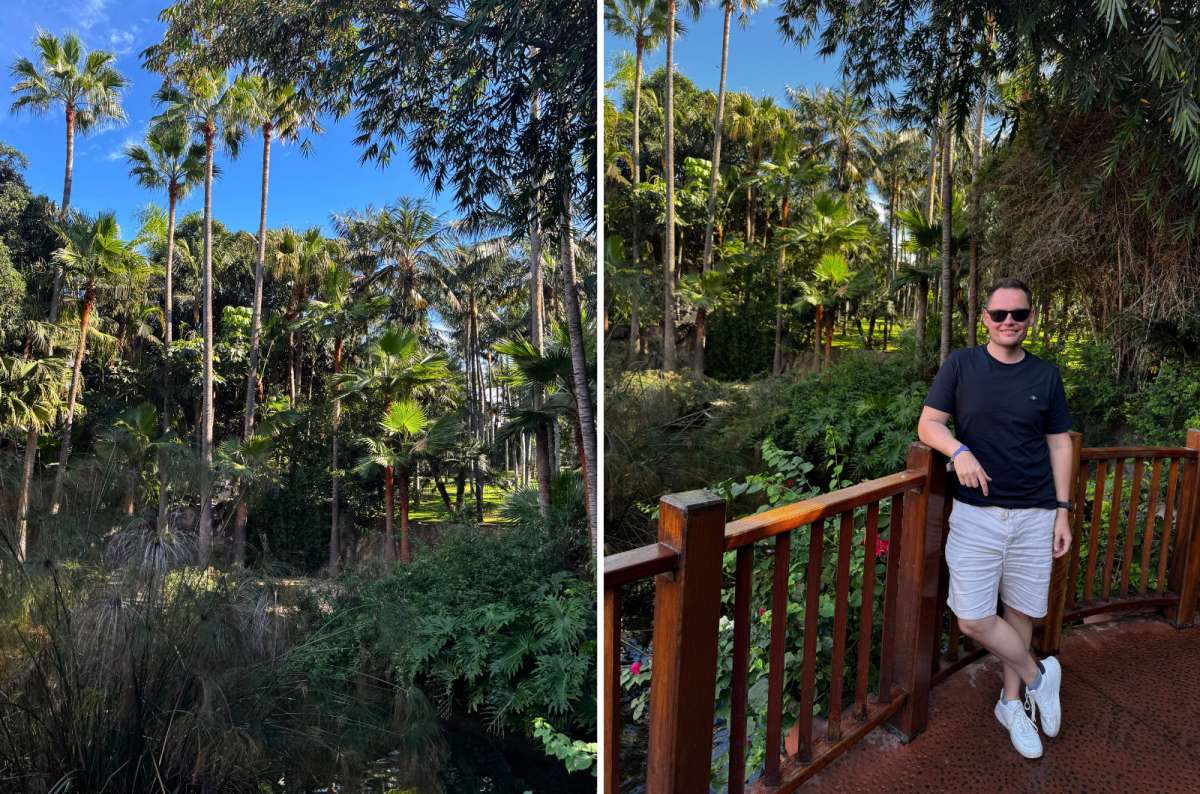
Loro Parque proving Tenerife's best surprises aren't always volcanic
Yes, Tenerife is absolutely worth visiting. Teide National Park is the obvious heavyweight. The volcanic landscape is genuinely spectacular, and I’d put it alongside some of the best national parks I’ve visited.
But then there’s Anaga, where green mountains, laurel forest, mist, and the Atlantic make it feel like you’ve traveled much farther than across one island.
Add the mountain roads through Teno and Masca, some stunning viewpoints, traditional towns such as Garachico, and the contrast between Tenerife’s greener north and dry south, and you have an island that works particularly well for a Tenerife road trip.
Families can also find plenty of attractions here, such as Loro Parque, while the generally mild year-round climate makes Tenerife an easy choice outside the usual European summer season.
But I wouldn’t pretend it’s perfect. The southern resorts can feel very touristy, while Anaga has the opposite problem: limited parking and enough traffic around popular spots to seriously test your patience. Some of the places I like most are also difficult or inconvenient without a car (try my preferred car rental comparison site). Some major attractions and hikes also require reservations, so Tenerife rewards at least a little planning.
For the actual places I’d prioritize, see my best things to do in Tenerife travel guide.
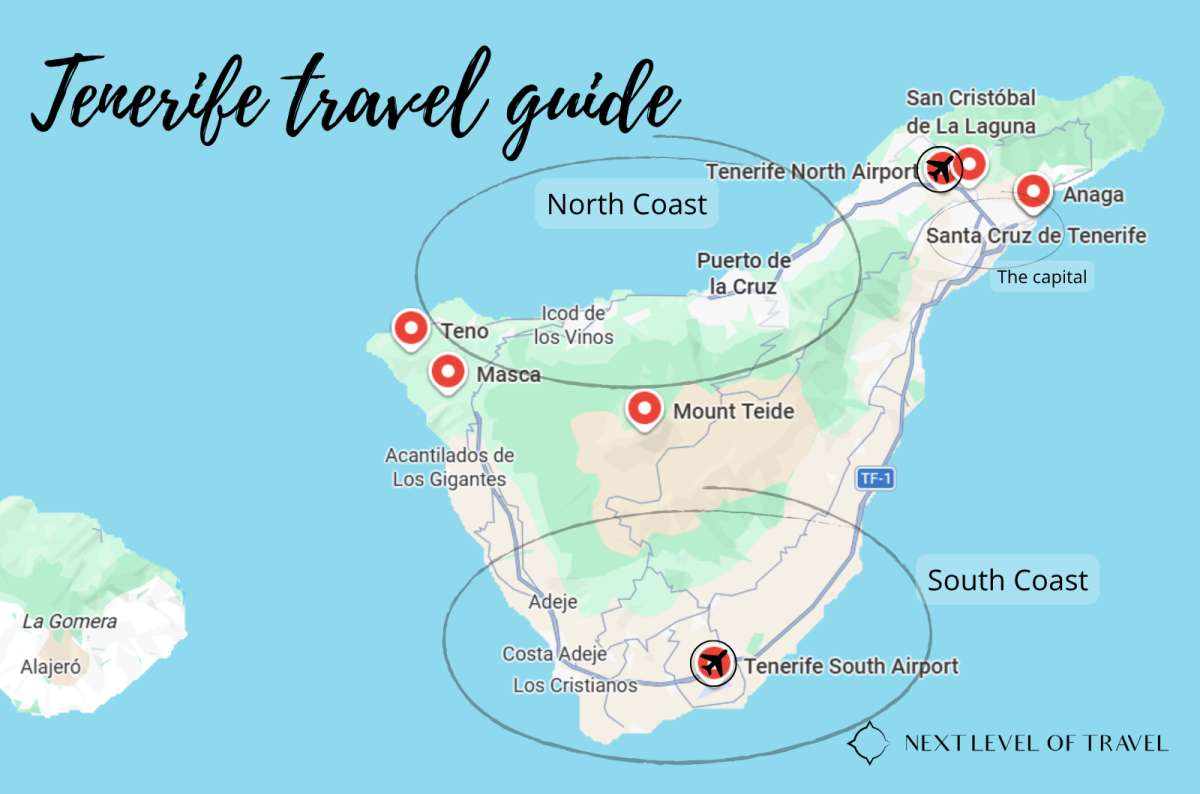
This is basically the shape of every decision you'll make planning a Tenerife trip
If you’re planning a trip to Tenerife, I recommend seven days there. You can see a surprising amount in less time, but once you start combining Teide, Anaga, the north, and the western mountains, a short trip gets busy very quickly.
When planning a trip to Tenerife, I’d rather have seven well-planned days than five days spent trying to see everything.
If you want to see how I’d actually put those seven days together in a Tenerife travel guide, read my Tenerife 7-day itinerary.
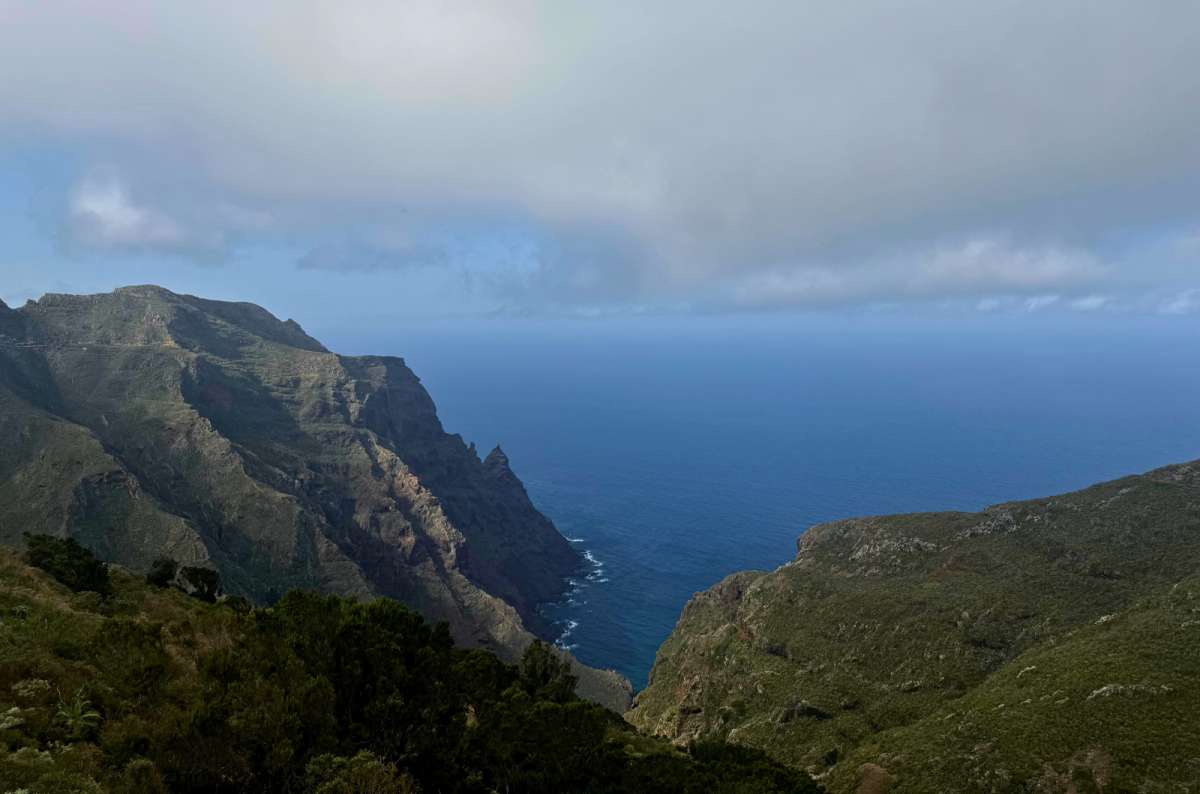
Anaga looks like this even under clouds, imagine it with actual sun

Los Gigantes—west coast, not quite north, not quite south, welcome to the part of Tenerife nobody asks about
If you’re trying to decide between Tenerife north or south, the answer depends on the kind of trip you want. I don’t think one is simply better than the other—they almost feel like two different versions of Tenerife.
The south is the easy option. It’s generally sunnier and drier, with Tenerife’s biggest resorts, developed beaches, restaurants, promenades, and pretty much every tourist service you could need. Areas such as Costa Adeje work particularly well for families or anyone who wants reliable beach weather without having to think too hard about logistics.
The trade-off is the atmosphere. I liked the convenience of the south coast, and Playa del Duque is genuinely beautiful, but some resort areas could be almost anywhere with sunshine and palm trees. If I came to Tenerife only for the south, I’d have a very different opinion of the island.
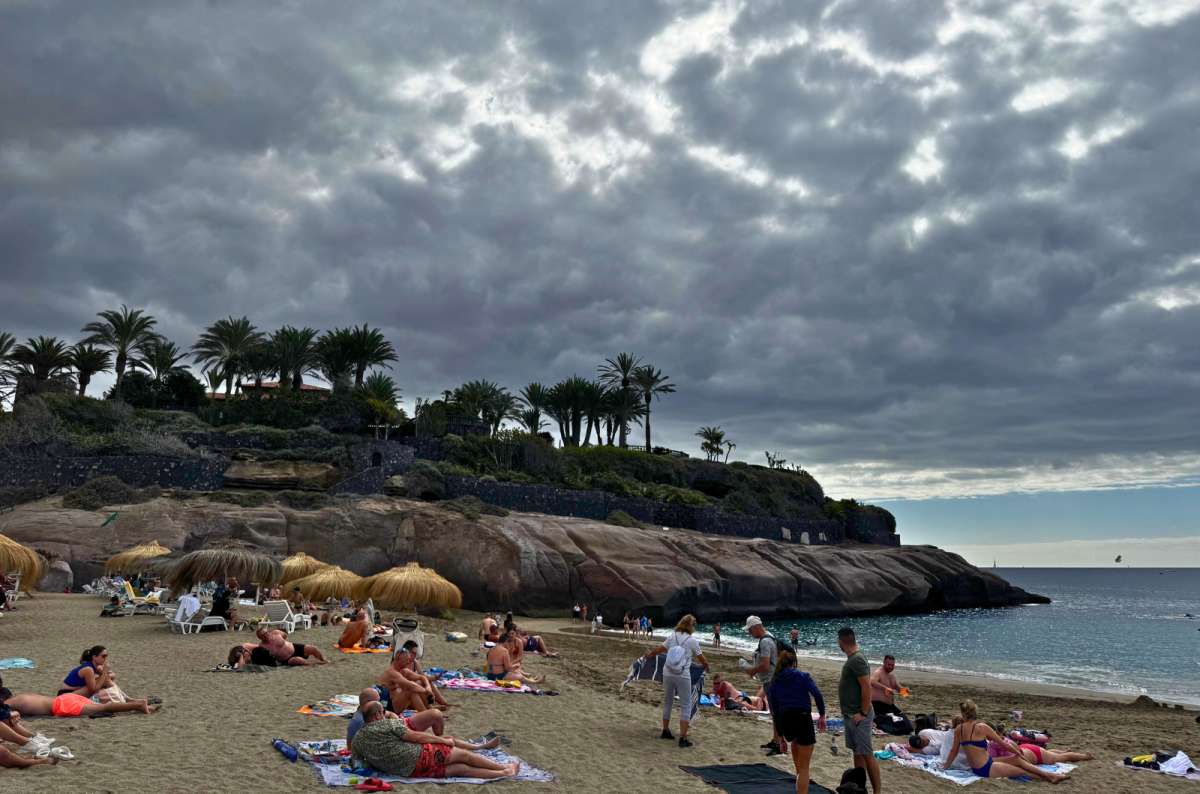
Playa del Duque promises reliable beach weather, this cloud cover missed the brief
The north is greener, cooler, and much more interesting if traditional coastal towns, local character, and fewer crowds matter to you.
Puerto de la Cruz gives you a practical base, while Garachico and La Orotava are easy to explore from this side of the island. Along the northern coast, you’ll also find many of Tenerife’s distinctive black sand beaches. You’re also better positioned for many of Tenerife’s northern landscapes, tourist attractions, and cultural stops.
The obvious compromise is the weather. Beach conditions are less predictable than in the south, and clouds are part of the deal.
Anaga in the northeast doesn’t really fit either category. Its cloud forest and steep green mountains feel completely different again. Teide does the same thing in the center of the island—you can leave a warm coast and find dramatically colder conditions at altitude.
For a full Tenerife road trip, I’d split the stay between north and south rather than force everything from one base. You’ll spend less time retracing your route and get to experience both sides properly.
Read my where to stay in Tenerife guide for a more detailed breakdown of the areas and accommodation options.
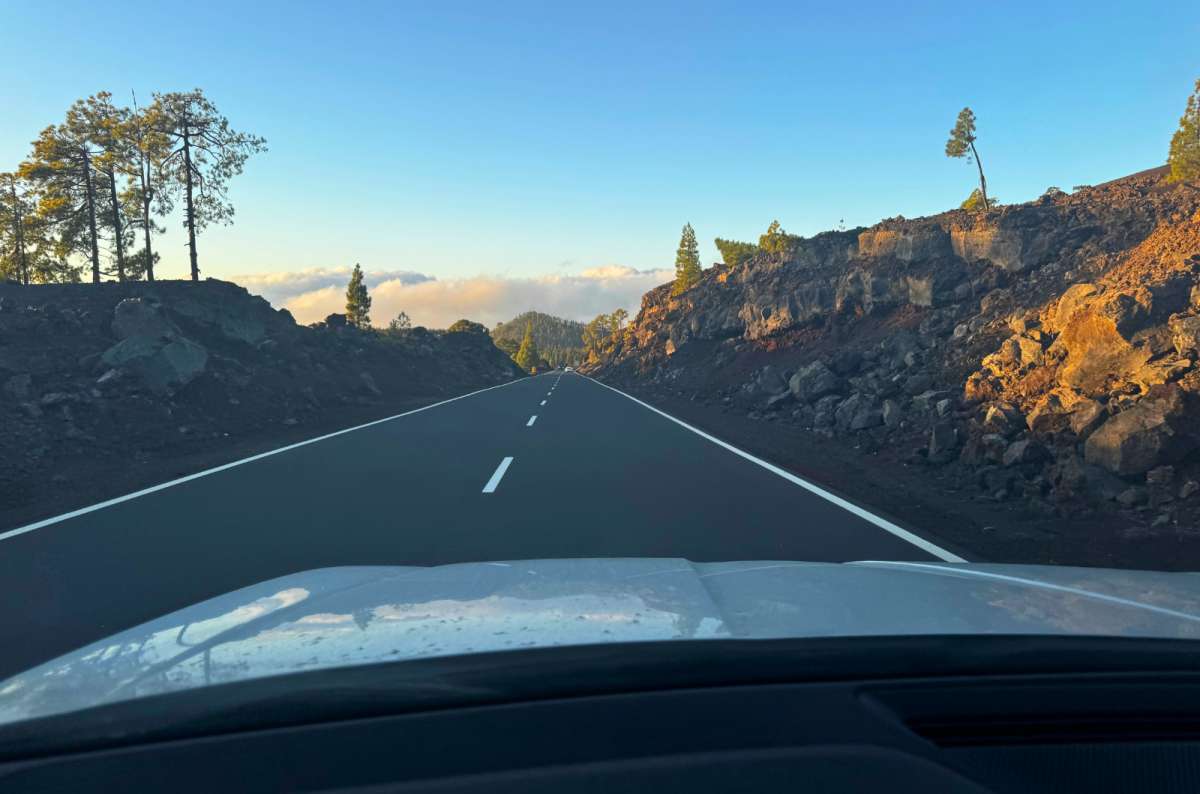
This road is the whole argument for renting a car in Tenerife, no bus is taking you through this
If you want to explore Tenerife independently, I strongly recommend renting a car. You can manage without one if you’re staying in a southern resort and mainly want beaches, restaurants, and organized excursions, but you’ll give up a lot of flexibility.
Public transport connects the major towns, but a car makes a huge difference for Teide, Anaga, Teno, Masca, and the remote viewpoints in between. These were some of my favorite parts of Tenerife, and I wouldn’t want to plan them around bus schedules.
The roads themselves are generally good, but mountain driving is a different story. Roads can be narrow and winding; average speeds drop considerably, and parking at popular viewpoints and trailheads can be frustrating.
One lesson I’d definitely pass on: don’t drive into Anaga with an almost empty tank. There are no fuel stations inside the rural park, so fill up before heading in. This isn’t where you want to start watching the fuel gauge more closely than the scenery.
So, do you need a car in Tenerife? Not for a resort-only holiday. For a proper Tenerife road trip, absolutely. Just don’t assume a short distance on the map means a short drive once mountains get involved.
For rental-car advice, parking, mountain roads, and the practical details I’m deliberately not cramming in here, read my driving in Tenerife guide.
I always use DiscoverCars for all my car rentals when traveling.

One of the biggest mistakes you can make when planning a trip to Tenerife is treating the island as a collection of attractions to tick off. I’d plan around regions instead. These are the six I’d prioritize.
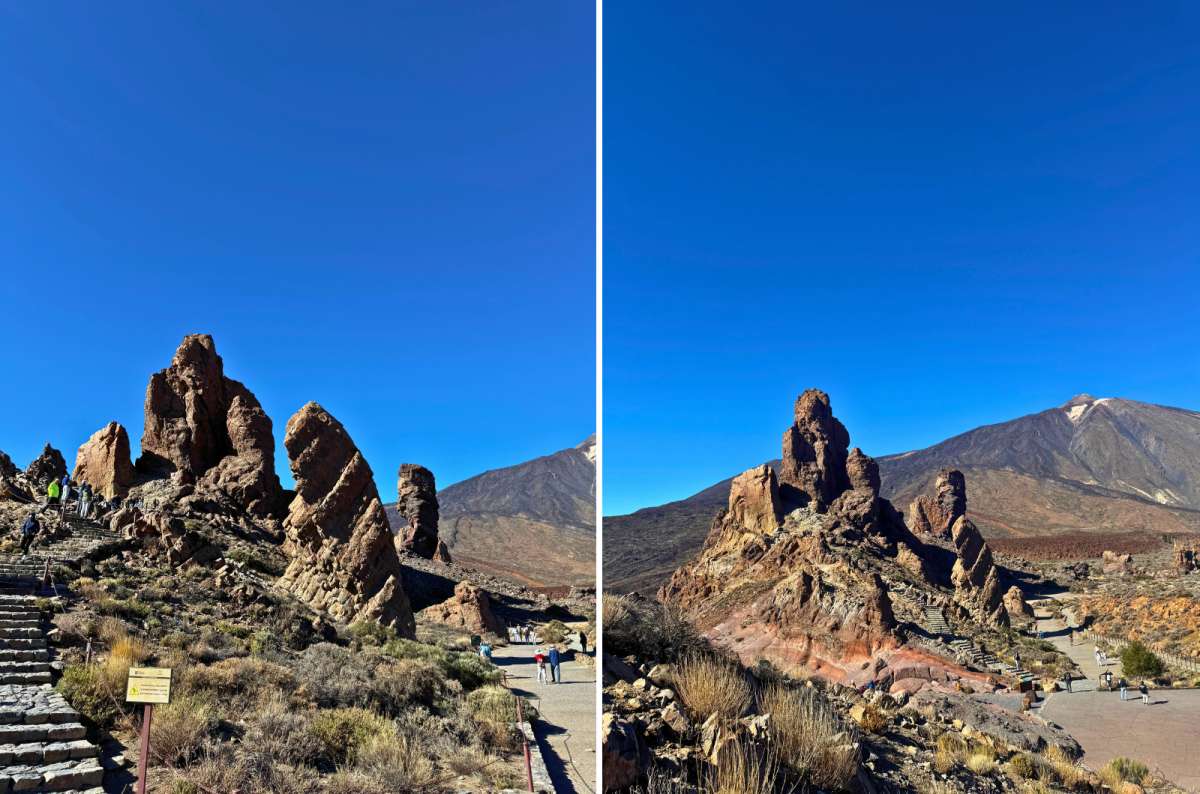
Roques de García looks like the main event until you notice Teide casually rising behind it
If you only have time for one major nature area, Teide National Park would be my first choice. It’s not just about reaching Spain’s highest peak—the entire drive through the park is spectacular, with lava fields, huge rock formations, and barren volcanic moon-like landscapes that look nothing like the coast below.
Altitude also changes things quickly up here. I felt it myself above 3,000 m (9,843 ft), and the temperature and wind can be completely different from what you left behind at the beach.
The cable car makes the higher slopes accessible, but book tickets in advance and check whether your planned trail requires a reservation. Weather can also affect access, so this is one part of Tenerife I wouldn’t just turn up to without checking anything first.
Read my Mount Teide guide for everything you need to know about the cable car, hiking options, reservations, and what’s actually worth doing.
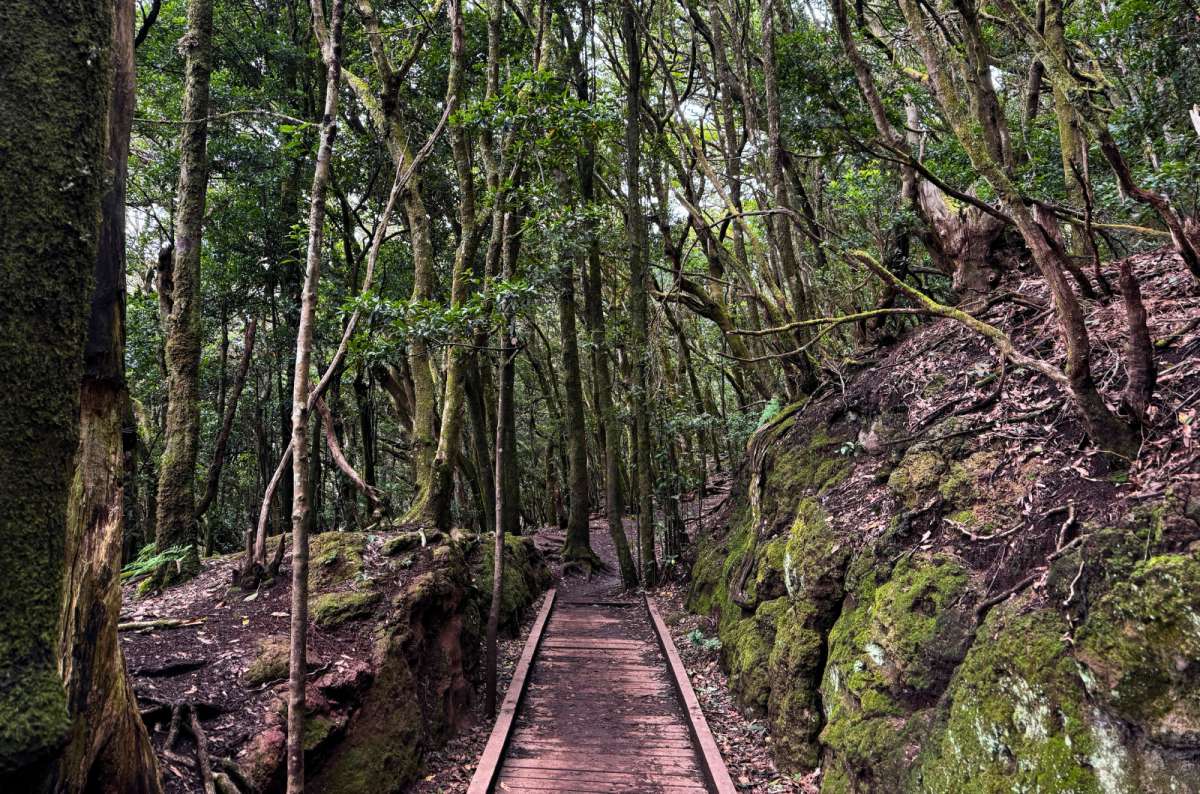
Sendero de los Sentidos in Anaga NP
I originally gave Anaga one day in my itinerary. I ended up spending three.
That should tell you how I feel about it. Anaga’s green mountains plunge toward the Atlantic Ocean; roads twist through cloud forest, and the whole area feels completely removed from Tenerife’s dry southern coast.
Cruz del Carmen and Pico del Inglés are easy places to start, while Roque de Taborno gives you one of my favorite short hiking trails on the island with stunning views. Playa Benijo is a great way to get closer to the coast.
The catch is parking. Arrive early. I’ve sat in more than 30 minutes of traffic around Cruz del Carmen, and spaces at popular trailheads disappear quickly.
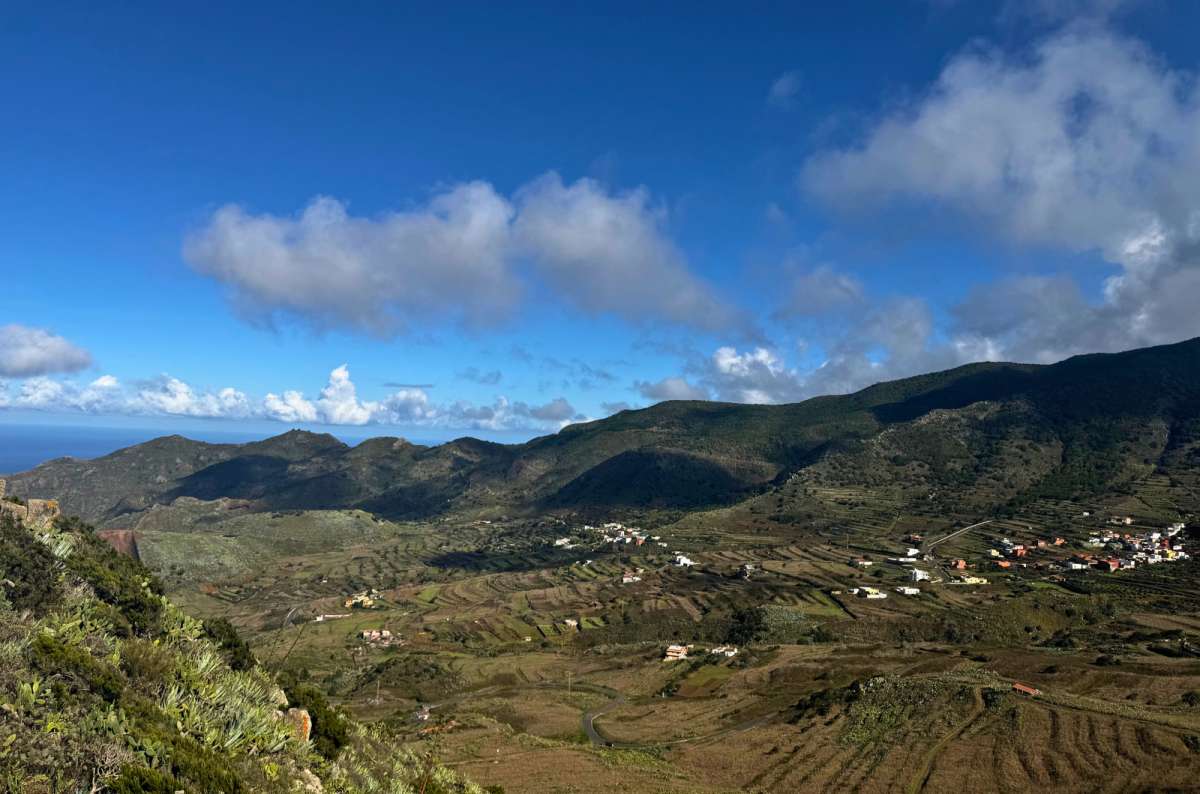
This is the view TF-436 keeps interrupting your drive for, and it's worth every stop
TF-436 through the Teno Mountains is one of my favorite drives on the island. The road twists through deep valleys and steep green mountains, with viewpoints that make it very difficult to get anywhere quickly. Then you reach Masca, squeezed between enormous cliffs in one of the most dramatic settings on Tenerife.
Masca gets most of the attention, but I think the drive and surrounding mountains are the real experience here. Farther west, Punta de Teno feels properly remote, while Los Gigantes on Tenerife’s northwest coast gives you a completely different perspective on the landscape with its enormous sea cliffs rising from the Atlantic Ocean.
Just decide beforehand whether this is primarily a driving day or a hiking day. Pick one as the priority rather than trying to cram both into the same day.
Garachico is my favorite of the northern towns, but it’s tiny. You can walk around the old center in about an hour; add lunch and a swim at El Caletón and it easily becomes a relaxed half-day stop.
La Orotava has more traditional architecture, Puerto de la Cruz works well for restaurants and the botanical garden, and Icod de los Vinos has Tenerife’s famous Dragon Tree—although I’ll admit that one impressed me less than I expected.
The north is also where you’ll find some excellent volcanic natural pools. Just remember that they’re connected to the Atlantic, so conditions matter considerably more than they do in a hotel swimming pool.
Costa Adeje: The easy side of Southern Tenerife
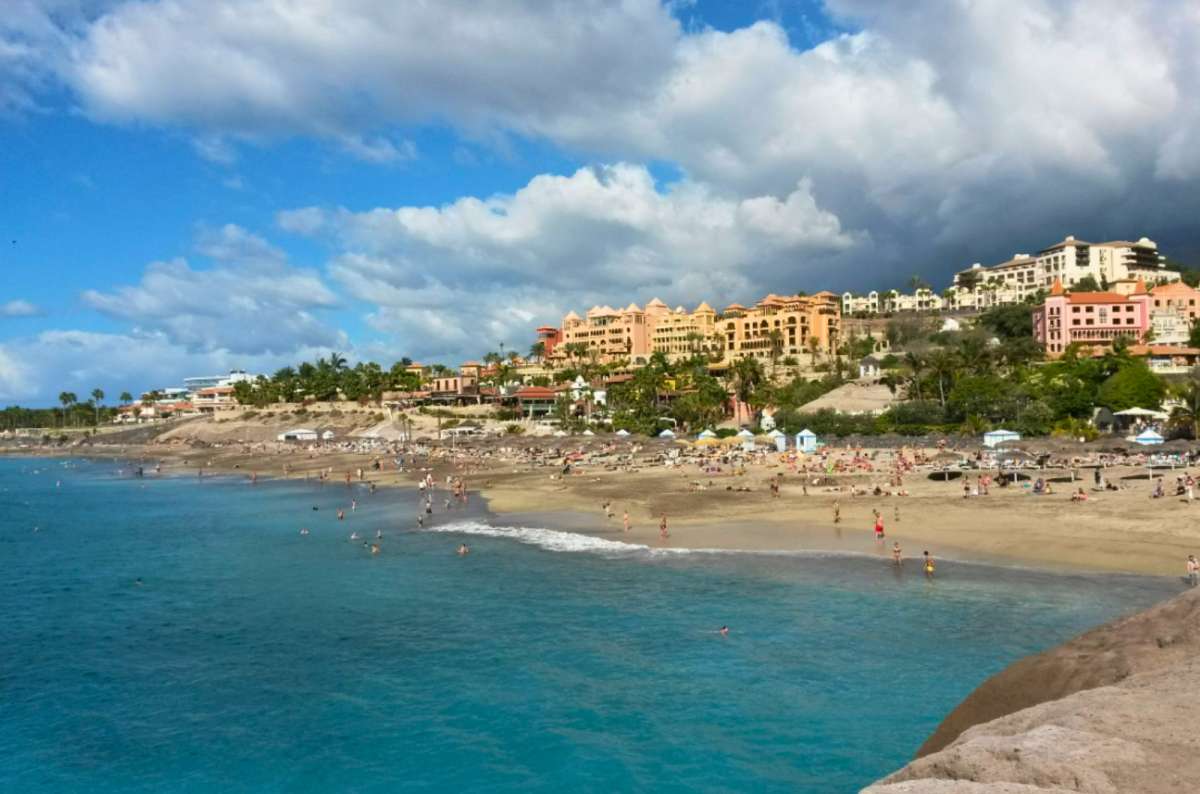
Costa Adeje
Costa Adeje and Playa del Duque represent a completely different Tenerife: polished promenades, developed beaches, restaurants, beach bars, resorts, and everything within easy reach.
There’s nothing wrong with that. I actually think the south works extremely well for families and anyone who wants an easy beach holiday, . I just wouldn’t come all the way to Tenerife and see only this part of the island.
If you’re basing yourself here, my things to do in Tenerife South guide covers what I think is actually worth your time.
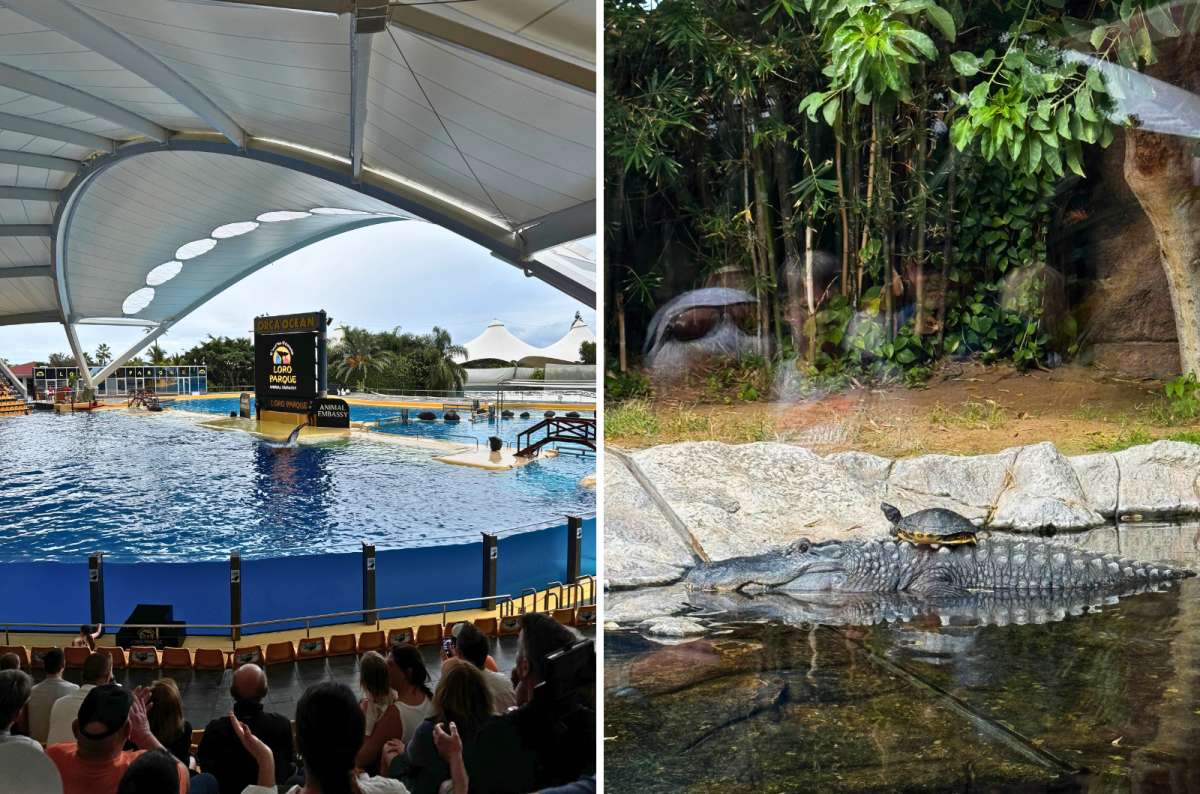
Loro Parque swings from orca shows to a turtle casually riding an alligator, and somehow both work
Not every day needs to involve hiking boots and mountain roads. Loro Parque was the standout paid attraction for me, and we visited with our then six-month-old son. It’s expensive for a family, but I still thought the combination of tropical gardens, animal exhibits, and shows justified spending most of the day there.
Read my full Loro Parque review and decide whether the price is worth it.
Siam Park is the obvious water-park option in the south, while the Pyramids of Güímar were far stranger—and more interesting—than I expected. The museum goes well beyond the pyramids themselves, with botanical gardens and a poison garden that ended up being one of the most memorable parts for me.
These are only broad highlights. For my actual ranking and the places that gave me the best payoff, see my best things to do in Tenerife guide.
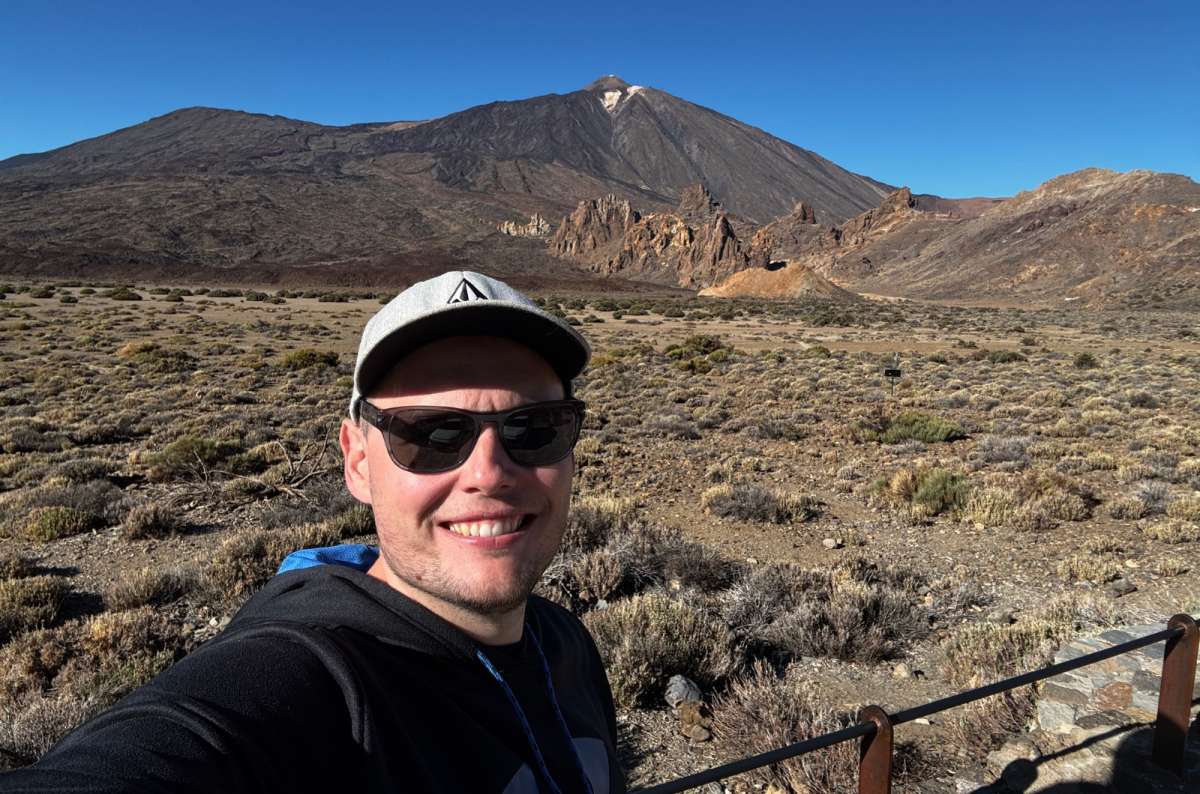
This is the sunny version of Teide
There isn’t really one best time to visit Tenerife. It’s a year-round destination, and I’d be comfortable planning a trip in any season. What matters more is where on the island you’re going and what you want to do.
The biggest mistake is assuming the weather at your hotel tells you what the weather will be everywhere else. Tenerife has some serious microclimates. The south is generally warmer and drier, while Anaga can be cloudy, wet, and noticeably cooler. Then there’s Teide: you can leave the coast in warm sunshine and find yourself reaching for extra layers once you gain altitude.
That matters particularly if hiking is part of your Tenerife travel plans. Conditions in the mountains can change quickly, and weather can affect trails and Teide cable-car operations. Ocean conditions matter too, especially if you’re planning to swim in Tenerife’s natural pools rather than protected resort beaches.
So my Tenerife travel tip is simple: pack for more than one version of the island. Bring layers even when the forecast at the coast looks perfect, and check mountain, trail, cable-car, and sea conditions before setting off.
Tenerife has two airports: Tenerife South (TFS) and Tenerife North (TFN). I wouldn’t automatically choose one over the other—compare the flights available and where you’re staying. If your hotel is in Costa Adeje, arriving in the south obviously makes life easier; if you’re staying around Puerto de la Cruz or exploring the north, Tenerife North airport may be more convenient.
Getting between the Canary Islands is also straightforward. Inter-island flights are short, and flying makes particular sense if you’re traveling light and don’t need to bring a car with you.
For combining Tenerife and Gran Canaria, I took the Fred Olsen ferry from Agaete to Santa Cruz de Tenerife with a car, and I found it surprisingly efficient. We arrived around 40 minutes before departure; boarding and unloading were quick, and taking the car saved us from returning one rental and collecting another.
The crossing itself was less impressive. In high seas, that medium-sized ferry moves. If you’re prone to seasickness, I wouldn’t underestimate it.
There is one important caveat if you’re planning the same thing with a rental car. Check your rental agreement before taking the car to another island. I did it without a problem, but my experience doesn’t mean every rental company permits inter-island travel or provides the same insurance coverage once the vehicle leaves Tenerife.
If Tenerife is part of a two-island trip, my Tenerife vs Gran Canaria comparison can also help you decide how to divide your time.
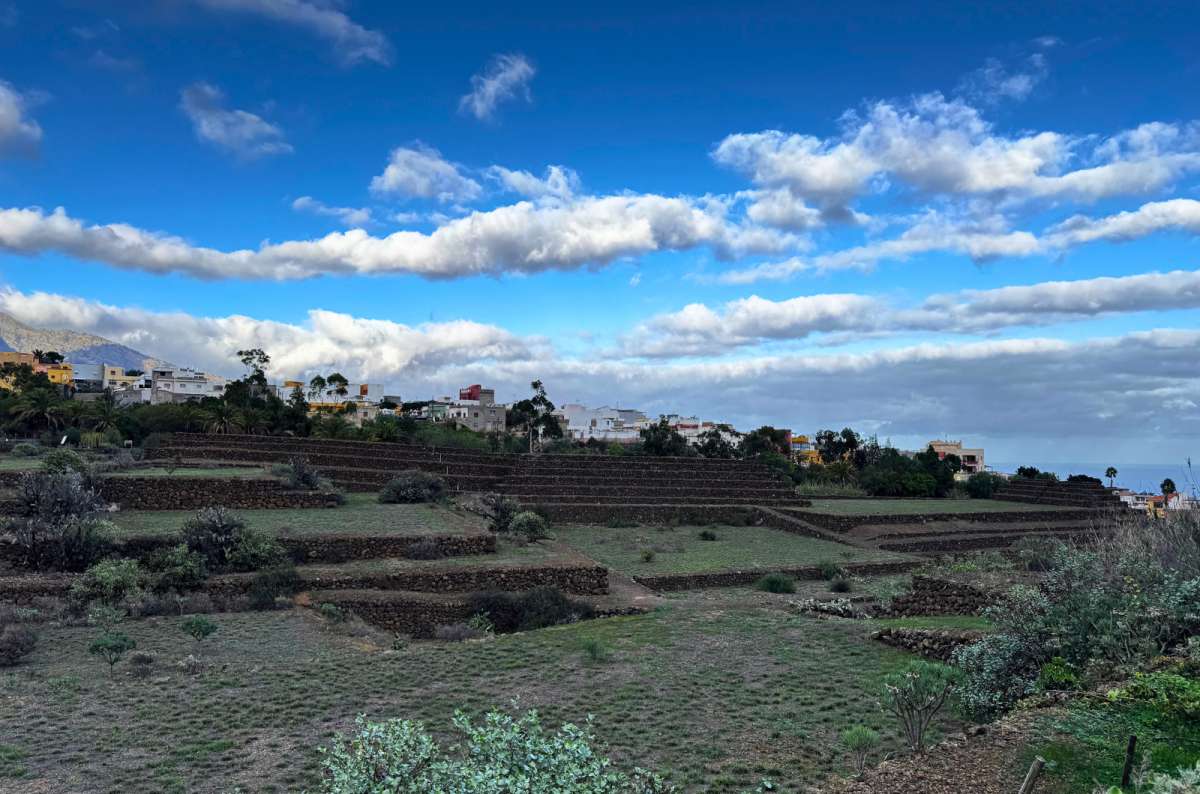
These stone terraces are the Pyramids of Güímar
These are the Tenerife travel guide tips I’d actually want to know before arriving:
This post contains affiliate links. If you make a booking through one of my links, I may earn a small commission—at no additional cost to you. Thank you for your support!


Hi, I’m Jan. I travel fast and intensely, whether I’m exploring the buzz of Tokyo in 3 days or road-tripping through mountains and beaches on a 3-week Thailand adventure. And no matter where I am, you’ll always find me in a comfortable hotel at night and eating the best food.
If that sounds like your kind of journey, hop on board, and let’s explore the world together!
I started this blog after realizing how tough it can be to find reliable, authentic travel info. You wouldn’t believe how many “travel bloggers” never even visit the places they write about! On Next Level of Travel, you can count on my full honesty and insights drawn from my firsthand experiences.
Here’s the deal: not every destination is all superlatives and unicorns. I’ll let you know if a tourist attraction isn’t worth your time, like skipping overrated stops in my 2-week Spain itinerary. And when I find something truly special—like the perfect mix of culture and nature in Cape Town—you can trust that it’s worth adding to your itinerary.


Comments | Thoughts? Give us a shout!