


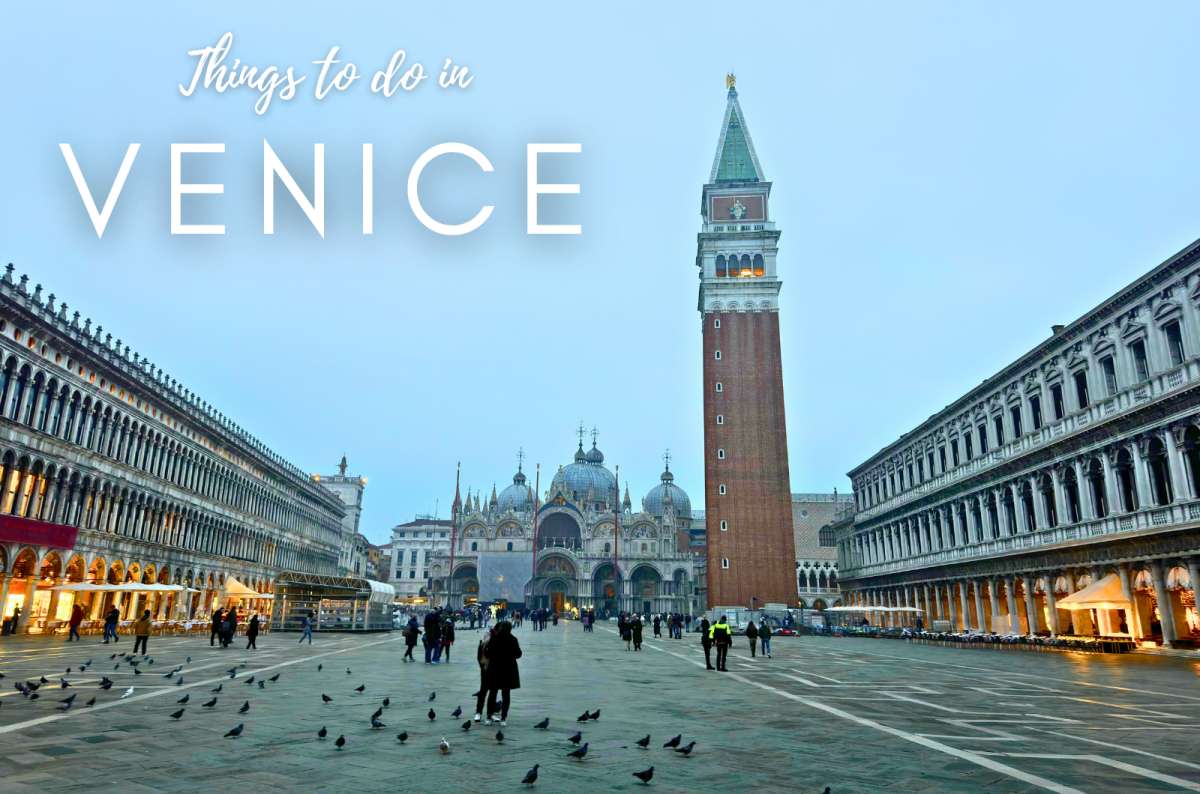


My ranking of the best things to do in Venice
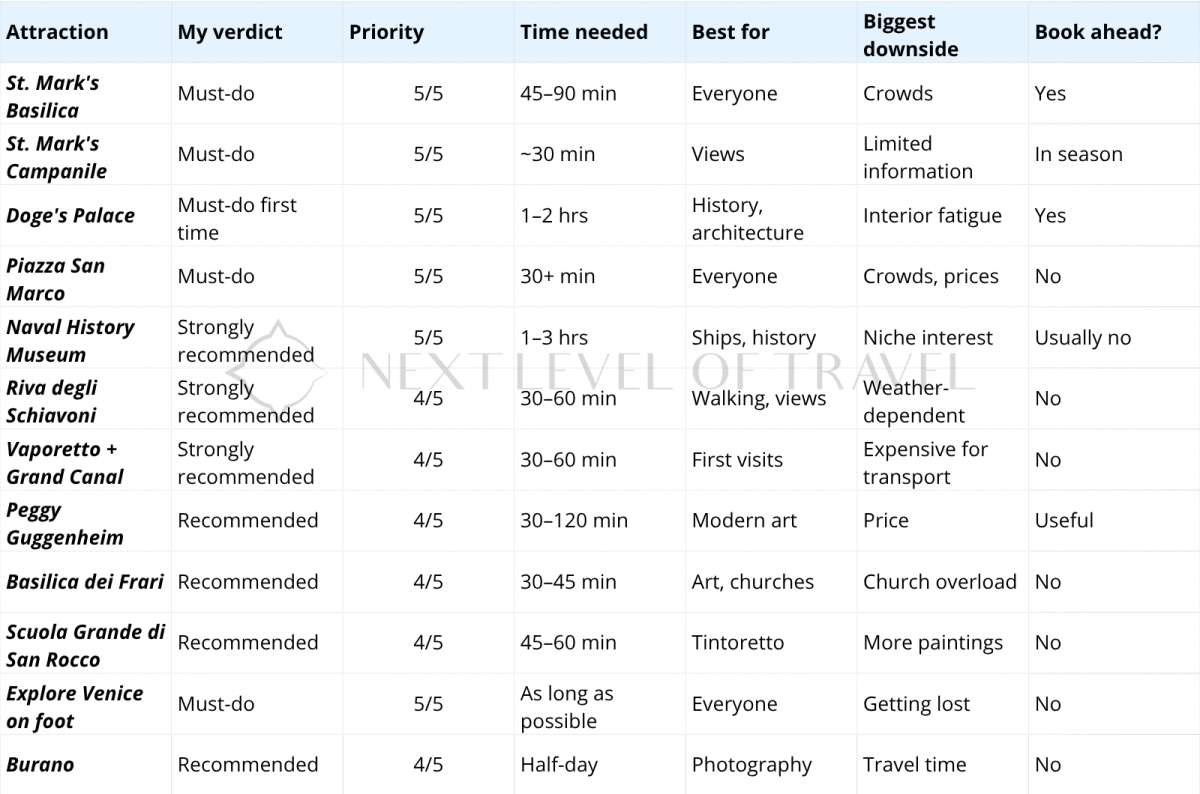
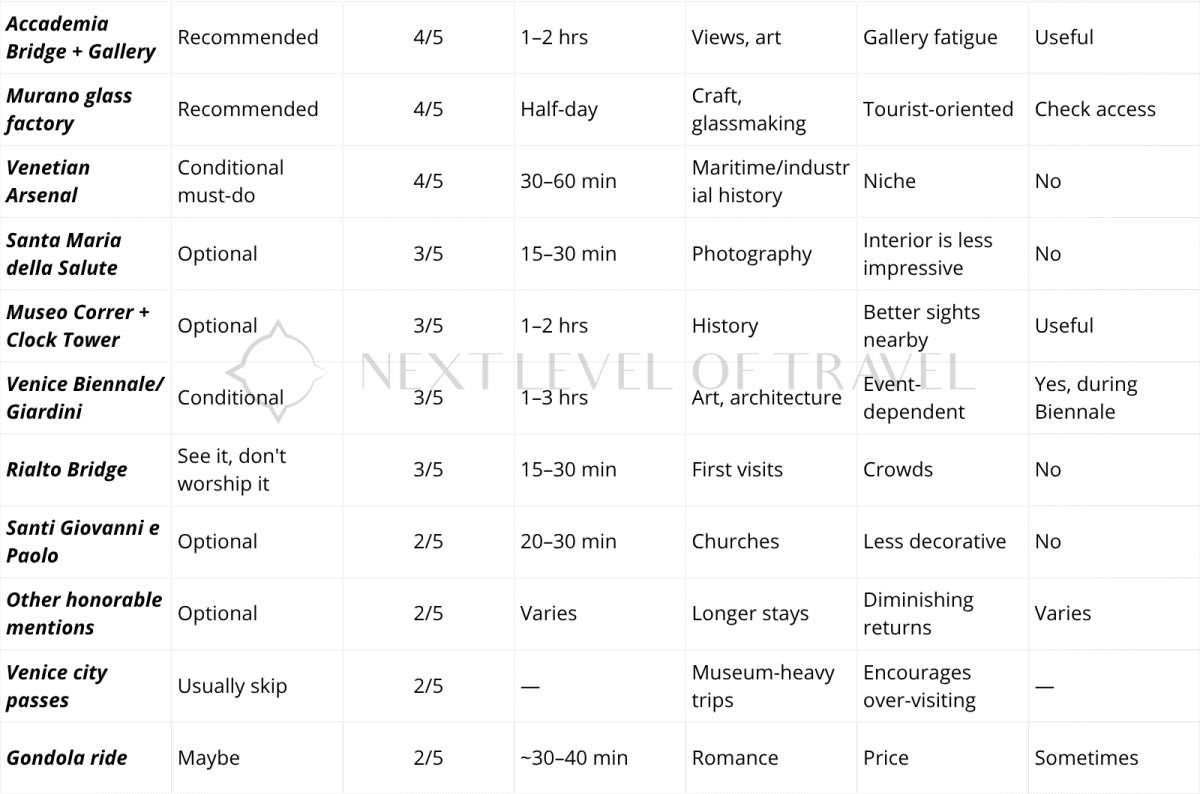
Venice attractions at a glance
8. Peggy Guggenheim Collection
9. Basilica di Santa Maria Gloriosa dei Frari
10. Scuola Grande di San Rocco
11. Get lost in Venice's streets
13. Ponte dell'Accademia + the Old Masters at Gallerie dell'Accademia
16. Santa Maria della Salute Church
17. Museo Correr + St. Mark's Clock Tower
18. Venice Biennale and Giardini
20. Basilica dei Santi Giovanni e Paolo
21. Visit these honorable mentions
22. Research Venice city passes
How many days do you need in Venice?
Practical Venice tips from my visits
I have visited Venice three times over roughly 15 years, and on my latest trip I made the questionable decision to visit almost everything. I’m glad I did it. I will never do it again.
Trying to see every church, museum, palace, and gallery becomes too much, and plenty of famous Venice attractions are places I would happily skip on a second visit. On the other hand, there are a few places I would return to tomorrow.
That is why this isn't another list of 20-something things to do in Venice copied from Tripadvisor or some other platform and rearranged slightly. I visited it all so you don't have to come up with your own plan—or, worse, spend your limited time trying to work out what is actually worth visiting.
Venice is not the best place in the world. I have thought it was slightly overrated on all three of my visits. But it is also one of the most interesting and unique cities you can visit. There really isn't anywhere else quite like it.
For a first visit, I think two days in Venice is the sweet spot.
Read more from my Italy travel blog.
These are the places I would prioritize.
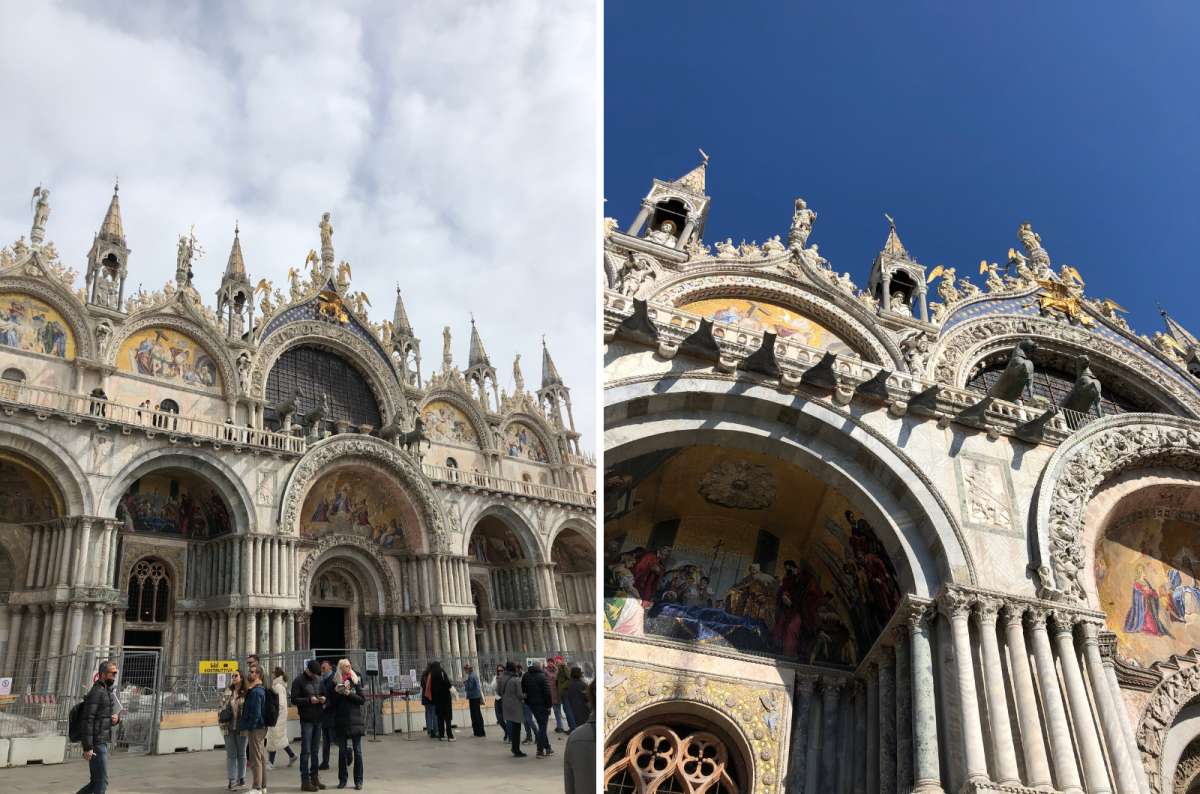
St. Mark’s Basilica is the rare church where even the outside is covered in gold mosaics. Wait until you see the inside
If I had to choose just one of the best places to visit in Venice, this would be it.
St. Mark's Basilica is one of those rare attractions that is just as impressive inside as it is outside. After two weeks of churches and galleries in Italy, I was reaching the point where I wanted to give every cathedral at least three months of personal space. St. Mark's still got me.
The exterior is spectacular, but the mosaics are what really make it.
There is something about them that works far better in person than in photographs. Almost every surface seems to be golden, decorated, or covered in tiny pieces of stone forming enormous scenes. Add the domes, Byzantine influence, relics, marble, and various spoils accumulated during Venice's history, and the whole thing feels unlike the other major churches in Italy.
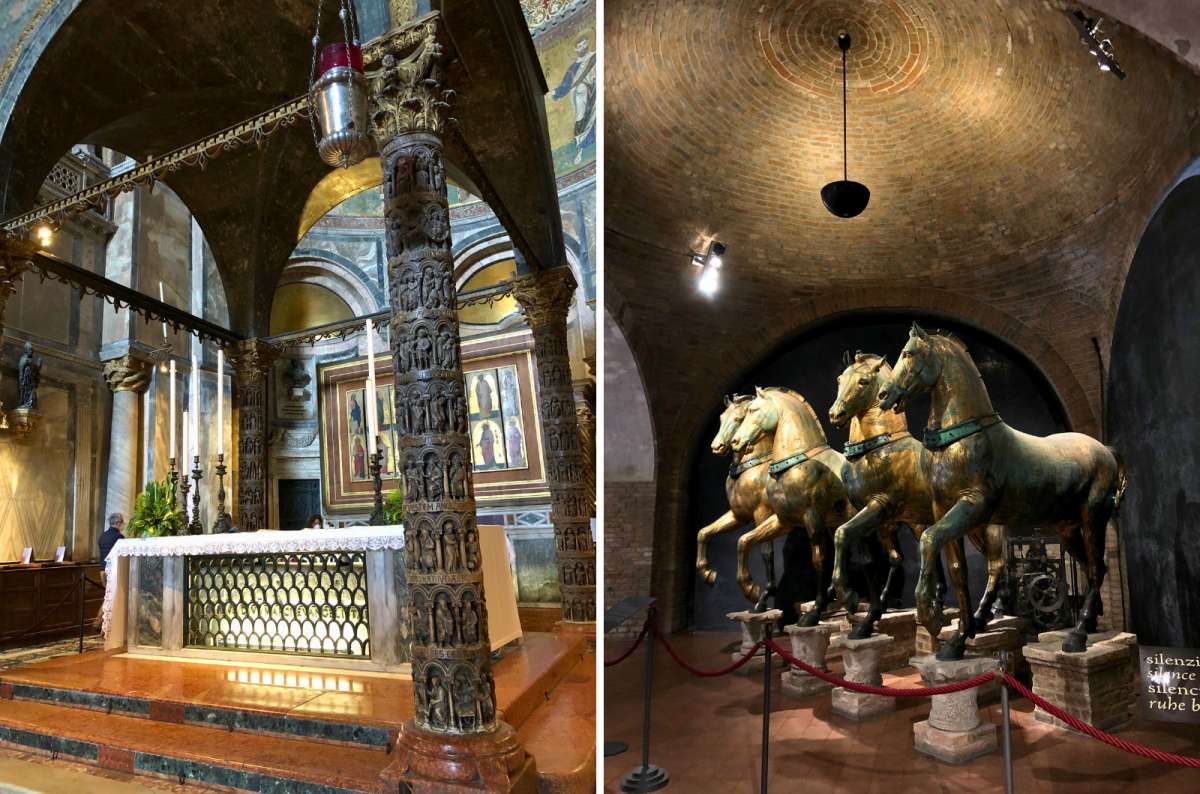
St. Mark’s Basilica proudly displays two famous Venetian heists. The saint’s relics smuggled out of Alexandria and the horses taken from Constantinople
Construction of the present basilica began in 1063, and its mix of Byzantine, Romanesque, and later Gothic and Renaissance styles is part of what makes it look so different. And yes, medieval visitors must have been completely blown away by it. Which was presumably part of the point.
If Byzantine mosaics are your thing, Ravenna has even more of them. See my list of things to do in Ravenna.
Entry to St. Mark’s Basilica starts at EUR 10, and I’d definitely book a timed ticket in advance. Even outside the main season, I’ve seen the line wrap around the basilica. And remember to cover your shoulders and knees—it’s still a functioning church.
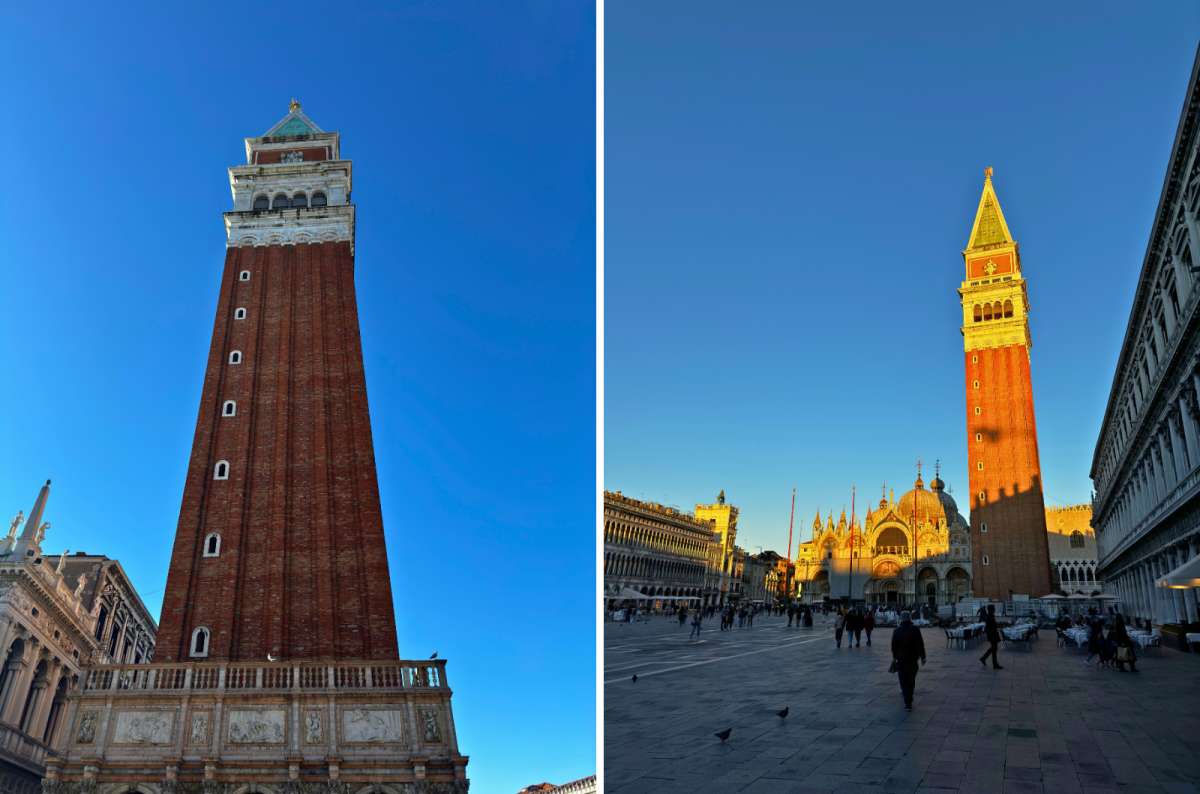
St. Mark’s Campanile is almost 99 meters tall
I loved the Campanile. More importantly, you don't even have to destroy your legs climbing it because there is an elevator to the top.
Venice looks particularly good from above, even more medieval. The city is incredibly compact, with red roofs, narrow streets, domes, and canals packed into a relatively small space. Seeing all of that from the Campanile gives you a perspective on the size and shape of Venice that you simply don't get at street level.
My main complaint is that there isn't much info once you reach the top. You are mostly there for the panorama rather than a history lesson. Still, it is totally worth it.
The Campanile currently costs EUR 15 (USD 17), with timed tickets available online. I would book during busy periods rather than wasting part of the day in a line.
If you want the Campanile sorted without thinking, there’s a San Marco tour with St. Mark’s Bell Tower tickets included.
And if visibility is good, you may even see the Dolomites beyond the lagoon—although I would treat that as a bonus rather than a reason to book.
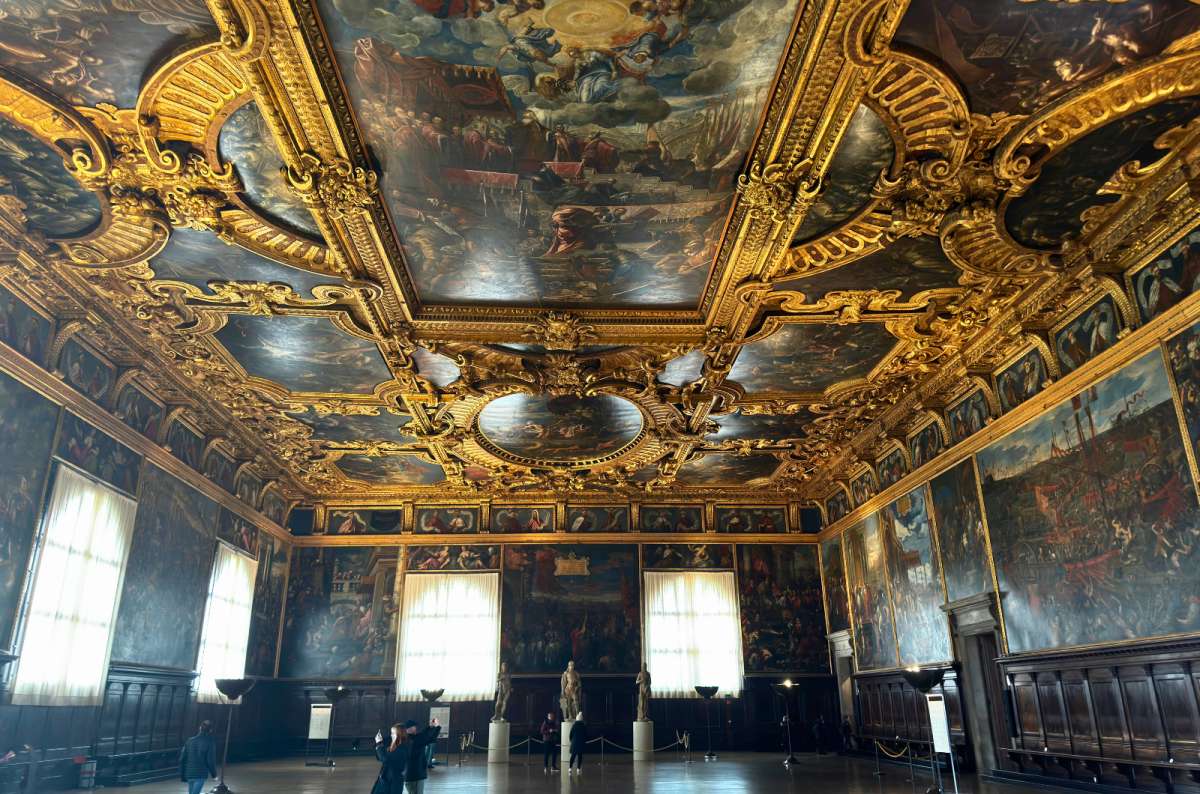
Doge’s Palace has enough gilded ceilings to decorate a medium-sized country
Doge's Palace is enormous. The route starts with the ridiculously rich Golden Staircase and continues through room after room of decorated ceilings, monumental paintings, and spaces designed to make it extremely clear that the Venetian Republic had a lot of money.
The interiors are extraordinary. My problem is that I always seem to reach Venice toward the end of longer Italy trips, by which point I have already seen enough painted ceilings and religious artwork to decorate a medium-sized country.
Fortunately, because we are all mentally small children, the palace eventually gives you the armory, treasury, and prisons! The armory was easily one of my favorite parts. Most of the collection is medieval or early-modern, with armor, swords, firearms, and a particularly good collection of arquebuses. Proper little-knight-dream material.
You also walk through the monumental Sala del Maggior Consiglio and eventually cross the Bridge of Sighs into the prison. The palace is easy to navigate, and you can move through it at your own pace. I spent roughly an hour inside; people more interested in the paintings and state rooms could easily spend two.
Would I visit Doge's Palace on my first trip to Venice? Absolutely. Would I personally need to visit it on my fourth? Probably not. That distinction matters.
The standard ticket costs EUR 35 and also includes Museo Correr and other museums around St. Mark’s Square. I’d book ahead during busy periods, but don't feel obliged to visit every included museum just because you've paid for it.
Pro tip: If you actually want to understand what’s on those ceilings, a guided tour of Doge’s Palace and St. Mark’s Basilica does the explaining for you.
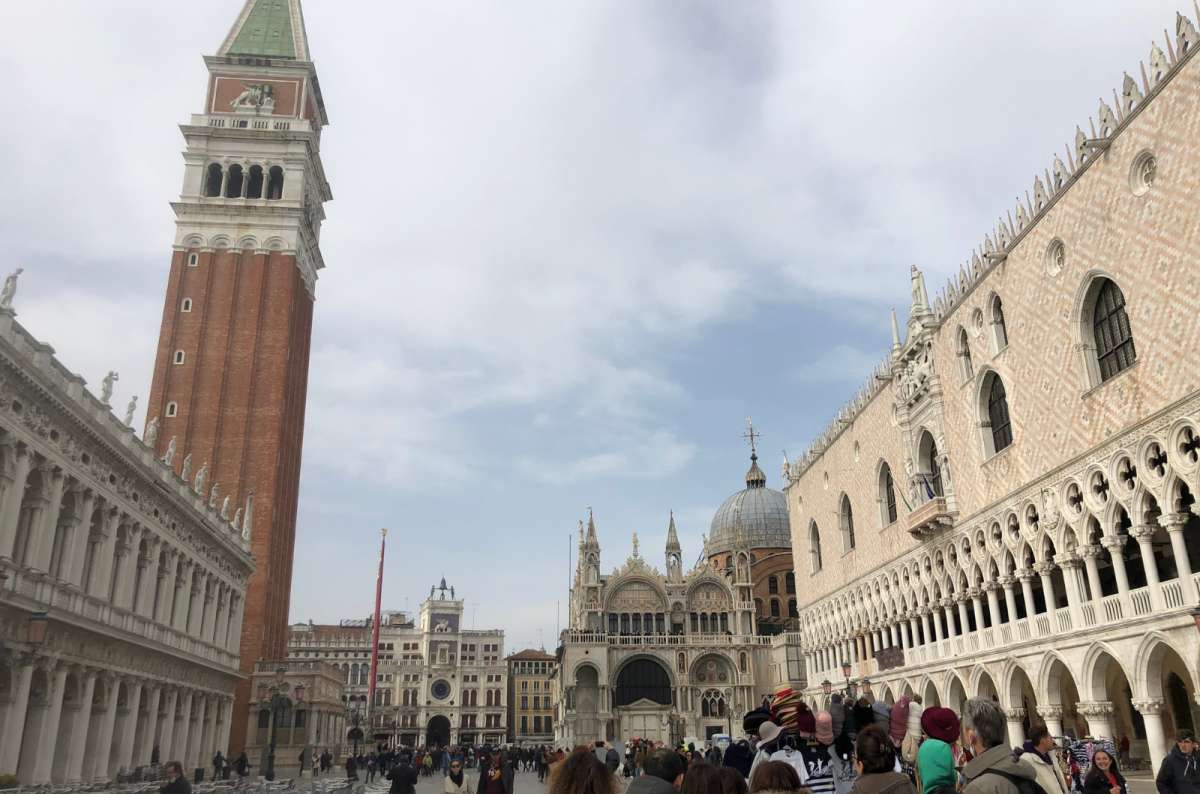
The Campanile, the Clock Tower, St. Mark’s Basilica and Doge’s Palace on Piazza San Marco
Piazza San Marco is probably my favorite place in Venice. That feels almost too obvious, but after three visits it still works on me every time.
The square contains St. Mark's Basilica, the Campanile, Doge's Palace, Museo Correr and the Clock Tower, so you could theoretically spend a huge chunk of your Venice itinerary without moving more than a few hundred meters.
I wouldn't. One slightly strange recommendation I have is to split the San Marco attractions across your trip rather than doing it all in one day.
Walk through the square. See it in daylight. Come back later at night. Venice after dark is a different beast altogether. Once the day-trippers disappear, the atmosphere changes a lot, and the romantic version of Venice appears.
One other tip: I wouldn't buy anything directly on Piazza San Marco unless you specifically want the experience. Prices can be substantially higher than those just a short walk away.
Also, guard your food. A seagull once essentially landed on my girlfriend's head and ripped her snack out of her hand. I didn’t appreciate how aggressive Venetian seagulls could be.

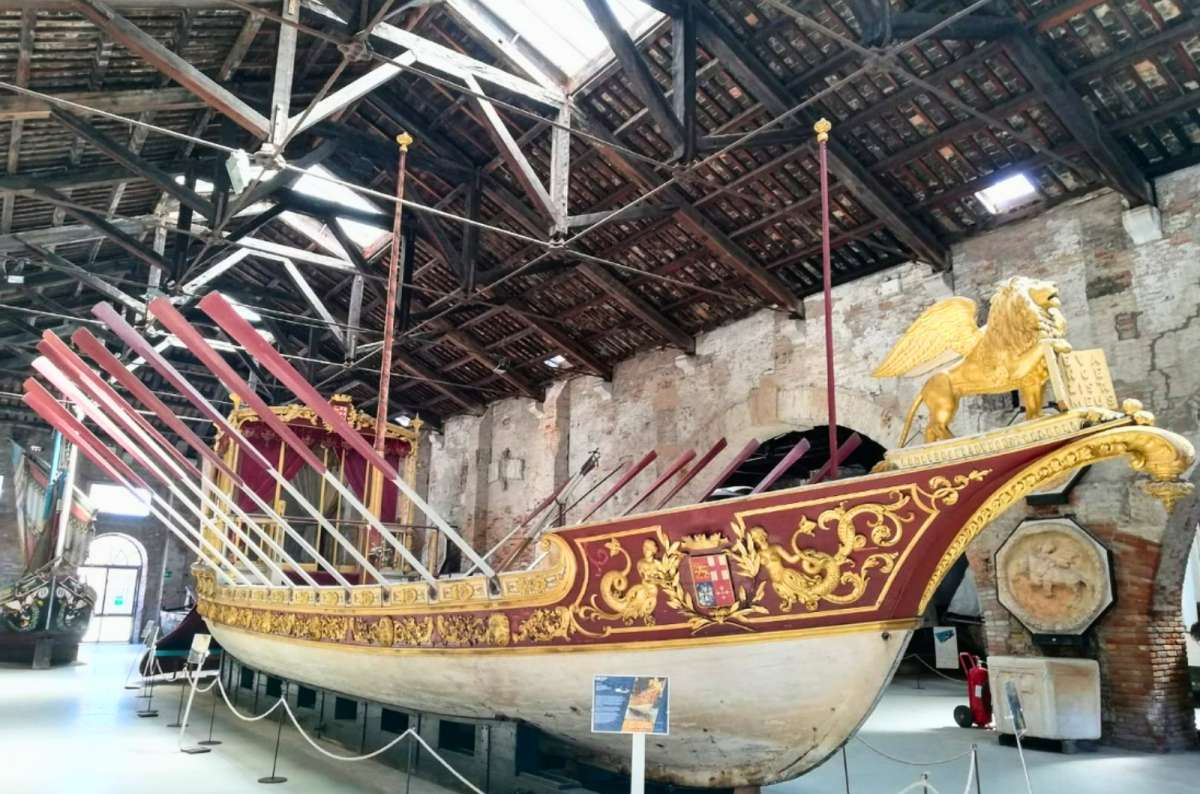
The Ships Pavilion at the Naval History Museum is where Venice keeps its fanciest boats
This is where my ranking starts diverging from most lists of the best things to do in Venice. I rate the Naval History Museum extremely highly.
In my own travels, only the naval museum in Hamburg has impressed me more in Europe. It’s #3 on my list of things to do in Hamburg.
That is obviously my personal ranking rather than an official league table of European naval museums, but Venice's museum is so good. And it makes perfect sense that it should be. Venice wasn't merely a picturesque collection of canals. For centuries, it was one of Europe's great maritime powers.
Allow at least an hour. If you genuinely like ships and maritime history, you can easily spend closer to three. Just imagine how much everyone who has travelled to Venice with me has suffered!
For me, this is one of the best places to visit in Venice because it explains a side of the city that you don't get from simply moving between churches and palaces.
Admission to the Naval History Museum and Ships Pavilion costs EUR 17, including the audio guide. I wouldn’t bother booking ahead for a normal visit, but the submarine has limited places and fixed tour times, so plan that separately if you're interested.
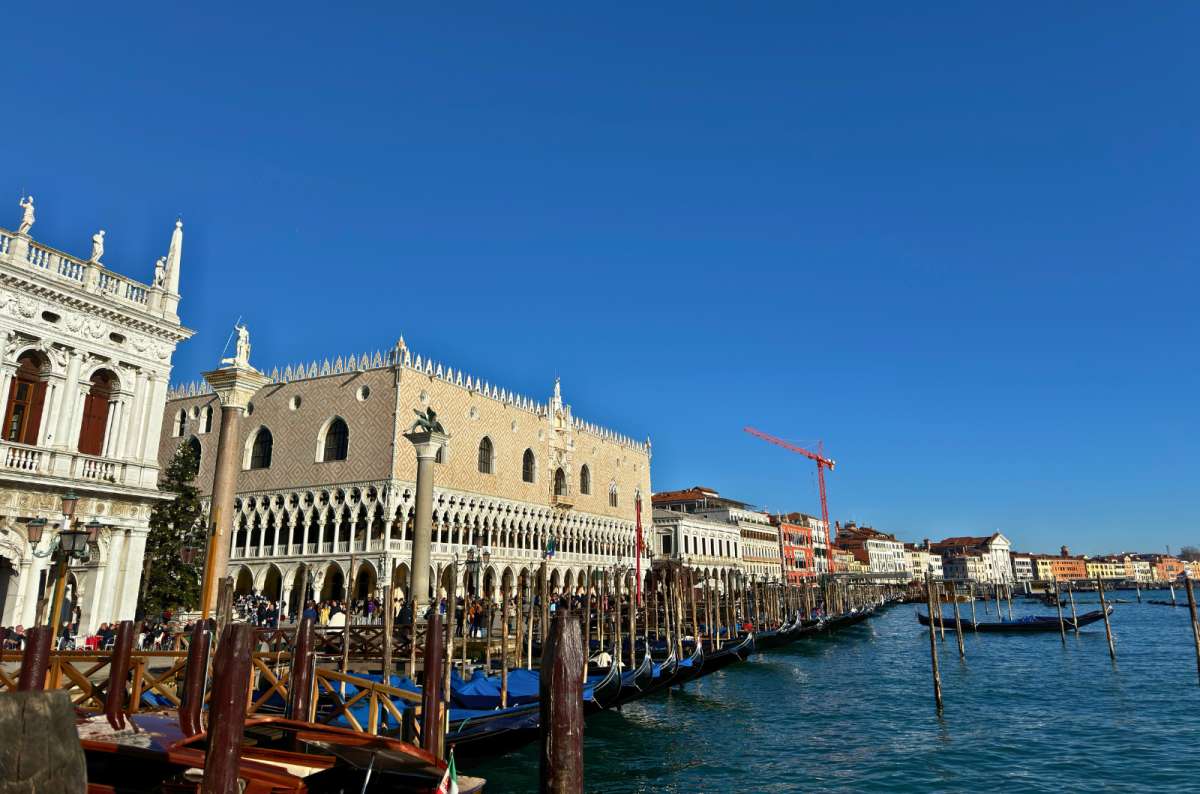
Riva degli Schiavoni is the best free attraction in Venice. Lagoon on one side, Doge’s Palace on the other, and not a ticket office in sight
Not every one of the best things to do in Venice needs a ticket. The waterfront east of Piazza San Marco is one of my favorite places to simply walk. You have the lagoon on one side, Venice on the other, boats constantly moving in front of you, and many sights leading toward Castello.
It also works well as a break between museums.
Weather makes a huge difference here. Venice in sunshine and Venice under grey skies can feel like two completely different cities.
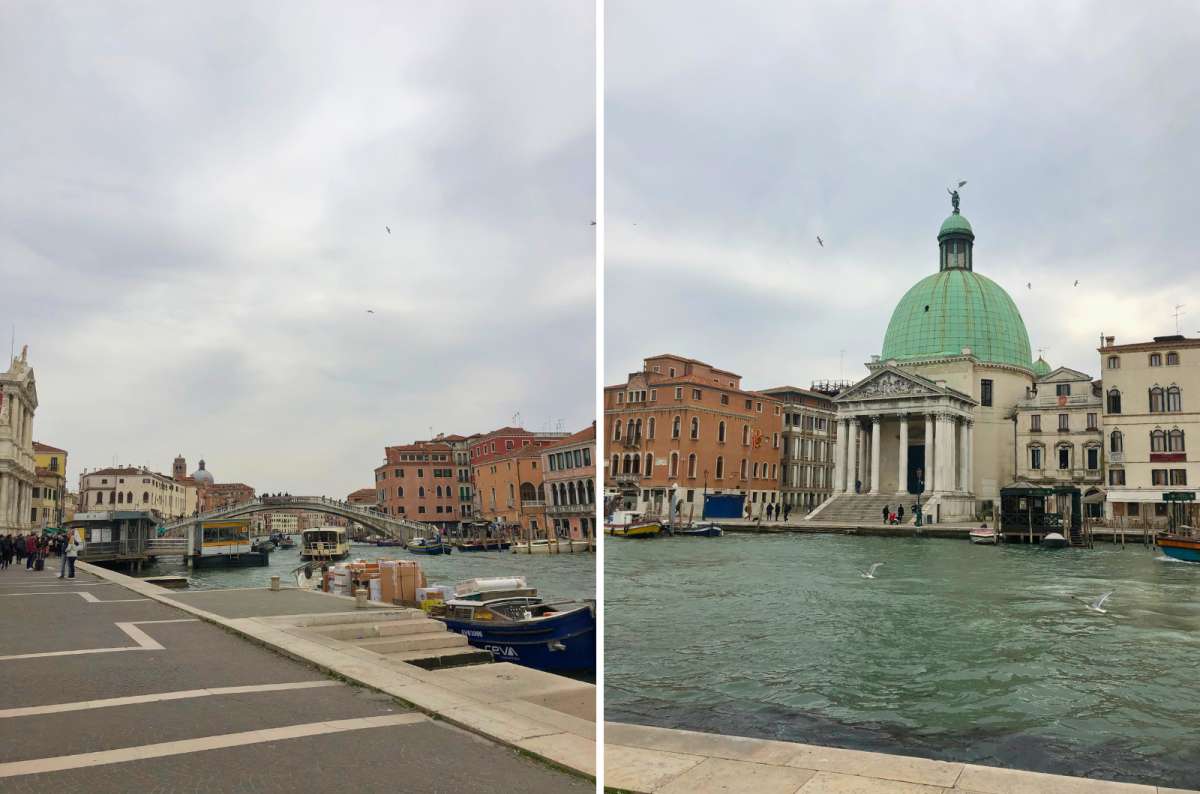
The Grand Canal is the first thing you see stepping out of Santa Lucia station
A vaporetto/water bus is public transport. It is also one of the cheapest ways to get a proper boat ride through Venice. That combination makes it one of the easiest Venice attractions to recommend.
A standard ACTV waterbus fare currently costs EUR 9.50 (USD 11) and is valid for 75 minutes, while a 24-hour pass costs EUR 25 (USD 28).
For short journeys inside central Venice, I usually walk. It can take roughly as long once waiting is included, and Venice itself is the attraction. But use the vaporetto strategically, and it pays off: For the Grand Canal, for longer cross-city journeys and, obviously, for Murano, Burano and the other islands.
If you're debating whether to spend a large amount of money on a gondola purely because you want to see Venice from the water, take a vaporetto first!
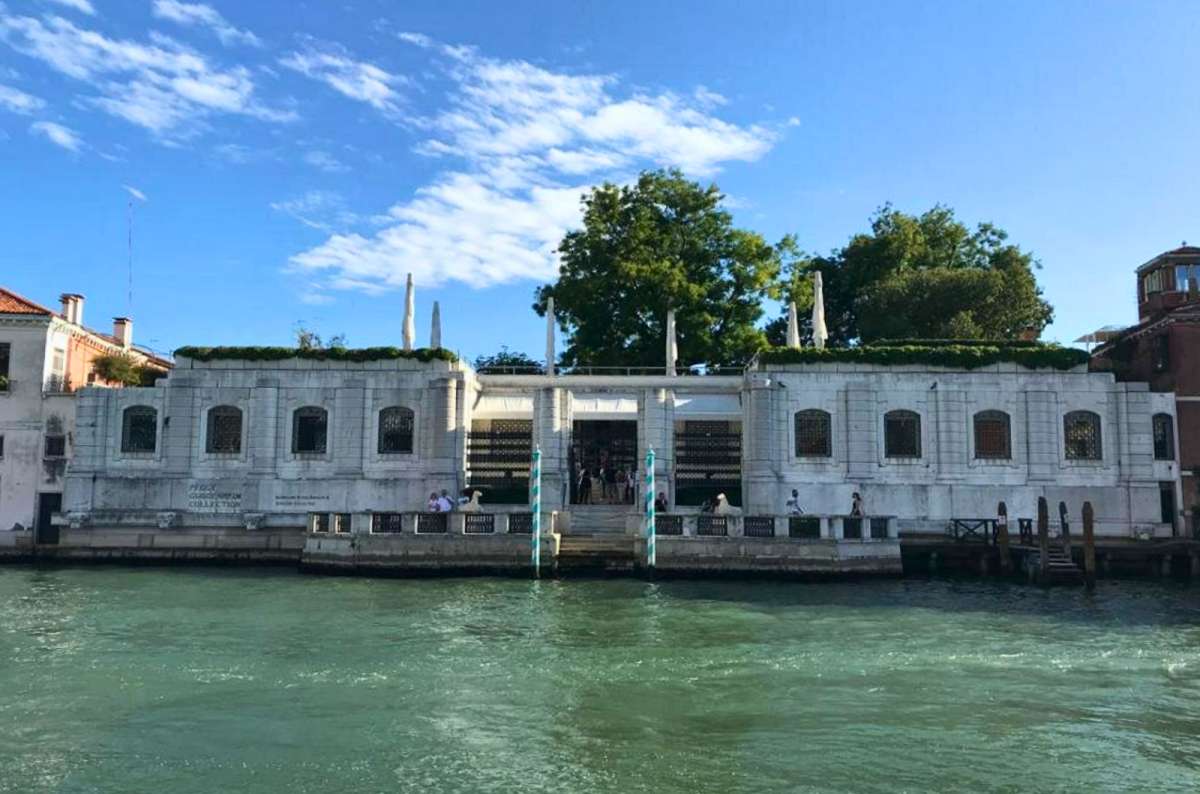
The Peggy Guggenheim Collection is proof I’m not a complete art snob. I liked it. Mostly
After enough Tintoretto and Titian, Peggy Guggenheim feels like a breath of fresh artistic air.
I particularly liked Dalí's Birth of Liquid Desires and Kandinsky's Landscape with Red Spots. Pollock, meanwhile, goes almost completely over my head. Maybe I simply don't understand art enough. I'm not going to pretend otherwise.
The collection is compact, and the audio guide makes the paintings considerably more interesting. Admission currently costs EUR 17 (USD 19). I enjoyed it, but value-wise that still puts it close to the line for me.
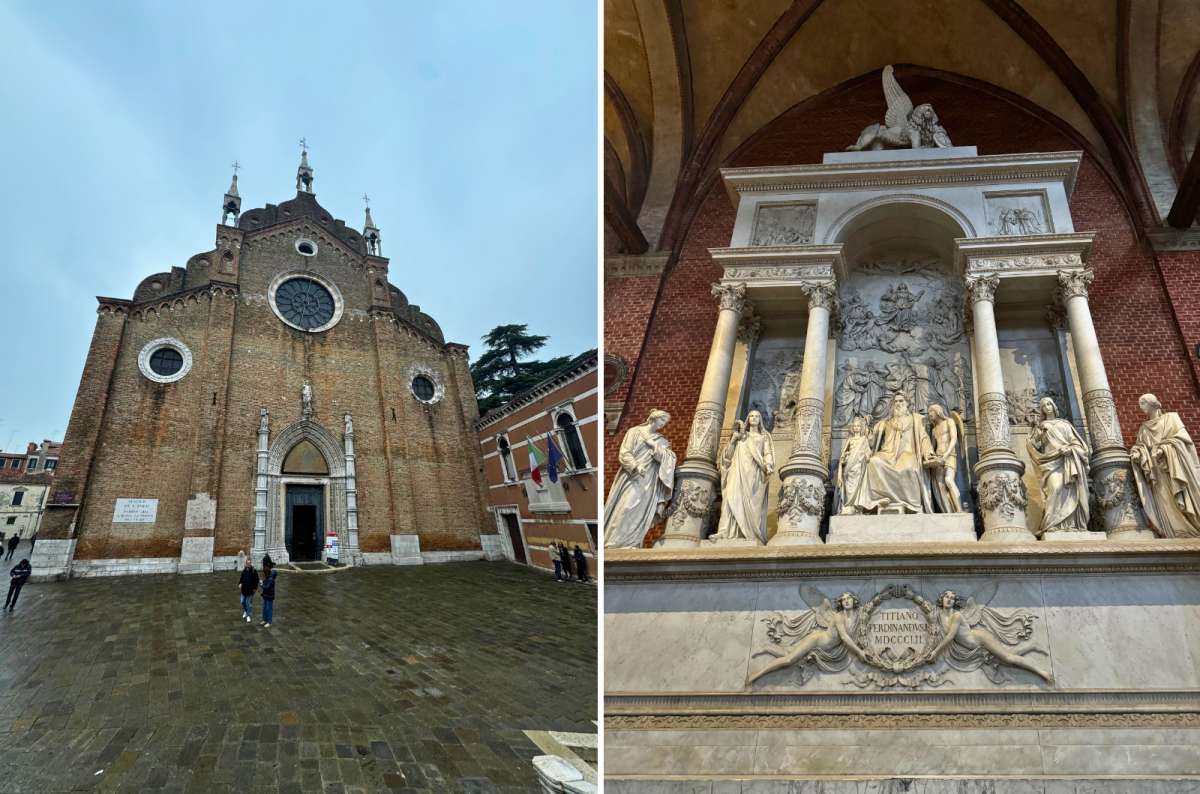
The Basilica dei Frari
From the outside, Frari isn't particularly exciting. Inside is a different story. The headline work is Titian's Assumption of the Virgin, alongside sculptures, monuments, and enough other details to make the church worth exploring properly.
Venice has a dangerous number of churches, but Frari is one I would deliberately visit rather than simply wander into.
Admission currently costs EUR 8 (USD 9). Booking ahead isn't necessary for most visitors.
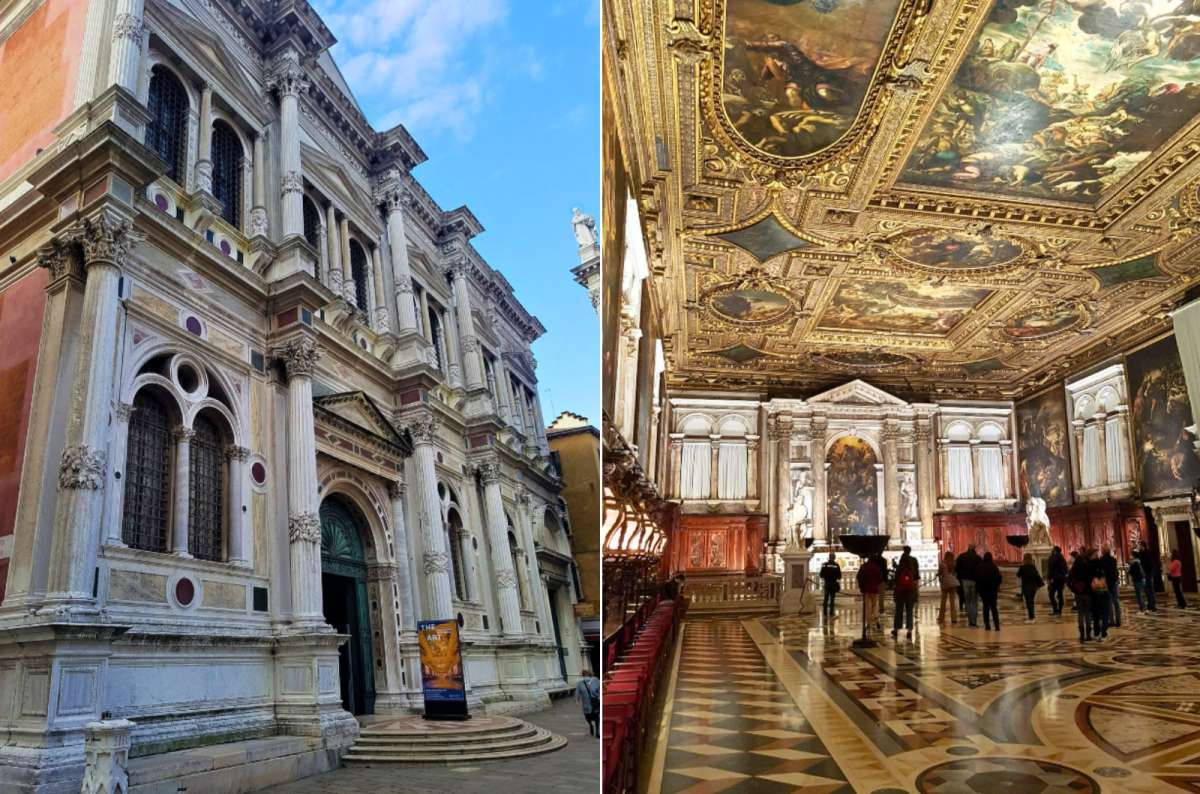
The Scuola Grande di San Rocco is basically Tintoretto’s Sistine Chapel
If you specifically want Tintoretto, this is where to go. The Scuola Grande di San Rocco is essentially a massive art experience rather than another church you wander into for ten minutes.
Pairing it with nearby Frari makes sense, but don't feel obliged to see every masterpiece in Venice. That's how you end up standing in front of your fiftieth painting thinking mainly about lunch.
Admission costs EUR 12 (USD 13), or EUR 14 (USD 16) including the Church of San Rocco. Tickets are sold at the ticket office.
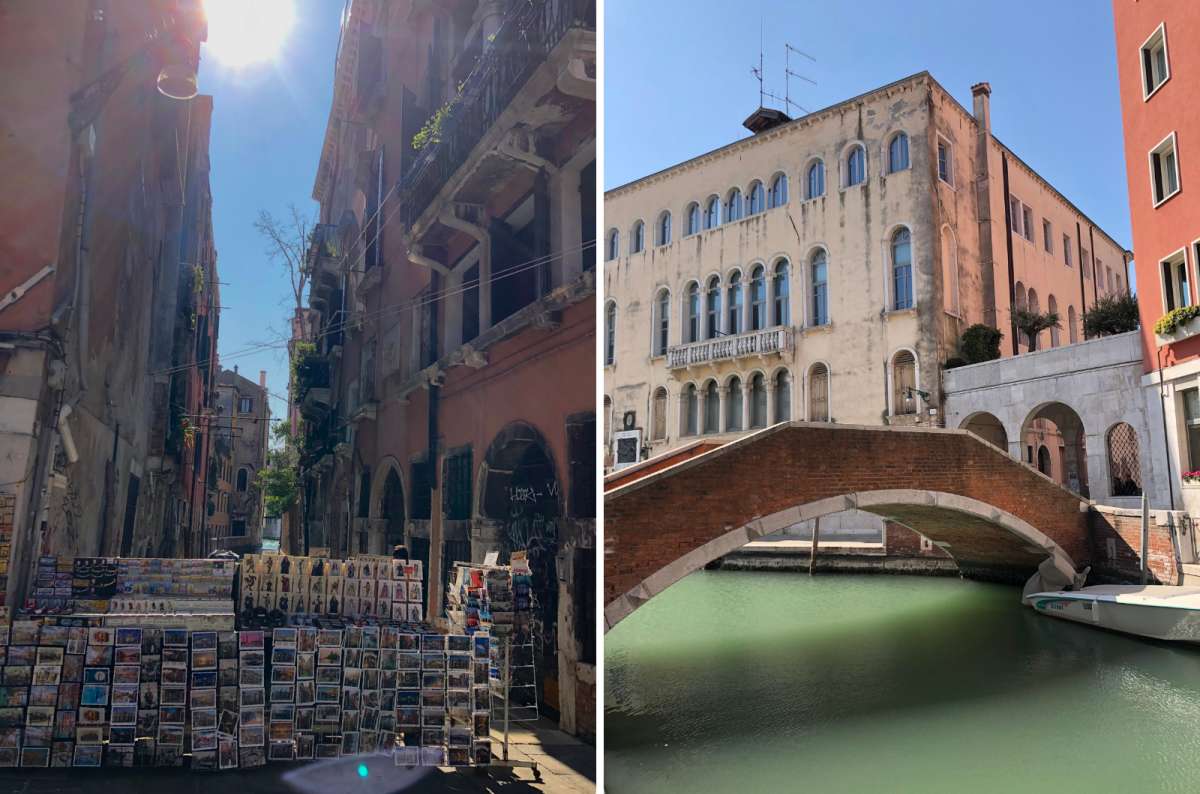
Not every street in Venice is Instagram material. Walk far enough from San Marco, though, and the canals start delivering
Walking around Venice is not filler between attractions. It is one of the attractions.
The streets are narrow, confusing, and occasionally a little smelly. You'll encounter dead ends, tiny bridges, and passages that suddenly end at a canal.
Use GPS. Seriously. And if your phone dies, here's my highly scientific navigation tip: follow the largest flow of people. There's a good chance they're heading toward Rialto, San Marco, or another major landmark.
Also, don't expect every street to look like an Instagram post. Venice can be dirty, peeling, and rough around the edges. It is not all fluff and romance.
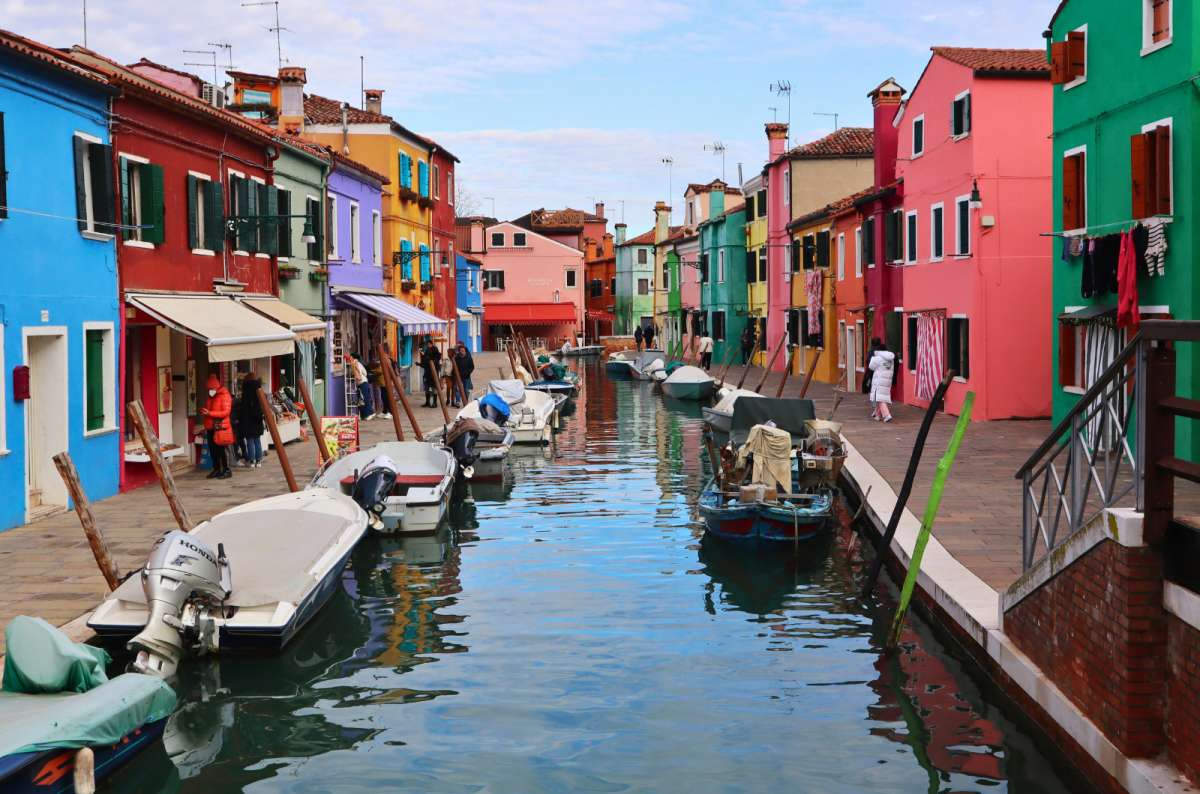
Burano looks like someone gave a toddler every paint color at once
Burano offers a striking change from central Venice. Its brightly colored houses are the obvious attraction, especially if you enjoy photography.
I wouldn't sacrifice St. Mark's Basilica, Doge's Palace, or central Venice for it on a short first trip. But with two or three days, it's a very good addition.
Just remember that island hopping takes more time than distances on a map suggest.
The easiest fix is a half-day Murano and Burano lagoon trip, so you’re not stuck reading vaporetto timetables.
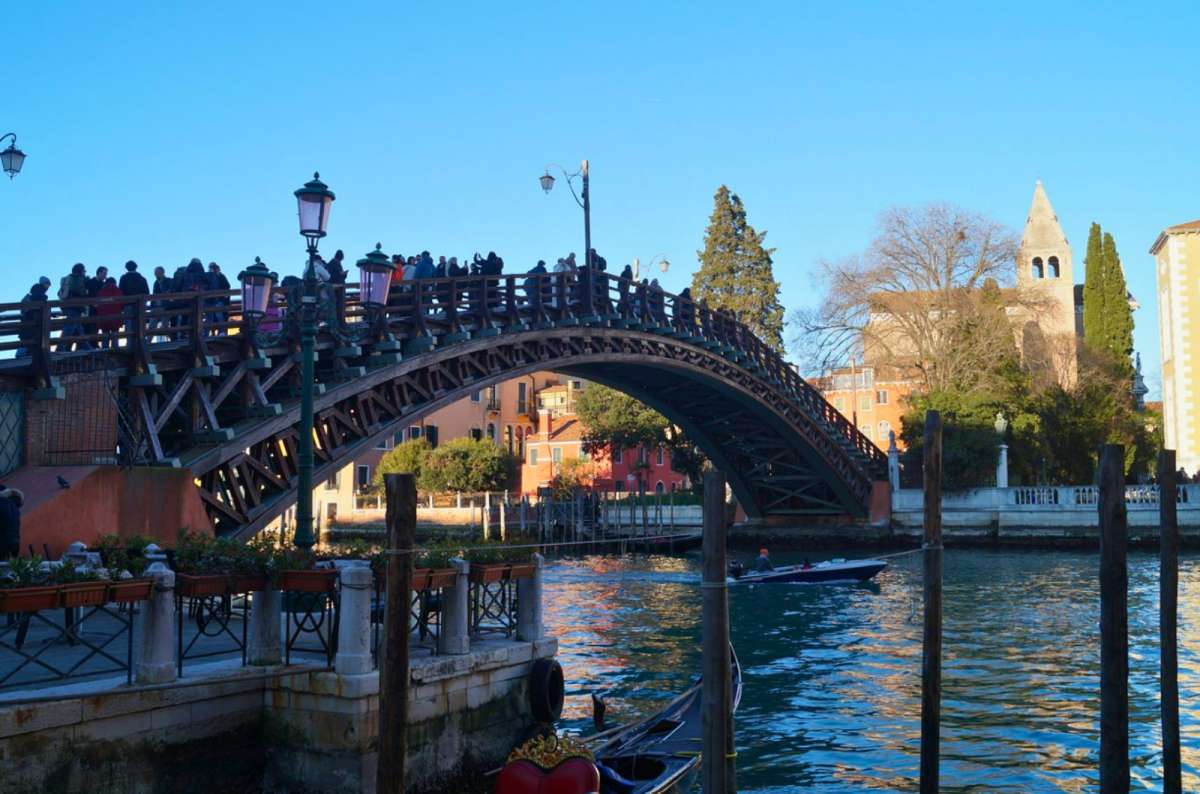
Ponte dell’Accademia beats Rialto for views and loses only on fame. I’ll take the view
I think the view from Ponte dell'Accademia is more romantic than the view from Rialto. There, I said it.
You get a classic Grand Canal view toward Santa Maria della Salute. Next door, the Gallerie dell'Accademia houses major Venetian paintings by Titian, Tintoretto, Veronese, and others.
Leonardo's Vitruvian Man belongs to the collection too, but it's only displayed occasionally.
If you love old masters, the gallery deserves your time. If you've already spent two weeks looking at Renaissance paintings, the bridge may be the better payoff.
Gallery admission currently costs EUR 20 (USD 22).
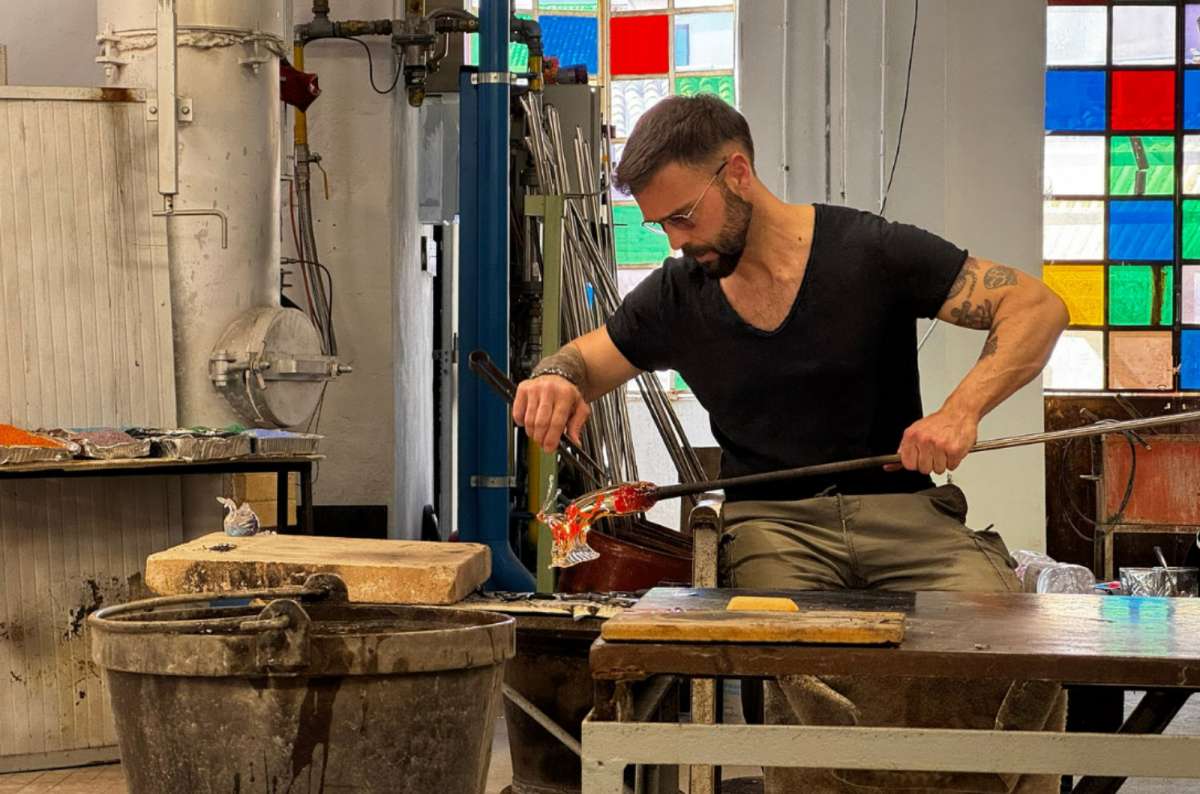
Venice moved its glassmakers to Murano in 1291 so they wouldn’t burn the city down. Smart move, and you can still watch them work today
Murano glass is much more interesting when you watch somebody make it. Seeing the skill involved makes the finished objects in Venice's shop windows more meaningful. That's why I'd visit a factory rather than just go shopping.
You can combine Murano with other lagoon islands, but check factory access beforehand. Not every furnace accepts walk-in visitors.
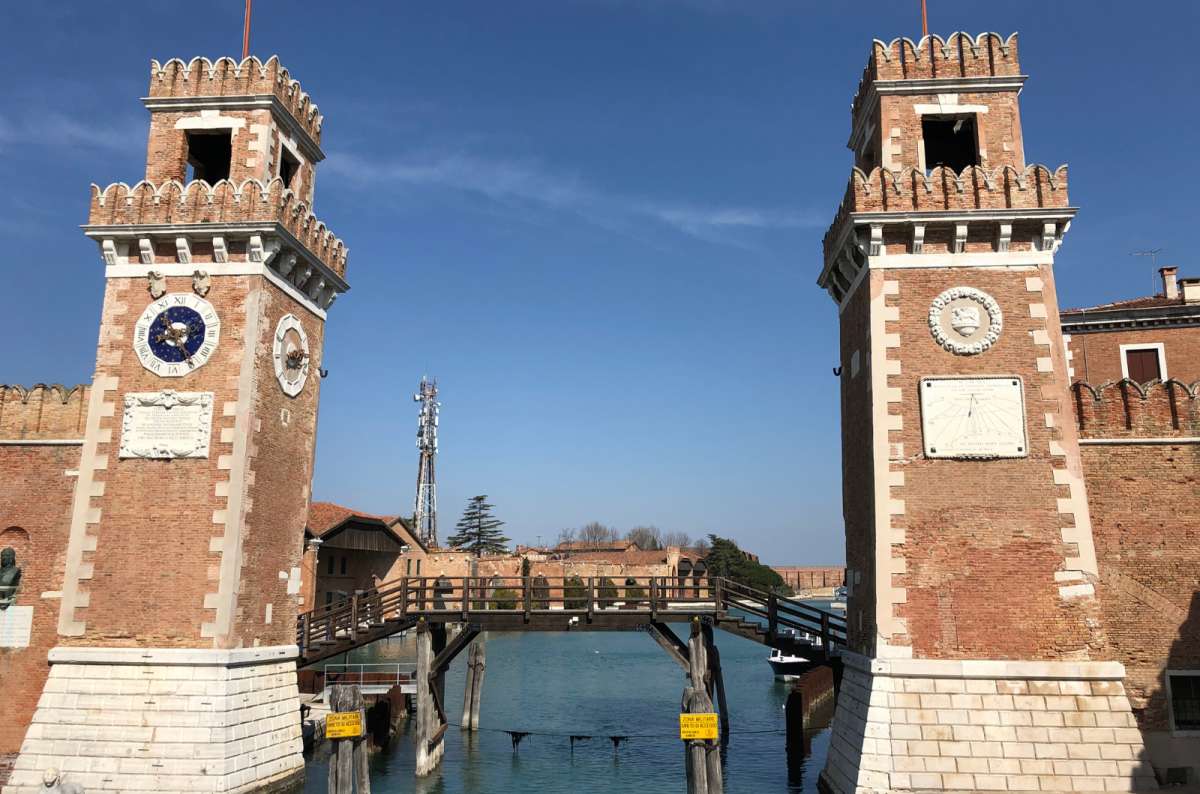
Not the prettiest gate in Venice, but behind it the Republic built ships faster than most countries built houses. Nerd heaven
The Arsenal isn't one of Venice's prettiest sights, but it is one of its most historically interesting. Venice developed something remarkably close to assembly-line shipbuilding centuries before the Industrial Revolution, with thousands of workers building and outfitting ships.
If that interests you, don't miss it. Otherwise, skip it.
I also like the surrounding Castello district. Around Via Giuseppe Garibaldi, Venice feels noticeably different from the San Marco–Rialto core, with wider spaces, greenery, and more everyday Venetian life.
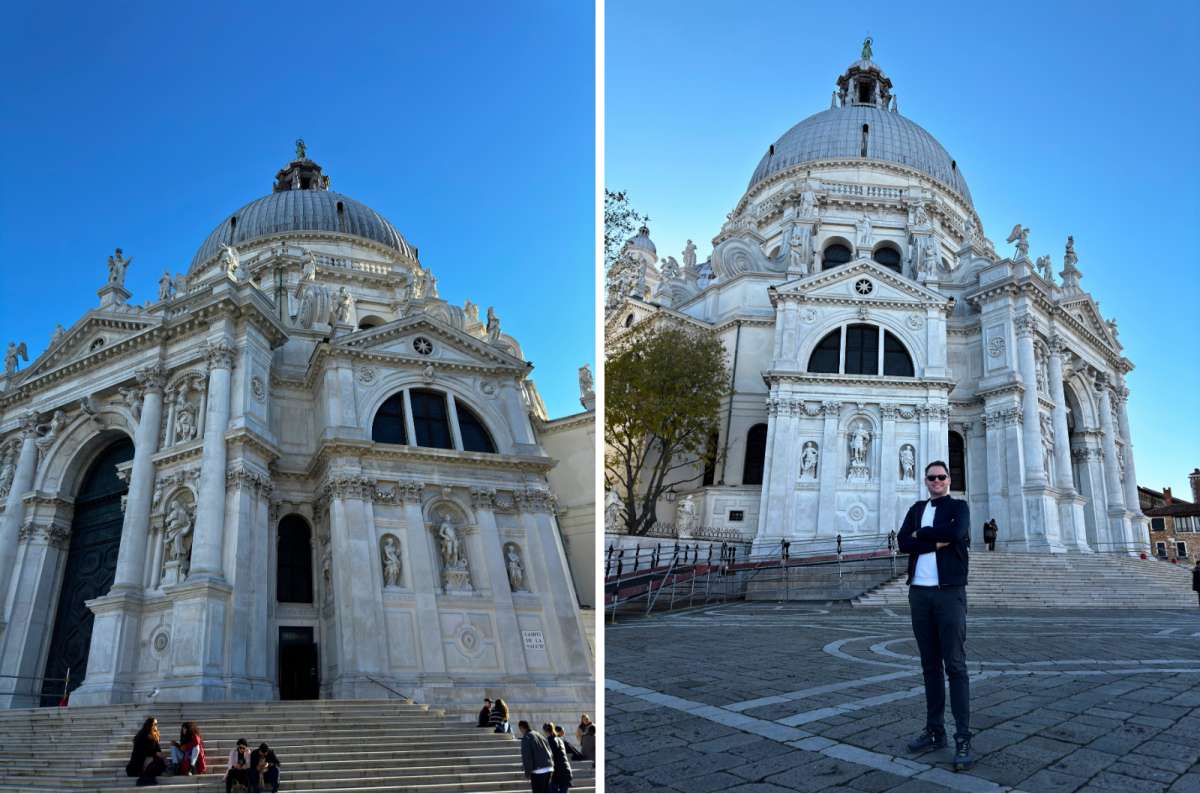
Santa Maria della Salute
Santa Maria della Salute is much better from the outside than the inside. It looks awesome across the Grand Canal, especially from San Marco or the Accademia Bridge.
Walk over while exploring Dorsoduro and go inside if it’s convenient. But after Venice's other churches, I found the interior pretty meh.
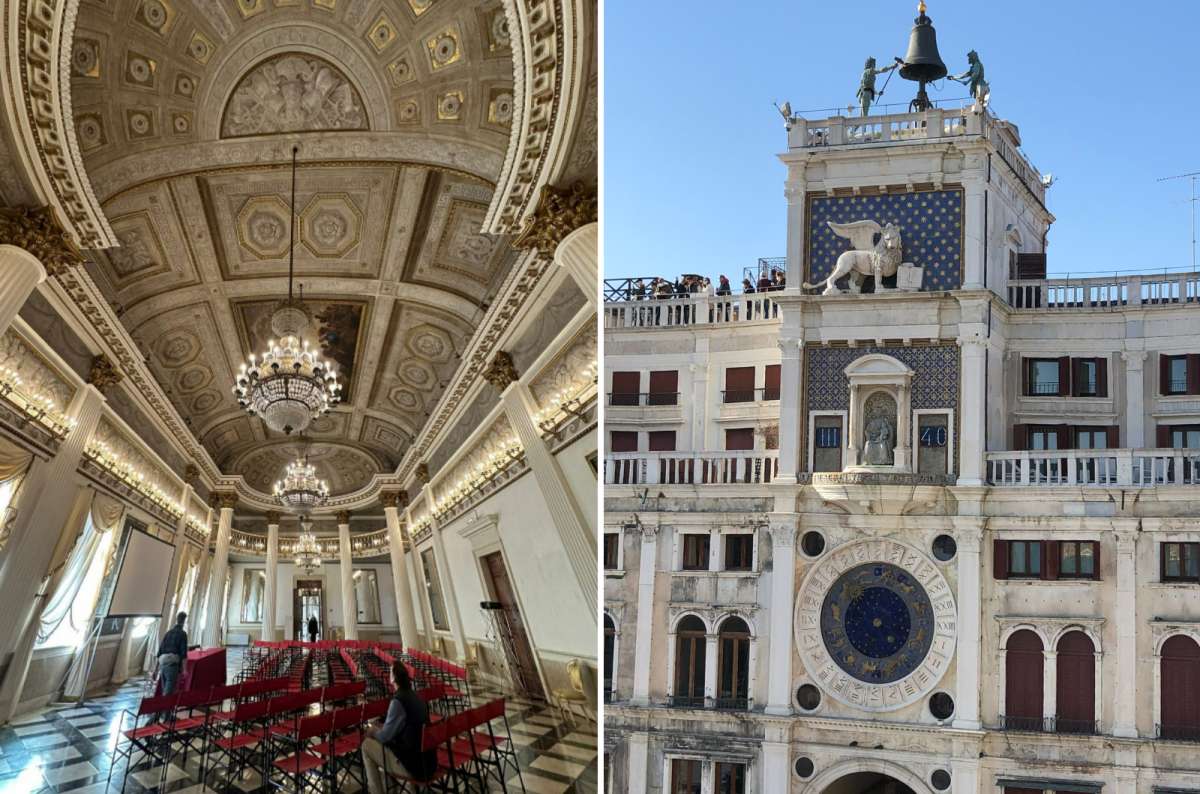
Napoleon took over Venice and immediately wanted a ballroom on Piazza San Marco. Museo Correr is the result, and I can’t really blame him
Museo Correr covers Venetian history, art, and civic life, while the Clock Tower offers another perspective on Piazza San Marco. Both are worth considering, but I'd prioritize the Basilica, Campanile, and Doge's Palace.
Museo Correr is included in the standard Doge's Palace ticket. Don't visit just to get your money's worth. Clock Tower visits are guided only and must be booked ahead.
The Biennale brings international art and architecture to the Giardini, Arsenal, and other venues. If the exhibition interests you, it can be a highlight.
I also like the Giardini area for something central Venice lacks: space. And trees.
The 2026 Art Biennale runs from May 9 to November 22. A EUR 30 (USD 34) ticket covers one visit to each of the Giardini and Arsenale venues, on the same or different days. Reservation is required.
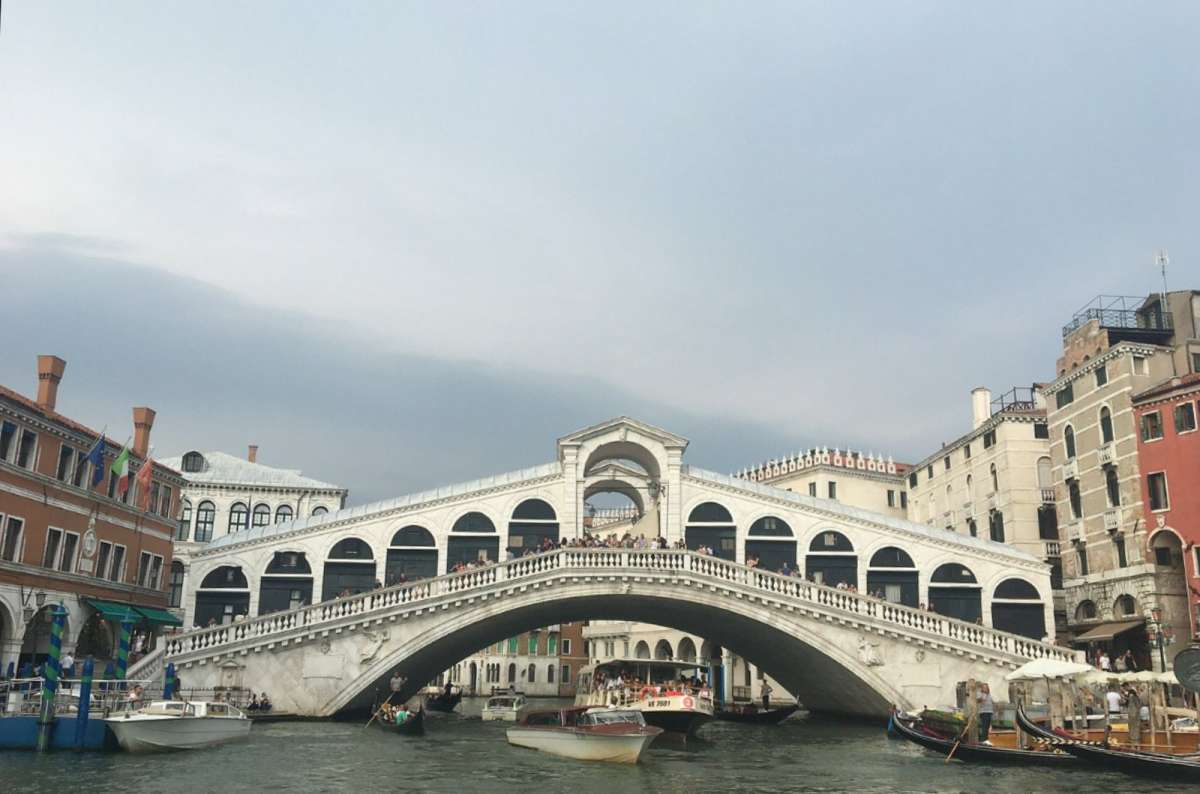
The Rialto Bridge looks best from exactly where I took this photo, sitting on a boat, not stuck on top of it
Yes, see Rialto. But despite its history and fame, the crowds and commercial surroundings make it less enjoyable for me than Ponte dell'Accademia.
Walk across, look down the Grand Canal, take your photo, and continue.
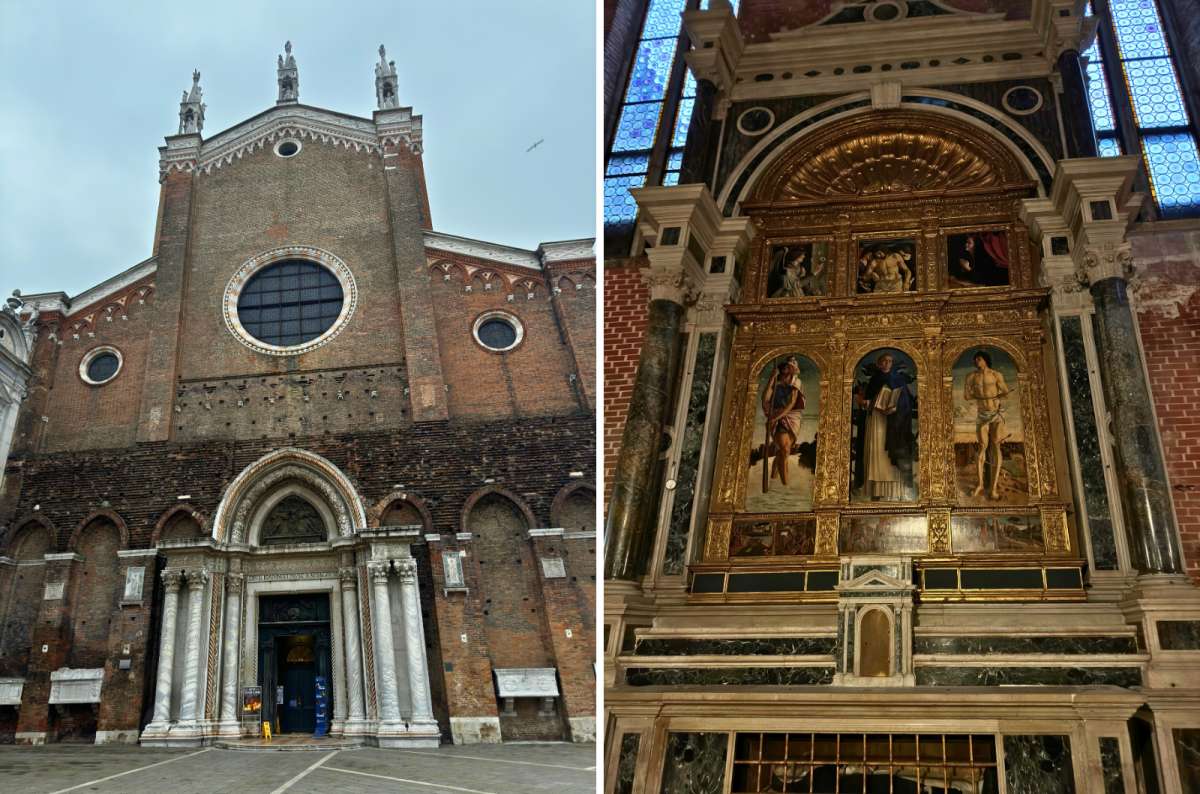
Santi Giovanni e Paolo
One of Venice's largest churches, but after St. Mark's and Frari, I found the interior relatively boring.
Worth considering if you have time or particularly enjoy churches. Otherwise, this is an easy place to save half an hour.
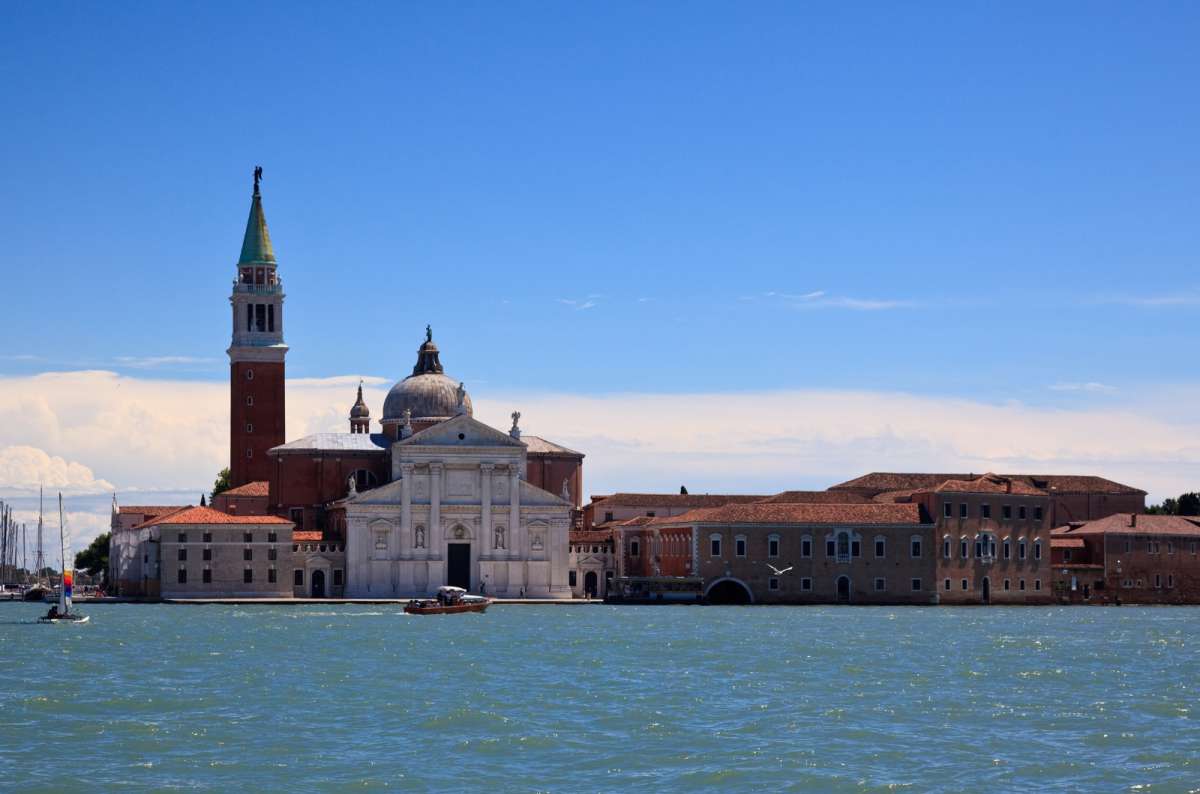
San Giorgio Maggiore has its own bell tower with an elevator, and from the top you get the view of San Marco instead of being in it
I suggest you visit these places only if they match your interests.
Ca' Rezzonico, Ca' d'Oro, the Jewish Ghetto, Museo Fortuny, Palazzo Grassi, Punta della Dogana, San Giorgio Maggiore, and Venice's many other smaller churches can all be worthwhile.
But this is also where I would stop pretending a first-time visitor needs to see everything. If you have three or four days and love museums, expand the list.
I bought a broad museum pass and regretted it. Not because of the money, but because it encouraged me to visit places simply to get my money's worth. Suddenly you're entering your sixth museum of the day because technically you've already paid for it.
The current MUVE Museum Pass covers Doge's Palace and several civic museums over six months. It may save money if you actually want to visit them.
Choose your attractions first, then check whether a Venice city pass makes financial sense.
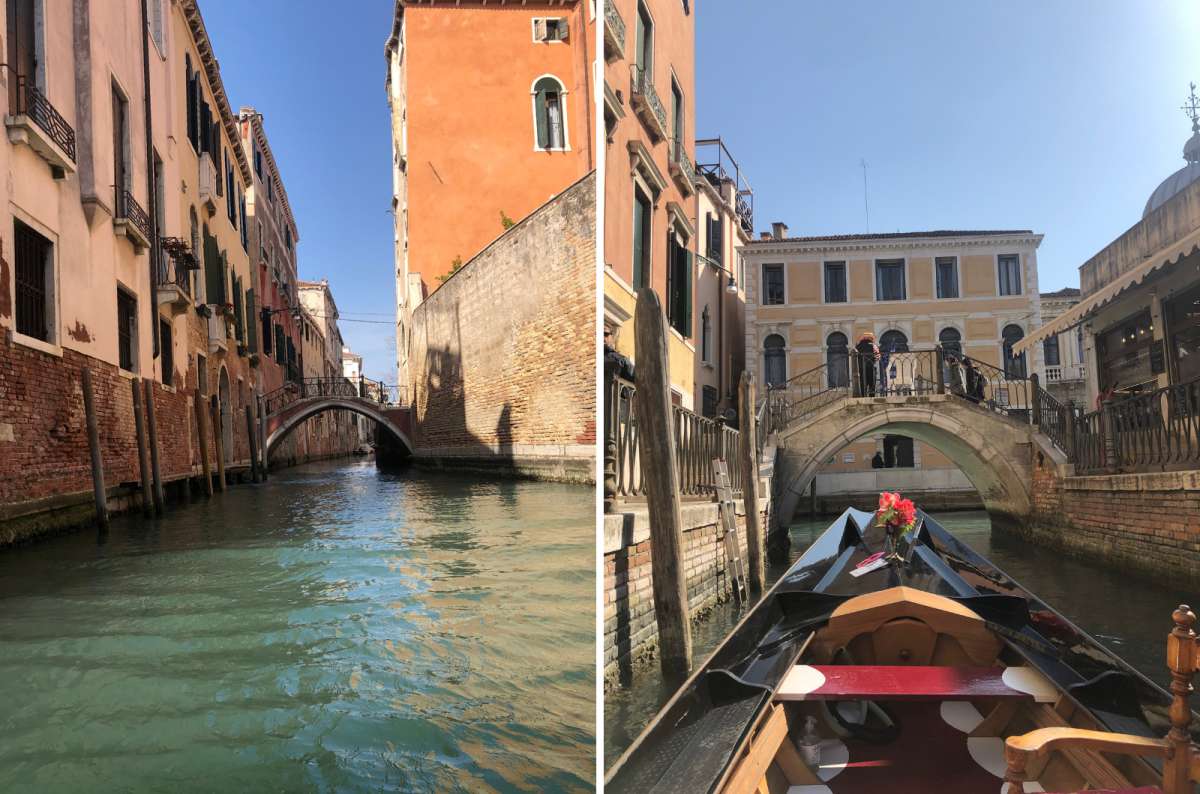
I took the gondola ride so you can decide with a clear conscience whether to skip it
Is a gondola ride worth it? If you're rich, yes.
More seriously, it can be memorable and romantic. But it's not compulsory. If you mainly want to see Venice from the water, take a vaporetto instead.
Official fares are EUR 90 (USD 101) for a 30-minute daytime ride or EUR 110 (USD 123) for a 35-minute evening ride, per gondola rather than per person.
Also, gondola traffic jams exist, which is objectively funny.
On a one- or two-day trip, I would skip most secondary churches unless there is a particular artwork or architectural feature you want to see. I would also avoid visiting museums just because they're included in a pass.
The broader rule is this: don't assume fame equals priority. Rialto is famous. I still rank it #19. The Naval Museum barely appears near the top of most generic Venice lists. I rank it #5.
Your limited time is more valuable than completing somebody else's checklist.
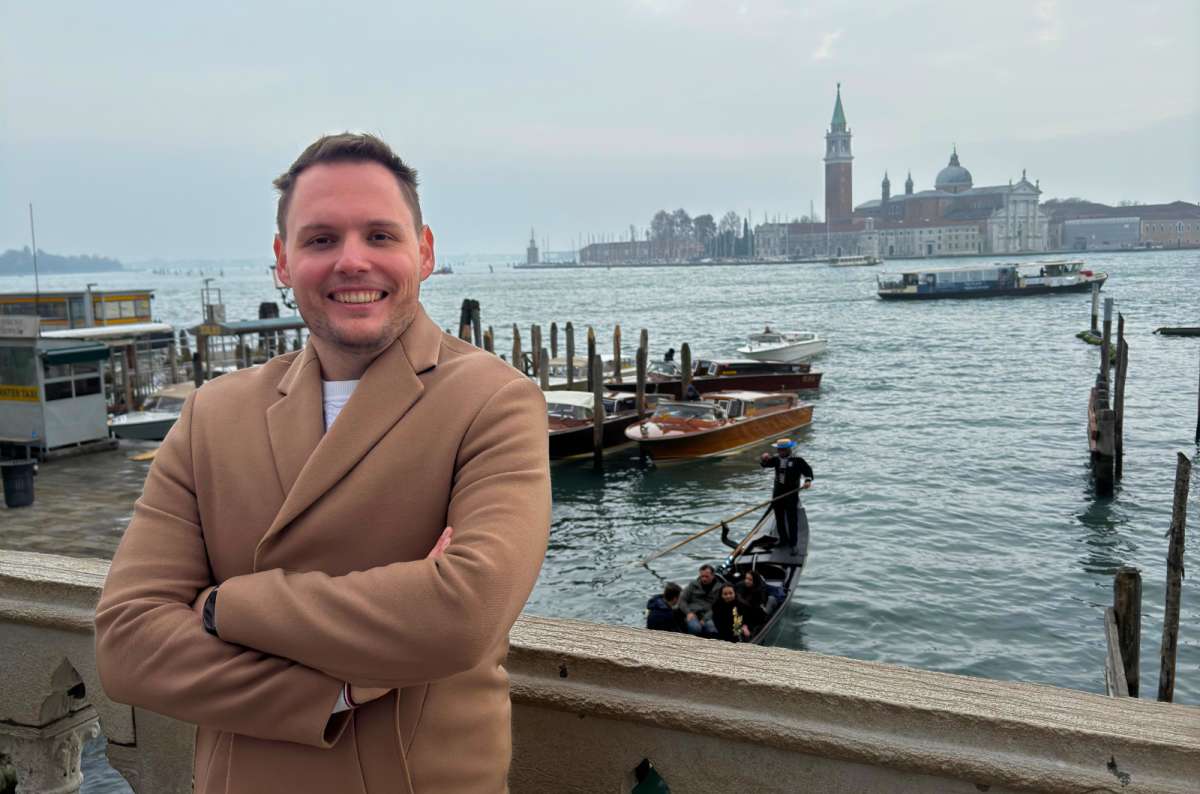
The San Marco waterfront
One day in Venice is absolutely possible. Two days is better and my recommendation for most first-time visitors. Three days is unnecessary for most conventional sightseeing.
With one day, you can see Piazza San Marco, St. Mark's Basilica, the Campanile, Doge's Palace, Rialto, and a decent amount of the city on foot. You'll just be moving quickly.
With two days, you can slow down, add Dorsoduro, the Naval Museum, more churches or galleries, take a vaporetto, and potentially visit Murano or Burano. See my 2 Days in Venice itinerary for exactly how I would structure it.
Three days makes more sense if you love art museums, want substantial island time, or simply prefer traveling slowly.
After three visits and one deliberately exhaustive trip, I think most of my own future Venice visits will be one-day visits. I'm glad I saw everything once. Once was enough.
Pro tip: Eating in Italy comes with its own rules, and I collected the strangest ones in my facts about the food of Italy.
See my guide for the best time to visit Venice.
If you want the brutally shortened version, my five priorities are St. Mark's Basilica, St. Mark's Campanile, Doge's Palace, Piazza San Marco, and the Naval History Museum.
Add a vaporetto ride along the Grand Canal, spend some time simply walking the streets, and you have the core of a very good first visit.
Venice has an absurd number of things to see. You don't need to see all of them. I tried that already.
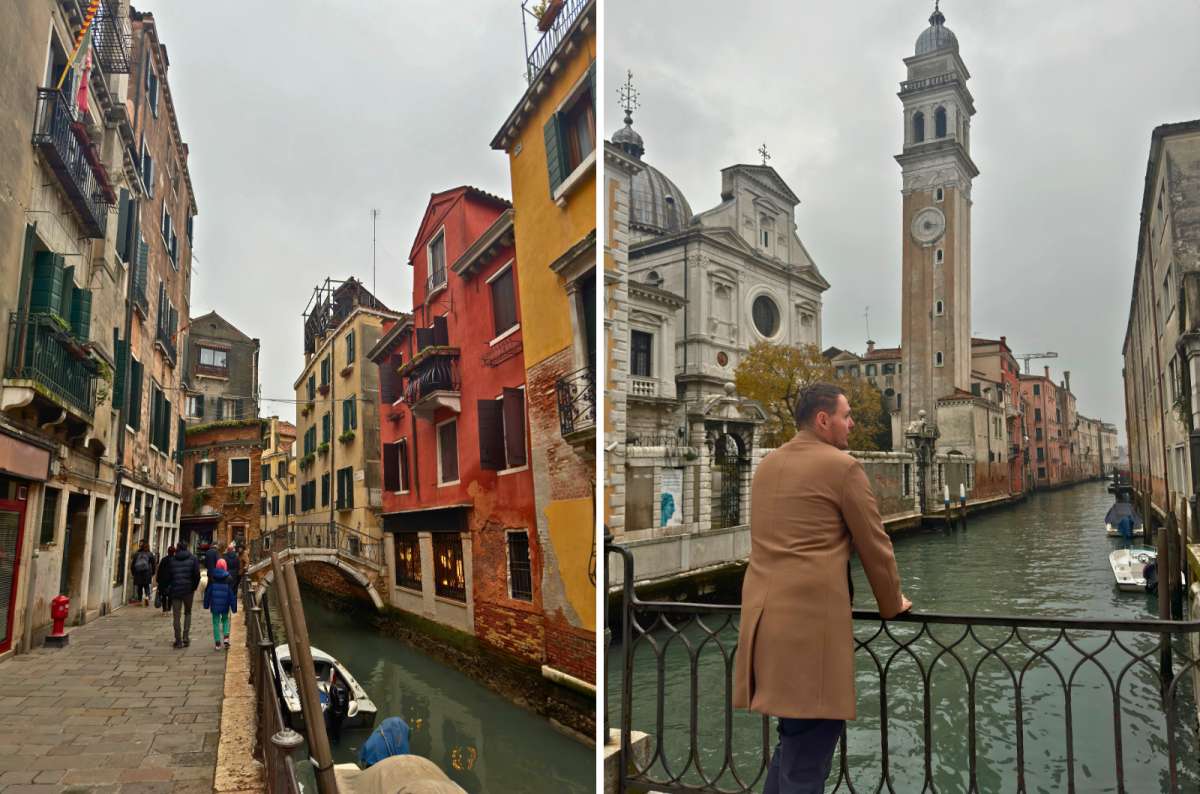
San Giorgio dei Greci, Venice’s own leaning tower. No queue, no ticket
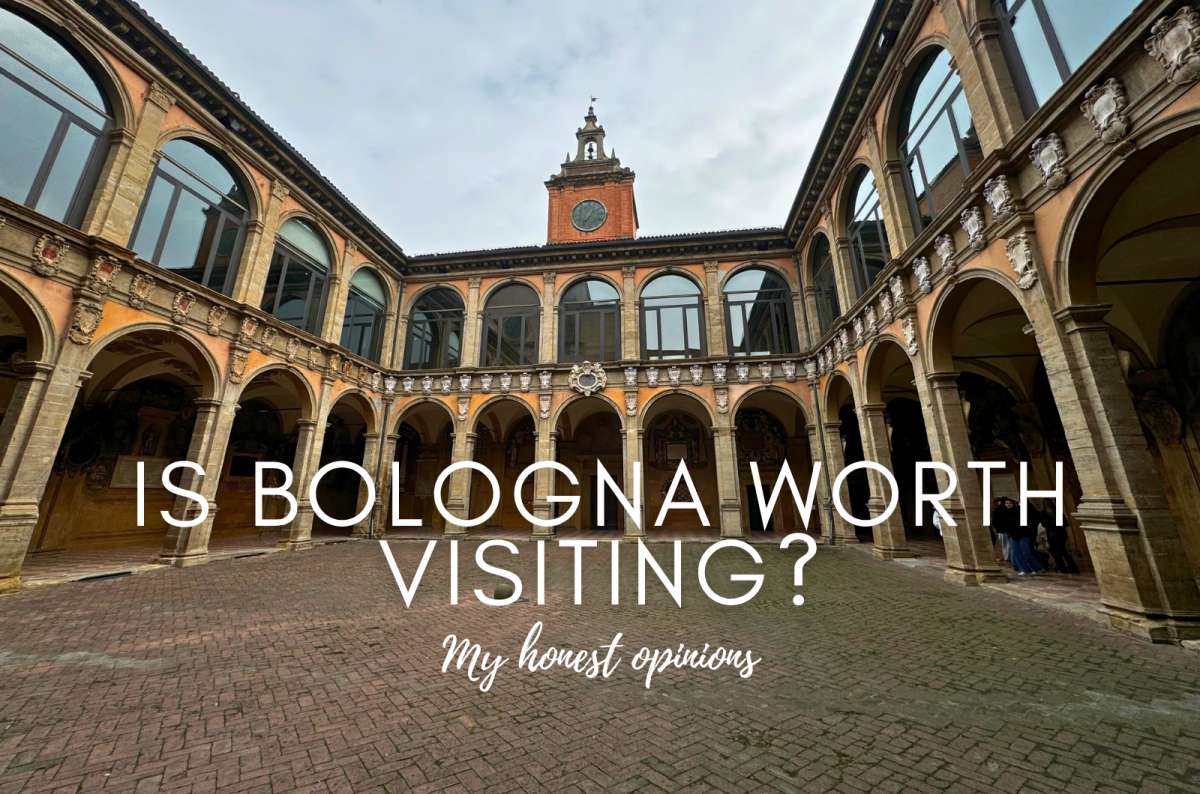
If Venice is part of a longer trip, see my Italy travel guide for more ideas. Nearby, you could continue to Padua or Verona, head towards Sirmione and Lake Garda, or travel south to Bologna. For shorter excursions, I've also put together a guide to the best day trips from Venice.
For a longer loop, my 7-day Emilia-Romagna itinerary pairs easily with Venice.
This post contains affiliate links. If you make a booking through one of my links, I may earn a small commission—at no additional cost to you. Thank you for your support!
My ranking of the best things to do in Venice
Venice attractions at a glance
8. Peggy Guggenheim Collection
9. Basilica di Santa Maria Gloriosa dei Frari
10. Scuola Grande di San Rocco
11. Get lost in Venice's streets
13. Ponte dell'Accademia + the Old Masters at Gallerie dell'Accademia
16. Santa Maria della Salute Church
17. Museo Correr + St. Mark's Clock Tower
18. Venice Biennale and Giardini
20. Basilica dei Santi Giovanni e Paolo
21. Visit these honorable mentions
22. Research Venice city passes
How many days do you need in Venice?
Practical Venice tips from my visits


Hi, I’m Jan. I travel fast and intensely, whether I’m exploring the buzz of Tokyo in 3 days or road-tripping through mountains and beaches on a 3-week Thailand adventure. And no matter where I am, you’ll always find me in a comfortable hotel at night and eating the best food.
If that sounds like your kind of journey, hop on board, and let’s explore the world together!
I started this blog after realizing how tough it can be to find reliable, authentic travel info. You wouldn’t believe how many “travel bloggers” never even visit the places they write about! On Next Level of Travel, you can count on my full honesty and insights drawn from my firsthand experiences.
Here’s the deal: not every destination is all superlatives and unicorns. I’ll let you know if a tourist attraction isn’t worth your time, like skipping overrated stops in my 2-week Spain itinerary. And when I find something truly special—like the perfect mix of culture and nature in Cape Town—you can trust that it’s worth adding to your itinerary.



Comments | Thoughts? Give us a shout!