


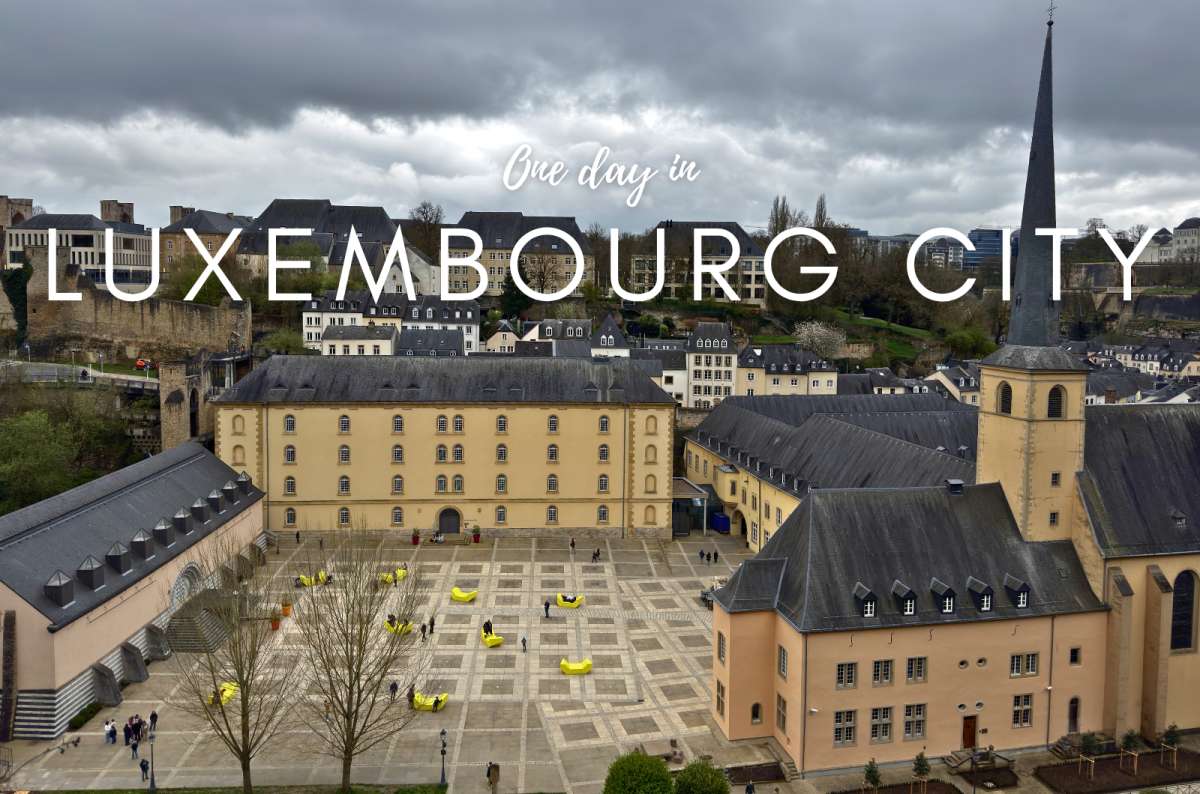


Is one day in Luxembourg City enough?
One day in Luxembourg City at a glance
The best one-day Luxembourg City walking route
Stop 1: Start with the Corniche
Stop 3: Follow the Alzette valley and lower-city walks
Optional extension: Plateau du Rham
Pfaffenthal elevator or bridge viewpoint connector
Practical tips for this one-day route
What to skip with only one day in Luxembourg City
Rainy day and limited-mobility adjustments
Final one-day Luxembourg City itinerary
One day in Luxembourg City is enough to see the best parts, but only if you stop treating the city like a normal old town.
The best Luxembourg City itinerary is not about ticking off every square, museum, bridge, and famous underground thing because someone on the internet said “must-see.” The city works best when you follow its layers: upper city, Corniche, Grund, Alzette valley, bridge views, and one carefully chosen paid stop.
When I visited, Luxembourg City did not charm me immediately. I expected more crooked old-town cuteness and got a modern, crowded, administrative capital with European bureaucratic energy.
Very romantic, obviously.
But then I walked the Corniche, dropped into Grund, followed the valley, crossed bridges, looked back at the cliffs, and saw the city from below and above. That is when it finally started making sense.
The strongest part of Luxembourg City is not one isolated attraction. It is the vertical scenic flow: cliffs, river, bridges, fortifications, lower streets, and upper viewpoints all stacked together.
This one-day Luxembourg City walking route focuses on payoff per hour. It prioritizes Corniche, Grund, and the Alzette valley first, then uses Pfaffenthal or another bridge/viewpoint connection as a practical route tool before the old town highlights and one choice: City History Museum or Casemates du Bock.
Spoiler: I would usually choose the City History Museum unless you are very attached to ticking off the famous Casemates.
For broader planning beyond this one-day route, use my Luxembourg City Guide or Luxembourg Travel Guide.
Read more from my Luxembourg travel blog.
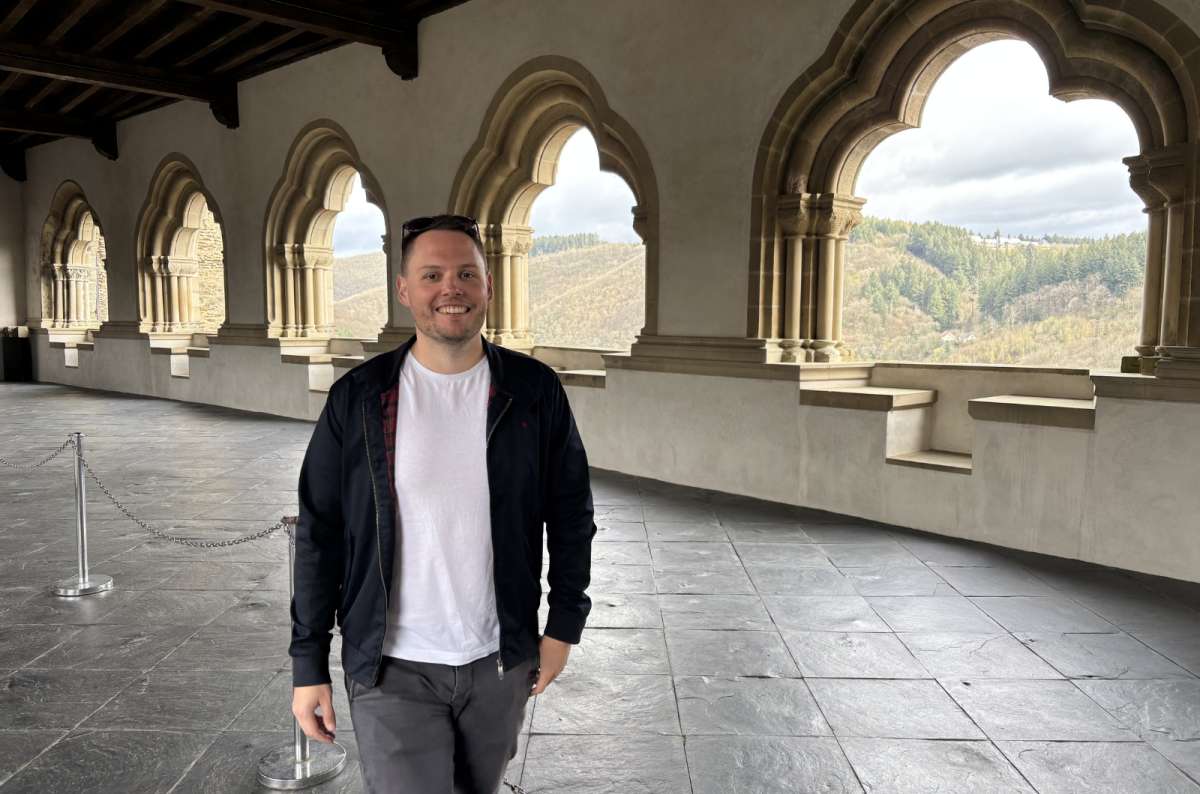
The upper gallery at Vianden Castle offers some of the best views over the surrounding hills while exploring one of Luxembourg's most impressive castles
Yes, one day in Luxembourg City is enough for the main highlights.
You can see the best scenic parts of the city, walk through the old town, explore Grund, follow part of the Alzette valley, use a viewpoint shortcut like the Pfaffenthal elevator, and still fit in one strong paid attraction if you plan well.
One day is enough for Corniche, Grund, the Alzette valley / lower city walk, old town highlights, Notre Dame, one route-efficient bridge or elevator viewpoint, and one museum OR Casemates — not both unless you are cutting the scenic route short.
One day is not enough for every museum, slow restaurant-hopping, detailed fortress history, all neighborhoods, a full Luxembourg City + countryside combo, or pretending every square deserves deep emotional attention.
My honest verdict: one day gives you a strong first impression. Two days give you more context, especially if you want museums, fortifications, Kirchberg, and slower, lower-city walks. More than that is usually better spent exploring the rest of Luxembourg: Vianden, castles, Schumannseck, Mullerthal, or the countryside.
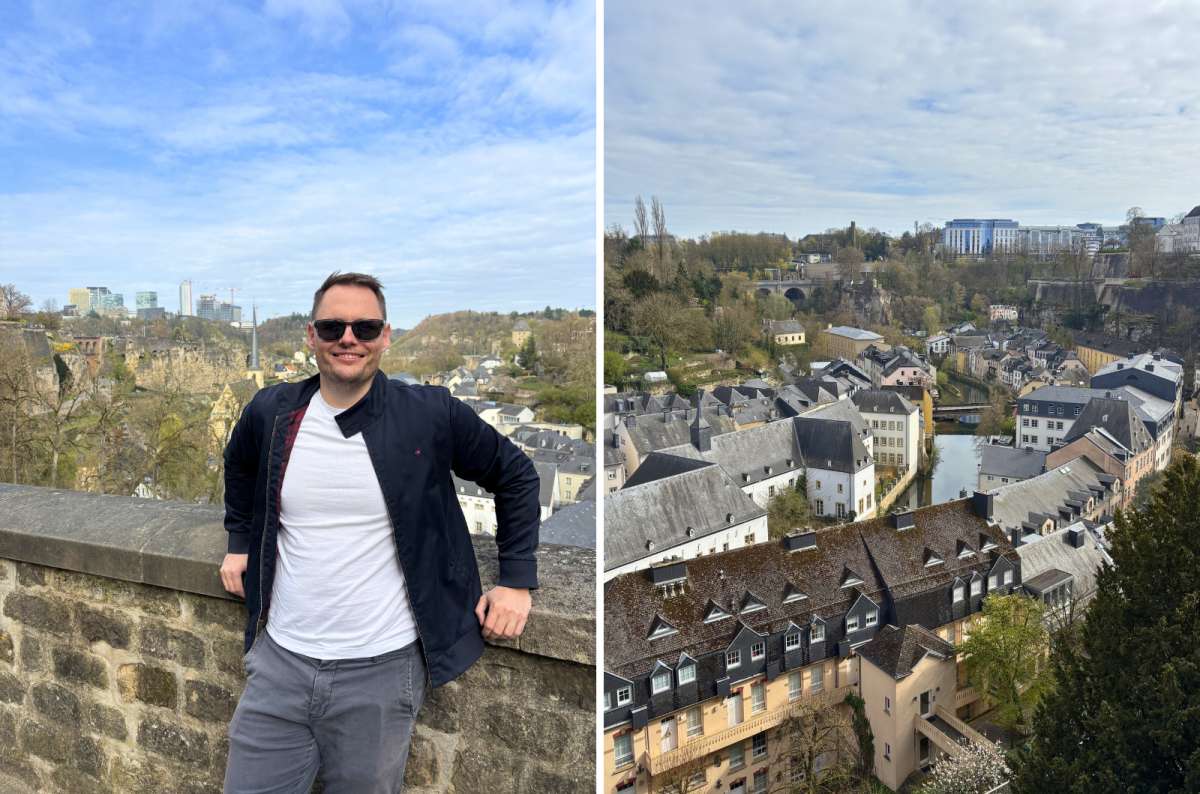
Chemin de la Corniche offers one of the best panoramic views over the Grund district and the Alzette Valley in Luxembourg City
Here is the route structure I would use for a first visit.
Start the morning with the scenic city reveal: Corniche → Grund → Alzette Valley. This is the part that makes Luxembourg City worth your time, so do not waste your best energy on random plazas first.
Around midday, move through the old town highlights: Notre Dame, Place Guillaume II, Place d’Armes, and lunch. These stops are useful, but they are not the emotional center of the day.
In the afternoon, choose your route shortcut and one main paid stop. Use the Pfaffenthal elevator or the Pont Adolphe if they fit naturally, then choose either the City History Museum or the Casemates du Bock.
Pro tip: If you prefer seeing the city with a local, check out this guided tour.
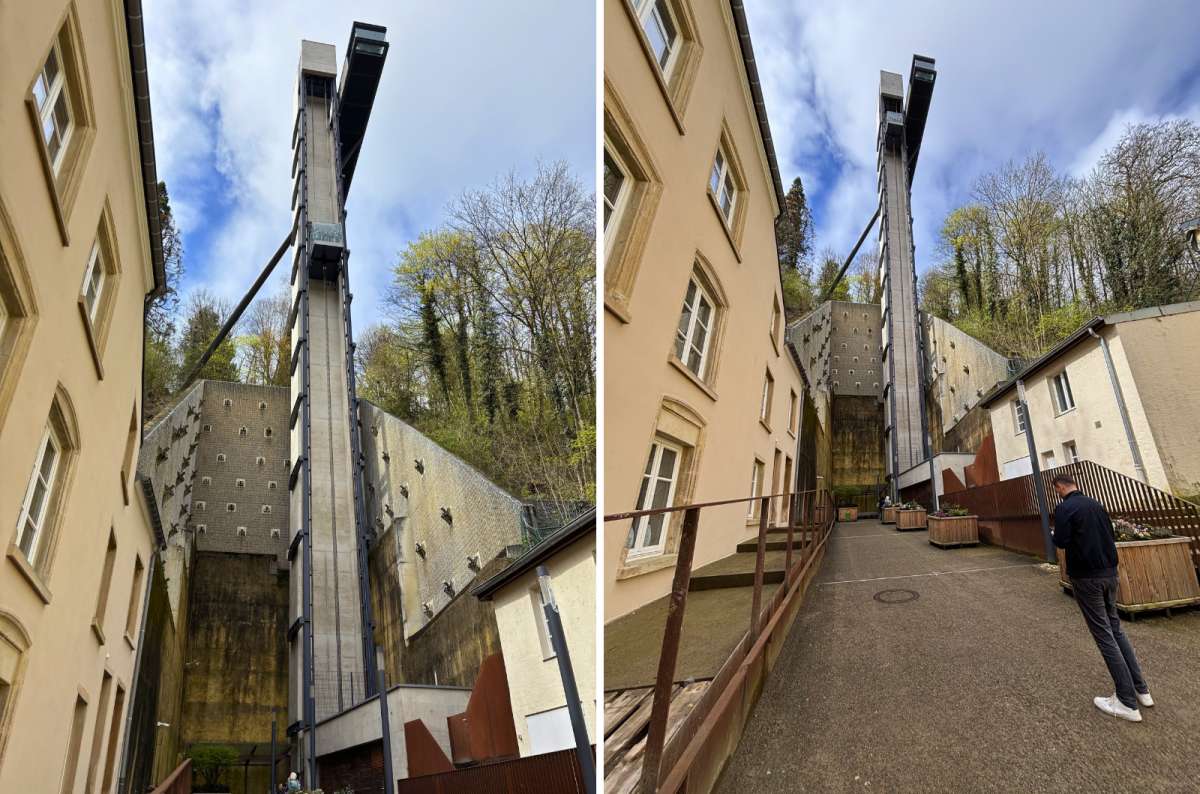
The Pfaffenthal Panoramic Elevator connects the Pétrusse and Pfaffenthal districts
Do not miss the Corniche, Grund, and the Alzette valley / lower city walk.
Add one route-efficient elevation or bridge view, such as Pfaffenthal elevator or Pont Adolphe.
Choose one paid stop: City History Museum if you want the better overall context, Casemates du Bock if the famous fortress tunnels matter to you, or Musée Dräi Eechelen only if you are more fortress-focused and have enough time.
Skip if rushed: extra squares, too many museums, treating Casemates as mandatory, moving around by car, long lunches that destroy the route, and wandering randomly because “the city is small.”
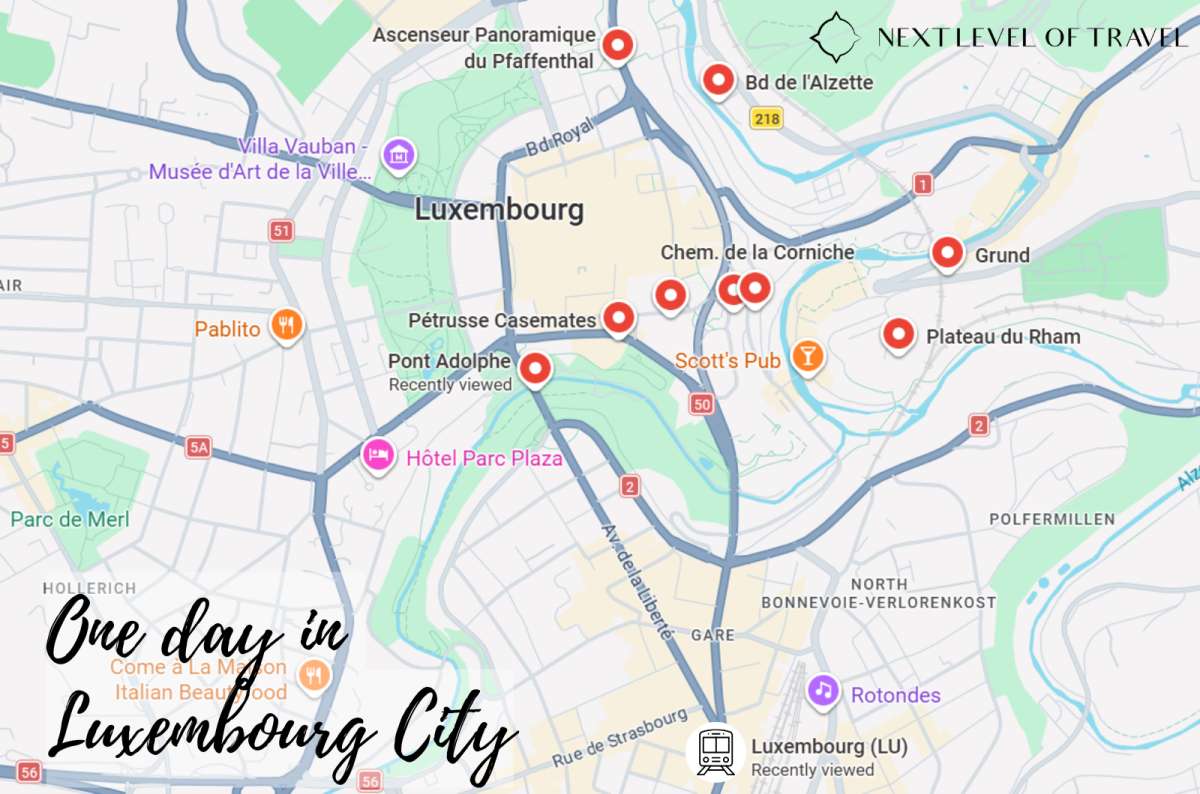
Map of the best places to visit in Luxembourg City in one day, including Pont Adolphe, Chemin de la Corniche, Grund, and the Pfaffenthal Panoramic Elevator
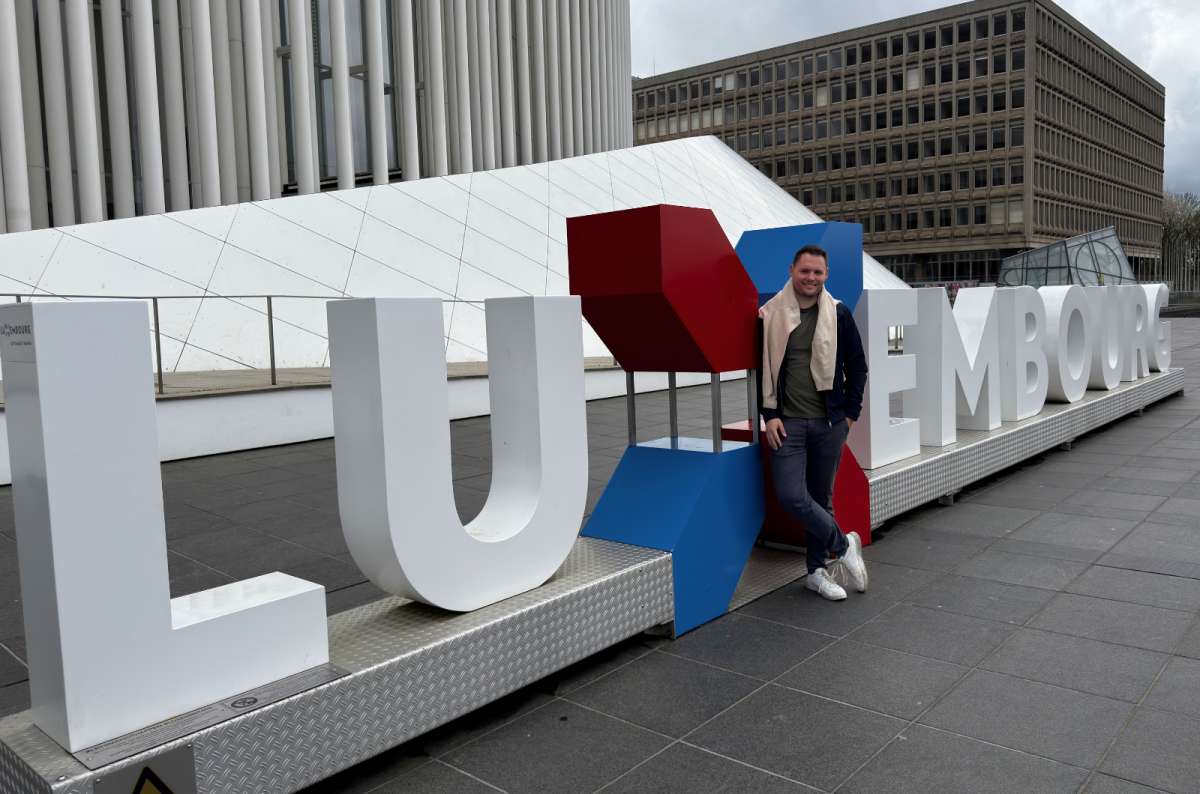
The Luxembourg sign in Kirchberg
The best route for one day in Luxembourg City follows the city’s natural scenic progression.
Start in the upper city / old town area. Walk the Corniche. Drop into Grund. Follow the Alzette valley and lower-city route. Add Plateau du Rham only if time and energy allow. Return upward using the Pfaffenthal elevator, a bridge route, stairs, or public transport. Walk through Notre Dame and the old town, quick stops. Choose the City History Museum or Casemates. Finish at Pont Adolphe or another evening viewpoint if it fits your route.
Treat this as a route framework, not a rigid hour-by-hour script.
The non-negotiable sequence is:
Corniche → Grund → Alzette valley
After that, choose the shortcut, museum, bridge view, or old-town finish that best matches your energy and weather.
This route works because it follows the city’s strongest feature: the layered upper/lower landscape.
You start by seeing Luxembourg City from above. Then you walk down into the lower city. Then you look back up at the walls, cliffs, bridges, and fortifications. Then you return upward using the city’s practical infrastructure: elevators, bridges, stairs, or public transport.
That is much better than starting with random squares and wondering why Luxembourg City feels a bit stiff.
The core route takes about 5–7 hours with photo stops, lunch, breaks, and one paid attraction. It gets closer to 7 hours if you add Plateau du Rham, linger in Grund, or choose the City History Museum instead of a quicker famous-sight stop.
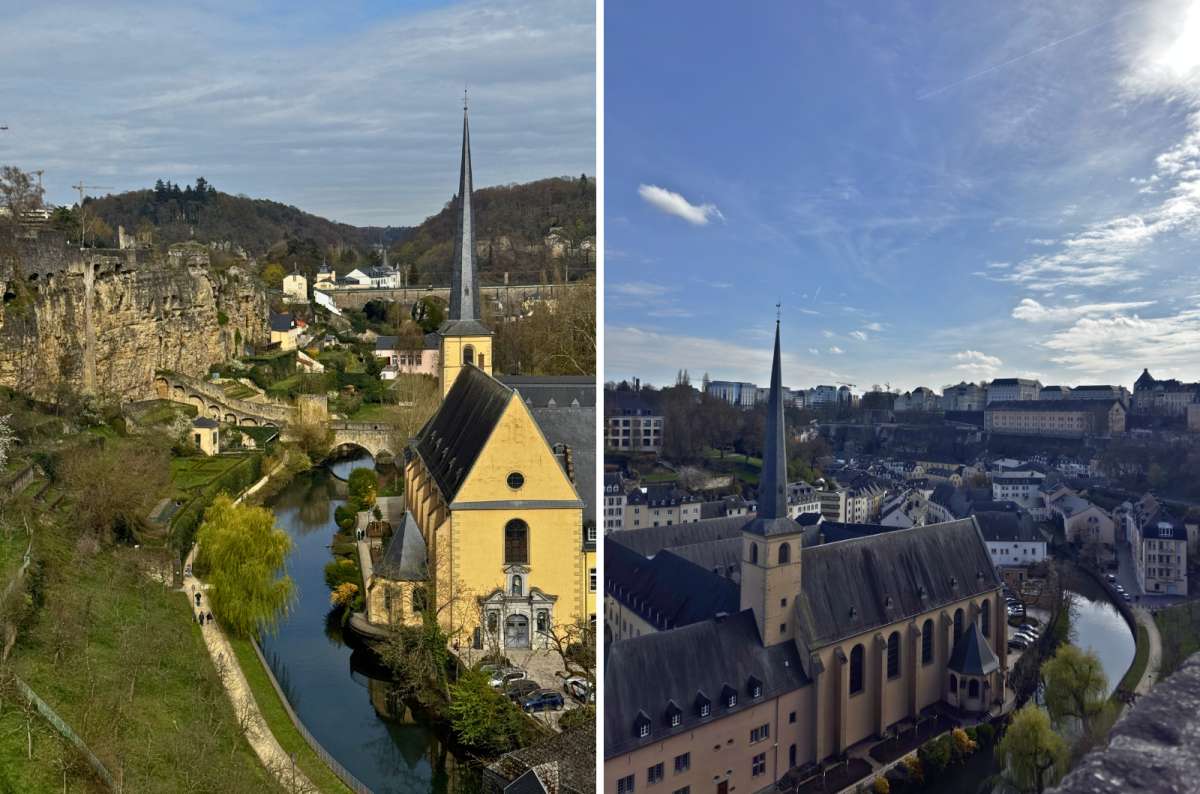
St. John Church, the Alzette River, and the Grund district create one of the most iconic panoramas from Chemin de la Corniche
Start with Corniche, ideally before you spend your best energy on lower-priority old-town wandering.
This is the best viewpoint in Luxembourg City and the fastest way to understand why the city is interesting. It looks over Grund, the Alzette valley, rooftops, cliffs, old fortification lines, and the lower city tucked below the upper one.
Corniche is the city’s first “aha” moment. Without it, Luxembourg City can feel too polished and administrative at first. With it, the whole place becomes more layered.
This is exactly where my opinion changed. Before Corniche, I thought Luxembourg City was clean, modern, and a little too official. From Corniche, I finally saw the shape of the place.
You get the Grund below you, the Alzette valley, rooftops and towers, fortification walls, cliff edges, and the upper/lower city contrast.
This is not just a pretty viewpoint. It is the visual key to Luxembourg City.
Starting here also sets up the rest of the route. You see the lower city from above, then you walk down into it and see the same city from below. That above/below contrast is the whole point of Luxembourg City sightseeing.
Place d’Armes can wait. The valley cannot.
Do not skip Corniche. If the weather is terrible, adjust the timing, do a museum or old-town stop first, and come back if the sky clears. This is the city’s strongest scenic priority.
For more route details, use my Best Viewpoints in Luxembourg City guide.
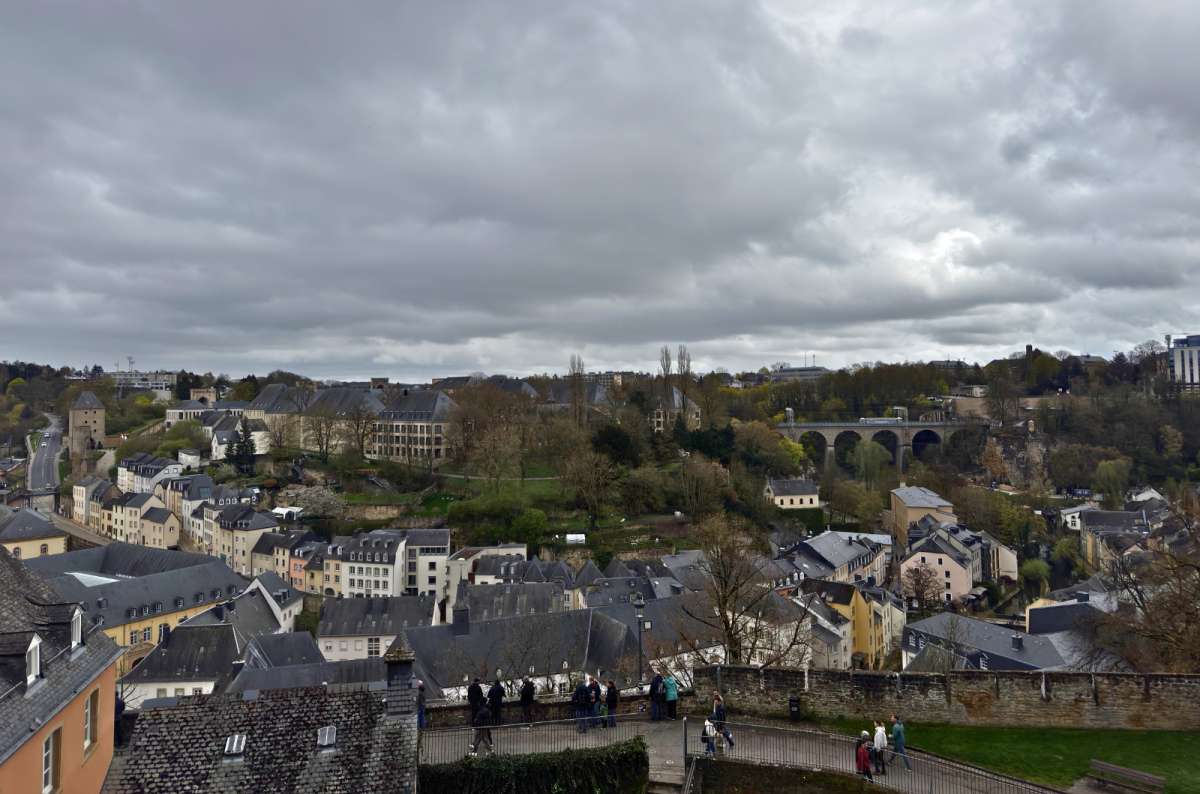
Grund is where Luxembourg City finally clicks. From down here, the cliffs, bridges, and old fortifications make much more sense
After Corniche, drop into Grund.
Treat this as the second half of the same scenic experience, not a separate detour.
Grund gives you the reverse angle. From above, Luxembourg City looks dramatic. From below, you understand why. The cliffs, walls, bridges, and upper city suddenly feel much more imposing.
This was one of the places where Luxembourg City grew on me. At street level in the upper city, I was not immediately convinced. In Grund, with the valley around me and the city rising above, I got it.
Do not rush it.
Walk slowly, look back up, and let the city do its vertical thing. Look for views back toward the upper city, the river and valley setting, bridge angles, the Neimënster Abbey area, fortification walls above you, and photo spots from the lower streets.
Grund is more important than most upper-city squares. It gives the city atmosphere rather than just architecture.
This route involves elevation changes. Luxembourg City is compact, but it is not flat. Wear shoes you can actually walk in. Fancy city-break shoes are fine if you enjoy suffering attractively.
Grund is essential if you are physically able to do it.
It is not just a pretty lower quarter. It is the second half of the Corniche view.
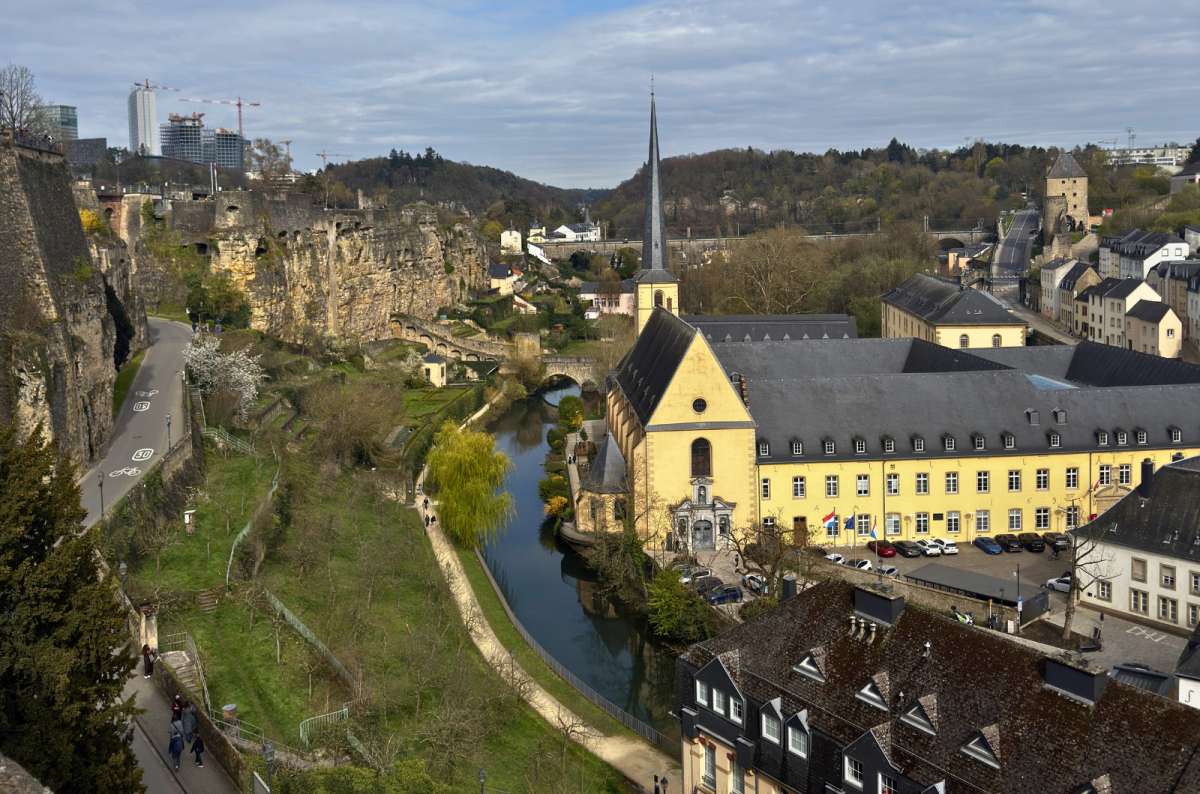
If you only remember one walk from Luxembourg City, make it this one. The Alzette Valley is the city's biggest advantage
The Alzette Valley is the scenic backbone of Luxembourg City.
This is where the city becomes more than a neat capital with a few nice buildings. The valley ties together Grund, cliffs, bridges, fortifications, lower streets, and upper viewpoints.
For a first-time one-day route, the Alzette Valley is where the city stops feeling like a checklist and starts feeling like a place with shape.
The best one-day route should not feel like you are sprinting between “attractions.” It should feel like the city is unfolding.
The Alzette valley does that. You move through the lower city, see the upper city from different angles, and understand how much of Luxembourg’s appeal comes from geography.
The railway bridges also create some surprisingly good panoramas, because the city keeps turning infrastructure into viewpoints. Very Luxembourg.
After Grund, continue along the lower-city route and valley paths as far as your time and energy allow.
If you are enjoying it, keep going. If you are getting tired, shorten the loop and return upward earlier. This is where the itinerary should be flexible, not heroic.
Do not speed through the Alzette Valley just to squeeze in Casemates later.
The valley walk is the better Luxembourg City experience for most first-time visitors. Casemates are famous, yes. Fame is not a personality.
This is the part to enjoy slowly. The valley is what gives Luxembourg City its shape and makes the one-day route feel different from a generic old-town walk. Shorten optional extensions before you rush this section.
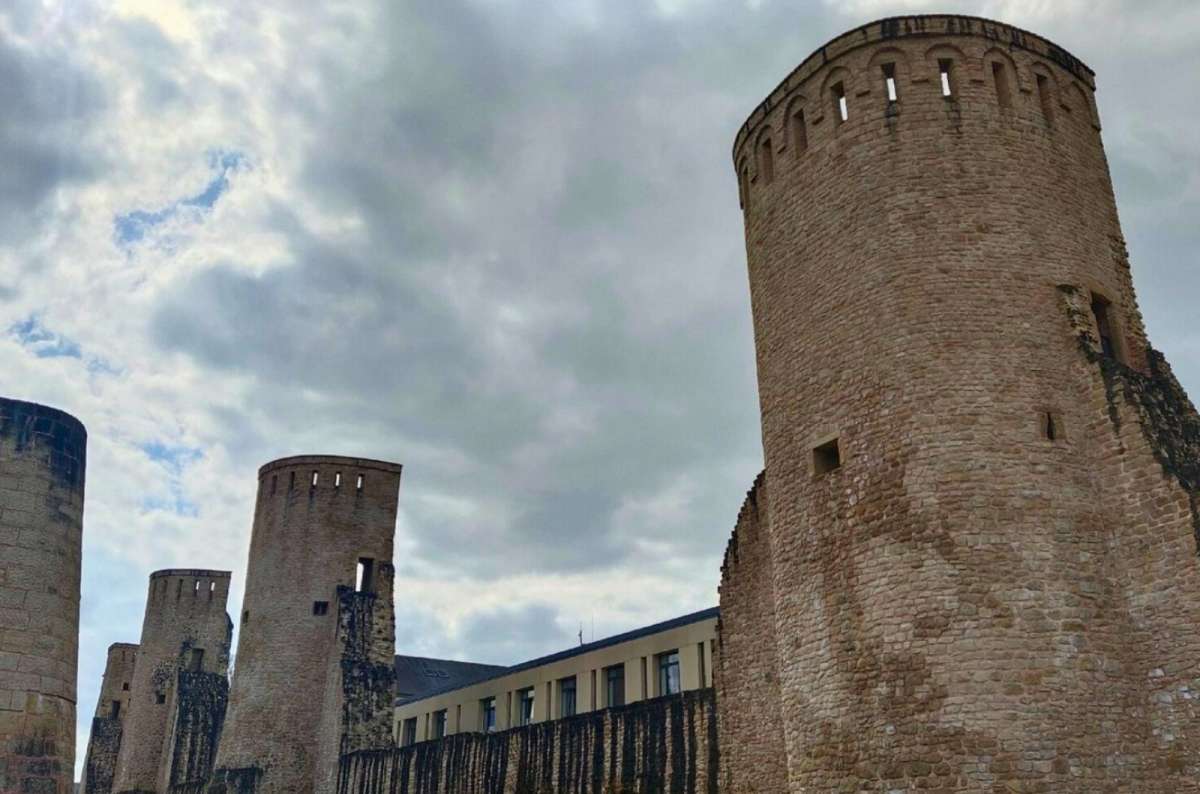
The Plateau du Rham is another reminder that Luxembourg City was built around its fortifications
Plateau du Rham is a good extension if you want a longer scenic loop.
It adds more layered views, more fortification context, and a deeper sense of how Luxembourg City sits over the valley. It is not mandatory for a rushed one-day visit, but it is a strong add-on if you are enjoying the walking route.
Add it if you like walking, want more viewpoints, have good weather, are not rushing to a museum, and want the route to feel more complete.
Skip it if you are tired, traveling with kids who are losing patience, dealing with bad weather, saving time for the City History Museum, or already feel you have enough valley views.
Plateau du Rham is one of the first scenic extensions I would cut if the route starts turning into a march.
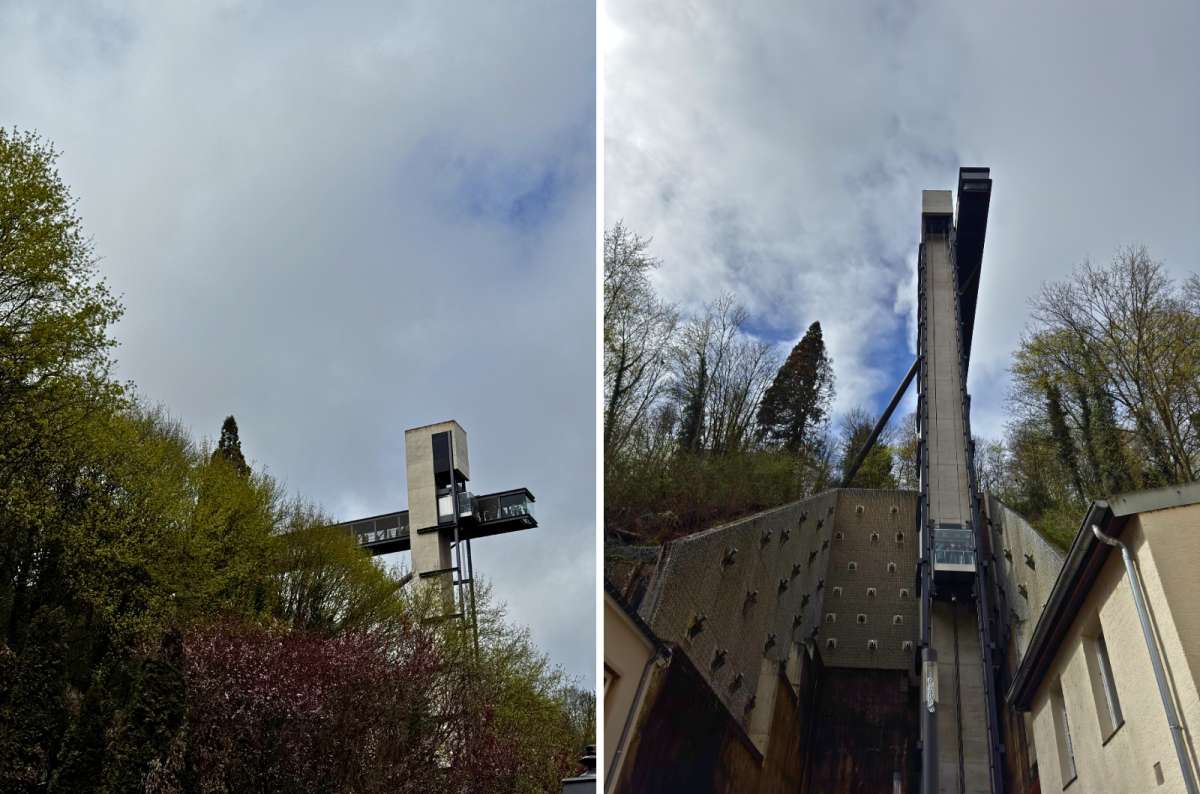
It's an elevator. A very useful elevator with great views, but still an elevator
The Pfaffenthal elevator is useful, scenic, and slightly funny as a tourist attraction because, well, it is still an elevator.
A very useful elevator. A free elevator with views.
But still an elevator.
Luxembourg City is all about height changes, and the elevator helps you manage those levels without making your legs file a complaint. It also gives you a quick viewpoint, a sense of the city’s vertical structure, views toward the valley and bridge areas, and a practical way to return upward.
Do not go wildly out of your way for it.
Use it if it fits your route between the lower city, Pfaffenthal, the upper city, or the bridge viewpoints. It is a route tool first, attraction second.
I found it more logical to go from the lower level up. There were fewer crowds that way, too. From above, it can feel more like everyone suddenly remembered the city has an elevator and must use it immediately.
Pont Adolphe can play a similar role later in the day. It is more useful as a viewpoint and route connector than as a standalone attraction. The bridge itself is fine, but the better part is the perspective: valley, bridge lines, city edges, and the sense that Luxembourg keeps turning infrastructure into viewpoints.
Use the Pfaffenthal elevator or Pont Adolphe if they improve the route. Do not worship either of them.
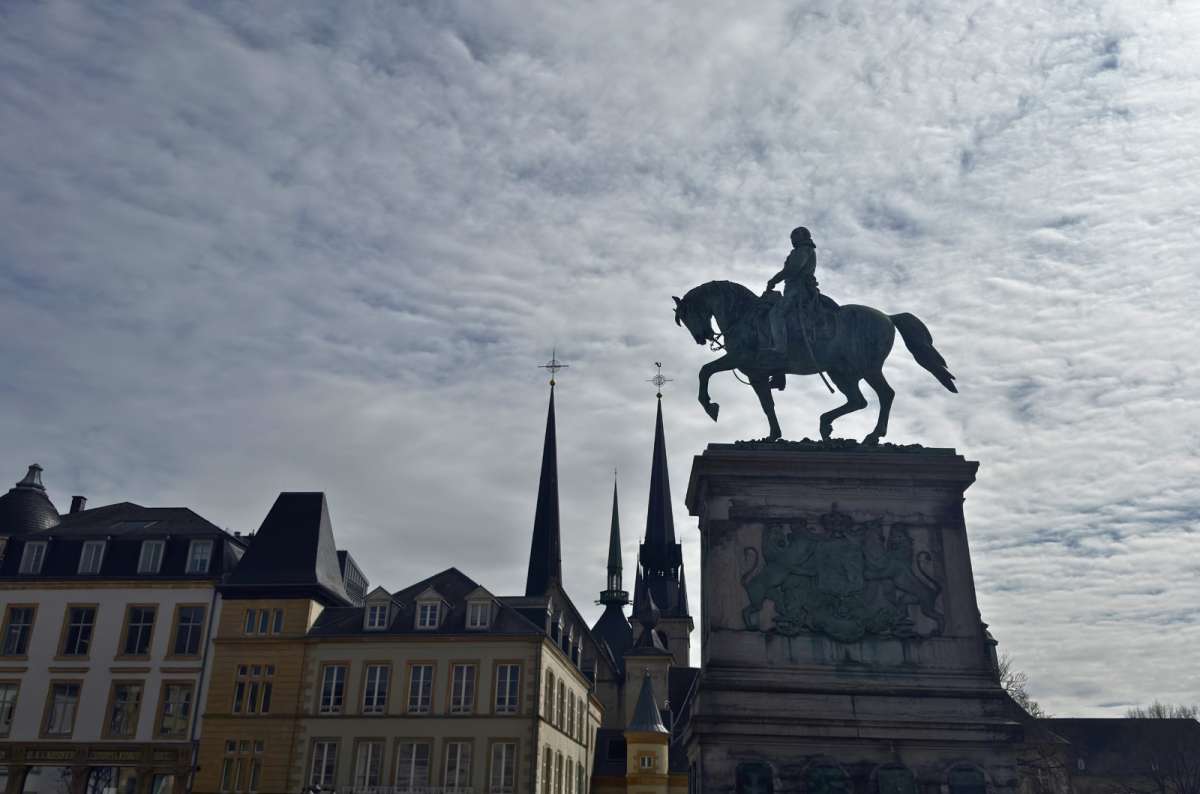
Place Guillaume II is one of the main squares in Luxembourg City
The old town is worth walking through, but treat it as a connector and context layer, not the main event of your one day in Luxembourg City.
This is where many itineraries go wrong. They spend too much time on central squares and too little time on the valley, Grund, and viewpoints.
The result is a Luxembourg City day that feels clean, pleasant, and slightly underwhelming.
Use the old town as a connector, not the main event.
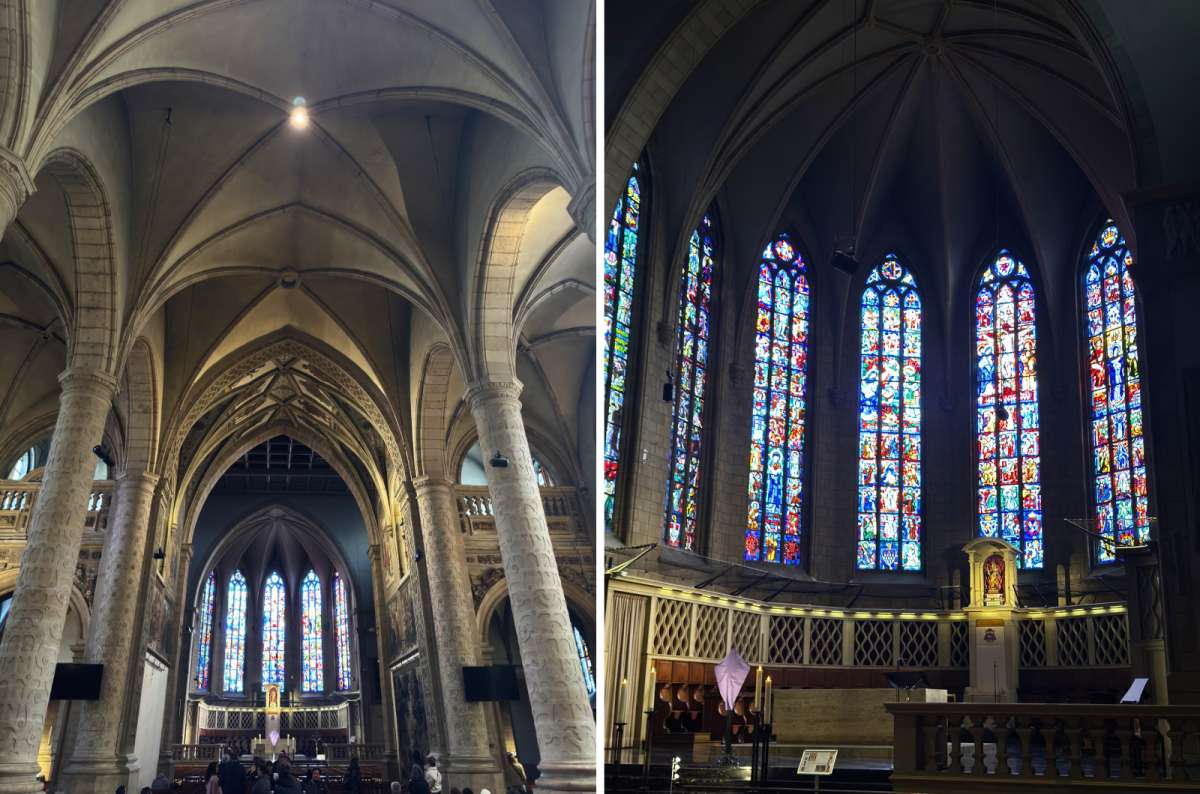
Luxembourg City's Notre-Dame Cathedral is worth stepping inside
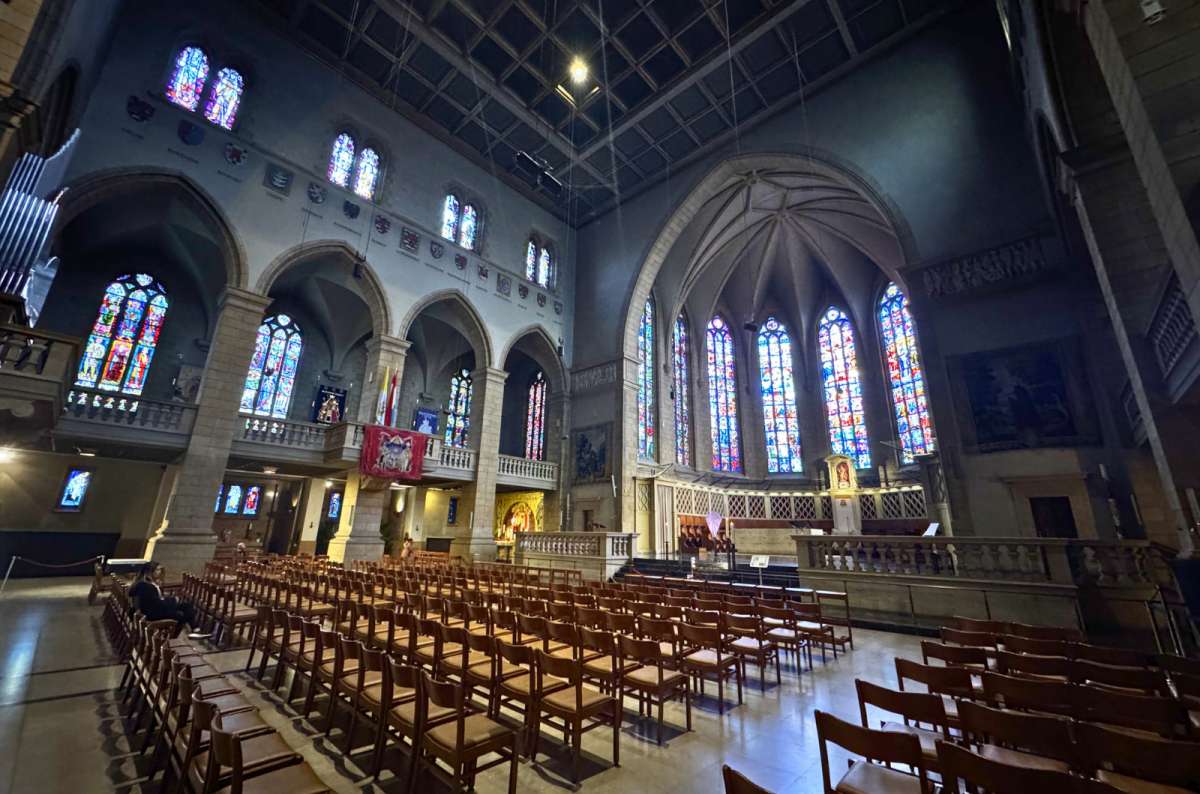
Skip the long stop. Walk in, look up, admire the stained glass, and continue
Notre Dame is worth a quick stop, especially because it is better inside than outside.
It is free, central, and easy to include. I would not build the day around it, but I would pop in if you are nearby.
It is also one of the few important churches in Luxembourg City, and for me it was more interesting inside than the exterior suggests. Do not expect a giant medieval cathedral moment, though. This is a short stop, not the spiritual center of your itinerary.
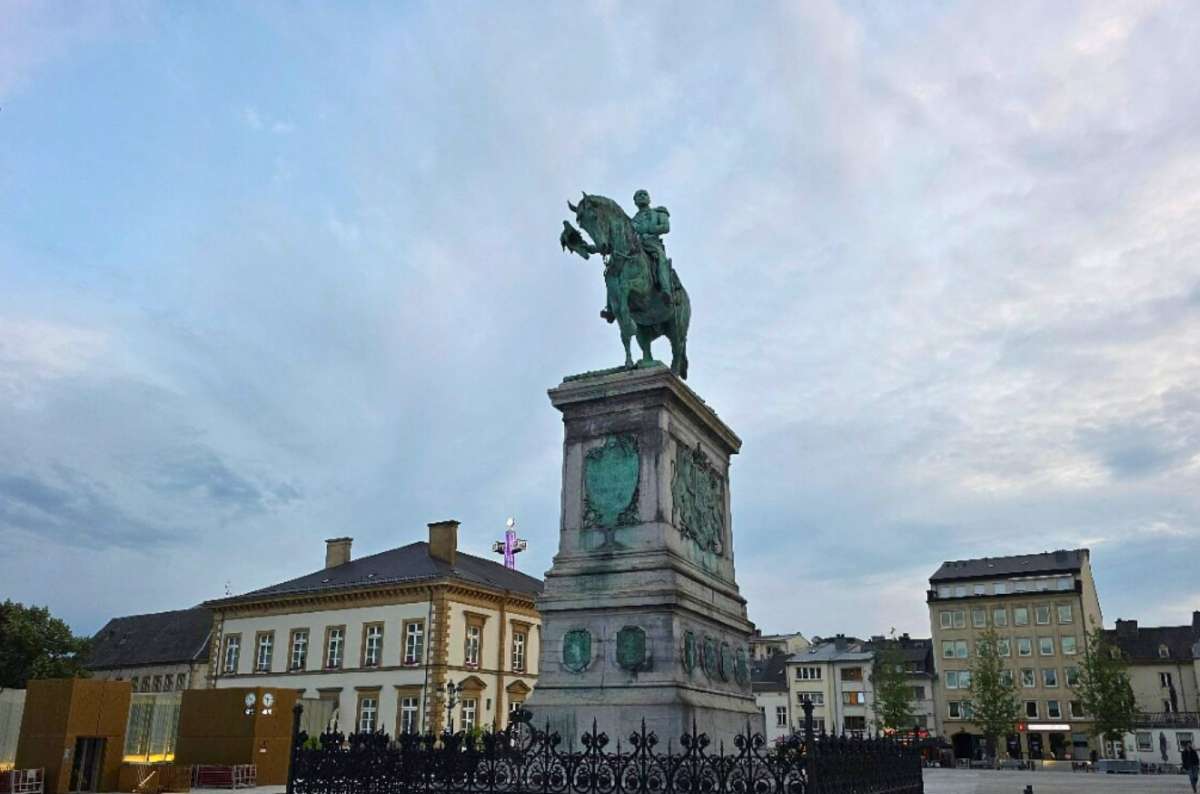
A classic European square. Pleasant, photogenic, and not where I'd spend much time
Place Guillaume II is fine.
In good weather, it can feel spacious and pleasant. I had the sun, which helped. A lot of European squares improve dramatically when the weather does free marketing for them.
But again, fine is not the reason you came to Luxembourg City.
Walk through, take it in, and keep moving.
Place d’Armes was meh for me.
It works as a place to pass through, maybe sit, maybe find food nearby. But it is not one of Luxembourg City’s strongest experiences, and I would not sacrifice valley time for it.
Europe has squares. Many of them.
This is one.
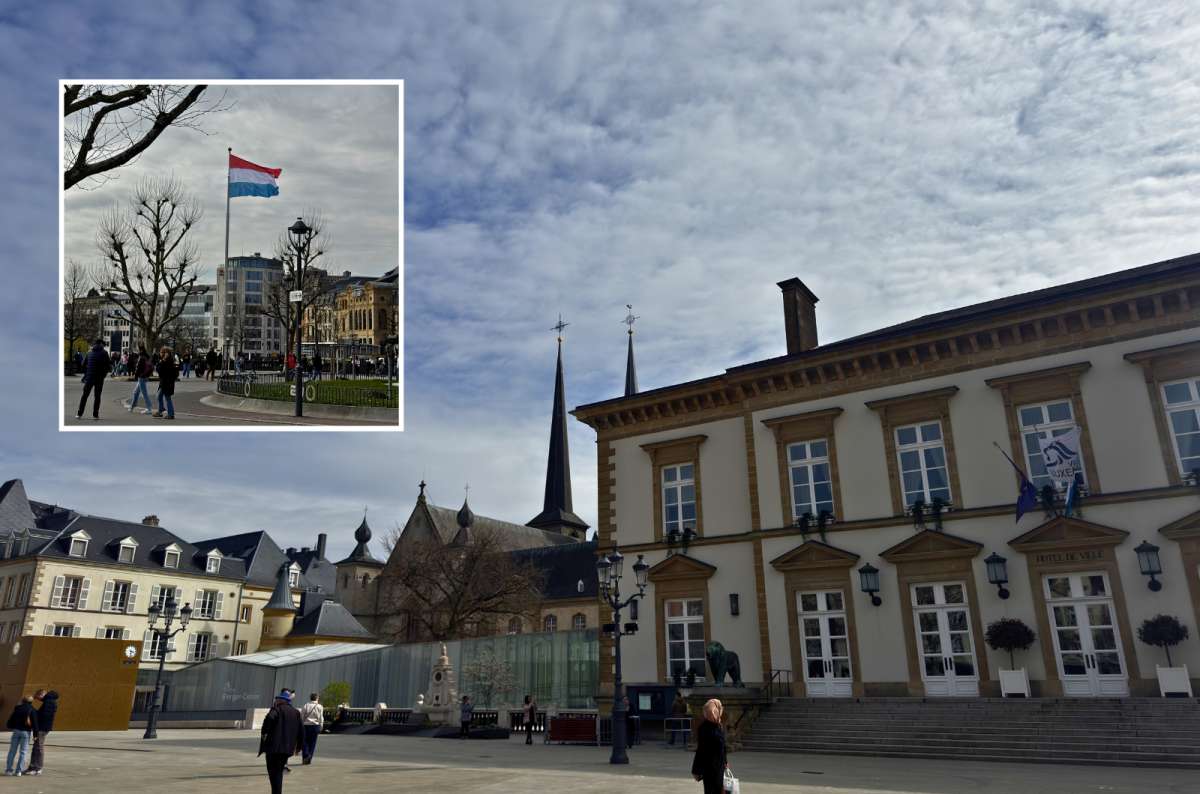
Luxembourg City Hall dominates Place Guillaume II
If your route passes the palace or government areas, take a look.
Do not overcommit unless you have a specific interest.
Luxembourg City has plenty of official-looking stone. You do not need to admire all of it with equal seriousness.
My verdict: walk the old town, but do not let it hijack the day.
Corniche, Grund, and the valley are more important than square-hopping.
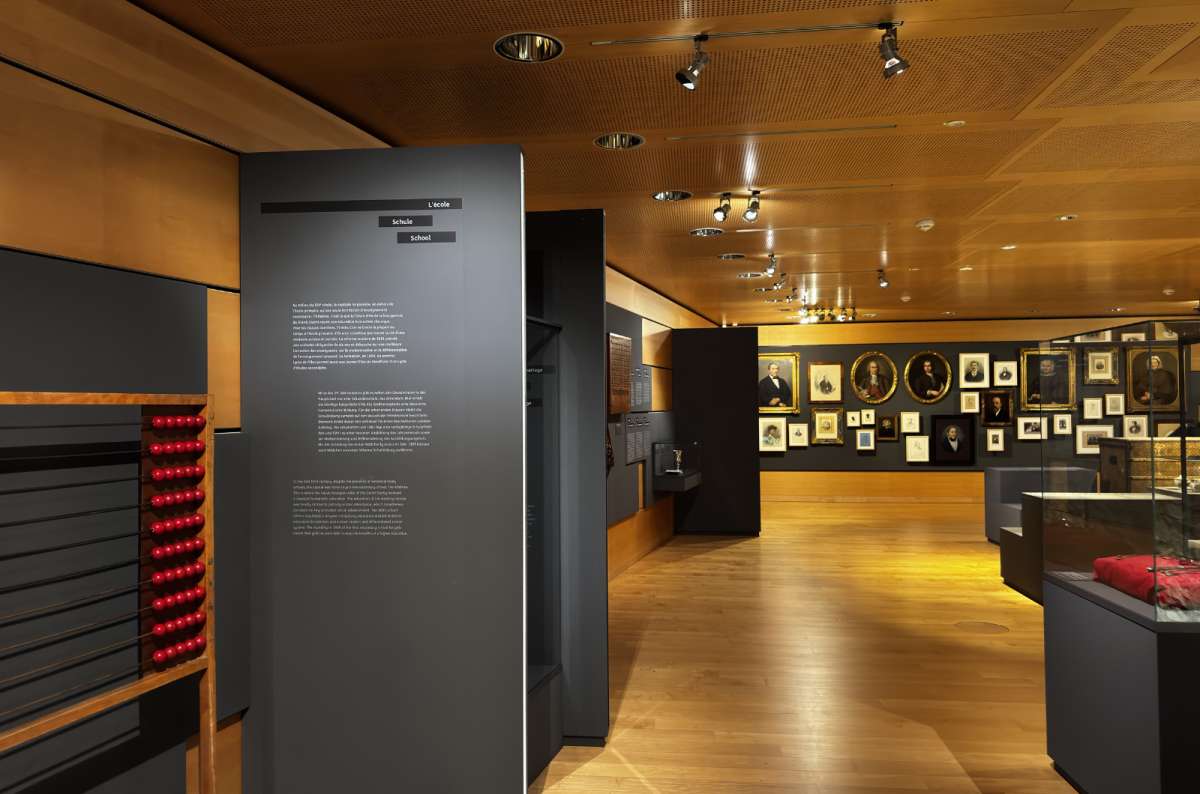
Exhibition inside the Lëtzebuerg City Museum
With one day in Luxembourg City, I would choose one main paid attraction.
For most first-time visitors, the choice is between Lëtzebuerg City Museum and Casemates du Bock.
My honest pick? The City History Museum is for most first-time visitors.
Casemates are the famous choice; the museum is the more useful choice.
The City History Museum explains the city’s layers, urban development, fortifications, models, and ordinary life. It helps you understand what you have just walked through.
The Casemates are interesting enough if you want the famous underground fortress experience, but they are not mandatory.
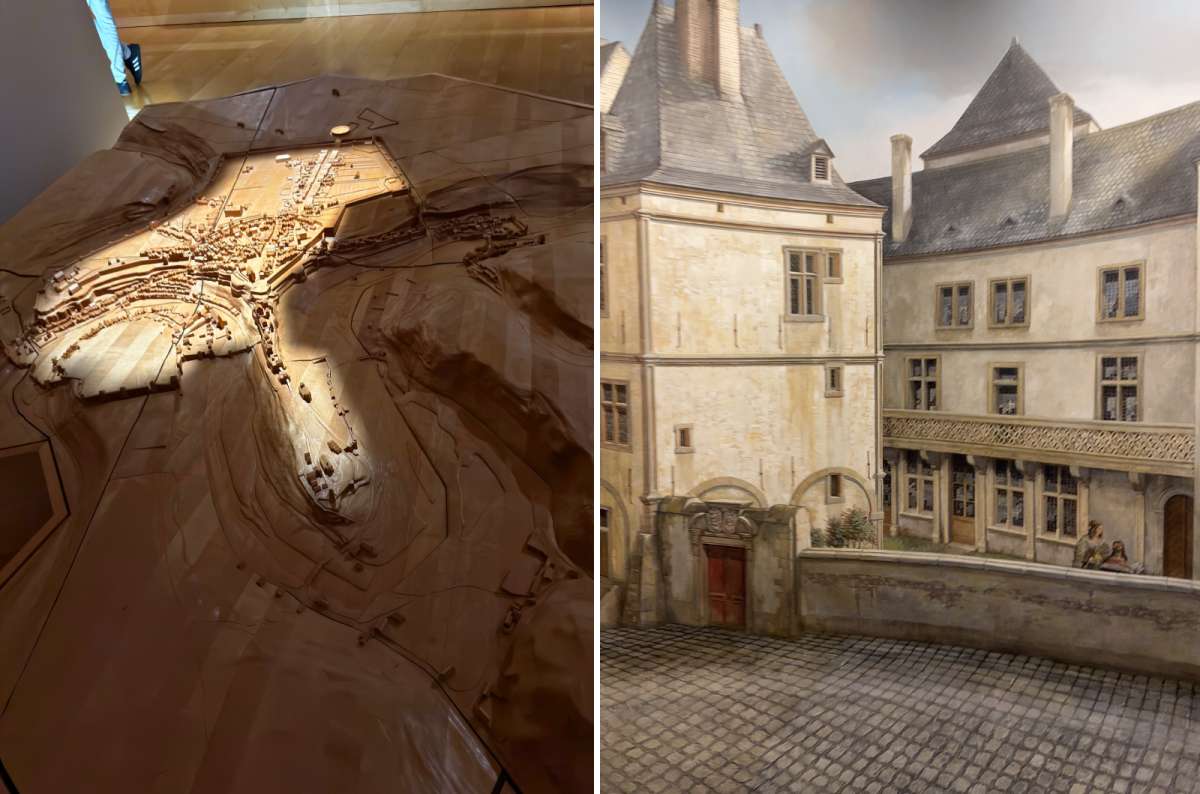
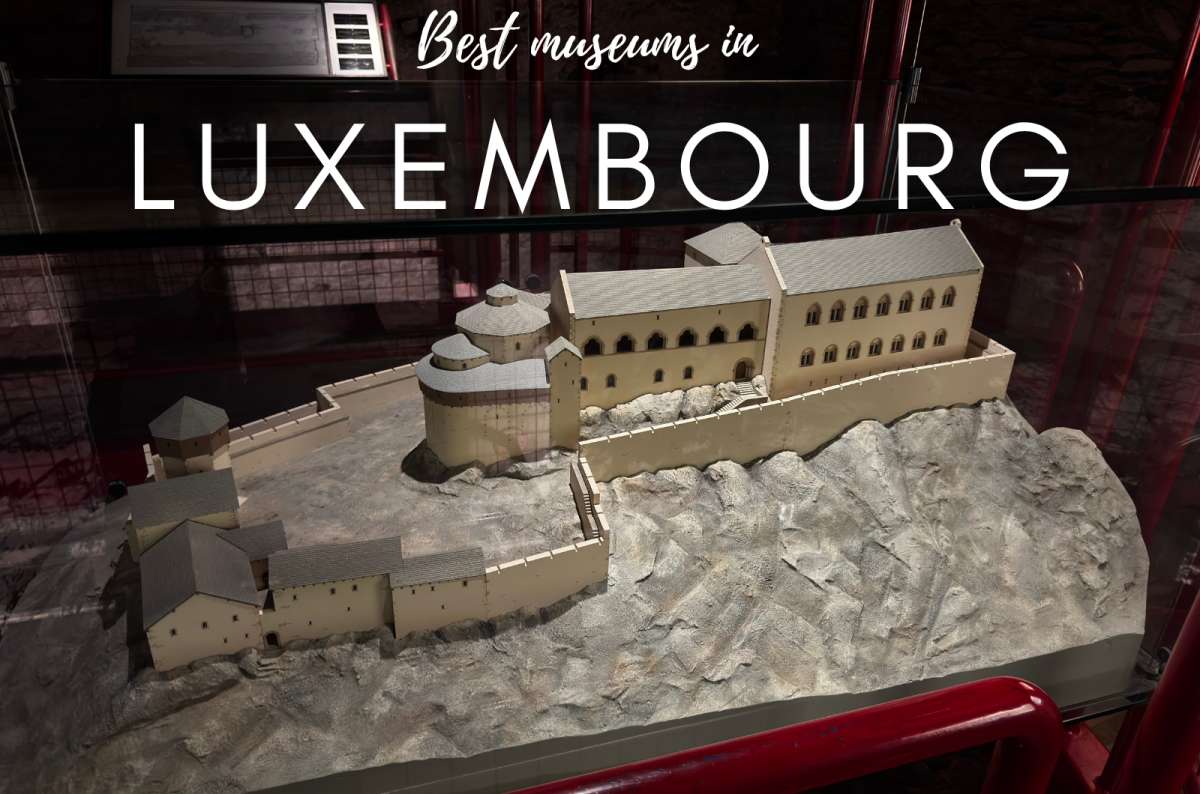
Model of historic Luxembourg City and historical reconstruction at Lëtzebuerg City Museum
Lëtzebuerg City Museum is the best museum in Luxembourg City.
It explains the city’s development in a way that actually helps the rest of your visit. I liked the models, infographics, city-growth context, and ordinary-life details.
It is the kind of museum that makes the streets outside more interesting afterward.
There are so many infographics, which are exactly the kind of museum content I like. Population numbers, city development, models, daily life, layers of history. No unnecessary mystery. Just useful context.
It also has a panoramic terrace, which is a very good museum feature because it lets you connect the indoor explanation to the city outside.
Choose City History Museum if you want to understand why Luxembourg City has so many levels, how fortifications shaped the city, how the city developed over time, why the old town feels compact, how ordinary life changed, and why the valley and upper city matter.
This is the better-paid stop for context.
Choose the City History Museum if you want the day to make more sense.
For the full museum comparison, use my Best Museums in Luxembourg City guide.
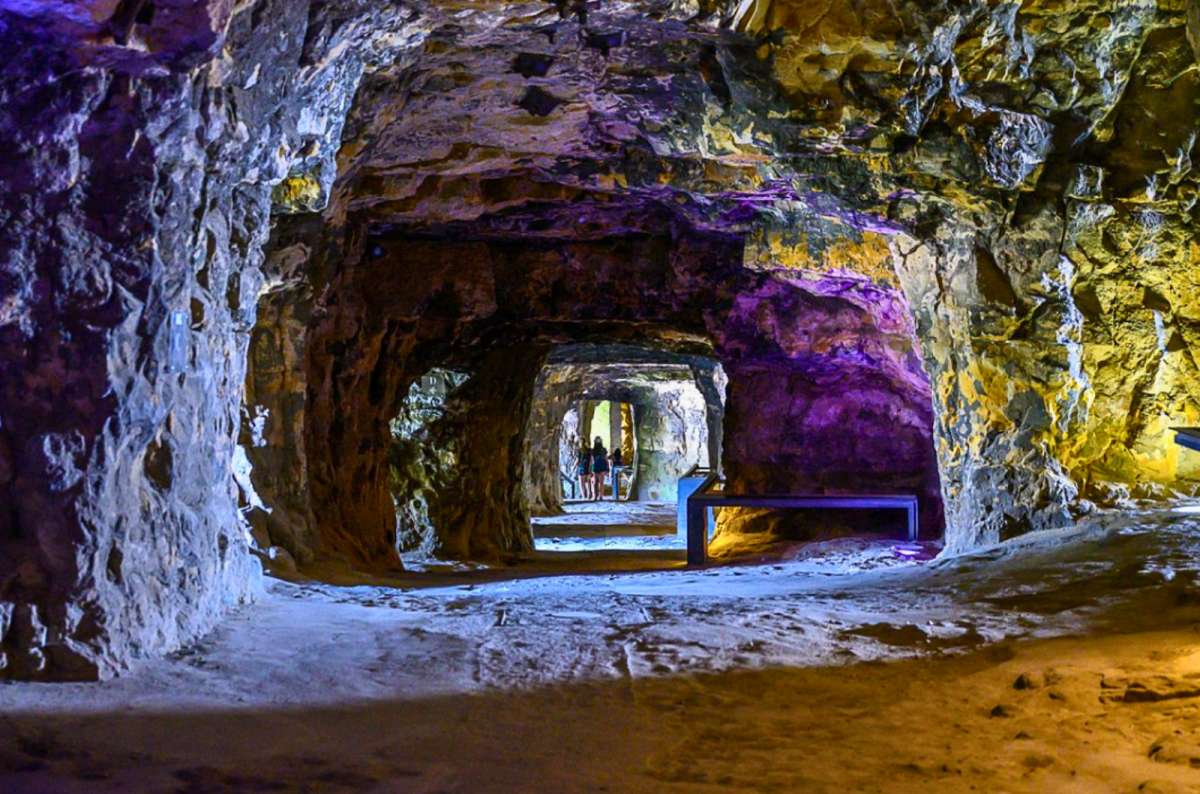
The tunnels inside Casemates du Bock reveal part of the fortress network carved into Luxembourg City's cliffs
The Casemates are one of Luxembourg City’s most famous attractions.
They are historically important and definitely recognizable as “the thing people say to do.”
I still think they are optional.
When I visited, they felt cold, short, and light on exhibits. The main payoff was the views, and by this point in the route, you will already have had excellent views from Corniche, Grund, and the valley.
The Casemates add a fortress-tunnel angle, but they do not replace the free scenic route.
Choose Casemates if you really want the famous Luxembourg sight, like underground fortifications, are interested in military history, find no annoying queue, or the weather is poor, and you specifically want the fortress-tunnel experience.
Skip them if you are rushed, have already covered the best viewpoints, prefer museums with more explanation, the queue is annoying, or you would rather keep walking outside.
The “Gibraltar of the North” comparison also did not help me much. Gibraltar is a lot bigger. Luxembourg’s Casemates are interesting, but let’s not start a fortress marketing war.
Do Casemates if they are convenient and you care.
Do not feel guilty skipping them. They are famous, but not the best part of Luxembourg City.
For a full attraction ranking, use my Things to Do in Luxembourg City guide.
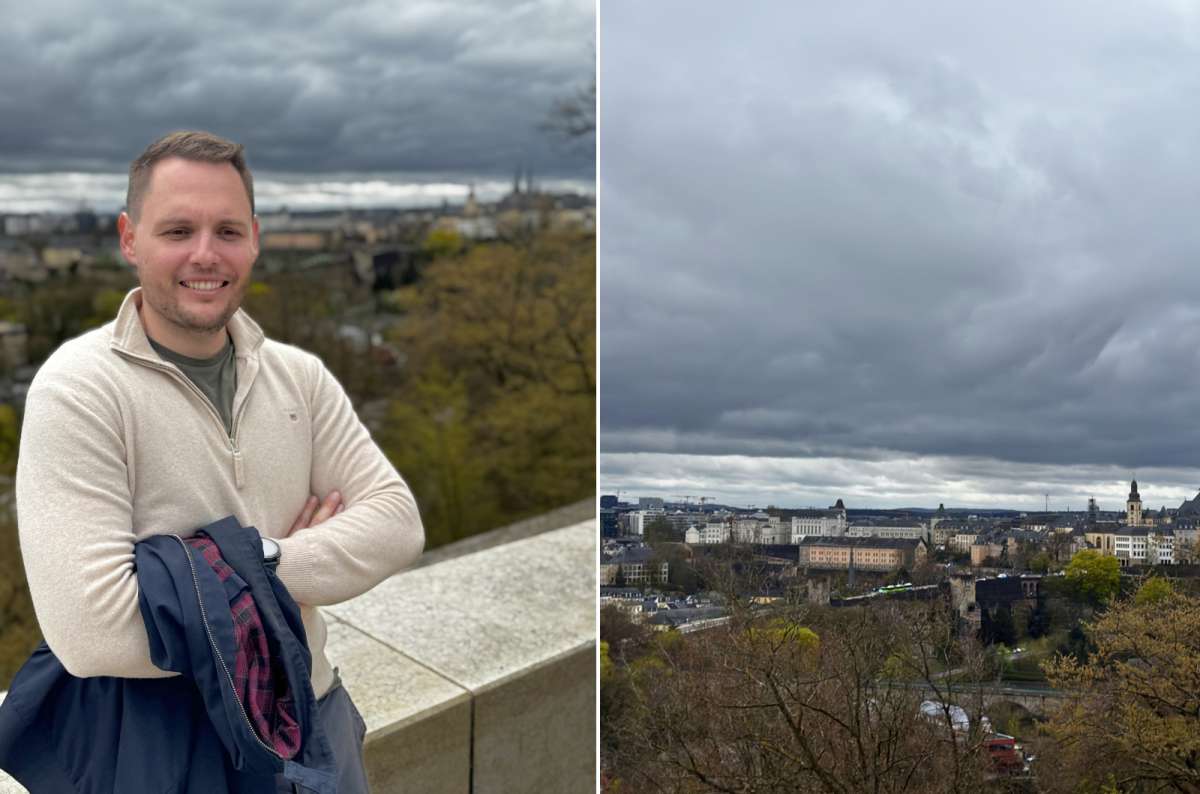
Luxembourg City is at its best when you can see just how much the landscape shaped it.
Luxembourg City is compact, but it is not flat.
The route involves upper-city viewpoints, a descent into Grund, lower-city walking, valley paths, and a return upward using elevators, streets, stairs, or public transport.
Your legs will notice the difference.
Expect this to feel more like a scenic urban hike than a flat old-town stroll.
Use the Pfaffenthal elevator, free public transport, shorter valley loops, café breaks, one paid attraction instead of two, and no unnecessary square-hopping if you need to reduce the effort.
If the route starts feeling like too much, cut Plateau du Rham, Casemates, extra squares, or the final bridge stop before cutting Corniche, Grund, or the Alzette valley.
The exact starting point matters less than the route flow. You want the day to move naturally from the upper city to the Corniche, down into Grund, along the Alzette valley, then back up through a logical connector.
If you are staying in the old town, start at the Corniche or the old town edge.
If you are arriving by train, head toward the upper city / Corniche area first, either on foot or by public transport.
If you are arriving by car, park once and walk. Do not use your car for central sightseeing. Luxembourg City is compact, layered, and better on foot. Driving between stops is not efficient. It is just parking drama with steering.
Food should support the route, not hijack it. Eat in or near the old town or Grund, depending on where you are. Use a café break before or after the museum portion. Avoid a long, inconvenient lunch that forces backtracking.
For a one-day itinerary, lunch is a reset, not a mission.
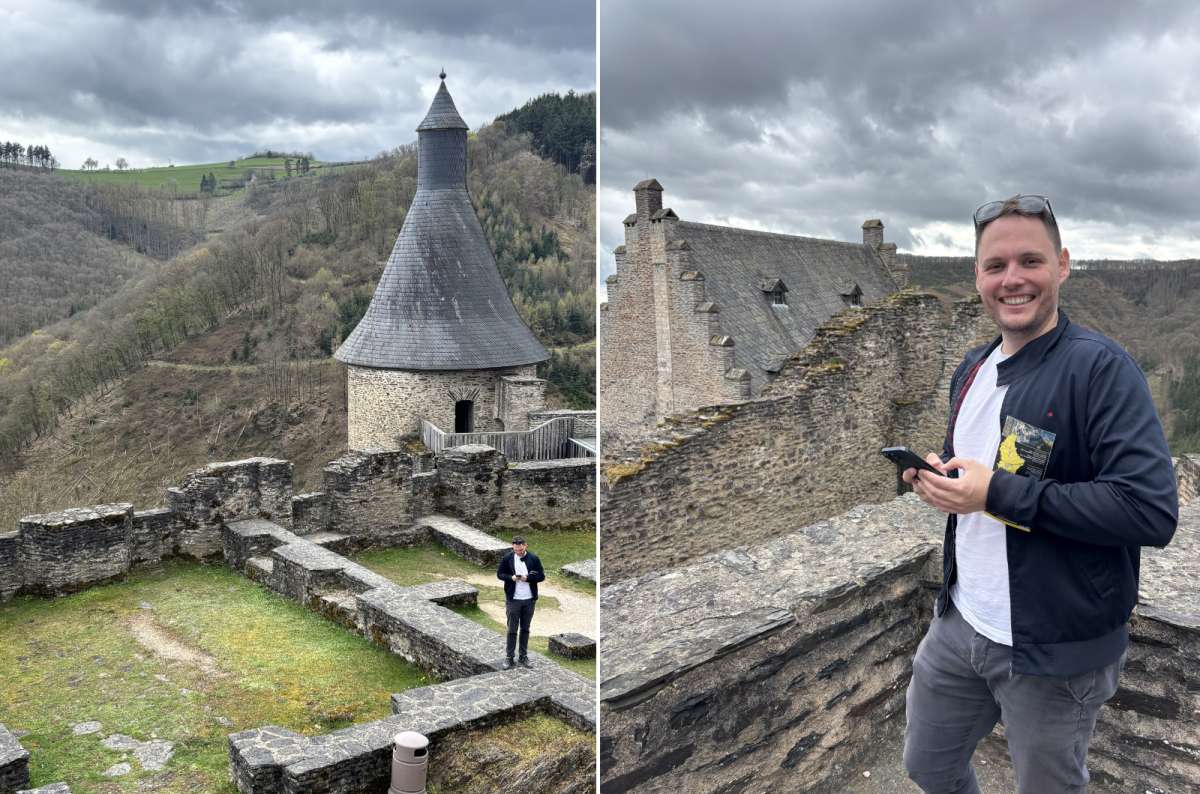
Ramparts of Vianden Castle
If you do not have a full day, shorten the route without cutting the best part.
Do Corniche, Grund, a short Alzette valley walk, and Notre Dame, or a quick old town loop.
Skip Casemates, City History Museum, Plateau du Rham, Pfaffenthal, unless it fits perfectly, and long lunch.
This is the minimum version that still gives you the city’s real character.
Do Corniche, Grund, the Alzette valley, Pfaffenthal elevator, if it fits, old town, and one paid attraction, only if time allows.
Choose City History Museum for context, Casemates only if the famous tunnels matter more to you.
Do not try to do both unless you are cutting the scenic route, which I would not recommend.
Do the full scenic walk, old town quick stops, City History Museum, or Casemates, Pont Adolphe, finish if it fits, lunch, and breaks without derailing the route.
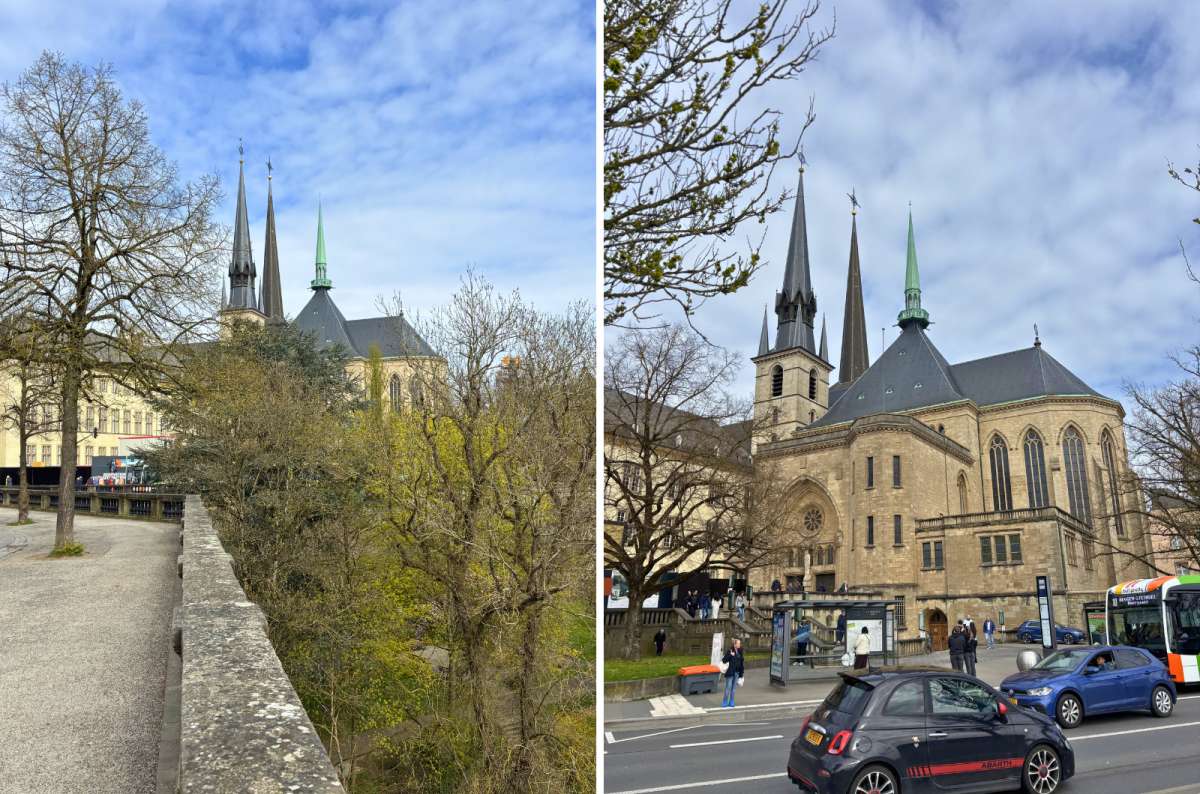
Notre-Dame Cathedral is Luxembourg City's only cathedral
Cut Casemates, extra squares, Plateau du Rham, a second museum, long lunch, and Kirchberg unless you specifically want Musée Dräi Eechelen or Mudam.
Shorten the optional stops, not Corniche and Grund.
Those are the reasons the city works.
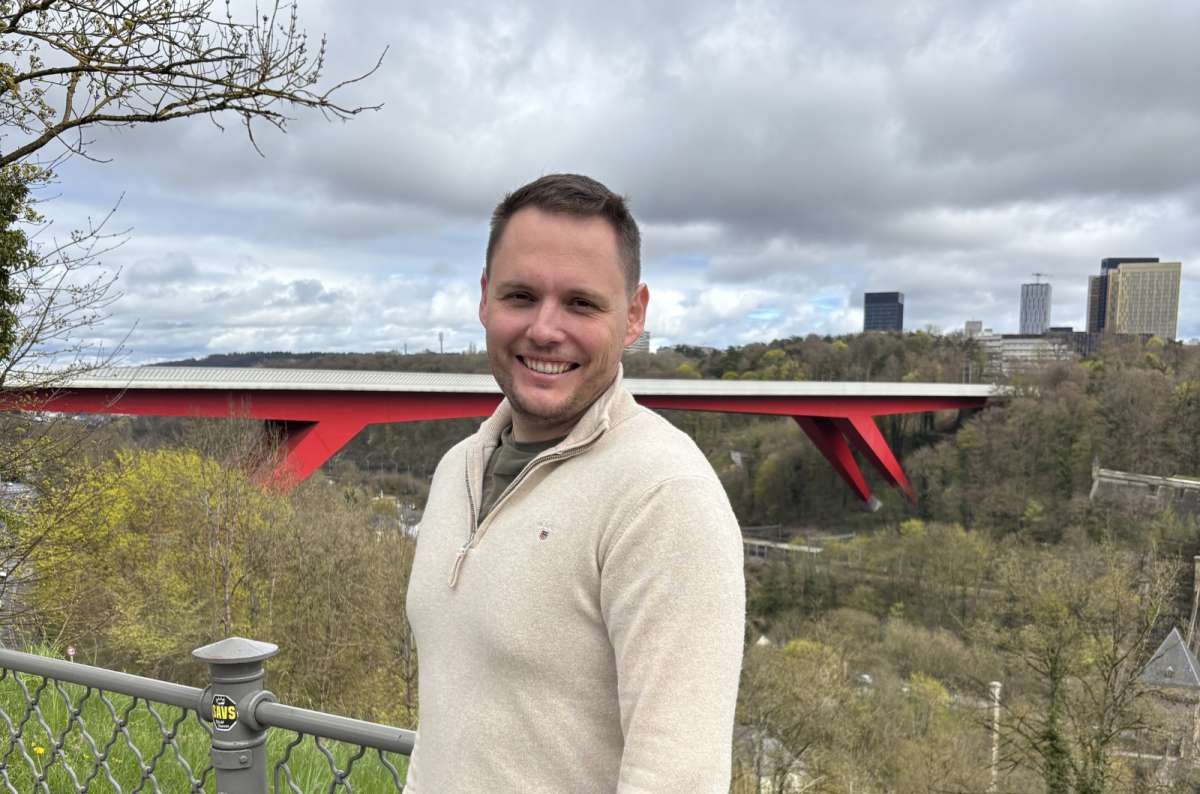
The Grand Duchess Charlotte Bridge, better known as the Red Bridge, is one of Luxembourg City's most recognizable landmarks
Skip Casemates if you are rushed. They are optional, not mandatory. If you care about the famous attraction, go. If not, skip them and spend your time on Corniche, Grund, the valley, and the City History Museum.
Skip too many museums. Pick one. City History Museum is the best default. Musée Dräi Eechelen is good if you specifically want fortress history. Mudam is for contemporary art fans. Do not turn one day into museum homework.
Skip long square-hopping. Place d’Armes and Place Guillaume II are fine, but Luxembourg City becomes memorable through the valley, viewpoints, cliffs, bridges, and fortifications.
Skip moving around by car. Park once or arrive by public transport. Driving between central sights is an excellent way to gain stress and lose track.
Skip Kirchberg unless fortress context, Mudam, or modern architecture is part of your actual goal.
Kirchberg is interesting if you want Musée Dräi Eechelen, Fort Thüngen, Mudam exterior, Philharmonie, or the modern European-institution side of the city.
But for a first one-day route, it is not essential.
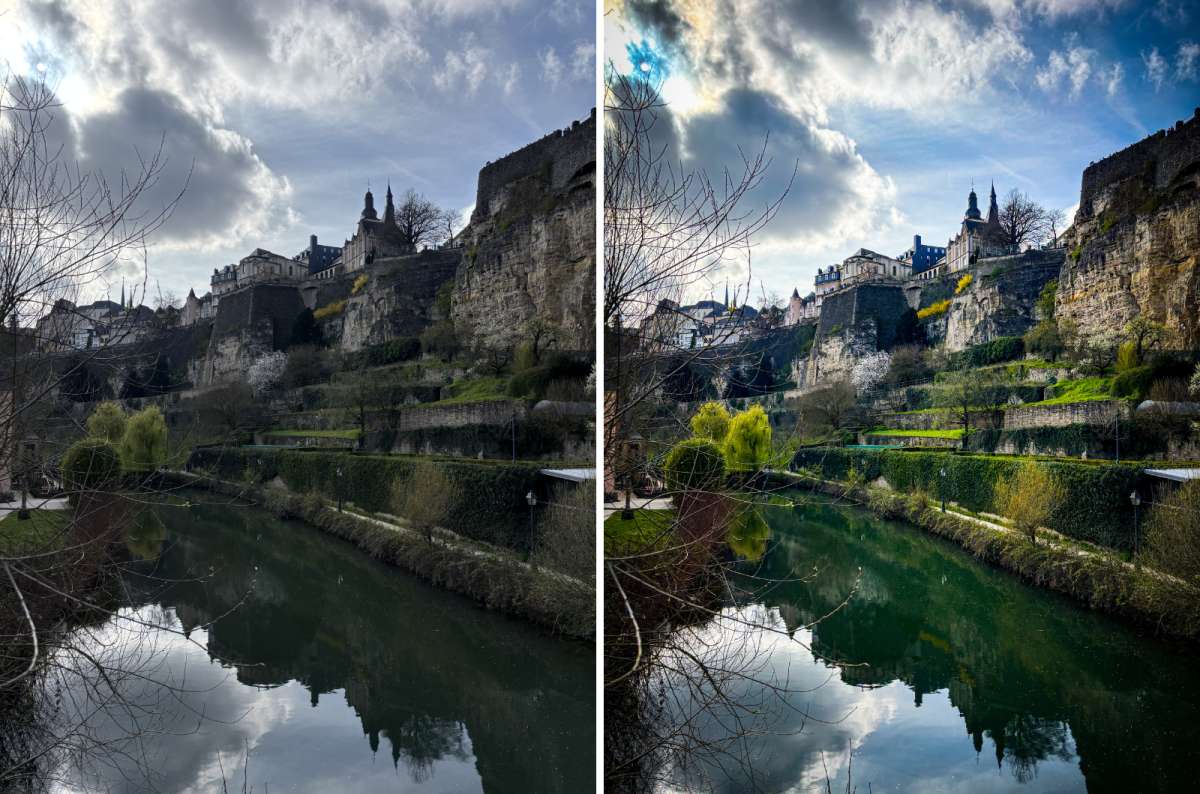
Same view over the Alzette River and Grund, before and after editing
Rain does not ruin Luxembourg City, but it does weaken the best part: the views.
If visibility is terrible and the valley looks flat and gray, do not force the full scenic route and pretend you are having a magical time. You are wet. Be honest.
In bad weather, start with the City History Museum if the forecast is ugly. Add Notre Dame. Use short Corniche or Grund viewpoint windows when the rain slows. Add Musée Dräi Eechelen if you want fortress context and still have time. Consider Casemates only if you specifically want the tunnel experience.
In good weather, scenic route first.
In bad weather, the museum opens first when the sky gives you permission.
For kids, older travelers, or anyone with limited mobility, simplify the route. Prioritize Corniche, a manageable Grund viewpoint or lower-city section, Notre Dame, one easy old-town loop, and the Pfaffenthal elevator if it helps with elevation.
Skip Plateau du Rham, long valley extensions, too many stairs, and optional paid stops unless they clearly fit energy levels.
Do less, but keep the best contrast: one upper view, one lower-city perspective, and one easy connector back up.
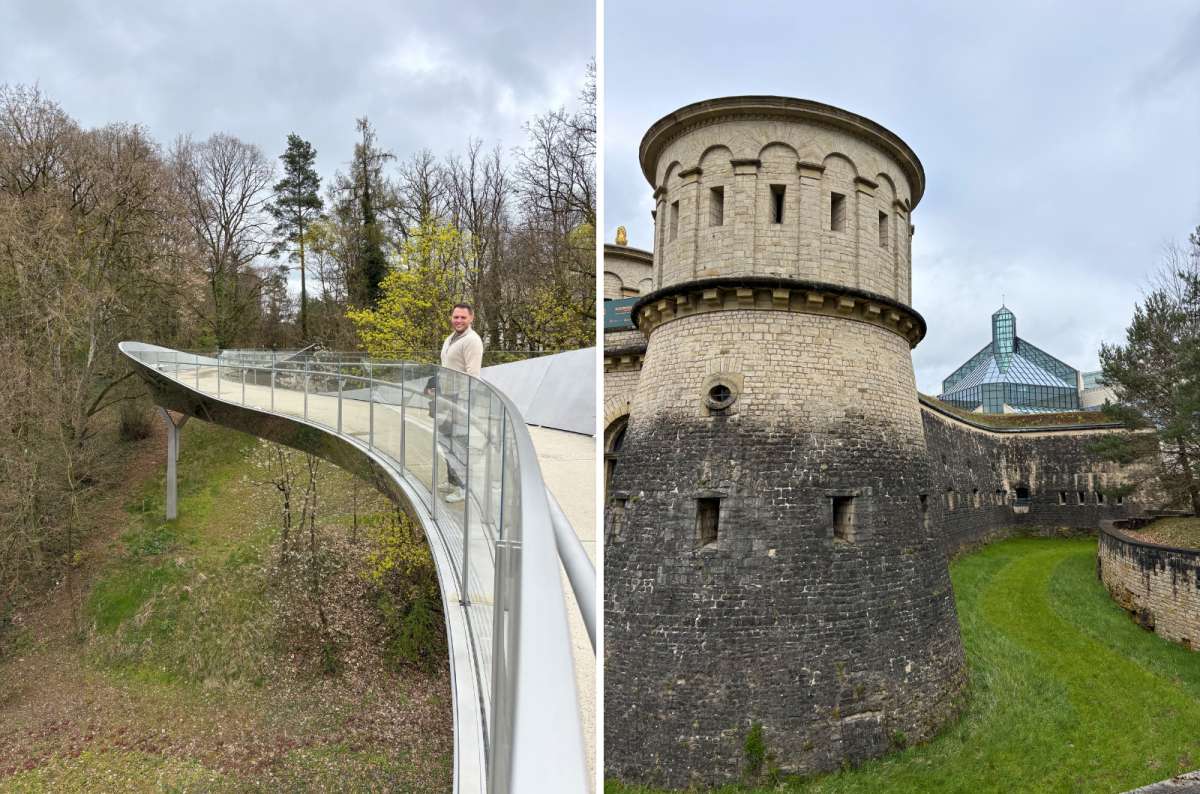
Fort Thüngen and Musée Dräi Eechelen are a worthwhile addition if you still have time and energy after the city's main highlights
This is the clean version I would follow.
Start at Corniche for the best city view and first “aha” moment.
Drop into Grund and get the lower-city perspective.
Follow the Alzette valley and lower-city walk without rushing.
Add Plateau du Rham only if you want a longer scenic loop and still have energy.
Use Pfaffenthal elevator, Pont Adolphe, or another bridge/elevation connector if it fits your route.
Walk the old town highlights: Notre Dame, Place Guillaume II, Place d’Armes, and the central streets, but do not overcommit.
Choose one paid attraction: City History Museum for context, Casemates if the famous tunnels matter to you.
Finish at Pont Adolphe or another viewpoint only if the route still has energy and weather.
That is enough.
One day in Luxembourg City should not feel like a desperate attempt to see everything. It should feel like the city is gradually opening up: from above, from below, along the valley, through the old town, and into one smart context stop.
Yes, one day is enough for Luxembourg City if you focus on Corniche, Grund, the Alzette valley, old town highlights, one viewpoint connector, and one paid attraction. Two days is better if you want more museums, fortress context, and slower walking.
Do not miss the Corniche, the Grund, and the Alzette valley walk. Those three are the core of the best one-day Luxembourg City route and explain why the city is more interesting than it first looks.
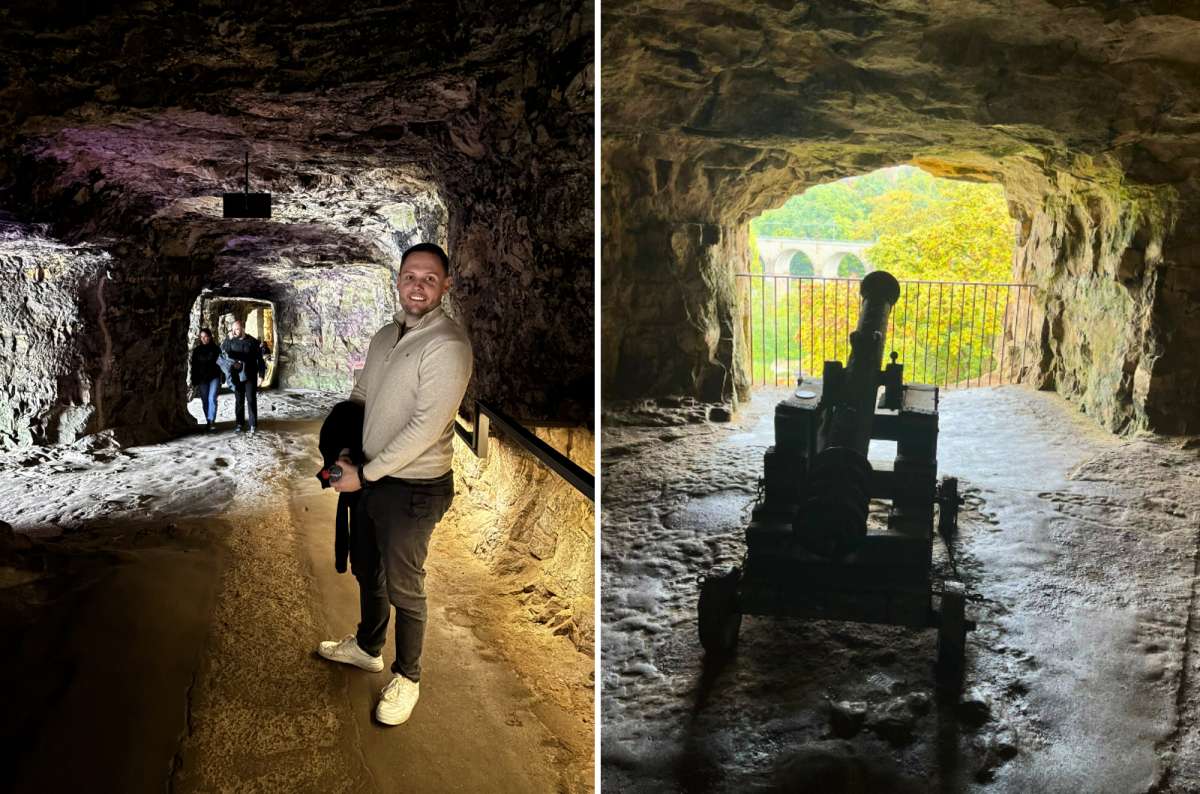
I did the Casemates du Bock so you don't have to. If you're short on time, I'd spend it exploring Luxembourg City above ground instead
The Casemates are optional, with only one day in Luxembourg City. Visit if you want the famous underground fortress tunnels, but do not prioritize them above Corniche, Grund, the Alzette valley, or the City History Museum if you want better context.
The best paid attraction for most first-time visitors is the Lëtzebuerg City Museum. It explains the city’s development, fortifications, models, and urban layers, which makes the walking route more meaningful.
Yes, Luxembourg City is walkable in one day, but it is not flat. The city is compact and layered, with upper and lower levels, valleys, bridges, elevators, and stairs. Plan for elevation, not just distance.
One day in Luxembourg City is enough if you follow the right route.
Do not treat the city like a flat old-town checklist. Treat it like a vertical scenic walk.
My final recommendation:
Corniche → Grund → Alzette valley → optional Plateau du Rham → Pfaffenthal or bridge viewpoint → old town quick stops → City History Museum OR Casemates → Pont Adolphe if it fits.
That gives you the best version of Luxembourg City in one day: views first, valley second, context third, famous optional things last.
Luxembourg City may not charm instantly from street level, but once you follow the layers, it makes much more sense.
This post contains affiliate links. If you make a booking through one of my links, I may earn a small commission—at no additional cost to you. Thank you for your support!
Is one day in Luxembourg City enough?
One day in Luxembourg City at a glance
The best one-day Luxembourg City walking route
Stop 1: Start with the Corniche
Stop 3: Follow the Alzette valley and lower-city walks
Optional extension: Plateau du Rham
Pfaffenthal elevator or bridge viewpoint connector
Practical tips for this one-day route
What to skip with only one day in Luxembourg City
Rainy day and limited-mobility adjustments
Final one-day Luxembourg City itinerary


Hi, I’m Jan. I travel fast and intensely, whether I’m exploring the buzz of Tokyo in 3 days or road-tripping through mountains and beaches on a 3-week Thailand adventure. And no matter where I am, you’ll always find me in a comfortable hotel at night and eating the best food.
If that sounds like your kind of journey, hop on board, and let’s explore the world together!
I started this blog after realizing how tough it can be to find reliable, authentic travel info. You wouldn’t believe how many “travel bloggers” never even visit the places they write about! On Next Level of Travel, you can count on my full honesty and insights drawn from my firsthand experiences.
Here’s the deal: not every destination is all superlatives and unicorns. I’ll let you know if a tourist attraction isn’t worth your time, like skipping overrated stops in my 2-week Spain itinerary. And when I find something truly special—like the perfect mix of culture and nature in Cape Town—you can trust that it’s worth adding to your itinerary.

Comments | Thoughts? Give us a shout!