


Is the Dead Sea worth visiting?
What does it feel like to be in the Dead Sea?
How long can you lie in the Dead Sea?
What is the best time to visit the Dead Sea?
How to get from Tel Aviv or Jerusalem to the Dead Sea?
Dead Sea suggested itinerary for 3 days
Day 1, stop 1: St George’s Monastery
Day 1, stop 2: Qumran National Park
Day 2, stop 1: Ein Gedi and Nahal (Wadi) Arugot Hike
Day 2, stop 2: Ein Gedi Botanical Garden
Day 2, stop 3: Ein Kedem Hot Springs
I’ll be honest, I didn’t understand why everyone adores the Dead Sea so much. What could be so unique about a lake that’s ten times saltier than the sea? The answer is EVERYTHING! This spot deserves to be on every Israel itinerary because it is an amazing place, and you don’t get to experience the sensation of just floating in the water in many other places on Earth.
But that’s not all. Don’t come to the Dead Sea just for a little salty day out bobbing in the water—you'd miss out on so much the area has to offer! I’m talking hikes to breathtaking viewpoints, exploring magnificent fortresses, and the unique beauty of the desert. Sprinkle in incredible (and weird, I’m not gonna lie) biblical stories and you’ve got yourself a multiday Dead Sea trip.
Take it from me, a former sceptic: Visiting the Dead Sea should be turned into an epic, 3-day adventure! And so, voilà—read on to find out how to visit the Dead Sea like a boss in this 3-day Dead Sea itinerary.
In this article, I’ll share my personal tips and experiences to help you make the most of your Dead Sea adventure.
Read more from my Israel travel blog.
Nestled in the heart of the Middle East, this legendary salt lake sits at the lowest point on Earth, a staggering 430 m (1,400 ft) below sea level. Bordered by Jordan to the east and Israel and the West Bank to the west, the Dead Sea is famous for its dazzlingly high salt content.
The Jordan River is the main water source feeding the Dead Sea, and its historical and geographical significance is highlighted by sites such as Bethany Beyond the Jordan, where John the Baptist baptized Jesus.
You already know that the Dead Sea is famous for the somewhat strange experience of floating magically almost on top of the dense, mineral-rich salt water. But the Dead Sea combines natural beauty, relaxation, and adventure—which is why it makes such a fantastic Israel trip.
A lot of people visit the Dead Sea on a quick day trip, but I recommend a longer stay, 3 days, checking all the great things to do near the Dead Sea is ideal. The surrounding region is a feast for the senses, with dramatic desert landscapes and sparkling blue water that seem almost like something from another planet. You may even want to slather on some of that famous Dead Sea mud—renowned for its health benefits and skin-soothing properties (I’m already smooth enough, so I left it for others).
This is the ultimate guide to planning your Dead Sea adventure, put together based on my own experience traveling around the Dead Sea in Israel.
If you’re putting together your Dead Sea bucket list, don’t just write “float in salty water.” This region is absolutely stacked with epic things to do near the Dead Sea, and most travelers miss half of them. Lucky for you, you’ve found my travel blog.
Here’s what to do at the Dear Sea:
Float like a human buoy. This is still at the top of the list, of course. No swimming, no effort—just lie back and let the Dead Sea do the work. It belongs on every Dead Sea itinerary, period.
Cover yourself in Dead Sea mud. It’s messy, absurd, and you’ll look like a creature crawling out of a swamp, but the mineral-rich mud is famous for doing great things for your skin. I couldn’t really tell because my skin is already perfect.
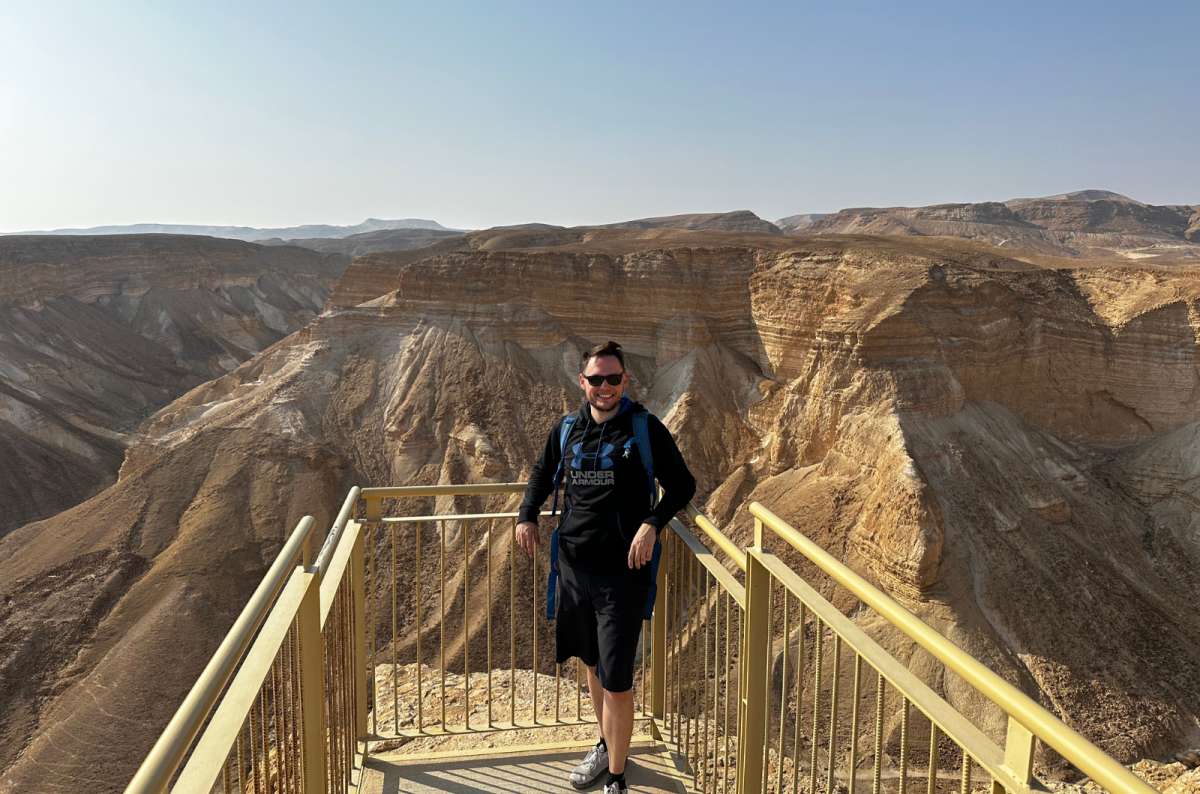
Hike to some of Israel’s most dramatic viewpoints. Places like the Nahal Arugot trail in Ein Gedi or the salt formations of Mount Sodom take you to fantastic desert landscapes.
Explore ancient fortresses and biblical sites. Masada is the obvious star that knocked my own socks off—you get history, insane views, and a great hike all in one. Add Qumran and Saint George Monastery, and your trip suddenly has depth, not just salt.
See the salt formations up close. Kalia Beach and the northern coast offer some of the most photogenic salt crystals and shoreline patterns.
Watch the colors change at sunset. The Dead Sea turns turquoise, gold, and pink all at once—easily one of the most beautiful views in Israel.


But first, some FAQs:
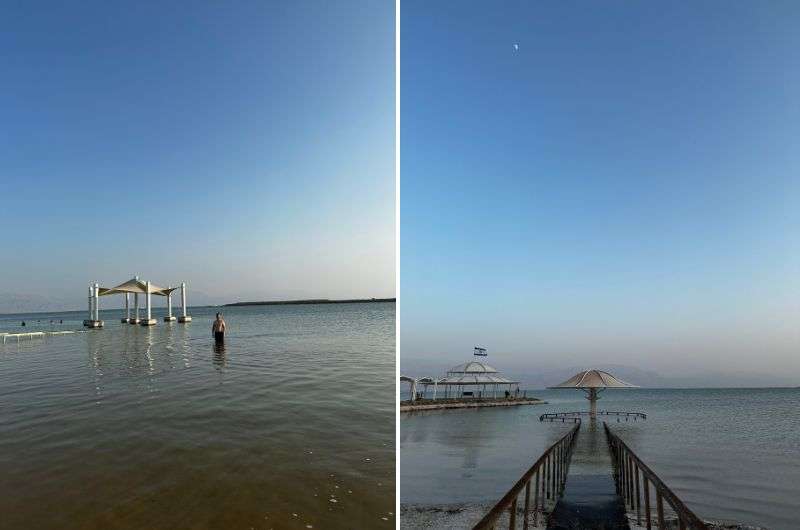
The Dead Sea is not like every other sea in the world... it’s literally like no other!
Visiting the Dead Sea when in Israel is a must, I think I’ve made that clear already. The twist, though, is that it’s not your typical sea, rather, it’s more like a massive saltwater pool. This unique salt lake goes by many names—Dead Sea, Al-Baḥr Al-Mayyit in Arabic, and Yam HaMelaẖ in Hebrew.
If you’re not a lazy bum who likes to spend their vacation lying on the beach the whole time, you’ve lucked out, because this region isn’t only about the Dead Sea. The whole surrounding area is worth visiting. It’s not vast but you get everything here—history, desert, mountains, and as the cherry on the cake, the biggest spa in the world, all in one.
The main resorts along the Israeli side of the Dead Sea offer unique amenities and serve as popular access points for visitors, making them a top choice for many travelers. This itinerary is based on my experiences from the Israeli side, highlighting the best places to visit in this region.
What really sets this place apart is its epic status as the lowest body of water on Earth’s surface. It’s roughly 430 m (1,410 ft) below sea level and it’s still dropping at a rate of about 1 m (3 ft) per year.
If you want to really appreciate the Dead Sea, turn your visit into more than just a day trip. That’s why I’ve put together this 3-day Dead Sea itinerary.
Imagine the water being so salty that you can’t help but float. There’s no need to swim, and even if you wanted, you wouldn’t be able to. Once you turn around on your stomach, your feet bob out of the water, making it impossible to move around without feeling like a kindergartener with his floaties on.
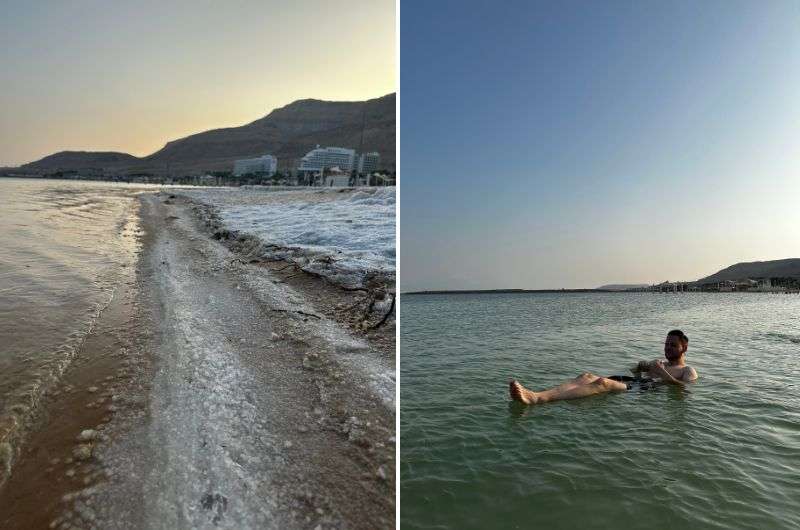
Bobbing in the Dead Sea
It’s not recommended to stay in the Dead Sea water for more than 10 to 15 minutes. Due to its saltiness, being in the water for longer can irritate your skin, and trust me, you don’t want that! The best way to enjoy your time in this extremely salty water is to lie on your back and just chill like a human buoy.
Regular ocean water has a salinity of 3.5%. The Dead Sea? Oh, around 30%, thankyouverymuch! It’s basically a wet mound of salt. The abundance of Dead Sea salt not only creates a unique floating experience but also forms salt deposits along the shore, which apparently have magical exfoliating benefits. I saw tons of people rubbing themselves with the salt, pretending to be at a spa.
Also, guys, be extremely careful when you’re swimming back to shore. The seabed is covered with very sharp, salty rocks, and once you scratch your skin, it hurts like a MF. Been there, done that, and thought my knee was about to fall off. It didn’t, of course, but if you need a comparison, imagine a tough guy catching a cold—yep, it was that serious!
After you rinse off, make sure to let your skin become completely dry before getting dressed or moving on. This can help you avoid irritation from any remaining salt.
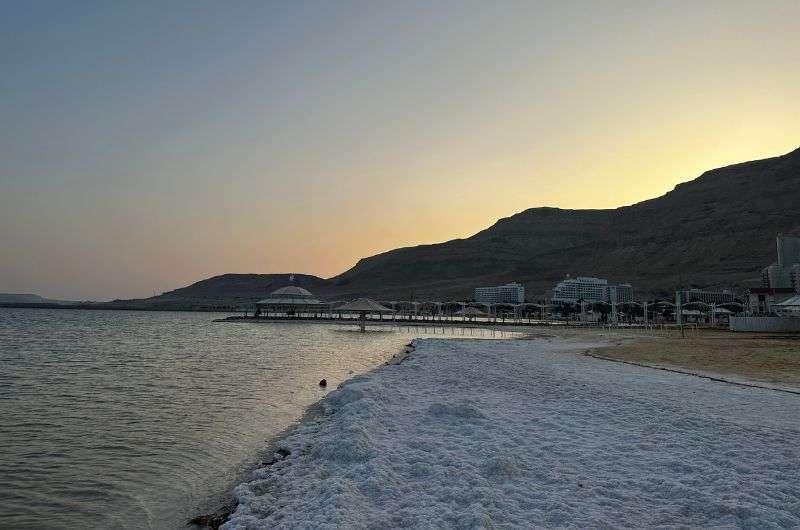
Winters are the best around the Dead Sea!
The best time to visit the Dead Sea is in the winter months. Let me tell you why. Since the Dead Sea lies at an ultra-low elevation and is hidden in a sheltered spot, winters are mild, like your grandma’s cozy blanket. We’re talking average January temperatures of 20 °C (68 °F). Frosty days? Nah, those don’t happen here.
Now, summer, on the other hand, is a whole different story. It’s not a day at the beach, it’s a day in the oven, with a high score of 50 °C (122 °F). Trust me, you don’t want to be here at this time of the year. Plus, winter is prime time for exploring Israel on foot. Think hiking, my friends. But we will talk about that later.
Since we have settled that winter is the best season to visit the Dead Sea, don’t be afraid you’ll be cold once you get out of the water. Israel’s got you covered. Their beach showers are running hot water, so you can just stand under it for however long. High five, Israel—another thing you outrun the majority of the world with!
Pro tip: Keep in mind that many resort pools and beach paths close when the sun sets, so plan your activities accordingly.

If you’re planning a trip to the Dead Sea, keep these safety tips in mind so you can enjoy the experience without the classic rookie mistakes:
The water is extremely salty — roughly ten times saltier than the ocean. Avoid getting it in your eyes, nose, or mouth. It burns like crazy.
Rinse immediately after swimming to wash off the thick salt layer. Most Dead Sea beaches have freshwater showers for a reason.
Wear water shoes. Many beaches are covered in sharp salt crystals and uneven rocks. Barefoot = instant regret.
Use an older swimsuit. The mineral-rich water is fantastic for your skin but brutal on fabrics. Bring something you don’t mind sacrificing.
Don’t shave 24 hours before going in, or you’ll feel like your skin is on fire.
Stay hydrated. The combination of heat, sun, and high salinity makes you dehydrate faster than you think.
Do not drink the water! If you do, even by accident, find a lifeguard and tell on yourself. It’s dangerous!
Take shade breaks. The sun around the Dead Sea (both the Israel and Jordan sides) is intense year-round.
Don’t jump or splash. The water is too dense, and splashing increases the risk of salt getting into your eyes. Don’t put your head in the water (I would hope this is obvious).
Float on your back, not your stomach. It’s the safest and most comfortable way to enjoy that famous Dead Sea buoyancy.
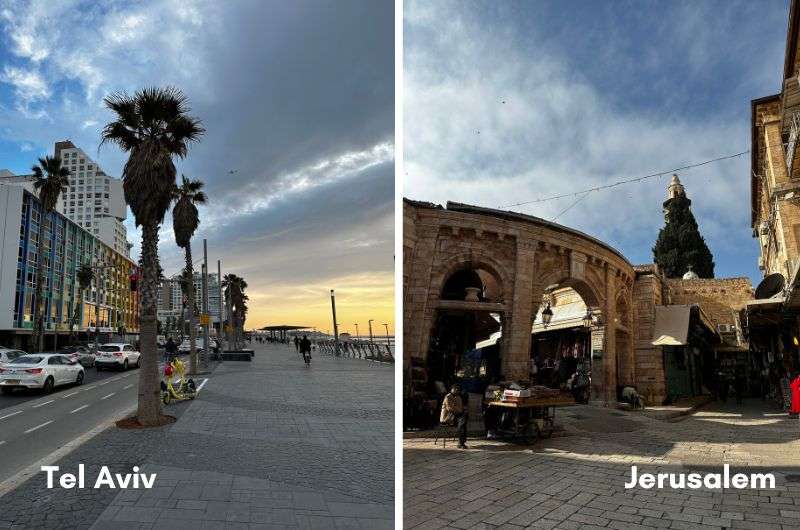
How to get to the Dead Sea? Let me tell ya!
The easiest way to get to the Dead Sea is by car. So, rent a car, hit the road, and you’ll be by the Dead Sea in no time as the drive from Tel Aviv to the Dead Sea takes about an hour and 30 minutes. If you’re traveling to the Dead Sea from Jerusalem, the drive gets even shorter and takes about 45 minutes.
You could take a private tour if you’re not comfortable driving, but those mostly last just one day. This is a well-reviewed full-day tour of the Dead Sea, Masada, and Ein Gedi that goes from both Jerusalem and Tel Aviv.
Driving in Israel is great, their roads are in good shape, and except for a few honks on the way, it feels comfortable driving around. If you want to know more about the traffic signs, parking, and other tips when traveling around Israel, read my Israel travel tips.
A public bus to the Dead Sea is available from major cities like Jerusalem and Tel Aviv, offering a budget-friendly but way less comfortable alternative to driving. You will also have trouble exploring without your own car if you want to see the adventurous things to do around the Dead Sea.
To be honest, if I were to agree on sharing a vehicle with other people, I’d rather go on a guided tour, so at least I’m getting some extra information while I’m at it. Consider this full-day tour from Jerusalem (includes sunrise at Masada, then Ein Gedi and the Dead Sea).
You might also be interested in reading:
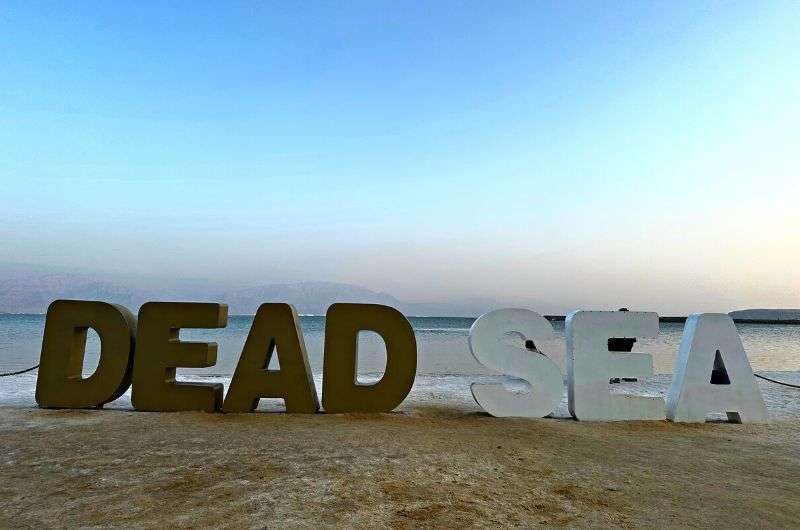
Let’s spend 3 amazing days in the Dead Sea!
This is the proposed itinerary for spending 3 days in the Dead Sea region:
Day 1: Qumran National Park, Saint George Monastery, and Kalia Beach
Day 2: Nahal Arugot Trail, Ein Gedi Botanical Garden, and Sodom Mountain
Day 3: Masada, Mount Sodom, Lot’s Wif,e and Zohar Fortress
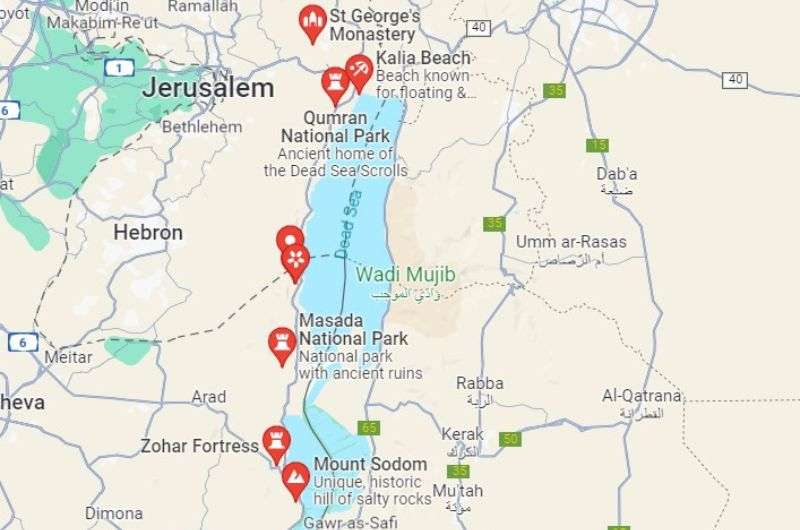
Here’s a map of all the places mentioned in this article
We’re starting in the northern part near the best beach that is in the Dead Sea region—Kalia Beach, making our way to the southern part of the Dead Sea.
The Dead Sea Highway is the main scenic road that connects these destinations, providing easy access to the region's top attractions.
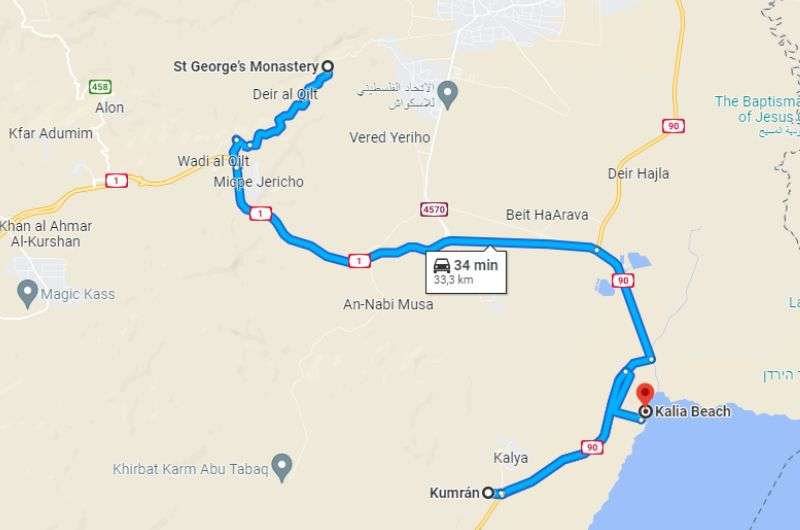
Get the route of the 1st day of this itinerary on Google Maps
Main sites visited on day 1: St George’s Monastery, Qumran National Park, and Kalia Beach
Restaurant tips: Lowest Bar in the World
Hotel recommendations: Kalia Kibbutz Hotel
Today, head out from Tel Aviv or Jerusalem early in the morning to skip the morning rush hour and get on the road following Route 1 all the way to Dead Sea. The drive itself passes several scenic lookouts offering amazing views of the Dead Sea and surrounding landscapes, and since you’ll spend most of the day by the Dead Sea, you can take your time and take some pictures on the way, no rush.
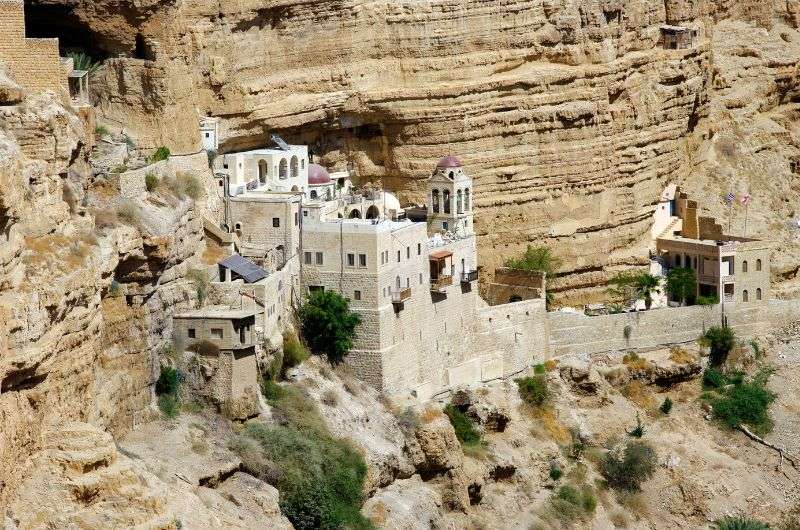
St. George’s Monastery—a monastery on a cliff
Saint George Monastery is located in the northern part of the Judean Desert, and it isn’t your typical monastery. It’s built on the cliffs of the northern Judean Desert. It all began back in the 5th century when six monks decided to build this monastery. Legend has it that they chose a spot where the prophet Elijah once hid from Queen Jezebel.
In the 6th century, a monk named Georgius from Cyprus joined the monastery, and since he was quite the legend, they decided to name the whole place after him. Now, when you decide to visit this place, keep in mind there are only a handful of Greek monks running the monastery. They’re pretty welcoming to visitors (unless they’re praying, in which case, give them a minute, sheesh), and they even let women enter, but that’s only because it’s believed that Saint Anne, mother of Mary, lived in one of the caves.
The monastery is open every day from 9 am to 1 pm. Park your car at the beginning of the Wadi Quelt trail. The hike takes about 40 minutes and offers beautiful views. The viewpoint of the monastery is, for sure, magnificent and worth a picture.
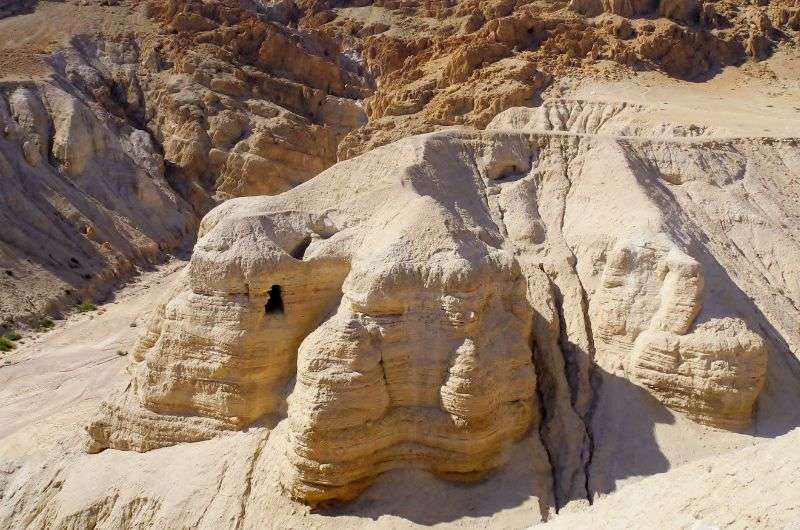
Get ready for a trip through the desert to Qumran National Park!
Our next stop is Qumran National Park. Park your car at the entrance. The Qumran National Park is located in a desert region along the Dead Sea’s northwestern shore.
This national park is not your run-of-the-mill archaeological site. This place is a real historical heavyweight, and it’s all about the Dead Sea Scrolls, the ancient Jewish texts that stirred up quite a frenzy when they were discovered by the Bedouin shepherds back in the 40s.
Why are they of such big significance? Because they’re ancient Jewish texts, covering biblical stories as well as the insight into the ancient society’s life. The Dead Sea Scrolls are in the Israel Museum—boohoo, but it’s still cool to walk the Earth where they were found.
You can see remains of the ancient settlement, ritual baths, cisterns, and even a communal dining room. You can wander around the archaeological ruins, check out the caves where the scrolls were found, and learn about the history of the place through exhibitions and guided tours.
Pro tip: For a deeper understanding of the site's history and significance, consider joining a guided tour at Qumran National Park.
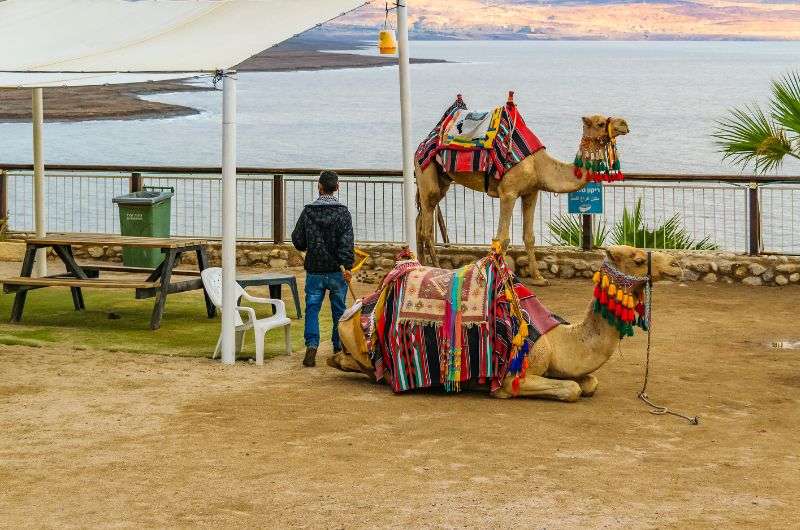
The best beach along the Dead Sea—Kalia Beach... even the camels love it
Alright, we’re here for the Dead Sea experience, aren’t we? You’re spending the night at Kalia Beach, so take your time and enjoy this special place. Kalia Beach is the best beach to visit while at the Dead Sea, and my personal favorite, as it doesn’t draw as many tourists as the beach in Ein Bokek. Compared to other public beaches in the area, Kalia offers a quieter atmosphere and better facilities.
If you’re considering a Dead Sea resort instead of a public beach, keep in mind that resorts usually offer more luxurious amenities like private pools, spa treatments, and all-inclusive packages, but at a much higher cost. Public beaches like Kalia provide a more budget-friendly experience with essential facilities, while still letting you enjoy the unique salt formations and the famous Dead Sea float.
Kalia Beach is located at the north tip of the Dead Sea, so it’s a perfect spot to stop on the way from Jerusalem or Tel Aviv. There is an entrance fee, which might be the reason that it’s considerably less crowded than other areas, but I would much rather pay a fee than lie on a packed beach. Get the day pass, and you’ll get to use all the facilities on the site.
Along the shoreline, you’ll find unique salt formations and striking salt crystals that cover the rocks and the water’s edge. These natural features create a picturesque landscape.
I have already covered the reasons why visiting the Dead Sea is worth it in the intro of this itinerary. However, if you’re still not sure, keep reading because it isn’t even a choice. If you’re in Israel, you simply must visit the Dead Sea.
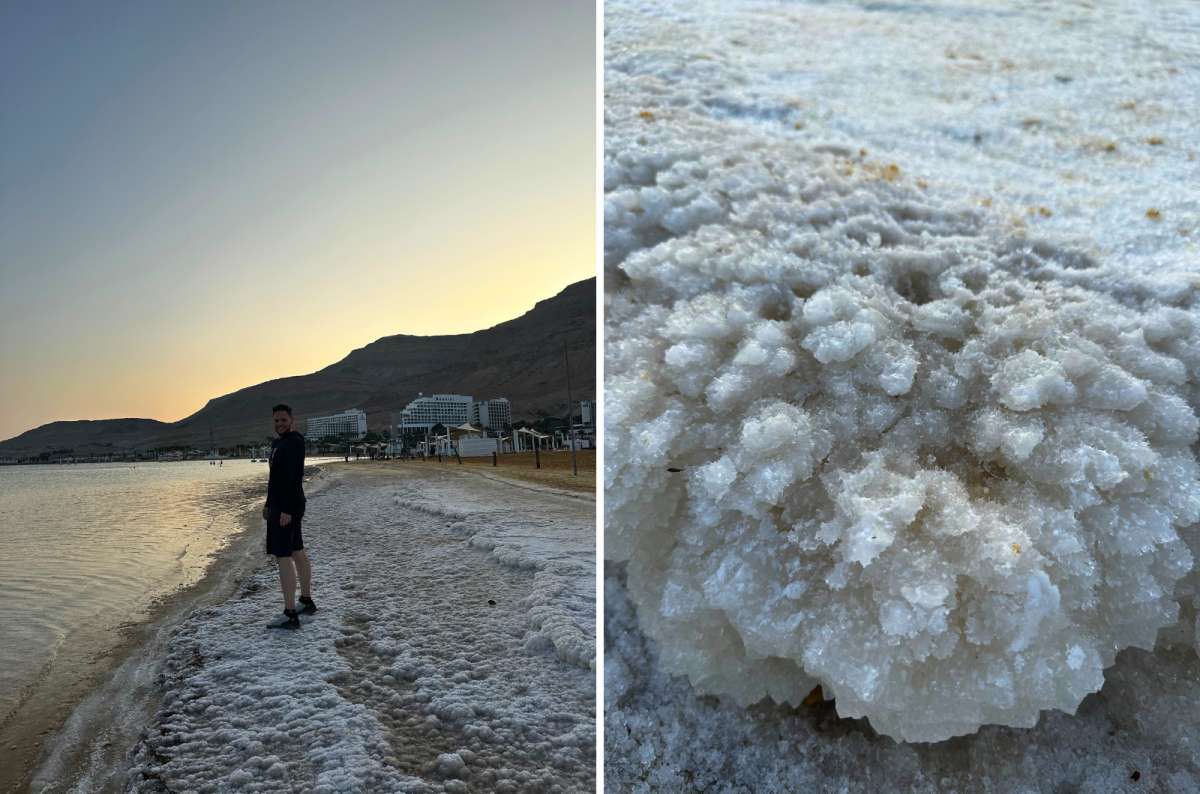
So, after you’re done floating like a cork in the salt lake, sit on the terrace perched above the beach, where you get a front-row seat to the mesmerizing turquoise waters of the Dead Sea, with those golden-brown mountains in the backdrop. It’s the kind of view that makes you want to take a deep breath and just soak it all in, so grab a drink from the Lowest Bar in the World and enjoy the views!

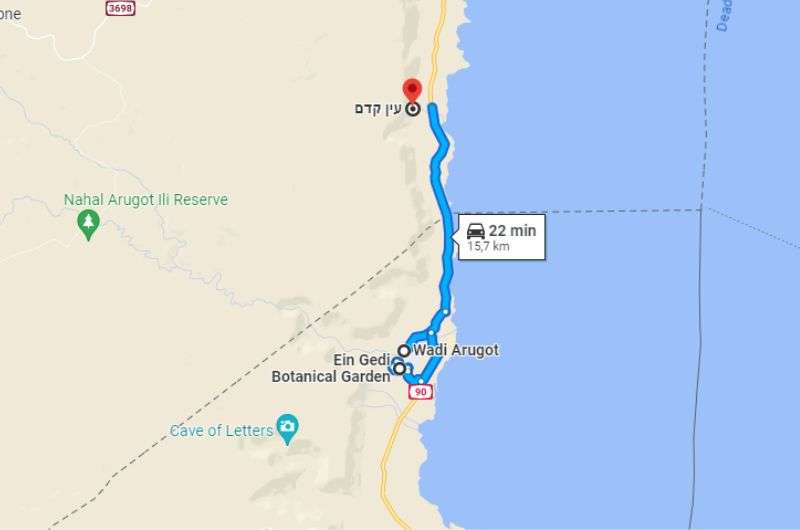
Get the route of the 2nd day of this itinerary on Google Maps
Main sites visited on day 1: Ein Gedi Nahal (Wadi) Arugot Trail, Ein Gedi Botanical Garden, and Ein Kedem Hot Springs
Restaurant tips: Baobar
Hotel recommendations: Ein Gedi Kibbutz Hotel
Today, we’re driving to Ein Gedi. The drive from Kalia Beach is full of beautiful views as you’re passing the coast of the Dead Sea the whole time, so there are plenty of opportunities to take pictures of the amazing landscape.
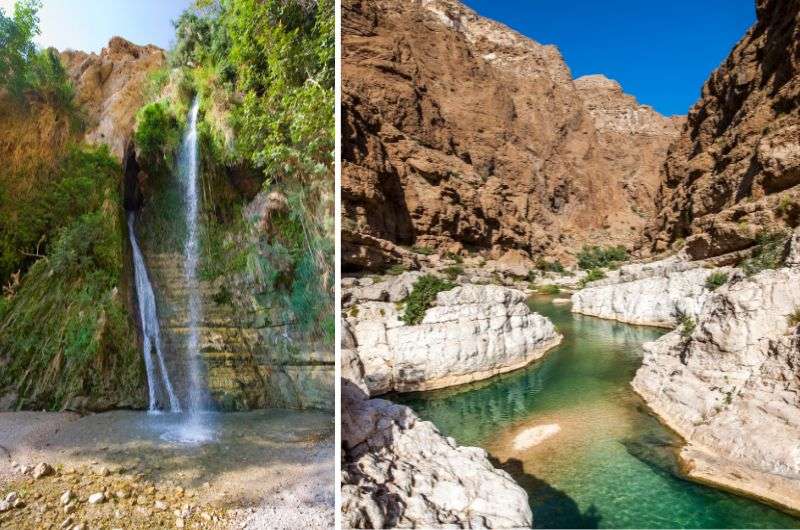
The second day at the Dead Sea calls for a hike!
Ein Gedi is a beautiful oasis that is famous for being King David's hideout when he was hiding from Saul and his army. But let me tell you, this reserve’s got some serious camouflage skills. You park in the parking lot, and you’d think you’re in the middle of a desert. No lush oasis in sight, right? But surprise, surprise, Ein Gedi’s hiding in plain sight.
Now, if you’re up for a stroll, they’ve got you covered with a bunch of walking trails, ranging from very mild ones to more advanced ones. Most folks go for the easy-peasy Nahal David hike to David’s Falls, which takes less than an hour round trip.
Not me though—I recommend doing the Nahal Arugot trail that’s just under 7 km (4.3 mi) and takes around 2 hours and 40 minutes to finish. Choose the blue trail that crosses the river many times (wear waterproof shoes), passes a waterfall, and has you swim in a swimming hole at the end of the trail.
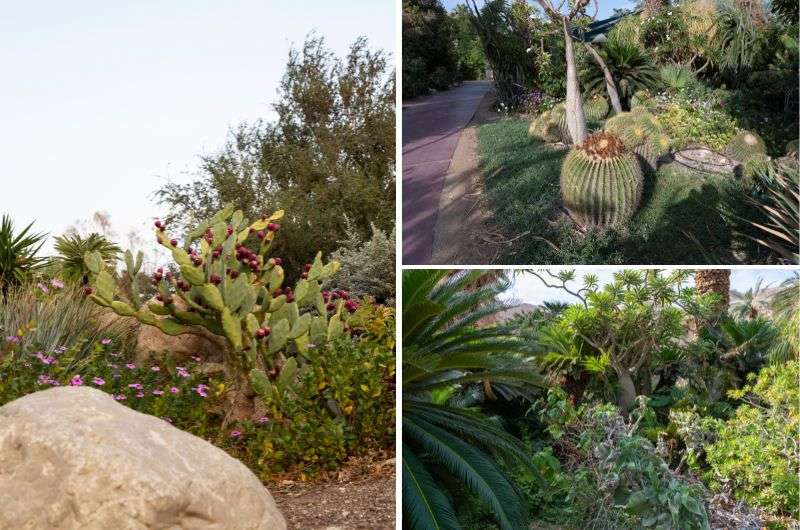
Take a walk in the Ein Gedi Botanical Garden
Since you’re staying in the Ein Gedi Kibbutz hotel tonight, you can wander around the kibbutz as much as you like. The botanical garden covers most of the kibbutz area, so it is hard to miss it, and it will give you something to do while waiting for the check-in.
Even when it’s hot, you can explore the botanical wonders comfortably thanks to the mostly shaded pathways. I’m not much into the walks around botanical gardens, however, this one seems pretty cool. The local community planted over 1,000 different plants and trees, both local and exotic, which is quite impressive given that we’re in the middle of the desert in one of the hottest places on Earth.
Make sure to pass the lookout point facing south, where you’ll be treated to sweeping views that stretch from the Ha’atakim cliffs to Mount Sodom, all the way to the Dead Sea's shores and its sinkholes.
Time to relax in Ein Kedem hot springs!
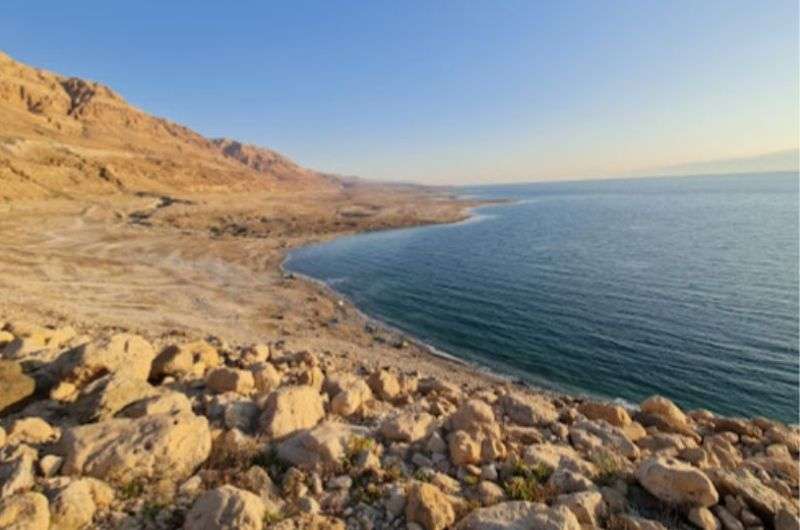
After you check into your hotel, head up North and take a dip in the Ein Kedem hot springs. There are these small pools of boiling water that you can lie in. The hot springs are close to the Dead Sea coast, so once again you’re in for great views. The water smells strongly of sulfur, so it might feel like you’re not in the Holy Land anymore, but quite the opposite. Overall, if you wait till sunset, it’s the perfect end to your day.
Tip: Bring water, as there are no showers, in case the salt gets into your eyes, and wear hiking shoes, the walk to the hot springs is quite rocky.
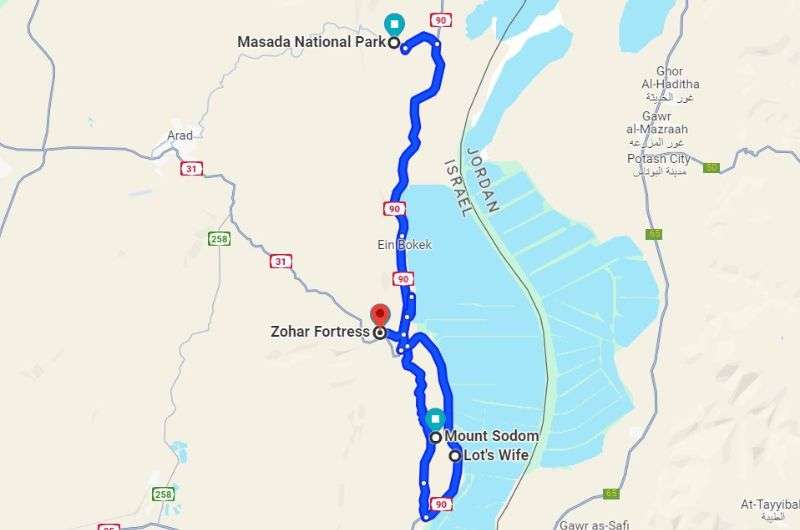
Get the route of the 2nd day of this itinerary on Google Maps
Main sites visited on day 1: Masada, Sodom Mountain, Lot’s Wife, and Zohar Fortress
Restaurant tips: Cafe cafe
Hotel recommendations: Vert Dead Sea Hotel
Today we’re heading down South to the ancient fortress Masada, which, for me, is the absolute highlight of this 3-day itinerary. This place is something else, believe me. You can reach the top of Masada by hiking or by taking the convenient cable car.
Then, we’re driving more south all the way to the Sodom Mountain for some hiking, and we’re ending our trip with—guess what—yes, correct, more hiking to the Zohar Fortress.
I was stunned by the views in Masada!
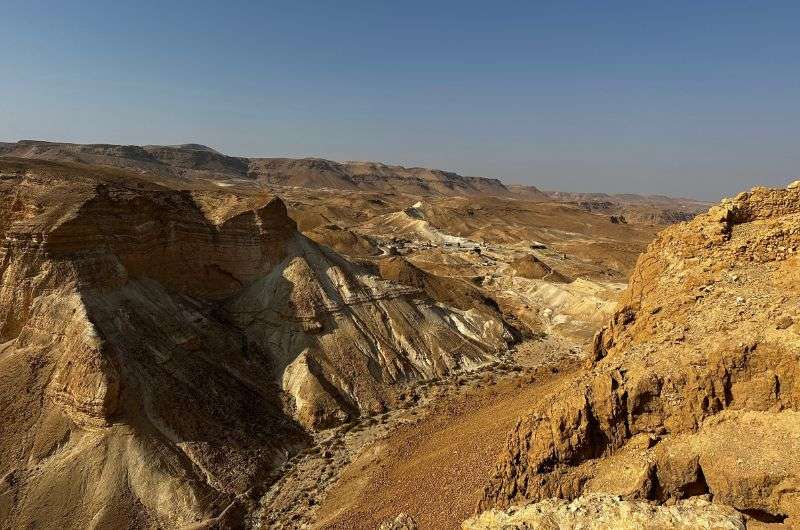
Oh, Masada! I had no clue what I was in for, but you, my friend, left me utterly spellbound. Masada is a true hidden gem that completely surpasses any expectations. I mean, seriously, I didn’t expect it to be this spectacular. It checks off all the boxes on my perfect destination list. It has historical significance, breathtaking views, and a wonderful hike.
So, what’s the deal with Masada, you ask? Well, it’s just one of the most jaw-dropping desert fortresses I have ever been to. Being here makes you believe in ancient legends, even if you’re the most diehard opponent of myths. I’m not surprised it proudly claims its spot as a UNESCO World Heritage Site.
Let me tell you, Masada is enormous. If you don’t have at least 5 hours to stay here, don’t even come—you wouldn’t be able to grasp the magic of this place. From the summit, the views are beyond overwhelming. You get to see the Roman forts that played a pivotal role in battling the Jewish revolt, Roman reservoirs, and the two palaces built by Herod the Great. There are so many cruel stories about the reign of Herod the Great, but his architectural ambition is something to ponder upon even today. His decision to build a massive fortress on top of a steep cliff that is nearly invisible from below was a great move!
If you’re visiting Masada in the winter, you must do the Snake Path hike, so you will have to enter from the eastern part. Park your car in the parking lot, where the Snake Path begins. This trail offers a great hour-long hike, depending on your fitness level. The trail is in great condition, and when your knees have had their fill, once you reach the top, you can gracefully descend using the gondola—no shame in that. Saving your joints from unnecessary agony is always a victory.
Salty mountain
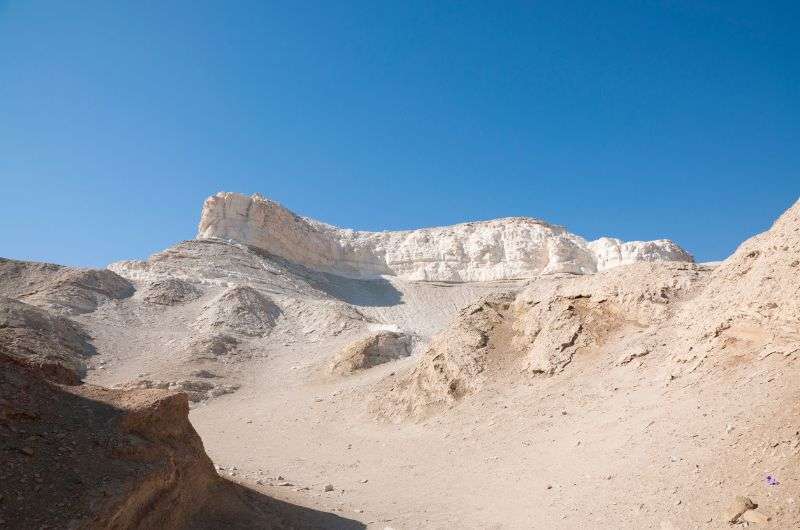
Since I don’t have enough of the spectacular views in this area, we’re heading to Mount Sodom for another hike. The Sodom Mountain is formed by different kinds of rocks, and one of them is cooking salt that turned into a solid rock due to the underground pressure. Isn’t that interesting? Just hold your urge to lick the rocks here to find out if it really is salty.
Enough with the geology lesson, we’re doing the Mount Sodom Loop via Fish Trail and Sodom Button Lookout. Park your car at the beginning of the trail and get ready for a steep ascent, so make sure you have good hiking shoes and plenty of water, as there is no shade there and the temperatures can get very hot. The hike is quite challenging, but it offers beautiful viewpoints of the whole area of the Dead Sea.
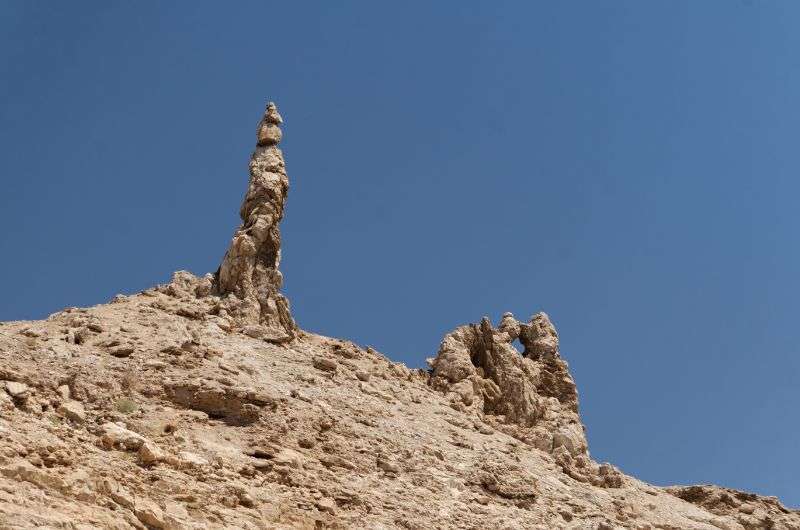
Lot’s wife turned into a pillar of salt
Before you drive to the last stop of today, make sure you take a (hopefully not your last) look at Lot’s wife. What’s the story behind it? Well, legend has it that it all began when Lot's wife took one final look back at the city of Sodom while running away from the wicked town and turned into a pillar of salt. It’s safe to say her salty transformation left a lasting impression on the landscape.
Tip: You can either just drive around it or park at the side of the road and take some pictures.
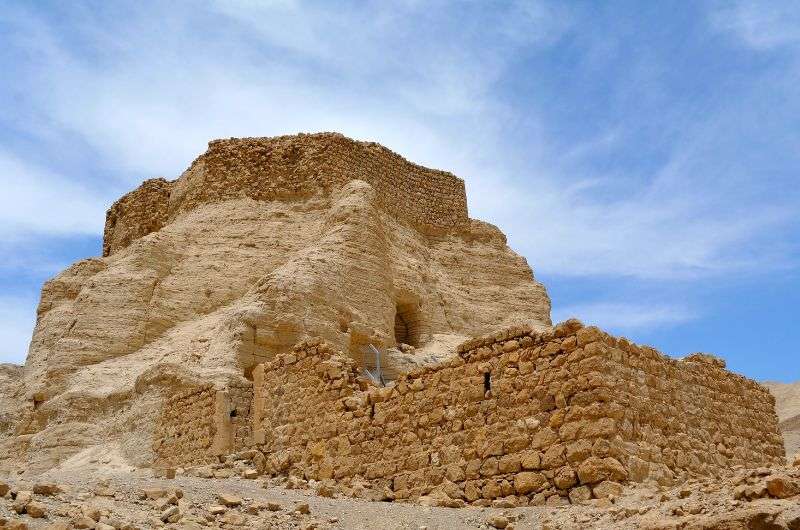
Zohar Fortress
There isn’t much known about the purpose of the Zohan Fortress, though it is believed that it was built to monitor the surrounding area in regard to salt smugglers. Also, it isn’t well-preserved, nevertheless, it’s a good hike if you’re feeling up to it after exploring Masada and hiking Mount Sodom.
The people living in this fortress were no strangers to the art of water conservation. They knew that every single drop counted. So, they created a clever water system to capture the rainwater and had it collected in a deep-water pit right next to the fortress. Just be careful, it can get flash floods in the winter, so check the weather forecast first before visiting.
And that’s a wrap of our 3-day Dead Sea itinerary, my friends. We’ve covered the most beautiful places in the Dead Sea area, and now it’s time to return to the big cities and explore the Holy Sites.
For thousands of years, the Dead Sea region has played a starring role in the stories of the Middle East. Revered as a sacred site in Christianity, Judaism, and Islam, this area is dotted with historical sites that have witnessed the rise and fall of ancient civilizations.
The Dead Sea has inspired countless legends and continues to attract pilgrims and history buffs (like me) alike. The region’s cultural heritage is reflected in everything from the local traditions to the architecture of its towns and resorts. That’s why it's so interesting seeing what to do at the Dead Sea beyond bobbing up and down in the water.
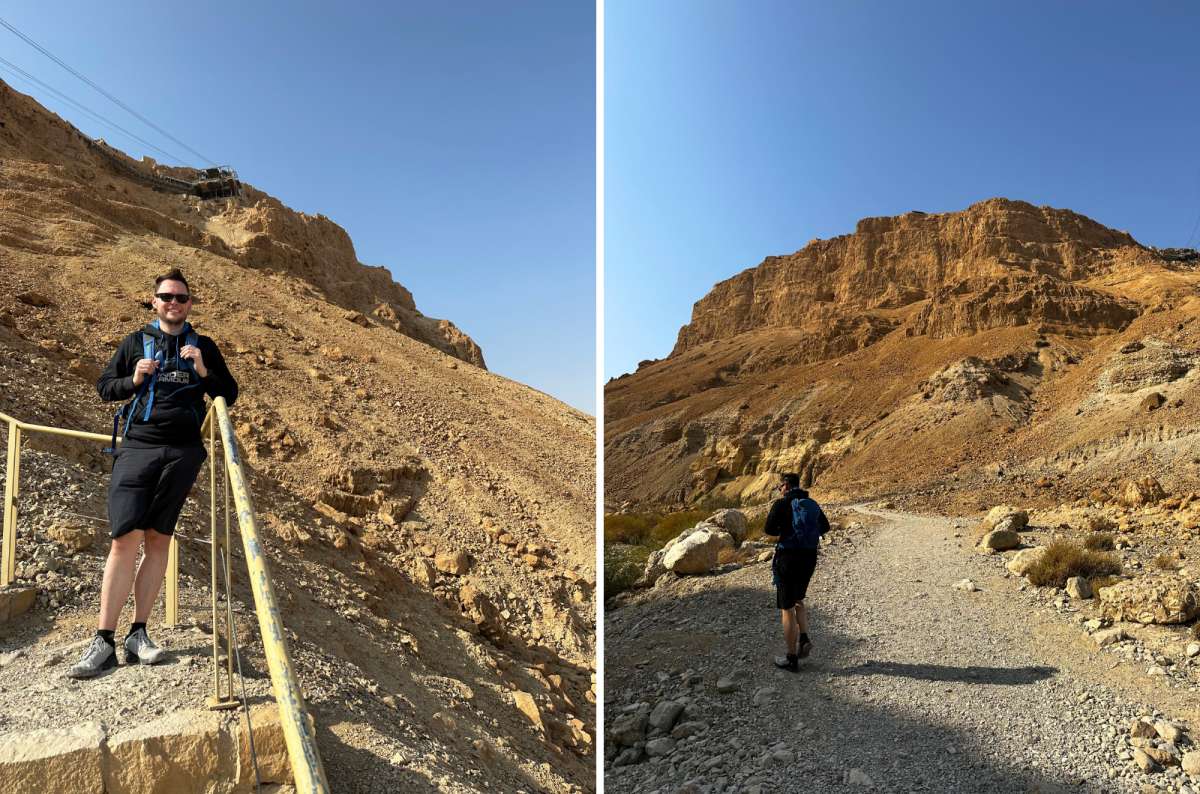
After spending three days exploring the Dead Sea region in Israel, I can say one thing with confidence: this place is absolutely worth visiting—and not just for the floating on water photo. Sure, bobbing on top of insanely salty water is a weirdly satisfying bucket-list moment, but what I personally liked most was everything around it: the desert hikes, the dramatic viewpoints, and the ancient fortresses.
If you follow this Dead Sea itinerary, you’ll see the side of the Dead Sea most day-trippers never bother with. Hike Ein Gedi, climb Masada, wander Qumran, stare at salt formations that look unreal, and end each day with the kind of sunset that makes you stop talking for a minute (rare for me).
If you still think the Dead Sea is “just a salty lake,” you’re doing it all wrong.
This post contains affiliate links. If you make a booking through one of my links, I may earn a small commission—at no additional cost to you. Thank you for your support!
Is the Dead Sea worth visiting?
What does it feel like to be in the Dead Sea?
How long can you lie in the Dead Sea?
What is the best time to visit the Dead Sea?
How to get from Tel Aviv or Jerusalem to the Dead Sea?
Dead Sea suggested itinerary for 3 days
Day 1, stop 1: St George’s Monastery
Day 1, stop 2: Qumran National Park
Day 2, stop 1: Ein Gedi and Nahal (Wadi) Arugot Hike
Day 2, stop 2: Ein Gedi Botanical Garden
Day 2, stop 3: Ein Kedem Hot Springs


Hi, I’m Jan. I travel fast and intensely, whether I’m exploring the buzz of Tokyo in 3 days or road-tripping through mountains and beaches on a 3-week Thailand adventure. And no matter where I am, you’ll always find me in a comfortable hotel at night and eating the best food.
If that sounds like your kind of journey, hop on board, and let’s explore the world together!
I started this blog after realizing how tough it can be to find reliable, authentic travel info. You wouldn’t believe how many “travel bloggers” never even visit the places they write about! On Next Level of Travel, you can count on my full honesty and insights drawn from my firsthand experiences.
Here’s the deal: not every destination is all superlatives and unicorns. I’ll let you know if a tourist attraction isn’t worth your time, like skipping overrated stops in my 2-week Spain itinerary. And when I find something truly special—like the perfect mix of culture and nature in Cape Town—you can trust that it’s worth adding to your itinerary.


Comments | Thoughts? Give us a shout!