




I’ve been to Venice, Italy, three times over the past 15 years, and on my latest trip I made the mistake of trying to see pretty much everything. I’m glad I did it once, but I definitely wouldn’t do it again.
For a first visit, I think 2 days in Venice is the sweet spot. One day is possible if you move quickly, but you’ll spend most of it rushing. Three days of churches, museums, and palaces are probably more than most people need.
Venice also takes longer to explore than it looks. I’ve walked more than 25 km in a day here, partly because getting from A to B rarely means walking in a straight line. There’s always another bridge, canal, or dead end along the way.
So, this Venice itinerary isn’t about squeezing in every attraction. I’ve already tried that. Instead, I’ve arranged the places I think are worth your time into a logical two-day route, with enough flexibility to cut the less important stops if you’re running late.
Read more about my travels to Italy in my things to do in Italy review, as well as my 10-day Italy itinerary.
This is how I’d divide the two days. I deliberately split the main San Marco sights between them rather than seeing everything around the square in one go. Otherwise, it’s very easy to spend half a day ticking off the biggest attractions and then treat the rest of Venice as an afterthought.
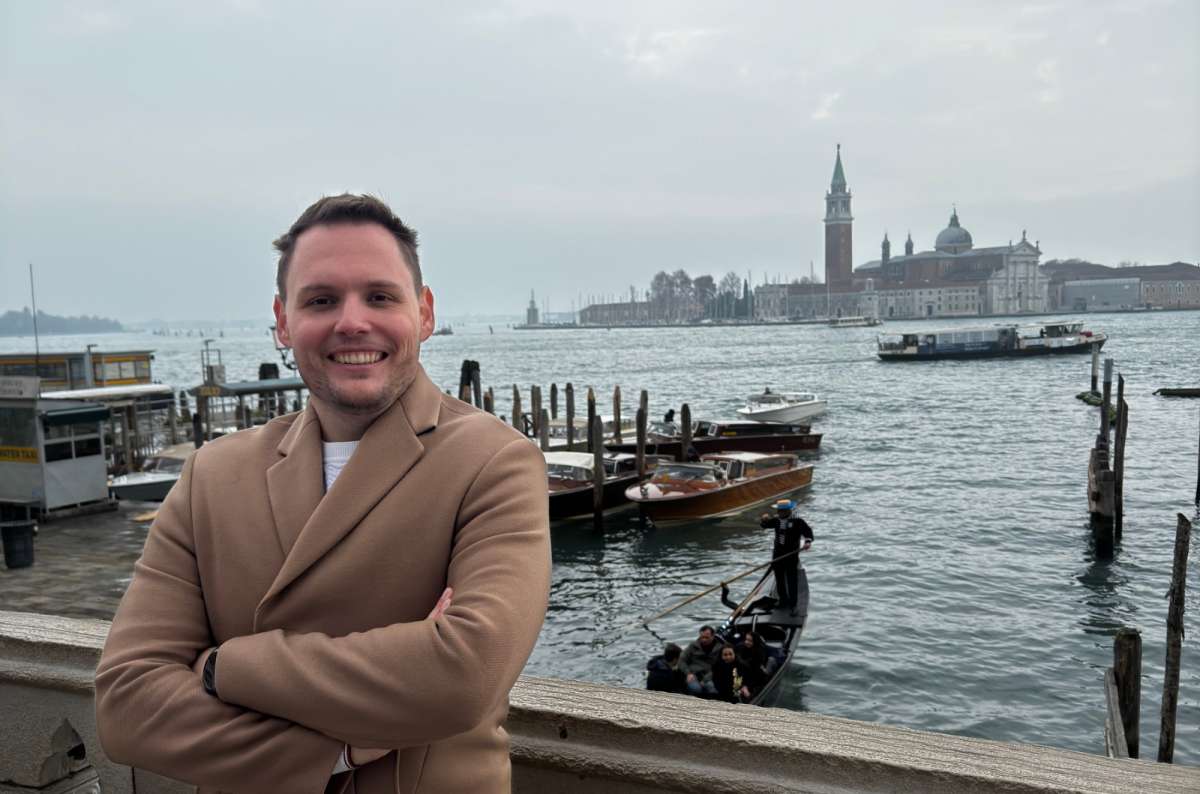
San Giorgio Maggiore from the San Marco waterfront in Venice
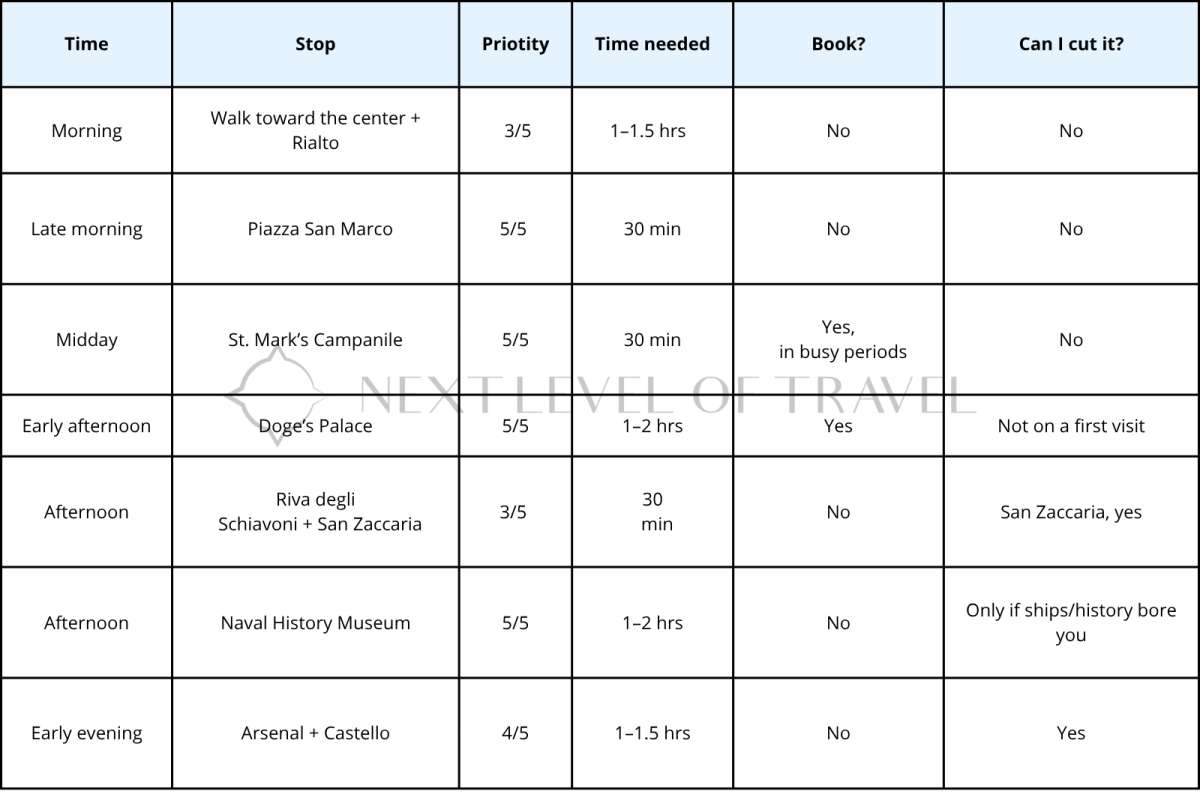
Day 1 of my Venice itinerary at a glance
Planning tip: If day 1 falls on a Monday, consider swapping the two days. The Naval History Museum is closed on Mondays, and it's one of my favorite stops in Venice. Just check the other museums' closing days before switching things around.
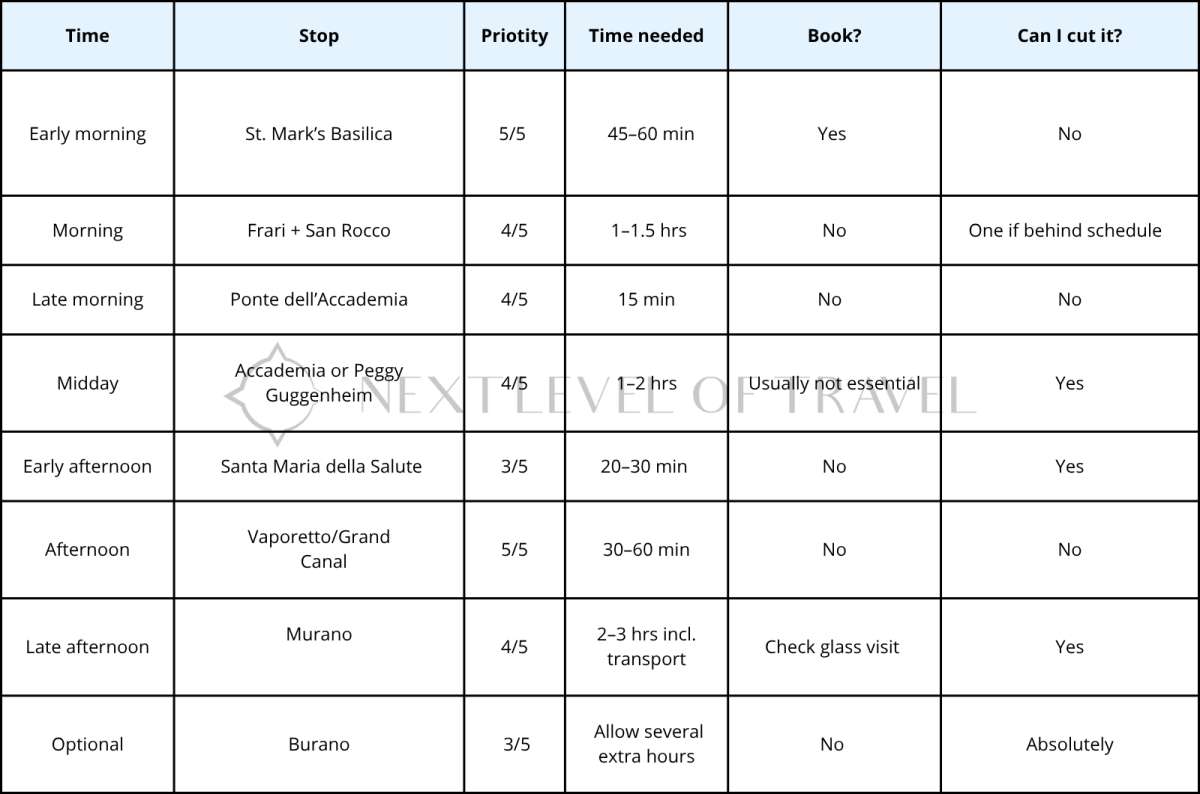
Day 2 of my Venice itinerary at a glance.
These times are only a rough guide. I’ve walked enough around Venice to know that getting around usually takes longer than you expect.
The first day covers the classic center before continuing east into Castello. It’s a long walking day, but I prefer doing it this way because you see much more of Venice than if you take a boat straight to San Marco.
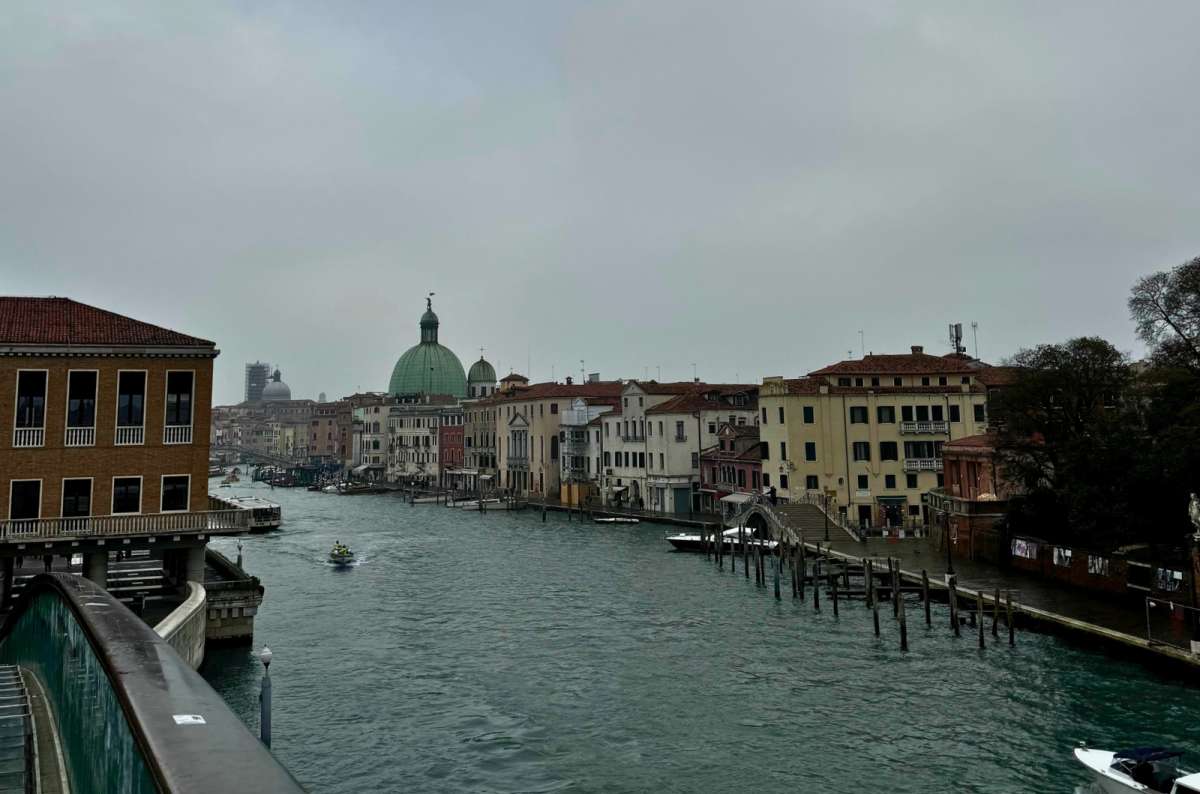
The Grand Canal from Ponte della Costituzione, right between Piazzale Roma and the train station
If you’re arriving by train, just start from Santa Lucia station. If you’re driving, I’d park at Tronchetto. That’s where I’ll leave the car next time. The parking spaces felt more comfortable, and the whole place less sketchy than the other options I used or saw.
If you’re trying to save money, parking in Mestre and taking public transport into Venice can make more sense. I wouldn’t spend too much time optimizing this, though—the important thing is to get into Venice early.
From the western edge of Venice to the center is a decent walk, but I think it’s worth doing once. You immediately see the less polished side of the city rather than arriving directly among the crowds around San Marco.
That said, after doing it myself, next time I’d probably take the vaporetto/water bus. You’ll understand why by the end of these 2 days in Venice.
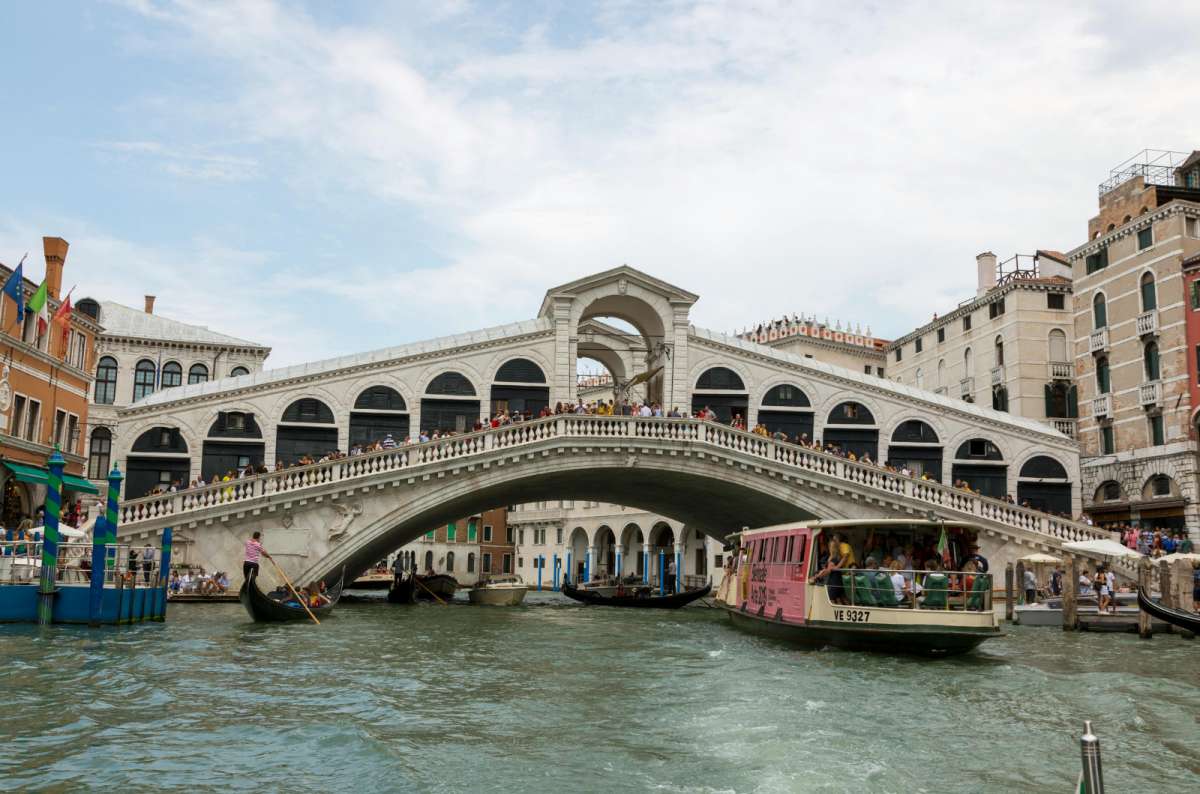
The Rialto Bridge, Venice’s busiest selfie spot. The view from the vaporetto is better and nobody elbows you
Rialto is one of those places you’re going to pass anyway, so there’s no reason to overthink it.
The bridge is impressive, but I wouldn’t treat it as one of the highlights of Venice. Cross it, look down the Grand Canal, and keep going.
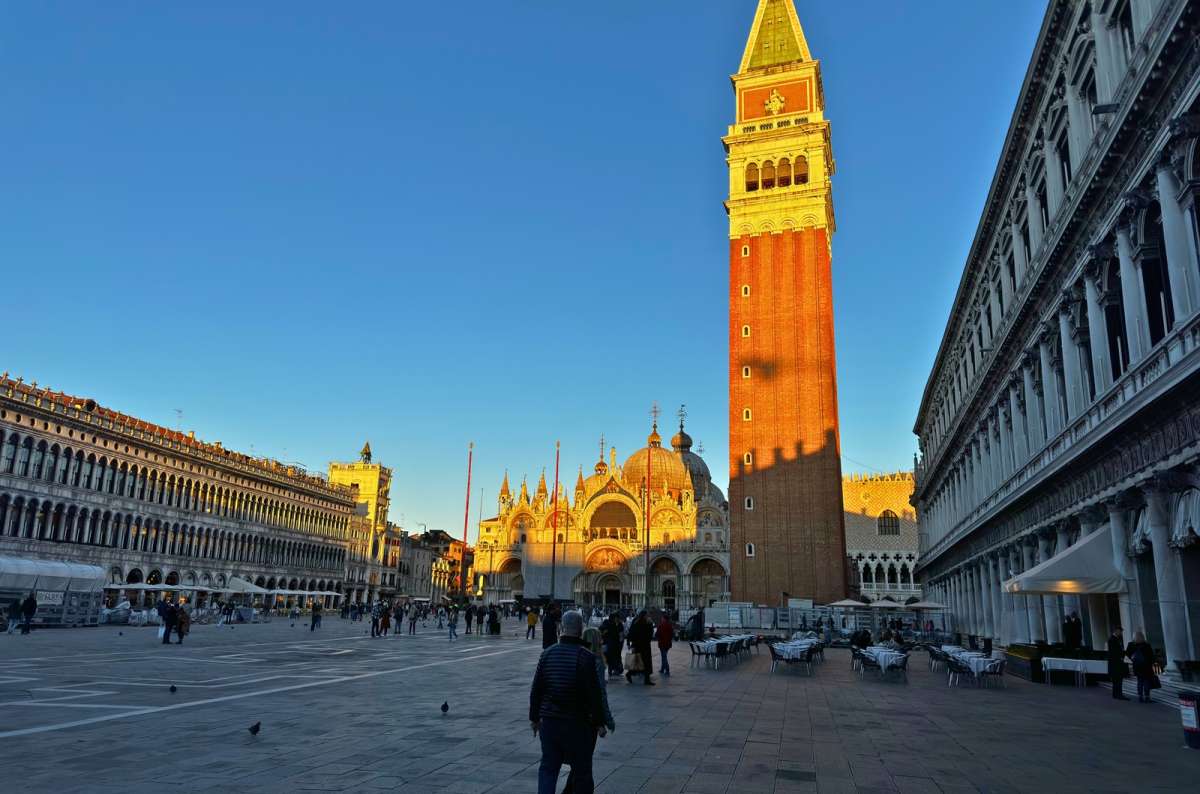
Piazza San Marco, one of the few famous places that actually lives up to the hype
Don’t arrive at Piazza San Marco and immediately disappear into the next ticketed attraction. Give yourself some time to actually walk around it first.
This is one of the famous places in Venice that completely lives up to its reputation. Don’t immediately disappear into another ticket line; walk around the square first. We’ll come back for the Basilica tomorrow.
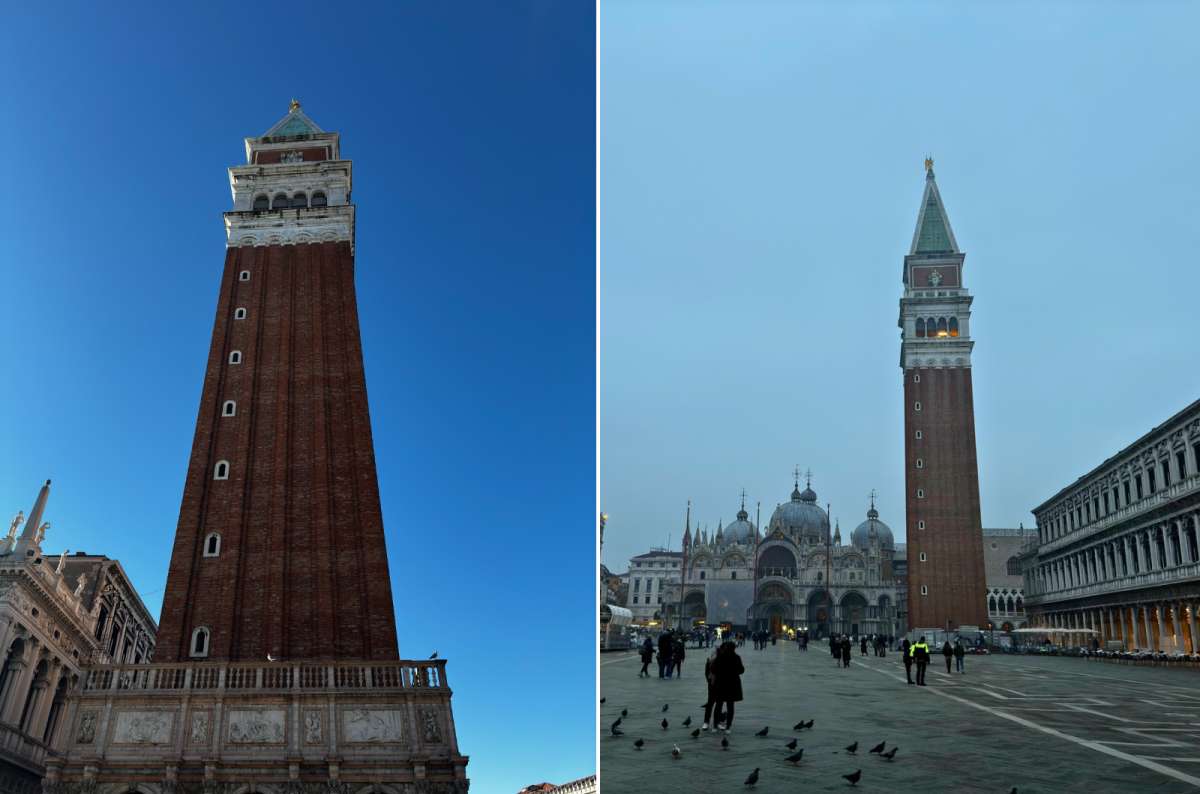
St. Mark’s Campanile in Venice, almost 99 m tall. Relax, there’s a lift
For the amount of time it takes, the bell tower is one of the best payoffs in Venice.
You take a lift almost all the way up, so there’s no exhausting tower to climb eating into the day. From the top, you get a completely different perspective over Venice, the lagoon, and the rooftops. The tower definitely belongs in your 2-day Venice itinerary.
Pro tip: In busy months, the lift line is the only exhausting part, so book a timed Campanile ticket ahead.
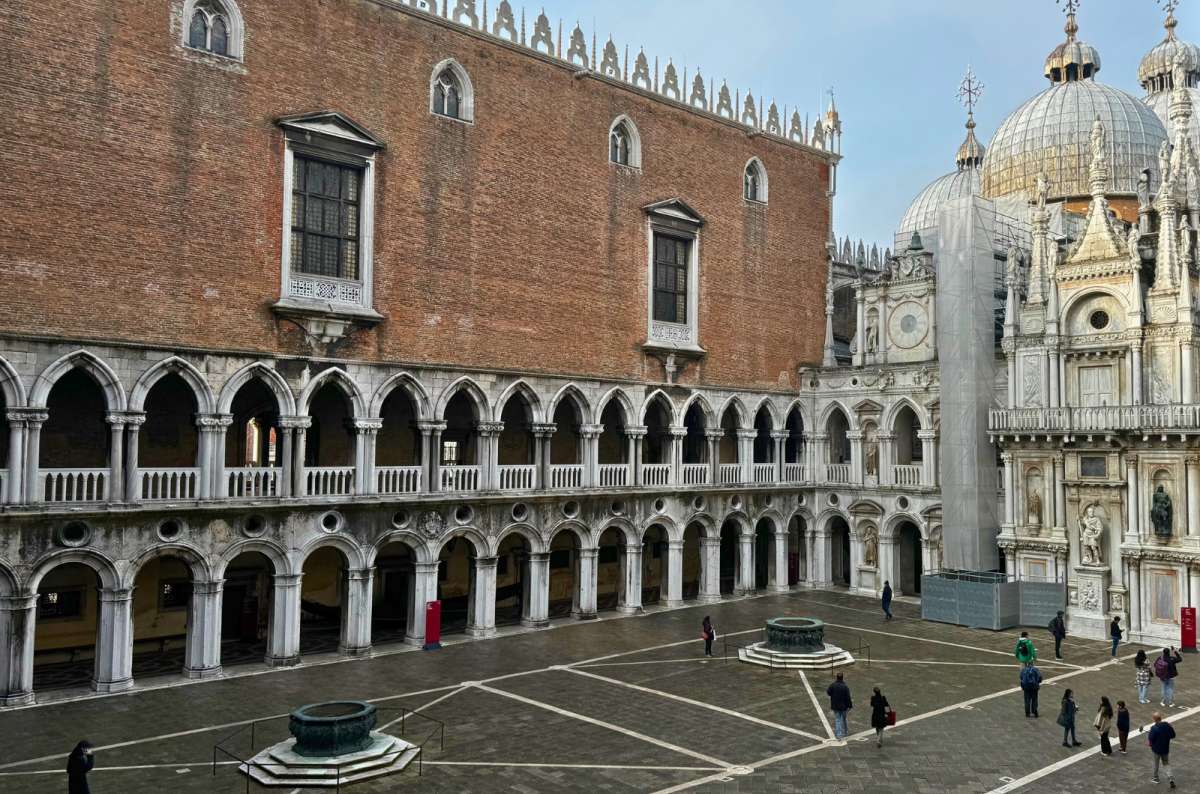
The courtyard of Doge’s Palace, with the Basilica domes peeking over the wall
Doge’s Palace is one of the expensive Venice attractions I’d still protect on a first visit.
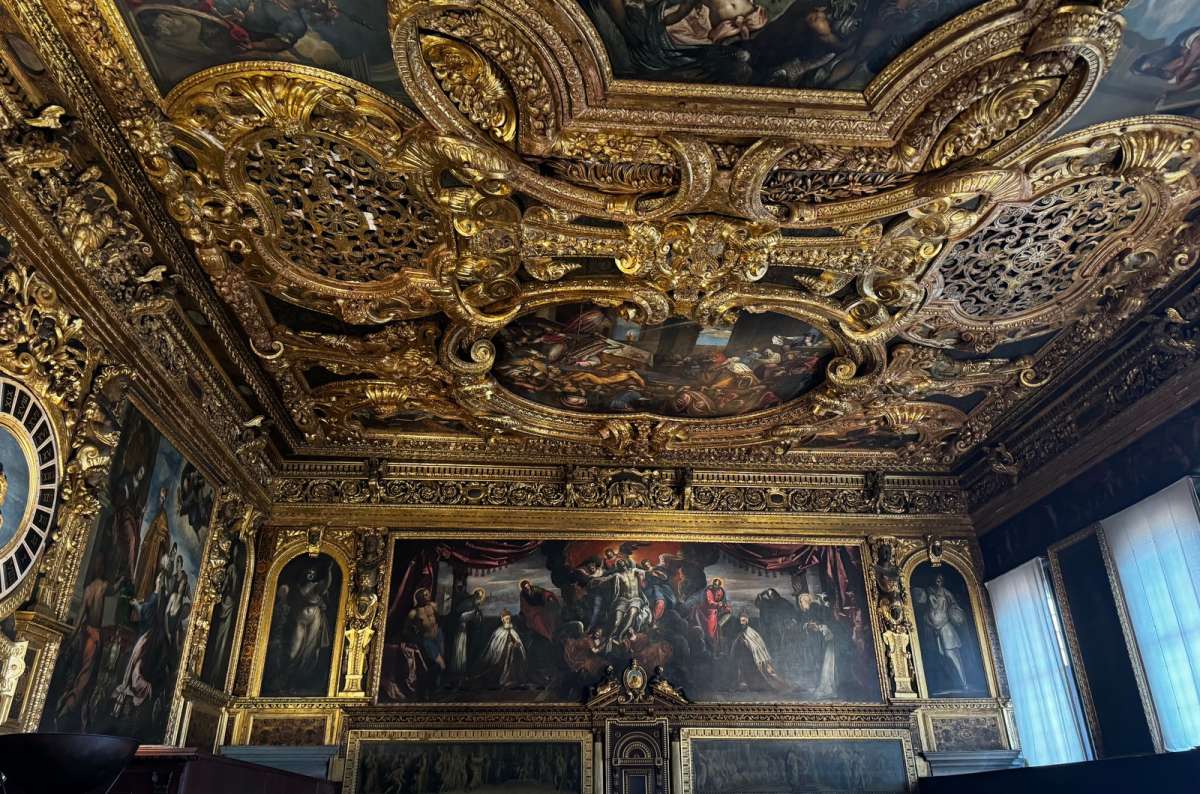
The Senate Hall in Doge’s Palace
There’s much more inside than the Bridge of Sighs—I particularly liked the government rooms, prison, and the less glamorous side of how Venice was actually run. Give it enough time, but don’t add another big San Marco museum afterward.
Pro tip: If you’re visiting in high season, grab a reserved entry ticket to Doge’s Palace and walk past the ticket line.
I cover the experience, tickets, and whether the price makes sense in Doge’s Palace: is it worth it?
If you’re planning to visit several paid attractions, I also break down the costs and inclusions in my Venice city pass: is it worth it? guide.
After several ticketed sights, this part of the route is deliberately easy.
This stretch gives you a break from interiors, plus open views across the lagoon before you continue into Castello.
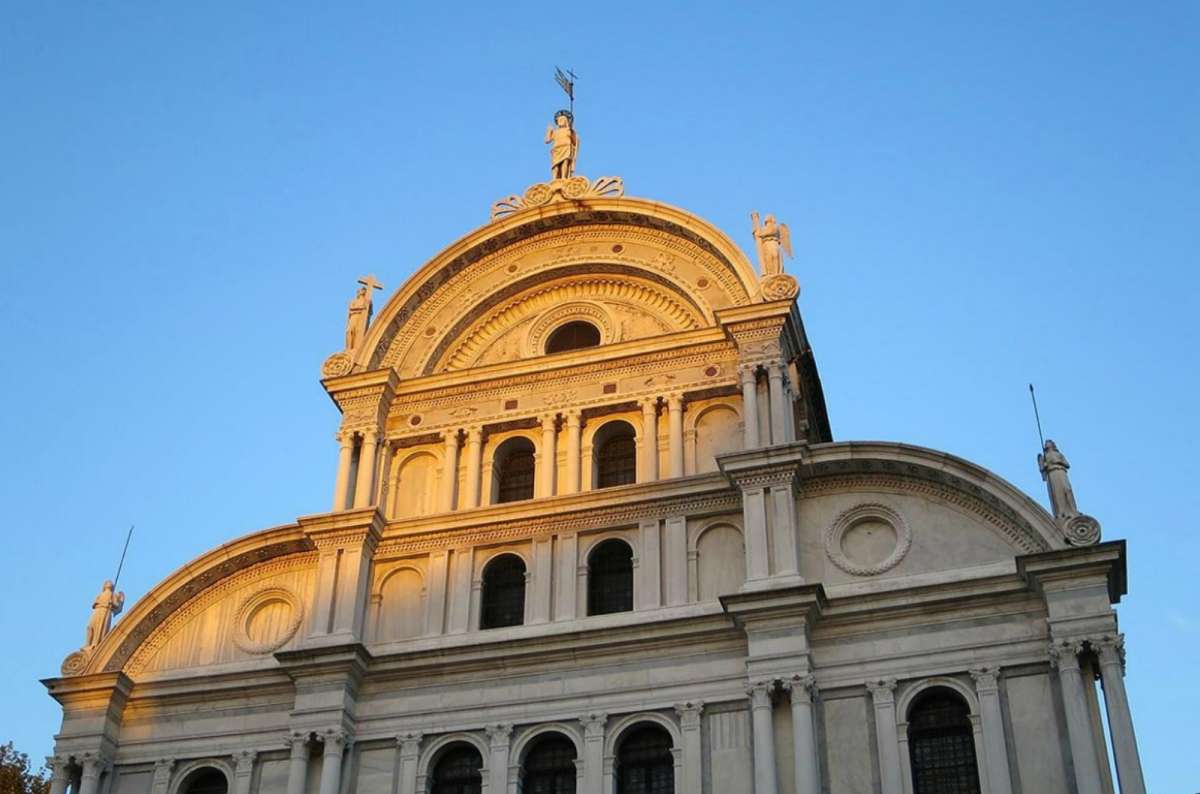
San Zaccaria Church
San Zaccaria isn’t all that spectacular from the outside, but admission is free, and there are some beautiful paintings inside.
It’s right on the route, so why not go in? You only need about 10 minutes. The crypt and museum areas require a separate ticket, so I’d skip those here and keep moving.
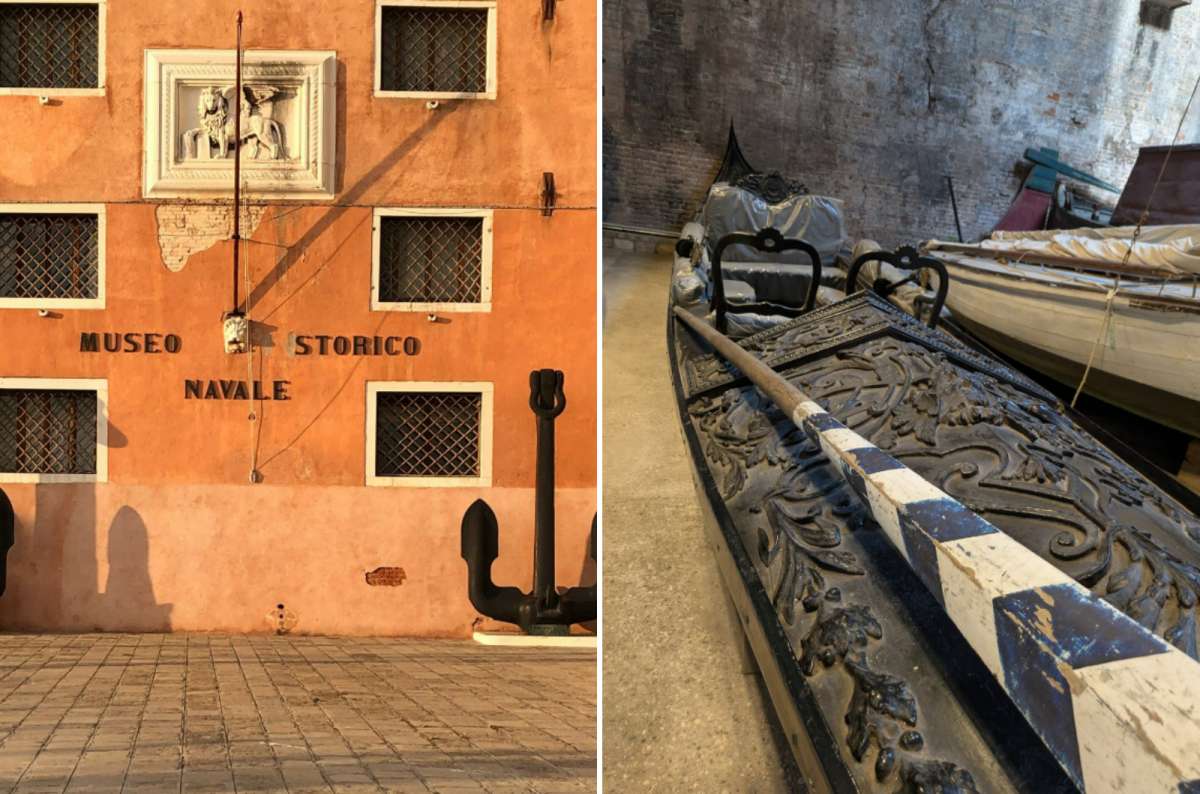
The Naval History Museum in Venice. I expected a boring maritime museum and got torpedoes, so I’m not complaining
The Naval History Museum was one of my biggest surprises in Venice. It doesn’t appear nearly as often in itineraries as San Marco or Rialto, but I’d rank it above plenty of the more famous sights.
I expected a fairly standard maritime museum and ended up finding everything from old Venetian ships and gondolas to torpedoes, weapons, and models. The section on the Battle of Lepanto was especially interesting. If that sounds even remotely like your thing, I wouldn’t cut this just because it’s less famous.
Watch the closing time: The museum's last admission is at 5 pm from March 21 to November 22, and 4 pm from November 23 to March 20. If Doge's Palace takes longer than expected, skip San Zaccaria's interior, keep the waterfront walk short, and head straight to the museum. You can explore Castello afterward without worrying about a ticket desk closing in your face.
For a broader ranking of what I think is actually worth seeing, rather than how to fit it into two days, see my best things to do in Venice.
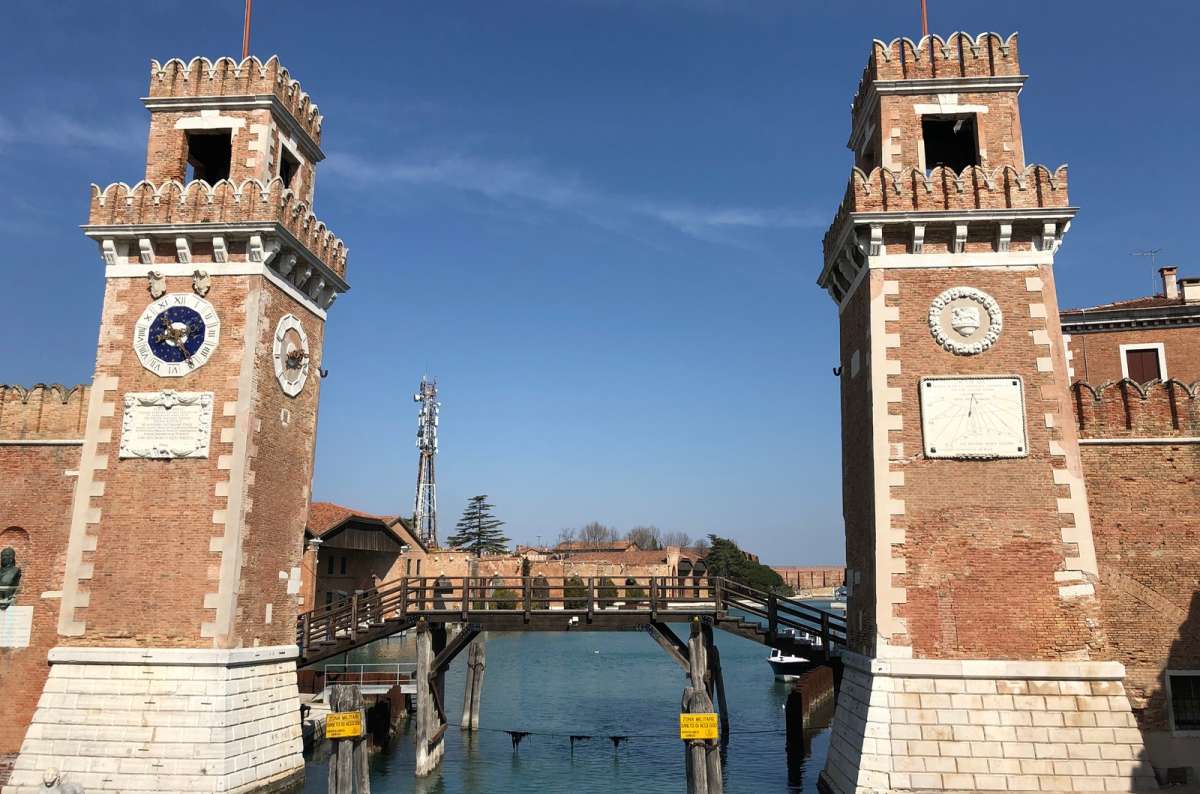
The Arsenal water gate in Venice. See the yellow signs? That’s the Italian military politely telling you this is as far as you go
From the museum, continue past the Arsenal and farther into Castello.
I liked the old shipyard and huge walls around the Arsenal, although you can’t simply wander through most of it. If naval history does nothing for you, don’t force it—walk through Castello, get something to eat around Via Giuseppe Garibaldi and head back.

Day 2 covers more ground, and this is where I’d start using the vaporetto strategically.
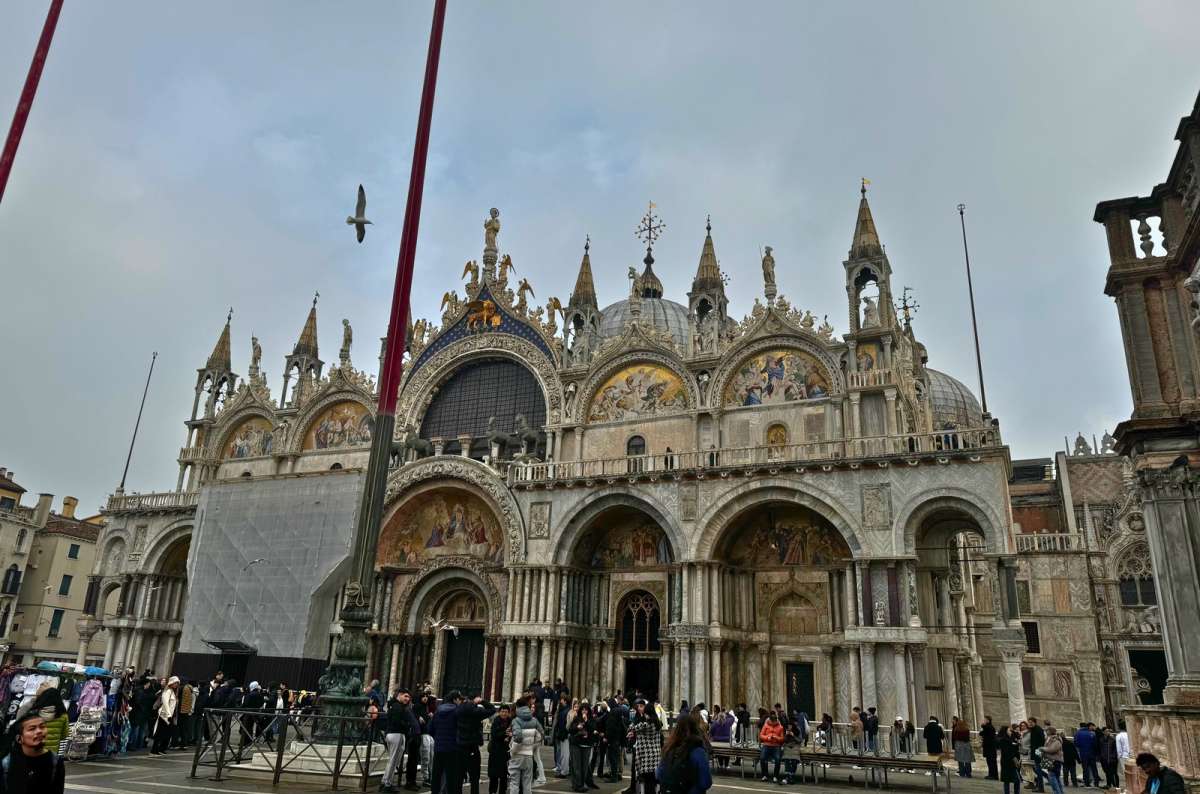
St. Mark’s Basilica in Venice, and this crowd is just the warm-up. Book a time slot, or you’ll spend Day 2 studying the facade from the line
Head to Piazza San Marco for the Basilica.
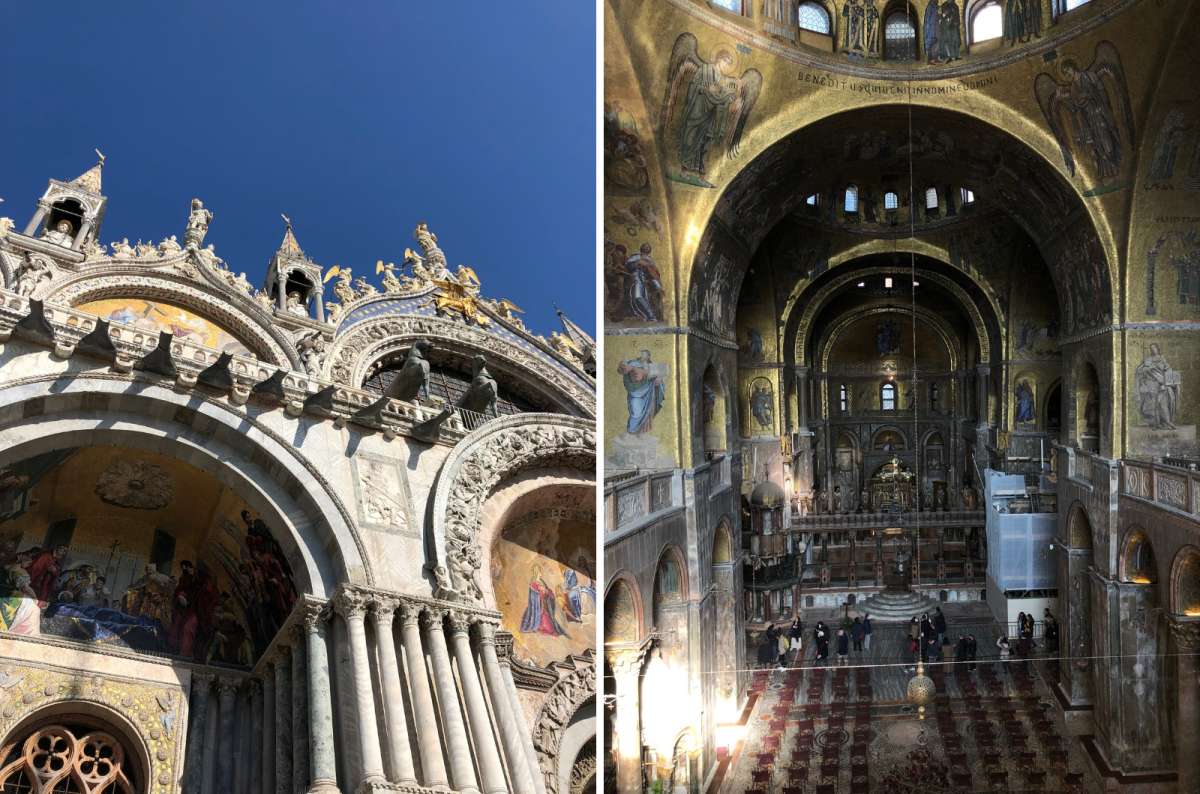
St. Mark’s Basilica in Venice, with over 8,000 square meters of gold mosaics inside. No wonder Venetians nicknamed it the Church of Gold
The Basilica is one of the places where I’d pay for extra access rather than just doing the quickest possible visit. The mosaics are impressive, but for me the best part was seeing the original bronze horses in the upstairs museum and then looking out at Piazza San Marco from the terrace.
If Day 2 falls on a Sunday: St. Mark’s Basilica doesn’t open for tourist visits until 2 pm, so you’ll need to move it to the afternoon. The Museum and Horses Loggia are open from 9:30 am.
Pro tip: If you want the horses and the terrace and not just a quick walk through, book the Basilica with museum and terrace access so you’re not deciding at the door.
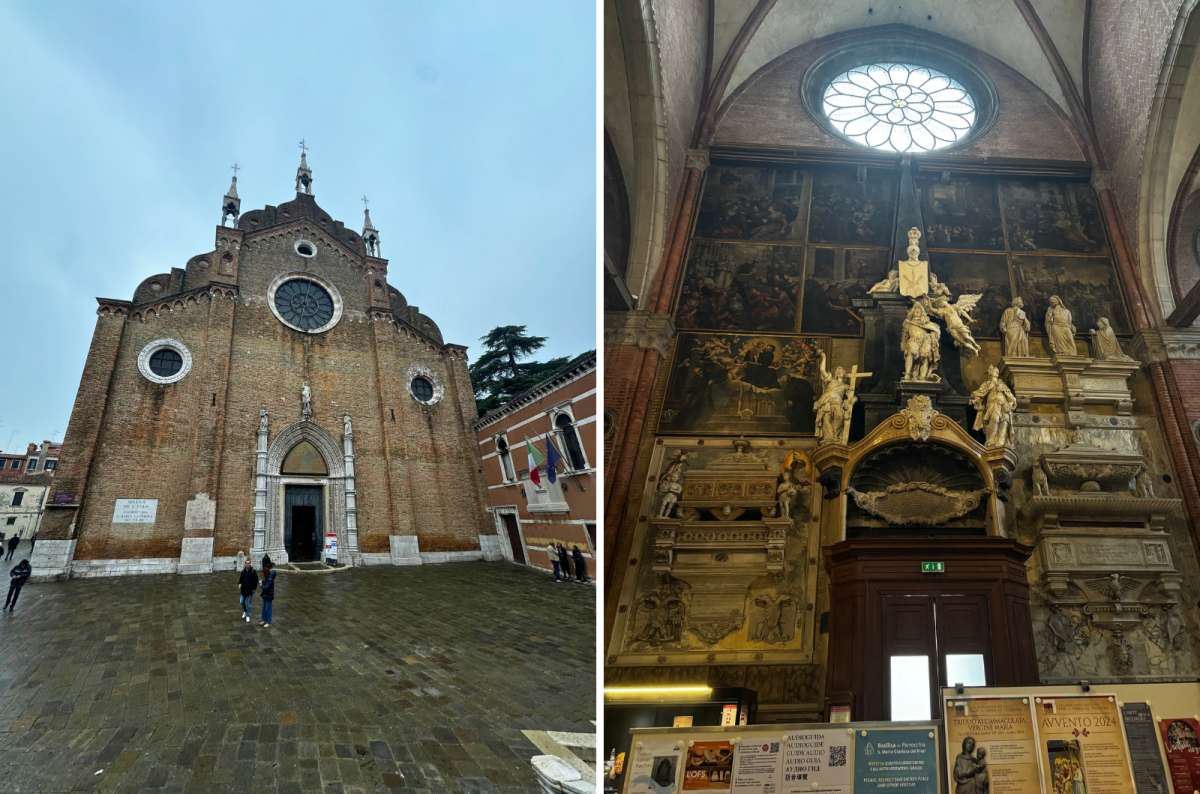
The Frari Church
I’d group these together. They’re close enough that visiting them separately on different parts of your Venice itinerary makes no sense.
Frari is worth seeing for its scale, Titian’s Assumption and the tombs, but San Rocco was the bigger surprise. I’d describe it as a smaller Doge’s Palace without the crowds: huge, decorated rooms and Tintoretto’s finest paintings.
If time is disappearing, I’d keep San Rocco and be quicker at Frari.
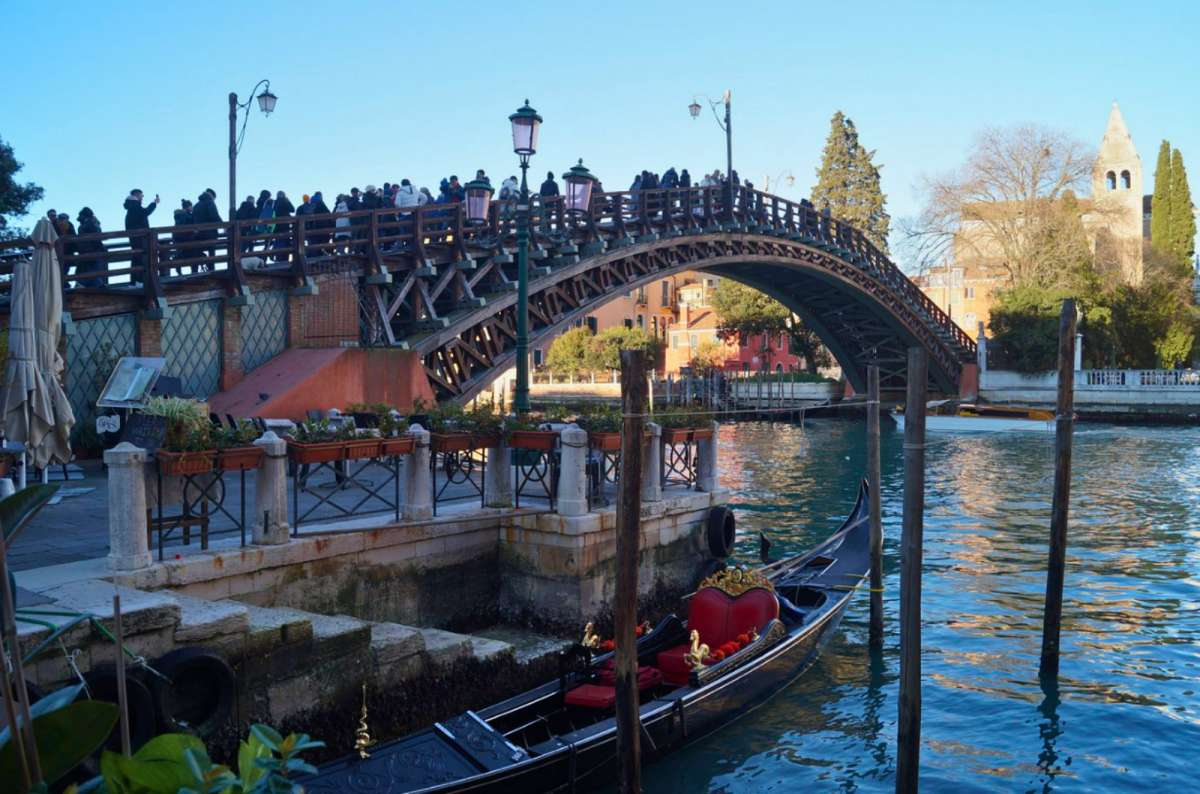
Ponte dell’Accademia in Venice, built in 1933 as a temporary bridge. Ninety years later, it’s still on temporary duty
Even if you have no interest in the gallery, I’d still cross the Accademia Bridge.
The bridge itself isn’t the point. It’s the view down the Grand Canal toward Santa Maria della Salute that makes this one of my favorite viewpoints in Venice. Stop for the view, then choose one gallery.
I wouldn’t try to do both galleries during two days in Venice. Pick according to what you actually enjoy.
I preferred the Accademia. It has a huge collection of Venetian art, including Bellini, Titian, Tintoretto, and Veronese, and I found it much more interesting than Peggy Guggenheim.
But there’s an obvious exception: if you’re already completely fed up with Renaissance paintings, go to Peggy instead. I’m not a big fan of modern art, so it was never going to rank highly for me.
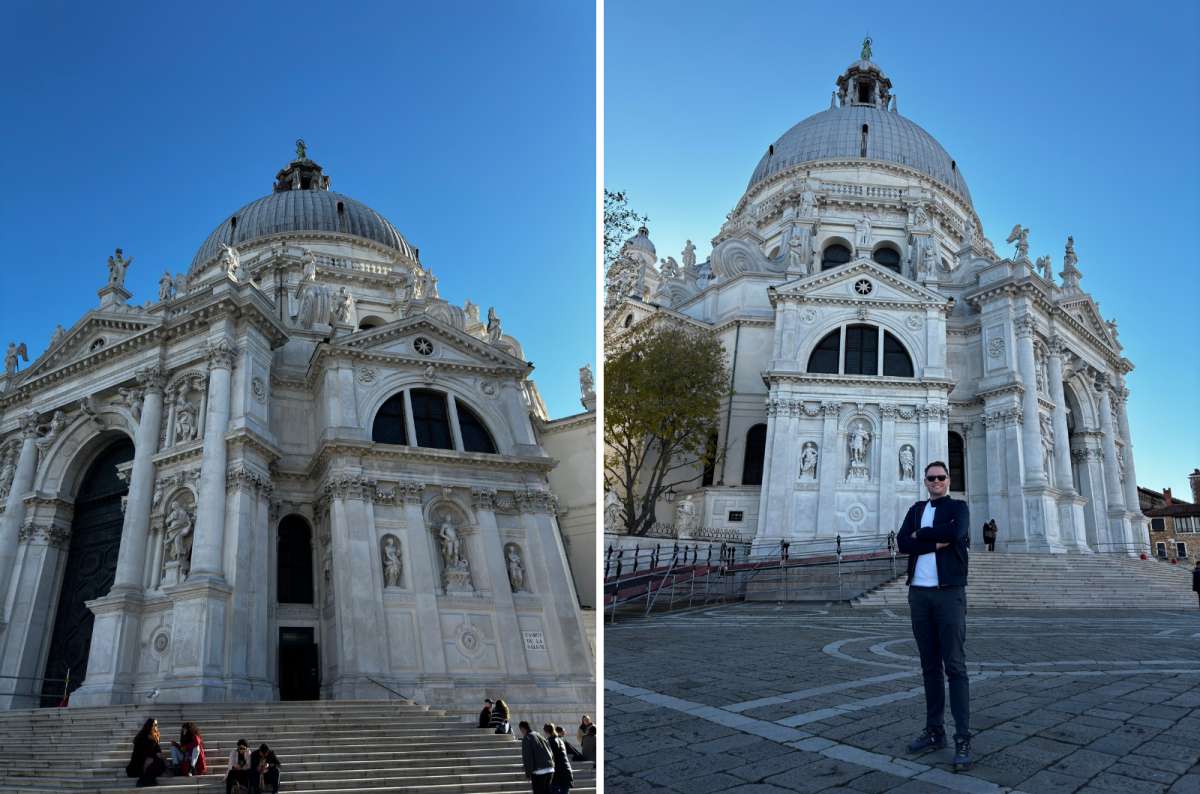
Santa Maria della Salute. If you’re short on time, this view is enough, and you can move on
From either gallery, continue toward the end of Dorsoduro and Santa Maria della Salute.
For me, the exterior and location are better than the interior. It’s an impressive church and beautifully positioned at the entrance to the Grand Canal, but if you’re behind schedule, have a look from outside and move on. By now, you’ll also know whether you need another church.
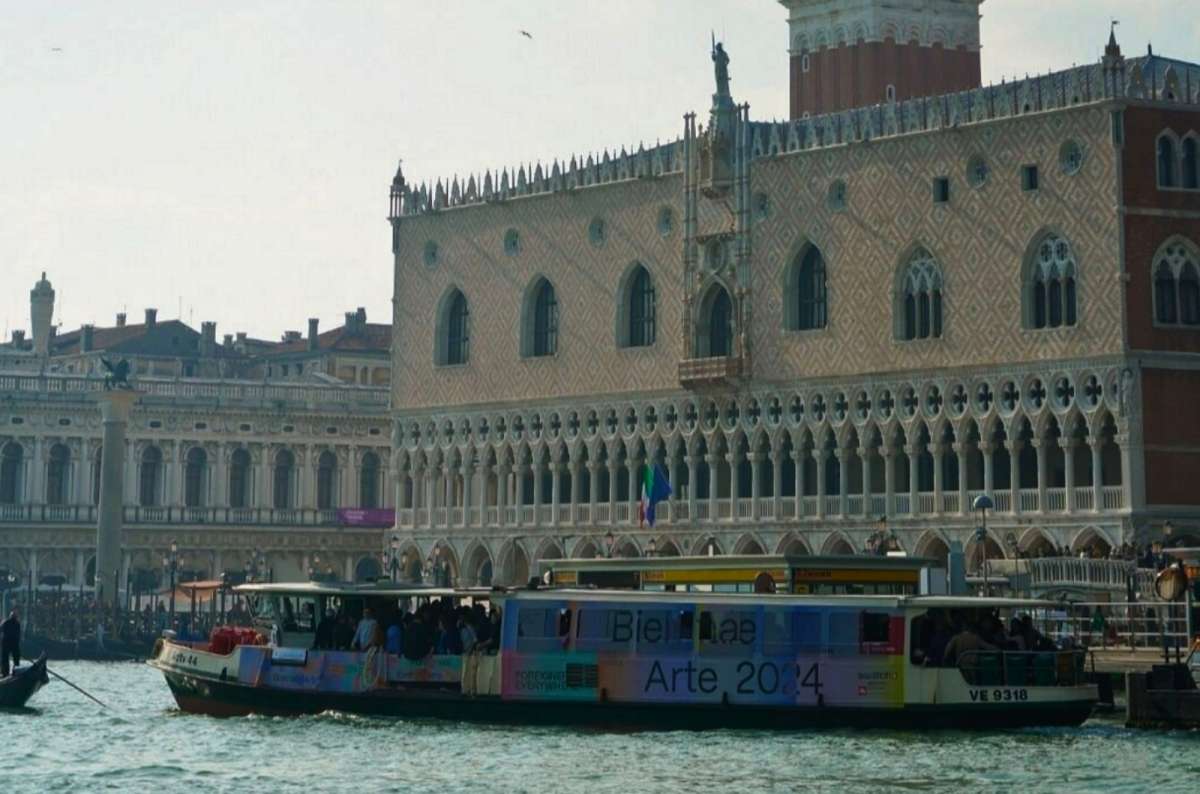
A vaporetto passing Doge’s Palace in Venice. Not as romantic as a gondola, but way cheaper, and it actually takes you somewhere
By now, I’d stop walking and take the vaporetto. Apart from saving your legs, I think it’s one of the best ways to see Venice.
This route gives you a decent stretch on the Grand Canal rather than simply taking the quickest boat. I actually preferred the vaporetto to a gondola: you see more of Venice from the water; it’s far cheaper, and it gets you somewhere useful at the same time.
If you’re planning to use the vaporetto several times, there’s also a 2-day ACTV transport ticket. I explain how that differs from the attraction passes in my Venice city pass: is it worth it? Guide.
Pro tip: If you’ll ride more than a couple of times, get a multi-day vaporetto pass and stop counting single tickets.
Read more about the best cities in Italy.
If you want to add one island to this Venice itinerary, I’d make it Murano.
The reason for coming is the glass. I enjoyed seeing how it’s made, not just walking around another pretty island. If you can arrange a proper glass demonstration, that’s what I’d prioritize here.
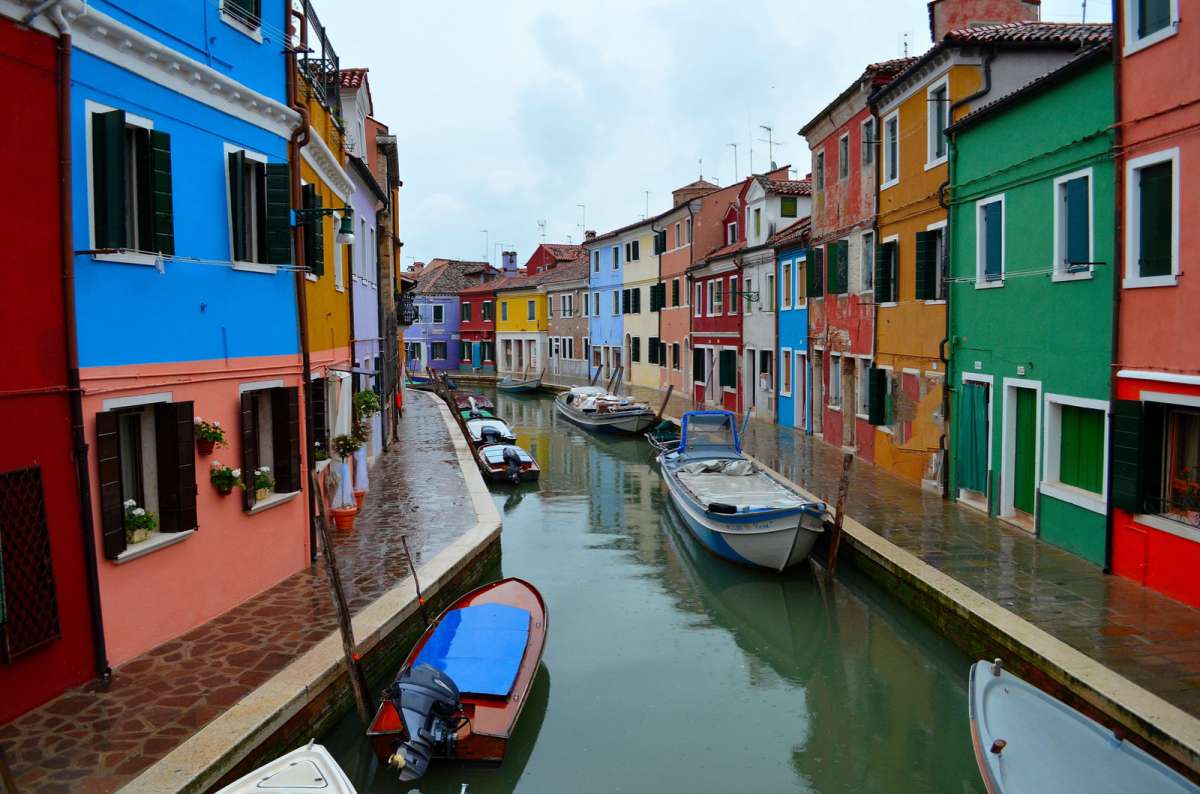
Colorful houses along a canal on Burano, an island in the Venetian Lagoon
I wouldn’t build this 2 days in Venice plan around doing both Murano and Burano.
Burano is photogenic, and the colorful houses are the main reason to go, but getting there and back takes time. If adding it means rushing through Murano or constantly checking the next boat, I’d leave it out.
If you want to spend more time exploring beyond Venice itself, I’d rather give that its own day. I cover those options separately in my best day trips from Venice review.
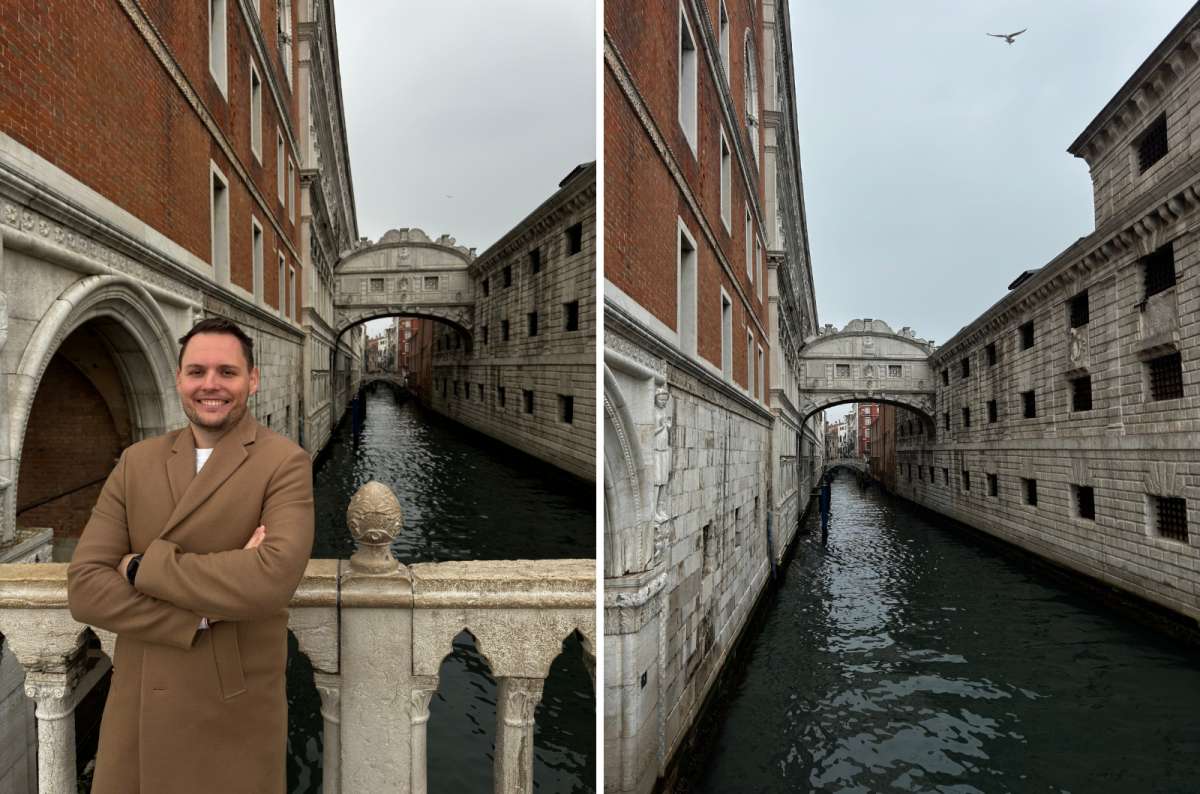
The Bridge of Sighs from Ponte della Paglia in Venice
It’s very easy to fall behind (and into a canal…watch where you’re going!) in Venice. A museum takes longer than expected; you take a wrong turn, or you stop somewhere that wasn’t even part of the plan.
This is what I’d cut first.
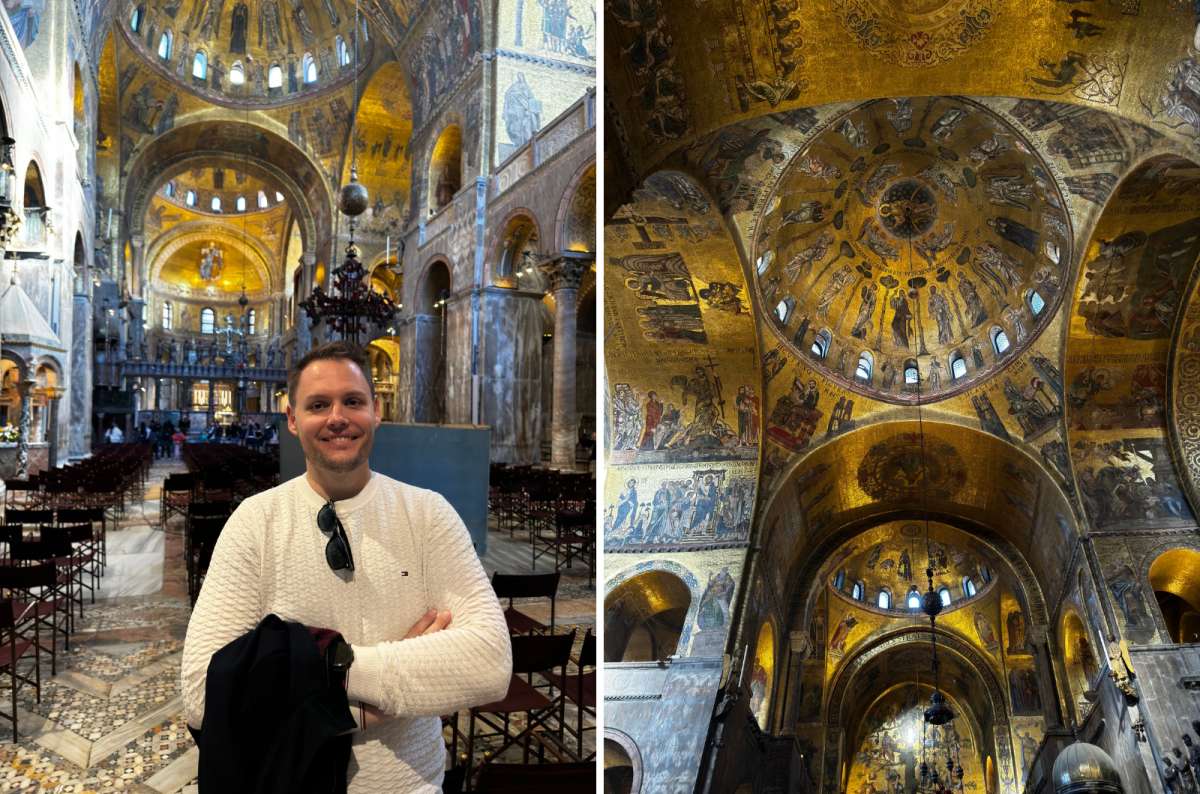
Inside St. Mark’s Basilica in Venice
If you only have one day, don’t try to see everything. I’d concentrate on the places that are actually worth the time.
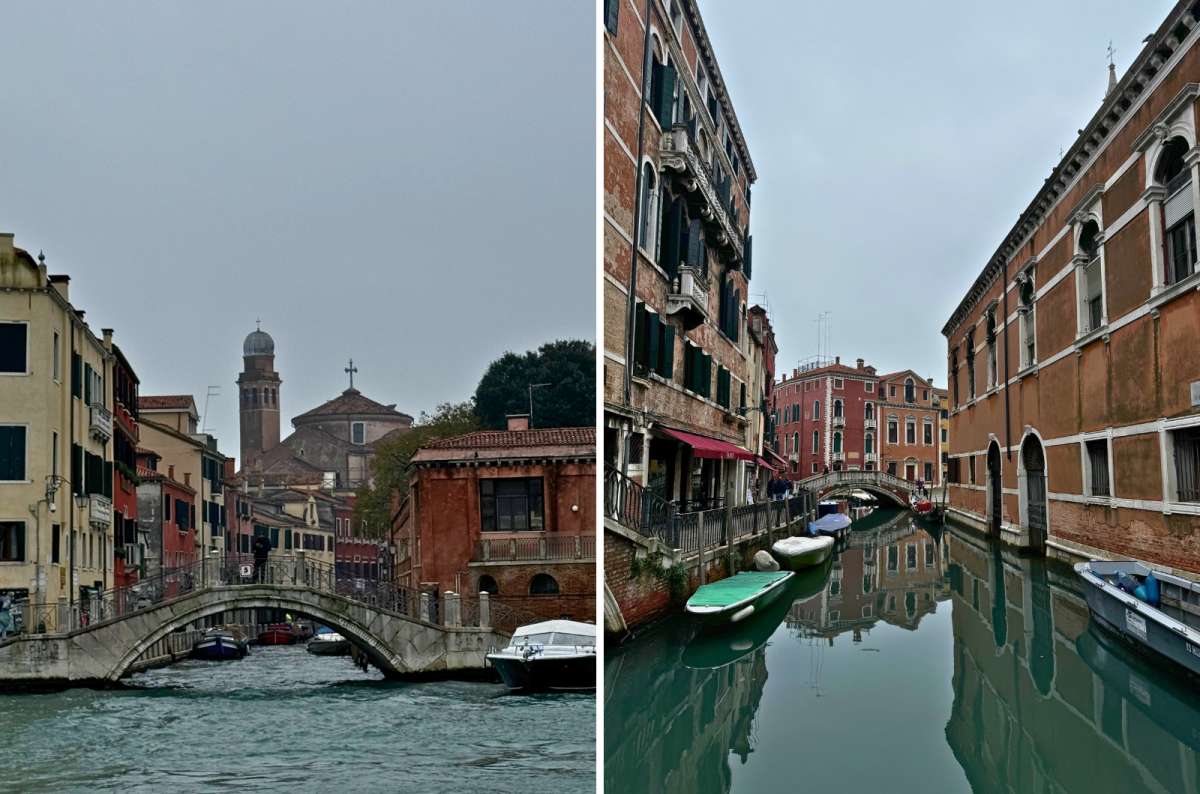
Two very typical Venice canals. Every one of them is a reason your 15-minute walk turns into 30
Venice looks compact on a map, but don’t underestimate how much you’ll walk. On my trips, I’ve easily gone over 25 km in a day.
That doesn’t mean you need to walk that much to follow this itinerary. I was trying to see far too much. But even an efficient route adds up because Venice rarely lets you walk directly from A to B. Bridges, canals, dead ends, and the occasional wrong turn all add distance.
A few things I’d do differently now:
If you’re planning your 2 days in Venice in summer or during another busy period, crowds can slow you down even more. I cover the seasonal trade-offs separately in my best time to visit Venice guide.
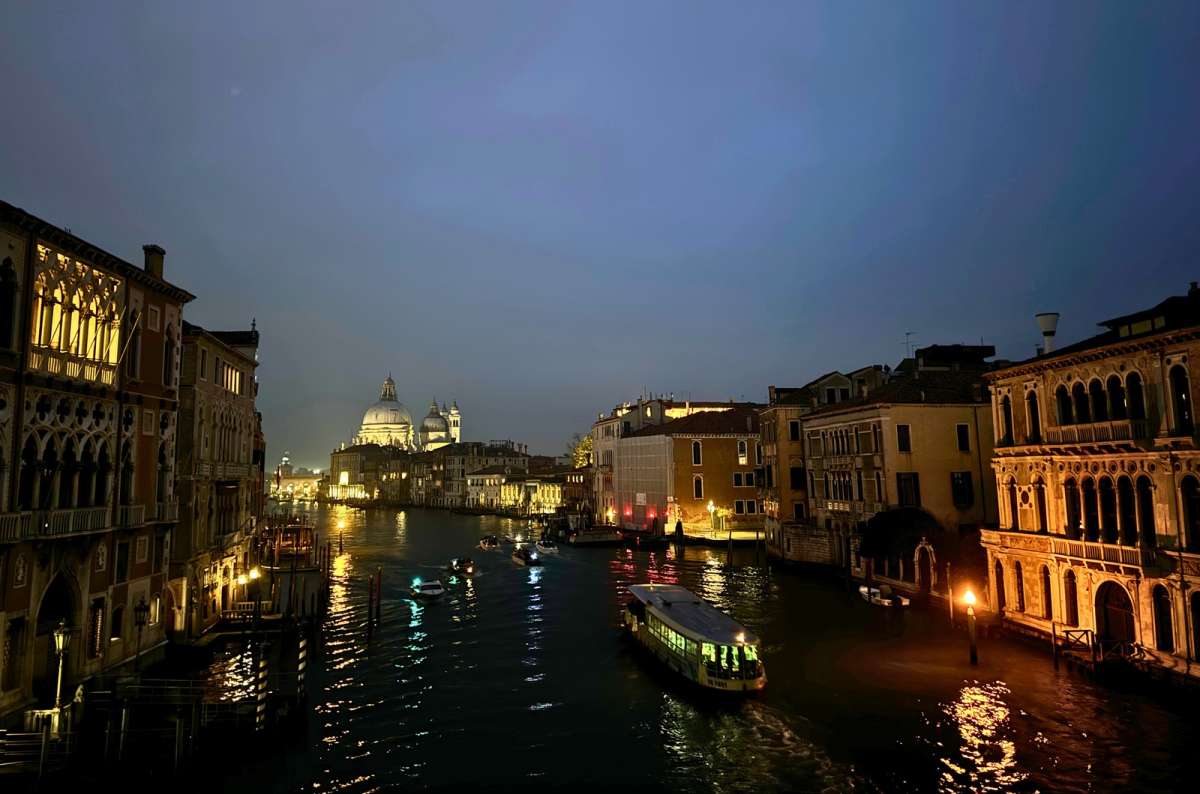
The Grand Canal and Santa Maria della Salute after dark
If you’re staying overnight, go back out after dinner.
The biggest difference is simply the number of people. During the day, the center can feel ridiculously crowded. Later in the evening, many day-trippers are gone and walking around becomes much more enjoyable.
After dinner, I’d forget about the itinerary and just wander. Venice is much better when you occasionally have nowhere you need to be.
If you have a third day available, do a day trip. Here you can read about the best day trips from Venice I’ve done, and also about the best things to do in Padua, the best things to do in Verona, and essential travel tips before going to Italy.
This post contains affiliate links. If you make a booking through one of my links, I may earn a small commission—at no additional cost to you. Thank you for your support!


Hi, I’m Jan. I travel fast and intensely, whether I’m exploring the buzz of Tokyo in 3 days or road-tripping through mountains and beaches on a 3-week Thailand adventure. And no matter where I am, you’ll always find me in a comfortable hotel at night and eating the best food.
If that sounds like your kind of journey, hop on board, and let’s explore the world together!
I started this blog after realizing how tough it can be to find reliable, authentic travel info. You wouldn’t believe how many “travel bloggers” never even visit the places they write about! On Next Level of Travel, you can count on my full honesty and insights drawn from my firsthand experiences.
Here’s the deal: not every destination is all superlatives and unicorns. I’ll let you know if a tourist attraction isn’t worth your time, like skipping overrated stops in my 2-week Spain itinerary. And when I find something truly special—like the perfect mix of culture and nature in Cape Town—you can trust that it’s worth adding to your itinerary.




Comments | Thoughts? Give us a shout!