


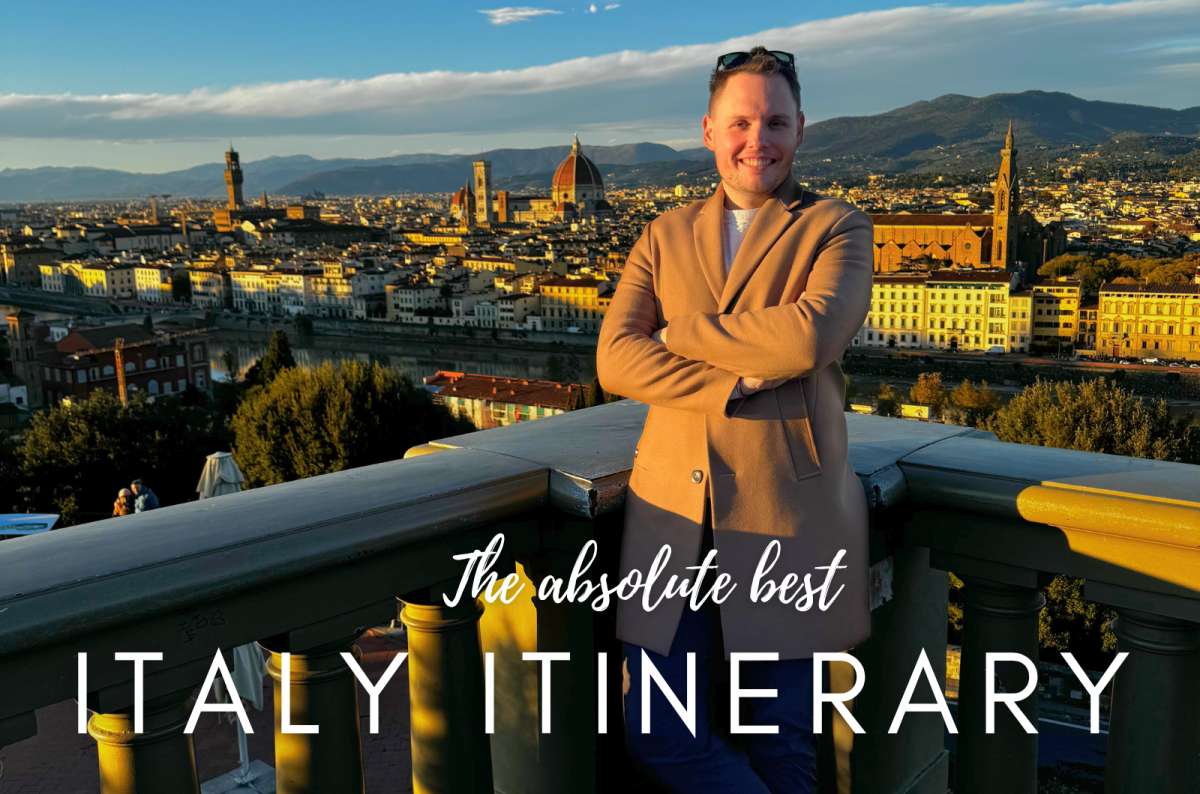


My 10-Day Italy itinerary at a glance
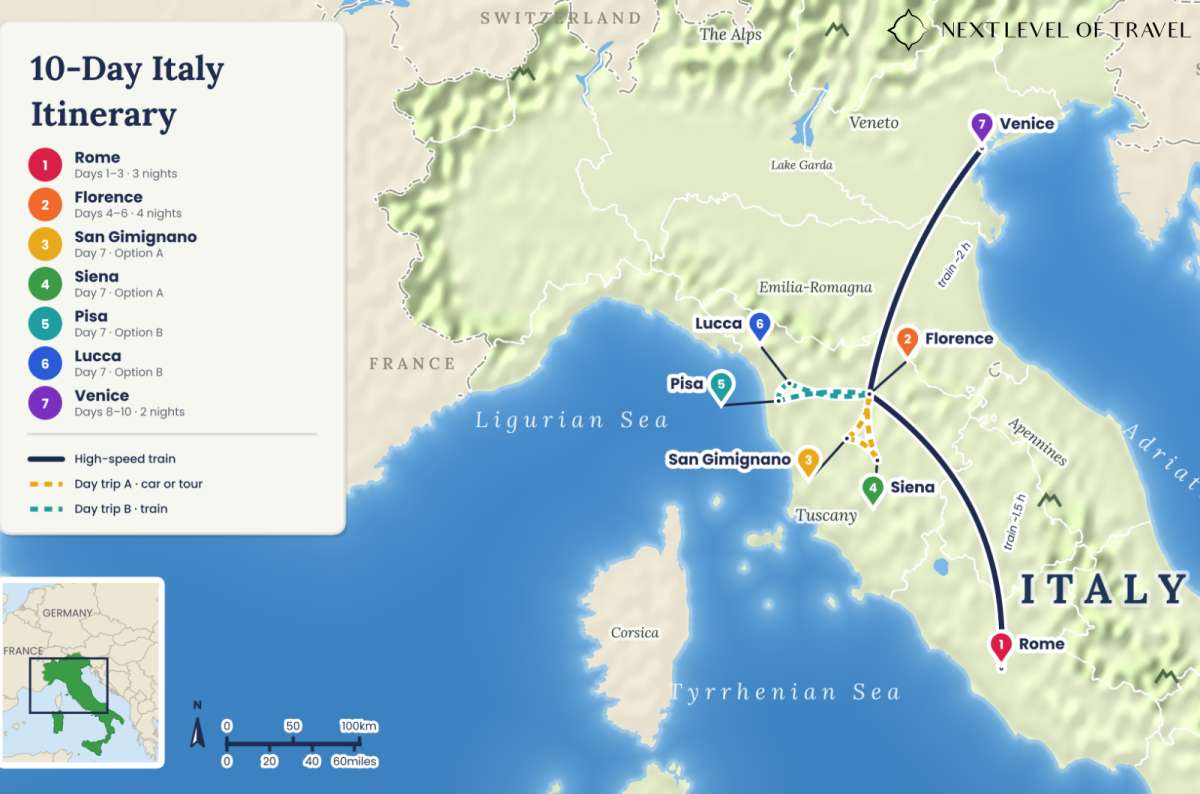
Italy itinerary map: Rome to Venice
Before you book your Italy trip: My travel tips
Day 1: Arrive in Rome and explore the historic center
Day 2: Ancient Rome—Colosseum, Roman Forum, and Palatine Hill
Day 3: Vatican City and Rome beyond the ruins
Day 4: Take the train to Florence and explore the historic center
Day 5: Florence's Duomo and Michelangelo's David
Day 6: Uffizi Gallery, Ponte Vecchio, and Oltrarno
Day 7: Which Tuscany day trip should you choose?
Day 8: Take the train to Venice and discover St. Mark's Square
Day 9: St. Mark's Basilica and Venice beyond the main square
Day 10: A final morning in Venice and departure
What I would not add to this 10-Day Italy itinerary
How to adapt this Italy itinerary to 7 or 14 days
Where to stay on this Italy itinerary
Final thoughts: The best Italy itinerary isn't the longest one
Planning a trip to Italy can be harder than taking it. Rome, Florence, Venice, Tuscany, the Amalfi Coast—everyone has an opinion about what you have to see. Follow all that advice, and you'll spend half your vacation dragging luggage between hotels.
My ideal 10-day Italy itinerary keeps things simple: Rome → Florence → Tuscany → Venice. Three hotel bases, one day trip, and enough time to enjoy Italian culture and the country’s highlights without constantly packing and unpacking.
I've traveled extensively around northern and central Italy, including Florence, Siena, San Gimignano, Pisa, Lucca, and Venice—which I've visited three times over roughly 15 years. Those trips taught me that even a small Italian city can leave you walking 25 km before dinner, and there's only so much Renaissance art one person can absorb.
Rome is the research-based part of this itinerary. For Florence, Tuscany, and Venice, I'll share my firsthand experiences, including the famous attractions I'd skip next time.
Read more from my Italy travel guide.
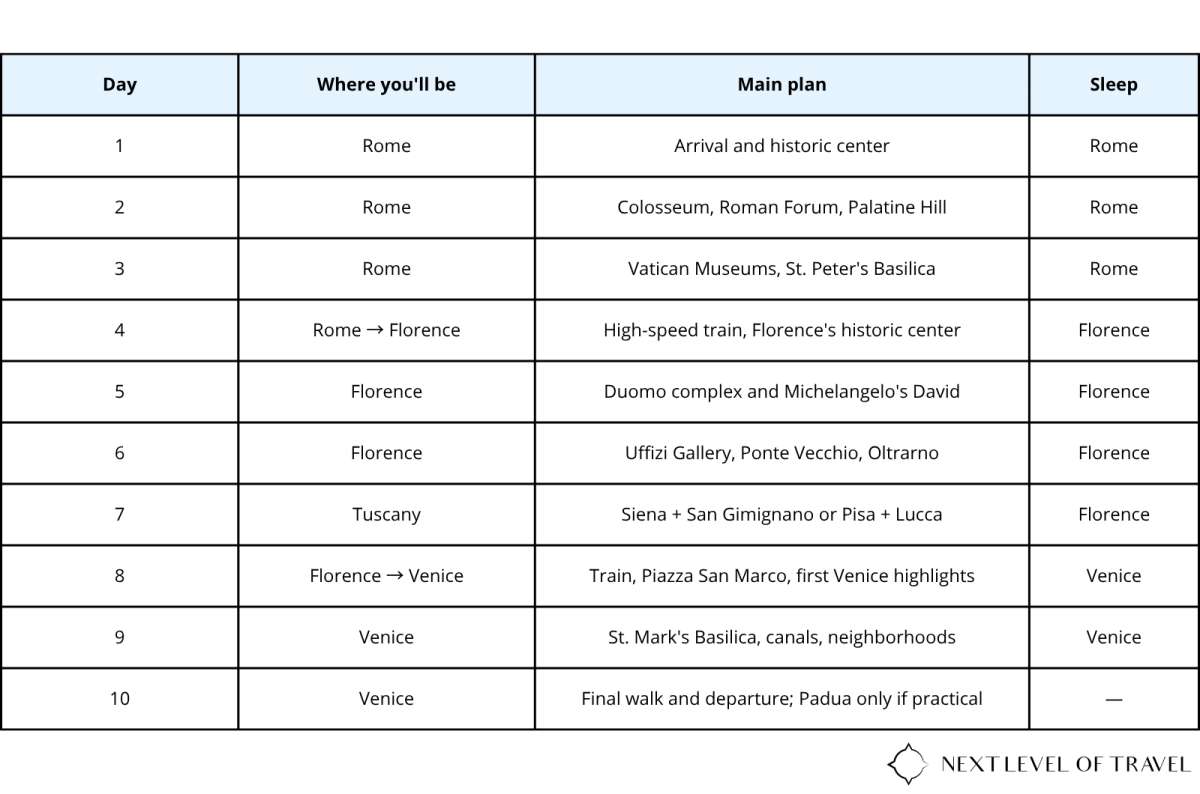
That's three hotel bases in ten days, with Tuscany as a day trip from Florence.
The itinerary assumes you fly into Rome on Day 1 and out of Venice on Day 10. If you're flying home from Rome, allow extra time for the return journey.
An open-jaw flight—arriving in Rome and departing from Venice—makes the most sense. If Venice flights are expensive, compare the total cost of returning from Milan or Rome, including extra trains and potentially another hotel night.
High-speed trains connect Rome, Florence, and Venice, so there's no need to drive between them. Getting into central Florence by car was a headache during my trip, and Venice doesn't allow cars in its historic center—unless you're driving a boat, and I'm neither a captain nor a gondolier.
Check schedules and book through Trenitalia or Italo.
For Day 7 in Tuscany, a rental car makes it easier to combine Siena and San Gimignano. Rent it for the day rather than paying to park it in Florence. I use DiscoverCars for my vacation rentals.
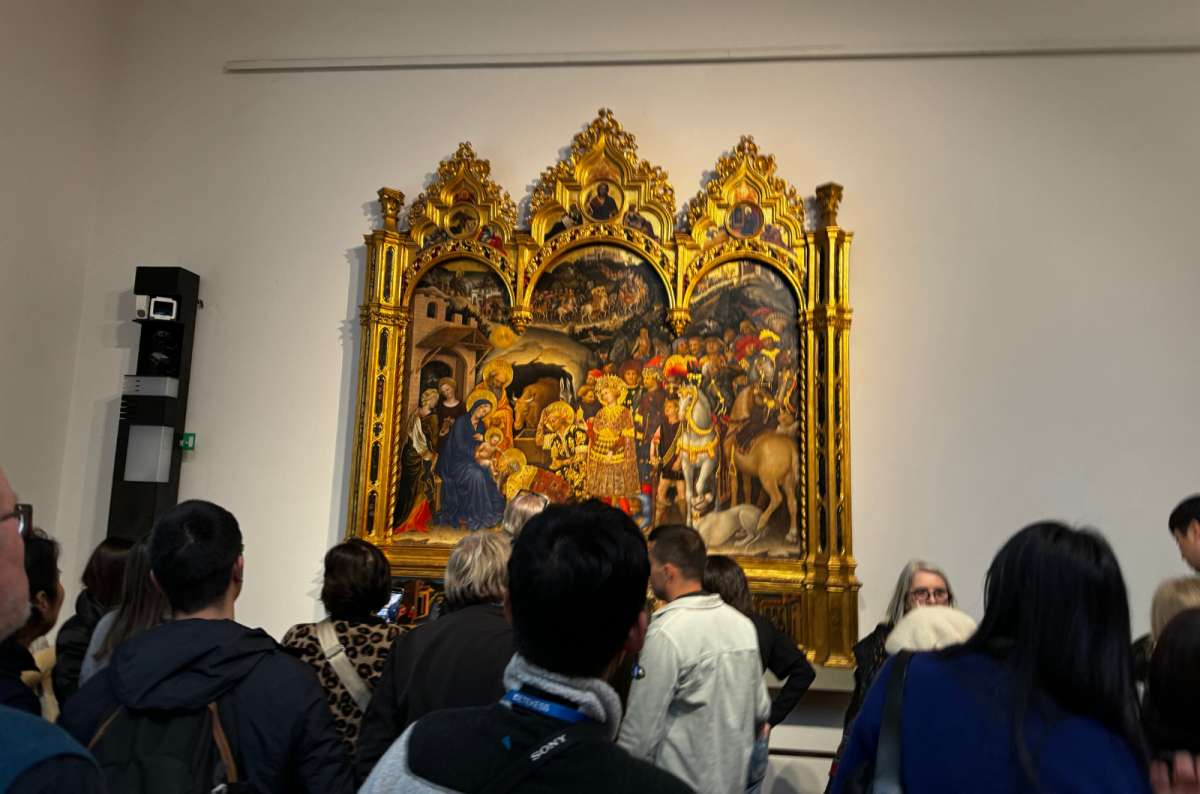
I booked Florence's Duomo and Accademia ahead of time, and I'd strongly recommend doing the same for these popular sights:
Check official websites for current ticket options, opening days, and reservation rules.
Pro tip: You can book guided tours that combine all of the most famous stops, if you don't want to be very picky about what you visit.
My vote is autumn. I traveled around Italy in November 2024 and enjoyed smaller crowds, better accommodation rates, and easier restaurant reservations. Even the early sunsets suited me.
Don't expect empty streets, though. Siena was busy, and Venice still had plenty of tourists.
Spring is another good choice. Summer offers longer days but brings more heat and crowds.
For more advice, read my things to know before traveling to Italy.

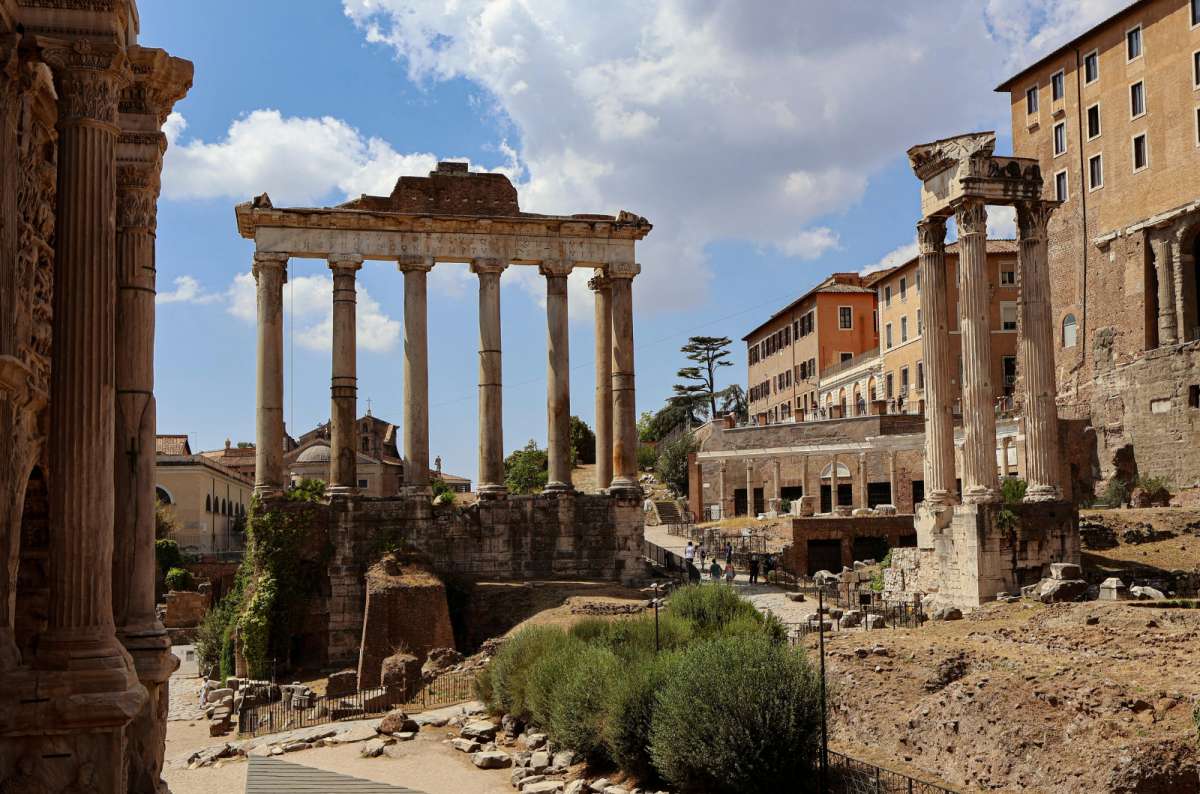
Today's plan: Arrive, check in, and explore central Rome without rushing.
Start your 10-day Italy itinerary with an easy introduction to Rome, the Eternal City. If you arrive early enough, head to the Pantheon, one of the city's best-preserved ancient buildings, then walk to Piazza Navona.
If you still have energy, continue to the Trevi Fountain and the Spanish Steps. They're popular for a reason, but expect crowds.
Leave time for a proper Italian dinner. During my travels around Italy, I noticed that restaurants often open later in the evening, so don't assume you'll find everywhere serving dinner at 5 p.m.
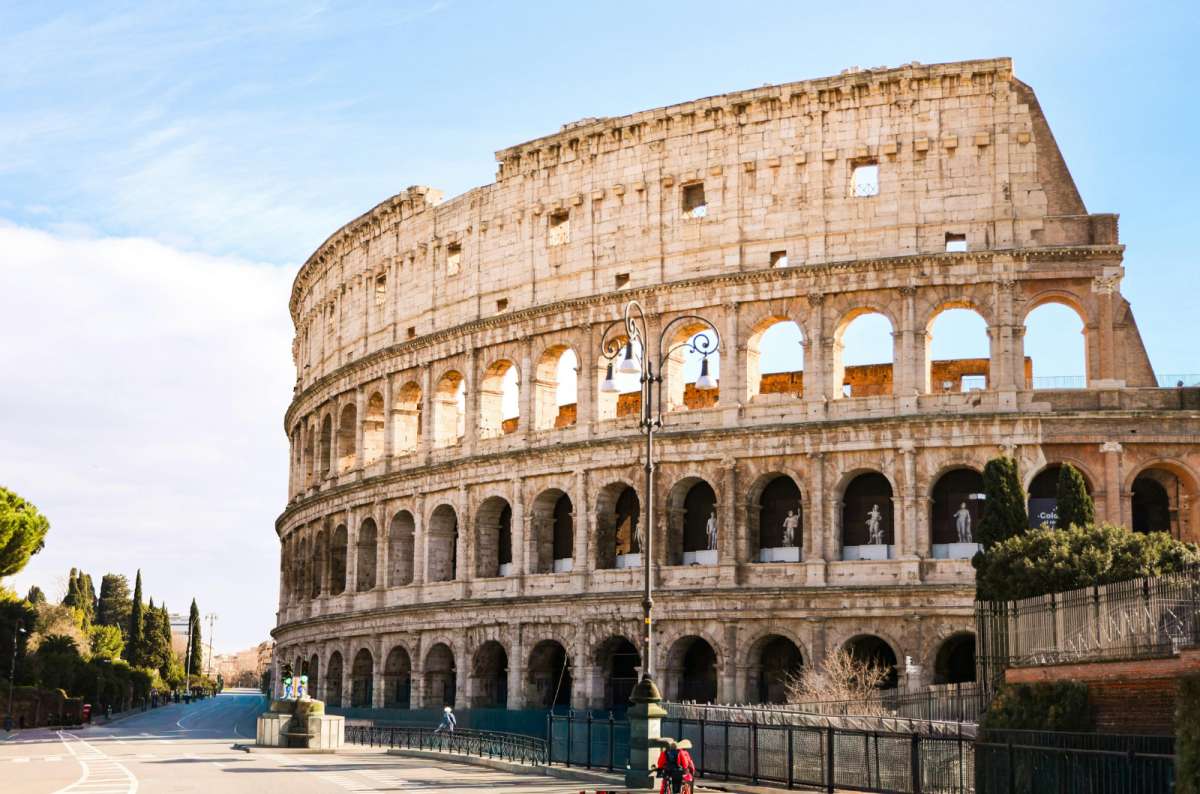
Today's plan: Spend most of the day exploring ancient Rome.
The Colosseum is the obvious headline attraction. And yes, it's touristy. It's also one of the most recognizable surviving structures from the Roman Empire, so skipping it on your first visit would be a strange decision.
I've seen Roman architecture elsewhere in Italy, including Verona's enormous arena and the remains of a Roman villa at Lake Garda. I’m a history buff at heart, and the scale of what the Romans built still amazes me. The Colosseum takes that to another level.
Book tickets in advance through the official Colosseum website. Tickets go on sale 30 days before your visit, and you'll need to choose an entry time and bring ID. Different tickets include different areas, so choose based on what interests you rather than automatically paying for the most expensive option. Allow time for security, too.
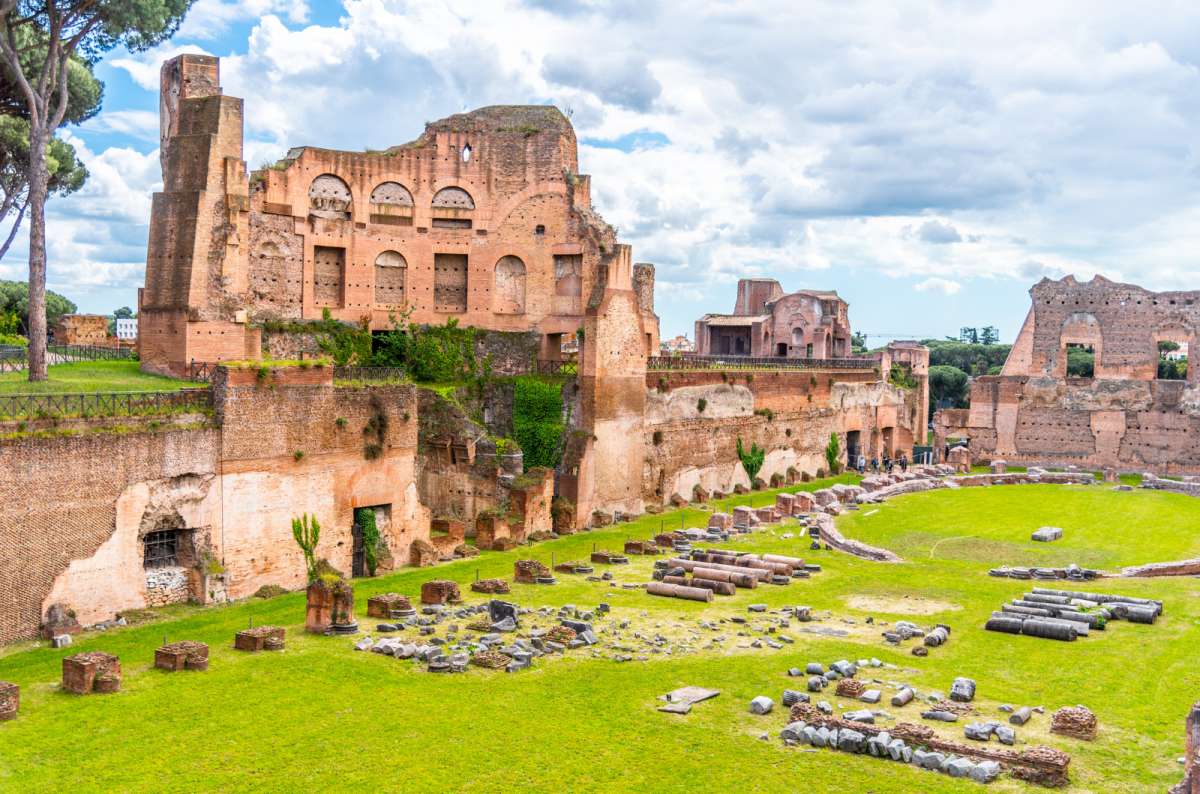
Continue to the Roman Forum, once the center of Roman political and public life. You'll find an array of ancient ruins: temples, government buildings, and streets, but I'd recommend an audio guide to better understand. Otherwise, you risk staring at a pile of stones without understanding why they're important to ancient history and Roman history.
Next, explore Palatine Hill, associated with Rome's earliest history and later imperial palaces. The elevated views also help put the Forum's ruins into perspective.
If you still have time and energy, head to Piazza del Campidoglio and visit the Capitoline Museums. They're a great option if you're interested in ancient Roman sculptures and history. Just make sure you've got enough energy left!
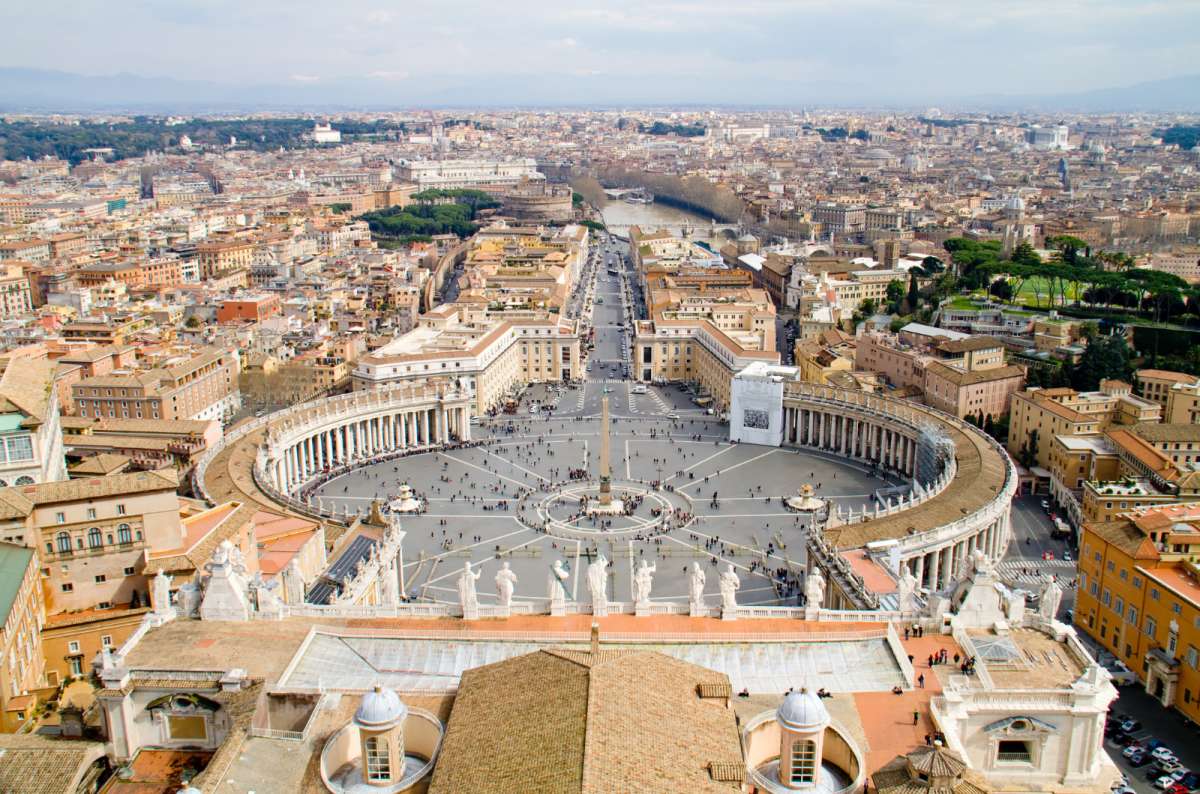
Today's plan: Vatican Museums, Sistine Chapel, St. Peter's Basilica, and a lighter afternoon.
The Vatican Museums are enormous, so don't treat them as a quick stop before lunch. You'll find centuries of art and history here, with Michelangelo's ceiling in the world-famous Sistine Chapel as the highlight.
I'd book tickets well in advance and allow several hours. Even if you're not usually a museum person, this is one of those places worth making an exception for.
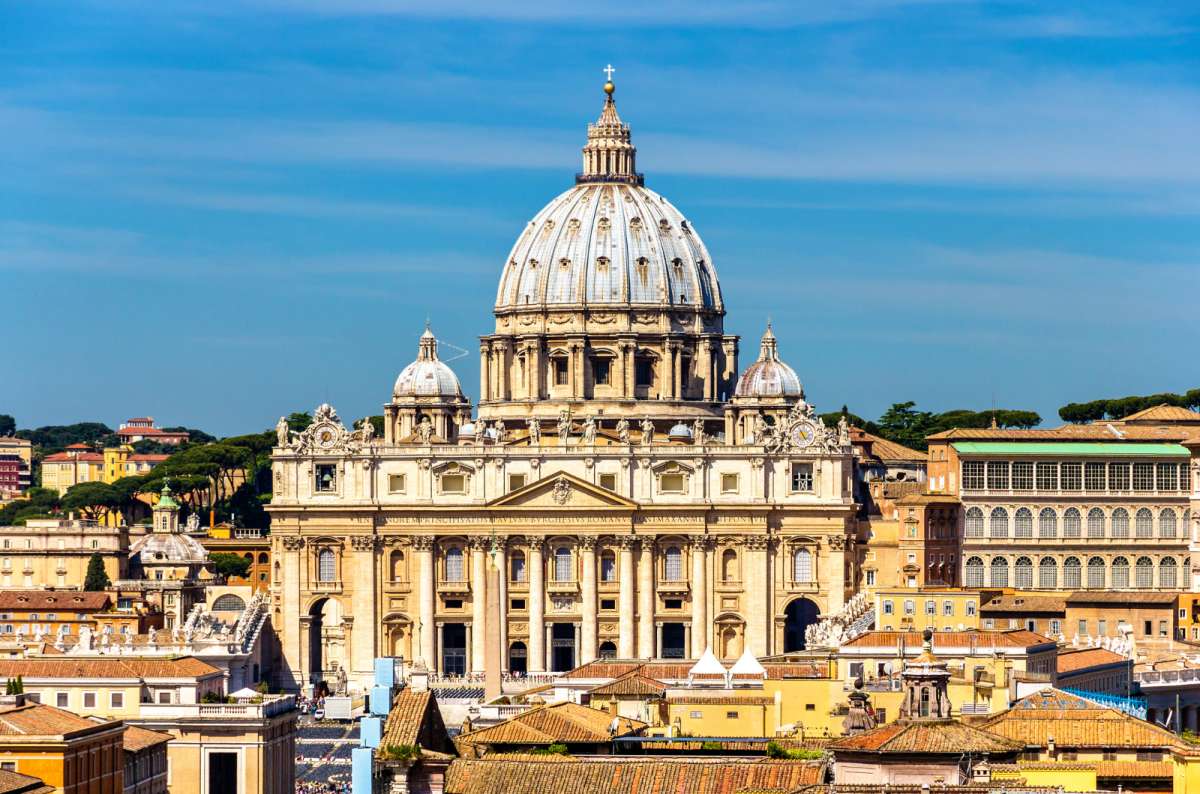
Next, visit St. Peter's Basilica, one of the world's most impressive churches, and the center of Catholicism. The basilica and Vatican Museums have separate entry procedures, so don't assume your museum ticket gets you straight into the church.
If you still have energy, consider climbing the dome for views over Rome. But after several hours in the museums, I wouldn't force it.
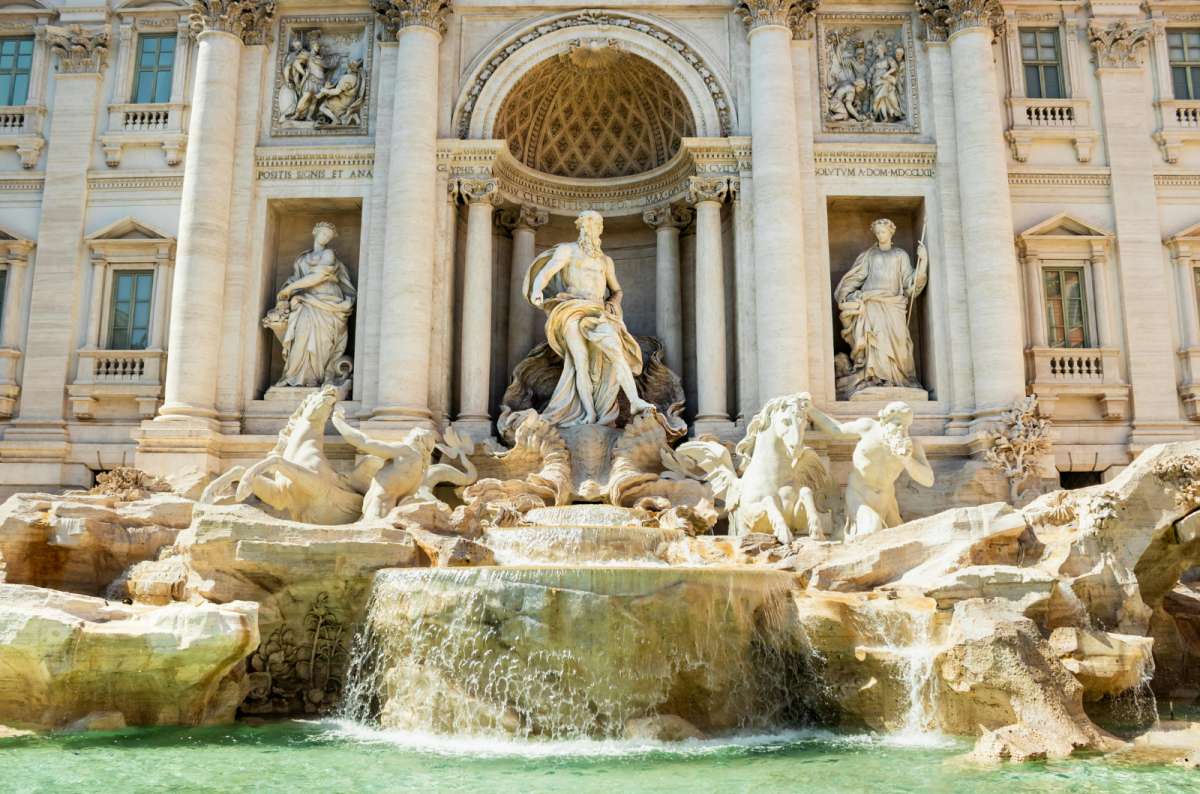
After the Vatican, I'd keep the rest of the day relatively light.
Walk through the Prati area or along the Tiber, and consider Castel Sant'Angelo if you're still up for another historical attraction.
Otherwise, enjoy Rome without a schedule and wander through the narrow streets of Trastevere, stopping for dinner when you find somewhere you like.
Today's plan: Travel to Florence, get your bearings, and explore the city's main outdoor sights.
Take a morning high-speed train from Rome to Florence's Santa Maria Novella station. The journey takes around 1.5 hours, so you'll still have plenty of time to explore after dropping your luggage at the hotel.
Florence is exactly what I imagine when someone says classic Italian city: narrow streets, Renaissance palaces, enormous churches, and art absolutely everywhere.
It's also where you can get galleried to death. I love art and history, but even I reached my limit with Renaissance paintings. That's why I've spread Florence's major attractions across several days of this Italy itinerary.
Start at Piazza del Duomo, home to Florence's enormous cathedral, Giotto's Bell Tower, and the Baptistery.
The cathedral dominates Florence's skyline, but it's even more impressive up close. For now, admire it from outside. You'll explore the complex properly tomorrow.
Continue to Piazza della Signoria, with Palazzo Vecchio and its famous sculptures. It's a great introduction to Florence's Medici history. You'll also find a replica of Michelangelo's David outside Palazzo Vecchio. The original is waiting for you at the Accademia tomorrow.
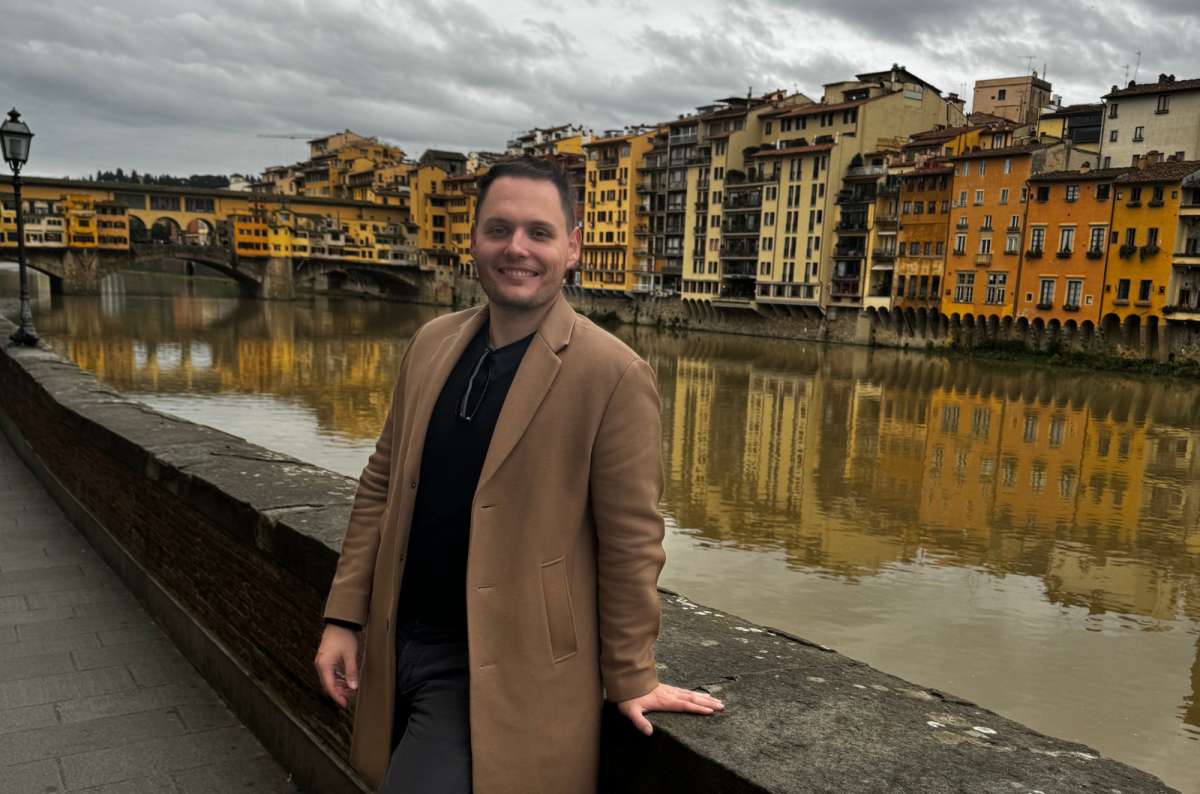
Walk toward Ponte Vecchio, Florence's famous bridge lined with shops. For now, enjoy the view from the riverbank. You'll have time to explore the bridge properly on Day 6.
I also enjoyed walking along the Arno, which felt much more relaxed than some of the busiest streets in the center.
If you have energy left, head up to Piazzale Michelangelo for the classic panoramic view of Florence. It's a bit of a climb, but the view is worth it.
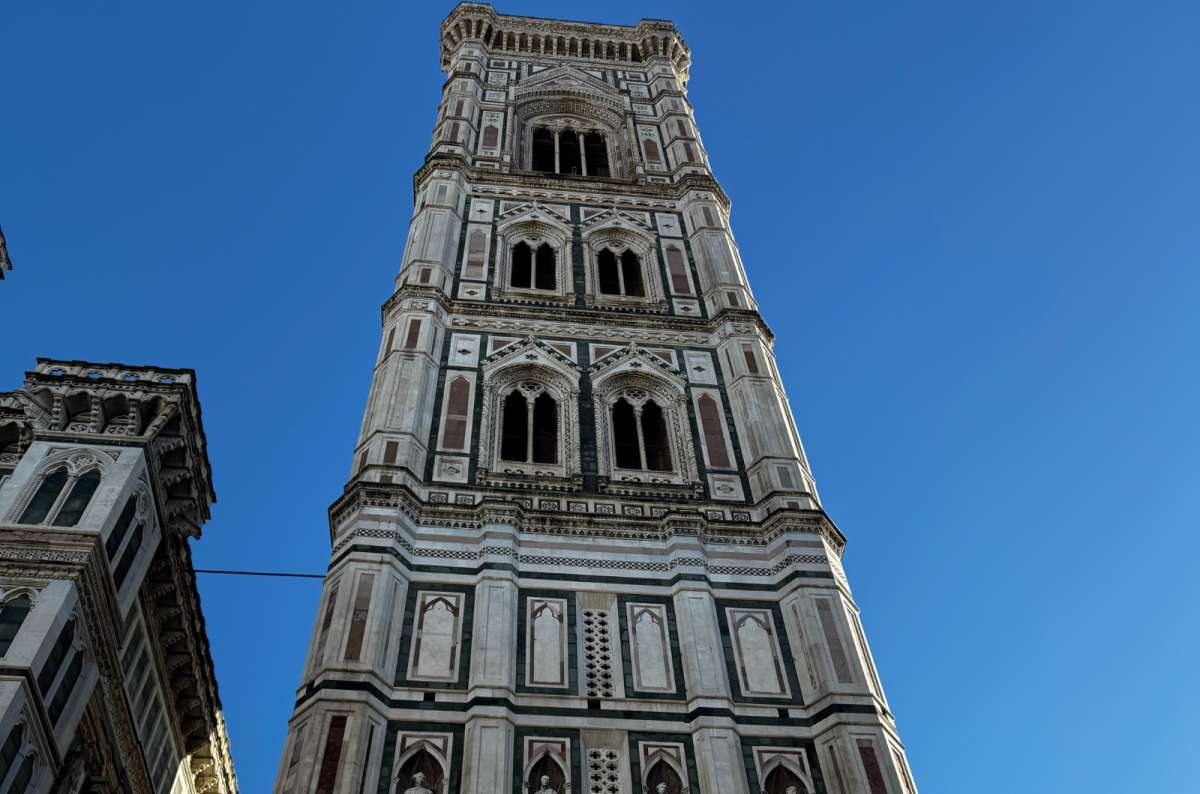
Today's plan: Explore the Duomo complex and see Michelangelo's original David at the Accademia Gallery.
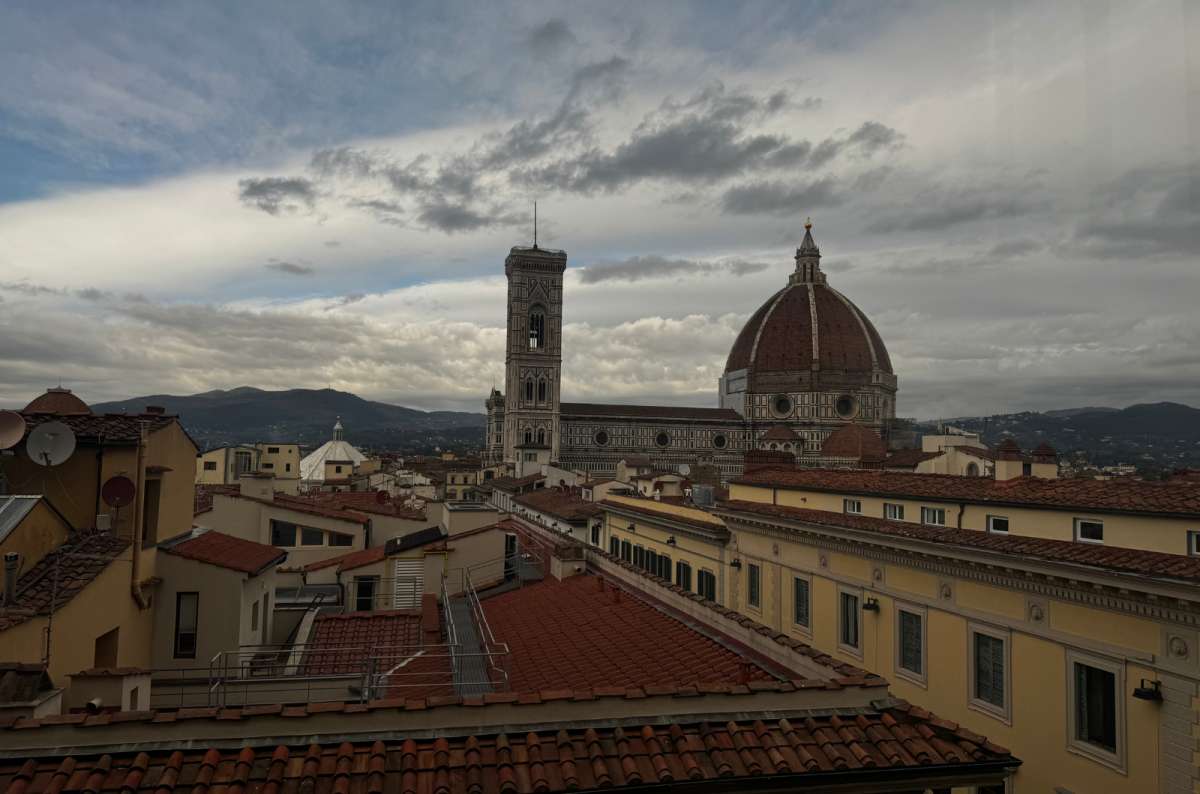
Florence's Duomo complex includes the cathedral, the Baptistery, Giotto's Bell Tower, the museum, and Brunelleschi's dome. You don't need to see everything, but I'd definitely recommend climbing the bell tower.
I booked a morning slot for Giotto's Bell Tower, and the views were fantastic. The climb takes around 30–45 minutes, with several viewing levels along the way. The stairs get narrower as you go up, and the protective mesh isn't ideal for photography, but it's absolutely worth it.
Top tip: If you're planning to climb Giotto's Bell Tower, book the Giotto Pass and choose your entry time. The cathedral itself is free to enter, but Brunelleschi's dome requires a different pass.
From the top, Florence looks surprisingly compact—although my legs certainly didn't agree after walking around the city. The cathedral looks absolutely enormous, and the surrounding Tuscan hills make the panorama even better.
One thing that surprised me was the cathedral's interior. It's huge but relatively plain compared with its spectacular exterior. I actually found the dome's frescoes more interesting than the rest of the interior.
If you enjoy history, the archaeological remains beneath the cathedral at Santa Reparata are also worth a look. Otherwise, save your energy for the Accademia.
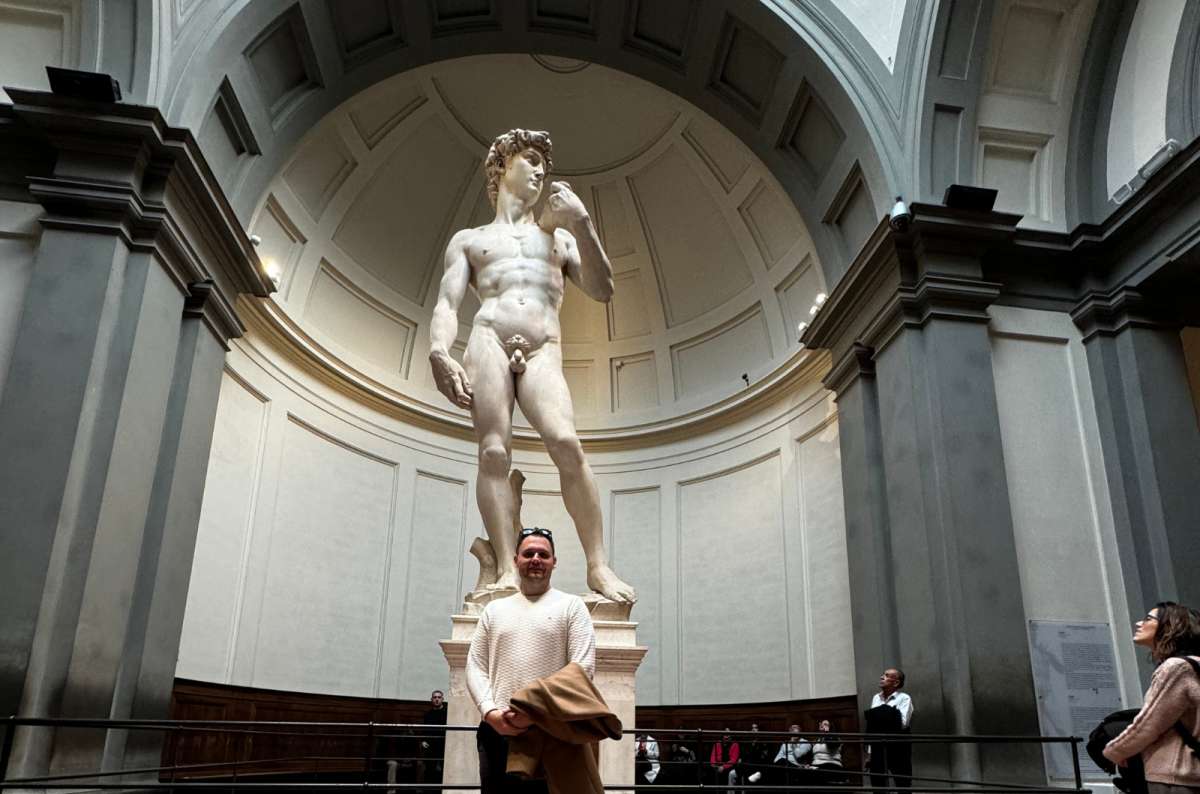
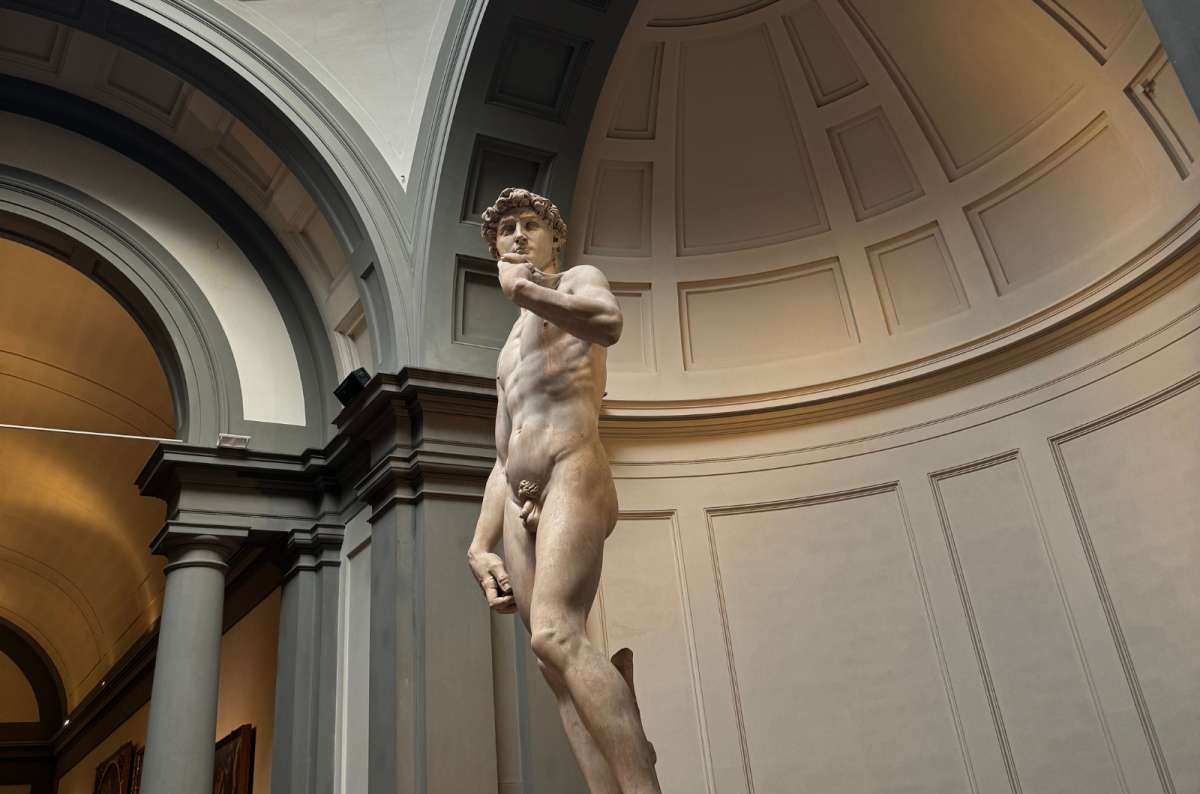
Next, head to the Accademia Gallery to see the original David.
I knew David was famous, but I hadn't expected him to be quite so enormous—over five meters tall! The anatomical detail is incredible, right down to the muscles and fingernails. And considering Michelangelo carved him from a block of marble, one wrong move could have ruined everything.
The sculpture is a masterpiece, even if you're not particularly interested in art. And yes, David has a pretty impressive backside, too.
I also enjoyed seeing Michelangelo's unfinished sculptures, which give you a fascinating glimpse into how he worked.
The gallery itself is surprisingly small, though. David is clearly the main attraction, and there's also an interesting musical instrument collection. You don't need an entire day here, making it a good pairing with the Duomo.
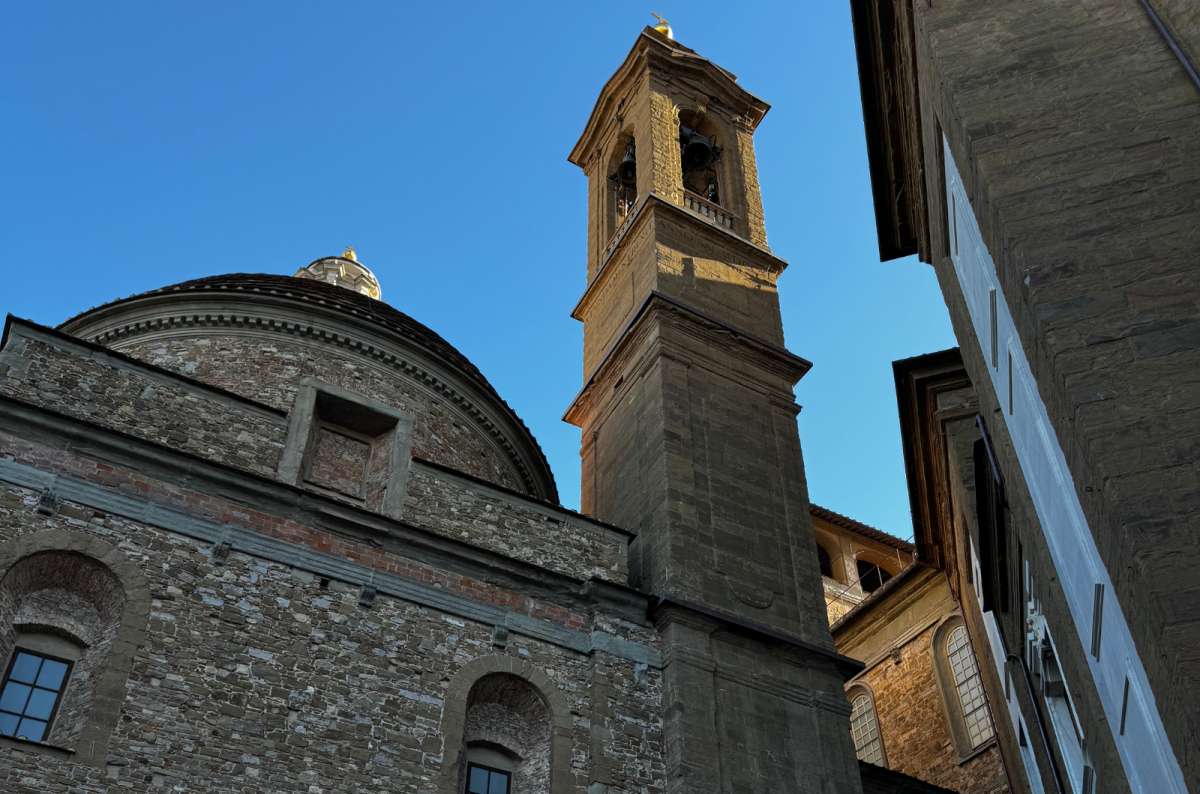
After the Duomo and the Accademia, I'd skip another museum. Explore San Lorenzo, stop by Mercato Centrale, or find somewhere good for dinner.
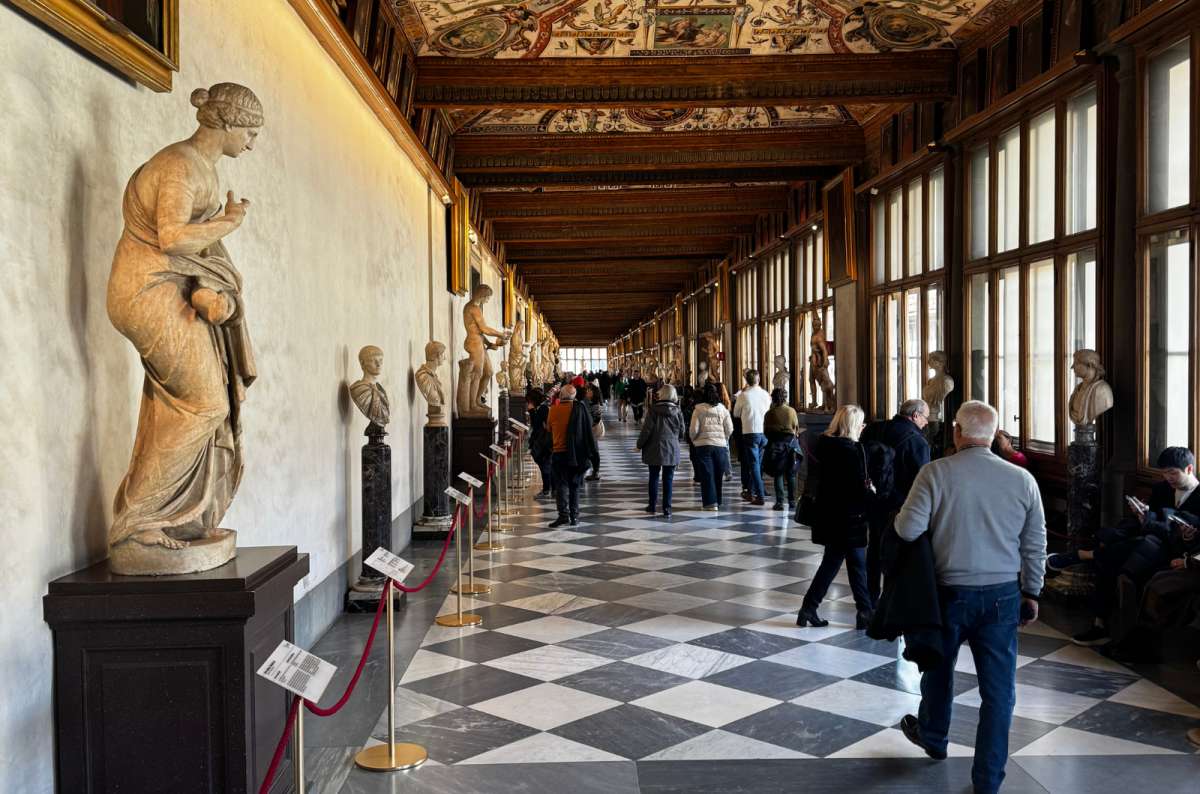
Today's plan: Visit the Uffizi Gallery, then cross the Arno to explore another side of Florence.
The Uffizi Gallery is one of Florence's biggest attractions, with masterpieces by Botticelli, Leonardo da Vinci, Michelangelo, and Raphael.
I'll be honest: I expected a little more. Don't get me wrong, it's an excellent gallery, but I liked Madrid's Prado better. The Uffizi is top-tier, just not quite the best of the best I'd imagined.
And the crowds! I visited on a November morning with a timed ticket, and some rooms were so packed I could barely see the paintings. We booked two weeks ahead and got some of the last available tickets. A friend had warned me after failing to get in herself.
Allow at least two hours, even if you're moving quickly. The building itself is beautiful, and I particularly enjoyed the views over the Arno.
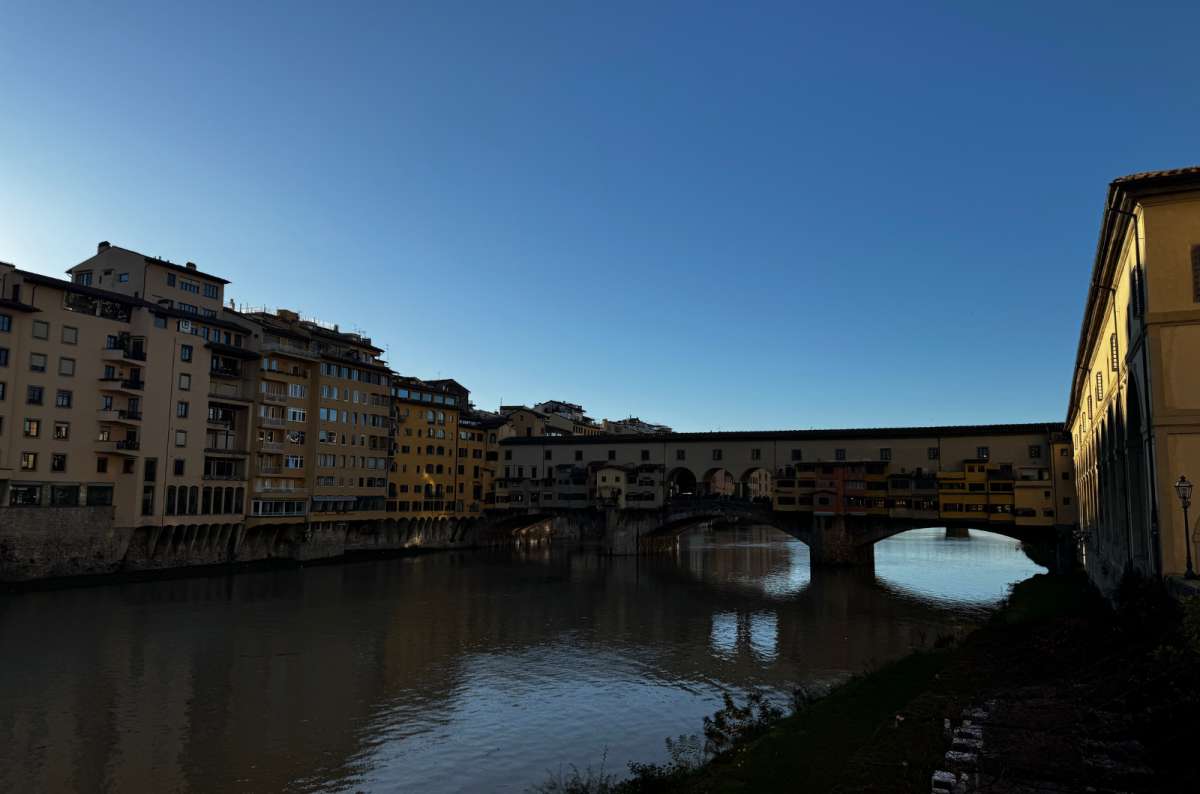
After the gallery, head toward Ponte Vecchio. The bridge is fascinating because it's lined with actual buildings, but walking across takes about ten minutes. I wouldn't spend much longer fighting the crowds.
For a better photograph, go to Ponte Santa Trinita. I thought the views of Ponte Vecchio from there were fantastic.
Then cross into Oltrarno, where you can explore the streets around Piazza Santo Spirito without another sightseeing checklist.
If you're still in the mood for museums, Palazzo Pitti and the Boboli Gardens are nearby. Palazzo Pitti is enormous, though—even a fairly quick visit can take an hour or two. After the Uffizi, I'd only add it if you genuinely love art.
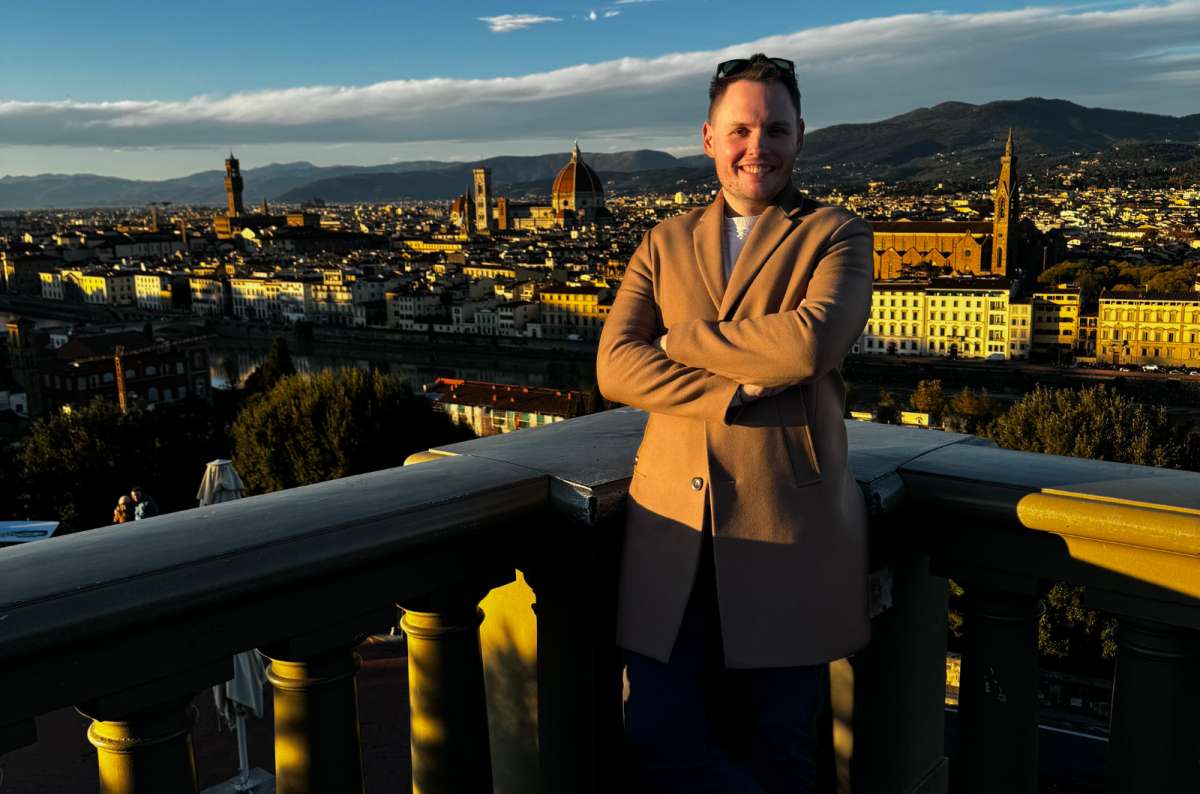
If you missed Piazzale Michelangelo on Day 4, this is your second chance to enjoy the panorama over Florence.
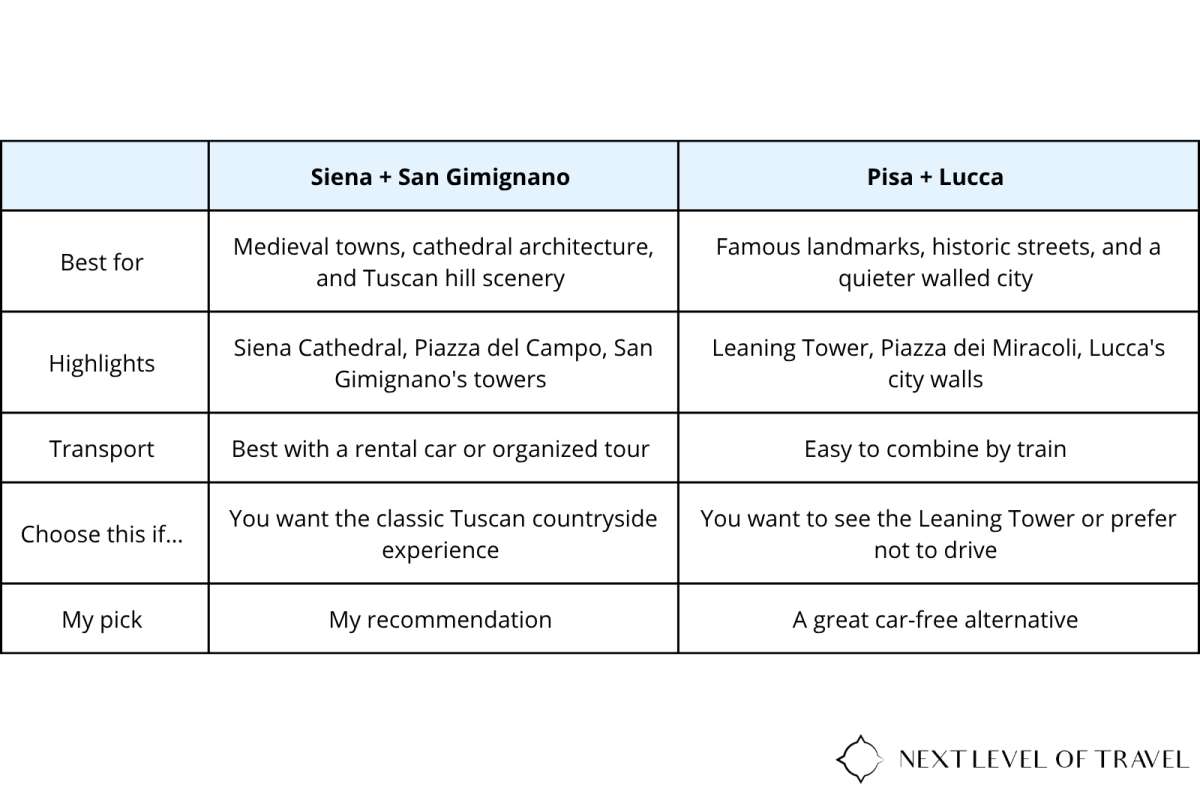
Today's plan: Choose one Tuscany day trip from Florence, not both. I'd pick Siena and San Gimignano for the medieval towns and countryside, but Pisa and Lucca make more sense if you want to travel by train.
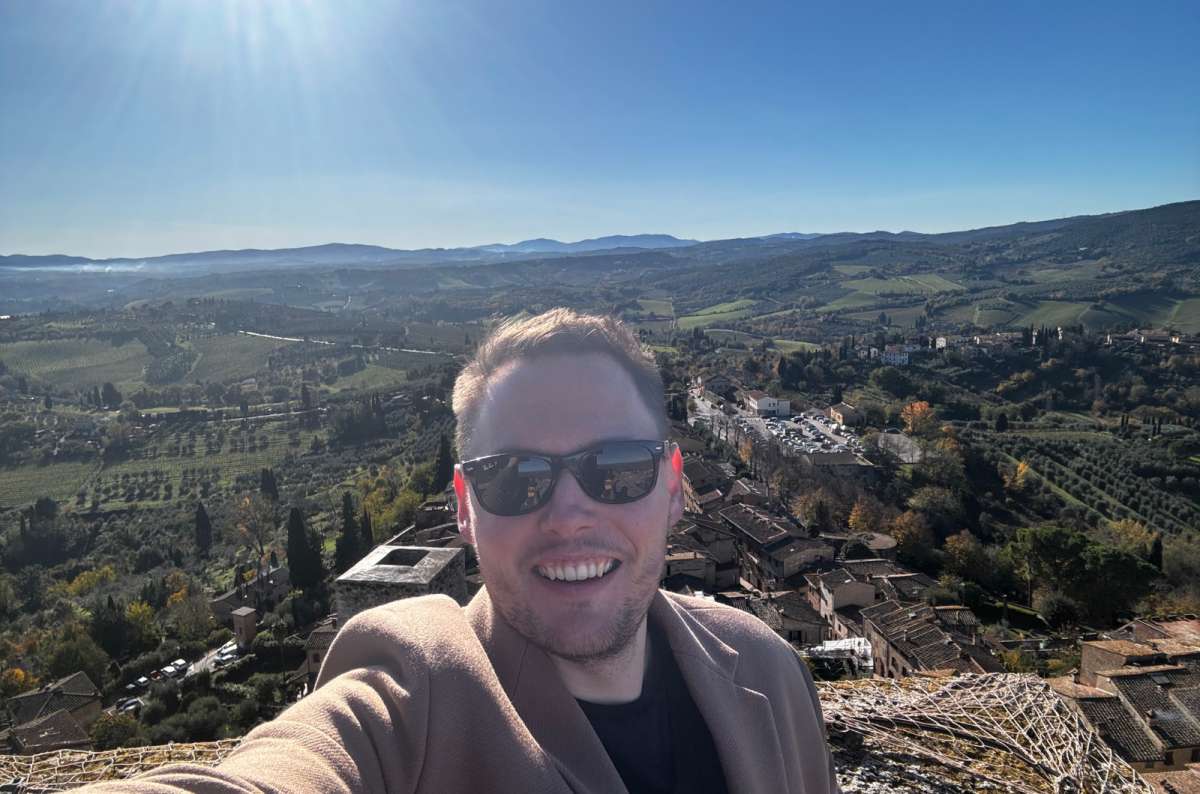
I visited both towns on the same day, starting with San Gimignano.
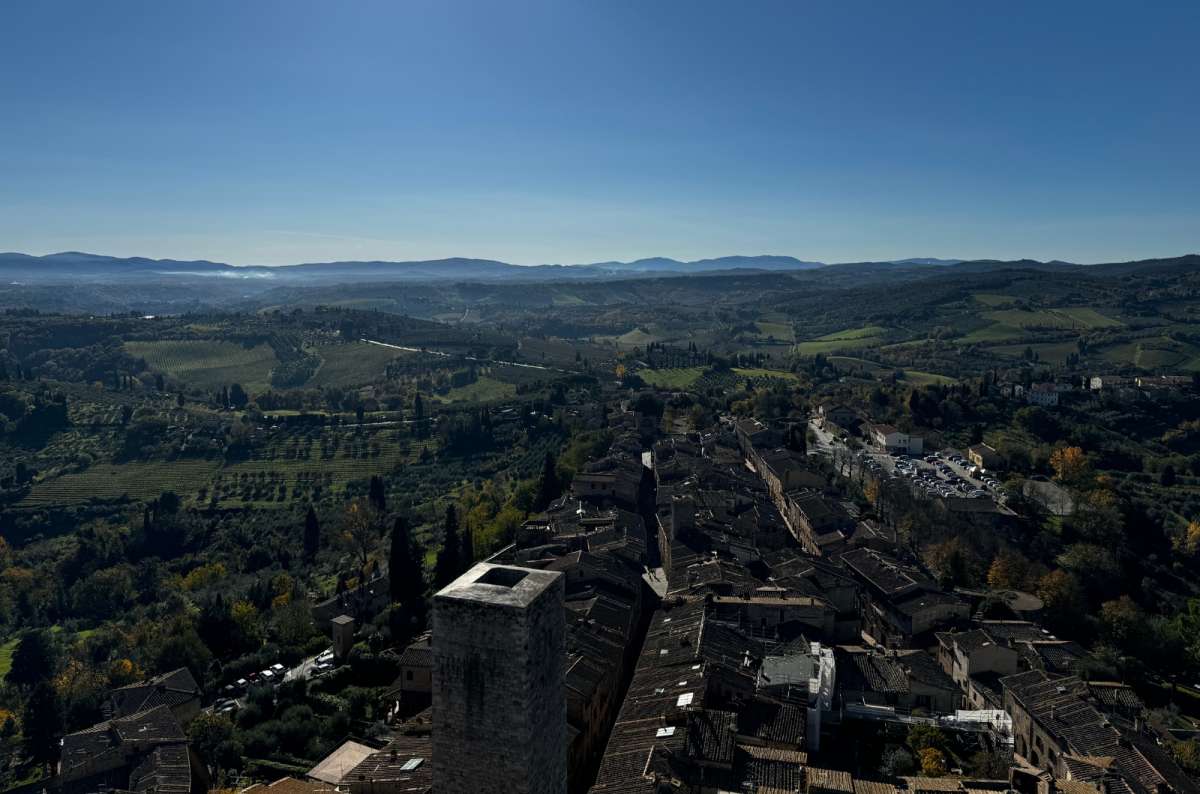
You know those endless photographs of Tuscany's rolling hills? This was where the scenery finally lived up to the hype for me.
San Gimignano is a beautifully preserved medieval town full of towers and narrow streets. Walk from Porta San Giovanni to Porta San Matteo, passing Piazza della Cisterna and Piazza del Duomo.
My favorite attraction was Torre Grossa. At 54 meters, it's a manageable climb, and the countryside views are among the best I've seen in Italy. For views of the town's towers, head to Parco della Rocca.
Allow around 2–3 hours, depending on how many photos you take.
Then continue to Siena, a grander medieval city famous for Piazza del Campo and its spectacular cathedral.
By the time I reached Siena, I'd seen enough Italian churches to last me a while. But Siena Cathedral still impressed me with its striped marble and incredibly elaborate interior. Don't skip it!
For more details, read my one-day Siena guide.
Transport: A one-day rental car or organized tour is easiest. Combining both towns by public transport is more complicated.
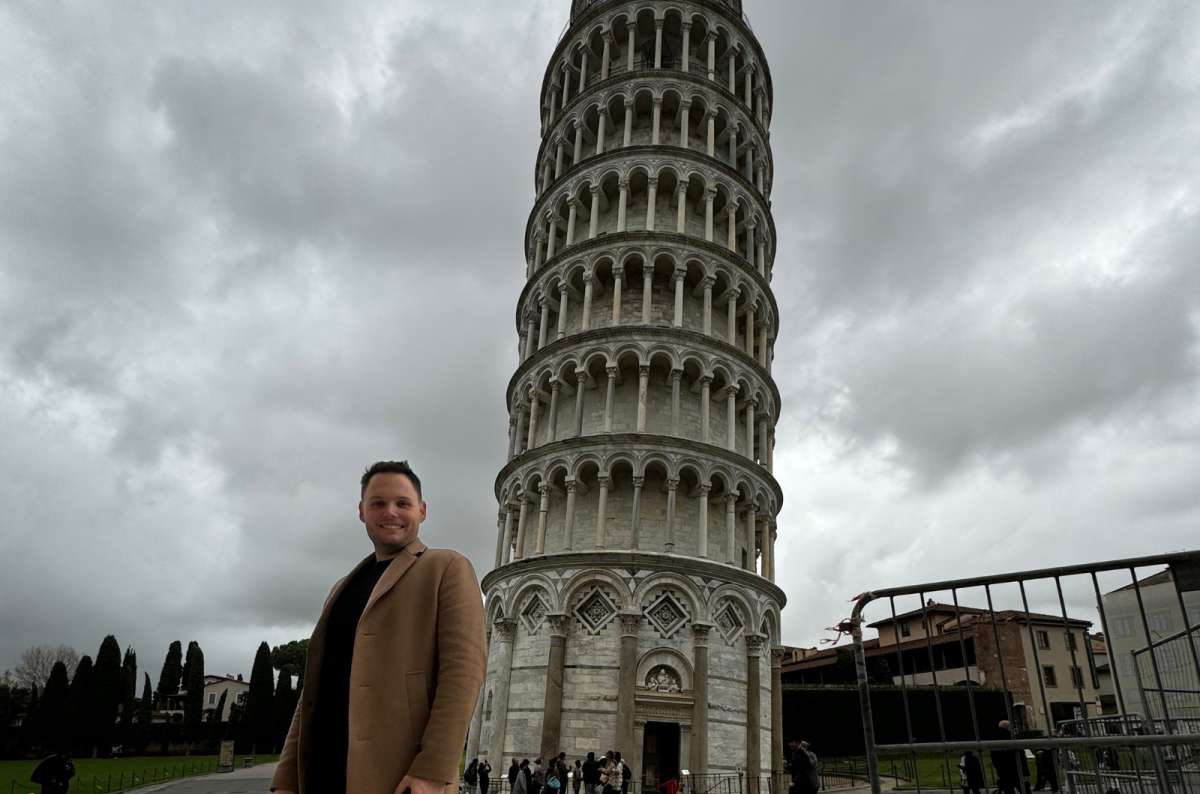
I arrived in Pisa with low expectations. Everyone seemed to think it was only worth two hours.
They were wrong. The Leaning Tower and Piazza dei Miracoli are obvious highlights, but I also loved exploring the quieter streets around Piazza dei Cavalieri and Borgo Stretto. The views along the Arno, especially from Ponte di Mezzo, were surprisingly beautiful.
Then head to Lucca, a charming smaller city with preserved walls, an impressive cathedral, and Torre Guinigi, famous for the trees growing on top.
I particularly liked Lucca's cathedral and the beautifully carved tomb of Ilaria del Carretto.
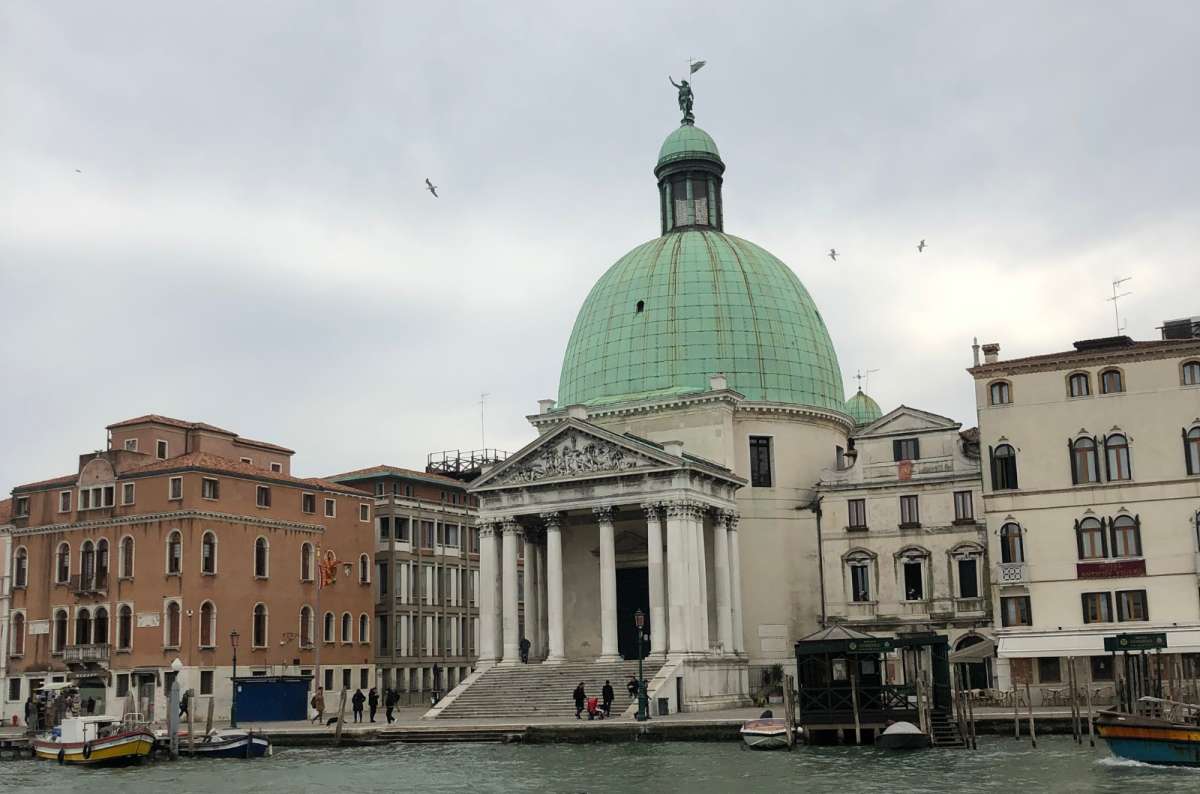
Today's plan: Travel from Florence to Venice, explore the canals, and get your first taste of St. Mark's Square. Visit Doge's Palace if you arrive early enough; otherwise, make it your first stop on Day 9.
Take a morning high-speed train from Florence to Venezia Santa Lucia. The journey takes a little over two hours, and arriving in Venice by train is an experience in itself. You walk out of the station, and suddenly there's the Grand Canal in front of you. Not a bad welcome!
I've visited Venice three times over roughly 15 years, and I have mixed feelings about it. Some streets are shabby, parts of the city are dirty, and the crowds can be ridiculous. But Venice is also completely unique. There's nowhere else quite like it, which is why I keep coming back.
Read more about my trips in my 2 days in Venice itinerary and the Venice city pass here.
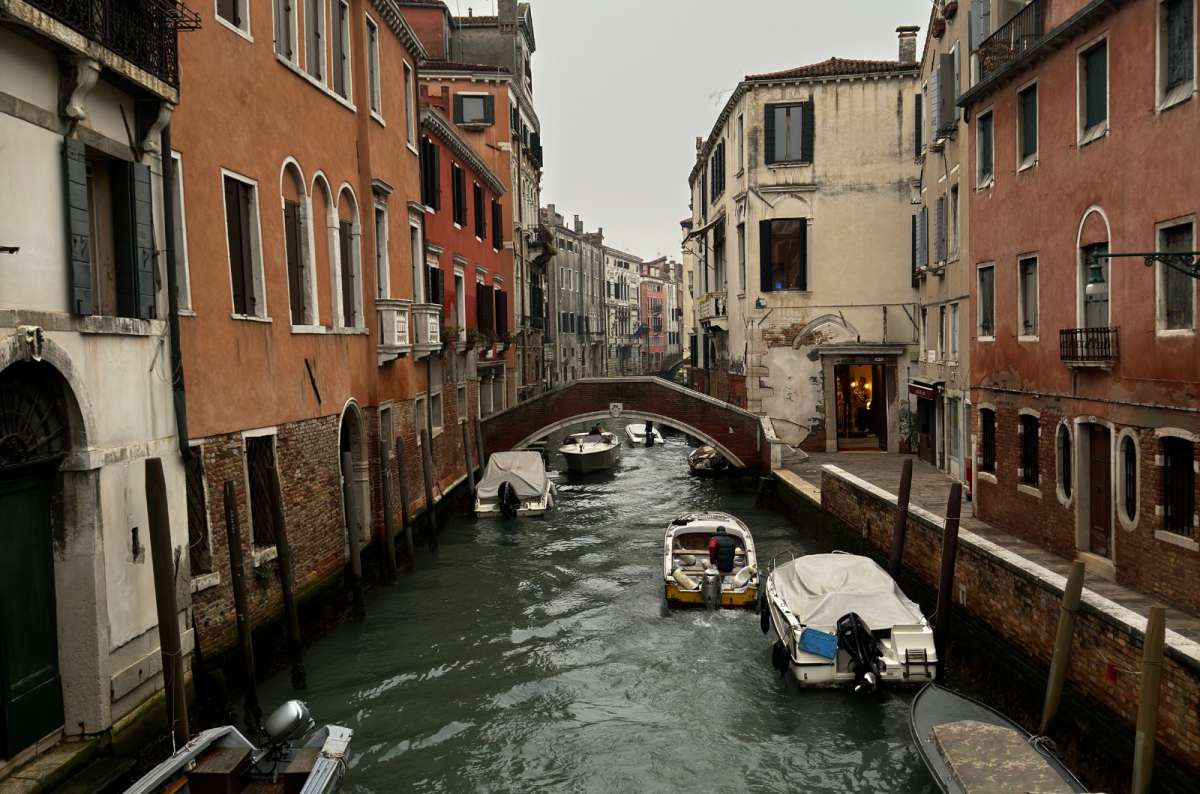
After dropping your luggage at the hotel, start walking toward Piazza San Marco.
Venice is much bigger than it looks on a map. I've walked over 25 km in a single day here without even trying. And navigation can be surprisingly tricky when a street suddenly ends at a canal.
Use GPS. Trust me, your sense of direction won't stand much chance against Venice.
If you'd rather save your legs, take a vaporetto (water bus) along the Grand Canal. It's a practical way to get around and enjoy the views at the same time.
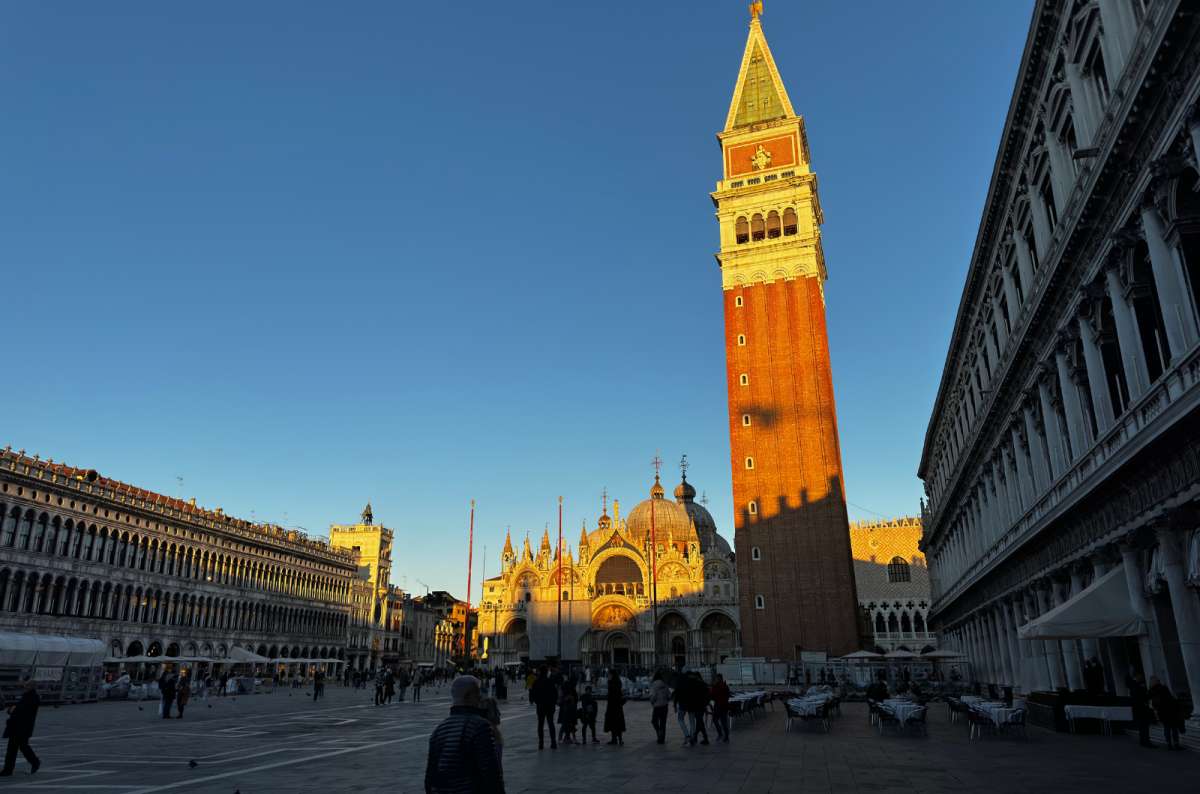
Piazza San Marco is Venice's famous central square, surrounded by spectacular architecture.
If you enjoy panoramic views, consider going up St. Mark's Campanile. There's an elevator to the top, and the views over Venice's rooftops, canals, and lagoon are fantastic.
I particularly recommend Doge's Palace. Beyond the grand rooms, I loved the armory and the prison section. It's a fascinating reminder that Venice wasn't just a beautiful trading city—it was once a major political and naval power.
Allow around 2–3 hours for Doge's Palace. If you reach St. Mark's Square with enough time for a proper visit, see it today. If not, don't rush through it—move it to the morning of Day 9, before exploring Castello. You'll need to shorten tomorrow's optional sightseeing, but you won't have to give up the Naval History Museum automatically.
Read more about Doge’s Palace: Is it worth it? here.
You'll also see St. Mark's Basilica, but I'd save its interior for Day 9 rather than squeeze both major attractions into one afternoon.
Once the main sightseeing crowds begin to thin out, explore the smaller canals and bridges away from Piazza San Marco.
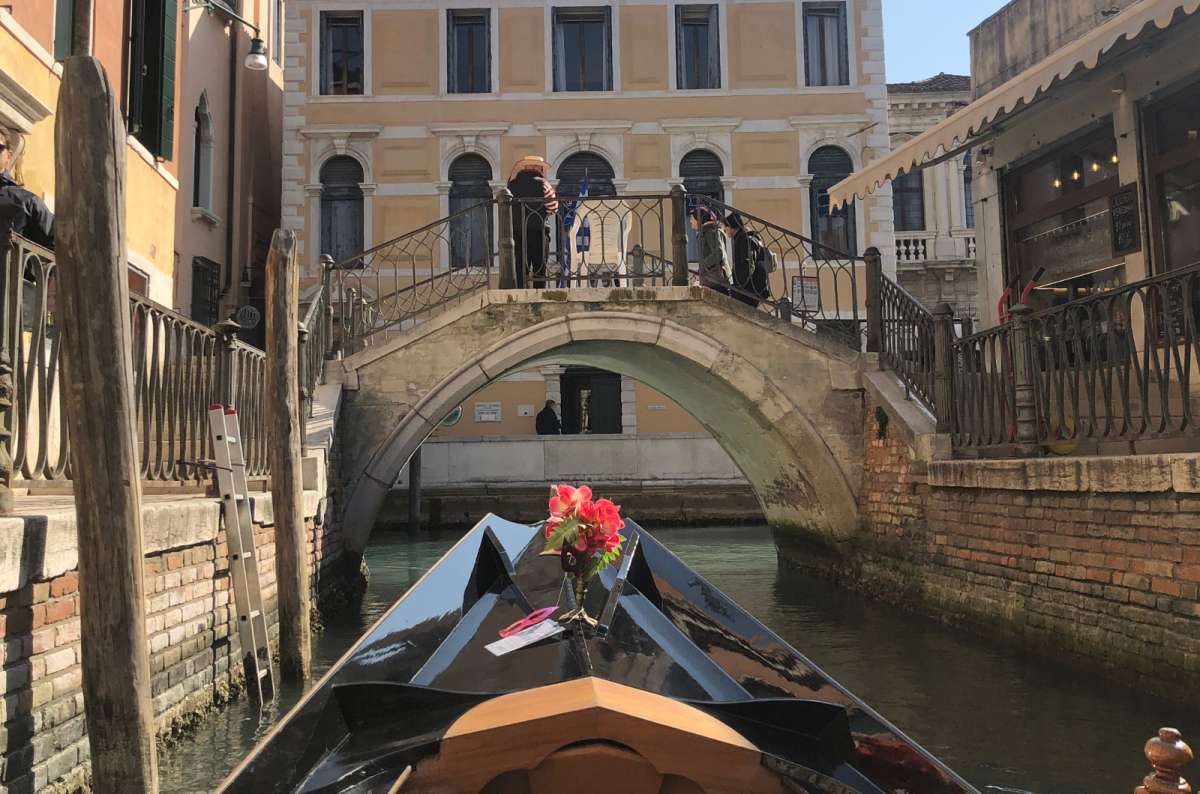
For all my complaints about Venice, there's something special about wandering its streets in the evening, especially when you find a quiet canal without twenty people trying to take the same photograph.
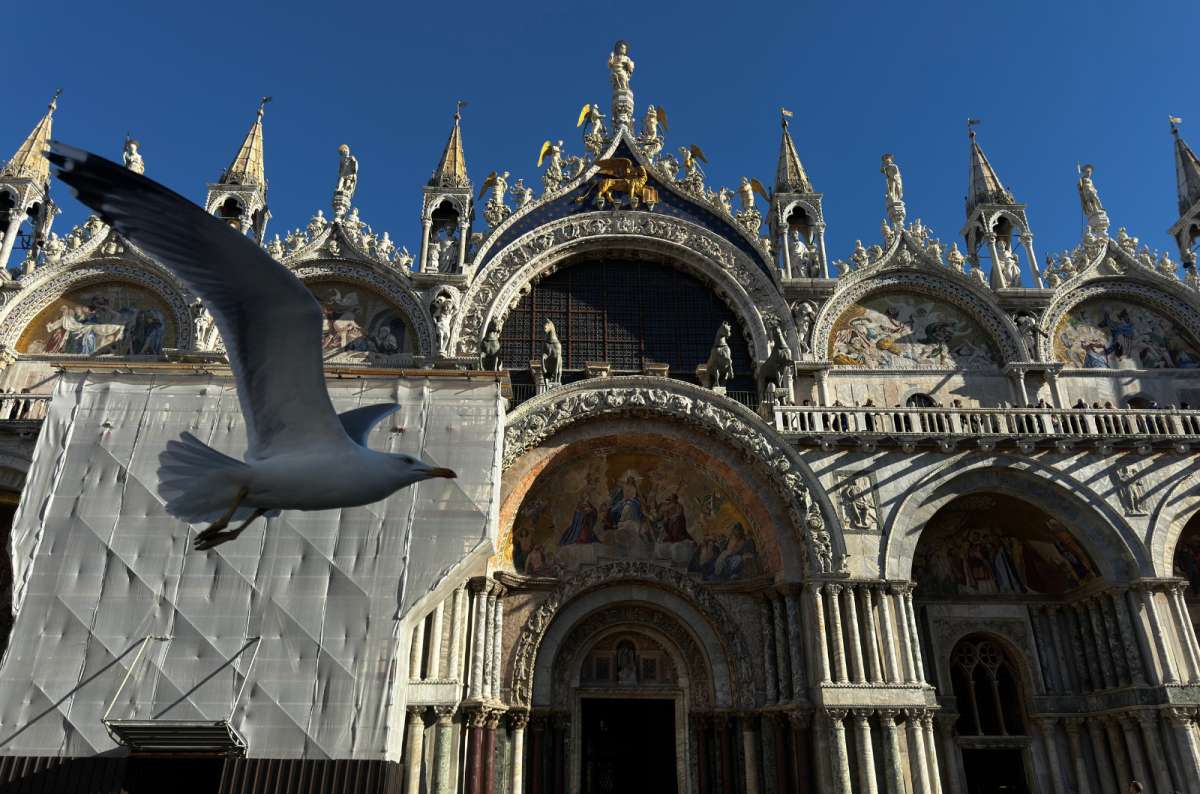
Today's plan: Visit St. Mark's Basilica, explore Castello and the waterfront, and fit in Doge's Palace if you missed it yesterday. The Naval History Museum is my top additional recommendation, but how much you can see depends on your museum priorities.
If you visited Doge's Palace on Day 8: Start with St. Mark's Basilica, then head along the waterfront toward the Naval History Museum, Arsenal, and Castello. You'll have more time to explore the neighborhood, and can consider the Accademia Bridge later.
If you saved Doge's Palace for Day 9: Visit the palace and St. Mark's Basilica in the morning, with timed tickets arranged to avoid unnecessary waiting. Then head east toward the Naval History Museum and Castello. If you want to spend 2–3 hours in the Naval History Museum as well, make that your main afternoon activity and keep the rest of Castello brief. Skip the Accademia Bridge and other optional museums.
You can fit both Doge's Palace and the Naval History Museum into one day, but only if you plan your timings carefully. If you'd rather explore at a slower pace, choose the museum that interests you most.
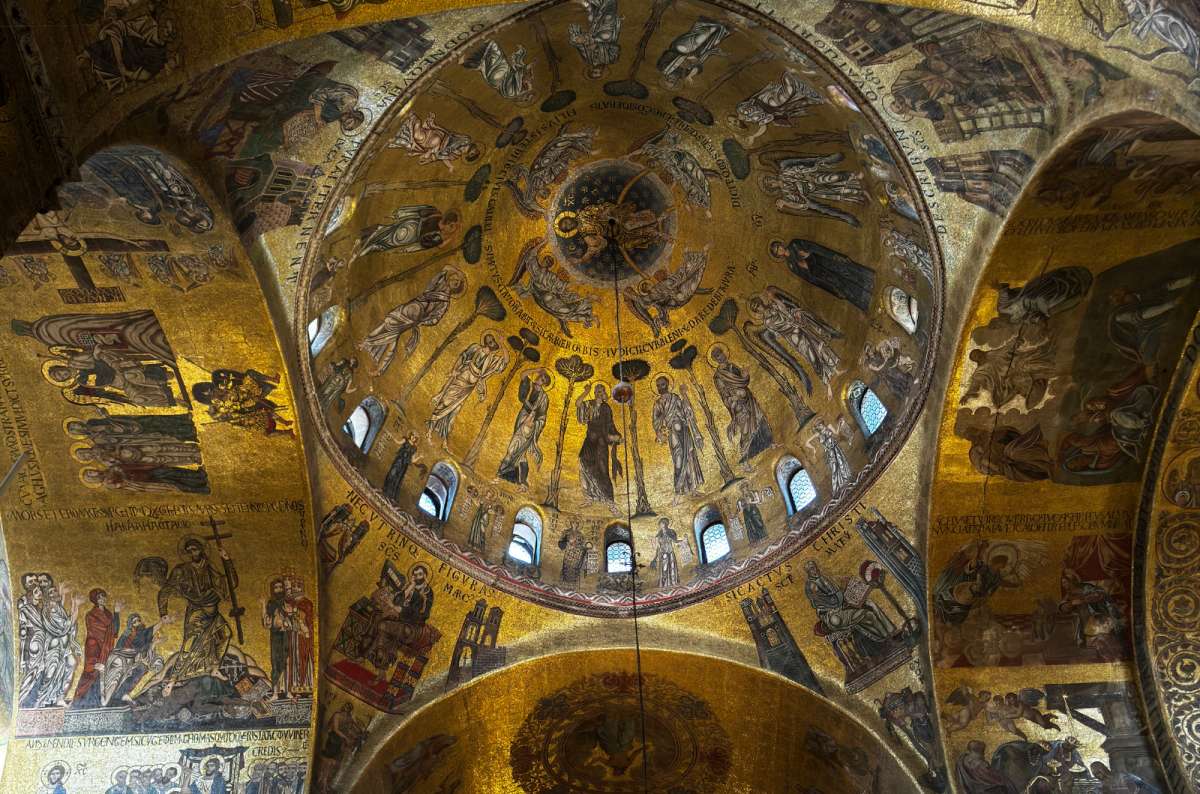
St. Mark's Basilica is my number-one attraction in Venice. And that's saying something, considering how many Italian churches I'd visited before getting here.
The exterior is spectacular, but the interior is what really impressed me. The golden mosaics, intricate details, and Byzantine architecture are unlike anything you'll see in Florence. After enough cathedrals to last me a lifetime, this one still managed to surprise me.
Book a timed ticket in advance, bring ID, and make sure your shoulders and knees are covered. Even outside peak season, I've seen the queue stretch around the basilica. Allow around an hour, longer if you want to explore the additional ticketed sections.
If Doge's Palace is also on today's schedule, visit whichever attraction has the earlier booked entry slot first. Both are around St. Mark's Square, so you won't waste time crossing the city between them.
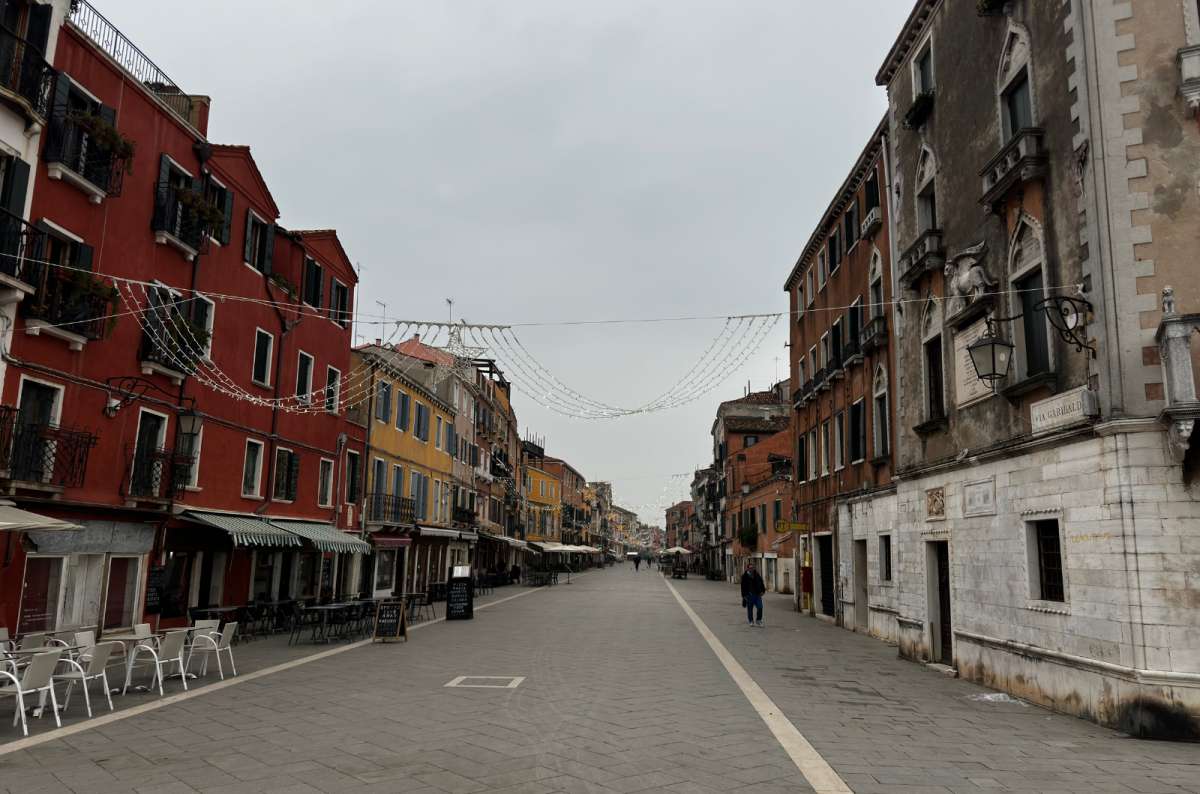
From St. Mark's Square, follow Riva degli Schiavoni toward Castello and the Venetian Arsenal.
I like how Venice gradually changes as you move away from the busiest attractions. Around Via Giuseppe Garibaldi, it starts feeling more like a real neighborhood than an open-air tourist attraction.
The Naval History Museum is along this route, so visit it before wandering farther into Castello if it's on your list. That way, you're not backtracking later to catch the museum before closing.
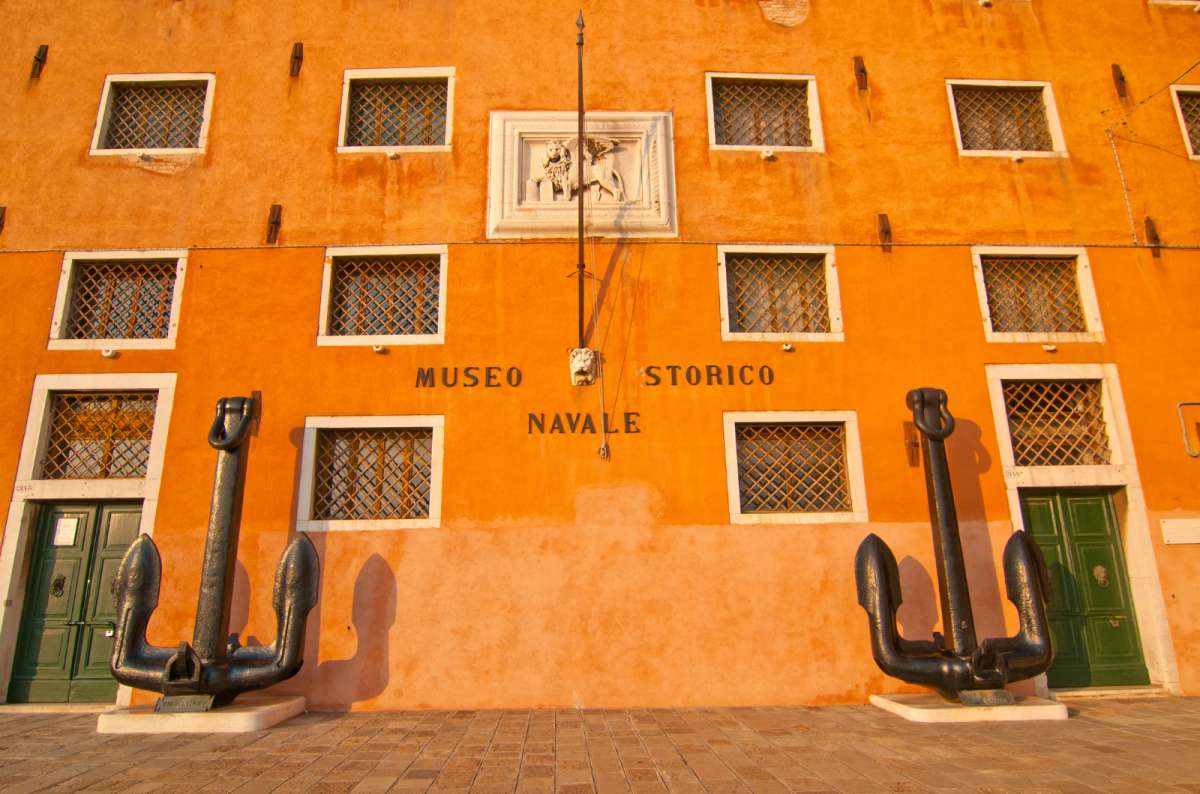
If you enjoy history, I'd strongly recommend the Naval History Museum (Museo Storico Navale).
This was one of my biggest surprises in Venice. I've visited naval museums across Europe, and only Hamburg's impressed me more. The collection is excellent, and it helps explain how Venice became such a powerful maritime republic.
Allow 1–3 hours, depending on your enthusiasm for ships. Personally, I could spend ages here. Anyone traveling with me probably wishes I couldn't.
If you're visiting Doge's Palace today as well, aim to reach the Naval History Museum by early afternoon rather than leaving it until late in the day. Check its opening hours and last admission before planning your visit; it's closed on Mondays.
If time is tight, I'd cut extra churches, extended wandering around Castello, and the Accademia Bridge before automatically dropping this museum. But if ships and maritime history aren't your thing, spend that time enjoying the neighborhood instead.
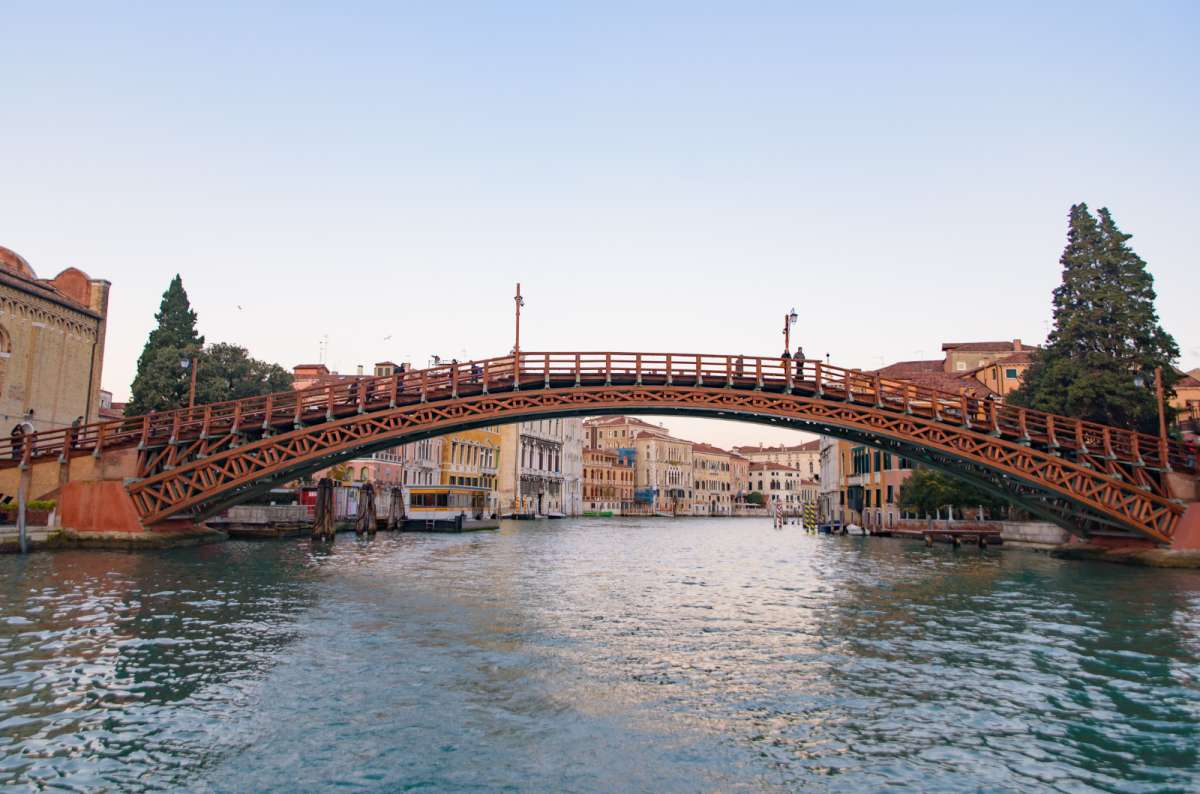
If you visited Doge's Palace yesterday and still have time and energy, you could finish the day around Ponte dell'Accademia. But this is a separate walk back across Venice from Castello, not the next logical stop on the waterfront route. Allow roughly 30–40 minutes on foot from the Arsenal area, depending on where you finish exploring.
I actually prefer its views over the Grand Canal to those from the much more famous Rialto Bridge.
You can also explore Dorsoduro or visit the Peggy Guggenheim Collection if you enjoy modern art. I particularly liked the works by Dalí and Kandinsky, but after Florence's galleries, another museum might be the last thing you want.
If you moved Doge's Palace to today, I'd skip this extension. There's no point racing across Venice just to tick off another bridge.
Murano is famous for glassmaking, while Burano is known for its colorful houses. Both are worth considering, but with only two days in Venice, I wouldn't try to squeeze them in alongside all the major attractions. If you've already visited Venice or have an extra day, they're great additions. Otherwise, I'd prioritize Venice itself.
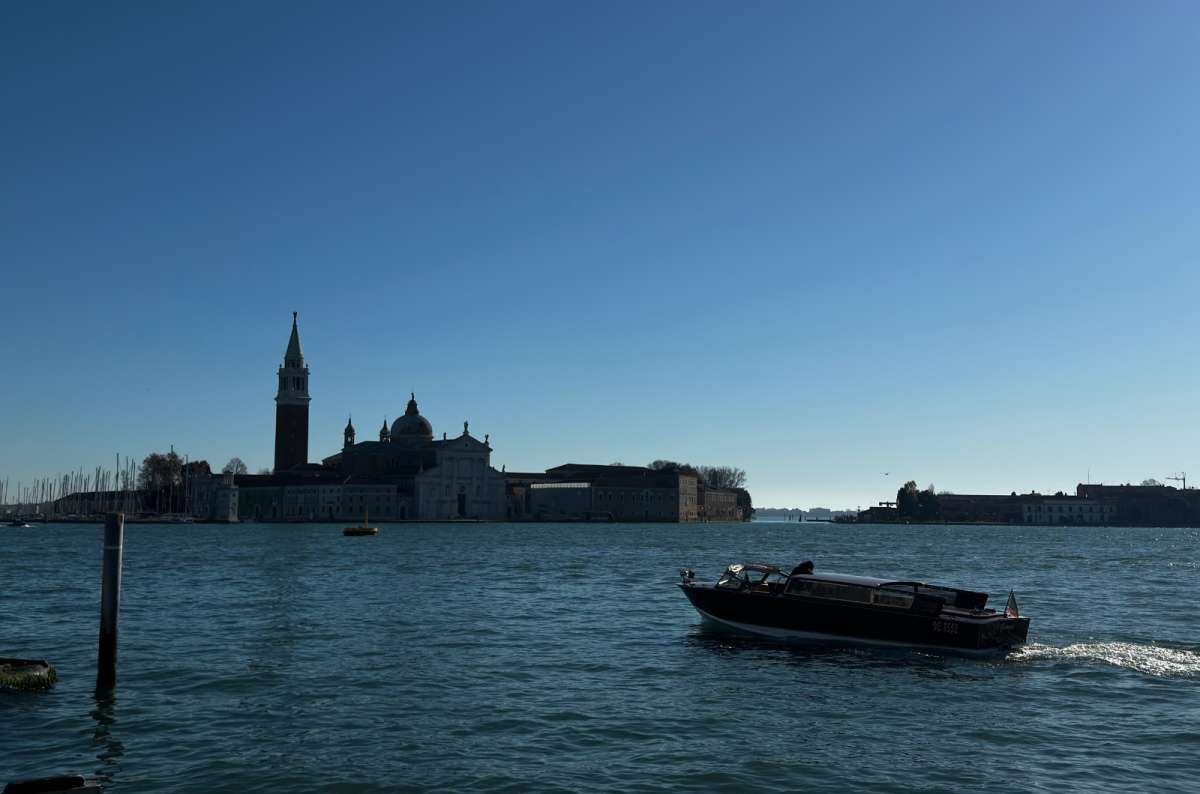
Today's plan: Enjoy one last walk through Venice before heading to the airport or train station.
For the final day of this 10-day Italy itinerary, I wouldn't plan any major attractions unless you have a late departure.
Instead, have breakfast, wander along the canals, and revisit a favorite spot. I particularly like Piazza San Marco in the morning, before the biggest crowds arrive.
If you missed the Rialto Bridge or want another look at the Grand Canal, this is a good opportunity. Just remember that Venice's narrow streets and bridges make getting around with luggage slower than you'd expect.
Read more about the best things to do in Venice, as well as the best time to visit Venice.
For Venice Marco Polo Airport (VCE), take the airport bus from Piazzale Roma (cheapest), the Alilaguna water bus from selected stops, or a private water taxi (most expensive).
Allow extra time: Getting through Venice with luggage takes longer than you might expect.
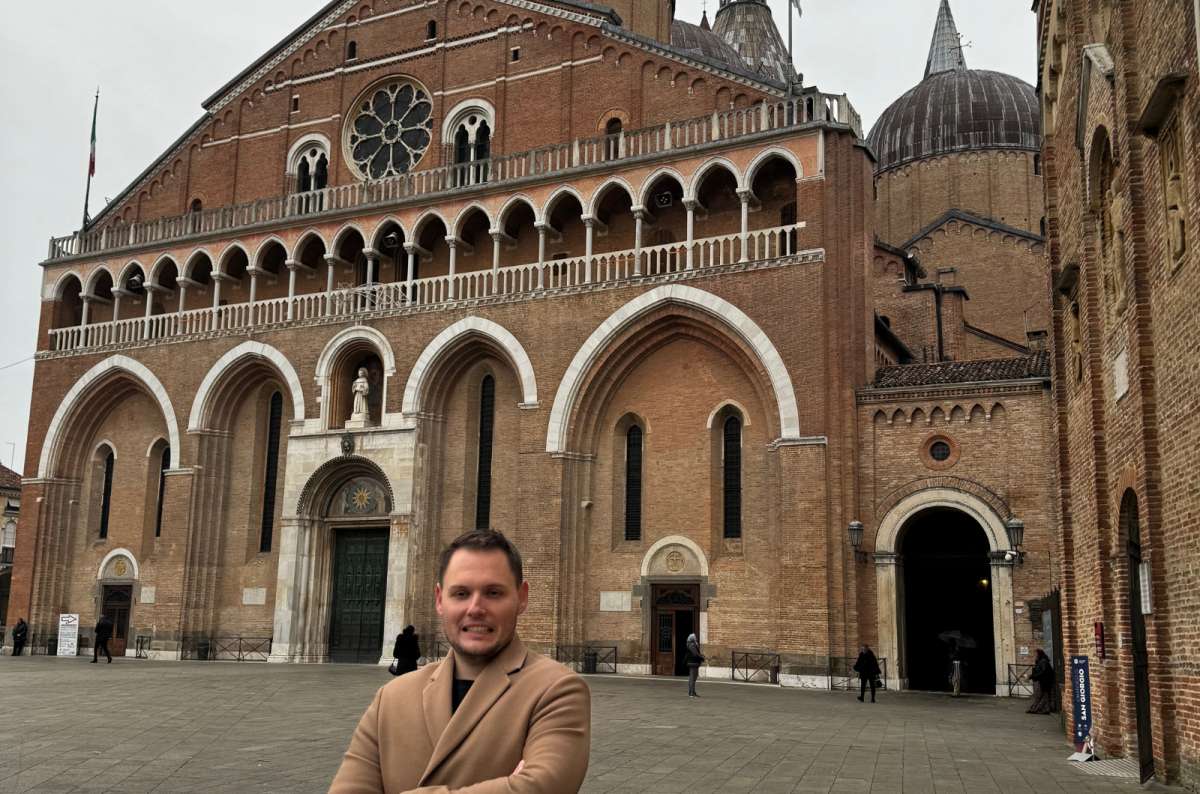
Padua is an excellent city, and I've enjoyed exploring its historic center. But I'd only add it if you're departing by train later in the day and the logistics genuinely work.
Otherwise, save Padua for another trip. It deserves more than a rushed stop with a suitcase.
If you're interested in visiting separately, read my guide to the best things to do in Padua.
My advice: Keep Day 10 flexible. After Rome, Florence, Tuscany, and Venice, you've already packed plenty into ten days. End the trip with a good breakfast and a final canal view, not a race against your departure time.
What I'd prioritize: A stress-free departure.
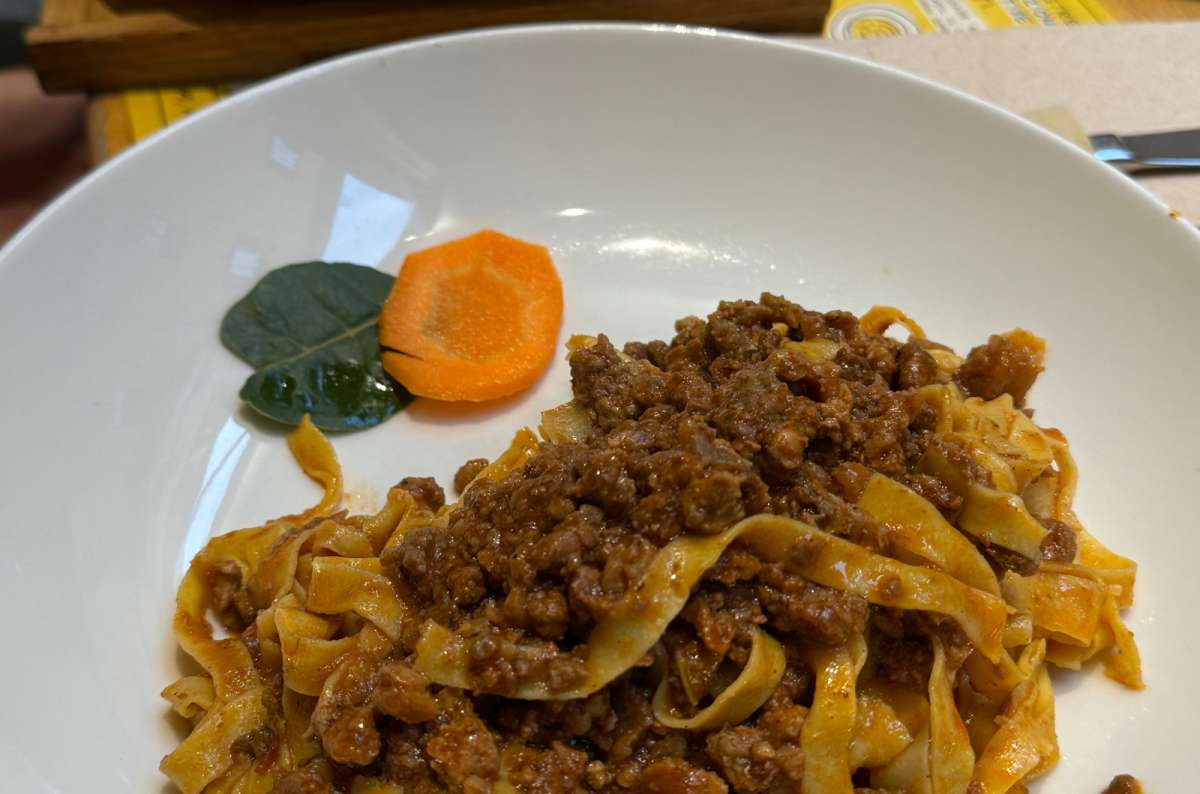
This might be the most important section of the article. Italy has too many great places to squeeze into one trip. Here's what I'd leave out:
My rule: Don't add another destination unless you're willing to remove something else.
Keep Rome → Florence → Venice, but skip Tuscany and shorten Florence.
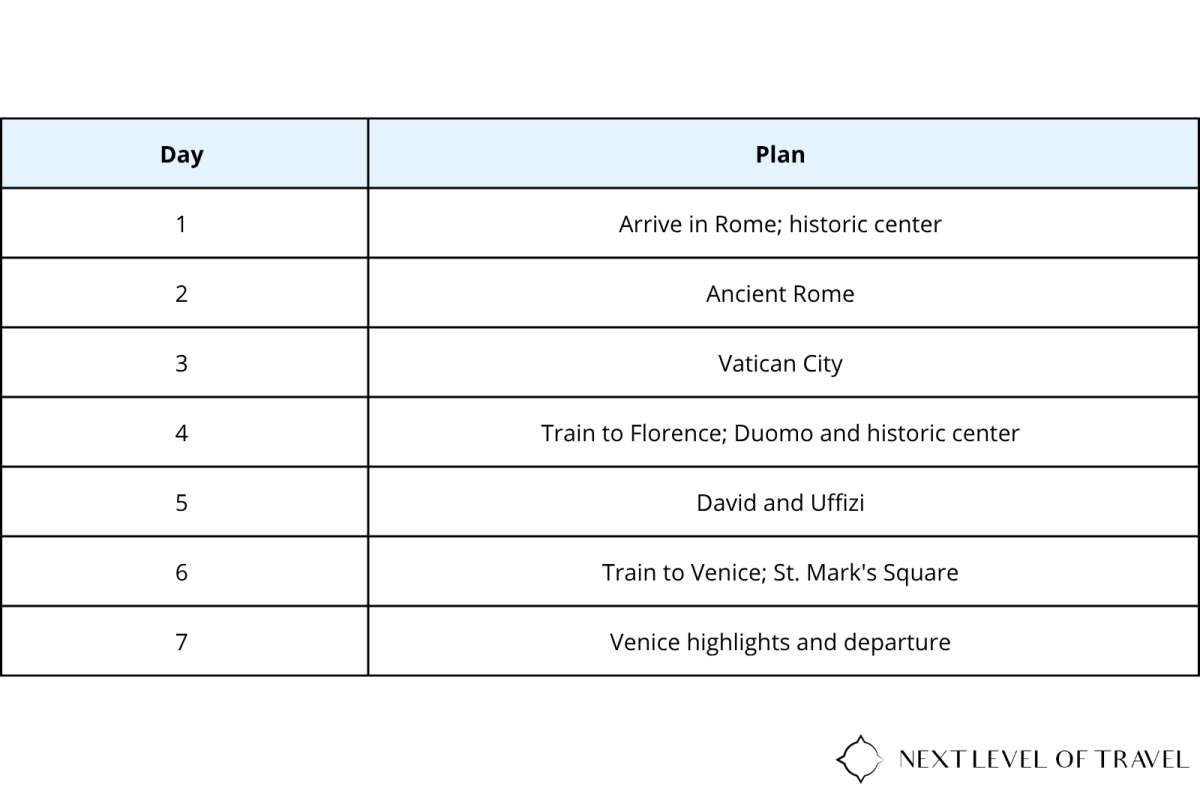
It's a tighter schedule, especially in Florence, where you'll need to book timed museum tickets carefully. Venice is also squeezed into the end of the trip, so I'd aim for an evening flight on Day 7 to make the most of your time there.
With four extra days, I'd explore one additional region rather than squeeze in more random stops.
My pick is Emilia-Romagna. I've visited Bologna, Modena, Ravenna, and Parma, and they're fantastic for history, architecture, and food. Ravenna's mosaics are especially impressive. Add the region between Florence and Venice, using my Emilia-Romagna guide to plan your stops.
Two other options:
Choose one extension, not all three.
You only need three hotel bases for this 10-day Italy itinerary:
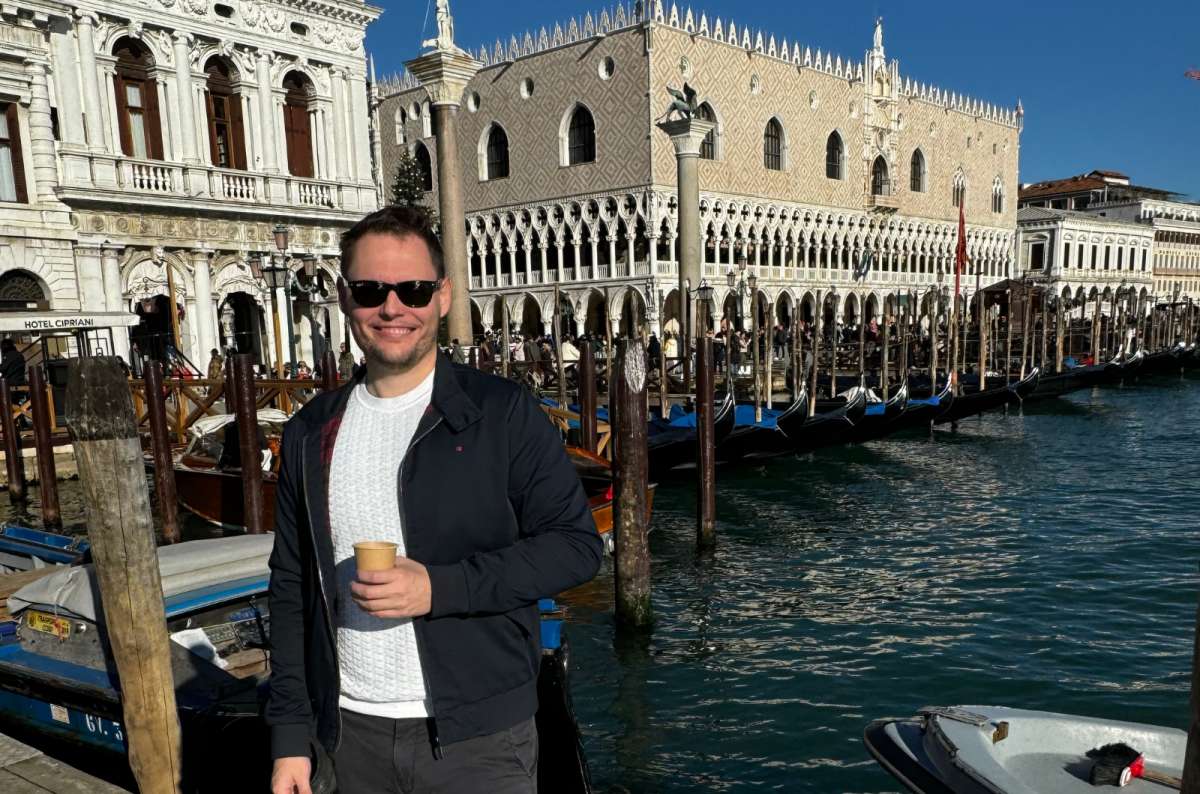
After traveling around Italy, I've learned that trying to see everything is the easiest way to enjoy less of it. Stick to this 10-day Italy itinerary, and you'll experience some of Italy's best places without spending your vacation rushing between them. And you might actually come home feeling rested!
This post contains affiliate links. I earn a small commission if you make bookings through my links, at no additional cost to you. Thank you for your support!
My 10-Day Italy itinerary at a glance
Italy itinerary map: Rome to Venice
Before you book your Italy trip: My travel tips
Day 1: Arrive in Rome and explore the historic center
Day 2: Ancient Rome—Colosseum, Roman Forum, and Palatine Hill
Day 3: Vatican City and Rome beyond the ruins
Day 4: Take the train to Florence and explore the historic center
Day 5: Florence's Duomo and Michelangelo's David
Day 6: Uffizi Gallery, Ponte Vecchio, and Oltrarno
Day 7: Which Tuscany day trip should you choose?
Day 8: Take the train to Venice and discover St. Mark's Square
Day 9: St. Mark's Basilica and Venice beyond the main square
Day 10: A final morning in Venice and departure
What I would not add to this 10-Day Italy itinerary
How to adapt this Italy itinerary to 7 or 14 days
Where to stay on this Italy itinerary
Final thoughts: The best Italy itinerary isn't the longest one


Hi, I’m Jan. I travel fast and intensely, whether I’m exploring the buzz of Tokyo in 3 days or road-tripping through mountains and beaches on a 3-week Thailand adventure. And no matter where I am, you’ll always find me in a comfortable hotel at night and eating the best food.
If that sounds like your kind of journey, hop on board, and let’s explore the world together!
I started this blog after realizing how tough it can be to find reliable, authentic travel info. You wouldn’t believe how many “travel bloggers” never even visit the places they write about! On Next Level of Travel, you can count on my full honesty and insights drawn from my firsthand experiences.
Here’s the deal: not every destination is all superlatives and unicorns. I’ll let you know if a tourist attraction isn’t worth your time, like skipping overrated stops in my 2-week Spain itinerary. And when I find something truly special—like the perfect mix of culture and nature in Cape Town—you can trust that it’s worth adding to your itinerary.



Comments | Thoughts? Give us a shout!