


2. ...But you need a 4x4 for safe Namibia driving
3. Drive on the left side on Namibia roads
4. Buy full-coverage insurance for driving in Namibia
5. Be ready to visit the police station
6. Practice driving off-road before arriving in Namibia
7. Forget about public transportation in Namibia
8. Be ready for vast distances when driving in Namibia
9. Don’t wait til the last second to get gas in Namibia
10. Namibian drivers are courteous, but beware of hit-and-runs
11. Speeding fines are steep—be especially careful on gravel roads!
12. Be patient with other tourists—avoid driving them off the road, please
13. Don’t drive after dark in Namibia
Driving in Namibia is a breeze... if a breeze was the same as a hurricane! All you need to do is make sure you don’t get the wrong type of car, stay on the right (left) side of the road, watch out for zebras, and, oh, take out really good car insurance, just to be safe.
So, let’s be completely honest here: if you’re driving in Namibia, you’re in for an adventure! But who am I kidding, you’re traveling to Namibia, you WANT an adventure, and you expect nothing less. Here’s exactly how I did my Namibia road trip—and how I’d do it again if I ever went back.
Read more from my Namibia travel blog.
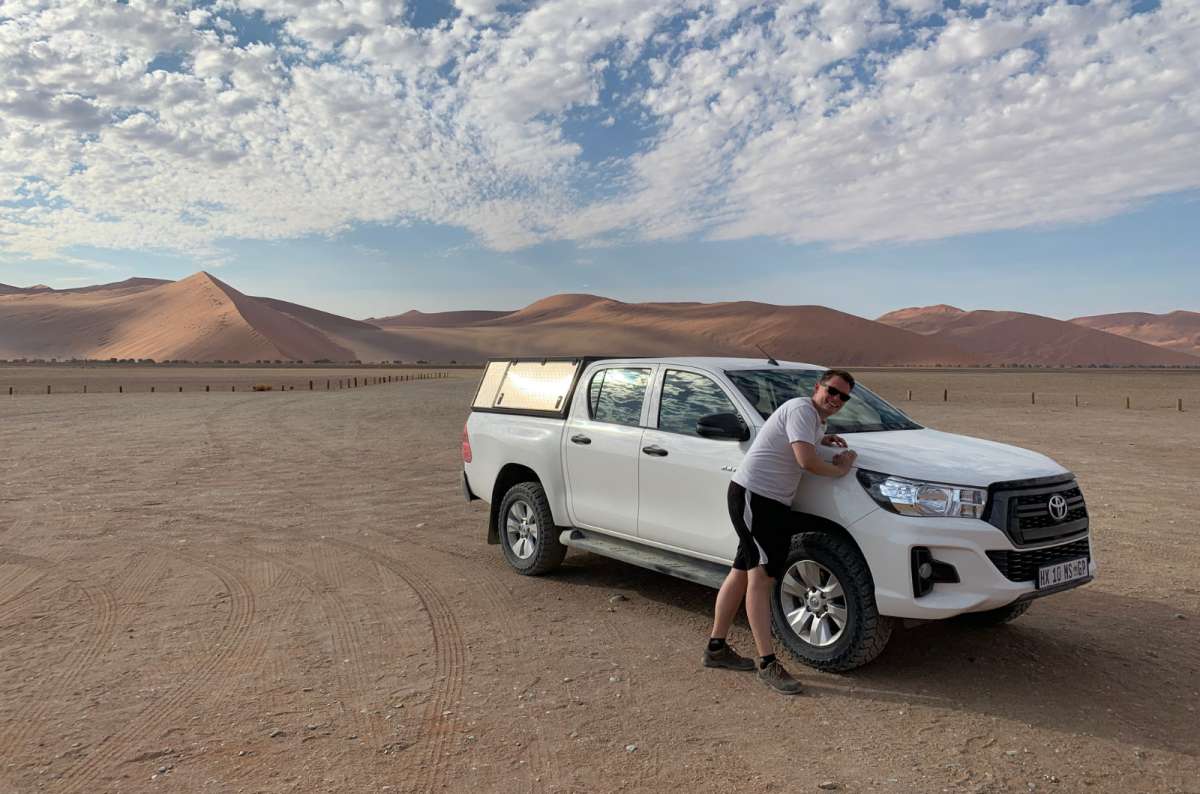
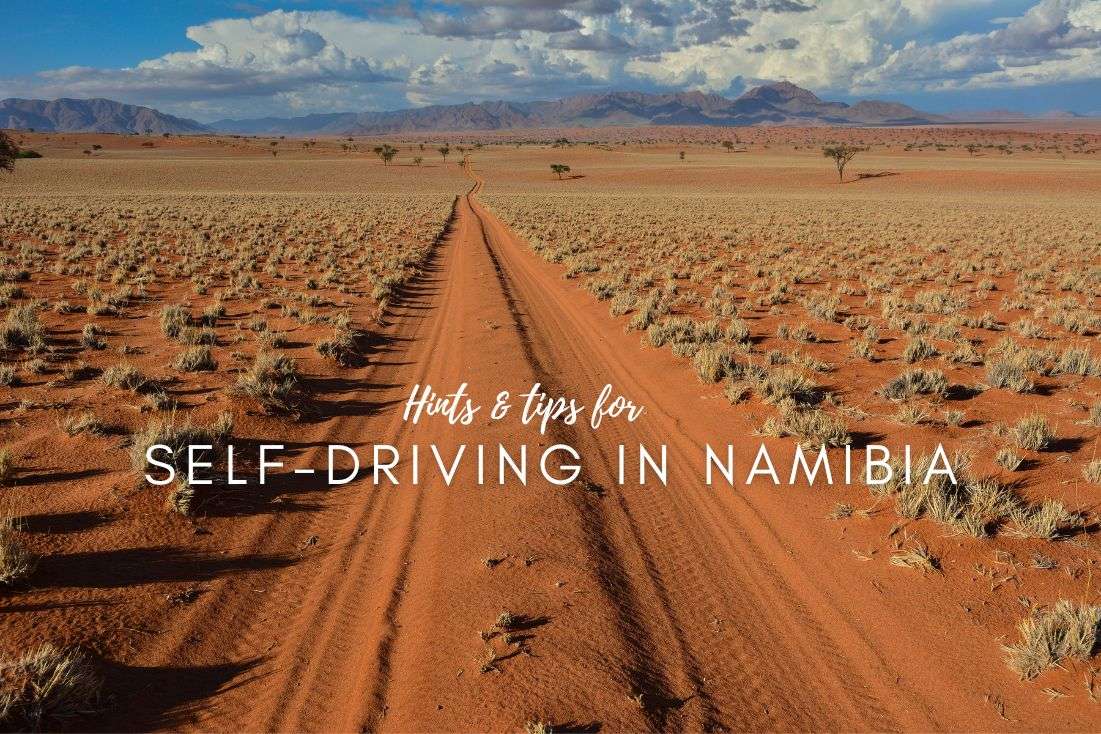
If you’re worried about driving in Namibia due to safety reasons, you can chillax and get your driver’s license ready for an adventure! Namibia is a safe country to travel, roads included. Rent a car in Namibia and set off!
You do need to remember that distances are vast, but due to the lack of traffic and a relatively good infrastructure, you’ll be enjoying your off-roading adventure more than worrying about it.
Huh, what off-roading?? Oh, did I not mention that there are almost no asphalt roads in Namibia? Driving in Namibia means hours on rough road surfaces like gravel roads. Which takes me to my next tip:


Trust me when I say a 4WD is an absolute must-have for driving in Namibia. Most of the time, you’ll be tackling dirt roads, and Namibia is a huge country… Do you want to be stuck going 30 km/h (18.5 mph) while trying to drive 500 km (310 miles) a day? I didn’t think so.
We literally passed hundreds of sad-looking, sedan-driving tourists going at a frustratingly slow pace that were regretting their poor decision as we flew past at 140 km/h (87 mph). That's right, baby, we were the kings of the desert!
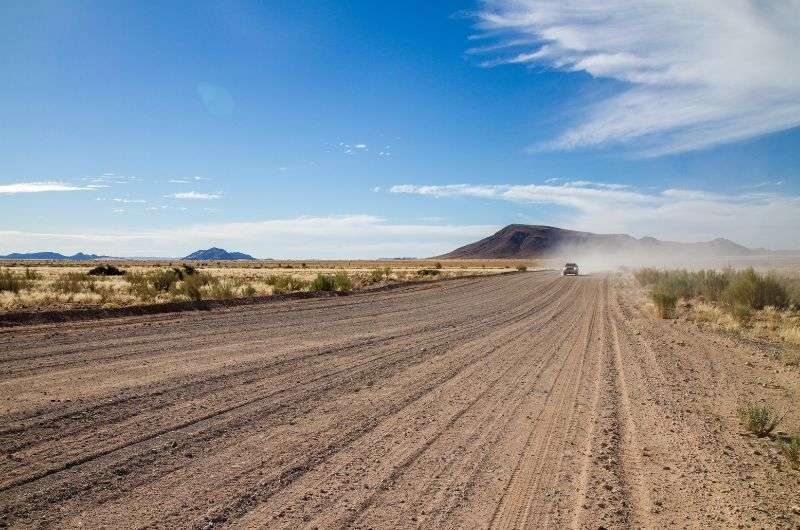
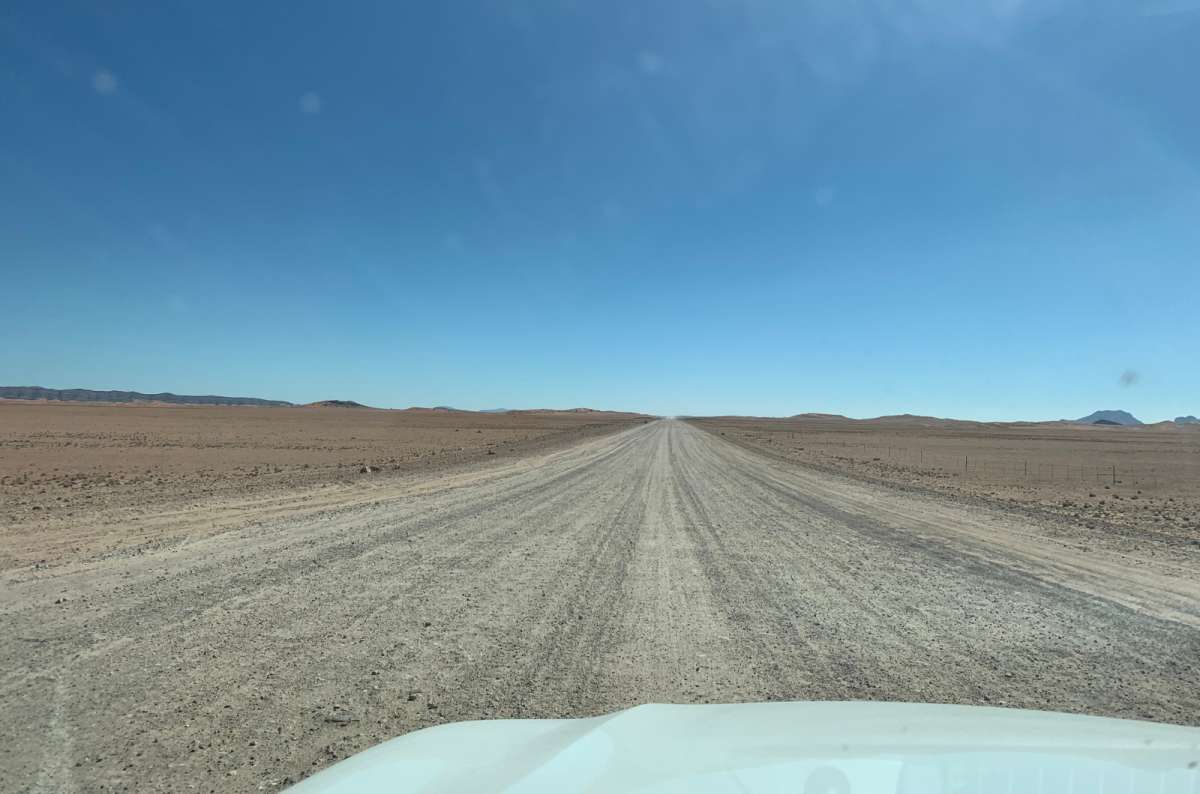
A typical dirt road in Namibia that looks like it never ends... and it never does, if you’re in a 2WD!
Not to mention that you’ll probably have way more punctured tires if they aren’t massive enough to take on whatever spiky thing you drive over. It’s worth mentioning that it never hurts to bring a spare tire along on your journey.
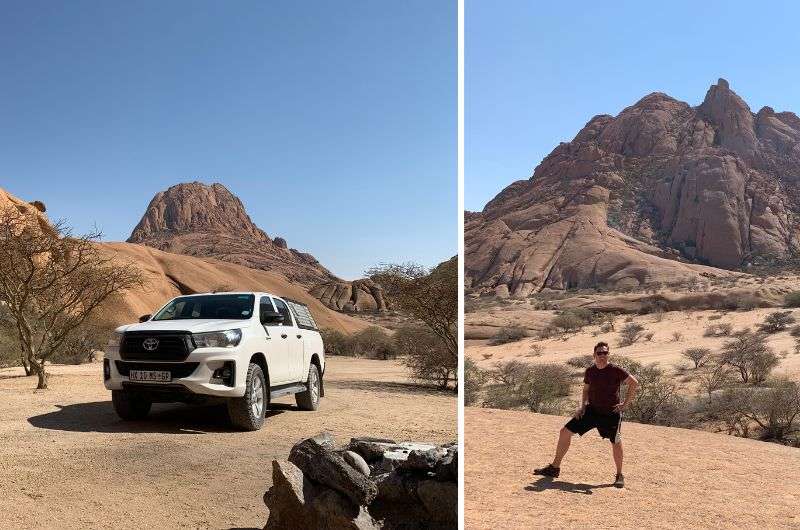
Trust me. Rent a 4WD to travel through Namibia and you'll be much happier
That said, Namibia is a very flat country, so driving is easy, IF you follow the rules of the road, don’t drive at night, and watch out for animals. Oh, and if you happen to be there in rainy season, huge potholes! Told you, easy peasy.
A cautionary note for driving in rainy season: You wouldn’t be able to tell in the winter (which is when you should be visiting Namibia anyway), but some of Namibian roads lead through ex-riverbeds. You can, however, tell they used to be riverbeds the moment the rain doubles down. If your road turns into a river, don’t be surprised, you have been warned. See, I told you that you should visit Namibia in the winter (May to September)!

You drive on the left side of the road in Namibia. Namibia used to be part of South Africa, and, before that, an English colony, so driving on the left is a little memento from those days.
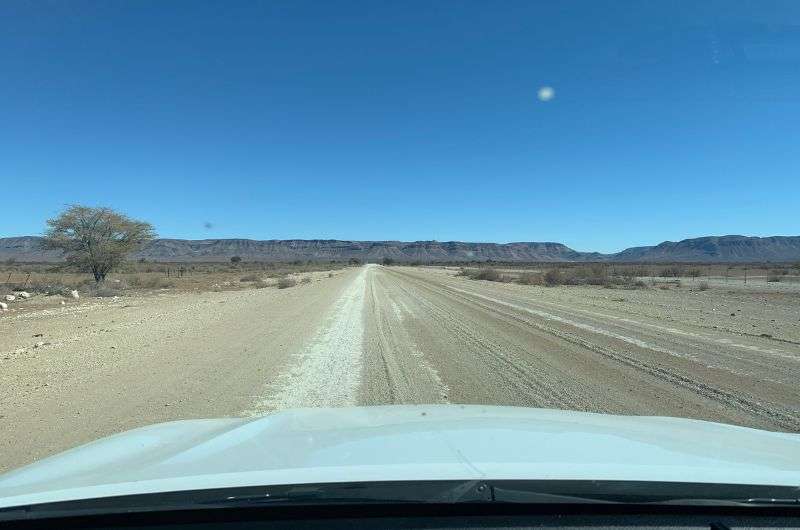
You see? No traffic, no stress.
Hotel tip: I stayed at Burgsdorf Guest Farm, which felt like an oasis after a long, uncomfortable, dusty drive.
Driving in Namibia means animals committing suicide by walking in front of your vehicle, tourists that can't drive on dirt roads, and sand, dirt, and gravel everywhere. You are sure to end up with at least a cracked windshield and a punctured tire or two.
I consider myself an experienced driver, having driven off-road many times before, but even I got into two accidents in two weeks in Namibia. The first one was with a French tourist who didn't understand how driving in Namibia works.
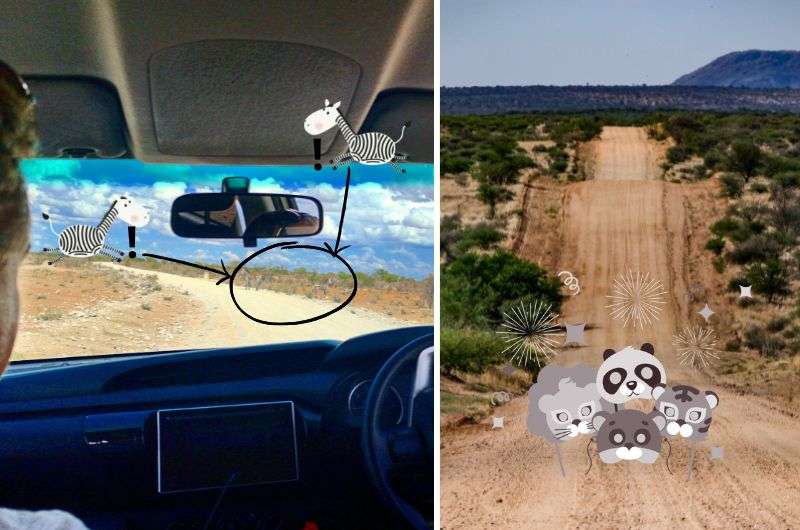
Dodging animals left and right, and it isn’t even their party time (that starts daily after sunset)!
The second one was with a warthog who didn't understand anything, really, and paid for it with his life. He basically demolished the front of our Toyota Hilux. I was lucky to have paid for full insurance—I just gave the bent-out-of-shape car back to the rental company and that was the end of that. It was a win-win situation. Well, except for the pig.
Buying full insurance is expensive—I paid over 1000 bucks for 14 days of Toyota Hilux coverage. But totally worth it in the end thanks to my pig-ccident. Just presume you’re going to wreck the car, you’ll have a much easier time coughing up the cash for your insurance payment with that vision in your mind.
Pro tip: Check coverage prices when choosing your rental car (I use DiscoverCars).
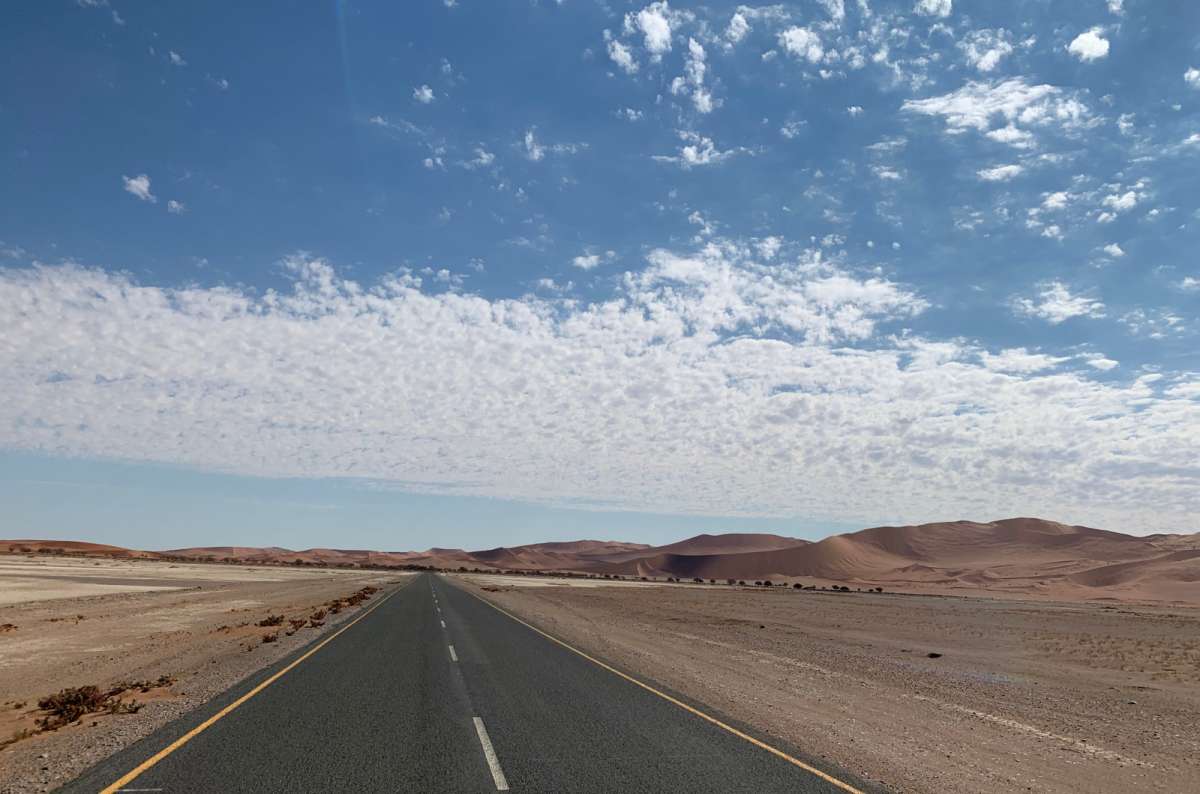
If (when) you get into an accident when driving in Namibia, be ready to go to the police station. Your car rental and insurance companies will request the accident report.
In my experience, the police in Namibia are nice and efficient. We had to deal with the police after our little accident with Mr. Piglet, but it only took an hour, and we only got a small fine to show for it. Not bad for a day's work.
And don’t worry, you don’t need an IDP for driving in Namibia as long as it’s in English and has a picture of you.
If it isn’t, don’t worry, mine isn’t either. Just do what I did and get yourself an IDP in the same country that issued your driver's license. Better to be safe than pulled over in some rural Namibia road...
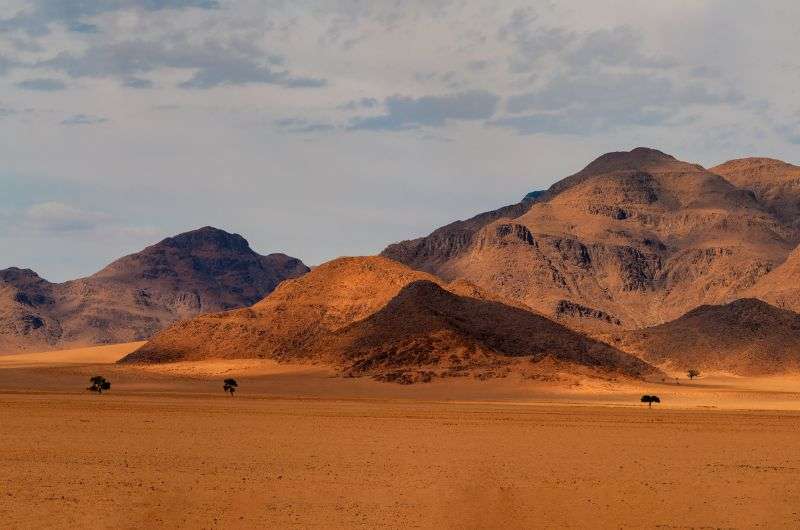
Off-road is where the action is, and sometimes the action is more than you’ve ever wished for—animals jumping into your way, sand making things slippery and the sides of the road hard to make out… the whole shaboozle.
Not that you’ll practice not hitting wild animals, but at least make sure you know how to handle a car that’s not on a boring, perfect tarred road.
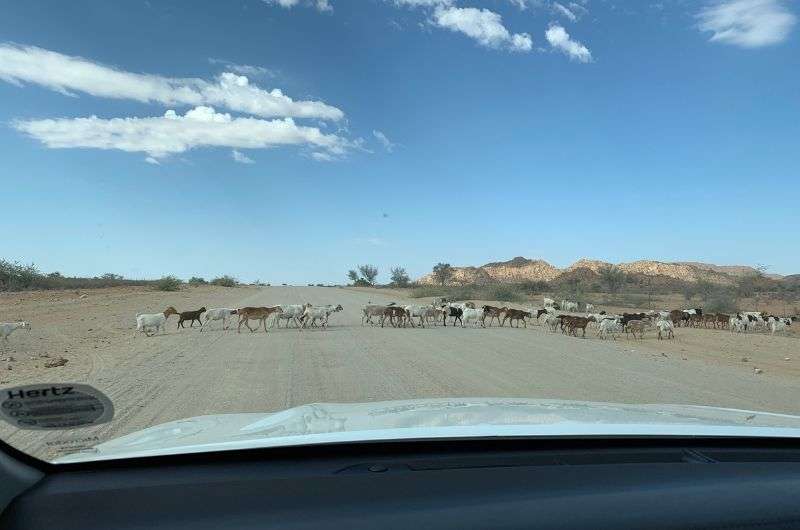
Goat crossing
What public transportation? Ok, there are a couple of buses and even a train in Namibia, but they are few and far between, don’t go to where you want to go, and should probably stay as the mysterious, uncharted territory it has been for you up until now. Just forget it exists.
The only alternative to driving in Namibia would be to rent a car with a driver or use other private transportation, like buying a tour that includes transportation.
If you look at my Best Places in Namibia article, you’ll see that the highlights are all in the top half of the country. But that’s not to say they’re close to each other—you’ll need your own set of wheels to follow both my 10-day Namibia itinerary and the 2-week itinerary for Namibia.
And if you love road trips, my 10-day Garden Route itinerary is another great one to add to your list.
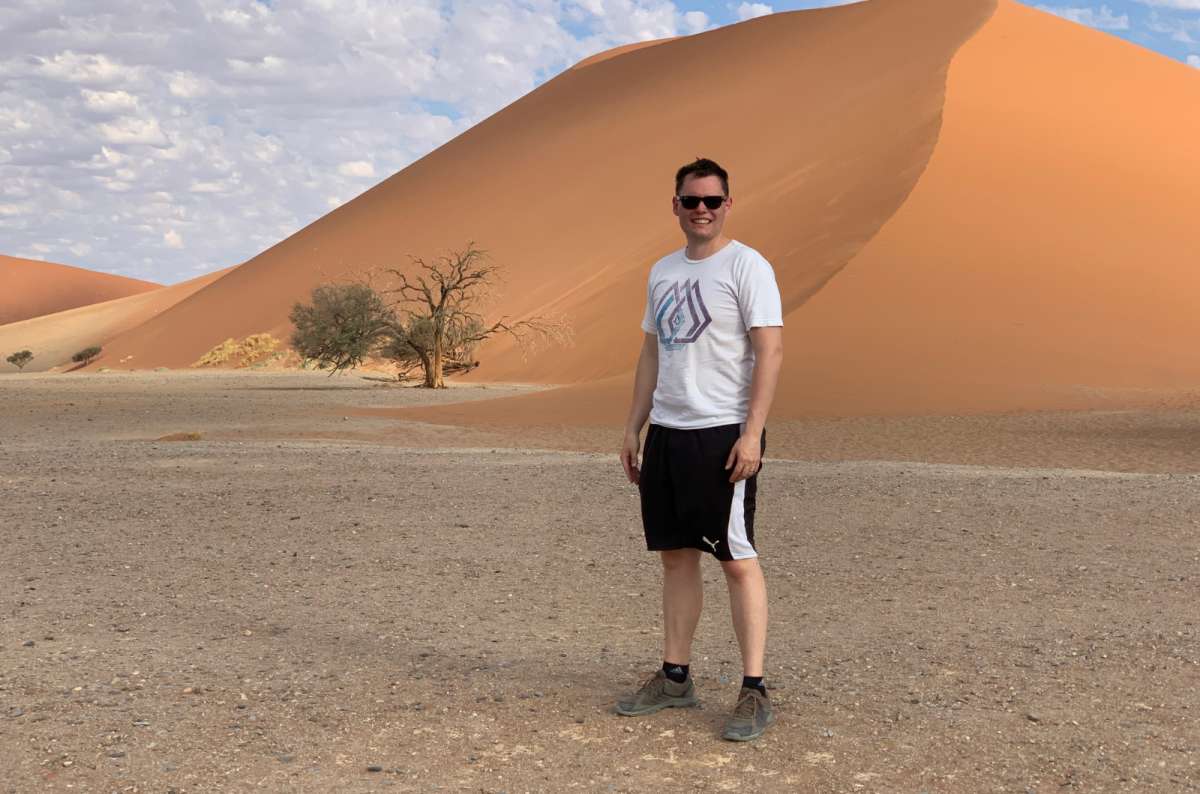
Do you think that driving 600 km (370 miles) a day in a desert with sand in all the wrong places, i.e., outside and inside of your car (and probably in much less comfortable orifices, too!), and nothing to see on the way is the ultimate way to spend your vacation? Well, you better; otherwise maybe go someplace smaller and less sandy. Like anywhere not in Africa.
Yeah, you'll see some of the country's stunning landscapes as you go, but you'll also be going through lots of remote areas in the Namib Desert. Which gets old after like five minutes. Just be aware of that before you commit yourself to driving long distances.
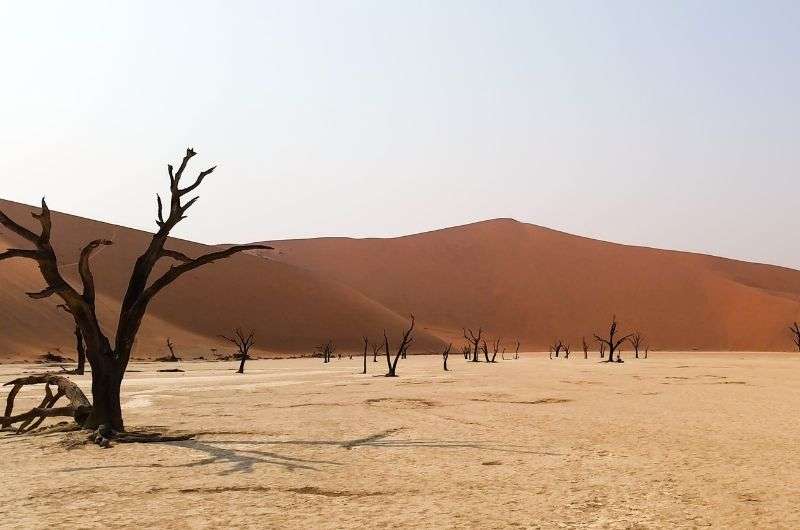
The sand is annoying, but it sure is beautiful, albeit a little monotonous after 2 weeks in Namibia!
You can’t entirely trust Google Maps’ estimated travel times—they will almost always be longer IRL. If you get a 2WD, they’ll be A LOT longer.
You can, however, trust Google Maps in Namibia to navigate you. Maybe pick up a paper map at the airport just to be on the safe side, if you like being on the safe side. If not, and you find yourself on a “P road”, you’re probably on the way to somebody’s farm. Turn back and try again.
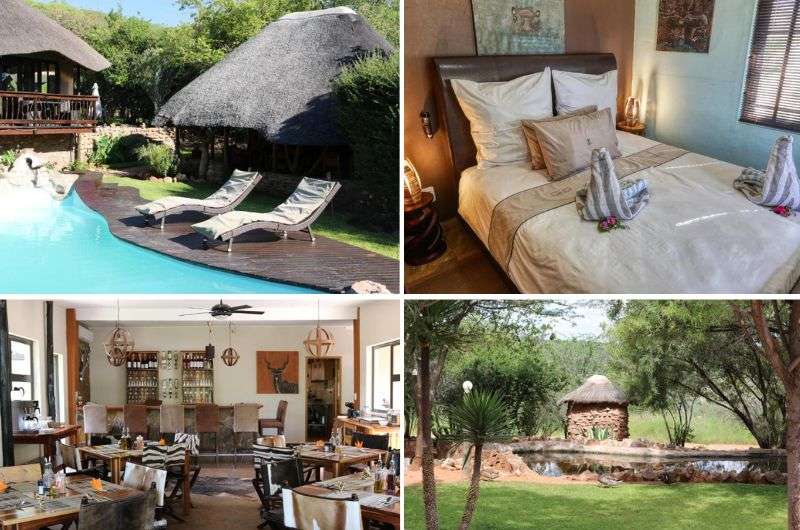
Ijaba Lodge at Buschfeld is the best accommodation outside of Etosha NP
Hotel tip #2: Ijaba Lodge at Buschfeld was amazing, but an hour away from Etosha National Park Safari. I didn’t care, that’s basically nothing in Namibia. Proves just how little distance matters in this country.
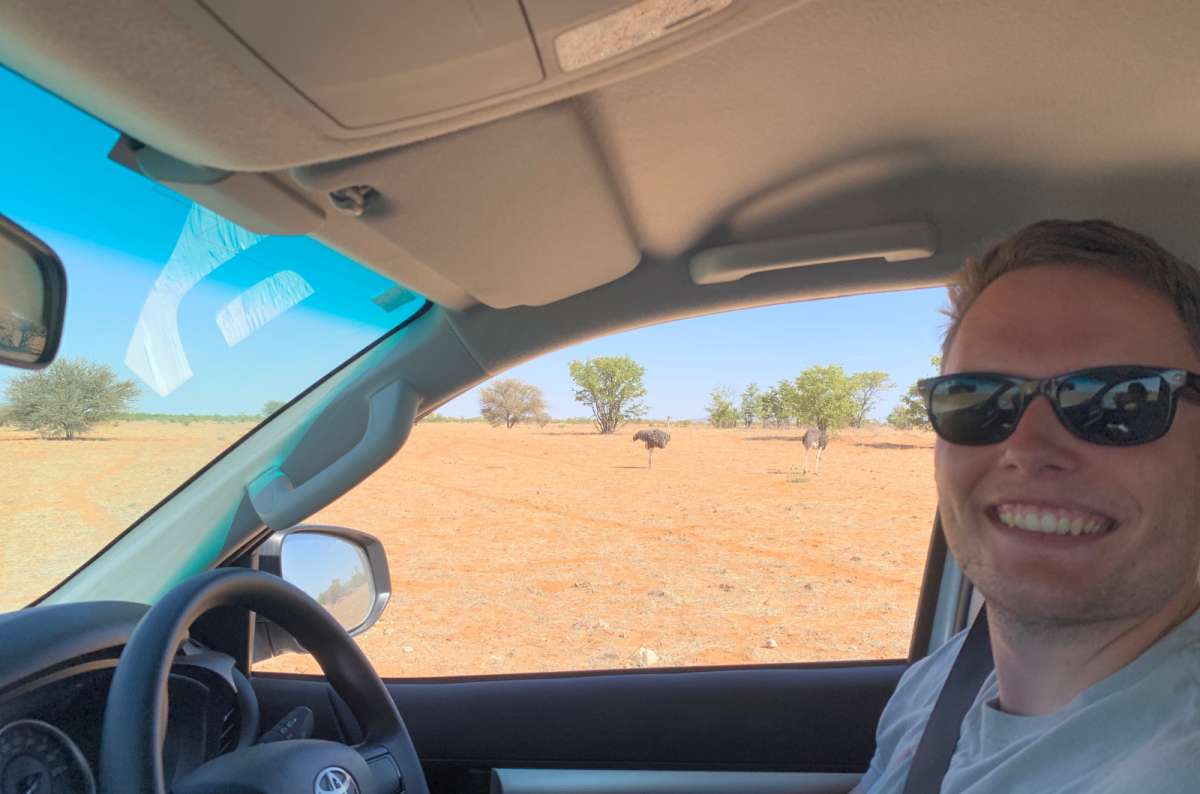
There are gas or petrol stations fairly regularly throughout the country—enough that you can drive without stressing, but not enough that you can wait until the last minute to fill up. Err on the side of caution and top up when you have the chance.
It’s not that rare for gas stations to run out of gas either, so plan ahead and know where your options are located. If you’re running on less than half of a tank, you should prioritize stopping at the next fuel station you find.
Gas/fuel prices in Namibia are cheap, costing around NAD 22-24 (USD 1.33-1.45) per liter, which is NAD 83-91 (USD 5-5.50) per gallon in 2026.
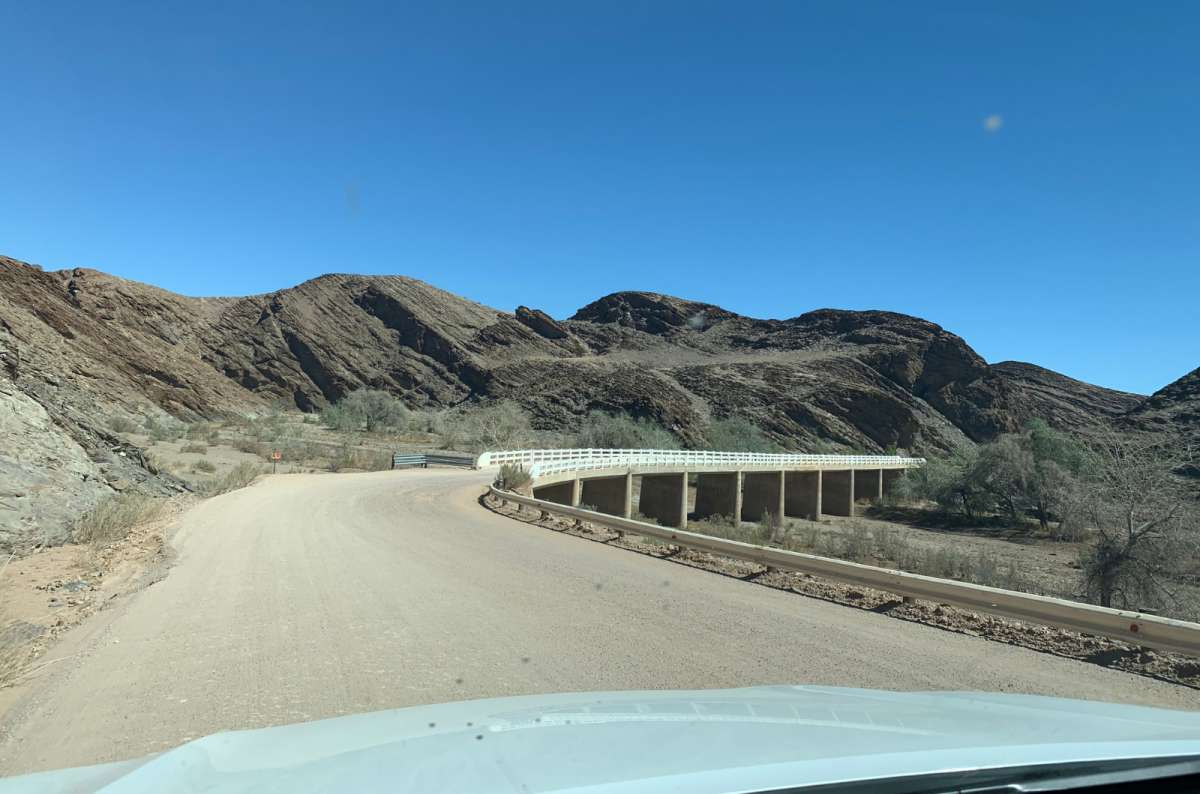
I had only good experiences with the local drivers in Namibia, which is more than I can say for the other tourists I tried sharing the road with.
Most of the time, Namibians are considerate drivers. Most of the time. There are asshole drivers, too, as in any country, so I don’t feel like it’s anything to cry over.
You can have some trouble if you get into an accident with an uninsured local driver, which could result in a hit and run. If that does happen, write down any information about their vehicle, the location and the situation, take photos, and call the police. Chances are they won’t come to you and you’ll need to make your own way down to the station to file a report, so come armed with details.
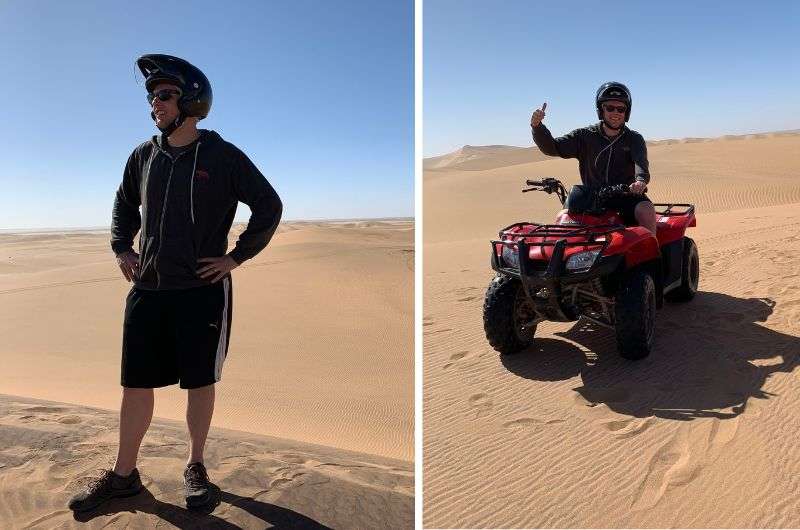
I recommend trying quad biking in the Namibian desert
You got that big 4x4 and you’re feeling like a desert navigator extraordinaire, driving a little cocky? Or maybe you’re a goodie goodie, but have been deceived by the miles and miles of nothingness, aka desert, making you lose all sense of speed?
Whatever the reason for your speeding is, I’m pretty sure you don't want to spend your vacation money on speeding tickets. So, just a heads up, Namibian police don't play when it comes to speeding fines. They’ll hit your wallet harder than a ton of bricks, so keep your eyes peeled and your foot off the gas pedal. At least when somebody’s watching. Otherwise, you could end up paying up to USD 500 just for forgetting, or not caring, how fast you’re going.
On paved roads, the speed limit is 120 km/h. Gravel or dirt roads have a speed limit of 80 km/h, and you can go 60 km/h in urban areas like major towns and cities.
So when in doubt, drive slowly!
You might be a skilled off-roading master, but the other tourists… probably newbs exploring Namibia in most cases. They’re more like a swarm of annoying mosquitoes, buzzing around and ruining your Namibian off-road driving adventure.
Politely, let's just say that their cars drive...at their own pace.
So, even if your first instinct is to ram through the other car in your monster truck, just be mindful, be patient, and don’t go running over people in their slow little sedans. Or just run them over and see what happens, your choice. Just kidding!!
When driving in Namibia, not only do you have to deal with the dirt roads, long distances and endless desert, you’re also dodging animals left and right. And keep in mind that those beautiful wild suckers are mostly nocturnal! They’re literally out partying all night long, not caring where the roads are, sometimes putting you and themselves in great danger. For you, that means no driving after dark.
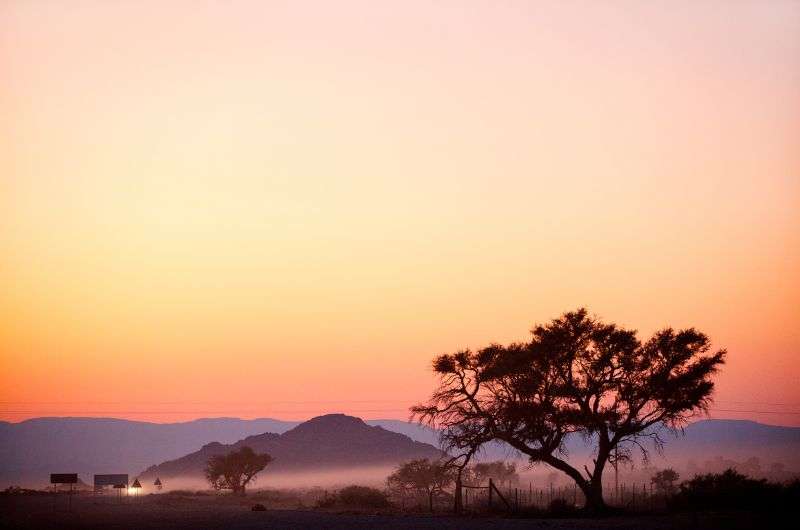
If the sun is setting and you’re still driving in Namibia, stop admiring the colors and start praying to the animal gods!
We were so good at following this rule, except for that one time we thought we could make it but didn’t. What happened 20 minutes past sunset? We ended up demolishing a hog (see above for the full exhilarating story). Lesson learned!
Give yourself enough time for journeys and don’t set out late in the afternoon. You never know how many hogs you’ll hit or how many flats you’ll get on the way. It’s easy for a short(ish) trip to turn into an unexpected long(ish) journey.
So, do yourself a favor and stick to driving in the daylight. Your car and the animals in Namibia will thank you for it.
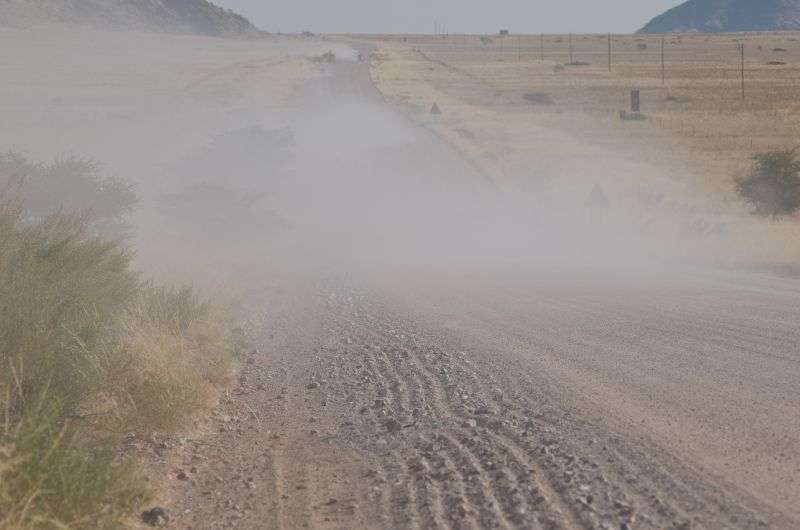
Now you see it, now you don’t!
Seatbelts are mandatory, so buckle up.
There’s 0 blood-alcohol tolerance.
Keep your headlights on day and night (but you aren’t driving at night, are you?!). It’s hard enough as it is to see other vehicles with all the sand and dirt flying around you.
If your driver’s license is not in English, you need to obtain an international driver’s license before driving in Namibia. Get it in your home country before traveling, it’s quick and easy. But don’t forget your standard license either, they need to be shown together.
In tourist areas, road signs will be in English.

If you’ve read this far, you may have gotten the feeling that driving in Namibia is a hoot…and you wouldn’t be wrong! It’s one of those experiences where you’ll be cursing while it’s happening, but then have the coolest stories to tell once you’re back home.
DiscoverCars makes renting a car easy (yes, this is an affiliate link, but I truly recommend giving them a try because I’ve only had good experiences).
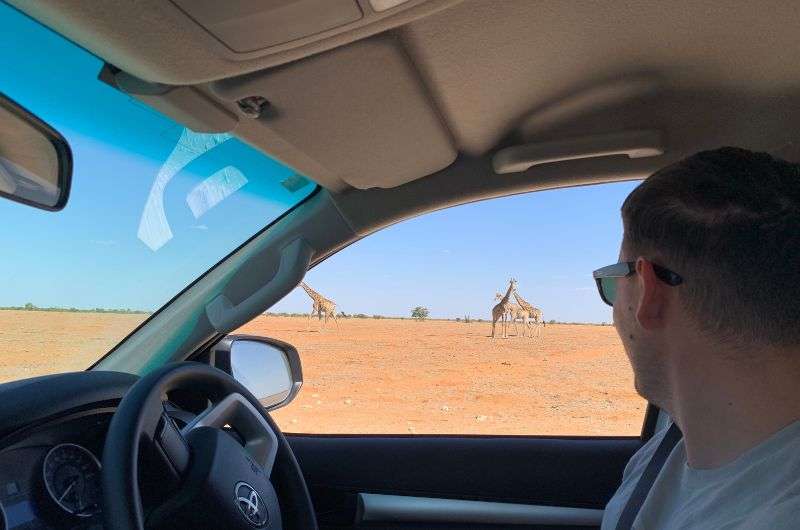
We observed these peaceful giraffes from a safe distance and from the stable, solid and comfortable Toyota Hilux
In the end, driving in Namibia was the most adventurous driving experience I've ever had—because nothing beats driving off-road, surrounded by elephants and hippos trying to jaywalk, tourists trying their hand at off-roading, all combined with driving on the left hand side of the road. It’s driving on steroids! And I’ve driven in Costa Rica, Italy, South Africa and worst of all—Georgia. South Africa actually has some fantastic drives, especially this Panorama Route itinerary.
Stay safe, be aware of local conditions, get travel insurance, and you'll be perfectly fine.
This post contains affiliate links. If you make a booking through one of my links, I may earn a small commission—at no additional cost to you. Thank you for your support!
2. ...But you need a 4x4 for safe Namibia driving
3. Drive on the left side on Namibia roads
4. Buy full-coverage insurance for driving in Namibia
5. Be ready to visit the police station
6. Practice driving off-road before arriving in Namibia
7. Forget about public transportation in Namibia
8. Be ready for vast distances when driving in Namibia
9. Don’t wait til the last second to get gas in Namibia
10. Namibian drivers are courteous, but beware of hit-and-runs
11. Speeding fines are steep—be especially careful on gravel roads!
12. Be patient with other tourists—avoid driving them off the road, please
13. Don’t drive after dark in Namibia


Hi, I’m Jan. I travel fast and intensely, whether I’m exploring the buzz of Tokyo in 3 days or road-tripping through mountains and beaches on a 3-week Thailand adventure. And no matter where I am, you’ll always find me in a comfortable hotel at night and eating the best food.
If that sounds like your kind of journey, hop on board, and let’s explore the world together!
I started this blog after realizing how tough it can be to find reliable, authentic travel info. You wouldn’t believe how many “travel bloggers” never even visit the places they write about! On Next Level of Travel, you can count on my full honesty and insights drawn from my firsthand experiences.
Here’s the deal: not every destination is all superlatives and unicorns. I’ll let you know if a tourist attraction isn’t worth your time, like skipping overrated stops in my 2-week Spain itinerary. And when I find something truly special—like the perfect mix of culture and nature in Cape Town—you can trust that it’s worth adding to your itinerary.


Comments | Thoughts? Give us a shout!