




At a glance: The best holy places in Israel (ranked)
Jerusalem–the holy city at the heart of the Holy Land
2. Church of the Holy Sepulchre
5. Mount of Olives and Church of Mary Magdalene
6. City of David—linked to King David
Holy sites around the Sea of Galilee
8. Jesus' baptismal site on the Jordan River
Other Christian holy sites outside Jerusalem
Israel—A land brimming with rich history, stunning natural beauty, and a mix of nice Jews and grumpy Arabs. If you're a sucker for holy sites, Israel is your promised land. This place holds immense significance for three major religions—Christianity, Judaism, and Islam.
Jerusalem, often called the Holy City, is the heart of this spiritual melting pot and is revered by multiple faiths. I have to say it’s fascinating for a visitor like me who comes from a very unreligious country. East Jerusalem, in particular, is full of significant religious landmarks.
Now, I must admit, I didn't have high expectations for Israel. Having worked with Jews before, I wasn't exactly blown away. But let me tell you, they're a whole different breed in this country. It's like they sprinkle extra kindness in the air or something.
This article will cover key sites and holy places across Israel, highlighting Christian holy sites as well as those important to other faiths. I have to say right at the start, I'm not a religious person. My list is based purely on my experience and how I liked the place. So, with that in mind, enjoy the beauty and historical importance of these holy sites in Israel:
Read more from my Israel travel blog.
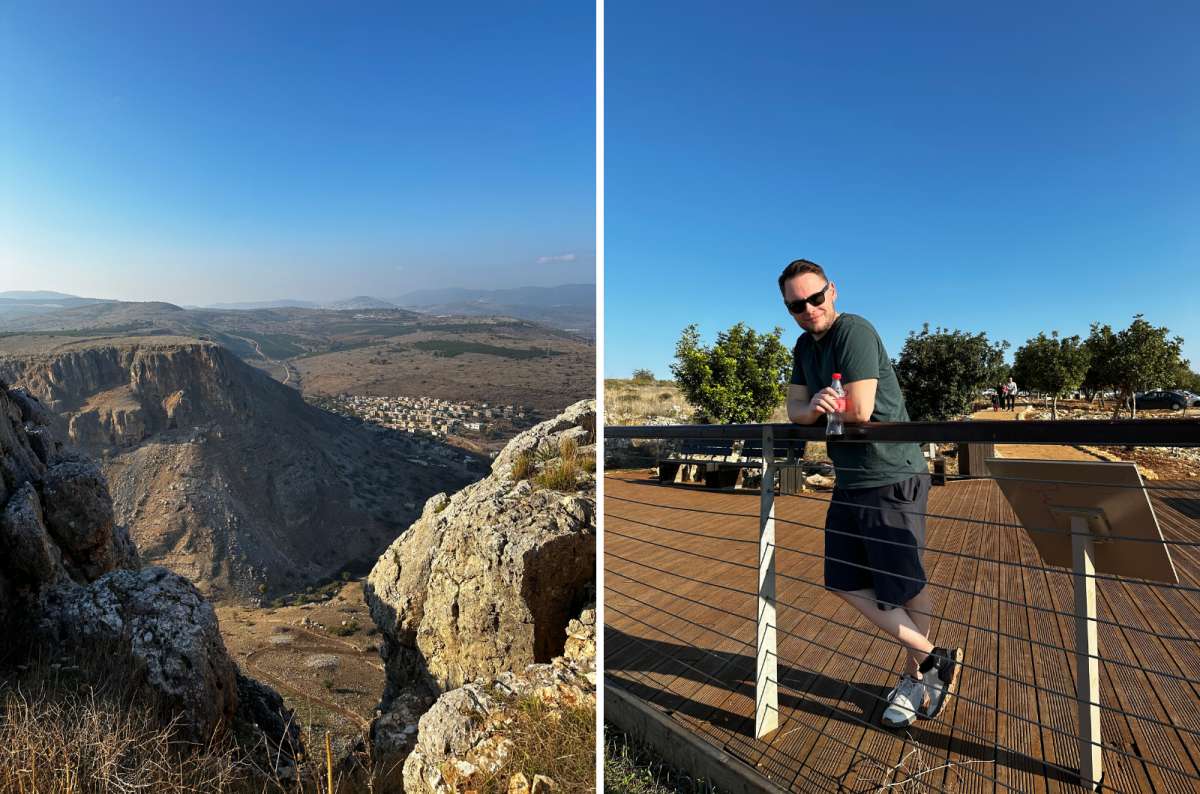
Arbel National Park–read about it and other beautiful places to visit in Israel
The Holy Land stretches across Israel, Palestine, Jordan, and even parts of Egypt, and has been shaped by faith, history, and culture for over 4,000 years. Today, let’s zoom in and look at the religious sites in Israel that I liked best (ranked based on my firsthand experience).
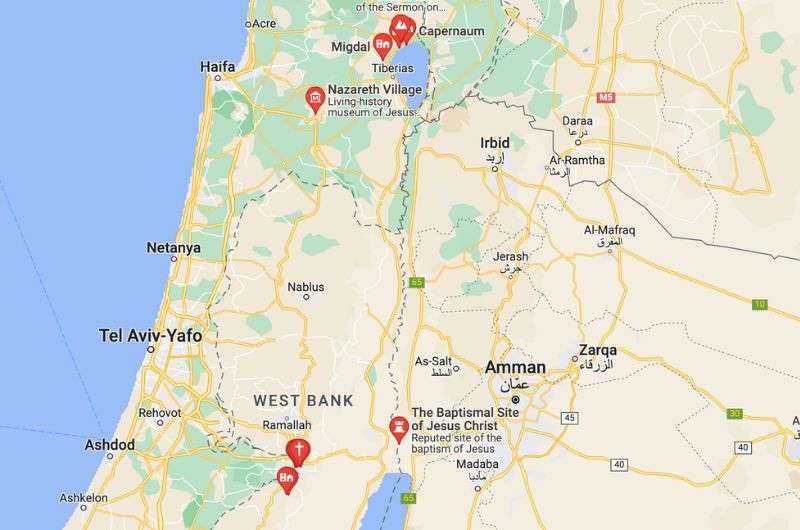
Locations of all of the sacred sites in Israel from this list
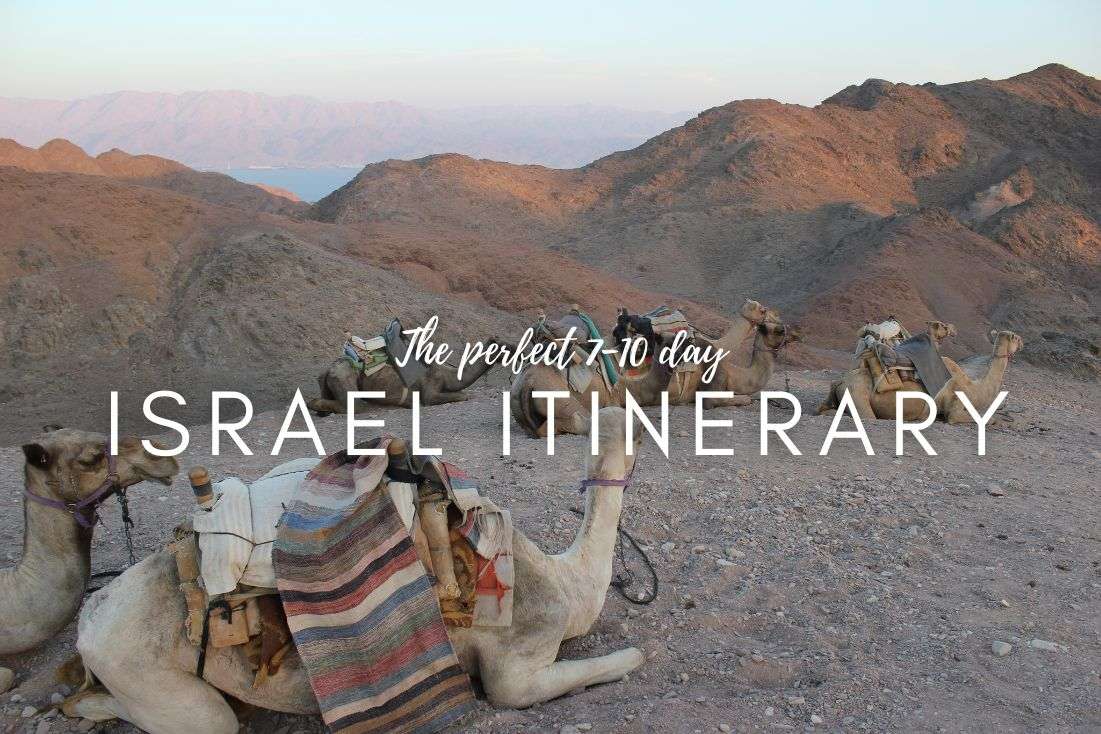
Many visitors choose to explore these sites as part of a daily guided tour, allowing them to hear the history and stories behind each location. There are several recommended tour operators in Israel, such as Bein Harim, which is known for being long-established and reliable. Whichever company you choose, we recommend checking reviews on Google and TripAdvisor. And if you want to plan your whole vacation, get some inspiration in my 7-day and 10-day Israel itinerary.
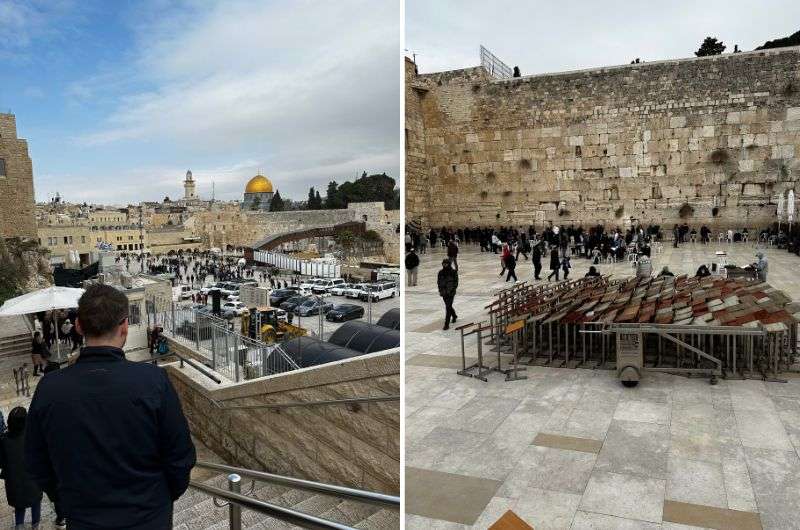
Trying to summon the wall's mystical powers with my skeptical gaze
I had big expectations for the Western Wall (also known as the Wailing Wall), and given the top spot in my list, there are no spoiler alerts needed: it is spectacular. Its importance smacks you in the face, and you scramble every ounce of spirituality inside you to try to comprehend it, even if you’re not religious. You can feel this is a sacred spot.
So what is it? The Wailing Wall is a religious site with the utmost importance in Judaism. It’s a limestone wall that’s part of the larger Temple Mount complex, which is sacred to both Jews and Muslims. While the Western Wall is a symbol of Jewish worship and identity, the Temple Mount houses the Dome of the Rock and the Al-Aqsa Mosque. Basically, the Wall is the holiest place closest to Temple Mount where Jews are allowed to pray. But more about that later, be patient.
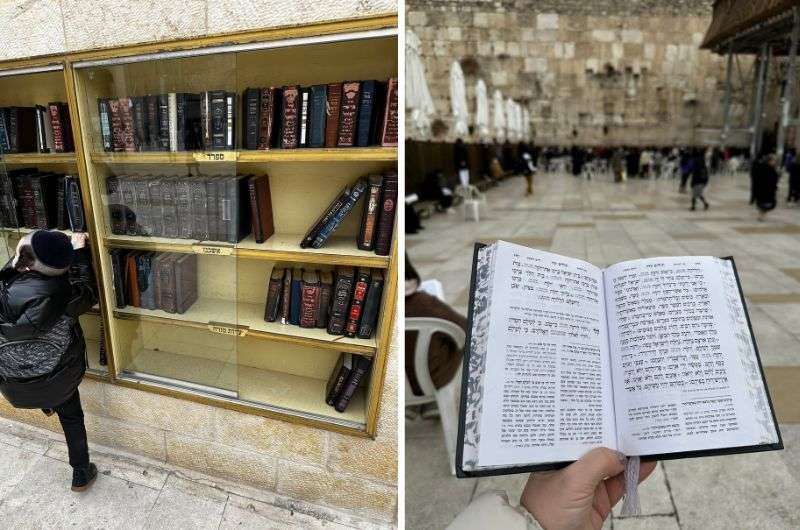
As I made my way towards the designated section (reserved solely for men), I couldn't help but feel like I was sneaking into someone's bedroom, interfering with the holy transmission of prayers. Awkward? Just a tad.
Call me an outsider, but watching individuals sway back and forth was an unexpected sight. It had this strange, yet amusing charm to it. I couldn't help but chuckle inwardly, appreciating the uniqueness of it all.
The Western Wall may have stirred up conflicting emotions within me (and probably not just me, but anyone who doesn’t sway back and forth), but it undeniably holds a place in the hearts of many, and you can literally feel the significance when you are standing there watching it all go down.
Here’s an important tip—don’t ever turn your back towards the wall! It's disrespectful. Walk backwards if you must, but don’t be an uninformed tourist.

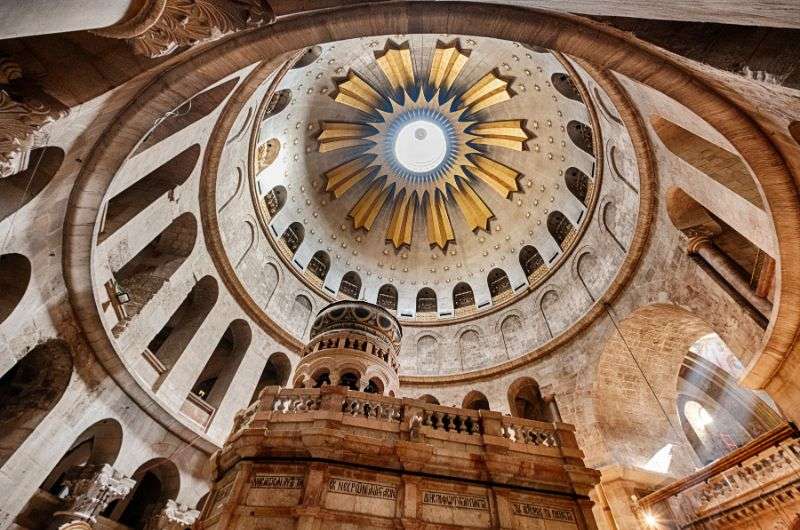
Step inside the Church of the Holy Sepulchre: Where faith and history unite, and lines test your patience
What I think is most interesting about this place is that even though it's a Christian church and the holiest place of the religion, the keys to the church are owned by a Muslim family. Let that sink in, I’ll wait...
The Church of the Holy Sepulchre is the holiest Christian place on Earth—it's where Jesus was crucified, buried, and resurrected. Despite the fact that the organization that manages the Garden Tomb clearly doesn’t give any promises that this, in fact, is the spot, there were many people there who very clearly believed that it was. I mean, these people clearly had a direct hotline to the divine if you know what I mean.
I liked the Church of the Holy Sepulchre, too—it's such a nice building! But I can’t get on board with this magic man mumbo jumbo, sorry.
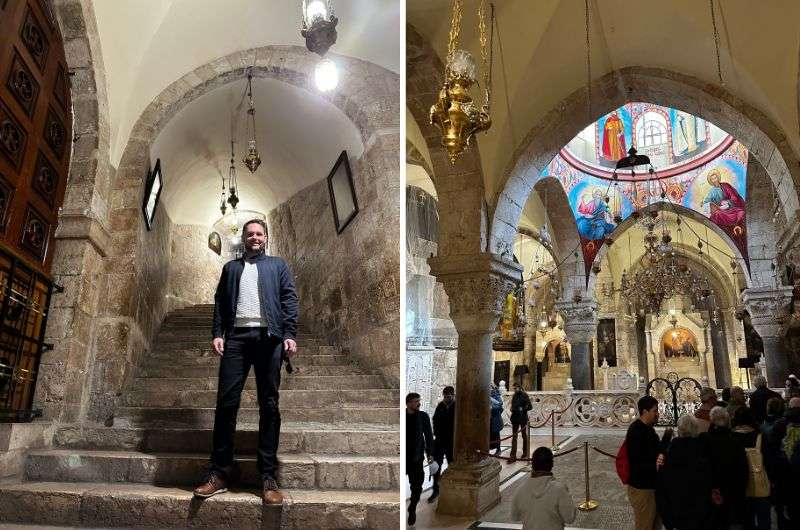
Anyway, it's also known as the Church of Resurrection and is located in the heart of the Old City of Jerusalem. It's the most sacred site for Christian pilgrims. Millions of believers from all around the world visit the Church of the Holy Sepulchre every year, probably trying to connect to Jesus (not sure the wifi was so good in Jerusalem, guys!).
Unlike the Garden Tomb, which some Christians believe may be the burial site of Jesus, the Church of the Holy Sepulchre has been continuously venerated for centuries as the most important Christian holy place.
So, if you decide to visit during a significant Christian holiday such as Easter or Christmas, be ready for some serious waiting in lines with some slightly nutty individuals. We visited before New Year's, so you can imagine the suffering I had to go through. Don’t be like me, come early and don’t suffer.
The original church was built in the 4th century, making it one of the oldest Christian churches in the world. But since the 12th century, a unique arrangement has been in place, it's known as Status Quo. As one of the most important traditional sites for Christians, it has been continuously venerated for centuries.
Basically, multiple Christian denominations claim their rights to the site and have wanted the holiest place for themselves. This was a source of frequent conflicts and tension. So now, the church is divided into six parts, each one of them being maintained and managed by a different Christian community.
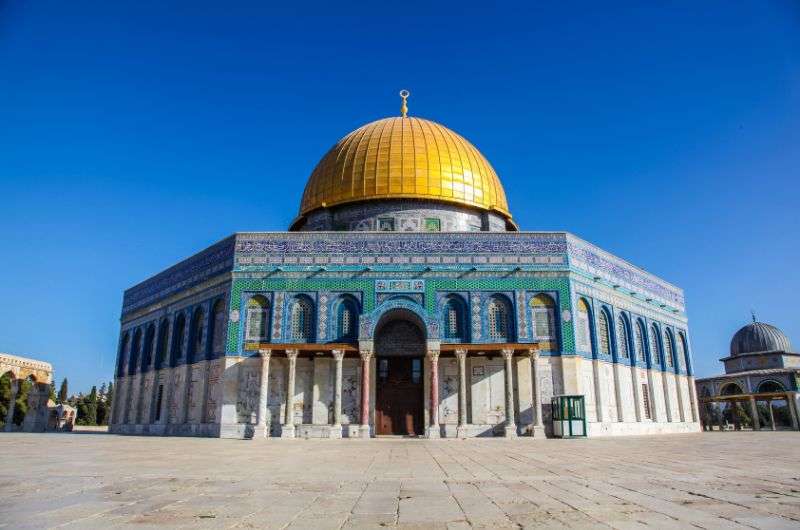
Temple Mount makes everyone happy
Temple Mount in a nutshell: Jews claiming it as the holiest of holy sites, Christians marking it as the place where baby Jesus made his grand entrance into God's presence, and Muslims recognizing it as the celestial launching pad for Prophet Muhammad's heavenly escapade. (The site is also known as 'Haram al Sharif' in Arabic.) Talk about a crowded space! But surely it’s amazing and so so cool for everyone who visits? Nah.
From my perspective, it’s one religiously super important, but otherwise seriously overhyped place. Don't get me wrong, it does have its visual charms, especially from far away. The sight of it, with its captivating blue hue, is undeniably cool, mostly so when viewed from the scenic Mount of Olives. It actually reminded me a bit of the grandeur and tension I felt while visiting Istanbul—if that kind of history-packed landmark interests you, check out my Topkapi Palace guide too.
If you happen to fall on the non-Muslim side of the religious spectrum, you might end up standing there in front of a beautifully wrapped present, only to find out it's not meant for you to open. The limited visiting hours for non-Muslims make it clear that while they say everyone is welcome, they might mean it with a disclaimer of "but not too much." According to our guide, all it takes is a little Jewish swaying action (as in prayer), and the whole of Palestine is on its feet and up to its teeth in armor. He said it in a funny way, but you could tell the atmosphere here is pretty darn tense.
Historically, the Temple Mount has seen many rulers and influences. During the Crusader period, the Knights Templar established their headquarters here, associating themselves with the Al Aqsa Mosque and leaving a significant mark on the site's history.
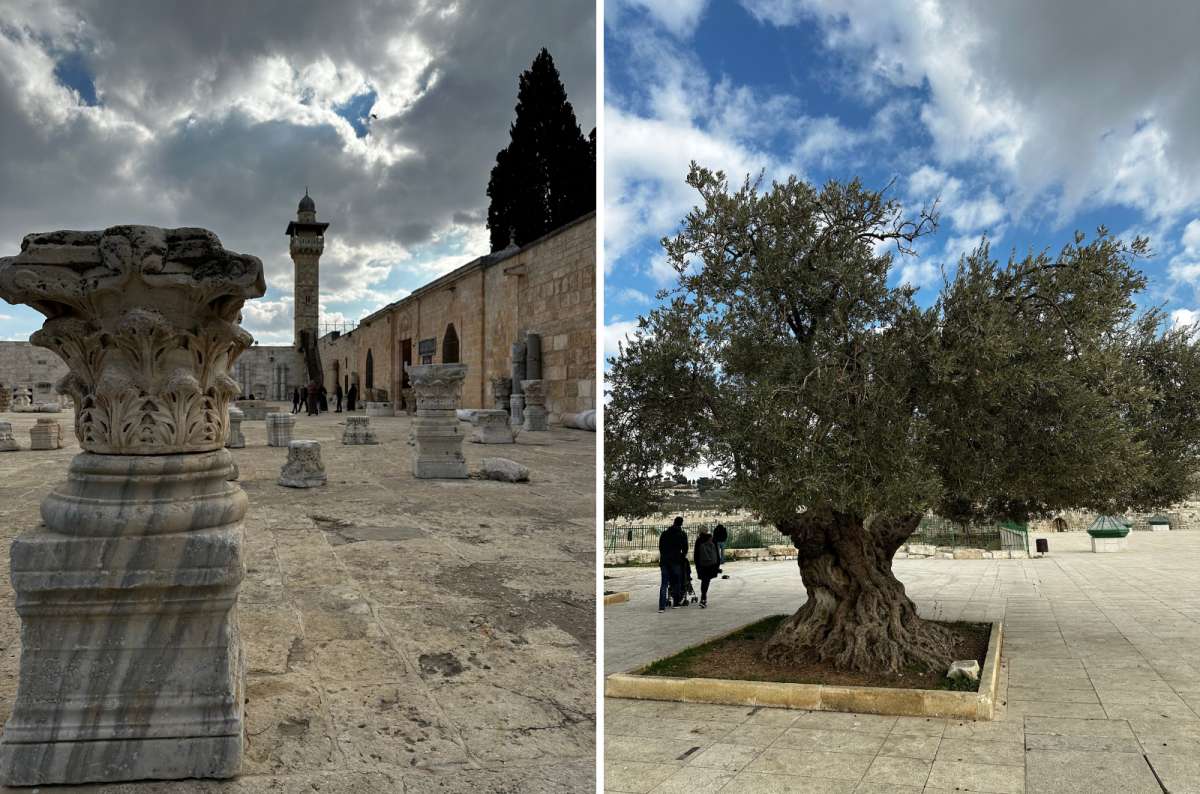
Where ancient ruins, quiet courtyards, and super old olive trees sit at the crossroads of three major religions
Here’s a better overview of what Temple Mount means to which religion:
For Jews, it's believed to be the location of the First Temple, which was central to Jewish worship and was constructed by King Solomon.
On the other hand, for Muslims, it's the third-holiest site in Islam as it's believed to be the place where the Prophet Muhammad ascended to heaven from Earth during the Night Journey.
And not to feel left out, Christianity had to add its story. For them, it's a place where Jesus was first presented to God still as a baby.
For me, it's an overrated, pretty building.
Pro tip: If you are a history geek, I have another article for you where I ranked my favorite historical landmarks in Israel.
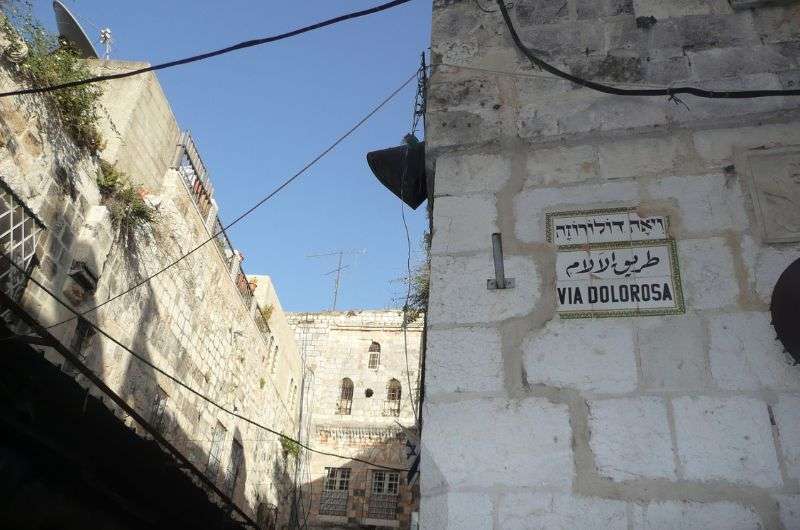
This way to all the Jesus souvenirs
As far as religious significance, Via Dolorosa is way up there. Like waaaay up there, considering this is the route that Jesus was forced to walk on his way to his crucifixion. Even I got chills when reading up on his last hike. But if you don’t know the story, you’d just think of it as a boring marketplace or an obvious tourist trap. So, read!
Also, know that this isn’t one street, it’s bits of several of them, and it’s like a holy traffic jam! You’ll be led along by the Stations of the Cross—14 stops with paintings that mark significant moments along Jesus' path (where he was made to bear the cross, where he fell, where he fell again, where he was crucified, etc.). At several of these stations, you can stand where Jesus stood during his final journey, and you can imagine this is deeply meaningful for many visitors.
Each station is packed with pilgrims, locals, enthusiastic tour guides, and people selling/forcing you overpriced souvenirs—I mean, who can resist a replica of Jesus on a keychain?
But don’t let that take away from this spiritual treasure hunt, and really try to imagine the event that has millions of people forcing their kids to go to church every week since then. Tip: I’ll save you the energy and tell you that some of the 14 stops are actually inside the Holy Sepulcher. You’re welcome.
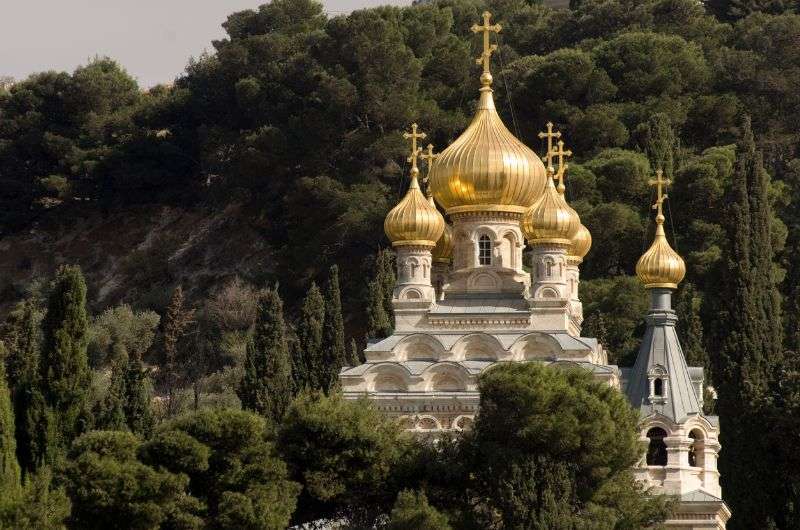
Church of Mary Magdalene
Close to Jerusalem's Old Town lies a religiously significant hill, the Mount of Olives, located in East Jerusalem. It rises impressively above the city's skyline. And on the hill, the Church of Mary Magdalene, a glorious sanctuary with a roof that gleams like a pirate's treasure trove.
The Mount of Olives offers some stunning views of Jerusalem that are perfect for taking pictures and capturing some memories—or, post it on Instagram to make your followers green with envy!
This used to be a Jewish burial ground, so you can wander among the tombs that hold secrets dating back thousands of years—I felt like Indiana Jones! But that’s not all. The hill is specifically mentioned in both the Old and New Testaments, making it an important site for Jews and Christians. It was the stage for pivotal events like Jesus' fervent prayers in the Garden of Gethsemane and his awe-inspiring ascension into heaven. Talk about a front-row seat to biblical drama!
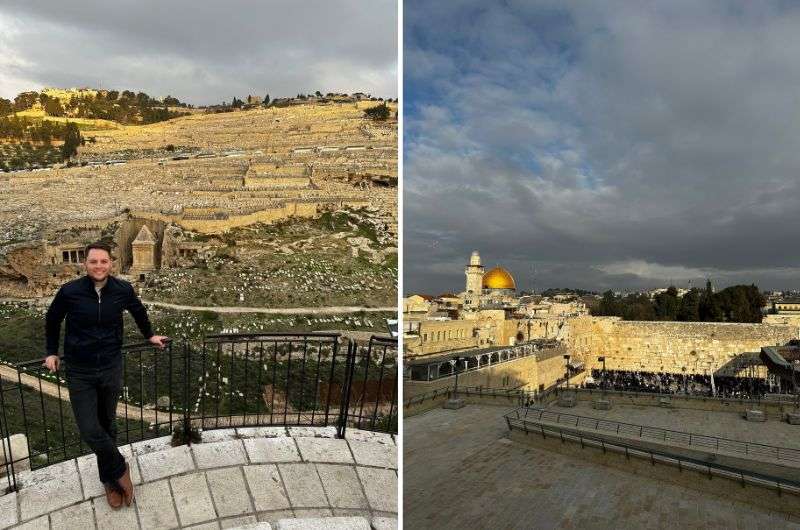
Conquer the Mount of Olives for jaw-dropping views and a heavenly history lesson
On the hill itself, you can find another iconic religious landmark, the Church of Mary Magdalene. While the exterior is a sight to behold (and makes your eyes hurt if the sun catches the golden roof just right), the interior left me yearning for a bit more pizzazz. Nevermind, I guess they wasted all their creativity on the outside of the church.
Luckily, the true allure of Mary Magdalene’s church lies in the legends that surround the place. Imagine Mary Magdalene's presence during Jesus' crucifixion and her extraordinary encounter with the resurrected Jesus—I can see how that would make worshippers run to be part of the holy gossip.
So, for me, it’s a nice place with nice views. Beware of the opening time, that’s only 2 hours, three days a week. You'll have to wait a while to get in. But if the line is crazy and you trust my judgement, you can just skip the interior and have fun outside.
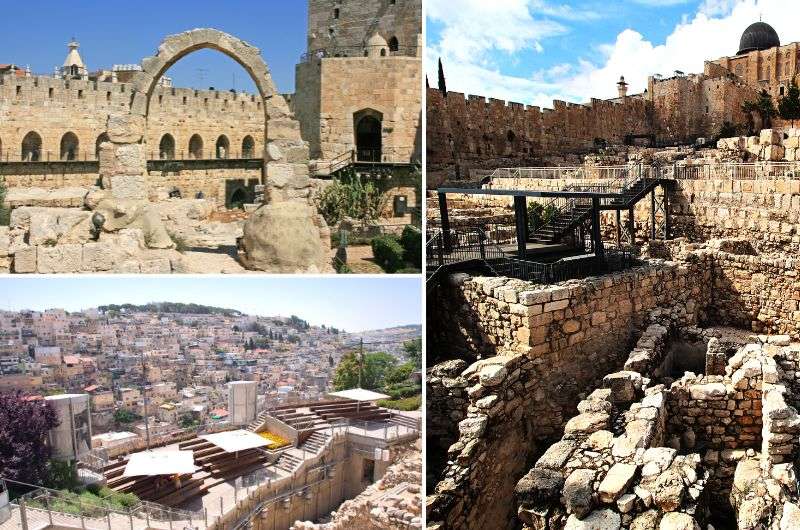
The ancient City of David... and just wait until you see the underground tunnel system!
We're staying in Jerusalem for this next one. The City of David is like the OG of ancient cities, where kings ruled, prophets preached, and civilizations thrived. It’s frequently referenced in the Old Testament. You’ll be exploring the remains of a grand palace, catching glimpses of the ancient private homes, and venturing into the underground tunnel system. It’s impossible not to be captivated by the sheer magnitude of the history that surrounds you when you walk through this place.
The City of David is an archaeological site where Jerusalem was essentially born. About 3,000 years ago, King David left the city of Hebron, which he loved dearly, and headed for Jerusalem to turn it into the capital of the Jewish people. And boy, did he succeed! Thanks to his vision, Jerusalem became the buzzing hub it is today.
I could picture historical events going down here, and I’m not even an especially imaginative person. It's seriously a living testament to the significance of Jerusalem in biblical studies—no wonder that the City of David is the most important archaeological site in the country.
And don't even get me started on the views! It’s located southeast of the Old City and nestled on Ophel Hill near the Western Wall, just waiting to reveal its ancient secrets.
If you want to spend some extra time exploring the city, check out my 3-day Jerusalem itinerary.
After the intensity of Jerusalem, many travelers continue north from Tel Aviv toward the Sea of Galilee, where several of Israel’s most important Christian sites are clustered in a much calmer, greener setting.
If you’re starting your trip on the coast, spending one day in Tel Aviv before heading toward Jerusalem or Galilee is a great way to ease into Israel. I consider Tel Aviv the best base for day trips—my secret tip is to stay at the Crowne Plaza in Tel Aviv. It was divine!

Mount of Beatitudes: As peaceful as it gets
On the northern shores of the Sea of Galilee, there’s the magnificent Mount of Beatitudes. This place is pure magic—a spot where Jesus himself is said to have delivered his iconic Sermon on the Mount. For those who couldn’t care less about that, here’s Jan’s sermon: let it be known that the views from Mount of Beatitudes are absolutely mind-blowing! Amen!
Imagine standing atop this hill, gazing out at the landscape stretching as far as the eye can see. The sea sparkles with a mischievous glimmer (like the one that had Peter drowning in a jiffy), and the surrounding hills dance with lush greenery. It's a visual feast fit for the gods!
I confess, when I stepped foot on the Mount of Beatitudes, I felt a wave of tranquility. Like I was God or something. It was as if the air whispered ancient secrets of peace and serenity. I couldn't help but feel a sense of calmness and relaxation, making the whole experience truly unforgettable. If only I weren't already so enlightened, I might have achieved a whole new state of zen right then and there!
As I mentioned, the Mount of Beatitudes is believed to be the location where Jesus delivered the Sermon on the Mount, which is one of the most revered and influential teachings in Christianity. Christians still come here to seek peace and connect with Jesus' teachings. And hey, let's be real for a moment. If high school learning had taken place in a classroom with such awe-inspiring views, I have no doubt I would have been the most attentive and obedient student ever. I can see it now, taking notes with an otherworldly focus, my mind elevated to new heights of knowledge and enlightenment. Well, maybe in my next life.
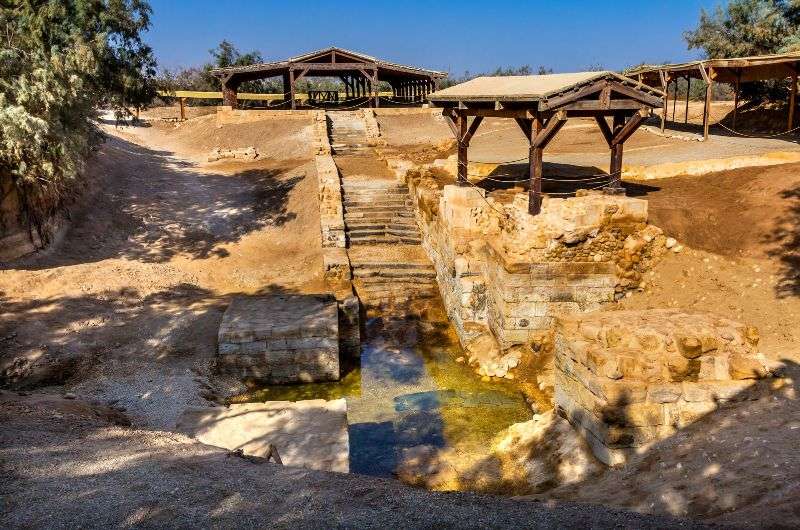
Dunking for divinity: witness the waters of Jesus' baptism—come for the history, stay for the free baptisms!
One of the pivotal moments in the history of Christianity is the baptism of Jesus—and you can visit this very spot... kind of. He was baptized by John the Baptist on the bank of the Jordan River, but the exact spot where this momentous event occurred is shrouded in a veil of uncertainty. However, it's generally believed to have taken place near a site on the eastern bank of the Jordan River, close to today's Jordan—I mean the country, not to be confused with the Jordans on your feet.
This is not a regular pilgrimage site like the others I mentioned earlier. Visitors don’t often come here just because they want to see the place. They want to experience it with their own bodies! And it’s all for a price tag of zero, so you'll witness a sea of adults clad in white gowns as they plunge into the (maybe) holy waters. It's like a heavenly version of synchronized swimming.
I must say, it's not exactly my preferred cup of tea, but from an observer's perspective, it was an incredibly fascinating sight to behold. It's not every day you come across a river that holds the power to wash away sins.
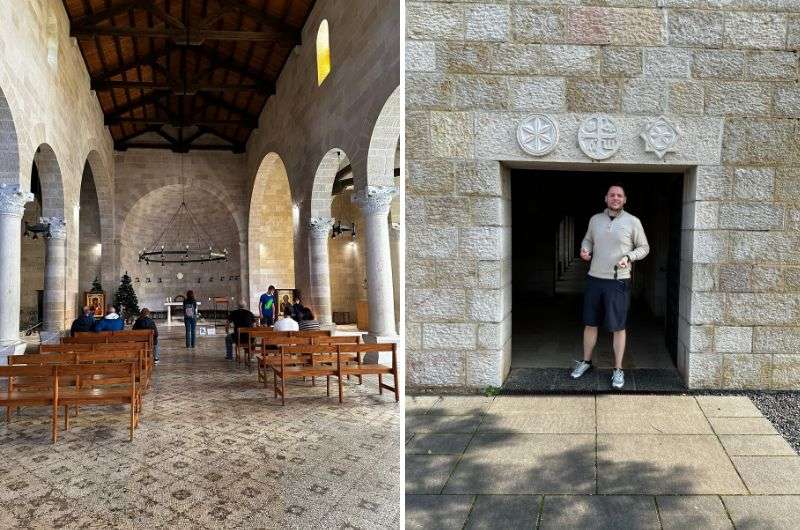
Loaves, fish, and divine math: Tabgha, where Jesus showed off his catering skills
Tabgha, also known as Tabhka or Tabiga, Tabgha, or as I like to call it, the Christian miracle hub on the northwestern shore of the Sea of Galilee. It’s a great place to come relax a bit and enjoy some stories that are hard to believe.
This picturesque site represents a deep meaning for Christians, because it's where miracles performed by the one and only Jesus Christ took center stage.
The obvious blockbuster: the infamous Feeding of the 5,000.
The plot: Jesus, in all his miraculous glory, took a few loaves of bread and some fish and turned it into a feast fit for an army. I mean, talk about a culinary wizard! Just imagine the logistics of dividing five loaves and two fish to feed a horde of hungry souls. Now, that's a skill I wouldn't mind having in my back pocket (but there would have to be some sort of magical dishwasher that came along with it).
When you come to Tabgha, make sure to swing by the Church of the Primacy of Saint Peter. It's like stepping into a time capsule, marking the exact spot where Jesus reinstated Peter as the chief apostle in a divine promotion ceremony!
It's a charming monument and overall, a very cool spot. There's beautiful nature surrounding the church, where you can enjoy the peace and tranquility of the place.
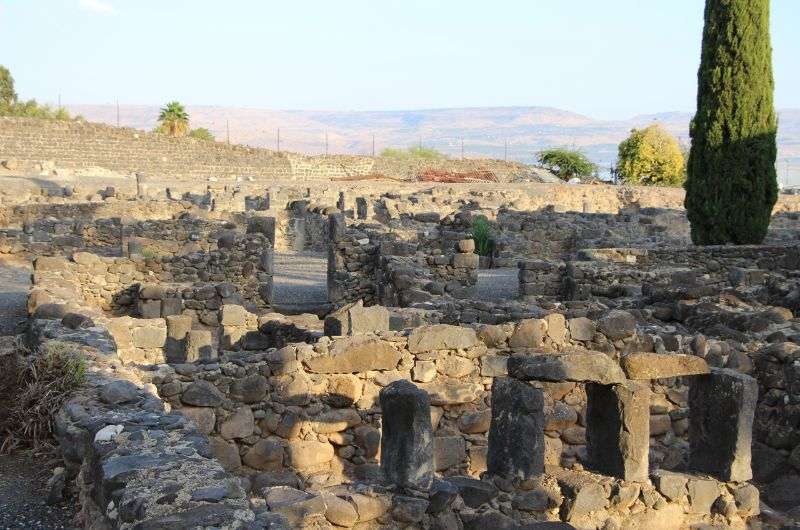
Capernaum: walk where Jesus walked
Capernaum is often referred to as the town of Jesus. It holds a special place in history as it's said to be the place where Jesus taught in the synagogue, preached to the crowds, and performed many of the miracles associated with his Galilean ministry.
Capernaum was the hometown of Jesus' first apostles, Peter, Andrew, James, Matthew, and John. Nowadays, you can visit the ruins of what was once a great city.
But that doesn’t mean it's less beautiful or not worth the visit. On the contrary, this was one of my favorite spots from this list. And on top of that, you'll be walking the path Jesus himself did. You'll be in the streets where he found his fame, healed the sick, and preached—and I think that’s pretty special.
You can also visit the place where Jesus walked on water near Capernaum, but for me, it was kind of a disappointment. Not that impressive, Jesus, the lake is shallow! I could've done that and wouldn’t have started a religion about it. This was one of your less impressive tricks, I have to say.
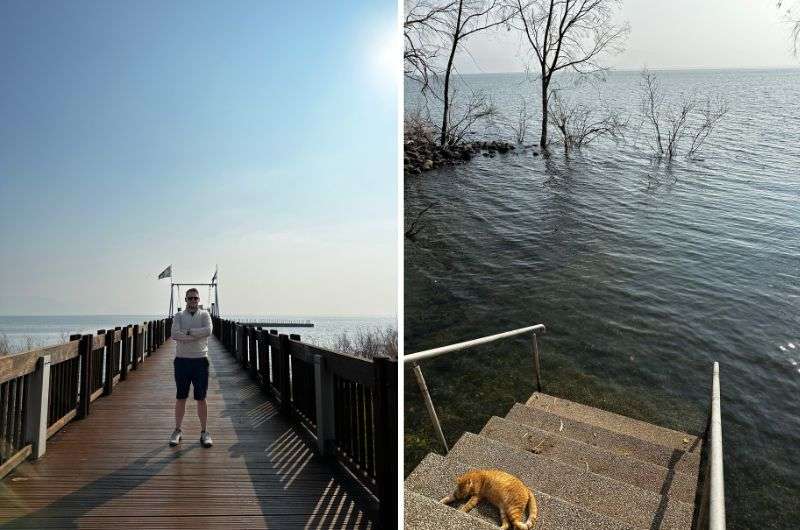
The lake that wasn’t deep enough for me to be impressed with Jesus’ miracle there
Capernaum is one of the most popular holy sites in Israel, which lies on the northern coast of the Sea of Galilee. A beautiful, preserved church worth seeing is the Greek Orthodox Monastery of the Holy Apostles. Also, don’t miss out on the iconic site of the Capernaum synagogue, where Jesus taught his teachings.
Don’t forget to withdraw some cash before you wander through this area—they don’t accept cards almost anywhere around the Sea of Galilee, and you don’t want to be left hungry; there’s no fella to feed you with fish and bread there anymore!
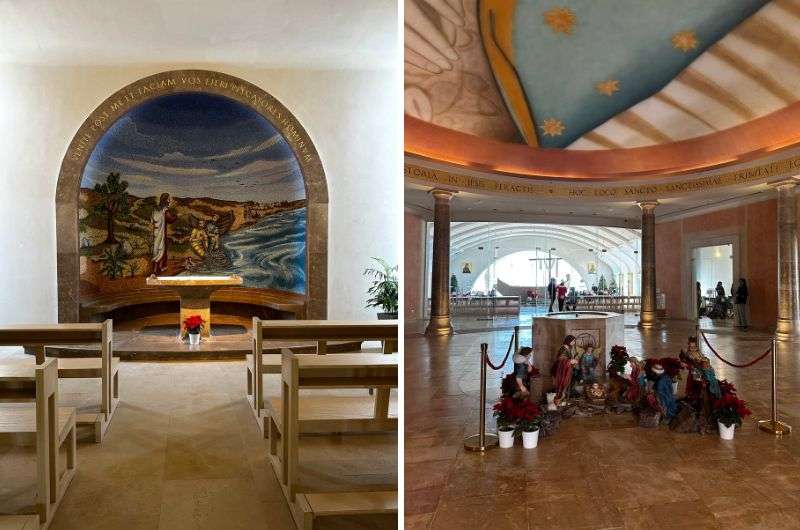
Magdala, the hometown of Mary Magdalene
Magdala is known as the hometown of Mary Magdalene, a woman whose life had a profound impact on early Christianity. This place might not be as popular as the others, because it's not first-hand connected to Jesus' life, but just the life of Mary Magdalene. And we've all seen The Da Vinci Code to know some conspiracies are tied to this biblical figure. Maybe you'll even unravel some.
Even though Magdala is not specifically mentioned in the New Testament, it holds an incredible importance to Christianity. Mary Magdalene—aka Mary from Magdala—was one of the most devoted female followers of Jesus, and he most likely visited her in the village and preached there, too. The Christian church put a great effort into developing the city to honor Mary Magdalene, and you can see that Magdala is really flourishing.
I enjoyed my visit to Magdala (also known as Migdal) more than I thought I would. I liked both the ruins and, quite ironically, also the modern structure of the city. Truly the best of both worlds.
Magdala is a place on the shore of the Sea of Galilee, a place with religious sites literally on every corner—as you've probably already gathered.
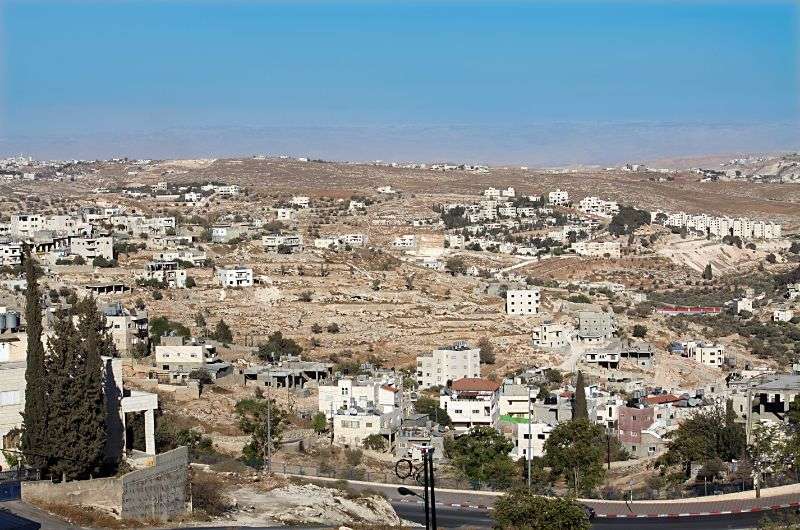
Behold, Bethlehem from above! A perspective that even angels would envy
Now, let’s venture out into the most famous place on this list, the legendary town of Bethlehem! This place holds some serious star power in the New Testament, because it's the birthplace of none other than Jesus himself, earning it a spot on the holiest sites list for Christians around the globe.
Bethlehem lies in the West Bank, so there’s a political twist added to the mix. The West Bank is a place of ongoing Palestinian-Israeli tension, but it remains a symbol of hope and peace. It's like walking through a doorway where history, religion, and modern-day challenges collide.
And then the plot thickens. Bethlehem doesn't just cater to Christians; it's got a little something for everyone. For the Jewish community, it's where King David, the rockstar of ancient Israel's monarchy, made his grand entrance into the world. And let's not forget about Rachel, Jacob's better half, who found her eternal resting place here. Her tomb stands tall as one of the most revered holy sites for Jewish folks in the city.
But the fun doesn't stop there. Bethlehem also rolls out the welcome mat for Muslims. That's because Jesus isn't just a superstar for Christians—he's also a highly respected prophet in Islam. So, this town becomes a melting pot of religious significance, with Christianity, Judaism, and Islam all vying for their piece of the spiritual pie.
The crown jewel of Bethlehem has to be the Church of the Nativity. It’s a pilgrimage site that guards the very spot where Jesus came into the world. If you can squeeze past everyone, check out the exquisite mosaics and sacred atmosphere. Having to navigate through the sea of enthusiastic believers is a little annoying, but I guess if anyone were to leave, they would probably unanimously vote me out. So, I’ll just take some photos over here and be on my way!
Visiting Bethlehem is memorable for sure, an experience that's part historical, part spiritual, and part dodging the crowds, trying not to stare at the people bursting into tears.
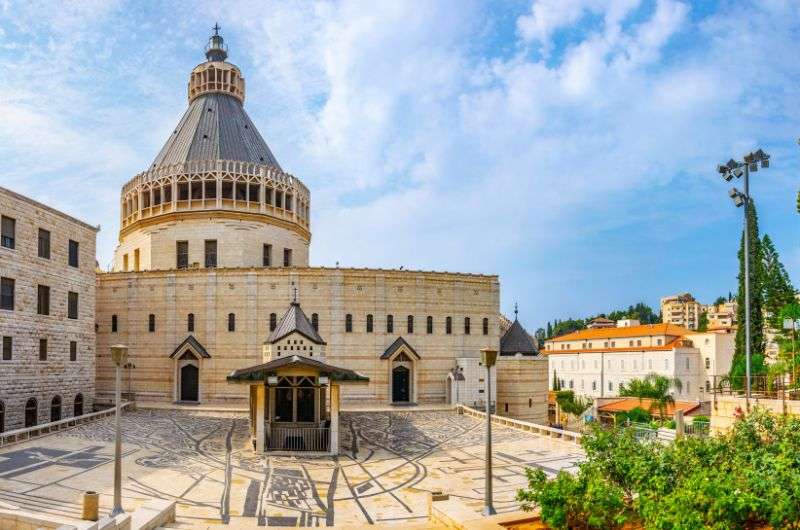
Jesus' hometown: Nazareth
Nazareth holds a special place in the hearts of believers worldwide, and it's not hard to see why. Legend has it that this humble town was home to the holy trio themselves—Virgin Mary, Joseph, and the one and only Jesus. Just imagine the potential for catchy t-shirts proclaiming "Hometown of Jesus." Seriously, why hasn't anyone capitalized on this business idea yet? It's a goldmine waiting to happen!
Prepare to be dazzled by a myriad of religious sites that will have you hopping from one holy location to another. Trust me, if you're aiming to visit every church and every sacred spot, you might as well pack a sleeping bag because it's going to take you a while.
Some of the most famous are the Church of St. Joseph and Mary's Well.
But the pièce de résistance, in my humble and undoubtedly correct opinion, is the Basilica of the Annunciation. This magnificent structure stands proudly, claiming to be built precisely on the spot where the Angel Gabriel paid a visit to the Virgin Mary. Prepare to be awe-struck as you set foot into this sacred space. I was, and it’s not easy to do that to me.
Beyond its religious significance, Nazareth is a city that embraces its multicultural heritage. I recommend letting yourself experience the fusion of different traditions. So, grab your adventurous spirit and get ready for an experience that will leave you with a newfound appreciation for the wonders of the world.
Israel works best when you plan for contrast. Alongside its most important holy sites, the country offers gorgeous natural wonders and historical cities that change the pace completely, including Akko—see my guide to the best things to do in Akko.
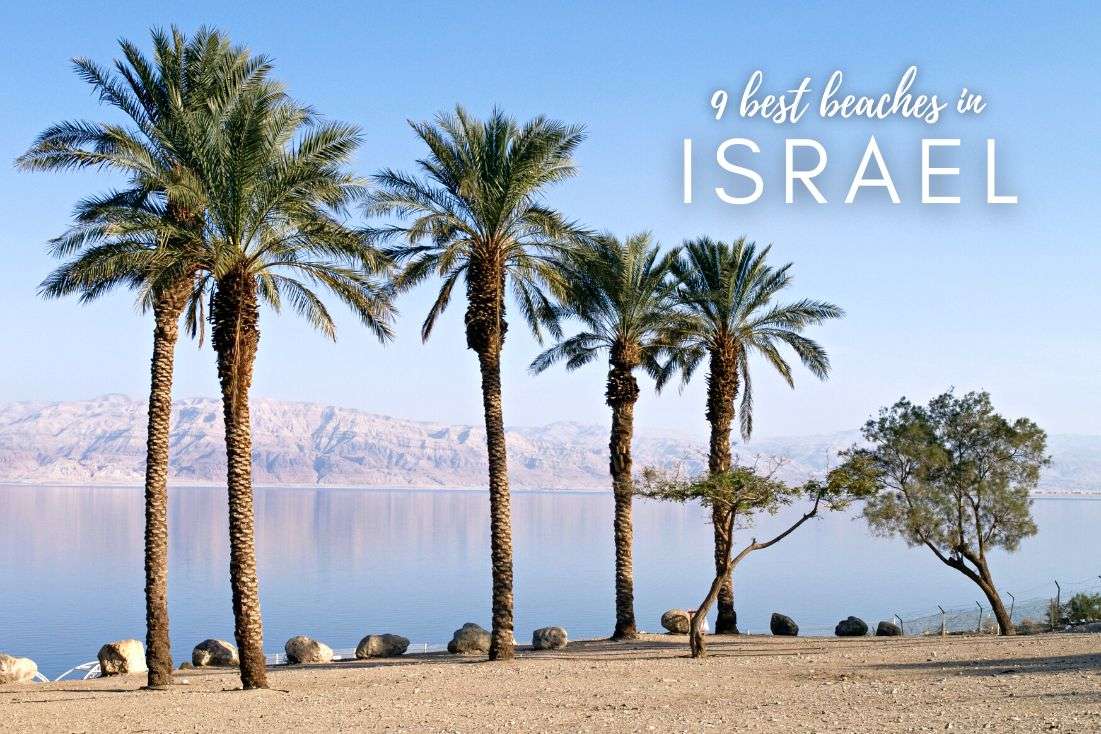
You might spend a morning at the Western Wall, the Church of the Holy Sepulchre, or the Temple Mount, then find yourself later that day in the hills of the Galilee, hiking through the Judean Desert, and if you need a break from all the history and religious intensity, some of the best beaches in Israel are perfect for slowing down for a day or two.
Sites like Masada add another layer—historic rather than holy, but inseparable from the surrounding desert landscape.
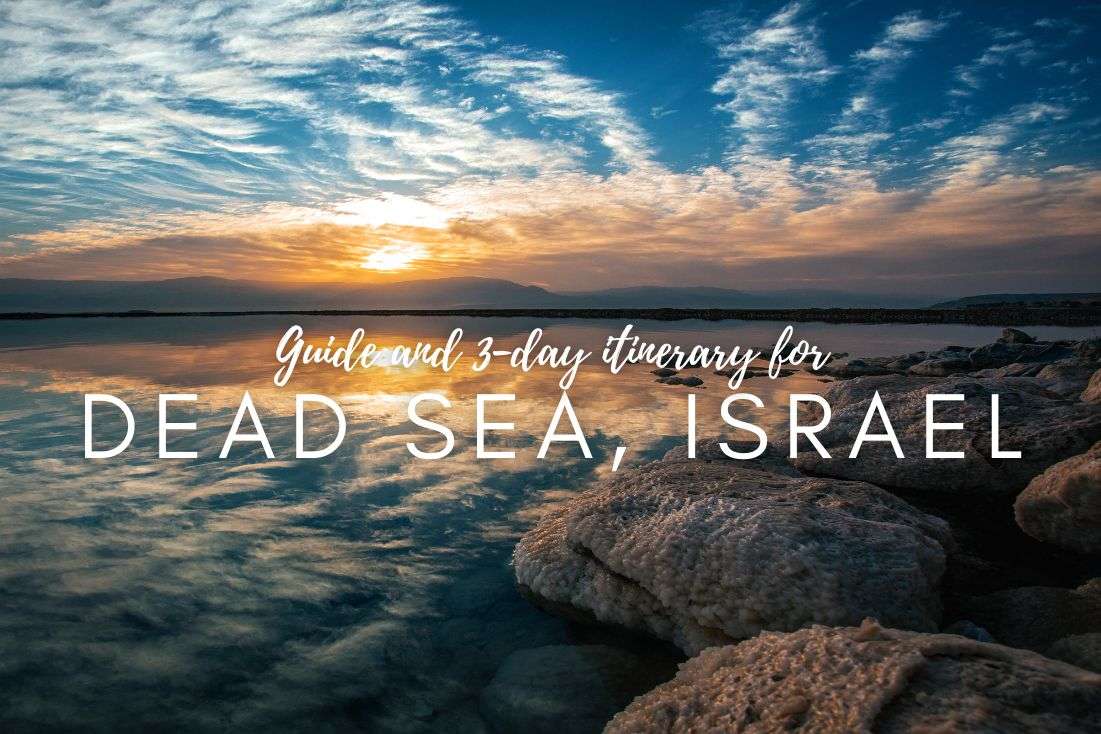
I always recommend breaking up time at major sacred sites with nature and quieter regions. That’s exactly how my 3-day Dead Sea itinerary is designed, blending landscapes, history, and nearby religious sites without overload. For a broader trip, my 10-day Israel itinerary follows the same principle, balancing holy places with scenery and breathing room.
After visiting holy sites all across Israel, a few practical things stayed with me.
Pro tip: One of the easiest ways to save money while still eating ridiculously well is following an Israeli street food guide instead of constantly sitting down at tourist restaurants.

This post contains affiliate links. If you make a booking through one of my links, I may earn a small commission—at no additional cost to you. Thank you for your support!
At a glance: The best holy places in Israel (ranked)
Jerusalem–the holy city at the heart of the Holy Land
2. Church of the Holy Sepulchre
5. Mount of Olives and Church of Mary Magdalene
6. City of David—linked to King David
Holy sites around the Sea of Galilee
8. Jesus' baptismal site on the Jordan River
Other Christian holy sites outside Jerusalem


Hi, I’m Jan. I travel fast and intensely, whether I’m exploring the buzz of Tokyo in 3 days or road-tripping through mountains and beaches on a 3-week Thailand adventure. And no matter where I am, you’ll always find me in a comfortable hotel at night and eating the best food.
If that sounds like your kind of journey, hop on board, and let’s explore the world together!
I started this blog after realizing how tough it can be to find reliable, authentic travel info. You wouldn’t believe how many “travel bloggers” never even visit the places they write about! On Next Level of Travel, you can count on my full honesty and insights drawn from my firsthand experiences.
Here’s the deal: not every destination is all superlatives and unicorns. I’ll let you know if a tourist attraction isn’t worth your time, like skipping overrated stops in my 2-week Spain itinerary. And when I find something truly special—like the perfect mix of culture and nature in Cape Town—you can trust that it’s worth adding to your itinerary.

Comments | Thoughts? Give us a shout!