
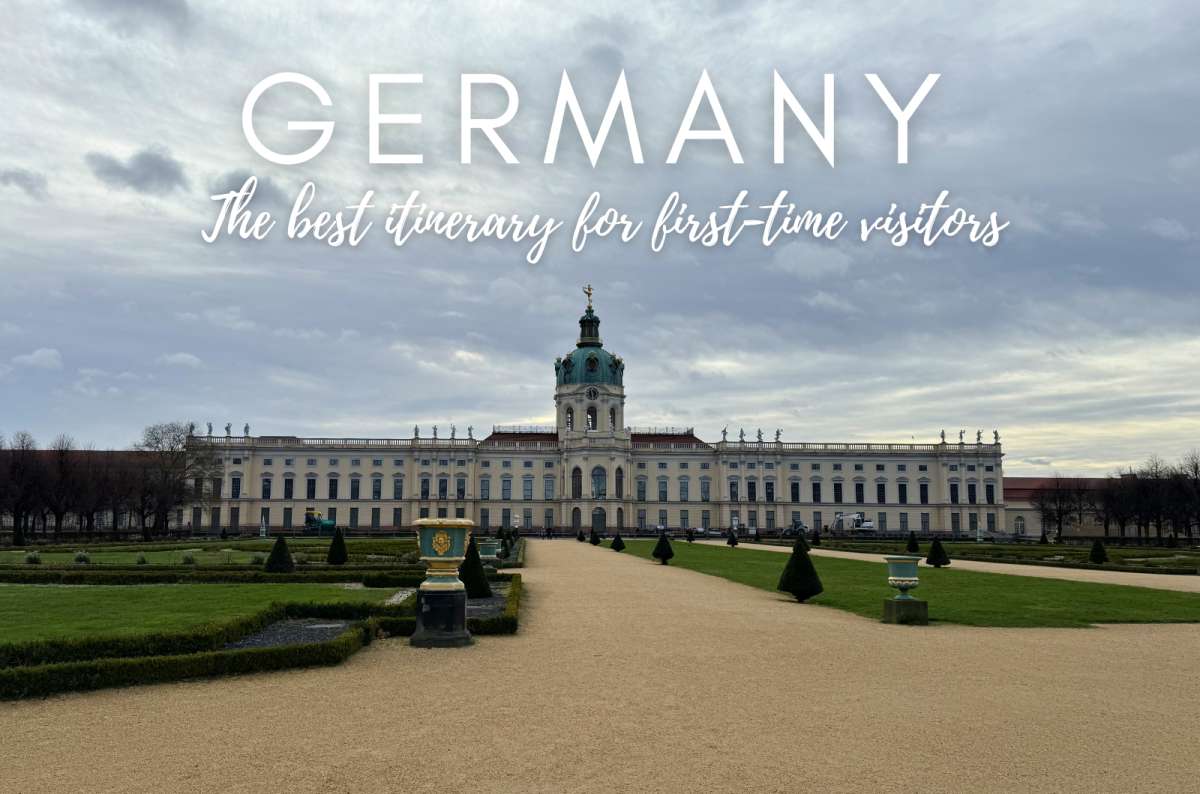


10-day Germany itinerary I would do all over again
Quick driving tips for Germany
Map of this 10-day Germany itinerary
Is 10 days enough for Germany?
Day 1: Arrive in Hamburg and start with Speicherstadt
Day 2: Explore Hamburg’s harbor, St. Pauli, and Miniatur Wunderland
Day 3: Classic sights in Berlin
Day 4: Berlin WWII and Cold War history
Day 5: Berlin museums and neighborhoods
Day 6: Take the train to Dresden and explore the old town
Day 7: Train to Nuremberg and explore the old town
Day 8: Nuremberg Nazi history, then travel to Berchtesgaden
Day 9: Berchtesgaden, Königssee, Obersee, or Eagle’s Nest
Day 10: Neuschwanstein Castle, Alpsee, and finish in Munich
What I would skip or change on this 10-day Germany itinerary
Is the 10-day Germany itinerary the best length for the first visit?
Planning a Germany itinerary sounds simple until you remember that Hamburg, Berlin, Bavaria, Neuschwanstein, and the Alps are not sitting politely next to each other.
Germany is big enough to punish lazy planning. This 10-day route keeps things logical: start in Hamburg, move through Berlin and Dresden, enter Bavaria in Nuremberg, then finish with Berchtesgaden, Neuschwanstein, and Munich.
I’ve been to Germany at least 25 times because Prague makes it dangerously easy to keep going back. My latest visit was in March 2026, before that in November 2025, and I’m usually in Germany at least two or three times a year.
Hamburg, Berlin, Dresden, Nuremberg, Bavaria, Berchtesgaden, Neuschwanstein, German food — I’ve covered enough of it to know that the biggest mistake first-timers make is trying to see all of Germany in one heroic sprint.
That is not an itinerary. That is luggage abuse.
This guide helps you plan a realistic Germany itinerary 10 days long, including where to sleep, when to use trains, where a rental car actually helps, what to book ahead, and what I would skip without guilt.
Germany is strongest for epic city trips — there are easily 20 cities worth visiting — but I still included the best nature stops because when Germany does something well, it usually does it properly.
Read more from my Germany travel blog.
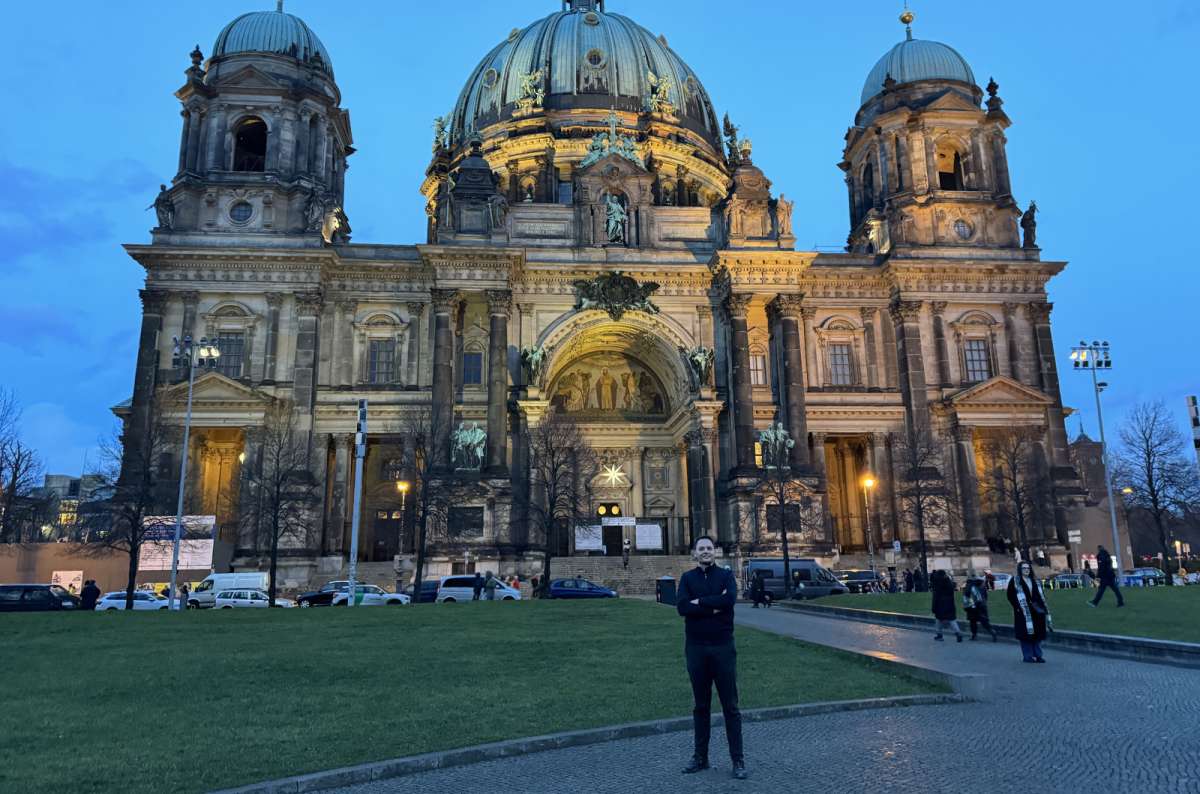
This is just one of the sights awaiting you in this Germany itinerary @ Berlin Cathedral
Here’s the quick version of my 10-day Germany itinerary. It works because it moves north to south.
You are not zigzagging across the country.
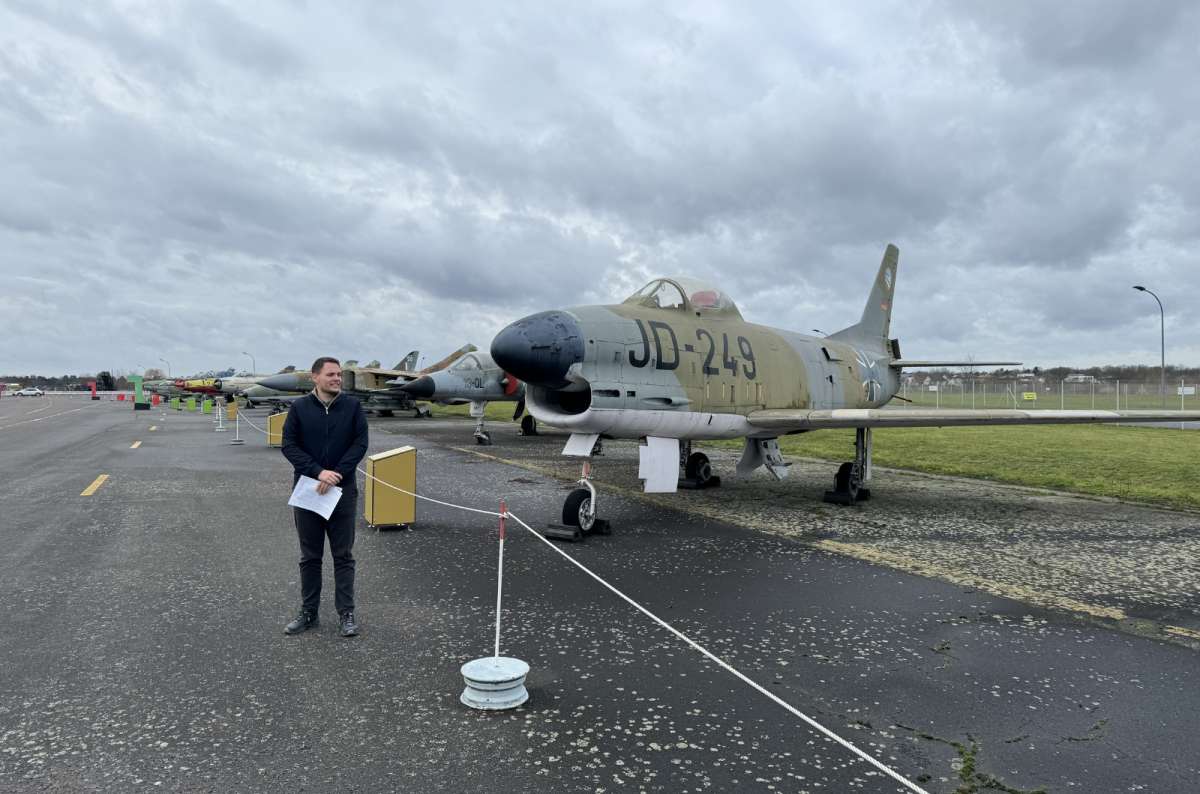
Don’t expect to be flying one of these babies @ Militärhistorisches Museum der Bundeswehr
Best airport plan: Fly into Hamburg and out of Munich.
If you fly in and out of the same city, add a travel day or cut one stop. Do not pretend a round-trip Hamburg or round-trip Munich itinerary is just as convenient. It is not.
Best transport plan: Use trains from Hamburg to Nuremberg, then rent a car for Bavaria if you want the smoothest version of this trip.
This part of the plan is not something I’ve tested exactly this way because I always travel with my own car in Germany. Germany has always felt very navigable by public transport to me, although I usually travel there by car — and honestly, who doesn’t enjoy the occasional no-speed-limit Autobahn section
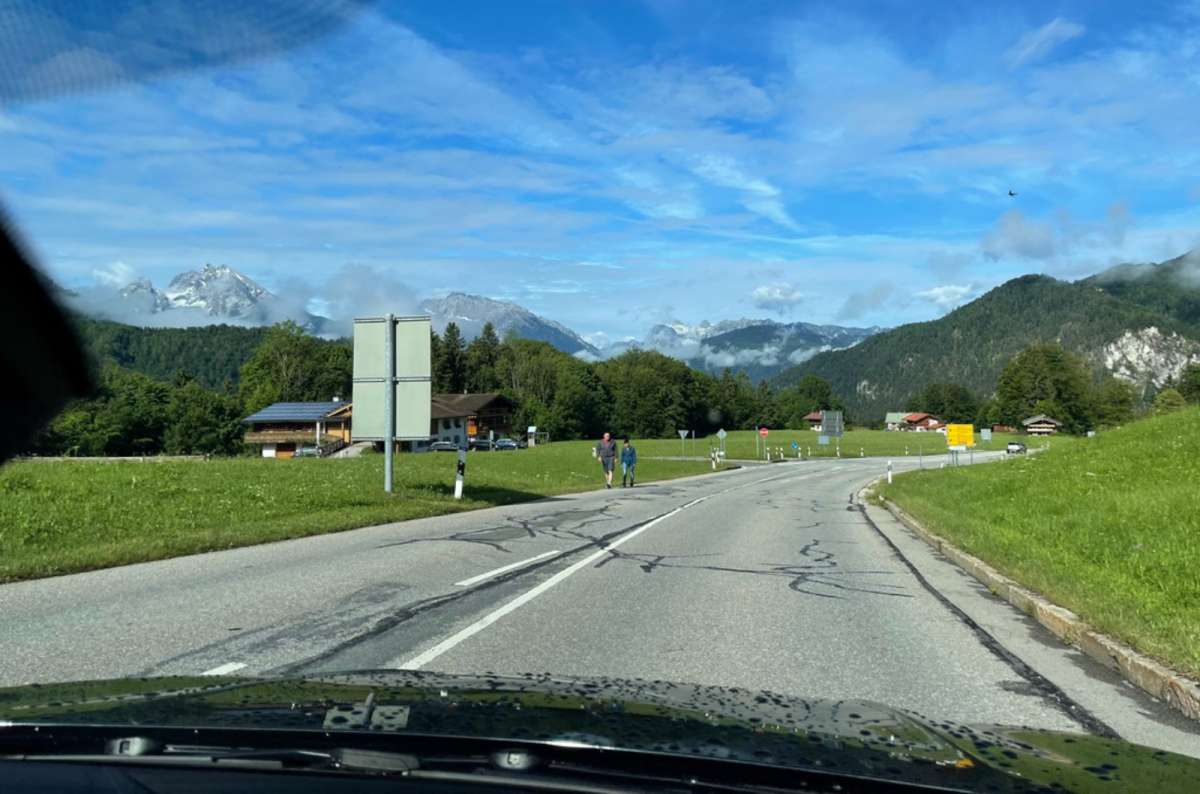
These are some of the best road-trip views in Germany
Driving in Germany is usually straightforward, especially once you are outside the biggest cities. Road signs are clear, highways are excellent, and the Bavaria section of this itinerary is much easier when you control your own timing.
A few practical things to know:


For this itinerary, I would not rent a car for Hamburg, Berlin, Dresden, or Nuremberg. Use trains there. Rent the car for the Bavaria part, where mountains, lakes, castles, and timing make flexibility much more valuable. You can also spend your time in the cities with guided tours and not worry about driving
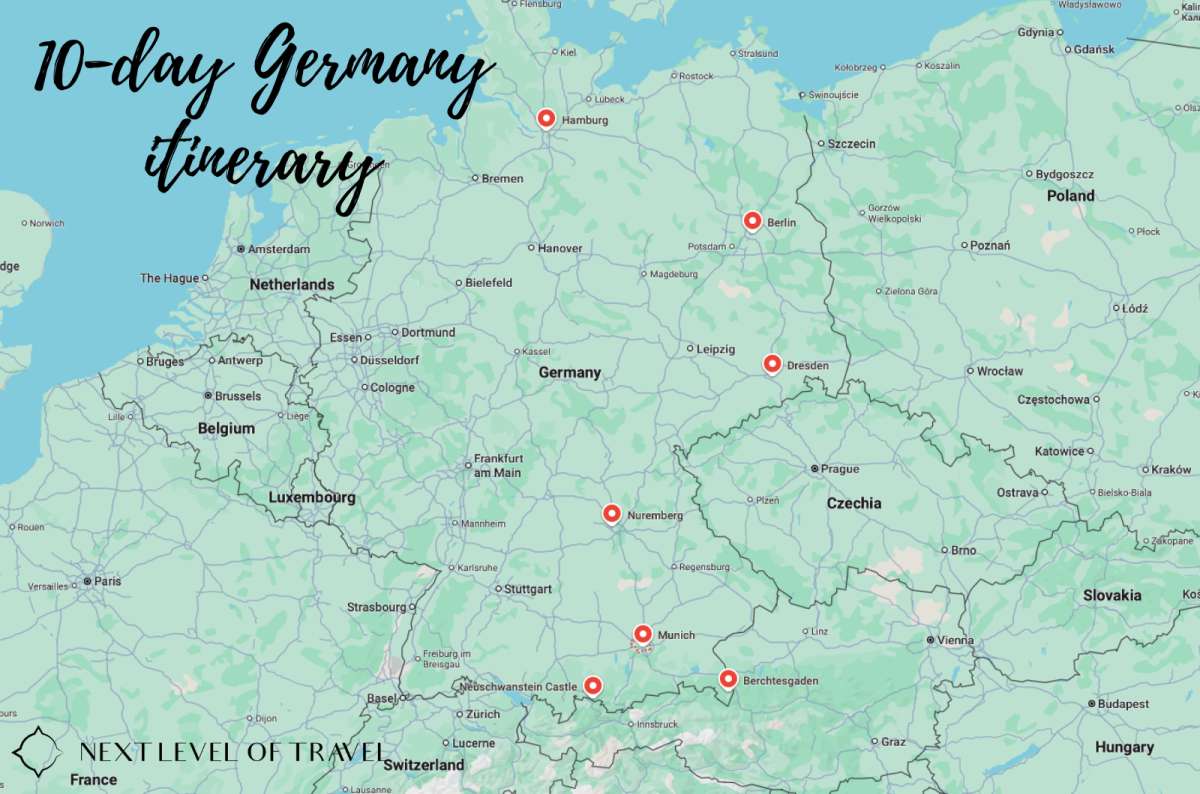
This itinerary takes you across the entire Germany
This route is long, but the movement makes sense. You start in northern Germany, move through the historical and architectural cities, then finish with Bavaria, mountains, lakes, castles, and a practical Munich airport exit.
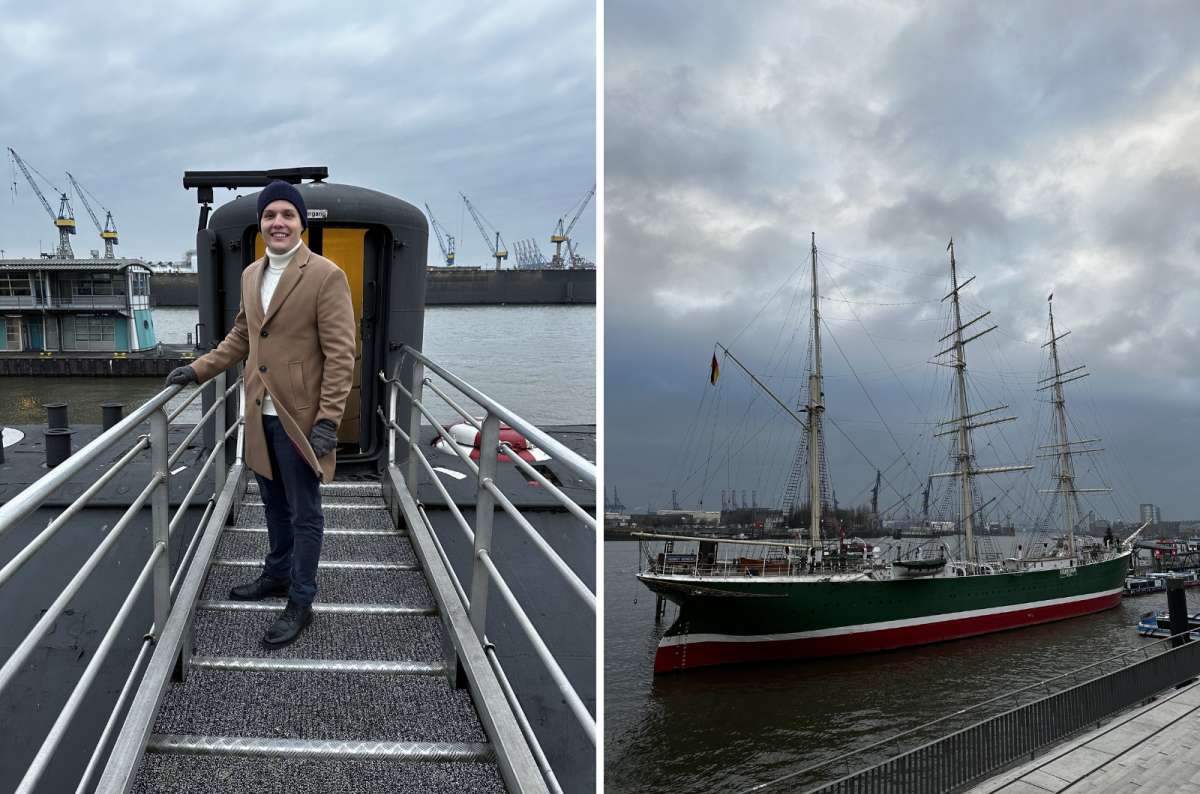
Hamburg, the place to go if you like port and sea life
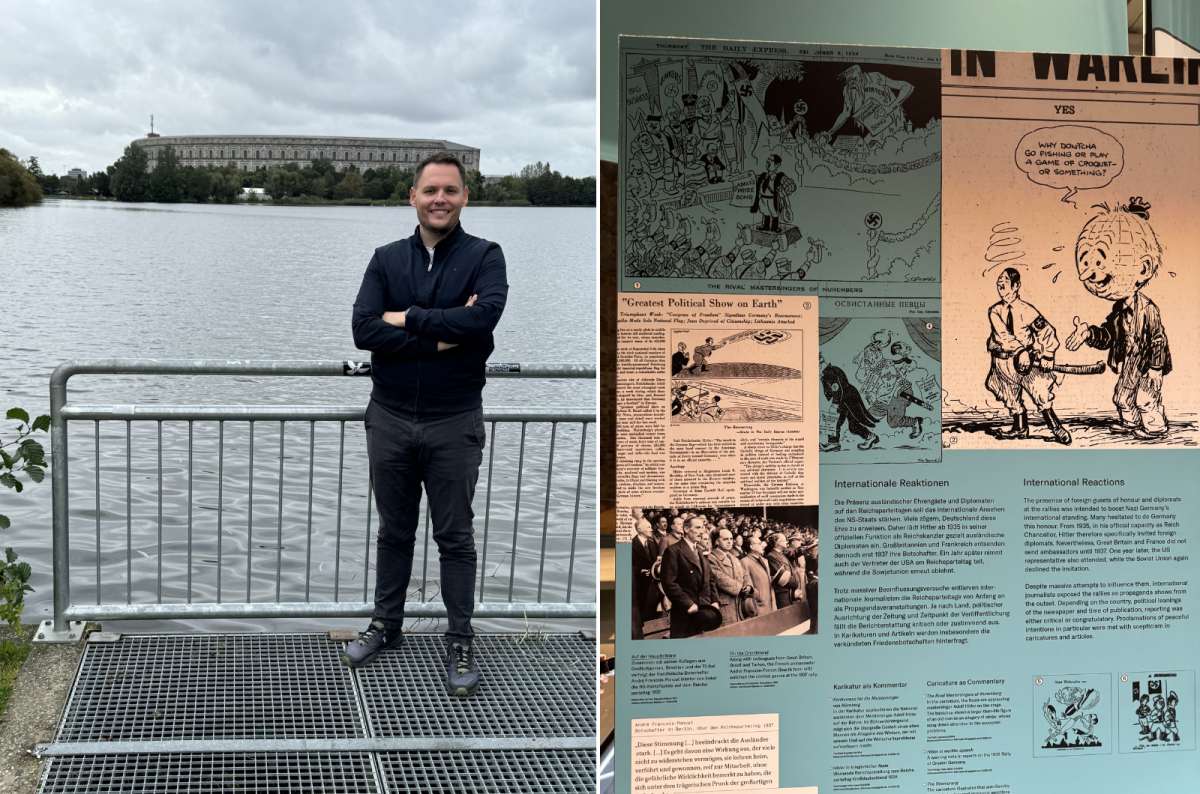
If you’re interested in finding out more about WWII history, wait till you see Nuremberg Nazi Rally
Yes, 10 days in Germany is enough for a strong first trip. It is not enough to see the entire country — honestly, I’ve spent about three months in Germany in total and I’ve probably seen more of the country than most casual visitors ever need to, and still not everything worth seeing.
That distinction matters, because Germany is not a small theme park with castles conveniently arranged near the exit.
With 10 days, I would choose one clear route and stick to it. This itinerary works because it avoids sideways detours and gives you real contrast:
For a first-time Germany itinerary, I’d rather do this north-to-south route properly than collect cities like airport stamps and remember none of them.
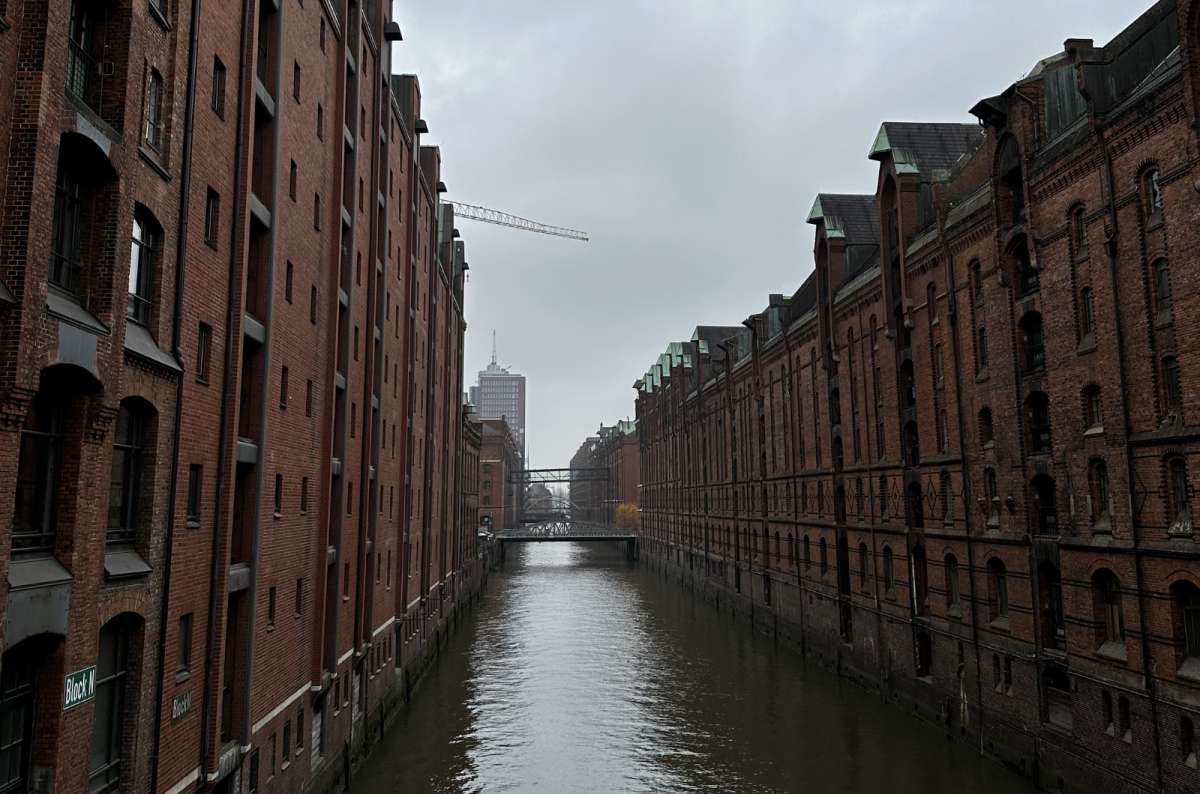
Speicherstadt really shows you a completely different side of Germany
Start this Germany itinerary in Hamburg because it immediately proves Germany is not just Berlin, castles, and Bavaria. Hamburg is watery, commercial, stylish, and a bit rough around the edges. Good. Cute little Germany can wait.
On arrival day, do not behave like a productivity influencer. Drop your bags, get oriented, and focus on the harbor side of the city. If your flight was ugly or your train was late, this day still works. That matters.
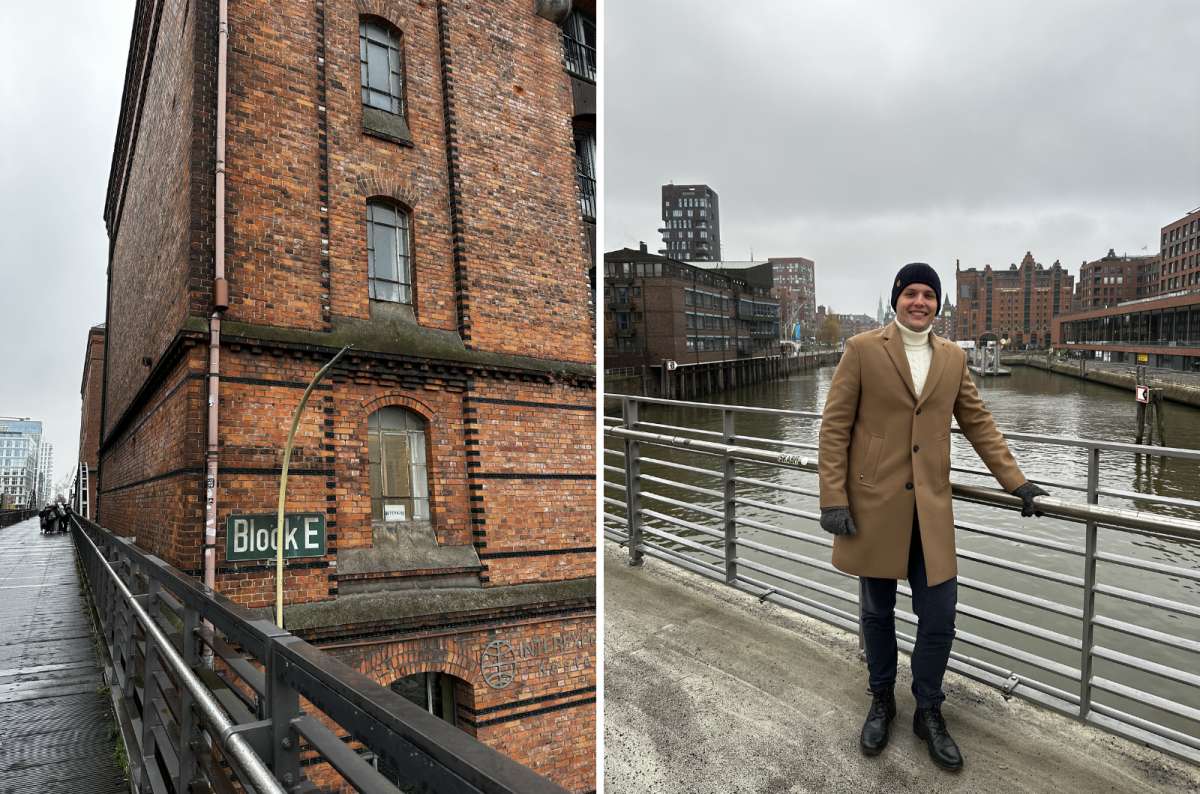
Hamburg and its more industrial side are such a fun sight to see in Europe
Start with Speicherstadt, the red-brick warehouse district that gives Hamburg its best visual identity. This is the first place I’d send anyone in the city because it feels specific to Hamburg: canals, bridges, brick facades, old trading-city energy. Not interchangeable European old-town soup.
Fun fact: I wasn’t expecting anything special while visiting Hamburg for the first time. And boy, the red-brick docks absolutely caught me by surprise. They were so unlike anywhere else in Germany.
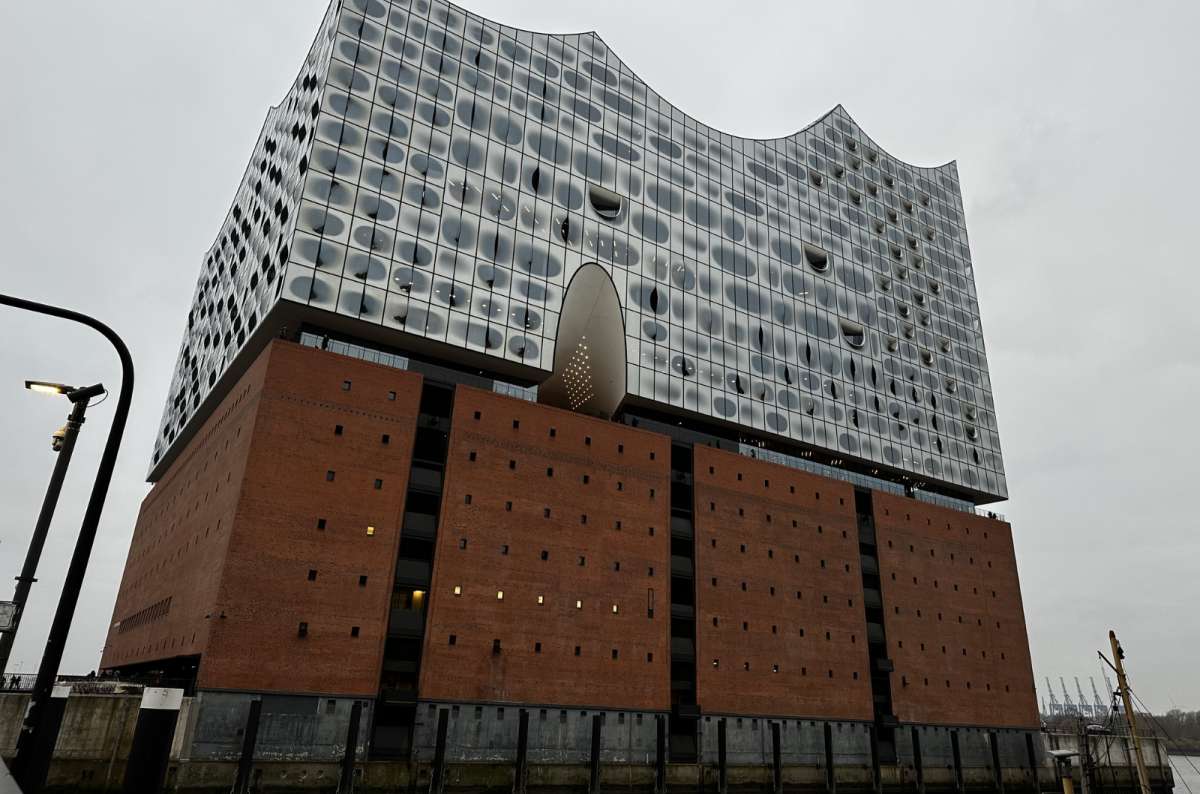
The Elbphilharmonie is definitely one of the most unique buildings in the city
From there, walk into HafenCity and toward the Elbphilharmonie. Even if you do not care about concert halls, the building is worth seeing from the outside. The glass structure sitting on top of the old warehouse looks like Hamburg decided to be serious and dramatic at the same time.
If time works, go up to the Elbphilharmonie Plaza for views over the harbor and city. It is one of the easiest ways to understand Hamburg’s layout without immediately signing up for a museum march.
I spent about 20 minutes on the Plaza. I’d go up again if I were already near the Elbphilharmonie, but I wouldn’t cross the city just for it. There are way more fun things to do in Hamburg.
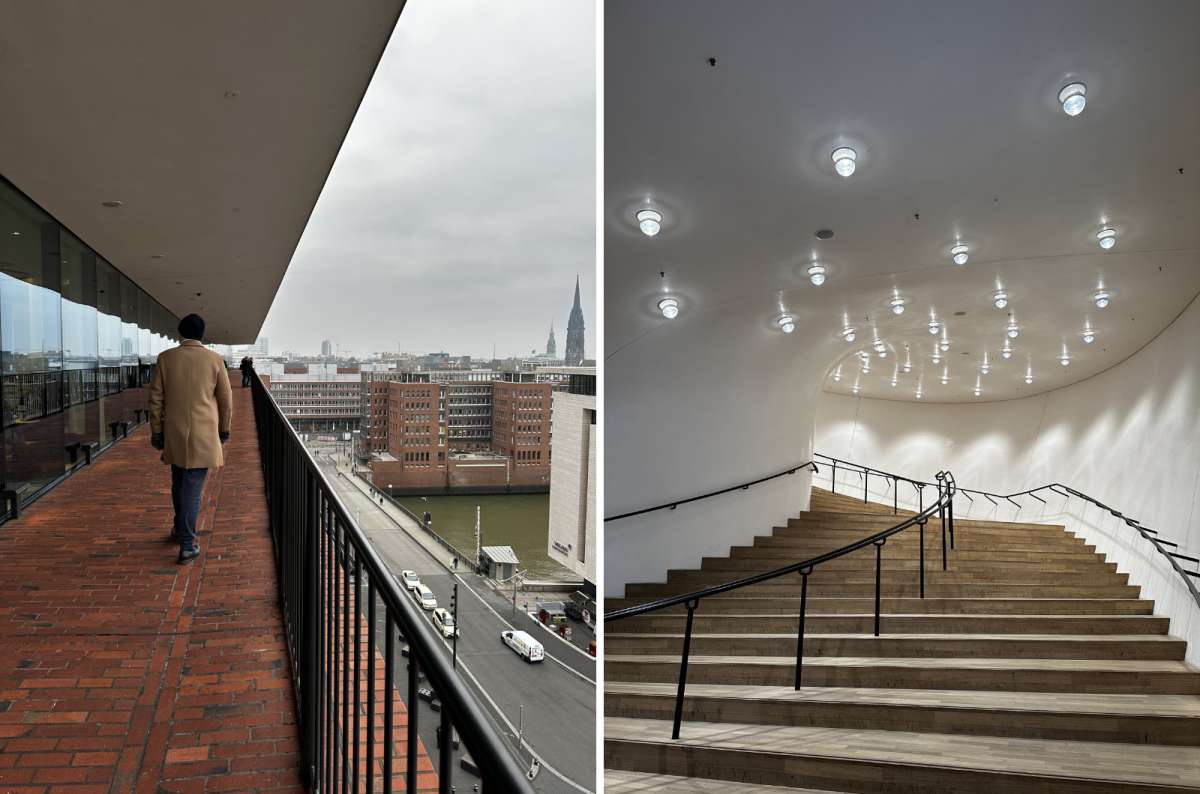
The inside of the Elbphilharmonie brings a nice contrast to the sea of bricks that is Hamburg
Then continue toward Landungsbrücken for the harbor atmosphere. This is where Hamburg starts feeling less polished and more useful, which I mean as a compliment. Ports are not meant to be dainty.
If you still have energy, add St. Pauli or Sternschanze in the evening. If you do not have energy, eat near the harbor and go to bed like a rational adult.
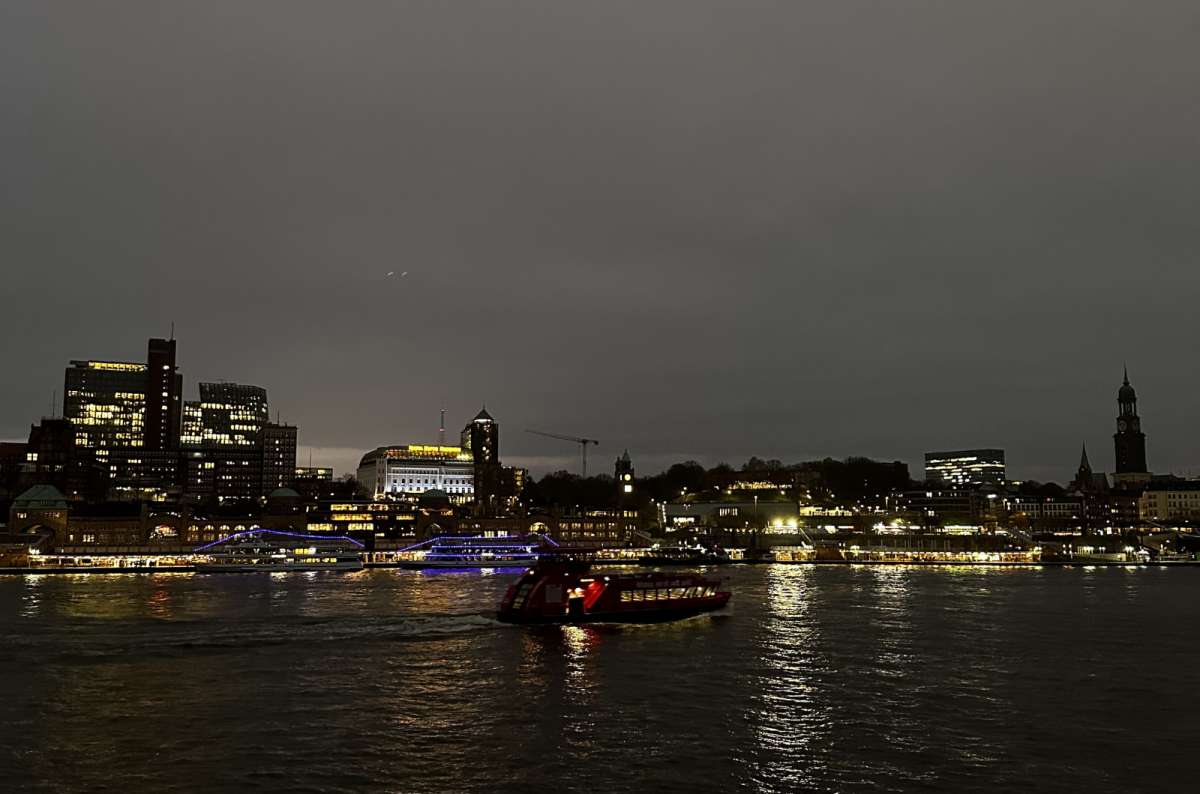
The night cruises in Hamburg hit different
How much time you need: Half a day is enough for this arrival-day version.
Hamburg is a strong opening. It gives the whole route a northern edge, and it stops this Germany travel itinerary from becoming Bavaria plus Berlin with a decorative extra stop.
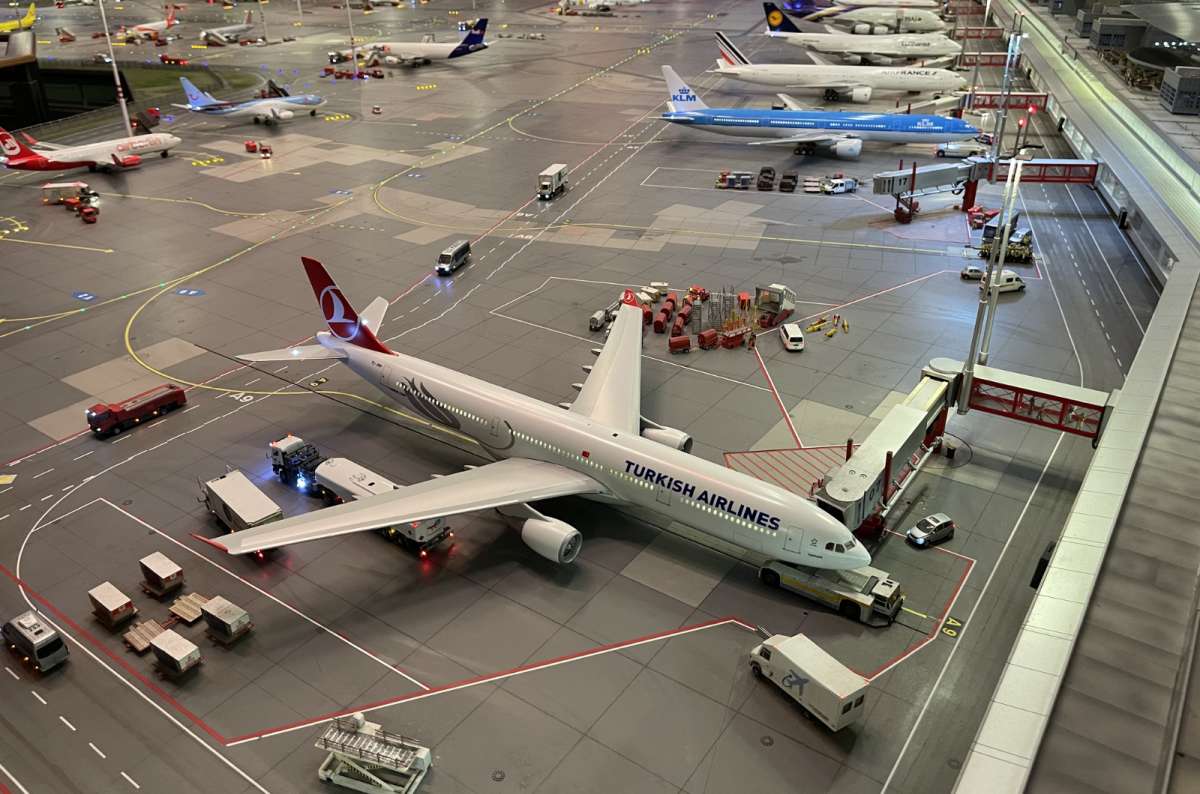
Believe it or not, this is not a real plane @ Miniatur Wunderland
Day 2 is where Hamburg earns its place in a 10-day Germany itinerary. If day 1 gives you the harbor mood, day 2 lets you enjoy it instead of just dragging your suitcase through it.
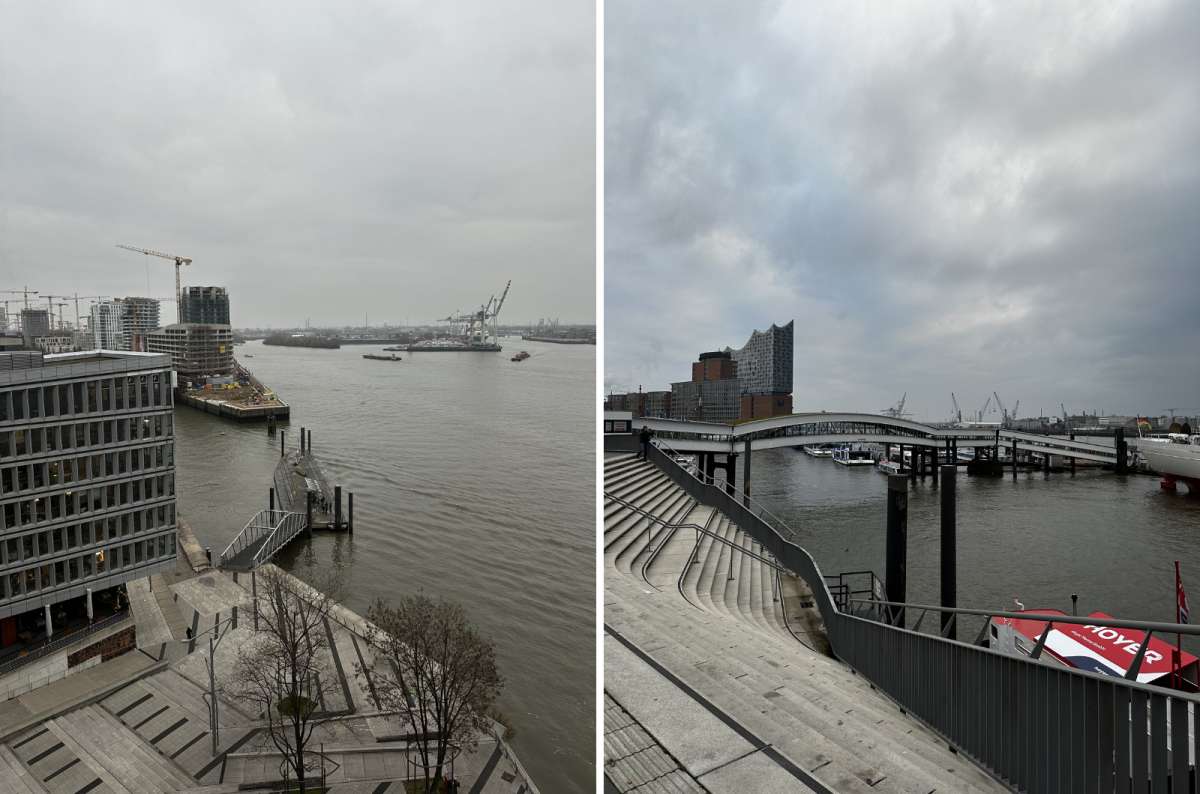
The vibe of the Hamburg harbor depends solely on the weather that day tbh
I would start with a harbor cruise because Hamburg makes the most sense from the water. The city grew around trade, shipping, warehouses, docks, and access to the Elbe. Walking is good, but the boat gives you scale.
Is it touristy? Yes. Is it still useful? Also yes.
A harbor cruise is especially worth it if you want to see the industrial side of Hamburg, not just the pretty brick-and-canal version around Speicherstadt. That contrast is the point.
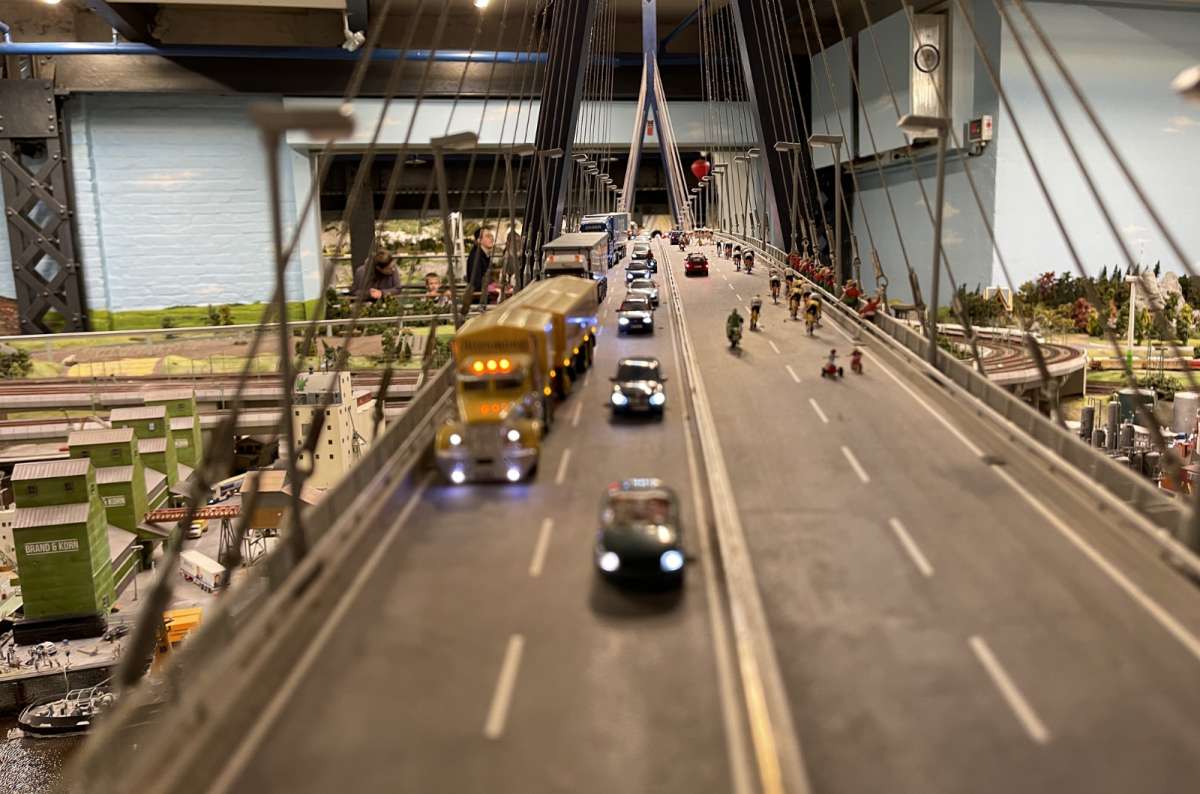
The most adorable miniature Autobahn
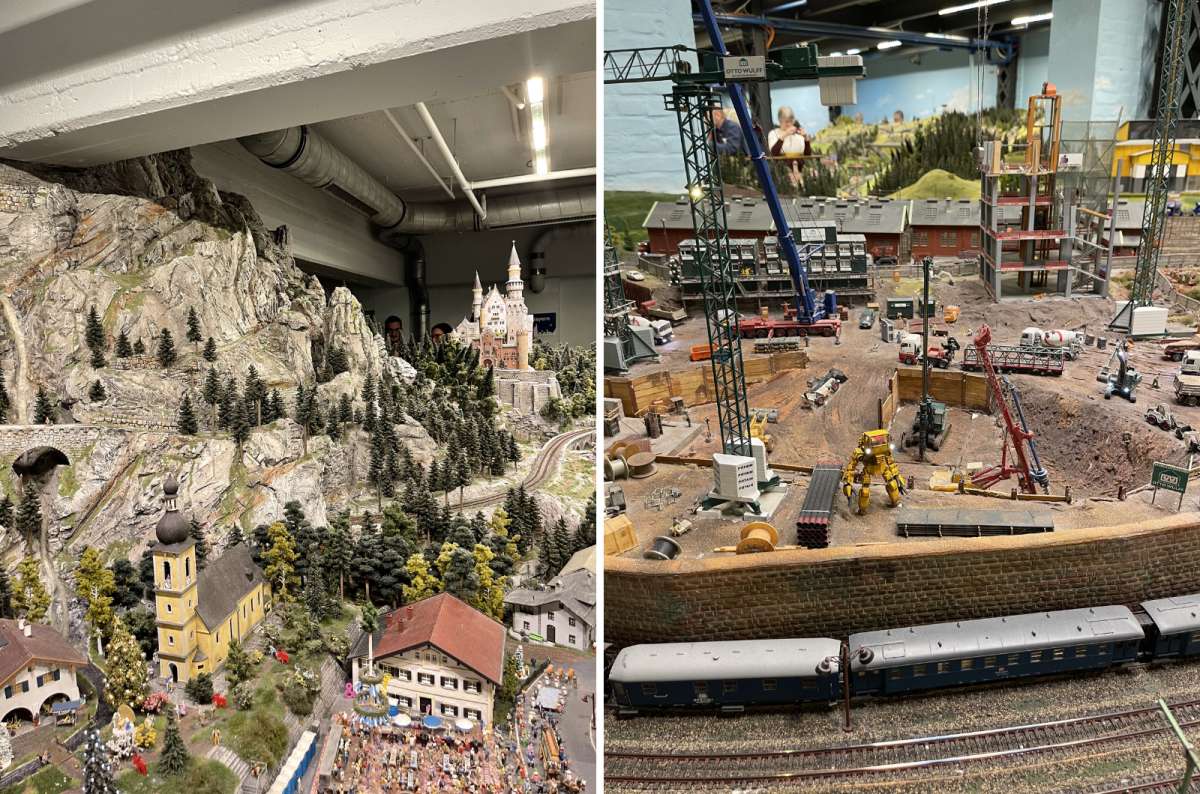
The amount of detail at Miniatur Wunderland makes it so worth it
After the harbor, choose based on your personality and the weather.
Miniatur Wunderland is the indoor choice and one of Hamburg’s biggest attractions. It is easy to dismiss because “miniature trains” sounds like something your uncle would aggressively explain at Christmas, but it is genuinely impressive if you like detail, engineering, and slightly obsessive creativity.
I consider Miniatur Wunderland absolutely and by far the best thing to do in Hamburg. I had so much fun visiting it, and I am looking forward to visiting it with my son.
Top tip: Book tickets well ahead. We didn’t, went in the evening, and were only lucky to get them. I would buy them at least two weeks ahead in season.
After Miniatur Wunderland, don’t forget to visit the Elbe Tunnel with its elevator.
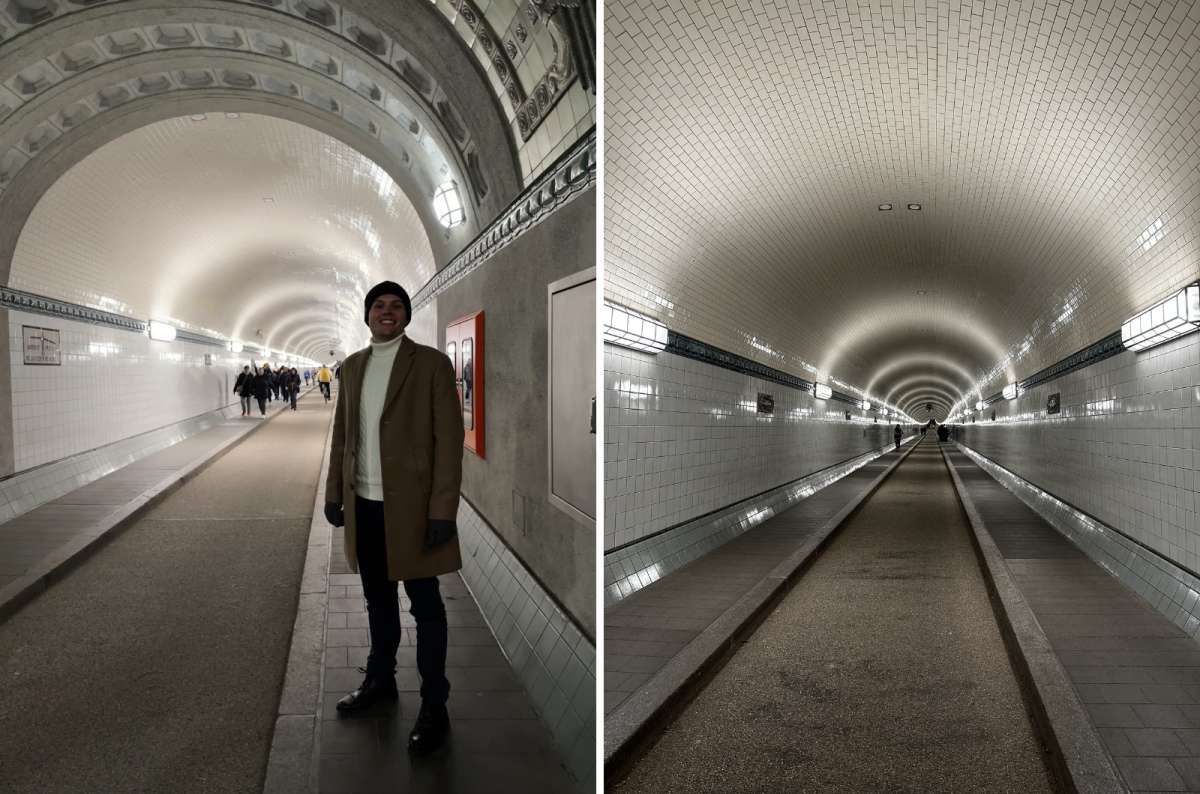
The Elbe Tunnel is a surprisingly useful addition to the city
It’s a fairly long walk below the Elbe in a tiled tunnel. How cool is that? I loved it. The whole activity, which is oddly part of public transport, was so much fun. It took me about one hour to walk there and back.
St. Pauli and the Reeperbahn are not for everyone, but they show a very different side of Hamburg. I would not make this the center of the day unless nightlife is your thing, but as a walk-through or evening stop, it adds useful texture.

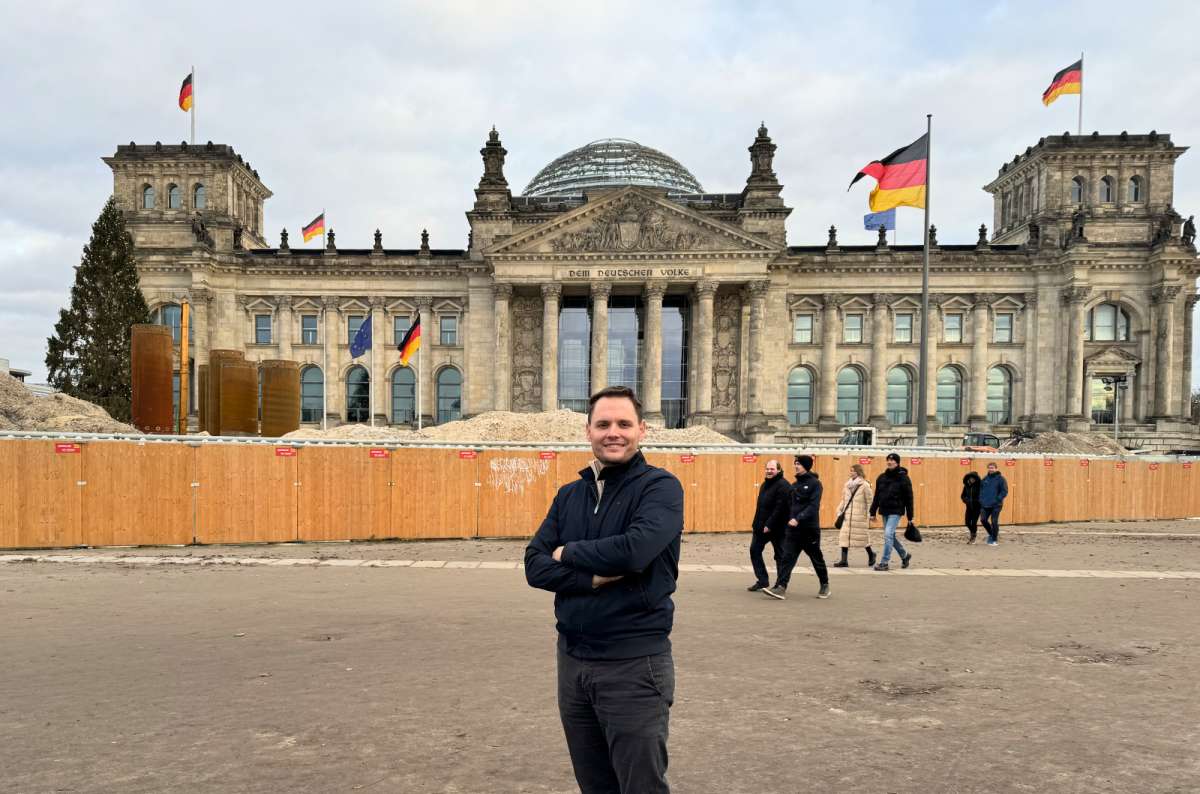
Do not miss out on the dome of Reichstag
It’s a short train ride or car drive, so wake up early and arrive as early as you can. You can also use Klook to look up and compare train prices.
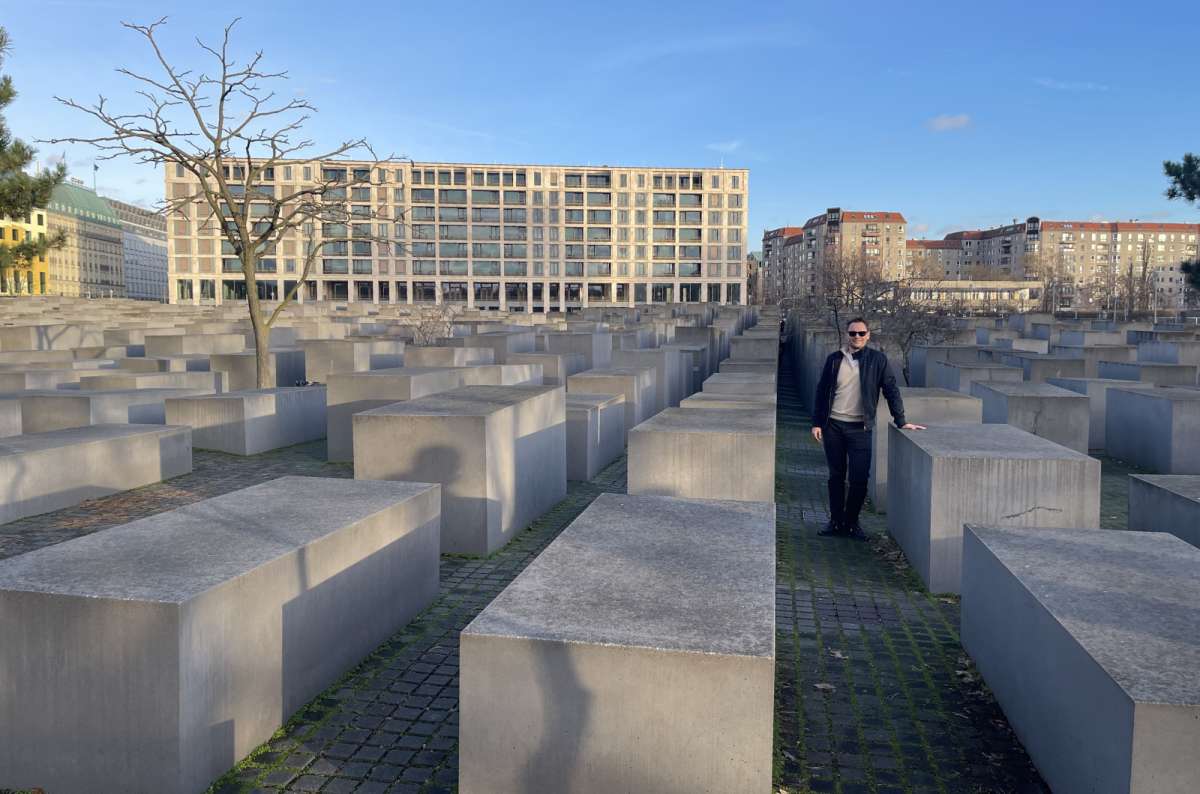
The Holocaust Memorial may not look like much but it still hits the emotional strings
Start with the classics:
Brandenburg Gate is obvious, but it still works as a starting point. It gives you the symbolic Berlin moment, and it places you close to several major stops. It takes just a few minutes to see the Gate.
The Reichstag is worth including if you can book the dome visit ahead. If not, the exterior still fits naturally into the route. I would not waste half a day trying to force it if tickets or timing do not cooperate.
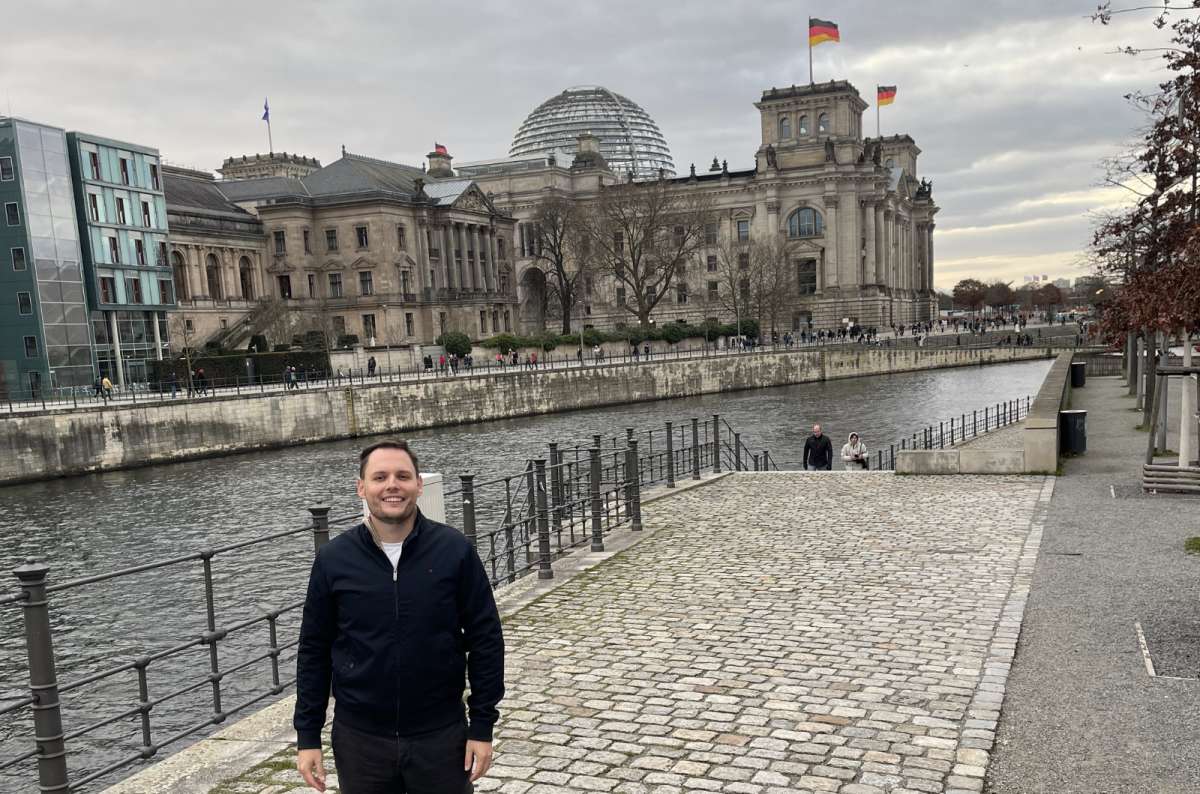
The walk from the Reichstag to the Holocaust Memorial takes you along the river
Holocaust Memorial
From there, walk down Unter den Linden and give yourself time around the Holocaust Memorial. It is central, free to access, and emotionally direct in a way Berlin does extremely well.
Top tip: Calculate about 30–60 minutes in your itinerary for the memorial. I always visit, but it does not take long.
Berlin is not here because it is beautiful in the postcard sense. Berlin is here because few cities in Europe explain modern history this brutally and clearly.
It’s quite a walk from the Holocaust Memorial, but Alexanderplatz is one of my favorite squares in Berlin. The TV Tower is especially worth visiting, and you need to buy tickets ahead. It gives you 360-degree views of all of Berlin.
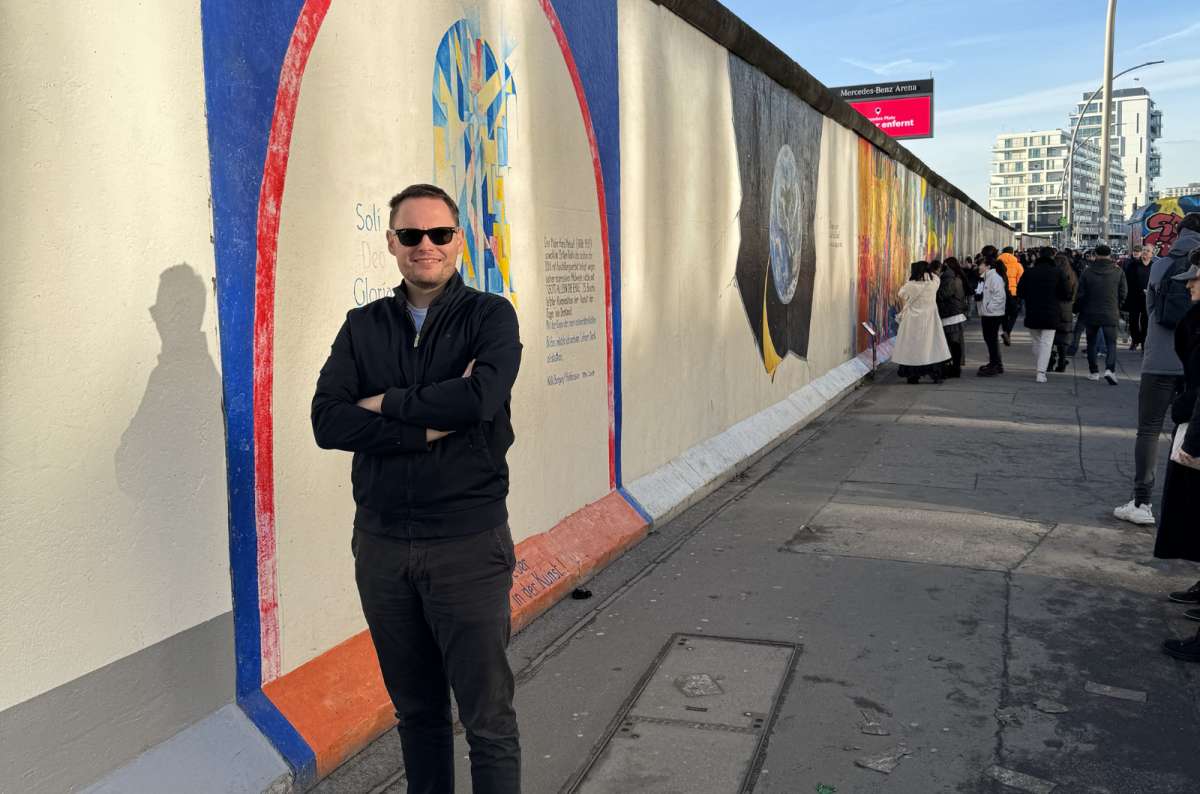
The East Side Gallery takes you to the modern side of Berlin
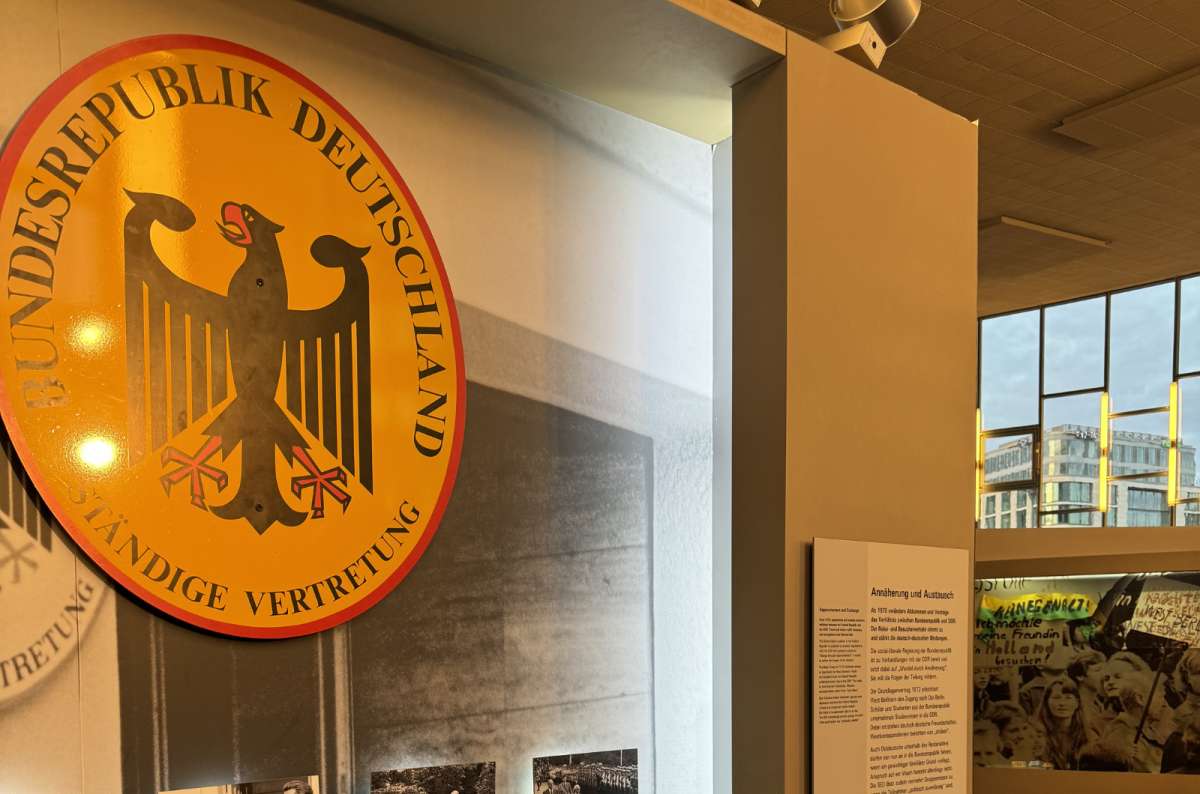
The DDR Museum is a fantastic way to get more context
This is one of the most important days of the itinerary, and it should not feel like a checklist of “dark tourism attractions.”
Berlin’s history sites are powerful because they sit inside the normal city. For me, Berlin has the most important “city history” in the world. There are no other cities with so many important things happening in one place, maybe aside from Rome. There is also a bunch of guided history tours you can book.
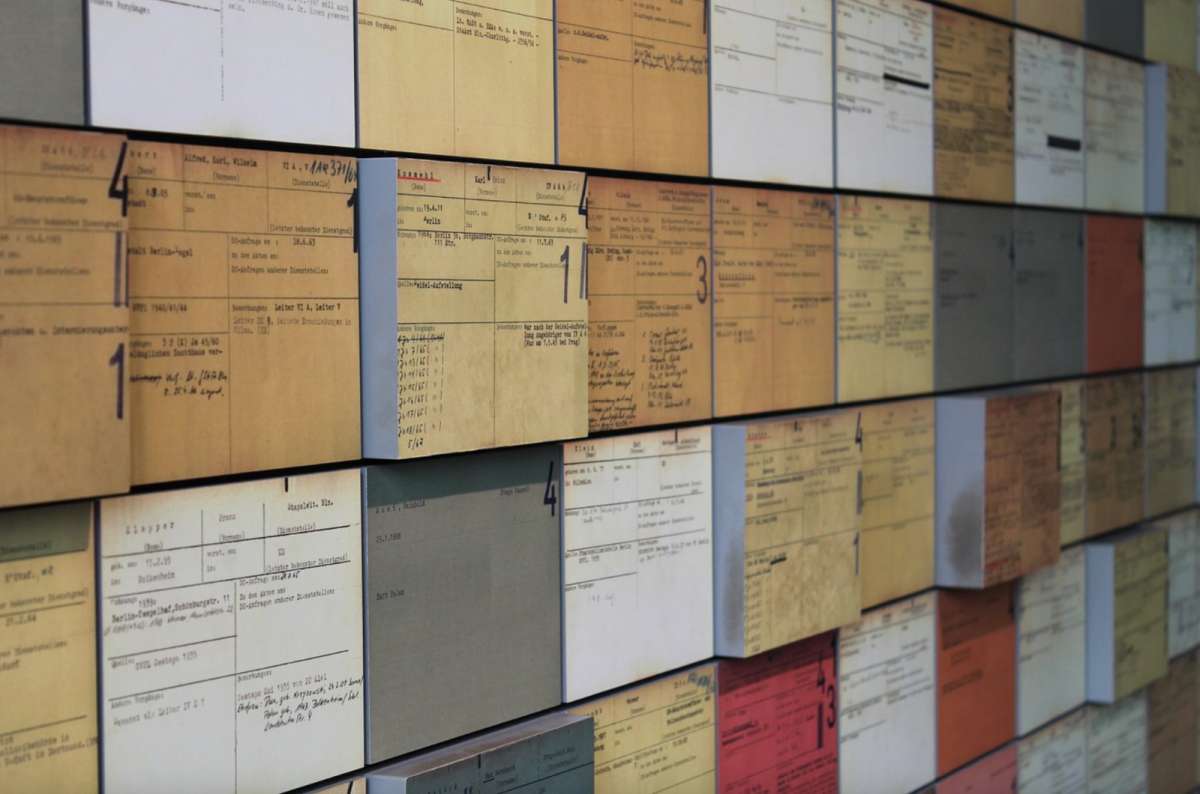
The Topography of Terror deserves every minute of your attention
The Topography of Terror is one of the best places to understand Nazi Germany in Berlin. It is direct, heavy, and not designed to flatter anyone. Good. History should not always come with a café and a cute gift shop.
Give it proper time. I would treat this as the anchor of the morning, not as a quick stop between photos. The exhibition is dense, but that is the point. This is where Berlin is very good: it does not let you turn history into decoration. It genuinely gave my Berlin itinerary the context to make it even better.
You can easily spend 1.5–2 hours here if you read properly. If you rush it in 25 minutes, you technically visited. You did not really understand much.
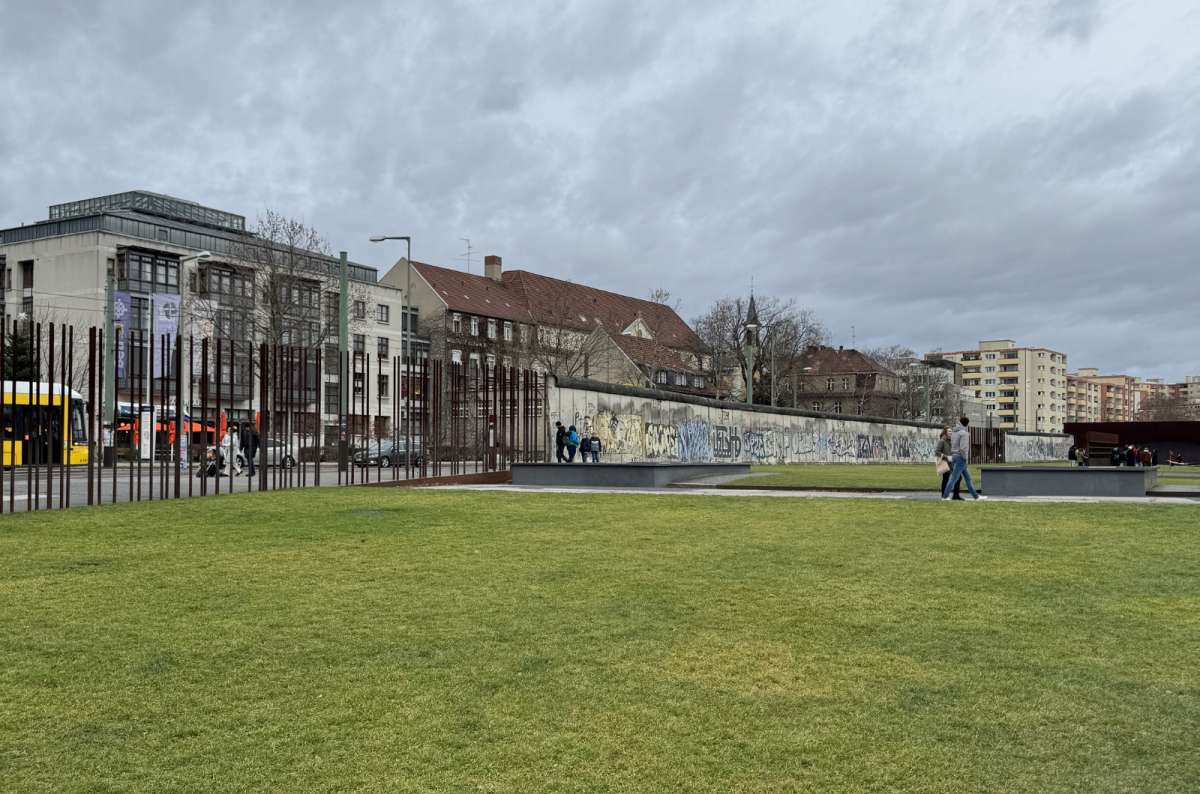
The Berlin Wall Memorial adds such an interesting touch to the city
Then go to the Berlin Wall Memorial, which I think is much more meaningful than just checking off a random piece of wall. It gives context: border fortifications, divided streets, escape attempts, and the physical reality of the Cold War.
This is the Cold War site I would prioritize if you only have energy for one. The preserved border strip makes the division feel less abstract. You are not just looking at painted concrete; you are seeing how the city was physically cut apart. You can also book a private Cold War tour in Berlin.
The East Side Gallery is more photogenic and famous, and it is worth seeing if you have time, but the Wall Memorial explains the city better.
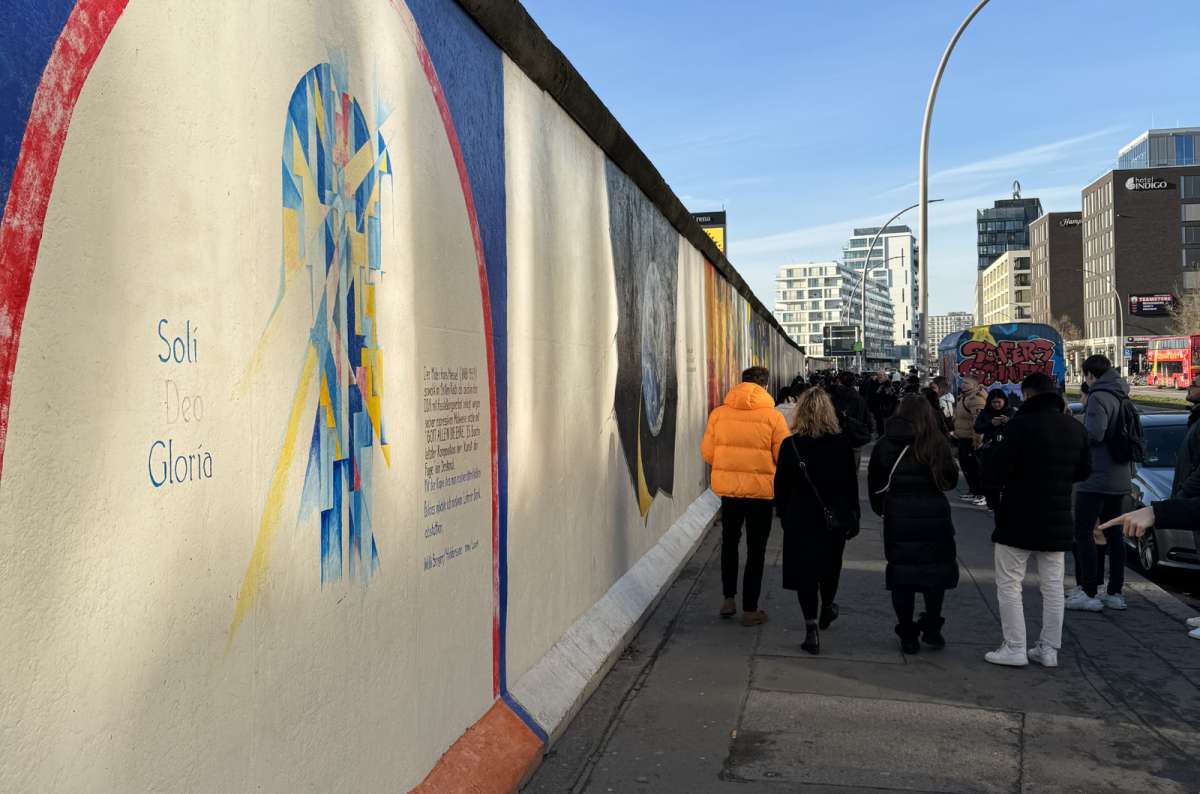
The art at the East Side Gallery is genuinely so fun (despite the crowds)
The East Side Gallery is easier, more visual, and more crowded. It works well after the Berlin Wall Memorial because you already have the context. Without that context, it can feel like a long outdoor mural wall with tourists walking slowly in front of every famous section.
Do not expect silence or deep atmosphere here. Expect people, photos, tour groups, and traffic nearby. Still worth seeing, just not the most meaningful Wall site in Berlin.
Checkpoint Charlie is famous, but it is not the highlight. I would treat it as a quick context stop if you are nearby, not a place to build your day around.
This is exactly where Berlin can feel a bit theme-parked if you are not careful. A former Cold War border crossing surrounded by tourist clutter is still interesting, but manage expectations.
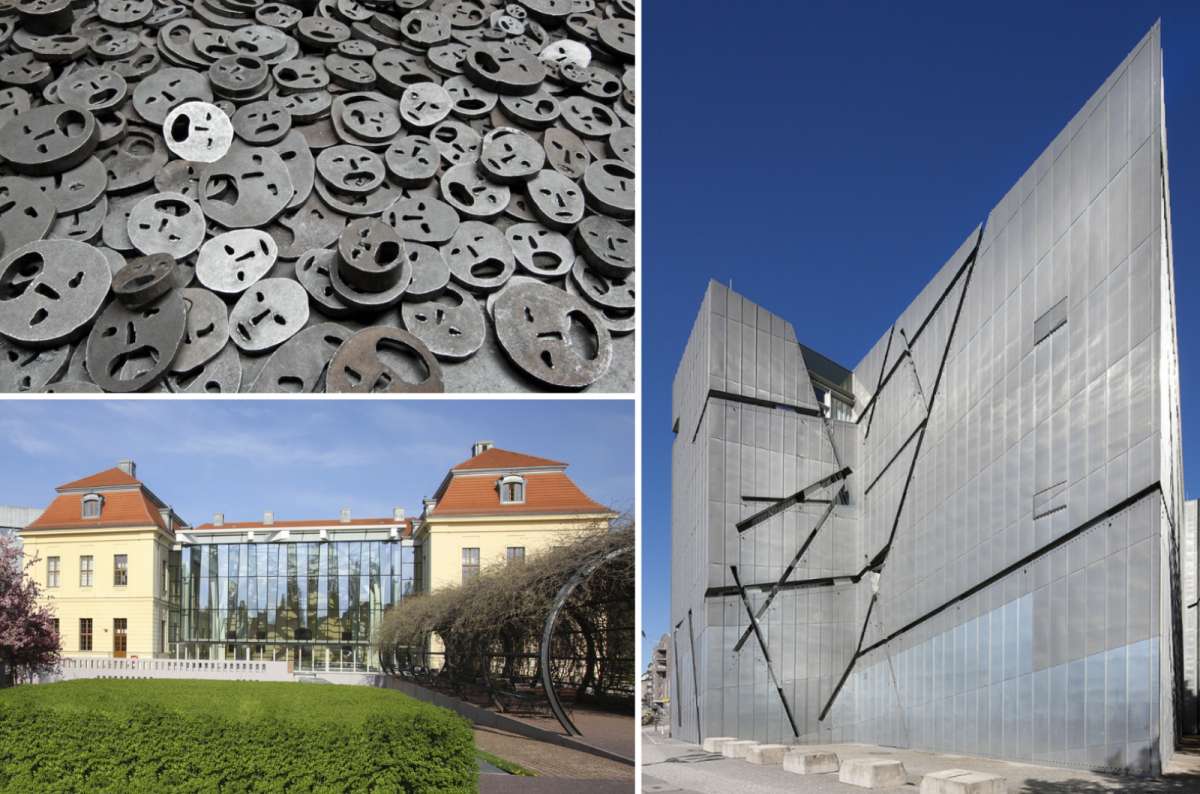
The exhibition at the Jewish Museum hits you right in the feels
Depending on your energy, add one of these:
I would not cram all of them into one day. This kind of history gets heavy fast, and pretending otherwise is ridiculous. By late afternoon, even good museums can start turning into walls of text your eyes politely refuse to process.
This day is essential. If you leave Berlin without understanding at least some WWII and Cold War history, you have mostly visited restaurants with tram lines.
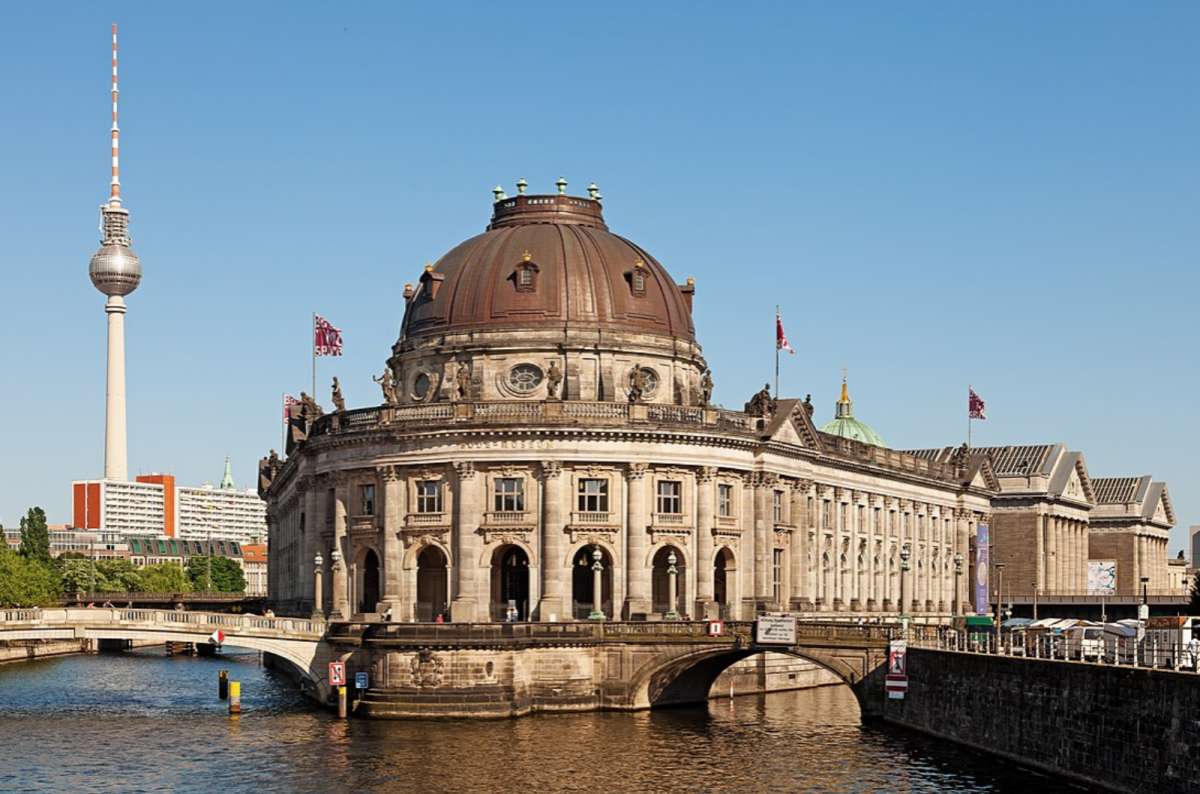
The Museum Island was lowkey heaven for a history nerd like me
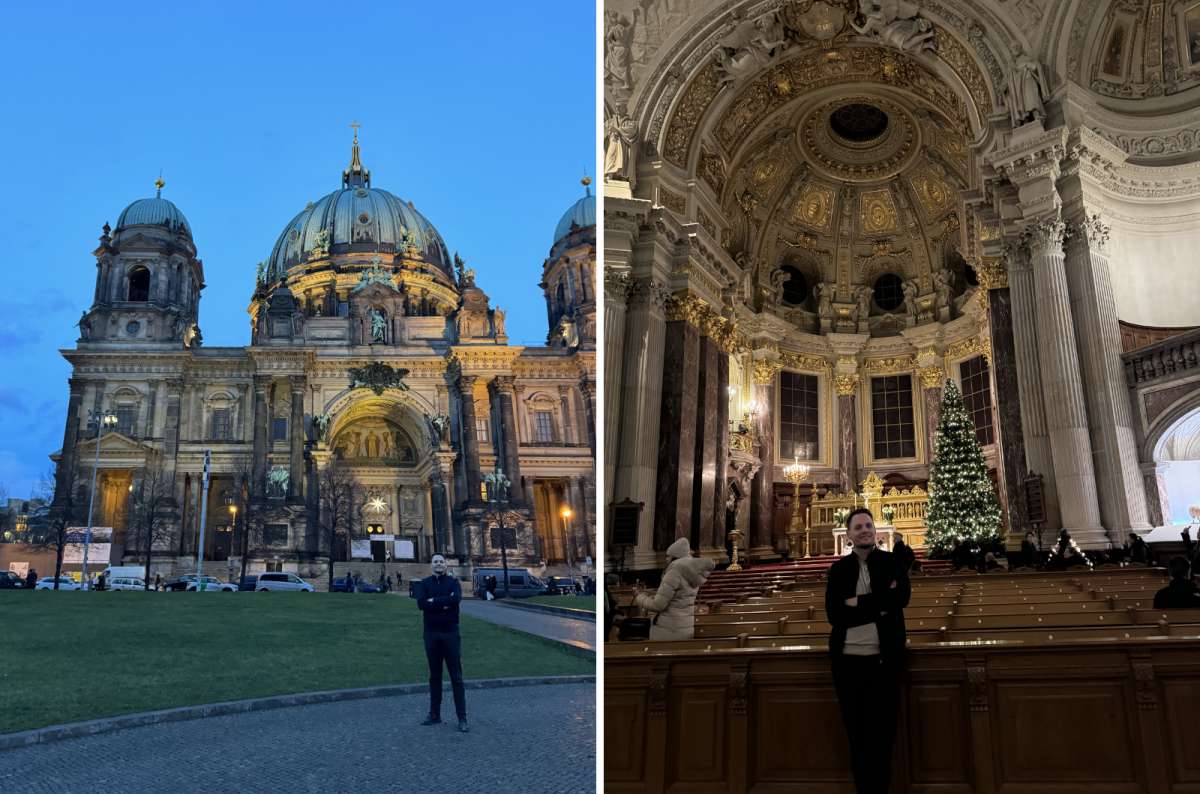
The Berlin Cathedral is a nice way to spice things up if you have extra time
Day 5 stops Berlin from becoming only a heavy history lesson. That matters, because modern Berlin is messy, international, creative, sometimes ugly, often fascinating, and not built to behave like Vienna.
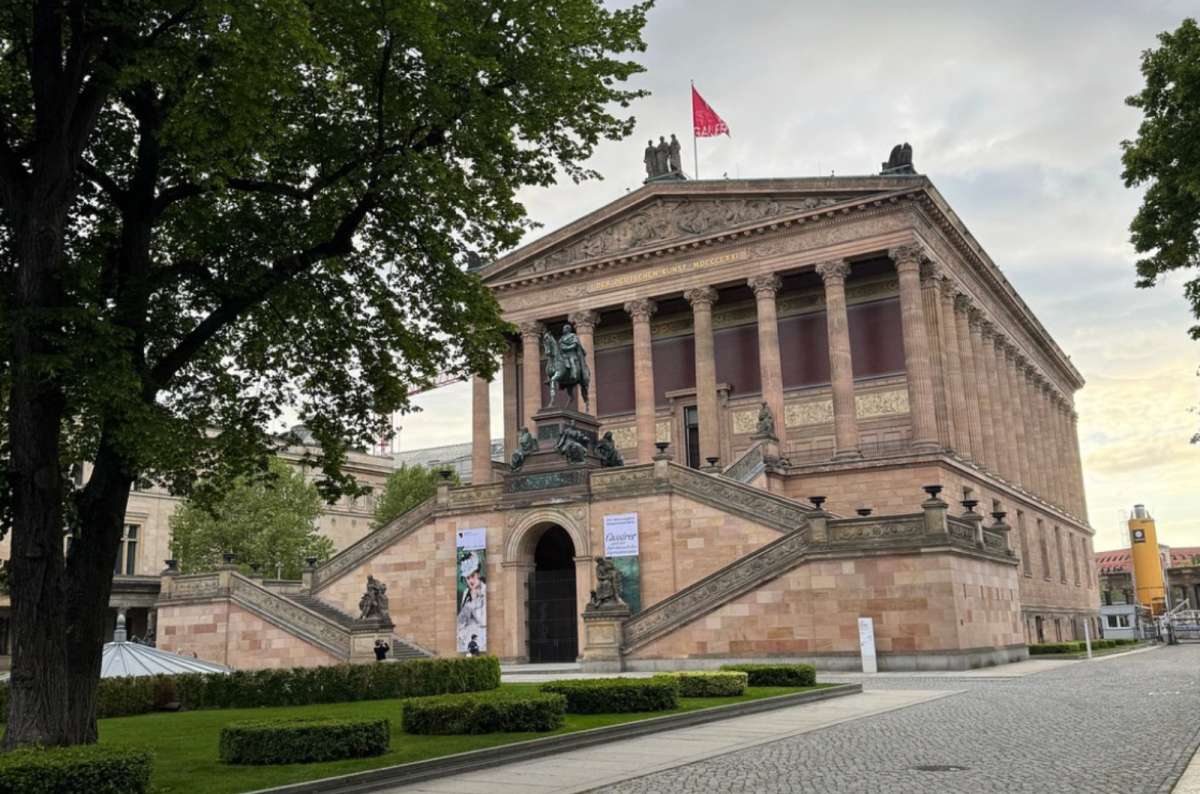
Old National Gallery is one of the many cool places on the Museum Island
Museum Island is the obvious starting point. It is important, central, and packed with major collections. It can also eat your whole day if you let it.
Pick one or two museums max. That is my rule here. More than that and you stop absorbing anything. You just become a slow-moving museum mammal looking for coffee.
The Neues Museum is a strong choice if you want one major museum. It gives you ancient collections, Egyptian artifacts, and one of Berlin’s most famous museum experiences without forcing you to turn the day into a cultural endurance event.
If classical antiquity or big museum architecture is more your thing, the Altes Museum or Pergamon-related exhibitions may suit you better, depending on what is open during your visit. Berlin museums are excellent, but they are not a race. Choose based on actual interest, not guilt.
Pro tip: If history drives up your appetite, check out my German food guide.
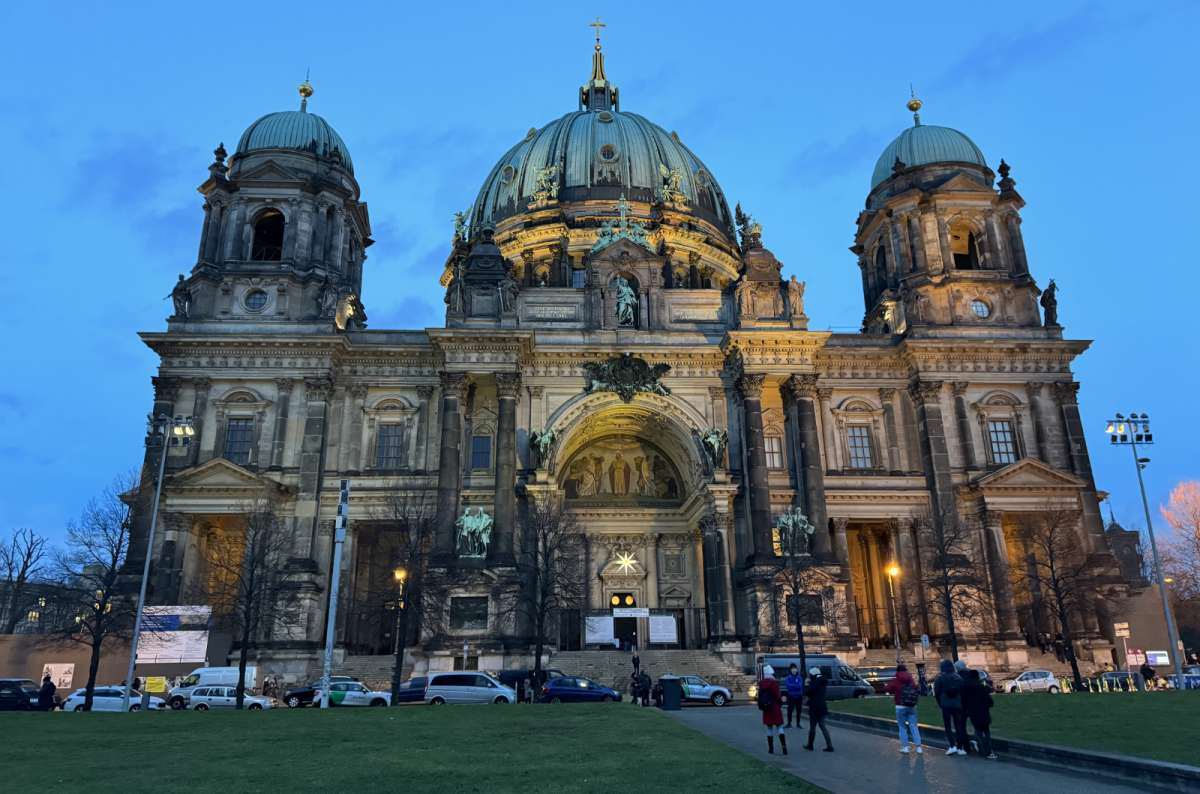
Oh what a sight to behold @ Berlin Cathedral
Berlin Cathedral is nearby and fits naturally with Museum Island. I would not cross the whole city only for it, but when you are already here, it is worth seeing from the outside and possibly going in if you want architecture and views.
This is also one of the better places to slow down around central Berlin. The river, the museum buildings, the cathedral, and the open space around Lustgarten give you a calmer version of the city than the heavy history areas from day 4.
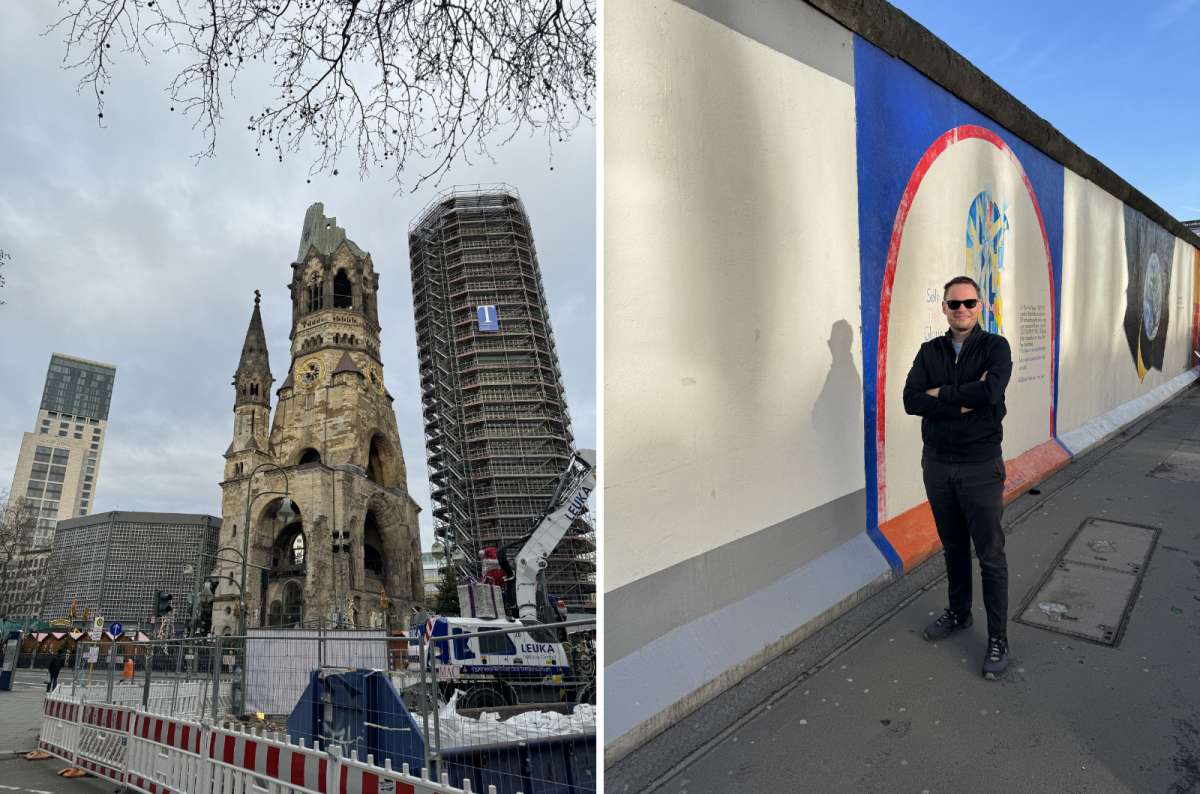
Seeing the real neighborhoods gives you a nice break from the tourist-y side of Berlin
In the afternoon, get out of the museum zone and see a more normal Berlin neighborhood:
This is where Berlin works best for me: difficult history in the morning, neighborhood life later. It is not a city you understand from monuments alone.
Kreuzberg is the best choice if you want Berlin to feel lively and imperfect. Prenzlauer Berg is better if you are tired and want something softer. Friedrichshain makes sense if you skipped East Side Gallery on day 4 or want a younger evening.
Do not over-plan this afternoon. Pick one neighborhood and walk. Berlin is too spread out for “just quickly seeing” three different districts before dinner.
Three days in Berlin is the right amount for this itinerary. Two feels rushed. Four is nice, but it starts stealing time from Bavaria.
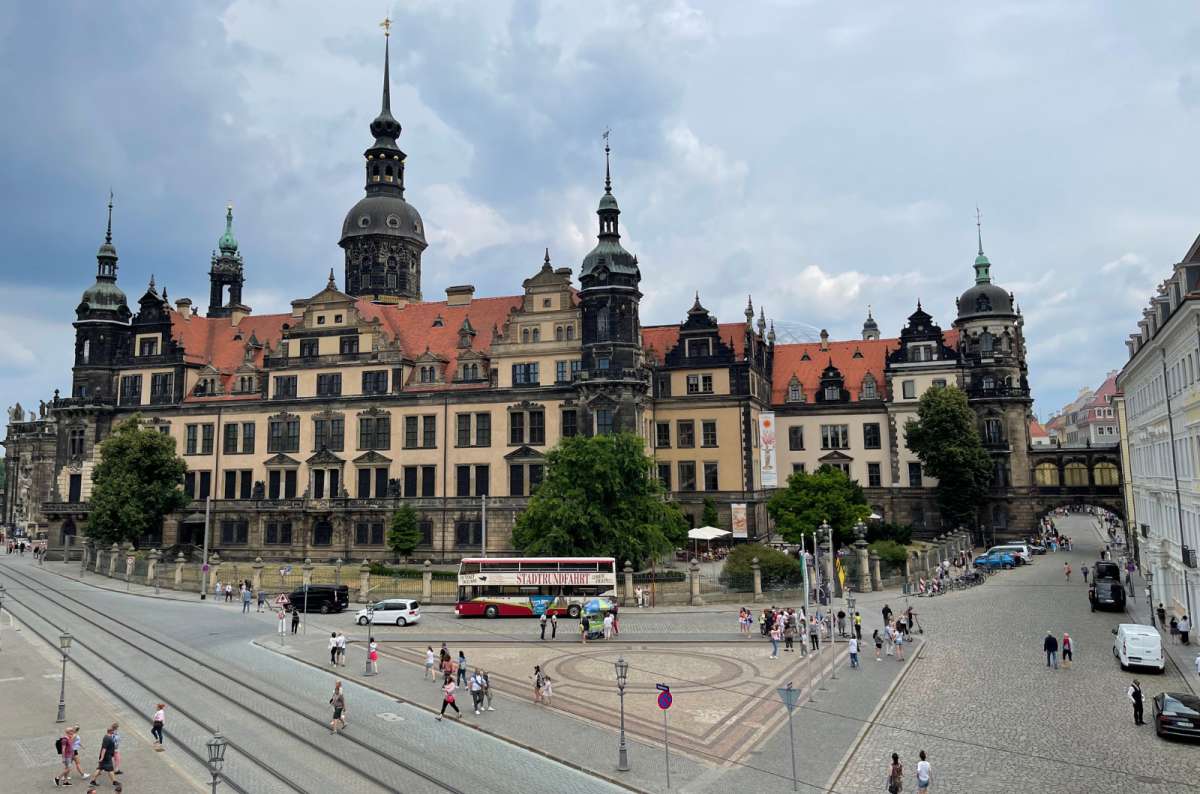
One thing about Dresden—all the roads lead back here
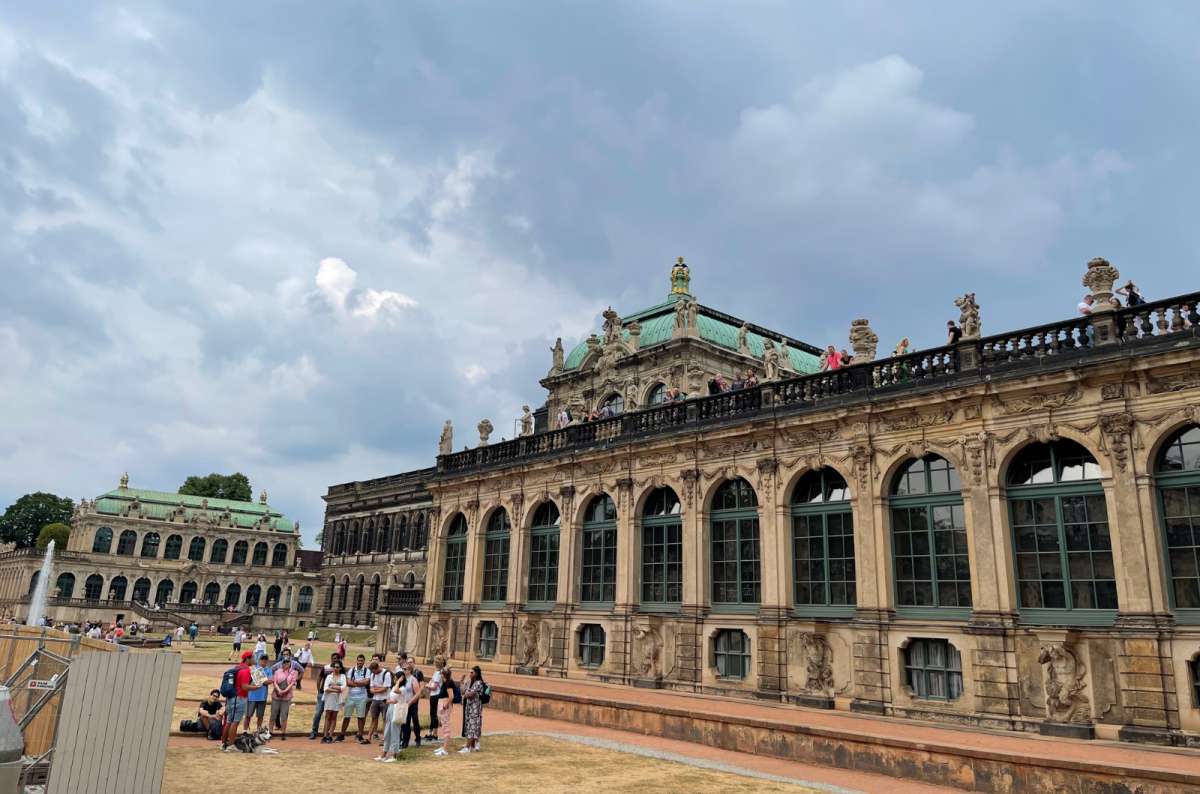
The Zwinger is easily one of the most iconic landmarks in Dresden
Take a morning train from Berlin to Dresden. Dresden is the beauty stop on this Germany 10 day itinerary, and after Hamburg and Berlin, it feels almost suspiciously elegant.
I like Dresden in this route because it gives you a compact architectural hit without demanding three days. You arrive, walk, look around, choose one major museum if you want, and move on. Efficient. Very unchaotic. I respect that. If you want a bit more context for the city, consider a guided tour.
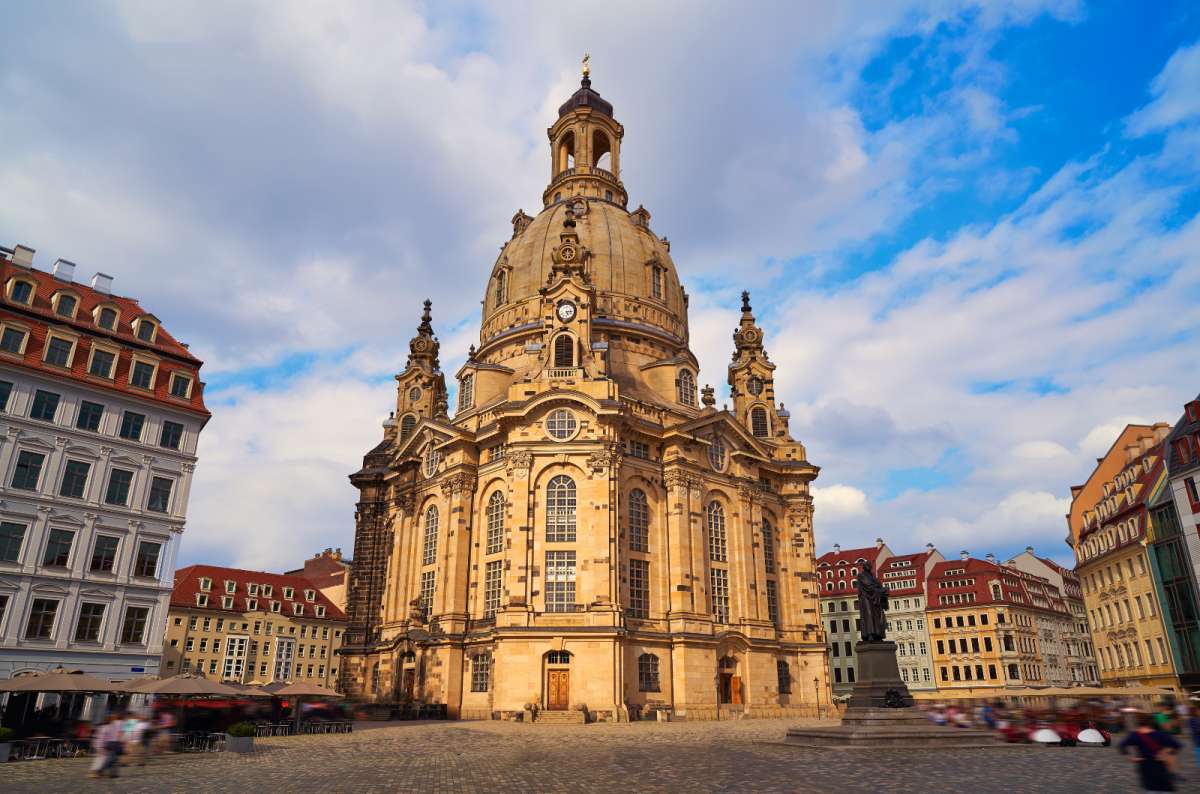
Dresden said “let’s rebuild the city and make it look ridiculously elegant”
Start with Frauenkirche. It is the obvious centerpiece of Dresden’s Altstadt and the best place to understand the city’s reconstructed beauty.
The square around it can feel very polished, almost too polished, but that is part of Dresden’s story. This is not a medieval old town that simply survived untouched. It is a city where destruction and reconstruction are always somewhere in the background, even when everything looks neat and photogenic.
Go inside if it is open and timing works. If you want a viewpoint, consider the dome, but only if the weather is decent and you are not trying to squeeze too many paid interiors into one day.
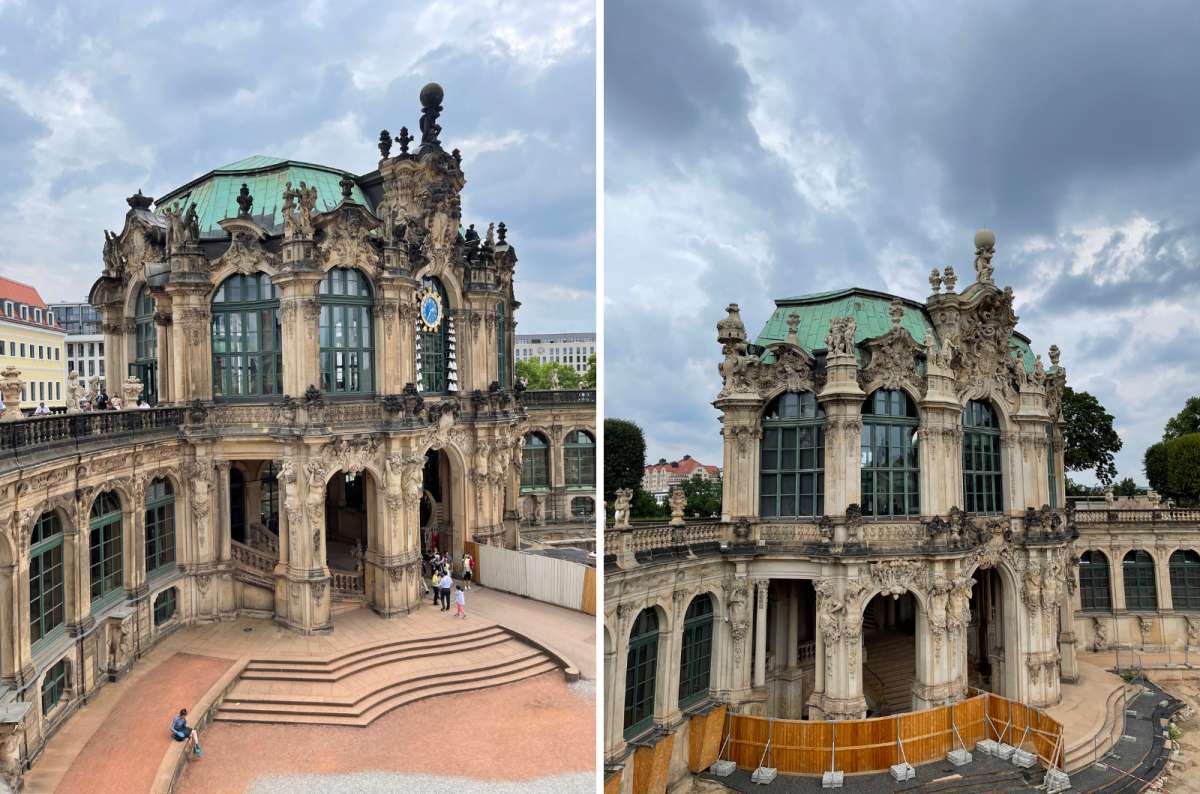
The Zwinger is where Dresden fully commits to the whole grand-European-drama aesthetic
The Zwinger is the second must-see. Even if you do not go deep into museums, the courtyard and architecture are worth seeing. Dresden gives you the ornate, grand Germany moment that this itinerary would otherwise lack.
This is where I would slow down rather than rush straight to the next pin. Walk the courtyards, look at the details, and decide if you actually want a museum. The Old Masters Picture Gallery and Porcelain Collection can be worthwhile, but they are not mandatory for a one-day Dresden stop.
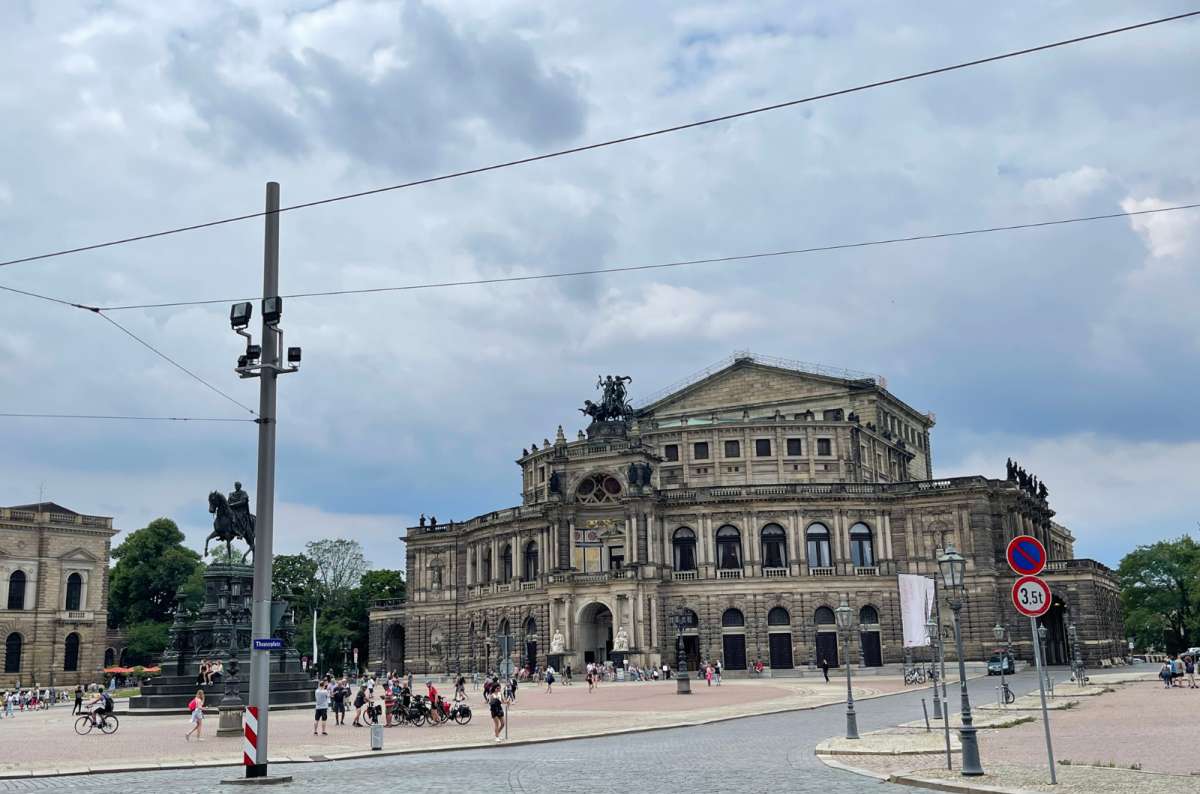
Not bad for what is basically just a casual opera house on your afternoon walk @ Theaterplatz
Semperoper is right nearby, so see it from the outside even if you do not take a tour. Theaterplatz is one of the easiest places in Dresden to feel how compact the old-town highlights are.
This is also why Dresden works so well in a 10-day Germany itinerary. It gives a lot of visual payoff without forcing you into complicated transport or a long sightseeing day.
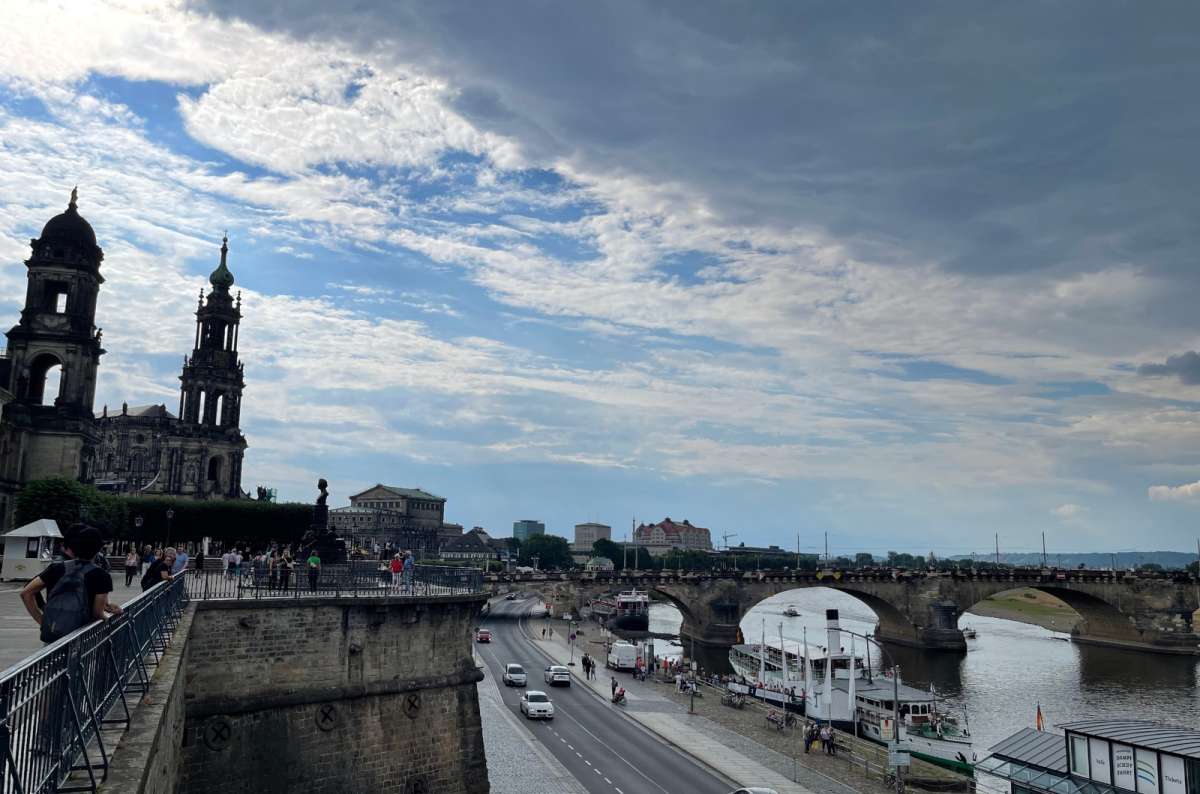
Brühl’s Terrace is the perfect place to slow down and pretend you are not speedrunning Germany
Walk Brühl’s Terrace for river views. This is one of the best simple experiences in Dresden because it gives you the Elbe, the old town, and a bit of breathing room after the ornate architecture.
If the weather is good, stay here longer than feels “productive.” Dresden is not Berlin. The point is not only museums and context. Some of the value is just seeing the city’s shape from the river.
If you want one major paid stop, choose Dresden Castle or the Green Vault. The Green Vault is the famous option, but tickets and timing matter. Do not destroy the day trying to force it if the schedule is awkward.
One good museum is enough here. Dresden’s advantage is that the old town is compact, so do not ruin that by turning the day into museum logistics.

The German Hygiene Museum is a nice way to spice up this itinerary
Yes, for this itinerary. You could technically do Dresden as a long Berlin day trip, but sleeping here makes the route south to Nuremberg cleaner.
Stay in or near the Altstadt. This is not the place to save USD 12 by booking somewhere awkward and then spending your evening commuting like a sad office worker.
How much time you need: One full day is enough for most first-timers. Two days if you love museums.
Pro tip: If you want a more detailed plan, check out my Dresden 1-day itinerary
Dresden is absolutely worth one day. More than two is usually unnecessary on a first Germany itinerary unless museums are your whole personality.
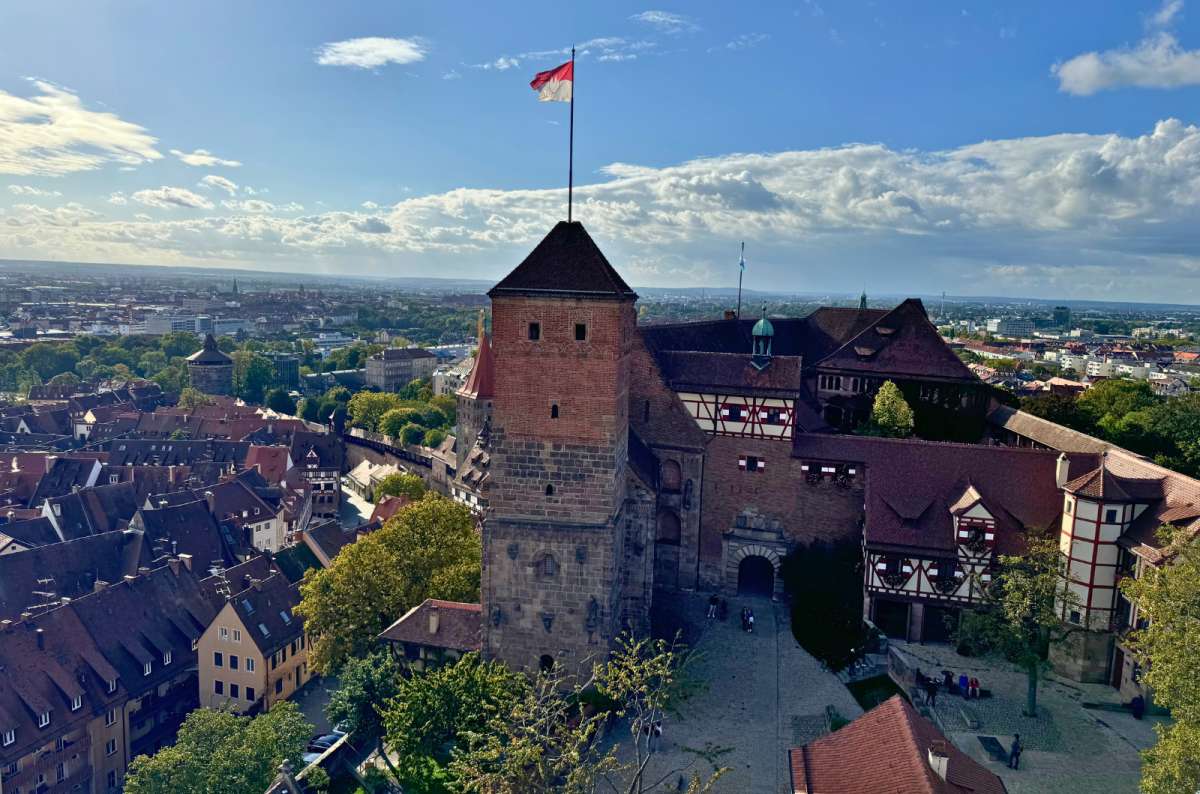
Nuremberg Castle delivers exactly the medieval Germany atmosphere people expect
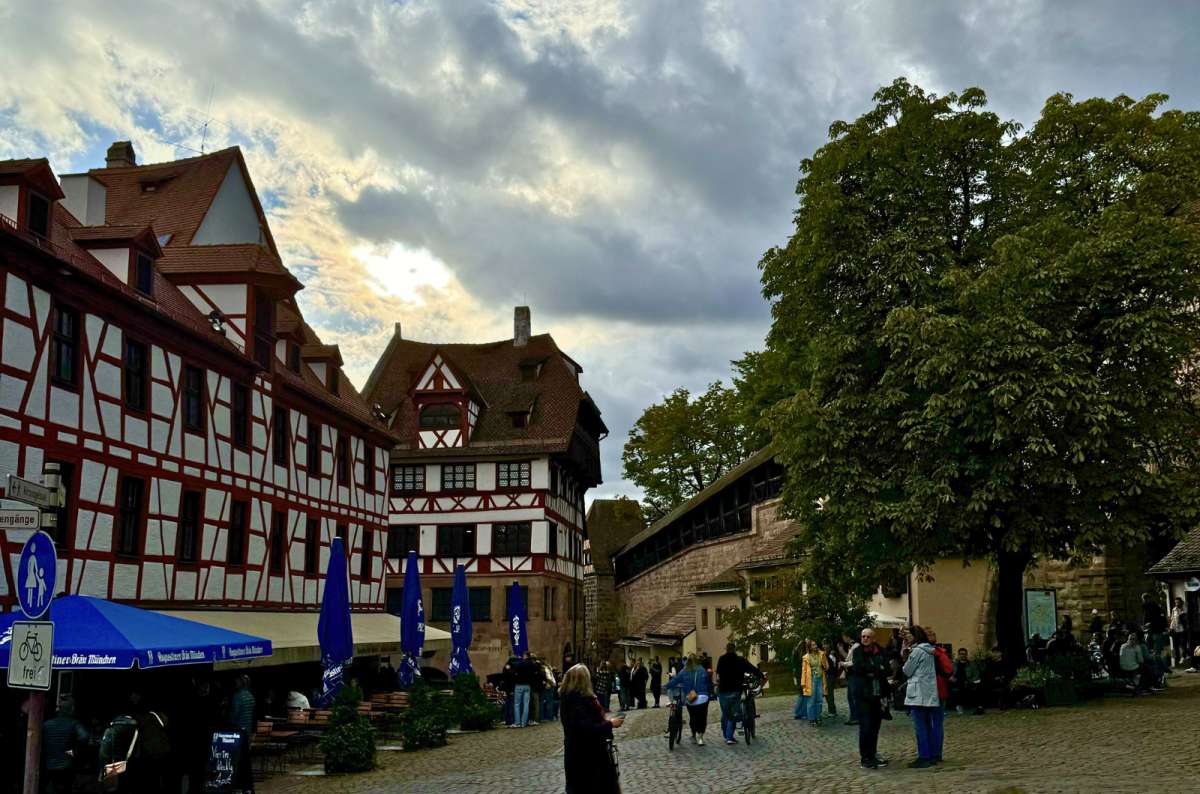
The vibes of the Nuremberg old town are straight out of a fairytale
Take the train from Dresden to Nuremberg and give the rest of the day to the old town. This is where Germany finally starts giving many first-timers the medieval mood they probably expected earlier.
Nuremberg is one of the most useful stops in Germany because it combines two very different things: a walkable medieval core and some of the most important Nazi history sites in the country. Do not try to do both properly on arrival day. Save the heavy history for tomorrow morning.
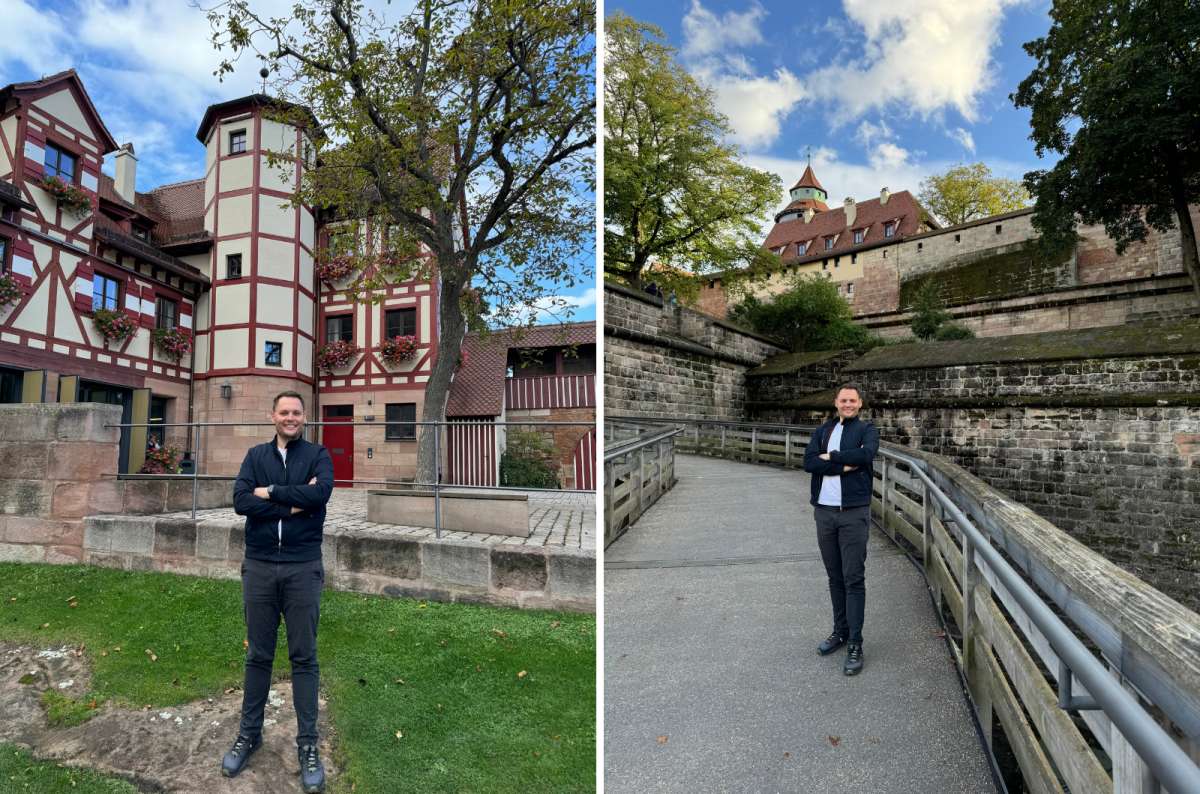
King of the (Nuremberg) castle
Start with Nuremberg Castle. It gives you the city overview and the historic anchor point. From up here, the old town makes more sense: roofs, walls, towers, church spires, and the compact shape of the city below.
I would prioritize the exterior, courtyards, and viewpoints first. If you have time and interest, go inside. But on an arrival day, I would not let the castle interior swallow the whole afternoon.
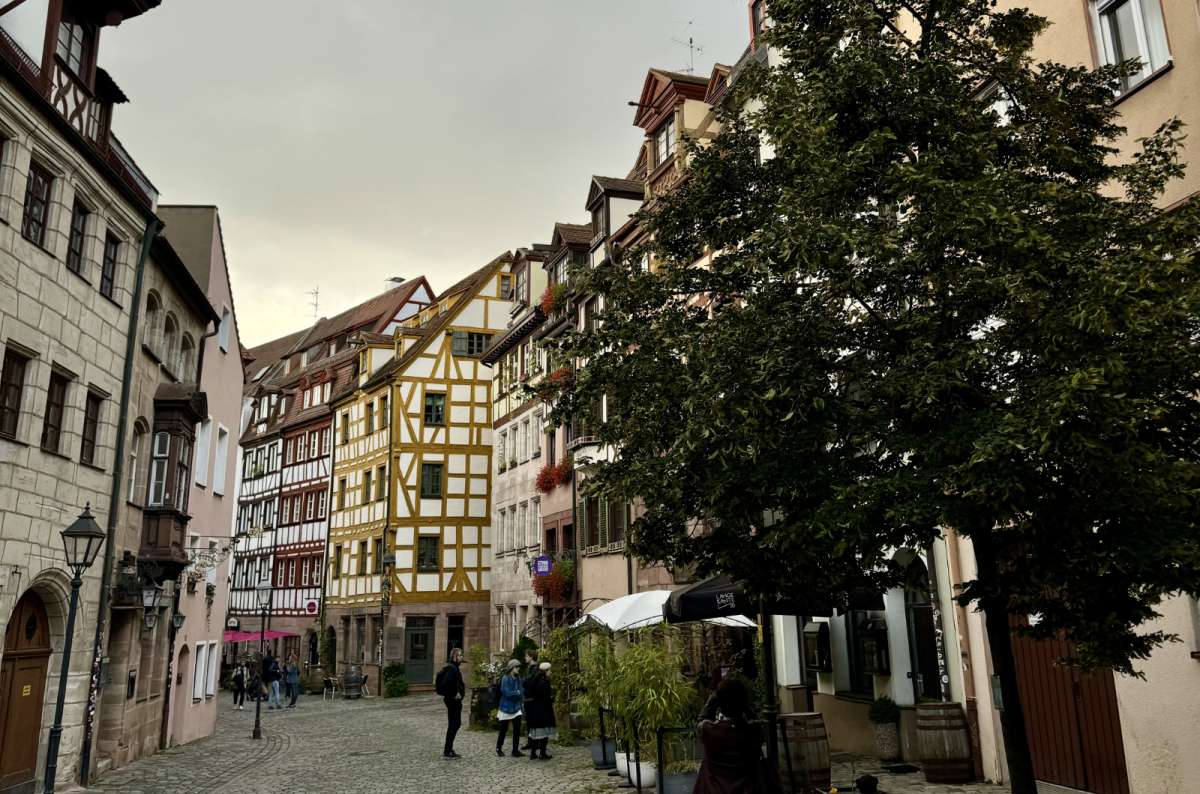
Weissgerbergasse feels almost aggressively postcard-perfect
From the castle area, walk down toward Weissgerbergasse. This is the pretty street people expect from Nuremberg: half-timbered houses, narrow perspective, and that “yes, this is the old Germany image” feeling.
Yes, it is popular. No, that does not automatically make it bad. It is still worth walking through, preferably before the street is full of people photographing the same angle.
Continue toward Hauptmarkt. This is the central square and a useful orientation point for the old town. Frauenkirche sits right on the square, and even if you only see the exterior, it helps connect the old town route.
If you visit in December, this area becomes one of Germany’s most famous Christmas market settings. Outside Christmas, it is still a practical central stop rather than a place where you need to linger for hours.
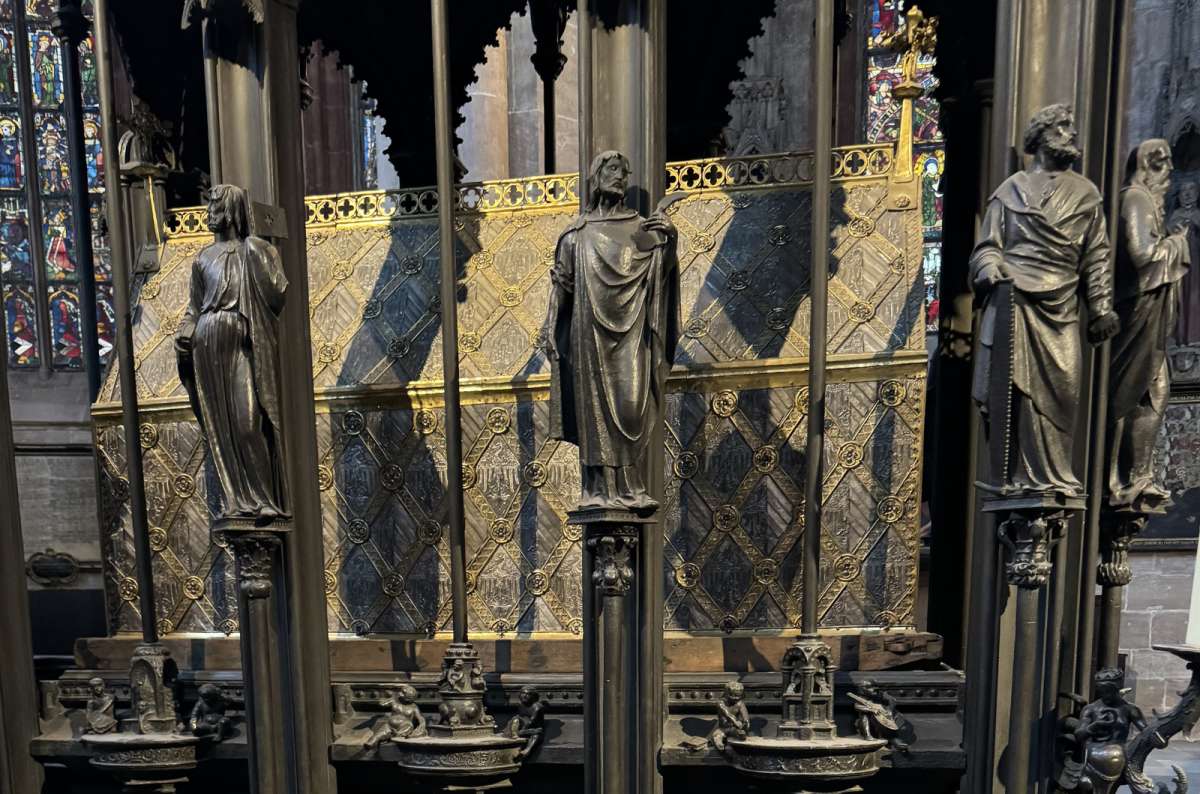
Nuremberg’s churches give the old town much more weight than just “cute medieval streets”
Nuremberg’s two major churches are worth including because they give the old town more weight than just “pretty streets.” St. Sebald is closer to the castle side; St. Lorenz anchors the other side of the old town.
You do not need a deep church study unless that is your thing. Step inside if open, look properly, and keep moving. The point of day 7 is the old-town flow, not exhausting yourself before the historically heavier morning tomorrow.
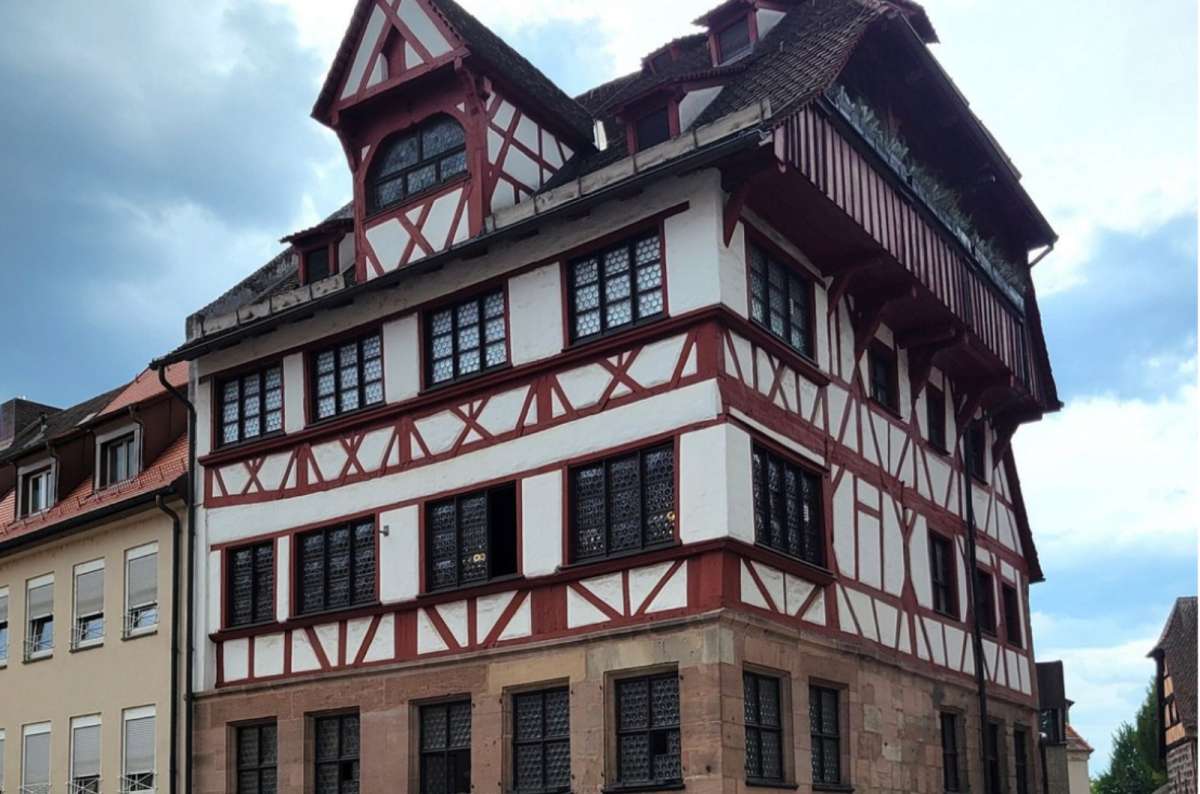
The streets around Albrecht Dürer House are exactly why wandering Nuremberg works so well
Albrecht Dürer House is worth at least seeing from the outside, especially because it sits naturally near the castle route. If you like art history or want a more specific Nuremberg stop, go in.
Otherwise, the exterior and surrounding streets are enough for a first visit. Not every good stop has to become a full museum visit.
Nuremberg is not just a pretty Bavaria stop. It is one of the smartest bridges between Berlin-style historical weight and the alpine/castle section of the trip.
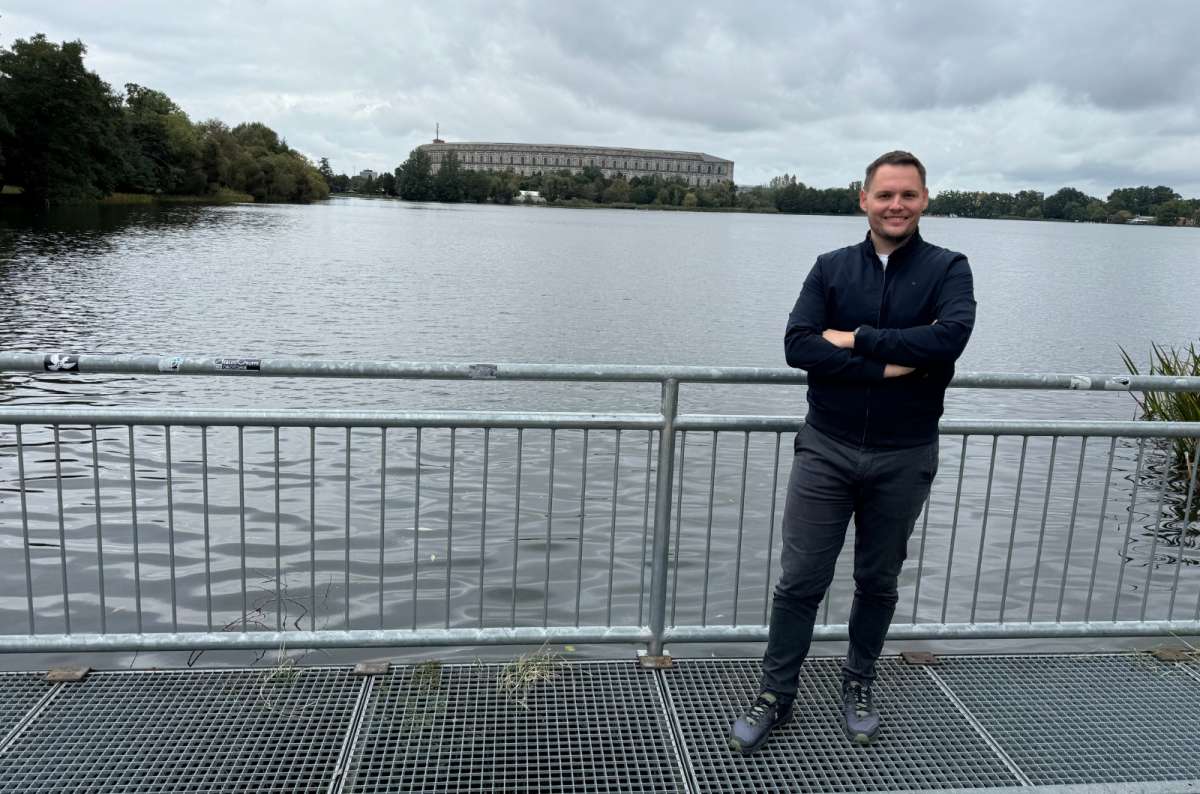
The scale of the Rally Grounds is what makes the site genuinely unsettling
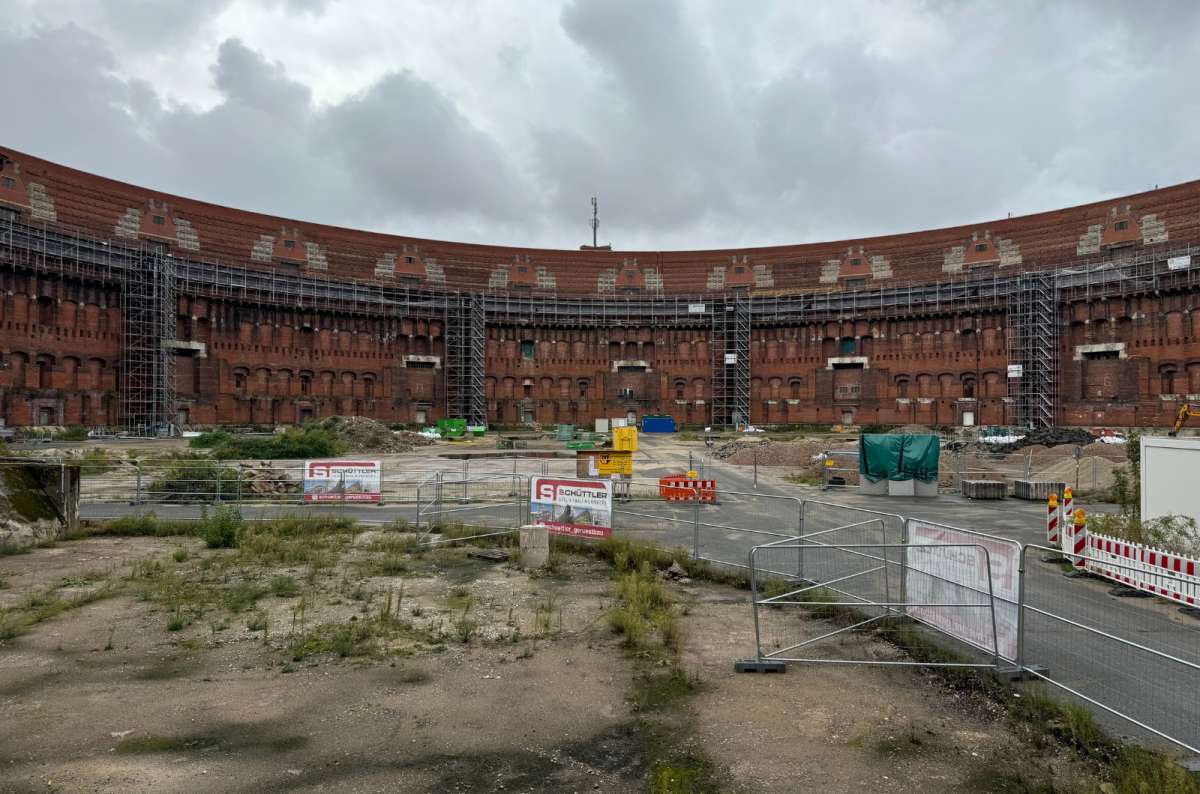
You can just tell by looking at it that the Nazi Rally grounds are a crazy place to visit
Day 8 is packed, but it has a logic. Do the important Nazi history sites in Nuremberg in the morning, then move south so day 9 can be fully alpine.
This is also the best point to switch from trains to a rental car if you want the easiest Bavaria section. You can do it by train, but Bavaria rewards flexibility. Public transport works until it suddenly eats your day.
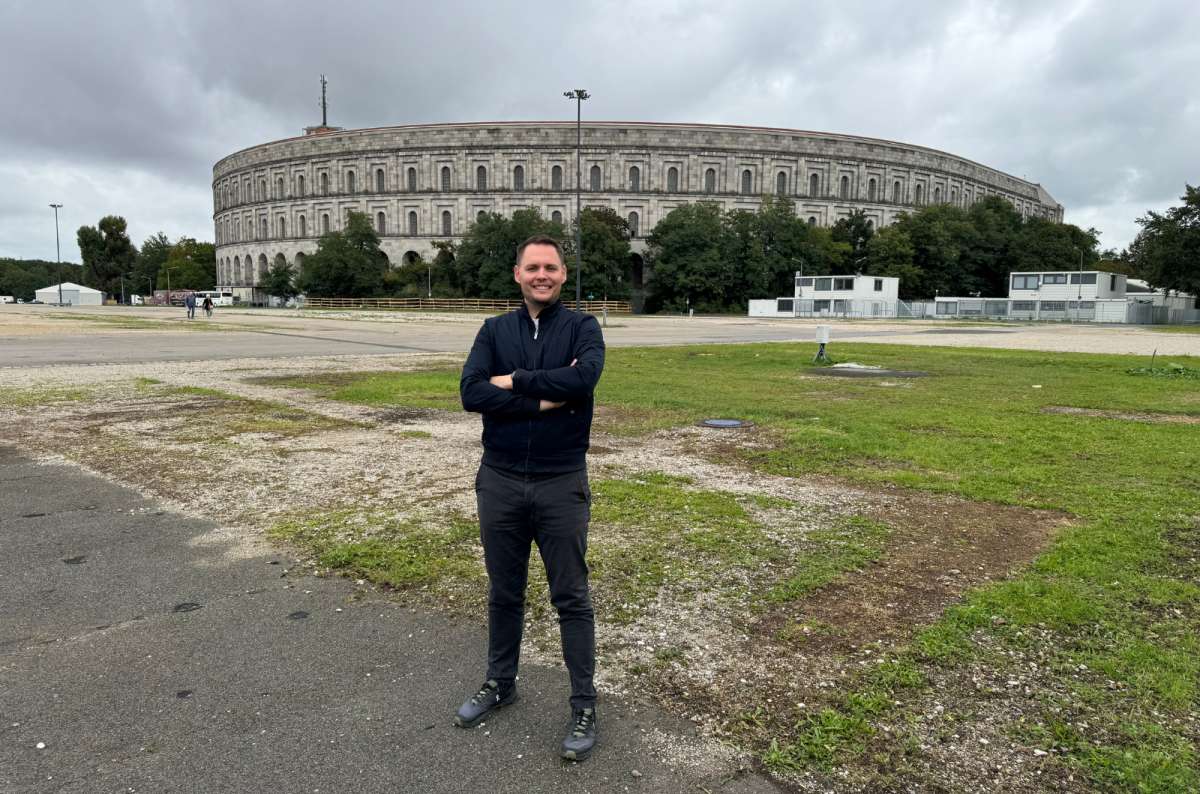
Despite its current stay, it was a sight to behold
Start with the Nazi Party Rally Grounds area. It is not a cheerful stop, obviously, but it is important. Nuremberg’s Nazi history is not some random add-on. If you are already here, skipping it would be strange. I’d go as far as to call it one of the most important things to do in Nuremberg.
What makes the Rally Grounds powerful is scale. This was not subtle political symbolism. It was architecture, propaganda, crowd control, intimidation, and spectacle turned into physical space.
Do not treat it like a quick “we saw the place” stop. Walk enough of the area to understand how oversized and deliberate it was. This is one of those sites where the empty space itself is part of the point.
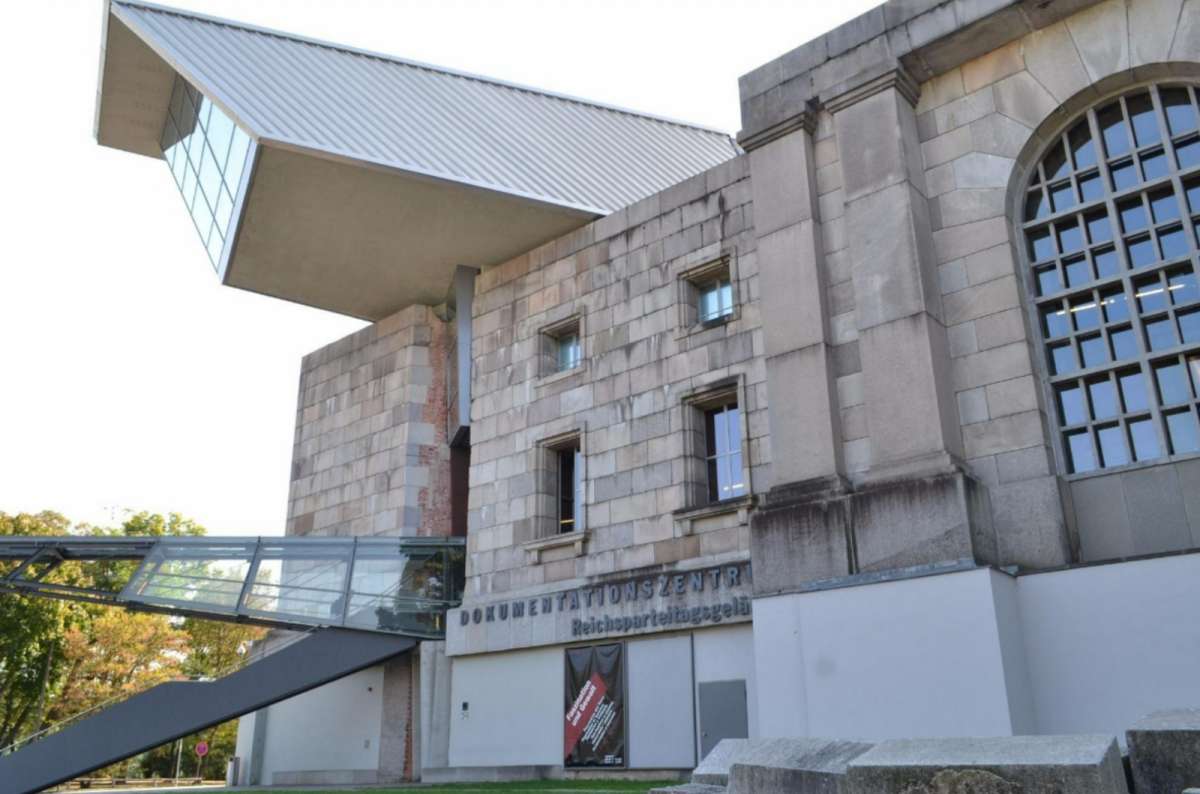
Nuremberg does not let history become background decoration, and honestly, good
If the Documentation Center is open and fits your timing, include it. This is where you get the context that the outdoor site alone cannot fully provide.
The key thing here is not collecting another WWII museum. It is connecting Nuremberg’s medieval city image with the city’s role in Nazi propaganda. That contrast is exactly why Nuremberg belongs in this itinerary.
If timing is tight, prioritize quality over completion. A focused visit to one strong history site is better than rushing through three and remembering only that you were late for your train.
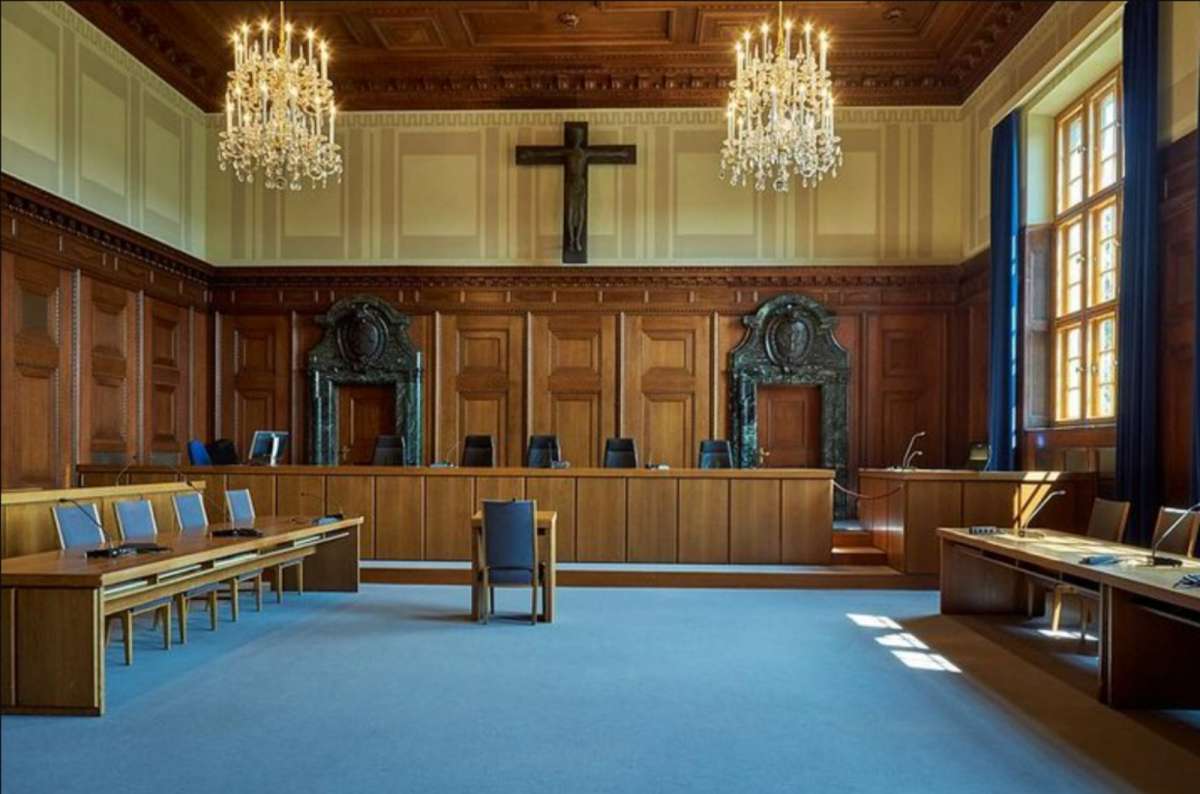
Courtroom 600 completely changes the tone of the Nuremberg history experience
The Nuremberg Trials Memorial / Courtroom 600 is another major history stop. If you care about WWII history, this is worth making time for.
This site changes the angle of the day. The Rally Grounds are about propaganda and power. The Trials Memorial is about aftermath, accountability, and how the world tried to respond legally to what happened.
But be realistic. If this morning starts feeling too stressful, cut either the Documentation Center or the Trials Memorial. Do not cut both and pretend you “did Nuremberg history” because you saw the castle yesterday.
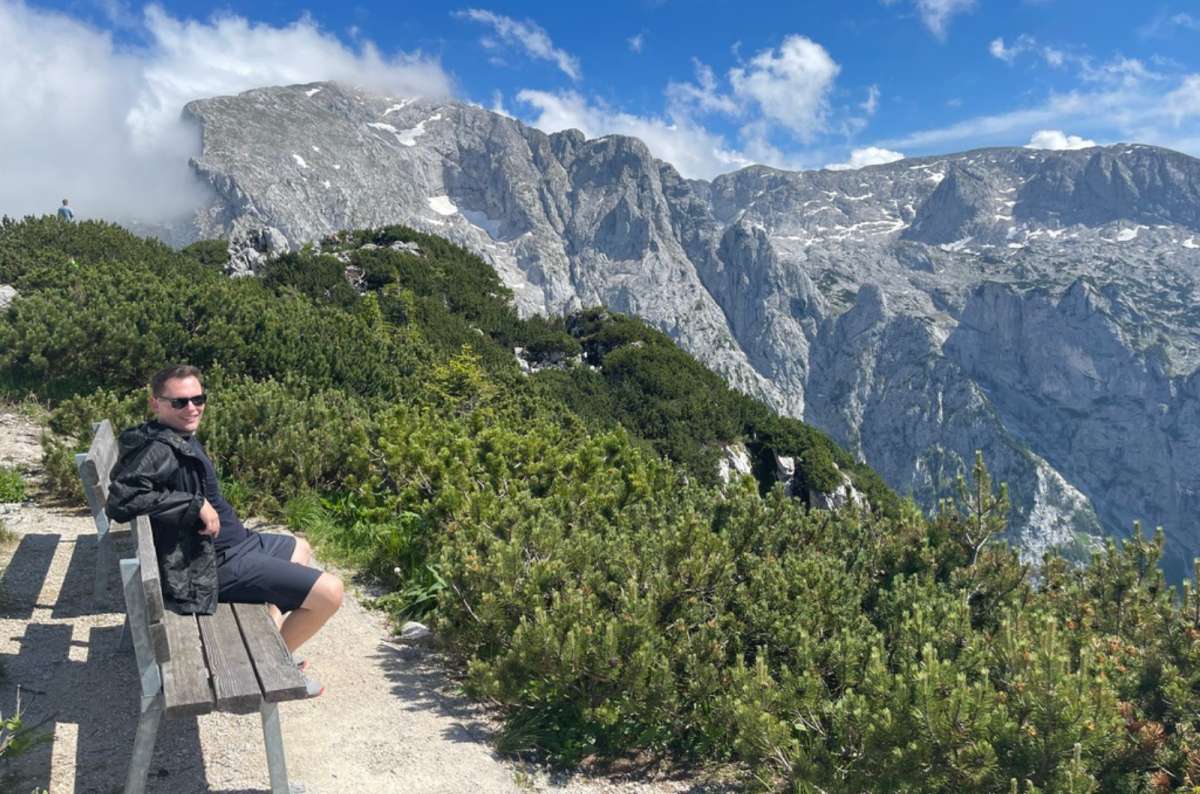
Berchtesgaden feels like Germany is rewarding you for surviving Deutsche Bahn
In the afternoon, travel south toward Berchtesgaden.
You have three realistic options:
I prefer the compromise. German city-to-city trains are useful. Bavarian nature and castle logistics are much easier when you control your timing.
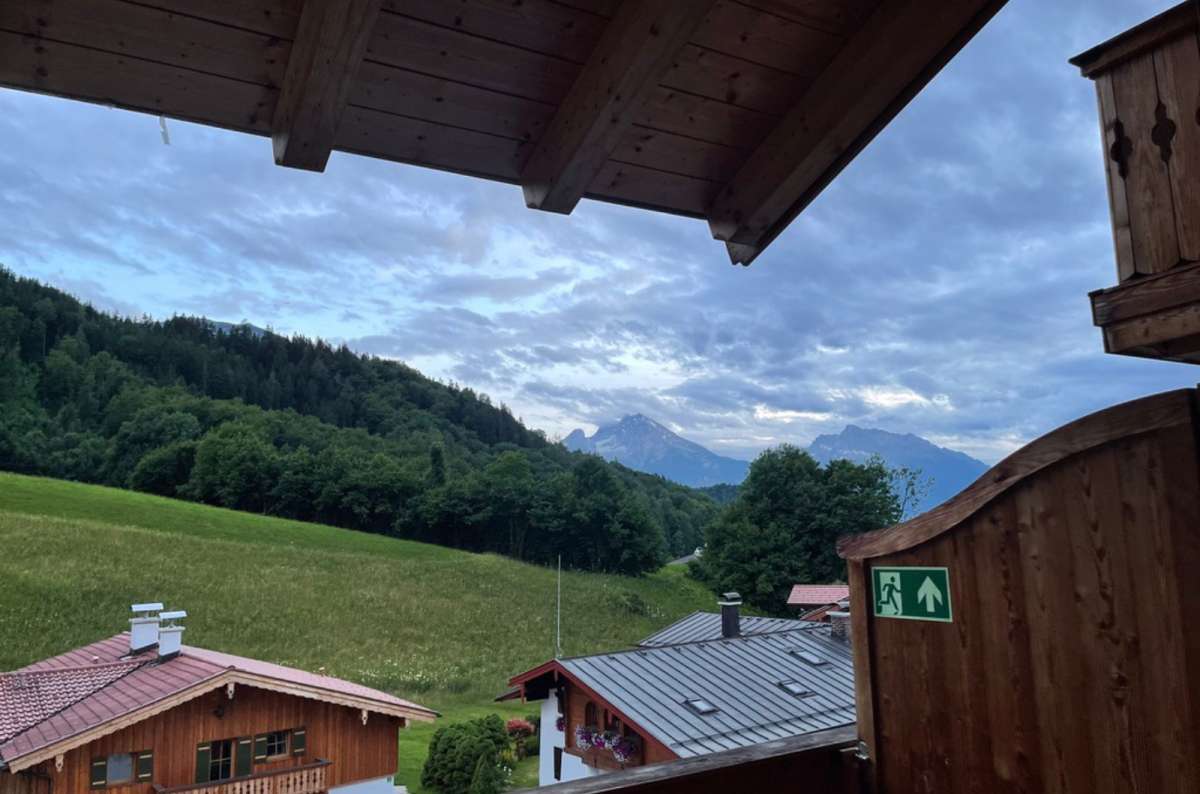
Berchtesgaden provides the perfect morning view
This is not the day to add extra scenic stops unless you are moving faster than expected. The real goal is simple: get to Berchtesgaden, sleep there, and wake up near the mountains.
How much time you need: Half day in Nuremberg + travel afternoon.
My verdict: This day is tight. Arriving in Berchtesgaden at night is not glamorous, especially if you are tired, but waking up in the Alps is the reward.
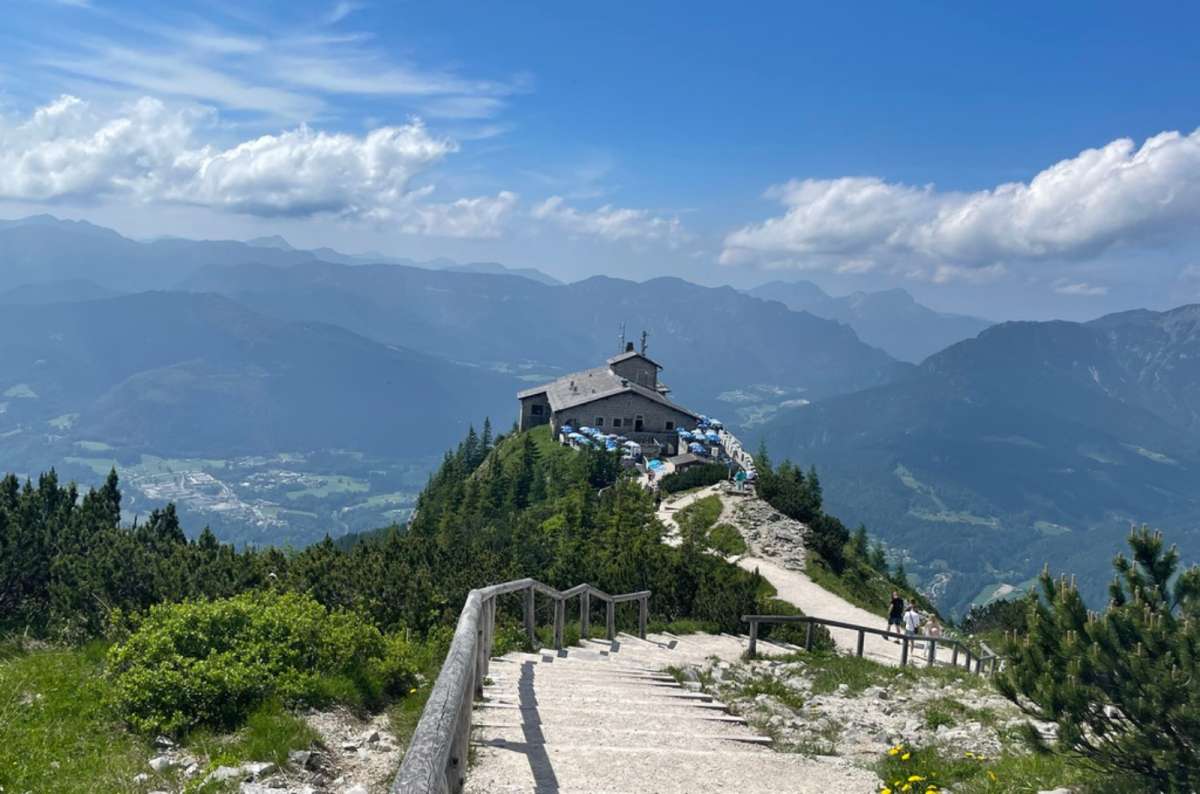
Eagle’s Nest combines incredible scenery with some deeply uncomfortable history
This is the Alps day, and frankly, the itinerary needs it. After several days of cities, museums, and heavy history, Berchtesgaden gives you mountains, lakes, cliffs, and the kind of scenery that makes people suddenly forgive Germany for train delays.
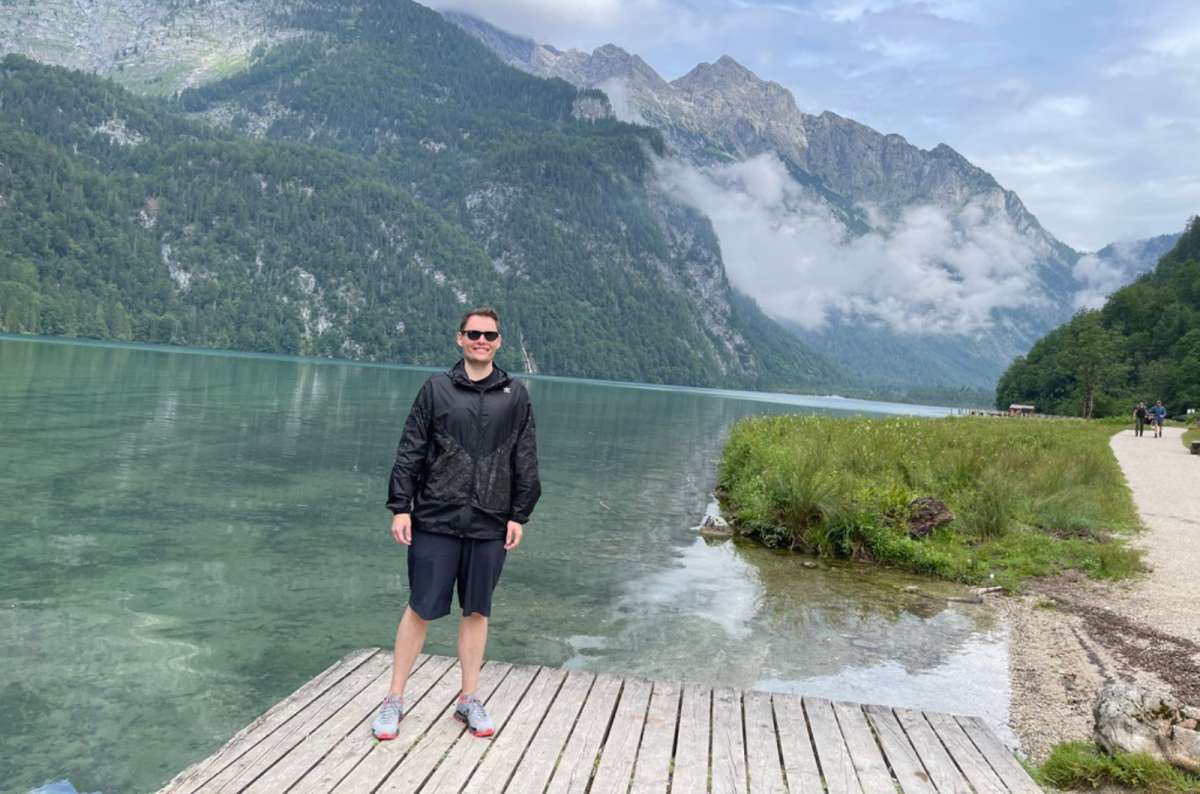
Königssee somehow looks unreal even on a cloudy day, which honestly feels unfair to most other lakes
For most first-timers, I would choose Königssee + Obersee as the main plan.
Königssee is one of Bavaria’s strongest lake experiences, and it is a better nature choice than trying to turn the day into a frantic highlights buffet. Take the boat, stop at St. Bartholomä, and continue toward Obersee if the boat schedule, season, and weather allow.
The boat ride is not just transport. It is part of the visit. The lake is narrow, clean-looking, steep-sided, and very different from the city-heavy first part of this Germany itinerary.
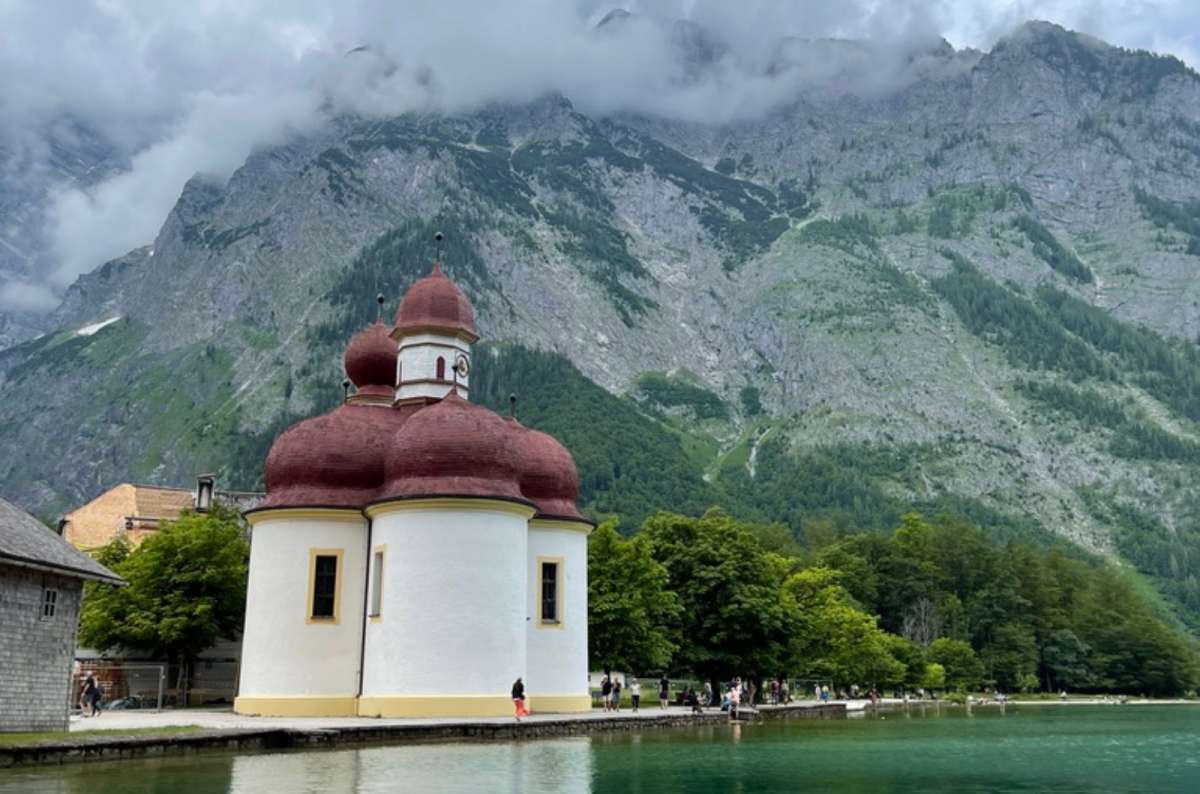
St. Bartholomä is adorable, but let’s be real—this is not what I came here for
St. Bartholomä is the classic stop on Königssee. The church with the red domes is the obvious photo, but the setting is the real reason to stop: lake, mountains, silence if you catch the timing right, and the sense that you have finally reached the scenic Bavaria part of the trip.
Do not rush off the boat, take one photo, and leave. Walk a little. Let the place work. This day is supposed to feel different from Berlin and Nuremberg.
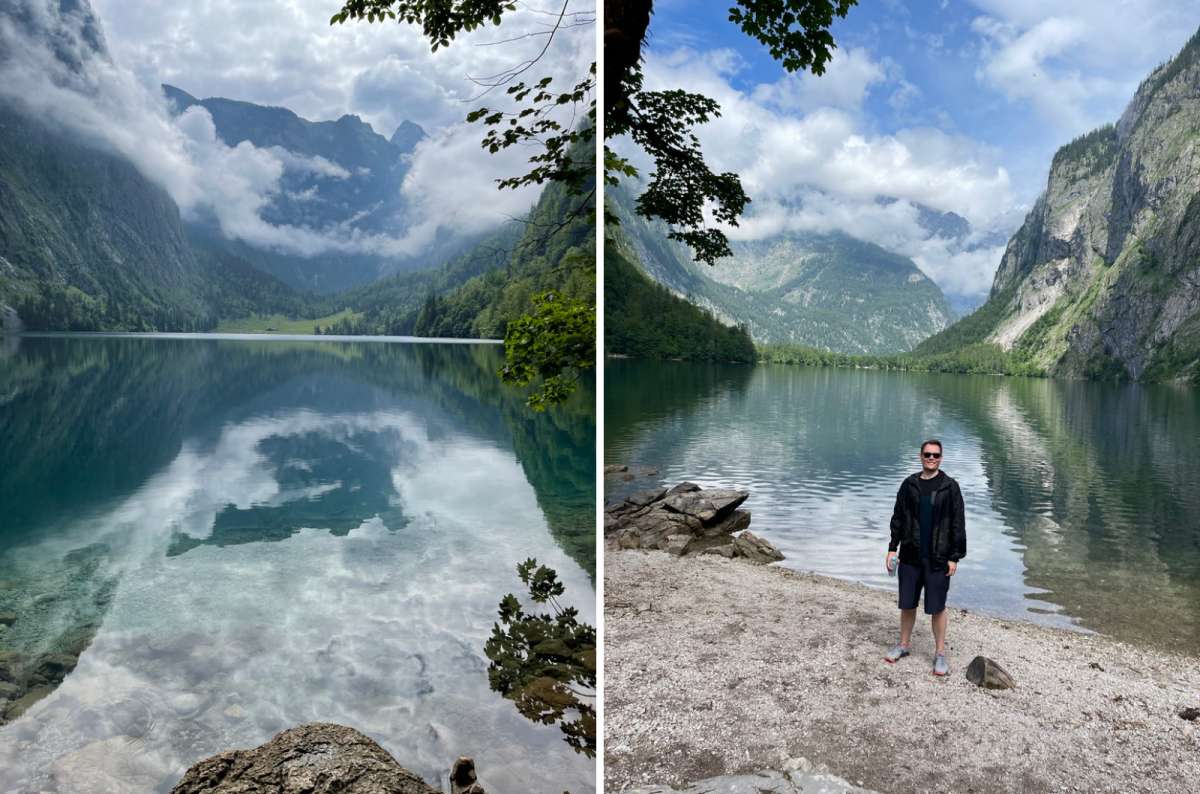
Obersee is yet another one of the heavenly lakes in Berchtesgaden
If the boat schedule, season, and weather cooperate, continue toward Obersee. This is the stronger nature experience and the part I would prioritize if you came to Berchtesgaden for scenery.
The walk is not complicated, but logistics matter. Boat times matter. Weather matters. Season matters. Do not arrive lazily at noon and then act personally betrayed by reality.
If Obersee is not practical, do not force it. A good Königssee day is still a good day.
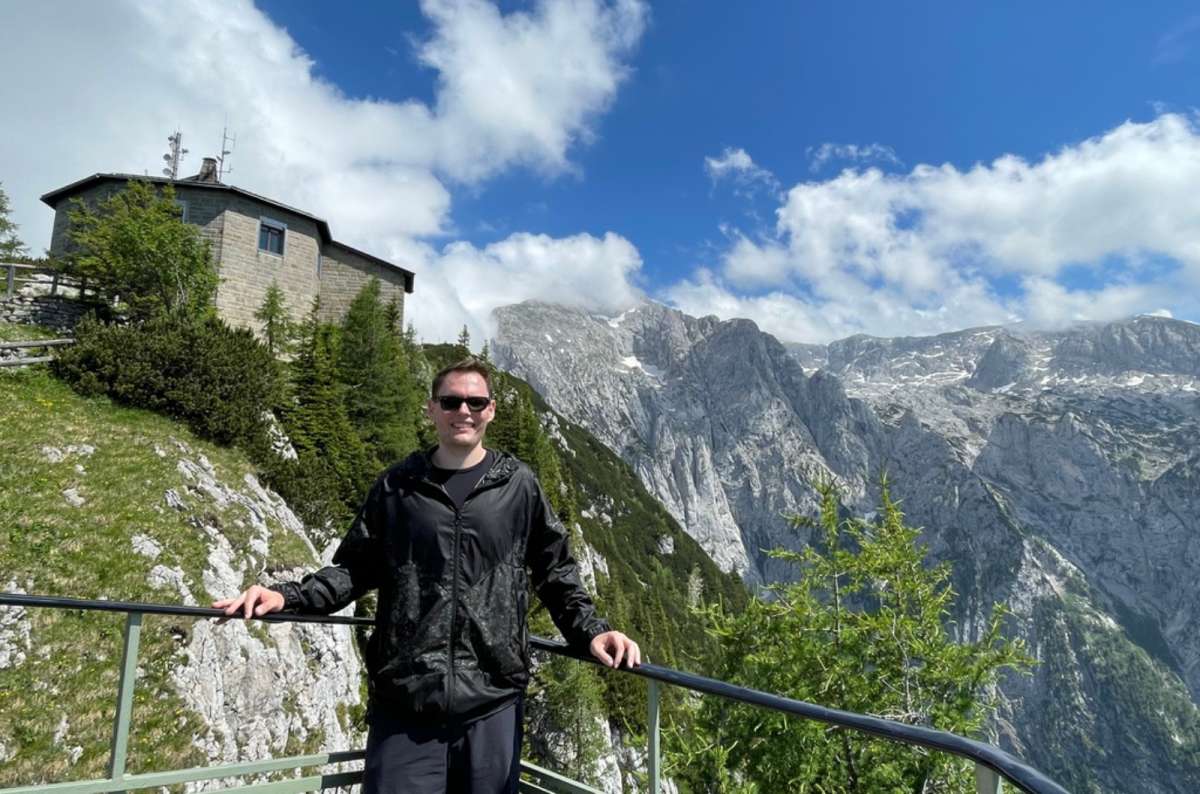
This place combines my two favorite things—history and hiking, impossible not to include in my itinerary
If the weather is clear and WWII history is a major priority, choose Eagle’s Nest instead or combine it carefully with a shorter Berchtesgaden plan.
Eagle’s Nest is seasonal and weather-dependent, so this is not something I would treat casually. If clouds are sitting low, the view-based appeal drops fast.
The history is interesting, the setting is dramatic, and the access logistics are part of the experience. But I would not force it on a bad-weather day just because it is famous.
Also, take the place seriously.It is not a “cool Hitler house.” It is a historically loaded mountain site with excellent views and an uncomfortable past. That discomfort is part of why it matters. Book a guided tour for the full experience.
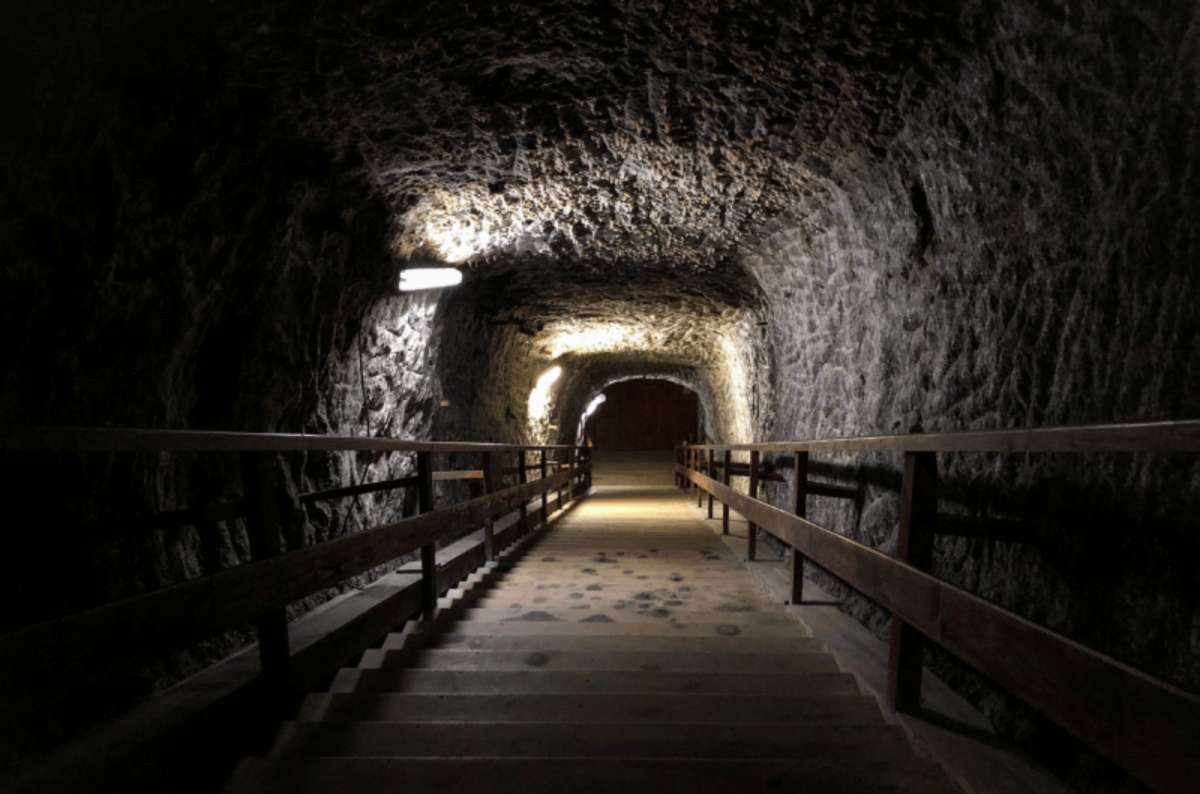
You can very easily hide in the Berchtesgaden Salt Mines if the weather chooses to annoy you
If the weather turns ugly, consider:
This is Germany, not a motivational poster. Sometimes the mountains are covered in clouds and you need a backup.
Berchtesgaden is the strongest nature stop on this itinerary. If you cut it, the trip becomes much more city-heavy, which may be fine — but do it knowingly.
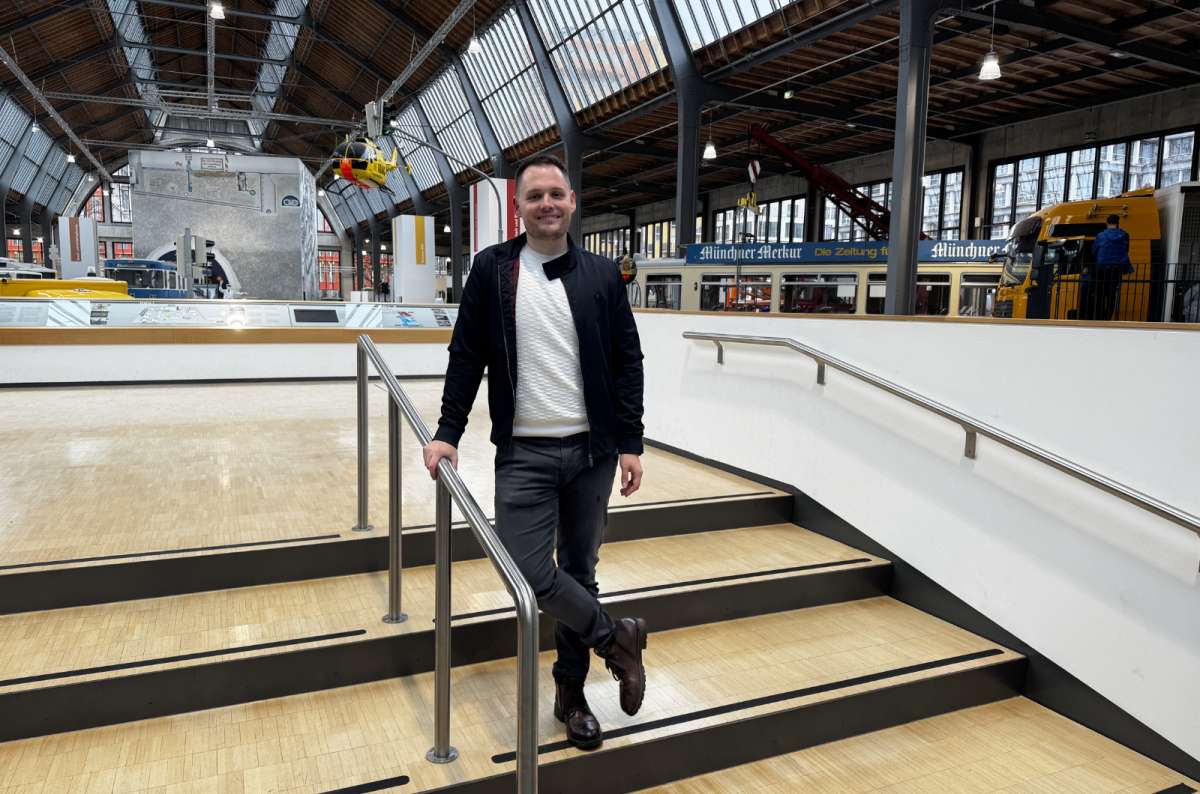
The last train ride – the happiness of goodbyes to Deutsche Bahn
End the itinerary with Neuschwanstein Castle because yes, it is famous, crowded, and overused in Germany marketing — and it is still worth seeing on a first trip.
The trick is managing expectations. Neuschwanstein is worth it for the exterior, setting, mountain backdrop, Marienbrücke viewpoint, and the ridiculous fairytale energy. The interior is not the main reason I would go.
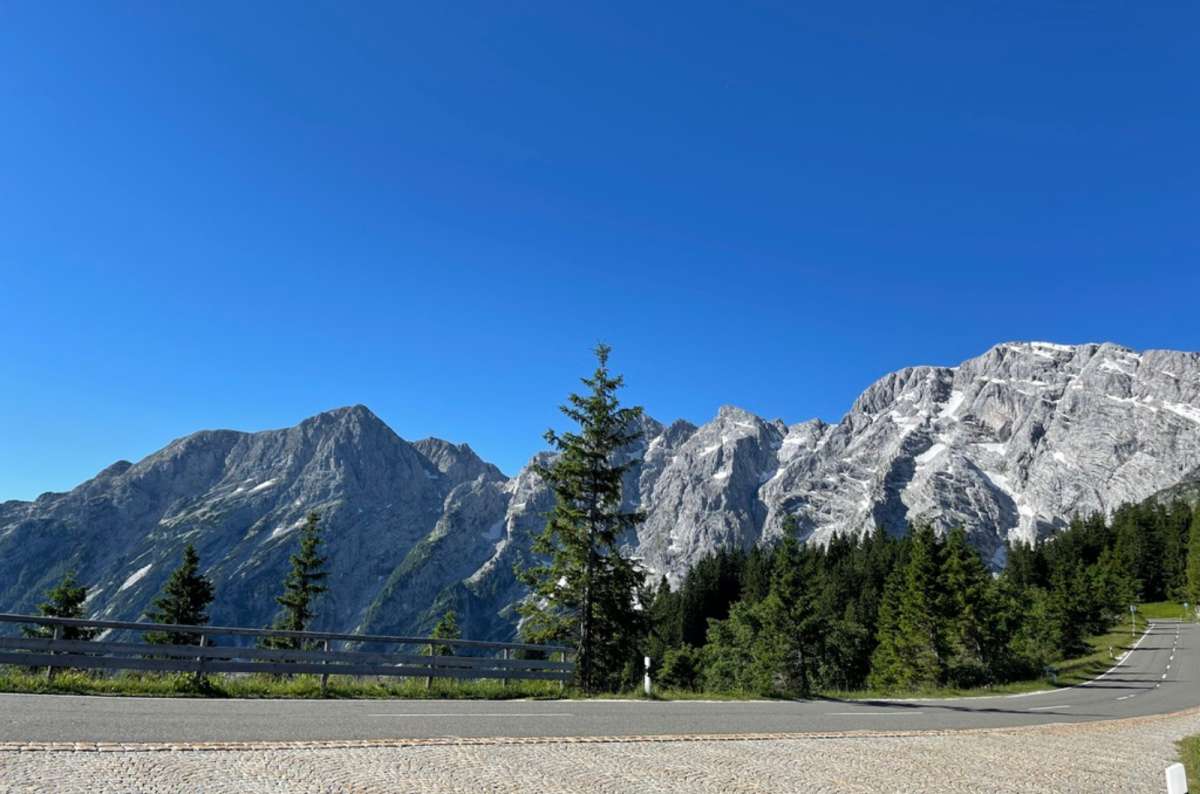
These views make driving around Berchtesgaden so worth it
If you are coming from Berchtesgaden, this is a long travel day. A rental car helps a lot because you can control timing and stops.
Leave early. Parking around Hohenschwangau and Neuschwanstein gets annoying, and crowds do not improve the experience. Funny how that works.
If this feels too much for one day, the smoother version is to sleep closer to Füssen, Garmisch-Partenkirchen, or somewhere west of Berchtesgaden after day 9. That makes day 10 less brutal. The itinerary still works either way, but your energy level will notice the difference.
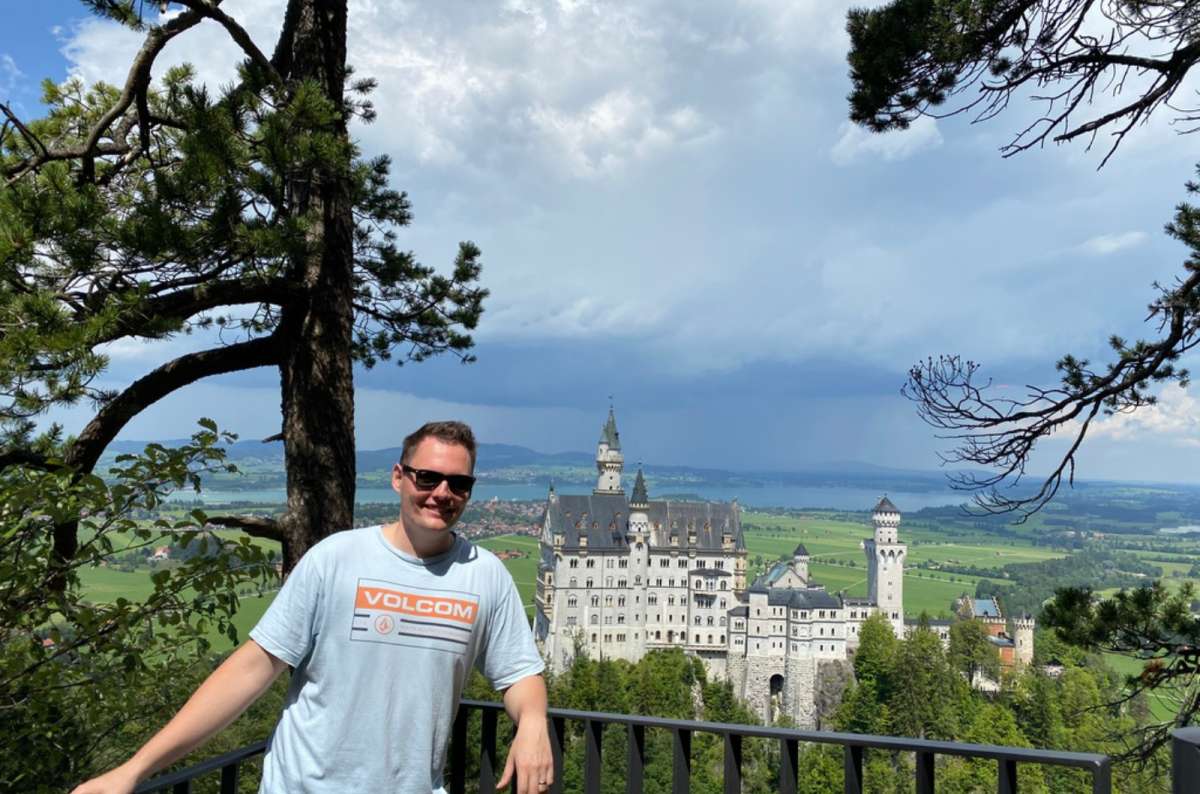
Neuschwanstein is overhyped, overcrowded, and somehow still absolutely worth seeing once
If you want to go inside the castle, book tickets ahead. If you mostly care about the exterior and views, plan your day around the viewpoints instead.
The interior tour is fine, but short and controlled. You follow the route, listen, look, and move on. It is not the kind of castle visit where you wander freely and pretend to be royalty for two hours.
The exterior is the real event. The castle looks best when you see it in the landscape: forest, mountains, cliffs, and the slightly unreal feeling that Bavaria decided subtlety was unnecessary that day.
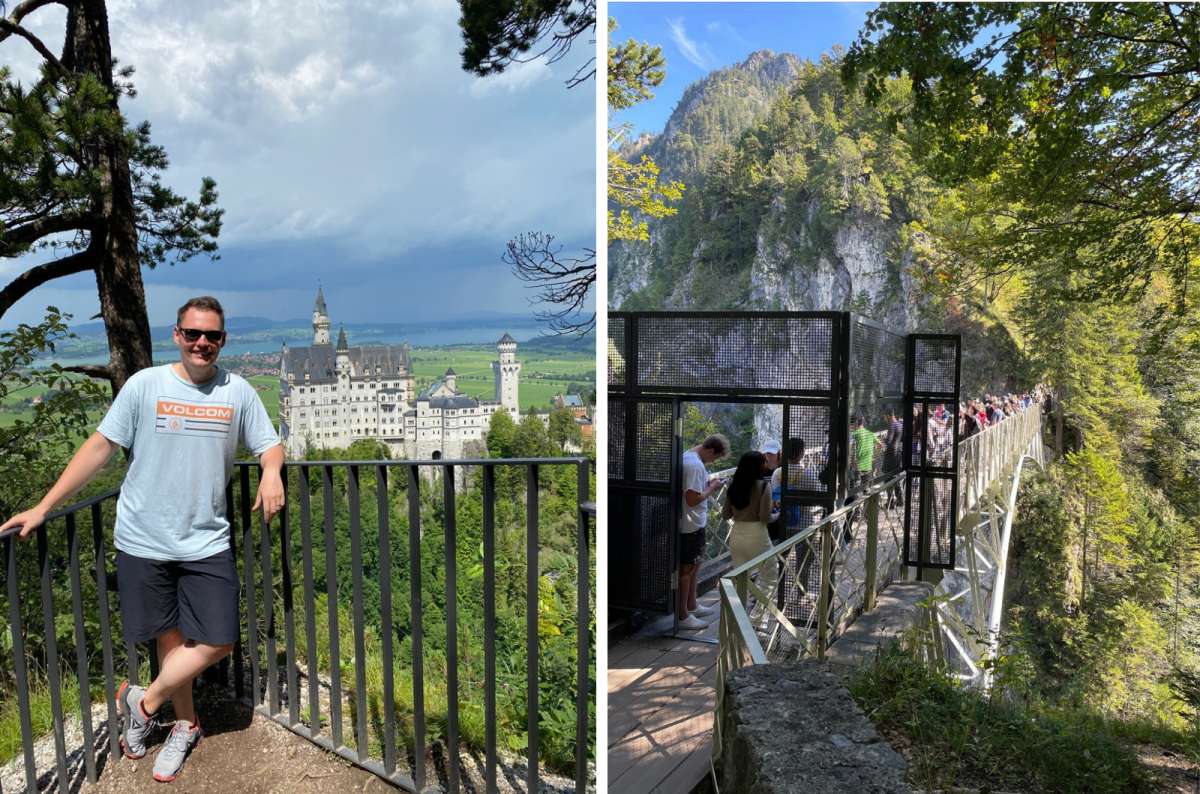
Munich works best here as a relaxed ending, not another city you aggressively try to complete
Marienbrücke is the famous viewpoint, and for a reason. This is where the castle looks like the version people imagine before visiting Germany.
Check whether the bridge is open before building your emotional stability around it. Weather, maintenance, and crowd control can affect access. If it is open, go early if possible. The view is excellent, but the bridge can feel crowded fast.
If Marienbrücke is closed, the visit is not ruined. You still have other views and the castle exterior. Do not let one bridge decide the success of your final day.
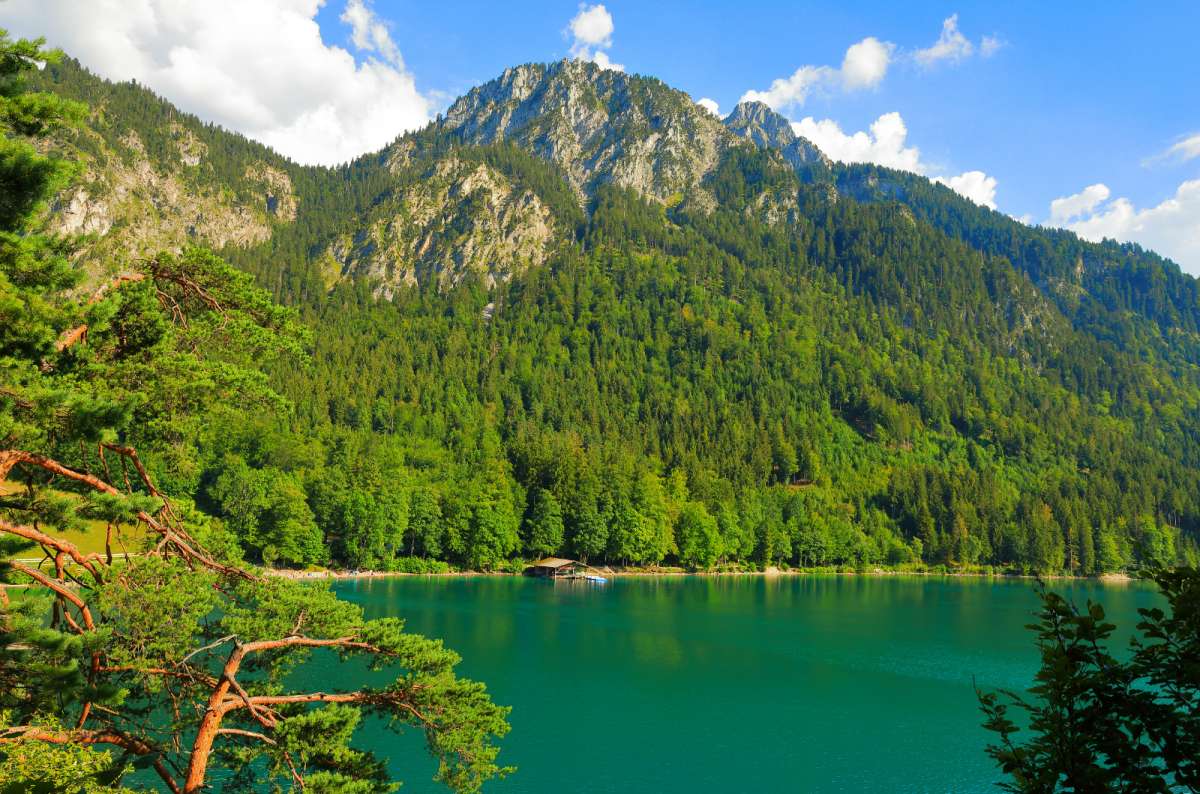
Alpsee is the perfect way to slow the day down before heading toward Munich
Alpsee is the lake near Hohenschwangau, and it is a good way to make this day feel less like “castle, crowd, car, airport.” If the weather is decent and you have time, walk part of the lakeshore.
This is also useful if you skip the Neuschwanstein interior. Instead of spending that time inside the castle, use it for the viewpoints and Alpsee. Honestly, that is the version I prefer.
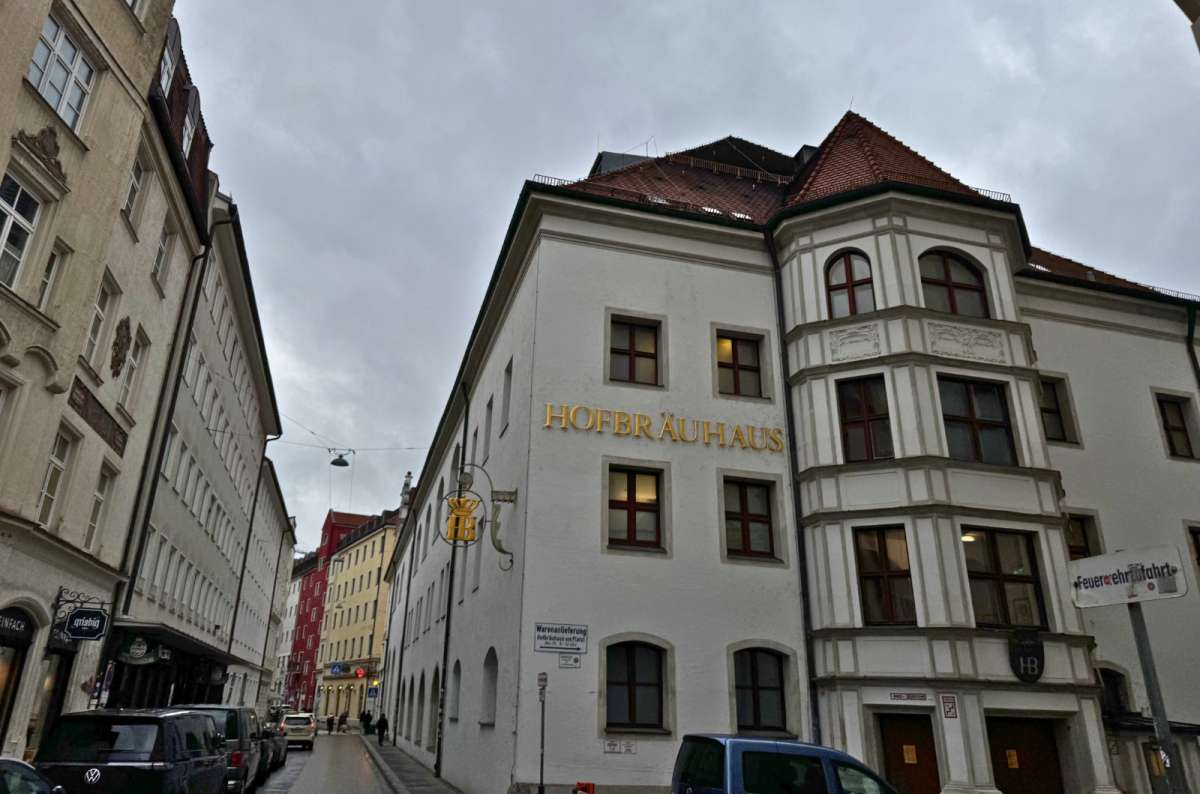
Take some extra time to wander the streets of Munich and enjoy the city
After Neuschwanstein and Alpsee, continue to Munich for your final night or departure.
Do not over-plan Munich on this itinerary. Munich is mostly serving as the practical exit point here. If your flight is the next morning, stay somewhere convenient. If you have an extra evening, walk the center, see Marienplatz, and keep it simple.
If you want Munich properly, add another day. This 10-day Germany itinerary already has enough movement. Trying to “do Munich” at the end of day 10 is how sightseeing turns into punishment.
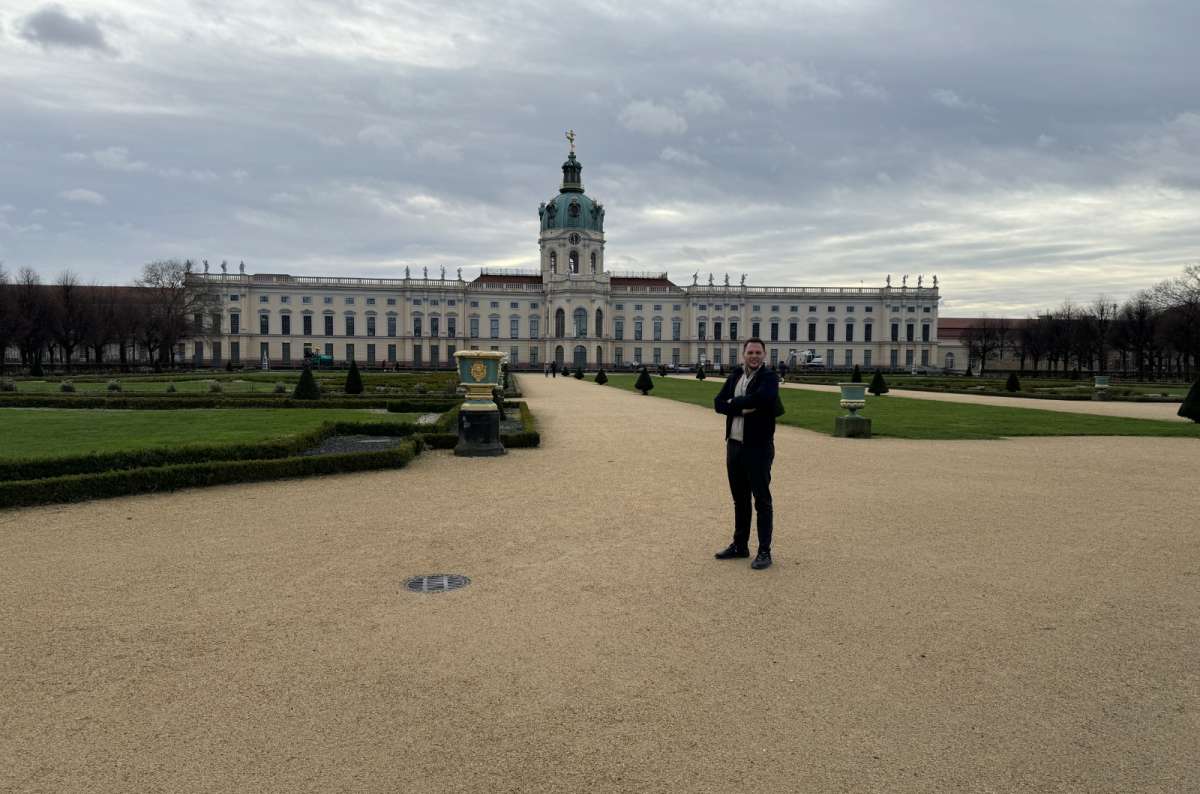
Given the size of Germany, it would be impossible to include everything, unfortunately Charlottenburg didn’t make the cut
This route is strong, but it is still a 10-day itinerary through a large country. You have to make choices.
I would skip Cologne, the Rhine Valley, the Black Forest, Rothenburg, and Frankfurt on this specific route. Not because they are bad, but because adding them would make the itinerary worse. Germany punishes greed.
I would also not add more small towns just because they are “on the way.” On paper, that sounds efficient. In real life, it becomes parking, luggage, check-in times, and a suspicious amount of your trip spent looking for toilets.
If you have less energy, cut Dresden or shorten Hamburg. If you want more nature, cut Dresden and add another night in Berchtesgaden or near Garmisch. If you want more Berlin, remove Nuremberg or Dresden, but do it knowingly.
The route I would protect most is Hamburg → Berlin → Nuremberg → Berchtesgaden / Neuschwanstein. That gives you the strongest city, history, and Bavaria contrast.
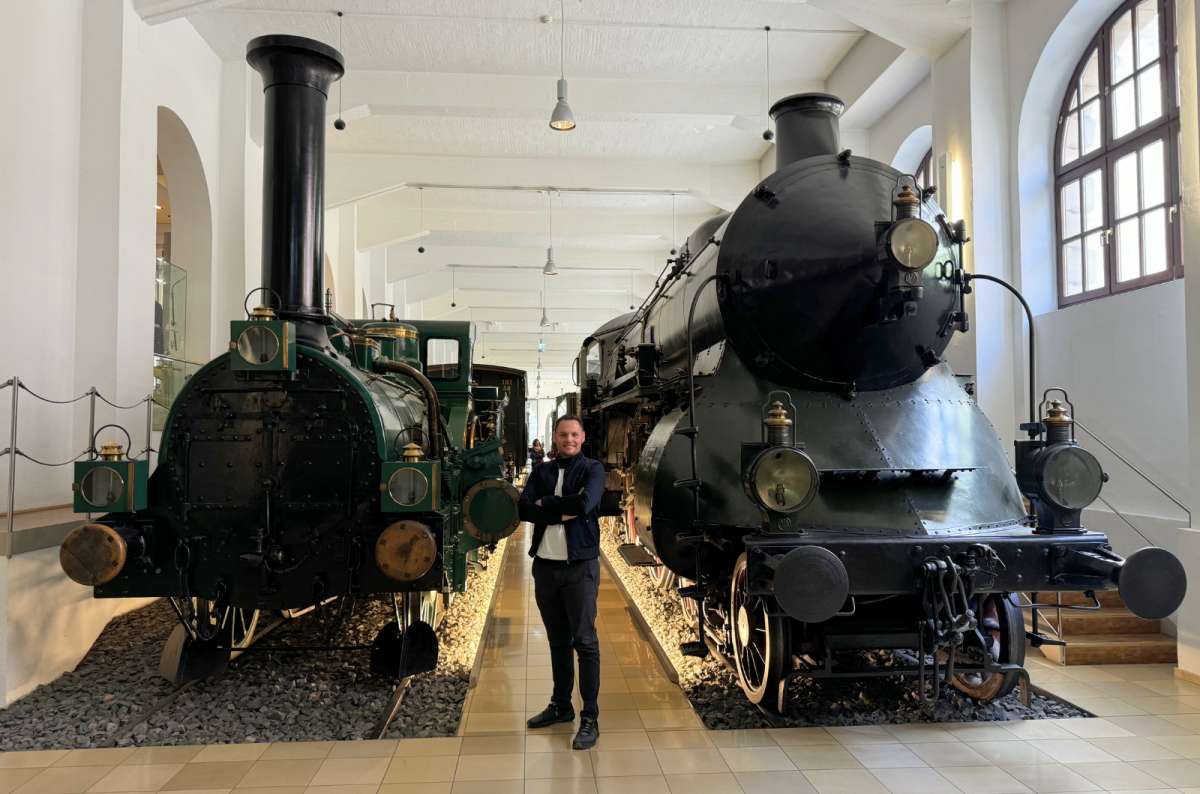
I think all of my favorite museums may be a bit overwhelming for first-time visitors @ Railway Museum
Yes, I always felt it is overall the best length for any holiday. You get a proper feel for the country, but you will not get bored by it. And if you don’t like it, you don’t have to stay for three weeks or so.
For Germany, it is especially true because this is not a relaxing slow-travel itinerary. It is a practical first-timer route for people who want to see a lot without turning the map into complete nonsense.
The key is that the route moves in one direction. Hamburg to Berlin, Berlin to Dresden, Dresden to Nuremberg, then south into Bavaria. That is why it works. You are not bouncing around Germany just because every city looked interesting at midnight while planning.
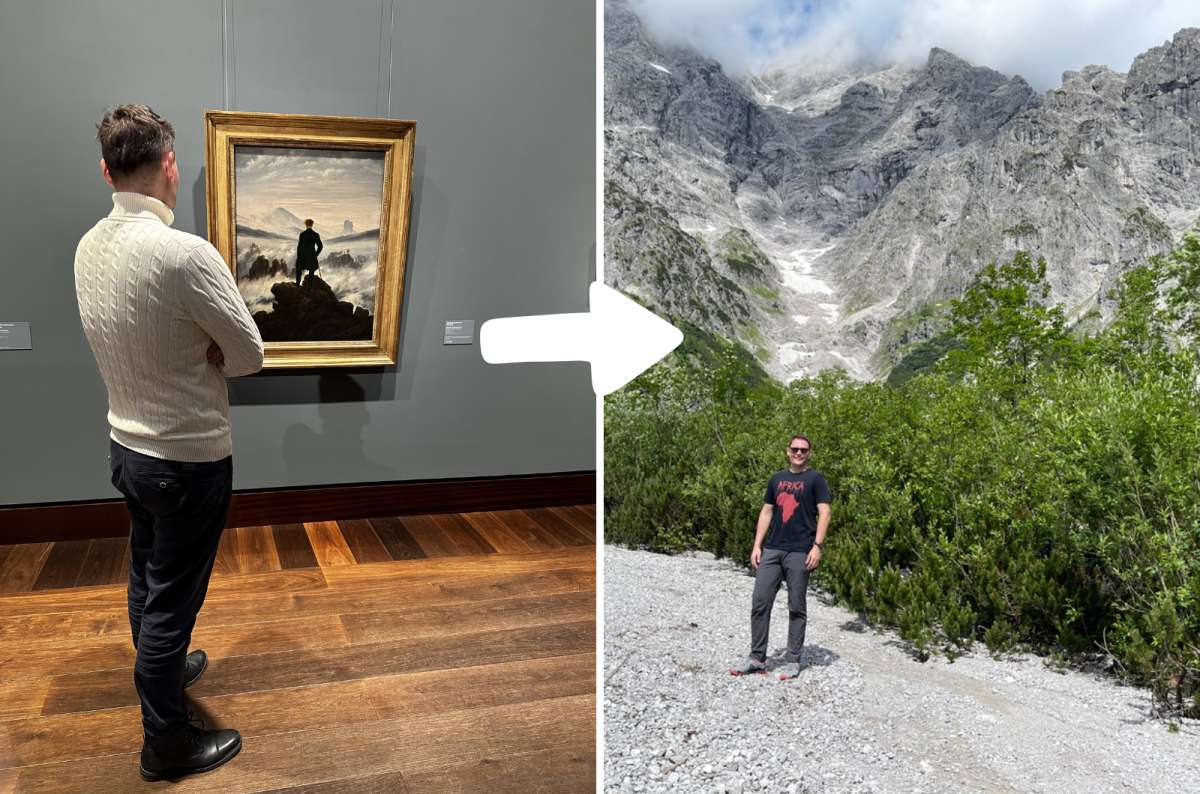
If you follow the order of the itinerary, you go from looking at the Wanderer über dem Nebelmeer to literally being the Wanderer über dem Nebelmeer
If I had 10 days in Germany again for a first-time route, I would do this version: two days in Hamburg, three in Berlin, one in Dresden, one and a half in Nuremberg, then Berchtesgaden, Neuschwanstein, and Munich.
The trip is city-heavy at first, then scenic at the end. That rhythm matters. By the time you reach Königssee and Neuschwanstein, the mountains actually feel like a reward instead of just another stop.
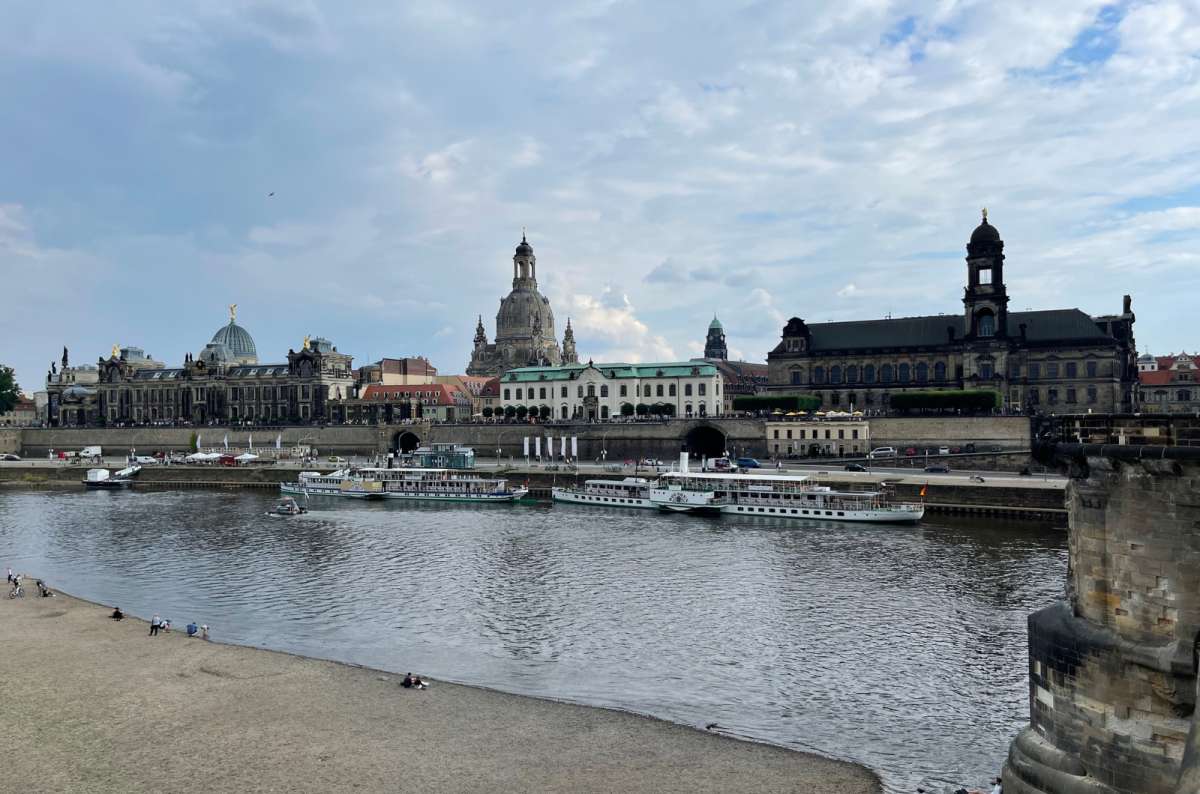
Pro tip: Dresden is awesome in the summer (the river won’t freeze your ears off)
This is the simple version of the whole trip:
Best for: First-timers who want cities, history, architecture, Alps, lakes, and one famous castle.
Not best for: Slow travelers, people who hate changing bases, or anyone who wants Germany to behave like a small country.
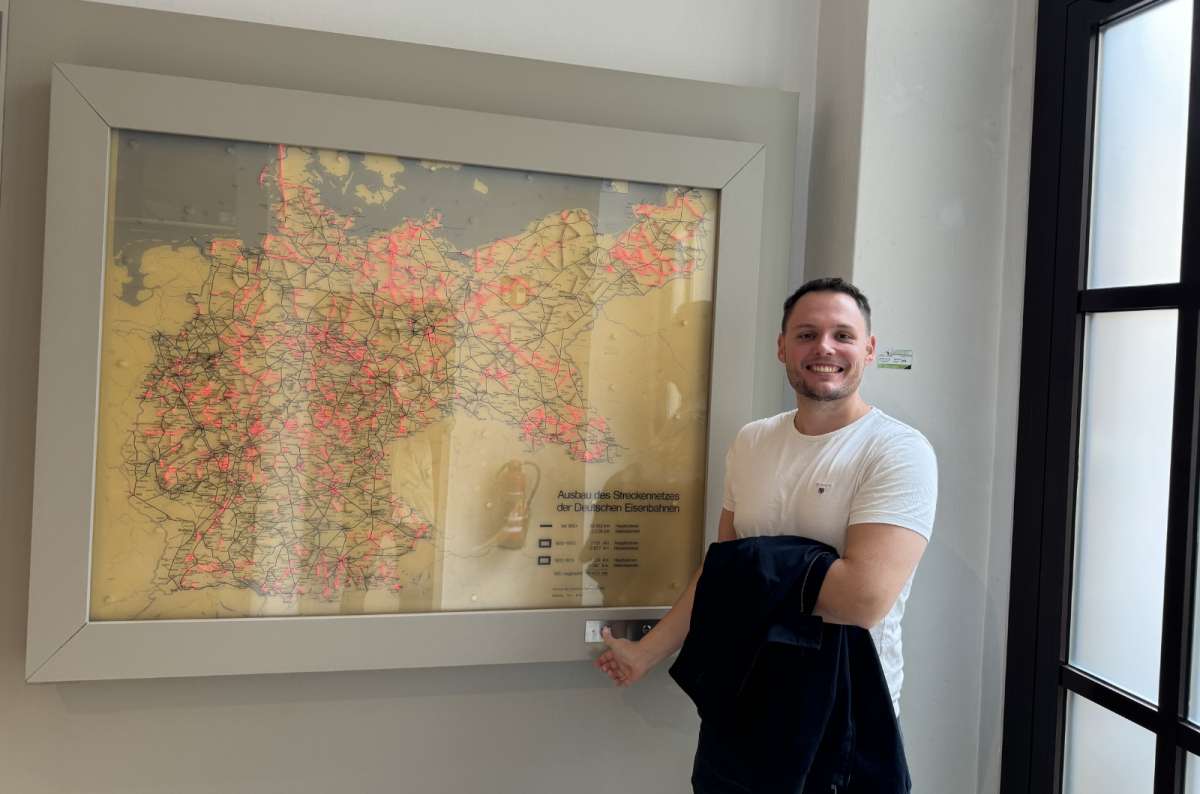
It tore my heart out to leave out so many great museums @ Railway Museum
Yes, 10 days is enough for a strong first Germany itinerary if you choose one logical route. This Hamburg to Munich route works because it moves north to south and avoids pointless backtracking. It is not enough to see all of Germany, but it is enough for a very good first trip.
Use trains for Hamburg, Berlin, Dresden, and Nuremberg. Rent a car for the Bavaria section if you want the easiest version of Berchtesgaden, Königssee, Neuschwanstein, Alpsee, and Munich. You can do parts by public transport, but the mountain and castle logistics are smoother with a car.
Yes, you can skip Hamburg if you only have 8–9 days or if your flights work better through Berlin. But Hamburg adds a different northern Germany mood: harbor, canals, brick warehouses, Miniatur Wunderland, and St. Pauli. I would keep it if you want the itinerary to feel more complete.
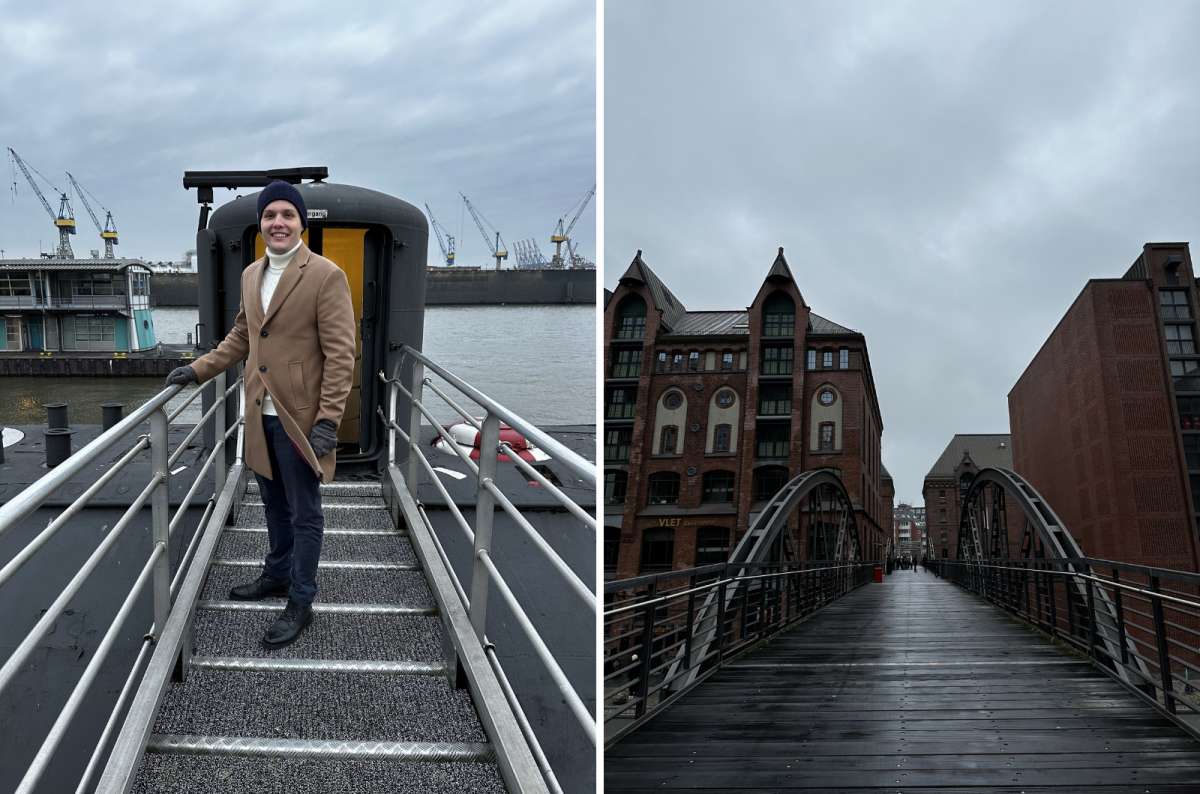
Hamburg may feel skippable, but no other brings industrial doom and gloom like Hamburg
Yes, Neuschwanstein is worth it on a first Germany trip, but mainly for the exterior, viewpoints, Marienbrücke, Alpsee, and the Bavarian setting. The interior tour is optional. If tickets are sold out, the day is not ruined.
Cut Dresden first if you want fewer hotel changes, or cut Hamburg if Bavaria and Berlin are your main priorities. I would not cut Berlin. I would also avoid cutting both Nuremberg history and Berchtesgaden, because those two stops give the itinerary much of its contrast.
This post contains affiliate links. If you make a booking through one of my links, I may earn a small commission—at no additional cost to you. Thank you for your support!
10-day Germany itinerary I would do all over again
Quick driving tips for Germany
Map of this 10-day Germany itinerary
Is 10 days enough for Germany?
Day 1: Arrive in Hamburg and start with Speicherstadt
Day 2: Explore Hamburg’s harbor, St. Pauli, and Miniatur Wunderland
Day 3: Classic sights in Berlin
Day 4: Berlin WWII and Cold War history
Day 5: Berlin museums and neighborhoods
Day 6: Take the train to Dresden and explore the old town
Day 7: Train to Nuremberg and explore the old town
Day 8: Nuremberg Nazi history, then travel to Berchtesgaden
Day 9: Berchtesgaden, Königssee, Obersee, or Eagle’s Nest
Day 10: Neuschwanstein Castle, Alpsee, and finish in Munich
What I would skip or change on this 10-day Germany itinerary
Is the 10-day Germany itinerary the best length for the first visit?


Hi, I’m Jan. I travel fast and intensely, whether I’m exploring the buzz of Tokyo in 3 days or road-tripping through mountains and beaches on a 3-week Thailand adventure. And no matter where I am, you’ll always find me in a comfortable hotel at night and eating the best food.
If that sounds like your kind of journey, hop on board, and let’s explore the world together!
I started this blog after realizing how tough it can be to find reliable, authentic travel info. You wouldn’t believe how many “travel bloggers” never even visit the places they write about! On Next Level of Travel, you can count on my full honesty and insights drawn from my firsthand experiences.
Here’s the deal: not every destination is all superlatives and unicorns. I’ll let you know if a tourist attraction isn’t worth your time, like skipping overrated stops in my 2-week Spain itinerary. And when I find something truly special—like the perfect mix of culture and nature in Cape Town—you can trust that it’s worth adding to your itinerary.



Comments | Thoughts? Give us a shout!