


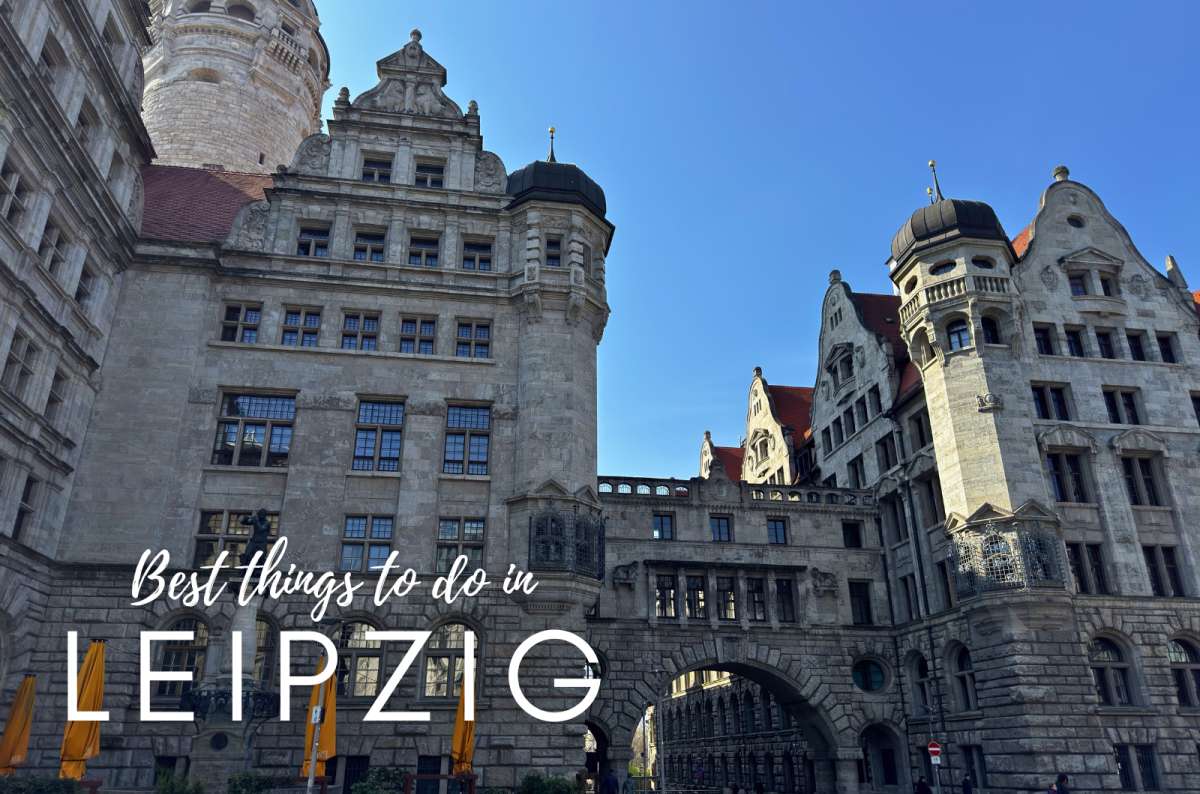


At a glance: the top things to do in Leipzig ranked
Map of the best things to do in Leipzig
How much time do you need in Leipzig?
Best things to do in Leipzig—ranked
1. Visit the Battle of the Nations Memorial
2. Visit Zum Arabischen Coffe Baum and the Coffee Museum
3. Choose one part of the Grassi Museum
7. Visit the Panometer if the exhibition interests you
8. Visit Altes Rathaus and the city history museum
9. Visit the Museum of Fine Arts
10. Stop at Thomaskirche for Bach
11. Walk through Augustusplatz
13. Add Mahnmal Cemetery if you’re near the monument
Practical tips for visiting Leipzig
Final verdict: Is Leipzig worth adding to your Germany itinerary?
I expected Leipzig to feel like a secondary German city. Useful, cultured, maybe a little too sensible. The kind of place you add between bigger names because the train connection works.
Instead, the best things to do in Leipzig turned out to be surprisingly easy to organize: one huge monument, a compact center, good museums, music history, coffee culture, and enough modern city energy to make it feel almost Berlin-like—without the “why is everything 45 minutes away?” problem.
Leipzig is not the prettiest city in Germany. Let’s not lie to each other this early.
But it is one of the easiest German cities to like. It feels big, modern, artistic, and practical. The streets are wide, the buildings are more contemporary than I expected, and most of the best Leipzig attractions are concentrated in or near the center. It does not perform medieval cuteness. It feels lived-in, slightly uneven, and much more useful than precious.
The major exception is the Battle of the Nations Memorial, which sits outside the central walking core and is absolutely worth the detour.
This guide ranks the best places to visit in Leipzig based on what I actually liked, what surprised me, what felt skippable, and what makes sense if you only have one day.
Read more from my Germany travel guide.
Pro tip: Book a Leipzig walking tour if you want the kind of historical context and local stories that are easy to miss when exploring the city on your own.
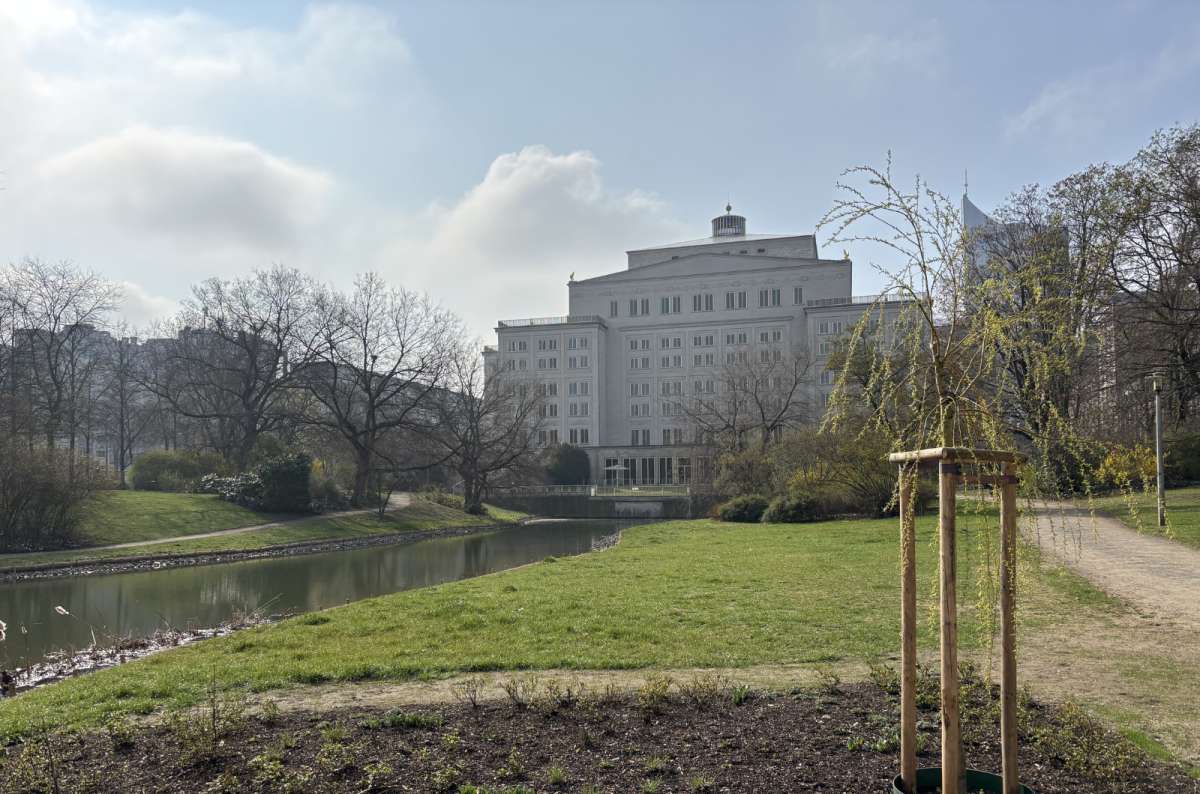
Leipzig Opera House
Here’s my ranked list of the best things to do in Leipzig. I’ll explain the practical planning logic below, including what I’d skip if time or energy gets tight.
Hotel tips: Here is a list of the best Leipzig city center hotels if you want to stay within walking distance of the main sights and museums.
Compare rental car prices in Germany.
Yes, Leipzig is worth visiting if you like culture, museums, music history, modern German city vibes, and compact sightseeing. It works especially well as a one-day stop or short city break in eastern Germany.
What surprised me most was how big Leipzig felt. It is the most populous city in Saxony and had 633,592 residents at the end of 2025, making it larger than Dresden, even though Dresden is the state capital.
That explains a lot. Leipzig does not feel like a cute small stop between “real” cities. It feels like a proper city—wide streets, big train station, modern buildings, university energy, art, museums, and enough cultural weight that it does not need to cosplay as medieval Germany.
Leipzig is worth it for:
Leipzig is less ideal if you want half-timbered fairy-tale Germany. This is not Rothenburg. It is also not the kind of place where every street looks like a postcard and every building comes with a flower box and a moral lesson.
Leipzig is more modern, cultural, and lived-in. I liked that. It felt less staged.
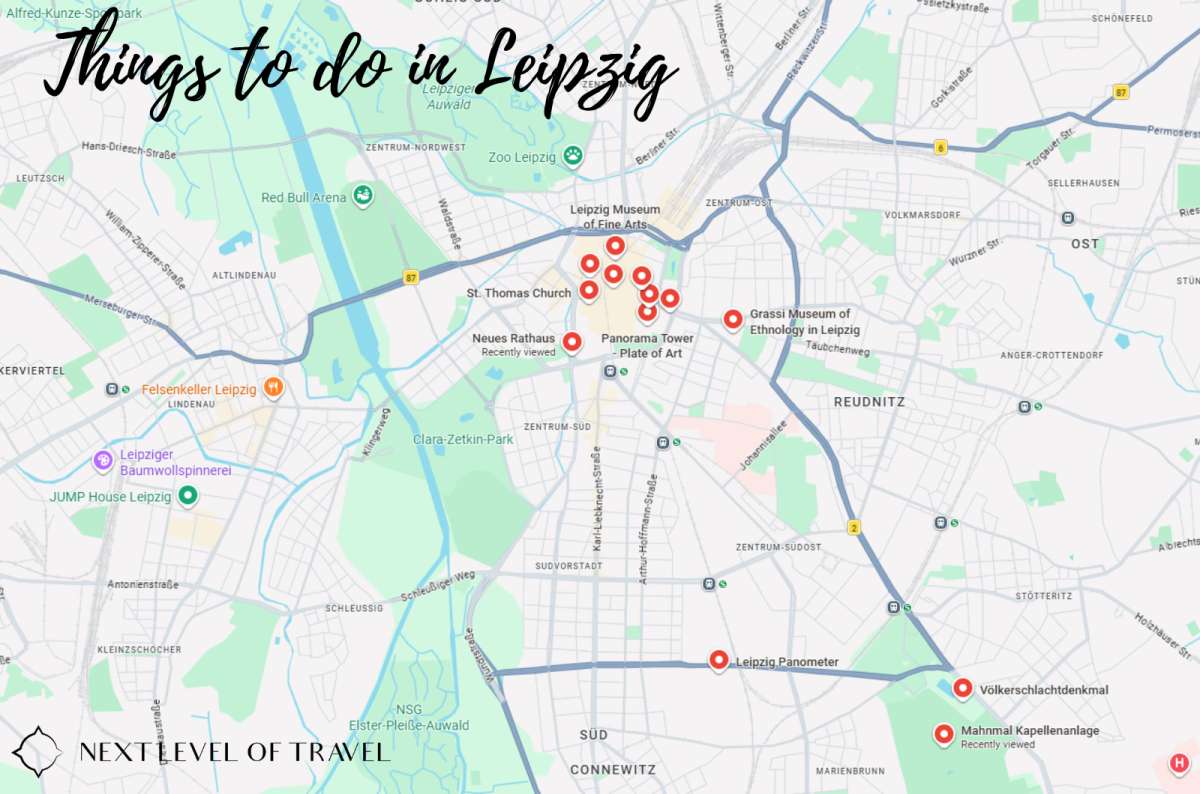
Most of the best things to do in Leipzig are surprisingly close together, so you can cover a lot even on a short city break
Most travelers need one full day in Leipzig. That is enough for the center, one or two museums, Panorama Tower, and the Battle of the Nations Memorial.
Here’s how I’d break it down:
Leipzig’s advantage is concentration. The city feels large, but many of the best Leipzig attractions are close together. The main exception is the Battle of the Nations Memorial/Panometer area, which you should treat as a separate trip outside the central core.
Do not try to make Leipzig more complicated than it is. The city rewards a clean plan: center first, monument area separately, museums chosen with some self-control.
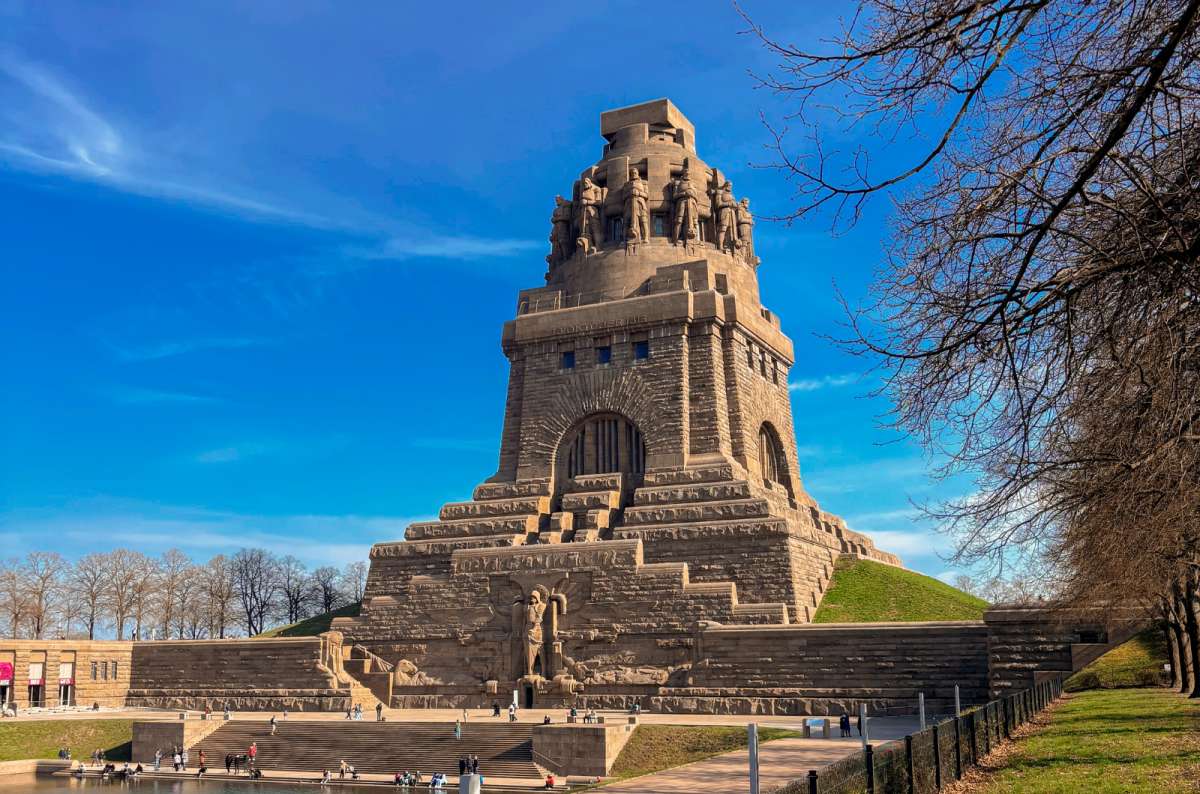
You can climb to the top of the Battle of the Nations Memorial, aka Völkerschlachtdenkmal, for panoramic views over Leipzig
The Battle of the Nations Memorial is the single most impressive thing I saw in Leipzig. If you only leave the city center once, leave it for this.
The monument commemorates the 1813 Battle of Leipzig, also called the Battle of the Nations. The official museum describes the monument as standing near Napoleon’s former command post in the battlefield area, inaugurated in 1913, and rising 91 m (299 ft) high.
It feels monumental before you even get inside. Not elegant. Not charming. Monumental. I got a kind of Washington, DC monument vibe from it, except darker, heavier, and more German. Naturally.
From the outside alone, it would be worth the detour. But the real surprise is that the inside is also good. I expected an empty shell with a staircase and maybe a small “here is history, now give us money” display. Instead, there is the FORUM 1813 museum at the base, with weapons, uniforms, equipment, and personal objects from the battle.
The museum explanation itself felt brief to me. You will learn more by reading separately about Napoleon and the battle. But the original objects help, and the monument interior is the star anyway.
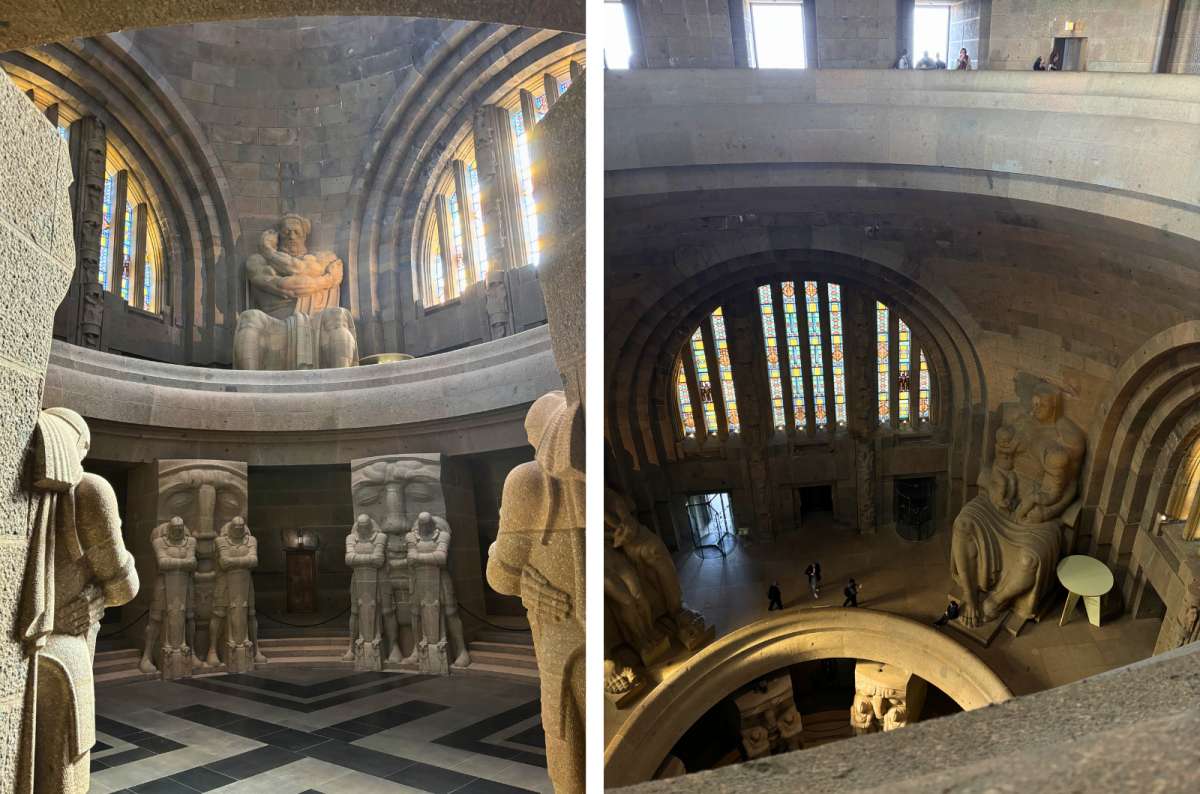
The inside of the monument feels more like a movie set than a typical historical landmark
The crypt is excellent. The statues are absurdly oversized, like regular statues that discovered protein powder and nationalism at the same time. The whole interior feels huge, heavy, theatrical, and surprisingly interesting. It is not subtle in any direction, which is exactly why it works.
You can climb to the top, but be ready: there are around 500 stairs. The stairs get narrower as you go, and at some point, the climb starts to feel less like sightseeing and more like you have entered a historical lung-capacity test. The good part is that there are multiple platforms on the way, so the climb does not feel as brutal as it sounds.
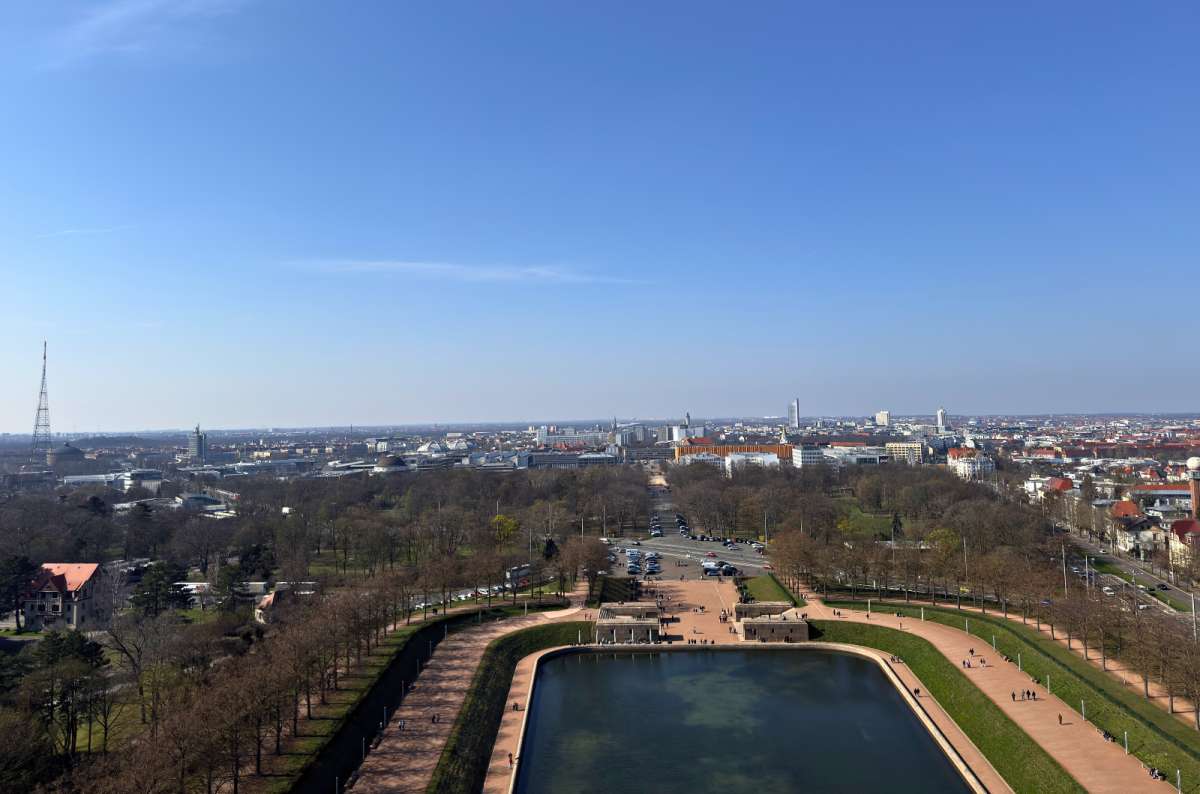
At least the view gives you a solid excuse to stop and pretend you are “just taking photos” halfway up
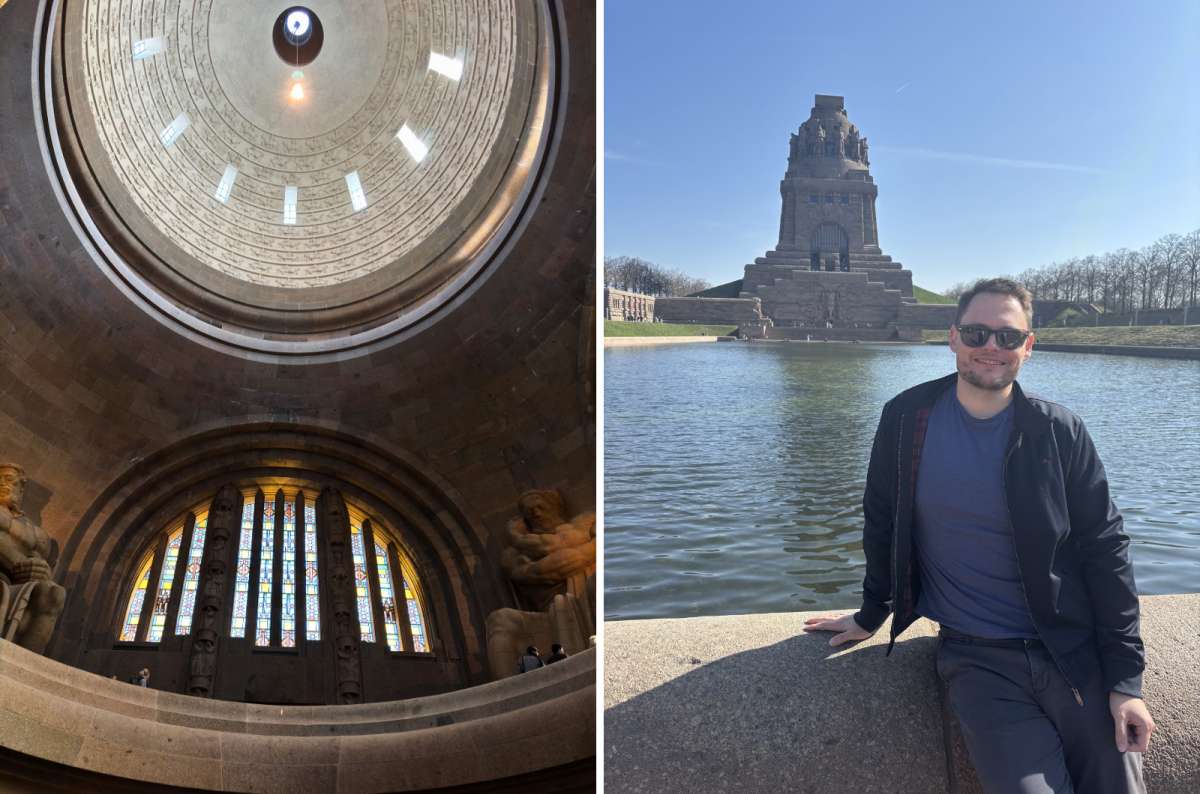
Definitely worth combining with a few nearby sights
The official 2026 adult ticket is EUR 12, and the monument is open daily, with longer hours from April to October.
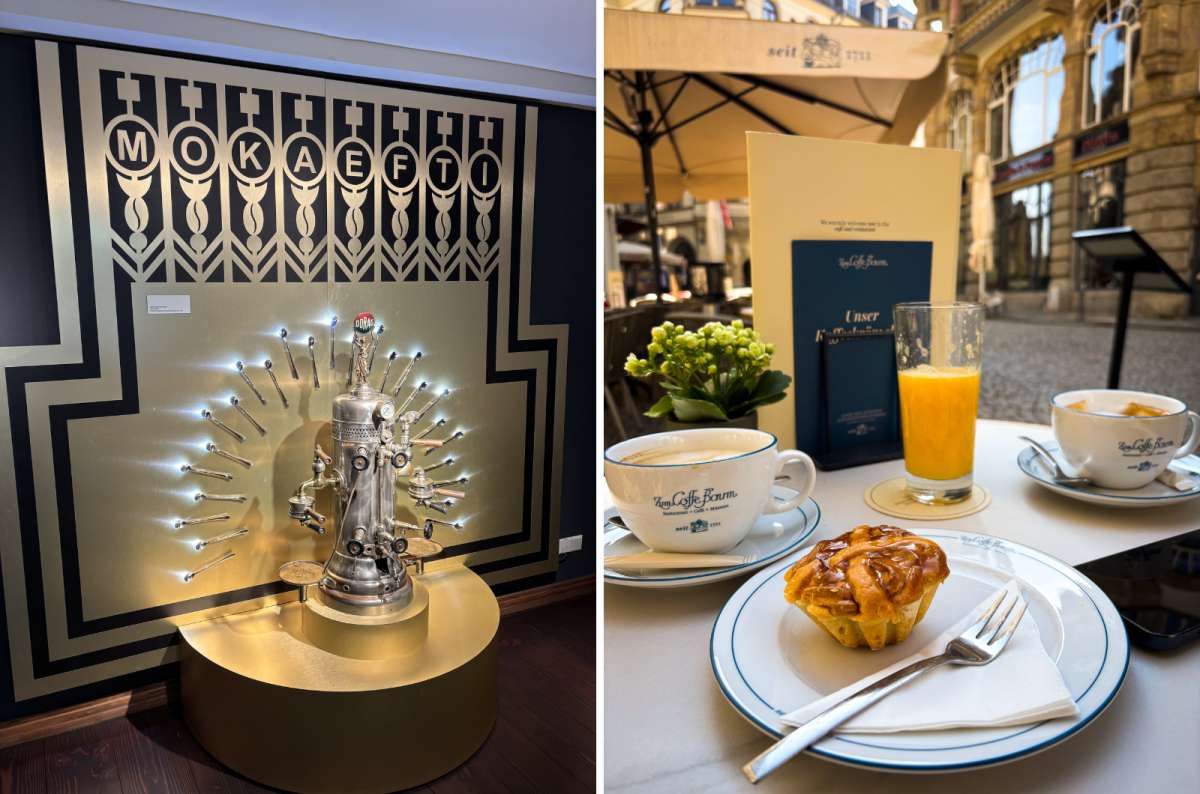
Much better than “just another museum,” especially if you need a break from all the heavy Leipzig history
Zum Arabischen Coffe Baum was one of my favorite Leipzig stops because it felt specific to the city. Not another generic “old building with old things,” but a historic coffee house with a surprisingly large coffee museum inside.
The official museum says coffee has been served here since 1711, and the building attracted famous guests, including composer Robert Schumann. The museum now covers coffee culture, GDR coffee shortages, colonial trade links, global coffee relations, Melitta Bentz’s filters, and more across 16 historic rooms.
And yes, admission is free. Leipzig kept doing this weird thing where I expected to pay and then didn’t. Suspicious behavior from a city, but I respect it.
The building itself is part of the experience. I loved the crooked old floors and doors. It has that old-house feeling where you’re not sure whether the building is historic or just politely collapsing in slow motion.
It also gives you a useful change of texture. After churches, viewpoints, and massive war-stone seriousness, a museum about coffee feels almost gentle. Still cultural, still Leipzig, but less “please contemplate European history” and more “here is how people caffeinated themselves through it.”
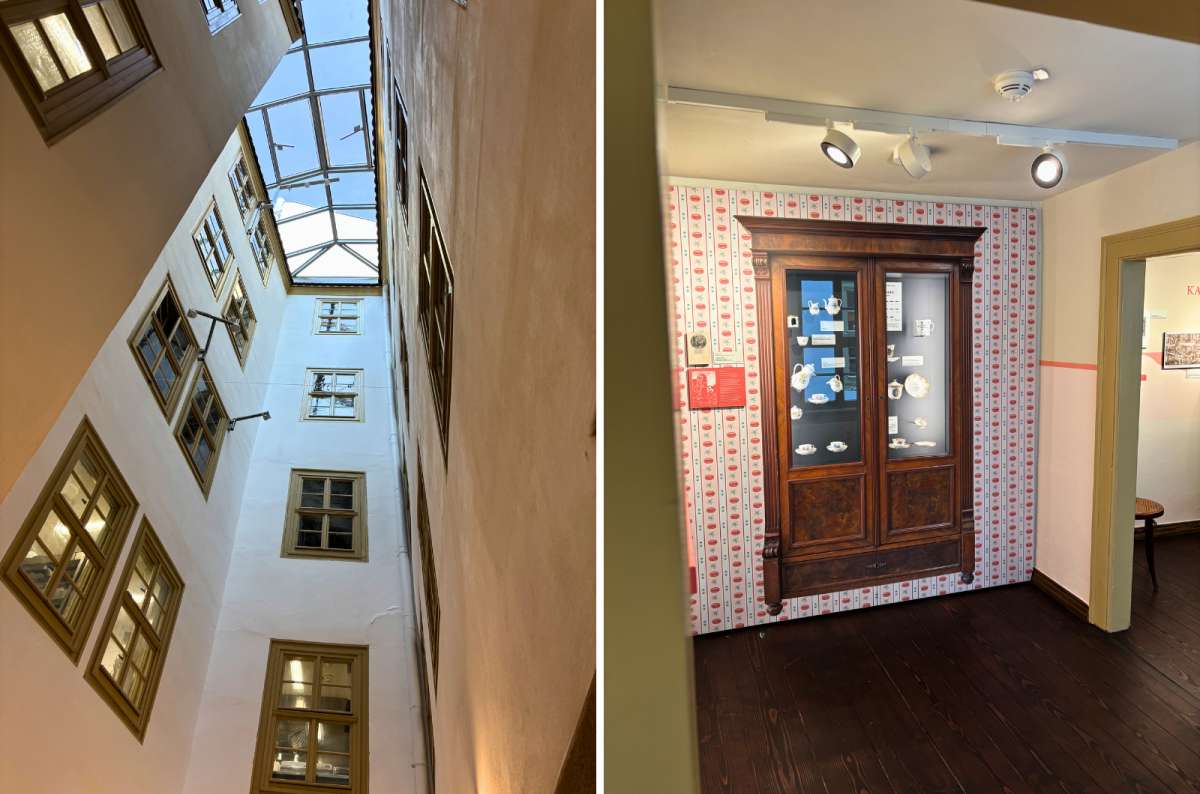
The Zum Arabischen Coffe Baum building feels old in the best possible way. Crooked floors included

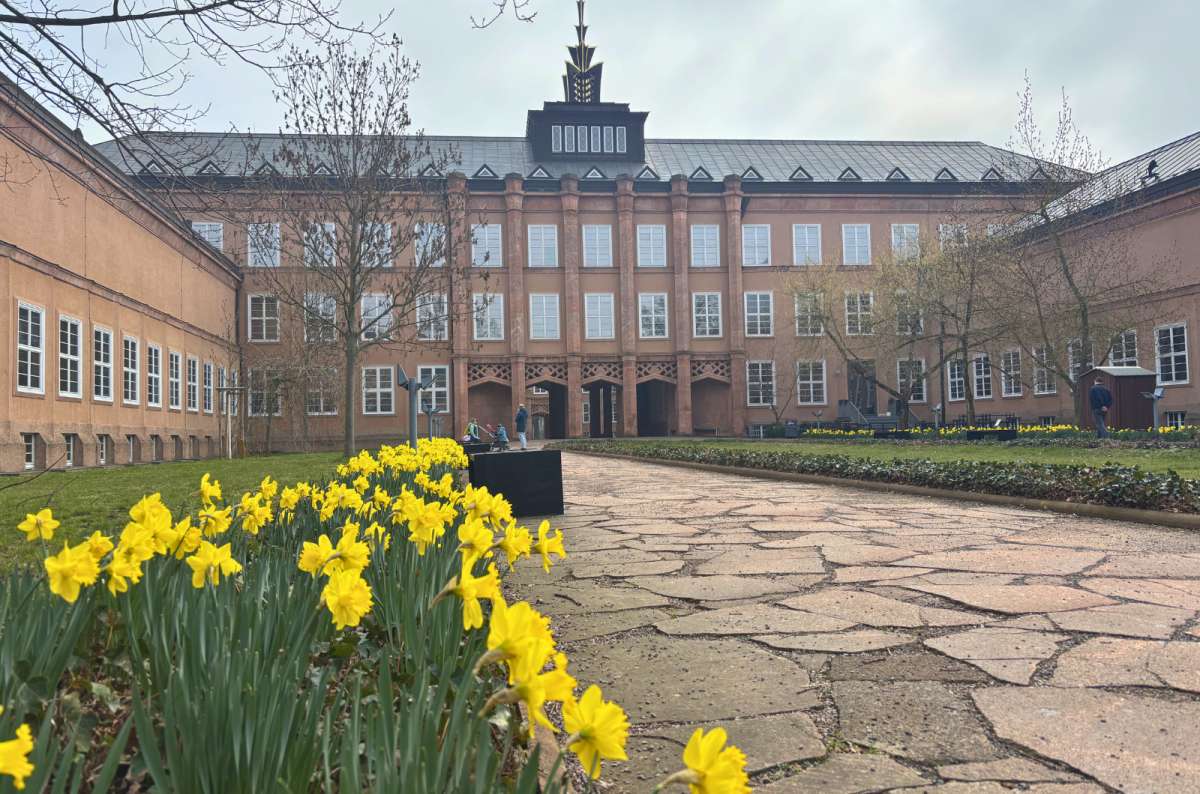
Looks peaceful outside, but this place can easily consume half your day if you are not careful
The Grassi Museum is not one museum. It is a museum complex, and that matters because you can very easily underestimate it.
The official Leipzig tourism site describes the Grassi as home to three museums: the Museum of Applied Arts, the Museum of Ethnology, and the Museum of Musical Instruments.
Permanent exhibitions in the Museum of Applied Arts and the Museum of Ethnology are free, and the complex is generally open Tuesday to Sunday.
I visited the Museum für Angewandte Kunst (Museum of Applied Arts), and it was much better than I expected. The building is one of the most stylish in Leipzig, with an Art Nouveau feel, wide spaces, and a layout that actually makes sense.
I love a chronological museum layout. It means someone cared about visitors and not just about looking clever.
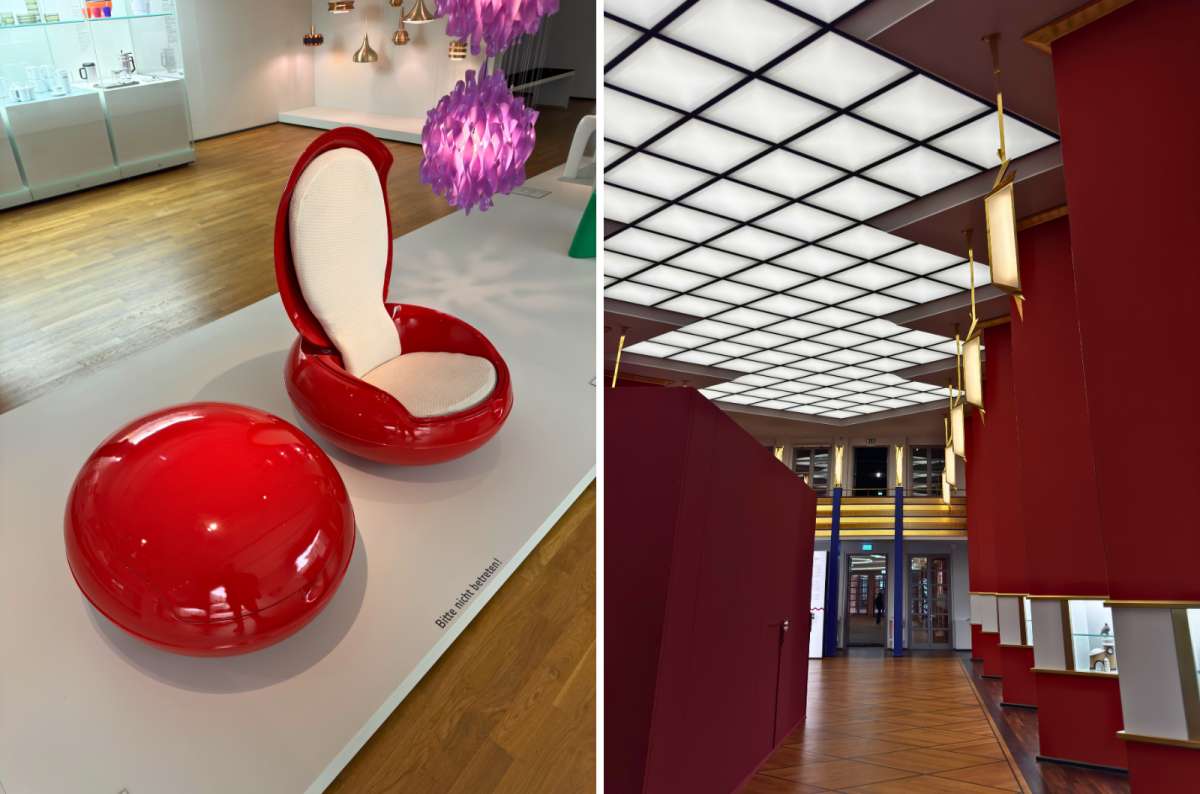
Ultra-modern and futuristic exhibition @ Grassi Museum
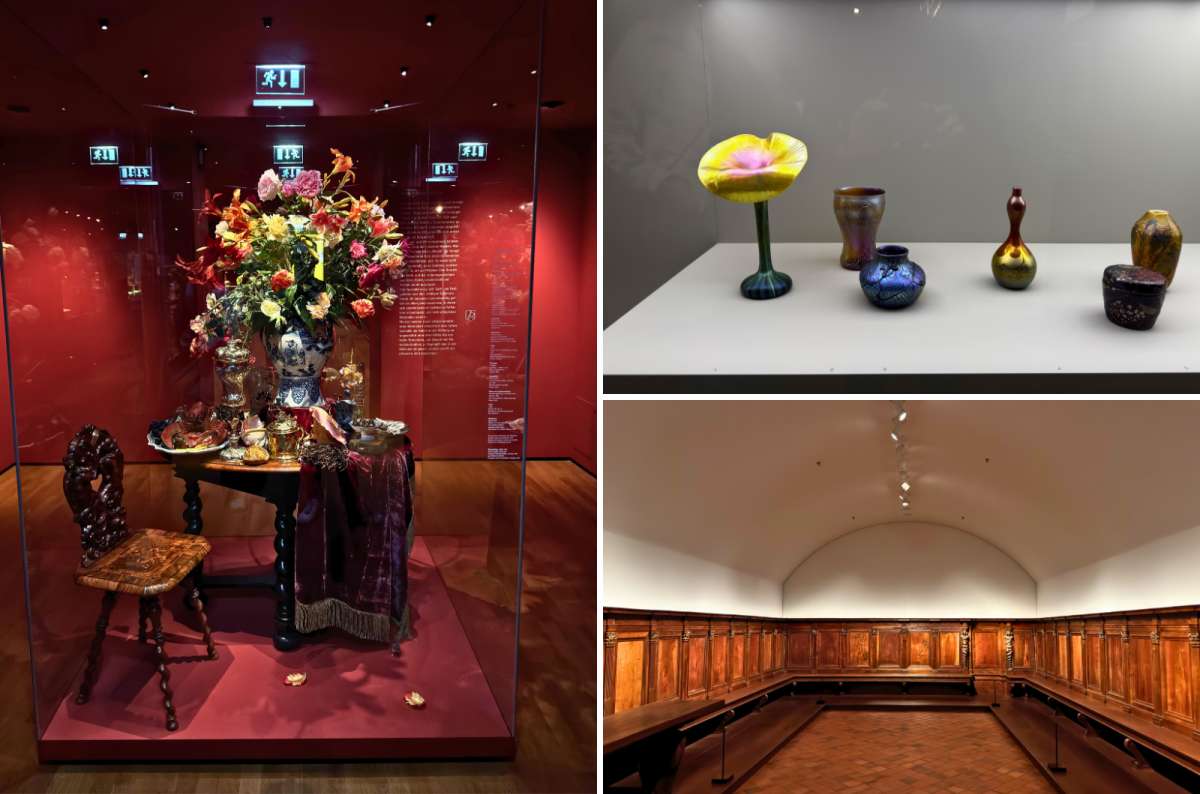
Every room feels completely different, which is probably why the museum never got boring
The downside: a lot of information was in German. My German is basically decorative, so I was working harder than I wanted. Still, the collection was strong enough visually to make the visit worthwhile.
I especially liked the gold objects, early history pieces, early 20th-century art, and one of the best Dance Macabre depictions I’ve seen—done in white porcelain, because apparently death also deserves tableware-level elegance.
The whole complex could easily take 6 hours if you visit all three museums. Do not treat it like a quick “pop in.” That is how museum fatigue attacks you from behind.
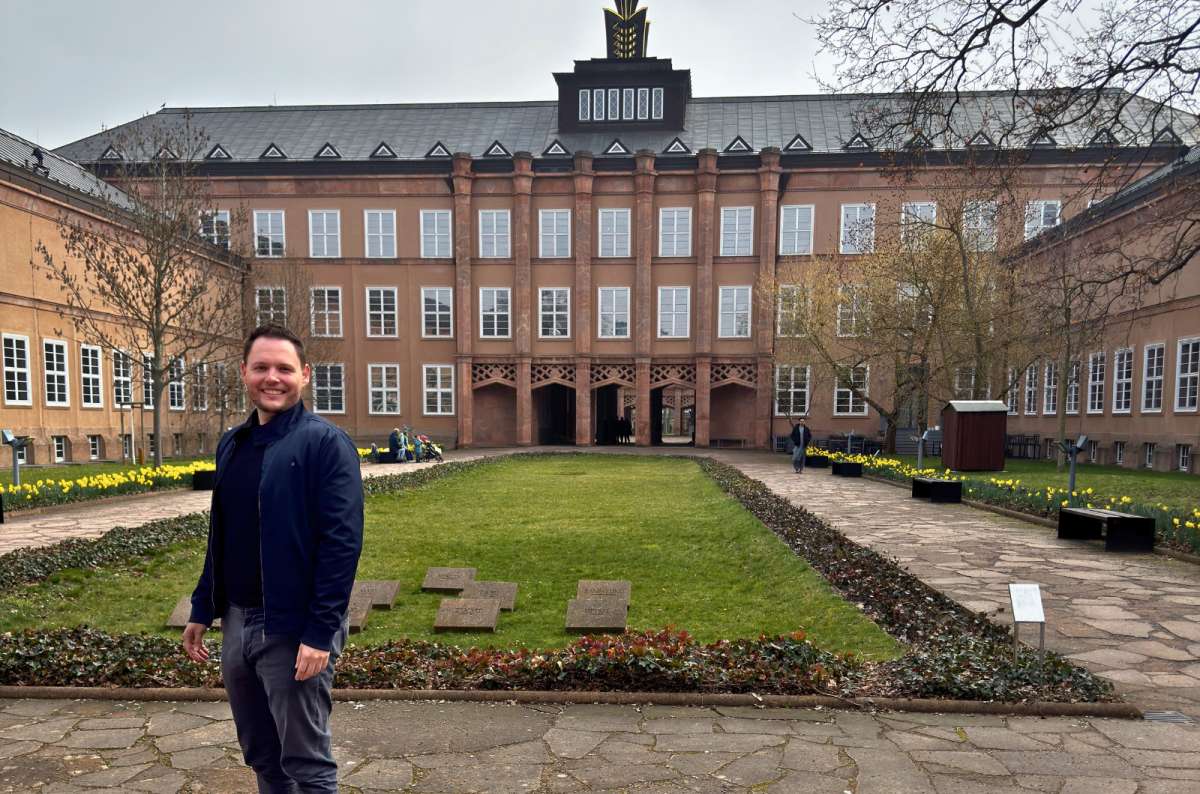
Look how happy I am here
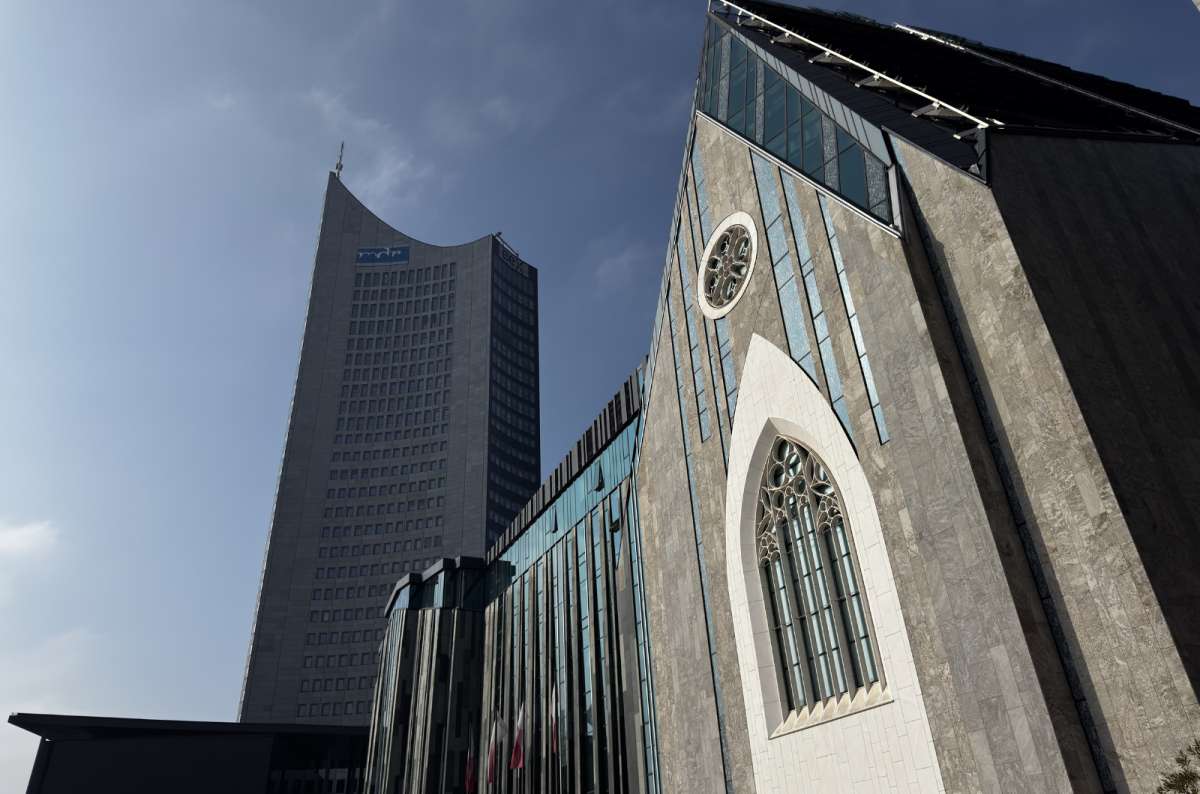
The Panorama Tower makes Leipzig feel like a proper city
The Panorama Tower is the best easy viewpoint in Leipzig. It is central, quick, and close to Augustusplatz, Paulinum, the university area, and the opera.
The viewing platform is on the 31st floor of the City-Hochhaus, and Leipzig tourism lists the entrance fee as EUR 5 per person.
I’d go either early in the day to understand the city layout or later in the afternoon when the light is better. The view helps you understand why Leipzig feels bigger and more modern than you may expect. From above, it is not a tiny old town with a few churches. It is a proper city.
This is also where Leipzig’s visual identity makes more sense. From street level, the mix of modern buildings, wide roads, old churches, university blocks, and shopping passages can feel slightly random. From above, it becomes clearer: Leipzig is not trying to be one tidy historic set piece.
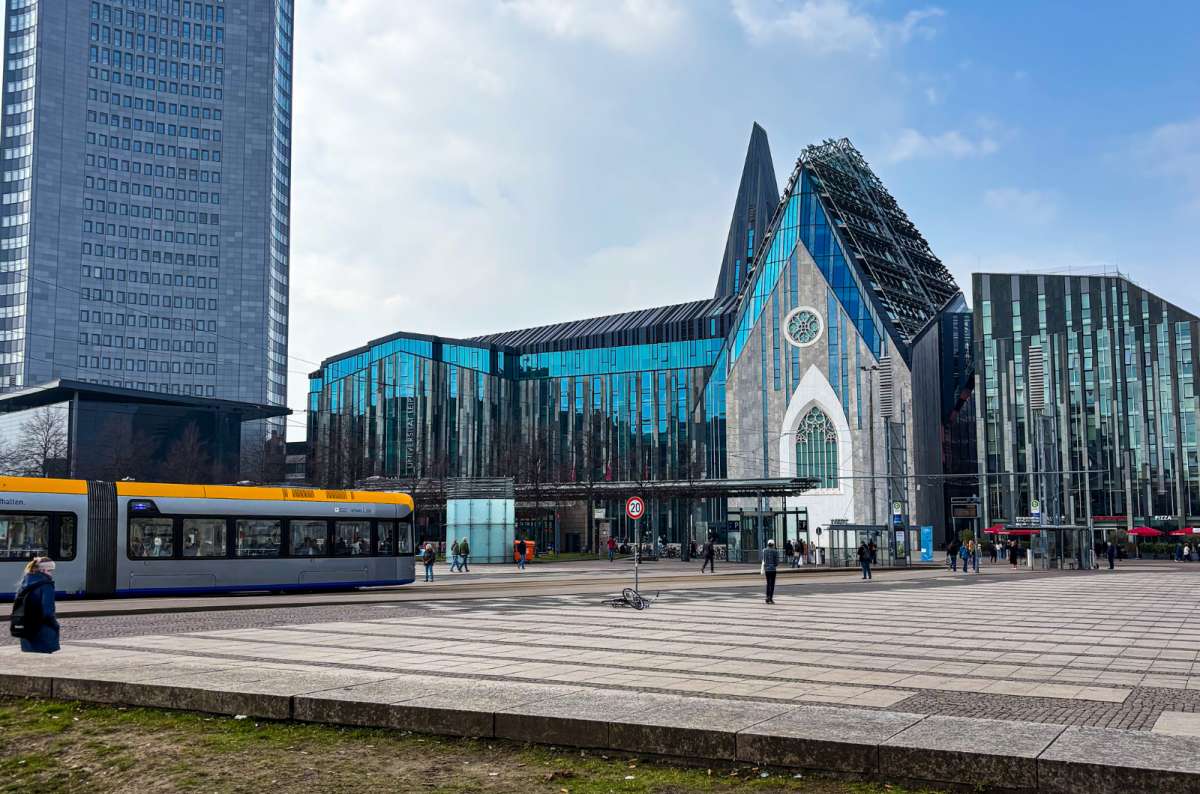
The strange but awesome Paulinum church
The Paulinum is one of the strangest and most interesting church-like interiors I’ve visited. It feels half sacred space, half university building, and slightly like you wandered into somewhere you were not supposed to be.
The current building stands on the site of the old University Church of St. Paul. The original church survived World War II but was demolished by the GDR regime in 1968; the modern Paulinum was later built on the site and inaugurated in 2017.
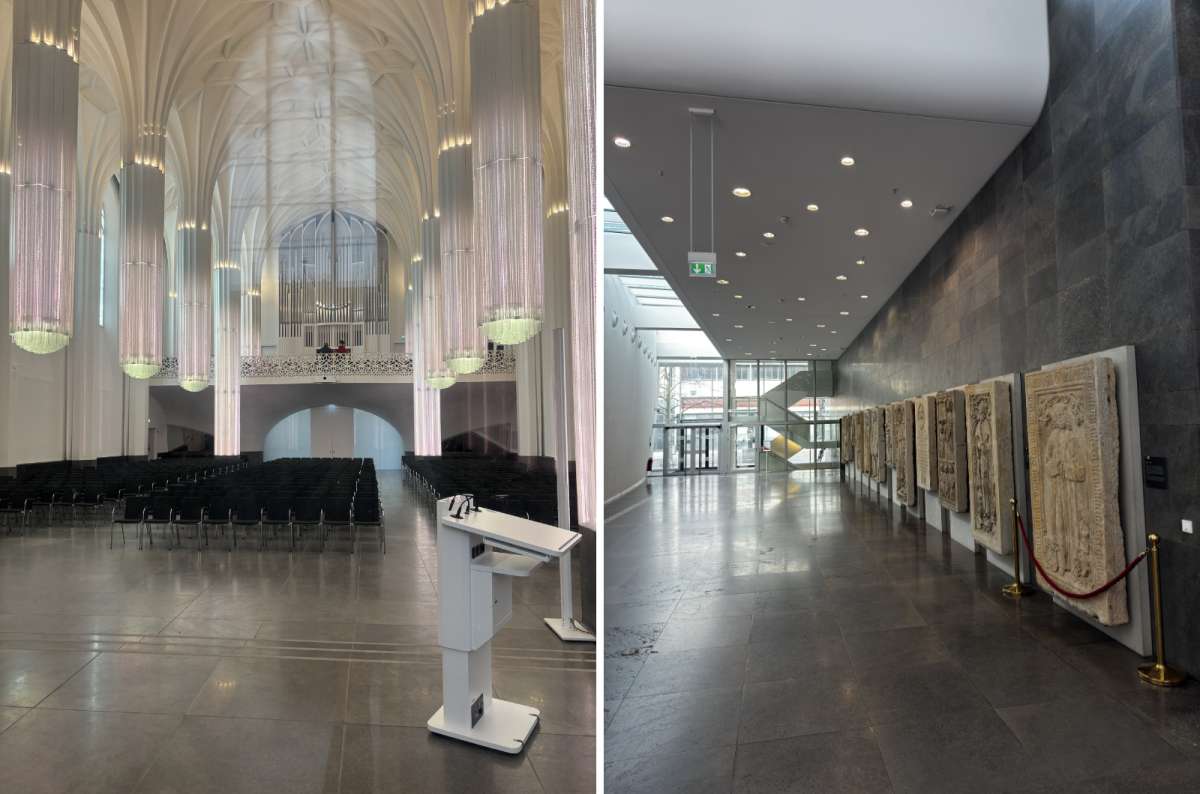
Paulinum feels somewhere between a modern church, a university hall, and an art installation
Because of course, a church survives a world war and then gets blown up later by communists. Logic had a rough century.
The exterior is striking from multiple angles, but the inside is what makes it memorable. The glass columns and modern interpretation of a church interior make it feel completely different from the usual European church visit. It is clean, bright, slightly cold, and oddly moving.
I also liked that it sits right in the middle of modern Leipzig. You can stand at Augustusplatz, look at Paulinum, the university buildings, the opera, and the Panorama Tower, and understand very quickly that Leipzig is not trying to sell you only old-town nostalgia.
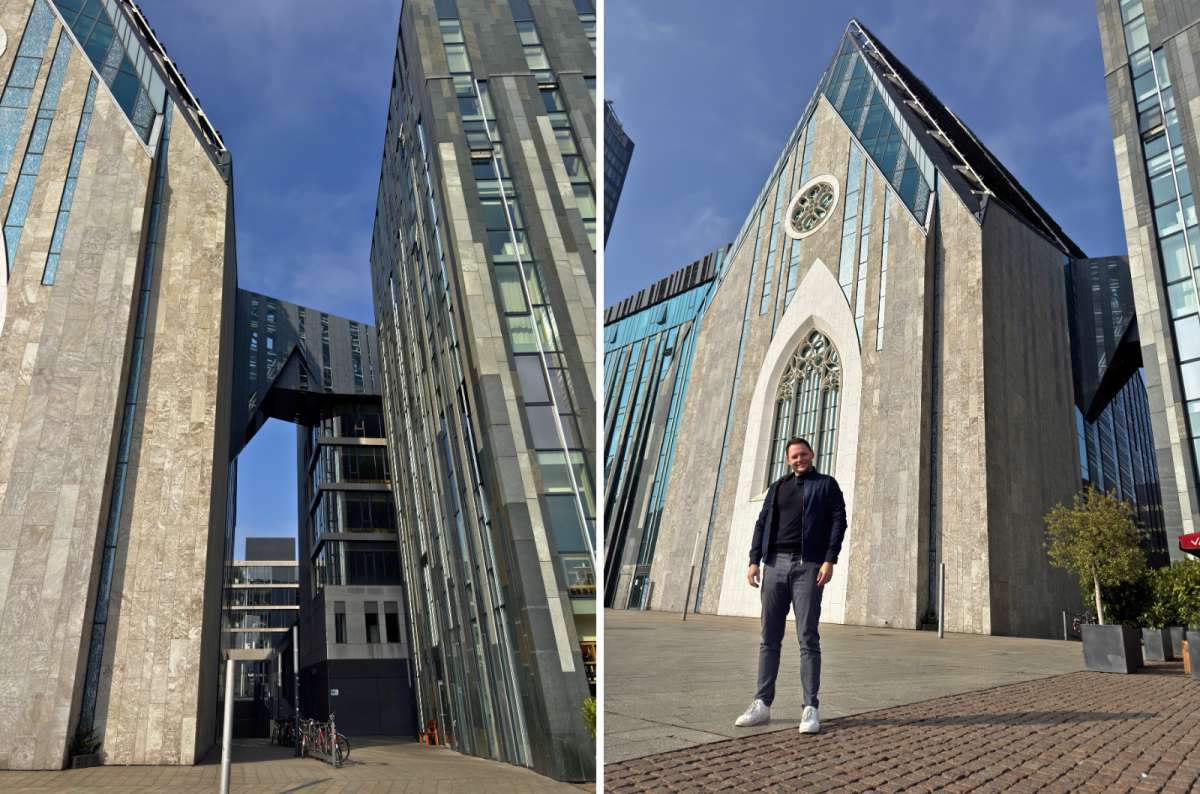
Paulinum looks more like futuristic architecture than a traditional church
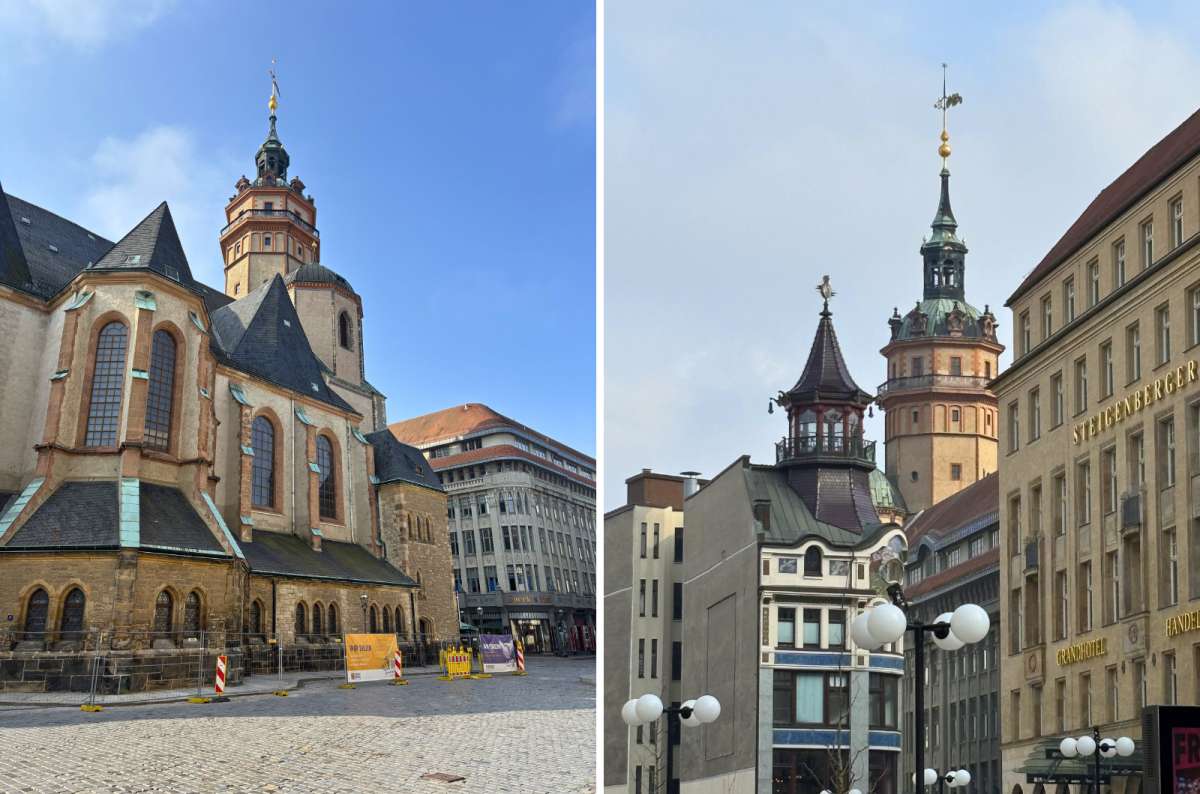
St. Nicholas Church
St. Nicholas Church is historically more important than it is visually overwhelming.
The church is closely connected to Leipzig’s Peaceful Revolution. The city of Leipzig describes the Prayers for Peace at St. Nicholas Church as the starting point from which protesters spread into the city in 1989.
That is the reason to visit. Not because the interior feels ancient and overwhelming. It doesn’t. I found it looked more renovated and modern than its age suggests. It is pretty, but not in the “I need to sit down and reconsider architecture” way.
Still, places like this are why Leipzig is more interesting than it first looks. The church itself may not crush you visually, but the context does a lot of work. It changes how you read the surrounding streets.
Across the street, you’ll find Alte Nikolaischule, Leipzig’s old school building. The area is compact, central, and easy to combine with Augustusplatz, Paulinum, Altes Rathaus, and the Coffee Museum.
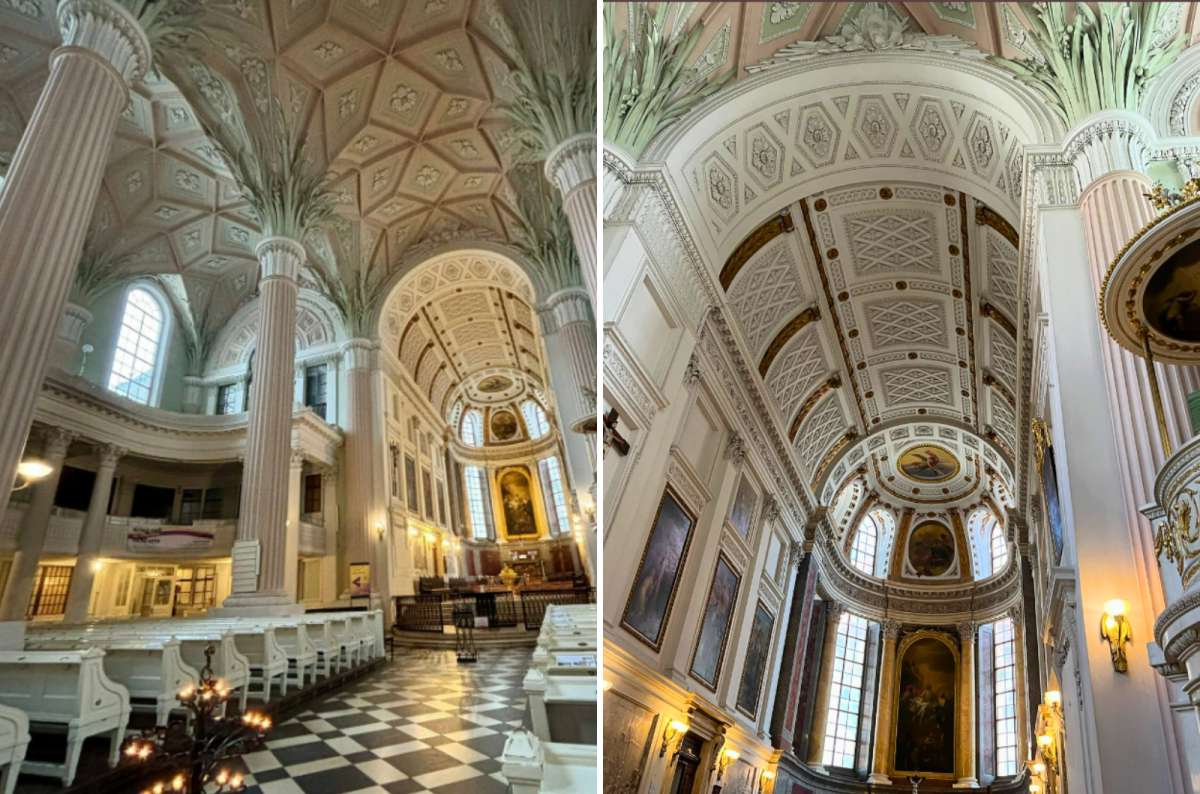
The pastel-colored interior of St. Nicholas Church feels lighter and more elegant than most churches in Leipzig
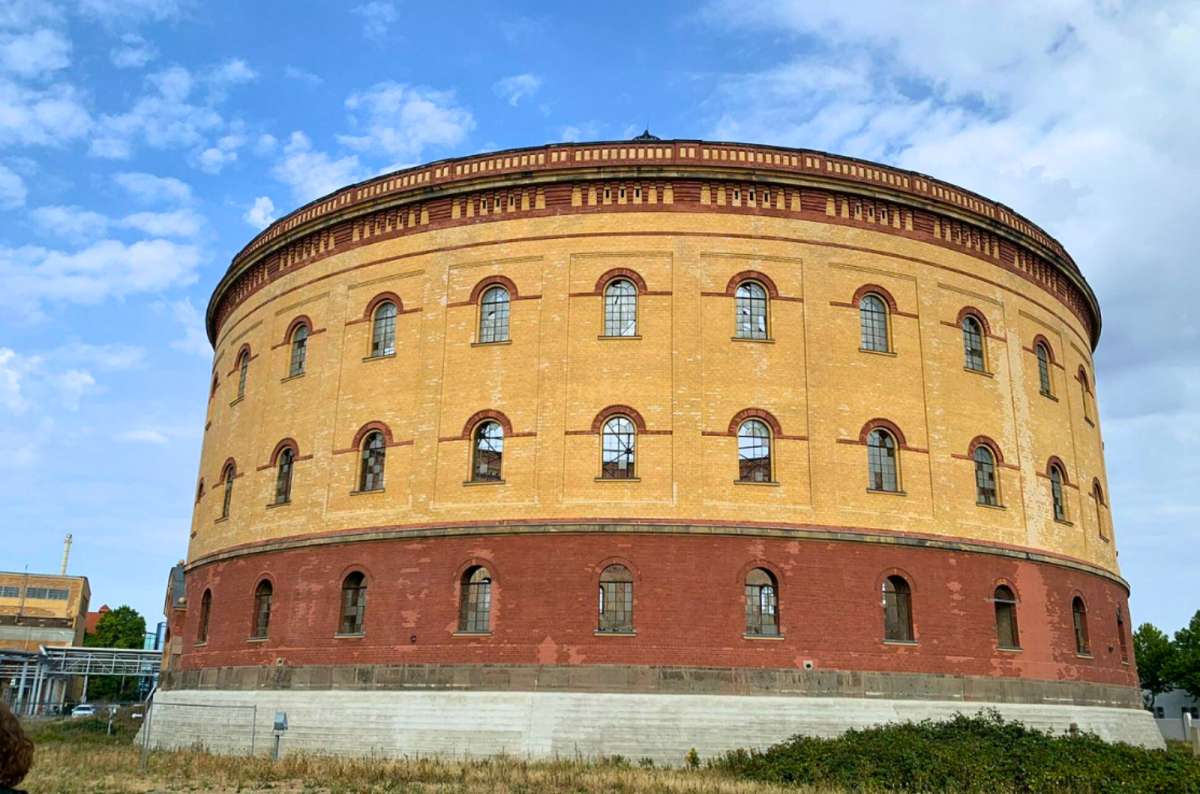
The Panometer looks more like an industrial gas tank than a museum, which is part of the appeal
The Panometer Leipzig is one of those attractions that depends heavily on the current exhibition. That is not a criticism. It just means you should check the theme before building your day around it.
As of 2026, the current exhibition is ANTARCTICA, scheduled to run until at least the beginning of 2028. It features Yadegar Asisi’s 32 m (105 ft) high circular panorama of Antarctica, plus an accompanying exhibition on geology, climate, wildlife, research history, and Asisi’s artistic process.
The Panometer is best paired with the Battle of the Nations Memorial because they are in the same broader area outside the center. I would not cross Leipzig only for it unless the current panorama really interests you.
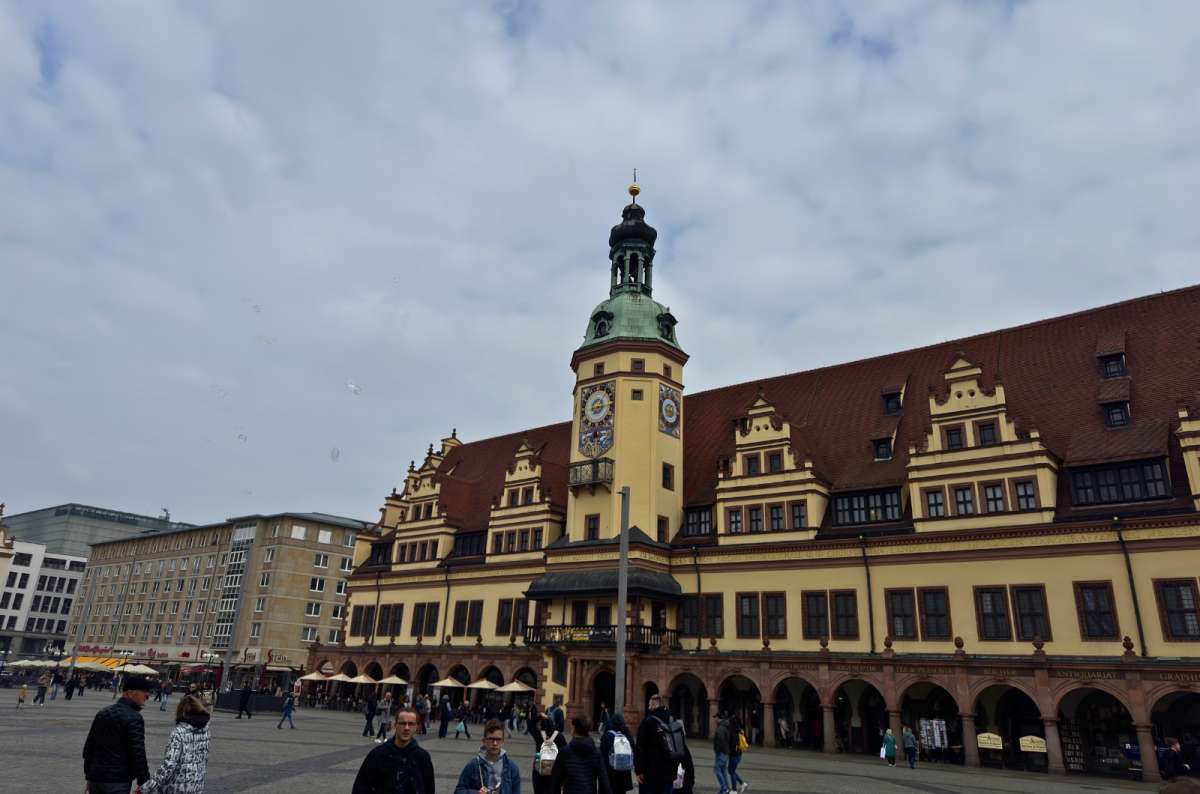
Altes Rathaus, aka Leipzig’s old town hall
The Altes Rathaus looks excellent from the outside. It reminded me of the Sukiennice in Kraków, which is not a bad comparison to have forced into your brain.
The Old Town Hall was built in 1556–1557 and sits directly on Marktplatz. The permanent exhibition inside is free, and the official museum lists opening hours Tuesday to Sunday, 10 am–6 pm.
Inside, you’ll find the Museum of Leipzig city history. I liked this more than I expected because many of the interesting parts were in English, which was a big upgrade after several “guess the German label” moments elsewhere.
The paintings and coins did not do much for me. Coins rarely do. Sorry, numismatics people.
But the early history texts, little dioramas, and city models were great. The museum is small enough that it does not become exhausting, and it gives you some grounding before Leipzig turns into a blur of Bach, coffee, students, monuments, and shopping arcades.
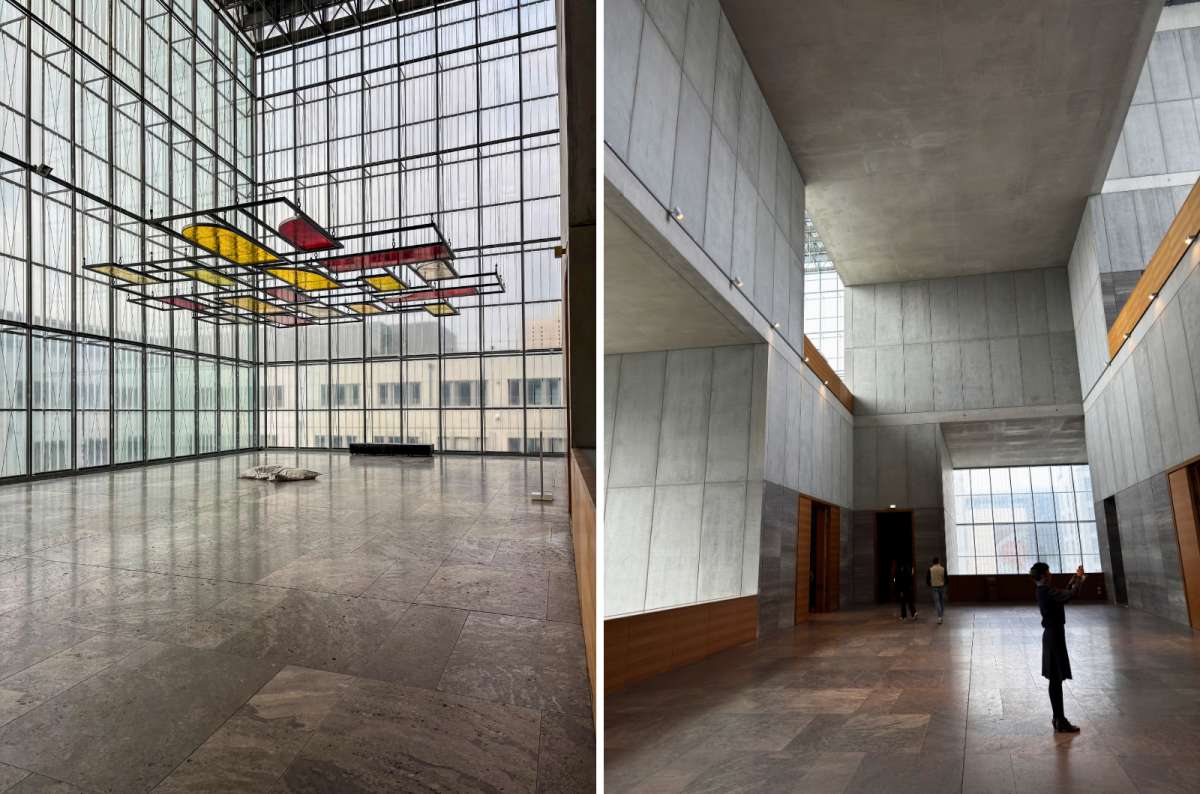
Interior of the Museum of Fine Arts in Leipzig
The Museum of Fine Arts Leipzig surprised me mostly because the building itself felt like the biggest artwork.
The museum’s permanent exhibitions on the first and second floors have free admission, and the museum confirmed this still applies in 2026.
Inside, I liked the dedicated Goya room and especially seeing works connected to Caspar David Friedrich, my favorite German painter. There are also big names like Rembrandt and Rubens in the collection, but what I appreciated more was the curation. They placed modern paintings among older classical works, which made the museum feel less stiff.
It is big, but not annoyingly huge. It is not the Uffizi or Prado, where toward the end you start having spiritual negotiations with your own knees.
This is manageable. One to two hours is enough for most visitors.
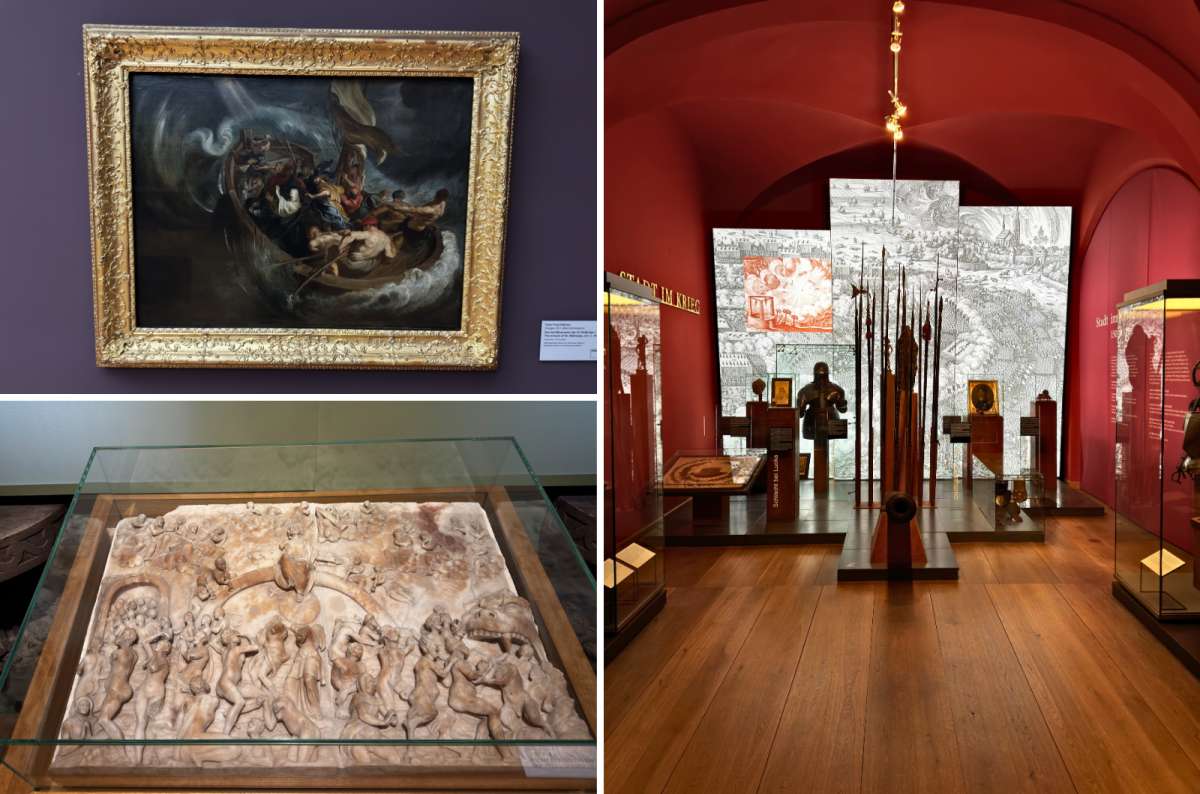
The museum mixes classical art with modern presentation surprisingly well
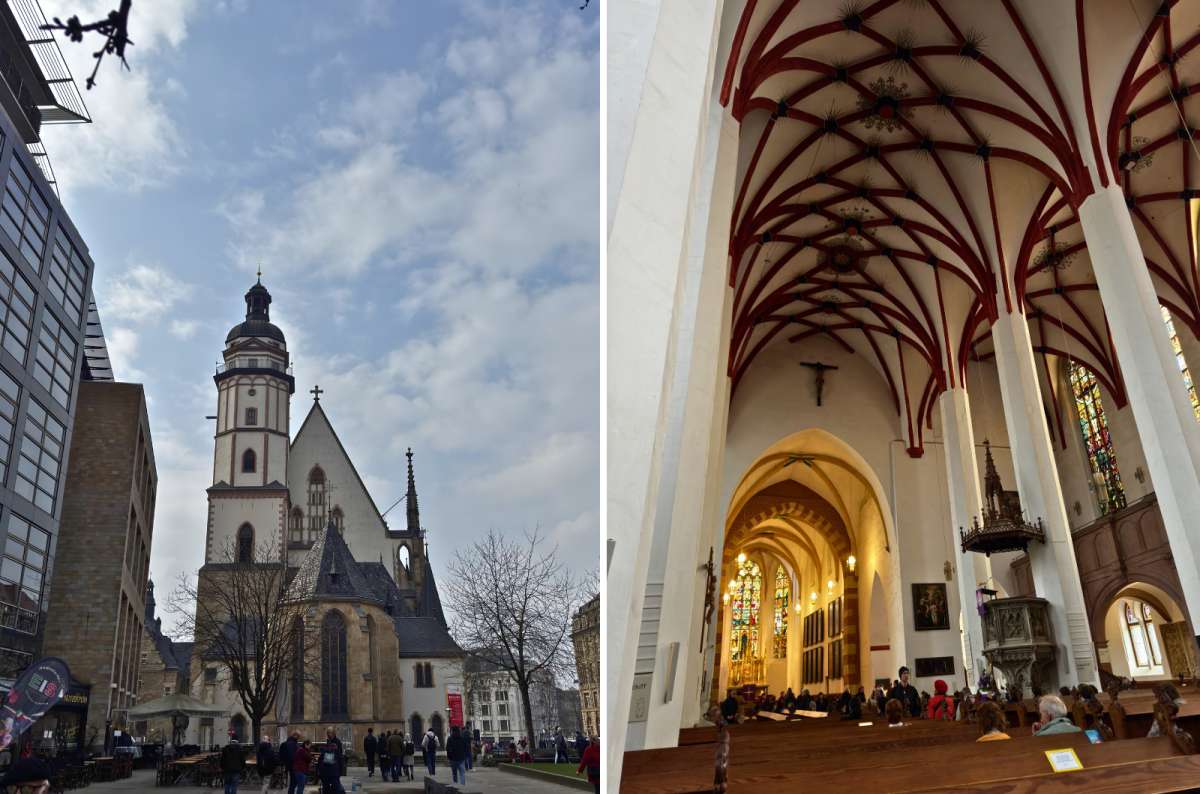
Thomaskirche church
Thomaskirche is one of Leipzig’s most famous churches because of Johann Sebastian Bach. That is the reason to go.
Visually, I found the church more interesting from the outside than inside. The interior felt a bit lackluster compared with stronger churches elsewhere in Europe. It is not the biggest, not the prettiest, and not the church I’d use to win an argument about Leipzig.
But Bach is buried here, and Leipzig’s music history is a huge part of the city’s identity. So yes, you should stop by.
Just manage expectations. This is a music-history stop, not a “prepare to have your eyes melt from beauty” stop.
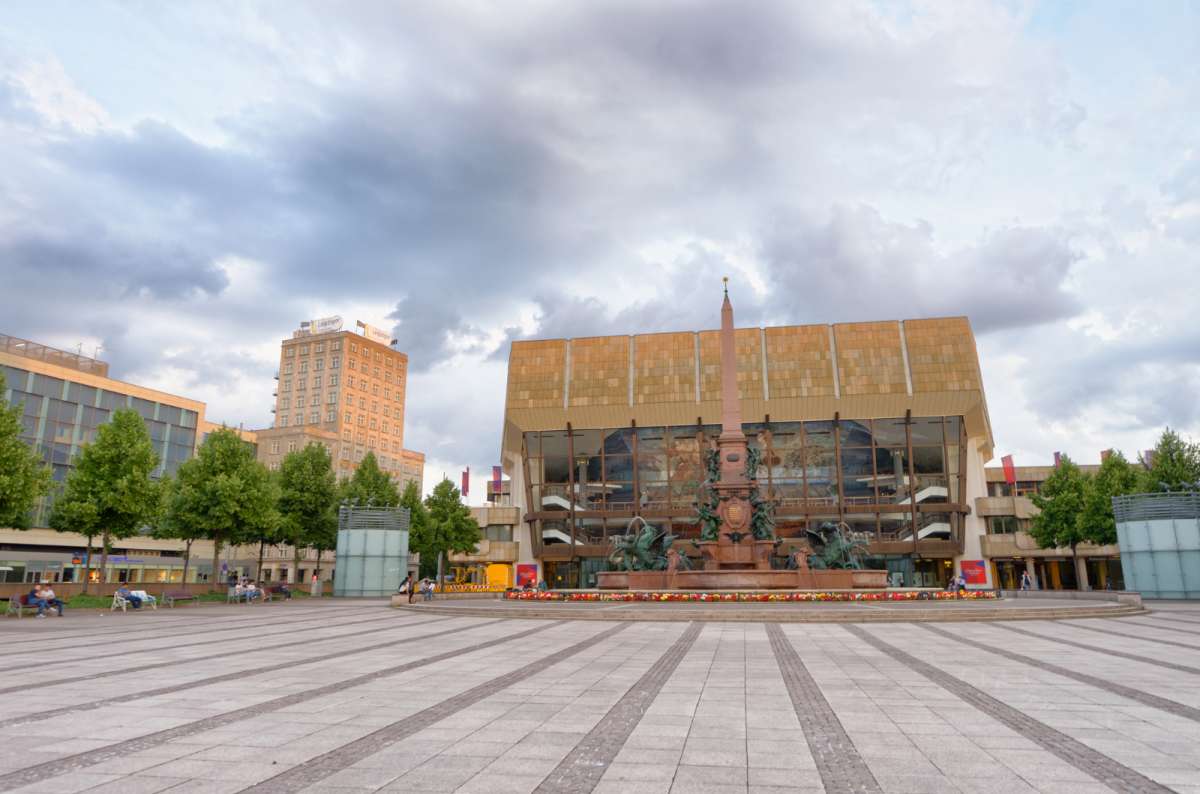
Augustusplatz feels huge and much more modern than people expect
Augustusplatz is not a place I’d overbuild into a major attraction. It is more useful than that.
This is the main modern square in Leipzig and a practical hub for several important sights: Paulinum, Panorama Tower, the opera, the university area, and nearby Hauptbahnhof.
I liked the vibe. The architecture is ultra-modern, and it gives Leipzig that bigger, sharper city feeling. It also helps you connect the itinerary without constantly zigzagging through the center like a confused pigeon.
It is not romantic. It is not especially cozy. But it tells you a lot about Leipzig in about five minutes.
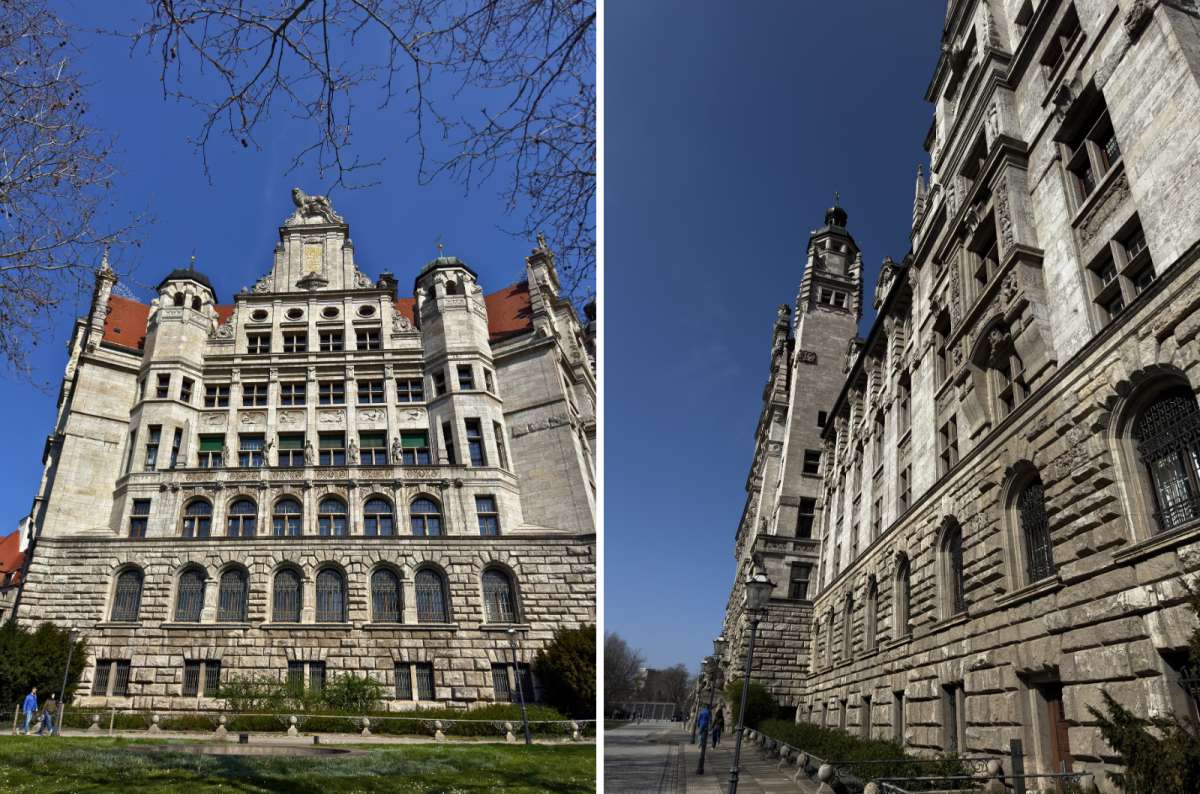
Neues Rathaus, aka Leipzig’s new town hall
Neues Rathaus is a pretty building and is worth a quick look if you are nearby. I would not cross the city just for it.
The tower is one of its main features. Leipzig tourism says the observation balcony can be climbed several times a week as part of a guided tour, and the city describes it as the tallest city hall tower in Germany.
It is close to the Federal Court building and a modern church, so the area is not bad for a short architecture loop. There is also Ratskeller inside, which is often mentioned as one of Leipzig’s better traditional restaurant settings.
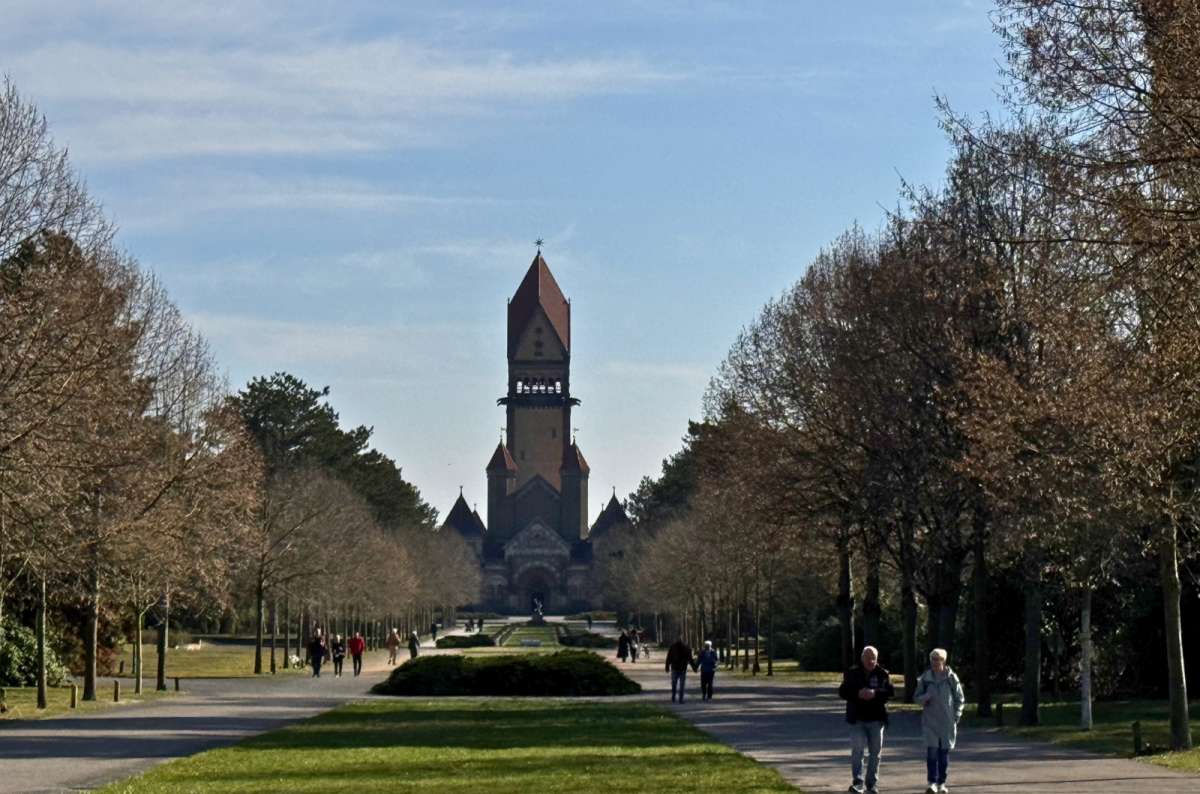
Südfriedhof is part of the Mahnmal cemetery
The Mahnmal Cemetery feels completely different from the Battle of the Nations Memorial.
The monument is loud, massive, and dramatic. The cemetery is quiet and almost castle-like. Or like an old abbey. It has this spacious, almost “luxury cemetery” feeling, which sounds disrespectful, but I mean it visually—the graves are spread out, and the whole place feels unusually open.
And yes, it is a pretty graveyard. Slightly weird sentence, but accurate.
I would not make this a major standalone stop. But if you’re already at the Battle of the Nations Memorial or Panometer, it makes sense. It also gives you a useful reset after the monument, which is not exactly a light emotional snack.
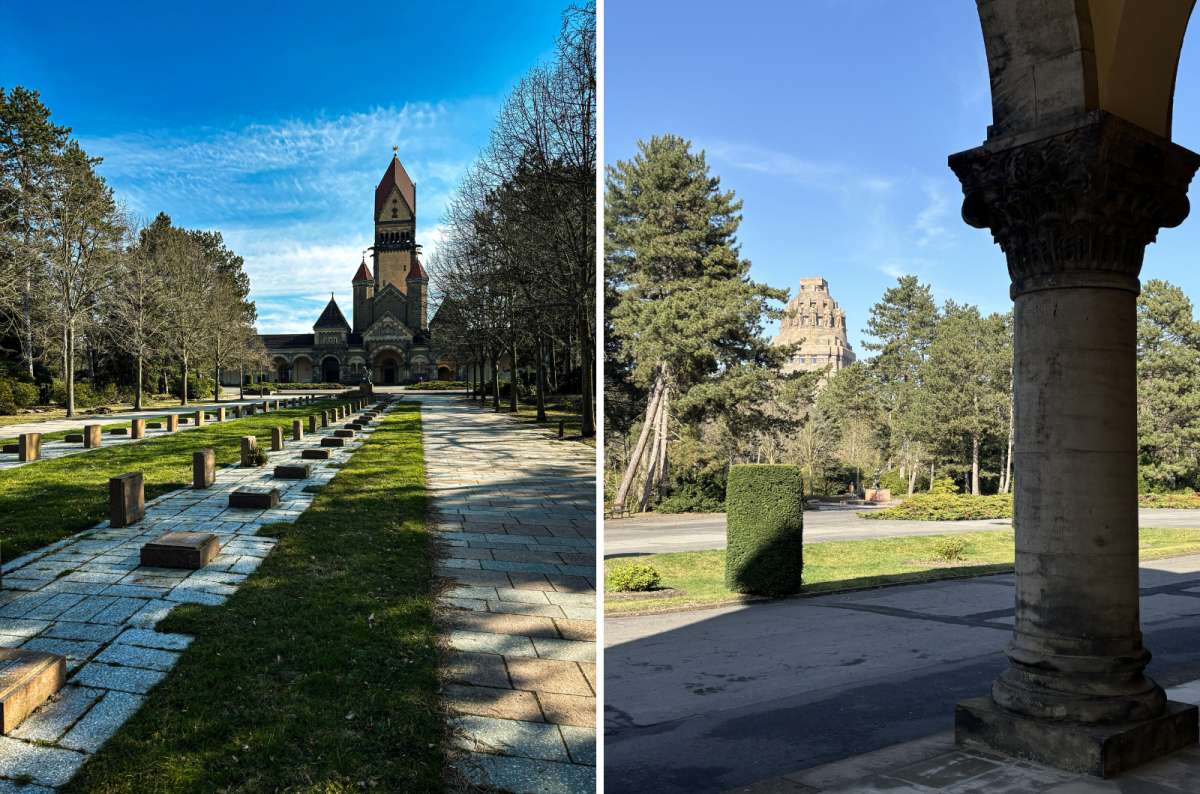
From the Südfriedhof cemetery, you can even spot the Battle of the Nations Monument through the trees
The center is very walkable. You can connect Hauptbahnhof, Augustusplatz, Paulinum, Panorama Tower, St. Nicholas Church, Altes Rathaus, Zum Arabischen Coffe Baum, Museum of Fine Arts, Thomaskirche, and Neues Rathaus without complicated planning.
The Battle of the Nations Memorial, Panometer, and Mahnmal cemetery are the exceptions. Group those together.
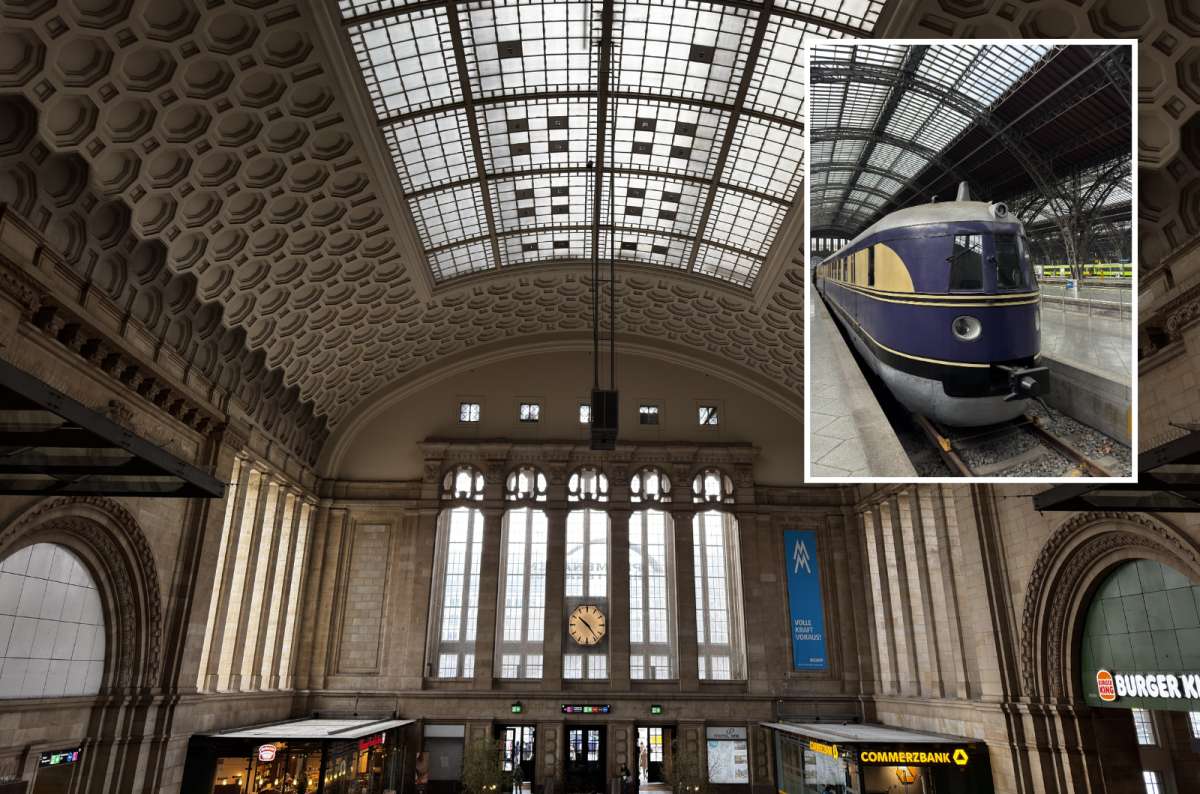
Leipzig Hauptbahnhof is not just a train station. The massive hall alone feels more like a historic landmark
Leipzig has a lot of museums, and several permanent exhibitions are free. That is great, but also dangerous. Free museums still cost time, and time is the thing that ruins itineraries faster than bad shoes.
Pick one or two if you only have one day. Do not let “free entry” turn your day into a slow indoor disappearance.
This was especially annoying at Runde Ecke and parts of Grassi. Use a translation app. I did, because apparently, standing in front of a Stasi display and understanding nothing is not the full educational experience.
At Grassi, we had a payment issue and did not visit the Musical Instruments Museum. It may have been a temporary terminal problem, but in Germany, “temporary payment issue” is basically part of the national atmosphere. Bring backup.
That is not its strength. Leipzig is modern, cultural, artistic, and compact. Treat it that way, and it makes much more sense.
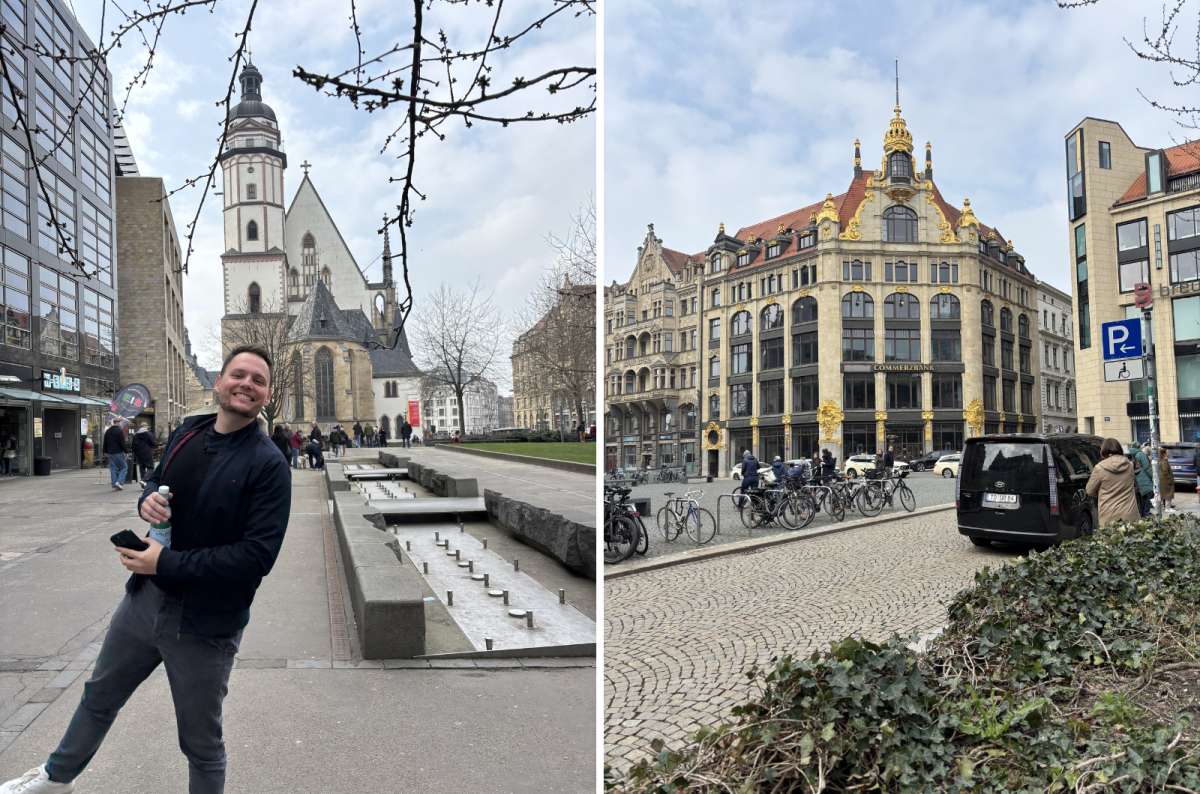
Leipzig’s center is compact enough that most sightseeing is easy on foot
Yes, Leipzig is walkable in the center. The main sights in central Leipzig are close enough to visit on foot.
A good central walking route is:
Then plan a separate trip to:
That split makes the city much easier. Do not try to force everything into one continuous walk unless you enjoy turning sightseeing into an endurance sport.
If you want or need a car, I’m partial to DiscoverCars. Just saying.
Leipzig is famous for music history, publishing, coffee culture, DDR protest history, museums, and the Battle of the Nations Memorial.
The city has major connections to Bach, Schumann, Mendelssohn, Wagner, Goethe, and the German publishing trade. It also played an important role in the 1989 Peaceful Revolution, especially around St. Nicholas Church.
What I liked is that Leipzig feels more culture-heavy than many German city stops. So much of Germany travel can become “here is a palace, here is a prince, here is a war, here is another prince who funded a war.” Leipzig still gives you war—hello, giant monument—but the city’s stronger identity is music, books, museums, coffee, and art.
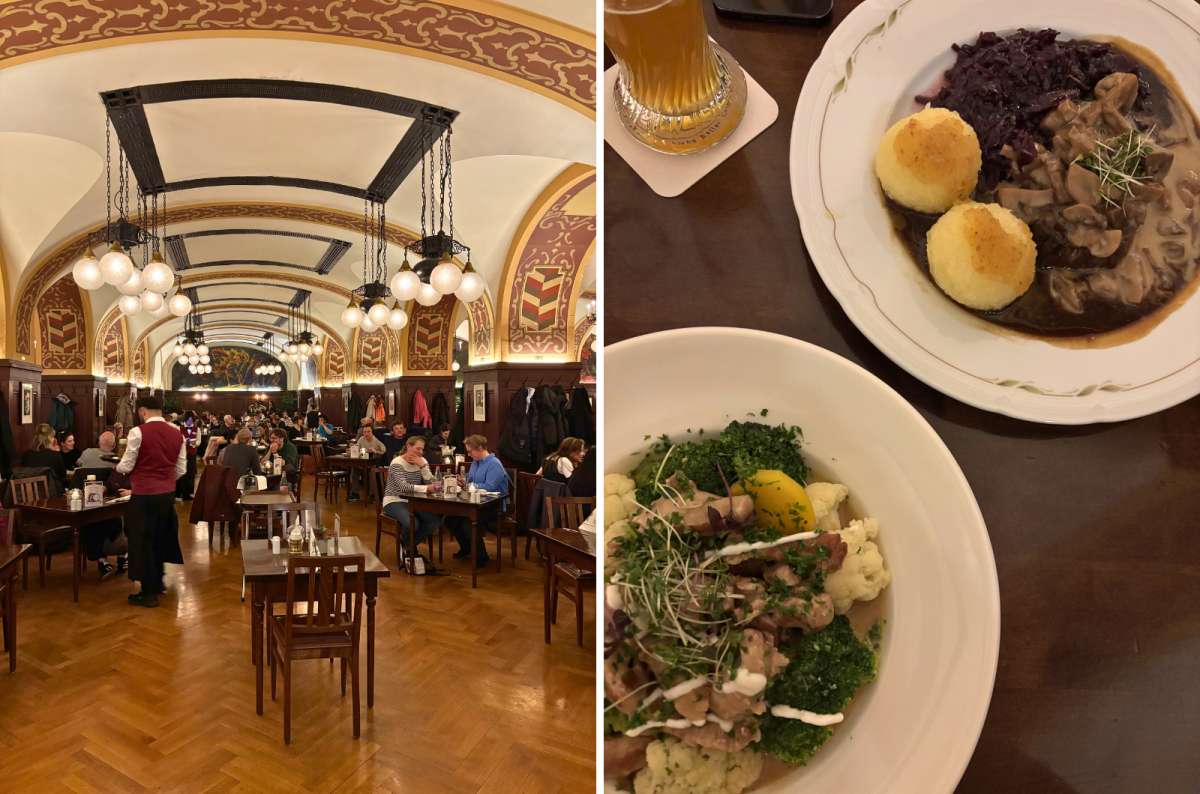
Gosenschenke Ohne Bedenken is one of the best places in Leipzig for classic heavy German food and old-school tavern atmosphere
Curry Cult is a good, quick central food option near Altes Rathaus and Marktplatz. It is useful if you want something casual and fast without turning lunch into an event.
Gosenschenke Ohne Bedenken is a microbrewery/beer stop slightly outside the center. The beer was great. Go if you like beer and have extra time.
Leipzig actually reminded me a bit of northern German cities, where food, beer halls, and local atmosphere matter just as much as sightseeing—similar to finding things to do in Hamburg beyond the classic landmarks.

In Leipzig (Germany, in general), beer somehow ends up on every table. Honestly, fighting it feels pointless
Auerbachs Keller is more important culturally than culinarily, which is a polite way of saying: go for the room and the Goethe/Faust connection, not because you expect the best meal of your life.
The restaurant is connected with Goethe’s Faust, and its historic rooms and legends are a major part of Leipzig’s cultural mythology.
When I visited, the food was decent, and the service was okayish. The place itself is the reason to go.
Mädler Passage is also worth seeing, so the stop makes sense even if you only take a look. This is a classic Leipzig move: the context is doing half the work, and honestly, that is fine.
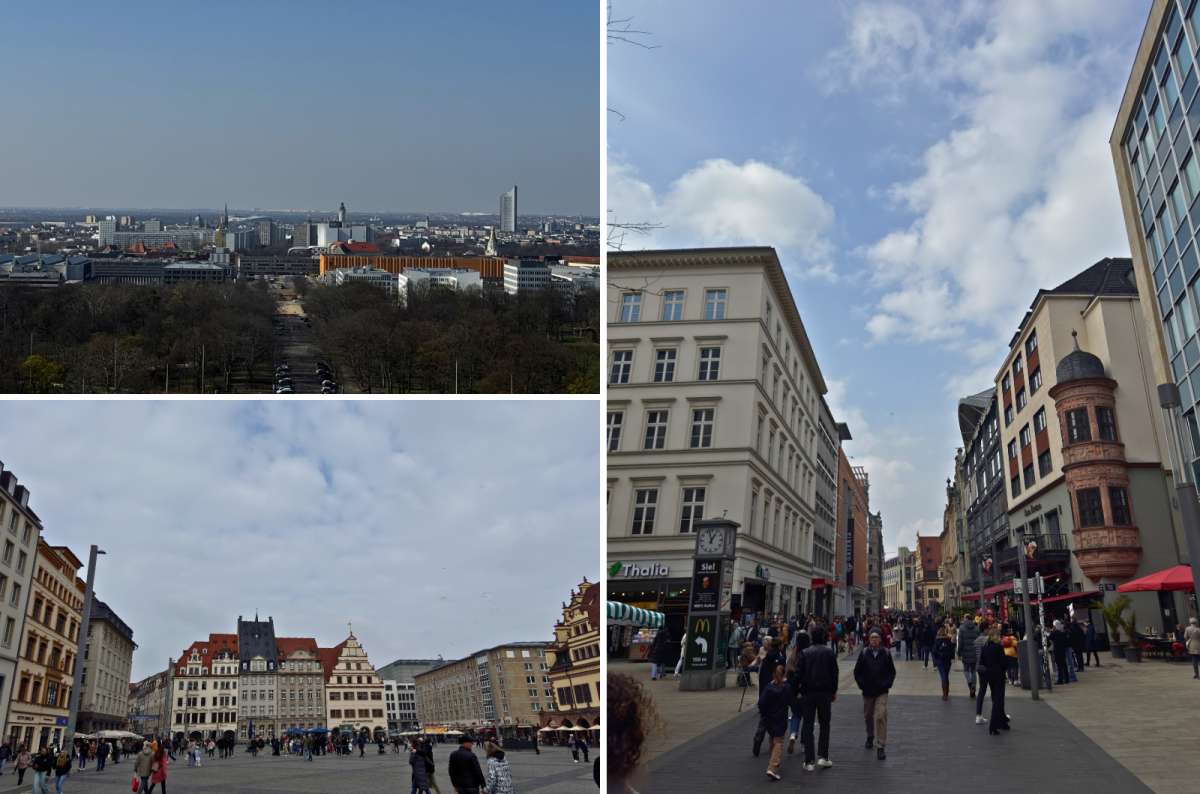
Leipzig works best when you mix the historic center with a few modern stops instead of expecting a perfectly preserved old town everywhere
This is how I’d plan one day in Leipzig if you want the best mix of central sights, museums, views, and the Battle of the Nations Memorial.
1. Hauptbahnhof
Leipzig’s main train station feels outright monumental. It is one of the largest train stations I’ve visited, and yes, I know trains are big. There are old trains inside, including a Reichsbahn train that somehow looks more modern than some newer trains still running around Europe.
2. Augustusplatz
Use it as your modern Leipzig starting point. It is not cuddly, but it immediately sets the tone.
3. Paulinum
Quick, central, unusual, and one of the best modern-architecture stops in the city.
4. Panorama Tower
Go up if the weather is clear. Skip if Leipzig has decided to cosplay as a gray ceiling.
5. St. Nicholas Church
Visit for the DDR history and Peaceful Revolution context.
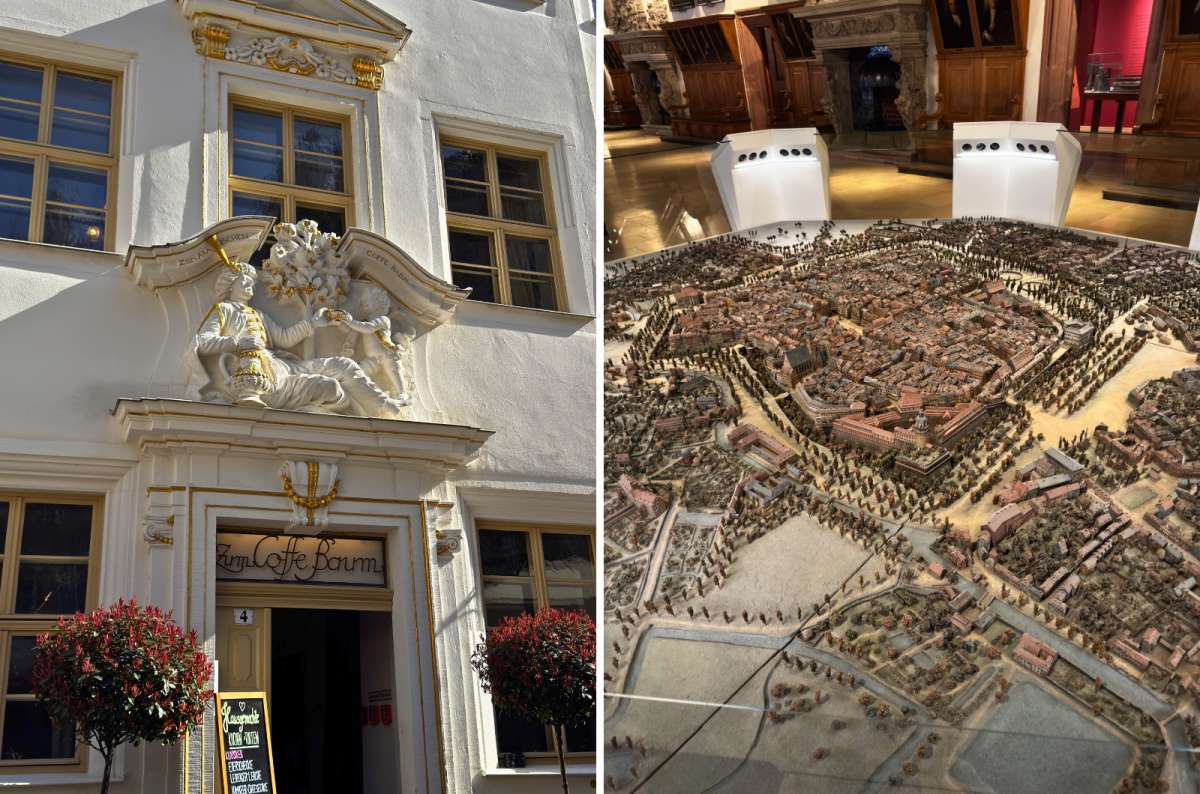
Afternoon in Leipzig: coffee museum, city models, and a quick Bach stop before your feet file a formal complaint
6. Altes Rathaus and Marktplatz
Visit the free permanent exhibition if you like city history and models.
7. Zum Arabischen Coffe Baum
This is my favorite central Leipzig cultural stop. Coffee, history, crooked floors, and free entry. Good combination.
8. Thomaskirche
Stop for Bach. Keep expectations realistic for the interior.
Pick one:
This is the part of the day where restraint matters. Leipzig makes it very easy to add “just one more museum” until you suddenly hate culture, your feet, and all labeled objects.
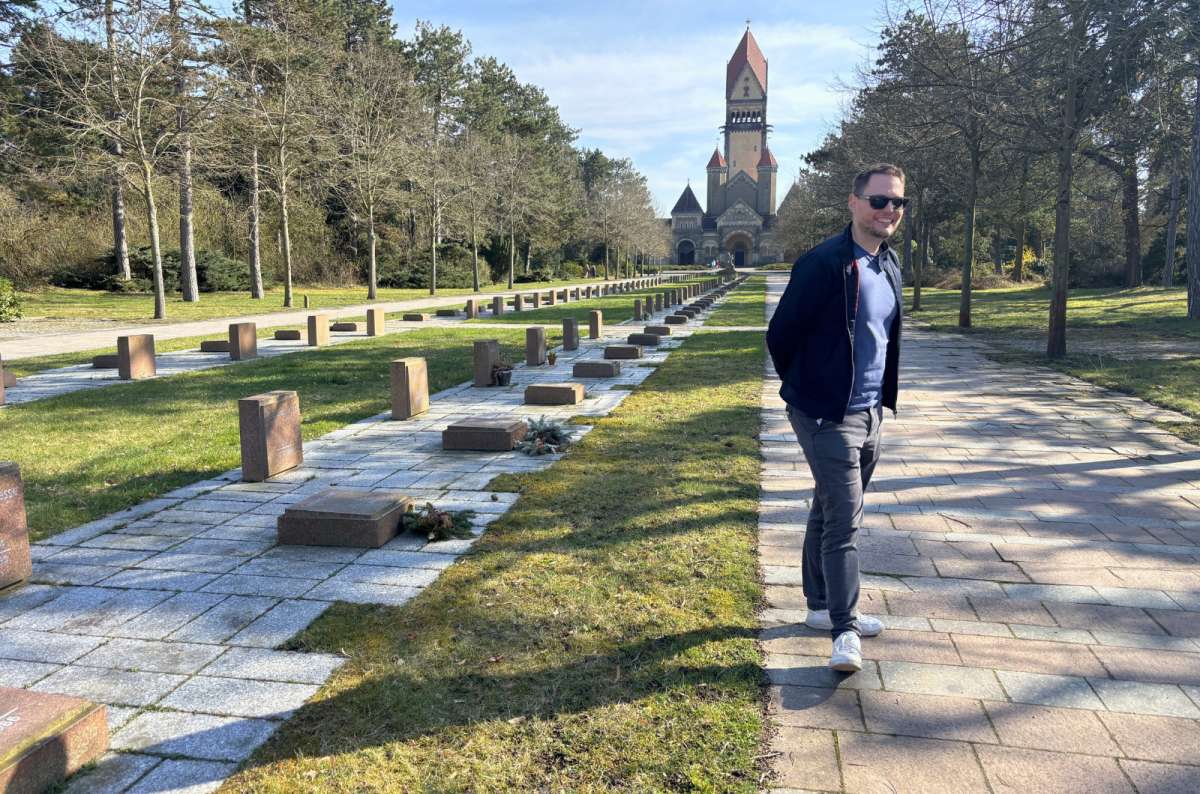
The Mahnmal cemetery
9. Battle of the Nations Memorial
This is the main event. Go inside. Climb if you can.
10. Mahnmal cemetery or Panometer
Choose Mahnmal cemetery for a quiet, atmospheric add-on. Choose Panometer if the current exhibition interests you.
Hotel tips: Here is a list of the best Leipzig city center hotels if you want to stay within walking distance of the main sights and museums.
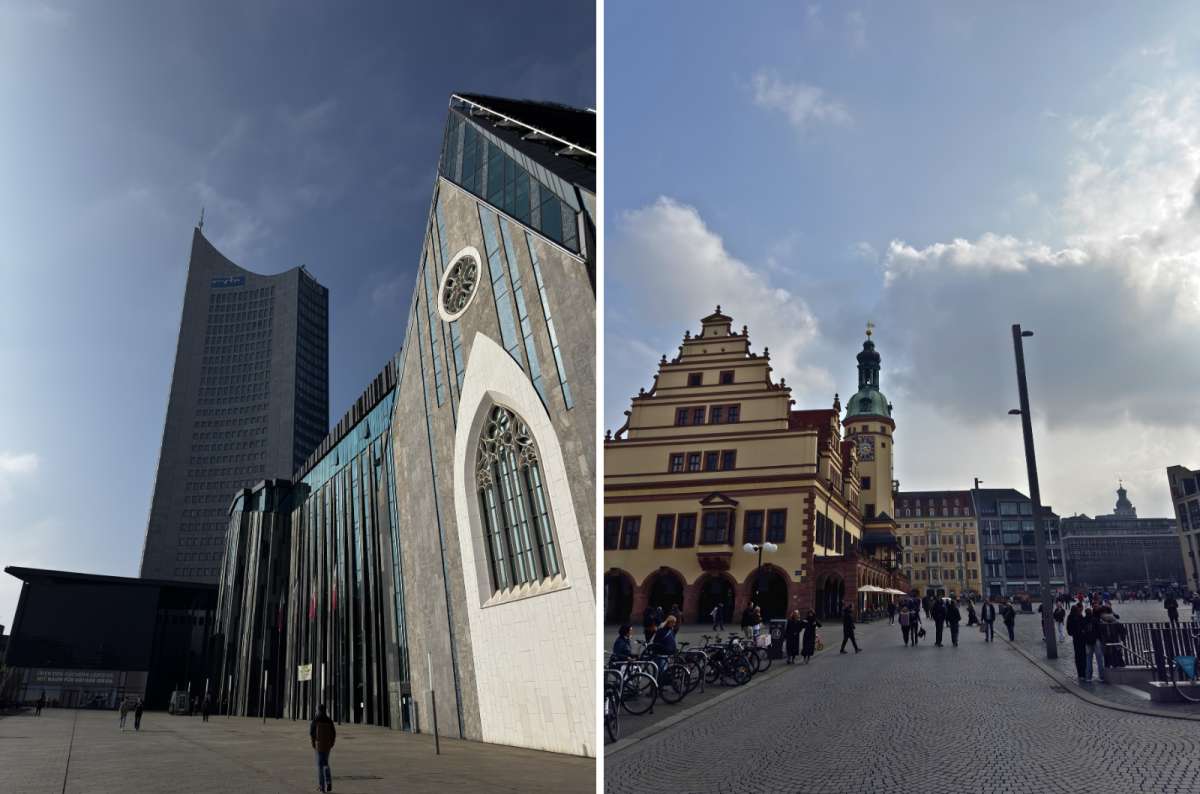
Highlights of your half-day Leipzig itinerary
If you only have half a day, stay in the city center.
This gives you the strongest compact version of Leipzig. The downside is obvious: you miss the Battle of the Nations Memorial, which is the most impressive single sight in the city.
So if you have energy, add it. If not, accept that half-day itineraries always involve betrayal.
Two days are best if you like museums or want to see Leipzig without rushing. One day is enough for the highlights, but two days let the city breathe a little.
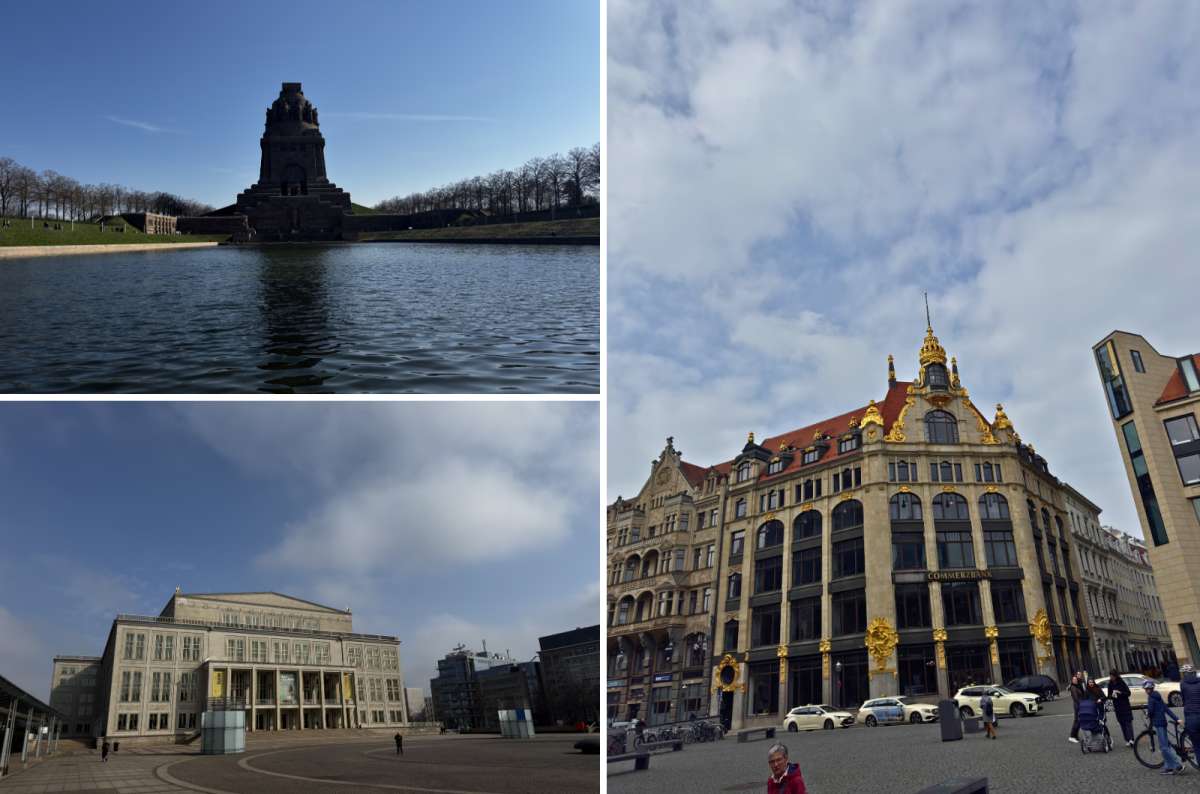
Two days in Leipzig give you enough time to explore the whole city
I did not visit because I’m not especially interested in Schumann. If you are, go. If not, do not force it just because Leipzig has music history.
The Stasi/Soviet-spy topic is interesting, but the German-only interpretation was a big downside. I needed a translation app. If that annoys you, skip it.
The church matters because of Bach. The interior itself was not one of my Leipzig highlights.
Pretty building, good photos, not a top priority.
It is atmospheric, but not worth a separate trip for most visitors.
The Panometer depends heavily on the theme. Check first.
Go for the historic room and Faust connection. The food and service were fine, not life-changing.
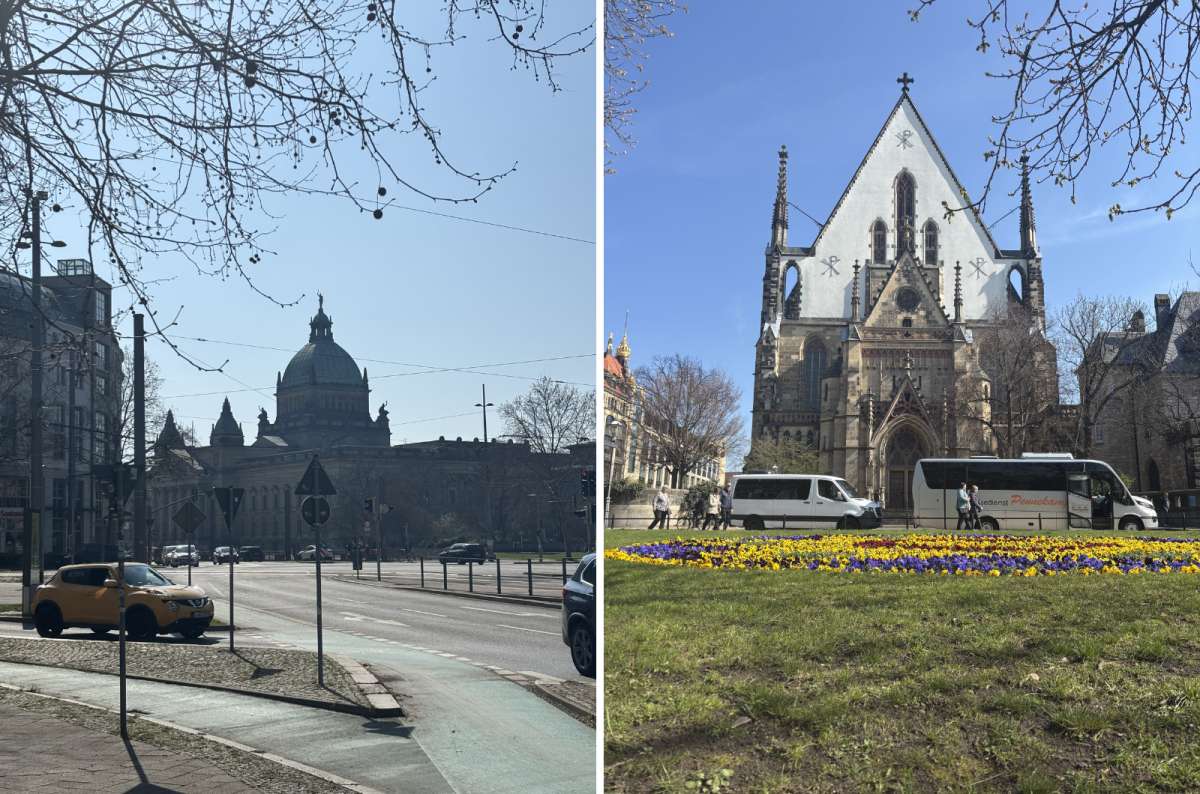
Somehow, even Leipzig’s random streets look important
Stay in or near the city center if this is your first visit. Leipzig’s best central sights are compact, so location matters more than hotel drama.
Best areas:
Hotel tips: Here is a list of the best Leipzig city center hotels if you want to stay within walking distance of the main sights and museums.
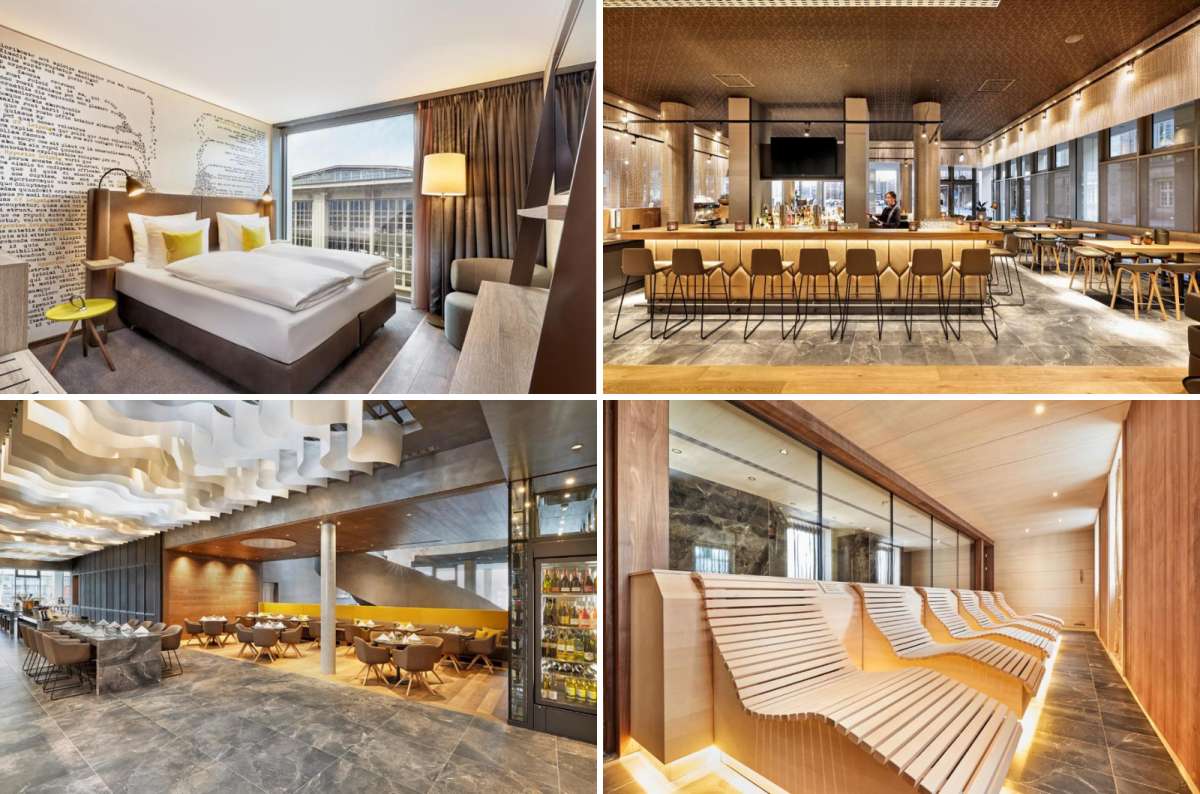
Hyperion Hotel Leipzig is one of the best hotels near Leipzig Hauptbahnhof
No specific hotel recommendation from me here—I did not stay in a hotel I’d personally recommend, and inventing one would be very travel-blogger of me in the worst possible way.
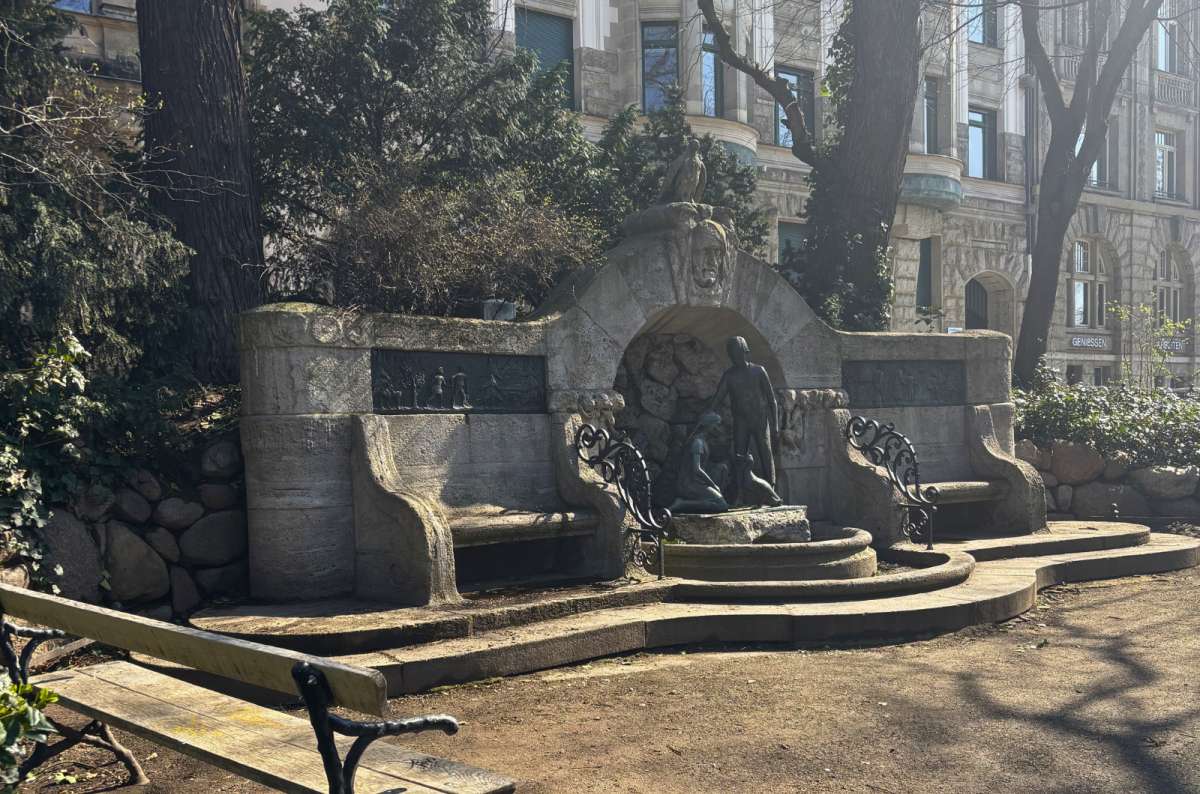
Old fairytale vibe
Yes, Leipzig is worth adding to a Germany itinerary, especially if you want a city that feels cultural, modern, compact, and not completely dominated by castles and half-timbered nostalgia.
It is not Germany’s prettiest city. Dresden is more visually grand. Berlin is bigger and messier. But Leipzig is easier than both in some ways. You can see a lot in one day: the center is walkable, several museums are free, and the Battle of the Nations Memorial gives the city one genuinely massive “okay, that was impressive” sight.
If I had one day, I’d prioritize:
Skip the weaker extras unless you have a second day. Leipzig works best when treated as a compact, culture-heavy city—not as a postcard old town.
It may not compete with the absolute best cities to visit in Europe on first glance, but it’s one of the easier German cities to genuinely enjoy once you’re there.
Read more: Germany itinerary, things to do in Dresden, Dresden itinerary, Berlin 4-day itinerary, Hamburg 3-day itinerary.
Yes, Leipzig is worth visiting if you like culture, museums, music history, modern city energy, and compact sightseeing. It is especially good for a one-day or two-day city stop in eastern Germany.
One full day is enough for Leipzig’s main sights. Two days are better if you want to visit several museums, the Panometer, Runde Ecke, and the Battle of the Nations Memorial without rushing.
Yes, you can see Leipzig in one day if you focus on the center plus the Battle of the Nations Memorial. Choose only one or two museums, otherwise your day becomes a museum-flavored punishment.
Leipzig is famous for music history, Bach, publishing, coffee house culture, St. Nicholas Church and the peaceful DDR protests, and the Battle of the Nations Memorial.
Do not miss the Battle of the Nations Memorial, Paulinum, St. Nicholas Church, Panorama Tower, Zum Arabischen Coffe Baum, and at least one major museum.
Yes, Leipzig’s center is walkable. The Battle of the Nations Memorial and Panometer are outside the compact central route and should be planned separately.
Leipzig feels more modern, artistic, and cultural, while Dresden is more visually grand—especially if you follow a proper 1 day in Dresden itinerary focused on the historic center. I would choose Dresden for architecture and classic Saxony grandeur, but Leipzig for museums, music history, modern city energy, and easier, compact sightseeing.
Yes. The Battle of the Nations Memorial is Leipzig’s most impressive sight, and the interior is more interesting than expected. Be ready for stairs if you want to climb to the top.
Some Leipzig museum permanent exhibitions are free, including the permanent exhibitions at the Museum of Fine Arts and the Old Town Hall. Grassi also has free permanent exhibitions in selected museums, but always check current policies before visiting.
Panorama Tower is the best easy city viewpoint in Leipzig. It is central, quick, and close to Augustusplatz and Paulinum.
This post contains affiliate links. If you make a booking through one of my links, I may earn a small commission—at no additional cost to you. Thank you for your support!
At a glance: the top things to do in Leipzig ranked
Map of the best things to do in Leipzig
How much time do you need in Leipzig?
Best things to do in Leipzig—ranked
1. Visit the Battle of the Nations Memorial
2. Visit Zum Arabischen Coffe Baum and the Coffee Museum
3. Choose one part of the Grassi Museum
7. Visit the Panometer if the exhibition interests you
8. Visit Altes Rathaus and the city history museum
9. Visit the Museum of Fine Arts
10. Stop at Thomaskirche for Bach
11. Walk through Augustusplatz
13. Add Mahnmal Cemetery if you’re near the monument
Practical tips for visiting Leipzig
Final verdict: Is Leipzig worth adding to your Germany itinerary?


Hi, I’m Jan. I travel fast and intensely, whether I’m exploring the buzz of Tokyo in 3 days or road-tripping through mountains and beaches on a 3-week Thailand adventure. And no matter where I am, you’ll always find me in a comfortable hotel at night and eating the best food.
If that sounds like your kind of journey, hop on board, and let’s explore the world together!
I started this blog after realizing how tough it can be to find reliable, authentic travel info. You wouldn’t believe how many “travel bloggers” never even visit the places they write about! On Next Level of Travel, you can count on my full honesty and insights drawn from my firsthand experiences.
Here’s the deal: not every destination is all superlatives and unicorns. I’ll let you know if a tourist attraction isn’t worth your time, like skipping overrated stops in my 2-week Spain itinerary. And when I find something truly special—like the perfect mix of culture and nature in Cape Town—you can trust that it’s worth adding to your itinerary.


Comments | Thoughts? Give us a shout!